Vue normale

Galaxy S26 FE Price Leak Follows Samsung’s Mobile Profit Slide

4 août 2026 à 13:49

Samsung’s Galaxy S26 FE could cost more than its predecessor, raising questions about whether the Fan Edition still offers strong value.

The post Galaxy S26 FE Price Leak Follows Samsung’s Mobile Profit Slide appeared first on TechRepublic.

Apple Could Launch Camera-Equipped AirPods Before the End of 2026

4 août 2026 à 12:03

Apple could launch camera-equipped AirPods before the end of 2026, using visual sensors to give Siri greater awareness of a user’s surroundings.

The post Apple Could Launch Camera-Equipped AirPods Before the End of 2026 appeared first on TechRepublic.

MacBook Air Delays Could Complicate Laptop Rollouts

4 août 2026 à 05:56

MacBook Air delays are turning Apple’s everyday laptop into a planning issue for buyers counting on quick delivery.

The post MacBook Air Delays Could Complicate Laptop Rollouts appeared first on TechRepublic.

  • ✇Yanko Design
  • Camera Batteries Go Missing, So This $70 One Tracks Itself
    Camera batteries are one of those accessories that photographers never think about until something goes wrong. They’re small enough to vanish into the bottom of a bag or a jacket pocket, common enough to own several of and regularly mix up, and important enough that losing one mid-trip can force an early stop to a shoot. The solution most people reach for is buying more of them, which only increases the number of things to keep track of. The FALCAM TagBatt addresses the problem from inside the
     

Camera Batteries Go Missing, So This $70 One Tracks Itself

Par : JC Torres
5 août 2026 à 09:20

Camera batteries are one of those accessories that photographers never think about until something goes wrong. They’re small enough to vanish into the bottom of a bag or a jacket pocket, common enough to own several of and regularly mix up, and important enough that losing one mid-trip can force an early stop to a shoot. The solution most people reach for is buying more of them, which only increases the number of things to keep track of.

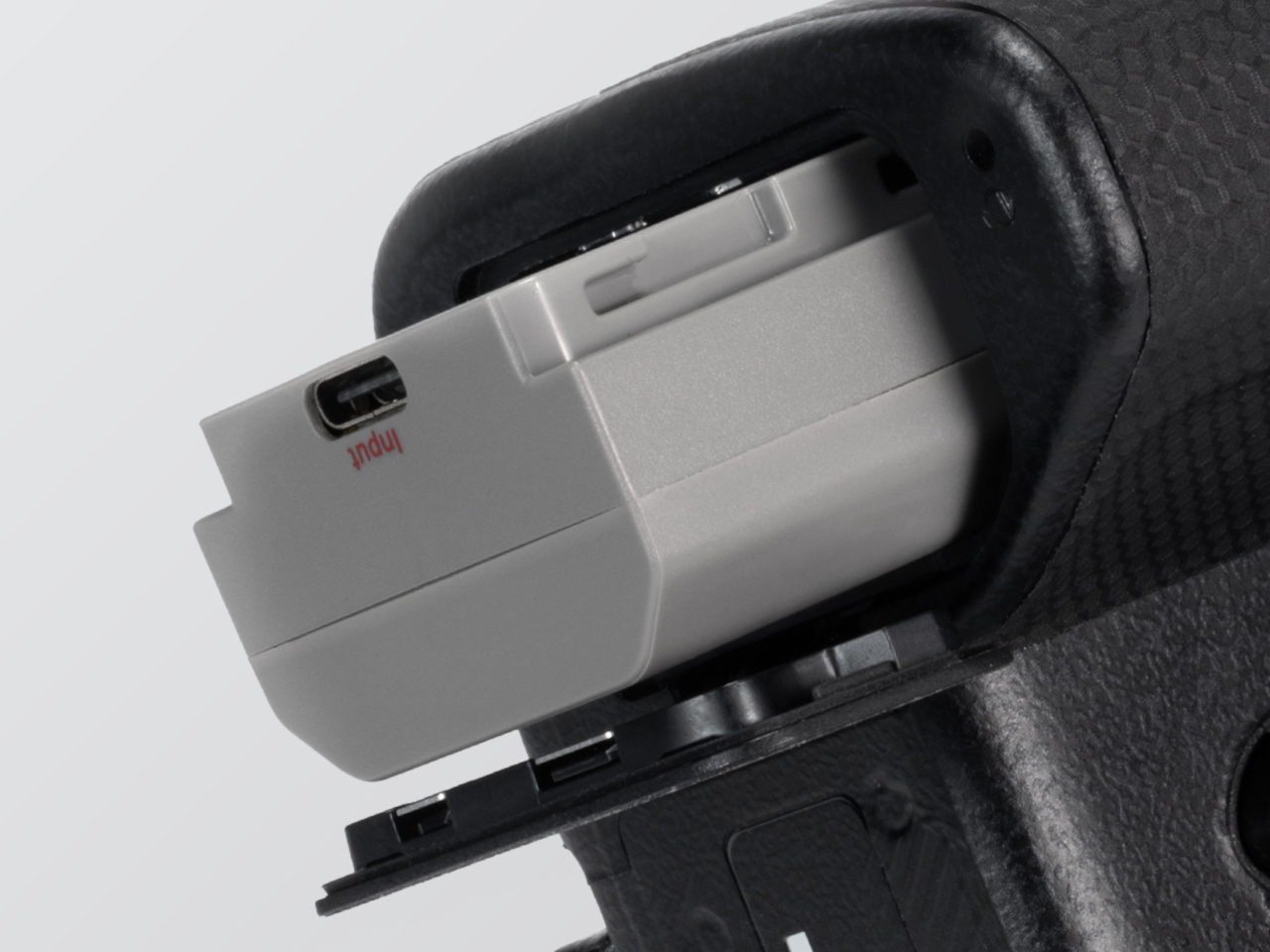
The FALCAM TagBatt addresses the problem from inside the battery itself. Compatible with Sony’s NP-FZ100 form factor, it integrates Apple’s Find My tracking technology directly into the cell, so the battery carries its own location data wherever it goes. If it ends up left behind at a studio, a venue, or the seat pocket of a flight, the Find My app will flag it and show its last known position.

Designer: FALCAM

Because the tracker lives inside the battery rather than clipped to a camera strap or screwed into a cage mount, it’s considerably harder to spot. An opportunistic thief who grabs a camera bag and removes any obvious Bluetooth puck from the outside can’t strip out what’s already built into the power source. It’s the kind of discreet integration that external trackers can’t quite replicate, no matter how small they get.

The tracking isn’t the only thing the TagBatt changes about how a camera battery behaves. A built-in USB-C port lets it charge directly from any standard USB-C source, including a power bank or a travel adapter, without needing the dedicated Sony battery charger that typically takes up its own space in a kit bag. Pop it out of the camera, plug it in overnight, and it’s ready in the morning without routing around a charger at all.

Capacity comes in at 2,600mAh against the OEM Sony NP-FZ100’s 2,280mAh, which translates to a modest but real advantage per charge. An advanced decoding chip handles the communication with the camera’s internal systems so the body treats it as it would any genuine battery, with accurate charge-level reporting and none of the “non-genuine battery” warning messages that typically accompany third-party cells.

Compatibility covers a wide sweep of Sony’s current lineup, including the Alpha 7 series through the Alpha 7 V, the Alpha 9 series, the Alpha 6700, the FX3 and FX30, and the ZV-E1, among others. A Canon LP-E6 version is also available now, with Nikon EN-EL15 and Fujifilm NP-W235 versions confirmed to be in development.

At $69.99, the TagBatt costs more than a standard third-party replacement but considerably less than the Sony original, and it comes with two capabilities that the original simply doesn’t offer. For photographers who travel frequently, work in locations where gear occasionally goes astray, or are just tired of carrying a charger they’d rather leave at home, the trade-off makes a fairly straightforward case.

The post Camera Batteries Go Missing, So This $70 One Tracks Itself first appeared on Yanko Design.

  • ✇Yanko Design
  • A $2,699 Gaming PC That Doubles as a Display Case for Figurines
    Cables are the dirty secret of PC building. No matter how carefully chosen the components are, or how expensive the case gets, the tangle of power, data, and fan connectors that crisscross the interior of most gaming desktops eventually undermines every effort at a clean aesthetic. The glass side panel that was supposed to show off the build ends up framing a web of wires that even the most diligent cable manager struggles to fully tame. The Maingear Zero treats that problem as the actual desig
     

A $2,699 Gaming PC That Doubles as a Display Case for Figurines

Par : JC Torres
5 août 2026 à 04:45

Cables are the dirty secret of PC building. No matter how carefully chosen the components are, or how expensive the case gets, the tangle of power, data, and fan connectors that crisscross the interior of most gaming desktops eventually undermines every effort at a clean aesthetic. The glass side panel that was supposed to show off the build ends up framing a web of wires that even the most diligent cable manager struggles to fully tame.

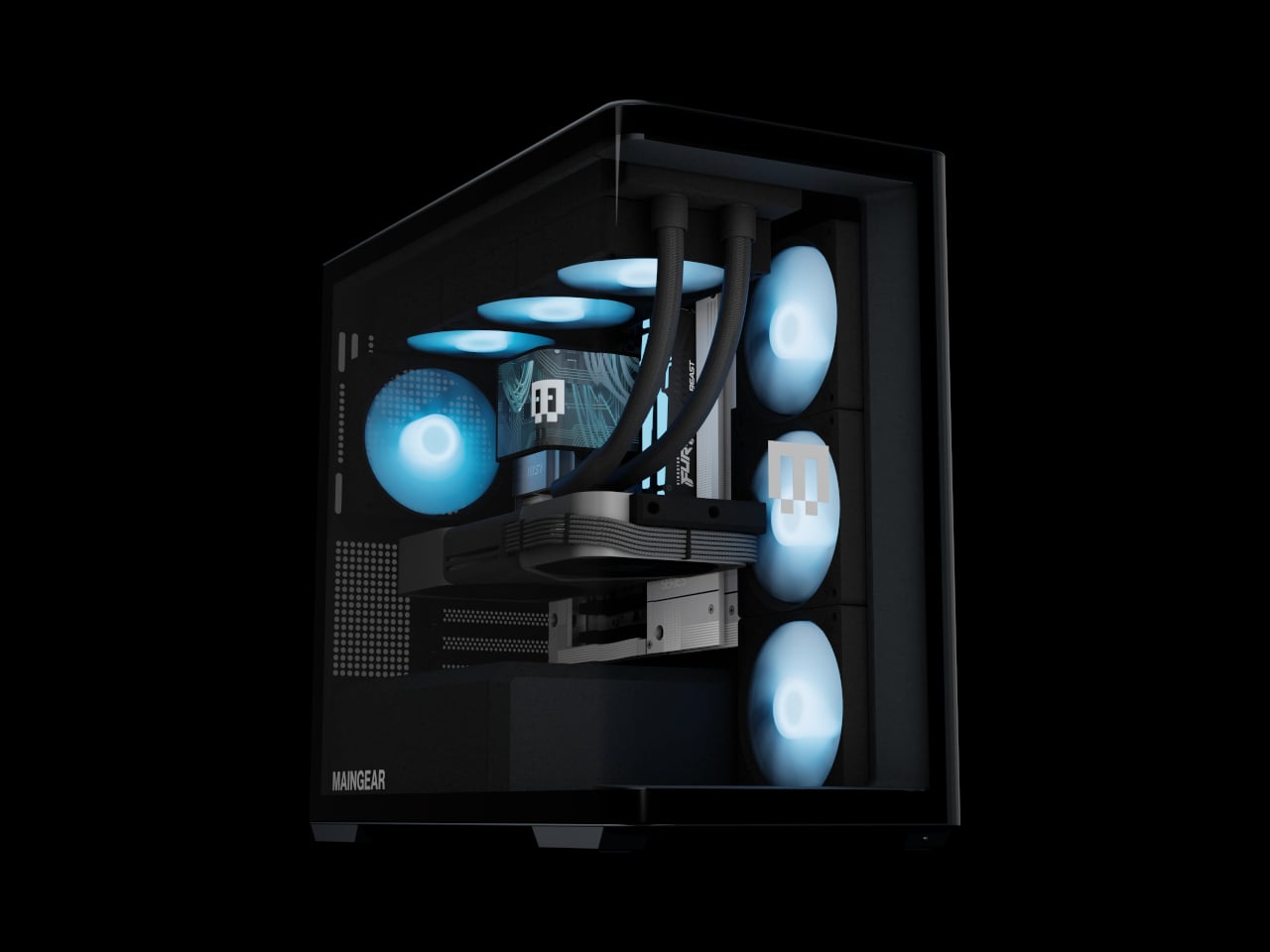
The Maingear Zero treats that problem as the actual design brief. Its patented MG-RC, or Rear Connection, system moves every motherboard connector to the back and underside of the board, clearing the visible interior of cables entirely. Paired with a single, seamless 4 mm tempered glass curve that wraps the front and side of the chassis without a single seam or pillar, the result is a desktop that looks like it has nothing to hide, because it genuinely doesn’t.

Designer: Maingear

Seven fans work to keep the hardware running at full performance without drawing much attention to themselves. A mix of standard and reverse-blade units pushes cool air in through the front and exhausts it out through a 360mm AIO liquid cooler at the top, all following a single front-to-back airflow path. The reverse-blade intakes are specifically designed so the fan blades themselves don’t interrupt the view through the glass, which is a level of detail that most cases simply don’t think to address.

All RGB lighting inside the Zero is diffused rather than sourced from visible diodes, meaning the light saturates the interior without any glowing point of origin to break the illusion. The whole package measures 236mm wide, 421mm tall, and 460mm deep, which is more compact than a traditional mid-tower while still accommodating a full-sized GPU and the 360mm cooler overhead. It doesn’t look like a PC that compromised on size to achieve the aesthetic.

The hardware ceiling is genuinely high. Configurations top out at an NVIDIA GeForce RTX 5090 paired with an AMD Ryzen 7 9850X3D or Intel Core Ultra 7 270K Plus, 32GB of DDR5 memory, and a 2TB NVMe SSD. The chassis uses standardized mATX components throughout, with no proprietary parts, so future upgrades don’t require a trip back to the manufacturer.

Beyond the hardware, the Launch Edition adds a pair of tool-free snap-in display stands inside the chassis, one for figurines and one for brick builds. The stands sit inside the case floor where passive airflow keeps whatever’s displayed inside dust-free. It’s the kind of feature that turns the interior from a hardware showcase into something closer to a display cabinet, which only makes sense given how much effort went into eliminating everything else that wasn’t worth looking at.

Every system is hand-built in New Jersey and ships with no bloatware pre-installed. Pricing starts at $2,699 for the base configuration, with the top-end Launch Edition Champion reaching $6,799. Built around the premise that nothing inside should be hidden, the Zero demonstrates how the best-looking gaming PC doesn’t have to sacrifice anything to get there.

The post A $2,699 Gaming PC That Doubles as a Display Case for Figurines first appeared on Yanko Design.

  • ✇Yanko Design
  • Forget Tracking Kids After School, This Cute Device Lets Them Check In
    Working parents of school-age children face a particular kind of worry during the hours between the end of the school day and the end of the workday. Phone calls get missed, text messages go unread, and the ones that do get through usually carry just enough information to confirm a child made it home. What they rarely carry is any sense of how the child is actually doing, and that gap tends to get filled with parental anxiety rather than reassurance. Keylo is a conceptual companion device desig
     

Forget Tracking Kids After School, This Cute Device Lets Them Check In

Par : JC Torres
3 août 2026 à 06:07

Working parents of school-age children face a particular kind of worry during the hours between the end of the school day and the end of the workday. Phone calls get missed, text messages go unread, and the ones that do get through usually carry just enough information to confirm a child made it home. What they rarely carry is any sense of how the child is actually doing, and that gap tends to get filled with parental anxiety rather than reassurance.

Keylo is a conceptual companion device designed around that specific gap. Rather than giving children another screen to manage or another app to navigate, it offers a single, tactile interaction: a tap that lets them express how they’re feeling. No typing, no calling, no notification chain. The child touches the device, cycles through a color to represent their emotional state, and the parent’s app receives it.

Designer: Miaonan Li

The system consists of three physical parts. The main companion unit sits on a home dock, usually somewhere a child passes when they get home. A smaller key fob clips to a backpack and travels with the child throughout the day. Both are made from soft matte silicone and deliberately avoid any screen or complex interface, giving the object a quality that’s closer to a familiar household item than a piece of consumer electronics.

The four emotional states Keylo recognizes are kept intentionally broad. A soft orange glow indicates the child feels relaxed; bright yellow signals something more playful or energetic; a neutral white tone signals a preference for quiet or personal space; and a calm blue light carries a specific message from child to parent: I’m thinking of you. Each one is simple enough for a young child to understand and expressive enough to actually mean something when it arrives on a parent’s phone.

That arrival is handled by the companion app, which mirrors the same color language as the physical device. The distinction the project draws between this and conventional parental monitoring is deliberate. Rather than showing parents a location, a screen time report, or a camera feed, the app delivers a single emotional moment. A notification that says a child is feeling calm and playful carries a different quality of information than a location ping, and it asks for a different kind of response.

The device is designed to work without any input from the child beyond that single tap. There are no prompts to answer, no questions to read, and no follow-up required. For a child who has just walked in the door after school, the low threshold is significant; the gesture stays small enough that it doesn’t feel like a chore, which is probably the main reason most family communication apps get abandoned within a few weeks of being set up.

What Keylo explores through its design is how much emotional information can be conveyed through the simplest possible interaction. A color chosen by a child carries less data than a voice call but far more than no contact at all, and it arrives without interrupting anyone’s afternoon in the way a ringing phone does. The project makes a case for the idea that the volume of communication matters less than whether it happens at all, and on terms that feel natural to the person sending it.

The post Forget Tracking Kids After School, This Cute Device Lets Them Check In first appeared on Yanko Design.

  • ✇Yanko Design
  • Bang & Olufsen’s New Speaker Concept Is a Ritual, Not a Device
    Most speakers are designed to disappear. They sit on a shelf, blend into a bookcase, or hide in a cabinet, quietly doing their job until you need them and then fading back into the background. Mårten Malmnäs, a graduate from the Umeå Institute of Design, designed something that pushes back against all of that. The Beosound Tableau is a wall-mounted audio object developed in collaboration with Bang & Olufsen. Malmnäs calls it “a fireplace for music,” an instrument not just for listening, but
     

Bang & Olufsen’s New Speaker Concept Is a Ritual, Not a Device

2 août 2026 à 13:20

Most speakers are designed to disappear. They sit on a shelf, blend into a bookcase, or hide in a cabinet, quietly doing their job until you need them and then fading back into the background. Mårten Malmnäs, a graduate from the Umeå Institute of Design, designed something that pushes back against all of that.

The Beosound Tableau is a wall-mounted audio object developed in collaboration with Bang & Olufsen. Malmnäs calls it “a fireplace for music,” an instrument not just for listening, but for living. The moment I read that, I had to stop. Because I’ve never heard a speaker described that way before, and suddenly, I couldn’t think of a more fitting comparison.

Designer: Mårten Malmnäs

Think about what a fireplace actually does. Yes, it produces heat, but that’s almost beside the point. A fireplace creates presence. It becomes the thing a room organizes itself around. People pull their chairs toward it, conversations happen because of it, and its absence is genuinely felt. That’s a completely different design brief than “fits on your desk” or “connects to your phone.”

Malmnäs started the project with a design probe, a research method that explores the relationships people have with their homes, and from that came a set of experiments around values and behaviors. Eight experimental directions emerged from the ideation phase, spanning different input and output formats. Three of those directions clearly answered the design responsibilities he’d set for the project, and their shared qualities pointed toward one resolved object.

Here’s where it gets interesting. The original concept for the Tableau was screen-based, but a method called Wizard of Oz testing, where a human simulates the system to observe how people actually interact with it, pushed the design somewhere more honest. The interaction model shifted from screens to navigation by sound. And the principle that came out of it became the foundation of the whole concept: the most honest interface for a music object is music itself.

That’s a provocative idea. We’ve spent years layering more and more visual UI on top of audio experiences. Every streaming service competes on the complexity of its recommendation algorithm, the visual polish of its playlist covers, the grid of album art. Malmnäs argued the opposite, that sound should speak for sound. The result is the Sonic Token, a physical object that mediates between the listener and the Tableau. Tactile, intentional, and completely different from scrolling a touchscreen.

The Tableau is positioned as a focal thing for the home. An object to gather around and tend to. That language is deliberate, and it’s also a little radical. “Tending” to an audio object implies care and attention, a relationship rather than a transaction. You don’t tend to a Bluetooth speaker. You don’t gather around an app.

Bang & Olufsen has always occupied a rare space in the audio world, where design and sound hold equal weight, and where a product can belong in a design museum and still deliver extraordinary sound. But even by B&O’s standards, the Tableau concept asks a genuinely new question: what if the speaker were the focal point of the room, rather than just a feature of it?

There are fair questions about how a concept like this survives beyond a graduate show. The hands-on, material-driven process Malmnäs used, with 1:1 mock-ups and rigorous testing of the Sonic Token’s form and function, suggests this isn’t a vague idea dressed up in renders. It was built and tested as a real object. Whether it eventually reaches production or stays as a collaborative concept between a student designer and one of the world’s most revered audio brands is another matter.

But the value of the Beosound Tableau isn’t only in whether it ships. It’s in the question it refuses to let go of: why have we settled for speakers that ask nothing of us? The alternative, a speaker that earns its place on the wall, makes music feel like a gathering, and treats sound like something worth being present for, sounds like exactly what the living room has been missing.

The post Bang & Olufsen’s New Speaker Concept Is a Ritual, Not a Device first appeared on Yanko Design.

Mark Zuckerberg Says AI Is Accelerating Software Development at Meta

31 juillet 2026 à 17:23

Meta CEO Mark Zuckerberg says AI is helping engineers build apps faster, but the company has not disclosed its tools or measured productivity gains.

The post Mark Zuckerberg Says AI Is Accelerating Software Development at Meta appeared first on TechRepublic.

OnePlus 16 May Skip the US and Europe: What Buyers Need to Know

31 juillet 2026 à 15:48

Thinking about importing the OnePlus 16? Learn what OnePlus' US and Europe exit means for availability, warranty, software support, and compatibility.

The post OnePlus 16 May Skip the US and Europe: What Buyers Need to Know appeared first on TechRepublic.

Samsung Earnings Put New Foldables at the Center of Its Asia Strategy

31 juillet 2026 à 08:05

Samsung’s record second-quarter earnings masked losses in its consumer-device businesses, making the Fold8 lineup more important to its Asia mobile strategy.

The post Samsung Earnings Put New Foldables at the Center of Its Asia Strategy appeared first on TechRepublic.

IBM: AI-Enabled Data Breaches Cost Organizations $6 Million on Average

30 juillet 2026 à 16:32

IBM found AI-enabled breaches cost organizations $6 million on average, exposing gaps in vulnerability management, access controls, and AI governance.

The post IBM: AI-Enabled Data Breaches Cost Organizations $6 Million on Average appeared first on TechRepublic.

Windows 11 KB5101684 Preview Update Delivers 42 Fixes for Intune, SMB, and File Explorer

30 juillet 2026 à 16:23

Microsoft’s Windows 11 KB5101684 preview update delivers 42 fixes for Intune, SMB, File Explorer, Search, Windows Hello, and more.

The post Windows 11 KB5101684 Preview Update Delivers 42 Fixes for Intune, SMB, and File Explorer appeared first on TechRepublic.

Apple’s New iPhone Leasing Program: What It Means Before You Upgrade

30 juillet 2026 à 14:42

Apple's new Apple Upgrade program lets US customers lease iPhones, Macs, iPads, and Apple Watches. Here's how it works and whether it's better than buying.

The post Apple’s New iPhone Leasing Program: What It Means Before You Upgrade appeared first on TechRepublic.

Australia Looks to Italy for the Next Phase of Its Social Media Ban

30 juillet 2026 à 13:27

Florence just opened a digital addiction clinic for teenagers — and it points to the next phase of Australia's world-first social media crackdown.

The post Australia Looks to Italy for the Next Phase of Its Social Media Ban appeared first on TechRepublic.

Google Pixel 11 Explained: What Google Has Confirmed and What the Rumors Say

30 juillet 2026 à 10:22

Google will unveil the Pixel 11 on Aug. 12. Here's what Google has confirmed, what reputable reports suggest, and what remains unknown ahead of launch.

The post Google Pixel 11 Explained: What Google Has Confirmed and What the Rumors Say appeared first on TechRepublic.

The Hidden Security Problem Holding Enterprise AI Back

29 juillet 2026 à 16:05

Enterprise AI adoption is accelerating, but new research suggests identity governance is lagging behind. Here's why AI agent identities are becoming a critical security challenge.

The post The Hidden Security Problem Holding Enterprise AI Back appeared first on TechRepublic.

Microsoft Threat Intelligence Portal Retires in August: 4 Checks Before the Cutoff

29 juillet 2026 à 11:23

Microsoft is retiring its legacy Threat Intelligence portal on August 1. Security teams should verify licenses, permissions, investigation projects, APIs, and automated workflows before the cutoff.

The post Microsoft Threat Intelligence Portal Retires in August: 4 Checks Before the Cutoff appeared first on TechRepublic.

Samsung Wins Exclusive OLED Touchscreen Deal for Apple’s Upcoming MacBook Pro

29 juillet 2026 à 07:34

Samsung Display has reportedly won Apple's exclusive OLED touchscreen contract for future MacBook Pro models, highlighting its lead in large-format display manufacturing.

The post Samsung Wins Exclusive OLED Touchscreen Deal for Apple’s Upcoming MacBook Pro appeared first on TechRepublic.

❌