OnePlus has confirmed an optional move from OxygenOS to ColorOS 17. Here's what changes, what stays the same, and what existing owners should expect.
The post ColorOS Replacing OxygenOS on OnePlus Phones: What Users Lose appeared first on TechRepublic.
Insta360 built its reputation on cameras that see in every direction at once. It’s literally in their name. The X series made 360-degree capture accessible; the Luna Ultra brought Leica optics to a handheld gimbal. Flying something, though, is a different category of challenge, and the patent images that appeared in July 2026 show the company working through what a foldable drone looks like with Insta360 DNA. The illustrated design at the bottom shows folding arms, a ring-shaped propeller guard
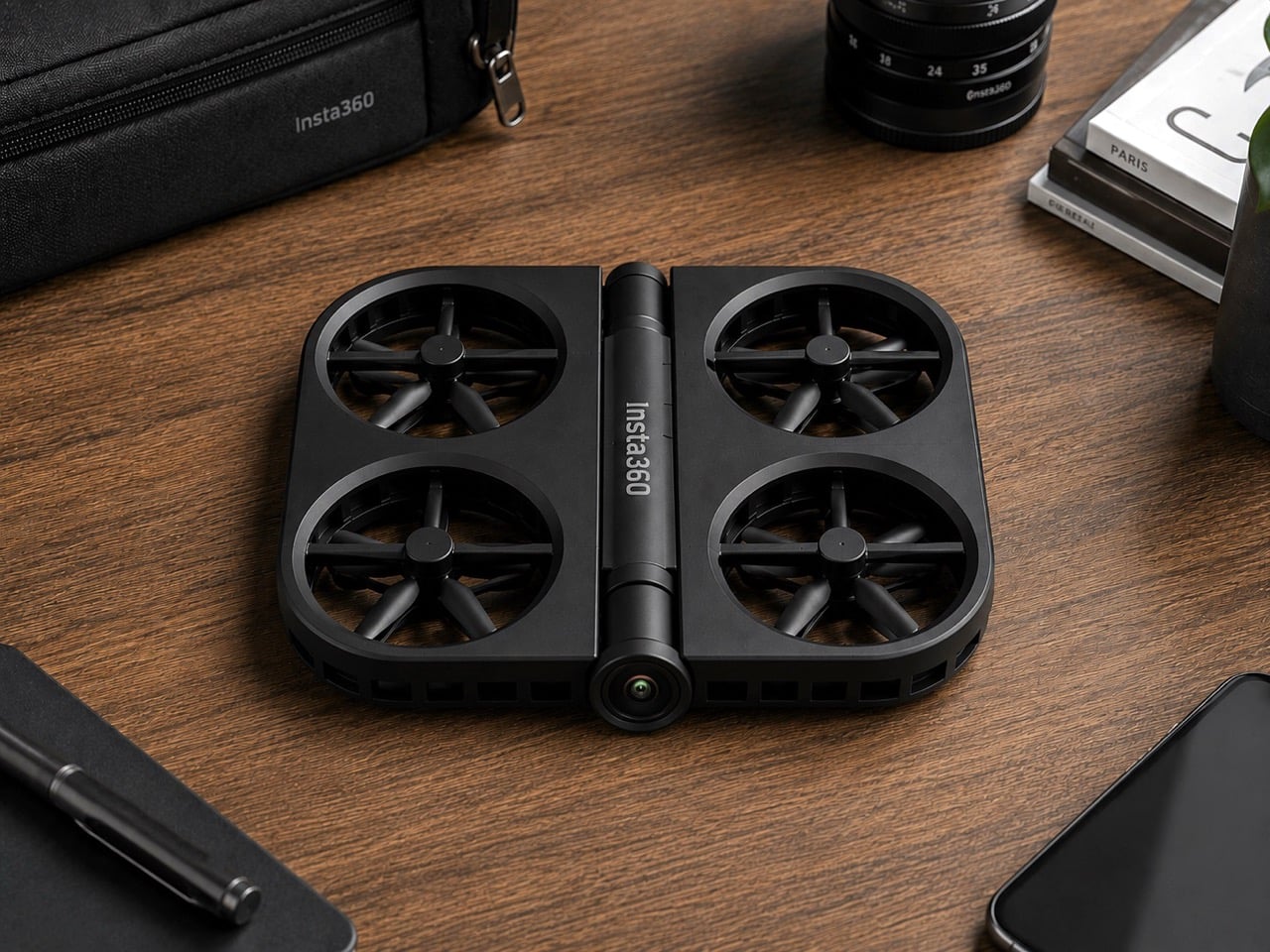
Insta360 built its reputation on cameras that see in every direction at once. It’s literally in their name. The X series made 360-degree capture accessible; the Luna Ultra brought Leica optics to a handheld gimbal. Flying something, though, is a different category of challenge, and the patent images that appeared in July 2026 show the company working through what a foldable drone looks like with Insta360 DNA. The illustrated design at the bottom shows folding arms, a ring-shaped propeller guard, and a dedicated locking mechanism, a form factor that prioritizes the moment of packing away just as much as the moment of takeoff.
DJI’s Neo 2 has the casual drone segment largely to itself in the sub-250g category, with a rigid one-piece frame and a 19-minute flight time that have made it a reliable default for creators who want aerial footage without the complexity of a serious drone setup. Insta360 entering that space would break what has effectively been a two-player market, with Zero Zero Robotics’ HoverAir as the only real alternative. The folding design alone gives Insta360 a structural argument against the Neo 2; a potential 360-degree camera, if it materializes, would give it a creative one. What a wonderful year for foldables, eh? We’re expecting a folding iPhone in September, and Insta360 might give us a folding drone too!
This isn’t just some forum rumor, either. The patent images (from patent file CN223865117U), which started making the rounds on July 16th and were highlighted by outlets like Tech Court, are pretty specific. They show a drone body with the “Insta360” logo stamped on it, with fully folding arms that tuck into the chassis and a distinctive ring-shaped guard protecting the propellers. There’s even a dedicated locking mechanism detailed, which tells you just how seriously they’re taking the whole “fold-and-go” concept. This is a design that screams it was made to be stuffed into a pocket, not carefully placed in a bespoke case.
But here’s the thing: this isn’t Insta360’s first aerial rodeo. Before they decided to put their own name on a drone, they sent in a scout team under the sub-brand Antigravity. The A1 drone they launched was, frankly, a bit of a monster: a sub-249g drone with a wild dual-lens setup that shot 8K 360-degree video and made the drone itself invisible in the footage. It was a spec-sheet beast and a clear shot across DJI’s bow, proving Insta360 had the engineering chops to compete in the sky. It was their way of testing the waters.
Now, it looks like they’re done testing. This new patent is the second, more direct shot. And here’s the kicker: for a company obsessed with 360-degree video, the patent images don’t show a fisheye lens. At all. It’s a huge question mark hanging over the whole project. Are they hiding the tech, or are they planning to launch a drone that, for the first time, doesn’t have their signature feature? If they’re aiming for a rumored sub-$200 price point, leaving the 360 camera on the cutting room floor might be the only way to get there. It’s a move that would be both shocking and, in a weird way, perfectly logical.
You also can’t forget that this is all happening while the two companies are actively suing each other in China. This isn’t friendly competition; it’s a full-blown hardware rivalry. Insta360 came for DJI’s gimbals, tested the drone market with a sub-brand, and is now preparing a direct assault on DJI’s most accessible drone. With a release window expected somewhere between late 2026 and early 2027, we’re not just watching a new product being born. We’re watching the next chapter in a tech soap opera, and it’s about to get very, very interesting.
I've been reviewing Turtle Beach headsets for a long time. The firm has a huge array of products for Xbox and PC gamers, hitting every price point and use case. Many of Turtle Beach's products have easily landed on our best Xbox and PC gaming headsets lists. Where I've personally found Turtle Beach to be most exciting is on the higher-end, where the firm has a tendency to really push the envelope with regards to functionality and value. The Stealth Pro II absolut
I've been reviewing Turtle Beach headsets for a long time. The firm has a huge array of products for Xbox and PC gamers, hitting every price point and use case. Many of Turtle Beach's products have easily landed on our best Xbox and PC gaming headsets lists. Where I've personally found Turtle Beach to be most exciting is on the higher-end, where the firm has a tendency to really push the envelope with regards to functionality and value.
The Stealth Pro II absolutely encompasses that. Yes, it isn't cheap, but it comes in at a comparable price to lifestyle Bluetooth headsets that offer far less functionality and features, often with subpar durability and audio.
With the Stealth Pro II, I'm sitting here well and truly asking myself if this headset isn't just a competitor in the gaming space, but also the general everyday lifestyle space. With a subtle and stylish design, obscene amounts of functionality, and absolutely crystalline audio — the Stealth Pro II could be (should be) your next Xbox / PC gaming headset pick.
Turtle Beach Stealth Pro II — Specs and Price
Even the packaging is slick. (Image credit: Windows Central | Jez Corden)
The Turtle Beach Stealth Pro II headset is a monster on paper, boasting an impressive array of features, functions, and premium-end specs.
Here's an overview of what you can expect to get out of the box.
Xbox Series X|S, Xbox One, PC, Bluetooth mobile devices. Additional USB transmitters for PlayStation / Nintendo sold separately.
Included Accessories
Hard‑shell case, transmitter dock, USB wireless transmitter, USB‑C cable, two batteries
Price
£299.99 / $349.99 / €349.99
At $349.99, it's not exactly what I'd call cheap, but that seems to have become the standard for headsets that are really pushing the bar when it comes to premium audio and "do everything" specs.
You can swap between two 40-hour batteries, with one permanently charged and ready to go in the transmitter dock. It comes with an additional USB transmitter for PC, with the main charge dock functioning as the radio for Xbox. It also sports Bluetooth 5.3 audio with LDAC, with simultaneous mixing with a USB sound source. It grabs the Hi-Res certification that has become all the rage lately, and boasts a massive speaker upgrade over the previous gen, with dual 60mm drivers and a huge frequency spectrum from 10Hz to 40kHz.
What's it like to actually use, though?
Turtle Beach Stealth Pro II — Design and Comfort
An absolute stunner, showing real restraint for a company previously known for neon green plastic and toy-like designs. This could be your every day headset. (Image credit: Windows Central | Jez Corden)
I think this is quite easily Turtle Beach's most attractive headset design. The Stealth Pro of yesteryear was fantastic, but it was still quite bulky in that typical "gamer" way, designed for isolation rather than fashion. Somehow, the 'Beach has managed to thread both needles with a single line here. Absolutely stunning engineering and design here.
The brushed metal speaker plates look great on the outside, and there remains a very subtle Turtle Beach imprint that stays out of the way and won't cramp anyone's style. The speakers are accented with the same metallic trims, and the headband connects with these bending connectors that look very futuristic.
The microphone is simultaneously flip-to-mute and detachable, allowing you to go fully wireless. It has internal microphones as well for taking calls on the go without using the full mic boom.
The attention to detail extends to the controls. Each sports a different "feel" on the fingers to help you differentiate between the controls. It's smart, ergonomic design. (Image credit: Windows Central | Jez Corden)
The tapered cans reduce the visible footprint of the headset, which I feel reduces its visible "bulk" over some of Turtle Beach's previous attempts at a headset like this. And this is without compromising on speaker size or features. The 60mm drivers are a noticeable upgrade over the previous model, with separated tweeters and woofers.
On comfort, this is the only part where I think more attention could've been paid. The headband is made of this odd nylon mesh which, while looking pretty, is actually quite tight and uncomfortable over longer sessions. I imagine it's something one could get used to, but it seems like an odd oversight given how painstaking the rest of the design work is. The mesh is also great at trapping dust and is a bit difficult to clean effectively. Additionally, it doesn't seem to be replaceable ... so if you rip it somehow, you're kind of screwed.
I'm also not a huge fan of the fabric material used on the cushions. While it is comfortable, Turtle Beach's previous materials felt a little smoother on the skin. I am someone who vastly prefers leatherette over fabric, though, so take that as you will.
Turtle Beach Stealth Pro II — Features and Audio
It's far better looking than me. (Image credit: Windows Central | Jez Corden)
Where this headset absolutely dominates is audio. This is by a country mile the best-sounding headset Turtle Beach has ever produced. As I write this, I'm listening to Tool at maximum volume and enjoying my very own personal concert in an absolutely vast virtual soundscape with impressive separation, thundering, warm bass, and enjoying distortion-free treble, mids, and highs.
The intros on songs I've been intimately acquainted with for decades come through with details I've not experienced prior. Regardless of what I threw at it, from thundering double bass-peddle metal tracks to haunting electronica, it has been a really really fun time testing this headset out. For music and cinematic delivery, this headset is goosebumps-inducingly good, truly ethereal, regardless of genre. For lifestyle and daily mobile use, it also rocks up with active noise canceling, which is very good too. I put it through its paces with noisy fans and my air filter on maximum settings, and felt myself fully isolated with my Spotify playlist.
But what about gaming?
The nifty transmitter dock ensures you always have a 40-hour battery fully charged and ready to go. It also future-proofs you against flats. (Image credit: Windows Central | Jez Corden)
You can indeed expect a similarly amazing experience in games, too. Rocking up with Overwatch and the review build of Halo Campaign Evolved was as immersive as you might expect. Halo's intro music somehow never fails to enchant, and it's only elevated with a good sound system like these.
Where things get even more impressive, particularly in competitive play, is with Turtle Beach's famed SuperHuman Hearing.
Using the bundled Swarm II app, you can set it to focus either on footsteps or gunshots; there's also a legacy setting for those who prefer the old-school profile. SuperHuman Hearing does negatively impact the "cinematic" feel of games, creating an unnatural soundscape — but that's entirely the point. It's supposed to look for and emphasize sound cues that will give you a tactical advantage. And it does work. Games that are already designed with tactical sound design have always worked well with Turtle Beach's SuperHuman Hearing system, but with this headset it hits another level. If Battlefield 6 or Overwatch were Olympic sports, this headset would probably get you banned for cheating.
Another part of this headset that's utterly impressive is the microphone. It's detachable and sports flip-to-mute capabilities as mentioned, but it also has a miniature shock protector, which I've simply never seen before in a gaming headset.
Above is an audio sample with the headset's AI-powered noise cancellation feature turned on. In the first half, you can hear my voice come through clearly despite having a fan blowing directly on the mic, which is impressive. It sounds a lot better without the fan on, of course, but the clarity is rock solid for gaming comms.
I think I'd even be comfortable dropping my XLR mic and using this headset for actual game streaming, which is not something I find myself saying often these days. Turtle Beach really nailed it across the board when it comes to audio here.
Turtle Beach Stealth Pro II — Should you buy it?
A pricy headset that absolutely will not disappoint you. (Image credit: Windows Central | Jez Corden)
I absolutely adore this headset. The sound is a true pleasure, and it's always a joy when a headset like this delivers so much. It makes the review process fun, as I have an excuse to listen to several albums and play several games as part of my "extensive" testing process ...
I was a bit disappointed with the headband and materials on the earcups. I'm also a bit disappointed that Turtle Beach still can't seem to nail dual-USB sound source mixing, although I admit the requirement for that is pretty niche, and not something 99% of people will actually use. Being able to mix Bluetooth in simultaneously with your Xbox or PC is a nice consolation, though.
✅ You should buy this if:
You want best-in-class audio on a multi-platform gaming headset.
You're willing to pay a premium for things like ANC and high-end specs.
You're a fan of Turtle Beach's SuperHuman Hearing feature.
Where this headset just shines above all is the sound delivery. The soundscape is incredibly immersive for its category, and the microphone is also a cut above what I'd typically expect from a gaming headset.
At this price point, there aren't really a ton of competitors out there worth considering in this range. I absolutely don't think you'll be disappointed with this if you're a dedicated Xbox and PC gamer who wants a bit of Bluetooth and music capabilities on the side. This is an immaculate "do everything" headset that definitely feels worth the price of admission for me.
Amazing
Turtle Beach
Stealth Pro II
The Turtle Beach Stealth Pro II is an absolutely stunning headset that sports arguably some of the best audio reproduction I've experienced in such a fully-featured gaming headset.
Motorola's Edge 70 Max pairs a 7,100mAh silicon-carbon battery with built-in Qi2 magnetic charging, flagship hardware, and a slim design in its India debut.
The post Motorola Edge 70 Max: The Android Phone Built to Last All Day appeared first on TechRepublic.
Motorola's Edge 70 Max pairs a 7,100mAh silicon-carbon battery with built-in Qi2 magnetic charging, flagship hardware, and a slim design in its India debut.
The FCC has proposed requiring identity verification for phone activation, a move supporters say will fight fraud while critics warn it threatens privacy.
The post New FCC Proposal Pits Phone Privacy Against Fraud Prevention appeared first on TechRepublic.
The FCC has proposed requiring identity verification for phone activation, a move supporters say will fight fraud while critics warn it threatens privacy.
EU rules will make Google share anonymized search data and give rival AI assistants broader access to Android features across Europe.
The post EU Orders Google to Open Android AI Features, Share Search Data With Rivals appeared first on TechRepublic.
iOS 27 beta code hints that Lucid and Xiaomi vehicles could gain Apple Car Key support, though compatible models and launch timing remain unconfirmed.
The post Apple Wallet Car Key Support Could Expand to Lucid, Xiaomi Vehicles appeared first on TechRepublic.
Google’s July 2026 Pixel update fixes Android 17 boot loops, app crashes, display issues, and navigation problems across supported devices.
The post Google’s July Pixel Update Targets Android 17 Boot Problems appeared first on TechRepublic.
The iPhone Air 2 could gain a larger battery, an A20 chip, and a second camera as Apple reportedly works to improve endurance without adding bulk.
The post Apple’s iPhone Air 2 Could Get a Major Battery Upgrade appeared first on TechRepublic.
Samsung Galaxy Z Fold 8 Wide rumors cover its design, specs, cameras, price, and possible release date ahead of Galaxy Unpacked on July 22 in London, UK.
The post Samsung Galaxy Z Fold 8 Wide: Everything We Know So Far appeared first on TechRepublic.
Samsung Galaxy Z Fold 8 Wide rumors cover its design, specs, cameras, price, and possible release date ahead of Galaxy Unpacked on July 22 in London, UK.
The iPhone 18 Pro Max could become thicker and heavier as Apple reportedly plans a larger battery and upgraded cooling system.
The post iPhone 18 Pro Max: New Battery May Make It Apple’s Heaviest in Years appeared first on TechRepublic.
A Pixel 11 pricing leak suggests Google may drop 128GB storage and start all models at 256GB, potentially raising entry prices.
The post Google Pixel 11: Pricing Leak Reveals Bigger Storage, Higher Costs appeared first on TechRepublic.
Apple reportedly cleared Samsung Display to make OLED panels for its first foldable iPhone, with hinge issues still shaping launch timing.
The post Samsung Reportedly Starts OLED Panel Production for Apple’s First Foldable iPhone appeared first on TechRepublic.
DNS4EU
dont je vous ai causé y'a pas longtemps, c'est le service de DNS co-financé par l'UE et opéré par une société tchèque nommée Whalebone. Et bizarrement, depuis des mois, cette société récupère auprès de l'organisation anti-piratage néerlandaise (la BREIN) des listes de sites pirates.
Du coup, les utilisateurs commencent à se poser des questions... Pourquoi faire ?
Et bien d'après les dernières nouvelles, ils ne s'en servent pas.
La BREIN envoie automatiquement sa liste contenant +300 s
DNS4EU
dont je vous ai causé y'a pas longtemps, c'est le service de DNS co-financé par l'UE et opéré par une société tchèque nommée Whalebone. Et bizarrement, depuis des mois, cette société récupère auprès de l'organisation anti-piratage néerlandaise (la BREIN) des listes de sites pirates.
Du coup, les utilisateurs commencent à se poser des questions... Pourquoi faire ?
Et bien d'après les dernières nouvelles, ils ne s'en servent pas.
La BREIN envoie automatiquement sa liste contenant +300 sites bloqués vers DNS4EU comme ils le font déjà avec les FAI, et je pense qu'ils voyaient ça comme une bonne astuce pour bloquer un maximum de sites illégaux.
Mais pas de bol, Whalebone a fini par expliquer que comme la BREIN n'était pas une vraie autorité de régulation, bah y'avait aucune raison qu'ils utilisent leur liste pour faire du DNS filtrant. Hé ouiiii.
Vous allez voir la nuance... En fait dans le cadre de l'appel d'offre de la Commission européenne en 2022, il était demandé à ce que le prestataire filtre le contenu illégal "sur base légale", donc sur ordonnance d'un tribunal. Par exemple, ça a déjà été le cas avec la France, qui a ordonné
par décision de justice de bloquer certains sites sur DNS4EU
.
Mais cette liste de la BREIN s'appuie uniquement sur des décisions de justice obtenues CONTRE les FAI néerlandais et pas contre DNS4EU. Ah ils sont trop malins !
Après côté usage, ça reste un DNS classique avec cinq profils au choix, un qui bloque juste le malware et le phishing, un qui ajoute le blocage des pubs, un avec protection des enfants, la combinaison des deux, et un "unfiltered" sans le moindre filtre (86.54.11.100 si ça vous tente). Le filtrage, c'est vous qui choisissez, les blocages imposés par la justice mis à part.
Et sur les 63 millions de blocages décidés par DNS4EU lui-même, l'écrasante majorité c'est du phishing et des arnaques, pas du téléchargement. On est donc trèèèès loin de ces cinglés de flics du copyright. Pour l'instant en tout cas...
Je dis "pour l'instant" parce qu'actuellement, on est dans un contexte où la justice européenne serre la vis partout, avec par exemple la France qui ordonne aux VPN de filtrer ou encore l'
Italie avec son Piracy Shield
qui veut faire plier Cloudflare. Mais bon, pour le moment, ce DNS souverain a su dire qui dit "nee" (c'est comme ça qu'on dit "non" en néerlandais) à ces fifous d'ayants droit et pour ça, je les remercie.
Après, un DNS qui propose en option de bloquer ou non les pubs, ça ne me gêne pas une seconde. Mais si un jour c'est pour faire du DNS menteur histoire de faire plaisir aux ayants droit, là ce sera boycott direct pour moi. Bref, je surveille ça de près et je ne manquerai pas de vous tenir au courant.
Decrazyo vient de sortir
ANES
, un mod hardware qui transforme votre vieille NES en lui collant un deuxième PPU, la puce graphique de la console.
Résultat, plus de couleurs à l'écran, plus de sprites, et même du parallax scrolling, ces décors qui défilent sur plusieurs plans comme sur les bornes d'arcade. Que des trucs que la petite Nintendo de 1985 n'a jamais su faire, la miskine.
Le hic, c'est qu'il vous faut deux NES pour ça. Une qu'on garde, et une qu'on démonte pour lui piquer son PPU (
Decrazyo vient de sortir
ANES
, un mod hardware qui transforme votre vieille NES en lui collant un deuxième PPU, la puce graphique de la console.
Résultat, plus de couleurs à l'écran, plus de sprites, et même du parallax scrolling, ces décors qui défilent sur plusieurs plans comme sur les bornes d'arcade. Que des trucs que la petite Nintendo de 1985 n'a jamais su faire, la miskine.
Le hic, c'est qu'il vous faut deux NES pour ça. Une qu'on garde, et une qu'on démonte pour lui piquer son PPU (le fameux RP2C02) pour ensuite le greffer sur la première via une carte maison bardée de logique. Ensuite (et attention, ça devient technique), un démultiplexeur 74LS139 aiguille le processeur vers l'un ou l'autre PPU selon l'adresse mémoire, un latch 74LS373 verrouille les signaux, et 8 Ko de RAM statique dédiée alimentent le second PPU.
En gros, le CPU jongle entre deux cartes graphiques au lieu d'une. C'est tout ce que vous devez savoir.
Pour comprendre pourquoi c'est énorme comme news, faut bien se rappeler les limites de la bestiole. La NES affiche 25 couleurs à l'écran maximum, piochées dans une palette de 64. Et elle ne dessine que 8 sprites par ligne horizontale, d'où le clignotement légendaire des persos quand ça se bouscule (les vétérans de Mega Man voient de quoi je parle). Alors qu'avec deux PPU qui bossent en parallèle, vous doublez le budget graphique d'un coup.
Decrazyo est le premier à reconnaître que personne ne va se lancer là-dedans parce que c'est bien relou à faire. Faut déjà sacrifier deux consoles, sortir le fer à souder, dessouder des puces et se taper du wire-wrap sur une carte prototype. On est dans de la bidouille de l'extrême, celle qu'on fait
pour la beauté du geste
.
Sauf que, bonne nouvelle les amis, vous allez pouvoir goûter au résultat sans flinguer la moindre console puisque decrazyo a forké l'émulateur Mesen2 pour simuler le double PPU. C'est dispo en build "Dual PPU Mesen 2.1.1" sur Windows, Linux et macOS, Intel comme Apple Silicon. Vous chargez la démo, et vous voyez de vos yeux ce que donnerait une NES dopée.
Ça me rappelle vraiment pourquoi j'adore toujours la
scène homebrew NES
, 40 ans après. Ces gens sans amis, ni famille (je plaisante, humour, humour, pas taper !) qui continuent de
tordre ce hardware
dans tous les sens juste pour voir jusqu'où il peut aller, c'est fou ! Les schémas KiCad et le code sont
sur le GitHub de Decrazyo
, sous licence GPL, si vous voulez fouiller.
Afska, le développeur derrière une flopée d'outils pour Game Boy Advance, a eu avec son studio [r]labs une idée géniale ! Ça s'appelle EmuDevz, et c'est un jeu vidéo dans lequel vous devez coder votre propre émulateur NES. Et pas en cliquant sur des boutons comme un loser, hein mais en pissant du vrai code pour le processeur, la puce graphique et la puce audio de la console de Nintendo.
L'émulation, normalement, c'est un truc réputé aride où vous passez des semaines le nez dans la nesdev wik
Afska, le développeur derrière une flopée d'outils pour Game Boy Advance, a eu avec son studio [r]labs une idée géniale ! Ça s'appelle EmuDevz, et c'est un jeu vidéo dans lequel vous devez coder votre propre émulateur NES. Et pas en cliquant sur des boutons comme un loser, hein mais en pissant du vrai code pour le processeur, la puce graphique et la puce audio de la console de Nintendo.
L'émulation, normalement, c'est un truc réputé aride où vous passez des semaines le nez dans la nesdev wiki à piger comment le 6502 gère ses cycles d'horloge. Et pourtant, là, tout devient clair et facile puisque vous avez un éditeur de code intégré façon shell Unix, et vous implémentez le CPU, le PPU et l'APU dans l'ordre que vous voulez. Puis au fil de votre progression, vous débloquez des ROMs et des homebrews à faire tourner dans l'émulateur que vous venez de pondre. Et pour vérifier que votre code tient la route, le jeu fournit même des tests unitaires, des tests vidéo et des tests audio.
Mais le truc qui m'a scotché dans ce "jeu", c'est le debugger. Dans celui-ci, vous avez droit à un visualiseur de mémoire, un log d'instructions, les nametables, la CHR, les sprites, les palettes, les canaux APU affichés un par un, le monitoring du contrôleur... l'arsenal complet du mec qui développe pour de vrai, mais emballé dans une interface gaming. Y'a même un tuto interactif pour apprendre l'assembleur 6502 si vous débarquez sans rien connaître...
Voilà, c'est génial pour apprendre des concepts liés à l'émulation et au développement de jeux retro. On savait déjà qu'il était possible d'
apprendre Prolog grâce aux Pokemon
ou de recréer une
carte 3dfx de zéro
et voilà que maintenant, on nous propose carrément de dompter l'émulation de la NES.
Puis surtout, une fois que vous maitriserez un peu plus, le mode libre de EmuDevz vous permettra de commencer à coder des émulateurs pour d'autres systèmes. Ah et y'a même une bande son retro-synthwave dans l'appli pour se mettre dans l'ambiance.
The Razer Seiren V3 Pro arrives as a pro‑level streaming microphone that finally feels like the centerpiece of Razer’s recent run of impressive peripherals. It pairs studio‑grade hardware — a large 30 mm dynamic capsule, USB‑C and XLR outputs, and tactile controls — with deep Synapse software and Chroma RGB flair, aiming to satisfy both serious creators and RGB enthusiasts. This review cuts through the marketing: I’ll show what the mic actually sounds like, how i
The Razer Seiren V3 Pro arrives as a pro‑level streaming microphone that finally feels like the centerpiece of Razer’s recent run of impressive peripherals. It pairs studio‑grade hardware — a large 30 mm dynamic capsule, USB‑C and XLR outputs, and tactile controls — with deep Synapse software and Chroma RGB flair, aiming to satisfy both serious creators and RGB enthusiasts.
This review cuts through the marketing: I’ll show what the mic actually sounds like, how its software and features stack up against rivals, and whether it’s worth swapping in for your current setup.
Razerhad no input, nor did it see the contents of this review, prior to publication.
What it is
The Razer Seiren V3 Pro ($249.99 / €289.99) is a hybrid dynamic microphone tailored specifically for streamers, podcasters, and music producers.
At its heart sits a custom 30 mm dynamic capsule purpose-built to capture broadcast-style depth and natural warmth.
Structurally, it features a robust, resonance-resistant zinc unibody frame paired with an integrated, vibration-dampened adjustable arm mount.
To round out its premium aesthetic, it includes a gorgeous Razer Chroma RGB lighting ring that doubles as a real-time status and live mute indicator, which can be enabled by the mic button.
Quick set up
(Image credit: Daniel Rubino)
Unboxing the Razer Seiren V3 Pro is refreshingly simple. Unlike many high-end microphones that leave you scrambling to buy external accessories, this mic is entirely ready to rock right out of the box.
It features an included desktop stand, a built-in shock absorber, and a removable pop filter. Just plug it in via the included USB Type-C cable, complete a quick configuration, and you are up and running.
If you want to jump into the pro tier immediately, you can just as easily route an XLR cable (not included) straight from the base into an audio interface or mixer.
It’s a frictionless setup that gives you studio-grade enhancements with zero technical expertise required.
How it's different
USB, XLR, microphone port, and gain control are on the bottom of the Seiren V3 Pro. (Image credit: Daniel Rubino)
The Seiren V3 Pro separates itself from the pack by flawlessly bridging mainstream USB convenience and professional XLR performance.
Its primary direct competitor in this hybrid category is the HyperX Flipcast, which we've also reviewed. However, the Seiren V3 Pro secures a massive hardware victory right away: it includes a high-quality desktop stand and integrated shock mount in the box, whereas the Flipcast notoriously ships without a stand or boom arm, forcing an immediate extra purchase.
Furthermore, the software support here is on an entirely different level. While HyperX’s NGENUITY app offers rudimentary controls, Razer Synapse unlocks deep, granular audio customization:
32-Bit Float Support: Available via Synapse, this format captures a dramatically wider dynamic range to effectively eliminate digital clipping and distortion.
Advanced Audio DSP: Houses an advanced parametric EQ, noise gate, compressor, limiter, and AI noise remover directly powered by an onboard hardware engine.
Synapse Advanced Mixing: Allows for multi-channel stream routing right within the application interface.
What it's great at
A big mute button on the side is enabled/disabled with a light tap, so you don't disturb the mic while on a mount. (Image credit: Daniel Rubino)
The biggest hardware triumph here is the dual-connectivity workflow. Having both USB-C and XLR connections on one microphone offers massive advantages, though it comes with standard hybrid trade-offs:
The Pros: It provides immense versatility. Newcomers can start with a simple, plug-and-play desktop configuration and seamlessly transition into an advanced analog signal chain down the road without buying a new microphone. Interestingly, you can keep both the USB and XLR cables plugged in simultaneously and dynamically switch between them on your Windows PC.
The Cons: You are paying a premium for dual internal electronics, and advanced Synapse software functions (like 32-bit float, the parametric EQ, and advanced mixing) are strictly limited to the digital USB connection.
During testing, there wasn't a noticeable difference in tonal warmth when swapping between the two connections, but the USB interface emerged as the clear favorite for me purely because it unlocks Synapse's superior sound features and DSP suite.
My experience otherwise with the mic has been great. You can hear it in action in the short review video accompanying this article, as well as on our recent Windows Central Podcast, Episode #396.
For now, I plan to keep using this mic over my HyperX ProCast. While the ProCast is an excellent, gold-sputtered large-diaphragm XLR condenser, it is strictly analog, requires 48V phantom power, and entirely lacks the modern digital conveniences, RGB integration, and software agility that make the Seiren V3 Pro so effortless to use daily.
Plus, while the ProCast had an original MSRP of $199.99 and dropped as low as $99.99 on sale, it now appears to be discontinued and increasingly hard to find, completely out of stock at both Best Buy and HyperX.
Daniel RubinoDaniel RubinoDaniel Rubino
The Razer Synapse software features offer brilliant audio tuning, particularly the automatic environment noise test and AI noise remover. They do a spectacular job of silencing background hums and room reflections.
The Razer Synapse setup here was awesome: Hit a button and record yourself talking for 10 seconds. Hit another button and say nothing for 10 seconds. Then answer a few questions, e.g., what is your goal here (streamer, podcast, general, etc.) and what do you have fans running, environmental noise, etc. From that data, the system suggests your tuning, which you can then accept, and you're done. You can re-run the process anytime in Synapse should anything change.
The only minor catch is that the aggressive noise cancellation can occasionally cut your voice out a bit during quieter moments. Because of this, some manual tweaking of the noise gate threshold may still be needed to get it dialed in perfectly.
Finally, if you are already invested in Razer’s ecosystem—sporting a Razer keyboard, mouse, or monitor—adding this mic beautifully completes the package. The Chroma RGB ring integrates flawlessly into your existing lighting profiles, satisfying RGB enthusiasts while giving clear visual feedback on your live mute status via the tap-to-mute sensor.
Who's it for
The mic is "naked" without its pop-filter, which slides off. (Image credit: Daniel Rubino)
This microphone is built for the forward-thinking content creator. It is perfect for game streamers, podcasters, and hybrid musicians who want beautiful aesthetic flair and USB simplicity today, but demand the studio-grade security of an XLR output as their production setup grows.
Should you buy the Razer Seiren V3 Pro?
I ended up liking the Seiren V3 Pro more than I expected, largely due to the software and DSP controls. (Image credit: Daniel Rubino)
You should buy it if ...
✅ You want USB‑C now, XLR later.
✅ You use Razer Synapse/Chroma and want full integration.
✅ You need onboard DSP (32‑bit float, AI noise removal) to cut post‑work.
You should not buy this if ...
❌ You prefer a pure XLR, software‑free workflow.
❌ You’re on a tight budget and don’t need RGB or Synapse.
❌You need full feature parity on macOS without Windows Synapse.
Admittedly, my "you should not buy ifs" here are nitpicky. You can just use this as an XLR mic with a software-free workflow if you want and not worry about USB or software. But there are also more affordable XLR-only mics, hence the con.
At $249.99, Razer positions the Seiren V3 Pro firmly in the higher-end premium tier compared to the HyperX Flipcast (which currently sits at $179.99 against a $229.99 MSRP) and the now-evaporated ProCast.
However, for me, the incredible Razer Synapse DSP more than makes up for that higher cost. The sheer quality of the out-of-the-box hardware processing saves massive time in post-production. I didn't expect that to be the big selling point, but it's clever software and the kind of "don't think about it" setups I prefer.
While you could look at other heavy hitters at this price point like the Shure MV7+ or SteelSeries Alias Pro, Razer brings an unmatched physical build quality, out-of-the-box completeness, and ecosystem synergy to your desk. It delivers studio sound, simply and effortlessly.
Razer
Razer Seiren V3 Pro Microphone
Razer's new studio‑grade mic with 32‑bit float clarity, USB/XLR flexibility, built‑in DSP and pop filter, RGB status ring, and durable zinc design for clean, professional sound in streaming or recording setups.
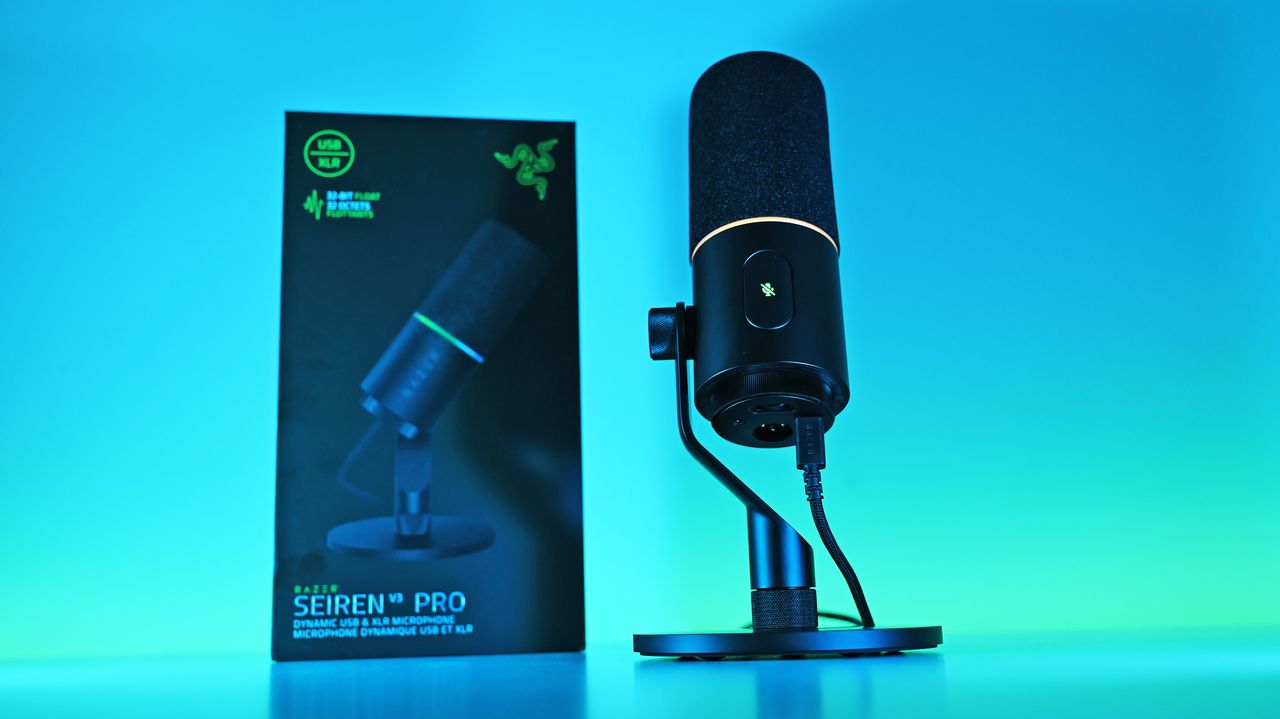
Low-angle shot of the Razer Seiren V3 Pro mic plugged into a USB-C cable next to its box, illuminated by a vivid blue and cyan background.
Low-angle shot of the Razer Seiren V3 Pro mic plugged into a USB-C cable next to its box, illuminated by a vivid blue and cyan background.
Apple’s next iPhone Air could arrive in spring 2027 with camera and battery upgrades as the company shifts toward staggered iPhone launches.
The post Apple Reportedly Preparing Second-Generation iPhone Air for Spring 2027 appeared first on TechRepublic.
Android 17 is rolling out to supported Pixel devices first, while non-Pixel users and IT teams face separate OEM timelines, beta programs, and app-testing considerations.
The post Android 17 Is Live on Pixel, but Samsung and Other Android Users Still Have to Wait appeared first on TechRepublic.
Android 17 is rolling out to supported Pixel devices first, while non-Pixel users and IT teams face separate OEM timelines, beta programs, and app-testing considerations.
Alibaba Cloud opened two Paris availability zones as European enterprises weigh data sovereignty, resilience, and AI infrastructure needs.
The post Alibaba Cloud Bets on France as Europe Seeks More Control Over AI appeared first on TechRepublic.

 Connexion