Vue normale

  • ✇Yanko Design
  • Come for the Cut, Stay for the Click: The DeckShiv Neo Delivers Both
    Most utility knives are tools you forget about until you need one. The DeckShiv Neo is the one you reach for when you don’t. Rather than just existing purely to get a job done, like slicing open a box or trimming a stray thread, the DeckShiv Neo has a purpose long after you finish the task at hand. It’s a compact utility knife built around the moments when there’s nothing to cut at all, just a satisfying magnetic slide that clicks home every time you push it. That feeling comes from a three-par
     

Come for the Cut, Stay for the Click: The DeckShiv Neo Delivers Both

Par : JC Torres
9 septembre 2026 à 21:45

Most utility knives are tools you forget about until you need one. The DeckShiv Neo is the one you reach for when you don’t. Rather than just existing purely to get a job done, like slicing open a box or trimming a stray thread, the DeckShiv Neo has a purpose long after you finish the task at hand. It’s a compact utility knife built around the moments when there’s nothing to cut at all, just a satisfying magnetic slide that clicks home every time you push it.

That feeling comes from a three-part motion the brand calls the Push: travel, resistance, and return. Slide it forward, feel resistance build under your thumb, then let it snap cleanly back. The DeckShiv Neo adds 0.26 inches of extra travel over the original, just enough room for that resistance to develop without turning the motion into work. It’s a tiny change, but it’s the whole point.

Designer: ACTMAX Design Team

Click Here to Buy Now: $49 $79 ($30 off). Hurry, only a few left! Raised over $51,000.

Underneath that motion sits a reworked internal system built from four N52 magnets, two tucked inside the body and two more inside the slider cover. They add resistance as you push, then guide the slider back once you let go. A solid, CNC-machined brass rail also replaces the thin shim used before, giving the mechanism a guided path instead of loose surface contact.

There’s also a Pin and Stop Pin system tucked inside, which sounds technical but solves a simple problem: knowing exactly when the slide is finished moving. Push it all the way, and it stops firmly, with no mushy give or extra wiggle room. That crisp finish is part of why the motion feels complete every time, not just smooth in the middle.

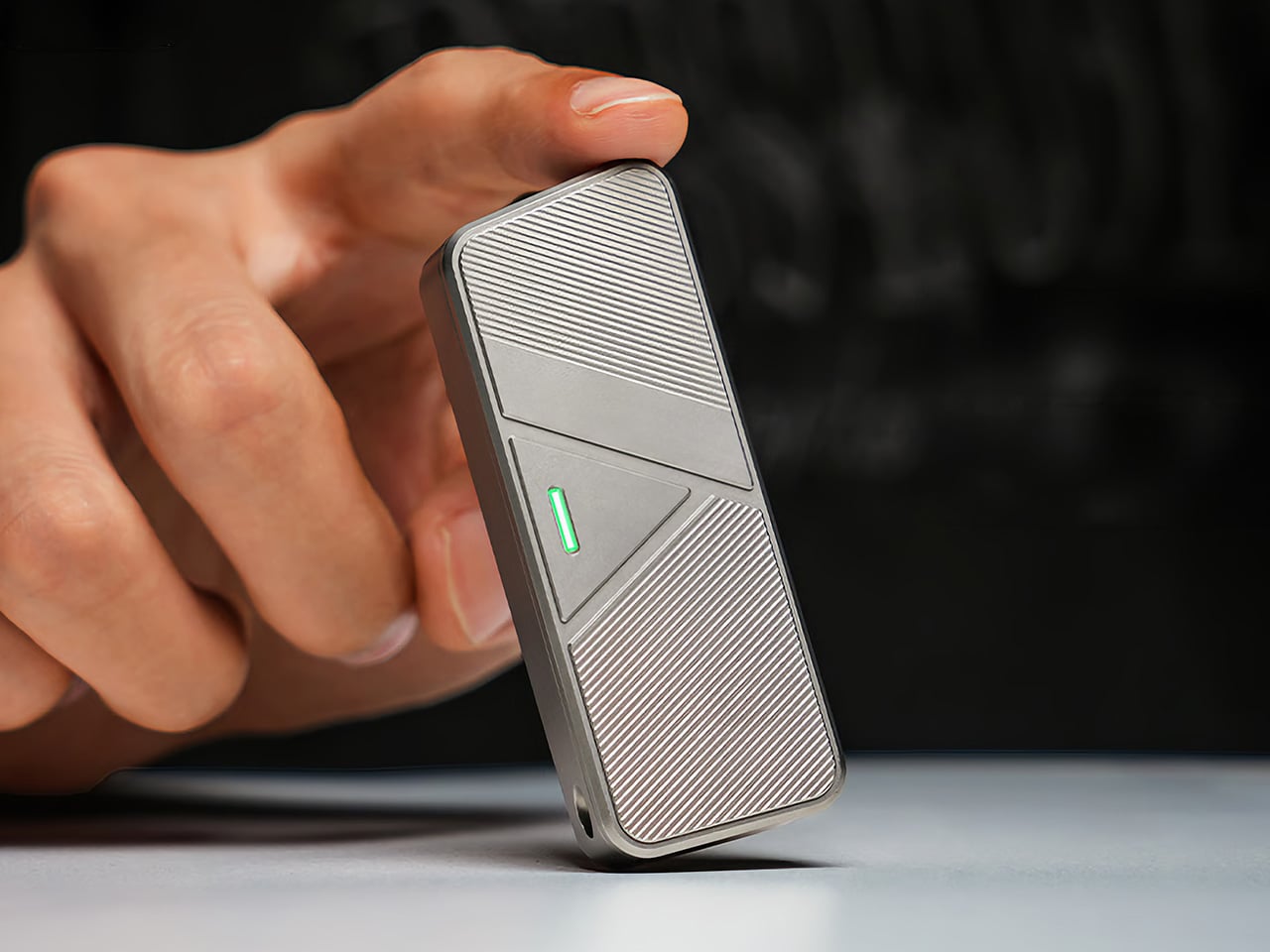
The DeckShiv Neo’s surface plays a role, too. A fine, bidirectional texture is machined into the body so your thumb finds grip whether you’re pushing forward or letting it slide back, and it works the same whether you’re left- or right-handed. Every corner is chamfered, and every transition smoothed over, so the knife stays comfortable to hold no matter how many times you’ve already picked it up.

When there’s actually something to cut, whether it’s a stubborn shipping box, packing tape, or a swatch of leather, the Neo handles it with a 15-degree asymmetric blade opening that exposes about 0.95 inches of edge, roughly 26% more than before. That extra visibility keeps the cutting line in clear view, letting you guide the blade with more precision instead of guessing where it actually is.

The blade itself is a standard SK5 utility blade, the same kind you’d find at any hardware store, not some proprietary cartridge that locks you into overpriced refills. Two N52 magnets hold it firmly in place, backed by a mechanical stop that keeps it from shifting in use. Once it dulls, swapping in a fresh one takes seconds and barely costs anything.

The DeckShiv Neo is also about 20% thinner than its predecessor, measuring roughly 2.9 by 2.7 by 0.51 inches, small enough to disappear into a pocket without printing through your jeans. A one-piece deep-carry clip keeps it riding low and steady, and it comes off entirely if you’d rather clip it elsewhere or thread it through the built-in lanyard point instead, whichever suits how you carry things.

The body comes in Grade 5 titanium, aluminum, or PEI, and the choice changes more than the color. Titanium feels dense and grounded, giving each push a deliberate, mechanical quality. Aluminum feels crisper and lighter, quicker to respond under your thumb. PEI runs warmer to the touch, with a softer, more playful character. Same mechanism inside, three distinct personalities depending on what your hand prefers.

There’s one more quiet touch worth mentioning: an optional tritium vial slot that glows on its own for up to 25 years, with no batteries or charging involved. It’s a small, personal detail rather than a flashy one, fitting for a compact companion you’ll reach for out of habit, whether or not you need to cut much of anything that day.

What makes Neo different isn’t the titanium or the magnets. It’s the fact that you’ll push it for no reason at all, and that’s exactly the point. It’s a tool that cuts when you need it, but you’ll reach for it long after the boxes are opened. You’ll buy it for the cut. You’ll keep it for the click.

Click Here to Buy Now: $49 $79 ($30 off). Hurry, only a few left! Raised over $51,000.

The post Come for the Cut, Stay for the Click: The DeckShiv Neo Delivers Both first appeared on Yanko Design.
  • ✇Yanko Design
  • Laptops Sealed Computers Shut, ARTISAN ALTO Snaps Them Back Open
    Home computers used to snap open like toolboxes, cartridges sliding in for a new game or a new skill. That idea mostly disappeared once sealed laptops took over, but the ARTISAN ALTO AT-101 brings it back with a vermilion shell that looks like it walked straight out of 1984 and a system built for how people actually tinker today. It’s a machine designed to grow alongside whatever you’re currently obsessed with. The trapezoidal red housing wastes no time signaling its intentions. Sculpted, conca
     

Laptops Sealed Computers Shut, ARTISAN ALTO Snaps Them Back Open

Par : JC Torres
9 septembre 2026 à 06:07

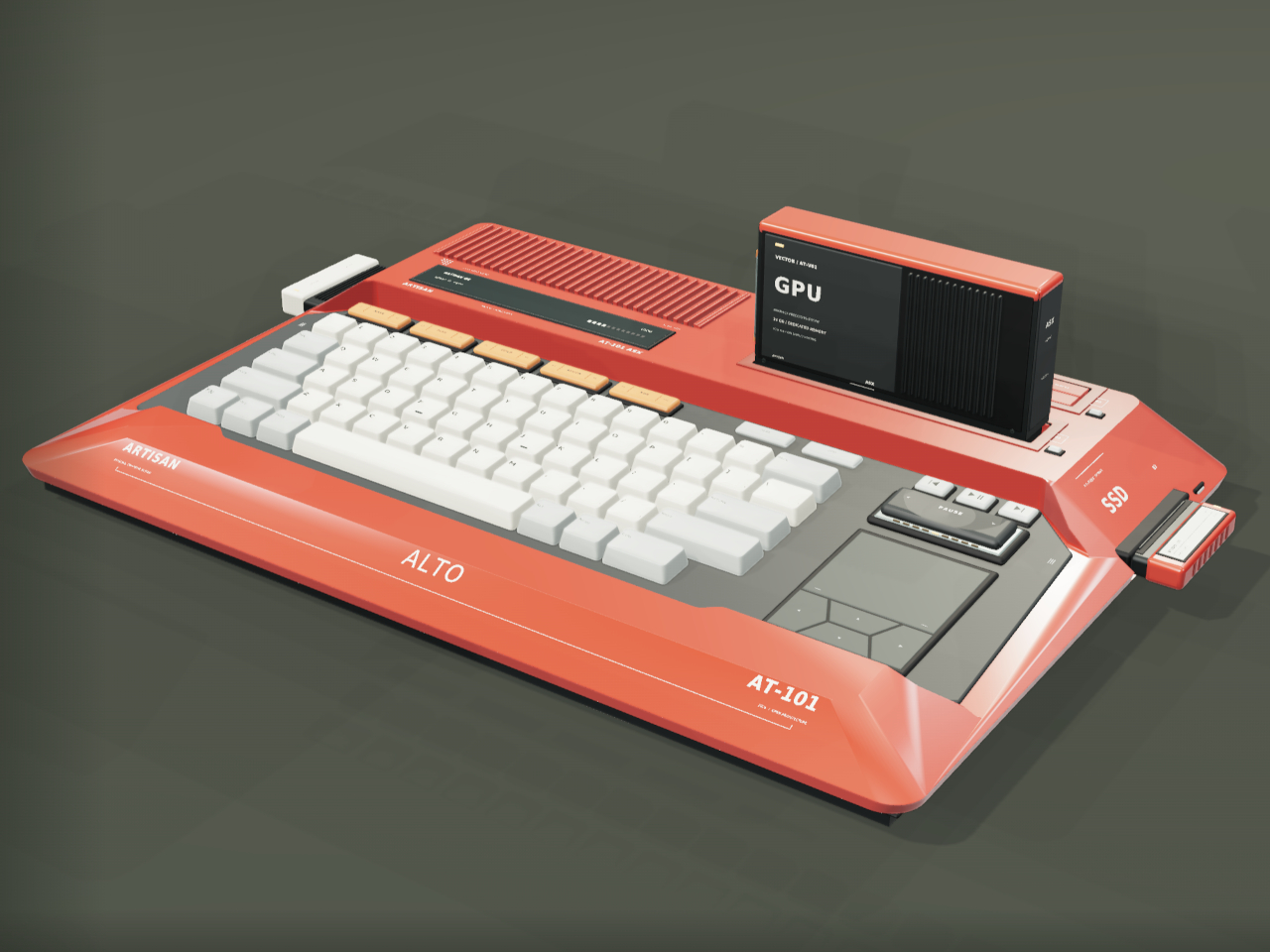
Home computers used to snap open like toolboxes, cartridges sliding in for a new game or a new skill. That idea mostly disappeared once sealed laptops took over, but the ARTISAN ALTO AT-101 brings it back with a vermilion shell that looks like it walked straight out of 1984 and a system built for how people actually tinker today. It’s a machine designed to grow alongside whatever you’re currently obsessed with.

The trapezoidal red housing wastes no time signaling its intentions. Sculpted, concave ivory keycaps sit beside red cooling louvres, and a keyboard opening cuts diagonally through the sloping side, turning what could’ve been a flat slab into something with genuine presence on a desk. This is a machine built to be looked at, not tucked behind a monitor.

Designer: Leo Botinelly

That vintage-inspired shell hides a distinctly modern expansion idea. Upright cartridges slot into place to add graphics power, sound capability, retrocomputing modes, or an AI companion, while smaller side modules handle specialist interfaces and individual projects. Recording a demo, building out a more ambitious scene, or reviving an old favorite game all become a matter of swapping in the right module rather than replacing the whole machine.

The standout pairing puts VECTOR, a compute cartridge, alongside COMPANION, an AI agent module with its own ivory-crowned housing. Together they form what the concept calls a personal cyberdeck, one where your context and your processing power both live in the same two bays. Everything from your conversation history to your working files stays local, an intentional counterpoint to how most AI tools currently function.

Five multifunction keys handle creative shortcuts without forcing a trip through a menu, while a dedicated PAUSE rocker lets you freeze, rewind, or speed through whatever’s running, treating time itself as something you can grab and adjust mid-task. A touchpad and four flush cursor keys merge into a single continuous surface on the right side, keeping navigation under the same hand that’s already resting there.

Flip the machine over and the same philosophy continues. Memory access sits in the open rather than buried under layers of casing, rear supports adjust to match your desk setup, and a single screw releases the service clamp entirely. Every one of these choices treats a computer’s insides as something worth respecting, not hiding behind warranty stickers and proprietary screws.

Around back, a compact connector panel handles the practical side of daily use. USB-C power sits alongside labeled ports for two cartridges, additional USB-C connections, LAN, HDMI, USB-A, and audio, all routed cleanly to keep cables from tangling across the front of a desk. Even the exhaust vents get a considered shape, flanking the connector panel like a pair of small turbines venting heat from all that cartridge-driven ambition.

The post Laptops Sealed Computers Shut, ARTISAN ALTO Snaps Them Back Open first appeared on Yanko Design.

  • ✇Yanko Design
  • Clear-Shell Game Boys Never Made the Screen Transparent, Arduview Did
    Every gadget on a desk is built to hide what makes it work. Phones, consoles, controllers, they’re all sealed slabs designed to keep the copper and silicon out of sight. Arduview refuses that logic entirely. Its shell is clear, its circuit board is clear, and its OLED display lets you watch pixels light up while seeing straight through to the components producing them. Retro handhelds have flirted with transparency before. Clear-shell Game Boys and modded Miyoo units let you glimpse a shadow of
     

Clear-Shell Game Boys Never Made the Screen Transparent, Arduview Did

Par : JC Torres
9 septembre 2026 à 05:15

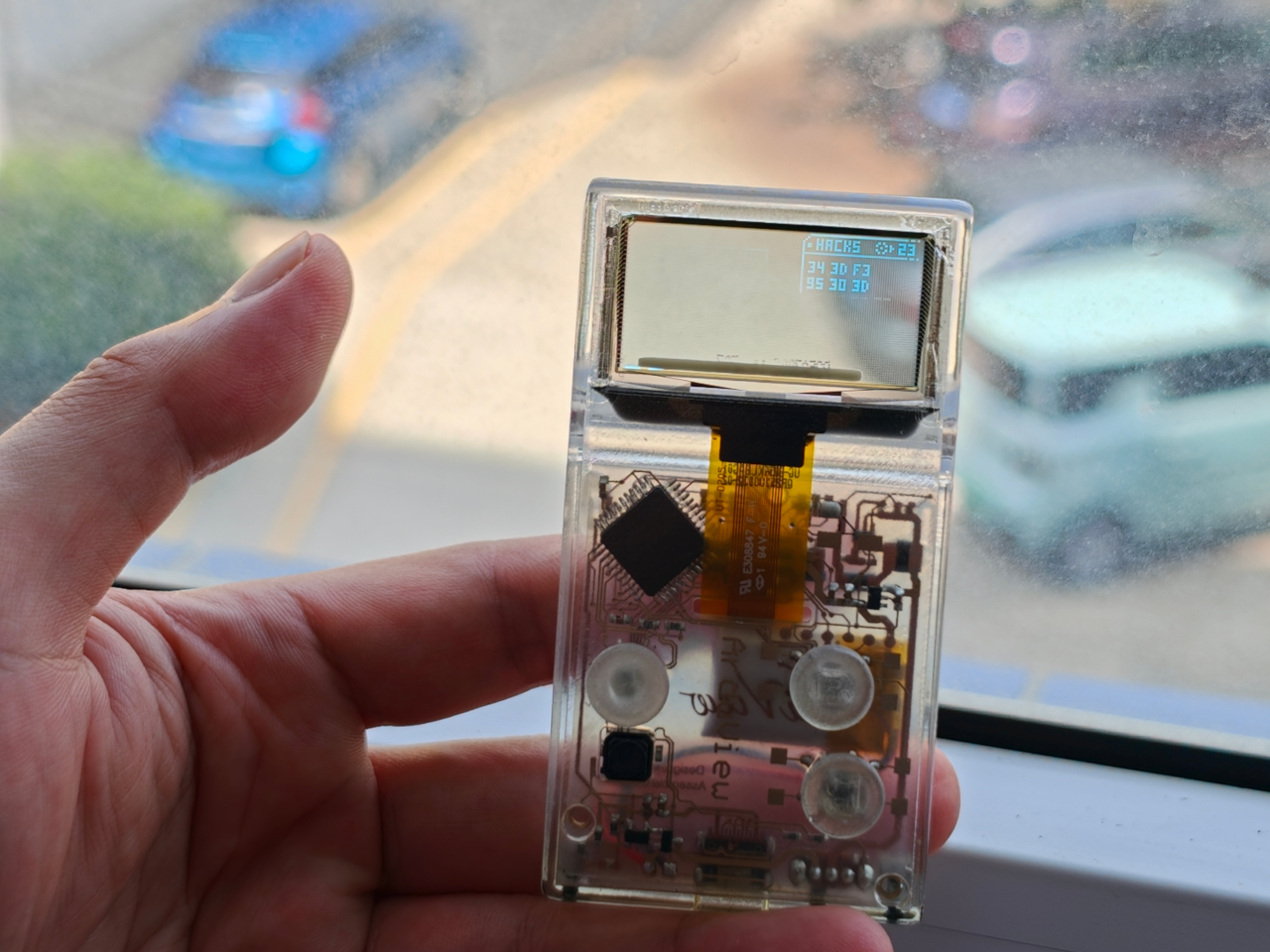
Every gadget on a desk is built to hide what makes it work. Phones, consoles, controllers, they’re all sealed slabs designed to keep the copper and silicon out of sight. Arduview refuses that logic entirely. Its shell is clear, its circuit board is clear, and its OLED display lets you watch pixels light up while seeing straight through to the components producing them.

Retro handhelds have flirted with transparency before. Clear-shell Game Boys and modded Miyoo units let you glimpse a shadow of the board through tinted plastic, but the display itself stayed opaque, a black rectangle sitting in an otherwise see-through frame. Arduview closes that gap by making the screen itself transparent, so nothing on the device breaks the illusion of looking clean through it.

Designer: Louis Huang

Peer through the front and the internals aren’t just visible; they’re the entire visual identity. The board, the chip, an orange copper flex cable, the button domes, and the USB-C port all sit in plain view, arranged the way a watchmaker might arrange gears behind sapphire crystal. Nothing here was designed to be hidden later. It was designed to be looked at from day one.

That philosophy extends to how the thing works, not just how it looks. Built on Arduboy, an open-source handheld platform, Arduview skips the layers that usually complicate small electronics. There’s no app store hunting, no Wi-Fi pairing, no account setup standing between you and 400 preloaded games. Power it on and it plays, the same instant gratification that made simple handhelds addictive in the first place.

At 50 grams and roughly the footprint of a credit card, the size does real work here. A device this small and this light stops being a dedicated gaming session and starts being something you carry the way you’d carry a keychain or a pocketknife, small enough to disappear until the moment you want it. Pull it out on a train platform or set it on a desk between meetings, and it reads less like a toy and more like a curiosity someone can’t resist picking up.

That reaction seems to be the entire point. A transparent gadget invites touching in a way an opaque one never does, because there’s an implicit dare in showing your internals: come look closer. Arduview leans into that dare completely, treating the space usually reserved for a case as prime real estate for the very thing most companies spend their design budgets concealing.

Retro gaming has always had a strong current of nostalgia running through it: chunky buttons, pixel art, low-resolution charm. Arduview borrows all of that while adding something genuinely new to the mix: a device that looks like it belongs in a display case at a design museum as much as it belongs in a pocket.

The post Clear-Shell Game Boys Never Made the Screen Transparent, Arduview Did first appeared on Yanko Design.

  • ✇Yanko Design
  • The 8BitDo Ultimate 3E Is the LEGO Set of Gaming Controllers
    Most controllers ask you to adapt to them. The 8BitDo Ultimate 3E flips that arrangement entirely, building a controller around the idea that your hands, your genre, and your platform should decide its shape instead of the factory floor. The face buttons, the d-pad, and even the joystick tops snap in and out as swappable modules, turning what’s usually a sealed, one-size-fits-all object into something closer to a toolkit. Pop off the magnetic faceplate and the accessory pack reveals its real pu
     

The 8BitDo Ultimate 3E Is the LEGO Set of Gaming Controllers

Par : JC Torres
9 septembre 2026 à 04:15

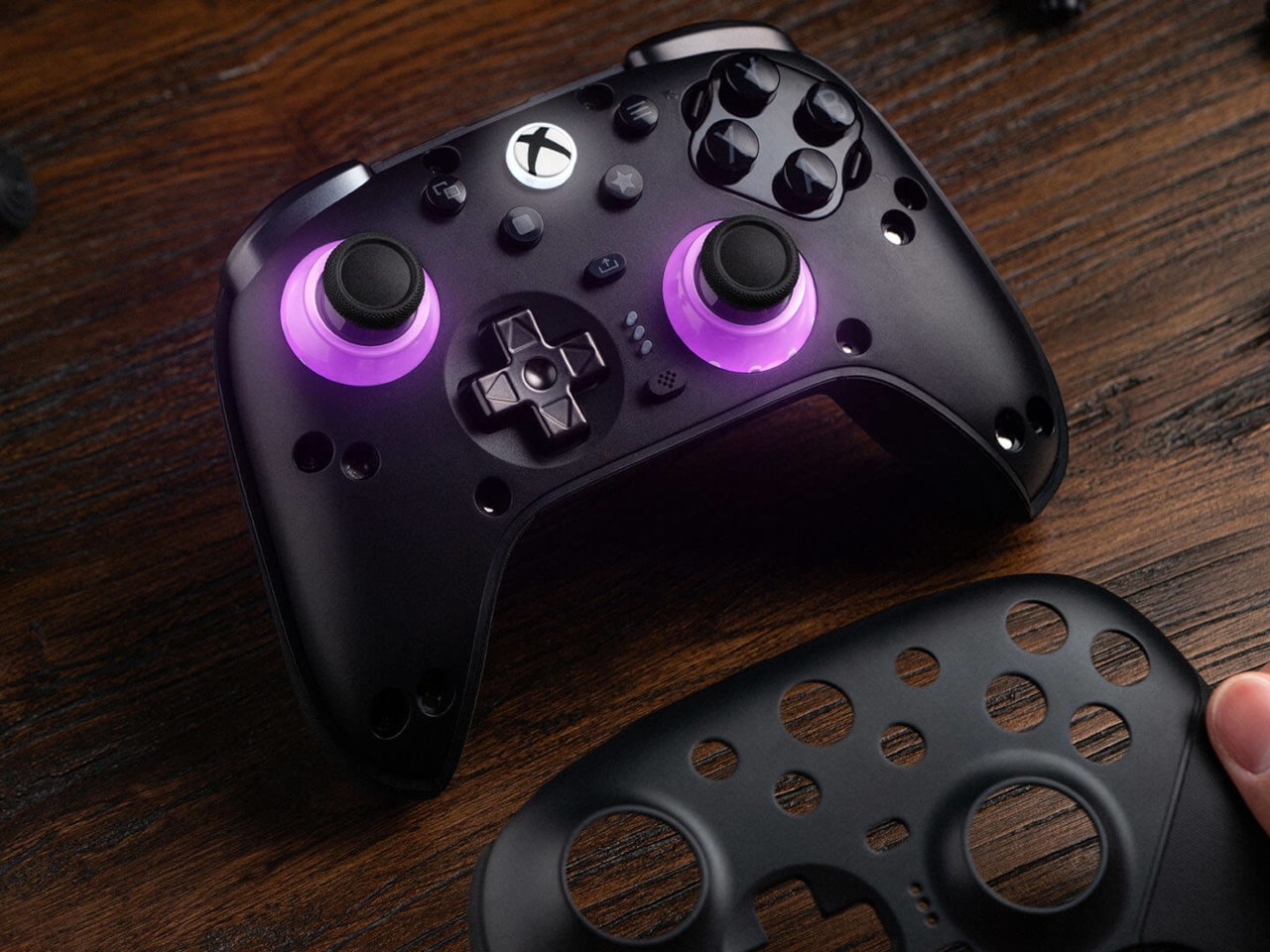
Most controllers ask you to adapt to them. The 8BitDo Ultimate 3E flips that arrangement entirely, building a controller around the idea that your hands, your genre, and your platform should decide its shape instead of the factory floor. The face buttons, the d-pad, and even the joystick tops snap in and out as swappable modules, turning what’s usually a sealed, one-size-fits-all object into something closer to a toolkit.

Pop off the magnetic faceplate and the accessory pack reveals its real purpose. A silicone membrane d-pad sits next to a tactile micro-switch version, and the joysticks come in tall, dome, and thick-neck shapes, each suited to a different grip or genre. Racing games favor a different thumb position than platformers, and for once, the hardware bends to match instead of forcing a single compromise across everything you play.

Designer: 8BitDo

Underneath those swappable caps, the joysticks themselves run on Tunneling Magnetoresistance sensors, a technology built specifically to resist the drift that eventually creeps into analog sticks after enough hours of use. Interactive RGB fire rings pulse around the base of each stick, translating movement into visual feedback in real time, a small touch that turns an otherwise invisible input into something you can actually watch respond.

The triggers carry their own bit of adaptability. Hall-effect sensors power two selectable trigger-stop positions, letting a shooter’s hair-trigger tap coexist with a racing game’s need for a longer, more gradual pull. Switching between them takes a flick of a physical switch, not a trip through a menu, which matters when a genre change happens mid-session rather than between them.

Connectivity spreads just as wide as the physical customization. The Ultimate 3E runs 2.4G wireless and wired modes for Xbox and PC, and switches to Bluetooth for mobile devices, now backed by a USB-C signal adapter for steadier range across more rooms and setups. Apple has officially signed off on compatibility too, covering iPhone, iPad, Mac, Apple TV, and even Apple Vision Pro, stretching the controller’s use well past the console it was designed around.

An integrated wireless charging dock handles power without cables cluttering a desk, while two pro-level back buttons and a pair of extra-fast bumpers add inputs for players who map more complex combinations. Three custom profiles let different games, or different people, keep their own configuration ready to load instantly, and a 3.5mm jack keeps wired headphones in the mix for anyone who still prefers a physical connection over Bluetooth audio.

None of this treats customization as an afterthought bolted onto a finished product. Every swappable piece, every sensor choice, feels like it was scoped out before the shell was ever molded, built around the idea that serious players tend to have very specific, very personal preferences about how a controller should feel in their hands.

The post The 8BitDo Ultimate 3E Is the LEGO Set of Gaming Controllers first appeared on Yanko Design.

  • ✇Yanko Design
  • Your Second Screen Can Finally Work With No Cables and No Outlet
    Desks are overrated. So are the cables that come with them. The 4URPC is a 15.6-inch wireless touchscreen monitor built for people who’d rather not be chained to an outlet just to get a bigger screen. It’s slim, self-powered, and ready to mirror whatever’s on your phone, tablet, or laptop the moment you need more room to work, watch, or play. Cutting the cord doesn’t mean cutting functionality. The monitor mirrors an iPhone or Android device through a peer-to-peer wireless connection, no home W
     

Your Second Screen Can Finally Work With No Cables and No Outlet

Par : JC Torres
8 septembre 2026 à 21:45

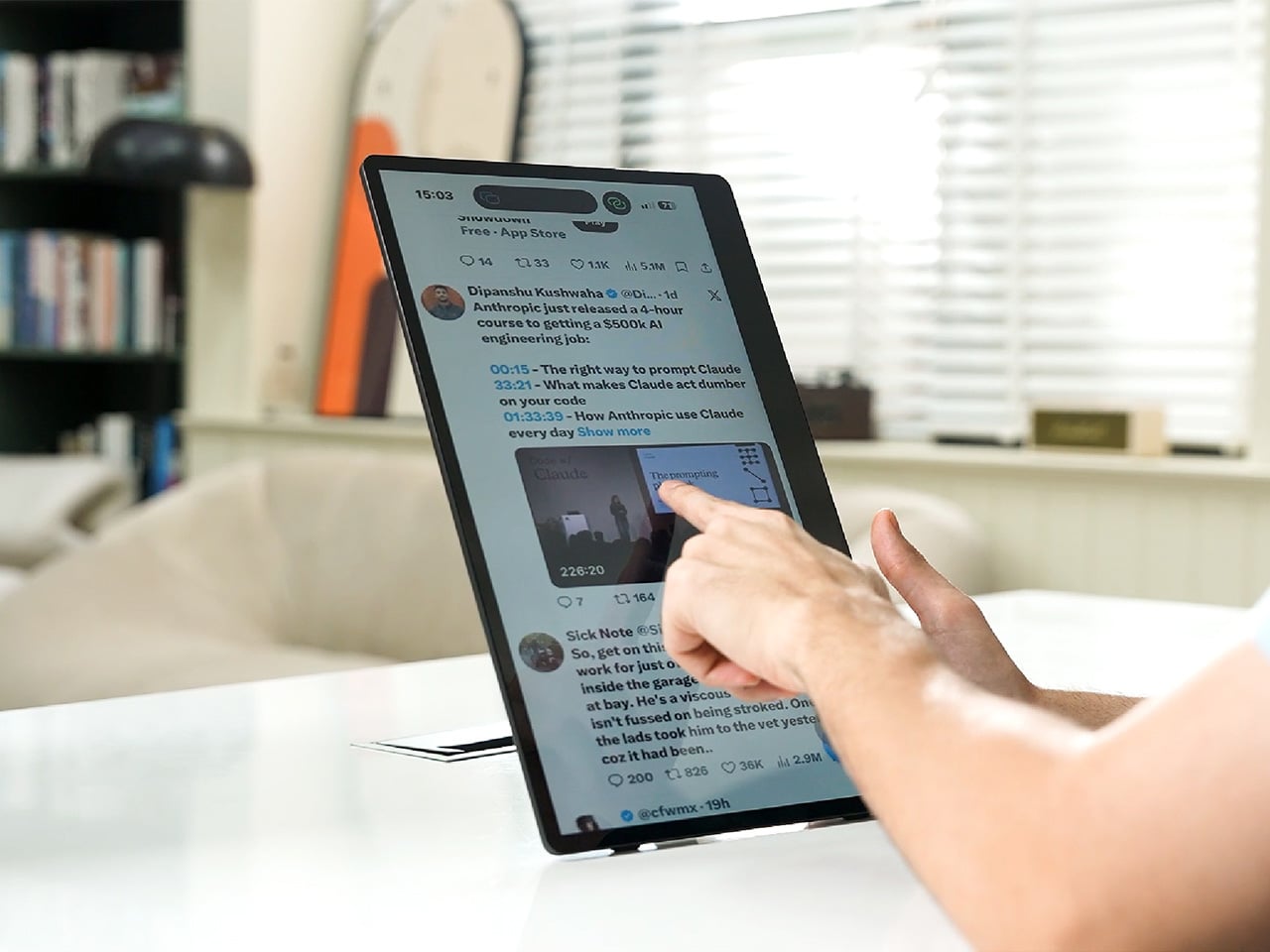
Desks are overrated. So are the cables that come with them. The 4URPC is a 15.6-inch wireless touchscreen monitor built for people who’d rather not be chained to an outlet just to get a bigger screen. It’s slim, self-powered, and ready to mirror whatever’s on your phone, tablet, or laptop the moment you need more room to work, watch, or play.

Cutting the cord doesn’t mean cutting functionality. The monitor mirrors an iPhone or Android device through a peer-to-peer wireless connection, no home Wi-Fi or app required. For streaming platforms like YouTube, Netflix, or Hulu, connecting to Wi-Fi and tapping the built-in TV Cast icon sends video to the screen. Either way, there’s no dongle to lose or cable to untangle before the movie starts.

Designer: 4URPC

Click Here to Buy Now: $219 $399 (45% off). Hurry, only 451/600 left! Raised over $181,000.

The more interesting trick happens after mirroring starts. The 10-point touchscreen can send input back to the connected phone, turning the monitor into a larger, shared control surface. Flip through photos with a friend, walk a colleague through a presentation, or hand someone the reins without handing over your phone. It’s a shift that makes shared screen time less awkward.

None of this would matter much if the monitor were bulky. At half an inch thick and just over 2 pounds, it’s built to disappear into a backpack rather than dominate it. The matte, textured shell keeps fingerprints and glare to a minimum, and a fold-out kickstand on the back means setup takes seconds on a desk, a kitchen counter, or the arm of a couch.

A built-in 4,000 mAh battery backs up that portability by taking the wall outlet out of the equation. Setting up on a train, in a hotel room, or on a patio doesn’t mean scouting for the nearest plug first. That same battery can lend a charge to a connected phone, turning the monitor into a backup power bank when the moment calls for it.

Plug it into a laptop with a USB-C cable, and the 4URPC switches roles, becoming an extended display rather than a wireless mirror. Dragging a browser tab, a chat window, or a reference document onto the second screen takes a second, and the touchscreen works over the wired connection. The laptop stays focused on the main task while the extra display handles everything else.

The screen also rotates between landscape and portrait without any fuss, which sounds minor until it changes how you use it day to day. Landscape suits video calls, games, and spreadsheets, while portrait mode fits scrolling through documents, reading long articles, or checking social feeds. Switching between the two takes a twist of the stand, not a trip through a settings menu.

Compatibility runs wide enough that most people won’t need to think twice before connecting. Wireless mirroring covers iPhones, Android phones running version 10 or later, MacBooks, and most Windows laptops, while the wired USB-C or HDMI input works with game consoles, streaming boxes, and the Nintendo Switch. There’s no software to install and nothing to configure; connecting the device and turning it on is the entire setup process.

Under the glass sits a 1920×1080 matte IPS panel running at 60 Hz, built more for comfortable, glare-free sessions than eye-popping color numbers. Dual USB-C ports split power delivery and video duties, small stereo speakers cover casual audio, and a VESA mount plus a standard camera screw thread add mounting options beyond the built-in stand. It’s a practical set of choices rather than a flashy one.

There’s something telling about a monitor that assumes you won’t always be sitting at the same desk tomorrow. Work has scattered across kitchen tables, coffee shops, and airport gates for a while now, and screens are only starting to catch up. The 4URPC doesn’t try to be the sharpest or brightest display around; it just tries to be wherever you happen to land next.

Click Here to Buy Now: $219 $399 (45% off). Hurry, only 451/600 left! Raised over $181,000.

The post Your Second Screen Can Finally Work With No Cables and No Outlet first appeared on Yanko Design.

  • ✇Yanko Design
  • The $100 Keypad That Puts Each AI Coding Tool Behind Its Own Button
    Every developer juggling AI agents right now knows the feeling of context switching until the whole workflow blurs together. Copilot suggests something in one window, Claude Code runs a task in another, and a dozen prompts live scattered across notes and muscle memory. The Logitech MX Keypad exists to collapse all of that into nine small screens sitting next to the keyboard, each one a physical shortcut into a specific piece of that chaos. Every key on the keypad carries its own full-color LCD
     

The $100 Keypad That Puts Each AI Coding Tool Behind Its Own Button

Par : JC Torres
8 septembre 2026 à 10:20

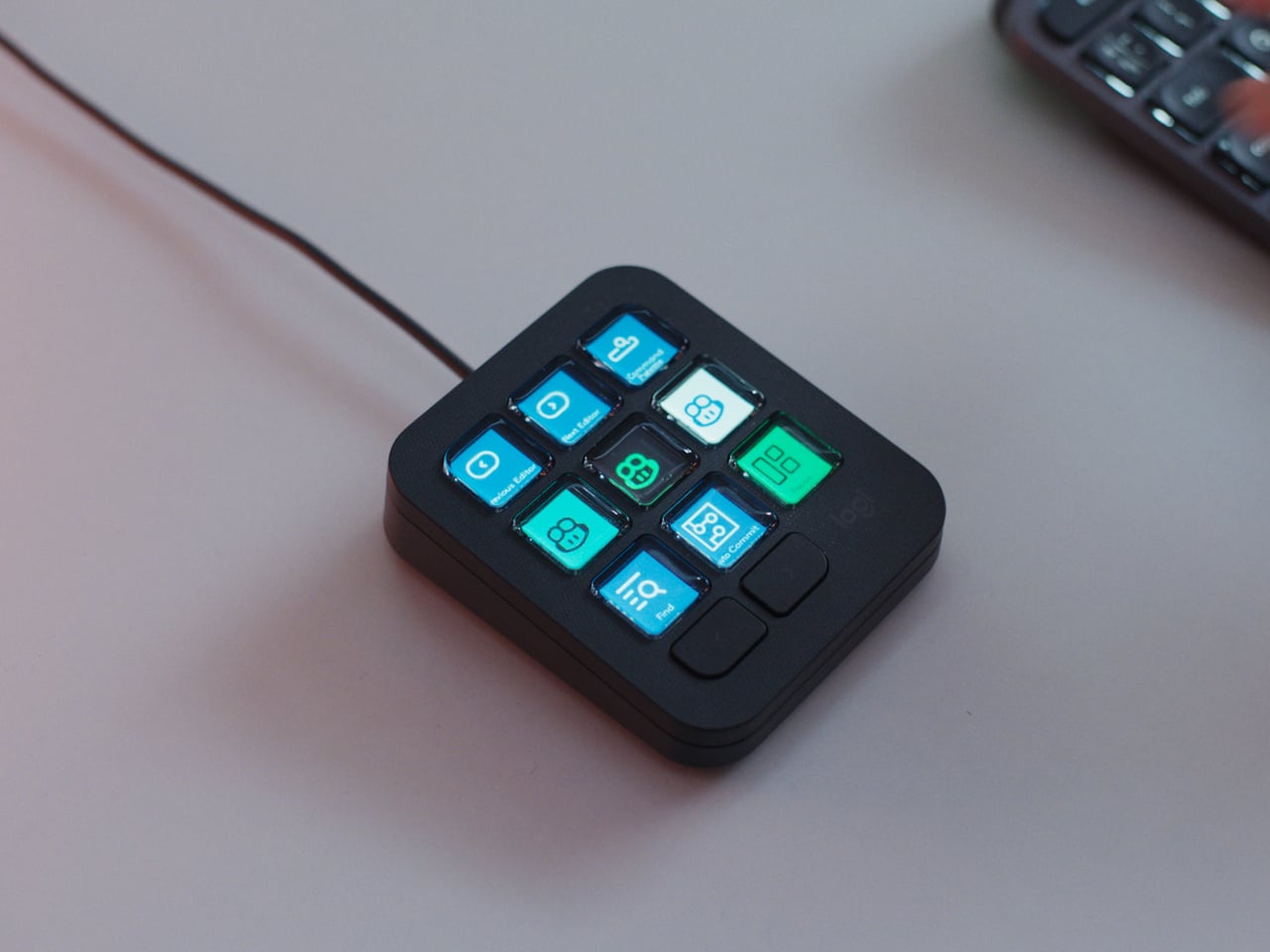
Every developer juggling AI agents right now knows the feeling of context switching until the whole workflow blurs together. Copilot suggests something in one window, Claude Code runs a task in another, and a dozen prompts live scattered across notes and muscle memory. The Logitech MX Keypad exists to collapse all of that into nine small screens sitting next to the keyboard, each one a physical shortcut into a specific piece of that chaos.

Every key on the keypad carries its own full-color LCD display, so instead of memorizing which function key does what, you glance down and see an icon that actually represents the command underneath it. Press one, and it can refactor a function, trigger a prompt macro, or hand off a task to an AI agent entirely. That small visual feedback loop turns an abstract keyboard shortcut into something closer to a labeled button on a control panel.

Designer: Logitech

What makes the hardware worth paying attention to is where Logitech chose to draw the compatibility line. Instead of building this around one coding environment, the MX Keypad works across GitHub Copilot, Claude Code, VS Code, and IntelliJ IDEA at once. A developer bouncing between an IDE and a terminal-based AI agent doesn’t need separate tools for each, just a different page of keys pulled up on the same nine buttons.

That pattern of paging matters more than it sounds. The keypad can hold multiple profiles, so switching from a Python project running through Copilot to a JavaScript refactor handled by Claude Code becomes a single tap rather than a mental reset. Anyone who has lost a train of thought hunting through browser tabs for the right prompt will recognize the value in never breaking eye contact with the code itself.

Underneath the surface, the MX Keypad ships with prebuilt plugins that Logitech had developers test directly against real coding platforms, rather than shipping generic templates and hoping they fit. An SDK opens the door further, letting teams build their own tools around internal workflows, while a community marketplace means the plugin library keeps growing without waiting on Logitech’s own release schedule.

None of that ambition comes wrapped in bulky, wasteful materials either. The body is made with recycled plastics, keeping the hardware in line with the sustainability commitments Logitech has built into its broader MX ecosystem. It is a small detail, but for a device meant to live permanently on a desk, it matters that the object itself doesn’t feel disposable.

At $99.99, the MX Keypad occupies a strange but clarifying position in a developer’s setup. It doesn’t replace a keyboard, and it doesn’t try to be an AI tool in its own right. Instead, it works like a translator between fast-moving human intent and the growing swarm of coding agents developers now manage daily, one labeled key at a time.

The post The $100 Keypad That Puts Each AI Coding Tool Behind Its Own Button first appeared on Yanko Design.

  • ✇Yanko Design
  • An Android Drawing Tablet With 127 Layers That Still Feels Like Paper
    Most Android drawing tablets make you choose between a screen that feels like paper and hardware fast enough to keep up with a real workflow. The Kamvas Pad 12 refuses that trade-off. Huion built a 12.2-inch standalone tablet around a textured, paper-like display and paired it with enough processing power to hold 127 layers open without stuttering, treating the screen as a genuine canvas rather than a stylus afterthought. That screen runs a 3:2 aspect ratio instead of the usual 16:9, and the di
     

An Android Drawing Tablet With 127 Layers That Still Feels Like Paper

Par : JC Torres
8 septembre 2026 à 09:20

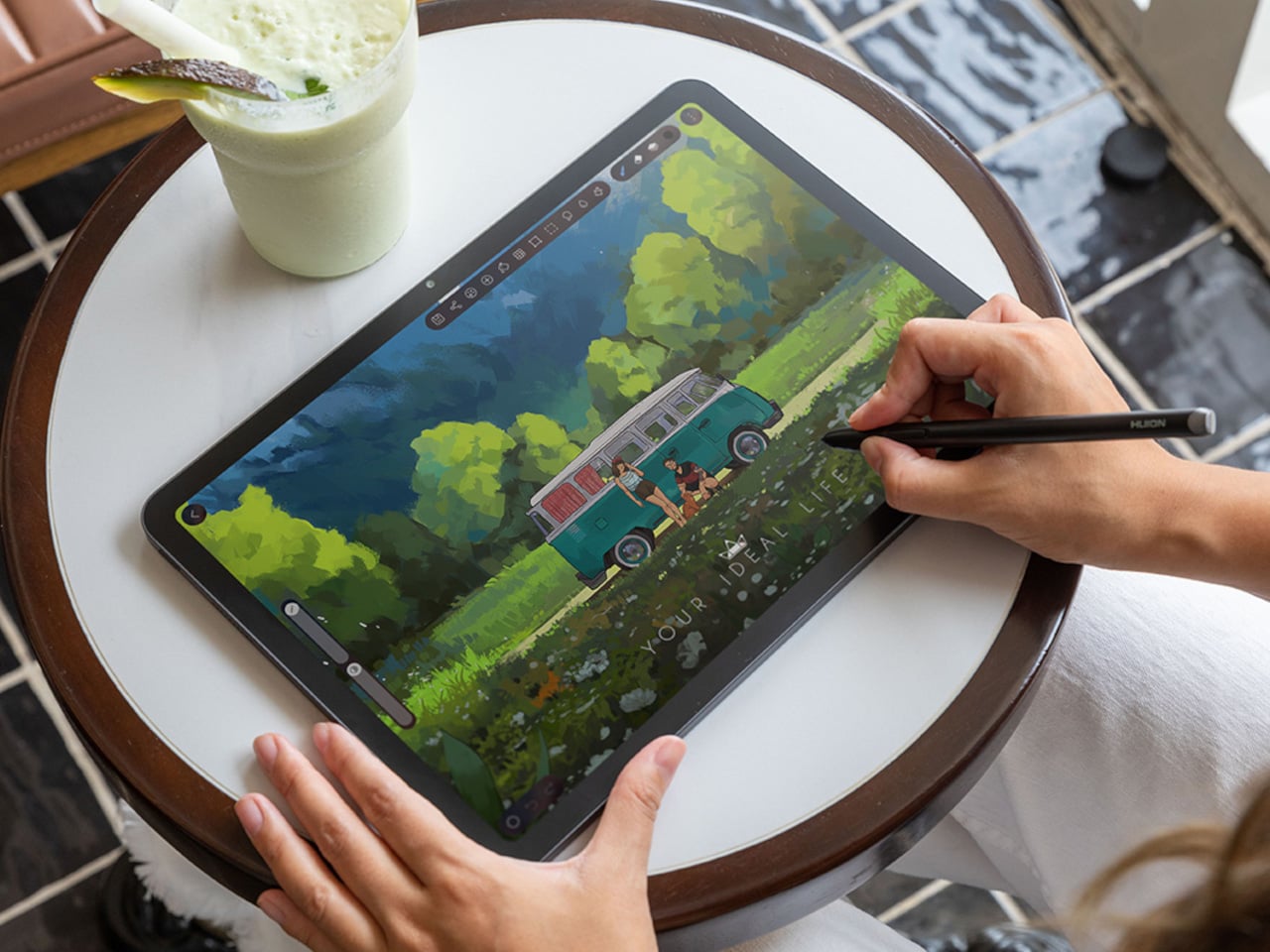
Most Android drawing tablets make you choose between a screen that feels like paper and hardware fast enough to keep up with a real workflow. The Kamvas Pad 12 refuses that trade-off. Huion built a 12.2-inch standalone tablet around a textured, paper-like display and paired it with enough processing power to hold 127 layers open without stuttering, treating the screen as a genuine canvas rather than a stylus afterthought.

That screen runs a 3:2 aspect ratio instead of the usual 16:9, and the difference shows up the moment you start sketching. A wider canvas means fewer awkward crops when composing a portrait or a page layout, and it doubles as a better shape for reading documents or comics without letterboxing. Combined with a 90Hz refresh rate, linework tracks the pen smoothly instead of lagging a beat behind your hand.

Designer: Huion

Canvas Glass 3.0 does the quieter work here. The surface is nano-etched for texture, so the pen tip grips the way it would on actual paper, while a soft-light treatment and anti-glare coating keep long sessions from turning into eye strain. Setting up near a window or working outdoors doesn’t wash out the display, which matters more than most spec sheets give it credit for.

The PW600C pen leans into that same philosophy of getting out of the way. It’s battery-free, weighs just 12 grams, and snaps magnetically onto the tablet body instead of needing a separate case or loop. Someone sketching on a train can toss the pen against the tablet’s edge between stops and trust it’ll still be there, without fishing through a bag for a charging cable or a lost cap.

Underneath, an eight-core MediaTek Genio 720 chip and 8GB of RAM handle the kind of multitasking that used to choke budget Android tablets, running multiple layers and apps without the frame drops that make digital painting frustrating. At 16,384 pressure levels and 60-degree tilt support, the stylus itself translates a feather-light highlight or a bold ink stroke with the kind of nuance that used to be reserved for pricier displays.

Storage tops out at 256GB onboard with room to expand to 1TB, so a growing library of finished pieces, reference photos, and half-done sketches doesn’t force anyone into constant cleanup. Android 16 and full Google Play access mean the tablet isn’t locked into a single app either. Clip Studio Paint, ibisPaint X, MediBang Paint, and Huion’s own HiPaint all come preloaded, ready for whichever workflow fits the project at hand.

Battery life rounds out the case for treating this as a genuine mobile setup instead of a tethered accessory. An 8,000mAh cell inside a 7.8mm metal body keeps the Kamvas Pad 12 running for roughly eight hours, long enough for a full day of sketching at a café or a cross-country flight without hunting for an outlet. That kind of stamina turns a drawing tablet into something closer to a sketchbook you never outgrow.

The post An Android Drawing Tablet With 127 Layers That Still Feels Like Paper first appeared on Yanko Design.

  • ✇Yanko Design
  • Open-Plan Offices Killed the Private Desk, and This Pod Brings It Back
    Most office furniture solves privacy by sealing someone off completely: four walls and a door that shuts out everyone else, along with any sense of connection to the room. The Seed Pod skips that tradeoff. It wraps a single desk and seat inside a radiating fan of white wooden slats, open enough to see through, dense enough to feel like a room of your own. That slat pattern isn’t just decorative. Vertical wooden ribs curve outward from a tall arched spine at the back, fanning shorter toward the
     

Open-Plan Offices Killed the Private Desk, and This Pod Brings It Back

Par : JC Torres
7 septembre 2026 à 12:20

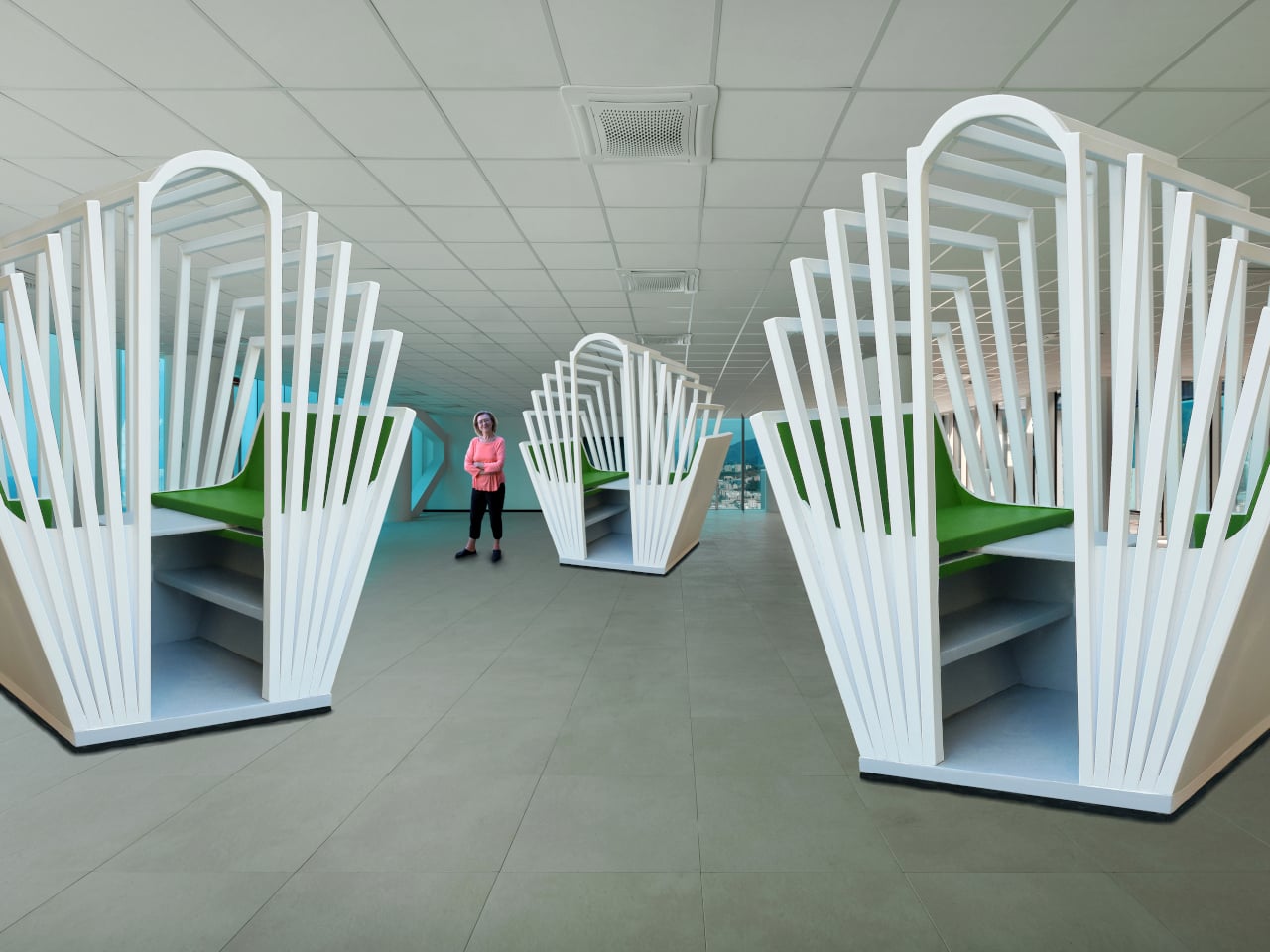
Most office furniture solves privacy by sealing someone off completely: four walls and a door that shuts out everyone else, along with any sense of connection to the room. The Seed Pod skips that tradeoff. It wraps a single desk and seat inside a radiating fan of white wooden slats, open enough to see through, dense enough to feel like a room of your own.

That slat pattern isn’t just decorative. Vertical wooden ribs curve outward from a tall arched spine at the back, fanning shorter toward the open front, so the whole structure reads like something caught mid-bloom rather than a static box. Gaps between each slat let light and sound pass through freely, creating enclosure without ever fully cutting the occupant off from whatever’s happening around them.

Designer: Michael Jantzen

Step inside and a bright green bench seat waits at the center, paired with built-in storage tucked into the lower walls on either side. Small wedge-shaped shelves hold whatever a workday requires nearby, papers, supplies, a bag, without eating into the already compact footprint. The contrast between crisp white slats outside and that saturated green interior gives the whole thing a distinct, almost botanical identity rather than reading as generic office equipment.

A sliding desktop surface handles the actual work. Sized specifically for a laptop, it can be repositioned to different spots under the main desk, adjusting to whatever posture or task someone needs at that moment rather than locking them into one fixed arrangement. Slide it back, and the same space clears out for someone to step in or out without maneuvering around a stationary tabletop.

Mobility matters just as much as the seating arrangement. The entire structure sits on wheels and plugs into any standard electrical outlet nearby, meaning it can roll into a corner of a shared office floor one week and relocate to a quiet spot at home the next. Nothing about setup requires special wiring or a dedicated room built around it.

Picture an open-plan office where video calls and side conversations blur together constantly, or a home where the only quiet corner left is also the one everyone walks through. Rolling a Seed Pod into either space carves out somewhere to actually concentrate, without requiring a renovation or a door that locks. Multiple units can sit side by side too, each occupant getting their own pocket of focus inside a shared room.

What makes the design work is restraint rather than enclosure. The slats do the job walls usually do, marking a boundary, without asking anyone to give up daylight, airflow, or the sense of still being present in the room they’re sitting in.

The post Open-Plan Offices Killed the Private Desk, and This Pod Brings It Back first appeared on Yanko Design.

  • ✇Yanko Design
  • UGREEN’s Power Bank Uses Liquid Cooling, and You Can Actually Watch It
    UGREEN’s MagFlow Pro treats overheating as a design problem worth solving with actual engineering, not just a bigger heat sink. This 10,000mAh magnetic power bank borrows liquid cooling from gaming PCs and squeezes it into a pocket-sized charger, aiming to keep wireless charging fast without turning your phone into a hand warmer along the way. Qi2 charging has always had a dirty secret hiding under its magnetic convenience. Wireless systems lose up to 30% of their power as heat during transfer,
     

UGREEN’s Power Bank Uses Liquid Cooling, and You Can Actually Watch It

Par : JC Torres
4 septembre 2026 à 05:15

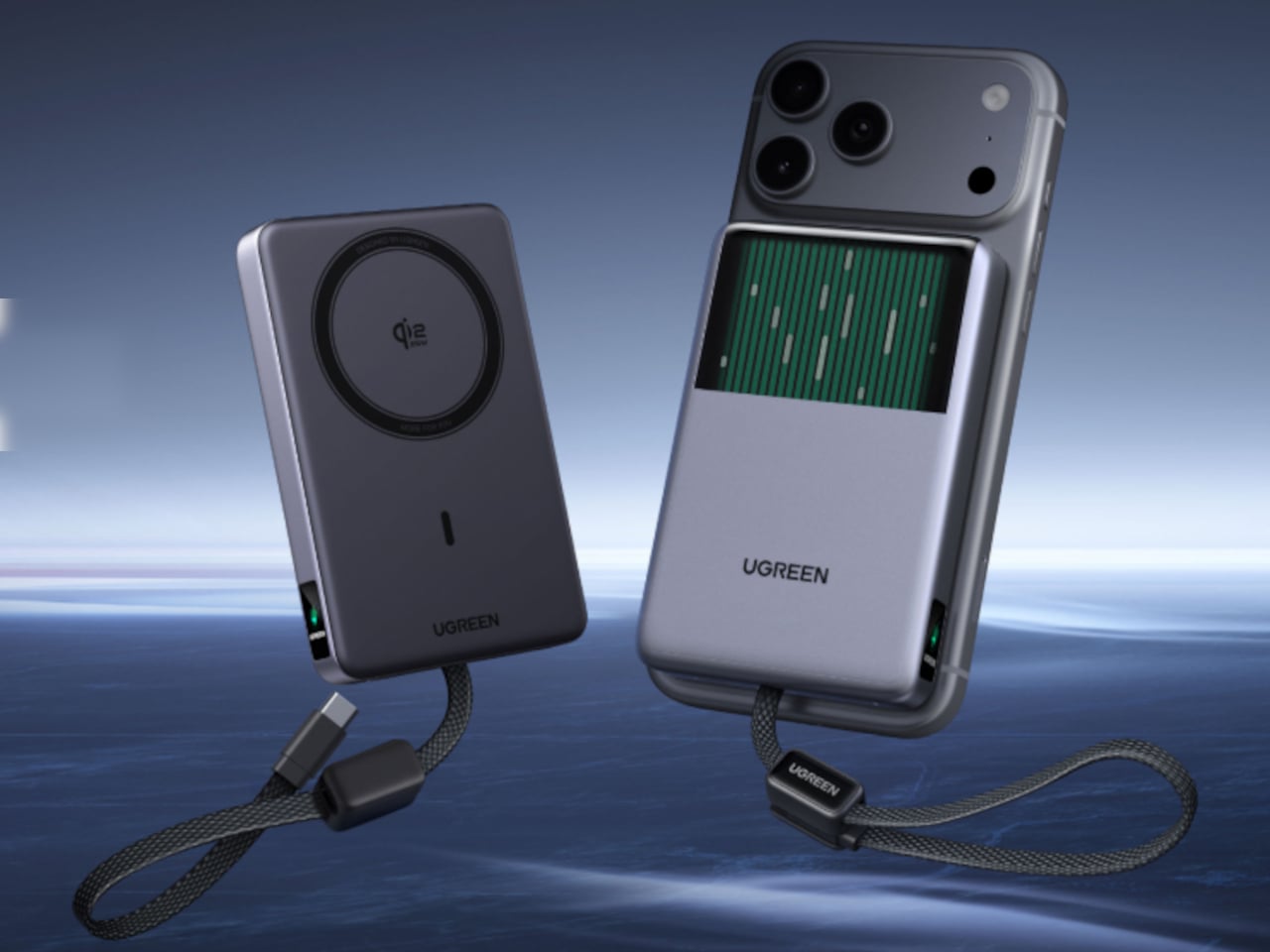
UGREEN’s MagFlow Pro treats overheating as a design problem worth solving with actual engineering, not just a bigger heat sink. This 10,000mAh magnetic power bank borrows liquid cooling from gaming PCs and squeezes it into a pocket-sized charger, aiming to keep wireless charging fast without turning your phone into a hand warmer along the way.

Qi2 charging has always had a dirty secret hiding under its magnetic convenience. Wireless systems lose up to 30% of their power as heat during transfer, which means a phone sitting at 25W often throttles down within minutes to avoid overheating. UGREEN built the MagFlow Pro around fixing that exact bottleneck rather than just chasing a bigger battery number.

Designer: UGREEN

Inside sits CryoPulse, a cooling system built around a micro-pump that circulates liquid coolant past the charging coil and other heat-generating components. Copper foil spreads that heat further, while a layout that physically separates key parts keeps warmth from concentrating in one spot. It is a scaled-down version of what keeps a gaming rig from throttling under load, just built to survive inside a phone charger.

A transparent panel on the front turns that entire process into something you can actually watch, showing coolant moving through the internal channels while your phone charges. It is an odd, almost theatrical touch for a power bank, but it doubles as reassurance that the system is doing its job. UGREEN calls it the Cyber Window, and it is hard to look away from once it is running.

That cooling translates into real numbers, too. UGREEN claims the system keeps peak surface temperatures on a phone up to 18°F below its own reference benchmark, letting a device hold onto higher wattage for longer instead of stepping down early. In practice, that means someone topping up before a flight or during a commute gets closer to advertised charging speeds instead of a slow crawl once things heat up.

A small display embedded in the shell keeps track of charging wattage, remaining battery percentage, cycle count, and cooling status, turning what used to be a guessing game into actual visible data. Paired with a built-in USB-C cable capable of 30W and a combined output of up to 45W, the MagFlow Pro can charge a phone, tablet, and another accessory simultaneously without demanding a bag full of extra cables.

If the battery degraded quickly, all of those fancy features would be pointless, so UGREEN built the cell around Dymondcell 2.0 protection, retaining more than 80% of its capacity after 800 charge cycles. It also survived seven hours of continuous overcharge testing without failure, a detail aimed squarely at anyone who leaves their charger plugged in overnight out of habit rather than necessity.

At $149.99, the MagFlow Pro costs considerably more than other 10,000mAh power banks on the market, and that price tag puts real weight behind its cooling claims. It is a bet that people charging phones daily care as much about consistent performance and battery longevity as they do about raw capacity, and that a bit of visible engineering can justify paying extra for it.

The post UGREEN’s Power Bank Uses Liquid Cooling, and You Can Actually Watch It first appeared on Yanko Design.

  • ✇Yanko Design
  • TCL’s P80 Pro and Ultra Are the Phones That Replaced Your Kindle Too
    TCL’s P80 Ultra and P80 Pro prove a phone screen doesn’t have to pick one personality and stick with it. Unveiled at IFA 2026 in Berlin, both handsets fold a vivid AMOLED panel and TCL’s paper-like NXTPAPER technology into the same sheet of glass, letting the display shift moods with a flick of a switch instead of forcing a trade-off between color and comfort. Run a finger along the frame, and you’ll find a thin slider, a small physical detail that carries plenty of weight in daily use. Slide i
     

TCL’s P80 Pro and Ultra Are the Phones That Replaced Your Kindle Too

Par : JC Torres
4 septembre 2026 à 04:15

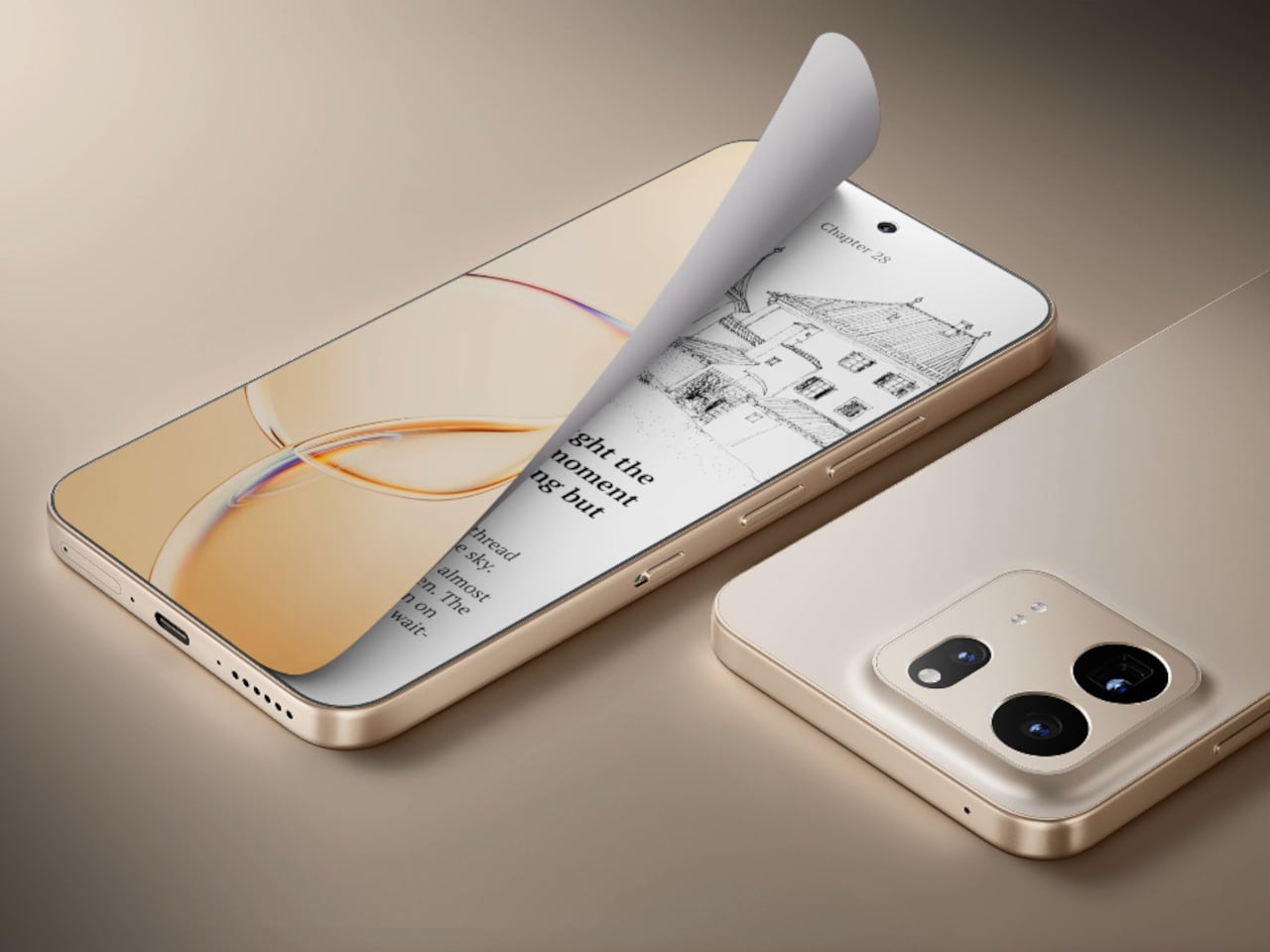
TCL’s P80 Ultra and P80 Pro prove a phone screen doesn’t have to pick one personality and stick with it. Unveiled at IFA 2026 in Berlin, both handsets fold a vivid AMOLED panel and TCL’s paper-like NXTPAPER technology into the same sheet of glass, letting the display shift moods with a flick of a switch instead of forcing a trade-off between color and comfort.

Run a finger along the frame, and you’ll find a thin slider, a small physical detail that carries plenty of weight in daily use. Slide it, and the 6.83-inch panel drops its saturation, taking on a warmer, textured look that mimics a printed page. A commuter buried in a novel or someone proofreading a document late at night gets a screen that behaves like paper, without losing the sharpness underneath.

Designer: TCL

Push that same slider one notch further, and the screen drops color entirely for Max Ink Mode, a stripped layout that silences notifications except for calls and texts. It reads like a design decision as much as a software one, TCL betting people want to quiet their phone rather than mute it completely. The payoff is a battery that can stretch across roughly a week of steady reading.

That reading-first mindset carries into the software too. Both phones can convert e-books into audiobooks or podcast-style narration using on-device AI, giving Max Ink Mode a voice to lean on when eyes need a break instead of ears. It is a small addition, but it treats the slower, paper-like mode as a genuine feature rather than a bolted-on gimmick for a keynote slide.

None of that would matter if the screen looked washed out the rest of the time, so TCL leaned on a 1.5K AMOLED panel that hits 3,200 nits and covers the full DCI-P3 color range. A Nano Crystal Shield coating cuts glare enough to keep the display readable under direct sun, marking TCL’s first pairing of NXTPAPER with OLED rather than the LCD panels it used before.

The frame wrapping that screen is aluminum rather than the plastic often found at this price, giving both phones a sturdier grip without piling on bulk. TCL backs that up with an IP68 rating against dust and water, plus MIL-STD-810H certification for the inevitable drop. Buyers get to pick between Sunlit Gold, Burgundy, and Midnight Blue, three finishes that lean more toward jewelry-box color choices than typical slab-of-glass smartphone palettes.

Where the two models part ways is around the back. The P80 Ultra carries a 50-megapixel main camera next to a 50-megapixel periscope lens for 3x optical zoom, tucked into a housing shaped to avoid throwing off the phone’s balance. The P80 Pro drops the periscope for a simpler dual-camera arrangement, trading reach for a slimmer build that still shares the same main sensor and 8-megapixel ultrawide.

TCL is rolling both phones out across Europe first, with the P80 Ultra priced from €549 (around $635) and the P80 Pro starting at €429 (around $500), before a Latin American launch follows in October. A wider release is expected to reach additional regions afterward. In a category full of identical glass rectangles, these two phones actually behave differently depending on what someone needs from them that day.

The post TCL’s P80 Pro and Ultra Are the Phones That Replaced Your Kindle Too first appeared on Yanko Design.

  • ✇Yanko Design
  • TECNO and Tonino Lamborghini Prove You Can’t Fake a Real Collab
    Slapping a famous badge on a phone’s back panel is the easy version of a brand partnership. TECNO and Tonino Lamborghini clearly wanted the harder version instead. The POVA 8 Pro 5G Tonino Lamborghini Limited Edition builds its entire identity around a black-and-red palette and a hexagon pattern lifted straight from Lamborghini’s mechanical heritage, then carries that language past the glass and into the software running underneath. The rear panel does the heaviest visual lifting. A dual-layer
     

TECNO and Tonino Lamborghini Prove You Can’t Fake a Real Collab

Par : JC Torres
4 septembre 2026 à 02:00

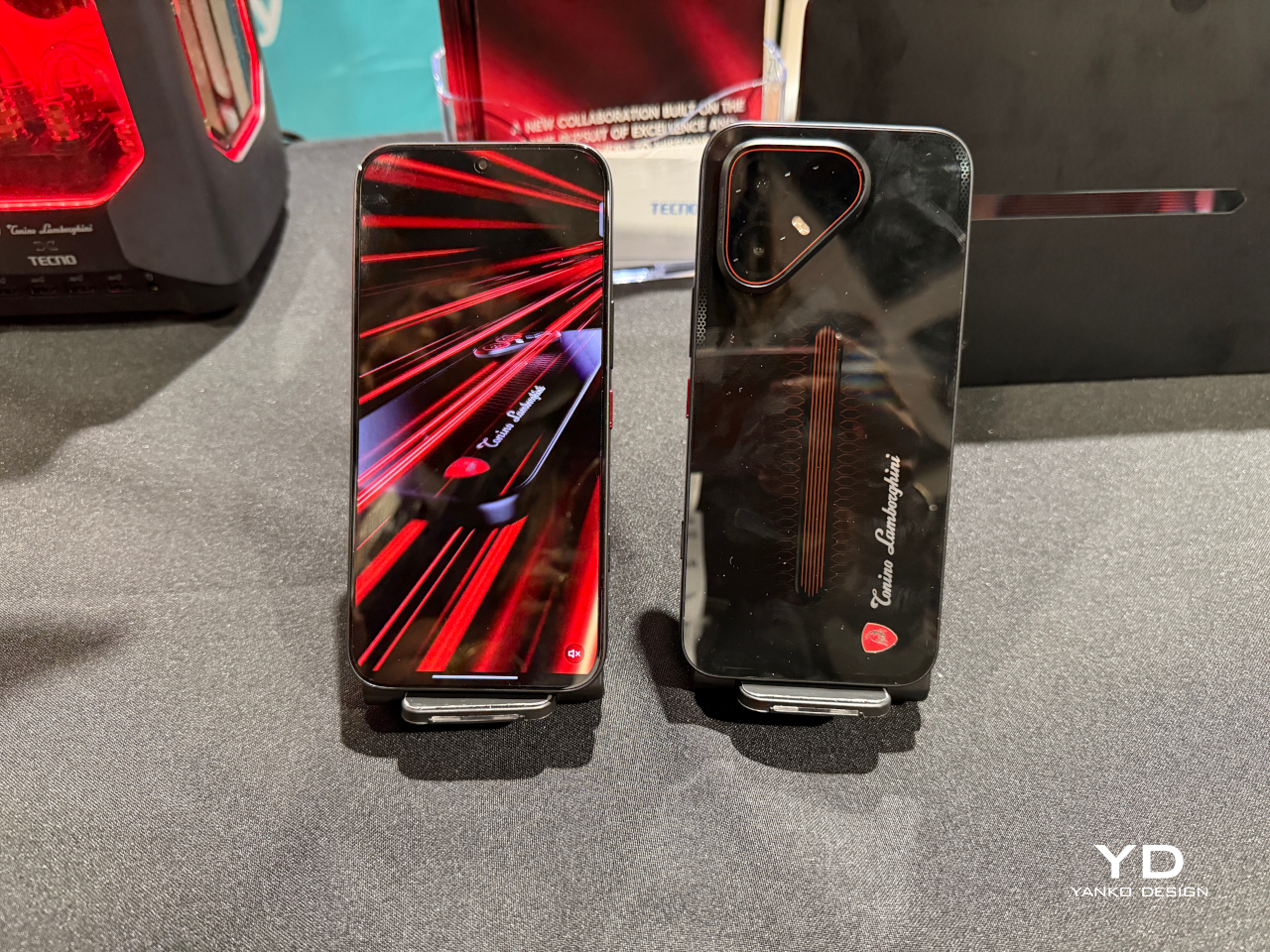
Slapping a famous badge on a phone’s back panel is the easy version of a brand partnership. TECNO and Tonino Lamborghini clearly wanted the harder version instead. The POVA 8 Pro 5G Tonino Lamborghini Limited Edition builds its entire identity around a black-and-red palette and a hexagon pattern lifted straight from Lamborghini’s mechanical heritage, then carries that language past the glass and into the software running underneath.

The rear panel does the heaviest visual lifting. A dual-layer stacking process gives it a reflective quality built from countless internal mirror structures that refract and redirect light, so red accents seem to surface and sink back into shadow as the phone tilts in your hand. A physical height difference between the two layers adds genuine spatial depth, echoing the layered geometry found in actual mechanical engineering rather than faking it with a printed graphic.

Designer: TECNO x Tonino Lamborghini

That commitment doesn’t stop at the hardware. A bespoke interface theme reworks dozens of icons in matching black-and-red tones with glass-like material effects, while a custom boot animation and ringtone carry the same mechanical energy into everyday use. Opening the phone in the morning feels less like waking up a generic Android device and more like starting an engine built around a specific mood.

Underneath the styling sits a dual-chipset setup pairing a MediaTek Dimensity 7400 Ultimate platform with a TECNO-built P1 Graphic Chip, backed by a vapor chamber cooling system spanning over 22,000mm² of dissipation area. That combination pushes supported titles as high as 144FPS, turning a commute or a lunch break into legitimate gaming time instead of a compromise. A dedicated one-tap button on the side keeps favorite apps and gaming shortcuts one press away.

Photography leans on a Sony-engineered LYTIA 700C sensor with a larger light-sensitive area, giving low-light shots and handheld video noticeably steadier results thanks to built-in optical stabilization. A 50MP high-pixel mode and 2x lossless zoom cover the detail-obsessed shots, while an 8MP ultra-wide lens handles group photos and landscapes without anyone needing to step backward to fit everyone in frame.

The 6.78-inch AMOLED display pushes brightness to 4,500 nits and refreshes at 144Hz, numbers that matter most outdoors under direct sun or during fast-paced gaming sessions where lag ruins the moment. A touch layer rated for wet and oily fingers keeps the screen responsive through rain, sweat, or sunscreen-covered hands, useful for anyone who refuses to put their phone down just because the weather did.

Durability rounds out the package rather than acting as an afterthought. Corning Gorilla Glass 7i, IP69-rated water and dust resistance, and SGS 5-Star Drop certification mean the phone can survive a dropped call turning into a literal drop without ending the relationship. A 6,500mAh battery retains over 80% of its health after 2,000 charge cycles, translating to roughly six years of daily use before a real decline sets in.

TECNO and Tonino Lamborghini spent more effort here proving that a licensing deal can produce something with actual mechanical thinking behind it, rather than a badge glued onto commodity hardware. The result reads less like a co-branded accessory and more like a phone that happens to share a bloodline with the cars.

The post TECNO and Tonino Lamborghini Prove You Can’t Fake a Real Collab first appeared on Yanko Design.

  • ✇Yanko Design
  • Cloud AI Means Someone Else Has Your Data, MINISFORUM Fixes That
    Running a serious AI model at home usually means renting someone else’s cloud server and hoping your data stays private along the way. MINISFORUM built its newest pairing to remove that trade-off entirely. The AI Agent NAS N5 MAX-P495 and AI Mini Workstation MS-S1 MAX-P495 combine for up to 131 TOPS of AI compute performance, 192GB of memory at 8533 MT/s, and up to 160GB of graphics memory, enough headroom to keep the heavy lifting on a desk instead of in a data center. The N5 MAX-P495 takes th
     

Cloud AI Means Someone Else Has Your Data, MINISFORUM Fixes That

Par : JC Torres
4 septembre 2026 à 00:00

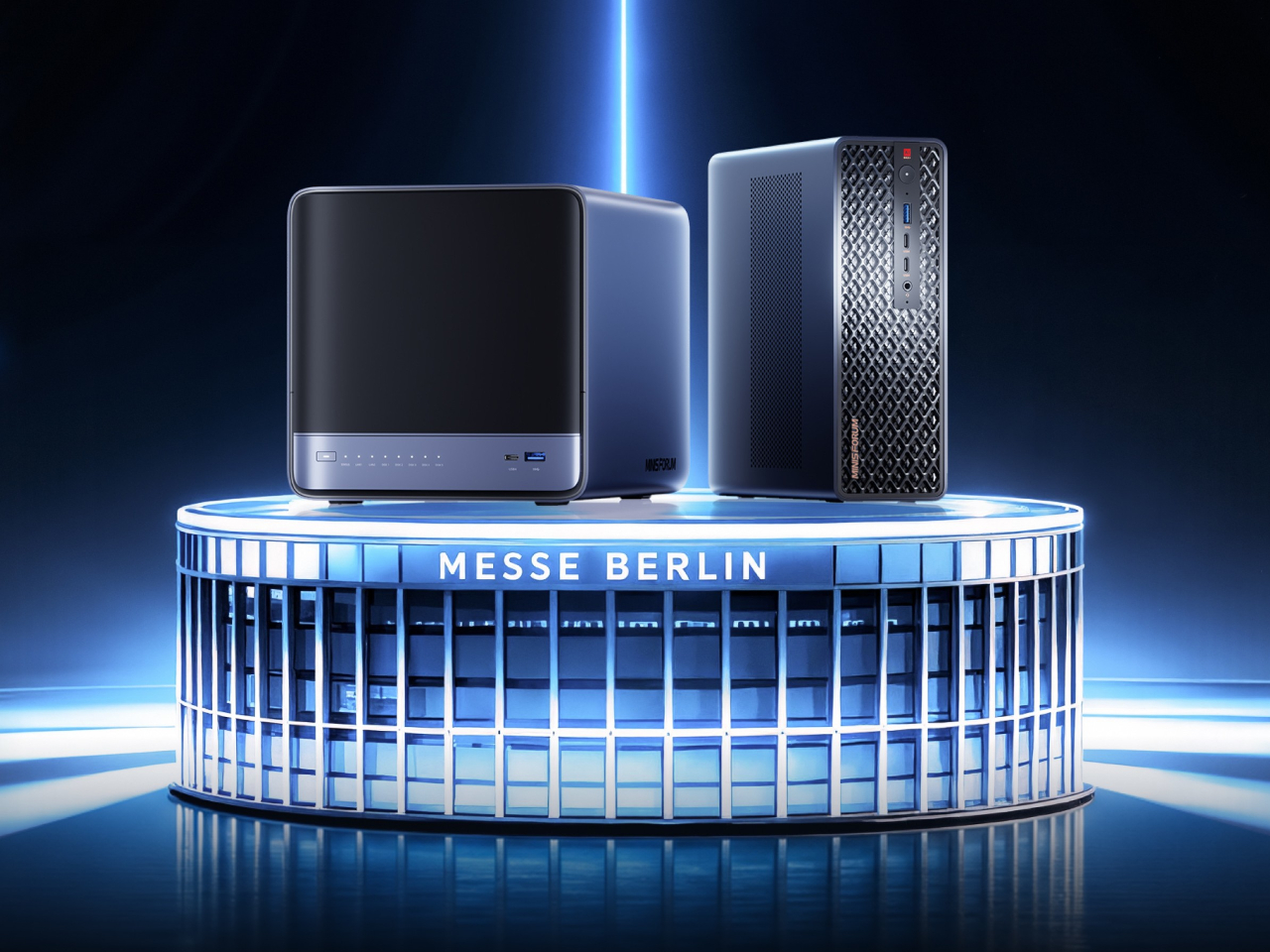
Running a serious AI model at home usually means renting someone else’s cloud server and hoping your data stays private along the way. MINISFORUM built its newest pairing to remove that trade-off entirely. The AI Agent NAS N5 MAX-P495 and AI Mini Workstation MS-S1 MAX-P495 combine for up to 131 TOPS of AI compute performance, 192GB of memory at 8533 MT/s, and up to 160GB of graphics memory, enough headroom to keep the heavy lifting on a desk instead of in a data center.

The N5 MAX-P495 takes the shape of a compact black cube, but what it holds inside matters more than how it looks sitting on a shelf. It combines powerful AI computing with up to 200TB of local storage, enabling users to store, manage, and process large volumes of data within a single AI platform. That capacity turns a spare corner of an office into a private archive large enough to hold years of project files, footage, or research without ever touching a third-party server.

Designer: MINISFORUM

Storage alone doesn’t make an AI system useful, so MINISFORUM built the N5 to run the AI itself. From RAG knowledge bases and AI models to embeddings, databases, and AI agents such as OpenClaw and Hermes, N5 MAX-P495 keeps data and AI workloads local, enabling continuous and private AI operations. A small business could lean on that setup to run its own customer-support agent without routing conversations through an outside company’s servers.

That local-first approach extends to how the N5 fits into a larger setup. Designed to work alongside AI computing devices, N5 MAX-P495 serves as a centralized backend for data, models, knowledge, and long-running AI workloads, bringing storage and computing together at the edge. It’s less a standalone gadget and more a quiet engine room, built to keep working in the background while something faster handles the parts people actually interact with.

That faster half of the pairing is the MS-S1 MAX-P495, a compact tower wrapped in a ventilated, diamond-textured front panel that looks more like a piece of desk sculpture than a workstation. It delivers powerful local AI computing for demanding model inference, AI development, and computationally intensive workloads, built for intensive local AI tasks, engineering, and workflows in an ultra-compact footprint. Developers get workstation-class muscle without giving up desk space to a full tower case.

Speed matters just as much as raw power for certain jobs, and MINISFORUM designed the MS-S1 with that in mind. Designed for low-latency AI workloads, MS-S1 MAX-P495 enables responsive local inference for AI agents, computer vision, generative AI, and other real-time applications. A security camera system or a live creative tool built on generative AI benefits directly from that kind of immediate response instead of waiting on a round trip to the cloud.

Connectivity rounds out the workstation’s role in a larger setup. With extensive connectivity and expansion capabilities, MS-S1 MAX-P495 serves as a powerful AI compute frontend, supporting models, applications, and connected devices across flexible edge AI environments. That flexibility means the same box can sit at the center of a home lab or plug into a small studio’s existing hardware without forcing a rebuild.

Paired together, the two devices split the work the way a good team would. The MS-S1 MAX-P495 and N5 MAX-P495 form a complete edge AI computing system, delivering high-performance AI compute at the frontend while integrating compute, massive storage, data, and AI knowledge at the backend, providing a powerful foundation for real-time inference, persistent AI workloads, and scalable local AI applications. It’s a compact answer to a question more households and small teams are starting to ask: whether AI still needs to live somewhere else at all.

The post Cloud AI Means Someone Else Has Your Data, MINISFORUM Fixes That first appeared on Yanko Design.

  • ✇Yanko Design
  • Get a Laptop or Get a Tablet, TECNO MEGABOOK T15 360 Pro Is Already Both
    A laptop that only knows one shape stops being useful the moment the day changes its mind. TECNO built the MEGABOOK T15 360 Pro around that exact problem, wrapping a full 360-degree hinge inside an all-metal body machined with precision CNC tooling. The screen folds all the way back, turning one device into four distinct working postures without asking anyone to carry a second gadget. Flip it flat into Laptop mode, and it behaves like any focused productivity machine, keyboard ready and screen
     

Get a Laptop or Get a Tablet, TECNO MEGABOOK T15 360 Pro Is Already Both

Par : JC Torres
3 septembre 2026 à 19:30

A laptop that only knows one shape stops being useful the moment the day changes its mind. TECNO built the MEGABOOK T15 360 Pro around that exact problem, wrapping a full 360-degree hinge inside an all-metal body machined with precision CNC tooling. The screen folds all the way back, turning one device into four distinct working postures without asking anyone to carry a second gadget.

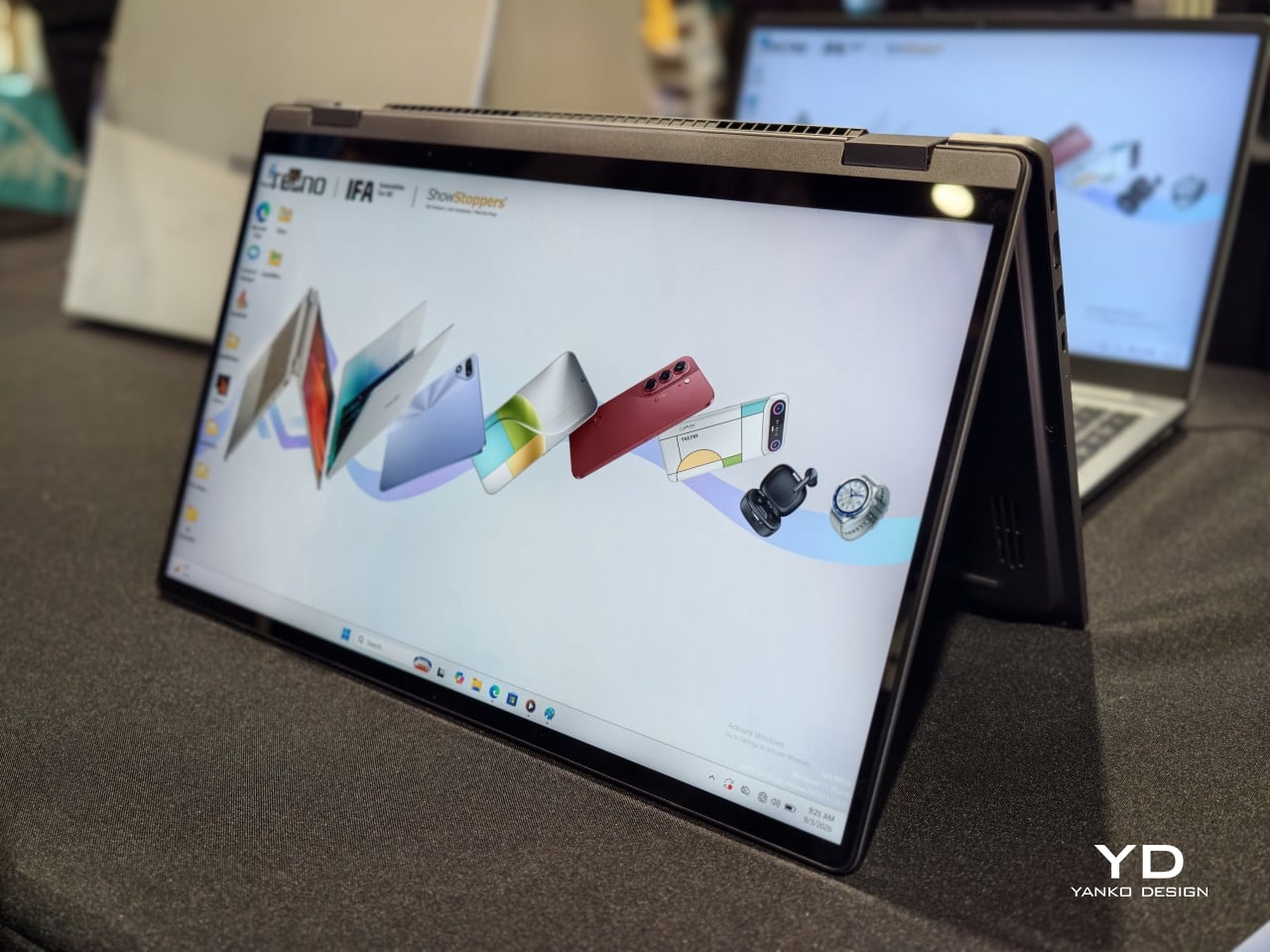
Flip it flat into Laptop mode, and it behaves like any focused productivity machine, keyboard ready and screen upright for spreadsheets or long email threads. Push the display back further and Tablet mode takes over, letting fingers or an optional MPP 2.0 active pen sketch, annotate, and jot notes directly onto the 15.6-inch touchscreen. The same hardware just keeps reshaping itself around whatever task shows up next.

Designer: TECNO

Fold it into a triangle and Tent mode appears, propping the screen up on a cramped tray table or a corner of a crowded desk where a full laptop footprint would not fit. Stand it up the other way and Stand mode turns the same hinge into a presentation tool, angling the display toward a room full of people instead of a single set of eyes typing at a keyboard.

None of those positions would matter much without a screen worth looking at, and TECNO gave the Pro model a 2.5K panel running at 120Hz across 2560 by 1440 pixels, covering 100% of the sRGB color space at 350 nits brightness. Colors hold up during video edits, photo review sits closer to accurate, and scrolling through documents in Tablet mode feels noticeably smoother than on a standard 60Hz screen.

Under the hood, configurations climb as high as an Intel Core Ultra 9 185H processor paired with LPDDR5X memory running at up to 7,467MHz, enough headroom for video exports or a dozen open browser tabs without slowdown. A PCIe M.2 2280 SSD handles storage, and select configurations add a second M.2 slot, giving anyone running out of space room to expand rather than shop for an external drive.

Powering all of that is a 70Wh battery paired with a compact 65W PD GaN charger, a combination built to survive a full workday of meetings, note-taking, and streaming without hunting for an outlet. The included charger sheds the bulk of older power bricks, and the 1.8-meter cable gives enough slack to keep the laptop charging from across a conference table instead of right next to the wall.

Connectivity keeps pace with the rest of the machine. Wi-Fi 6E and Bluetooth 5.4 handle wireless duties, while seven physical ports, including two Type-C connections rated for 10Gbps data and display output, cover everything from external monitors to storage drives. TECNO OneLeap ties the laptop into phones, tablets, and other PCs, letting files and clipboard content move between devices without emailing anything to yourself first.

Smaller touches round out daily use. A backlit keyboard with its own numeric keypad handles spreadsheet-heavy work, and a fingerprint reader built into the power button skips the password screen entirely with one press. Dual speakers tuned for DTS:X Ultra and a pair of digital microphones back up video calls and casual media playback, so switching between a meeting and a lunchtime show does not require headphones.

TECNO prices the MEGABOOK T15 360 Pro at €1,099 (around $1,280), with European availability starting in the fourth quarter of 2026. That price sits closer to a well-specced conventional laptop than a premium convertible, positioning the T15 360 Pro as the rare 2-in-1 that does not ask for a luxury markup just because the hinge bends further than everyone else’s.

The post Get a Laptop or Get a Tablet, TECNO MEGABOOK T15 360 Pro Is Already Both first appeared on Yanko Design.
  • ✇Yanko Design
  • Scosche’s GloBright Is the Lava Lamp That Also Charges Your Phone
    Scosche built a charging cable that refuses to hide once the lights go out. The GloBright MultiColor Glowing LED Charging Cable, developed with Statik and introduced at IFA 2026, takes the most overlooked object on any desk and turns it into something that actually draws the eye. Instead of a black cord disappearing into shadow behind a laptop, this one glows its way across the room. That glow runs through the cable’s full length rather than sitting confined to the connector tips, so a coiled l
     

Scosche’s GloBright Is the Lava Lamp That Also Charges Your Phone

Par : JC Torres
3 septembre 2026 à 07:40

Scosche built a charging cable that refuses to hide once the lights go out. The GloBright MultiColor Glowing LED Charging Cable, developed with Statik and introduced at IFA 2026, takes the most overlooked object on any desk and turns it into something that actually draws the eye. Instead of a black cord disappearing into shadow behind a laptop, this one glows its way across the room.

That glow runs through the cable’s full length rather than sitting confined to the connector tips, so a coiled loop on a nightstand reads more like a lit sculpture than a charging accessory. Colors shift gradually along that length too, pink bleeding into purple, blue fading toward teal, giving the cable a slow-motion animation instead of a static single hue that gets boring after the first week of ownership.

Designer: Scosche

None of that visual flair comes at the cost of actual charging performance. Scosche built the GloBright cable to support up to 60W of fast charging for USB-C devices, alongside reliable data transfer, so a phone plugged in overnight wakes up fully charged just like it would with any premium braided cable. The lighting effect runs as a bonus layer on top of specs that already hold up on their own.

Durability gets equal attention. The 3-foot cable relies on premium materials throughout its construction, aiming for a build that survives the daily abuse of getting yanked out of a bag, wound around a charger, or stepped on near a bed frame. Scosche also sells a companion Blue Glowing LED cable in a longer 4-foot option, giving anyone who prefers a single steady color an alternative to the multicolor version’s shifting palette.

Where this cable earns its keep is in the spaces most charging accessories try to disappear from. A gaming setup gets an extra strip of ambient light without needing a separate RGB kit. A bedside table gets a soft, shifting glow that also happens to be topping off a phone overnight. Even a cluttered desk benefits, since a glowing cable is far easier to locate in a tangle of cords than a plain black one ever was.

Scosche prices the GloBright MultiColor cable at $17.99, positioning it well within impulse-purchase territory for anyone shopping for a charging cable anyway. At that price, the lighting effect functions less like a premium upsell and more like a free upgrade bundled into a cable people needed regardless. Buying a charging cable rarely feels like a decision worth thinking about, and Scosche seems to be betting that a little glow is enough to change that.

The post Scosche’s GloBright Is the Lava Lamp That Also Charges Your Phone first appeared on Yanko Design.
  • ✇Yanko Design
  • Acer’s Packard Bell Crashed IFA 2026 Like a Box of Crayons
    Packard Bell spent a century teaching people that new technology doesn’t have to feel intimidating, and its 100th birthday present to itself leans hard into that idea. Under Acer’s ownership, the brand relaunched at IFA 2026 with a philosophy it calls “Tech it easy,” built around a lineup that trades beige plastic and quiet corporate design for colors loud enough to notice from across a room. Four products anchor that comeback, and each one argues that everyday tech gains something when it stop
     

Acer’s Packard Bell Crashed IFA 2026 Like a Box of Crayons

Par : JC Torres
3 septembre 2026 à 06:07

Packard Bell spent a century teaching people that new technology doesn’t have to feel intimidating, and its 100th birthday present to itself leans hard into that idea. Under Acer’s ownership, the brand relaunched at IFA 2026 with a philosophy it calls “Tech it easy,” built around a lineup that trades beige plastic and quiet corporate design for colors loud enough to notice from across a room. Four products anchor that comeback, and each one argues that everyday tech gains something when it stops taking itself so seriously.

The DotBook carries the heaviest expectations as the collection’s flagship, a 14.5-inch laptop finished in a red-orange shell bright enough to spot on a crowded coffee shop table. Weighing under 1.3 kg and measuring just 17.9mm thin, it’s built for browsing, streaming, and everyday work rather than chasing benchmark scores, backed by up to 512GB of storage and 16GB of memory running quietly under Windows 11. It’s a laptop designed to disappear into a bag, not a spec sheet debate.

Designer: Acer

Where the DotBook plays it relatively straight, the DotLoop commits fully to spectacle. Housed inside an actual briefcase shell with a 1970s silhouette, the turntable pops open to reveal a working tonearm flanked by RGB-lit speaker grilles that glow while a record spins. Two built-in 3W speakers handle sound on their own, though Bluetooth and RCA outputs let the DotLoop hand audio off to a proper stereo system whenever the moment calls for something louder.

That willingness to have fun with format extends into the DotLine, a feature phone built for anyone tired of feeding a smartphone’s constant appetite for attention. A 2.8-inch display and physical keypad keep the experience deliberately simple, while an 1800mAh battery stretches across roughly two weeks between charges, a number that sounds almost mythical next to a modern flagship’s overnight anxiety. Four color options keep it from feeling like a consolation prize.

Rounding out the focus lineup, the DotCombo bundles a keyboard and mouse into a single color-matched purchase, eliminating the usual mismatched beige-on-black desk setup that so many peripherals default to. Both pieces run on rechargeable batteries good for hundreds of charge cycles, connecting over Bluetooth or a 2.4GHz receiver without a single AA battery required. Round keycaps borrowed from typewriter design give the whole thing a tactile, almost toy-like presence on a desk.

Beyond these four, Packard Bell rounds out its centennial collection with a portable speaker (DotTune), audio glasses (DotLook), a ring light for creators (DotShine), matching headphones (DotBass), and even a countertop food steamer (Steasy), all sharing the same saturated color palette and straightforward pricing. None of them ask for much attention individually, but together they paint a lineup unwilling to blend into a beige office shelf.

Pricing stays approachable across the board, with the DotBook starting around €499 (around $578), the DotLoop at €149 (around $173), the DotLine at €69 (around $80), and the DotCombo at just €39 (around $45). Packard Bell’s return proves that a century-old brand can still find something new to say, mostly by refusing to whisper it.

The post Acer’s Packard Bell Crashed IFA 2026 Like a Box of Crayons first appeared on Yanko Design.
  • ✇Yanko Design
  • This 32oz Bottle Carbonates Your Water in 3 Seconds, Wherever You Are
    Most people who drink sparkling water have settled into one of two habits. They either haul home cans and bottles from the grocery store every week, or they own a countertop soda maker that never leaves the kitchen. The Roam SodaTop is designed for everyone caught between those options: a 32oz insulated bottle that carbonates still water on demand, wherever you happen to be. The home soda maker does what it promises, but it’s also a fairly large appliance with a permanent spot on the counter a
     

This 32oz Bottle Carbonates Your Water in 3 Seconds, Wherever You Are

Par : JC Torres
23 août 2026 à 21:45

Most people who drink sparkling water have settled into one of two habits. They either haul home cans and bottles from the grocery store every week, or they own a countertop soda maker that never leaves the kitchen. The Roam SodaTop is designed for everyone caught between those options: a 32oz insulated bottle that carbonates still water on demand, wherever you happen to be.

The home soda maker does what it promises, but it’s also a fairly large appliance with a permanent spot on the counter and plastic bottles that aren’t built to travel. Your sparkling water stays fresh for however long it sits in the fridge. Step outside, and you’re back to buying packaged drinks. It’s a frustratingly common situation for something meant to be a simple habit.

Designer: Mohini Boparai

Click Here to Buy Now: $119 $199 ($80 off). Hurry, only 46/1150 left! Raised over $359,000.

That’s the gap the SodaTop fills. The system pairs a stainless-steel bottle with a compact carbonation mechanism powered by small CO2 canisters. The bottle was engineered to handle carbonation pressure, with specially threaded fittings that most regular water bottles simply aren’t built for. Roam describes it as the world’s first insulated bottle that instantly carbonates water, and looking at the category, it’s hard to argue with that framing.

Using it takes just a few steps: fill the bottle to the marked interior line, drop in the CO2 canister, and twist the cap into place. The water is sparkling in about three seconds, and a pressure-release mechanism keeps the carbonation locked inside until you’re ready to drink. There’s no pumping, no separate carafe, and the whole thing takes less time than opening a can.

What makes that genuinely useful is the size. The SodaTop is roughly one-fifth the footprint of a standard countertop unit, compact enough to slip into a bag or a kitchen drawer without drama. Whether it’s on a work desk, a hotel table, or brought along on a day out, fresh sparkling water goes wherever the bottle goes, which is something no countertop soda maker can claim.

The bottle itself does more than hold the mechanism in place. Triple-wall construction keeps drinks cold for up to 24 hours and ice for up to 48 hours, well ahead of the plastic bottles that come standard with most home soda systems. That thermal advantage also matters for carbonation, since cooler water retains CO2 more efficiently and keeps the fizz from fading before the bottle is empty.

On the inside, Roam uses what it calls MirrorTech, a mirror-polished steel surface that the brand says keeps carbonation crisp for longer, resists odor buildup between uses, and discourages flavor transfer. The wide-mouth opening makes adding ice and pouring easy, while a visible fill line inside takes the guesswork out of how much water to add for consistent carbonation every time.

The CO2 canisters are made from recycled steel and are fully recyclable, so when they’re empty, they go straight into the recycling bin with no return shipping involved. Roam positions the ongoing cost at as little as $0.55 per canister for subscribers, framing that as roughly half the cost of buying pre-packaged sparkling water. Cutting out single-use cans and bottles also noticeably reduces household waste.

Roam also offers Natural Flavor Essence Drops designed to pair with the SodaTop, available in eight varieties: Ginger Root, White Peach, Sicilian Lemon, Yuzu Lime, Blood Orange, Strawberry, Grapefruit, and Mango. All are zero calorie, zero sugar, and plant-based. They’re also certified keto, paleo, vegan, gluten-free, kosher, and non-GMO, so they turn sparkling water into a flavored drink without any of the sugar baggage.

The SodaTop comes in three finishes: Pebble, Sage, and Charcoal, each with a contrasting accent at the base that gives it a quietly distinctive look. The silhouette reads more like premium drinkware than a gadget, which is probably the whole point. It’s the kind of object that fits on a desk, gets tossed in a bag, and doesn’t look out of place in either setting.

Click Here to Buy Now: $119 $199 ($80 off). Hurry, only 46/1150 left! Raised over $359,000.

The post This 32oz Bottle Carbonates Your Water in 3 Seconds, Wherever You Are first appeared on Yanko Design.
  • ✇Yanko Design
  • This Foldable A2 Scanner Fits in a Bag and Doubles as a Live Presenter
    Scanners haven’t changed much in how they occupy a workspace. A flatbed sits in the middle and claims that real estate whether it’s in use or not. Overhead models are more flexible, but they still tend to take up a fixed spot in any setup. For anyone working from a compact home office or shared studio, that trade-off rarely gets a proper answer. Joyusing’s ScanMax 320 approaches the problem from a different angle, quite literally. Rather than occupying the center of a workspace, it’s built to s
     

This Foldable A2 Scanner Fits in a Bag and Doubles as a Live Presenter

Par : JC Torres
22 août 2026 à 21:45

Scanners haven’t changed much in how they occupy a workspace. A flatbed sits in the middle and claims that real estate whether it’s in use or not. Overhead models are more flexible, but they still tend to take up a fixed spot in any setup. For anyone working from a compact home office or shared studio, that trade-off rarely gets a proper answer.

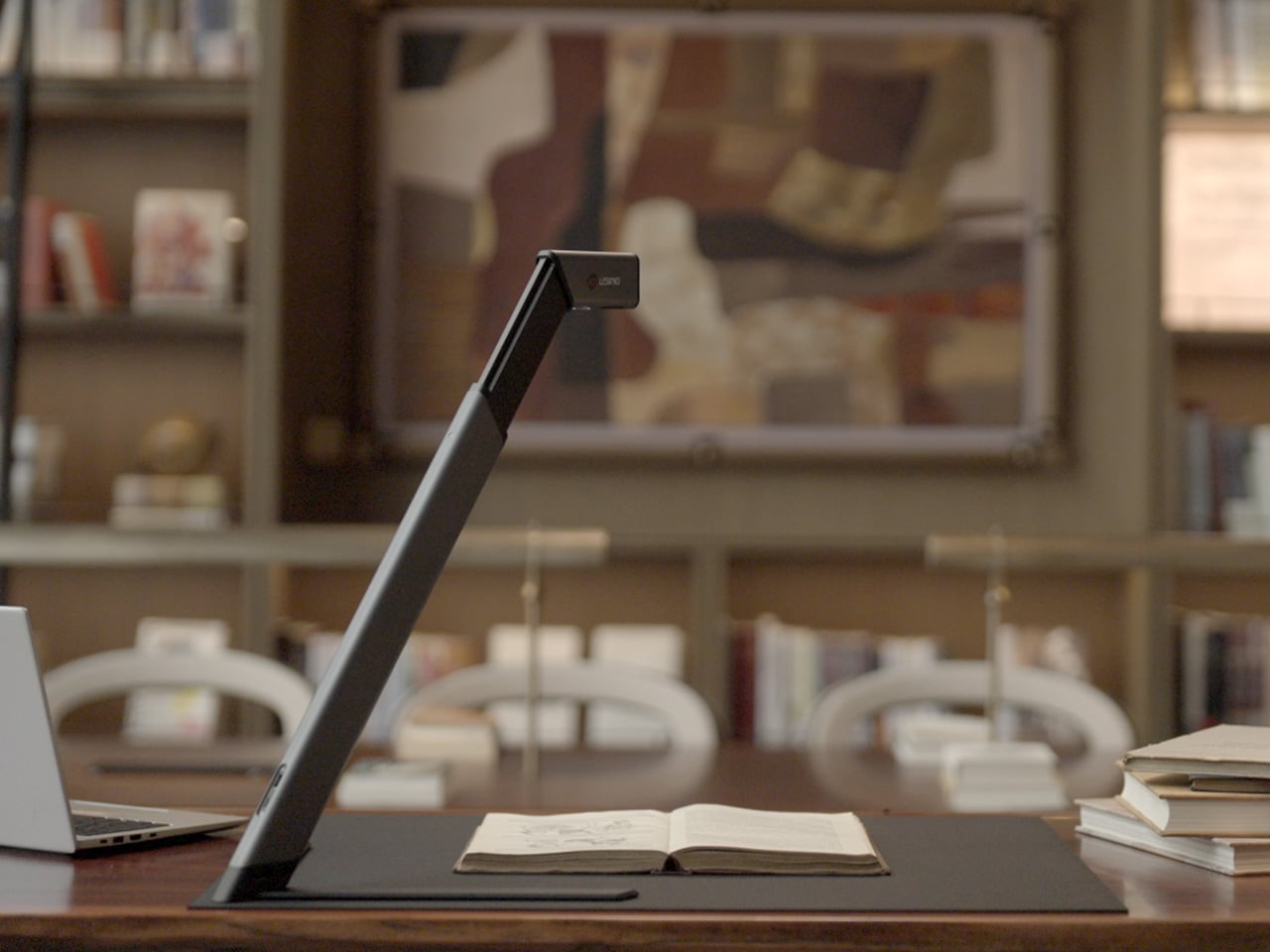
Joyusing’s ScanMax 320 approaches the problem from a different angle, quite literally. Rather than occupying the center of a workspace, it’s built to sit at the edge of a desk, positioned in the corner while its arm reaches overhead. It handles documents, books, artwork, and large-format materials up to A2 size, without taking over the surface it’s meant to serve.

Designer: JOYUSING

Click Here to Buy Now: $379 $649 (42% off). Hurry, only 32/220 left! Raised over $88,000.

Folded down, the ScanMax 320 measures 355mm x 68mm x 51mm, slim enough to slip into the included carrying bag and move between rooms without any effort. It runs entirely on USB-C power, so getting started means plugging in a single cable. There’s no proprietary adapter to hunt down, no driver installation ritual, and nothing complicated to deal with before the first scan. You can directly use the ScanMax 320 as a live presenter camera, and scanning as well as other advanced features simply require the free Joyusing Scanner intelligence software.

The shooting area extends to a full A2, or 594mm x 420mm, with a 32-megapixel sensor capturing at up to 380 DPI. That covers blueprints, double-page book spreads, large technical drawings, and oversized artwork in a single pass. An intelligent auto-switching system detects whether the material is A2 or A3 and adjusts accordingly, so there’s no manual input needed between sessions.

Overhead scanners tend to have a lighting problem, particularly near edges or when capturing materials that aren’t perfectly flat. The ScanMax 320 uses a rectangular illumination system shaped to match the scanning area, distributing light evenly and keeping shadows from washing out fine detail near the sides. Three brightness levels, at 30%, 70%, and 100%, are accessible with a single touch for quick adjustments in different environments.

Book scanning is where overhead devices tend to earn their keep, and also where they tend to frustrate. Pages curve at the spine, fingers get in the way, and binding shadows creep in from the edges. The ScanMax 320’s software handles most of this automatically, applying auto-flattening, finger removal, de-skewing, and shadow removal without manual adjustment. Book mode, paired with the included finger cots, keeps pages steady for continuous capture.

Once everything is captured, the software’s OCR engine converts printed text into editable, searchable files, with support for 180 languages and export options including Word, PDF, and TXT. A page of Japanese text, a technical report, or a multilingual research paper can go from physical to fully searchable in seconds, turning raw captures into documents you can actually search, copy, and share.

What’s less obvious about the ScanMax 320, and arguably more interesting, is that it also functions as a live visual presenter. Point it at a printed page, a hand-drawn sketch, or a physical object, and the feed goes live to whatever screen or projector it’s connected to. For a teacher going through annotated notes or a designer reviewing a layout with a client, that extra mode earns its place quickly.

Software compatibility covers Windows, macOS, and several Linux distributions including CentOS, Ubuntu, and Debian, though macOS users will find some features limited compared to the Windows version. Everything connects over USB-C, keeping the setup free of dongles and extra cables. Built-in annotation tools allow for direct markup of scanned content, which makes it easier to prepare materials before presenting or sharing them.

There’s something refreshingly considered about a scanner built to work with your desk rather than on top of it. The ScanMax 320 doesn’t ask you to clear space or rearrange anything. It folds, parks at the edge, and gets on with the job. Whether you’re archiving a collection, digitizing a sketchbook, or presenting something in a meeting, the fact that it stays in its corner is, in itself, the point.

Click Here to Buy Now: $379 $649 (42% off). Hurry, only 32/220 left! Raised over $88,000.

The post This Foldable A2 Scanner Fits in a Bag and Doubles as a Live Presenter first appeared on Yanko Design.
  • ✇Yanko Design
  • This $99 Trackball Has Gesture Controls That Work Without Any Software
    The computer peripheral market has always been more experimental at its edges than in the mainstream. Ergonomic trackballs, in particular, have attracted a devoted following among power users, but the options tend to cluster at two extremes: consumer-facing products with locked-down firmware, and niche open-source hardware that trades polished finish for deep customizability. Finding something that genuinely does both has rarely been straightforward. Ploopy’s Adept trackball made a compelling c
     

This $99 Trackball Has Gesture Controls That Work Without Any Software

Par : JC Torres
17 août 2026 à 13:20

The computer peripheral market has always been more experimental at its edges than in the mainstream. Ergonomic trackballs, in particular, have attracted a devoted following among power users, but the options tend to cluster at two extremes: consumer-facing products with locked-down firmware, and niche open-source hardware that trades polished finish for deep customizability. Finding something that genuinely does both has rarely been straightforward.

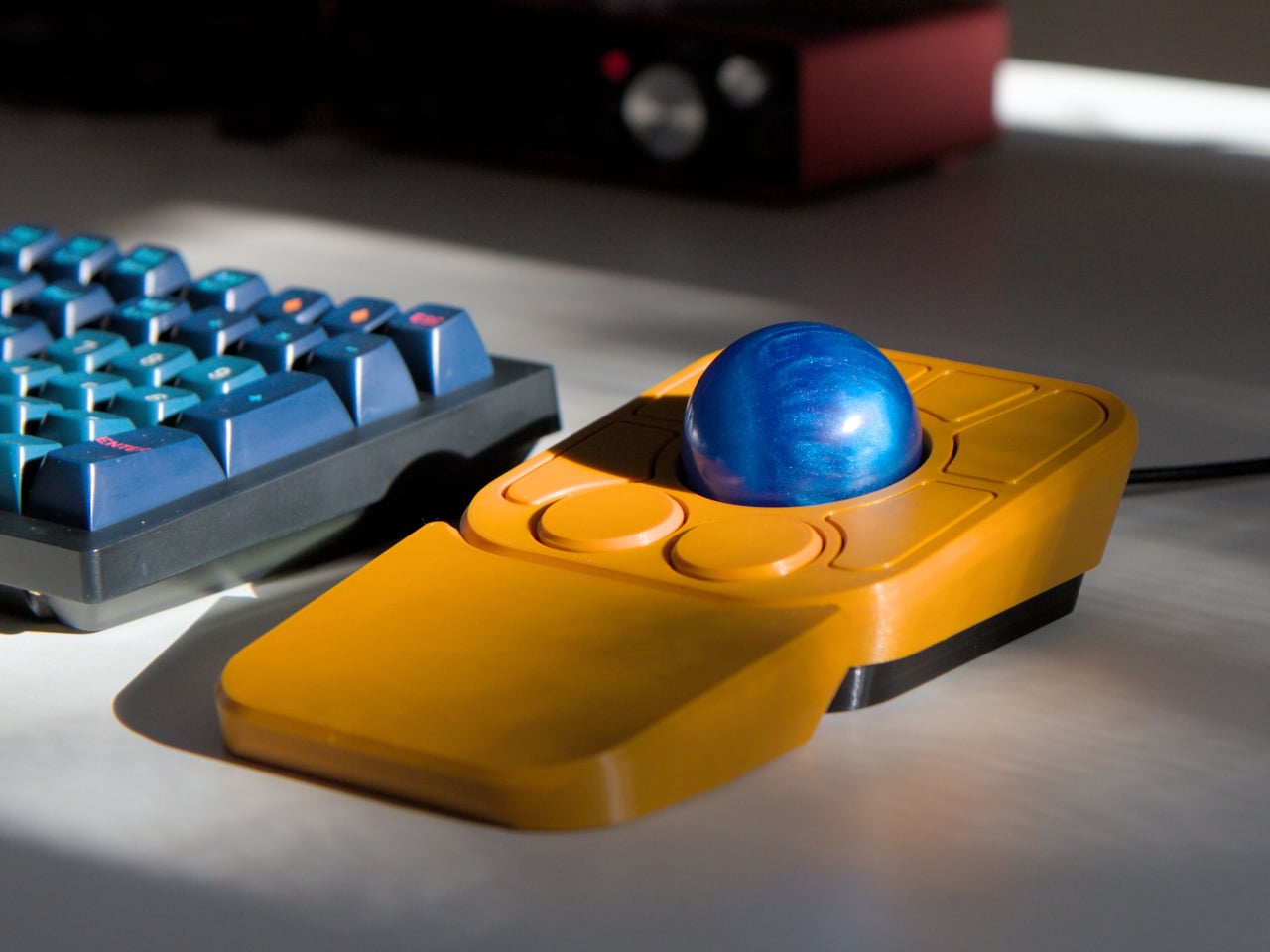
Ploopy’s Adept trackball made a compelling case for the latter category, earning a loyal following with its open-source, 3D-printed design and QMK compatibility. But it always felt like it had more to say. Its circuit board had always reserved space for two more switches that never made it to production, and the base had slots for a wrist rest that never materialized. The A+ is that unfinished story, now finished.

Designer: Ploopy

The most visible addition is the button count. The Adept had six; the A+ has eight, two of which also function as knobs. Out of the box, the knobs handle high-resolution vertical and horizontal scrolling, but both are fully reprogrammable for other functions. That dual-purpose approach keeps navigation and control within a single hand without needing a separate scroll wheel or accessory sitting alongside it.

The gesture system is arguably the more interesting addition. Hold a button and flick the ball in any of eight directions, and the device fires a command. By default, the left knob activates cut, copy, paste, desktop switching, and media controls. For someone who lives inside a browser and a text editor all day, that’s a significant amount of functionality without ever lifting a hand off the device.

Layers add another dimension. The A+ has two: a navigation layer for everyday use and a control layer accessed via the right knob. The control layer handles on-device configuration, covering left-hand mode switching, toggling between high-resolution and stepped scrolling, and other adjustments. It’s the first trackball to bring this kind of layered behavior, working entirely without any software running on the host computer. There are also two bright LEDs that can be used to visually tell you what layer you’re on without having to rely on some embedded screen.

The detachable wrist rest is another long-promised feature that finally arrives with the A+. It slots in or out during use and can be screwed on permanently if preferred. The device stays ambidextrous throughout, and its 3D-printed shell means the community can print modified bodies, alter the layout, or swap in custom colors. That kind of adaptability isn’t an afterthought; it’s part of how the whole thing is designed.

The Pixart PMW-3360 sensor carries over from the Adept, running at a 1,000Hz polling rate with the tracking accuracy that has made it a standard for performance-oriented pointing devices. Omron D2LS-21 switches handle the physical buttons. The firmware remains QMK, configurable through VIA, with all design files, firmware, and assembly instructions freely available on GitHub. Kits start at $99 CAD.

The post This $99 Trackball Has Gesture Controls That Work Without Any Software first appeared on Yanko Design.
  • ✇Yanko Design
  • This Desk Lamp Puts a Spotlight in a Ring Light With One Knob
    Desk lighting has long been a compromise between task and atmosphere. Professional lamps tend to lean one way or the other: too directional and harsh for extended use, or too diffuse to support fine detail work. A lamp that’s good for examining physical samples often isn’t comfortable over long stretches, and one that’s gentle on the eyes doesn’t always deliver when you need a hard, directed beam. The Focus Light is a desktop lamp concept built around a different premise. Rather than committing
     

This Desk Lamp Puts a Spotlight in a Ring Light With One Knob

Par : JC Torres
17 août 2026 à 12:20

Desk lighting has long been a compromise between task and atmosphere. Professional lamps tend to lean one way or the other: too directional and harsh for extended use, or too diffuse to support fine detail work. A lamp that’s good for examining physical samples often isn’t comfortable over long stretches, and one that’s gentle on the eyes doesn’t always deliver when you need a hard, directed beam.

The Focus Light is a desktop lamp concept built around a different premise. Rather than committing to one kind of output, it combines two independent light sources into a single lamp head, giving the user the ability to shift between a precise, concentrated beam and a broad ambient glow, or run both at once. All of it’s controlled by a single rotary knob, and there aren’t any menus, apps, or extra switches involved.

Designers: Zhen Yang, Siting Lin

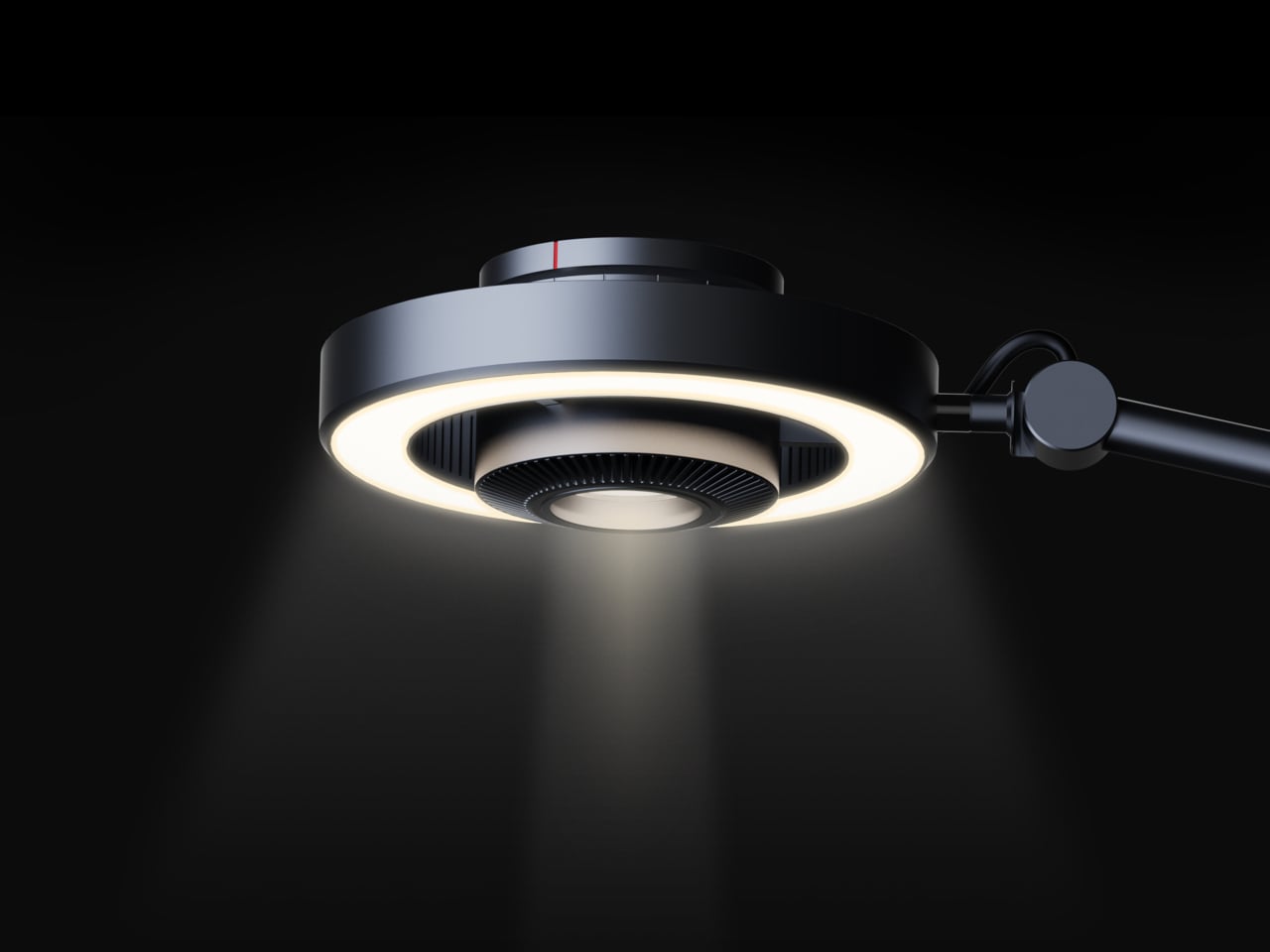
The lamp head is organized concentrically: an outer ring delivers ambient light while a central optical lens handles the focused beam. That layout has both functional and visual logic to it. Both sources sit in deliberate, concentric relation to each other, and the overall form looks as precise as it performs. The whole thing is finished in space gray metal, which lends it a professional, precision-tool character.

Control comes from a rotary knob on top, marked with a red indicator line. Rotating it 15 degrees activates focusing mode, sending a tight, concentrated beam straight down. At 30 degrees, the lamp shifts into diffusing mode, spreading the output into something closer to fill light. Push it to 60 degrees, and both sources run simultaneously, combining the central spot with the ambient ring for a layered workspace light.

For detailed hands-on tasks, being able to shift between modes without touching an app or dimmer panel makes a real difference. An illustrator tracing fine lines benefits from the precision of the focused beam, but that same beam creates harsh contrast against a dark surrounding surface. Bringing in the ambient ring softens that contrast, and having both running at once makes moving between close-up precision work and wider desk visibility much more seamless.

The same flexibility serves anyone who switches between different types of work at the same desk. Reading calls for something even and non-glare; marking up documents or working with small physical components benefits from a harder, more directed light. The Focus Light doesn’t ask the user to swap lamps or reposition the arm for each shift. The knob handles it, and the change is immediate.

The physical form reflects the precision the lamp is meant to support. The lamp head is a clean disc with radiating heat fins arranged around the inner lens assembly, and the arm connects at a ball joint that allows repositioning without loosening a series of screws. A threaded desk clamp handles the mounting, so it doesn’t demand a grommet hole or take up surface area with a weighted base.

What stands out about the concept isn’t just the dual-source setup, but that a single physical control manages both. There’s no menu to scroll, no app to open. The red indicator on the knob tells you exactly where you are, and the three positions are distinct enough that you’d find your way back to any of them by feel after just a few days.

The post This Desk Lamp Puts a Spotlight in a Ring Light With One Knob first appeared on Yanko Design.
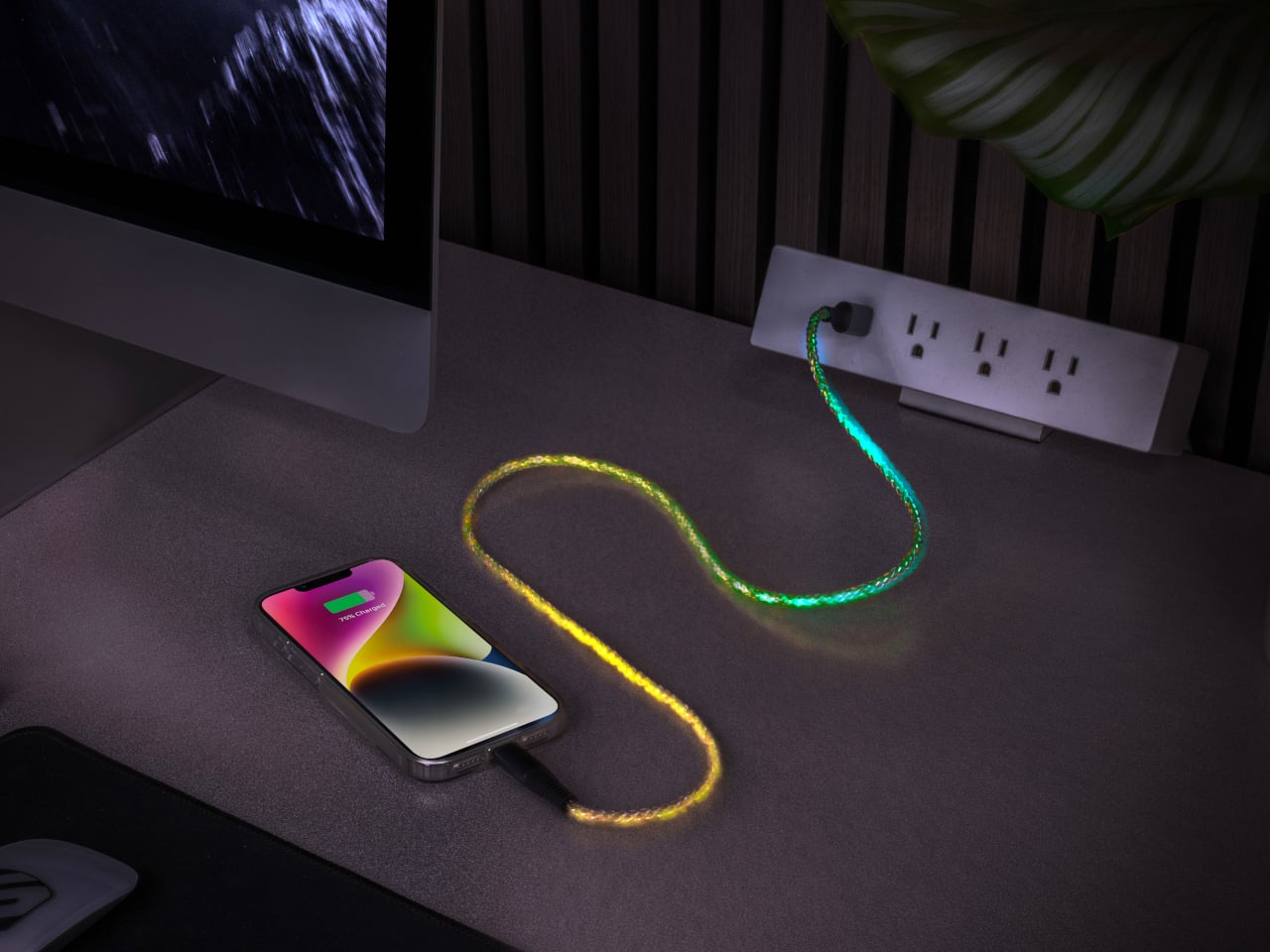
  • ✇Yanko Design
  • Droplet Finally Built the Audio Amplifier for Your Home Fragrance
    Home fragrance, for the most part, has been a market of compromises. Scented candles are warm and atmospheric but burn through a fragrance’s more delicate top notes in the process, gone with the smoke. Reed diffusers take a gentler approach but dilute the oil with water, delivering something noticeably thinner than what was originally intended. Neither gives much meaningful control over how much scent actually fills a space. Droplet’s Scent Amplifier takes a fundamentally different approach, on
     

Droplet Finally Built the Audio Amplifier for Your Home Fragrance

Par : JC Torres
17 août 2026 à 04:45

Home fragrance, for the most part, has been a market of compromises. Scented candles are warm and atmospheric but burn through a fragrance’s more delicate top notes in the process, gone with the smoke. Reed diffusers take a gentler approach but dilute the oil with water, delivering something noticeably thinner than what was originally intended. Neither gives much meaningful control over how much scent actually fills a space.

Droplet’s Scent Amplifier takes a fundamentally different approach, one that borrows more from audio than from aromatherapy. The idea is to treat scent the way a good amplifier treats sound: amplify it faithfully without altering what’s already there. Instead of heat or water, the device uses pressurized air to atomize neat fragrance oil into micro-particles, so what reaches you is the fragrance exactly as it was composed.

Designer: Droplet

That analogy isn’t just conceptual; the physical form carries it well, too. The Scent Amplifier is built around a walnut-toned wooden base, with a hand-blown crystal glass vessel sitting on top that’s shaped much like a vintage light bulb. A single oxidized silver dial handles all the control. When switched on, the base emits a warm, tungsten-like glow that rounds out the valve-amp look completely.

Unlike most home-fragrance gadgets that quietly get shuffled out of sight, this one’s meant to be displayed. Droplet designed it to sit in a living space as a sculptural object rather than pass as a functional appliance. And it holds up to that treatment. It has the quiet confidence of something that belongs in a room rather than something that just happens to be sitting in one.

Using it is simple enough. Fill the glass vessel with oil, turn the dial to the preferred level, and the device handles the rest. It diffuses fragrance for three minutes, rests for two, and repeats, keeping the scent consistent rather than releasing it all at once. Only four to six drops are needed for an average-sized room, and a 10ml bottle lasts roughly a month.

On a full USB-C charge, it runs for up to 15 hours of cordless diffusion, which means it isn’t tied to a wall socket or any fixed spot. That’s a more practical detail than it might seem. You can move it to the bedroom before winding down for the night, or take it out of the study when you’re done working, without losing anything.

The six fragrance oils that pair with it were developed in Grasse, France, essentially the historical heartland of perfumery. The range covers floral, fruity, citrus, earthy, and woody profiles, each tied to a specific place in the world. You can go from fig leaf and cedarwood to orange blossom and tuberose, or something brighter like wild berry and bergamot, without much fuss. All six are vegan and cruelty-free.

The glass vessel is refillable, and switching between scents takes under a minute with no residue left behind. The Scent Amplifier costs £80 on its own, with the full six-oil set running £125. That’s not bad for something that does away with all the usual trade-offs, keeps the fragrance pure, and looks good enough on a sideboard that you’d actually want to leave it out.

The post Droplet Finally Built the Audio Amplifier for Your Home Fragrance first appeared on Yanko Design.
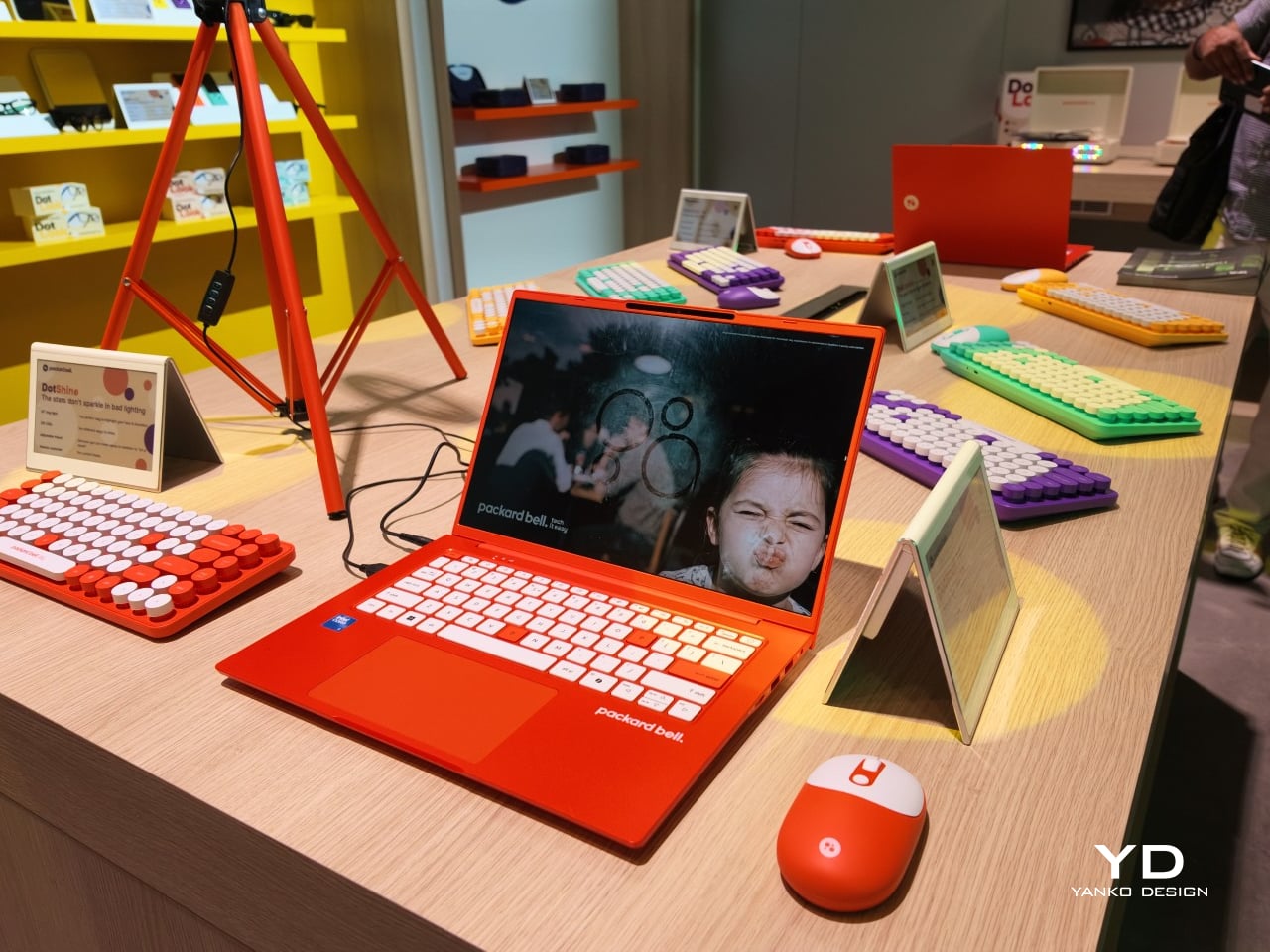
❌