Vue normale

Il y a de nouveaux articles disponibles, cliquez pour rafraîchir la page.
Aujourd’hui — 11 juillet 2026Flux principal
À partir d’avant-hierFlux principal

Objects With Opinions: Ronen Kadushin’s Pieces

Par : Ida Torres
16 mai 2026 à 13:20

There are designers who make beautiful things, and then there are designers who make things that make you think. Ronen Kadushin belongs firmly in the second camp, and his latest collection, Pieces, is proof that a home accessory can be both genuinely useful and quietly subversive.

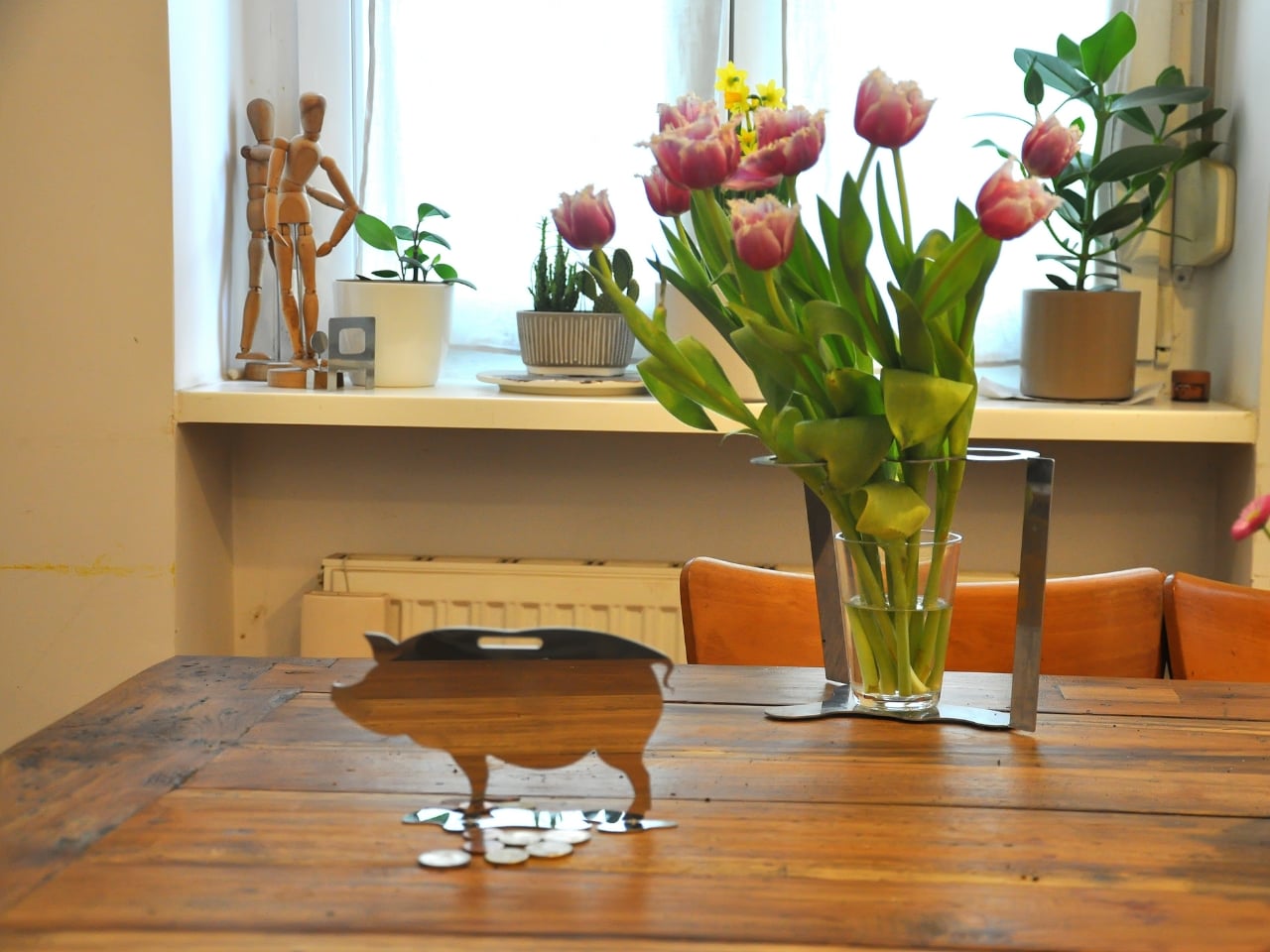
The collection consists of three objects: a candle holder called Echoes, a tealight holder called Reality TV, and a Piggybank. On paper, that sounds like a fairly ordinary lineup for a home accessories range. In practice, it’s anything but. The Pieces collection is an elegantly formed, humorously thought-provoking group of home accessories that highlight the tension between function and cultural narrative.

Designer: Ronen Kadushin

Each piece starts life as a flat sheet of laser-cut stainless steel, executed with Kadushin’s signature Twist-Hinge detail, making them easy and intuitive to bend by hand. They invite you to engage with the designs and co-create pieces that are an aesthetic statement with an edgy commentary. It’s a deliberate choice, not a shortcut. By asking you to participate in the assembly, Kadushin is making a point about who gets to be part of the creative process. You’re not just buying a finished object; you’re completing it.

That philosophy runs through everything he does. Kadushin is a pioneer of Open Design, freely sharing his designs to promote creativity, personal expression, and a positive social and economic impact. He embraces a “from the machine to the customer” approach, where extra manual processes and finishes are minimal, with pieces self-produced in Berlin in small-batch runs from high-grade stainless steel. There’s no bloated supply chain, no mass-market compromise. Just precision fabrication and a designer who has thought very carefully about what he wants his objects to communicate.

And communicate they do. The Piggybank is perhaps the most pointed piece in the collection. A traditional object redesigned to reflect a reality where saving is an illusion, it wears its cynicism openly. The pig is rendered as a flat stainless steel silhouette with a coin slot at the top, but there’s no belly to hold anything. Your coins rest on the surface. It’s funny, and it’s bleak, and it manages to be both of those things at once in the way that only good design pulls off. At a time when most people are watching their savings get swallowed by inflation, putting this on your shelf feels less like irony and more like cathartic honesty.

The Reality TV tealight holder takes a different angle. Shaped like a boxy, retro television set, it frames a tealight where the screen should be. When the flame is lit, you’ve got a broadcast. “Reflecting reality live, 24/7.” The concept is sharp without being heavy-handed. It makes you smirk, and then, a moment later, makes you think about the fact that we genuinely do stare at glowing rectangles all day as a form of comfort. Having a warm, flickering version of that sitting on your dinner table feels like Kadushin winking at us all.

Echoes, the candle holder, is the most sculptural of the three. A nuanced sculptural object echoing iconic 60s and 70s aesthetics with a contemporary edge, it’s the kind of object that earns a second and third look. The stacked, interlocking forms feel almost architectural, like a detail pulled from a midcentury design catalogue and rebuilt in stainless steel. Placed on a shelf without a candle, it still looks like it belongs in a gallery. With one lit, it earns its keep.

What ties Pieces together is the refusal to be decorative for decoration’s sake. Kadushin’s work is sculptural and communicates clever wit and free expression, and he designs user-assembled pieces that are an invitation to enjoy and participate in the creative process. The objects are funny, but they’re not novelty items. They’re precise, considered, and built from high-grade stainless steel that will still look good long after the trend cycle has moved on.

If you’re the kind of person who thinks about what your home objects say about you, and more and more people are, then Pieces is a collection worth paying attention to. Good design doesn’t just fill space. At its best, it holds an opinion. Kadushin’s does both.

The post Objects With Opinions: Ronen Kadushin’s Pieces first appeared on Yanko Design.

Woven by Hand in the Philippines, Sold in Milan

Par : Ida Torres
15 mai 2026 à 22:30

Most lamps just sit there. They do their job, emit their light, and fade into the background of a room. Mirei Monticelli’s lamps are the kind you keep looking at.

The Milan-based Filipina designer has built her practice around a single material: banaca, a woven textile made from the fibers of the banana-abaca plant, harvested by hand on the island of Catanduanes in the Bicol region of the Philippines. It’s not exactly the kind of material you’d expect to find at the center of a glossy Milanese design studio, and that’s exactly the point.

Designer: Mirei Monticelli

Monticelli studied at Politecnico di Milano, earning her Masters in Design and Engineering, but her roots have always pulled her back to the Philippines. Her mother, celebrated fashion designer Ditta Sandico, actually pioneered the banaca textile itself, a blend of banana and abaca fibers that is both remarkably durable and incredibly malleable. Working with renowned rattan designer Kenneth Cobonpue also shaped her early understanding of how natural, traditional materials can carry enormous aesthetic power. In 2019, she founded Studiomirei, and by the end of that same year, her Nebula lamp had already won the Salone Satellite Award at Milan Design Week.

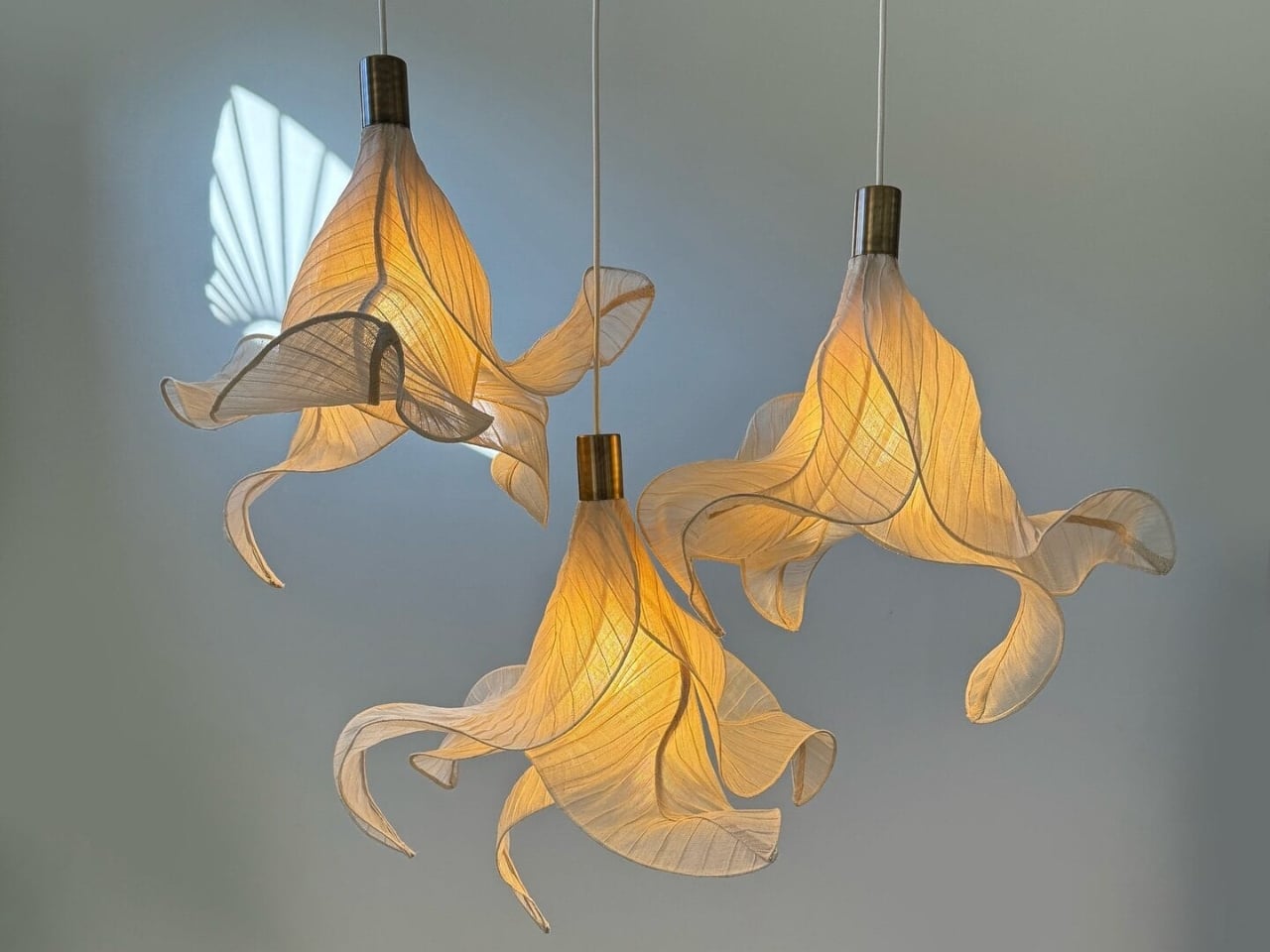
Since then, she has used banaca almost exclusively for her lighting pieces, and the results are genuinely hard to categorize. They hover somewhere between sculpture and utility, between craft object and fine art. When light passes through the woven fibers, the pieces seem to breathe. The way the material catches and filters illumination gives each lamp a softness you don’t usually expect from a functional object. The forms manage to feel both ancient and completely contemporary.

The newest work carries that same visual language forward. Biomorphic shapes, swells and folds that recall sea creatures, coral reefs, and natural formations, seem to suspend mid-motion. The organic quality of banaca lends itself to this perfectly. Unlike glass or metal, the material doesn’t impose rigidity; it holds form while still suggesting movement. Looking at them, you get the sense that if you turned the light off, the shape might slowly release and unfold.

The material story goes deeper than aesthetics, and it’s the part that tends to get overlooked in design coverage. Each lamp is the result of an entire chain of human hands. Farmers in Bicol harvest the banana-abaca trunks by hand when the plants reach maturity. The fibers are extracted, brought to the community, and woven by artisans using techniques passed down through generations. By the time a finished lamp reaches a room in Milan, it carries the labor and heritage of an entire province in the Philippines.

Monticelli has said explicitly that her studio works at the intersection of sustainable materials, craft, technology, and community empowerment. It sounds like a mission statement, and maybe it is, but the work itself proves it isn’t just positioning. The banaca lamps are not mass-produced. They are made to order, with lead times that reflect the reality of handcraft. Customizable in size and color, they are objects you commission with intention rather than objects you add to a cart.

A real tension exists in sustainable luxury design between the genuine and the performative, and it’s worth naming. Many brands talk about ethical sourcing while scaling in ways that hollow out what made the material meaningful in the first place. Monticelli’s studio, still rooted in direct relationships with the farmers and weavers of Bicol, has navigated that tension well. The limited production isn’t a constraint; it’s the whole point.

The design world loves a good material story, and banaca has a genuinely good one. A plant grown on a remote Philippine island, harvested by hand, woven by a community of artisans, shaped by a designer navigating two cultures, and ultimately glowing softly in rooms that could not be further from the landscape that produced it. That kind of distance, traveled with integrity, is what turns a lamp into something worth writing about.

The post Woven by Hand in the Philippines, Sold in Milan first appeared on Yanko Design.

The 11 Best Online Business Bank Accounts Reviewed in 2026

12 mai 2026 à 05:00

The best online business bank accounts combine strong APYs, low fees, and powerful digital tools. Learn how to choose the right fit for your business.

The post The 11 Best Online Business Bank Accounts Reviewed in 2026 appeared first on TechRepublic.

6 Best Banks for Small Business Loans in 2026

11 mai 2026 à 05:00

Find the best banks for small business loans with low rates and flexible terms. Compare top lenders to find the right financing for you.

The post 6 Best Banks for Small Business Loans in 2026 appeared first on TechRepublic.

Bruteforce de cartes bancaires

Par : Korben ✨
2 mai 2026 à 08:35

Quand j'achète un truc avec ma CB, c'est vrai que j'évite maintenant de demander le ticket de carte bancaire. Ça ne me sert à rien, et puis j'en fais quoi après ? Je le jette à la poubelle ?

Heureusement qu'il n'y a pas de données confidentielles dessus et que tous les chiffres de ma CB sont masqués avec des petites étoiles sauf une partie, généralement les 4 derniers, qui sont en clair évidemment.

Bref, tout roule, nan ? Hé bien noooon, parce que Metin Ozyildirim, un chercheur en sécurité, vient d'expliquer sur son site comment ces étoiles en fait c'est pas vraiment un secret.

En fait, quand vous effectuez un achat en ligne, le marchand pose une question à votre banque pour valider la carte, du genre "hey Crédit Agricole, est-ce que ce numéro existe ?" et la banque répond connement oui ou non.

Et le souci c'est que cette question, n'importe qui peut la poser depuis n'importe où dans le monde, en testant des numéros au pif jusqu'à tomber sur le bon. C'est ce qu'on appelle du brute force, et avec une bonne machine et une connexion correcte, ça permet de tourner tranquillement à la fréquence de 6 tentatives par seconde, soit environ 130 000 essais possibles étalés sur une nuit. C'est donc très largement assez pour reconstituer les chiffres manquants quand on n'en a que 6 à deviner.

Et surtout, il arrive parfois que le marchand soit un peu trop bavard. Par exemple si vous tapez un mauvais numéro, il vous répond "Cette carte de crédit n'est pas valide". Si la date d'expiration est fausse, il vous dit gentiment "Cette carte a expiré". Et si le CVV est faux ? "Le code CVV n'est pas correct".

Comme le dit Metin dans son post, ce genre d'indice aide carrément à bruteforcer les infos de la CB. Bah oui, si le marchand vous confirme noir sur blanc que vous êtes à 3 chiffres près du jackpot, pourquoi s'arrêter hein ? C'est un peu comme dans ces films où y'a un gars qui braque un coffre-fort qui fait "clic" à chaque bon chiffre.

Et comme ça donc que Metin Ozyildirim s'est fait piller son compte bancaire il y a environ 1 an. L'attaquant a fait tourner son bruteforce comme ça durant 6 heures, en répartissant ses requêtes sur plusieurs sites e-commerce différents pour passer sous les radars.

Et une fois la carte complète reconstituée, restait plus qu'à dépenser le pognon ! Et là pareil, certains marchands acceptent encore les paiements sans demander la double authentification 3D Secure. Ces marchands là, ce sont eux qui payent en cas de fraude, car ils prennent le risque. L'attaquant a juste eu à choisir un de ces marchands "hack-friendly", et a transféré l'argent vers un porte-monnaie électronique, qu'il a ensuite converti en cash.

Et voilà comment le plafond de la carte de Metin était à zéro avant qu'il ait terminé son premier café du matin !

La bonne nouvelle, c'est que la banque l'a remboursé. Par exemple en France, vous avez 13 mois pour contester une transaction frauduleuse via votre banque. C'est un droit et pas une faveur hein ! Mais si la banque considère que vous avez été négligent (carte prêtée, code partagé, phishing évident...etc), elle peut tout à fait refuser le remboursement, donc gardez des preuves et contestez vite !

Maintenant, la mauvaise nouvelle, c'est que ce qui est arrivé à Metin est de plus en plus fréquent. Visa a même documenté que ce genre d'attaques explose, et que la majorité des sites e-commerce sont mal protégés contre ce genre de bots qui font tourner ces scripts de bruteforcing.

Bref, y'a pas grand chose à faire de notre côté pour nous protéger de ça, si ce n'est d'activer les notifs de notre banque sur chaque transaction, configurer le plafond le plus bas possible (sans que ce soit gênant), et quand votre banque vous propose une carte virtuelle à usage unique pour les achats en ligne, n'hésitez pas à l'utiliser.

Et la prochaine fois que vous laisserez traîner un reçu de CB sur la table d'un resto, dites-vous que vous offrez peut-être un accès à votre compte au prochain margoulin qui passe !

Source

Spellcasters Chronicles : le studio derrière Star Wars Eclipse qui veut concurrencer League of Legends

22 mars 2026 à 09:44
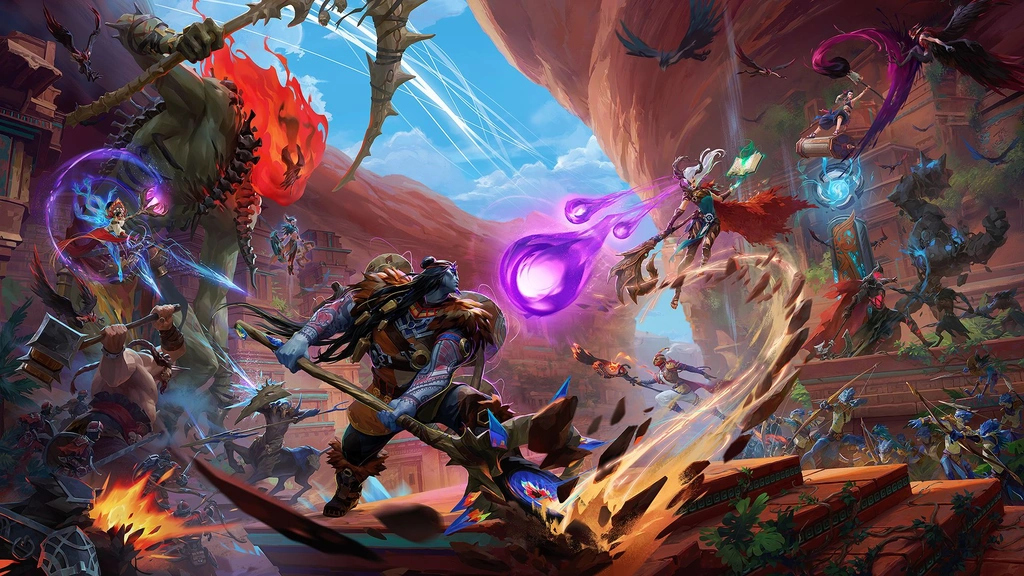
Spellcasters Chronicles est un jeu d'action-stratégie en 3v3 développé par Quantic Dream, le studio en charge de Star Wars Eclispe.. Le gameplay repose sur un système de deckbuilding permettant de choisir parmi plus de 50 sorts et invocations issus de sept écoles de magie différentes, afin de définir...

The Shargeek 300 is a Cyberpunk-style Power Bank that can charge two MacBook Pros

Par : Sarang Sheth
21 mars 2026 à 01:45

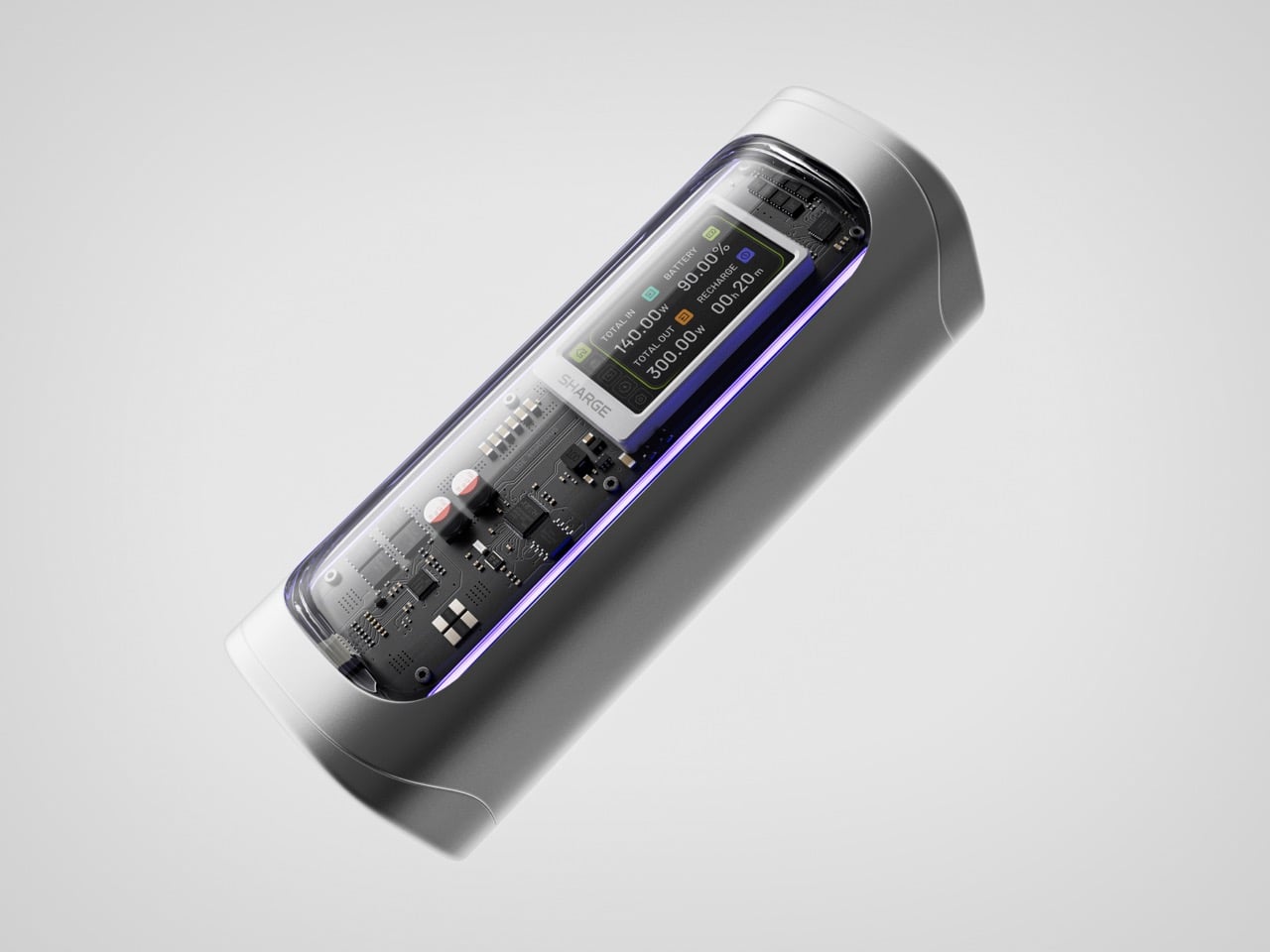
Power banks have spent years being boring on purpose. Black rectangles, white rectangles, the occasional textured finish. The category settled into a kind of utilitarian invisibility, as if the industry collectively decided that anything carrying electrons should look like a bar of soap. SHARGE never got that memo. The Shargeek 300 looks like a prop from a near-future thriller, with transparent panels revealing glowing circuitry beneath, RGB light bars running along its flanks, and a CNC aluminum body that catches light the way expensive things tend to. It belongs on a desk you’d actually want to show people.

Founded in 2020, SHARGE built its identity around the conviction that charging hardware deserves the same design attention as the devices it powers. The original Shargeek 100, launched in 2021, was the proof of concept: a transparent, display-equipped power bank with DC charging that found a devoted audience almost immediately. The Shargeek 300 is what four years of that bet looks like fully cashed in. It pushes 300 watts of total output, enough to charge two 16-inch MacBook Pros simultaneously while still fast-charging a smartphone on a third port. The 24,000mAh battery lands at 86.4Wh, sitting just under the 100Wh threshold airlines enforce for carry-on batteries. Recharge time from flat to full is 75 minutes with a 140W input. The whole unit is roughly the size of a 330ml can of cola. SHARGE spent 40 months getting here, and the result makes most rivals in the category look underprepared.

Designer: Sharge

Click Here to Buy Now: $159 $199 ($40 off) Hurry! Only 6 days left.

That meticulous attention to detail is most obvious in the physical construction. The main body is a matte silver CNC aluminum frame, which is then given a 180-grit sandblasted, anodized finish for a smooth, premium feel. The company’s head of production is even quoted as personally comparing the feel of every unit to an iPhone to ensure they are equally premium. The signature transparent casing is not just a window, but a piece of safety equipment, made from V0 flame-retardant, UL94-certified polycarbonate that resists both scratches and heat. The dual RGB light bars are fully customizable, allowing users to adjust brightness, change colors, and cycle through effects via the onboard display, turning a functional object into a piece of personalized desk art.

Inside that striking shell is technology that sets a new benchmark for portable power. The Shargeek 300 is the first power bank to use the same Full-Tab Battery Cell technology pioneered by Tesla. This design significantly lowers internal resistance compared to conventional cells, a change that unlocks faster charging speeds, higher sustained output, and superior heat dissipation. This internal efficiency is the key to how a device this compact can safely manage a 300W total output without overheating or degrading quickly. The advanced battery structure results in a longer-lasting, more stable power source that can handle the demanding, continuous power draws required by high-performance laptops and other professional equipment, putting truly next-generation power in your hands.

This power is routed through a versatile array of four output ports designed to handle nearly any device. The stars of the show are the two USB-C ports, both of which support the Power Delivery 3.1 standard to deliver a massive 140W of power each. This is what allows the Shargeek 300 to simultaneously fast-charge two 16-inch MacBook Pros at their maximum charging speed. A third USB-A port provides up to 20W for legacy devices and smartphones. The fourth and most unique port is the adjustable DC barrel port, a feature carried over from the Shargeek 100. It now supports up to 140W and its voltage can be manually set between 5V and 28V, unlocking compatibility with a world of gear that USB-C cannot serve, from professional camera equipment to high-performance drones. The 24,000mAh capacity provides enough energy for approximately one full charge of a modern MacBook Pro, six charges for an iPhone 16 Pro, or two charges for an iPad Pro.

The user experience is managed through a 1.9-inch IPS display, which is 60% larger than the screen on the previous model. It provides a level of control that is unheard of in this category. Beyond showing real-time input and output wattage, the display allows you to monitor battery health, track charging cycles, and check internal temperatures. You can use it to precisely adjust the DC output voltage, set a custom welcome message, and configure the RGB lighting. This smart display transforms the power bank from a simple battery into an intelligent power hub. This intelligence extends to its handling of delicate electronics. A dedicated Low-current Mode ensures that devices like earbuds, smartwatches, and fitness trackers receive a safe, optimized charge, preventing the overcharging that can damage the small batteries in those devices.

This combination of raw power and intelligent control is backed by a comprehensive suite of safety features, including overvoltage, undervoltage, short-circuit, and real-time temperature protection. This commitment to safety extends to its travel-readiness. Crucially, the power bank’s 24,000mAh capacity is engineered to a rating of 86.4Wh, keeping it comfortably under the 100Wh limit imposed by airlines for carry-on luggage. This makes it one of the most powerful charging solutions that can be legally carried onto a plane, a critical detail for mobile professionals. The low standby power consumption is another practical benefit, allowing the Shargeek 300 to retain over 90% of its charge after 15 days of inactivity. For anyone who has pulled a power bank from a bag after weeks only to find it unexpectedly dead, this is a genuinely valuable feature.

The Shargeek 300 starts at $199 but is available at a discounted $159 price for earlybird backers. Cobble together $209 and you can get the power bank along with its companion Pixel 140W PD 3.1 wall charger from Sharge with its adorable pixel-matrix display. The Shargeek 300 comes with a 12-month warranty, and ships globally as early as May 2026.

Click Here to Buy Now: $159 $199 ($40 off) Hurry! Only 6 days left.

The post The Shargeek 300 is a Cyberpunk-style Power Bank that can charge two MacBook Pros first appeared on Yanko Design.

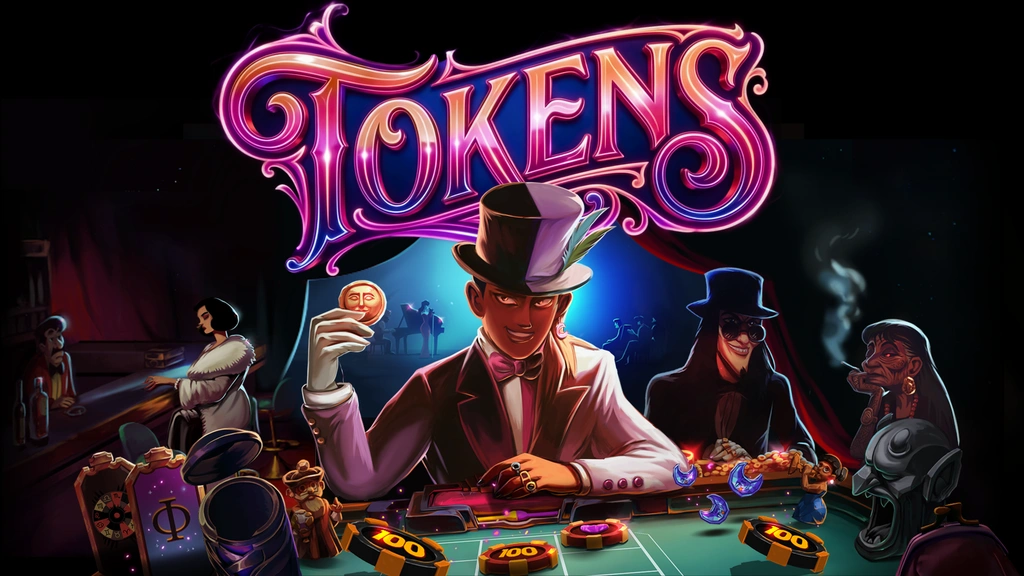
Après le poker de Balatro, TOKENS réinvente le deckbuilding avec ses jetons recto-verso

17 mars 2026 à 12:33
TOKENS est un jeu de stratégie de type deckbuilder roguelike où le joueur utilise des jetons à la place des cartes traditionnelles. Chaque jeton possède deux faces affichant des caractéristiques spécifiques : une couleur, un nombre et un symbole. La progression repose sur un système de combinaisons appelé...

Nearby Glasses - L'app qui détecte les lunettes caméra Meta

Par : Korben
26 février 2026 à 14:41

Les Ray-Ban Meta, c'est quand même le gadget parfait pour les voyeurs technophiles. Ce sont quand même des lunettes qui filment, prennent des photos et diffusent en live... le tout sans que PERSONNE autour ne s'en rende compte (ou presque). Alors forcément, quelqu'un a fini par coder une app pour les détecter !

Nearby Glasses , c'est une application Android développée par Yves Jeanrenaud qui scanne en permanence les signaux Bluetooth Low Energy autour de vous. Chaque appareil BLE diffuse en fait des trames pour s'annoncer avec un identifiant constructeur et les lunettes caméra de Meta utilisent les IDs 0x01AB et 0x058E (Meta Platforms) ainsi que 0x0D53 (Luxottica/Ray-Ban). Donc cette app écoute ces identifiants et vous balance une alerte dès qu'elle en capte un.

La détection repose sur le RSSI, en gros la puissance du signal reçu et par défaut, le seuil est à -75 dBm, soit environ 10-15 mètres en extérieur et 3-10 mètres en intérieur. Donc c'est pas foufou non plus mais c'est configurable, évidemment. Vous pouvez donc le durcir un peu pour ne choper que les lunettes vraiment proches, ou l'assouplir pour ratisser large (au prix de faux positifs en pagaille).

Les faux positifs, parlons-en d'ailleurs... Les casques Meta Quest utilisent les mêmes identifiants constructeur, du coup ça ne marche pas à tous les coups. Par exemple, si votre voisin joue en VR, votre téléphone va sonner ! L'app détecte aussi les Snap Spectacles (0x03C2)... pour les trois personnes qui en portent encore ^^.

Ah et l'app est UNIQUEMENT pour Android. La version iOS serait "on the way" selon le développeur... faut donc pas être pressé mais au moins c'est open source (AGPL-3.0), du coup n'importe qui peut vérifier ce que l'app fait de vos données Bluetooth.

Si le sujet vous parle, vous connaissez peut-être Ban-Rays , un projet hardware à base d'Arduino et de LEDs infrarouges qui détecte les Ray-Ban Meta via infrarouge et Bluetooth ! Hé bien Nearby Glasses, c'est l'approche 100% logicielle plutôt que hardware, ce qui est plus accessible mais forcément plus limitée... pas besoin de fer à souder, cela dit ^^.

C'est une rustine mais bon, c'est mieux que de se retrouver à poil sans permission sur le web.

Source

Banjo-Kazooie - Le portage PC 4K est dispo

Par : Korben
28 janvier 2026 à 07:19

Si contrairement à moi, vous avez grandi avec la Nintendo 64, vous avez forcément passé des heures à collecter des Jiggies et à insulter cette sorcière de Gruntilda . Ceux qui savent, savent... Mais ceux qui ne savent pas hé bien préparez-vous aussi à prendre une claque de nostalgie en 4K, car Banjo-Kazooie vient de débarquer sur PC en version 100% native !

Comme d'hab, c'est de la recompilation statique et pas une ROM émulée. C'est le même type de procédé magique qui nous a déjà offert le portage de Zelda Majora's Mask (via N64: Recompiled) ou encore Sonic Unleashed récemment (via XenonRecomp).

En gros, le projet Banjo-Kazooie: Recompiled utilise l'outil N64: Recompiled pour traduire le code original du jeu en une application PC native. Comme ça le jeu tourne sans l'overhead de l'émulation CPU traditionnelle, ce qui nous permet de profiter d'un framerate débloqué (fini les petits ralentissements de l'époque), d'un support pour les écrans ultra-larges, et d'une fluidité absoluuuue.

Et surtout, ce portage intègre le moteur de rendu RT64. Pour l'instant, ça sert surtout à lisser tout ça et à gérer les hautes résolutions, mais le moteur est techniquement capable de gérer le Ray Tracing, ce qui laisse rêveur pour les futures mises à jour. Je vous laisse imagine la fameuse Montagne de Spirale avec des éclairages ultra réalistes... ça va être quelque chose !

Bref, voici ce qu'on retrouve dans ce portage :

  • Support natif du clavier/souris et des manettes modernes.
  • Sauvegarde des notes : Plus besoin de ramasser toutes les notes d'un niveau en une seule fois sans mourir (le traumatisme de mon enfance, je vous jure).
  • Temps de chargement quasi-instantanés.
  • Support des mods et des packs de textures.

Alors comment on y joue ?

C'est assez simple en fait. Comme pour les autres projets de ce style, les dév ne fournissent aucun asset illégal. Vous devez donc posséder votre propre ROM de Banjo-Kazooie. Attention par contre, il faut impérativement la version NTSC 1.0 (US), sinon ça ne passera pas lors de l'extraction. Ensuite, au premier lancement, l'outil va extraire les textures, les modèles et les sons de votre ROM pour construire le jeu PC.

Il y a même un support pour le Steam Deck et Linux via Flatpak, donc vous pouvez emmener l'oiseau et l'ours partout avec vous (sauf sous l'eau, évidemment ^^).

A vous maintenant de foncer récupérer le launcher sur GitHub .

❌
❌