❌

Vue normale

  • ✇Yanko Design
  • Xbox Put a Working Series X Inside a Giant Fake Alligator
    Finding a place for a game console usually means clearing a shelf, not making room for a reptile. Microsoft’s Xbox Series X-BITE puts a working Series X inside an artificial alligator measuring more than five feet long. The one-off creation trades a discreet electronics box for something closer to a wildlife exhibit, complete with a controller between its teeth. The alligator rests on slim posts above a rectangular, wood-grain base, with its legs hanging below and its tail curling toward the fl
     

Xbox Put a Working Series X Inside a Giant Fake Alligator

Par : JC Torres
4 novembre 2026 à 09:20

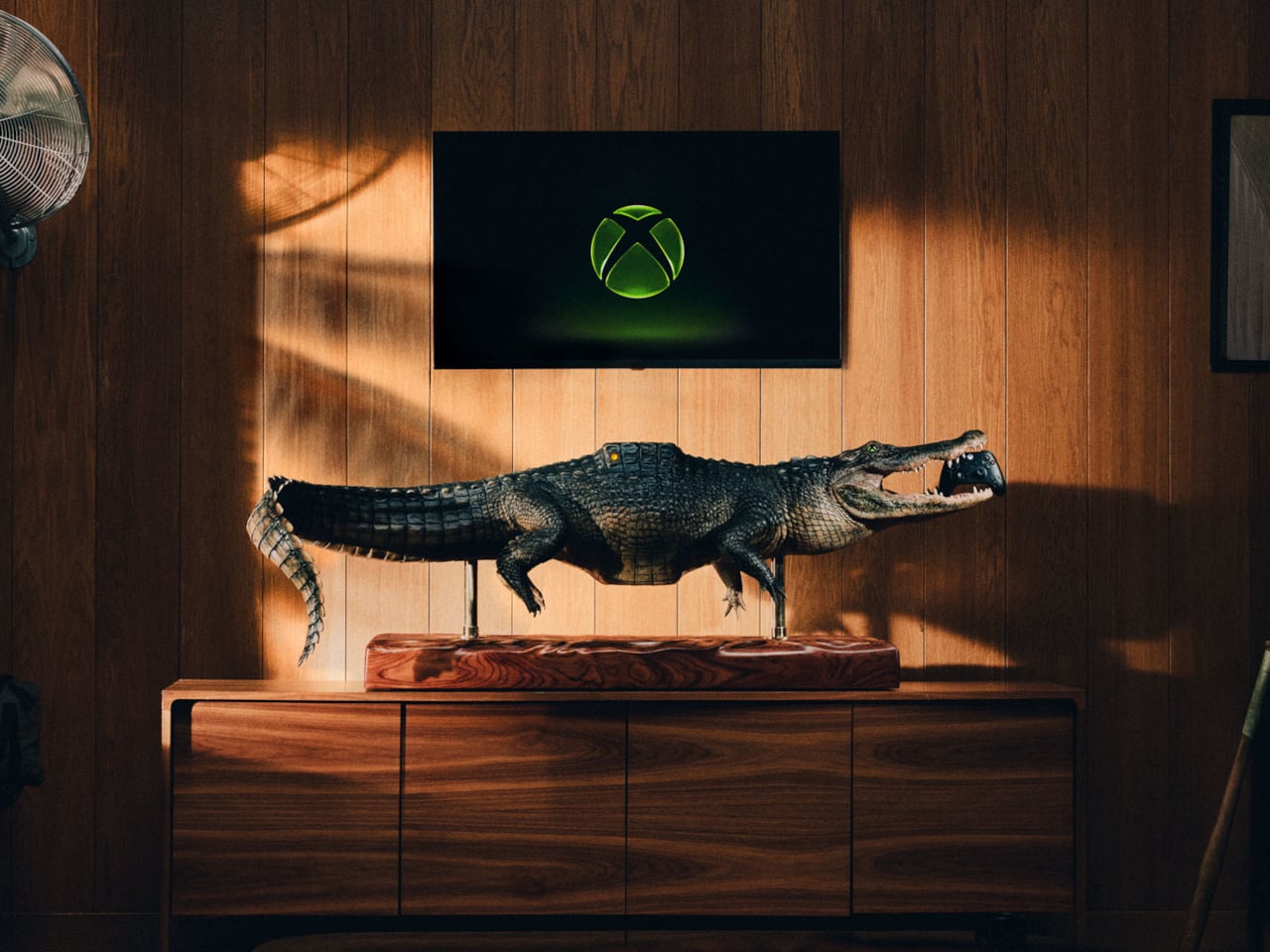
Finding a place for a game console usually means clearing a shelf, not making room for a reptile. Microsoft’s Xbox Series X-BITE puts a working Series X inside an artificial alligator measuring more than five feet long. The one-off creation trades a discreet electronics box for something closer to a wildlife exhibit, complete with a controller between its teeth.

The alligator rests on slim posts above a rectangular, wood-grain base, with its legs hanging below and its tail curling toward the floor. Dark, ridged scales and a lighter belly give it the appearance of a mounted specimen. That familiar display format does much of the work, making the oversized enclosure feel deliberately theatrical rather than like an ordinary console wearing a novelty cover.

Designer: Microsoft (Xbox)

A raised section on its back interrupts those scales, with an illuminated Xbox Nexus symbol worked into the surface. It’s the clearest clue that the animal has supposedly swallowed something it shouldn’t. The branding stays small against the length of the body, allowing the fabrication to carry the joke before the glowing logo explains why there’s an alligator underneath your television in the first place.

The head gets a less subtle treatment. Xbox-green irises surround pupils shaped around the Nexus symbol, turning the creature’s stare into another brand reference. Between the open jaws sits a custom Xbox Wireless Controller with artificial bite marks. It gives the sculpture a little unfinished business, as though the console wasn’t quite enough of a meal and the accessories were next on the menu.

The commission went to creature-effects specialists, who used 3D modeling, sculpting, and fabrication to build the animal around the hardware. That process gives a promotional console the attention normally associated with a film prop. Florida supplied the inspiration, according to Xbox, although the animal itself is entirely artificial. No actual alligators were used or harmed in creating this unusually elaborate console enclosure.

For the person who eventually owns it, the obvious challenge is finding a suitable place to put it. More than five feet of reptile won’t disappear into the usual gap beside a television. Its long base asks for a substantial display surface, and the raised mounting makes the whole assembly something to plan a room around rather than tuck away.

There’s also a qualification behind the playable-console claim. Xbox says the Series X inside works, but its fine print recommends the finished creation for display. The announcement doesn’t explain ventilation, access to ports, or servicing inside the sculpted body. That leaves a distinction between functioning hardware and a practical replacement for the console you switch on every evening after work.

Only one Series X-BITE exists, and it’s being offered through a sweepstakes rather than a retail release. There isn’t a shelf price to weigh against a standard console or a choice of less toothy finishes. The appeal is owning the fabrication itself, with a working Xbox as its unlikely inhabitant. The controller has a home, provided you don’t mind the teeth.

The post Xbox Put a Working Series X Inside a Giant Fake Alligator first appeared on Yanko Design.
  • ✇Yanko Design
  • Buy the printer, make the presents: Snapmaker’s U1 drops to $699 for Black Friday
    The Snapmaker U1 drops to $699 this Black Friday, down 30% from its $999 list price, and it might be the smartest buy on your holiday list, mostly because it can make plenty of the gifts on it. The U1 is a four-toolhead 3D printer that prints in up to four colors or materials in a single go. That covers personalized ornaments, figurines, and fidget toys, all printed in multicolor on your desk. It ships with four spools of PLA and 30 ready-to-print models, so after unboxing and automatic calibra
     

Buy the printer, make the presents: Snapmaker’s U1 drops to $699 for Black Friday

3 novembre 2026 à 21:45

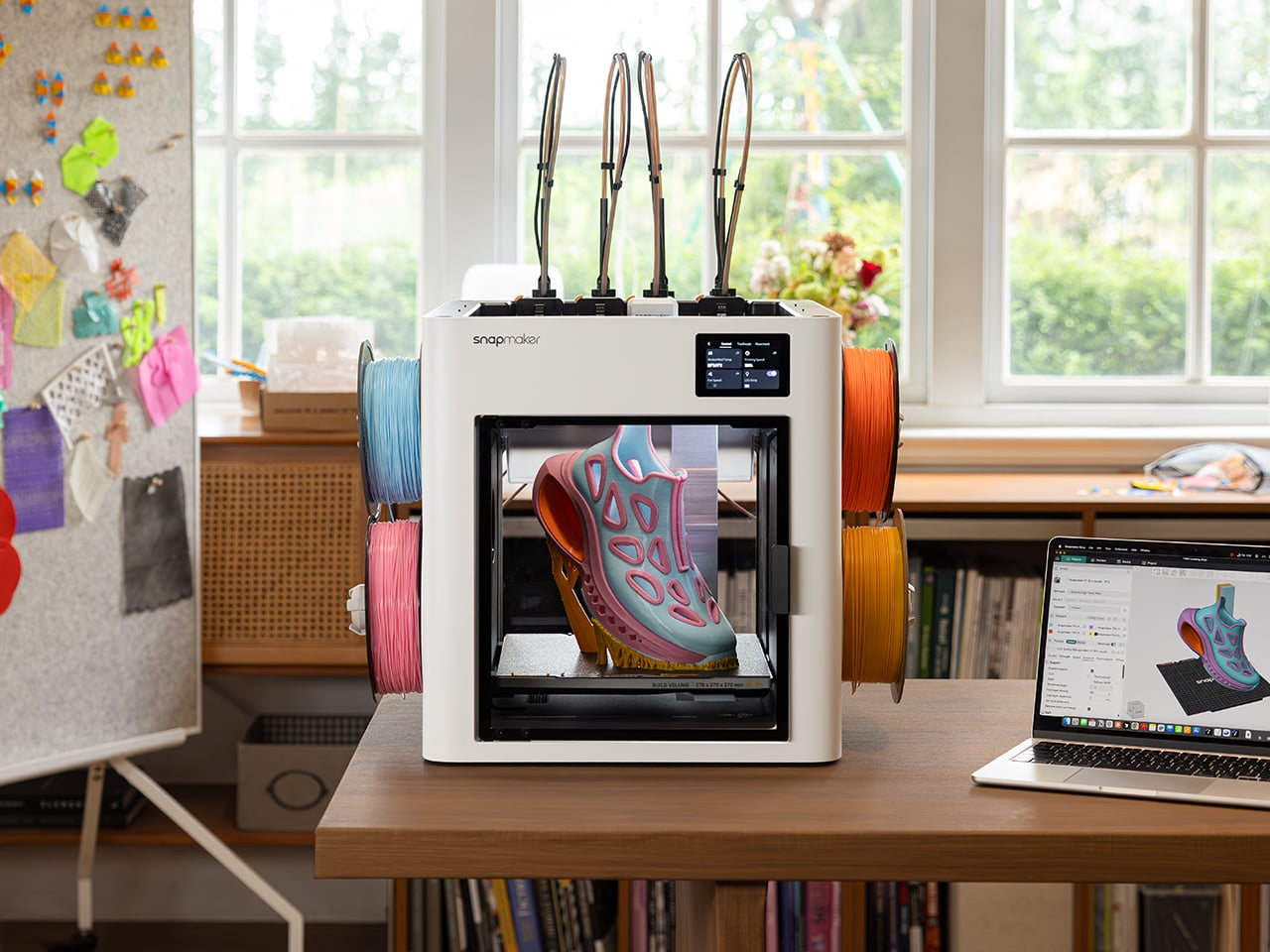
The Snapmaker U1 drops to $699 this Black Friday, down 30% from its $999 list price, and it might be the smartest buy on your holiday list, mostly because it can make plenty of the gifts on it. The U1 is a four-toolhead 3D printer that prints in up to four colors or materials in a single go. That covers personalized ornaments, figurines, and fidget toys, all printed in multicolor on your desk. It ships with four spools of PLA and 30 ready-to-print models, so after unboxing and automatic calibration, you can print your first model on day one. A good chunk of your Christmas list, sorted.

Four-head printers are rare at this price. Tool changers like the Prusa XL have historically cost well north of $2,000. Snapmaker’s SnapSwap system keeps four print heads loaded and swaps between them in about five seconds, while single-nozzle setups like Bambu’s AMS flush filament at every color change. Fewer purges mean faster prints and, by Snapmaker’s count, up to 85% less wasted plastic. More than 20,000 Kickstarter backers already bought in, making the U1 the most-funded 3D printer campaign in the platform’s history, with now more than 150,000 users worldwide.

Designer: Snapmaker

Click Here to Buy Now: Black Friday Sale. Hurry, deal ends soon!

Five-Second Swaps and a Lot Less Printer Poop

Each of the U1’s four print heads sits docked and preheated with its own filament. When a print calls for a new color, the printer parks the active head and grabs the next one. A steel-ball coupling and a mechanical lock seat each head in the exact same spot every time, and Snapmaker says the mechanism survived over a million continuous swaps with zero mechanical failures. The printer then auto-calibrates all four heads to within 0.04mm (about 0.0016 inches) of each other. That keeps the white trim on a Santa hat right where it belongs.

Single-nozzle printers handle color changes by shoving the old filament out until the new one runs clean. Snapmaker pegs that process at roughly two minutes per swap, and on a busy multicolor model the purged plastic can outweigh the model itself. The U1 only purges small amounts at the start of a job and during calibration. Print a tray of four-color ornaments and those savings stack up fast, in both hours and filament. Your filament budget ends up on the tree instead of in the trash.

A Personalized Ornament, From Download to Gift Box

Four heads can hold four different materials as easily as four colors, so flexible TPU or dissolvable supports can share a print with rigid plastic. For most holiday gifts, though, four colors of PLA do the heavy lifting. Snapmaker’s Full Spectrum feature stretches that palette by stacking thin alternating layers of your four filaments, which your eye reads as new in-between shades. Results depend on the filament, the model’s shape, and your settings, so a quick test print helps. Load red, green, white, and gold, and you’ve basically got Christmas in a box.

Personalizing a gift takes about as much skill as sending a text. Open an ornament model in Snapmaker Orca, add a name with the slicer’s text tool, and assign one of your four colors to each part. A palm-sized ornament uses only a few grams of filament, so each one costs pocket change in plastic. Hit print, and the U1 handles every color swap on its own while you get on with your evening. Repeat for each name on your list, and nobody else at the party will show up with those.

Smart Enough for First-Timers, Cheap Enough for Black Friday

Snapmaker Space, the company’s model library (currently in open beta), offers ready-to-print multicolor models, so beginners can skip 3D modeling entirely. Auto bed leveling helps your first layer stick, and input shaping reduces vibration for smoother walls, with speeds topping out at 500mm/s (about 20 inches per second). Filament loads itself, RFID tags on Snapmaker spools fill in settings for you, and Backup Mode switches to a matching spool when one runs dry. A built-in camera with AI monitoring can flag spaghetti failures and ping your phone. Tinkerers get Klipper firmware and OrcaSlicer support.

Click Here to Buy Now: Black Friday Sale. Hurry, deal ends soon!

The post Buy the printer, make the presents: Snapmaker’s U1 drops to $699 for Black Friday first appeared on Yanko Design.

iPad Mini OLED vs Galaxy Tab S11: Is Portability Worth Giving Up a Bigger Screen?

4 novembre 2026 à 09:28

Apple's OLED iPad mini is much lighter, while Samsung's Galaxy Tab S11 offers a bigger screen and included stylus. Which fits how you use a tablet?

The post iPad Mini OLED vs Galaxy Tab S11: Is Portability Worth Giving Up a Bigger Screen? appeared first on TechRepublic.

❌