❌

Vue normale

  • ✇Yanko Design
  • The 8 Best Tech Gadgets of November 2026
    A phone with a screen beside its rear camera is a literal way to improve a selfie. A mouse that folds flat takes a direct approach to an overstuffed laptop bag. Our November gadget selection starts with those practical ideas, then moves through music players, a camera, a keyboard, and a handheld console that makes its electronics part of the view. Each earns its place through a specific design decision. These are our editorial picks for November 2026, not eight November launches or winners from
     

The 8 Best Tech Gadgets of November 2026

3 novembre 2026 à 07:40

A phone with a screen beside its rear camera is a literal way to improve a selfie. A mouse that folds flat takes a direct approach to an overstuffed laptop bag. Our November gadget selection starts with those practical ideas, then moves through music players, a camera, a keyboard, and a handheld console that makes its electronics part of the view. Each earns its place through a specific design decision.

These are our editorial picks for November 2026, not eight November launches or winners from a comparative test. The selection includes products offered for purchase, announced hardware, and projects still working toward production, with those differences identified below. We’ve favored useful mechanisms, distinctive controls, and objects that offer something beyond another spec upgrade. Consider it a guide to what deserves attention, with availability treated as carefully as the industrial design itself.

1. Acer Sospiro A70 5G Phone

The Acer Sospiro A70 gives its rear camera a useful companion: a 1.88-inch display that doubles as a selfie viewfinder. Instead of guessing your framing when using the 64MP main camera, you can check it on the back of the phone. That small screen sits inside a broad, V-shaped camera module, giving the handset an identity beyond its logo. Senwa Global, which licenses the Acer name for phones in Latin America, is the company behind this particular Acer-branded 5G model.

The rest of the hardware preserves options many buyers still value: a 3.5mm headphone jack, 256GB of storage, and microSD expansion up to 1TB. A 5,000mAh battery accompanies the 6.67-inch main display, although its 120Hz refresh rate comes with a modest 720 × 1600 resolution. That’s the compromise behind the feature list. Pricing and the launch date remain unconfirmed in our sources, and a US release hasn’t been established, so this belongs on a watchlist rather than a shopping cart.

What we like

  • The rear display provides framing when taking selfies with the main camera.
  • A headphone jack and expandable storage preserve useful everyday options.

What we dislike

  • The main screen pairs a large panel with relatively low resolution.
  • Pricing, launch timing, and US availability remain unresolved.

2. OrigamiSwift Folding Mouse

A conventional mouse is awkward luggage because its useful shape becomes wasted volume when you close the laptop. Horace Lam’s OrigamiSwift addresses that with a folding, origami-inspired body that rises into a working mouse and flattens for storage. At 40 grams, it adds little weight to a mobile setup. The more interesting achievement is giving the mouse two distinct shapes for two different jobs, rather than asking you to work all afternoon with a permanently shrunken travel accessory in hand.

Bluetooth 5.2 handles the connection, while USB-C recharges a battery that rates for up to three months of use. The $85 asking price buys a more considered packing solution, not a promise that every hand will prefer its angular form. There’s also a dimensional catch worth understanding: the flattened body spreads to roughly 4.8 by 5 inches, and the sensor housing stays thicker than the panels. It’s better suited to a slim laptop sleeve than a tiny pocket.

Click Here to Buy Now: $85.00

What we like

  • Folding construction reduces the thickness needed for storage.
  • Its 40-gram weight makes it a modest addition to a laptop bag.

What we dislike

  • The flattened shape still occupies an almost five-inch-square footprint.
  • The thicker sensor housing prevents a uniformly flat profile.

3. OnePlus Ice Card Mini

OnePlus’s Ice Card Mini is a China-listed magnetic phone cooler with a refreshingly restrained shape. At about 50 grams and 70 by 53.4mm, it resembles a small card accessory more than the clip-on fans associated with gaming phones. Inside, thermoelectric cooling works alongside an air-cooling system. The appeal is straightforward: an external accessory intended to manage heat without turning the phone into something that needs its own carrying case. It’s a focused answer to an accessory category prone to bulk.

The Mini takes power over USB-C, drawing up to 3.5W according to the published specifications. You can power it from the phone, a power bank, or an adapter, but that means the magnetic attachment doesn’t make the setup wireless. An included magnetic plate extends compatibility to phones without built-in magnets. That flexibility is welcome, especially if you change handsets regularly. The remaining questions are practical ones: case compatibility, the effect on your games, and availability outside its initial Chinese market.

What we like

  • The compact magnetic format avoids a bulky clamping mechanism.
  • USB-C power allows several options beyond a wall outlet.

What we dislike

  • It requires a power connection during use.
  • Cooling performance and US availability need confirmation.

4. ClearFrame Speaker CD Player

The ClearFrame Speaker CD Player gives an album two jobs: something to play and something to display. Its transparent body reveals the spinning disc and circuitry, while an included tray lets you insert the album artwork instead. That makes its appearance change with your listening rather than stay fixed behind a manufacturer’s grille. This is the speaker-equipped version of ClearFrame, with a built-in 40mm driver and bass diaphragm, so it can play your CDs without an additional speaker beside it.

At 27mm thick, the $240 player has proportions closer to a book than a conventional stereo component. It features six to seven hours of speaker playback, with USB-C charging and a 3.5mm headphone output. Bluetooth 5.3 sends CD audio to compatible headphones or speakers; it doesn’t receive music from your phone. That distinction matters if you’re imagining a transparent Bluetooth speaker. A display stand and wall mount cost extra, so budget for the arrangement you want at home.

Click Here to Buy Now: $240.00

What we like

  • Album artwork becomes part of the player’s appearance.
  • The built-in speaker removes the need for a separate listening setup.

What we dislike

  • Bluetooth transmits CD audio but cannot receive music from a phone.
  • Display accessories and wall-mounting hardware aren’t included.

5. Sudo Music Player

Tangerine Sudo music player shown from front and back, with playlists menu on screen and tactile wheel below

Silver Sudo music player held in one hand, thumb resting on the tactile wheel

New Matter’s Sudo revisits the dedicated music player with an interface built around a capacitive scroll wheel and haptic feedback, paired with a touchscreen. The appeal is choosing an album on a device whose main purpose is listening, rather than opening another destination on your phone. Planned hardware includes a Cirrus Logic DAC, a 3.5mm headphone jack, and USB-C digital audio output. This is upcoming hardware, though, with New Matter expecting the first batch to ship in early Q4 2027.

The specification gives that familiar format room to grow: 64GB of internal storage, microSD expansion up to 2TB, and support for formats including FLAC, MP3, and WAV. New Matter also lists Wi-Fi and Bluetooth, so the throwback controls don’t mean abandoning connectivity. A refundable $50 reservation goes toward an expected $249 purchase price, rather than buying a finished player today. For anyone rebuilding a local music library, it’s worth following, but the production schedule makes patience part of the proposition.

What we like

  • A dedicated wheel gives music navigation its own control surface.
  • Expandable storage accommodates a growing local library.

What we dislike

  • Expected shipping is in Q4 2027, not this November.
  • The $249 price remains an estimate, not a finalized retail figure.

6. AULA Neos 75 Keyboard

AULA’s Neos 75 puts a small control console beside an otherwise compact keyboard. Two metal knobs, round media buttons, and a 2.3-inch color display give the right edge the look of a miniature hi-fi component. The useful part is having volume and playback controls where your hand already works, without requiring another desk accessory. Designed by AULA.New Renaissance, the 84-key board also uses a CNC-machined aluminum chassis and aluminum keycaps, extending that hardware-focused approach across the surface you actually touch.

Custom low-profile Kailh switches sit in hot-swappable sockets, letting you change switches without soldering. A gasket mount supports the typing assembly, and wired, Bluetooth, and 2.4GHz connections offer different ways to connect your devices. China preorders opened in October, while wider regional availability needs checking before purchase. The physical compromise is right there in the layout: a compact 75% key arrangement doesn’t produce the smallest possible keyboard when a separate control console occupies the space along its entire right edge.

What we like

  • Dedicated knobs and media buttons put frequent controls within reach.
  • Hot-swappable switches leave room to change the typing setup.

What we dislike

  • The side console expands the footprint of the compact key layout.
  • A confirmed official US rollout remains unclear.

7. Fujifilm Instax Mini Evo 2

Fujifilm’s Instax Mini Evo 2 makes printing a choice rather than the unavoidable outcome of pressing the shutter. The hybrid camera lets you review and adjust a digital image before committing it to Instax Mini film. Its lens-effect dial, film-effect dial, and print lever preserve physical actions alongside a 4.5-inch touchscreen. For someone who likes the idea of instant photography but hates wasting film on an accidental exposure, that division of labor makes more sense than nostalgia on its own.

The camera offers 10 lens effects and 10 film effects, giving you 100 combinations before printing. Expanded View shows the area beyond the intended print frame, while the updated app supports printing smartphone photos and remote shooting. Fujifilm lists a US MSRP of $289.95, with availability expected toward the end of November. Film remains a separate purchase, and the new short-movie feature needs a microSD card. Those ongoing costs deserve just as much consideration as the camera’s appealing physical controls.

What we like

  • Reviewing images before printing gives you control over film use.
  • Physical effect dials complement the touchscreen rather than disappearing into it.

What we dislike

  • Instax Mini film adds an ongoing expense.
  • The short-movie feature requires a separately purchased microSD card.

8. Arduview Transparent Gaming Handheld

Arduview takes transparent electronics beyond a clear shell. Louis Huang’s handheld also uses a see-through circuit board and display, leaving the background visible around its illuminated cyan pixels. It’s an unusually direct way to turn the workings of a gadget into its visual identity. This isn’t only a rendering trick: VGC reports using a working unit and confirms that the transparent screen functions as shown. The project is now crowdfunding, rather than sitting on a shop shelf ready for delivery.

Built on the open Arduboy platform, the 50-gram device is pitched around 400 preloaded games and USB-C charging. That makes it a small, focused alternative to a phone full of gaming apps, with room for enthusiasts to explore the underlying platform. Arduview’s maker projects February 2027 shipping for early supporters, rather than November availability. Its appeal rests on a deliberately narrow gaming experience and a display construction; neither should be confused with the capabilities of a larger, mainstream handheld console.

What we like

  • Transparency extends to the screen, not merely the enclosure.
  • The open Arduboy platform offers scope for tinkering beyond preloaded games.

What we dislike

  • February 2027 shipping is a projection, not immediate availability.
  • Its niche Arduboy library won’t suit someone seeking mainstream console games.

Match the Gadget to the Habit

The most useful way to approach this list is to start with a recurring annoyance, not an empty spot on the desk. A mouse that packs differently has a clear job. So does a CD player that lets an existing collection leave the cupboard. More specialized hardware needs a closer match to your habits: a phone cooler only matters if heat is a problem you actually encounter while using it.

Timing deserves the same scrutiny as design. A reservation, a crowdfunding pledge, and a retail order are different commitments, even when the product photography makes them look equally finished. If you need something for this month, check the version, delivery estimate, and accessories before paying. If you’re following an upcoming design, keep the expected date in view. An interesting object can be worth watching without being the right purchase today.

The post The 8 Best Tech Gadgets of November 2026 first appeared on Yanko Design.

  • ✇Yanko Design
  • NOX Cordless Lamp Lets You Carry the Beam Without the Base
    Cordless table lamps let you move the whole fixture, but sometimes you only need to take the light. Studio Apure’s NOX makes that distinction with a magnetic head that lifts away from its stand and becomes a small flashlight. The stand can stay beside your chair while its illuminated tip follows you down a dark hallway, without carrying the base along for company. The shape gives that arrangement a surprisingly tidy home. A slender upright rises from a flat circular foot, with a shorter cylinde
     

NOX Cordless Lamp Lets You Carry the Beam Without the Base

Par : JC Torres
3 novembre 2026 à 06:07

Cordless table lamps let you move the whole fixture, but sometimes you only need to take the light. Studio Apure’s NOX makes that distinction with a magnetic head that lifts away from its stand and becomes a small flashlight. The stand can stay beside your chair while its illuminated tip follows you down a dark hallway, without carrying the base along for company.

The shape gives that arrangement a surprisingly tidy home. A slender upright rises from a flat circular foot, with a shorter cylinder attached near the top. There’s no broad shade or long articulated arm competing for space above a bedside table. Onyx Black, Nimbus Grey, and Dune Beige keep the finish choices subdued, letting the changing angle of the head supply most of the character.

Designer: Studio Apure (via The Curation)

That head rotates through 360 degrees, so you can redirect the beam without shifting everything else on the table. An adjustable lens changes its spread from a broad glow to a concentrated spot. You might keep the light wide during dinner, then narrow it toward a book afterward, giving the same small fixture two different jobs without changing where the stand sits.

Brightness gets its own adjustment, separate from the beam’s width. Tap the top of the head to switch the LED on or off, and hold to dim it between 5% and 100%. Its 140-lumen output has a warm 3000K color temperature. The touch control stays with the detachable head, so it remains accessible when you’re carrying the light without its supporting stand.

Taking it off the stand changes the scale of what you’re carrying. You can check behind a sofa or retrieve something from a dark closet without balancing an entire lamp in one hand. Return the head to its magnetic attachment, and its battery recharges from the stand. That gives the removable part a parking spot, which is useful for something so small.

Studio Apure estimates 12 to 14 hours of cordless operation for the complete lamp and up to an hour for the detached flashlight, both at full brightness. Recharging the lamp takes about seven hours using the supplied dock and adapter. The stand is therefore the longer-lasting arrangement, while the little light you pull away is better suited to shorter trips around home.

Outdoor trips still come with a few restrictions. NOX carries an IP54 rating, but Studio Apure restricts it to indoor or covered outdoor settings and advises avoiding direct water contact. A sheltered patio table fits that brief; leaving it exposed in the garden doesn’t. Cordless operation removes the outlet from the seating arrangement, not the need to bring the lamp under cover.

Listed at $385, NOX puts a substantial price on that flexibility. Its 2.03-pound weight still lets you carry the whole lamp when you want light somewhere else, while a flashing red ring warns you when it’s time to recharge. You’ll just need to return the head to its stand, since a magnetic connection can’t recharge something you’ve abandoned in a kitchen drawer.

The post NOX Cordless Lamp Lets You Carry the Beam Without the Base first appeared on Yanko Design.

  • ✇Yanko Design
  • LEGO Bauhaus Chess Concept Has Hidden Clues to Its Moves
    A knight’s horse-shaped head is easy to recognize, but it offers no clue about that peculiar L-shaped move. That’s a small frustration with learning chess: identifying the pieces and remembering what they do are two separate tasks. I like the idea of giving their shapes a little more responsibility, especially when the alternative is explaining the knight’s movement for the fifth time. Pinke Gans’s Bauhaus Chess Set, a LEGO Ideas fan concept, takes that possibility as its starting point. Accord
     

LEGO Bauhaus Chess Concept Has Hidden Clues to Its Moves

3 novembre 2026 à 04:15

A knight’s horse-shaped head is easy to recognize, but it offers no clue about that peculiar L-shaped move. That’s a small frustration with learning chess: identifying the pieces and remembering what they do are two separate tasks. I like the idea of giving their shapes a little more responsibility, especially when the alternative is explaining the knight’s movement for the fifth time.

Pinke Gans’s Bauhaus Chess Set, a LEGO Ideas fan concept, takes that possibility as its starting point. According to the designer, the idea emerged during a summer visit to the Bauhaus Museum in Weimar, Germany, where Josef Hartwig’s geometric chess pieces brought LEGO bricks to mind. It’s an appealing connection: a construction system built around basic shapes meets a chess set designed to make those shapes meaningful.

Designer: Pinke Gans

Hartwig designed his Bauhaus chess set in 1923, while working at the school in Weimar. Its abstraction wasn’t simply a matter of removing decorative details. The pieces used their forms to communicate their movement, replacing familiar figures with a geometric vocabulary. A minimalist chess set can still leave you memorizing arbitrary symbols; Hartwig’s approach gives some of those symbols a practical explanation.

The knight is the clearest example. Its stepped shape echoes its L-shaped movement, while the bishop’s diagonal cross relates to its diagonal paths across the board. Pinke Gans’s version carries those recognizable forms into bricks. These are useful memory cues, not a complete substitute for learning the rules. Nobody should expect a small cube to explain every complication of a pawn’s first move or capture.

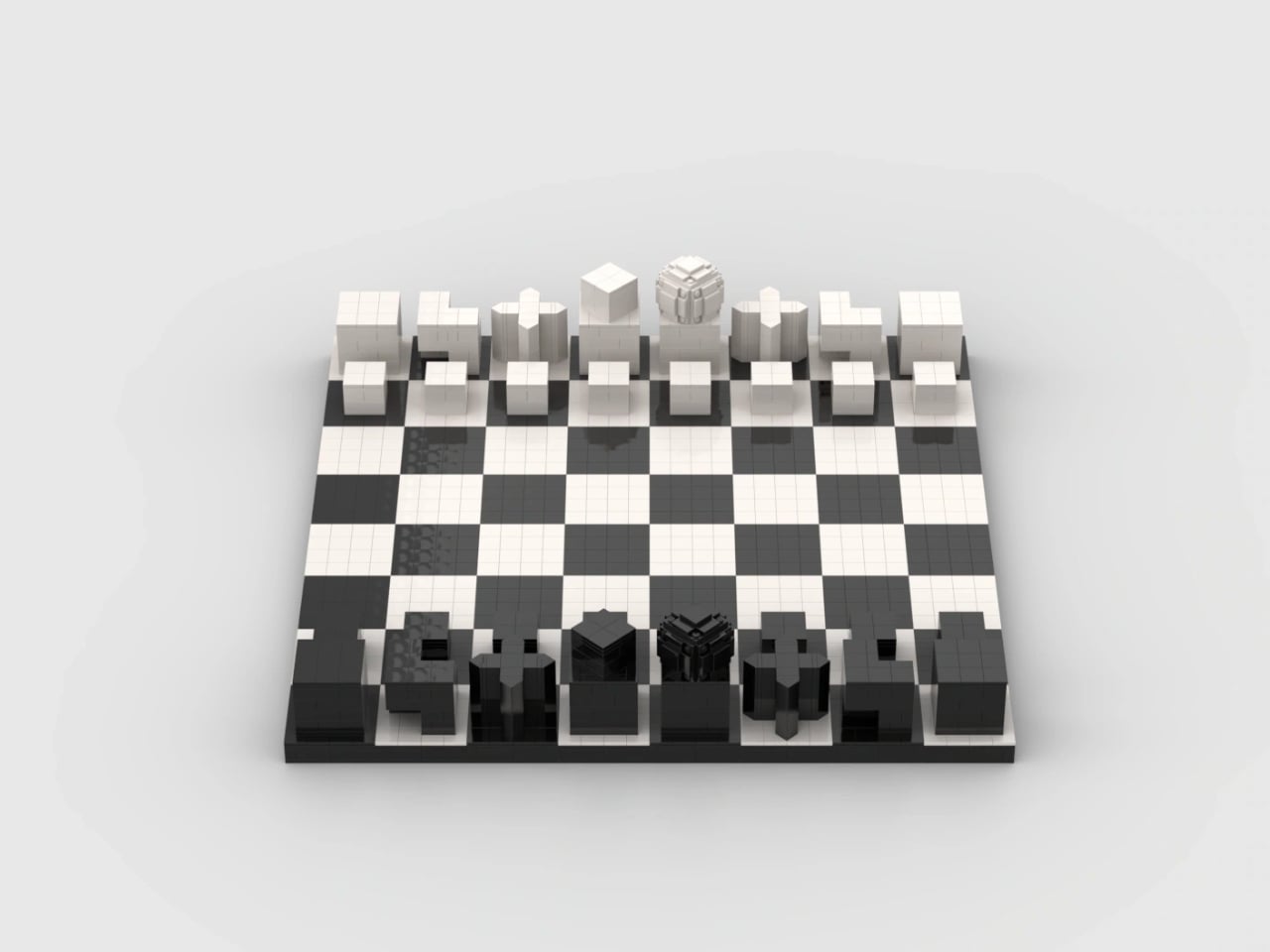
In the supplied images, the queen provides the most conspicuous departure from all those straight edges. Its rounded top becomes a faceted, layered construction, with individual elements visible around its surface. Nearby, the king has a smaller cube turned relative to its base. Together, they introduce enough variation to interrupt the rows of blocks. The brick-built approximation of a sphere gives the queen a texture of its own.

That translation is more interesting to me than a perfectly smooth replica would be. Historical examples of Hartwig’s set were made in wood, so rebuilding the forms in LEGO changes how their surfaces read. Here, joints and tile seams remain visible. They establish a second, finer grid within the larger chessboard pattern, making the construction legible even where exposed studs don’t dominate the design.

The board itself stays restrained: black and white squares, a dark perimeter, and no elaborate scenery competing with the pieces. From the lower viewing angles, the arrangement resembles a small collection of architectural models. I could see this earning its place on a living room table because the visual interest comes from proportion and repetition, rather than decoration.

There is a potential usability tradeoff, though. If you already recognize conventional chess silhouettes instantly, a geometric set asks you to learn a different identification system before its logic becomes helpful. A blocky king and a rounded queen might be clear once explained, but that doesn’t establish faster recognition during play. The images also can’t tell us how securely the pieces hold together when repeatedly picked up.

The project is presented as a LEGO Ideas proposal, rather than an announced retail set. That distinction deserves to stay attached to the enthusiasm. Fan product ideas that reach 10,000 supporters may be considered for production, but reaching that threshold doesn’t itself put a box on store shelves. This submission shouldn’t be treated as a confirmed release or given an imagined price.

For me, the strongest reason to want it is the opportunity to assemble the shapes before playing with them. Building a knight’s stepped form could make its design rationale more tangible than simply reading an explanation beside a finished piece. You’d still need to learn chess. But spending a little time constructing the thing that represents a move seems like a particularly appropriate introduction to Hartwig’s idea.

The post LEGO Bauhaus Chess Concept Has Hidden Clues to Its Moves first appeared on Yanko Design.

  • ✇Yanko Design
  • Hal Jordan has to recharge his ring, but the NoxTi titanium EDC lantern glows for decades
    Every Green Lantern has the same annoying chore. Once a day, the ring needs a top-up, so our cosmic cop has to press his fist against a glowing green lantern and recite a whole poem before it’ll charge. Imagine your iPhone demanding spoken word every night before you plug it in. Xedge’s NoxTi TRI skips the ritual. It’s a pocket-sized lantern in Grade 5 titanium that hangs off your keys or around your neck, with three glow tubes tucked inside. Fit it with tritium tubes and it glows without charg
     

Hal Jordan has to recharge his ring, but the NoxTi titanium EDC lantern glows for decades

2 novembre 2026 à 21:45

Every Green Lantern has the same annoying chore. Once a day, the ring needs a top-up, so our cosmic cop has to press his fist against a glowing green lantern and recite a whole poem before it’ll charge. Imagine your iPhone demanding spoken word every night before you plug it in.

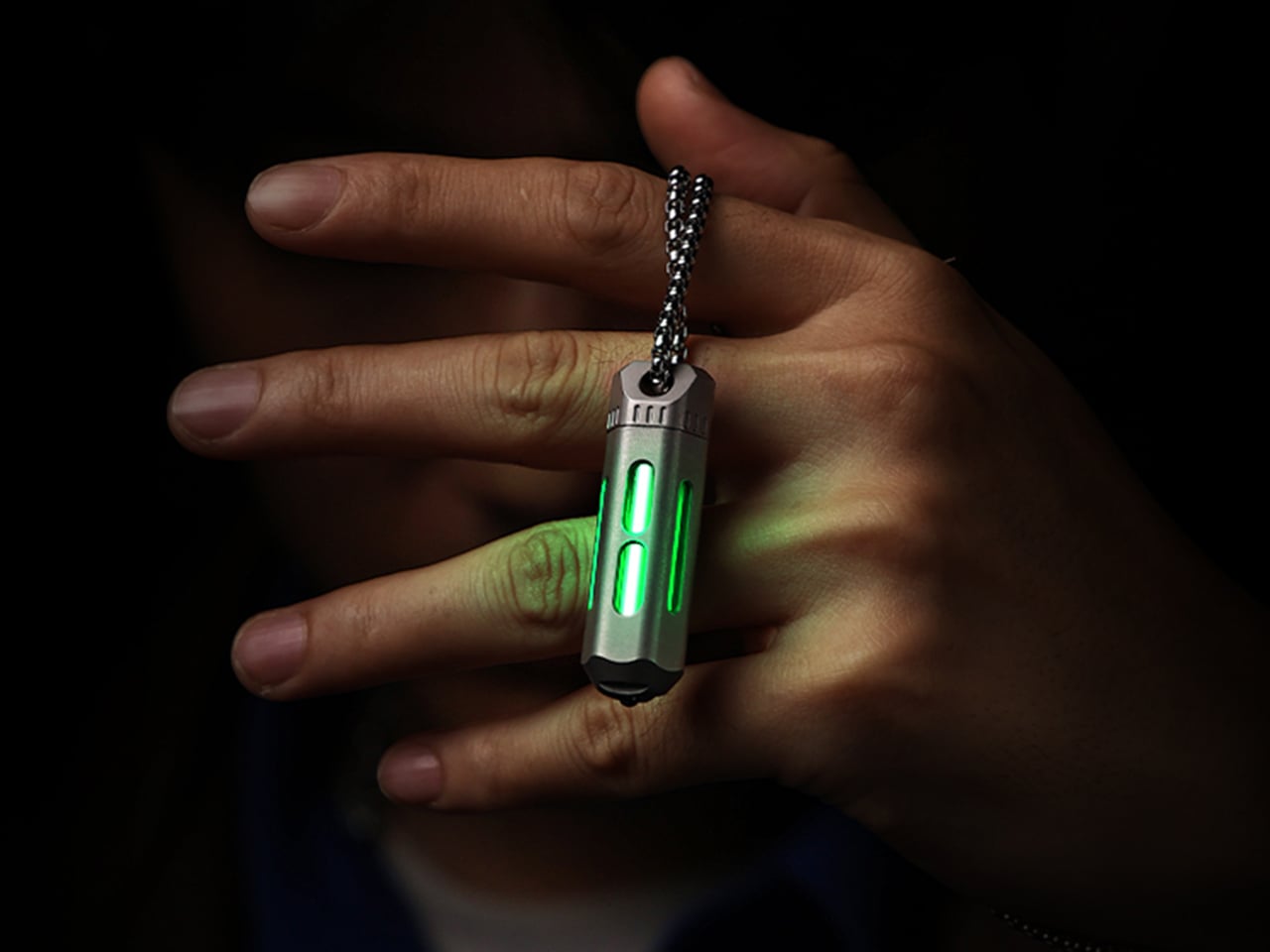
Xedge’s NoxTi TRI skips the ritual. It’s a pocket-sized lantern in Grade 5 titanium that hangs off your keys or around your neck, with three glow tubes tucked inside. Fit it with tritium tubes and it glows without charging, a switch, or poetry, slowly dimming over a couple of decades. Prefer something non-radioactive? Photoluminescent tubes absorb light and glow after dark. Hal would be jealous.

Designer: Xedge

Click Here to Buy $35 $55 (36% off). Hurry, only a few left! Raised over $81,000.

Three Tubes, One Glowing Core

NoxTi TRI holds three 3 x 22.5mm glow tubes spaced 120 degrees apart to keep the glow visible from more angles, whether the capsule is dangling from a keyring or lying in a cupholder. The tubes sit in a custom carrier made of optical-grade PMMA acrylic, for which Xedge claims around 97 percent light transmission. The carrier is designed to use total internal reflection to distribute the light, making the three tubes appear as one luminous core behind the titanium windows.

Six colors are on the menu: Apple Green, Ice Blue, Ocean Blue, Red, Violet, and Sunset Orange. Run one across all three slots for a uniform glow, or mix them. Yes, that means three Lantern Corps on one keyring. Tritium is the set-and-forget option. Its half-life is about 12 years, so the glow gradually dims rather than switching off, with Xedge describing a usable lifespan of about two decades. That’s still a better deal than any battery I own. The tritium is sealed inside glass vials, and Xedge reports a radiation-meter reading of 0.07 µSv/h. Photoluminescent tubes are the cheaper, non-radioactive option, recharging through exposure to light.

Titanium Outside, Shock Absorbers Inside

The shell is CNC-machined from Grade 5 titanium, an alloy also used in aircraft parts and bone implants. Its corrosion resistance should suit the sweat and daily handling of life on a crowded keyring. It measures 47mm long and 14.3mm across, and weighs 15.8 grams, roughly the weight of three US nickels. Inside, a quartz sleeve surrounds the glowing core to help keep dust out and the view clear, while O-rings seal the threaded body. Xedge says it tested the design at temperatures from minus 20°C to 100°C. It comes in sandblasted raw titanium or a stealthier Black DLC finish. I’d pick the black, purely because the glow stands out more against it.

The more interesting detail is how the design cushions those glass tubes. Each one rests on a 3mm silicone ball, and a stainless steel spring under the core is intended to absorb jolts from dropped keys or a swinging pendant. That spring sits on a magnetic base to help keep it in place when you unscrew the body to swap tubes, reducing the chance of tiny parts bouncing across the kitchen floor. A machined Tri-Index Cap keeps all three tubes aligned with their windows. Xedge says every component is accessible and replaceable, giving the titanium shell a chance to outlive several sets of tubes.

Wear It, Clip It, Break Glass With It

The attachment hole at the top takes a split ring, a quick-release clip, or a chain, so the TRI can live on your keys, hang off a bag zipper, dangle from a phone strap, or ride around your neck as a pendant. The kit supports both single-tube and triple-tube setups, so you can switch between them. On the opposite end sits a ceramic glass-breaker bead, intended for breaking car windows in an emergency, which I sincerely hope nobody ever needs. Keep expectations calibrated, though: this is a locator glow for finding your keys or bag in the dark. It won’t light up a trail.

The NoxTi TRI Kickstarter campaign lists a retail price of about $55 (HK$429) per unit. Pledge pricing starts at $35 for the launch special, followed by $39 for Super Early Bird and $45 for Early Bird, with two-packs from $65 and a four-pack at $119. Glow tubes are separate add-ons: tritium costs $20 per tube or $60 for three, while photoluminescent tubes are $7 each or $15 for three. Extras include the Black DLC upgrade ($15), a stainless steel necklace ($12), a titanium quick-release clip ($15), and titanium split rings ($12 for three). Shipping is listed as free worldwide, with deliveries planned for February 2027. Xedge hasn’t published warranty terms yet.

Click Here to Buy $35 $55 (36% off). Hurry, only a few left! Raised over $81,000.

The post Hal Jordan has to recharge his ring, but the NoxTi titanium EDC lantern glows for decades first appeared on Yanko Design.

  • ✇Yanko Design
  • Jackery shrank its power station into a 96Wh cube with 140W USB-C
    Jackery’s new Explorer 100D looks like it should play AM radio. The squat little cube has a framed front panel, orange slatted vents down its sides, and a webbing strap you’d expect on a vintage transistor set. Instead of tuning into ballgames, it stores 96Wh of energy and delivers up to 158W across two USB-C ports and one USB-A port. It measures 4.67 by 3.25 by 3.37 inches (11.9 x 8.3 x 8.6cm), making it roughly softball-sized, and weighs 1.87 pounds (850g). It’s the smallest power station Jac
     

Jackery shrank its power station into a 96Wh cube with 140W USB-C

2 novembre 2026 à 18:30

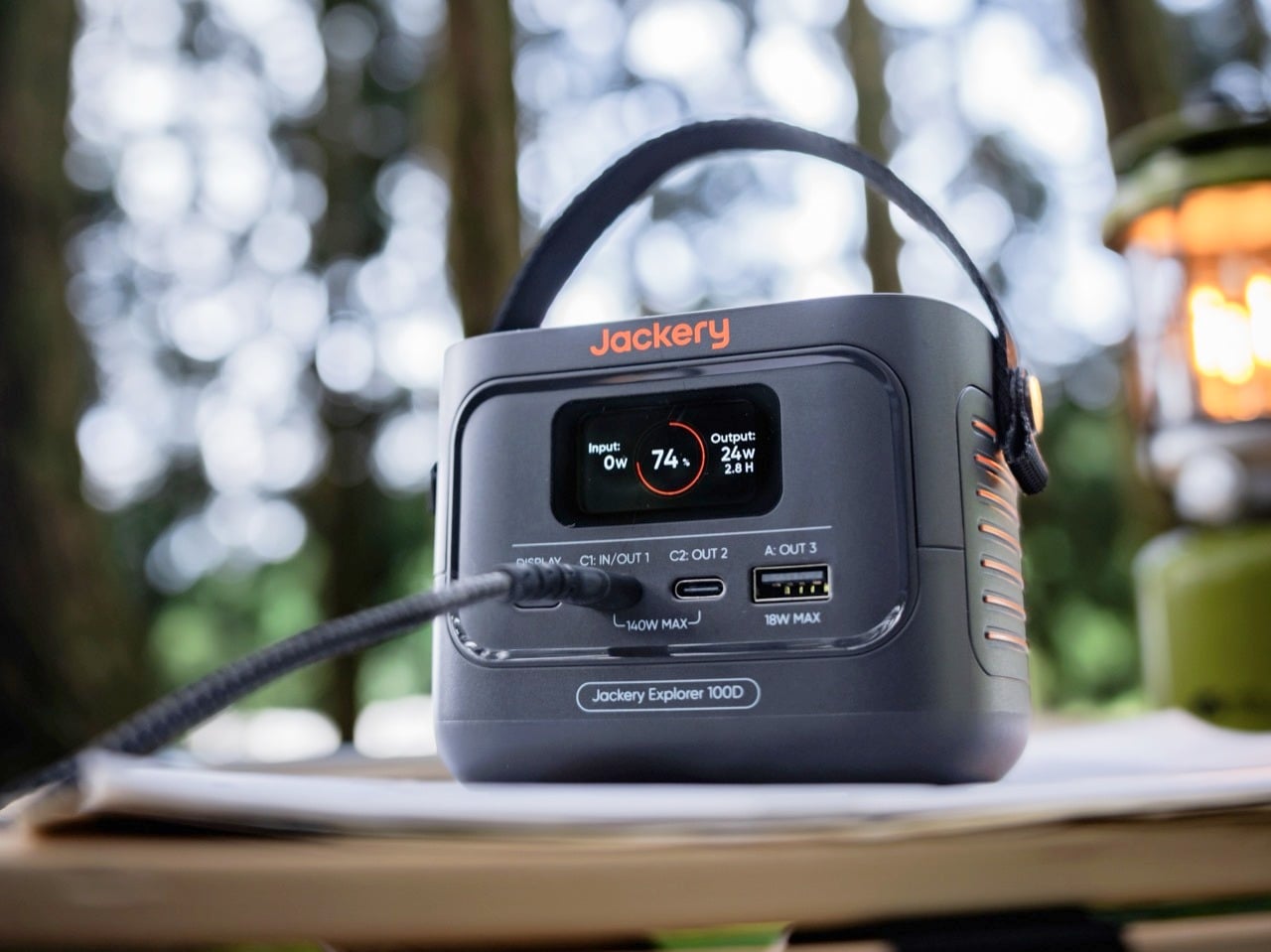
Jackery’s new Explorer 100D looks like it should play AM radio. The squat little cube has a framed front panel, orange slatted vents down its sides, and a webbing strap you’d expect on a vintage transistor set. Instead of tuning into ballgames, it stores 96Wh of energy and delivers up to 158W across two USB-C ports and one USB-A port. It measures 4.67 by 3.25 by 3.37 inches (11.9 x 8.3 x 8.6cm), making it roughly softball-sized, and weighs 1.87 pounds (850g). It’s the smallest power station Jackery has ever built.

Jackery’s D-series models skip the AC outlet entirely, and that decision explains much of the design. They don’t need an inverter, a bulky component that generates heat and often requires a cooling fan. Leaving it out lets the box shrink to desk-friendly proportions, while the 96Wh battery sits just below the FAA’s 100Wh threshold for batteries carried without airline approval. Jackery estimates more than four charges for an iPhone 17 or Galaxy S26, or roughly one full recharge for a 14-inch MacBook Pro. That’s a useful reserve in something that weighs less than the laptop it’s charging.

Designer: Jackery

One Button Runs the Whole Show

A TFT display on the front tracks input and output wattage, battery level, and estimated runtime, with additional screens for battery health, cycle count, and internal temperature. One DISPLAY button handles it all. Tap once to flip between status screens, double-tap to keep the screen on or switch it off, and hold for three seconds to enter Low-Power Charging Mode. That last trick is for smartwatches and earbuds. Some power banks stop supplying power when a device draws too little current, leaving you with AirPods stuck at 40%. Jackery’s dedicated mode is designed to keep power flowing to those smaller gadgets.

The screen resembles a car’s instrument cluster, with a circular battery gauge in the middle and input and output readouts flanking it. A glossy, framed front panel groups the display and ports into a single face, which is where the transistor-radio vibe comes from. Port labels are printed directly on the panel, and a small bracket under the two USB-C ports marks their 140W maximum. The horizontal vent slats carry Jackery’s signature orange. Four rubber feet help keep it steady on a café table, and the strap fastens to round studs on either side.

140 Watts That Fit in a Tote Bag

The USB-C ports offer up to 140W and support three fast-charging protocols: USB Power Delivery (PD), Programmable Power Supply (PPS), and Adjustable Voltage Supply (AVS). PD serves modern laptops, PPS fine-tunes voltage for compatible devices, including Samsung phones, and AVS is the newer addition Jackery highlights for Apple gear. Jackery claims the 100D can charge an iPhone 17 to 50% in 21 minutes. Total output across all three ports reaches 158W, allowing a laptop, phone, and pair of earbuds to share it. The 18W USB-A port handles whatever legacy cable is still living in your bag.

Recharging options include a 140W USB-C wall charger, a 100W car charger, or a 100W solar panel. Jackery quotes 1.7 hours from zero to 80% on solar. Car charging supports both 12V and 24V sockets, covering semi-truck cabs as well as hatchbacks. Car and solar charging use a USB-C to DC8020 adapter connected to C1, the only port that accepts input. When charging the battery and powering devices simultaneously, input and output are capped at 100W each, worth knowing if you plan to use it as a desk hub. Jackery rates the LFP cells for 3,000 cycles before capacity drops to 80%, equivalent to more than eight years of daily cycles.

The Pocket-Size Panic Buy

The 100D replaces the Explorer 100 Plus, Jackery’s previous smallest station, with several improvements. Weight drops from 2.13 pounds to 1.87, output climbs from 128W to 158W, and rated cycles rise from 2,000 to 3,000, with a 3Wh reduction in capacity. The one step back: only one USB-C port accepts input, whereas the 100 Plus could charge through either. Anker’s Solix C200 DC is an obvious rival, offering 192Wh for $149. That doubles the energy but exceeds the FAA’s 160Wh upper limit for spare lithium-ion batteries in passenger baggage, ruling it out for air travel.

Walmart is scheduled to start selling the 100D for $99 on November 15, Costco already offers a two-pack for $179.99, and Jackery lists it at $119 on its own site, with sign-ups for preorder alerts. It’s a compact entry into 2026’s power-station panic buy. Large home-backup stations are built to keep appliances running during an outage. The 100D is for the laptop deadline at an airport gate where every outlet is taken, or the campsite with no plug for miles. It’s a power station you might actually use on a Tuesday.

The post Jackery shrank its power station into a 96Wh cube with 140W USB-C first appeared on Yanko Design.

  • ✇Yanko Design
  • Flying Traffic Cone concept transforms into a Drone to auto-assemble itself on roads
    The traffic cone is basically a Rorschach test for the internet generation. Construction workers see a long night shift, college kids see dorm decor, and anyone who’s ever downloaded a movie sees VLC. I mostly see something to swerve around. Xinhao Guo saw a robot. Guo led a student team at the Beijing Institute of Technology that developed SkyCone, a drone concept designed to fly to a highway incident, land in position, and fold itself into a traffic cone. Guo’s teammates were Songyan Pan, Zix
     

Flying Traffic Cone concept transforms into a Drone to auto-assemble itself on roads

2 novembre 2026 à 15:20

The traffic cone is basically a Rorschach test for the internet generation. Construction workers see a long night shift, college kids see dorm decor, and anyone who’s ever downloaded a movie sees VLC. I mostly see something to swerve around. Xinhao Guo saw a robot. Guo led a student team at the Beijing Institute of Technology that developed SkyCone, a drone concept designed to fly to a highway incident, land in position, and fold itself into a traffic cone.

Guo’s teammates were Songyan Pan, Zixu Zhang, and Wanzheng Liu, and their concept won in the Conceptual Industrial Product Design category at the 2026 European Product Design Award. SkyCone is designed to fly as an X-shaped quadcopter, with each of its four triangular arms housing a ducted propeller. After landing, the arms would tilt up and lock together at magnetic tips, forming a four-sided pyramid with the familiar orange and white stripes. The goal is to keep workers out of live lanes. The team cites a figure that 57% of frontline highway personnel consider manual cone placement their most dangerous task.

Designers: Xinhao Guo, Songyan Pan, Zixu Zhang & Wanzheng Liu

A square central hub anchors SkyCone, carrying a downward-facing camera on a gimbal, with an LED strip and a non-slip mat built into its underside. The four arms are what the team calls Triangular Prism Buckets, hollow orange wedges that each surround a ducted propeller. Red magnetic locks with integrated indicator lights cap the arm tips, which meet at the cone’s apex when everything folds shut. Reflective strips trace the arm edges to improve visibility. My favorite detail is graphic: the white cone bands sit on the faces that point outward after folding, so the drone only looks like a cone once it actually is one.

Charles D. Scanlon, a Los Angeles street painter, designed the modern traffic cone to keep cars away from his wet paint, building it from rubber and fabric salvaged from old tires. His patent was granted in November 1943, and Interstate Rubber Products began manufacturing the design in 1947. The cone eventually made it into the Manual on Uniform Traffic Control Devices, the federal traffic-control manual. Materials and reflective collars have evolved over eight decades, yet the silhouette has barely budged. SkyCone largely keeps that familiar shape while changing how it gets into position, a sensible approach for an object drivers need to recognize quickly.

Placing those cones is still mostly manual work, with crews riding the back of a slow-moving truck or walking beside it and setting cones down a few feet from passing traffic. The US recorded 850 work zone deaths in 2024, an average of more than two a day. In March 2023, a single crash on I-695 outside Baltimore killed six roadway workers. The SkyCone team describes the first few minutes of an emergency or maintenance call as the most critical stretch, when crews are particularly exposed. A fleet of drones that could position cones before anyone steps out of the truck might reduce that initial exposure.

Brisbane-based Arrowes has already built an Automated Cone Truck that drops a cone every five seconds. On Melbourne’s Eastern Freeway, it handled 65,000 cones while cutting worker exposure to live traffic by roughly 500 hours. Caltrans and UC Davis developed a cab-operated cone machine back in the 2000s, and Spain’s Sacyr and GMV set out to prototype a self-driving trailer with an AI-guided robotic arm. Each system relies on a truck or trailer. SkyCone proposes making each cone responsible for its own delivery. Chris Chang’s Apiece showed in 2022 that a cone could be assembled from flat triangles, and SkyCone basically gives those triangles propellers.

The team’s renders place SkyCone at a nighttime highway repair, an incident scene behind an arrow-board truck, a rockfall on a mountain road, a snowed-over highway, and the crumbling edge of an open-pit mine. The mine scenario sold me, since walking a crumbling pit edge to place cones sounds like a genuinely terrible afternoon. SkyCone joins a line of highway concepts that propose sending machines into hazardous places. The Highway Patrol Drone was designed to wait on light towers and fly to crash scenes ahead of responders, while the Median AMB proposed riding the road divider like a monorail to skip traffic. SkyCone’s role would be marking off the scene so responders can work.

The European Product Design Award is a global, open-entry program run by Farmani Group. SkyCone won in its conceptual tier as a student project, so the award recognizes a design proposal rather than proven roadside performance. Guo and his team want the cone to get into position on its own; whether it can do that reliably beside live traffic remains to be demonstrated. My brain will probably keep saying VLC whenever I see a cone, but now it’s going to add “robot” right after.


The post Flying Traffic Cone concept transforms into a Drone to auto-assemble itself on roads first appeared on Yanko Design.

  • ✇Yanko Design
  • Nike and LEGO’s new space-themed sneakers let kids take their basketball style beyond Earth
    Nike and LEGO kicked off their in-line product collaboration with the LEGO x Nike Air Max Dn bright yellow sneaker in August 2025. Now the duo is targeting kids this holiday season with new additions to their multi-year partnership. Within a month from the the release of the Jordan’s 30th-anniversary Space Jam collection, Nike has teamed up with LEGO to unveil the space-inspired kids’ basketball collection that comprises Air Force 1 Low LV8 and S.T. Dynamite sneakers. The two new space-inspired
     

Nike and LEGO’s new space-themed sneakers let kids take their basketball style beyond Earth

2 novembre 2026 à 14:20

Nike and LEGO kicked off their in-line product collaboration with the LEGO x Nike Air Max Dn bright yellow sneaker in August 2025. Now the duo is targeting kids this holiday season with new additions to their multi-year partnership. Within a month from the the release of the Jordan’s 30th-anniversary Space Jam collection, Nike has teamed up with LEGO to unveil the space-inspired kids’ basketball collection that comprises Air Force 1 Low LV8 and S.T. Dynamite sneakers.

The two new space-inspired basketball sneakers are from the same collection, but are starkly different from each other, right from their DNA to the aesthetics. The Nike x LEGO collaboration, which has been limited to the courts on Earth until, is now inviting kids to imagine basketball beyond the court, in outer space, if you may.

Designer: Nike

As mentioned, the Nike x LEGO basketball collection is radically different, but shares the space theme. It has been, according to Nike, “created for basketball-loving kids.” The company says, “the collection gives young athletes new ways to connect with the sport,” without compromising personal style or their seriousness toward the sport.

If you’re interested, the Air Force 1 Low LV8 borrows its appearance from an actual astronaut spacesuit, while the S.T. Dynamite seems prepared for a game in an icy blizzard. The shoes are available in sizes ranging from 10.5C to 7Y.

The Nike Air Force 1 Low LV8 is reimagined with an upper that looks like an astronaut’s spacesuit. The sketched stitch detailing adds a constructed feel and playfulness, while the LEGO space-themed Swoosh and minifigs give the Air Force 1 a new feel that kids are definitely going to appreciate. It wouldn’t be surprising if basketball fans line up outside Nike stores to get a pair for their kids, not because they can’t get it in their size but for their little one to feel the fanfare.

The Nike x LEGO collaboration gets a deeper meaning with the Nike S.T.Dynamite that takes basketball – the kids’ collection – to an “ice planet.” The sneaker wears a color-shifting finish and a glittering outsole to generate that outer space icy look. Alongside the space-inspired aesthetics, these new collaborative sneakers have multidirectional treads in the sole, bouncy foam cushioning, and a lightweight upper.

The Nike x LEGO kids basketball collection is not limited to footwear alone. The sneaker duo, which will be available in North America from November 24 (but is in stores elsewhere starting November 2), comes with printed ripstop trousers, a graphic T-shirt, and Dri-FIT basketball shorts with a lunar landscape print. Also, part of the collection is a full-zip fleece hoodie equipped with a basketball minifigure patch that changes as you move.

The post Nike and LEGO’s new space-themed sneakers let kids take their basketball style beyond Earth first appeared on Yanko Design.

  • ✇Yanko Design
  • Assouline turns classic board games into luxury interior objects with The Game Room Collection
    Best known for its luxury coffee table books, Assouline is extending its design-led approach to everyday objects with the launch of The Library Collection: Game Room. This new collection reinterprets five familiar tabletop pastimes as carefully crafted lifestyle accessories, combining traditional games with premium materials and decorative detailing. Chess, backgammon, tic-tac-toe, dominoes, and playing cards receive a refined makeover, portraying them as objects designed for both entertainment
     

Assouline turns classic board games into luxury interior objects with The Game Room Collection

2 novembre 2026 à 11:20

Best known for its luxury coffee table books, Assouline is extending its design-led approach to everyday objects with the launch of The Library Collection: Game Room. This new collection reinterprets five familiar tabletop pastimes as carefully crafted lifestyle accessories, combining traditional games with premium materials and decorative detailing. Chess, backgammon, tic-tac-toe, dominoes, and playing cards receive a refined makeover, portraying them as objects designed for both entertainment and display.

The board game collection brings together rich walnut, pebbled and inlaid leather, brushed brass, heavyweight aluminium, and soft polysuede. A restrained colour palette of red, camel, brown, and stone gives the five pieces a consistent visual identity, allowing them to complement contemporary interiors, libraries, studies, and living spaces. Rather than changing how these games are played, Assouline focuses on their physical presentation, turning familiar objects into collectible pieces that can remain on display between games.

Designer: Assouline

Leading the board game collection is the Empire Chess Set, priced at $2,500. The chessboard combines a walnut structure with a brushed brass border and an inlaid pebbled leather playing surface. Integrated removable drawers provide storage for the pieces, while soft polysuede underlays add another layer of finish. Its heavyweight aluminium chess pieces feature brass accents and sculptural forms. One notable detail is the queen, whose crown draws inspiration from the distinctive visual motifs of artist Jean-Michel Basquiat.

The Pebble Backgammon Set follows at $2,250, housed in a solid walnut case with an inlaid leather playing surface. Its checkers are wrapped in leather and finished with brass detailing, while the dice are hand-painted in Assouline’s signature colour palette. The combination of tactile materials and traditional craftsmanship gives the set a more considered presence than conventional board-game accessories.

For a more compact alternative, the Library Tic-Tac-Toe Set costs $750 and combines walnut with pebbled leather. Its playing pieces introduce an unusual design detail: alongside wood and brass markers, the O-shaped pieces take the form of miniature books, referencing Assouline’s publishing heritage.

Completing the lineup are the Pebble Domino Set and Pebble Playing Card Set, priced at $650 and $450, respectively. The dominoes feature oversized leather-inlaid tiles framed in walnut, with recessed walnut pips and a distinctive pebble-shaped brass handle on the storage box. Meanwhile, the playing card set includes two gold-gilded decks featuring Didot typography and illustrated jokers depicting characters juggling books. Both decks are housed in a sliding leather case.

With prices ranging from $450 to $2,500, The Library Collection: Game Room extends Assouline’s approach to design beyond printed publications. Each piece brings a familiar social activity into the language of luxury interiors, where material quality, craftsmanship, and thoughtful detailing are as important as everyday functionality. The collection is available through Assouline’s online store.

The post Assouline turns classic board games into luxury interior objects with The Game Room Collection first appeared on Yanko Design.

❌