❌

Vue normale

  • ✇Yanko Design
  • Hal Jordan has to recharge his ring, but the NoxTi titanium EDC lantern glows for decades
    Every Green Lantern has the same annoying chore. Once a day, the ring needs a top-up, so our cosmic cop has to press his fist against a glowing green lantern and recite a whole poem before it’ll charge. Imagine your iPhone demanding spoken word every night before you plug it in. Xedge’s NoxTi TRI skips the ritual. It’s a pocket-sized lantern in Grade 5 titanium that hangs off your keys or around your neck, with three glow tubes tucked inside. Fit it with tritium tubes and it glows without charg
     

Hal Jordan has to recharge his ring, but the NoxTi titanium EDC lantern glows for decades

2 novembre 2026 à 21:45

Every Green Lantern has the same annoying chore. Once a day, the ring needs a top-up, so our cosmic cop has to press his fist against a glowing green lantern and recite a whole poem before it’ll charge. Imagine your iPhone demanding spoken word every night before you plug it in.

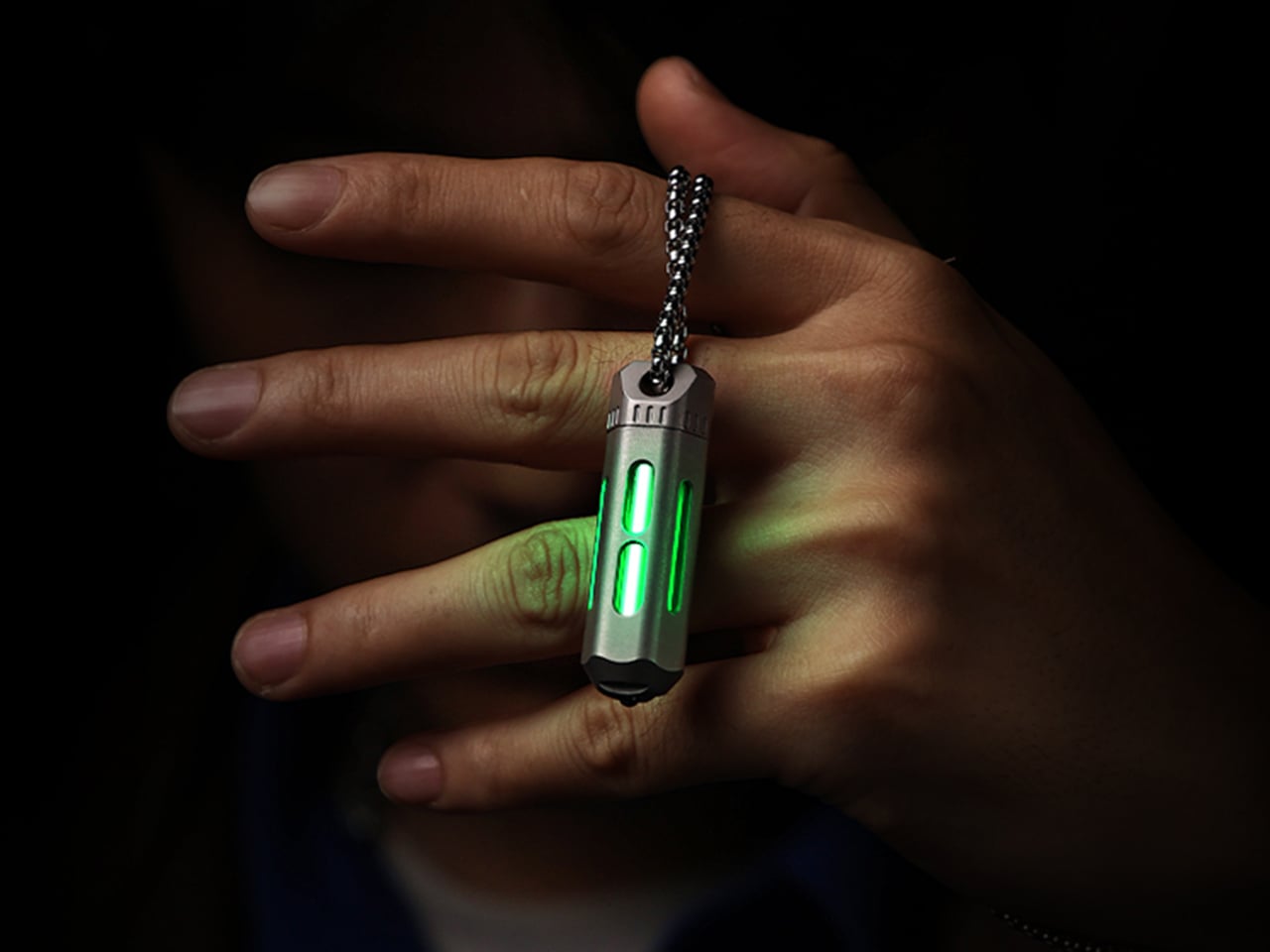
Xedge’s NoxTi TRI skips the ritual. It’s a pocket-sized lantern in Grade 5 titanium that hangs off your keys or around your neck, with three glow tubes tucked inside. Fit it with tritium tubes and it glows without charging, a switch, or poetry, slowly dimming over a couple of decades. Prefer something non-radioactive? Photoluminescent tubes absorb light and glow after dark. Hal would be jealous.

Designer: Xedge

Click Here to Buy $35 $55 (36% off). Hurry, only a few left! Raised over $81,000.

Three Tubes, One Glowing Core

NoxTi TRI holds three 3 x 22.5mm glow tubes spaced 120 degrees apart to keep the glow visible from more angles, whether the capsule is dangling from a keyring or lying in a cupholder. The tubes sit in a custom carrier made of optical-grade PMMA acrylic, for which Xedge claims around 97 percent light transmission. The carrier is designed to use total internal reflection to distribute the light, making the three tubes appear as one luminous core behind the titanium windows.

Six colors are on the menu: Apple Green, Ice Blue, Ocean Blue, Red, Violet, and Sunset Orange. Run one across all three slots for a uniform glow, or mix them. Yes, that means three Lantern Corps on one keyring. Tritium is the set-and-forget option. Its half-life is about 12 years, so the glow gradually dims rather than switching off, with Xedge describing a usable lifespan of about two decades. That’s still a better deal than any battery I own. The tritium is sealed inside glass vials, and Xedge reports a radiation-meter reading of 0.07 µSv/h. Photoluminescent tubes are the cheaper, non-radioactive option, recharging through exposure to light.

Titanium Outside, Shock Absorbers Inside

The shell is CNC-machined from Grade 5 titanium, an alloy also used in aircraft parts and bone implants. Its corrosion resistance should suit the sweat and daily handling of life on a crowded keyring. It measures 47mm long and 14.3mm across, and weighs 15.8 grams, roughly the weight of three US nickels. Inside, a quartz sleeve surrounds the glowing core to help keep dust out and the view clear, while O-rings seal the threaded body. Xedge says it tested the design at temperatures from minus 20°C to 100°C. It comes in sandblasted raw titanium or a stealthier Black DLC finish. I’d pick the black, purely because the glow stands out more against it.

The more interesting detail is how the design cushions those glass tubes. Each one rests on a 3mm silicone ball, and a stainless steel spring under the core is intended to absorb jolts from dropped keys or a swinging pendant. That spring sits on a magnetic base to help keep it in place when you unscrew the body to swap tubes, reducing the chance of tiny parts bouncing across the kitchen floor. A machined Tri-Index Cap keeps all three tubes aligned with their windows. Xedge says every component is accessible and replaceable, giving the titanium shell a chance to outlive several sets of tubes.

Wear It, Clip It, Break Glass With It

The attachment hole at the top takes a split ring, a quick-release clip, or a chain, so the TRI can live on your keys, hang off a bag zipper, dangle from a phone strap, or ride around your neck as a pendant. The kit supports both single-tube and triple-tube setups, so you can switch between them. On the opposite end sits a ceramic glass-breaker bead, intended for breaking car windows in an emergency, which I sincerely hope nobody ever needs. Keep expectations calibrated, though: this is a locator glow for finding your keys or bag in the dark. It won’t light up a trail.

The NoxTi TRI Kickstarter campaign lists a retail price of about $55 (HK$429) per unit. Pledge pricing starts at $35 for the launch special, followed by $39 for Super Early Bird and $45 for Early Bird, with two-packs from $65 and a four-pack at $119. Glow tubes are separate add-ons: tritium costs $20 per tube or $60 for three, while photoluminescent tubes are $7 each or $15 for three. Extras include the Black DLC upgrade ($15), a stainless steel necklace ($12), a titanium quick-release clip ($15), and titanium split rings ($12 for three). Shipping is listed as free worldwide, with deliveries planned for February 2027. Xedge hasn’t published warranty terms yet.

Click Here to Buy $35 $55 (36% off). Hurry, only a few left! Raised over $81,000.

The post Hal Jordan has to recharge his ring, but the NoxTi titanium EDC lantern glows for decades first appeared on Yanko Design.

  • ✇Yanko Design
  • Jackery shrank its power station into a 96Wh cube with 140W USB-C
    Jackery’s new Explorer 100D looks like it should play AM radio. The squat little cube has a framed front panel, orange slatted vents down its sides, and a webbing strap you’d expect on a vintage transistor set. Instead of tuning into ballgames, it stores 96Wh of energy and delivers up to 158W across two USB-C ports and one USB-A port. It measures 4.67 by 3.25 by 3.37 inches (11.9 x 8.3 x 8.6cm), making it roughly softball-sized, and weighs 1.87 pounds (850g). It’s the smallest power station Jac
     

Jackery shrank its power station into a 96Wh cube with 140W USB-C

2 novembre 2026 à 18:30

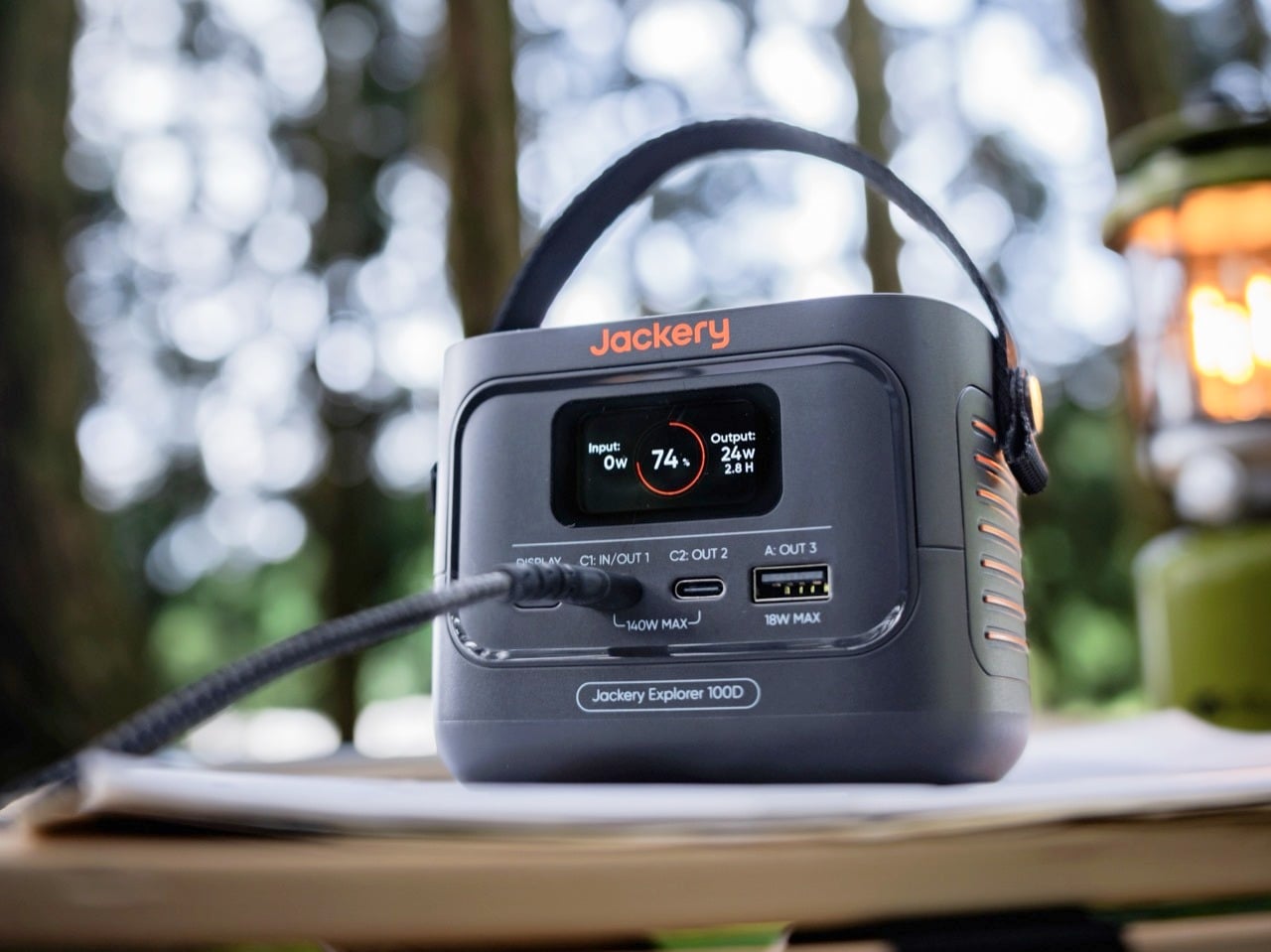
Jackery’s new Explorer 100D looks like it should play AM radio. The squat little cube has a framed front panel, orange slatted vents down its sides, and a webbing strap you’d expect on a vintage transistor set. Instead of tuning into ballgames, it stores 96Wh of energy and delivers up to 158W across two USB-C ports and one USB-A port. It measures 4.67 by 3.25 by 3.37 inches (11.9 x 8.3 x 8.6cm), making it roughly softball-sized, and weighs 1.87 pounds (850g). It’s the smallest power station Jackery has ever built.

Jackery’s D-series models skip the AC outlet entirely, and that decision explains much of the design. They don’t need an inverter, a bulky component that generates heat and often requires a cooling fan. Leaving it out lets the box shrink to desk-friendly proportions, while the 96Wh battery sits just below the FAA’s 100Wh threshold for batteries carried without airline approval. Jackery estimates more than four charges for an iPhone 17 or Galaxy S26, or roughly one full recharge for a 14-inch MacBook Pro. That’s a useful reserve in something that weighs less than the laptop it’s charging.

Designer: Jackery

One Button Runs the Whole Show

A TFT display on the front tracks input and output wattage, battery level, and estimated runtime, with additional screens for battery health, cycle count, and internal temperature. One DISPLAY button handles it all. Tap once to flip between status screens, double-tap to keep the screen on or switch it off, and hold for three seconds to enter Low-Power Charging Mode. That last trick is for smartwatches and earbuds. Some power banks stop supplying power when a device draws too little current, leaving you with AirPods stuck at 40%. Jackery’s dedicated mode is designed to keep power flowing to those smaller gadgets.

The screen resembles a car’s instrument cluster, with a circular battery gauge in the middle and input and output readouts flanking it. A glossy, framed front panel groups the display and ports into a single face, which is where the transistor-radio vibe comes from. Port labels are printed directly on the panel, and a small bracket under the two USB-C ports marks their 140W maximum. The horizontal vent slats carry Jackery’s signature orange. Four rubber feet help keep it steady on a café table, and the strap fastens to round studs on either side.

140 Watts That Fit in a Tote Bag

The USB-C ports offer up to 140W and support three fast-charging protocols: USB Power Delivery (PD), Programmable Power Supply (PPS), and Adjustable Voltage Supply (AVS). PD serves modern laptops, PPS fine-tunes voltage for compatible devices, including Samsung phones, and AVS is the newer addition Jackery highlights for Apple gear. Jackery claims the 100D can charge an iPhone 17 to 50% in 21 minutes. Total output across all three ports reaches 158W, allowing a laptop, phone, and pair of earbuds to share it. The 18W USB-A port handles whatever legacy cable is still living in your bag.

Recharging options include a 140W USB-C wall charger, a 100W car charger, or a 100W solar panel. Jackery quotes 1.7 hours from zero to 80% on solar. Car charging supports both 12V and 24V sockets, covering semi-truck cabs as well as hatchbacks. Car and solar charging use a USB-C to DC8020 adapter connected to C1, the only port that accepts input. When charging the battery and powering devices simultaneously, input and output are capped at 100W each, worth knowing if you plan to use it as a desk hub. Jackery rates the LFP cells for 3,000 cycles before capacity drops to 80%, equivalent to more than eight years of daily cycles.

The Pocket-Size Panic Buy

The 100D replaces the Explorer 100 Plus, Jackery’s previous smallest station, with several improvements. Weight drops from 2.13 pounds to 1.87, output climbs from 128W to 158W, and rated cycles rise from 2,000 to 3,000, with a 3Wh reduction in capacity. The one step back: only one USB-C port accepts input, whereas the 100 Plus could charge through either. Anker’s Solix C200 DC is an obvious rival, offering 192Wh for $149. That doubles the energy but exceeds the FAA’s 160Wh upper limit for spare lithium-ion batteries in passenger baggage, ruling it out for air travel.

Walmart is scheduled to start selling the 100D for $99 on November 15, Costco already offers a two-pack for $179.99, and Jackery lists it at $119 on its own site, with sign-ups for preorder alerts. It’s a compact entry into 2026’s power-station panic buy. Large home-backup stations are built to keep appliances running during an outage. The 100D is for the laptop deadline at an airport gate where every outlet is taken, or the campsite with no plug for miles. It’s a power station you might actually use on a Tuesday.

The post Jackery shrank its power station into a 96Wh cube with 140W USB-C first appeared on Yanko Design.

  • ✇Yanko Design
  • This “Bentley of Bikes” sports 5 layers of paint, and packs a 206Hp engine underneath
    Five layers of paint. That’s how many Norton applied to the bodywork of its new Manx R, enough that the engineers had to factor paint thickness into how the panels fit together. It’s the sort of obsessive detail you’d expect from Bentley, and a RevZilla tester floated the “Bentley of bikes” comparison after riding it. The Manx R is the 206-horsepower V4 flagship of Norton’s comeback under TVS Motor, and it’s already rolling into UK and European dealerships. It has also picked up an IDEA Bronze
     

This “Bentley of Bikes” sports 5 layers of paint, and packs a 206Hp engine underneath

2 novembre 2026 à 17:30

Five layers of paint. That’s how many Norton applied to the bodywork of its new Manx R, enough that the engineers had to factor paint thickness into how the panels fit together. It’s the sort of obsessive detail you’d expect from Bentley, and a RevZilla tester floated the “Bentley of bikes” comparison after riding it. The Manx R is the 206-horsepower V4 flagship of Norton’s comeback under TVS Motor, and it’s already rolling into UK and European dealerships. It has also picked up an IDEA Bronze and a Red Dot: Best of the Best this year.

Norton’s in-house team in Solihull designed it under Head of Design Simon Skinner, with Range Rover and Defender design veteran Gerry McGovern steering the creative direction. The surfaces are free of winglets and exposed bolts, with the only visible bodywork fasteners on the front fender. Even the switchgear buttons are metal, a small luxury you can feel every time you use them. Under all that paint sits a new 1,200cc, 72-degree V4 tuned for the midrange, where most real riding happens. The base bike starts at £20,250 (about $27,600) in the UK, with US pricing still under wraps ahead of an expected early 2027 launch.

Designers: Simon Skinner & Gerry McGovern (Norton Motorcycles)

Norton’s original Manx was a racing single built from 1947 to 1962, named after the Isle of Man and its legendary TT. In 1950, it gained the Featherbed frame, designed by Belfast brothers Rex and Cromie McCandless, and riders like Geoff Duke used it to collect world championships and TT wins in the early fifties. Resurrecting that badge carries real pressure, and plenty of brands would have answered it with spoked wheels and a round headlamp. Norton went the other direction entirely, replacing the curvy, retro-tinged V4SV with something sharp and forward-looking. I think that was the right call.

Skinner builds the design around four principles he calls modernity, integration, drama, and connection, and he describes the result as reductive. His favorite explanation compares a new-build estate house with a 20-year-old glass-and-steel home that still looks like it arrived from the future. The Manx R lands firmly in the second camp. Its nose is a smooth, wingless shell with split chevron LED headlights tucked under a tall smoked screen, and the mirror stalks grow straight out of the fairing shoulders. Clean volumes, precise gaps, and reflections define the front end, rather than the winglets and vents found on rival bikes.

Carbon infill panels on each flank frame a window onto the top of the V4, its covers dressed in carbon plates, making the engine part of the display. Three angled gills on the upper fairing vent heat from the electronics, and the repeated-line motif runs across the seat and side panels. Out back, a three-bar LED taillight sits above a stack of black louvers, while the exhaust hides under the belly and the single-sided swingarm leaves the rear wheel fully on show. The fuel cap carries an embossed Manx R badge, a detail most owners will notice at the pump. If I could change one thing, I’d lose those tail louvers, which look a touch like a space heater on an otherwise clean rear end.

Norton rates the V4 at 206 hp at 11,500 rpm and 96 lb-ft at 9,000 rpm. Those peak figures trail a few rivals, which Norton says is deliberate. Its engineers logged roughly 135,000 miles of data on Ducati, Aprilia, and BMW superbikes and found riders spent 99% of their time below 8,000 rpm, so the engine’s tuning prioritizes the middle of the rev range. According to RevZilla, it can run as a 600cc twin at deep lean angles and small throttle openings, and it shuts down the rear cylinders at idle to reduce heat around the rider’s legs. The narrow V layout also helped fit everything into a 56.5-inch (1,435mm) wheelbase.

At the 2026 International Design Excellence Awards, the Manx R took Bronze in Automotive and Transportation, and Norton says it’s the first combustion-engined production motorcycle to win an IDEA. Two months later, it collected Red Dot: Best of the Best in the Design Concept competition, aimed mainly at concepts and prototypes, despite already being in dealerships. Both prizes come from design juries, not lap-time comparisons. The Ducati Panigale V4, Aprilia RSV4, and BMW M 1000 RR all wear visible aero on their fairings, and Norton is betting some superbike buyers would prefer a cleaner look.

Norton sells the Manx R in four trims. The base bike gets manually adjustable Marzocchi suspension, cast aluminum wheels, and room for a passenger, while the Apex adds semi-active Marzocchi suspension and forged wheels. The Signature goes single-seat with carbon fiber bodywork and Rotobox carbon wheels, and the First Edition piles on titanium fixings, a numbered top yoke, and a quilted leather seat. Every version gets Brembo Hypure brakes and an 8-inch TFT touchscreen. UK pricing runs from £20,250 (about $27,600) for the base bike to £38,750 (about $52,800) for the Signature, with the First Edition priced on request. US pricing hasn’t been announced ahead of an expected early 2027 arrival, so American riders have a few months to save up for all that paint. US pricing hasn’t been announced ahead of an expected early 2027 arrival, so American riders have a few months to save up for all that paint.

The post This “Bentley of Bikes” sports 5 layers of paint, and packs a 206Hp engine underneath first appeared on Yanko Design.

  • ✇Yanko Design
  • Flying Traffic Cone concept transforms into a Drone to auto-assemble itself on roads
    The traffic cone is basically a Rorschach test for the internet generation. Construction workers see a long night shift, college kids see dorm decor, and anyone who’s ever downloaded a movie sees VLC. I mostly see something to swerve around. Xinhao Guo saw a robot. Guo led a student team at the Beijing Institute of Technology that developed SkyCone, a drone concept designed to fly to a highway incident, land in position, and fold itself into a traffic cone. Guo’s teammates were Songyan Pan, Zix
     

Flying Traffic Cone concept transforms into a Drone to auto-assemble itself on roads

2 novembre 2026 à 15:20

The traffic cone is basically a Rorschach test for the internet generation. Construction workers see a long night shift, college kids see dorm decor, and anyone who’s ever downloaded a movie sees VLC. I mostly see something to swerve around. Xinhao Guo saw a robot. Guo led a student team at the Beijing Institute of Technology that developed SkyCone, a drone concept designed to fly to a highway incident, land in position, and fold itself into a traffic cone.

Guo’s teammates were Songyan Pan, Zixu Zhang, and Wanzheng Liu, and their concept won in the Conceptual Industrial Product Design category at the 2026 European Product Design Award. SkyCone is designed to fly as an X-shaped quadcopter, with each of its four triangular arms housing a ducted propeller. After landing, the arms would tilt up and lock together at magnetic tips, forming a four-sided pyramid with the familiar orange and white stripes. The goal is to keep workers out of live lanes. The team cites a figure that 57% of frontline highway personnel consider manual cone placement their most dangerous task.

Designers: Xinhao Guo, Songyan Pan, Zixu Zhang & Wanzheng Liu

A square central hub anchors SkyCone, carrying a downward-facing camera on a gimbal, with an LED strip and a non-slip mat built into its underside. The four arms are what the team calls Triangular Prism Buckets, hollow orange wedges that each surround a ducted propeller. Red magnetic locks with integrated indicator lights cap the arm tips, which meet at the cone’s apex when everything folds shut. Reflective strips trace the arm edges to improve visibility. My favorite detail is graphic: the white cone bands sit on the faces that point outward after folding, so the drone only looks like a cone once it actually is one.

Charles D. Scanlon, a Los Angeles street painter, designed the modern traffic cone to keep cars away from his wet paint, building it from rubber and fabric salvaged from old tires. His patent was granted in November 1943, and Interstate Rubber Products began manufacturing the design in 1947. The cone eventually made it into the Manual on Uniform Traffic Control Devices, the federal traffic-control manual. Materials and reflective collars have evolved over eight decades, yet the silhouette has barely budged. SkyCone largely keeps that familiar shape while changing how it gets into position, a sensible approach for an object drivers need to recognize quickly.

Placing those cones is still mostly manual work, with crews riding the back of a slow-moving truck or walking beside it and setting cones down a few feet from passing traffic. The US recorded 850 work zone deaths in 2024, an average of more than two a day. In March 2023, a single crash on I-695 outside Baltimore killed six roadway workers. The SkyCone team describes the first few minutes of an emergency or maintenance call as the most critical stretch, when crews are particularly exposed. A fleet of drones that could position cones before anyone steps out of the truck might reduce that initial exposure.

Brisbane-based Arrowes has already built an Automated Cone Truck that drops a cone every five seconds. On Melbourne’s Eastern Freeway, it handled 65,000 cones while cutting worker exposure to live traffic by roughly 500 hours. Caltrans and UC Davis developed a cab-operated cone machine back in the 2000s, and Spain’s Sacyr and GMV set out to prototype a self-driving trailer with an AI-guided robotic arm. Each system relies on a truck or trailer. SkyCone proposes making each cone responsible for its own delivery. Chris Chang’s Apiece showed in 2022 that a cone could be assembled from flat triangles, and SkyCone basically gives those triangles propellers.

The team’s renders place SkyCone at a nighttime highway repair, an incident scene behind an arrow-board truck, a rockfall on a mountain road, a snowed-over highway, and the crumbling edge of an open-pit mine. The mine scenario sold me, since walking a crumbling pit edge to place cones sounds like a genuinely terrible afternoon. SkyCone joins a line of highway concepts that propose sending machines into hazardous places. The Highway Patrol Drone was designed to wait on light towers and fly to crash scenes ahead of responders, while the Median AMB proposed riding the road divider like a monorail to skip traffic. SkyCone’s role would be marking off the scene so responders can work.

The European Product Design Award is a global, open-entry program run by Farmani Group. SkyCone won in its conceptual tier as a student project, so the award recognizes a design proposal rather than proven roadside performance. Guo and his team want the cone to get into position on its own; whether it can do that reliably beside live traffic remains to be demonstrated. My brain will probably keep saying VLC whenever I see a cone, but now it’s going to add “robot” right after.


The post Flying Traffic Cone concept transforms into a Drone to auto-assemble itself on roads first appeared on Yanko Design.

  • ✇Yanko Design
  • This palm-sized robot dog has a Nokia battery and a customizable LEGO-compatible back
    Petoi has been shrinking Boston Dynamics down to desk size for almost a decade now. Dr. Rongzhong Li started the company in his dorm lab in 2016, after a video of his open-source robot cat prototype went viral. That cat became Nybble, a laser-cut wooden kitty, and it was followed by Bittle, a palm-sized robot dog that ended up in classrooms, research labs, and a surprising number of home offices. Petoi says it has shipped more than 30,000 robots to over 60 countries, all running its open-source
     

This palm-sized robot dog has a Nokia battery and a customizable LEGO-compatible back

28 octobre 2026 à 14:20

Petoi has been shrinking Boston Dynamics down to desk size for almost a decade now. Dr. Rongzhong Li started the company in his dorm lab in 2016, after a video of his open-source robot cat prototype went viral. That cat became Nybble, a laser-cut wooden kitty, and it was followed by Bittle, a palm-sized robot dog that ended up in classrooms, research labs, and a surprising number of home offices. Petoi says it has shipped more than 30,000 robots to over 60 countries, all running its open-source OpenCat framework. Each new model has gotten smaller, smarter, and easier to build, which brings us to the newest pup in the litter.

Meet Quaddle, a palm-sized robot dog that walks, glides, spins, and does backflips using just four servos. That’s half what Bittle uses in its legs and roughly a third of what most quadrupeds need, thanks to a spring-loaded linkage Petoi calls the MinDoF leg, which lets one motor drive both the shoulder and the knee. It weighs about 6 ounces, snaps together without screws, and takes LEGO bricks on its back. You can teach it tricks by physically moving its legs, chat with it, or code it in anything from beginner blocks to ROS. Prices start at $179, which is pretty reasonable for a dog that never needs walking.

Designer: Petoi

How one servo runs an entire leg

Each of Quaddle’s legs hangs off a single servo, with a spring and a four-bar linkage doing the job a second motor normally would. As the servo swings the upper leg, the linkage folds the knee up and straightens it again, turning one rotating shaft into a proper step. Petoi calls this the MinDoF leg, short for Minimal Degrees of Freedom, a degree of freedom being one independent way a joint can move. The spring clips onto different anchor points, changing how stiff or bouncy each leg feels. In Petoi’s tabletop tests, Quaddle walks about one body length per second, turns 90° in a single step cycle, and climbs onto a ledge as tall as its own knee.

Walking machines driven by a single crank go back to Pafnuty Chebyshev, the Russian mathematician whose 1870s linkage turned rotation into a surprisingly lifelike stride. Theo Jansen’s wind-powered Strandbeests on Dutch beaches run on the same basic idea, and Quaddle feels like their tiny, battery-powered cousin. Petoi added one more trick by fitting small bearings to the tips of the feet. Angle the legs just right and those bearings become wheels, letting Quaddle glide across a smooth desk at around three body lengths per second without a single extra motor. Fewer motors also means less weight, less cost, and less battery drain, which is how the whole dog comes in at roughly 6 ounces.

Teach it tricks by hand, then teach it in code

On the Buddy and Scout models, every leg servo reports its position back to the robot, so you can teach Quaddle a move by simply grabbing its legs. Tap to start recording, guide the legs through whatever silly dance you have in mind, and tap again to have it play the motion back. There’s no app or code involved, and Petoi says you can teach it a basic walk in about ten seconds. Recorded moves can be pulled into Petoi’s Skill Composer software for fine-tuning and shared with other Quaddle owners. For a kid, this is probably the fastest route from “I wonder if” to a robot actually doing the thing.

Buddy and Scout split their thinking across two ESP32-S3 chips, one for motion and balance and one for voice chat and smart home control. A physical slide switch cuts power to the AI chip entirely, which is great for privacy and for days when your robot dog gets a bit too chatty. Coding starts with drag-and-drop blocks, moves to Python or MicroPython, and eventually reaches the Arduino C++ firmware. Bigger projects can mount a Raspberry Pi Zero on its back or plug into ROS, the software framework most research robots run on. A browser-based simulator runs the same code as the real robot, so you can test ideas on a laptop or even a phone with no robot in sight.

LEGO bricks, a Nokia battery, and three Quaddles to pick from

The top of Quaddle’s shell takes LEGO bricks, and Petoi will publish printable shells and mounts for anyone with a 3D printer. Petoi’s own demos have turned it into a walking LEGO AT-AT, a waddling biped called the NanoDuck, and a rover on Mecanum wheels, which use angled rollers to slide sideways. Power comes from a swappable Nokia-format phone battery, the same BL-5C shape that lived inside Nokia’s famously indestructible early-2000s handsets. Quaddle ships with the bigger 1,800 mAh BL-10C cell, good for roughly 1 to 1.5 hours of walking depending on the model. Plug it into USB-C while you code and it charges as it runs, so marathon debugging sessions are fair game.

Builder PLUS ($179) handles walking and coding, Buddy ($219) adds AI chat and teach-by-hand, and Scout ($269) adds a sensor head that detects gestures, light, distance, and people. All three are priced at $144, $175, and $215, with deliveries starting in December. For context, Petoi’s own Bittle X lists at $279, Unitree’s Go2 starts around $1,600, and Sony’s Aibo launched in the US at $2,900. Petoi spent a decade shrinking big robots down to desk size, and Quaddle shows the smartest way to shrink one further is to give it fewer parts.

The post This palm-sized robot dog has a Nokia battery and a customizable LEGO-compatible back first appeared on Yanko Design.

  • ✇Yanko Design
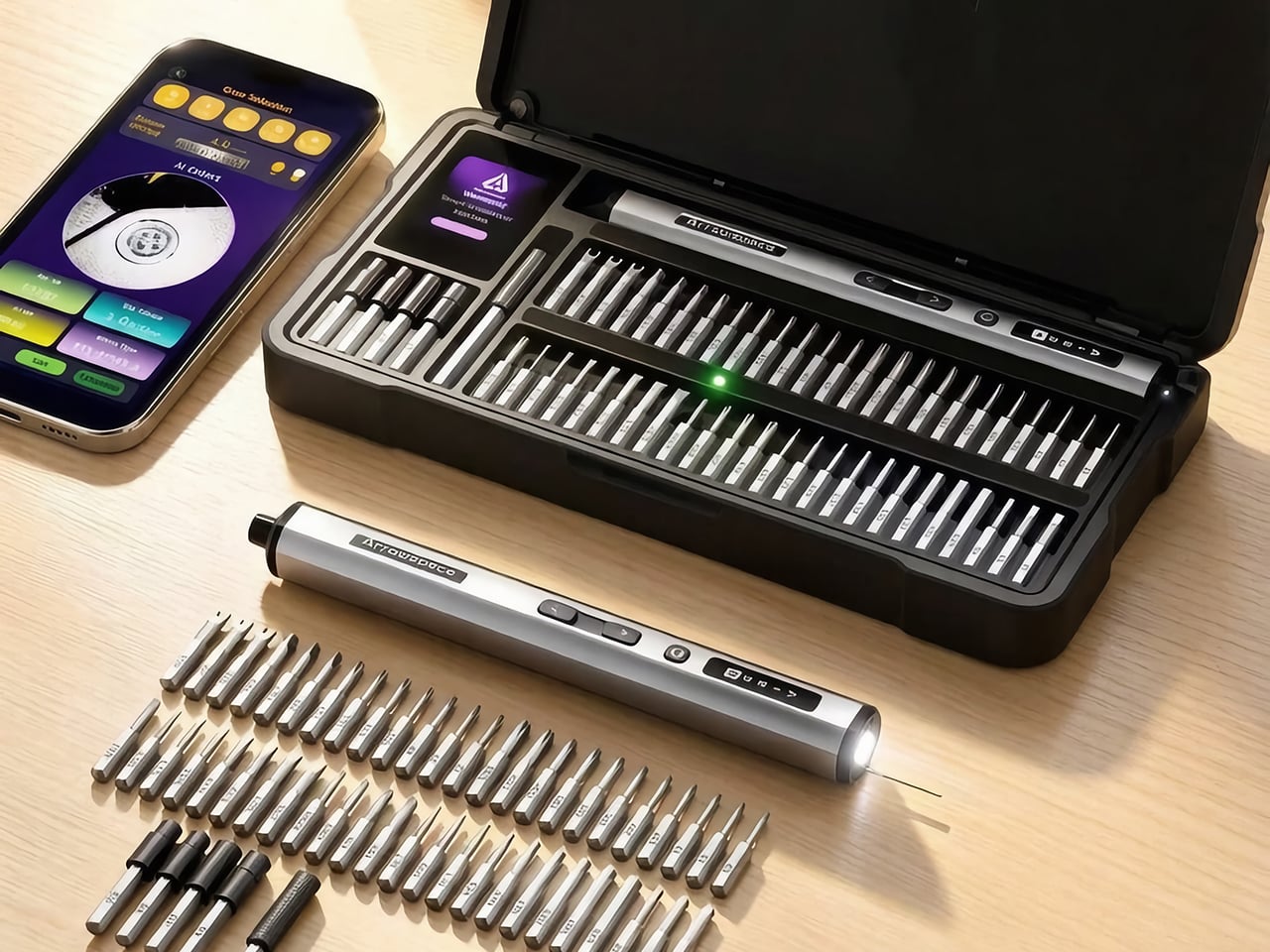
  • Arrowspace’s $119 screwdriver identifies screws and lights up the matching bit
    For five years, Arrowmax has been teaching screwdrivers to read people. The SES Pro in 2021 watched your wrist, so a twist left or right told the motor which way to spin. The SES Max added app control, and the M1 Pro stretched output to 10 kgf·cm with a manual fallback for stubborn screws. Its little screen could report torque and battery level all day. Your screwdriver got smarter and you got lazier, in the best possible way. The obvious next question was why the tool still had no idea what sc
     

Arrowspace’s $119 screwdriver identifies screws and lights up the matching bit

27 octobre 2026 à 21:47

For five years, Arrowmax has been teaching screwdrivers to read people. The SES Pro in 2021 watched your wrist, so a twist left or right told the motor which way to spin. The SES Max added app control, and the M1 Pro stretched output to 10 kgf·cm with a manual fallback for stubborn screws. Its little screen could report torque and battery level all day. Your screwdriver got smarter and you got lazier, in the best possible way. The obvious next question was why the tool still had no idea what screw it was holding.

The Arrowspace S1, built by the same team under a new brand name, answers that with a camera on the tail end of the screwdriver. Image recognition names the screw’s drive type and exact size, while a small probe holds the lens at a fixed distance so tiny heads stay sharp. The smart case then lights the slot of the matching bit, and Auto mode picks a safe torque for that fastener. It keeps the 10 kgf·cm ceiling of the M1 Pro, which is plenty for everything from earbuds to e-bike parts. Early pricing starts at $119, and the kit includes the case, 52 S2 steel bits, and a power tip extension.

Designers: LAU YIN / XU YU

Click Here to Buy Now: $129 $215 (40% off). Hurry, only 40/400 left! Raised over $119,000.

The Screwdriver That Squints So You Don’t Have To

The camera sits at the rear of the S1, right behind a small contact probe, and the two work as a team. You rest the probe on the screw head, which locks the lens at one fixed distance, so every shot lands sharp. A screw this small turns to mush if the camera drifts even 1mm. Arrowmax fixed that blur problem with a metal pin instead of more code, which is a very hardware-person way to win an argument. I love it, because it means recognition survives a messy bench and shaky hands instead of working only in a demo video.

Once the shot is sharp, the driver sends it to the companion app on your phone, which works out the drive type and exact size. Everything runs locally with no internet involved, so your screw photos stay on your phone. Arrowmax trained the model, a YOLO object detector, on its own collection of tens of thousands of real screw photos, currently covering 12 common head profiles. The app shows the actual camera image next to the verdict, so you can see what the S1 sees and judge the call yourself. Only the reading step needs the phone, since motor control, torque, and the displays all work on their own.

A Case That Points at the Right Bit

The smart case turns the app’s verdict into something you can see across the bench. A 2-inch TFT screen with Arrowspace’s purple interface shows the recognized screw type and size, while an LED glows under the slot holding the matching bit. Reach, grab, done. Compare that with the usual ritual of squinting at tiny codes on dozens of near-identical shafts, and the old way starts to look like a part-time job. It is the same idea as a warehouse pick-to-light shelf, shrunk down to a tray of S2 steel bits.

The 52 bits are S2 steel hardened to HRC60, which keeps the tips from rounding off after repeated use, and extended bits reach screws buried in deep holes. A magnetic holder keeps bits seated while you work. The case itself is a CNC-machined frame in aerospace-grade aluminum with EVA protection inside, a build the M1 Pro’s CNC aluminum box would recognize. That solid metal feel suits a bench that sees daily use. One box ends up holding the driver, the bits, and the answer to which bit you need.

Gentle With Earbuds, Firm With E-Bikes

Electric torque runs from 1 to 10 kgf·cm, roughly 0.1 to 1 N·m, and Arrowspace’s own chart maps that range to real jobs. The low end suits earbuds, smart bands, and glasses. Around 3 you are into laptops and camera bodies, 6 covers RC cars, drones, and game consoles, and the full 10 handles e-bike parts and large appliances. Auto mode matches a conservative preset to the screw it just identified and remembers your last setting between jobs. Prefer to drive? The app lets you tune the torque for each mode yourself.

When electric mode runs out of muscle, the S1 switches to manual on its own, a trick it inherits from the M1 Pro. The mechanism is rated for 30 kgf·cm of hand-twisted force, which handles the factory screw that laughs at motors. A 600mAh LiPo battery covers 900+ screws or about 90 minutes of continuous use, and USB-C refills it in roughly 70 minutes. An OLED on the body shows torque level, spin direction, and battery, and it even animates while charging. A full session of fiddly repairs fits comfortably inside one charge.

The Price of Never Guessing Again

The S1 suits anyone who repairs often enough to own a drawer of bits but not often enough to have a veteran’s eye, meaning RC builders, scale modelers, drone owners, and the friend who gets every laptop question. Arrowspace says the AI handles identification while your hand keeps the control, and that split feels right to me. My one wish is friendlier recognition for oddballs like JIS cross-head screws, the Phillips look-alikes in plenty of Japanese electronics. Arrowmax says updates will keep widening the 12 profiles covered today, so the wish has a path. A screwdriver that learns new screws over time is a fun idea for a tool that used to be a metal stick.

Pricing for a single S1 kit starts at $119, listed at 45% off, with $129 and $149 tiers also available. Every tier includes the driver, the illuminated smart case, 52 S2 steel bits, and a power tip extension. Shipping is an estimated $16 by air freight to anywhere in the world, so US buyers are covered, with delivery expected in April 2027. Two kits run $238 and three run $339, with shipping at $30 and $45. The optional Angle Screw attachment is sold separately, so check the product page for its price. A stripped screw can cost you a whole device, which makes $119 look like cheap insurance.

Click Here to Buy Now: $129 $215 (40% off). Hurry, only 40/400 left! Raised over $119,000.

The post Arrowspace’s $119 screwdriver identifies screws and lights up the matching bit first appeared on Yanko Design.

  • ✇Yanko Design
  • Do yourself a favor and buy a power station now, before the energy crisis gets worse
    Every crisis has its panic buy. In 2020 it was toilet paper and N95 masks, in 2021 it was graphics cards, in 2025 it was RAM chips, and in 2026 my money is on lithium iron phosphate. With Iran attacking tankers in the Strait of Hormuz, gas sitting at a record-for-October $4.36 a gallon, and heating oil bills forecast to climb 21% this winter, the case for keeping your own stash of electrons has never been stronger. A portable power station from Anker, EcoFlow, or Jackery keeps your fridge cold
     

Do yourself a favor and buy a power station now, before the energy crisis gets worse

27 octobre 2026 à 20:30

Every crisis has its panic buy. In 2020 it was toilet paper and N95 masks, in 2021 it was graphics cards, in 2025 it was RAM chips, and in 2026 my money is on lithium iron phosphate. With Iran attacking tankers in the Strait of Hormuz, gas sitting at a record-for-October $4.36 a gallon, and heating oil bills forecast to climb 21% this winter, the case for keeping your own stash of electrons has never been stronger. A portable power station from Anker, EcoFlow, or Jackery keeps your fridge cold and your lights on when the grid gives up. It also runs indoors without trying to poison you, and it never needs a trip to the gas station.

Stockpiling toilet paper made you look a little unhinged. Owning a power station makes you the neighbor everyone suddenly wants to befriend during an outage. Black Friday could knock a few more dollars off, sure, but fall sale prices are already the best we’ve seen this season, and winter storms rarely wait for a coupon code. I’ve narrowed the field to one value pick from each brand, all hovering around the 2kWh mark, enough to keep a fridge humming for well over a day. Anker gets first crack, because its S2000 squeezes 2,010Wh into a 35.7-pound body that costs less than a decent espresso machine.

[Editor’s Pick] Anker S2000 2,010Wh Portable Power Station: $699.99

Anker announced at IFA 2026 that its SOLIX power station brand is folding into the Anker name, so you’ll still spot “SOLIX” on boxes and Amazon listings while the switch plays out over the next couple of years. Same company, same warranty, simpler logo. The S2000 makes a great poster child for the new identity, because it looks like it wandered over from the home appliance aisle. At 8.2 x 11.1 x 12.7 inches (208 x 282 x 323mm) and 35.7 pounds (16.2kg), it takes up roughly the counter space of a coffee maker. That makes it nearly 4 pounds lighter than Jackery’s Explorer 2000 v2 and 9 pounds lighter than EcoFlow’s DELTA 3 Max.

Inside are 314Ah lithium iron phosphate cells rated for 6,000 cycles to 80% capacity and 10,000 to 60%, the same chunky format used in grid-scale storage. Anker estimates a 15-year design life, so this thing could easily outlast your fridge. Output tops out at 1,500W continuous with a 3,000W surge, plenty for a fridge, router, lights, laptops, and a CPAP. The real magic is efficiency, with idle draw of just 6W, which helped it keep a fridge running for 34 hours and 15 minutes in GearJunkie’s testing. At $599.99 for subscribers, that works out to roughly $300 per kilowatt-hour, the cheapest of our three picks by a wide margin.

Click Here to Buy Now

What we like

  • At 35.7 pounds, it’s the lightest 2kWh station you can buy right now, and compact enough to live on a kitchen counter.
  • A UPS switchover of 10ms or less keeps your router and desktop online the moment the grid drops.
  • Long-life cells and roughly $300 per kWh make it the best value of the three.

What we dislike

  • Solar input caps at 400W, which means about five hours of ideal sunshine to refill, and winter rarely delivers ideal.
  • It isn’t expandable, so 2kWh is your ceiling.
  • 1,500W of output rules out running a space heater alongside much of anything else.

Jackery Explorer 2000 v2 2,042Wh Portable Power Station: $899

Jackery’s orange-trimmed Explorers were the default power station for years, long before Anker, EcoFlow, and Bluetti started crowding the category. The Explorer 2000 v2 keeps that familiar look but trims the bulk, measuring 13.2 x 10.4 x 11.5 inches (335 x 264 x 292mm) and weighing 39.5 pounds (17.9kg). Its proportions are squatter and more cube-like than the Anker’s, which makes it easier to tuck under a desk or beside a fridge. Jackery marketed it as the lightest and most compact 2kWh LiFePO4 station around, a crown the S2000 snatched this year by shedding nearly four more pounds. The two brands are basically locked in a very nerdy weight-loss competition.

Output is where the Jackery pulls ahead of the Anker, with 2,200W continuous and a 4,400W peak spread across three AC outlets. That’s enough headroom for a sump pump, a fridge compressor, or a microwave without the station breaking a sweat. Jackery’s ChargeShield 2.0 system layers in 62 protection mechanisms, and Silent Charging Mode keeps noise under 30dB, roughly a whisper, which is handy if it ends up in your bedroom during an outage. The cells are rated for 4,000 cycles and a 10-year lifespan, fewer than Anker promises but still plenty for daily use well into the 2030s. At $899, you’re paying about $440 per kilowatt-hour, dropping to $416 when it dips to $849.

Click Here to Buy Now

What we like

  • 2,200W of continuous output handles bigger appliances than the Anker can.
  • Silent Charging Mode stays under 30dB, so it won’t keep you up at night.
  • A 3-year standard warranty plus a 2-year extension covers you for five years total.

What we dislike

  • Only three AC outlets, so a power strip becomes part of the kit.
  • It isn’t expandable, and solar input maxes out at 400W.
  • It won’t charge below 32°F (0°C), so an unheated garage in January is a bad home for it.

EcoFlow DELTA 3 Max 2,048Wh Portable Power Station: $899

EcoFlow’s DELTA family is the brand’s bread and butter, and the DELTA 3 Max is the 2kWh sweet spot of the current lineup. It’s also the chunkiest of our three picks, measuring 19.45 x 9.41 x 12.01 inches (494 x 239 x 305mm) and weighing 44.8 pounds (20.3kg). That long, low, suitcase-like shape belongs on the floor next to the fridge, and you’ll want two hands whenever you move it. EcoFlow spends that extra bulk on muscle, and the trade feels fair once you see the output numbers. The Halloween sale has it at $899, down from $1,199, which puts it neck and neck with the Jackery on price.

You get 2,400W continuous across four AC outlets, the most of our three picks, plus EcoFlow’s X-Boost mode for resistive appliances up to 3,400W. X-Boost works by dropping the voltage, so a kettle or hair dryer runs a little slower instead of tripping the station. That’s enough headroom to run a 1,500W space heater with the fridge and router still plugged in. EcoFlow also rates it at 25dB or less when charging or discharging at 600W, which is quieter than a library. At $899, it lands at about $439 per kilowatt-hour, essentially tied with the Jackery, so the choice comes down to extra watts versus a lighter box.

Click Here to Buy Now

What we like

  • 2,400W continuous output, with X-Boost up to 3,400W, makes it the most powerful of the trio.
  • Four AC outlets, one more than the Jackery.
  • It stays under 25dB at moderate loads, so it’s easy to live with indoors.

What we dislike

  • At 44.8 pounds, it’s the heaviest of the three, roughly 9 pounds more than the Anker.
  • The long footprint eats more floor space than its boxier rivals.

The post Do yourself a favor and buy a power station now, before the energy crisis gets worse first appeared on Yanko Design.
  • ✇Yanko Design
  • The Auk Mini 2 brings your grocery store’s herb aisle to your kitchen counter (with zero human effort)
    During World War II, Americans planted millions of victory gardens in backyards, vacant lots, and rooftops, and by most estimates those plots supplied roughly 40% of the country’s fresh vegetables. Today’s enemy is the grocery receipt, which now runs roughly 35% higher than it did in 2019. Prices have cooled lately, but they never came back down, and the herb aisle still charges luxury rates for a handful of leaves. Norwegian brand Auk has a counterattack in the Mini 2, a countertop garden that
     

The Auk Mini 2 brings your grocery store’s herb aisle to your kitchen counter (with zero human effort)

27 octobre 2026 à 18:30

During World War II, Americans planted millions of victory gardens in backyards, vacant lots, and rooftops, and by most estimates those plots supplied roughly 40% of the country’s fresh vegetables. Today’s enemy is the grocery receipt, which now runs roughly 35% higher than it did in 2019. Prices have cooled lately, but they never came back down, and the herb aisle still charges luxury rates for a handful of leaves. Norwegian brand Auk has a counterattack in the Mini 2, a countertop garden that takes the victory garden indoors and shrinks it to fit beside the coffee maker. Your war effort is now four pots of basil, and honestly, I respect it.

The Mini 2 is the sequel to Auk’s best-selling Auk Mini, and it comes from a team in Oslo, where December daylight is more rumor than fact. Lead designer Johan Schreiner and his team just took home a 2026 European Product Design Award in the Kitchen Appliances category. That’s a jury-judged international competition with more than 800 categories, so call it a solid nod rather than an Oscar. The pitch is simple: herbs, salad greens, even chilies and tomatoes, grown from seed on your counter all year. It’s 12% smaller than the first model, holds 25% more water, and starts at $239.

Designers: Johan Schreiner, Jostein Kvitvang, Magnus Bjørnstad & Didrik Dimmen

A Grow Light That Stops Turning Your Kitchen Into a Nightclub

Anyone who has shared a kitchen with a grow light knows the deal: the plants get their sunshine, and so does everyone trying to eat dinner. The Mini 2 fixes that with an optical lens system that aims light down at the leaves instead of spraying it across the room. Auk’s spec sheet lists output between 300 and 1,000 µmol/m²/s of PPFD depending on mode, which is the number plants actually care about. Average power draw runs from about 5 W in slow mode to 17 W in fruit and vegetable mode. That’s somewhere between a night light and a modest LED bulb, so your electric bill barely flinches.

Scandinavian designers have been fighting glare since Poul Henningsen’s PH lamps for Louis Poulsen in the 1920s, which hid the bulb behind layered shades so light landed where people needed it. The Mini 2 carries that instinct into horticulture, and it makes a neat contrast with Lettuce Grow’s Counterstand and Glow Lamp, which tames its grow light by tuning the color temperature until it looks warm and livable. Auk controls where the light goes, while Lettuce Grow controls what the light looks like when it arrives. Henningsen was Danish, so Norway gets a polite asterisk on the heritage claim. Either way, nobody has to live under a purple haze anymore.

Walnut, Oak, and Ash: A Garden Dressed Like Furniture

Pull the Mini 2 out of the box and it reads as furniture first, appliance second. A wraparound sleeve of FSC-certified, oil-treated European wood (walnut, oak, beech, or ash) rolls around softly radiused corners, and Auk keeps the seams flush so nothing catches the eye or your sleeve. Two slim wooden dowels, 0.63 in thick, hold up a light bar made from 100% recycled Norwegian aluminum, its ribbed top borrowing the look of heat sink fins. The base and pots are recyclable ABS plastic. Even the 5.9 ft braided USB-C cable comes in green, so the wire looks like it belongs to the plant kingdom.

Five colorways run from Espresso Walnut to Sage Ash, so the Mini 2 can slip into a moody dark kitchen or a pale Scandinavian one without making a scene. The footprint shrinks from the original’s 17.5 x 8.5 in to 16.9 x 7.5 in, and Auk’s own math calls the whole unit 12% smaller. Yet the tank holds 0.9 gallons on the first fill, 25% more water than before, which means fewer refill trips and fewer “oops, I forgot” moments. Longer dowels and wider Big Plant Pots, bundled in a chili and tomato kit, let the Mini 2 grow fruiting plants too. Smaller box, bigger ambitions.

Does a $239 Garden Actually Beat the Produce Aisle?

A clamshell of basil runs about $3.50, so if you buy one a week, the Mini 2’s $239 price covers roughly 68 of them, or about 16 months of Sunday-night pesto. Power is cheap, with Auk listing 3.6 to 12.2 kWh a month, which works out to a buck or two at typical US electricity rates. Seeds, coco fiber, and nutrients add a little, so treat 16 months as the friendly estimate. Past that point, every snip is free basil with a side of smugness. Better yet, you cut exactly one sprig and leave the rest alive, so the cilantro funeral in your fridge never happens.

Nobody is quitting the grocery store over this, but cutting a few herb runs a month adds up to a real taste of food independence. Pod-based systems like Click & Grow sell you plant capsules, while the Mini 2 grows from any seeds you like in coco fiber, with no pump and no pods. The optional Bluetooth app handles light cycles and modes, and Slow Mode keeps plants from outgrowing the light while you’re away on vacation. The victory gardeners of the 1940s never had it this easy. You can order the Mini 2 at Auk’s site, and the first basil is about four to five weeks out.

The post The Auk Mini 2 brings your grocery store’s herb aisle to your kitchen counter (with zero human effort) first appeared on Yanko Design.
  • ✇Yanko Design
  • Apple’s new M6 iMac is faster, not different
    Apple’s October has turned into a full-on home makeover. First came HomeView, a $299 smart display for the kitchen with a generous helping of iMac nostalgia baked into its design. Now the iMac itself is back with the M6 chip, which feels a bit like the original star showing up after the spinoff already aired. The two aren’t rivals at all, because a 7-inch hub and a 24-inch desktop live very different lives. They play for the same team, with HomeView running the house while the iMac sits on the
     

Apple’s new M6 iMac is faster, not different

27 octobre 2026 à 17:30

Apple’s October has turned into a full-on home makeover. First came HomeView, a $299 smart display for the kitchen with a generous helping of iMac nostalgia baked into its design. Now the iMac itself is back with the M6 chip, which feels a bit like the original star showing up after the spinoff already aired. The two aren’t rivals at all, because a 7-inch hub and a 24-inch desktop live very different lives. They play for the same team, with HomeView running the house while the iMac sits on the desk handling homework, taxes, and the occasional late-night gaming session.

The new iMac skips the M5 generation and goes straight to Apple’s 2nm M6 chip, with two more CPU and GPU cores than before. It starts at $1,499 for the 10-core, two-port model, while $1,699 gets you 12 cores, four Thunderbolt ports, and 2.5 Gigabit Ethernet living inside the power brick. Apple also swapped in its own N1 wireless chip for Wi-Fi 7, Bluetooth 6, and Thread, which fits neatly with all that smart home energy. Those prices match what the M4 iMac cost after June’s price hike, so the extra cores are basically a free upgrade. Pre-orders open October 28, and the first deliveries land November 6.

Designer: Apple

The iMac skipped M5 and went straight to 2nm

The M6 is built on TSMC’s first-generation 2nm process, swapping the M4’s FinFET transistors for gate-all-around nanosheets that leak less power at these tiny sizes. The $1,499 model gets a 10-core CPU split into two super cores, three performance cores, and five efficiency cores. The $1,699 model bumps that to 12 cores, with two super, four performance, and six efficiency cores. Both get a matching GPU with a Neural Accelerator in every core, plus two 16-core Neural Engines totaling 32 cores. Memory bandwidth climbs from 120GB/s to up to 170GB/s, and the SSD now supports PCIe 5.0 for up to twice the read and write speed.

Apple’s own numbers put the M6 iMac up to 1.5 times faster than the M4 in Microsoft Excel and up to twice as fast for photo editing in Affinity. Ray-traced gaming performance doubles too, which is great news for anyone secretly using the family computer as a gaming rig. The biggest jump is on-device AI, with prompt processing in LM Studio up to five times faster than M4. Apple’s press release even name-drops vibe coding as an iMac use case, a very 2026 thing to say about a computer that comes in pink. If you’re coming from an Intel iMac, Apple claims up to 18 times faster performance, which should feel like time travel.

The Ethernet port lives in the power brick now

The $1,699 model comes with a 2.5 Gigabit Ethernet port as standard, and the $1,499 model can add one for $30. Apple builds that jack into the power adapter instead of the computer itself. That keeps the iMac’s 11.5mm-thin body free of a chunky network port, and your cable clutter ends up under the desk where it belongs. The previous model used the same brick trick, but it topped out at 1 Gigabit. At 2.5 Gigabit, pulling a giant photo library off a home server should feel a lot less like waiting for a kettle to boil.

Apple’s own N1 wireless chip replaces Broadcom, bringing Wi-Fi 7, Bluetooth 6, and Thread, the low-power mesh network behind a lot of Matter smart home gear. External display support gets generous on the four-port model, which can drive two 6K screens at 60Hz, two 4K screens at 165Hz, or a single 4K panel at 240Hz. It can even run both external displays off a single Thunderbolt port. Everything you see and hear stays the same, from the 24-inch 4.5K Retina display at 500 nits to the 12MP Center Stage camera and six-speaker system. The seven colors carry over too, along with color-matched keyboards and mice that charge over USB-C.

Same $1,499 price, two more cores

The M4 iMac launched at $1,299 back in 2024, then jumped to $1,499 in June when Apple raised prices across the Mac lineup to cope with soaring memory and storage costs. The M6 model keeps that $1,499 starting price, but the base chip now has 10 CPU and GPU cores instead of eight. Compared to yesterday, that’s two extra cores of each for the same money. Compared to two years ago, the cheapest iMac costs $200 more. The four-port model at $1,699 is the one I’d point most people toward, since it bundles Ethernet, more display options, and the full 12-core chip.

If you bought an M4 iMac, enjoy it, because the display, camera, speakers, and design are identical and your browser tabs won’t notice the difference. Families still running an Intel or M1 iMac are the real audience here, and the jump will feel enormous. Pre-orders open October 28, with deliveries starting November 6. That makes it the third new Apple product in two days, after the iPad mini and alongside the M6 MacBook Pro, with touchscreen Macs still on deck. HomeView may have gotten the nostalgic looks this month, but the iMac is still the one doing the family’s homework.

The post Apple’s new M6 iMac is faster, not different first appeared on Yanko Design.
  • ✇Yanko Design
  • Apple just launched a MacBook Pro 24-hours before its MacBook Pro event
    On Monday, the day the new iPad mini landed, I begged John Ternus to take a break. On Tuesday morning, Apple responded by dropping a brand-new 14-inch MacBook Pro with the M6 chip, roughly 24 hours before its Pro and Tell event in Los Angeles. That’s the event literally named after the MacBook Pro, by the way. It’s like a band releasing a single the night before the album drops, if the single cost $1,999. At this point I’ve stopped asking for rest and started stretching before I open my inbox.
     

Apple just launched a MacBook Pro 24-hours before its MacBook Pro event

27 octobre 2026 à 16:30

On Monday, the day the new iPad mini landed, I begged John Ternus to take a break. On Tuesday morning, Apple responded by dropping a brand-new 14-inch MacBook Pro with the M6 chip, roughly 24 hours before its Pro and Tell event in Los Angeles. That’s the event literally named after the MacBook Pro, by the way. It’s like a band releasing a single the night before the album drops, if the single cost $1,999. At this point I’ve stopped asking for rest and started stretching before I open my inbox.

The new MacBook Pro starts at $1,999 with 16GB of unified memory and 1TB of storage, the same price the M5 model has carried since Apple’s June price hike. Inside sits the M6, a 2nm chip with a 12-core CPU and 12-core GPU, two more cores apiece than before. Apple claims up to 30 percent faster graphics than M5, with Wi-Fi 7 and Bluetooth 6 arriving through its own N1 chip. Pre-orders open October 28, with deliveries starting November 6 in silver and space black. Even funnier, Wednesday’s rumored touchscreen MacBook Pros reportedly run M5 Pro and M5 Max chips, so the cheapest Pro in the lineup now has the newest silicon.

Designer: Apple

Two more cores, 2nm silicon, and a reshuffled CPU

The M6 is built on TSMC’s first-generation 2nm process, and it first showed up in the Mac mini back in August. It swaps the old FinFET transistors for gate-all-around nanosheets, which wrap the gate around the channel on every side so less power leaks away at these tiny sizes. The CPU layout changes too, from four super cores and six efficiency cores to two super, four performance, and six efficiency cores. The GPU climbs to 12 cores, each with its own Neural Accelerator, while the Neural Engine doubles up to a dual 16-core setup totaling 32 cores. Apple claims up to 1.3 times faster Blender ray tracing and Xcode builds than the M5 model.

Apple ditched the M5 model’s Broadcom wireless chip for its own N1, which brings Wi-Fi 7, Bluetooth 6, and Thread support. Thread is the low-power mesh network a lot of Matter smart home gear runs on, which fits neatly with the HomeView push Apple kicked off earlier this month. External displays get a bump as well, with two 4K monitors now running at up to 165Hz instead of 144Hz. Memory bandwidth rises to 170GB/s, though only on the 24GB and 32GB configurations. The base 16GB model stays at 153GB/s, so if you plan on running local AI models, spring for the extra memory.

Same $1,999 price tag, same body, same 24 hours

The M5 model launched at $1,599 with 512GB of storage last October, jumped to $1,699 in March when 1TB became standard, then hit $1,999 in June when Apple raised prices across the Mac lineup. Apple blamed AI data centers hoovering up the world’s memory supply, saying it had never seen component costs climb so far so fast. So the M6 costs exactly what the M5 did yesterday, while sitting $400 above where the 14-inch Pro started a year ago. That 1TB base is generous at this tier, though it also means there’s no 512GB option to save a few bucks. Students and educators can knock the price down to $1,899.

Everything outside the chip carries over from the M5 model. The Liquid Retina XDR mini-LED display still peaks at 1,600 nits in HDR, with a nano-texture option for anyone working beside a sunny window. The 12MP Center Stage camera, six-speaker sound system, HDMI port, MagSafe 3, SDXC slot, headphone jack, and three Thunderbolt 4 ports all return untouched. Battery life holds at up to 24 hours, matching the M5, so Apple’s “longest ever in a Mac” line describes a tie. Coming from a 13-inch M1 MacBook Pro, though, that’s up to four extra hours, plus up to 13 times faster AI prompt processing.

The cheapest MacBook Pro now has the newest chip

According to Bloomberg’s Mark Gurman, Wednesday’s 14-inch and 16-inch MacBook Pros will bring OLED touchscreens, a Dynamic Island in place of the notch, and a lighter build. They’ll also reportedly stick with M5 Pro and M5 Max chips, which means the $1,999 model you can’t touch has a newer chip generation than the flagships you can. Gurman says the mini-LED models stay on sale for now before eventually being phased out. Apple announced the M6 model on October 27, exactly ten years after it unveiled the Touch Bar, its last attempt at putting touch on a MacBook Pro. I refuse to believe that timing is an accident.

For an M5 owner, the M6 is an easy skip, since the design, display, and battery are identical. For anyone still hanging onto an Intel MacBook or an early M1 machine, this is the most sensible Pro you can buy, and it costs $500 less than the $2,499 M5 Pro model. Pre-orders for the 14-inch MacBook Pro with M6 open October 28 at 10:10 a.m. Pacific, with deliveries starting November 6. That’s an iPad mini, an iMac, and a MacBook Pro in two days from the guy I asked to take a break, with touchscreen Macs queued up next. At this rate we’ll get that Apple Car announcement by the end of the week.

The post Apple just launched a MacBook Pro 24-hours before its MacBook Pro event first appeared on Yanko Design.

  • ✇Yanko Design
  • This $6 Glow-in-the-dark Carabiner might be Camping EDC’s biggest upgrade
    We put glow on everything we are afraid of losing in the dark. Watch hands, exit signs, stair edges, light switches, and those plastic stars on a kid’s ceiling all got the memo decades ago. The carabiner, an object whose entire job is hanging onto things in low light, somehow missed it. It sits there, smug in anodized aluminum, daring you to find it. That is the oversight of the century, and I will happily defend that claim at any campsite. OBORO, from Maruhachi Kasei, a plastics factory in Na
     

This $6 Glow-in-the-dark Carabiner might be Camping EDC’s biggest upgrade

25 octobre 2026 à 21:45

We put glow on everything we are afraid of losing in the dark. Watch hands, exit signs, stair edges, light switches, and those plastic stars on a kid’s ceiling all got the memo decades ago. The carabiner, an object whose entire job is hanging onto things in low light, somehow missed it. It sits there, smug in anodized aluminum, daring you to find it. That is the oversight of the century, and I will happily defend that claim at any campsite.

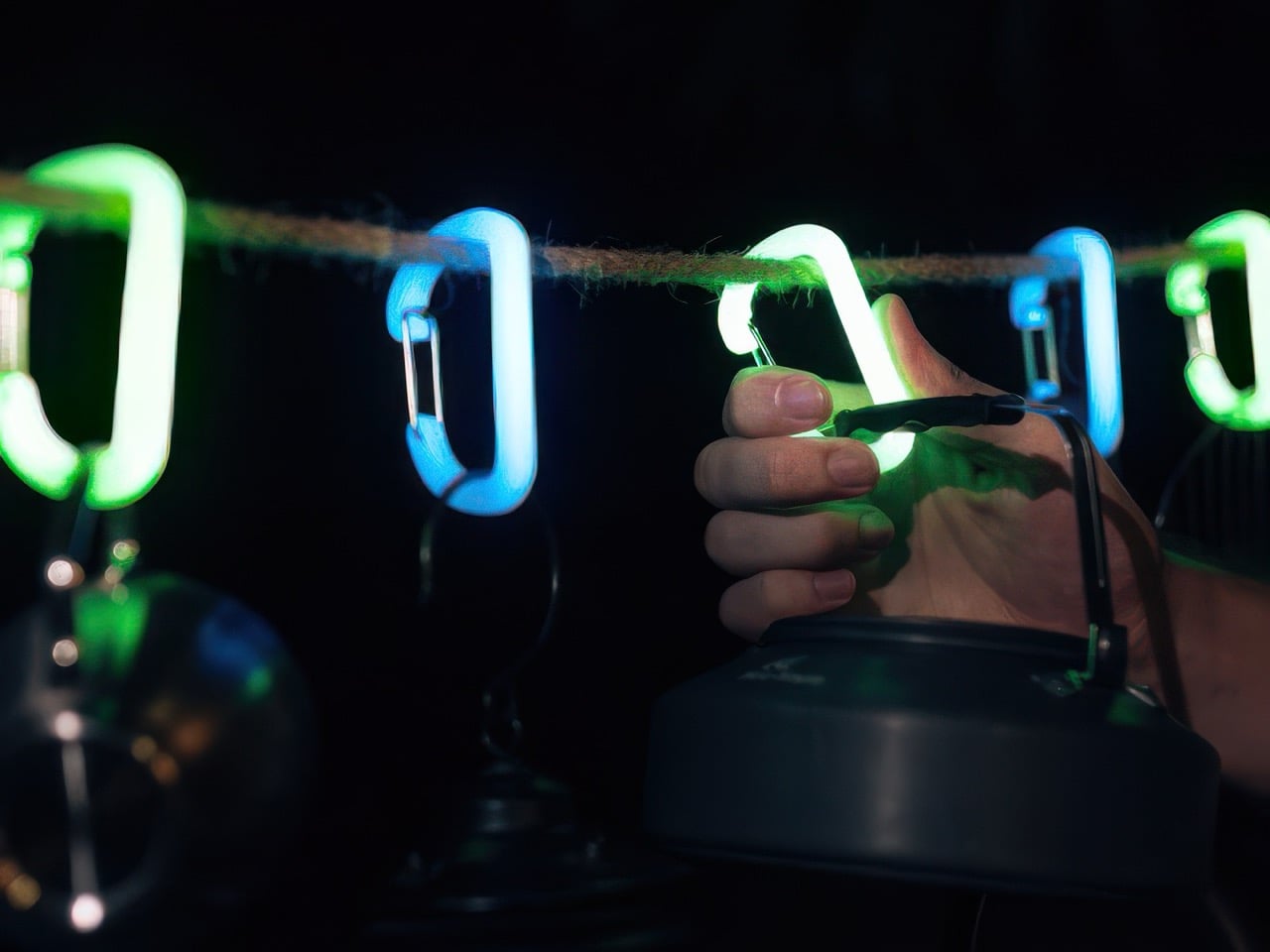
OBORO, from Maruhachi Kasei, a plastics factory in Nagoya, Japan that has been molding resin since 1974, closes the loop. The large D carabiner is glow-infused polycarbonate, measures about 3 by 1.7 inches, weighs 0.42 ounces, and is rated for 66 pounds. Leave it in sunlight or under a lamp for a bit and it shines for hours, with no battery, no charging, and no app (thankfully). A one-handed clip joins it for towels and tarps, rated for 55 pounds, and both come in green or a cooler blue. It is accessory gear rather than climbing gear, so keep your rope work on the real stuff.

Designer: Maruhachi Kasei

Click Here to Buy Now: $73 $91 (20% off) for 12 pieces. Hurry! Only 5 days left.

The Glow Is Baked Into the Plastic Itself

The glow pigment is mixed into the polycarbonate itself, so the entire body is the light source. There is no paint layer to chip or flake, which matters on an object that spends its life banging against rocks, zippers, and other gear. Polycarbonate is the same family of plastic used in bulletproof glazing, and the maker claims five times the impact resistance of ABS and 250 times that of ordinary glass. It also handles weather and heat better than most plastics. The gate is a nickel-plated metal wire, the one part that has to flex thousands of times, so it makes sense that it is not resin.

In the maker’s own test, twenty minutes under a blacklight gave about three hours of visible glow. Brightness peaks in the first 10 to 20 minutes and fades gradually from there, the way every glow-in-the-dark thing you have ever owned behaves. Sunlight and ordinary LED room lighting both recharge it, as many times as you like. Long-afterglow pigments like this trace back to a 1993 breakthrough at Japan’s Nemoto & Co., the lineage behind Super-LumiNova on Swiss watch dials, though the maker does not name its exact pigment. Water is the weak spot: the maker says wet pigment loses its charge and the surface can cloud, so this belongs in the tent, not out in the rain.

A Bigger Gate, Beefier Numbers, and a Clip for Towels

The large D measures about 3 by 1.7 inches and 0.28 inches thick, which the maker says is 30 percent bigger than a standard carabiner. That extra room is the whole point of the redesign. The gate opens wide enough for thick camp rope, so a mug, a kettle, and a lantern can all hang without a game of Tetris. The working load is rated at 66 pounds, while the maker’s pull test ended at 213 kilograms, roughly 470 pounds. That gap is deliberate, since the rating sits near 15 percent of breaking load, and at 0.42 ounces you will forget the thing is on your bag until you need it.

The clip is built for flat, floppy things like towels and tarps. It opens and closes with one hand, using serrated jaws and a sliding block with a toothed lock, and a thin metal loop up top lets it hang from a line or a bag. The wide mouth takes thick fabric where a standard clothespin gives up. Its 55-pound rating sits a bit under the D carabiner, which is plenty for a soaked camp towel. Two clips and a rope between trees give you a glowing clothesline you can actually find after dark.

Two Colors, Endless Things to Hang, and Roughly $6 a Piece

Green is the classic and the brighter of the two, while blue is the rarer, cooler color that I find more fun to look at. By day neither looks like it does at night, since green reads pale yellow-green and blue looks milky white. Blue is dimmer after dark, which seems a fair trade for the novelty. The use cases click once the idea sinks in: a tent guyline, a go-bag handle, a kid’s school backpack, a dog’s leash, a key hook by the front door.

The 12-piece set (six large D carabiners and six clips) is ¥11,616, about $73, against a ¥14,520 (about $91) retail price, which works out to roughly $6 a piece. Singles run about $6 for a D carabiner and about $7 for a clip. Pink versions of both ($40 for six of each), a three-pack of Suncheck glow carabiners ($33), and the older Ouroboros Carabiner Clip ($4) are available as add-ons. OBORO ships worldwide with delivery estimated for January 2027.

Click Here to Buy Now: $73 $91 (20% off) for 12 pieces. Hurry! Only 5 days left.

The post This $6 Glow-in-the-dark Carabiner might be Camping EDC’s biggest upgrade first appeared on Yanko Design.
  • ✇Yanko Design
  • This titanium watch turns Yuri Gagarin’s first orbit into a dial
    Ask any American watch nerd about space watches and you’ll hear one word within three seconds: Speedmaster. Moon landing, NASA certification, the whole legend. Meanwhile, eight years before Apollo 11, a Soviet pilot strapped on a standard-issue navigator’s watch and went around the planet first, and that story gets a fraction of the airtime. I love a Speedy as much as anyone. Still, the first human in orbit deserves a little more wrist love, and a Moscow designer just delivered some. Alexey Yak
     

This titanium watch turns Yuri Gagarin’s first orbit into a dial

25 octobre 2026 à 16:45

Ask any American watch nerd about space watches and you’ll hear one word within three seconds: Speedmaster. Moon landing, NASA certification, the whole legend. Meanwhile, eight years before Apollo 11, a Soviet pilot strapped on a standard-issue navigator’s watch and went around the planet first, and that story gets a fraction of the airtime. I love a Speedy as much as anyone. Still, the first human in orbit deserves a little more wrist love, and a Moscow designer just delivered some.

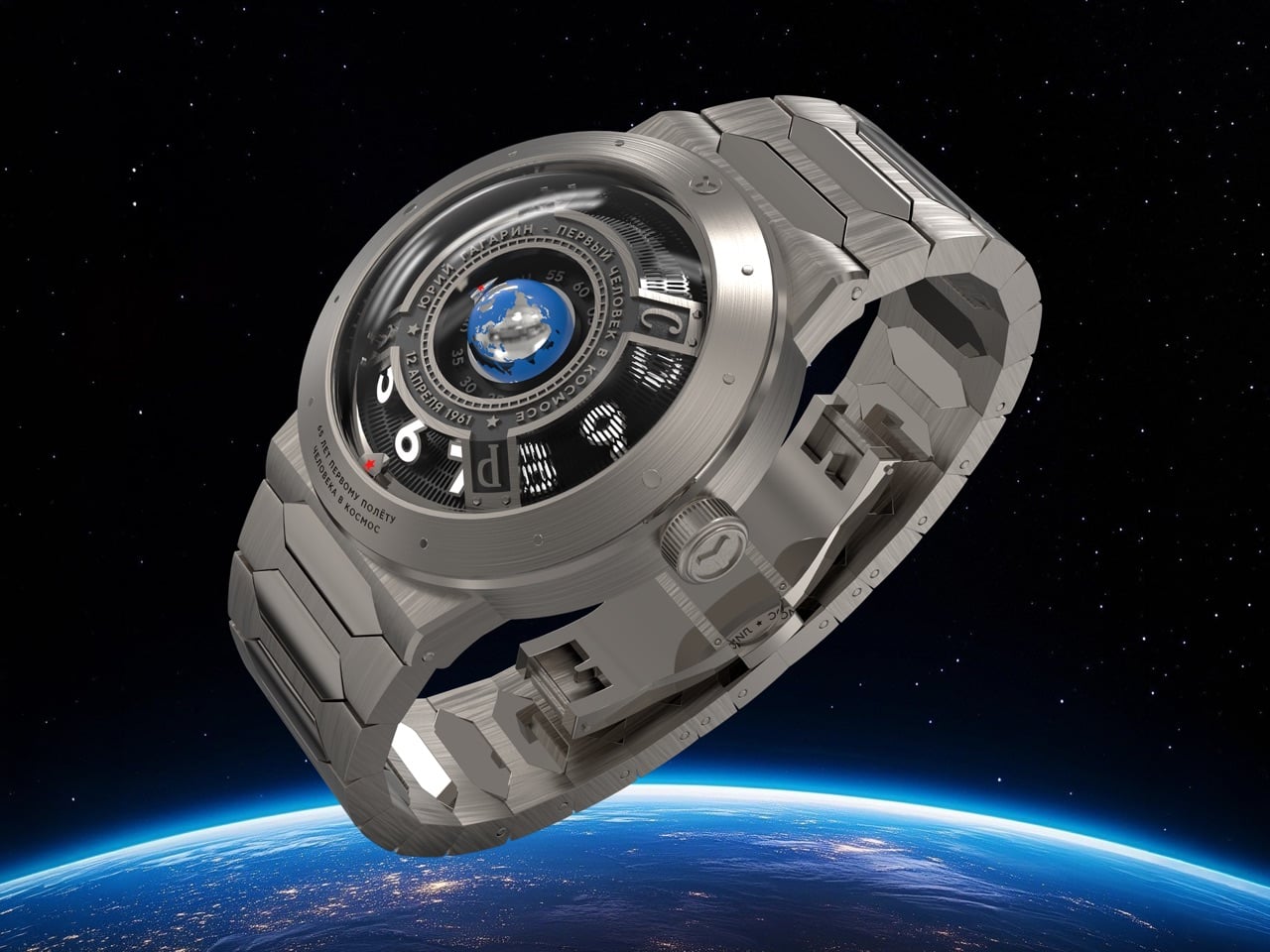
Alexey Yakushik’s Yuri Gagarin: First in Space is that delivery. His brand launched in 2025, and this is a big step up from its earlier releases on Vostok and Luch movements. The case is Grade 5 titanium, 45mm across (about 1.8 inches), with a domed sapphire crystal, a Miyota 8215 automatic sits under a custom module, and a rocket hand circles a blue Earth every hour. It collected two European Product Design Award wins this year. The run is 130 pieces, split between natural titanium and black PVD, at about $4,150 each, sold only through the brand’s Russian site.

Designer: Alexey Yakushik

A polished blue Earth sits dead center of the dial, and a rocket-shaped minute hand laps it once an hour. Minute numerals ring the globe like a launch-control readout. Hours sit lower down as bold Arabic numerals, with a red marker picking out the current one. Four plates on the diagonals spell СССР in Cyrillic, which is about as subtle as a Soviet space poster should be. For the record, Vostok 1 took roughly 89 minutes to orbit the planet and the rocket does it in 60, but I won’t be filing a complaint about the pacing.

The case and the integrated bracelet are both Grade 5 titanium, the alloy aerospace engineers love because it is strong, light, and unbothered by most of what life throws at it. At 45mm the case is large on paper, though titanium weighs far less than steel, and the brand hasn’t published the weight or thickness. The domed sapphire crystal is 35mm across and bulges up over the globe like a capsule window, which is the whole porthole idea in one piece of glass. Water resistance is 100 meters, the lume is BGW9, and the links look faceted and angular in the renders. Nobody is mistaking it for a dress watch.

Underneath sits the Miyota 8215, a 21-jewel Japanese automatic workhorse that keeps time reliably and stays out of the dial’s way, with the brand’s AYW001.1 module built on top. The renders show a custom rotor stamped with 1961, СССР, and 2026, the sort of detail only the owner will ever see. Yuri Alekseyevich Gagarin’s full name wraps the sapphire caseback window, and every watch carries its own number, such as 01/65. Hiding a love letter on the back of a watch is a wearer-only flex, and I’m here for it. Nobody across the table will ever read it, which is exactly the point.

Yakushik says the project has the blessing of Gagarin’s daughters, Galina and Elena, along with Roscosmos support. It launched April 16, 2026, timed to the flight’s 65th anniversary, and the first piece went to the Moscow Museum of Cosmonautics. The European Product Design Award is a paid-entry Farmani Group competition that covers concepts and finished products, so read the two wins as a nod to the design and leave the horological verdict to others. At about $4,150, the money goes to the titanium, the bracelet, the dome, and the custom display more than the base caliber. Gagarin carried a 33mm brass tool into orbit, and sixty-five years later his flight has a 45mm titanium watch of its own.

The post This titanium watch turns Yuri Gagarin’s first orbit into a dial first appeared on Yanko Design.

  • ✇Yanko Design
  • This Jenga tower is also a lamp, and it lights up as you stack it
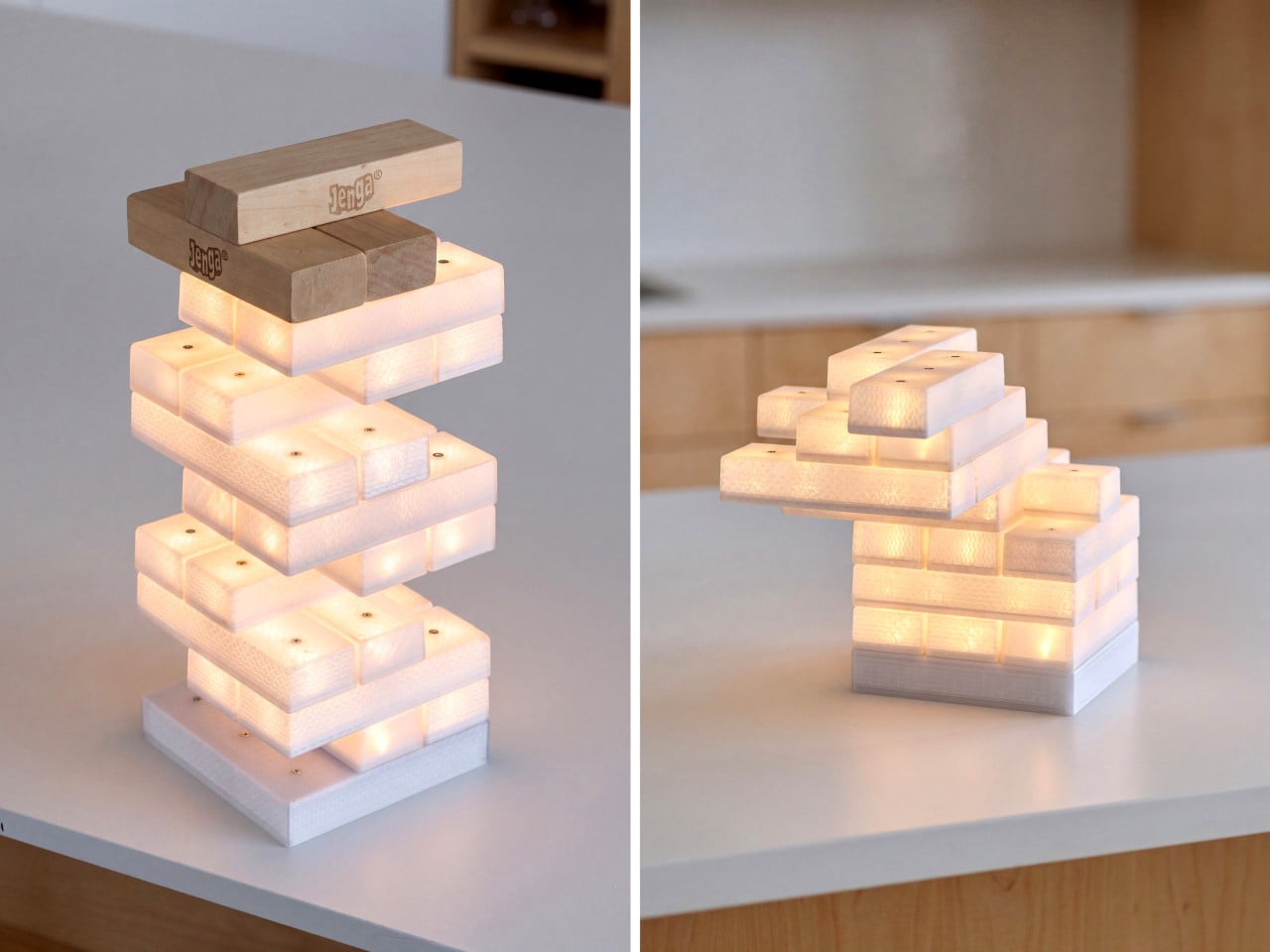
    Give an architect a box of blocks and they’ll tell you it’s research. Toronto architecture studio PARTISANS took that excuse all the way and came out the other side with a lamp. The Jenga Light rebuilds the game’s famous rectangles in a translucent material that glows from inside. Set the blocks on a powered base and electricity travels upward through every point where one block rests on another. The path the weight takes is the same path the power takes. That one idea turns a party game about
     

This Jenga tower is also a lamp, and it lights up as you stack it

25 octobre 2026 à 15:15

Give an architect a box of blocks and they’ll tell you it’s research. Toronto architecture studio PARTISANS took that excuse all the way and came out the other side with a lamp. The Jenga Light rebuilds the game’s famous rectangles in a translucent material that glows from inside. Set the blocks on a powered base and electricity travels upward through every point where one block rests on another. The path the weight takes is the same path the power takes. That one idea turns a party game about collapse into a lamp you build by hand, one glowing brick at a time.

Lead designer Alex Josephson and teammate Teddy Shropshire solved the fiddliest part of the problem with a component most people have never heard of. The blocks hide bridge rectifiers, tiny circuits that make polarity a non-issue. Flip a block, rotate it, or push it into a cantilever that looks like it’s daring gravity, and it still lights. The lamp won its category, Home Lighting: Lamps and Luminaires, at the 2026 European Product Design Award, an international competition that welcomes prototypes as well as finished designs. Pricing and availability haven’t been announced yet. Meanwhile, I’m trying to figure out how many blocks it takes to reach the ceiling.

Designers: Alex Josephson & Teddy Shropshire

How bridge rectifiers make every block reversible

Every electrical connection has a positive side and a negative side, and most stacking lamps deal with that by forcing pieces to go one way. A bridge rectifier is four diodes arranged in a loop, and it sends current out the same way no matter which way it comes in. Tuck them inside the blocks and “upside down” stops meaning anything. A brick can sit flat, sit flipped, or spin around, and its LEDs get the right polarity every time. That one cheap part deletes every rule you’d otherwise have to learn before playing. It’s the electrical version of a USB-C plug, which also stopped caring which way you hold it.

Compare that with the Tetris lamp ThinkGeek sold around 2012, where a powered bottom piece fed light to the tetrominoes stacked above it and the interlocking shapes did the steering. Later patents for modular light kits went mechanical, adding magnets and contacts shaped to avoid short circuits when blocks meet at odd angles. LumiBlocks took the magnetic route too, pairing snap-together blocks with app control and RGBCW LEDs. PARTISANS skips magnets entirely, letting electronics handle orientation and gravity handle everything else. The result asks nothing of you except a steady hand. That also happens to be the only thing Jenga ever asked.

Translucent printed bricks and a grid of contacts

From the photos, the bricks appear 3D-printed in a translucent plastic, with visible layer lines and a wavy internal infill. Most designers would sand or hide that texture, but here it does the job of a lampshade. Light passes through the infill and paints a woven, scaly pattern across every face, so each block glows with a grain that frosted acrylic could never give you. The shots mostly show warm white light, with one hero image running cooler. PARTISANS hasn’t published brightness or color temperature figures yet. Stack enough bricks and the whole thing reads like a lantern built by someone who really loved masonry.

Small metal contacts dot the top of each block, three in a row on the long pieces, while the base carries more, plus a power cord and a small port on one side. Those dots likely form a grid that decides how far one block can overhang the next and still stay lit. They also mean you can’t play an actual round of Jenga on it, since shimmying a brick out of the middle of a tower will just disconnect the entire top half of the lamp. Think of it as Jenga-inspired, with the building half of the game kept and the pulling half retired. A bumped table can still flatten a ten-minute spiral, which is the most Jenga thing left about it.

From a Toronto toy fair to a Toronto studio

Jenga began as a family game Leslie Scott played with wooden blocks growing up in Ghana, and it launched at the London Toy Fair in 1983. Its real break came in 1986 at the Toronto Toy Fair, where Hasbro’s chairman reportedly decided he had to have it. Forty years later, a Toronto studio has turned the same stack into a table lamp. PARTISANS is mostly an architecture practice, best known for the cedar-lined Grotto Sauna on Georgian Bay, yet Josephson keeps drifting into lighting. His Gweilo lamps, made from hand-molded acrylic sheets, won the 2016 AZ Award for Best Lighting Installation.

Playful lighting has had a good run lately, from Analog lamps, which grew out of LEGO play and now sell at MoMA, to app-controlled magnetic blocks for desk setups. The Jenga Light skips apps and color modes and bets everything on the hands-on part. The European Product Design Award judges entries anonymously and accepts prototypes, so this win recognizes the idea and its engineering ahead of any retail launch. PARTISANS hasn’t announced pricing or a release date. Until it does, I’m staring at my old Jenga set and wondering how hard bridge rectifiers really are to solder.

The post This Jenga tower is also a lamp, and it lights up as you stack it first appeared on Yanko Design.

  • ✇Yanko Design
  • Only nine of these gorgeous red-to-aluminum Ducati customs will ever exist
    Paint has one job on most vehicles, and that job is covering up the metal underneath. Bandit9 clearly doesn’t agree with that particular ideology. The Saigon-based studio’s new (RED) 800 starts out in deep Racing Red at the nose, then lets the color thin out as it sweeps back until all that’s left is raw, hand-brushed aluminum. It’s a Ducati 821 custom built with (RED), the charity co-founded by Bono and Bobby Shriver, and only nine will ever exist. Every one of them sends $14,000 to the fight
     

Only nine of these gorgeous red-to-aluminum Ducati customs will ever exist

25 octobre 2026 à 09:20

Paint has one job on most vehicles, and that job is covering up the metal underneath. Bandit9 clearly doesn’t agree with that particular ideology. The Saigon-based studio’s new (RED) 800 starts out in deep Racing Red at the nose, then lets the color thin out as it sweeps back until all that’s left is raw, hand-brushed aluminum. It’s a Ducati 821 custom built with (RED), the charity co-founded by Bono and Bobby Shriver, and only nine will ever exist. Every one of them sends $14,000 to the fight against AIDS and other preventable diseases, which is a pretty great excuse to own a motorcycle this good-looking.

Each fade gets applied by hand, so no two of the nine bikes will wear their red in exactly the same spot. I love that, because the paint job becomes a fingerprint. Underneath sits the same recipe from Bandit9’s Ducati 821 build: Ducati’s 821cc Testastretta twin making 110 horsepower, wrapped in a seamless hand-shaped aluminum unibody that weighs a claimed 386 pounds dry. That earlier bike went with aluminum and carbon and skipped the red entirely, which feels almost rude for a Ducati. This one brings the red back and then lets it fade out halfway, a Ducati that only partly remembers its roots. It’s priced at $49,900 and built to order, with an 8 to 12 month wait.

Designers: Bandit9 & (RED)

How the red drains across one seamless aluminum shell

The fade works because there’s nowhere for it to stop. Bandit9’s unibody wraps the nose, tank, and flanks in one hand-shaped aluminum skin, so the red never runs into a panel gap that would force a hard edge. The color sits deepest on the tank and tail, then drains down the flanks toward the belly like it was poured on from above. By the time it reaches the engine cases, the brushed grain of the metal has taken over completely. In the close-up shots, that grain even seems to show through the red near the transition, which hints at a translucent candy coat laid straight onto bare aluminum.

That candy approach, if it is one, would explain why the bike looks lit from inside. Translucent paint lets light hit the metal underneath and bounce back through the color, so the red picks up a glow that solid paint can’t fake. Thinning the coat by hand also means the painter controls exactly how fast the red gives up, which is where the fingerprint comes in. A red LED strip tracing the tail’s edge down toward the rear suspension carries a line of color past the point where the paint stops. Basically, the red keeps going even after the bike runs out of paint.

A fade with roots in 1950s hot rods and (RED)’s aluminum gadgets

Southern California painter Larry Watson gets a lot of the credit for turning fades into a custom-culture staple. Starting in the late 1950s, Watson helped popularize panel paint, scallops, veils, and fades, shooting candy colors over silver and pearl on cars like his own 1958 Thunderbird. Those jobs were loud, flashy, and built to be seen at a drive-in. Bandit9 takes the same basic idea and strips out the flash, using a single color and letting bare metal do the rest. It’s a hot rod technique wearing a gallery outfit.

Red over bare aluminum also happens to be (RED)’s unofficial house style. One of the organization’s most famous early products was a red aluminum iPod nano in 2006, and in 2013 Jony Ive and Marc Newson designed a one-off aluminum Leica M for a (RED) auction at Sotheby’s. That camera sold for $1.8 million, and the whole sale raised $26.2 million once the Gates Foundation matched it. Bandit9’s bike slots neatly into that family of red-and-metal objects built to raise money. It’s also the only one I know of with a Ducati engine.

The same price as the regular 821, which makes the red free

Bandit9 left Ducati’s mechanical bits alone and rebuilt everything you actually look at. The 821cc Testastretta twin makes 110 horsepower and 65.8 lb-ft of torque, good for a claimed 0 to 60 mph run of 3.3 seconds and a top speed of about 125 mph (201 km/h). A custom tubular steel trellis frame holds it together, with a 43mm Sachs fork, an adjustable Sachs rear shock, and a single-sided swingarm. Dual 320mm Brembo monobloc calipers handle stopping up front. Ducati’s engineers did the hard part, and Bandit9 spent its months on the shell.

At $49,900, the (RED) 800 costs exactly what Bandit9 charges for its regular Ducati 821, which means the buyer pays nothing extra for the paint or the $14,000 donation. Sell all nine and (RED) collects $126,000. Orders go directly through Bandit9, and with only nine slots, they probably won’t hang around long. Plenty of charity editions just dip a product in red and call it a day. Bandit9 made the red the entire design, then had the good sense to let it fade out right where the metal gets interesting.

The post Only nine of these gorgeous red-to-aluminum Ducati customs will ever exist first appeared on Yanko Design.

  • ✇Yanko Design
  • Wuben’s tiny flashlight packs 500 lumens and a blade into 40 grams
    My phone flashlight handles most of my after-dark chores, which is a funny confession from someone who writes about EDC gear for a living. It is always in my pocket, it is bright enough, and it asks for nothing extra. Then a job needs both hands, and suddenly the phone is clamped in my teeth, aiming at the ceiling while I squint at a breaker box. The phone flashlight is a great idea with one design flaw, which is that it comes attached to a phone. Hands-free light has always been the gap, and h
     

Wuben’s tiny flashlight packs 500 lumens and a blade into 40 grams

24 octobre 2026 à 21:45

My phone flashlight handles most of my after-dark chores, which is a funny confession from someone who writes about EDC gear for a living. It is always in my pocket, it is bright enough, and it asks for nothing extra. Then a job needs both hands, and suddenly the phone is clamped in my teeth, aiming at the ceiling while I squint at a breaker box. The phone flashlight is a great idea with one design flaw, which is that it comes attached to a phone. Hands-free light has always been the gap, and headlamps are too much hardware for a trip to the garage.

Wuben’s G6 SPARK is a keychain-sized answer to the teeth problem. Its clip rotates 90 degrees with distinct clicks, so you can clip it to a pocket, cap brim, or backpack strap and aim the beam where your hands are busy. The 500-lumen main light handles distance, a 100-lumen side light with red modes handles up close, and a hidden blunt-tip blade covers the odd chore. The body is 7075 aluminum, 0.34 inches (8.6 mm) thick, and 1.4 ounces (40 g or about as much as an AirPods case).

Designer: Wuben

Click Here to Buy Now: $33.99 $44.99 (24% off). Hurry, only 411/1000 left! Raised over $111,000.

Eleven credit cards thick and cut from aerospace aluminum

The G6 SPARK measures 2.56 by 1.35 inches and 0.34 inches thick (65 by 34.2 by 8.6 mm), and it weighs 1.4 ounces (40 g). That makes it roughly eleven credit cards thick, so it vanishes into a jeans pocket. The body is 7075 aluminum, which Wuben calls aerospace-grade, and a slab this thin needs a metal with a spine. Wuben rates it IP66 against dust and powerful water jets, with 1 meter (3.3 feet) of impact resistance, so a keychain’s daily abuse should not scare it. The USB charging port hides inside the body, which keeps the face clean and symmetrical.

7075 is the zinc-rich member of the aluminum family, and it has a reputation for being far tougher than the 6061 found in most flashlight bodies. Aircraft engineers fell for it because it is light and stiff at the same time. Stiffness is exactly what a flat flashlight needs, since a thin body that flexes is a bad day for the lens and the electronics. On a keychain, that rigidity should also help it survive a crowded pocket full of other metal. A push-release attachment lets you pop it off the ring when you want it in your hand instead of dangling off your keys.

Three lights, one button, and a click code you can learn in an evening

The main light tops out at 500 lumens with a 66 meter (217 ft) throw and a peak beam intensity of 1,089 candela. Those numbers describe a beam for the space around you, like a driveway or a campsite, rather than a hillside across the valley. Light color is 5000K, a daylight white, and the CRI of 70 means colors look decent rather than lab-accurate, which is fine for finding a dropped screw. Brightness steps are Eco, Low, Medium, and High, and you cycle them by holding the button. A double click jumps to Turbo, a triple click gives you Strobe, and mode memory remembers your last setting.

The independent side light is the one I expect to use most, since it gives a close-range pool of light at arm’s length. White comes in Low, Medium, and High, topping out at 100 lumens, which is plenty for reading a label or tracing a wire. Red adds a steady mode and a signal mode at 10 lumens, handy for saving night vision or flagging yourself on a dark road. Hold the button while the main light is off to wake the side light, and hold again to cycle the five modes. That is a lot of options on one button, though the click patterns are easy enough to learn in an evening.

A clip that aims, a blade that hides, and a cap brim that becomes a headlamp

The clip is the headline trick, rotating through 90 degrees with distinct mechanical clicks so you can feel each position. Clipped to a cap brim, it works like a minimalist headlamp, and I would happily wear it to read in a tent. Tucked into the side is a blunt-tip utility blade that handles opening boxes, slicing tape, and sharpening a pencil, and probably a marshmallow stick if you ask nicely. Fold it away and the G6 goes back to being a slab that keeps your keys company. My one wish is a tiny tactile mark near the button, so a cold thumb can find it in the dark.

Click Here to Buy Now: $33.99 $44.99 (24% off). Hurry, only 411/1000 left! Raised over $111,000.

The post Wuben’s tiny flashlight packs 500 lumens and a blade into 40 grams first appeared on Yanko Design.
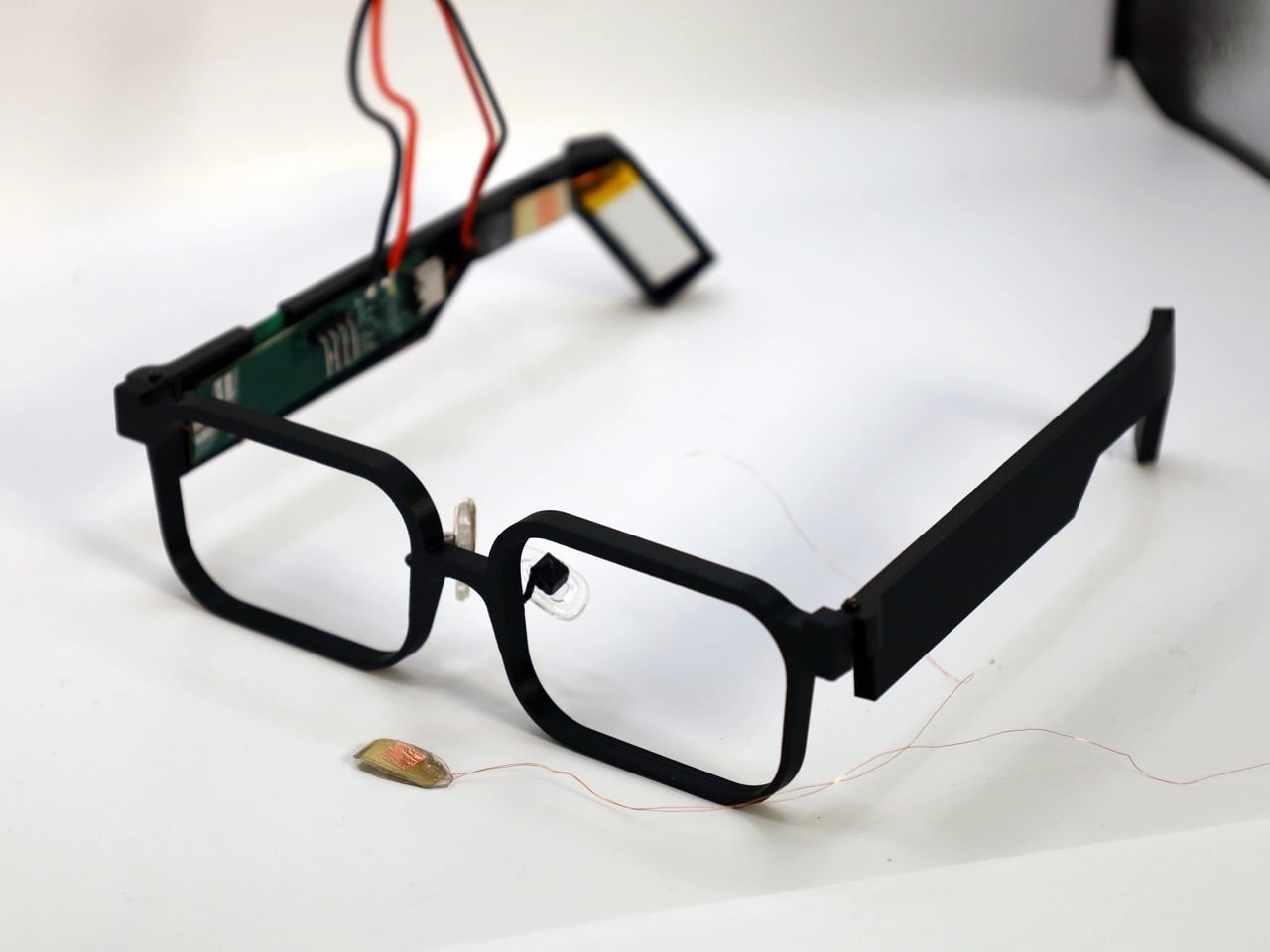
  • ✇Yanko Design
  • Abxylute’s $65 smartphone gamepad packs Hall Effect triggers, clickable sticks, and gyro aiming
    Valve raised the price of the 512GB Steam Deck OLED to $789 this May, a number that makes anyone want to close the browser tab out of spite. Blame the AI boom, which has data centers swallowing memory chips faster than factories can make them, leaving handhelds to fight over the scraps. Now look at the phone in your hand. It runs native console ports like Resident Evil, streams entire Xbox and PlayStation libraries, and emulates most of the consoles a millennial grew up with. All it lacks is a
     

Abxylute’s $65 smartphone gamepad packs Hall Effect triggers, clickable sticks, and gyro aiming

23 octobre 2026 à 19:30

Valve raised the price of the 512GB Steam Deck OLED to $789 this May, a number that makes anyone want to close the browser tab out of spite. Blame the AI boom, which has data centers swallowing memory chips faster than factories can make them, leaving handhelds to fight over the scraps. Now look at the phone in your hand. It runs native console ports like Resident Evil, streams entire Xbox and PlayStation libraries, and emulates most of the consoles a millennial grew up with. All it lacks is a pair of real thumbsticks and triggers, which is a far cheaper problem to solve.

Hong Kong-based abxylute solves that problem with the M5 and M6, two sliding controllers that magnetically snap to the back of your phone. Closed, they sit behind it like a chunky case. Slide the phone up and a full gamepad appears underneath, Xperia Play style, with sticks, triggers, and rumble. The M5 is the slim one, plugging in over USB-C with zero pairing and pass-through charging. The M6 goes wireless over Bluetooth, adding clickable capacitive sticks, Hall Effect triggers, gyro aiming, and a 10-hour battery. Both retail under $90, roughly one-ninth of a Steam Deck these days, and for anyone whose gaming happens on commutes and couches, that math is hard to argue with.

Designer: abxylute

Click Here to Buy Now: $65 $84.99 (24% off) Hurry! Only limited units available.

A slider rail from the Nokia era, rebuilt for modern phones

Sliding rails nearly went extinct when touchscreen slabs replaced slider phones, and so did most of the factories that made them. abxylute eventually tracked down a manufacturer that once built rails for Nokia and Sony, then asked it to do something those phones never needed. A slider from 2010 only had to carry a lightweight screen half, while the M5 and M6 have to hold a phone and case weighing up to around 10.6 ounces (300g). The resulting bidirectional damped rail glides smoothly both ways, with magnets snapping it into the fully open and closed positions. That makes for a calmer motion than the spring-loaded slide on the OhSnap MCON, which fires the phone open at a button press.

The phone attaches through an adjustable magnetic mount rated at 4,098 gf, roughly 9 pounds of pull and comfortably above the 2,500 to 3,500 gf abxylute quotes for Apple’s MagSafe. Both mounts clear camera bumps up to 0.28 inches (7mm), and the plate shifts to suit different phone sizes. Supported phones include the iPhone 18 series, Galaxy S26, Pixel 11, OnePlus 15, and Xiaomi 17, with a magnetic adhesive ring in the box for anything lacking MagSafe. Thick cases will sap some of that grip, so slimmer cases make the safer pairing. Lightning iPhones sit out the M5 entirely, since that model needs a USB-C port to work.

The M5 goes wired and thin for pocket duty

The M5 began life as a DIY build by Jinjiang, an independent maker who handled the 3D modeling, PCB design, and programming himself before abxylute partnered with him to engineer it for mass production. Its connection is wired USB-C, which means no Bluetooth pairing, no battery to charge, and pass-through charging so your phone can top up mid-session. The sticks are low-profile carbon-film sliders modeled on the PSP, PSP Go, and Nintendo 3DS, recessed nearly flat to keep the controller slim. Because sliders can’t click, abxylute added dedicated LS and RS buttons that double as programmable macro keys. Micro-switch triggers with short travel and a crisp click round out the inputs.

Those choices produce a controller that weighs about 6 ounces (170g) and measures 0.91 inches (23mm) thick with the mount, thinning to 0.45 inches (11.5mm) at the grip area. It spans 5.9 inches (149.5mm) wide, about the width of a large phone, so it slips into a jacket pocket easily. I appreciate a product that commits this fully to one idea, and the M5 commits to portability. Slider sticks offer less throw than full-size ones, so they favor retro titles and platformers over twitchy shooters. A limited M5 Founder’s Edition, capped at 1,000 units, comes in translucent retro green with a customizable two-letter badge replacing the abxylute logo.

The M6 packs full-size controller features into the slide

The M6 took nearly three years to develop, long enough to earn the internal nickname “little Nezha,” and most of that effort went into the controls. Its capacitive sticks, developed with component maker K-Silver, tilt 20 degrees against the roughly 23 degrees of a full-size controller stick, and they click for L3 and R3. abxylute also built them to resist magnetic interference, a smart call given the strong magnet array sliding a few millimeters above them. Instead of sinking the sticks into deep wells, a stepped surface around each one frees up room for your thumbs. Stick output switches between circular and square modes, handy for racing games and emulators.

Hall Effect linear triggers with 0.22 inches (5.5mm) of travel handle racing games, and a Fast Trigger Mode shortens actuation for shooters. A face-mounted Z button takes remaps and multi-button macros, so a fighting game special move or a jump-and-shoot combo fits under one thumb. There’s also a 6-axis gyroscope for motion aiming, and Bluetooth 5.3 backed by a 500mAh battery rated for up to 10 hours. The lighting is diffused, bouncing off the controller’s surface instead of shining at your eyes, and its color changes with each mode. All this comes in at 6.7 ounces (191g) and 1.02 inches (26mm) thick, a modest premium over the M5.

Shared features, the abxy app, and what each model costs

Both controllers share a physical mode switch that flips between NS, XInput, and PS layouts, covering Switch emulators, Android and cloud gaming, and iPhone titles respectively. Each gets dual Z-axis linear vibration motors with four intensity levels, plus a Turbo function paired to the M button. The free abxy Game App doubles as a launcher for emulators and cloud services, and it handles remapping, dead zones, macros, lighting, and vibration. Virtual touch mapping lets you assign on-screen controls to physical buttons for games that never bothered with controller support. Detachable magnetic grips, held by magnets plus a mechanical shear lock, add full-size handles for longer sessions, though they aren’t listed among the box contents.

Kickstarter pricing currently sits at $65 for the M5 and $69 for the M6, against retail prices of $84.99 and $89.99, both well under the $169.99 Backbone Pro. A bundle with one of each costs $119, down from $174.98. The M6 is estimated to ship in November 2026 and the M5 in December 2026, with worldwide delivery. The M5 box adds a USB-C cable to the controller, adhesive ring, and manual that both models share. Valve wants $789 for a handheld. abxylute wants $69 to upgrade the one you already own.

Click Here to Buy Now: $65 $84.99 (24% off) Hurry! Only limited units available.

The post Abxylute’s $65 smartphone gamepad packs Hall Effect triggers, clickable sticks, and gyro aiming first appeared on Yanko Design.

  • ✇Yanko Design
  • Sunseeker Elite’s mower has LiDAR, vision, and a serious beef with leftover grass strips
    They say AI will steal our jobs. Whoever trims that stubborn strip of grass along the lawn’s edge seems to have excellent job security. We’ve got robots driving around gardens, mapping their surroundings, and keeping the grass neatly cut, yet the border still has a habit of becoming someone’s weekend assignment. Personally, that’s a job I’d be delighted to hand over. Sunseeker’s upcoming X8 Plus looks eager to apply. Its EdgeZero 2.0 trimming system targets a zero-inch edge gap, according to th
     

Sunseeker Elite’s mower has LiDAR, vision, and a serious beef with leftover grass strips

20 octobre 2026 à 21:45

They say AI will steal our jobs. Whoever trims that stubborn strip of grass along the lawn’s edge seems to have excellent job security. We’ve got robots driving around gardens, mapping their surroundings, and keeping the grass neatly cut, yet the border still has a habit of becoming someone’s weekend assignment. Personally, that’s a job I’d be delighted to hand over.

Sunseeker’s upcoming X8 Plus looks eager to apply. Its EdgeZero™ 2.0 trimming system targets a zero-inch edge gap, according to the company, putting that leftover strip squarely on the agenda. Set for a preview at Equip Expo 2026, the robotic mower also brings solid-state LiDAR, stereo vision, and network-assisted satellite positioning. An impressive résumé, although the edge-cutting hardware is what makes me want to schedule the interview.

Designer: Sunseeker Elite Team

Click Here to Know More: Equip Expo 2026.

The Last Few Inches Are a Hardware Problem

A mower can follow a boundary accurately and still leave grass behind if its blades cannot reach it. Knowing where the border is and cutting right up to it are separate assignments. Sunseeker describes EdgeZero™ 2.0 as its answer to the second one, though the announcement leaves the mechanism’s finer details unexplained. That’s the part I’d want a closer look at: how the trimming tool reaches the border while the mower’s body stays clear. A clean pass beside a raised edge would tell a useful story.

Getting into position is its own engineering task. The X8 Plus uses nRTK, a form of satellite positioning that draws correction data from a network of reference stations. In plain English, those corrections help tighten up the machine’s estimate of where it is. Sunseeker combines that positioning with solid-state LiDAR and stereo vision, giving the mower several sources of information as it navigates. Your garden may look peaceful from the patio; the robot has quite a bit to figure out down there.

Sharing the Lawn With the Locals

There’s an infrared camera in the mix, too, which Sunseeker says supports animal-friendly operation. That’s a worthwhile consideration for a machine sharing outdoor space with creatures that have never checked its mowing schedule. The announcement doesn’t establish exactly how the system identifies or responds to different animals, so I’d keep the promise modest for now. Still, accounting for the lawn’s other residents belongs in the design brief. The grass might stay put, but everything passing through it gets a vote in how smoothly an autonomous mower’s afternoon goes.

Sunseeker Elite already explores that relationship between sensing and physical movement in its existing X7 Gen 2 and X7 Plus Gen 2. Those models combine satellite positioning with visual mapping, while all-wheel drive and floating dual cutting discs address traction and uneven ground. That provides useful context for the X8 Plus: software has to work with wheels, blades, and the shape of the property. I like that the new preview brings attention back to the finishing work. A mower’s route can look beautifully organized on an app, but the result still gets judged from the garden chair.

A Closer Look at Equip Expo 2026

Equip Expo should provide a closer look at Sunseeker’s approach. The show runs October 20-23, 2026, at the Kentucky Exposition Center in Louisville, Kentucky, with Sunseeker at Indoor Booth #1190 and Outdoor Booth #7460D. The company plans an interactive mower-vision experience, letting visitors see imagery from a machine’s perspective, alongside outdoor slope demonstrations. Seeing what a mower perceives could make that long sensor list considerably easier to understand.

Pricing and retail availability for the X8 Plus aren’t specified in the announcement, so the zero-inch edge target remains a reason to watch its development rather than retire the trimmer immediately. For me, though, it’s a persuasive direction to pursue. Finishing the borders would remove a very specific reason for a person to follow the robot outside and pick up another tool. If Sunseeker can make that work reliably, I’m perfectly comfortable with this particular job disappearing. The person who used to do it can have Saturday morning back.

Click Here to Know More: Equip Expo 2026.

The post Sunseeker Elite’s mower has LiDAR, vision, and a serious beef with leftover grass strips first appeared on Yanko Design.

  • ✇Yanko Design
  • Hangzhou’s glowing glass museum takes its cues from 5,000-year-old jade
    Most museums are designed like very expensive shoeboxes. Art hates sunlight, so architects seal the walls, bolt on some skylights, and call it a day. Aedas went the other direction in Hangzhou and wrapped an entire museum in glass, then twisted it into two interlocking rings for good measure. The Yohoo Museum sits on an island in an artificial lake, glowing like a piece of polished jade, which is exactly the point. The shape is borrowed from the ritual jade rings of the Liangzhu culture, a Neol
     

Hangzhou’s glowing glass museum takes its cues from 5,000-year-old jade

20 octobre 2026 à 20:30

Most museums are designed like very expensive shoeboxes. Art hates sunlight, so architects seal the walls, bolt on some skylights, and call it a day. Aedas went the other direction in Hangzhou and wrapped an entire museum in glass, then twisted it into two interlocking rings for good measure. The Yohoo Museum sits on an island in an artificial lake, glowing like a piece of polished jade, which is exactly the point. The shape is borrowed from the ritual jade rings of the Liangzhu culture, a Neolithic civilization that thrived in this part of China around 5,000 years ago.

Ken Wai, Global Design Principal at Aedas, led the design of the 57,650-square-foot (5,356-square-meter) building, completed in 2024 inside Liangzhu Yohoo Park (that’s Yohoo, not Yahoo the search engine. I know, I made that mistake too). The glass is a translucent multilayer laminate Aedas calls “emerald glass,” and it filters daylight into a soft, even wash across the galleries. A steel frame lets the ends of the rings lift off the ground with no visible support, creating covered plazas underneath. The project won Architectural Design of the Year and a Gold in the Cultural category at the International Design Awards, a juried global competition for built work.

Designers: Aedas, Ken Wai

Liangzhu jade comes in two signature shapes, the bi and the cong. The bi is a flat disc with a hole in the center, while the cong is a chunky tube that’s square outside and round inside. Later Chinese tradition read the bi as heaven and the cong as earth, and archaeologists say both starred in royal ceremonies honoring the sky. Each of the museum’s rings wraps around an open void, and Aedas frames these circular light wells as a link between heaven and earth. From above, the voids read like the drilled centers of two bi discs, and the squared-off island underneath does a decent cong impression if you squint.

Aedas says the two interlocking rings stand for two separate heritages, Liangzhu culture and the Grand Canal. The lake around the island connects to that canal, a roughly 1,100-mile (1,776-kilometer) waterway whose oldest sections date back more than 2,500 years. Hangzhou sits at its southern end, and the canal is largely what turned the city from a sleepy town into a booming trade hub. UNESCO listed the canal in 2014 and the Liangzhu ruins in 2019, so the building is basically two World Heritage sites holding hands. That’s a lot of symbolism for one roofline, but the form carries it so gracefully that I’m happy to play along.

A single steel frame carries the whole building, and Aedas used it to peel both ends up off the ground like the corner of a sticker. Those lifted edges overhang the entrances and shelter a pair of public plazas, which in the photos are getting plenty of use. One shot shows a school group picnicking under the curved soffit while two kids sprint past the camera, presumably fleeing a teacher. The underside is wrapped in smooth white panels, and beneath it a diamond grid of glass slopes down to meet the pavement. The result is a shaded waterfront room open to anyone, whether or not they ever step inside the galleries.

Up top, the galleries sit under a dense white steel diagrid, with translucent glass filling every gap in the structure. Interior photos show a bright, nearly shadowless hall where two visitors look like they’ve wandered into a cloud. The entrance volume uses greener, more jade-toned glass in horizontal bands, so the building’s color shifts depending on which face you’re looking at. American readers might recognize the strategy from Steven Holl’s Bloch Building at the Nelson-Atkins Museum in Kansas City, where translucent channel-glass volumes glow like lanterns. Aedas stretches the idea across a twisting, double-curved envelope, and the firm says parametric modeling kept that geometry efficient to build.

A white boardwalk zigzags across the lake to the museum, swelling into circular viewing pods that repeat the ring motif at walking scale. It’s a slow, wiggly approach, and it hands visitors plenty of different angles on the building before they arrive. A broader bridge links the island to the main park on the other side, where curving paths and a petal-shaped flower garden keep the theme going. Aerial shots also show the less poetic context, with apartment towers and older industrial blocks crowding the shoreline. That backdrop works in the museum’s favor, because a glowing glass knot reads even louder next to rows of identical high-rises.

Yuhang already has one famous lake-bound jade museum. David Chipperfield’s Liangzhu Museum opened in 2008 as four travertine bars set on a lake, linked to the park by bridges, with an exhibition island off to the south. Tadao Ando added a concrete cultural center nearby in 2016. Both architects treated Liangzhu’s heritage as something heavy and permanent, which makes sense for artifacts that spent 5,000 years underground. Aedas kept the same lake, island, and bridge recipe and swapped the stone for light. I keep wondering which version the original jade carvers would prefer, since their whole craft was coaxing a soft glow out of solid stone.


The post Hangzhou’s glowing glass museum takes its cues from 5,000-year-old jade first appeared on Yanko Design.

  • ✇Yanko Design
  • These Blink-powered Smart Glasses Could Change Wearables Forever
    Your face is a power plant, and you’ve been running it for free your whole life. Every blink and jaw clench releases a tiny burst of mechanical energy that simply vanishes. A team at Northwestern University figured out how to catch it, using static electricity, the same stuff that makes a balloon stick to your hair. Their prototype glasses, GlassTENG, use that energy to run sensors tracking your pulse, blinks, and teeth clenching. As a feat of energy harvesting it’s fantastic, and I’d love to s
     

These Blink-powered Smart Glasses Could Change Wearables Forever

20 octobre 2026 à 16:30

Your face is a power plant, and you’ve been running it for free your whole life. Every blink and jaw clench releases a tiny burst of mechanical energy that simply vanishes. A team at Northwestern University figured out how to catch it, using static electricity, the same stuff that makes a balloon stick to your hair. Their prototype glasses, GlassTENG, use that energy to run sensors tracking your pulse, blinks, and teeth clenching. As a feat of energy harvesting it’s fantastic, and I’d love to see it in everything from earbuds to shoe insoles.

Then the other shoe drops, because smart glasses are already the most side-eyed gadget around, with Meta’s Ray-Bans filming strangers in coffee shops and a battery that needs its case after a few hours serving as the only real limit. GlassTENG’s three sensors, built by Nivedita Arora’s VAK Embodied Systems Lab, draw just 4.1 microwatts combined, and the team wants to go fully battery-free next. That would remove the last speed bump on always-on face computers. Your pulse and jaw clenches are deeply personal data, and glasses like these could log them around the clock. Then again, if such glasses are coming anyway, I’d much rather they ran on blinks than on lithium-ion cells strapped to my head.

Designers: Nivedita Arora, Raj Dave, Jovanis Prodanich & Yung-ching Lai (Northwestern University)

A Silicone Sandwich That Turns Blinks Into Voltage

The sensor is a two-layer sandwich of PDMS, a soft silicone, and FEP, a slick fluoropolymer from the Teflon family. When the layers press together and spring apart, one hogs electrons from the other, which is the balloon-and-hair trick in a lab coat. Silver electrodes, each 150 nanometers thick, collect the resulting voltage. Pulse is the faintest signal, around 50 to 100 millivolts, while blinks and eyebrow raises land at 200 to 500 millivolts. A hard jaw clench climbs to about 1.5 volts, which is a wide enough range for one thin stack to tell a heartbeat from a chomp.

The silicone is Sylgard 184, mixed 10 to 1, degassed, spin-coated to roughly 490 microns (about 0.02 inches), and left to cure overnight. The FEP gets blasted with oxygen plasma on both sides, which roughens the surface so more of it touches the silicone. The team started by etching one side, then found that doing both measurably boosted the signal. Bare silicone faces your skin while the charge-trading interface stays sealed inside, so skin oils can’t muck up the readings. It’s baking show energy, just with a vacuum chamber instead of an oven.

Three Sensors, Three Spots, and Your Head Doing the Clamping

One sensor sits on the nose bridge over the angular artery, where it reads pulse, forceful blinks, and eyebrow raises. A second hangs off a small arm near the temple, aimed at the superficial temporal artery to catch clenching, tapping, and chewing. The third is embedded in the temple arm above the ear, and here the design gets clever, because the natural clamp of the frame on your head supplies the contact pressure for free. Early 3D-printed nose pads gave patchy contact, so the team swapped in adjustable off-the-shelf pads from regular eyewear. Decades of optician ergonomics beat the custom part, which is a humbling result for any designer.

In a study with 20 people, half of them daily glasses wearers, a Random Forest classifier (a machine-learning model that takes votes from many decision trees) sorted six activities with 93.8% accuracy. Forceful blinks and teeth tapping both hit 99%. Heart rate landed within 1.82 beats per minute of a Polar H10 chest strap, measured on 10 seated volunteers at rest. Talking was the weak spot at 55%, and the system mistook it for eating 37% of the time, since both work the same jaw muscle. For now, your glasses might assume you’re mid-sandwich when you’re just mid-rant, and honestly, I know people like that.

4.1 Microwatts: The Number Every Battery Spec Should Fear

Those 4.1 microwatts cover the sensing front-end, the circuitry that cleans up the sensor signal, and they look tiny next to the alternatives. The paper pegs optical pulse sensors (the glowing green lights on your smartwatch) at 1 to 10 milliwatts, and gel-based muscle sensors at 10 to 160 milliwatts. On a 100 mAh battery, the authors calculate that the GlassTENG front-end would cost less than half a minute of runtime, where an optical sensor would burn through hours. The prototype still uses a small battery for its microcontroller and Bluetooth, and fully battery-free operation is listed as future work. Even so, shrinking the sensing bill to almost nothing is what lets a frame stay a frame.

Ray-Ban Meta Gen 3 starts at $449 and rates nine hours per charge, while the Meta Ray-Ban Display runs $799, and that charging case remains the main limit on how long those glasses can watch the world. GlassTENG has no price or release date, so nobody is buying it this holiday season. I’d happily see self-powered sensing in earbuds, insoles, and medical patches. Glasses are the tricky one, because the cleverer the sensor gets, the fewer excuses a company has to leave it off. Still, if face computers are coming regardless, I’ll take the pair powered by my own twitchy eyelids over the one with a lithium cell parked next to my temple.

The post These Blink-powered Smart Glasses Could Change Wearables Forever first appeared on Yanko Design.

  • ✇Yanko Design
  • This Electric Superbike Wears Its Battery Like a Honeycomb
    Bees settled on the hexagon ages ago, and nobody has topped it since. The shape packs the most storage into the least material, which is why it turns up in honeycomb aircraft panels and in the way round battery cells get stacked together. Brisbane’s Clandestine Design Group took the hint and built an entire electric superbike around it. The Cellcius C-01 is a hypersport concept whose battery is split into eight hexagonal cells that you can pull out and swap. Those cells line the bike’s flanks l
     

This Electric Superbike Wears Its Battery Like a Honeycomb

20 octobre 2026 à 15:35

Bees settled on the hexagon ages ago, and nobody has topped it since. The shape packs the most storage into the least material, which is why it turns up in honeycomb aircraft panels and in the way round battery cells get stacked together. Brisbane’s Clandestine Design Group took the hint and built an entire electric superbike around it. The Cellcius C-01 is a hypersport concept whose battery is split into eight hexagonal cells that you can pull out and swap. Those cells line the bike’s flanks like honeycomb, and the result is one of the more striking EV silhouettes I’ve seen in a while.

Neil Davidson, who founded Clandestine in 2014 after 14 years as Creative Director at CMD, has loved motorcycles since he was a three-year-old farm kid on a dirt bike. That obsession shows. The C-01 won a 2026 Australian Good Design Award in the Concept Design category. It is still a concept, so there is no price tag or showroom date yet. The studio’s pitch is that electric bikes force a choice between heavy track machines and short-range commuters, and the Hex-Core battery system lets one bike be both. Load two cells for the commute or all eight for the track, and the same machine changes its personality to match.

Designer: Clandestine Design Group

Two Cells for the Commute, Eight for the Track

Each Hex-Core cell holds 3 kWh, so the bike carries anywhere from 6 kWh to 24 kWh depending on how many you load. By the studio’s numbers, the weight swings from 353 lb (160 kg) as a commuter to 485 lb (220 kg) as a track bike. Do the math and each cell works out to roughly 22 lb (10 kg), a weight you could carry up a flight of stairs. Two cells also fit Australia’s Learner Approved Motorcycle Scheme (LAMS), a rulebook that keeps new riders on tamer bikes, according to the studio. I can’t think of another superbike that can shrink for a learner permit and then bulk up for a lap day.

Kawasaki’s Ninja e-1 launched in the US at $7,599, weighs 309 lb (140 kg), and carries two removable 1.5 kWh packs that Kawasaki rates at 41 miles in Road mode. Zero’s 2026 SR/F, the usual benchmark for a serious electric streetfighter, packs 17.3 kWh into a body listed at about 500 lb (227 kg). Fully loaded, the C-01 claims 24 kWh at 485 lb, beating the Zero on both counts. That makes the Ninja and the SR/F look like the two ends of a spectrum the C-01 wants to cover with one chassis. Kawasaki’s two-pack setup proves removable batteries work for city riders, and the C-01 keeps adding packs until it hits superbike territory.

A Honeycomb You Can Carry Home

A wall-mounted smart dock charges several cells at once, so a fresh set is always waiting for a swap, a trick the studio calls “zero-minute” hot-swapping. Apartment dwellers get an ergonomic backpack that carries cells indoors for charging at a regular wall outlet. Riders who would rather skip the hauling can plug into a flush CCS port on top of the tank, which hooks into standard street-side fast chargers. Empty bays double as mounts for hex-shaped duffel bags, which keeps luggage inside the silhouette instead of hanging panniers off it. That setup goes straight at the studio’s stated target, urban apartment dwellers who have nowhere to plug in.

Pulled out of the bike, a cell turns into a portable power station with AC and USB outlets, according to the studio. That is the power tool battery logic every contractor already lives with, where one pack format runs a drill, a saw, and a work light. DeWalt and Milwaukee built huge product families on that idea, and the C-01 wants a superbike in the club. The studio also sees room for an aftermarket of Hex-Core accessories, from luggage to those power stations. A 5G app handles keyless RFID or PIN entry, over-the-air updates, and firmware tuning based on payload.

Shaft Drive, a Venturi Tail, and the Case for Swappable Superbikes

High-pressure ram intakes feed air in at speed while a low-pressure exhaust in the tail pulls it back out, a Venturi effect the studio says passively extracts motor heat without heavy fans. Power reaches the rear wheel through a fully enclosed carbon shaft drive, which the studio calls silent and maintenance-free. BMW has been putting shafts on motorcycles since the R32 in 1923, so the idea has real pedigree. Brembo brakes and fully adjustable Öhlins suspension round out a spec sheet that reads like a track-day wish list. My one wish is for the angular flyscreen to echo the hexagons a little more, since right now it reads like it came from a different bike.

Australia’s Good Design Awards date to 1958, and the Concept Design category, new since 2025, judges early-stage ideas on form, function, feasibility, and safety. A win there rewards the thinking, and the thinking here is easy to admire. My favorite part is that the battery, usually the thing EV designers hide under a tank cover, becomes the main visual feature. Electric bikes have spent years arguing over range versus weight, and the C-01 answers by letting the rider settle it each morning. Bees figured out the hexagon without a design degree, and a Brisbane studio just reminded the motorcycle world how well it stacks.

The post This Electric Superbike Wears Its Battery Like a Honeycomb first appeared on Yanko Design.

❌