Microsoft details Windows 11 age-signal APIs that let eligible apps receive age brackets without exposing users’ exact ages or birth dates.
The post Microsoft Confirms Windows 11 Age Signals for Apps — But They Aren’t Live Yet appeared first on TechRepublic.
Nvidia PAIR is a free open-source tool that distributes local AI workloads across PCs and Macs, letting idle hardware help run multi-agent tasks.
The post Nvidia Launches Free PAIR Tool to Share AI Workloads Across PCs and Macs appeared first on TechRepublic.
Uber and Wayve have launched 15 supervised robotaxis in London. Learn how the rides work, why safety drivers remain and what comes next for riders and Uber.
The post Uber and Wayve Launch UK’s First Supervised Robotaxi Rides appeared first on TechRepublic.
Uber and Wayve have launched 15 supervised robotaxis in London. Learn how the rides work, why safety drivers remain and what comes next for riders and Uber.
Microsoft is retiring Word’s Similarity Checker and making Text Predictions opt-in. Learn who is affected and what users should do before October 3.
The post Microsoft Is Removing a Useful Word Tool: What Users Should Know appeared first on TechRepublic.
Vous le savez, je suis
un grand défenseur des flux RSS
. C'est d'ailleurs pour ça que
le mien est complet !!
Je dois être le dernier à faire ça, alors, abonnez-vous (c'est gratuit) car ça me permet de continuer à faire ce que j'aime et ce que vous aimez aussi apparemment, puisque vous êtes de plus en plus nombreux à venir ici !
Mais bon, bref, si je vous parle de ça aujourd'hui, c'est parce que j'ai découvert RSSMonster, un lecteur de flux RSS que vous installez su
Vous le savez, je suis
un grand défenseur des flux RSS
. C'est d'ailleurs pour ça que
le mien est complet !!
Je dois être le dernier à faire ça, alors, abonnez-vous (c'est gratuit) car ça me permet de continuer à faire ce que j'aime et ce que vous aimez aussi apparemment, puisque vous êtes de plus en plus nombreux à venir ici !
Mais bon, bref, si je vous parle de ça aujourd'hui, c'est parce que j'ai découvert RSSMonster, un lecteur de flux RSS que vous installez sur votre machine, et qui a la particularité de rapprocher tout seul les articles qui parlent du même truc et qui leur met une note.
J'ai de la lecture...
La qualité d'écriture compte pour moitié, le ton pour un quart, et le dernier quart mesure à quel point le texte est promotionnel, si bien qu'un publireportage descendra tout seul. J'ai trouvé ça plutôt malin. Et les articles qui racontent le même "fait" sont regroupés dans un Event, donc vous lisez l'actu qu'une fois sans vous fader tous les copycats.
Et le plus cool, c'est que ce tri tourne sur votre ordi, sans avoir besoin de la moindre clé d'API. Chez Miniflux ou FreshRSS, la liste officielle des fonctionnalités ne mentionne rien de tel. Quant à NewsBlur, celui-ci apprend à masquer ou surligner les articles selon ce que vous lui dites aimer, ce qui n'est pas la même chose que rapprocher deux actus pour les dédupliquer. Dans le même genre, je vous avais quand même déjà parlé d'
un lecteur RSS
qui s'y met aussi.
Le choix à faire
RSSMonster est livré avec deux fichiers Docker Compose. Le premier monte l'application et un collecteur de flux au-dessus de SQLite, sans un seul modèle (c'est celui de la procédure express du README). Le second ajoute MySQL, un worker dédié à l'IA et le service d'inférence, et c'est lui qui allume tout ça.
En fait, si vous choisissiez SQLite, la concurrence des traitements optionnels sera plafonnée à un, donc, ce sera un peu plus lent. Et surtout, le profil léger tel qu'il est livré ne démarre pas le worker IA et coupe l'inférence, donc pas de regroupement ni de notes tant que vous ne les activez pas à la main. Ça ira donc pour une install perso, mais si vous voulez mettre ça sur un serveur pour le partager à tous vos potes ou dans votre entreprise, je vous conseille vraiment de choisir MySQL directement. Parce qu'après, la bascule de l'un vers l'autre a l'air plus hasardeuse.
Enfin, rassurez-vous, il y aura toujours la possibilité d'exporter un fichier OPML avec tous vos abonnements et les catégories. Par contre, ça ne transporte que votre liste de flux, pas les articles déjà collectés ni ce que vous avez lu.
Installer le profil léger (SQLite)
C'est celui que je vous conseille pour commencer. Côté prérequis : git, Docker et Docker Compose. On commence par cloner le dépôt :
Ajoutez-y RSSMONSTER_BIND_ADDRESS=0.0.0.0 tout de suite pour y accéder depuis une autre machine, le port n'écoutant que sur la boucle locale. Et ne sautez pas les secrets, car le Compose refuse de démarrer si l'un des deux manque :
docker compose up -d
Ouvrez http://localhost:3000. Pas de compte admin par défaut, c'est le premier que vous créez qui devient l'administrateur, et notez bien vos identifiants. Ensuite, allez dans réglages puis flux, et importez ensuite votre OPML.
L'écran de connexion au premier démarrage
Et si vous voulez la version qui dépote (MySQL)
Si vous aviez déjà lancé le profil léger, coupez-le d'abord avec docker compose down, qui arrête les conteneurs sans toucher à vos données. N'y ajoutez surtout pas -v, car ça supprimera le volume et la base. Et MySQL démarrera vide et vous devrez réimporter votre OPML comme sur une install neuve.
Ensuite, ajoutez ces quatre valeurs dans le même .env, à côté de vos deux secrets :
docker compose -f docker-compose.mysql.yml up -d --build
Ne paniquez pas si localhost:3000 ne répond pas dans la foulée. L'application attend que MySQL et l'inférence soient dispo, et celle-ci commence par télécharger ses trois modèles donc ça prend quelques minutes. Le contrôle de santé de l'outil lui laisse dix minutes, donc allez vous faire un ti café (dans sa couche ? nooon).
L'ajout d'un flux, sa catégorie et sa fenêtre de rattrapage
September 2026 TIOBE Index keeps the top 10 unchanged, as Python falls below 18%, C++ widens its lead over Java, and Julia nears the top 20.
The post TIOBE Index for September 2026: Python Drops Below 18% as Julia Nears Top 20 appeared first on TechRepublic.
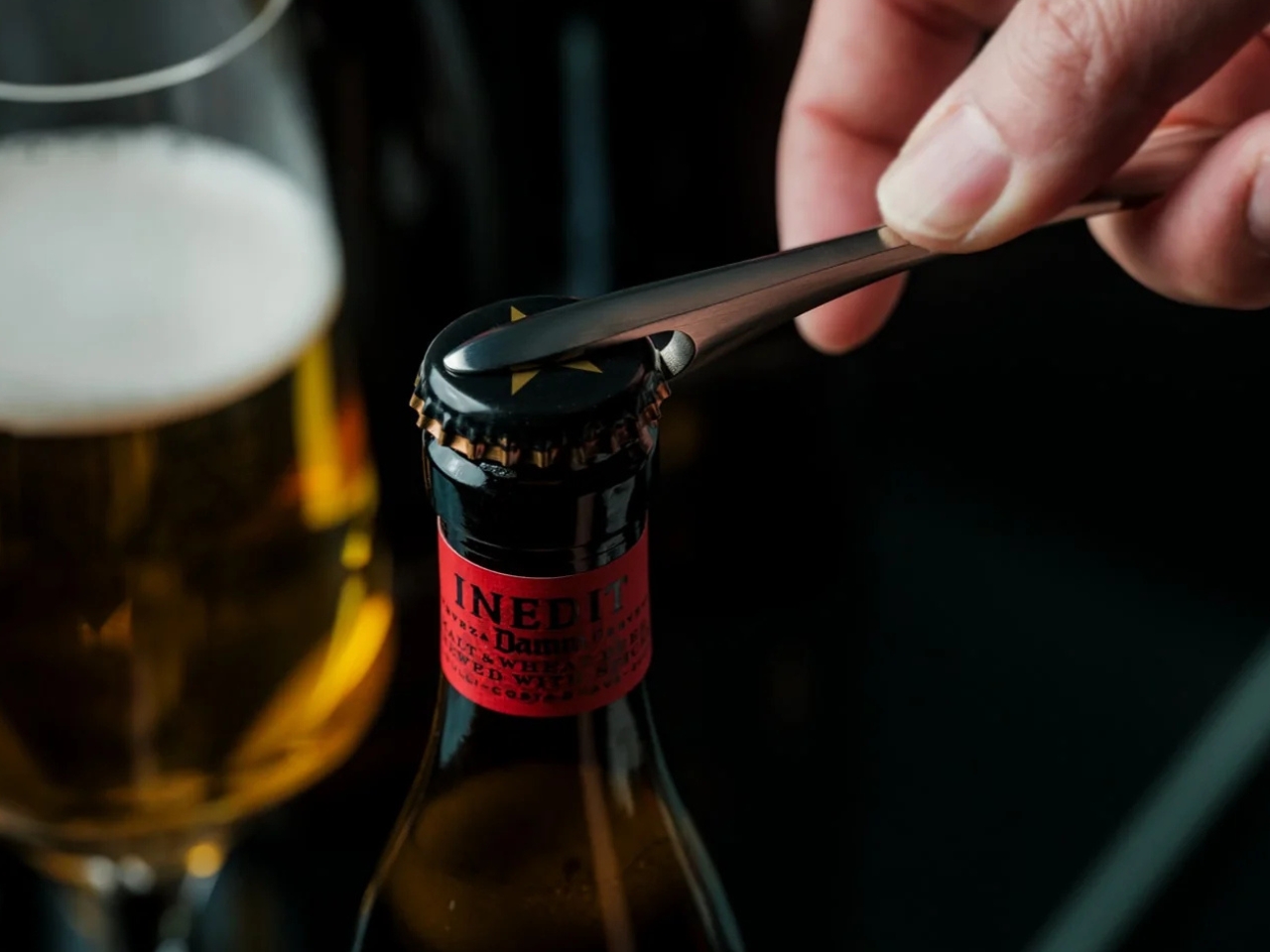
When you come home after a long, hectic day, sometimes all you want to do is sink into the couch, scroll through your phone, and crack open a cold drink. But when that “cold one” happens to be a bottle of beer or soda, things do not always go according to plan. The opener slips, the cap bends and gets mangled, or it pops off and goes skittering across the counter or under the couch. It is a minor inconvenience, sure, but it has a funny way of taking a little of the relaxation out of what should
When you come home after a long, hectic day, sometimes all you want to do is sink into the couch, scroll through your phone, and crack open a cold drink. But when that “cold one” happens to be a bottle of beer or soda, things do not always go according to plan. The opener slips, the cap bends and gets mangled, or it pops off and goes skittering across the counter or under the couch. It is a minor inconvenience, sure, but it has a funny way of taking a little of the relaxation out of what should be a simple, satisfying moment.
The First Pour Bottle Opener was built to fix exactly that. Made by Suwada, a legendary Japanese blacksmith house, it is an elegantly crafted tool designed to let you enjoy your drink in peace. Its flowing, sculptural silhouette also makes it a genuine piece of design rather than a purely functional gadget you shove in a drawer and forget about.
The bottle opener is forged from solid, corrosion-resistant stainless steel and finished with a hand-applied satin coat that gives it a soft, understated shine. Its shape isn’t flashy or complicated, and that’s exactly the point: the stripped-down, minimalist form is what makes it look right at home sitting out on your kitchen counter, bar cart, or shelf, instead of buried in a drawer with your corkscrews and other odds and ends. It’s also a quiet nod to Suwada’s roots. The company has been forging blades and metal tools in Tsubame-Sanjo, a Japanese region famous for generations of metalworking mastery, so the craftsmanship behind this little opener runs a lot deeper than its price tag might suggest.
Where the First Pour really earns its keep is in the details. It opens bottle caps cleanly without bending or denting them, so you’re not left with a crushed, jagged souvenir every time you crack open a drink. It also has a built-in magnet that catches the cap the instant it pops free, rather than letting it clatter onto the counter, roll under the fridge, or scuff up your countertop. It’s a small addition, but it’s the kind of thoughtful touch a lot of openers skip entirely, and one that makes a genuine difference every single time you use it.
For comparison, a mainstream option like the OXO Good Grips Bottle Opener retails for around $10 and gets the job done just fine, thanks to a soft, non-slip handle built for everyday comfort. It’s a reliable, no-frills tool, and there’s nothing wrong with that. But it is purely utilitarian: there’s no magnet to catch the cap, no display-worthy design, and no real story behind how it’s made. At $65, the First Pour Bottle Opener costs several times more, but you’re paying for hand-applied craftsmanship, a heritage that spans centuries, corrosion-resistant stainless steel, and a magnetic cap-catch that solves a problem most openers on the market, including OXO’s, simply don’t address. It’s less an “opener versus opener” comparison and more a question of whether you want a tool that just works, or one that works beautifully and looks the part while doing it.
I don’t usually think much about something like a bottle opener when I’m shopping for my kitchen. It’s one of those tools you buy once and only think about again when it fails you. But something like the First Pour Bottle Opener makes you reconsider how small changes, whether to design or function, can matter more than you’d expect. Using it turns a mundane, thoughtless task into a small, satisfying ritual, one you can look forward to with that end-of-day (or, let’s be honest, middle-of-the-day) cold drink. Sometimes it really is the small things that make a good moment feel a little better, and this humble little tool is proof that even the objects we take for granted deserve a second look.
Microsoft’s Project Zenith brings a ready-to-code Windows experience to developer PCs, with local AI support and preconfigured tools.
The post Microsoft Project Zenith: Windows Developer PCs Will Come Ready to Code appeared first on TechRepublic.
Circular Ring 3 Slim and Pro add non-invasive glucose insights, contactless payments, haptic alerts, and up to 12 days of claimed battery life per charge.
The post Circular Ring 3 Adds Glucose Insights: Which Model Fits Your Needs appeared first on TechRepublic.
Circular Ring 3 Slim and Pro add non-invasive glucose insights, contactless payments, haptic alerts, and up to 12 days of claimed battery life per charge.
Apple may launch a 13.8-inch OLED MacBook with touch support and an under-display camera between the MacBook Air and Pro in late 2028 or early 2029.
The post Apple Reportedly Plans 13.8-Inch Notch-Free OLED MacBook appeared first on TechRepublic.
Vara has received CE certification allowing its AI to clear some mammograms as normal without radiologist review, marking a step toward autonomous medical AI.
The post AI Can Now Clear Some Mammograms Without a Radiologist’s Review appeared first on TechRepublic.
Vara has received CE certification allowing its AI to clear some mammograms as normal without radiologist review, marking a step toward autonomous medical AI.
See what you missed in Daily Tech Insider from Aug. 31–Sept. 4.
The post Powerful AI, Cyberthreats, and Industry Upheaval Define This Week in Tech appeared first on TechRepublic.
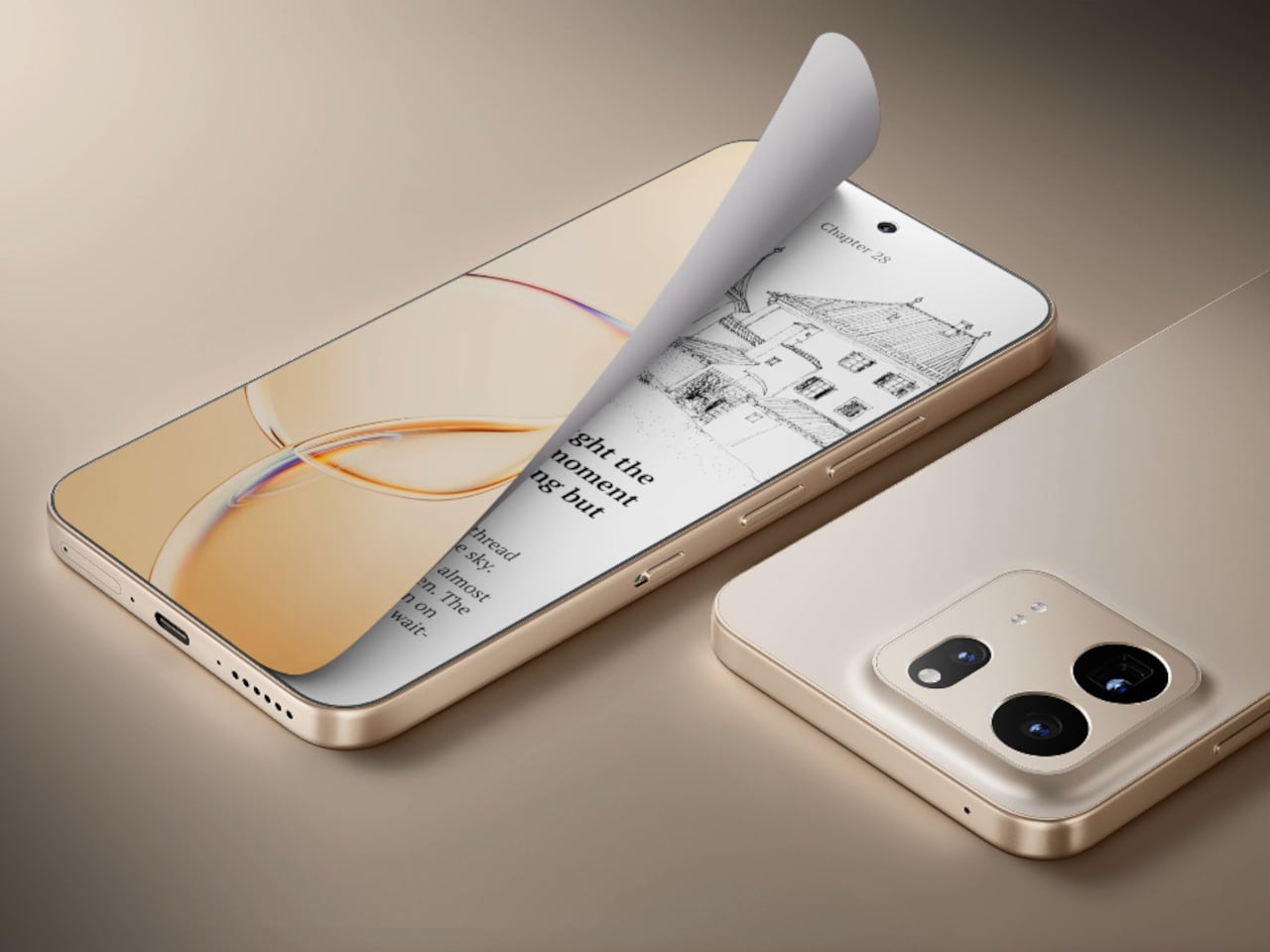
TCL’s P80 Ultra and P80 Pro prove a phone screen doesn’t have to pick one personality and stick with it. Unveiled at IFA 2026 in Berlin, both handsets fold a vivid AMOLED panel and TCL’s paper-like NXTPAPER technology into the same sheet of glass, letting the display shift moods with a flick of a switch instead of forcing a trade-off between color and comfort.
Run a finger along the frame, and you’ll find a thin slider, a small physical detail that carries plenty of weight in daily use. Slide i
TCL’s P80 Ultra and P80 Pro prove a phone screen doesn’t have to pick one personality and stick with it. Unveiled at IFA 2026 in Berlin, both handsets fold a vivid AMOLED panel and TCL’s paper-like NXTPAPER technology into the same sheet of glass, letting the display shift moods with a flick of a switch instead of forcing a trade-off between color and comfort.
Run a finger along the frame, and you’ll find a thin slider, a small physical detail that carries plenty of weight in daily use. Slide it, and the 6.83-inch panel drops its saturation, taking on a warmer, textured look that mimics a printed page. A commuter buried in a novel or someone proofreading a document late at night gets a screen that behaves like paper, without losing the sharpness underneath.
Push that same slider one notch further, and the screen drops color entirely for Max Ink Mode, a stripped layout that silences notifications except for calls and texts. It reads like a design decision as much as a software one, TCL betting people want to quiet their phone rather than mute it completely. The payoff is a battery that can stretch across roughly a week of steady reading.
That reading-first mindset carries into the software too. Both phones can convert e-books into audiobooks or podcast-style narration using on-device AI, giving Max Ink Mode a voice to lean on when eyes need a break instead of ears. It is a small addition, but it treats the slower, paper-like mode as a genuine feature rather than a bolted-on gimmick for a keynote slide.
None of that would matter if the screen looked washed out the rest of the time, so TCL leaned on a 1.5K AMOLED panel that hits 3,200 nits and covers the full DCI-P3 color range. A Nano Crystal Shield coating cuts glare enough to keep the display readable under direct sun, marking TCL’s first pairing of NXTPAPER with OLED rather than the LCD panels it used before.
The frame wrapping that screen is aluminum rather than the plastic often found at this price, giving both phones a sturdier grip without piling on bulk. TCL backs that up with an IP68 rating against dust and water, plus MIL-STD-810H certification for the inevitable drop. Buyers get to pick between Sunlit Gold, Burgundy, and Midnight Blue, three finishes that lean more toward jewelry-box color choices than typical slab-of-glass smartphone palettes.
Where the two models part ways is around the back. The P80 Ultra carries a 50-megapixel main camera next to a 50-megapixel periscope lens for 3x optical zoom, tucked into a housing shaped to avoid throwing off the phone’s balance. The P80 Pro drops the periscope for a simpler dual-camera arrangement, trading reach for a slimmer build that still shares the same main sensor and 8-megapixel ultrawide.
TCL is rolling both phones out across Europe first, with the P80 Ultra priced from €549 (around $635) and the P80 Pro starting at €429 (around $500), before a Latin American launch follows in October. A wider release is expected to reach additional regions afterward. In a category full of identical glass rectangles, these two phones actually behave differently depending on what someone needs from them that day.
Deciding between Asana and Planner? This comparison guide will help you evaluate their features, pricing, and more.
The post Microsoft Planner vs Asana: Which PM Tool Wins in 2026? appeared first on TechRepublic.
Explore the Honor Robot Phone’s 200MP gimbal camera, flagship specs, China pricing, key trade-offs, and whether this experimental phone is worth buying.
The post Honor Robot Phone Cheat Sheet: Specs, Price and Who Should Buy It appeared first on TechRepublic.
Explore the Honor Robot Phone’s 200MP gimbal camera, flagship specs, China pricing, key trade-offs, and whether this experimental phone is worth buying.
The 5.3-inch Enough Phone promises Android 17, a removable battery and microSD storage, but the compact smartphone still faces a difficult path to launch.
The post Enough Phone Brings Back the Removable Battery in a Tiny Android Body appeared first on TechRepublic.
The 5.3-inch Enough Phone promises Android 17, a removable battery and microSD storage, but the compact smartphone still faces a difficult path to launch.
Acer’s DualPlay Mini combines gaming controls with a physical keyboard, but can the 8-inch handheld replace a travel laptop for everyday work?
The post Acer DualPlay Mini: Can a Gaming Handheld Replace Your Laptop? appeared first on TechRepublic.
Abbott’s Libre Duo 10 Day continuously tracks glucose and ketones from one sensor, with a US launch planned for later in 2026.
The post Libre Duo 10 Day: The First Wearable to Track Glucose and Ketones appeared first on TechRepublic.
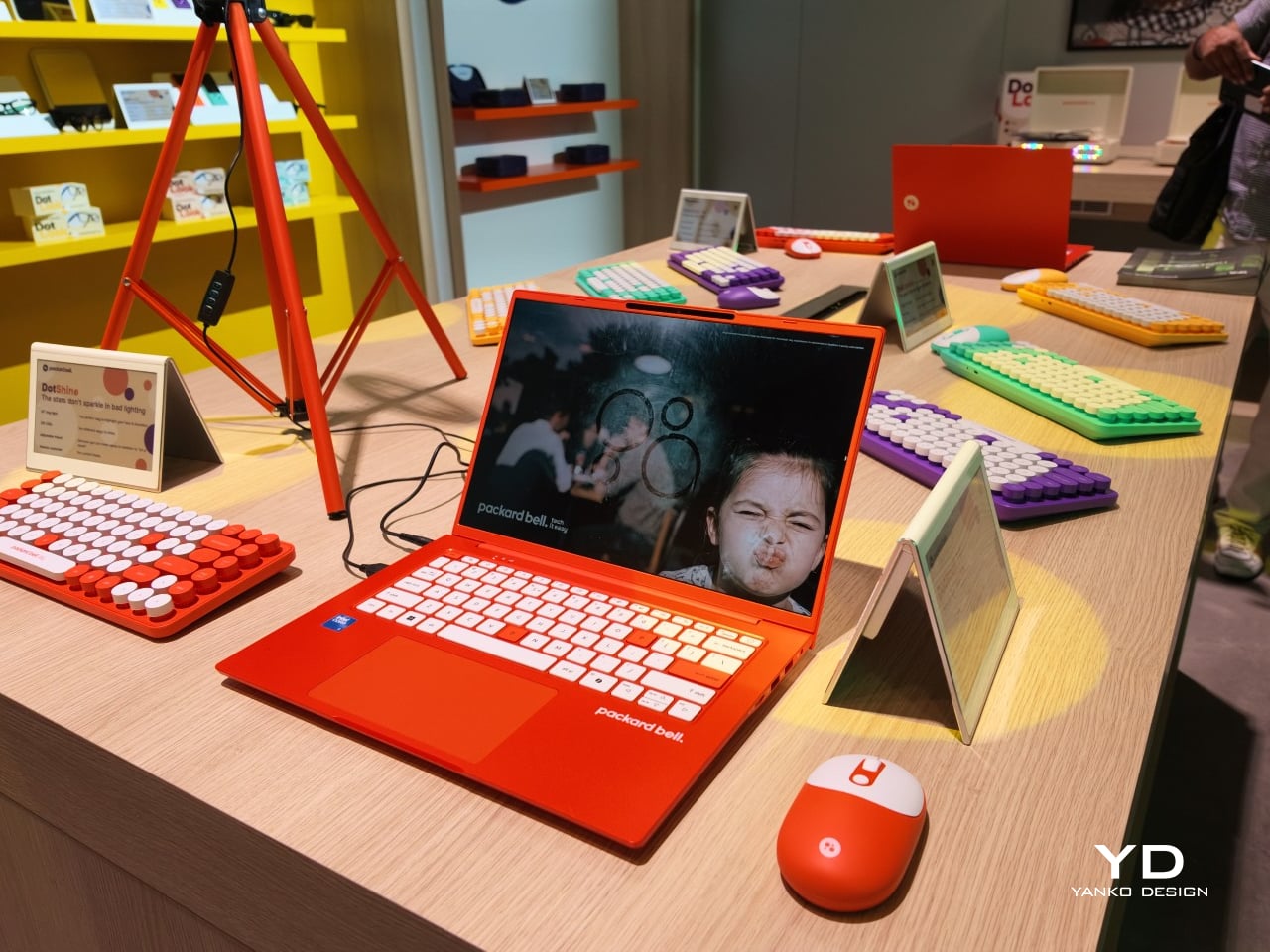
Packard Bell spent a century teaching people that new technology doesn’t have to feel intimidating, and its 100th birthday present to itself leans hard into that idea. Under Acer’s ownership, the brand relaunched at IFA 2026 with a philosophy it calls “Tech it easy,” built around a lineup that trades beige plastic and quiet corporate design for colors loud enough to notice from across a room. Four products anchor that comeback, and each one argues that everyday tech gains something when it stop
Packard Bell spent a century teaching people that new technology doesn’t have to feel intimidating, and its 100th birthday present to itself leans hard into that idea. Under Acer’s ownership, the brand relaunched at IFA 2026 with a philosophy it calls “Tech it easy,” built around a lineup that trades beige plastic and quiet corporate design for colors loud enough to notice from across a room. Four products anchor that comeback, and each one argues that everyday tech gains something when it stops taking itself so seriously.
The DotBook carries the heaviest expectations as the collection’s flagship, a 14.5-inch laptop finished in a red-orange shell bright enough to spot on a crowded coffee shop table. Weighing under 1.3 kg and measuring just 17.9mm thin, it’s built for browsing, streaming, and everyday work rather than chasing benchmark scores, backed by up to 512GB of storage and 16GB of memory running quietly under Windows 11. It’s a laptop designed to disappear into a bag, not a spec sheet debate.
Where the DotBook plays it relatively straight, the DotLoop commits fully to spectacle. Housed inside an actual briefcase shell with a 1970s silhouette, the turntable pops open to reveal a working tonearm flanked by RGB-lit speaker grilles that glow while a record spins. Two built-in 3W speakers handle sound on their own, though Bluetooth and RCA outputs let the DotLoop hand audio off to a proper stereo system whenever the moment calls for something louder.
That willingness to have fun with format extends into the DotLine, a feature phone built for anyone tired of feeding a smartphone’s constant appetite for attention. A 2.8-inch display and physical keypad keep the experience deliberately simple, while an 1800mAh battery stretches across roughly two weeks between charges, a number that sounds almost mythical next to a modern flagship’s overnight anxiety. Four color options keep it from feeling like a consolation prize.
Rounding out the focus lineup, the DotCombo bundles a keyboard and mouse into a single color-matched purchase, eliminating the usual mismatched beige-on-black desk setup that so many peripherals default to. Both pieces run on rechargeable batteries good for hundreds of charge cycles, connecting over Bluetooth or a 2.4GHz receiver without a single AA battery required. Round keycaps borrowed from typewriter design give the whole thing a tactile, almost toy-like presence on a desk.
Beyond these four, Packard Bell rounds out its centennial collection with a portable speaker (DotTune), audio glasses (DotLook), a ring light for creators (DotShine), matching headphones (DotBass), and even a countertop food steamer (Steasy), all sharing the same saturated color palette and straightforward pricing. None of them ask for much attention individually, but together they paint a lineup unwilling to blend into a beige office shelf.
Pricing stays approachable across the board, with the DotBook starting around €499 (around $578), the DotLoop at €149 (around $173), the DotLine at €69 (around $80), and the DotCombo at just €39 (around $45). Packard Bell’s return proves that a century-old brand can still find something new to say, mostly by refusing to whisper it.
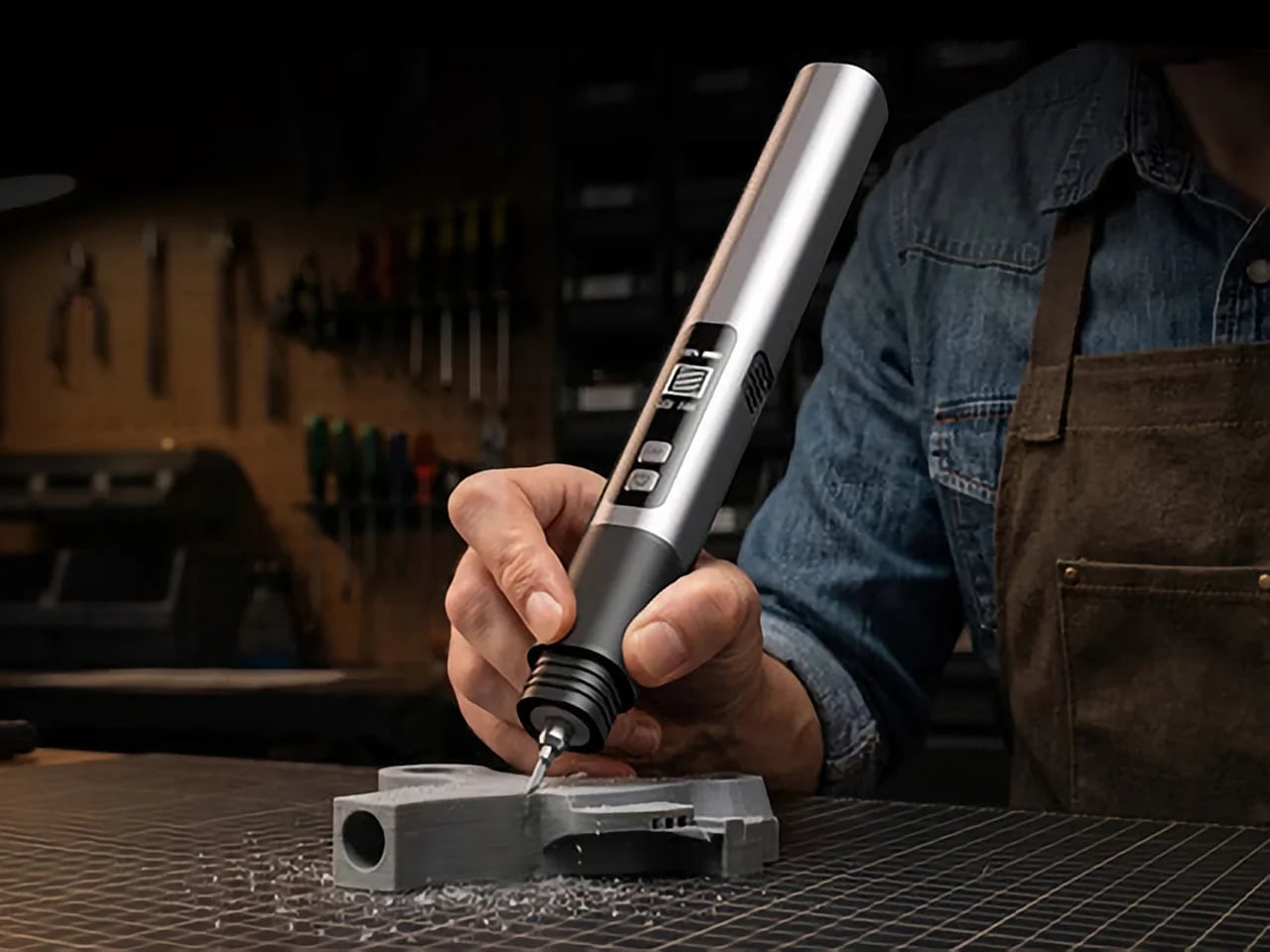
There are power tools, and then there are smart tools. A power tool gives you brute force; a smart tool gives you controlled, consistent results. Think of a simple drill that just spins versus one that manages its own torque to avoid stripping a screw. For delicate work like trimming EVA foam for a cosplay project or cleaning up support structures on a 3D print, you definitely want the smart one. The problem is, most handheld cutters are pretty basic, giving you one speed and just hoping for th
There are power tools, and then there are smart tools. A power tool gives you brute force; a smart tool gives you controlled, consistent results. Think of a simple drill that just spins versus one that manages its own torque to avoid stripping a screw. For delicate work like trimming EVA foam for a cosplay project or cleaning up support structures on a 3D print, you definitely want the smart one. The problem is, most handheld cutters are pretty basic, giving you one speed and just hoping for the best.
The SonicMax Slice 10 is aiming for that higher IQ. It’s a cordless ultrasonic cutter that senses the material you’re cutting and adjusts its own power output in real time. Slice through dense plastic and it pushes harder; trim the thin walls of a resin print and it eases back. This adaptive system, combined with cooling that prevents heat-related power drops, makes it feel like proper workshop equipment in the palm of your hand. It runs at 40kHz, delivers up to 50 watts of dynamic peak power, and does all of this without a single cable getting in your way.
Most ultrasonic cutters on the market use transducers with a mechanical quality factor, or Qm, somewhere between 150 and 250. A higher Qm means the transducer converts electrical energy into vibration more efficiently, which directly translates to less heat generated during use. SonicMax claims a Qm of over 500 for the Slice 10, and lab data backs that up with a verified measurement of 541.1. That’s roughly two to three times higher than a typical competing tool, and it’s the foundational reason the Slice 10 can sustain longer sessions without thermal drama. That single transducer decision cascades into everything else, from runtime and cut quality to how comfortable the tool actually stays in your hand.
As the blade meets resistance, the Slice 10’s Smart Material Auto-Detection reads that feedback and adjusts power output and vibration frequency without you touching anything. Cutting through a stiff chunk of EVA foam feels different from trimming the thin walls of a resin print, and the tool responds to each material accordingly. You’re not locked into a fixed setting that works okay for most things but perfectly for nothing. The system also preserves cut quality across a long session, where material resistance can shift as the blade warms. The result is consistent cuts from the first pass to the last, regardless of what you’re running the blade through.
Heat is the reason most cordless ultrasonic cutters force you to stop every five to ten minutes, and the Slice 10 attacks that problem from two directions. Corded bench tools sidestep this issue by drawing steady power and dissipating heat more easily, but you give all of that up the moment you cut the cord. The high-efficiency transducer generates less heat from the start, and the built-in active cooling fan manages whatever thermal load does build up during a session. Overheat protection kicks in automatically at 80 degrees Celsius at the motherboard level, so the tool protects itself without you having to babysit it. You only appreciate how good this is after you’ve spent a session on a cutter that kept shutting itself off on you mid-cut.
A 5000mAh 21700 lithium-ion battery powers the Slice 10, and SonicMax made it user-replaceable, which you’ll end up appreciating far more than any spec sheet number. The 21700 is a high-performance cell format found in premium flashlights and power tools, so sourcing replacements from SonicMax or compatible third-party brands should never be a problem. SonicMax’s own branded replacement cell is rated for 500 charge cycles at 80% capacity retention, a reasonable lifespan for a tool you’re actually putting to work regularly. An 18W USB-C pass-through charging system brings it from zero to full in about 70 minutes, and the tool keeps running while plugged in. Claimed runtime sits at up to four hours, and when you run low mid-project, swapping in a spare takes seconds.
Blade choice gives the Slice 10 a lot of its bench-tool personality. SonicMax offers five blade styles that let the same handheld body take on very different jobs: a Standard Utility Blade for everyday trimming, a Precision Long Blade for tighter access and more delicate reach, a Fine Chisel Blade for careful cleanup work, a Heavy Duty Chisel Blade for more aggressive material removal, and a Wide Flat Scraper Blade for broader surface work. That range matters because it turns the Slice 10 into something closer to a compact cutting system than a one-trick knife. If you’re the kind of maker who bounces between foam, plastic, supports, edges, and surface cleanup in the same afternoon, this is where the tool starts looking properly versatile.
Lift-to-Activate sensing turns the tool on when you pick it up and off when you set it down, keeping your fingers away from controls mid-session and preventing accidental activation on the bench. A small OLED display shows real-time power output and battery level, so you’re never left guessing how much runtime remains. Built-in LED lighting illuminates the cut line, which sounds like a minor detail until you’re trying to trace a clean edge on a dark-colored print at your desk at some ungodly hour. Auto-shutdown kicks in after five minutes of idle, and low-battery protection activates before the cell drops to a damaging voltage. Together, these details make the Slice 10 feel like a tool that respects your workflow rather than constantly asking you to manage it.
The Slice 10 measures 260.5mm long and 28mm across, weighing 236 grams, keeping it firmly in single-hand, pen-grip territory across long sessions. Just the Slice 10 is available for a discounted $119, and ships with 10 replaceable Standard Utility blades. Upgrade to the Maker’s Bundle for $169 and you get the Slice 10 along with 50 blades spread across the five blade profiles (standard, precision long, fine chisel, heavy duty chisel, and flat scraper) as well as a 5000mAh replacement battery. If you’re looking for versatility and pushing your prints to the max, the $50 price bump does bring a fair share of value. You can also buy extra blades and batteries as add-ons. Shipping is expected to begin mid-October 2026 with worldwide delivery available, and SonicMax has not publicly confirmed warranty terms at the time of writing.

 Connexion