Vue normale

  • ✇Yanko Design
  • Reolink’s OMVI 2i Ultra Wireless Security Camera can look in two directions at once: Hands-on at IFA 2026
    Picture a courier walking up your driveway while someone else quietly tries your side gate. A normal pan-tilt camera picks one of them and forgets the other exists. Reolink’s OMVI 2i Ultra handles it by carrying two cameras at once: a fixed 4K wide lens on top that never stops watching the full scene, and a 5MP pan-tilt ball below that spins 355 degrees to lock onto whatever the wide lens flags. Both feeds record at the same time, and you can tap anywhere on the wide view to slew the turret str
     

Reolink’s OMVI 2i Ultra Wireless Security Camera can look in two directions at once: Hands-on at IFA 2026

4 septembre 2026 à 03:00

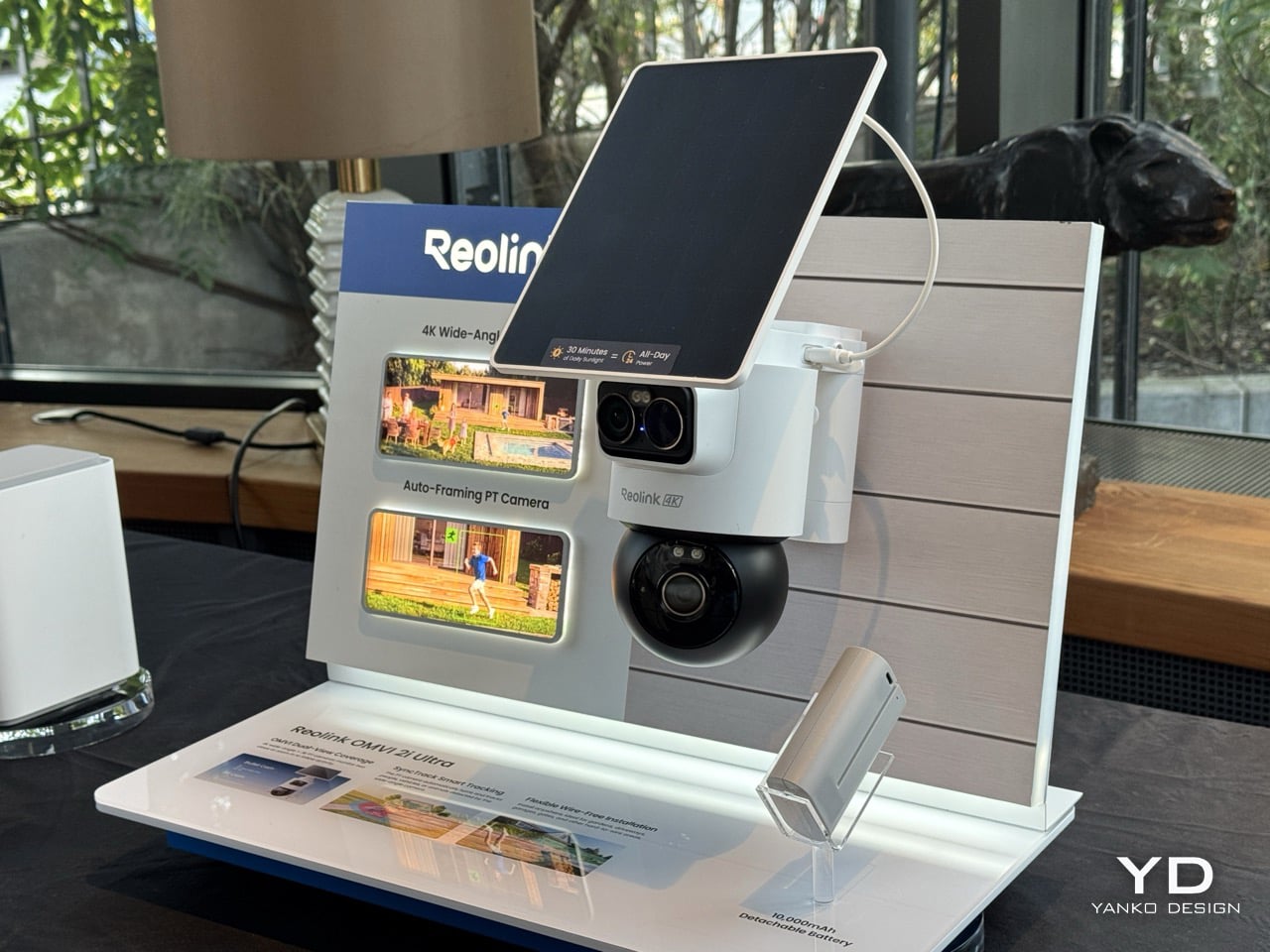
Picture a courier walking up your driveway while someone else quietly tries your side gate. A normal pan-tilt camera picks one of them and forgets the other exists. Reolink’s OMVI 2i Ultra handles it by carrying two cameras at once: a fixed 4K wide lens on top that never stops watching the full scene, and a 5MP pan-tilt ball below that spins 355 degrees to lock onto whatever the wide lens flags. Both feeds record at the same time, and you can tap anywhere on the wide view to slew the turret straight to that spot. It debuted at IFA 2026 in Berlin, ships late October, and costs between $200 and $250.

A detachable 10,000mAh pack claims six months per charge, and the 6W SolarEase panel says it needs about thirty minutes of daily sun to stay topped up, against the one to two hours Reolink quotes for rivals like Eufy’s S340 and the Tapo C675D. Those are Reolink’s own numbers, so hold them loosely until somebody leaves one on a north-facing wall through a British winter. The rest is easier to verify. Wi-Fi 6 across both bands, up to 512GB of local microSD with no subscription attached, colour night vision from twin spotlights, a siren, and IP65 sealing. At a kilogram with the bracket, it is a proper lump of hardware rather than something you tuck on a shelf.

Designer: Reolink

Pan-tilt cameras have quietly lied to buyers since the format existed. Sell someone a camera that turns to follow motion and you have also sold them a camera that stops watching everywhere else the instant it does. Reolink’s fix is embarrassingly simple once you see it. Stop asking one lens to be both the guard and the chaser, and give it a second lens that only guards. The wide 4K unit up top runs at 110 degrees horizontal and never rotates, so the scene it opened on is the scene it keeps recording no matter where the PT ball below it wanders off to. Reolink calls this SyncTrack, but the actual idea is closer to division of labour than any clever algorithm. One camera commits to context, the other commits to pursuit, and neither has to compromise for the sake of the other.

This is the third time Reolink has built this exact idea in 2026, and each version has been a slightly different argument about what matters most. The X16 landed at CES in January as a 24MP full metal flagship with 16x optical zoom, but it needs an ethernet run to function, which puts a hard ceiling on where it can live. The 3i followed in June with PoE and wired Wi-Fi options at $319.99, still asking for a nearby outlet even in its most flexible form. The 2i Ultra drops the combined resolution to 8MP plus 5MP and, in exchange, cuts the cord entirely. The trade-off is the clever bit, because being able to pop a camera on a fence or a backyard without worrying about wiring is much more convenient than haggling over megapixels.

A squared-off dual-lens head sits above a separate motorized ball, with a solar panel tilting on its own hinge overhead, and the whole assembly weighs a full kilogram once the bracket is attached. Compare that to Reolink’s own Argus MagiCam, a 108-gram cube you stick to a fridge with a magnet, and the difference in ambition is obvious at a glance. This is not a camera trying to disappear into a bookshelf. It reads more like a small piece of maritime equipment bolted under an eave, and that visible mechanical presence is doing some of the deterrence work before the siren ever gets involved.

That dual-lens design is quite literally baked into the name. OMVI reads like omni-vision, a camera built to watch in every direction at once instead of picking a lane. Arlo’s Ultra flagship still wants a wall plug or a proprietary base station to unlock its best tricks, and Nest’s outdoor cameras have quietly stayed wired-first for years now, which makes the 2i Ultra’s fully wire-free build feel like it is actually catching up to how people install things rather than how manufacturers wish they would. No drilled conduit, no hub tucked in a closet, just a battery, a solar panel, and a spot on the fence you actually wanted the camera to go.

That is the real flex against the flagships twice its price. You are not paying for a wall socket you have to plan your whole install around, and you are not paying for a bulky base station eating an outlet indoors either. You get two lenses doing genuinely different jobs, a battery that outlasts most of the category on paper, and a name that finally means something instead of just sounding techy. At $200 to $250, the OMVI 2i Ultra is the version of omni-vision security that shows up ready to mount anywhere the moment you take it out of the box.

The post Reolink’s OMVI 2i Ultra Wireless Security Camera can look in two directions at once: Hands-on at IFA 2026 first appeared on Yanko Design.

  • ✇Yanko Design
  • Cloud AI Means Someone Else Has Your Data, MINISFORUM Fixes That
    Running a serious AI model at home usually means renting someone else’s cloud server and hoping your data stays private along the way. MINISFORUM built its newest pairing to remove that trade-off entirely. The AI Agent NAS N5 MAX-P495 and AI Mini Workstation MS-S1 MAX-P495 combine for up to 131 TOPS of AI compute performance, 192GB of memory at 8533 MT/s, and up to 160GB of graphics memory, enough headroom to keep the heavy lifting on a desk instead of in a data center. The N5 MAX-P495 takes th
     

Cloud AI Means Someone Else Has Your Data, MINISFORUM Fixes That

Par : JC Torres
4 septembre 2026 à 00:00

Running a serious AI model at home usually means renting someone else’s cloud server and hoping your data stays private along the way. MINISFORUM built its newest pairing to remove that trade-off entirely. The AI Agent NAS N5 MAX-P495 and AI Mini Workstation MS-S1 MAX-P495 combine for up to 131 TOPS of AI compute performance, 192GB of memory at 8533 MT/s, and up to 160GB of graphics memory, enough headroom to keep the heavy lifting on a desk instead of in a data center.

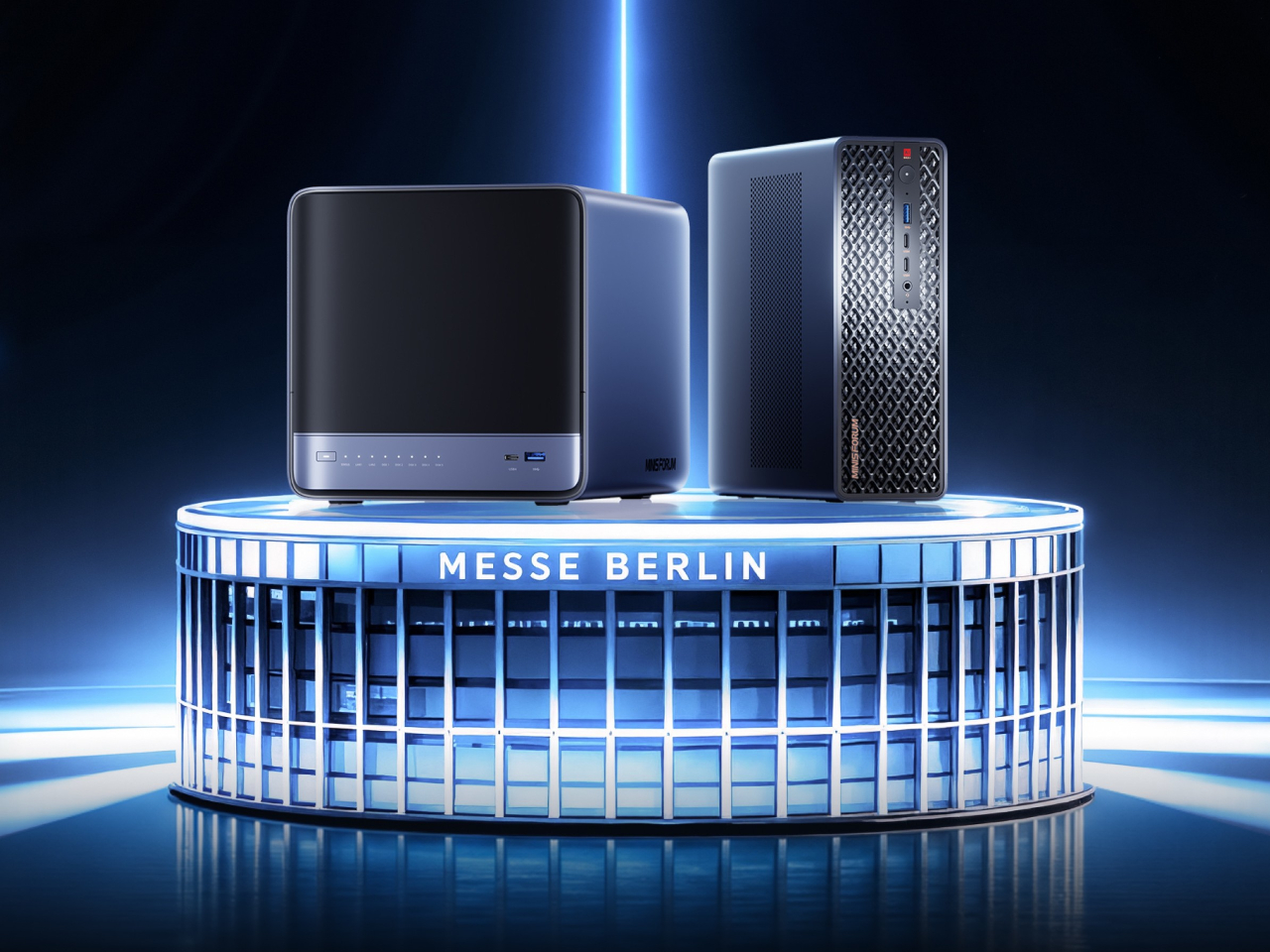
The N5 MAX-P495 takes the shape of a compact black cube, but what it holds inside matters more than how it looks sitting on a shelf. It combines powerful AI computing with up to 200TB of local storage, enabling users to store, manage, and process large volumes of data within a single AI platform. That capacity turns a spare corner of an office into a private archive large enough to hold years of project files, footage, or research without ever touching a third-party server.

Designer: MINISFORUM

Storage alone doesn’t make an AI system useful, so MINISFORUM built the N5 to run the AI itself. From RAG knowledge bases and AI models to embeddings, databases, and AI agents such as OpenClaw and Hermes, N5 MAX-P495 keeps data and AI workloads local, enabling continuous and private AI operations. A small business could lean on that setup to run its own customer-support agent without routing conversations through an outside company’s servers.

That local-first approach extends to how the N5 fits into a larger setup. Designed to work alongside AI computing devices, N5 MAX-P495 serves as a centralized backend for data, models, knowledge, and long-running AI workloads, bringing storage and computing together at the edge. It’s less a standalone gadget and more a quiet engine room, built to keep working in the background while something faster handles the parts people actually interact with.

That faster half of the pairing is the MS-S1 MAX-P495, a compact tower wrapped in a ventilated, diamond-textured front panel that looks more like a piece of desk sculpture than a workstation. It delivers powerful local AI computing for demanding model inference, AI development, and computationally intensive workloads, built for intensive local AI tasks, engineering, and workflows in an ultra-compact footprint. Developers get workstation-class muscle without giving up desk space to a full tower case.

Speed matters just as much as raw power for certain jobs, and MINISFORUM designed the MS-S1 with that in mind. Designed for low-latency AI workloads, MS-S1 MAX-P495 enables responsive local inference for AI agents, computer vision, generative AI, and other real-time applications. A security camera system or a live creative tool built on generative AI benefits directly from that kind of immediate response instead of waiting on a round trip to the cloud.

Connectivity rounds out the workstation’s role in a larger setup. With extensive connectivity and expansion capabilities, MS-S1 MAX-P495 serves as a powerful AI compute frontend, supporting models, applications, and connected devices across flexible edge AI environments. That flexibility means the same box can sit at the center of a home lab or plug into a small studio’s existing hardware without forcing a rebuild.

Paired together, the two devices split the work the way a good team would. The MS-S1 MAX-P495 and N5 MAX-P495 form a complete edge AI computing system, delivering high-performance AI compute at the frontend while integrating compute, massive storage, data, and AI knowledge at the backend, providing a powerful foundation for real-time inference, persistent AI workloads, and scalable local AI applications. It’s a compact answer to a question more households and small teams are starting to ask: whether AI still needs to live somewhere else at all.

The post Cloud AI Means Someone Else Has Your Data, MINISFORUM Fixes That first appeared on Yanko Design.

  • ✇Yanko Design
  • Plaud One Hands-On at IFA 2026: AI Earbuds That Transcribe Meetings, Then Draft Emails And Decks For You
    For three years, Plaud made very good tape recorders with a PhD. You pressed a button, it captured a meeting, and mere minutes later a summary showed up. The Plaud One, launched at IFA 2026 for €249.90, reverses that arrow. Its charging case now holds four beamforming mics, a speaker, an agent button and a built in eSIM, so it stays online without a phone nearby. Hold the agent button and the AI talks back, asks what you meant, then builds the deck or drafts the email while you get on with your
     

Plaud One Hands-On at IFA 2026: AI Earbuds That Transcribe Meetings, Then Draft Emails And Decks For You

3 septembre 2026 à 20:28

For three years, Plaud made very good tape recorders with a PhD. You pressed a button, it captured a meeting, and mere minutes later a summary showed up. The Plaud One, launched at IFA 2026 for €249.90, reverses that arrow. Its charging case now holds four beamforming mics, a speaker, an agent button and a built in eSIM, so it stays online without a phone nearby. Hold the agent button and the AI talks back, asks what you meant, then builds the deck or drafts the email while you get on with your day.

That flip from recording to doing needed hardware nobody had built yet. Not a pendant, not a pin, not another app crammed onto a phone you were already staring at. Plaud built a palm sized aluminum box with a fluted lid that looks like a Rimowa suitcase went through a shrink ray, sitting on a table, listening across a room, and talking back like a colleague who never needs coffee. The Explorer Edition opens for pre order now, capped at 2,000 units worldwide, with deliveries landing in Q4. A public version follows in 2027, once Plaud has watched two thousand early adopters put the thing through its paces.

Designer: Plaud

The original Plaud Note clipped onto a phone and did one job, listen to a meeting and hand back a transcript once it ended. The Note Pro added a screen and better mics. The NotePin S shrank the format onto a lanyard clip. Every generation stayed reactive by design, a smart recorder waiting for you to press stop before it did anything useful. That business built Plaud’s 2.5 million user base and reportedly crossed $100 million in annual software revenue by June, which is exactly the kind of runway that lets a company gamble on reinventing its own hardware category from scratch.

Vertical fluting runs down the case’s aluminum lid, the same visual trick Rimowa has stamped into cabin luggage since the 1950s, giving a 62 gram object a sense of density it has no right to carry. Flip it open and the earbuds sit half in ear, silver capped, in a tray that reads closer to a jewelry box than a charging dock. A speaker grille, a record button and a separate agent button line the case’s edge, the three controls that turn a charger into a device you actually talk to. None of it apes a phone. It reads like furniture for a desk, not gear for a pocket.

Earlier Plaud devices leaned on your phone for both processing and connectivity, so the intelligence always sat one hop away from the microphone. Plaud One’s case carries its own 4G LTE connection through a built in eSIM, closing that gap entirely. Capture, transcription and agent response now run in one box, independent of any other screen in your life. Leave your phone in a bag, walk into a cafe, and the case still records the table’s conversation, answers a question out loud through its speaker, or fires off a follow up email on command. Every pendant and pin that came before this quietly depended on a phone doing the real work behind the scenes. Plaud One is the first in the category that genuinely does not.

Plaud Agent drafts a follow up email the moment a client call ends. Feed it a meeting and it builds a slide deck while you sit through your next call, then drops the finished file straight into Notion with zero copy pasting. The platform connects to Gmail, Google Workspace, Microsoft Teams, Slack and Notion today, with more integrations promised as the software matures. Set it loose on a standing task, a monthly competitor scan for instance, and it runs quietly in the background, waiting with a finished report the next time you check. This is the actual bet Plaud is making, that an assistant worth having has to act, not just remember.

Pre orders for the Explorer Edition are open now at €249.90, with the first 2,000 units shipping in Q4. Buyers get $200 in Plaud Credits toward the heavier agent features on top of a starter transcription plan, so the price buys a running start on the software as much as the hardware. Calling this an Explorer Edition rather than a finished release is the honest move, an open beta wearing genuinely sharp industrial design. Plaud spent three years building the best possible way to listen. Plaud One is its first real attempt at building something worth talking to.

The post Plaud One Hands-On at IFA 2026: AI Earbuds That Transcribe Meetings, Then Draft Emails And Decks For You first appeared on Yanko Design.

Pixel’s New AI Feature Can Now Explain What’s Draining Your Phone

4 septembre 2026 à 07:46

Google is rolling out AI-powered Battery usage summaries to Pixel 10 and Pixel 11 phones to help users understand what may be draining battery life.

The post Pixel’s New AI Feature Can Now Explain What’s Draining Your Phone appeared first on TechRepublic.

OpenAI Launches GPT-6 Astra as Brockman Says the ‘AGI Era’ Has Arrived

4 septembre 2026 à 06:56

OpenAI launched GPT-6 Astra with advanced computer-use capabilities as Greg Brockman declared the “AGI era” has arrived, though major questions remain.

The post OpenAI Launches GPT-6 Astra as Brockman Says the ‘AGI Era’ Has Arrived appeared first on TechRepublic.

Anthropic Wins Back Trump Administration’s Trust After Pentagon Fight

3 septembre 2026 à 17:53

Anthropic is rebuilding ties with the Trump administration after its Pentagon fight, potentially reopening the door to federal AI contracts.

The post Anthropic Wins Back Trump Administration’s Trust After Pentagon Fight appeared first on TechRepublic.

Google Gemini Can Now Decide Which Parts of a Video Matter

3 septembre 2026 à 17:44

Google gives Gemini agentic video understanding, cutting token use and analysis costs by selectively inspecting the most relevant parts of videos.

The post Google Gemini Can Now Decide Which Parts of a Video Matter appeared first on TechRepublic.

OpenAI Gets US Government Backing in Major AI Copyright Fight

3 septembre 2026 à 15:01

The US government backs OpenAI and Microsoft in a major copyright fight, arguing AI training is fair use and important to national security.

The post OpenAI Gets US Government Backing in Major AI Copyright Fight appeared first on TechRepublic.

China’s AI Crackdown Removes 5.6 Million Pieces of Content

3 septembre 2026 à 14:54

China removed 5.6 million pieces of AI-related content as regulators tighten rules for AI models, online platforms, labeling and app stores.

The post China’s AI Crackdown Removes 5.6 Million Pieces of Content appeared first on TechRepublic.

Singapore, Thailand Expand AI and Digital Cooperation With New Regional Push

3 septembre 2026 à 11:41

Singapore and Thailand are deepening AI, digital trade, and payments cooperation as both countries prepare to shape ASEAN’s next phase of digital integration.

The post Singapore, Thailand Expand AI and Digital Cooperation With New Regional Push appeared first on TechRepublic.

Atlassian Will Meter Rovo and Automation Dec. 3: What Admins Need to Budget

3 septembre 2026 à 09:09

Atlassian’s Dec. 3 Rovo and Automation metering changes introduce new usage-based costs, limits, and workflow risks for enterprise IT teams.

The post Atlassian Will Meter Rovo and Automation Dec. 3: What Admins Need to Budget appeared first on TechRepublic.

Samsung’s IFA 2026 Pitch: Bringing AI Across TVs, Appliances and Galaxy Devices

3 septembre 2026 à 07:41

Samsung is showcasing an AI ecosystem at IFA 2026 that connects TVs, appliances, Galaxy devices and wearables across the smart home.

The post Samsung’s IFA 2026 Pitch: Bringing AI Across TVs, Appliances and Galaxy Devices appeared first on TechRepublic.

Microsoft executive vice president bemoans employees sending him "AI slop," saying "This is a doom loop." — Maybe take some responsibility? 🤔

Hey Copilot, what's the definition of ironic?

I'm not sure Microsoft Copilot would feed me this post from LinkedIn and Office EVP Ryan Roslansky, but maybe it should.

Earlier in the year, Microsoft CEO Satya Nadella bemoaned the term "AI slop" and hoped 2026 would be the year everyone started lying down and accepting AI as inevitable. So far, that hasn't happened. And what's worse, Microsoft's own senior employees seem increasingly annoyed by the tech.

DEAL: Get Surfshark VPN 86% OFF with Windows Central 🦈

We've seen Xbox CEO Asha Sharma repeatedly use the phrase "AI slop" to describe subpar experiences like Microsoft's ill-fated "gaming Copilot," and LinkedIn itself deleted its "enhance with AI" post button, and replaced it with an "AI slop" report feature to try to boost the "quality" of its miserable, self-aggrandizing content algorithm.

Speaking of the hellscape that is LinkedIn, former CEO now Microsoft EVP Ryan Roslansky recently dropped this musing that I found to be particularly comical given what Microsoft has unleashed on the world.

Microsoft EVP Ryan Roslansky on

Ryan Roslansky bemoaning "AI slop" in the workplace, liked by Microsoft President Brad Smith. (Image credit: Ryan Roslansky on LinkedIn)

Roslansky lamented, "AI slop isn't happening just on social networks ... it's happening in the day to day of work. Someone sent me what was clearly an AI generated doc. I read it, realized it was AI, had my AI summarize it, and ended up with nothing that brought new thinking to the idea ... This is a doom loop."

The phrase "no shit" comes to mind. Roslansky is speaking to a workplace irritation, but unwittingly touched on one of the AI industry's most self-destructive problems. One of the hilarious consequences of Microsoft Copilot, ChatGPT, Gemini, and other content-theft platforms is that they're trained entirely stolen human-made content. AI data sets post 2023 are doomed to rely on cannibalizing AI-generated content, creating an incestuous data "doom loop" Roslansky spoke of here. Researchers have described this as "model collapse" previously, as human content creators get put out of business by Google's AI summary box. Reddit is reportedly thinking of cancelling its AI training contracts with Google, after realizing that Google's content theft engines are killing Reddit's entire business. Reddit recently blocked ChatGPT from accessing its content, as the platform seeks to insulate its business from theft.

"If we're not careful, we'll end up with a very expensive way to avoid writing and reading in an ocean of sameness, genericness ... Let's not do that." Roslansky pleads, "Let's go another way where AI helps us to do things, to learn things, to create things, but in ways that we enhance and advance with our distinct perspectives and unique experiences!"

Lol. Lmao even.

The post was liked by Microsoft President Brad Smith, who I've noticed has been desperately trying to whitewash Microsoft's data center expansionism across his own LinkedIn recently. Microsoft, unlike other big tech firms, seems far more concerned with how badly AI is battering its public image. Microsoft's data centers are increasingly dealing with protests across the world. The destruction of local communities is uniting regular folk across the political spectrum in ways we haven't seen in years.

Microsoft unleashed this mess. Perhaps take some responsibility?

Microslop logo on a Microsoft Azure data center

I've been covering Microsoft for over a decade, and I can't remember a time where it was more hated. (Image credit: Photo via Lexi Critchett/Bloomberg via Getty Images. Microslop logo by u/SaucyStrawberries, edit by Jez Corden (sorry). )

Xbox CEO Asha Sharma has been instrumental in turning around Microsoft's gaming brand in recent months, boosting perception of the platform with a flurry of consumer-friendly features and promises. It doesn't seem like other Microsoft departments got the memo, yet.

Linux adoption among consumers is gradually increasing, as gamers, tech enthusiasts, and even nation states seek to escape Microsoft's poor handling of Windows. AI buttons everywhere, unwanted bloatware, poor performance, and a collapse in trust has made Windows look more vulnerable than ever — and competitors are lining up to take advantage.

Microsoft is the undisputed monarch of AI slop.

Microsoft is the undisputed monarch of AI slop. Watching its execs cry about the technology they themselves foisted on the world is a master class in obliviousness and responsibility avoidance. Microsoft isn't fooling anyone, except perhaps themselves, and it's miserably sad.

DEAL: Get Surfshark VPN 86% OFF with Windows Central 🦈

I got into this business inspired by the innovations Microsoft was exploring a decade ago. Microsoft led cloud convenience and digital platform synergy, its hardware innovations across Surface even gave Apple pause. But it has become consumed by AI psychosis in recent years, and while shareholders are undoubtedly happy, consumers in Microsoft's "legacy" business are looking for the exit.

Whether it's data centers destroying local communities, AI bull cluttering up Windows, or Microsoft's harvesting of tech components blowing up consumer prices ... perhaps Microsoft's senior execs need to read the room, sit down, and take some responsibility for the chaos they've unleashed on the world.

A crazy idea — that didn't require any input from AI, by the way.

Click to join us on r/WindowsCentral

Join us on Reddit at r/WindowsCentral to share your insights and discuss our latest news, reviews, and more.

Ryan Roslansky with Microslop in the background

Ryan Roslansky with Microslop in the background

  • ✇Yanko Design
  • Miele’s G8 Dishwasher Photographs Your Dirty Dishes Before Auto-Selecting The Cycle: Hands-on at IFA 2026
    Miele’s new G8 Diamond snaps a photo of your dirty dishes before it washes them. The moment the door swings toward shut, a light inside blinks on, a camera grabs one frame, the light dies, and the AutoVision system studies what it caught. If it sees a bottle, it calls up BottleClean and drives the spray harder. If it sees a pot, the cleaning intensity climbs. If it sees plastics, it runs the new hot air drying harder, because plastic containers are famously terrible at drying themselves. Miele
     

Miele’s G8 Dishwasher Photographs Your Dirty Dishes Before Auto-Selecting The Cycle: Hands-on at IFA 2026

2 septembre 2026 à 18:30

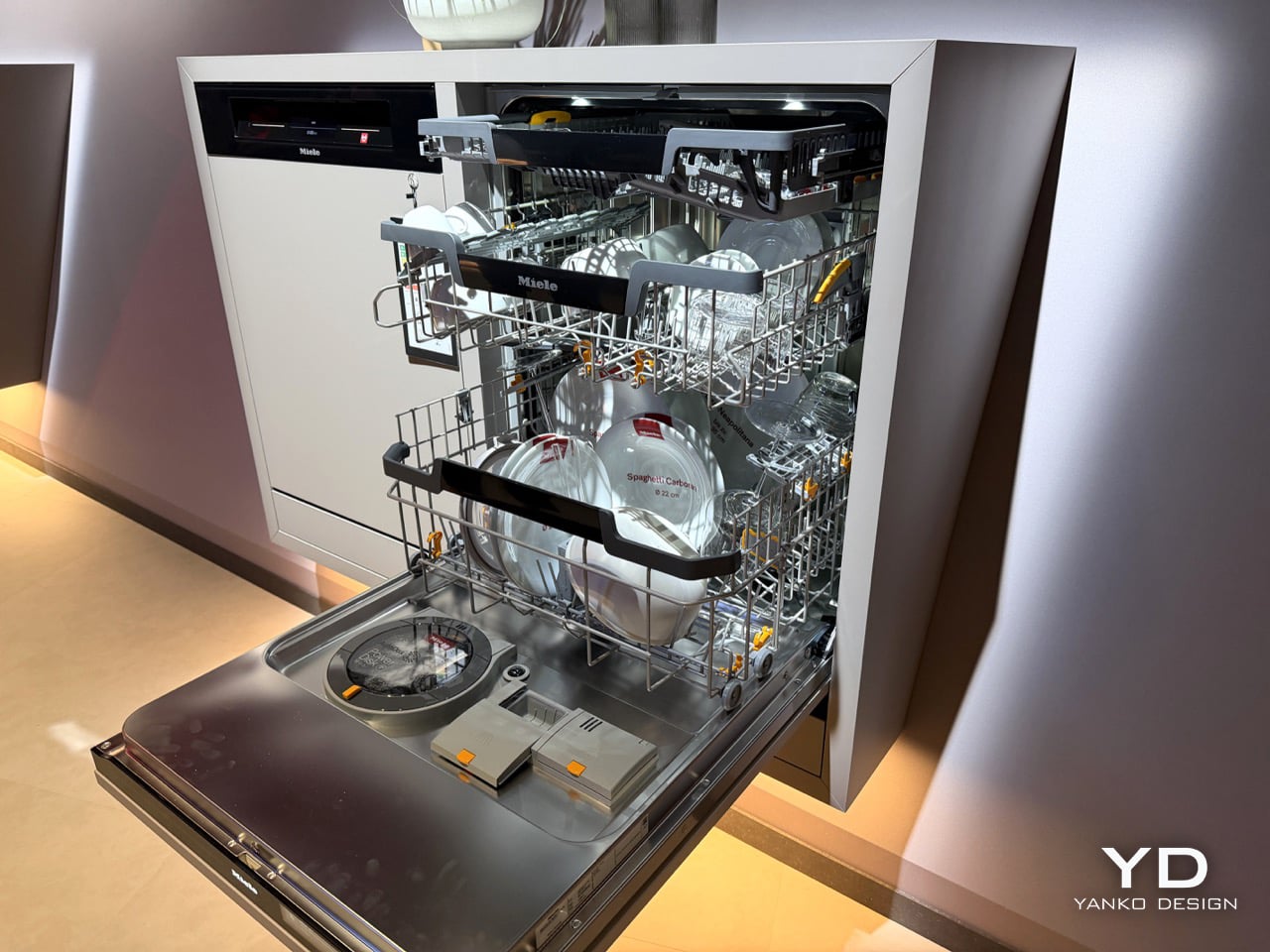
Miele’s new G8 Diamond snaps a photo of your dirty dishes before it washes them. The moment the door swings toward shut, a light inside blinks on, a camera grabs one frame, the light dies, and the AutoVision system studies what it caught. If it sees a bottle, it calls up BottleClean and drives the spray harder. If it sees a pot, the cleaning intensity climbs. If it sees plastics, it runs the new hot air drying harder, because plastic containers are famously terrible at drying themselves. Miele showed it for the first time at IFA 2026 in Berlin, and it lands in Germany, Austria and Switzerland in April 2027.

A camera in a dishwasher makes the headline, but the memory is what makes the design. The G8 holds onto that bottle it clocked at breakfast, so stacking dinner plates on top of it by eight in the evening changes nothing. Layer in AutoDos and its PowerDisk granulate, measuring out its own detergent since 2018, then set an app rule that says wait until 80 percent full and never before 10pm, and the machine stops consulting you altogether. Miele has spent decades selling dishwashers on the promise that they scrub so you do not have to. This one wants to think so you do not have to.

Designer: Miele

Here’s the part that actually impressed me. AutoVision doesn’t run a video feed you can scrub through in the app. It fires once, right as the door clicks shut, and the machine works from that single image for the entire cycle. Load a wine bottle at breakfast, stack it under a mountain of lunch plates by evening, and the G8 still treats it as a bottle, because it saw it once and that was enough. The only real caveat came from Miele’s own team at IFA: keep bottles roughly central and pots in the lower basket, since the spray arm still struggles to reach the far corners. Vision only helps if the water can follow it there.

What makes this genuinely new isn’t the word AI, which every appliance brand at IFA 2026 was throwing around like confetti. Most of those claims are turbidity sensors, the kind that read how murky the wash water has become and adjust accordingly. LG’s SenseClean works that way, and Samsung has filed similarly around soil detection. A turbidity sensor knows the water is dirty. It has no idea why. Miele’s camera identifies the actual object sitting in the rack, a considerably harder computer vision problem, and one that both LG and Bosch have patented around for years without shipping a consumer dishwasher built on it. Miele is putting an object-recognition camera inside a box you can buy next spring, not just inside a patent filing.

Around that camera sits a decade of quieter automation finally clicking into place. AutoDos, with its PowerDisk granulate, has been dosing detergent on its own since 2018, and Miele still claims nobody else in the category offers true automatic dispensing. ExcellentDry adds a hot air system with three fixed levels, chosen once and then applied forever, aimed squarely at the plastic containers that usually come out of a cycle still damp at the base. The cutlery drawer becomes a genuine third tier, one side droppable for coffee cups, and a new touch display replaces the old dial logic. Set the app to run only past 10pm and only above 80 percent full, or tie it to your solar output, and the dishwasher stops asking permission for anything.

None of this works if you don’t trust the camera’s judgment, and Miele knows it. “Intelligence can be programmed. Trust has to be earned,” said Dr. Axel Kniehl, the company’s Executive Director of Marketing and Sales, at the IFA press conference, and it’s the one line from the whole reveal that actually admits the stakes. AutoVision only functions if enabled by the user, according to Miele’s own release, which suggests it ships switched off by default. Fair enough. Handing a machine the authority to decide how hard to scrub your grandmother’s pans is a bigger ask than letting it dose its own detergent, and Miele seems to know it needs to earn that permission slowly rather than assume it.

The G8 Diamond won’t reach a single kitchen before April 2027, and even then only in Germany, Austria and Switzerland, so everything here is still a promise rather than a lived-in product. But the promise is the interesting part. For a century, appliance makers competed on how much physical labor they could remove. Miele is the first one at this scale betting the next fight is over who you trust to make the fifty tiny decisions labor never touched in the first place.

The post Miele’s G8 Dishwasher Photographs Your Dirty Dishes Before Auto-Selecting The Cycle: Hands-on at IFA 2026 first appeared on Yanko Design.

South Korea Proposes $1.9B for Chips in Record 2027 Budget

2 septembre 2026 à 16:40

South Korea proposes $1.9 billion for semiconductors in its record 2027 budget, alongside major spending on power, water and logistics infrastructure.

The post South Korea Proposes $1.9B for Chips in Record 2027 Budget appeared first on TechRepublic.

Meta Launches Muse Voice Transcribe for Real-Time Multilingual Speech

2 septembre 2026 à 16:36

Meta’s Muse Voice Transcribe delivers real-time multilingual speech recognition, speaker labeling and adaptive latency for developers and Mac users.

The post Meta Launches Muse Voice Transcribe for Real-Time Multilingual Speech appeared first on TechRepublic.

Google Pics Rolls Out to Workspace With Default-On AI Image Tools

2 septembre 2026 à 12:50

Google Pics is rolling out to eligible Workspace customers with AI image generation, editing tools, and admin controls enabled by default.

The post Google Pics Rolls Out to Workspace With Default-On AI Image Tools appeared first on TechRepublic.

OpenAI Backs California Bill Requiring Age Checks and Safety Audits for Teen AI

2 septembre 2026 à 12:46

OpenAI is backing California SB 1119, which would require age checks, safety protections, and audits for AI companion chatbots used by minors.

The post OpenAI Backs California Bill Requiring Age Checks and Safety Audits for Teen AI appeared first on TechRepublic.

Dyson Put a Camera in a $499 Toothbrush: Here’s What It Does

2 septembre 2026 à 12:36

Dyson’s CameraJet toothbrush uses a built-in camera and machine learning to detect gaps between teeth and automatically target them during cleaning.

The post Dyson Put a Camera in a $499 Toothbrush: Here’s What It Does appeared first on TechRepublic.

Five Singapore Firms Account for 98% of Southeast Asia Data Center Funding as Build-Out Spreads

2 septembre 2026 à 11:56

Five Singapore firms account for 98% of Southeast Asia’s data-center equity funding as new cloud and AI capacity spreads across the region.

The post Five Singapore Firms Account for 98% of Southeast Asia Data Center Funding as Build-Out Spreads appeared first on TechRepublic.

❌