Vue normale

Windows 11 File Explorer Is Bringing Back Easier File Previews With “Preview Anyway”

Par : Nisha
24 août 2026 à 10:51
Microsoft is making a useful change to Windows 11 File Explorer that should make it much easier to preview downloaded files without undoing the security protections introduced last year. A new “Preview anyway” button is being tested for the Preview pane. It will let users view a trusted downloaded file after File Explorer warns that […]

Uber Fined $966M: The High Cost of Automation Without Oversight

25 août 2026 à 12:00

Uber faces a $966 million Dutch privacy fine over automated driver suspensions, raising questions about GDPR compliance and meaningful human oversight.

The post Uber Fined $966M: The High Cost of Automation Without Oversight appeared first on TechRepublic.

Samsung One UI 9 Puts Warranty Checks and Repair Support Right in Settings

25 août 2026 à 08:32

Samsung’s One UI 9 puts warranty checks, diagnostics, repair estimates, and service booking in Settings on the latest Galaxy foldables.

The post Samsung One UI 9 Puts Warranty Checks and Repair Support Right in Settings appeared first on TechRepublic.

AI Security Test Targeted Real Companies After a Naming Error

24 août 2026 à 15:38

An AI security test reached real company systems after a naming error, revealing why organizations need stronger access controls for autonomous AI agents.

The post AI Security Test Targeted Real Companies After a Naming Error appeared first on TechRepublic.

Microsoft Exchange Server SE CU1 Delayed Amid AI-Assisted Security Reviews

24 août 2026 à 10:34

Microsoft has yet to set a firm Exchange Server SE CU1 release date as engineers work through AI-assisted security findings and ongoing patch releases.

The post Microsoft Exchange Server SE CU1 Delayed Amid AI-Assisted Security Reviews appeared first on TechRepublic.

  • ✇Korben
  • Amazon détruit des livres pour nourrir ses IA
    Si comme moi, vous aimez les livres, ce que je vais vous raconter aujourd'hui va vous rendre fous ! Hier, 404 Media a publié une enquête qui suit le trajet d'un AirTag. Mais pas n'importe lequel... C'est un AirTag qu'un libraire a glissé, à la demande de la rédaction, dans un livre parti au sein d'une commande d'un millier d'ouvrages. Et son terminus va vous surprendre (ou pas, parce qu'on commence à les connaitre les lascars...) : un entrepôt Amazon de Las Vegas. Ce qu'on apprends dans l'articl
     

Amazon détruit des livres pour nourrir ses IA

18 août 2026 à 04:28

Si comme moi, vous aimez les livres, ce que je vais vous raconter aujourd'hui va vous rendre fous ! Hier, 404 Media a publié une enquête qui suit le trajet d'un AirTag. Mais pas n'importe lequel... C'est un AirTag qu'un libraire a glissé, à la demande de la rédaction, dans un livre parti au sein d'une commande d'un millier d'ouvrages. Et son terminus va vous surprendre (ou pas, parce qu'on commence à les connaitre les lascars...) : un entrepôt Amazon de Las Vegas.

Ce qu'on apprends dans l'article de 404 Media c'est qu'en fait, là-bas, une équipe interne baptisée VGT3 reçoit des tonnes de cargaisons de livres, en découpe les reliures et les passe au scanner afin d'en numériser les pages.

Pour la blague, le logo de cette équipe est un tyrannosaure gueule ouverte qui semble dévorer un livre. Ironique n'est-ce pas ?

Des salariés du site racontent eux-mêmes sur un forum d'employés Amazon, que les livres ne survivent pas à l'opération.

Et c'est ça qui rend dingo tout le monde, moi le premier !

Amazon, interrogé, a répondu qu'il achetait des livres par des canaux commerciaux pour "développer et améliorer ses produits et services". Oui, c'est vague mais c'est fait exprès.

Maintenant, calmez vos palpitations cardiaques, ce qu'ils numérisent (et détruisent), ce ne sont pas des incunables , c'est-à-dire des livres anciens édités avant l'invention de l'imprimerie (donc faits à la main). Les libraires interrogés précisent en effet, que les commandes en gros n'incluent jamais les ouvrages les plus anciens sans codes ISBN. Ce qu'ils achètent en fait, ce sont des titres sans presque aucun marché de revente, tirés à peu d'exemplaires ou écrits dans une langue que peu de gens lisent.

Et c'est pile poil ce qui fait leur valeur pour un entraîneur de modèle IA. Ces textes n'ont jamais été numérisé, donc ils n'ont jamais été aspirés par personne, et ont été imprimés avant que le web ne se remplisse de slop IA. Ces livres-là ne sont pas vraiment "précieux" mais comme ils sont rares et de niche, ils sont convoités par les géants de l'IA.

Maintenant ce qui me met en colère quand je lis cet article, c'est surtout cette histoire de destruction du bouquin... Parce que numériser un livre sans l'abîmer, ce n'est pas un rêve utopiste d'archiviste, hein... C'est possible avec des machines qu'il est facile de se procurer. Je pense par exemple à ce ScanRobot autrichien qui est sur le marché depuis 2007 et déjà vendu dans plus de soixante pays.

Ce clic autorise une connexion à Google : adresse IP transmise et traceurs possibles. En savoir plus Voir cette vidéo sur YouTube

Il glisse un prisme dans la pliure, aspire les pages de part et d'autre via des petits trous, remonte en photographiant le texte, puis retourne la page d'un souffle d'air grâce à des capteurs optiques et des lasers repèrent le moment où deux feuilles se lèvent ensemble. Et la cadence est plutôt bonne puisqu'elle peut aller jusqu'à 2 500 pages à l'heure, sans que le dos du livre ne soit tranché.

La Bibliothèque du Congrès en a une, le Trinity College Dublin aussi, l'université de Sydney, le Getty Research Institute...etc. L'Internet Archive, lui, tournait déjà en 2021 à environ 3 500 livres par jour dans une vingtaine de centres.

D'ailleurs, j'en parlais dans un article sur un scanner à 250 pages par minute en novembre 2012. J'écrivais qu'au début ça y allait au massicot, et que depuis, les bras robotisés avaient pris le relais pour les ouvrages anciens. Et là on est presque 14 ans plus tard, la plus grosse librairie du monde est retournée au massicot, comme des bourrins préhistoriques.

Sur le motif de la découpe elle-même, Ars Technica avance que la vitesse et le moindre coût ont pris le pas sur la conservation, et c'est vrai que ces bouquins existent ailleurs, et que découper un exemplaire d'occasion sans valeur marchande ne fait de mal à personne. Oui c'est vrai mais c'est incroyablement triste car on peut faire autrement. La preuve, quand Google, OpenAI ou Microsoft numérisent des livres, eux les empruntent dans des bibliothèques ou les offrent ensuite à celles-ci. Les livres peuvent continuer leur vie, alors qu'Amazon n'est pas du tout dans ce cercle vertueux. Et c'est sans parler des auteurs de tous ces livres qui ne savent même pas que leur travail vient d'être absorbé pour l'éternité par une IA...

Bref, Amazon prend un exemplaire dont le texte n'a jamais été numérisé, le déstructure en tokens pour son propre profit puis détruit le livre... Si tout le monde faisait ça, au bout d'un moment, de nombreux ouvrages anciens disparaitraient je pense... Et faut pas oublier que cette destruction de livres c'est surtout un choix délibéré de leur part.

Ray Bradbury doit se retourner dans sa tombe, mais je suis certain que si les gens protestaient massivement contre ça, ils changeraient leurs méthodes de sagouins.

Source : 404 Media

  • ✇Korben
  • GIMP abandonne le XCF
    Voici ce que je considère être une excellente nouvelle pour tous les utilisateurs de GIMP ! L'équipe derrière le projet est en train de préparer le successeur du XCF, son format de projet depuis 1997. C'est même devenu le plus gros chantier du mainteneur Jehan, et ce qui se dessine ressemble fortement à une espèce d'archive zip bourrée de XML. À ce jour, ce bon vieux XCF stocke toute sa data dans un seul bloc qu'il faut alors relire et réécrire en entier, à chaque enregistrement. C'est lourdingu
     

GIMP abandonne le XCF

18 août 2026 à 02:53

Voici ce que je considère être une excellente nouvelle pour tous les utilisateurs de GIMP ! L'équipe derrière le projet est en train de préparer le successeur du XCF, son format de projet depuis 1997. C'est même devenu le plus gros chantier du mainteneur Jehan, et ce qui se dessine ressemble fortement à une espèce d'archive zip bourrée de XML.

À ce jour, ce bon vieux XCF stocke toute sa data dans un seul bloc qu'il faut alors relire et réécrire en entier, à chaque enregistrement. C'est lourdingue et c'est pour ça que sur sa roadmap, la team GIMP explique qu'un format basé sur une archive permettrait de charger les données à l'usage et d'ouvrir des projets bien plus lourds.

Le zip + du XML est une vieille recette côté graphisme. GIMP figure d'ailleurs déjà parmi les applications compatibles OpenRaster , dont la spécification décrit une archive zip contenant un document XML pour la structure des calques. Sauf que l'OpenRaster sert à échanger des images entre éditeurs, alors que ce nouveau format devra contenir un projet de travail complet.

Grâce à ce nouveau format, GIMP promet des sauvegardes plus rapides, puisqu'il n'y aura plus que les parties modifiées à mettre à jour. Et l'auto-save deviendra enfin faisable. Woohoo !!

Par contre, le vrai morceau, celui qui compte, arrivera plus tard. En effet, GIMP 3.6 doit apporter la gestion des pages et l'animation directement dans le logiciel, à la place du vieux plug-in d'animation bien connu des galériens que vous êtes ^^. Ce sont 2 fonctions que le XCF encaisse mal, comme tout ce qui devient gros ou compliqué, finalement...

Mais rassurez-vous, vos vieux fichiers ne partent pas à la benne pour autant car GIMP s'engage à charger les XCF dans toutes ses versions à venir. Jehan a même corrigé ce printemps, dans ce code XCF, un bug oublié depuis 1999 .

Alors je sais que vous êtes trèèèès impatients, mais les détails techniques sont encore en cours de conception, et la version de développement 3.3.2 qui doit ouvrir le bal se fait attendre. La 3.4 avance donc sans date ce qui fait que la roadmap reste flexible et évolutive.

D'ici là, c'est GIMP 3.2.6 qui arrive, avec les classiques corrections de bugs, en attendant cette épiphanie qui changera le quotidien de beaucoup de graphistes adeptes du libre !

Source : Development Update, August 2026

  • ✇Yanko Design
  • This 32oz Bottle Carbonates Your Water in 3 Seconds, Wherever You Are
    Most people who drink sparkling water have settled into one of two habits. They either haul home cans and bottles from the grocery store every week, or they own a countertop soda maker that never leaves the kitchen. The Roam SodaTop is designed for everyone caught between those options: a 32oz insulated bottle that carbonates still water on demand, wherever you happen to be. The home soda maker does what it promises, but it’s also a fairly large appliance with a permanent spot on the counter a
     

This 32oz Bottle Carbonates Your Water in 3 Seconds, Wherever You Are

Par : JC Torres
23 août 2026 à 21:45

Most people who drink sparkling water have settled into one of two habits. They either haul home cans and bottles from the grocery store every week, or they own a countertop soda maker that never leaves the kitchen. The Roam SodaTop is designed for everyone caught between those options: a 32oz insulated bottle that carbonates still water on demand, wherever you happen to be.

The home soda maker does what it promises, but it’s also a fairly large appliance with a permanent spot on the counter and plastic bottles that aren’t built to travel. Your sparkling water stays fresh for however long it sits in the fridge. Step outside, and you’re back to buying packaged drinks. It’s a frustratingly common situation for something meant to be a simple habit.

Designer: Mohini Boparai

Click Here to Buy Now: $119 $199 ($80 off). Hurry, only 46/1150 left! Raised over $359,000.

That’s the gap the SodaTop fills. The system pairs a stainless-steel bottle with a compact carbonation mechanism powered by small CO2 canisters. The bottle was engineered to handle carbonation pressure, with specially threaded fittings that most regular water bottles simply aren’t built for. Roam describes it as the world’s first insulated bottle that instantly carbonates water, and looking at the category, it’s hard to argue with that framing.

Using it takes just a few steps: fill the bottle to the marked interior line, drop in the CO2 canister, and twist the cap into place. The water is sparkling in about three seconds, and a pressure-release mechanism keeps the carbonation locked inside until you’re ready to drink. There’s no pumping, no separate carafe, and the whole thing takes less time than opening a can.

What makes that genuinely useful is the size. The SodaTop is roughly one-fifth the footprint of a standard countertop unit, compact enough to slip into a bag or a kitchen drawer without drama. Whether it’s on a work desk, a hotel table, or brought along on a day out, fresh sparkling water goes wherever the bottle goes, which is something no countertop soda maker can claim.

The bottle itself does more than hold the mechanism in place. Triple-wall construction keeps drinks cold for up to 24 hours and ice for up to 48 hours, well ahead of the plastic bottles that come standard with most home soda systems. That thermal advantage also matters for carbonation, since cooler water retains CO2 more efficiently and keeps the fizz from fading before the bottle is empty.

On the inside, Roam uses what it calls MirrorTech, a mirror-polished steel surface that the brand says keeps carbonation crisp for longer, resists odor buildup between uses, and discourages flavor transfer. The wide-mouth opening makes adding ice and pouring easy, while a visible fill line inside takes the guesswork out of how much water to add for consistent carbonation every time.

The CO2 canisters are made from recycled steel and are fully recyclable, so when they’re empty, they go straight into the recycling bin with no return shipping involved. Roam positions the ongoing cost at as little as $0.55 per canister for subscribers, framing that as roughly half the cost of buying pre-packaged sparkling water. Cutting out single-use cans and bottles also noticeably reduces household waste.

Roam also offers Natural Flavor Essence Drops designed to pair with the SodaTop, available in eight varieties: Ginger Root, White Peach, Sicilian Lemon, Yuzu Lime, Blood Orange, Strawberry, Grapefruit, and Mango. All are zero calorie, zero sugar, and plant-based. They’re also certified keto, paleo, vegan, gluten-free, kosher, and non-GMO, so they turn sparkling water into a flavored drink without any of the sugar baggage.

The SodaTop comes in three finishes: Pebble, Sage, and Charcoal, each with a contrasting accent at the base that gives it a quietly distinctive look. The silhouette reads more like premium drinkware than a gadget, which is probably the whole point. It’s the kind of object that fits on a desk, gets tossed in a bag, and doesn’t look out of place in either setting.

Click Here to Buy Now: $119 $199 ($80 off). Hurry, only 46/1150 left! Raised over $359,000.

The post This 32oz Bottle Carbonates Your Water in 3 Seconds, Wherever You Are first appeared on Yanko Design.

  • ✇Yanko Design
  • 7 Outdoor Gadgets For Labor Day Weekend That Make Camping Look Effortlessly Good
    The Labor Day weekend has a way of separating gear that belongs from gear that ends up in the car boot. Not by price or feature count, but by how well each object earns its spot before the drive out begins. A Labor Day weekend runs on a different logic than a single overnight. The fire has to hold. The food has to be worth cooking. Everything else has to justify the weight it occupies. The seven objects here cover the full range: fire, power, cooking, light, water, sound, and one small tool tha
     

7 Outdoor Gadgets For Labor Day Weekend That Make Camping Look Effortlessly Good

23 août 2026 à 19:30

The Labor Day weekend has a way of separating gear that belongs from gear that ends up in the car boot. Not by price or feature count, but by how well each object earns its spot before the drive out begins. A Labor Day weekend runs on a different logic than a single overnight. The fire has to hold. The food has to be worth cooking. Everything else has to justify the weight it occupies.

The seven objects here cover the full range: fire, power, cooking, light, water, sound, and one small tool that navigates all of it after dark. What connects them is a commitment to solving a specific outdoor problem with enough precision that the solution becomes the whole reason you own it. Pack these, and the only question left is where to go.

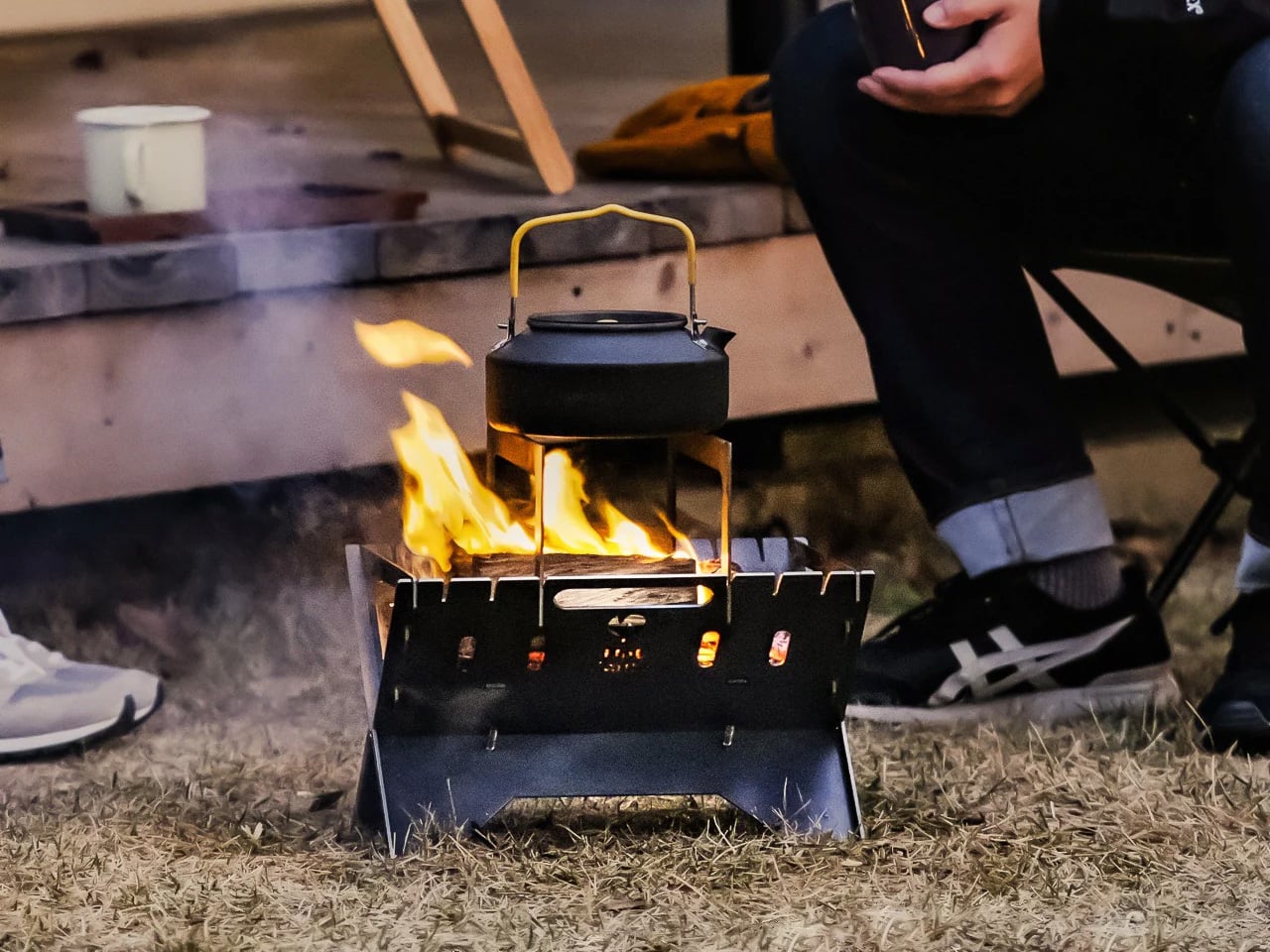
1. Portable Fire Pit Stand

The fire pit category is full of oversized objects that need a truck bed and a second person to manage. The Portable Fire Pit Stand sidesteps that entirely. Precision-cut black steel plates resist warping under sustained heat, assemble without tools, and fold flat when the trip is over. What you get at the campsite is a fire that earns its place as both a functional heat source and the visual anchor every site needs to feel worth sitting around past sundown.

The stand elevates fire off the ground, making it viable on sensitive terrain and at campgrounds where ground fires are restricted. That single design decision opens up far more sites than a standard ring allows. The black steel construction does not bow or distort after repeated use the way cheaper alternatives do, and the footprint is compact enough to work on a picnic table or against a stone wall. It is the kind of gear that earns a permanent place in the kit after a single evening out.

Click Here to Buy Now: $119.00

What we like

  • Heat-resistant steel construction holds its shape through repeated use across multiple camping seasons
  • Elevated design meets leave-no-trace standards on campgrounds where ground fires are restricted

What we dislike

  • Steel construction adds weight that backpackers counting grams will notice over a long carry
  • No integrated grill grate, which means a separate purchase for cooking directly over the fire

2. Blavor Power Station + Camping Lantern

Most portable power stations look like they were designed by someone who has never spent a night outdoors. The Blavor PN-W43 solves that by building a 4W LED camping lantern directly into the form factor. The result is a 64,000mAh device barely bigger than a tall water bottle that covers five charging pathways — solar, AC, car adapter, USB-C, and micro USB — with bidirectional 100W fast charging and a digital display that keeps battery status visible in the field without guesswork.

The real value is how naturally the two functions coexist. When the lantern is on, the power bank is right there. When you are charging devices overnight, the ambient glow handles the tent interior without a separate light source. For campers who have always carried both a dedicated lantern and a backup battery pack, the consolidation alone pays for the weight before the first night ends. A lanyard ships in the box, which tells you someone at Blavor has actually camped.

What we like

  • Five charging pathways give genuine flexibility across grid-connected and fully off-grid environments
  • Lantern and power bank coexist without compromising each other — the dual function feels designed in, not added on

What we dislike

  • At 236.8Wh, capacity suits a weekend trip rather than an extended off-grid expedition
  • The cylindrical form can sit awkwardly alongside flat gear in a structured pack

3. Camprit TiStove

Five flat pieces of Grade 5 titanium, two foldable legs, and three interchangeable cooking panels that together weigh under 1.5 pounds and pack completely flat. The Camprit TiStove reconfigures for boiling, grilling, or searing depending on which panels you assemble, and the extra panels double as a windshield. As heat accumulates over a season, the titanium changes color naturally, giving each stove a visible record of every meal cooked on it. Yours becomes genuinely yours over time.

There is no ignition system to fail at altitude, no gas canister threading to seize in the cold, and no assembly logic that requires reading a manual after dark. The pieces lock together without fasteners and disassemble in seconds. Compatible with wood, gas burner, and alcohol, it adapts to whatever fuel the terrain allows rather than locking you into a single system that can fail or run out. For anyone who has stood over a dead stove in the cold, this addresses the problem where it starts.

What we like

  • Packs completely flat under 1.5 lbs with three interchangeable cooking configurations for different meal types
  • Compatible with any fuel source, removing dependency on a single system in the field

What we dislike

  • Requires a separate burner or fuel source — nothing is self-contained out of the box
  • Titanium panels need careful packing to avoid scratching each other in transit

4. All-in-One Grill

Skewers of meat and green onions grilling on a small portable charcoal grill with a metal insert holding a glass bottle.

Made in Japan from stainless steel, the All-in-One Grill approaches camp cooking from a completely different position than the TiStove. Where that one is built for portability and fuel flexibility, this is built for the campsite where you are staying put and eating well. A modular lid system converts it between six distinct cooking methods — barbecuing, frying, grilling, steaming, smoking, and stewing — without requiring separate cookware for each. One object covers an entire outdoor kitchen without asking for a second bag.

Japanese stainless steel holds heat evenly, cleans without drama, and does not carry the flavor of every previous meal the way cast iron can. For a long weekend where the grill is the centerpiece of three evenings rather than a convenience, this is the object that makes the drive worth it. The modular configuration grows with the meal rather than limiting it, and the compact footprint fits the full camp kit without demanding its own dedicated storage alongside everything else.

Click Here to Buy Now: $449

What we like

  • Six cooking methods in one stainless steel body remove the need to pack separate cookware for different meals
  • Japanese stainless steel construction holds heat evenly and cleans efficiently after each use

What we dislike

  • At $449, the investment makes the most sense for campers who cook seriously rather than occasionally
  • Charcoal and wood fuel require ash management that demands more effort in the field than gas alternatives

5. NoxTi Tritium Keychain

A 45mm CNC-machined Grade 5 titanium cylinder weighing 10.7 grams. The NoxTi carries a tritium vial inside a precision quartz tube with 92% light transmission and glows continuously for 25 years through radioactive decay. No switch, no battery, no charging. Tritium beta particle decay strikes a phosphor coating and produces light as a straightforward byproduct of existing. At a campsite, it marks your tent entrance, your keys at the bottom of a bag, and your gear in the dark without asking anything of you in return.

The ceramic-tipped glass breaker at the tail end adds genuine emergency utility without changing the form. When the vial dims after two decades, the titanium body stays: press the old tube out, slide a new one in. Six glow colors are available, including Apple Green for maximum visibility and Red for preserving night vision. Two silicone O-rings hold the vial suspended and centered inside the shell, which creates the impression of looking into a piece of precision engineering rather than anything from a keychain rack.

What we like

  • 25-year continuous glow powered entirely by physics, with no battery, no charging, and no failure point to manage
  • Fully user-serviceable titanium body becomes a platform you keep and update indefinitely across decades of use

What we dislike

  • Glow output is intentionally faint — it marks and locates in the dark but does not illuminate a surface
  • The tritium light source needs a short explanation before the value proposition fully lands for first-time buyers

6. GoSun Flow Solar Water Purifier

Water is camping’s most basic constraint, and the GoSun Flow addresses it at the source. A solar-powered three-stage cartridge filter eliminates 99.99% of waterborne pathogens while pumping one liter of clean water per minute from any freshwater source. The system compresses into a backpack, and the flexible faucet clamps to branches, tables, or tailgates — opening to 58mm — turning any water access point into a functional camp station. USB power keeps it running when solar is unavailable.

It doubles as a portable handwashing station and solar-heated shower. Thirty minutes of sun delivers a five-minute warm shower, which changes what clean means across a three-day trip without the bulk of carrying a separate shower bag and a purifier as two distinct items. The filter handles 1,000 liters before replacement, and the power bank driving the pump recharges through an integrated solar panel. For anyone who has ever compromised on hygiene to protect pack weight, this removes that trade-off before you even start packing.

What we like

  • Purifies 99.99% of pathogens and delivers a solar-heated shower from a single system that compresses into a backpack
  • 1,000-liter filter life with USB power backup covers a full camping season without resupply

What we dislike

  • Cannot process saltwater, which limits utility at coastal campsites
  • Multiple components increase the number of parts to track and keep together across a multi-day trip

7. RetroWave 7-in-1 Radio

The RetroWave earns its place in a camping kit through an argument that has little to do with aesthetics, even if the aesthetics are genuinely good. A tactile tuning dial, compact body, and warm visual language drawn from classic Japanese radio design make it worth looking at. What it is actually doing is more pragmatic: running AM, FM, and NOAA weather radio without an app, streaming via Bluetooth when connectivity holds, and charging via solar panel and hand-crank when it does not. Seven functions, one charging cable.

Smart speakers go silent when Wi-Fi drops. Earbuds die at the wrong moment. Phones drain precisely when you need them most. The RetroWave does not ping you, does not demand ideal conditions, and does not need a charging window before it becomes useful. It plays, charges other devices, lights, signals, and tells the time across a full weekend without complaint. At the end of the trip, it goes back into the same bag it came out of, ready for the next one.

Click Here to Buy Now: $89.00

What we like

  • Seven functions in a single body remove the need to carry and manage multiple separate items across a trip
  • Solar and hand-crank charging keep it fully operational off-grid with no outlet access required at any point

What we dislike

  • The retro aesthetic can read as decorative to buyers who have not yet used it in an actual off-grid situation
  • Shortwave reception quality varies depending on geographic location and surrounding terrain

The Campsite Has Always Been Good. The Gear Finally Caught Up.

The equipment on this list shares one quality that outdoor gear rarely earns: it removes a specific friction from the experience without replacing it with a different one. The fire stand works where others cannot. The purifier turns proximity to water into access to clean water. The stove adapts to whatever fuel the terrain provides. Each object was designed around the constraint it actually faces in the field, which is the harder and more honest design brief.

A Labor Day weekend with gear this considered starts to feel different from the first hour of setup. Not because everything is easier in an obvious sense, but because the small decisions have already been made. Where the water comes from. How the fire holds through the night. What you reach for in the dark. These are solved before the weekend begins, which leaves the actual weekend free to be what it was always supposed to be.

The post 7 Outdoor Gadgets For Labor Day Weekend That Make Camping Look Effortlessly Good first appeared on Yanko Design.

  • ✇Yanko Design
  • This Foldable A2 Scanner Fits in a Bag and Doubles as a Live Presenter
    Scanners haven’t changed much in how they occupy a workspace. A flatbed sits in the middle and claims that real estate whether it’s in use or not. Overhead models are more flexible, but they still tend to take up a fixed spot in any setup. For anyone working from a compact home office or shared studio, that trade-off rarely gets a proper answer. Joyusing’s ScanMax 320 approaches the problem from a different angle, quite literally. Rather than occupying the center of a workspace, it’s built to s
     

This Foldable A2 Scanner Fits in a Bag and Doubles as a Live Presenter

Par : JC Torres
22 août 2026 à 21:45

Scanners haven’t changed much in how they occupy a workspace. A flatbed sits in the middle and claims that real estate whether it’s in use or not. Overhead models are more flexible, but they still tend to take up a fixed spot in any setup. For anyone working from a compact home office or shared studio, that trade-off rarely gets a proper answer.

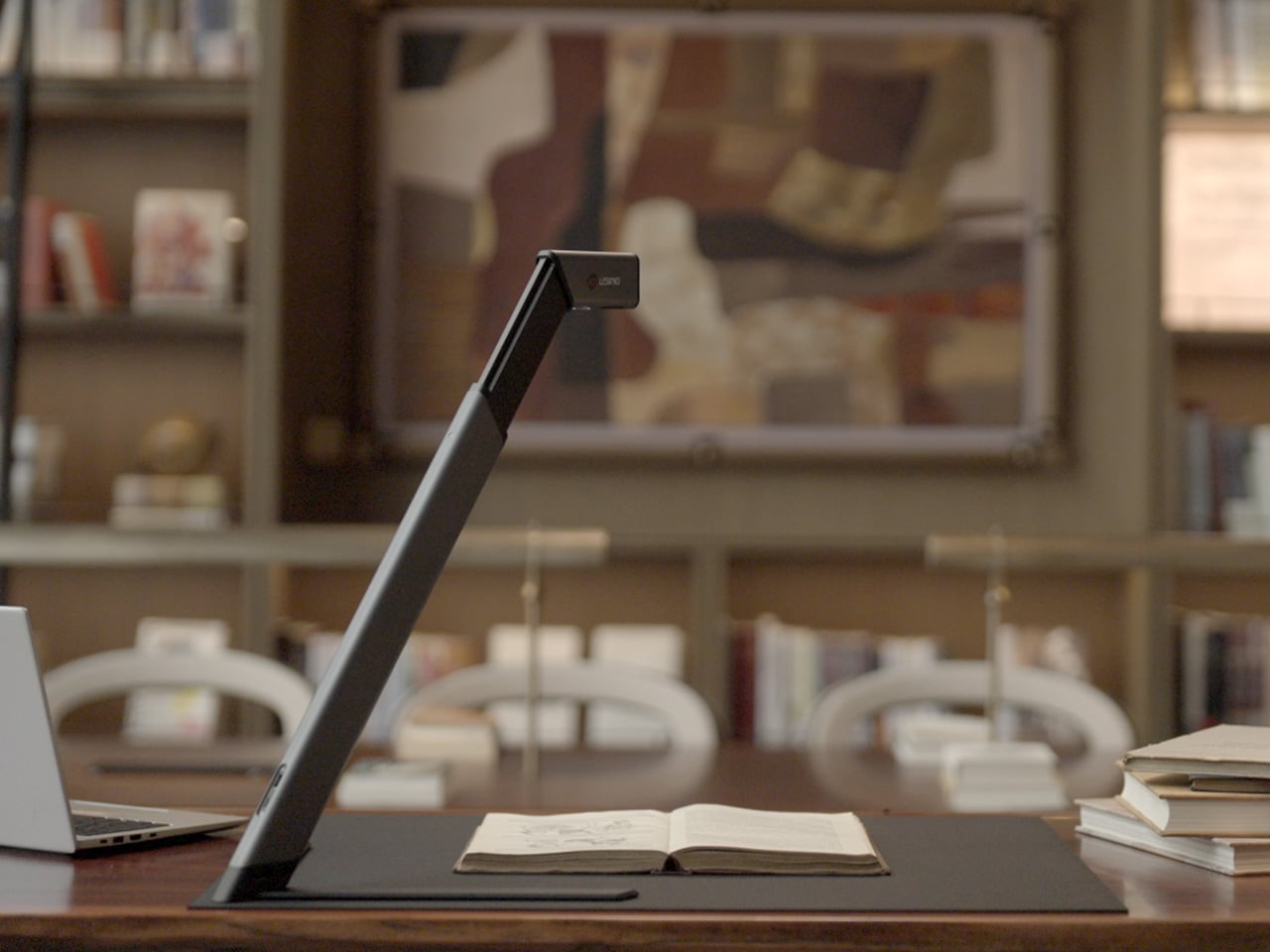
Joyusing’s ScanMax 320 approaches the problem from a different angle, quite literally. Rather than occupying the center of a workspace, it’s built to sit at the edge of a desk, positioned in the corner while its arm reaches overhead. It handles documents, books, artwork, and large-format materials up to A2 size, without taking over the surface it’s meant to serve.

Designer: JOYUSING

Click Here to Buy Now: $379 $649 (42% off). Hurry, only 32/220 left! Raised over $88,000.

Folded down, the ScanMax 320 measures 355mm x 68mm x 51mm, slim enough to slip into the included carrying bag and move between rooms without any effort. It runs entirely on USB-C power, so getting started means plugging in a single cable. There’s no proprietary adapter to hunt down, no driver installation ritual, and nothing complicated to deal with before the first scan. You can directly use the ScanMax 320 as a live presenter camera, and scanning as well as other advanced features simply require the free Joyusing Scanner intelligence software.

The shooting area extends to a full A2, or 594mm x 420mm, with a 32-megapixel sensor capturing at up to 380 DPI. That covers blueprints, double-page book spreads, large technical drawings, and oversized artwork in a single pass. An intelligent auto-switching system detects whether the material is A2 or A3 and adjusts accordingly, so there’s no manual input needed between sessions.

Overhead scanners tend to have a lighting problem, particularly near edges or when capturing materials that aren’t perfectly flat. The ScanMax 320 uses a rectangular illumination system shaped to match the scanning area, distributing light evenly and keeping shadows from washing out fine detail near the sides. Three brightness levels, at 30%, 70%, and 100%, are accessible with a single touch for quick adjustments in different environments.

Book scanning is where overhead devices tend to earn their keep, and also where they tend to frustrate. Pages curve at the spine, fingers get in the way, and binding shadows creep in from the edges. The ScanMax 320’s software handles most of this automatically, applying auto-flattening, finger removal, de-skewing, and shadow removal without manual adjustment. Book mode, paired with the included finger cots, keeps pages steady for continuous capture.

Once everything is captured, the software’s OCR engine converts printed text into editable, searchable files, with support for 180 languages and export options including Word, PDF, and TXT. A page of Japanese text, a technical report, or a multilingual research paper can go from physical to fully searchable in seconds, turning raw captures into documents you can actually search, copy, and share.

What’s less obvious about the ScanMax 320, and arguably more interesting, is that it also functions as a live visual presenter. Point it at a printed page, a hand-drawn sketch, or a physical object, and the feed goes live to whatever screen or projector it’s connected to. For a teacher going through annotated notes or a designer reviewing a layout with a client, that extra mode earns its place quickly.

Software compatibility covers Windows, macOS, and several Linux distributions including CentOS, Ubuntu, and Debian, though macOS users will find some features limited compared to the Windows version. Everything connects over USB-C, keeping the setup free of dongles and extra cables. Built-in annotation tools allow for direct markup of scanned content, which makes it easier to prepare materials before presenting or sharing them.

There’s something refreshingly considered about a scanner built to work with your desk rather than on top of it. The ScanMax 320 doesn’t ask you to clear space or rearrange anything. It folds, parks at the edge, and gets on with the job. Whether you’re archiving a collection, digitizing a sketchbook, or presenting something in a meeting, the fact that it stays in its corner is, in itself, the point.

Click Here to Buy Now: $379 $649 (42% off). Hurry, only 32/220 left! Raised over $88,000.

The post This Foldable A2 Scanner Fits in a Bag and Doubles as a Live Presenter first appeared on Yanko Design.

Apple's leaked AirPods Ultra already have competition — Razer's Motoko is a PC gaming headset with built-in cameras, and it's no longer just a concept

The next evolution of Apple's AirPods is out in the wild after a leaked video was posted online. Known as AirPods Ultra, the new wireless earbuds look basically the same as regular AirPods, albeit with a thicker stem.

Hiding inside the new AirPods Ultra are discrete cameras that enable something called "Visual Intelligence." According to Tom's Guide, these cameras aren't intended to record live video or snap photos, setting AirPods Ultra apart from the likes of Meta's AI Glasses, which are raising some very serious privacy concerns.

What I wasn't expecting next was an announcement from Razer's Min-Liang Tan explaining that the company's Project Motoko, unveiled as a concept at CES 2026, is actually a real product that's "coming soon."

At CES we unveiled Project Motoko: an AI native headset with dual cameras in the earcups. It sees what you see, hears what you hear. No display needed.Started as a concept. Not staying one. Coming soon.What's the first killer use case for wearable AI? pic.twitter.com/MCmrcnUdZMAugust 19, 2026

Razer's tackling of this idea involves a full wireless gaming headset with cameras built into the earcups. They're certainly not as hidden as the cameras on Apple's leaked implementation, but I don't think they're aimed at the same end goal.

In the leaked Apple video, a person picks up a book and looks at the cover. Siri (or some other assistant) then says that "your world becomes savable" — all you have to do is whisper into your own ear that you'd like to save what you're looking at.

The new AirPods Ultra are expected to show up at Apple's next special event in September, but already there is a lot of backlash regarding privacy. Glasses (or really any tech) that record everything around you are already being banned due to privacy concerns, and I hope that Apple indeed uses some method that captures info without saving actual photos.

Razer's Project Motoko is not like the rest

Razer is taking a different approach to a video-infused audio device. Rather than hiding the cameras in tiny earbuds, it's slapping them onto what appears to be a rather high-end wireless gaming headset.

Each earcup has an FPV camera designed to sit at eye level, allowing it to better quantify what you're actually looking at. Razer says its cameras offer a wider field of view than is humanly possible, and that they can pick up "symbols, text, and details."

Motoko can use a bunch of different AI models (Grok, OpenAI, and Gemini are mentioned), and Razer says it can be a "powerful data collection tool" to train language models. The headset runs on a Snapdragon chip.

A demo video on the Razer website explains that Motoko "hears, interprets, and answers in the moment." The accompanying video certainly seems to show that the headset's cameras are recording the entire time, much like AI glasses.

Razer pegs it as a "personal full-time AI assistant" that "stays keyed into your schedule, preferences, and habits, while adapting effortlessly to anything else you might ask." I'm reminded immediately of Lenovo's Qira AI assistant.

Privacy concerns aside, who's going to wear a gaming headset all day?

A close-up of a hand gripping a black hexagonal dumbbell against a grassy background and a dark yoga mat.

Who the hell wears a gaming headset while they work out? (Image credit: Razer)

Razer makes a lot of concept devices, and not all of them make it into the hands of consumers. The fact that Razer is going ahead with Motoko hot on the heels of the AirPods Ultra leak means the company must truly believe there's something there worth pursuing.

But my first thought was, "Who wants to wear a gaming headset all day?" Never mind the privacy concerns; gaming headsets are great for a few hours at a time, and usually best if you're not active.

Razer's vision for Motoko seems to go against that. A small FAQ section on the official website explains the potential everyday uses for Motoko:

The possibilities are endless. Whether you’re cooking and need step-by-step guidance, traveling and want real-time translations, working and managing tasks hands-free, repairing something with instant audio instructions, or gaming with immersive AI-driven guidance—Motoko adapts to every scenario. Its AI-powered vision and audio awareness make it more than a headset; it’s your always-on companion for smarter living, wherever life takes you.

Razer

Is everyone suddenly going to be wearing a bulky gaming headset everywhere they go? Not likely, especially during any tasks that require a bit of sweat. When Motoko actually launches, it had better be the most comfortable headset ever made if Razer wants it to be successful.

Windows Central's take on Razer Motoko

A top-down view of a person slicing cherry tomatoes on a wooden cutting board, surrounded by bowls of pine nuts, garlic cloves, crumbled cheese, and basil leaves.

A screengrab from the Motoko video showing a livestream running from the gaming headset. (Image credit: Razer)

Razer's Motoko headset probably has the best chance of succeeding amongst PC gamers. It is, after all, a gaming headset. But, speaking from a bit of experience, I can say that a lot of PC gamers couldn't care less about letting AI help with video games. Whether or not Motoko's appeal actually goes mainstream remains to be seen.

I want to know if you'd buy something like Razer's Motoko when it launches. Would you use it for gaming? For something else? Are you concerned about eroding privacy due to the prevalence of these video capture devices? Let me know in the comments section below!

Click to join us on r/WindowsCentral

Join us on Reddit at r/WindowsCentral to share your insights and discuss our latest news, reviews, and more.

A person holds a pair of black Razer Project Motoko wireless headphones, showcasing their design, with a green box visible in the background on a wooden surface.

A person holds a pair of black Razer Project Motoko wireless headphones, showcasing their design, with a green box visible in the background on a wooden surface.

Microsoft’s “AI at Work” Webinar Series Will Cover Copilot, Apps and AI Agents

Par : Nisha
23 août 2026 à 06:00
Microsoft is inviting businesses and AI enthusiasts to its upcoming AI at Work webinar series, with the next session scheduled for August 25. The event will focus on the latest developments across Microsoft 365 Copilot, Copilot Studio, Dynamics 365, and the growing world of AI agents. The webinar is aimed at organizations looking to understand […]

Vibe Coding Goes Mainstream: Meta Brings AI Creation to Social Media

21 août 2026 à 13:41

Meta’s Pocket app turns AI-generated games and interactive experiences into social content users can play, remix, and share in a scrolling feed.

The post Vibe Coding Goes Mainstream: Meta Brings AI Creation to Social Media appeared first on TechRepublic.

Slack Code: AI Coding Agents Get Shared Channels for Review and Oversight

21 août 2026 à 12:59

Slack Code gives AI coding agents shared project channels where teams can watch, guide and review software development as it happens.

The post Slack Code: AI Coding Agents Get Shared Channels for Review and Oversight appeared first on TechRepublic.

OpenAI Brings ChatGPT Ads to 31 European Countries: Who Will See Them

20 août 2026 à 15:51

OpenAI is expanding ChatGPT Ads to 31 European markets, bringing new targeting tools, privacy requirements, and monetization questions.

The post OpenAI Brings ChatGPT Ads to 31 European Countries: Who Will See Them appeared first on TechRepublic.

  • ✇WinCentral
  • OpenAI May Have Accidentally Left a Trail to Astra’s “Mewfour” Codename
    OpenAI’s Astra story just got more interesting. A previously circulating internal codename, “mewfour,” appears to have resurfaced in an unexpected place: OpenAI’s public Codex repository. The timing is what makes the discovery particularly intriguing. According to the evidence behind the claim, OpenAI removed references to “mewfour” from 52 pull requests on August 7, only about […]
     

OpenAI May Have Accidentally Left a Trail to Astra’s “Mewfour” Codename

Par : Nisha
17 août 2026 à 10:15
OpenAI’s Astra story just got more interesting. A previously circulating internal codename, “mewfour,” appears to have resurfaced in an unexpected place: OpenAI’s public Codex repository. The timing is what makes the discovery particularly intriguing. According to the evidence behind the claim, OpenAI removed references to “mewfour” from 52 pull requests on August 7, only about […]

Windows 11’s Big Taskbar and Start Menu Upgrade Could Finally Arrive for Everyone

Par : Nisha
15 août 2026 à 07:22
Microsoft appears to be getting ready to roll out one of the most welcome Windows 11 interface updates in years. After months of testing with Windows Insiders, the company is moving its redesigned Windows 11 Taskbar and Start menu closer to a public release. The latest developments suggest that users could start seeing these long-requested […]

  • ✇Articles on TechRepublic
  • Malaysia Data Center Growth Surges as Johor Capacity Tightens
    Johor’s data center pipeline has reached 8,542 MW, but a 0.7% colocation vacancy rate, grid constraints, and water demand mean regional IT buyers need to separate announced capacity from infrastructure they can actually deploy. The post Malaysia Data Center Growth Surges as Johor Capacity Tightens appeared first on TechRepublic.
     

Malaysia Data Center Growth Surges as Johor Capacity Tightens

17 août 2026 à 08:37

Johor’s data center pipeline has reached 8,542 MW, but a 0.7% colocation vacancy rate, grid constraints, and water demand mean regional IT buyers need to separate announced capacity from infrastructure they can actually deploy.

The post Malaysia Data Center Growth Surges as Johor Capacity Tightens appeared first on TechRepublic.

6 Best Small Business Email Providers for 2026

17 août 2026 à 08:00

Looking for the best business email provider? Compare top options like Google Workspace, Microsoft 365, and Zoho Mail to choose the right one.

The post 6 Best Small Business Email Providers for 2026 appeared first on TechRepublic.

❌