Vue normale

Samsung: New Galaxy Foldables Beat Previous Preorder Record by 30%

6 août 2026 à 09:02

Samsung’s Galaxy Z Fold8 leads record foldable preorders in the US and South Korea as more buyers move from Flip models to the larger Fold lineup before launch.

The post Samsung: New Galaxy Foldables Beat Previous Preorder Record by 30% appeared first on TechRepublic.

Samsung Galaxy S27 Pro May Not Be the Smaller Ultra Buyers Expect

5 août 2026 à 12:54

Samsung’s rumored Galaxy S27 Pro may share several premium features with the S27 Ultra, but new leaks suggest clear differences in zoom cameras, display size, S Pen support, batteries, and regional processors.

The post Samsung Galaxy S27 Pro May Not Be the Smaller Ultra Buyers Expect appeared first on TechRepublic.

Galaxy S26 FE Price Leak Follows Samsung’s Mobile Profit Slide

4 août 2026 à 13:49

Samsung’s Galaxy S26 FE could cost more than its predecessor, raising questions about whether the Fan Edition still offers strong value.

The post Galaxy S26 FE Price Leak Follows Samsung’s Mobile Profit Slide appeared first on TechRepublic.

Samsung Galaxy Z Flip8 vs Motorola Razr Ultra: Which Is Right for You?

4 août 2026 à 12:46

Samsung’s Galaxy Z Flip8 costs less and has longer support, while Motorola’s Razr Ultra leads on storage, RAM, battery, charging, and cover-screen apps.

The post Samsung Galaxy Z Flip8 vs Motorola Razr Ultra: Which Is Right for You? appeared first on TechRepublic.

Qualcomm Price Hike Could Deepen Android Hardware Fragmentation

4 août 2026 à 11:00

Higher Qualcomm chip prices could push Android manufacturers to reuse older processors, trim specifications, or sell different hardware configurations across regions.

The post Qualcomm Price Hike Could Deepen Android Hardware Fragmentation appeared first on TechRepublic.

Samsung Will Ban Smart TV Apps Containing Residential Proxy Software

4 août 2026 à 10:56

Samsung plans to ban Smart TV apps containing residential proxy software after researchers found apps could route traffic through users’ home connections.

The post Samsung Will Ban Smart TV Apps Containing Residential Proxy Software appeared first on TechRepublic.

Samsung Earnings Put New Foldables at the Center of Its Asia Strategy

31 juillet 2026 à 08:05

Samsung’s record second-quarter earnings masked losses in its consumer-device businesses, making the Fold8 lineup more important to its Asia mobile strategy.

The post Samsung Earnings Put New Foldables at the Center of Its Asia Strategy appeared first on TechRepublic.

Samsung Reportedly Extends Galaxy Watch 9 Support to Five OS Upgrades

29 juillet 2026 à 10:46

Samsung may give the Galaxy Watch 9 and Galaxy Watch Ultra 2 five major OS upgrades, but IT teams should wait for model-specific support terms before changing refresh plans.

The post Samsung Reportedly Extends Galaxy Watch 9 Support to Five OS Upgrades appeared first on TechRepublic.

Samsung Wins Exclusive OLED Touchscreen Deal for Apple’s Upcoming MacBook Pro

29 juillet 2026 à 07:34

Samsung Display has reportedly won Apple's exclusive OLED touchscreen contract for future MacBook Pro models, highlighting its lead in large-format display manufacturing.

The post Samsung Wins Exclusive OLED Touchscreen Deal for Apple’s Upcoming MacBook Pro appeared first on TechRepublic.

Samsung Galaxy Z Fold 8 Wide: Everything We Know So Far

10 juillet 2026 à 11:05

Samsung Galaxy Z Fold 8 Wide rumors cover its design, specs, cameras, price, and possible release date ahead of Galaxy Unpacked on July 22 in London, UK.

The post Samsung Galaxy Z Fold 8 Wide: Everything We Know So Far appeared first on TechRepublic.

Samsung Reportedly Starts OLED Panel Production for Apple’s First Foldable iPhone

25 juin 2026 à 13:13

Apple reportedly cleared Samsung Display to make OLED panels for its first foldable iPhone, with hinge issues still shaping launch timing.

The post Samsung Reportedly Starts OLED Panel Production for Apple’s First Foldable iPhone appeared first on TechRepublic.

Samsung Expands Galaxy Watch Health Data Into Clinical Research

25 juin 2026 à 09:24

Samsung and Alcedis will explore how Galaxy Watch biometric data can support clinical trials, digital endpoints, and drug research.

The post Samsung Expands Galaxy Watch Health Data Into Clinical Research appeared first on TechRepublic.

Android 17 Is Live on Pixel, but Samsung and Other Android Users Still Have to Wait

19 juin 2026 à 08:09

Android 17 is rolling out to supported Pixel devices first, while non-Pixel users and IT teams face separate OEM timelines, beta programs, and app-testing considerations.

The post Android 17 Is Live on Pixel, but Samsung and Other Android Users Still Have to Wait appeared first on TechRepublic.

Samsung Galaxy Watch Blood Sugar Tracking: Timeline, Research, Rumors & What Works Today

18 juin 2026 à 16:47

Samsung Galaxy Watch blood sugar tracking is still a rumor, not reality. Here’s the timeline, research, current options, and what users can do today.

The post Samsung Galaxy Watch Blood Sugar Tracking: Timeline, Research, Rumors & What Works Today appeared first on TechRepublic.

SK Hynix Tops $1 Trillion Valuation as AI Memory Boom Reshapes Chip Market

27 mai 2026 à 11:41

SK Hynix crossed a $1 trillion valuation as AI data center demand drives memory chip prices higher and reshapes the semiconductor market.

The post SK Hynix Tops $1 Trillion Valuation as AI Memory Boom Reshapes Chip Market appeared first on TechRepublic.

This Samsung 4TB Portable SSD Moves Files at 2,000 MB/s For $1K

The Samsung T9 delivers read and write speeds of up to 2,000 MB/s, making large file transfers feel instant.

The post This Samsung 4TB Portable SSD Moves Files at 2,000 MB/s For $1K appeared first on TechRepublic.

Samsung One UI 8.5 Rollout Begins: Eligible Galaxy Devices and How to Check

8 mai 2026 à 08:44

Samsung’s One UI 8.5 rollout began in Korea on May 6, bringing Galaxy AI upgrades to select flagship phones and tablets in phased markets.

The post Samsung One UI 8.5 Rollout Begins: Eligible Galaxy Devices and How to Check appeared first on TechRepublic.

  • ✇Yanko Design
  • Samsung Just Turned a Theme Park Queue Into a 3D Safari, No Glasses
    Waiting in line at a theme park is one of those unavoidable experiences that nobody designs for enthusiastically. The physical infrastructure exists, the rope lines are laid out, and in the best-case scenario, there’s some signage or ambient music to occupy the time. But the queue is fundamentally dead space, a stretch of minutes that happens before the experience begins rather than as part of it. That’s a design problem, and most parks accept it as one that can’t really be solved. Samsung’s Sp
     

Samsung Just Turned a Theme Park Queue Into a 3D Safari, No Glasses

Par : JC Torres
8 mai 2026 à 13:20

Waiting in line at a theme park is one of those unavoidable experiences that nobody designs for enthusiastically. The physical infrastructure exists, the rope lines are laid out, and in the best-case scenario, there’s some signage or ambient music to occupy the time. But the queue is fundamentally dead space, a stretch of minutes that happens before the experience begins rather than as part of it. That’s a design problem, and most parks accept it as one that can’t really be solved.

Samsung’s Spatial Signage installation at Everland in South Korea offers a different answer. At the newly renovated Safari World: The Wild attraction in Yongin, the company installed its glasses-free 3D display directly in the queue area, where life-scale tigers and lions appear to surge toward visitors without so much as a pair of 3D glasses required. The wait effectively becomes the opening act.

Designer: Samsung

The technology making that possible is Samsung’s patented 3D Plate system, which uses binocular parallax to deliver separate images to each eye, tricking the brain into perceiving depth the same way it does when looking at real objects at real distances. Unlike the boxy, space-hungry installations that most 3D signage has historically required, the Spatial Signage display slots into the queue corridor in an 85-inch, portrait-oriented panel with a 52 mm profile. There’s nothing protruding into the space, and no hardware for visitors to interact with.

The content for the Everland installation was developed by Klleon, whose team prioritized capturing the natural movement rhythms of the animals rather than exaggerated cinematic effects. The result is a quality of realism that works specifically because of the environment: a queue is typically a narrow, enclosed space where visitors are already looking forward and standing relatively still, which happens to be exactly the viewing geometry where the 3D depth effect lands best.

What that means practically is that the queue line stops being something guests endure and starts being something they talk about. Anticipation for an attraction is one of the least exploited moments in the theme park visit. Visitors heading toward Safari World already have the right frame of mind for a wildlife encounter, and the display capitalizes on that readiness by delivering a preview of that encounter before anyone boards a vehicle or rounds a corner.

The broader implication is about how display technology fits into destination entertainment design. For years, attractions have used projection mapping, animatronics, and theatrical sets to build immersion during rides and shows, but the queue almost always remains a visual afterthought. A display that can occupy a narrow corridor at wall depth, require no headgear, and show content at true-to-life scale without any spatial awkwardness changes what’s possible in that format.

Everland isn’t a retail shelf or a shopping center atrium. The animals aren’t selling anything. They’re there because a flat screen in that corridor would register as background noise, and a three-dimensional tiger at eye level does not. That distinction, between content that is present and content that actually commands attention, is the problem Spatial Signage was built to solve, and the queue turned out to be a rather fitting test.

The post Samsung Just Turned a Theme Park Queue Into a 3D Safari, No Glasses first appeared on Yanko Design.

  • ✇Yanko Design
  • Samsung’s $400 Tab Keyboard Costs More Than Apple’s: Worth It?
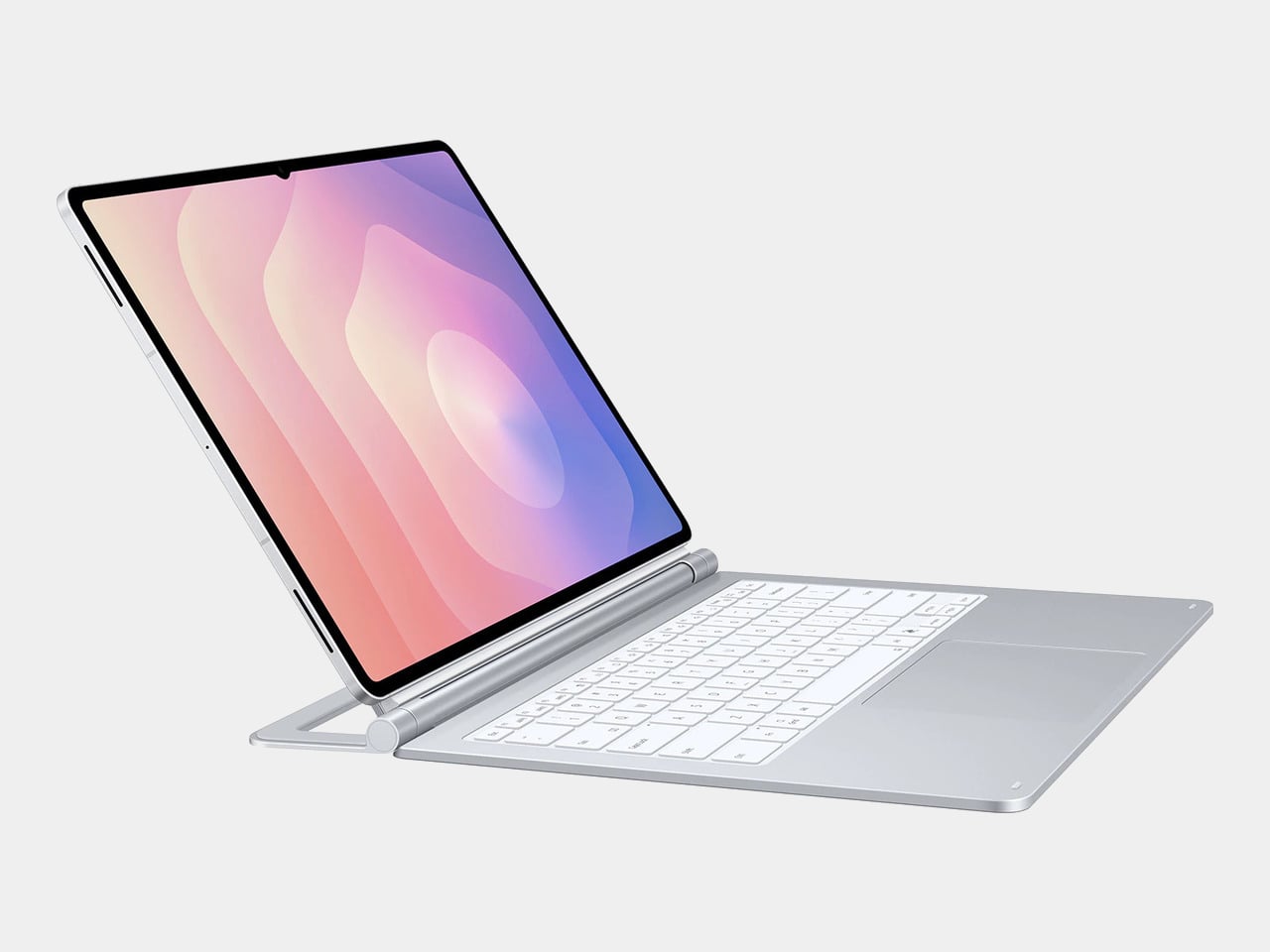
    The tablet-as-laptop pitch has been a hard sell for years, and a lot of the blame lands on the accessories. Keyboard covers for Android tablets have historically been thin on features and even thinner on build quality, which makes the whole productivity argument feel shakier than it should. Samsung’s $1,200 Galaxy Tab S11 Ultra is serious hardware, and for a while, its keyboard options weren’t keeping up. The Galaxy Tab S11 Ultra Pro Keyboard is Samsung’s answer to that. Available in Gray and S
     

Samsung’s $400 Tab Keyboard Costs More Than Apple’s: Worth It?

Par : JC Torres
1 avril 2026 à 09:20

The tablet-as-laptop pitch has been a hard sell for years, and a lot of the blame lands on the accessories. Keyboard covers for Android tablets have historically been thin on features and even thinner on build quality, which makes the whole productivity argument feel shakier than it should. Samsung’s $1,200 Galaxy Tab S11 Ultra is serious hardware, and for a while, its keyboard options weren’t keeping up.

The Galaxy Tab S11 Ultra Pro Keyboard is Samsung’s answer to that. Available in Gray and Silver for $399.99, it connects via pogo pins at the rear of the tablet, with no Bluetooth pairing or cables required. Opening the lid wakes the device, and closing it puts everything to sleep, so the whole thing behaves less like an accessory and more like a laptop right from the start.

Designer: Samsung

The build quality reflects the price in most of the right ways. The body is aluminum alloy, the hinge is reinforced metal, and a secondary kickstand at the rear props the whole assembly into a stable, laptop-like posture at whatever angle you prefer. The result looks noticeably more considered than Samsung’s Book Cover Keyboard Slim, which never really felt like it belonged on a $1,200 device.

The 80-key layout goes beyond a standard QWERTY arrangement. A dedicated DeX key switches the Tab S11 Ultra into Samsung’s desktop mode, where apps run in freely movable windows, closer in feel to Windows than Android. A Galaxy AI key gives you one-press access to AI tools without switching apps, and three customizable function keys can each be mapped to open whatever you need most.

For long stretches of writing or working across multiple documents, those shortcuts matter more than they might look on a spec sheet. The pogo pin connection also eliminates the Bluetooth pairing and dropout issues that plague most wireless keyboard accessories. And since the Pro Keyboard draws power directly from the tablet, there’s no separate battery to charge, and nothing to run out at an inconvenient moment.

The trackpad is 14.6% larger than the one on Samsung’s previous keyboard accessory, a small percentage that translates to real estate you’ll actually notice in DeX mode. The extra surface area gives you more room for precise gestures and window management, and that significantly reduces the number of times you’re forced to reach up and touch the screen during long work sessions.

At $399.99, the Pro Keyboard is nearly twice the price of Samsung’s own Book Cover Keyboard Slim and $50 more than Apple’s Magic Keyboard for the 13-inch iPad Pro. Adding it to the Galaxy Tab S11 Ultra’s $1,200 starting price puts the total at around $1,600, which puts you in comfortable MacBook Air territory, minus the dedicated operating system and the convenience of a unified device.

There are also some obvious gaps at this price. The Pro Keyboard has no backlighting, a noticeable oversight for anyone who regularly works late or in dim spaces. It also doesn’t protect the back of the tablet, which is a curious omission for a $400 accessory. And since it’s designed exclusively for the Galaxy Tab S11 Ultra, there’s no using it with anything else in Samsung’s lineup.

The post Samsung’s $400 Tab Keyboard Costs More Than Apple’s: Worth It? first appeared on Yanko Design.

  • ✇Yanko Design
  • Samsung’s Galaxy A Phones Now Get IP68 and 6-Year Updates From $449
    Mid-range smartphones have been getting very good, very quickly. Most now check the boxes for performance, camera quality, and even design, but the compromises tend to show up later. Software support runs out too soon, water resistance gets downgraded to save costs, or the storage fills up faster than expected. It’s a category where the spec sheet looks promising right up until the parts that actually matter start falling short. Samsung’s Galaxy A57 5G and Galaxy A37 5G tackle those exact issue
     

Samsung’s Galaxy A Phones Now Get IP68 and 6-Year Updates From $449

Par : JC Torres
26 mars 2026 à 04:45

Mid-range smartphones have been getting very good, very quickly. Most now check the boxes for performance, camera quality, and even design, but the compromises tend to show up later. Software support runs out too soon, water resistance gets downgraded to save costs, or the storage fills up faster than expected. It’s a category where the spec sheet looks promising right up until the parts that actually matter start falling short.

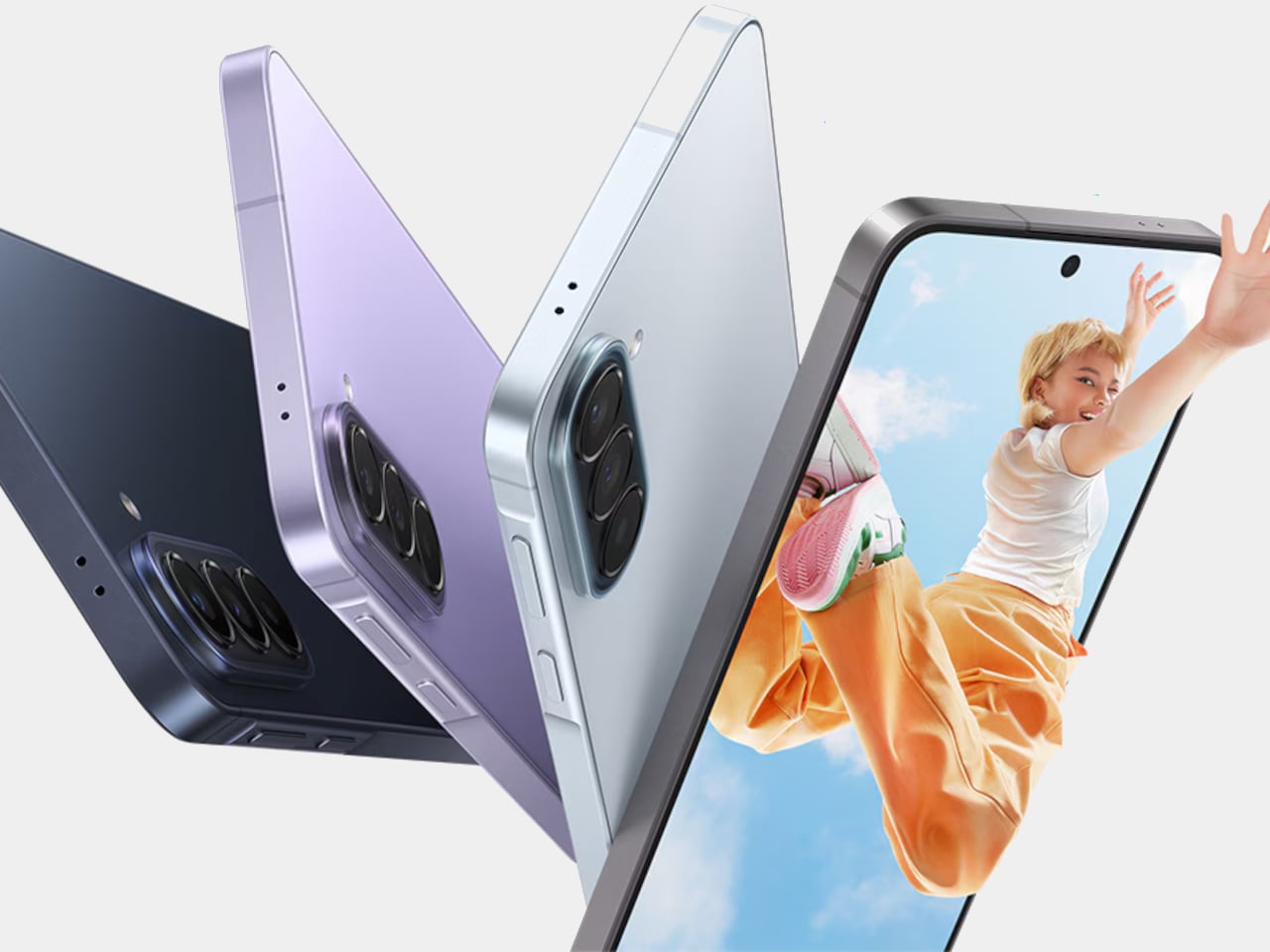
Samsung’s Galaxy A57 5G and Galaxy A37 5G tackle those exact issues. Rather than simply refreshing the hardware, these two phones address the pain points that tend to sour long-term ownership, from shorter software cycles to inadequate protection from the elements. Samsung describes both as the most capable Galaxy A devices yet, and for once, that kind of claim holds up when you look at what’s actually new.

Designer: Samsung

The Galaxy A57 5G leads with a noticeably slimmer build, now at just 6.9mm and 179 grams. A 13% larger vapor chamber helps keep the new Exynos 1680 processor running cool through long gaming sessions or extended recordings. The display also gets slimmer bezels and a bright Super AMOLED+ panel with Vision Booster, so the screen stays readable whether you’re inside at your desk or standing in direct sunlight.

Storage is where the A57 5G makes history for the Galaxy A line. It’s the first A-series phone to offer a 512 GB option, a welcome change for anyone managing a large photo library or shooting high-resolution video regularly. The triple-camera setup, led by a 50 MP main sensor with a 12 MP ultrawide and a 5 MP macro, handles everything from wide-angle landscapes to fine close-up detail.

The Galaxy A37 5G takes a different route to earn its upgrade. Its primary camera now uses a larger 50 MP sensor with support for 10-bit HDR video recording, improving low-light performance and color depth over its predecessor. More significantly, the durability rating jumped from IP67 to IP68, and it now ships with Gorilla Glass Victus+ on both the front and back, which is a notable step up at this price.

Both phones run One UI 8.5 with a broader set of Awesome Intelligence (get it? “AI”?) features. The camera uses AI-based subject and scene recognition to balance skin tones and create cleaner background separation automatically. Circle to Search has also been updated with multi-object recognition, so you can search an outfit, its accessories, and the surrounding backdrop all at once, rather than hunting for each element separately or toggling between searches.

What gives both phones long-term value is Samsung’s commitment to six generations of Android OS updates and six years of security support. Add to that 5,000 mAh batteries and IP68-rated protection across both models, and these are phones clearly meant to outlast the typical mid-range upgrade cycle. The Galaxy A57 5G starts at $549.99 and the Galaxy A37 5G at $449.99 in the US, with availability beginning April 9, 2026.

The post Samsung’s Galaxy A Phones Now Get IP68 and 6-Year Updates From $449 first appeared on Yanko Design.

❌