Vue normale

ColorOS Replacing OxygenOS on OnePlus Phones: What Users Lose

29 juillet 2026 à 14:17

OnePlus has confirmed an optional move from OxygenOS to ColorOS 17. Here's what changes, what stays the same, and what existing owners should expect.

The post ColorOS Replacing OxygenOS on OnePlus Phones: What Users Lose appeared first on TechRepublic.

Motorola Edge 70 Max: The Android Phone Built to Last All Day

17 juillet 2026 à 17:54

Motorola's Edge 70 Max pairs a 7,100mAh silicon-carbon battery with built-in Qi2 magnetic charging, flagship hardware, and a slim design in its India debut.

The post Motorola Edge 70 Max: The Android Phone Built to Last All Day appeared first on TechRepublic.

Apple Wallet Car Key Support Could Expand to Lucid, Xiaomi Vehicles

10 juillet 2026 à 14:25

iOS 27 beta code hints that Lucid and Xiaomi vehicles could gain Apple Car Key support, though compatible models and launch timing remain unconfirmed.

The post Apple Wallet Car Key Support Could Expand to Lucid, Xiaomi Vehicles appeared first on TechRepublic.

Google’s July Pixel Update Targets Android 17 Boot Problems

10 juillet 2026 à 13:20

Google’s July 2026 Pixel update fixes Android 17 boot loops, app crashes, display issues, and navigation problems across supported devices.

The post Google’s July Pixel Update Targets Android 17 Boot Problems appeared first on TechRepublic.

Apple’s iPhone Air 2 Could Get a Major Battery Upgrade

10 juillet 2026 à 12:00

The iPhone Air 2 could gain a larger battery, an A20 chip, and a second camera as Apple reportedly works to improve endurance without adding bulk.

The post Apple’s iPhone Air 2 Could Get a Major Battery Upgrade appeared first on TechRepublic.

Samsung Galaxy Z Fold 8 Wide: Everything We Know So Far

10 juillet 2026 à 11:05

Samsung Galaxy Z Fold 8 Wide rumors cover its design, specs, cameras, price, and possible release date ahead of Galaxy Unpacked on July 22 in London, UK.

The post Samsung Galaxy Z Fold 8 Wide: Everything We Know So Far appeared first on TechRepublic.

iPhone 18 Pro Max: New Battery May Make It Apple’s Heaviest in Years

10 juillet 2026 à 10:26

The iPhone 18 Pro Max could become thicker and heavier as Apple reportedly plans a larger battery and upgraded cooling system.

The post iPhone 18 Pro Max: New Battery May Make It Apple’s Heaviest in Years appeared first on TechRepublic.

Google Pixel 11: Pricing Leak Reveals Bigger Storage, Higher Costs

9 juillet 2026 à 16:43

A Pixel 11 pricing leak suggests Google may drop 128GB storage and start all models at 256GB, potentially raising entry prices.

The post Google Pixel 11: Pricing Leak Reveals Bigger Storage, Higher Costs appeared first on TechRepublic.

Samsung Reportedly Starts OLED Panel Production for Apple’s First Foldable iPhone

25 juin 2026 à 13:13

Apple reportedly cleared Samsung Display to make OLED panels for its first foldable iPhone, with hinge issues still shaping launch timing.

The post Samsung Reportedly Starts OLED Panel Production for Apple’s First Foldable iPhone appeared first on TechRepublic.

Apple Reportedly Preparing Second-Generation iPhone Air for Spring 2027

19 juin 2026 à 09:53

Apple’s next iPhone Air could arrive in spring 2027 with camera and battery upgrades as the company shifts toward staggered iPhone launches.

The post Apple Reportedly Preparing Second-Generation iPhone Air for Spring 2027 appeared first on TechRepublic.

Android 17 Is Live on Pixel, but Samsung and Other Android Users Still Have to Wait

19 juin 2026 à 08:09

Android 17 is rolling out to supported Pixel devices first, while non-Pixel users and IT teams face separate OEM timelines, beta programs, and app-testing considerations.

The post Android 17 Is Live on Pixel, but Samsung and Other Android Users Still Have to Wait appeared first on TechRepublic.

Google’s Default 15GB Free Storage Is Ending for Some New Accounts

15 mai 2026 à 09:41

Google is testing a change that gives some new accounts 5GB by default, with the full 15GB unlocked only after phone verification.

The post Google’s Default 15GB Free Storage Is Ending for Some New Accounts appeared first on TechRepublic.

Top New Features in Android 17 You’ll Notice This Year

14 mai 2026 à 12:16

Google previewed Android 17 with Gemini AI tools, AirDrop-style sharing, privacy upgrades, multitasking changes, and stronger security controls.

The post Top New Features in Android 17 You’ll Notice This Year appeared first on TechRepublic.

Apple’s iPhone Privacy Feature Expands to More Users Worldwide

14 mai 2026 à 10:18

Apple expanded Limit Precise Location in iOS 26.5, but the carrier privacy feature still requires select iPhones and iPads.

The post Apple’s iPhone Privacy Feature Expands to More Users Worldwide appeared first on TechRepublic.

Samsung One UI 8.5 Rollout Begins: Eligible Galaxy Devices and How to Check

8 mai 2026 à 08:44

Samsung’s One UI 8.5 rollout began in Korea on May 6, bringing Galaxy AI upgrades to select flagship phones and tablets in phased markets.

The post Samsung One UI 8.5 Rollout Begins: Eligible Galaxy Devices and How to Check appeared first on TechRepublic.

  • ✇Yanko Design
  • Phone Cases Are Boring, This One Puts a Living Terrarium Inside
    Phone cases have largely settled into two camps: the ones that protect your phone without anyone noticing they exist, and the ones that make a statement with printed graphics, colors, or textures. Neither approach has found a way to make the back of a phone genuinely interesting rather than just decorated. Designer Daniel Idle found a third option that neither camp seems to have considered. The Terrarium Phone Case is a clear resin case for the iPhone 16 Pro Max with an actual planted environme
     

Phone Cases Are Boring, This One Puts a Living Terrarium Inside

Par : JC Torres
10 mai 2026 à 13:20

Phone cases have largely settled into two camps: the ones that protect your phone without anyone noticing they exist, and the ones that make a statement with printed graphics, colors, or textures. Neither approach has found a way to make the back of a phone genuinely interesting rather than just decorated. Designer Daniel Idle found a third option that neither camp seems to have considered.

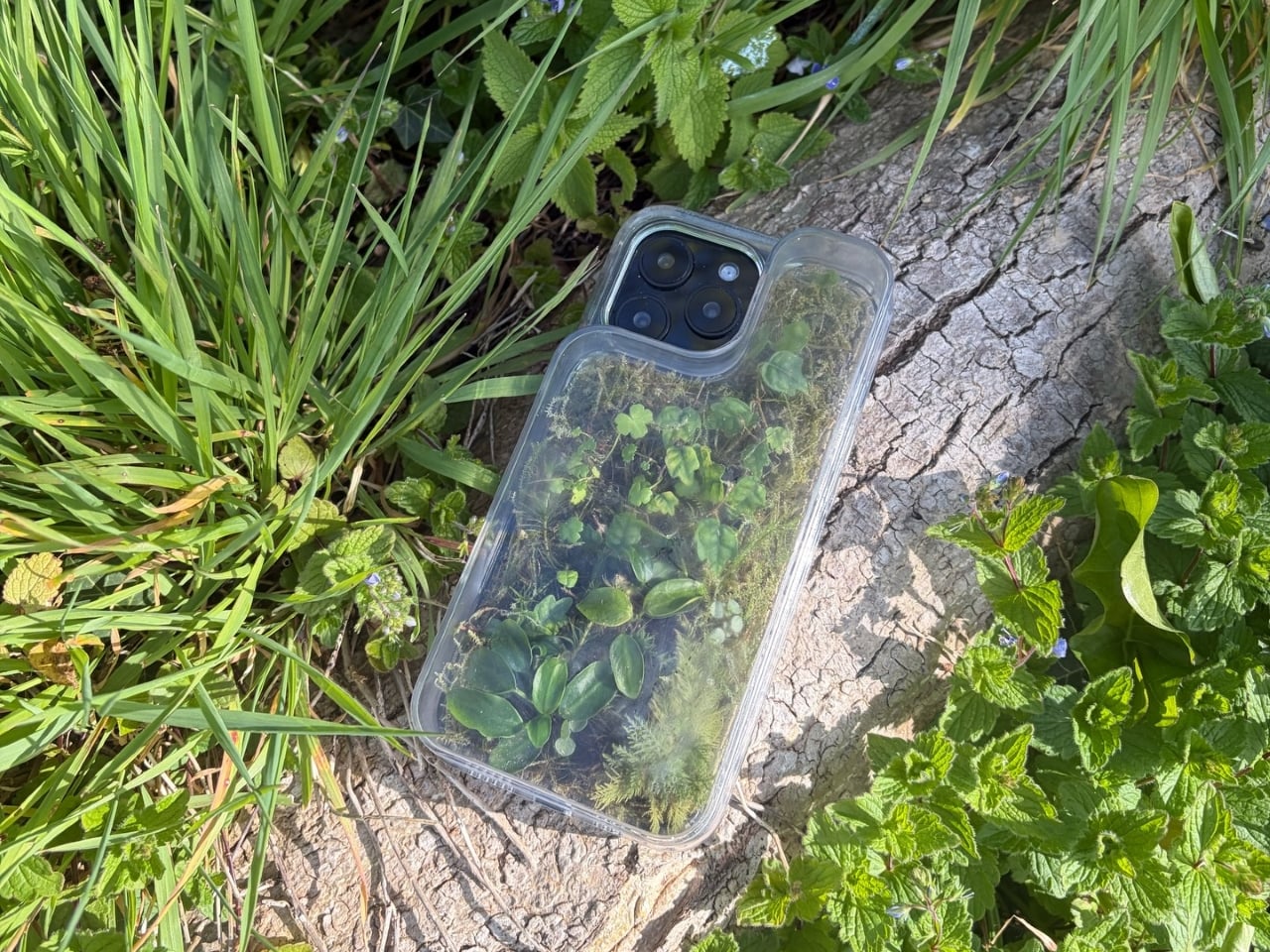
The Terrarium Phone Case is a clear resin case for the iPhone 16 Pro Max with an actual planted environment sealed inside the back cavity. Moss, small-leafed plants, and a stabilized soil substrate are embedded within the transparent shell, creating a thin cross-section of living terrain that you carry around with you wherever the phone goes. It’s a working phone case, a functional terrarium, and an oddly calming thing to have in your pocket all at once.

Designer: Daniel Idle

The construction involved 3D modeling and fabrication in clear resin, producing a case with enough depth in the back wall to house soil, roots, and plant matter. The plants are packed using a stabilized substrate that keeps the arrangement intact when the phone is picked up, rotated, tilted, or slipped into a bag. The camera cutout is fully preserved; the charging port at the bottom remains accessible; the phone continues to work exactly as it always did.

What keeps everything alive inside the sealed cavity is a closed-loop moisture system. The plants and soil generate humidity, which evaporates toward the inner surface of the resin, condenses back into droplets, and cycles down again. Light passing through the clear shell feeds the plants from outside, while the substrate provides gradual nutrient release. The whole thing is, in a fairly literal sense, a miniature ecosystem that sustains itself without any intervention from the person carrying it.

The condensation that forms on the inside of the shell during high-humidity moments is part of the visual appeal rather than a flaw to be engineered away. Seeing that vapor cycle through the case is a reminder that something in there is alive, actively breathing and responding to its environment, in the same pocket or bag as a device specifically engineered to minimize all biological interference.

There’s a running thread through design culture about bringing nature back into objects and spaces that have drifted too far from it. Biophilic design has become a recognizable term for everything from moss walls in offices to plant-filled shelving in apartments. Most of those applications treat plants as decoration layered on top of an existing design. Idle’s approach is different because the plant system isn’t decoration; it’s structural, sealed directly into the object’s body as a core component rather than an afterthought.

Of course, there will be some reservations about putting moisture and soil so close to your phone, which might be resistant to water and dust, but only from brief encounters. Good thing, then, that it’s still a concept project right now. But as a thought experiment about what a phone case could reasonably contain, it lands somewhere between genuinely novel and gently absurd, which is probably the most honest place for a good idea to start.

The post Phone Cases Are Boring, This One Puts a Living Terrarium Inside first appeared on Yanko Design.

Android 17: Everything We Know About Google’s Biggest Year Yet

7 mai 2026 à 10:08

Android 17 rumors point to Motion Assist, App Bubbles, native app locking, Gemini updates, and Android XR news ahead of Google I/O 2026.

The post Android 17: Everything We Know About Google’s Biggest Year Yet appeared first on TechRepublic.

  • ✇Yanko Design
  • vivo X300 FE Review: The Compact Flagship That Earns Its Keep
    PROS: Compact, comfortable, and premium design Powerful 50MP main and telephoto cameras Large battery with fast wired and wireless charging Long-term software support CONS: Mediocre 8MP ultra-wide camera Uncommon horizontal camera design A bit pricier than most "small flagships" RATINGS: AESTHETICSERGONOMICSPERFORMANCESUSTAINABILITY / REPAIRABILITYVALUE FOR MONEYEDITOR'S QUOTE:The vivo X300 FE proves that a compact phone doesn't have to feel like a lesse
     

vivo X300 FE Review: The Compact Flagship That Earns Its Keep

Par : JC Torres
2 mai 2026 à 11:20

PROS:


  • Compact, comfortable, and premium design

  • Powerful 50MP main and telephoto cameras

  • Large battery with fast wired and wireless charging

  • Long-term software support

CONS:


  • Mediocre 8MP ultra-wide camera

  • Uncommon horizontal camera design

  • A bit pricier than most "small flagships"

RATINGS:

AESTHETICS
ERGONOMICS
PERFORMANCE
SUSTAINABILITY / REPAIRABILITY
VALUE FOR MONEY

EDITOR'S QUOTE:

The vivo X300 FE proves that a compact phone doesn't have to feel like a lesser one.

Premium smartphones have been trending bigger, heavier, and more visually imposing for years. It’s reached the point where “flagship” is almost synonymous with large, and carrying one all day feels less like convenience and more like a commitment. The compact phone hasn’t disappeared, but finding one that doesn’t sacrifice performance, battery life, or camera quality in exchange for a smaller footprint has been genuinely difficult.

That’s the gap the vivo X300 FE is aiming to fill. It pairs a 6.31-inch flat display with a Snapdragon 8 Gen 5 chipset, a 6,500 mAh battery, and a ZEISS co-engineered camera system, all within a compact design that stays remarkably light for its class. On paper, it reads like a phone that shouldn’t be this compact. But does it actually work in practice? We give it a spin to find out.

Designer: vivo

Aesthetics

The X300 FE follows a flat-design language that’s become increasingly standard among more expensive flagships. There aren’t any curved glass edges or aggressively contoured surfaces, just a clean, rectangular form with ultra-narrow bezels, an aerospace-grade aluminum frame, and a front face that looks symmetrical and composed. The centered punch-hole is small and unobtrusive, and those slim borders give the display a neat, purposeful presence that doesn’t need theatrics to feel premium.

Our review unit came in white, which turns out to be a great choice for a phone this carefully considered. The matte rear panel uses vivo’s Metallic Sand AG glass treatment, giving it a soft, slightly chalky texture that resists fingerprints well and picks up ambient light in a way that shifts subtly between warm and cool tones. It doesn’t try to be eye-catching; it just looks well-made.

The flat aluminum frame wraps cleanly around the body, with edges that make it comfortable to grip without feeling sharp or slippery. The white model measures 8.10mm thick and weighs 192g, a hair more than the other colorways, but those differences don’t register in hand. What does register is the overall sense of a phone that’s been assembled with genuine attention to detail.

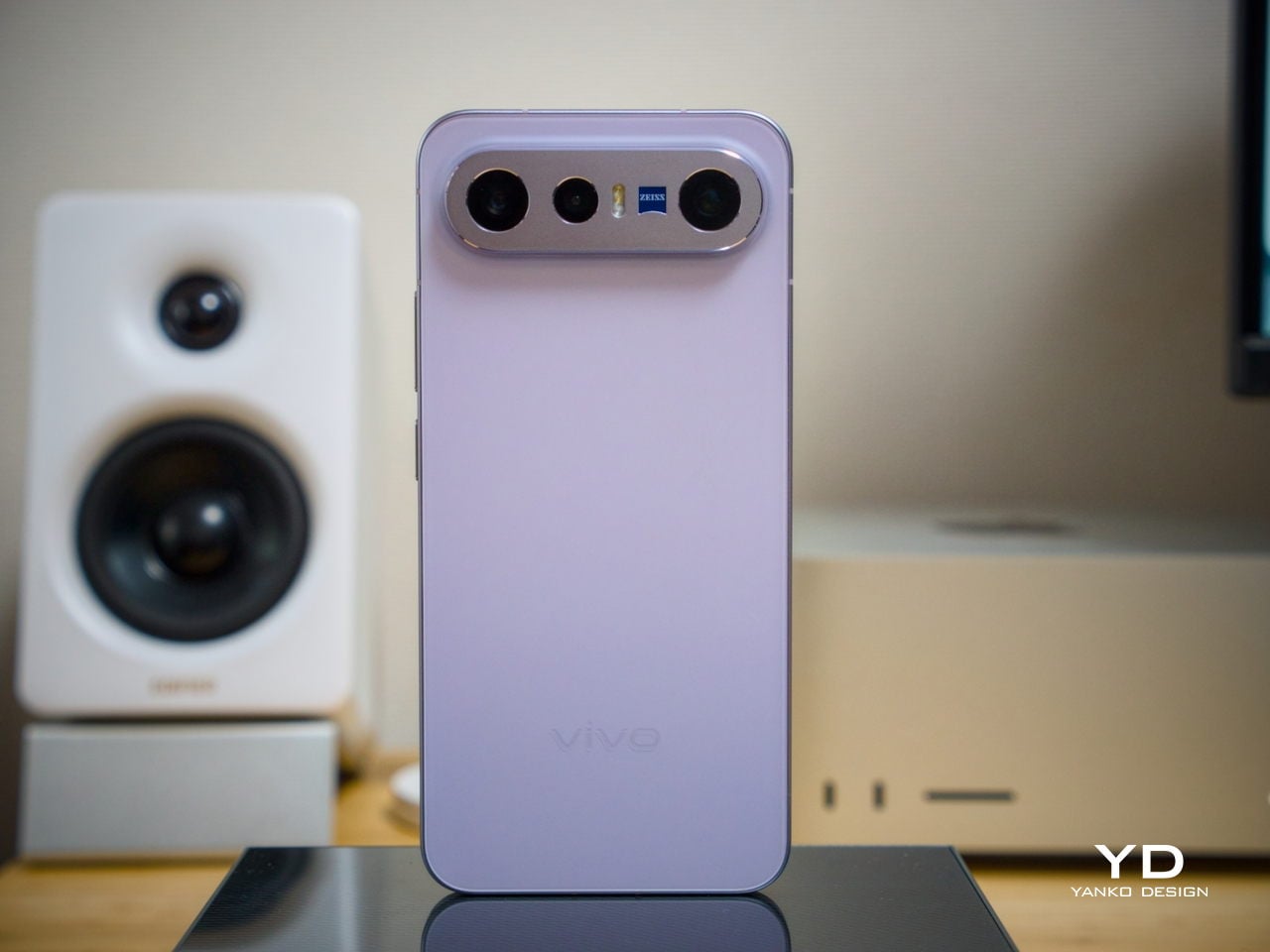
The camera module deserves its own mention. Rather than going for the oversized circular island that’s become visual shorthand for “serious camera phone,” vivo opted for a horizontal bar that spans the upper portion of the back. Three lenses are arranged neatly across it, with a ZEISS badge centered between them. It’s recognizable and distinctive without domineering the rest of the design. Admittedly, it’s going to be a divisive design, but it at least lets the vivo X300 FE easily stand out from the competition.

Ergonomics

At 150.83mm tall and 71.76mm wide, the X300 FE sits firmly in one-handed territory. It isn’t trying to be a miniature phone. It’s simply sized more sensibly than most flagships on the market. You can reach across the screen without adjusting your grip, slip it into a front pocket without thinking, and hold it for extended periods without the wrist fatigue bigger phones tend to bring.

The 192g weight for the white model falls in a range that feels present without being burdensome. There’s enough substance here to reinforce the premium feel of the materials, but not so much that you’re constantly aware of it. The 8.10mm profile isn’t exactly wafer-thin, though that’s a reasonable trade-off for a 6,500 mAh cell packed inside a frame this compact.

The flat-sided frame also contributes more to the ergonomic experience than it might seem. It gives your palm a stable, consistent surface to press against during typing and scrolling, which feels more controlled than on rounded-edge designs. The compact footprint, flat back, and balanced weight distribution all work together to make this a phone that feels designed around how it’s actually used.

Performance

The Snapdragon 8 Gen 5 inside doesn’t need much introduction. It’s a flagship-class mobile processor, and the X300 FE puts it to good use. The 12GB RAM, expandable with another 12GB taken from the generous 512GB storage, clearly marks it as a class above your typical mid-tier compact phone. It runs Origin OS 6, based on the current Android 16 release, embracing a more minimalist and flat aesthetic that perfectly matches the phone’s design.

Day-to-day tasks feel completely effortless, from switching between apps and browser tabs to occasional gaming sessions, and nothing about the experience suggests the compact body is in any way holding the hardware back. Thermals are pretty impressive, given the vivo X300 FE’s size, but its compact form factor might work against it when it comes to how you hold it during those long periods.

Thankfully, the display backs that up well. It’s a 6.31-inch LTPO AMOLED panel with an adaptive refresh rate of 1 to 120 Hz, a 1.5K resolution at 460 PPI, and a local peak brightness of 5,000 nits. The 2,160 Hz PWM dimming also makes prolonged reading and scrolling noticeably more comfortable on the eyes, a detail that matters far more than most spec sheets would have you believe.

Then there’s the battery, arguably the X300 FE’s most impressive engineering accomplishment. A 6,500 mAh cell in a phone this slim and light isn’t something you see every day, and in practice, that capacity means genuine all-day endurance with room to spare. The 90W wired and 40W wireless charging mean you’re rarely stuck waiting long when it runs low, at least with the appropriate chargers.

The camera system is led by a 50 MP ZEISS main camera and a 50 MP ZEISS super-telephoto camera, with an 8 MP ultra-wide rounding out the rear. The main and telephoto cameras handle portraits, street photography, and concert scenes with real confidence. An optional telephoto extender accessory also exists for those who want extended reach, though it’s firmly in niche territory.

The results are impressive, especially when starting to zoom in on subjects. Even without the telephoto extender, you can enjoy clear and detailed shots, even at night. The 8MP ultra-wide, though usable, is a bit of a letdown, but vivo had to cut some corners to bring down the price and differentiate this model from its more powerful and more expensive siblings. You do have a ton of settings to tweak to get your perfect shot, but even the defaults are good enough to make fleeting moments more memorable.

Sustainability

The X300 FE carries IP68 and IP69 dust and water resistance ratings, alongside an SGS five-star drop resistance certification, giving it a reassuring level of durability for daily use. It also carries an SGS five-star drop resistance certification, which gives it more formal durability credentials than most phones in its class. Together, those ratings make a convincing case for a phone built to survive daily life without requiring any particularly careful handling.

Software longevity is where the X300 FE makes its strongest long-term case. On that front, vivo is committing to five years of OS upgrades, seven years of security maintenance, and a five-year smooth experience promise. That support window is competitive with the best in the Android space, and it signals that this phone is meant to be genuinely used for years, not replaced the moment something newer comes along.

Value

At around €1,000, The X300 FE isn’t a budget phone, and it doesn’t try to be. It competes in the premium compact flagship space, where the particular combination it offers is harder to find than you’d expect. A current-generation chipset, a genuinely large battery, fast wired and wireless charging, ZEISS-branded imaging, and a durable premium build in a package that remains notably light for a flagship is a rare and coherent offering.

The person this phone is designed for isn’t shopping for the biggest or most spec’d-out device available. It’s someone who wants a phone that keeps pace with their life without dominating it, one that fits in a jacket pocket, lasts a full day, and still takes genuinely good photos. Frequent travelers, urban commuters, and anyone who’s tired of unwieldy flagships will feel right at home here.

Verdict

The vivo X300 FE is the kind of compact flagship that doesn’t feel like a compromise once you’re actually using it. The design is restrained and coherent, the battery is frankly impressive for the size, the chipset handles everything you throw at it, and the camera does its best work in exactly the situations most people find themselves in, out in the world rather than on a lab bench.

What the X300 FE offers is a phone that’s easy to carry, genuinely long-lasting, and capable enough for the photography and day-to-day demands you’ll actually encounter. It’s well built, well supported, and clearly designed with a specific kind of person in mind. That clarity of purpose is refreshing, and for the right buyer, it’s exactly what makes this phone worth serious consideration.

The post vivo X300 FE Review: The Compact Flagship That Earns Its Keep first appeared on Yanko Design.

  • ✇Yanko Design
  • Bigme HiBreak Dual Has E Ink Up Front and a Round LCD in Back
    Staring at a phone screen for hours isn’t kind to your eyes, and more people are finally taking that seriously. The backlit displays on most modern smartphones are tuned for vivid color and fast scrolling, but sustained use can lead to real fatigue. That growing awareness has pushed E Ink displays into smartphone territory, where their paper-like readability makes a lot of practical sense. Bigme has been building its HiBreak series into a line of Android smartphones centered on E Ink displays,
     

Bigme HiBreak Dual Has E Ink Up Front and a Round LCD in Back

Par : JC Torres
17 avril 2026 à 04:45

Staring at a phone screen for hours isn’t kind to your eyes, and more people are finally taking that seriously. The backlit displays on most modern smartphones are tuned for vivid color and fast scrolling, but sustained use can lead to real fatigue. That growing awareness has pushed E Ink displays into smartphone territory, where their paper-like readability makes a lot of practical sense.

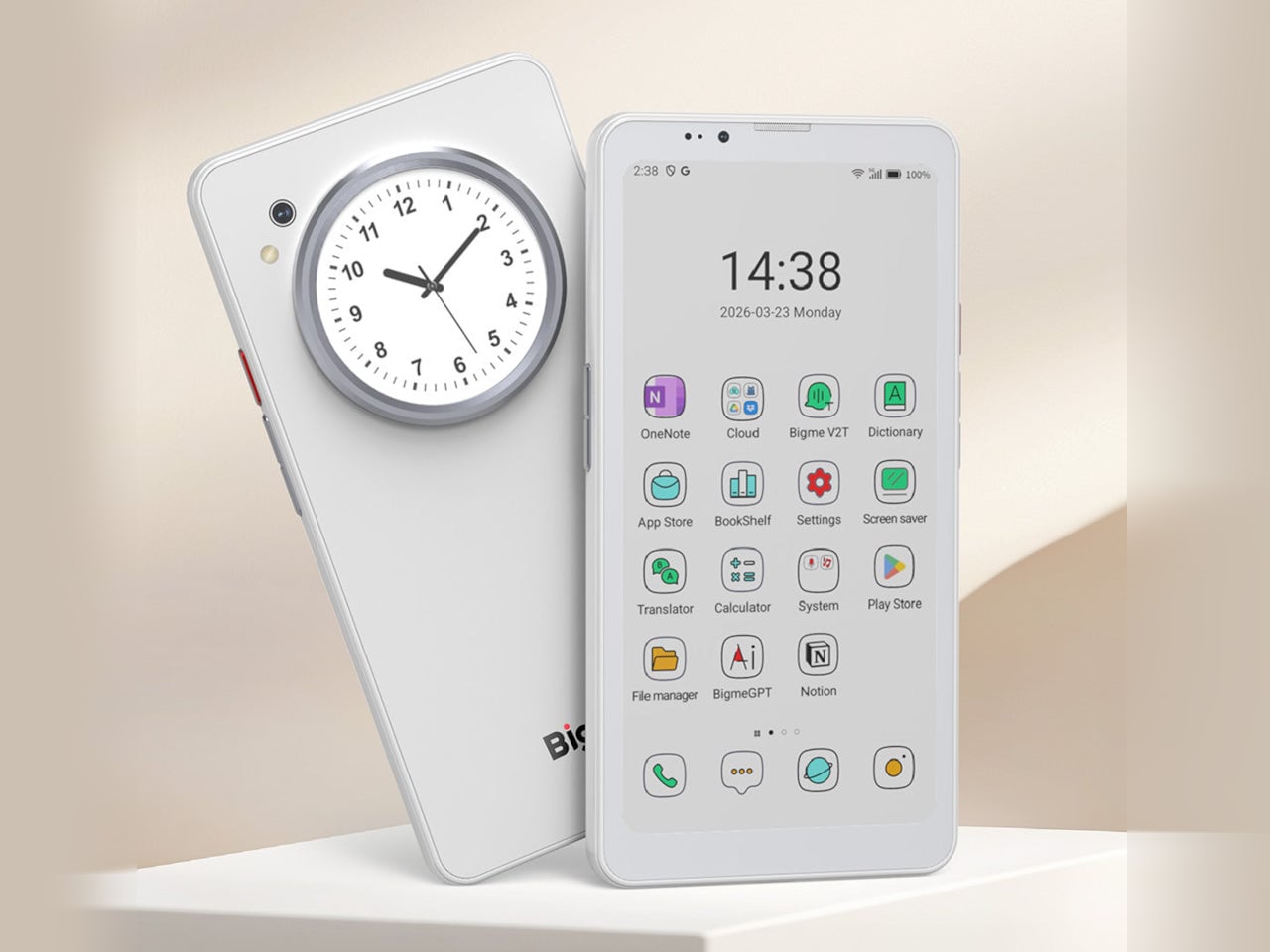
Bigme has been building its HiBreak series into a line of Android smartphones centered on E Ink displays, and the HiBreak Dual is its newest entry. Rather than simply updating the screen, Bigme gave this model two displays: a full-sized E Ink panel on the front and a compact circular LCD on the back, letting the phone handle information at two different levels of urgency.

Designer: Bigme

The main display is a 6.13-inch E Ink screen at 824 by 1,648 pixels, delivering 300 pixels per inch in greyscale mode. The color model supports up to 4,096 colors, and a frontlight with 36 brightness levels covers both dim interiors and bright outdoor settings. Because E Ink reflects ambient light rather than emitting it, reading outdoors is comfortable in a way that backlit displays simply aren’t.

What sets the HiBreak Dual apart from the rest of the lineup is its stylus support, a first for the HiBreak series. A 4,096-level pressure-sensitive pen lets you write, sketch, and annotate directly on the E Ink surface, turning the phone into something closer to a digital notebook. The paper-like texture of the display makes the experience feel more tactile and far less clinical than a standard touchscreen.

The circular LCD on the back measures 1.85 inches and pulls off a surprisingly wide range of tasks. It shows the time, notifications, music controls, and weather at a glance, and also doubles as a viewfinder for the 20MP main camera. Bigme even added an AI pet feature that generates an animated version of your actual pet from a photo, keeping it alive on that small round screen.

Despite the unconventional display setup, the HiBreak Dual doesn’t skimp on the fundamentals. Although dated, Android 14 with full GMS certification keeps the entire Google Play library accessible, and NFC support means Google Wallet and contactless payments work just as they would on any standard Android device. The 5MP front camera handles video calls and everyday selfies without issue, while a fingerprint sensor takes care of security.

Under the hood, the phone runs on a MediaTek Dimensity 1080 processor paired with either 8GB or 12GB of RAM and up to 256GB of internal storage, further expandable by an additional 2TB via microSD. A 4,500mAh battery gets through a full day without much drama, while 5G on dual SIM cards, Bluetooth 5.2, and dual-band WiFi take care of the rest.

Pricing starts at $519 for the 8GB/128GB model, with early bird options in the $359 to $409 range and a 12GB/256GB version also available. It’s a phone designed for people who spend a significant part of their day reading, writing, and staying on top of things through a mobile device, and who’d genuinely rather do it on a screen that asks a little less of their eyes.

The post Bigme HiBreak Dual Has E Ink Up Front and a Round LCD in Back first appeared on Yanko Design.

❌