Vue normale

Il y a de nouveaux articles disponibles, cliquez pour rafraîchir la page.
Hier — 19 juillet 2026Windows Central - News, Forums, Reviews, Help for Windows 10 and all things Microsoft.

Windows 11's big 2026 update is almost here, and these 10 things you need to know before upgrading could save you time and frustration

Microsoft is expected to roll out the 2026 Update for Windows 11 (version 26H2) later this year, marking the fifth feature update for the desktop version of the operating system. However, this release isn't a full operating system swap, but it's still important not to skip it.

In this guide, I'll walk you through 10 interesting facts about Windows 11 version 26H2 to know before upgrading once it becomes available.

Facts to know about Windows 11 version 26H2

These are some facts about the new version for Windows 11.

1. Same operating system platform

Although the company will market Windows 11 version 26H2 as a new release, it shares the same platform as version 25H2, meaning both operating systems are identical under the hood. This is exactly the same case as versions 24H2 and 25H2.

2. Same set of features and improvements

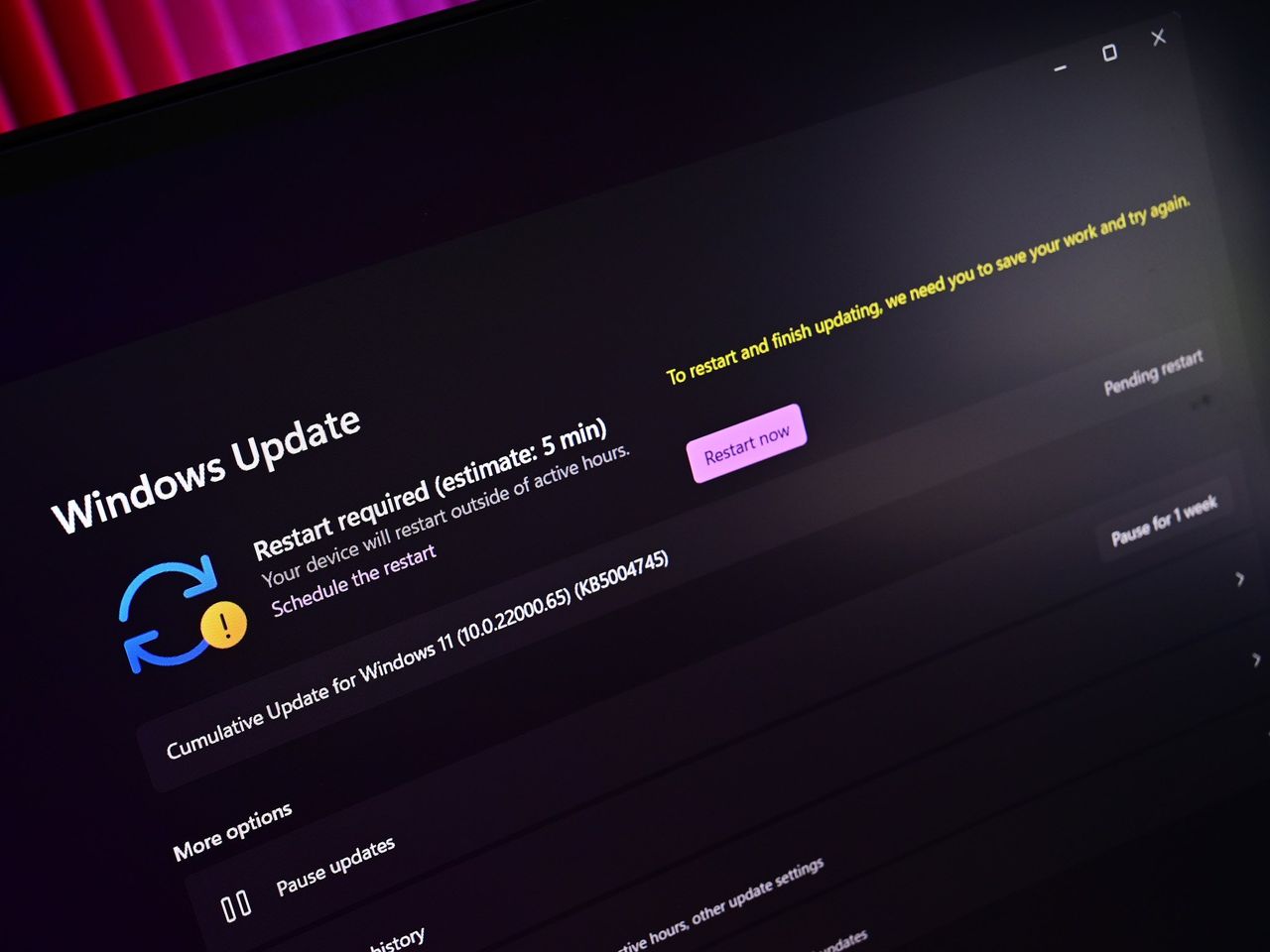
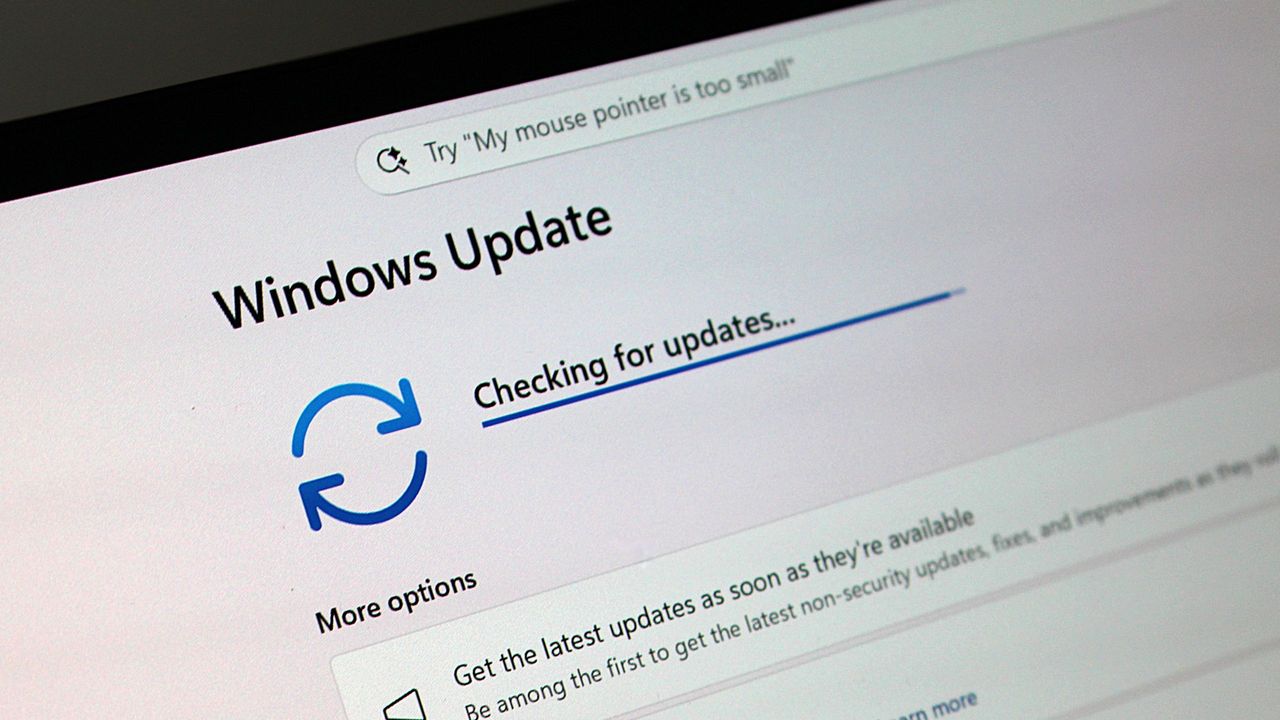
ASUS Zenbook 14 OLED laptop displaying Windows 11 with Windows Update screen

Windows 11 version 26H2 includes the same features and improvements already available in version 25H2. Microsoft isn't introducing a separate feature set for this release because both versions share the same platform.

Perhaps the most noticeable differences between Windows 11 versions 26H2 and 25H2 are their version and build numbers, along with their support lifecycle.

For example, version 26H2 uses build numbers in the 26300 series, while version 25H2 uses the 26200 series. Now, despite the different build numbers, updates for both versions typically share the same cumulative update (KB) number because they are based on the same code and include the same features and improvements.

Microsoft is expected to continue servicing both versions with the same features and improvements for the foreseeable future. As a result, version 26H2 is not expected to introduce major new capabilities at launch. Instead, it serves as another enablement package release that activates a new version number while preserving the same experience users already have on version 25H2.

3. Enablement Package-based installation

Similar to Windows 11 version 25H2, version 26H2 is expected to be rolled out as an Enablement Package (eKB). This means that if you're already running version 25H2, upgrading to 26H2 will be similar to installing a regular monthly cumulative update, without requiring a complete reinstallation of the operating system.

An Enablement Package is a small update that acts as a switch to activate features already included in the operating system but kept dormant. Once installed, it simply changes the version number from 25H2 to 26H2 while enabling the new release (if applicable).

Because version 26H2 shares the same platform and feature set as version 25H2, the installation process is expected to be quick and require only a single restart. As with previous enablement package releases, Microsoft will likely offer the update as an optional installation at first before making it available automatically to eligible devices as version 25H2 approaches the end of its support lifecycle.

4. Full reinstallation upgrade

Although Windows 11 version 26H2 is virtually identical to version 25H2, the upgrade path depends on the version currently installed on your computer.

If you're already running Windows 11 version 25H2 (or 24H2), you can upgrade through the Enablement Package without reinstalling the operating system. However, devices running an older release (such as version 23H2) will need to perform a full feature update to move to version 26H2.

5. Upgrade from Windows 10

If your computer is still running Windows 10, upgrading to Windows 11 version 26H2 requires a full feature update. Compatible devices will receive the latest supported version of Windows 11 directly through Windows Update, so you won't have to install 24H2 or 25H2 first.

If your computer doesn't receive the upgrade through Windows Update, you can also perform an in-place upgrade using Microsoft's installation media.

6. Direct upgrade from older versions

Windows Update settings window on a computer screen with a dark theme. The calendar is open, showing May 2025. The background is a gradient of blue, yellow, and purple.

(Image credit: Mauro Huculak)

You can upgrade directly to Windows 11 version 26H2 from version 23H2, 22H2, or an earlier release, as well as from Windows 10, using the ISO file or other Microsoft installation media.

These methods perform a standard in-place feature update, allowing you to keep your files, apps, and settings while installing the latest version of the operating system.

7. Upgrade tools trigger a full feature update

Although upgrading from Windows 11 versions 24H2 or 25H2 to version 26H2 through Windows Update only requires installing a small Enablement Package, using the official ISO file or other installation media will perform a full in-place upgrade instead.

The installation still preserves your files, apps, and settings, but it reinstalls the operating system rather than simply activating the new version with the Enablement Package. This results in an unnecessarily longer installation process compared to upgrading through Windows Update.

8. Reasons to upgrade to version 26H2

Since the last three releases of the operating system are virtually identical, the primary reason to upgrade is to extend your device's support lifecycle rather than gain access to new features.

Windows 11 version 25H2 remains supported through October 2027, but upgrading to version 26H2 extends support for another year. As with previous releases, Microsoft is expected to provide 24 months of support for the Home and Pro editions and 36 months for Enterprise and Education editions.

This also means there won't be any urgency to upgrade as soon as version 26H2 becomes available. Because these releases offer the same features and improvements, you can continue using version 25H2 until you're ready to switch. However, you should plan to install version 26H2 before version 25H2 reaches the end of its support lifecycle to continue receiving security updates and bug fixes.

It's worth pointing out that version 24H2 is set to retire on October 13, 2026, and it's recommended to upgrade as soon as possible to the next supported version.

9. Same hardware requirements

Windows 11 Update Settings

(Image credit: Future)

Windows 11 version 26H2 does not introduce new hardware requirements compared to version 25H2. The same requirements for supported processors, TPM 2.0, and other system components remain in place.

These are the minimum requirements to install or upgrade to Windows 11:

  • CPU: 1GHz or faster processor, or System on a Chip (SoC) with at least two cores.
  • RAM: 4GB or more.
  • Storage: 64GB or larger storage device.
  • Firmware: UEFI firmware with Secure Boot capability.
  • TPM: Trusted Platform Module (TPM) version 2.0.
  • Graphics: Compatible with DirectX 12 or later with a WDDM 2.0 driver.
  • Display: High-definition (720p) display larger than 9 inches diagonally, with 8 bits per color channel.

This means that if your device can already run Windows 11 version 25H2, it will also be compatible with version 26H2 without requiring any hardware changes.

10. Rollout strategy will be gradual

Although the Enablement Package that upgrades Windows 11 from version 25H2 to 26H2 is a small update, Microsoft will likely follow the same gradual rollout strategy used in previous releases.

The company typically uses the Controlled Feature Rollout (CFR) system to monitor the update experience, check for potential compatibility issues, and expand availability over time. As a result, not every device will receive the Windows 11 2026 Update immediately through the Windows Update settings page.

Availability will gradually expand over several weeks or months as the company confirms that the update is ready for a wider range of hardware configurations. If your device doesn't see the update right away, it doesn't necessarily mean there's a problem. It simply means the rollout has not reached your hardware configuration yet.

Windows Central's Take

Windows 11 Update page in Settings app

(Image credit: Future)

I think the Windows 11 2026 Update is a good example of how the software giant is changing how it delivers upgrades. A new version number no longer automatically means a major redesign or a long installation process. Instead, the company is leaning more toward smaller transitions that keep computers current with less disruption.

From my experience covering the operating system, I think this approach makes a lot of sense. Full feature updates have historically been among the most complicated parts of maintaining the operating system, often leading to compatibility issues, driver problems, and upgrade failures. By using an Enablement Package model, Microsoft can accelerate the transition, reduce the risk of errors, and make it easier for more users to move to the latest supported version.

Blank Pixel

This strategy also benefits the company because a simpler upgrade experience could encourage more people to stay on newer versions instead of delaying updates for months or years. When an upgrade takes only a few minutes instead of requiring a complete operating system installation, users are more likely to accept it.

That said, I don't see 26H2 as an update users need to install immediately. If you're already running 25H2, the main reason to move will be support rather than new features. However, I think this is a better direction for the operating system. Making upgrades faster and more reliable could help reduce the problems that have caused many users to delay installing new versions.

What are your thoughts about Windows 11 version 26H2 following the same path as 25H2? Do you prefer smaller, smoother updates, or do you want major new features with every release? Let me know in the comments.

More resources

Explore more in-depth how-to guides, troubleshooting advice, and essential tips to get the most out of Windows 11 and 10. Start browsing here:

Click to join us on r/WindowsCentral

Join us on Reddit at r/WindowsCentral to share your insights and discuss our latest news, reviews, and more.

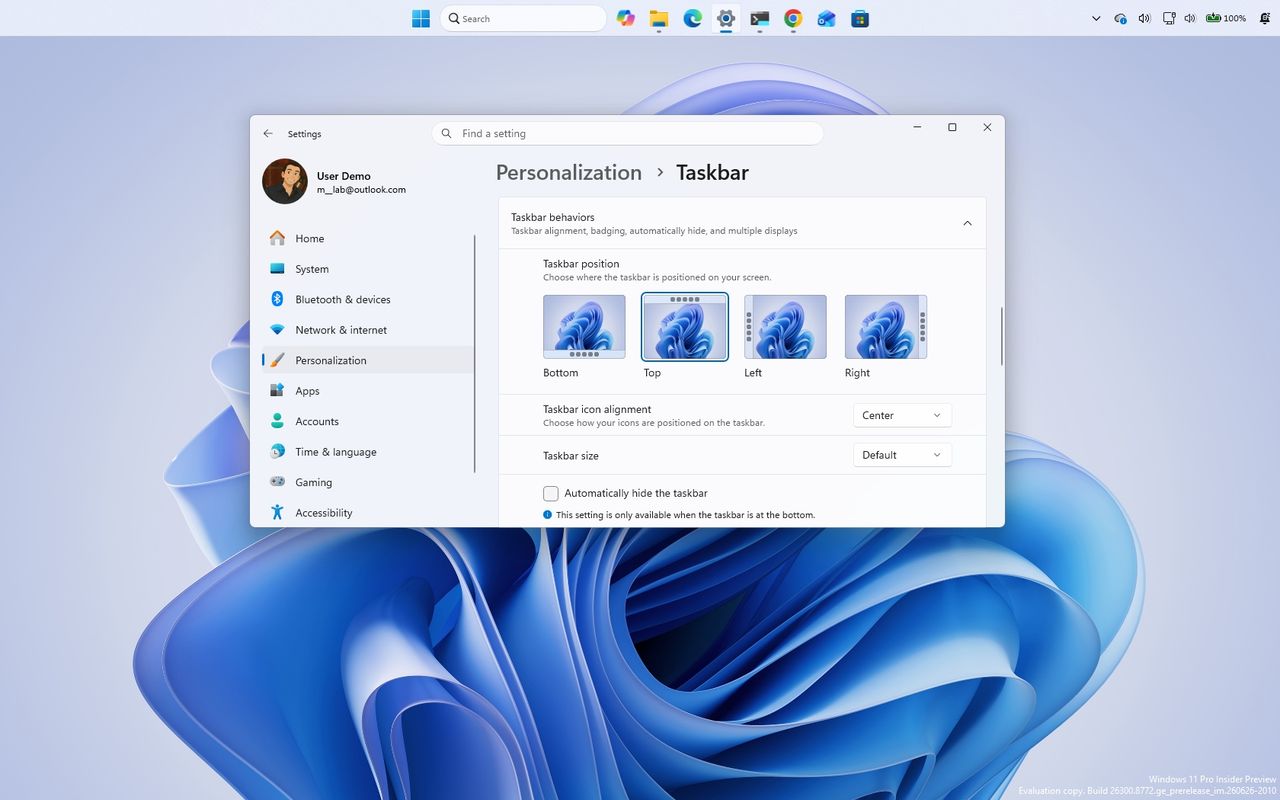
Windows 11 desktop with the Settings app opened and the Taskbar located at the top of the screen.
Windows 11 desktop with the Settings app opened and the Taskbar located at the top of the screen.
Windows 11 trades noisy Bing ads for the clean search experience it always needed — plus other updates you should know about this week

Windows Central

Can you hear that? It's the sound of capitalism crumbling. After years of pushback against ads, Microsoft has finally given in and decided to make a cleaner Search experience in Windows 11.

Sarcastic quips aside, Search is genuinely going to improve. Microsoft unveiled a massive upgrade to Search this week that will improve the accuracy of results, shift away from relying on the web, and yes, remove ads and promotional material.

The improved search will prioritize local results over grabbing information from the web. You'll even be able to customize whether web and Microsoft Store suggestions appear alongside local results at all. Search should also be more forgiving of typos, which should reduce frustration.

The upcoming improvements to Search were the biggest Windows 11 story of the week, but several other topics trended as well.

Biggest News of the Week

Semantic Search coming to Windows 11.
Windows Update in checking for update mode
Windows 11 desktop showing the Windows Update settings installing the July 2026 Security Update.
Windows 11 desktop with the Start menu open and showing the new Account Control design.
Windows Updates
Microsoft's new AI-driven Semantic Search is now available for those on the Windows Insider Release Preview.

I'd argue that Windows 11 never should have placed ads within Search in the first place. Certainly, Windows 11 Pro should have been ad-free. I'm glad to see Microsoft listen to feedback and get rid of some ads. I just think it's wild that the tech giant needs to be pushed in that direction.

I'm happy to see Microsoft did more than remove ads and call it a day. The new Search experience is better across the board. Our Zac Bowden was impressed after going hands-on with the feature.

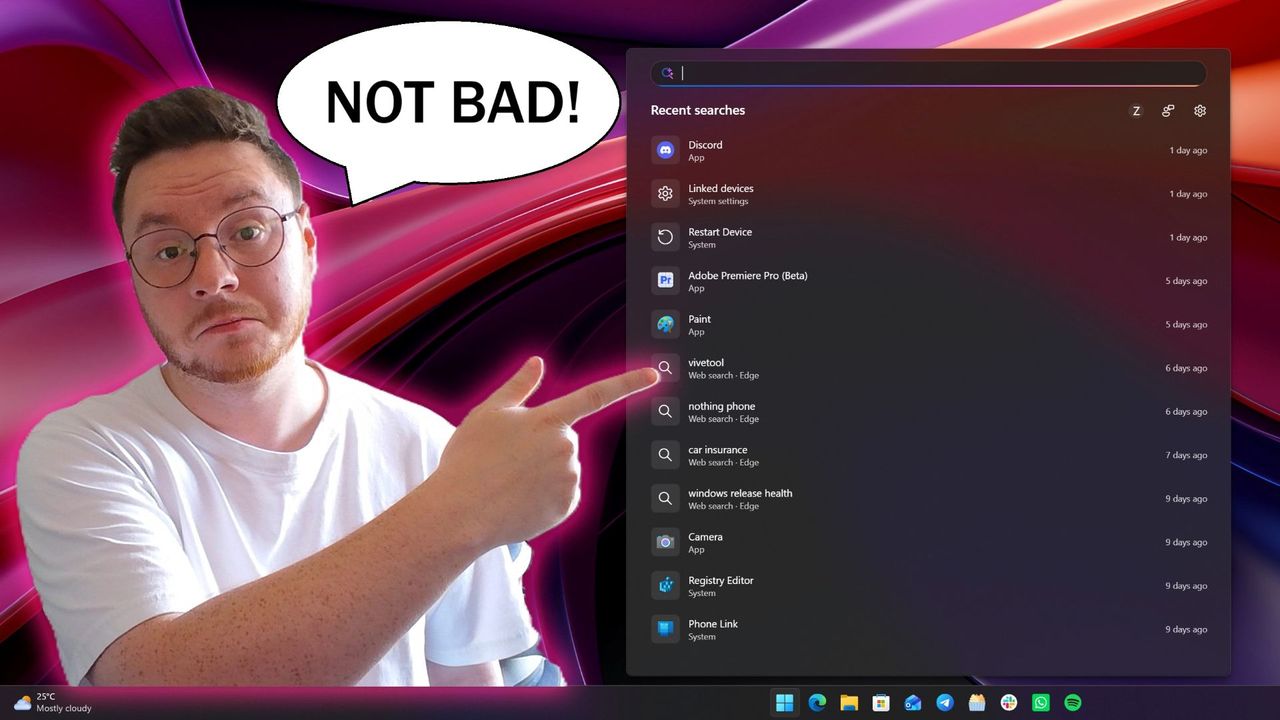
I'm very impressed with the new experience. Right off the bat, the search pane is no longer a noisy mess of Bing ads and sponsored content. It's a clean list of recent searches, exactly what you'd expect from a search pane.

Zac Bowden, Senior Editor, Windows Central

As always with updates like this, you can focus on the fact that Microsoft should have launched Windows 11 in this state rather than be strong-armed into making search usable. Alternatively, you can choose to be happy that Windows 11 is finally getting fixed. I choose the latter.

Shopping with Sean

Laptop deals have cooled off a bit, but you can still save hundreds of dollars on the Samsung Galaxy Book6 or the HP OmniBook Ultra 14. Both are excellent laptops with gorgeous displays and snappy performance.

If you're a gamer, make sure to check out the Xbox Ultimate Game Sale that's now live. Hundreds of games are discounted in what might be one of Microsoft's best-ever sale events.


"I’ve been using the Samsung Book 6 for a while now and honestly it’s been solid. It’s lightweight, looks premium, and the battery easily gets me through most of the day. Performance is smooth for studying, browsing, videos, and everyday work." ~ VALENTIN, customer review

4.8 out of 5 Stars (based on 40 Best Buy customer reviews)View Deal

HP's new OmniBook Ultra is the best Snapdragon X2 laptop we've tested yet, complete with a gorgeous design, incredible keyboard and trackpad, best-in-class touchscreen OLED display, and incredible battery life and performance.

Windows Central review: ⭐⭐⭐⭐⭐View Deal

Click to join us on r/WindowsCentral

Join us on Reddit at r/WindowsCentral to share your insights and discuss our latest news, reviews, and more.

New Windows Search UX

New Windows Search UX

Windows 11’s massive July 2026 update fixes 570 vulnerabilities and shows how AI is quietly reshaping Patch Tuesday itself

Microsoft's July 2026 Patch Tuesday update for Windows 11 is one of the largest security releases we've ever seen, fixing 570 vulnerabilities across Microsoft's products, according to Action1's analysis.

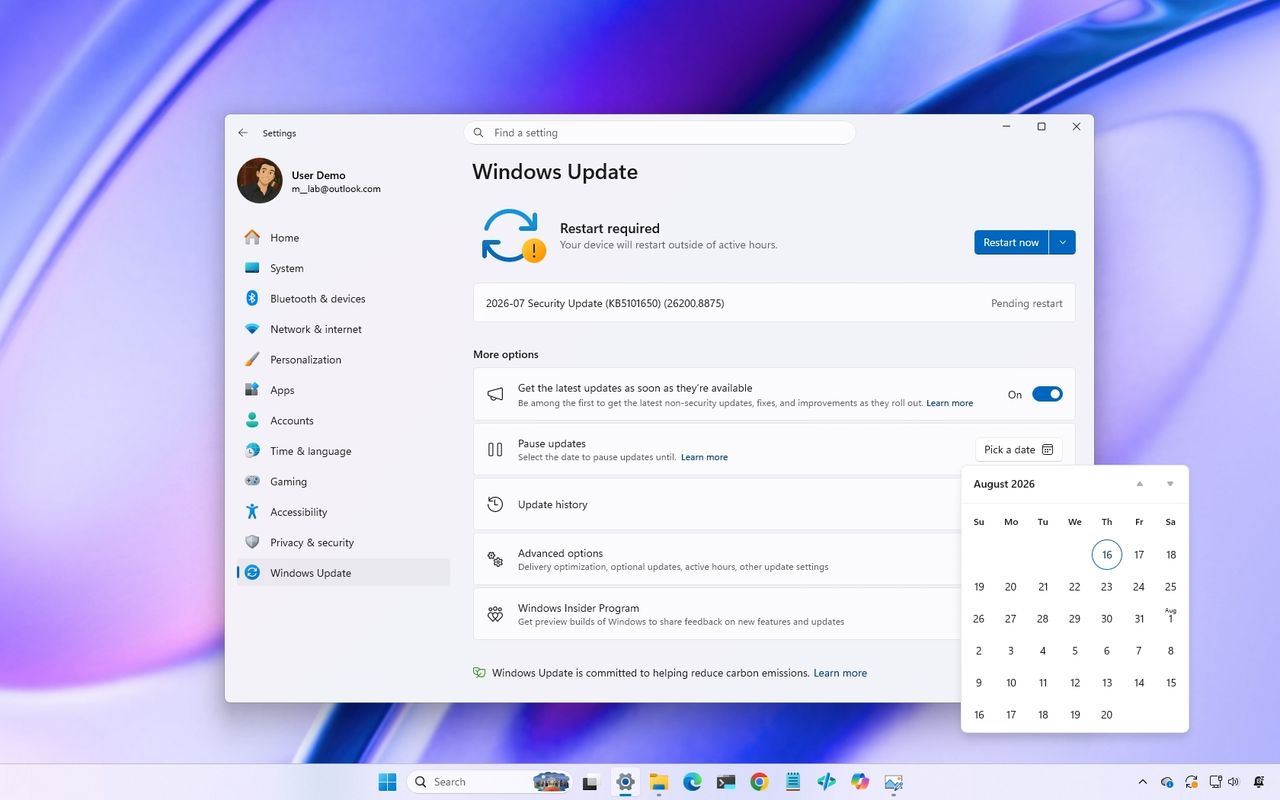
For users, the update arrives as KB5101650, bringing version 25H2 to build 26200.8875 and version 24H2 to build 26100.8875.

The number is certainly eye-catching. Microsoft fixed more than four times the number of security issues compared with July 2025, when the company addressed 137 vulnerabilities.

However, the bigger story is not simply that the company patched hundreds of security flaws. The July 2026 security update is an early example of a major shift Microsoft has already warned about. AI is changing vulnerability discovery, and Windows 11 updates are expected to become larger as a result.

The software giant says that as AI helps security researchers find more issues across more code, customers will see a higher volume of security fixes included in future security releases.

In other words, larger Patch Tuesday updates are not necessarily a sign that Windows is becoming less secure. They are also a sign that Microsoft is finding and addressing more problems before attackers can use them.

Why Windows 11's July 2026 update is so large

The July 2026 update addresses vulnerabilities across many core areas of Windows, including the Windows Kernel, Win32k, NTFS, Remote Desktop, Secure Boot, BitLocker, File Explorer, and more.

Several of these fixes address vulnerabilities that could allow remote code execution, where an attacker could potentially run malicious code on a system remotely.

The scale of the release follows a sharp increase in security fixes throughout 2026.

Here's a comparison based on vulnerability counts reported by Windows Latest and security-tracking data, showing how the number of fixes has increased since 2025.

Month

Vulnerabilities fixed in 2025

Vulnerabilities fixed in 2026

January

159

114

February

55

58

March

57

79

April

134

167

May

72

120

June

66

200

July

137

570

January–July total

680

1,308

However, Microsoft says the growing number of fixes should not be interpreted as the operating system becoming less secure. Instead, the company says AI is helping identify vulnerabilities earlier and at a larger scale.

Microsoft is using AI to find Windows vulnerabilities faster

Windows Update on a Dell XPS laptop

(Image credit: Screenshot: Windows Central / Laptop: Edited with Gemini)

The company has been investing in AI-powered security tools to reduce the time between discovering a vulnerability and protecting customers.

One of those tools is MDASH, Microsoft's multi-model agentic security scanning harness.

MDASH uses multiple AI models and more than 100 specialized AI agents to analyze code, identify potential vulnerabilities, debate findings, and validate whether issues are real.

Unlike a traditional scanner that simply reports possible problems, Microsoft's system is designed to reduce false positives by using multiple stages of analysis and validation.

The company notes that MDASH helped security researchers discover 16 vulnerabilities in networking and authentication components, including critical remote code execution flaws affecting areas such as the TCP/IP stack and IKEv2 service on Windows 11.

Those findings demonstrate how AI can help uncover complex security issues that may be difficult to identify through traditional approaches.

Microsoft has not said that MDASH discovered all 570 vulnerabilities included in the July 2026 update. Instead, the technology represents part of a larger effort to expand the company's vulnerability research capabilities.

Microsoft expects Windows 11 security updates to get bigger

The biggest takeaway from the new approach is that larger security updates are becoming expected. In a recent explanation of its vulnerability management strategy, Microsoft said: "As AI helps defenders discover more issues, customers will see a higher volume of security updates included in each security release."

The company says AI is being integrated into the entire security process, from finding vulnerabilities to helping engineers understand issues, develop fixes, and identify possible regressions.

Microsoft is also using additional validation systems to make sure faster security fixes do not come at the cost of update quality.

The goal is to shorten the time between vulnerability discovery and customer protection while maintaining reliability.

Why users should install updates faster on PCs

Windows 11 update in Settings app

(Image credit: Future)

As security updates grow larger, Microsoft is also pushing users and organizations to reduce delays before installing them, because attackers are also benefiting from AI.

Microsoft says attackers can now exploit newly discovered vulnerabilities much faster than before, leaving users and organizations with less time to install security updates.

For users, that means monthly updates are becoming more important. While temporarily pausing updates can still make sense if a release causes compatibility problems, leaving security fixes uninstalled for long periods creates unnecessary risk.

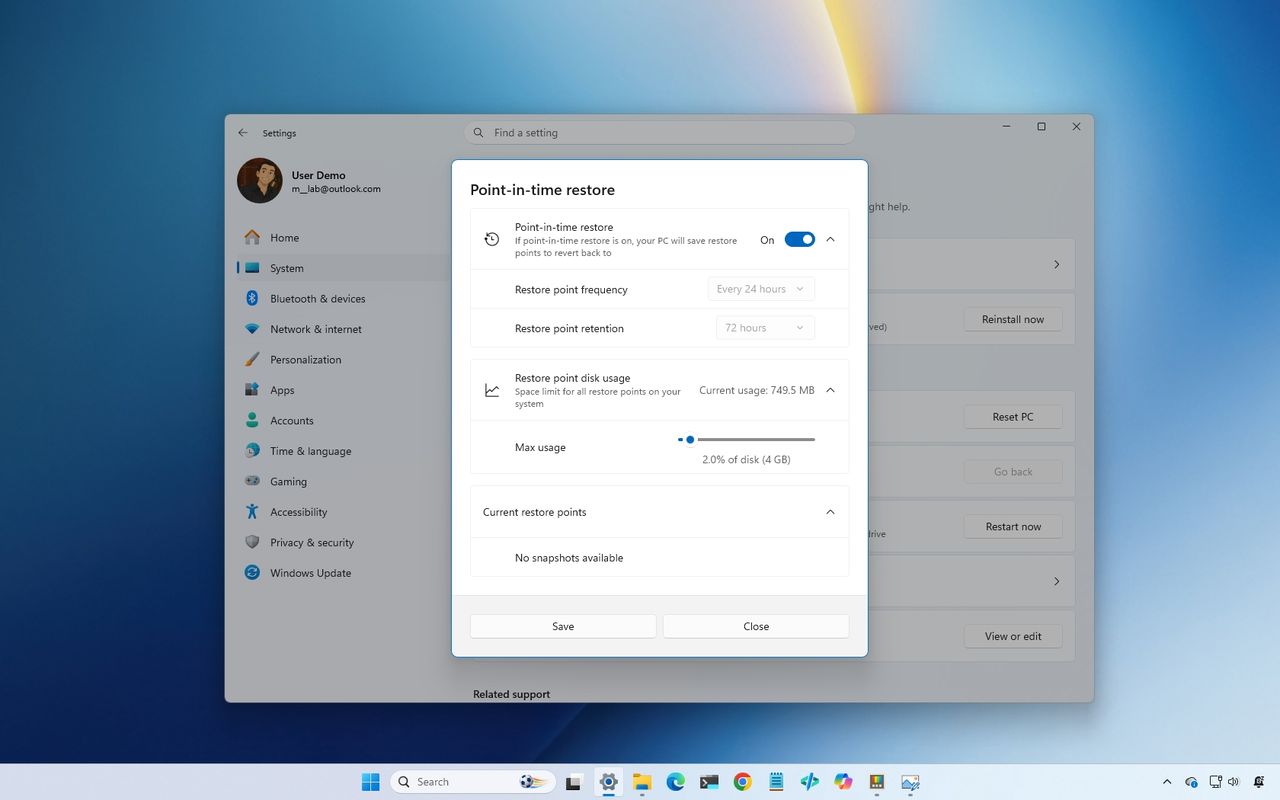
The July 2026 update also includes non-security improvements, including Point-in-time restore, Screen Tint, improved Bluetooth reliability, File Explorer improvements, and much more. However, the security changes are the main reason users should prioritize installing it.

Windows Central's Take

When I first saw that Microsoft had patched 570 vulnerabilities in a single Patch Tuesday release, I didn't immediately think Windows 11 had become less secure. Instead, my first thought was that this was exactly the kind of update the company had been preparing users for when it said AI would dramatically increase the number of vulnerabilities it could discover.

I actually think this changes how we should judge Patch Tuesday updates. For years, I've looked at the size of a security release as a rough indication of how much could potentially go wrong after installing it. In the future, that assumption may no longer hold true. A bigger update could only mean that the software giant is finding and fixing more issues before attackers have the chance to exploit them.

Blank Pixel

That said, Microsoft still has something to prove. Discovering more vulnerabilities is only half the equation. Users will judge this new approach by whether these larger updates remain reliable and don't introduce new issues of their own. If the company can consistently deliver both better security and stable updates, I think that's a tradeoff most users will gladly accept.

Do you think larger Patch Tuesday updates are a good sign for Windows 11 security, or do they make you more cautious about installing updates? Let me know in the comments.

More resources

Explore more in-depth how-to guides, troubleshooting advice, and essential tips to get the most out of Windows 11 and 10. Start browsing here:

Click to join us on r/WindowsCentral

Join us on Reddit at r/WindowsCentral to share your insights and discuss our latest news, reviews, and more.

Windows 11 desktop showing the Windows Update settings installing the July 2026 Security Update.

Windows 11 desktop showing the Windows Update settings installing the July 2026 Security Update.

This Surface is the only laptop that supports Windows 11's best new feature

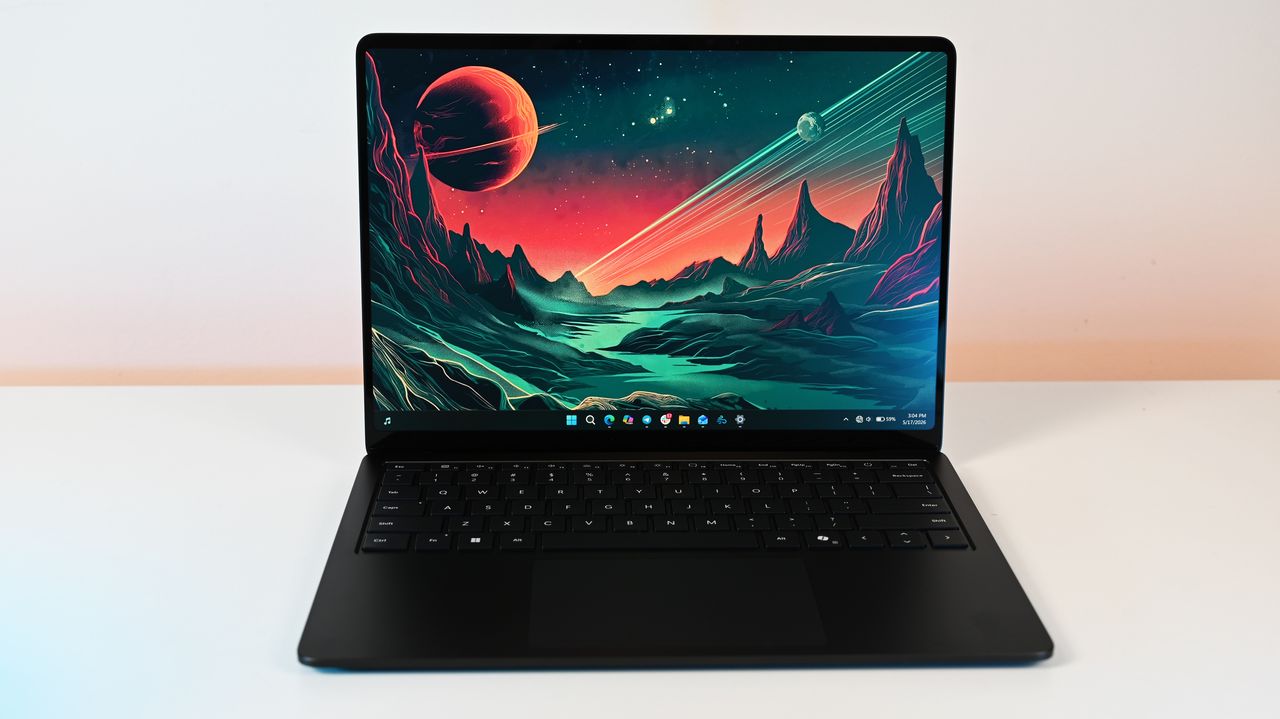
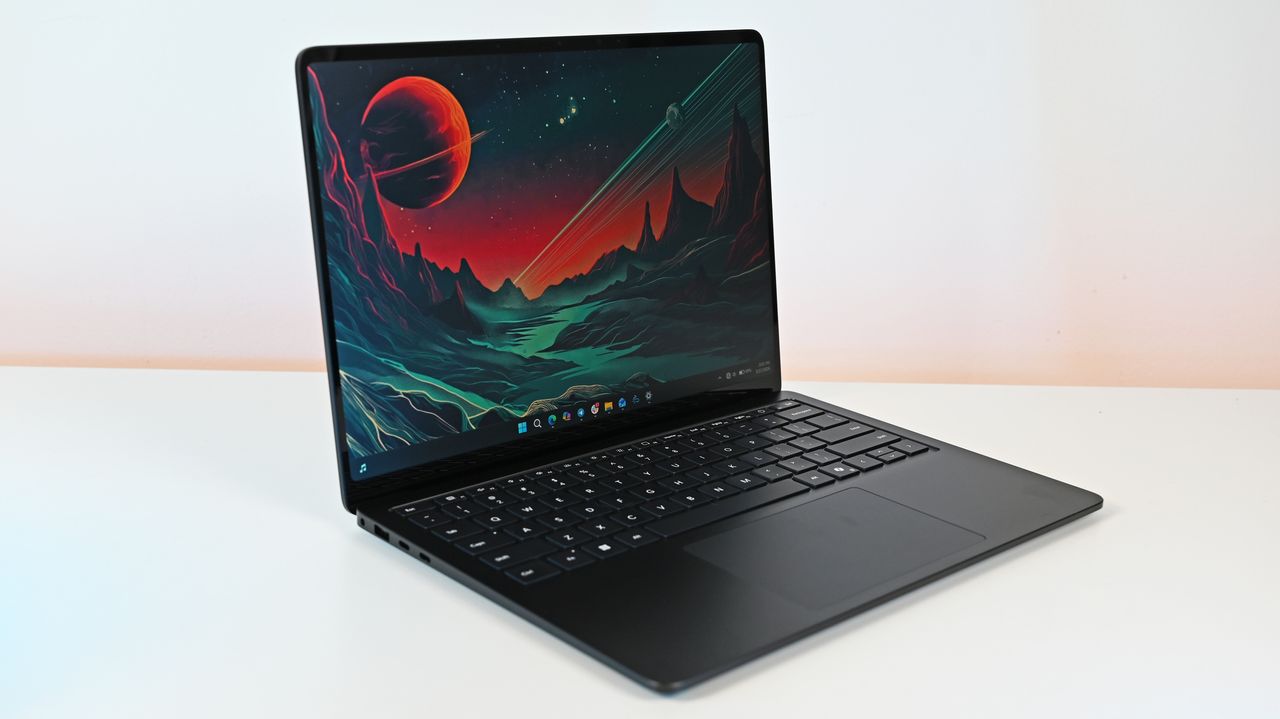
Microsoft's Surface Laptop 8 launched this summer, sporting new Snapdragon X2 chips. The flagship laptops promise a premium experience, better battery life than the previous generation, and improved graphics performance.

The bump in performance is expected considering the Surface Laptop 8 has a brand-new chip inside, so a different improvement is more noteworthy. The Surface Laptop 8 is one of the only devices to support Windows 11's new advanced haptics feature. It's the only laptop to support the feature.

Shop all Best Buy Surface deals

Advanced haptics sends a subtle bump through a touchpad, mouse, or stylus to let you feel Windows 11. For example, rearranging windows on your screen through Snap Layouts gives a clear indication of when you've hovered over a different layout.

Our Senior Editor Zac Bowden said "Windows 11's new 'Haptic Signals' feature is a quality of life upgrade [he] didn't realize the OS needed until [he] tried it." Now, you can experience the same thing since the Surface Laptop 8 is available for purchase.

CPU: Snapdragon X2 Plus
GPU: Qualcomm Adreno
RAM: 16GB
SSD: 512GB

The Surface Laptop 8 introduces Microsoft's new Dune colorway, giving a warm aesthetic to an otherwise unassuming PC.

👉 See at BestBuy.comView Deal

CPU: Snapdragon X2 Elite
GPU: Qualcomm Adreno
RAM: 16GB
SSD: 512GB

This Surface Laptop 8 runs on the Snapdragon X2 Elite, which lets it tackle tasks all day without running out of battery life.

👉 See at BestBuy.comView Deal

Why should I care about advanced haptics?

A hand wearing a black ring rests on the touchpad of a Surface Laptop for Business 8th Edition. The laptop keyboard is visible, highlighting the Shift, Ctrl, and Alt keys.

The haptic touchpad of the Surface Laptop 8 sends subtle vibrations when you perform certain actions, such as moving a file within File Explorer. (Image credit: Daniel Rubino)

As a quick point of clarity, the Surface Laptop 8 with Snapdragon X2 is what recently became available. Microsoft launched the Surface Laptop 8 for Business earlier this year. The business model runs on an Intel processor and comes with features you likely do not need as a general user.

Both the consumer and business versions of the Surface Laptop 8 support advanced haptics, but I recommend the consumer model to most people.

Advanced haptics is one of those small touches that makes Windows 11 feel polished. I appreciate UI changes and other Windows 11 improvements, but I'm more interested in features like advanced haptics because it changes the hands-on experience with a PC — quite literally.

"The new advanced haptic touchpad is a joy to use. It provides subtle tactile cues that confirm your actions," said our Editor-in-Chief Daniel Rubino in our Surface Laptop 8 review.

Our friends at Tom's Guide came away similarly impressed when reviewing the Surface Laptop 8:

"I’m also fond of the touchpad, which delivers satisfying haptic feedback when pressed. With some apps, you will even feel haptics when hovering over the X button on a window, which is quite fun and intuitive."

Right now, Windows 11 is the main way that you'll experience advanced haptics. But there's an API for the feature, so third-party developers can leverage it. Filmora, Affinity, and other third-party apps either already support the feature or will soon.

The only other way to use Windows 11's advanced haptics feature is to have a Logitech MX Master 4 or a supported stylus like the Surface Slim Pen 2. Over time, more devices should support the feature, but the Surface Laptop 8 beat everything else to the punch.

Click to join us on r/WindowsCentral

Join us on Reddit at r/WindowsCentral to share your insights and discuss our latest news, reviews, and more.

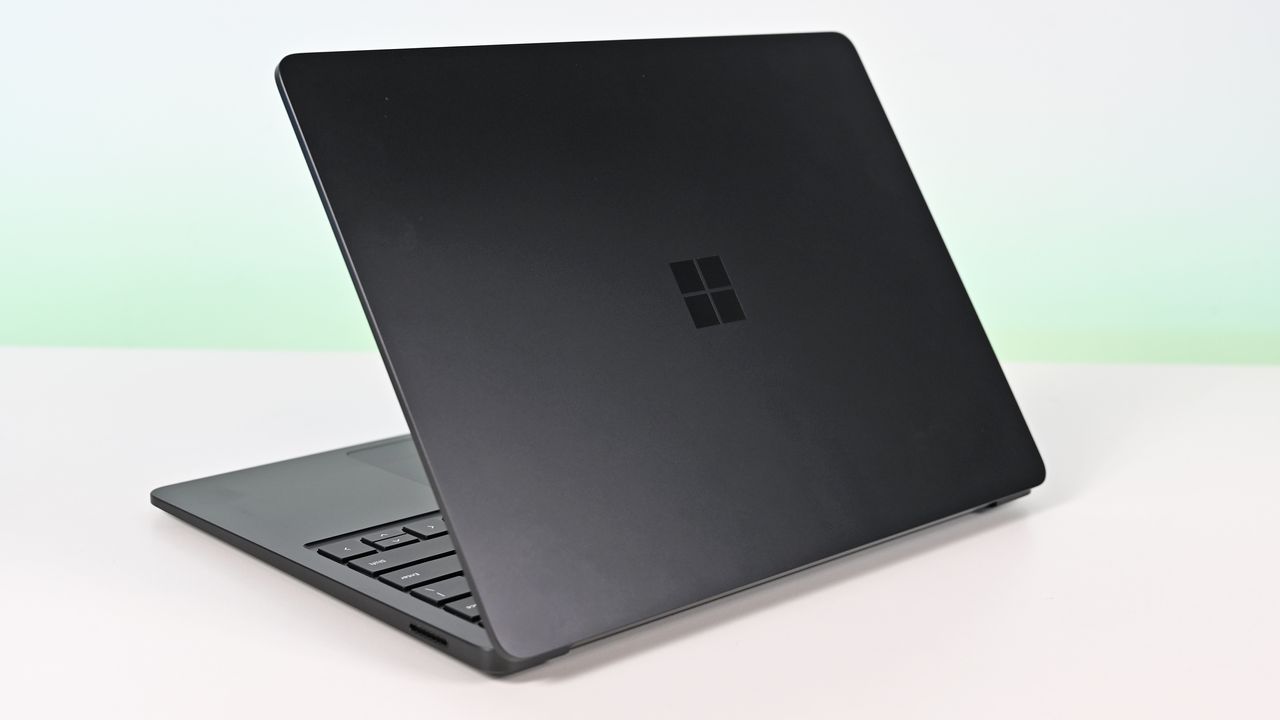
Surface Laptop for Business 8th Edition with a closed screen featuring a Windows logo, resting on a white surface. The background is a soft gradient from light blue to green.

Surface Laptop for Business 8th Edition with a closed screen featuring a Windows logo, resting on a white surface. The background is a soft gradient from light blue to green.

Microsoft Comic Chat, an IRC client from 30 years ago that helped popularize Comic Sans, is going open source

Microsoft's once popular IRC client "Comic Chat" is being open sourced to celebrate its 30th anniversary. Those who frequented the world wide web in the 90's will likely remember Comic Chat for being a unique experiment into how IRC chatting could be, featuring graphical avatars that presented chats and chatrooms in comic strip form.

Originally developed by Microsoft Researcher David Kurlander and released on August 13, 1996, Comic Chat began life as a research project before morphing into Microsoft Chat and becoming the default chat client for MSN.

"Today, we’re excited to announce the open-source release of Microsoft Comic Chat, the chat client that automatically turned conversations within Internet Relay Chat (IRC) into comic panels featuring illustrated characters, speech bubbles, and expressions, and helped introduce the world to a little font called Comic Sans," Microsoft's Scott Hanselman announced in a blog post today.

Comic Chat on Windows 11

Comic Chat running on Windows 11. (Image credit: Microsoft)

"For many people, Comic Chat is a nostalgic artifact from the early days of the internet as we transitioned from technologies like telnet, Usenet, and IRC to the largely visual web that we enjoy today. For others, it’s a legendary piece of Microsoft history they have only heard about in stories, screenshots, and debates about typography. Now, developers, historians, retro computing enthusiasts, and anyone who appreciates a wonderfully unconventional idea can explore the source code for themselves."

Although from the 90s, Comic Chat is still functional as an IRC client today, though most people likely don't use it anymore. Still, with the app now being open source, perhaps developers and tinkerers will be more open to breathing life back into the 30 year old app.

The Comic Chat source code is now public on GitHub for anyone who wants to take a look and compile their own version.

Click to join us on r/WindowsCentral

Join us on Reddit at r/WindowsCentral to share your insights and discuss our latest news, reviews, and more.

Microsoft Logo Birthday

Microsoft Logo Birthday

Microsoft rolls out 6 helpful new Windows 11 Insider features for early July, including one built to protect your PC from disaster

As part of the Windows Insider Program, Microsoft released several preview builds of Windows 11 in early July 2026, some of which introduced new features and others only improvements for existing experiences.

In the first two weeks of July, the company began the public test of the Cloud rebuild recovery feature, revealed a new design update for the account manager available through the Start menu, and made other improvements for version 26H2

In addition, Microsoft is continuing to expand previously announced features to more Insider channels, including the ability to upgrade from Windows 11 Home to Pro Education for K-12 environments. The company is also rolling out Taskbar position and size options, along with Windows Update improvements designed to reduce the number of required restarts each month.

In the Experimental track, we've seen builds 26300.8772 and 28120.2387, and builds 28020.2380 and 26220.8764 have been released in the Beta channel.

In this recap, I'll highlight the latest and most noteworthy changes available through the Windows Insider Program.

Biggest improvements from the Windows Insider Program in July 2026

In this recap, I'll highlight the latest and most noteworthy changes available through the Windows Insider Program since my last roundup.

Cloud rebuild new feature

Starting with build 26300.8772, Windows 11 introduces a new recovery feature known as "Cloud rebuild," which has been designed to make it easier to reinstall the operating system when the computer is unable to start, or you're looking for a fresh install.

Windows Recovery Environment in the Troubleshoot page highlighting Cloud rebuild option.

(Image credit: Mauro Huculak)

If this feature sounds familiar, it's because it's similar to the Cloud download option in Reset this PC. However, Cloud rebuild introduces a new workflow that downloads the Windows 11 installation files and drivers and performs a clean installation without requiring a bootable USB drive, a custom recovery image, or access to the desktop environment.

Cloud rebuild can be accessed from the Windows Recovery Environment (WinRE) by going to the "Troubleshoot" page and using the "Cloud rebuild" option.

Before you can use the feature, the computer must be running Windows 11 on compatible hardware, and the device must be connected to the internet using a wireless or wired connection.

Once you confirm the Windows 11 version, edition, and language, click "Install," and the system will erase the hard drive and reinstall the operating system and drivers.

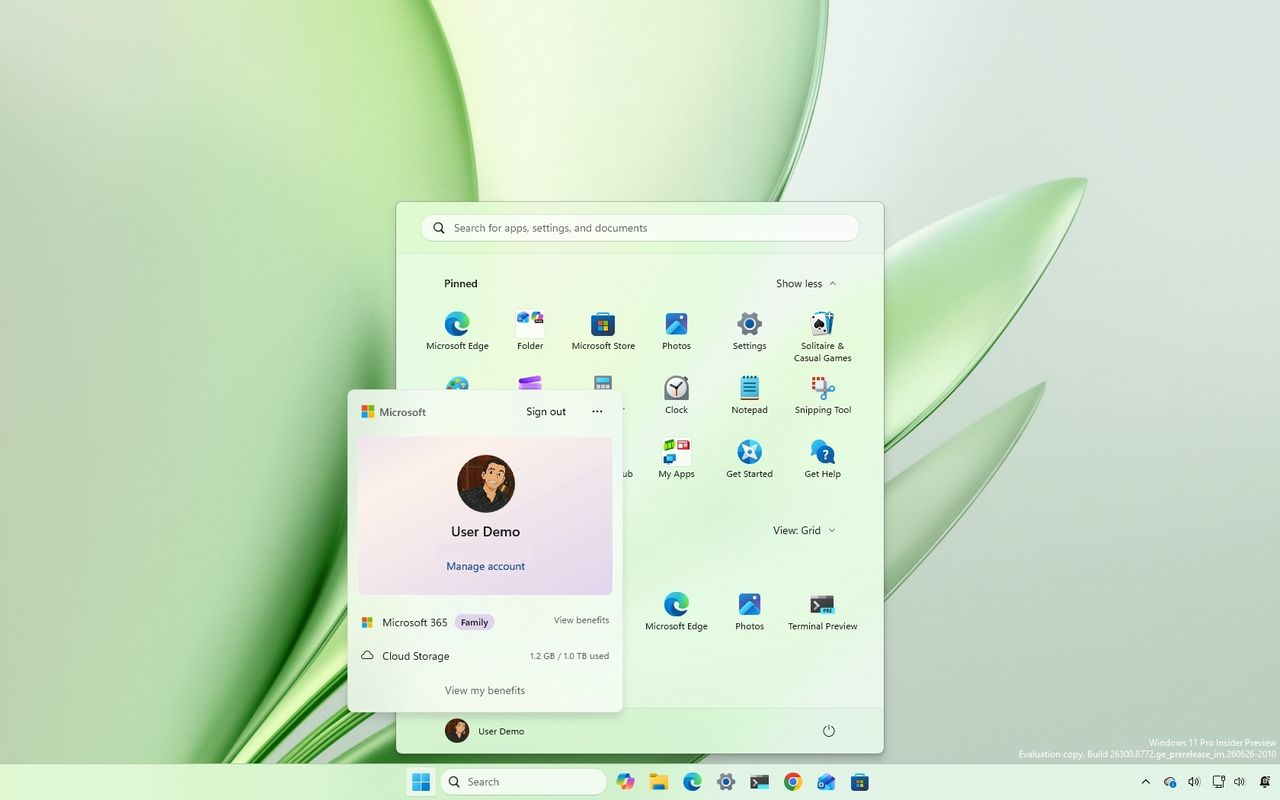
Account Control flyout redesign

In the Start menu, Microsoft is also updating the Account Control flyout with build 26300.8772. The new design offers a more modern style that highlights your account information and picture.

Windows 11 desktop showing the new Account Control menu in the Start menu.

(Image credit: Mauro Huculak)

It also highlights your Microsoft 365 subscription, cloud storage, and access to your benefits.

Backup and restore default settings

In commercial computers, starting with the preview build 26300.8772, Windows 11 is enabling the backup and restore feature policy by default for devices enrolled in a Microsoft Entra ID or Entra hybrid-joined environment.

The idea is to start the device with backup protection to make recovery smoother. For example, when a device is reset or replaced, users can quickly return to their personalized desktop without extra steps.

Of course, network administrators can always control this experience, and Microsoft notes that existing policies will remain in effect, and manually configured settings always take priority over the default behavior.

Taskbar position settings

The company is also bringing back the ability to change the Taskbar location with the release of build 28120.2387 in the Experimental channel.

This change allows users to place the Taskbar at the top of the screen, as well as at the left or right edges, rather than being limited to the bottom.

The setting appears on Settings > Personalization > Taskbar, under the "Taskbar behaviors" section. The setting is called "Taskbar position."

Windows 11 Settings in the Taskbar page showing the Taskbar position settings.

(Image credit: Mauro Huculak)

The company notes that flyouts, tooltips, and animations will follow the Taskbar orientation regardless of the position.

Also, most existing features will continue to work, including the option to ungroup and show labels for apps.

Furthermore, the company is updating the "Show smaller taskbar button" option to make the Taskbar smaller instead of just the buttons. (As we have already seen in other tracks, the company is expected to create a separate option to make the Taskbar smaller.)

Windows Update with fewer reboots

As part of Windows 11 build 26220.8764, the company is introducing a new unified Windows Update experience that coordinates monthly quality updates with driver, .NET, and firmware updates.

By bundling these updates into a single installation cycle whenever possible, Microsoft aims to reduce the number of restarts users experience each month, with the long-term goal of requiring just one monthly reboot.

Windows 11 Pro Education for K-12 free upgrade

Microsoft is changing the installation requirements to allow devices running Windows 11 Home to upgrade to Windows 11 Pro Education at no additional cost for K-12 education.

This change aims to give schools more flexibility when acquiring new devices. However, the company says that this is one-way only. After the upgrade, the only way to roll back to the Home edition is by performing a clean installation of the operating system.

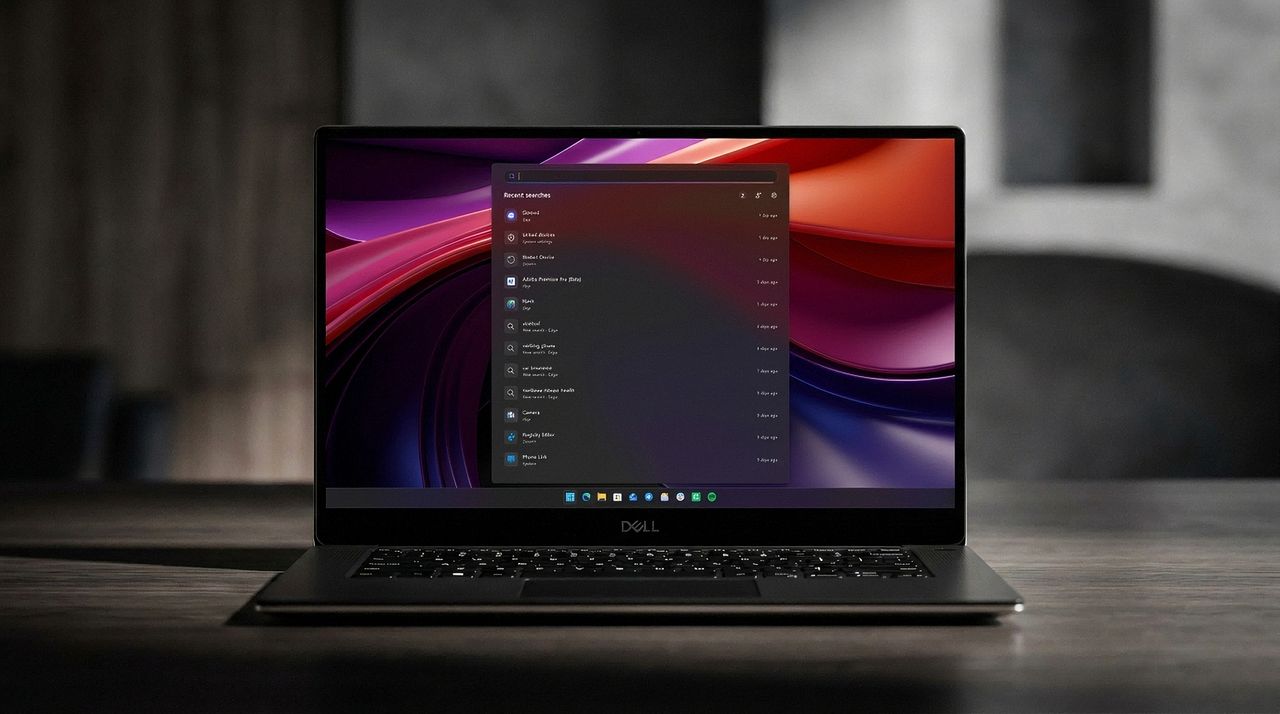
Windows Search upgrades

Outside its regular download schedule, Microsoft recently began rolling out a slew of improvements to the Windows Search experience on devices enrolled in the Experimental channel.

First, the company is decluttering the home screen and focusing on the search experience. As part of this rollout, the Windows Search home screen only includes your recent searches, ditching the visual clutter, including those annoying advertisements.

Windows 11 desktop with the Search home screen showing recent queries.

(Image credit: Mauro Huculak)

In addition, when performing a search and a web result is more relevant, the experience will now prioritize the answer rather than products and promotions.

Microsoft is also introducing design tweaks to better indicate where each result comes from. For example, you'll find better spacing between items and interface changes when selecting a result, including thumbnail previews.

Second, you'll now have more control over search results with the options to disable web searches and Microsoft Store apps from appearing in the Windows Search experience.

However, by default, search will work as always. It's up to you to customize your search experience from Settings > Privacy & Security > Search.

Windows 11 Settings on the Search page showing the options to disable web searches and Microsoft store suggestions.

(Image credit: Mauro Huculak)

Third, the search experience now improves local content and rankings, meaning local results are given higher priority in apps, settings, and files, instead of web and Microsoft Store results showing up first when there are better results.

Windows 11 desktop showing the new search prioritizing Settings.

(Image credit: Mauro Huculak)

As part of the ranking tweaks, you'll notice that searches for settings now appear higher in the results.

Fourth, Microsoft is also focusing on improving search accuracy through two specific changes. For instance, Windows Search has been updated to better handle typos, missing or extra letters, and partial words.

In addition, the feature will now show results for local files using two-character file search, and more accurately surface cloud and connected files when they're the best match.

Windows Central's Take

I think these Insider builds show Microsoft focusing on what Windows 11 has needed for a while, improving the experience instead of simply adding more features. Cloud rebuild could make recovery much less stressful, while the Windows Search changes address one of the operating system's biggest frustrations by prioritizing useful local results over web content.

Blank Pixel

The reappearance of Taskbar positioning is also a welcome change. It shows Microsoft is still paying attention to feedback and bringing back flexibility that many users have missed since Windows 11 launched.

What are your thoughts on these latest Windows 11 Insider changes? Let me know in the comments.

More resources

Explore more in-depth how-to guides, troubleshooting advice, and essential tips to get the most out of Windows 11 and 10. Start browsing here:

Click to join us on r/WindowsCentral

Join us on Reddit at r/WindowsCentral to share your insights and discuss our latest news, reviews, and more.

Windows 11 desktop with the Start menu open and showing the new Account Control design.

Windows 11 desktop with the Start menu open and showing the new Account Control design.

REVIEW: Turtle Beach Stealth Pro II for Xbox and PC — An absolutely spectacular multi-platform headset, with Turtle Beach's BEST audio EVER

Windows Central Best Award

I've been reviewing Turtle Beach headsets for a long time. The firm has a huge array of products for Xbox and PC gamers, hitting every price point and use case. Many of Turtle Beach's products have easily landed on our best Xbox and PC gaming headsets lists. Where I've personally found Turtle Beach to be most exciting is on the higher-end, where the firm has a tendency to really push the envelope with regards to functionality and value.

The Stealth Pro II absolutely encompasses that. Yes, it isn't cheap, but it comes in at a comparable price to lifestyle Bluetooth headsets that offer far less functionality and features, often with subpar durability and audio.

With the Stealth Pro II, I'm sitting here well and truly asking myself if this headset isn't just a competitor in the gaming space, but also the general everyday lifestyle space. With a subtle and stylish design, obscene amounts of functionality, and absolutely crystalline audio — the Stealth Pro II could be (should be) your next Xbox / PC gaming headset pick.

Turtle Beach Stealth Pro II — Specs and Price

Turtle Beach Stealth Pro II, headset photographs

Even the packaging is slick. (Image credit: Windows Central | Jez Corden)

The Turtle Beach Stealth Pro II headset is a monster on paper, boasting an impressive array of features, functions, and premium-end specs.

Here's an overview of what you can expect to get out of the box.

Category

Specification

Drivers

60mm Eclipse™ Dual Drivers (separate woofers + tweeters)

Frequency Response

10Hz – 40kHz

Wireless Audio Quality

Hi‑Res 24‑bit / 96kHz over 2.4GHz; LC3plus & LDAC

Wireless Connectivity

2.4GHz USB wireless + Bluetooth 5.3 (dual‑audio)

Active Noise Cancellation

Advanced ANC with four internal mics

Microphone (Boom)

9mm floating shock‑mount, unidirectional, flip‑to‑mute, AI noise reduction

Internal Mics

Integrated beamforming microphones

Microphone Frequency Response

100Hz – 16kHz

Battery System

Dual swappable Li‑Polymer packs, 40 hours each (80h rotation)

Charging

Transmitter dock + USB‑C cable

Design & Build

Anodized aluminum frame, chrome accents, soft‑touch surfaces, diamond‑cut controls, dual‑layer memory‑foam cushions with athletic fabric, mesh suspension headband

Form Factor

Over‑ear

App Support

Swarm II app with 10‑band EQ, mic tuning, noise gate, presets

Audio Presets

Bass Boost, Signature Sound, Treble Boost, Vocal Boost

Compatibility (Xbox / PC Version)

Xbox Series X|S, Xbox One, PC, Bluetooth mobile devices. Additional USB transmitters for PlayStation / Nintendo sold separately.

Included Accessories

Hard‑shell case, transmitter dock, USB wireless transmitter, USB‑C cable, two batteries

Price

£299.99 / $349.99 / €349.99

At $349.99, it's not exactly what I'd call cheap, but that seems to have become the standard for headsets that are really pushing the bar when it comes to premium audio and "do everything" specs.

You can swap between two 40-hour batteries, with one permanently charged and ready to go in the transmitter dock. It comes with an additional USB transmitter for PC, with the main charge dock functioning as the radio for Xbox. It also sports Bluetooth 5.3 audio with LDAC, with simultaneous mixing with a USB sound source. It grabs the Hi-Res certification that has become all the rage lately, and boasts a massive speaker upgrade over the previous gen, with dual 60mm drivers and a huge frequency spectrum from 10Hz to 40kHz.

What's it like to actually use, though?

Turtle Beach Stealth Pro II — Design and Comfort

Turtle Beach Stealth Pro II, headset photographs

An absolute stunner, showing real restraint for a company previously known for neon green plastic and toy-like designs. This could be your every day headset. (Image credit: Windows Central | Jez Corden)

I think this is quite easily Turtle Beach's most attractive headset design. The Stealth Pro of yesteryear was fantastic, but it was still quite bulky in that typical "gamer" way, designed for isolation rather than fashion. Somehow, the 'Beach has managed to thread both needles with a single line here. Absolutely stunning engineering and design here.

The brushed metal speaker plates look great on the outside, and there remains a very subtle Turtle Beach imprint that stays out of the way and won't cramp anyone's style. The speakers are accented with the same metallic trims, and the headband connects with these bending connectors that look very futuristic.

The microphone is simultaneously flip-to-mute and detachable, allowing you to go fully wireless. It has internal microphones as well for taking calls on the go without using the full mic boom.

Turtle Beach Stealth Pro II, headset photographs

The attention to detail extends to the controls. Each sports a different "feel" on the fingers to help you differentiate between the controls. It's smart, ergonomic design. (Image credit: Windows Central | Jez Corden)

The tapered cans reduce the visible footprint of the headset, which I feel reduces its visible "bulk" over some of Turtle Beach's previous attempts at a headset like this. And this is without compromising on speaker size or features. The 60mm drivers are a noticeable upgrade over the previous model, with separated tweeters and woofers.

On comfort, this is the only part where I think more attention could've been paid. The headband is made of this odd nylon mesh which, while looking pretty, is actually quite tight and uncomfortable over longer sessions. I imagine it's something one could get used to, but it seems like an odd oversight given how painstaking the rest of the design work is. The mesh is also great at trapping dust and is a bit difficult to clean effectively. Additionally, it doesn't seem to be replaceable ... so if you rip it somehow, you're kind of screwed.

I'm also not a huge fan of the fabric material used on the cushions. While it is comfortable, Turtle Beach's previous materials felt a little smoother on the skin. I am someone who vastly prefers leatherette over fabric, though, so take that as you will.

Turtle Beach Stealth Pro II — Features and Audio

Turtle Beach Stealth Pro II, headset photographs

It's far better looking than me. (Image credit: Windows Central | Jez Corden)

Where this headset absolutely dominates is audio. This is by a country mile the best-sounding headset Turtle Beach has ever produced. As I write this, I'm listening to Tool at maximum volume and enjoying my very own personal concert in an absolutely vast virtual soundscape with impressive separation, thundering, warm bass, and enjoying distortion-free treble, mids, and highs.

The intros on songs I've been intimately acquainted with for decades come through with details I've not experienced prior. Regardless of what I threw at it, from thundering double bass-peddle metal tracks to haunting electronica, it has been a really really fun time testing this headset out. For music and cinematic delivery, this headset is goosebumps-inducingly good, truly ethereal, regardless of genre. For lifestyle and daily mobile use, it also rocks up with active noise canceling, which is very good too. I put it through its paces with noisy fans and my air filter on maximum settings, and felt myself fully isolated with my Spotify playlist.

But what about gaming?

Turtle Beach Stealth Pro II, headset photographs

The nifty transmitter dock ensures you always have a 40-hour battery fully charged and ready to go. It also future-proofs you against flats. (Image credit: Windows Central | Jez Corden)

You can indeed expect a similarly amazing experience in games, too. Rocking up with Overwatch and the review build of Halo Campaign Evolved was as immersive as you might expect. Halo's intro music somehow never fails to enchant, and it's only elevated with a good sound system like these.

Where things get even more impressive, particularly in competitive play, is with Turtle Beach's famed SuperHuman Hearing.

Using the bundled Swarm II app, you can set it to focus either on footsteps or gunshots; there's also a legacy setting for those who prefer the old-school profile. SuperHuman Hearing does negatively impact the "cinematic" feel of games, creating an unnatural soundscape — but that's entirely the point. It's supposed to look for and emphasize sound cues that will give you a tactical advantage. And it does work. Games that are already designed with tactical sound design have always worked well with Turtle Beach's SuperHuman Hearing system, but with this headset it hits another level. If Battlefield 6 or Overwatch were Olympic sports, this headset would probably get you banned for cheating.

Another part of this headset that's utterly impressive is the microphone. It's detachable and sports flip-to-mute capabilities as mentioned, but it also has a miniature shock protector, which I've simply never seen before in a gaming headset.

Above is an audio sample with the headset's AI-powered noise cancellation feature turned on. In the first half, you can hear my voice come through clearly despite having a fan blowing directly on the mic, which is impressive. It sounds a lot better without the fan on, of course, but the clarity is rock solid for gaming comms.

I think I'd even be comfortable dropping my XLR mic and using this headset for actual game streaming, which is not something I find myself saying often these days. Turtle Beach really nailed it across the board when it comes to audio here.

Turtle Beach Stealth Pro II — Should you buy it?

Turtle Beach Stealth Pro II, headset photographs

A pricy headset that absolutely will not disappoint you. (Image credit: Windows Central | Jez Corden)

I absolutely adore this headset. The sound is a true pleasure, and it's always a joy when a headset like this delivers so much. It makes the review process fun, as I have an excuse to listen to several albums and play several games as part of my "extensive" testing process ...

I was a bit disappointed with the headband and materials on the earcups. I'm also a bit disappointed that Turtle Beach still can't seem to nail dual-USB sound source mixing, although I admit the requirement for that is pretty niche, and not something 99% of people will actually use. Being able to mix Bluetooth in simultaneously with your Xbox or PC is a nice consolation, though.

✅ You should buy this if:

  • You want best-in-class audio on a multi-platform gaming headset.
  • You're willing to pay a premium for things like ANC and high-end specs.
  • You're a fan of Turtle Beach's SuperHuman Hearing feature.

❌ You should skip this if:

Where this headset just shines above all is the sound delivery. The soundscape is incredibly immersive for its category, and the microphone is also a cut above what I'd typically expect from a gaming headset.

At this price point, there aren't really a ton of competitors out there worth considering in this range. I absolutely don't think you'll be disappointed with this if you're a dedicated Xbox and PC gamer who wants a bit of Bluetooth and music capabilities on the side. This is an immaculate "do everything" headset that definitely feels worth the price of admission for me.

Turtle Beach Stealth Pro II

Amazing
Turtle Beach
Stealth Pro II

The Turtle Beach Stealth Pro II is an absolutely stunning headset that sports arguably some of the best audio reproduction I've experienced in such a fully-featured gaming headset.

See at: Amazon

Click to join us on r/WindowsCentral

Join us on Reddit at r/WindowsCentral to share your insights and discuss our latest news, reviews, and more.

Turtle Beach Stealth Pro II, headset photographs

Turtle Beach has another banger on its hands.

Microsoft blocks Windows 11 KB5101650 update for Dell PCs due to "unexpected shutdowns, poor performance, increased heat, and battery drain"

Microsoft has confirmed that it has blocked the availability of the recent Windows 11 July Patch Tuesday update (KB5101650) on Dell PCs, after Dell reported a number of issues including unexpected shutdowns, overheating, poor performance, and more caused by the preview update that released before it.

The KB5101650 began rolling out on July 14, and includes a number of quality of life improvements and fixes. For most users, this update is issue free, but Dell PCs will find that the update is not available for them currently.

"A limited number of Dell devices might display a yellow exclamation point in Device Manager next to the Intel Innovation Platform Framework Processor Participant driver. These devices can potentially experience unexpected shutdowns, poor performance, increased heat, and battery drain."

This issue applies to both the KB5101650 update that rolled out on July 14, and the optional preview update KB5095093 that rolled out on June 23, on either Windows 11 version 24H2 or 25H2. Dell PCs running either of these updates and experiencing issues should roll back.

The bug in question appears to be caused by the new Windows USB-C Connection Manager interface, with the Intel Innovation Platform Framework Processor Participant driver no longer functioning as intended. "This issue was reported by Dell during testing and identified as an incompatibility between the Intel driver and the new Windows USB-C Connection Manager interface."

Microsoft says that it's working on a fix, and will release a resolution for the PCs that are impacted by this issue soon. The good news is that it appears Microsoft was aware of the problem right away, as the July 14 update was blocked on Dell PCs right out of the gate.

Unfortunately, there was no immediate block on the optional update that released on June 23, meaning some devices may have installed the update that is causing problems. The best course of action in that situation is to simply roll-back to the previous update.

via Bleeping Computer

Click to join us on r/WindowsCentral

Join us on Reddit at r/WindowsCentral to share your insights and discuss our latest news, reviews, and more.

Windows Update

Windows Update

Newegg offers some of our favorite gaming CPUs bundled with motherboards and precious RAM in a limited summer sale

AI continues to wreak havoc on the tech industry, driving up the prices of processors, RAM, motherboards, and more PC hardware so companies can keep up with its hunger for more power (and RAM).

Fortunately, Newegg is offering a limited sale on several discounted bundles containing AMD processors we've tested and rated highly for their solid performance, alongside compatible motherboards and 16GB RAM modules to help these CPUs reach their full potential.

So, if you're looking to upgrade your PC with some of the best CPUs for gaming or productivity content creation, along with the best motherboards and precious RAM to maintain their stability, this round-up could be your next best solution.


"True to its word, AMD has specifically targeted gamers with this affordable powerhouse, and I expect my upcoming tests only to cement its place in your next rig." — Ben Wilson, Senior Editor

Windows Central review: ⭐⭐⭐⭐½View Deal


"For gamers with a passion for livestreaming, it offers almost max specs for a reasonable price and power draw." — Ben Wilson, Senior Editor

Windows Central review: ⭐⭐⭐⭐½View Deal


"In a masterclass of performance-per-watt efficiency, AMD offers incredible single-core performance scores that beat its intended 14600K rival and even challenge the 14700K." — Ben Wilson, Senior Editor

Windows Central review: ⭐⭐⭐⭐½View Deal


This bundle contains an AMD Ryzen 5 9600X processor along with a compatible MSI B850 GAMING PLUS WIFI6E motherboard with fast WiFi 7 wireless connectivity and two 8GB RAM sticks.View Deal


This gaming-focused bundle contains an AMD Ryzen 7 7800X3D processor, a GIGABYTE B650E EAGLE WF6E motherboard that offers PCIe 5.0 and Wi-Fi 6E, and two 8GB RAM sticksView Deal


This bundle contains an AMD Ryzen 9 9900X processor with an ASUS TUF GAMING X870E-PLUS WIFI7 motherboard that features two onboard PCIe 5.0 M.2 slots with fast Wi-Fi 7 and two 8GB DDR5 RAM sticks.View Deal

FAQ

How long will these discounts last?

These discount deals will last from July 14, 2026 to July 31, 2026.

Are these AMD processors good for gaming?

Indeed, they are. AMD's Ryzen 9 9900X, Ryzen 7 7800X3D, and Ryzen 5 9600X processors all offer good to exceptional performance for boosting frame rates and smoothness, particularly the -X3D chips.

Which of these processors is good for productivity?

The Ryzen 7 7800X3D productivity performance is somewhat underwhelming, while the Ryzen 9600X fares much better with creative apps and solid single-core performance.

Click to join us on r/WindowsCentral

Join us on Reddit at r/WindowsCentral to share your insights and discuss our latest news, reviews, and more.

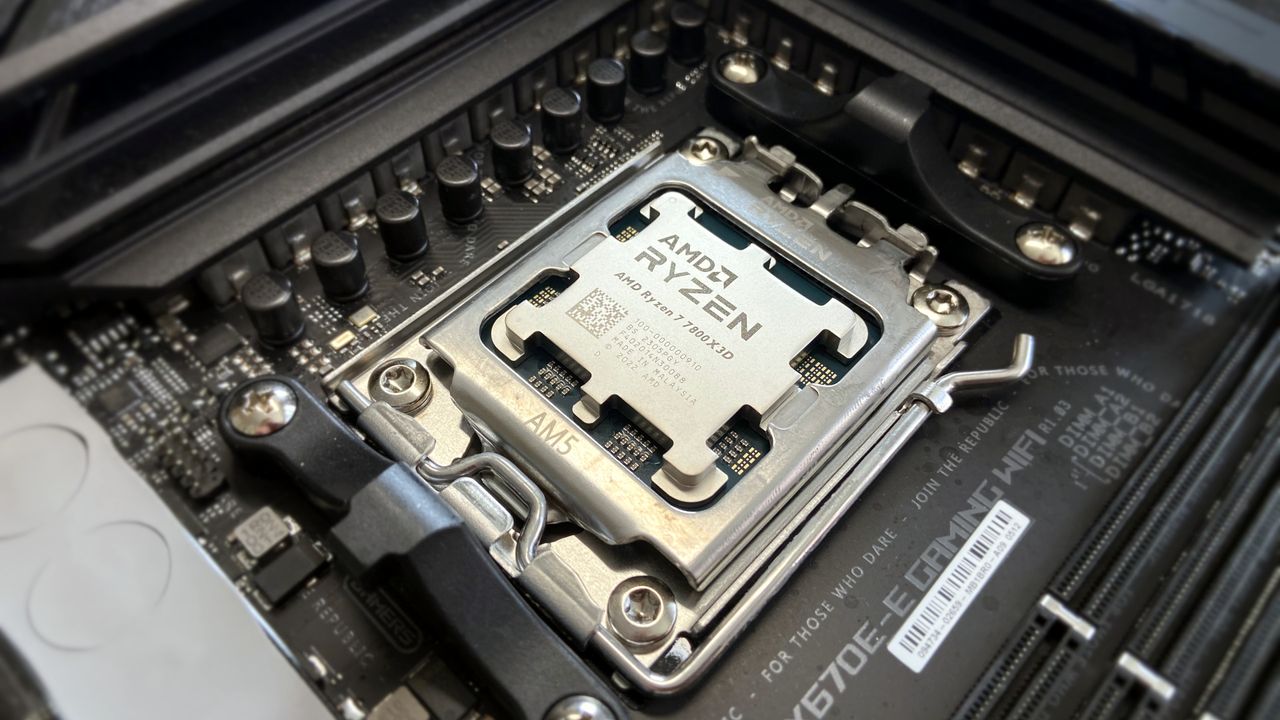
AMD Ryzen 7 7800X3D in socket

AI-generated image of an AMD processor with an MSI motherboard and Team Group RAM.

The innovative "Kill Block" map for Call of Duty: Modern Warfare 4 is my most anticipated new feature for the game's multiplayer — and we finally get to see more of it

Xbox and Activision have broken with tradition and partnered with Fanatics Fest to show off one of the most innovative new maps heading to Call of Duty: Modern Warfare 4 when it launches this October.

Multiplayer map reveals are typically reserved for the annual Call of Duty NEXT event, but a date for the celebration of all things Call of Duty has yet to be confirmed for 2026. Rather than waiting until closer to launch, Infinity Ward will give the public their first look at the new map, "Kill Block", during Fanatics Fest in New York City from July 16-19.

Call of Duty: Modern Warfare 4 will be playable for those who have purchased tickets to Fanatics Fest at the Javits Center in NYC, and a panel featuring Kevin Durant, Inde Navarrette, Infinity Ward Studio Co-Head Mark Grigsby, and Tyler Bahl will take the stage for an exclusive panel on Call of Duty in Culture on Saturday, July 18.

Players have barely got a taste of what Call of Duty: Modern Warfare 4 has to offer and the game is already breaking records. Preorder now to experience a brand-new thrilling campaign, reworked multiplayer, and a new DMZ experience this October. Digital preorders unlock early access to the MW4 Campaign starting on October 16.View Deal

Get your first shot at Kill Block, the adaptive Multiplayer battleground, live at @FanaticsFest July 16-19 in NYC.Stay tapped in as we'll share more gameplay and details from the field. pic.twitter.com/d9daYaEAJlJuly 3, 2026

The original concept behind Kill Block was dreamed up by Multiplayer Creative Director Geoff Smith, who was inspired by the Santiago Bernabéu in Madrid. The stadium is designed to have multiple arena floorings set on a rotating slab, allowing it to shift from a football stadium to a concert venue and back again while maintaining the various fields.

From concept to production, Kill Block eventually evolved into an adaptive training facility with a modular battleground that pieces together different slabs to create hundreds of unique map combinations. Designed to resemble a live-fire training environment, Kill Block is assembled from two end slabs with a central slab that pieces together map sections, both new and from iconic locations seen throughout Modern Warfare's rich history.

Infinity Ward shared an overview of how the engineering behind Kill Block works in a new blog post.

Engineering a dynamic map for Modern Warfare 4

Call of Duty: Modern Warfare 4 introduces the new dynamic map, Kill Block, with rotating slabs that change the scenery of the arena every round.

An overhead view of the Killhouse slab for Kill Block. (Image credit: Activision)

While Call of Duty is a video game, the team at Infinity Ward takes great pride in the real-world inspiration beyond the pixels. It would be easy enough for the development team to shrug off the hows and whys of the mechanics powering Kill Block as "It's just a game" and hope that the players could suspend disbelief enough to enjoy themselves. But Infinity Ward doesn't work that way, and the team has taken the engineering behind Kill Block very seriously.

Kill Block, which is set within the West Bridge Advanced Military Training Facility, is flanked along the perimeter by eight concrete towers that house the electronics, motors, and pulley systems that make the dynamic arena function. The map is functionally the size of the popular Shoot House map from Modern Warfare past, though its continuously evolving layout keeps things fresh with each new round.

The map's three slabs sit upon a network of rail-mounted wheel assemblies, known as 'bogies', that travel along tracks embedded above and below the training area. The map changes at the end of each round of Gunfight. When the active slab decouples from the others, it is lowered to a storage chamber beneath the arena for safekeeping. The motor then selects the new Slab and winches it into position before raising it to the surface. How's that for combat evolved, Halo?

Call of Duty: Modern Warfare 4 introduces the new dynamic map, Kill Block, with rotating slabs that change the scenery of the arena every round.

A look at the Station slab for Kill Block. (Image credit: Activision)

Each slab effectively takes up one third of Kill Block's play space, and each one is completely self-contained while maintaining all the necessary openings to flow seamlessly into each other. While each team spawns on their respective endpoint, movement across all three slabs in the combo is unrestrained (and encouraged.)

Some slabs add more than just new buildings, trees, or other obstacles. Some are also fitted with military-grade weather simulation systems — introducing snow flurries, fog, and other conditions that affect not just the look of the map but also weapons.

Kill Block's slabs are a new way to experience old favorites

Infinity Ward's Geoff Smith showcases the slabs for the new dynamic map, Kill Block, coming to Modern Warfare 4 in October 2026.

Infinity Ward's multiplayer team claims they have enough assets for 900 map combos in the upcoming dynamic Kill Block. However, only 500 are expected to be live when Modern Warfare 4 launches in October. (Image credit: Activision)

Call of Duty as a franchise struggles to walk a tight line between feeding into the nostalgia of its long-time player base while allowing the developers the creative freedom to create fresh and new experiences that might lure new players in. One way the development teams have sought to bridge that gap is with remastered variants of once-popular multiplayer maps.

But leaning into an influx of remasters leaves players looking for something new out in the cold. After 5 different variants of Shipment and Shoothouse, both the fans and the players can find themselves struggling with the threat of Call of Duty fatigue. Kill Block is an interesting solution to that problem, introducing both the chaotic gunplay of a small map without leaning exclusively into the tried-and-true favorites.

Infinity Ward's multiplayer team has claimed that there are enough assets readily available for Kill Block to support up to 900 combos total, though at launch, players can expect roughly 500 to be live. The following slabs can be expected in the Kill Block rotation at launch, though some names may be changed:

Call of Duty: Modern Warfare 4 introduces the new dynamic map, Kill Block, with rotating slabs that change the scenery of the arena every round.

The Station, Highrise, and Cabin prefab buildings on Kill Block. (Image credit: Activision)
  • Ambush (Call of Duty 4: Modern Warfare): A central slab featuring a convoy-clogged main road with blown-out pre-fab buildings on either side, with plenty of sniping opportunities.
  • Blacksite (Call of Duty: Modern Warfare II and III): An end slab featuring three prefabricated structures with open access between each of them. Players will find a mud and grass thoroughfare, a rusted van, an open cargo container, and stacked military gabions.
  • Killhouse (Call of Duty 4: Modern Warfare): Gabions corner prefab walls with some small gaps for mantling, while a central kill box dots the middle of the map, and small scenic cover opportunities cover the edge of the end slab.
  • ME-Town: A central slab featuring a kill box dirt courtyard surrounded by prefabricated structures in each corner. Lots of interior and roof space for sniper nests. The main building is turquoise and features plenty of opportunities for close-quarter combat in its tight rooms and scramble points.
  • Snow Block: The fortifications of open cargo containers and concrete blocks offer unique overwatch opportunities to would-be snipers, but there's a limit to how much cover you can find on this end slab.
  • Trench: This central slab is a literal no-man's land of sunken mud walls and pill boxes with sandbags, tires, and wooden trusses that feel like they're going to collapse in on your squad without a moment's notice. This is a fraught middle ground with minimal cover, but good sight lines.

In addition to the confirmed Kill Block slabs, Infinity Ward also teased imagery showing off combos for the dynamic map featuring parts of Station, Shoot House, Woods, and Killhouse. Additional maps and supported modes for Kill Block are expected to be added to the game during Call of Duty: Modern Warfare 4's seasonal content drops post-launch.

Hands-on impressions of Kill Block

Call of Duty: Modern Warfare 4 introduces the new dynamic map, Kill Block, with rotating slabs that change the scenery of the arena every round.

A group of three players move through a Kill Block slab. (Image credit: Activision)

Members of the press and content creators alike were invited to Infinity Ward's studio for an early hands-on preview of Kill Block in action. During the preview, we were able to play matches of 10v10 Gunfight on Kill Block. The match would begin with the player teams each infilling on their respective end slabs with a loadout that had been randomly assembled by the game.

Gunfight is a round-based, one-life per player core mode, and the first interactions with Kill Block were surprisingly intimidating. There's an urge to explore the undeniably creative design of Kill Block and to understand all the machinations behind it. But doing so certainly puts you at risk of other players who aren't so interested in the aesthetics willing to pick you off as an easy target.

When you do get over the desire to ooh-and-aww over what Infinity Ward has managed to create out of Kill Block and decide to focus on the game, you'll find yourself quickly flung into intense combat against enemy players. As a long-time fan of small map playlists that throw you immediately into the line of danger, I was excited to feel that rush of instant action from Kill Block.

Call of Duty: Modern Warfare 4 introduces the new dynamic map, Kill Block, with rotating slabs that change the scenery of the arena every round.

Operators engage in combat on the Woods slab of Kill Block. (Image credit: Activision)

Infinity Ward's willingness to give fans of small maps something to sink their teeth into had interesting effects on the player base in Modern Warfare 2 (2022). There were considerable complaints on social media by players who felt the time between matches was too long in standard map playlists as players flocked to small map rotations in order to complete grindy camo challenges.

And yet, at the same time, there was a subset of players who love small maps so much they were even requesting Treyarch to introduce IW's beloved tiny map, Shipment, to the Black Ops series. (They didn't, but they did take a risk and go even smaller with the chaotic GRWM limited map during April Fools.)

Kill Block feels fresh and exciting and new, but it's serving multiple purposes for the split fan base that pines for nostalgic gameplay and laments continuous remasters simultaneously. Personally, Kill Block is one of my most anticipated new additions for Call of Duty: Modern Warfare 4.

Call of Duty: Modern Warfare launches on Xbox Series X|S, Xbox on PC, Battle.net, Steam, PlayStation 5, and the Nintendo Switch 2 on October 23, 2026. Players who preorder the game will unlock early access to the Open Beta and up to one week of early access to the Modern Warfare 4 campaign starting on October 16. Modern Warfare 4 is the first Call of Duty title to skip last-gen consoles, and the game will also not be included in Xbox Game Pass subscriptions until Holiday 2027.

The Vault Edition for Call of Duty: Modern Warfare 4 includes the base game — complete with the campaign, multiplayer, and access to DMZ — as well as additional content that includes the Hostile Alliance Operator Pack, Special Forces Operator Pack, Signature Weapon Collection, 1 Season of BlackCell, and a DMZ Deployment Bonus. Preordering also unlocks early access to the Open Beta ahead of the game's launch, and 1 week of early access to the Campaign.View Deal

Click to join us on r/WindowsCentral

Join us on Reddit at r/WindowsCentral to share your insights and discuss our latest news, reviews, and more.

Call of Duty: Modern Warfare 4 introduces the new dynamic map, Kill Block, with rotating slabs that change the scenery of the arena every round.

Call of Duty: Modern Warfare 4 introduces the new dynamic map, Kill Block, with rotating slabs that change the scenery of the arena every round.

Windows 11 has more recovery options than ever, and here’s exactly when I would use each one to fix a broken PC

If you've been using Windows as long as I have, you probably remember when a serious problem often meant backing up your files and reinstalling the operating system from scratch. Whether it was a bad driver, a failed update, or corrupted system files, a clean install was frequently the fastest way to rescue your computer.

I don't think that's the case anymore. Over the past several years, Microsoft has quietly transformed Windows 11 into a much more resilient operating system. Instead of relying on a single recovery option, the operating system now bundles a collection of tools designed to solve different types of problems. Some can repair Windows 11 while minimizing changes to your data. Others can roll back a problematic update, recover a computer that won't boot, or completely rebuild the system from the cloud.

The downside is that all these options can be confusing. Microsoft doesn't always make it clear which recovery feature you should use first, and many of them sound similar even though they solve different problems.

A lot of the recovery features discussed in this guide are available through the Windows Recovery Environment (WinRE). This separate recovery workspace runs outside the normal installation and provides access to tools that can repair, reset, or troubleshoot the operating system when the computer cannot start normally.

In this guide, I'll outline the recovery features available on Windows 11 and when I would actually use them.

Important: The right recovery option depends mostly on what went wrong. A broken update, a damaged driver, and a corrupted installation all require different approaches.

Fix problems using Windows Update

If the computer still starts normally but something doesn't feel right, I'd try the "Fix problems using Windows Update" recovery option first.

Windows 11 Settings on the Recovery page, highlighting the Fix problems using Windows Update option.

(Image credit: Mauro Huculak)

This feature repairs the operating system by downloading the same version of Windows 11 installed on your computer through Windows Update and reinstalling it over your existing installation. Unlike resetting your computer, it preserves your personal files, installed apps, user accounts, and settings.

If system files have become corrupted, built-in features have stopped working, or you're seeing unusual behavior after an update, this repair process can often restore the operating system without forcing you to reinstall your apps afterward.

I like this approach because it's the least disruptive recovery option Microsoft offers. If it solves the problem, you save yourself the time of reinstalling software and reconfiguring the system.

Best for:

  • Corrupted system files.
  • Missing or broken features.
  • General system instability.
  • Repairing Windows 11 while keeping apps, files, and settings.

Reset This PC

When repairing Windows 11 isn't enough, "Reset This PC" is usually the next step.

This feature reinstalls the operating system and lets you choose between two options.

Windows 11 Settings on the Recovery section, highlighting the Reset this PC settings.

(Image credit: Mauro Huculak)

Keep my files reinstalls Windows 11 while preserving your personal files, pictures, and videos, but it removes installed applications and resets system settings.

Remove everything wipes the computer completely before installing a fresh copy of Windows 11, making it a good choice if you're selling the device or want to start over.

You'll also choose between "Local reinstall," which uses recovery files already stored on the computer, or "Cloud download," which downloads a fresh copy of Windows directly from Microsoft's servers.

Personally, I almost always recommend Cloud Download. It takes longer because it downloads several gigabytes of data, but it also avoids problems caused by damaged local recovery files.

Best for:

  • Severe software problems.
  • Persistent performance issues.
  • Malware cleanup after backing up your data.
  • Preparing to sell or give away the computer.

Cloud rebuild

Cloud rebuild is one of Microsoft's newest recovery tools, and I think it fills an important gap in Windows recovery.

Windows Recovery Environment in the Troubleshoot page highlighting Cloud rebuild option.

(Image credit: Mauro Huculak)

Available through the Windows Recovery Environment (WinRE), Cloud rebuild reformats the operating system partition, downloads a fresh Windows 11 image and compatible drivers from Windows Update, and restores the computer to the out-of-box setup experience.

Unlike Reset This PC, it doesn't depend on the recovery image already stored on your computer, and more importantly, it also includes the device drivers.

To me, this feature sits somewhere between Reset This PC and creating a bootable USB installer. It gives you a completely fresh installation without requiring installation media or another computer to download the setup files.

Best for:

  • Severely corrupted installations.
  • Failed Reset This PC attempts.
  • Damaged recovery files.
  • Rebuilding Windows 11 from scratch.

Go Back (rollback)

The upgrade process to a new version doesn't always go smoothly, and that's exactly why "Go Back" exists.

Windows 11 Settings on the Recovery section highlighting the rollback option.

(Image credit: Mauro Huculak)

After upgrading to a new version of the operating system on top of an existing setup, Windows 11 temporarily stores your previous installation in the "Windows.old" folder. If the new version introduces compatibility problems, driver issues, or poor performance, you can roll back to the earlier version with just a few clicks.

The only catch is that this option is temporary. The system typically removes the previous installation files after about 10 days to free up storage.

If you notice problems immediately after installing a feature update, don't wait too long before deciding whether to roll back.

Best for:

  • Performance problems after upgrading.
  • Driver incompatibilities.
  • Software compatibility issues.
  • Bugs introduced by a feature update.

Uninstall Updates

Not every system update improves the experience. Sometimes a cumulative update can introduce startup problems, driver conflicts, or unexpected bugs.

When that happens, Windows 11 includes an option in the Windows Recovery Environment that lets you remove the latest update without resetting the entire computer.

WinRe Uninstall Updates option

(Image credit: Mauro Huculak)

Using this experience, you can uninstall the latest quality updates (monthly cumulative updates) and feature updates (major version upgrades).

The first option is usually the one you'll use after Patch Tuesday problems.

Best for:

  • Device problems after installing an update.
  • Boot issues caused by a recent update.
  • Update-related stability problems.

System Restore

Some people think System Restore is outdated, but I still think it's one of the most underrated recovery features in the operating system.

Windows 11 desktop showing the System Restore settings.

(Image credit: Mauro Huculak)

System Restore creates restore points that save system files, drivers, registry settings, and installed applications. If something goes wrong after installing a driver or application, you can return Windows to an earlier working state without affecting your personal files.

It's often much faster than resetting the computer and can solve problems in just a few minutes.

Best for:

  • Bad driver installations.
  • Faulty software.
  • Registry changes.
  • Recent system configuration problems.

Startup Repair

If Windows 11 won't boot, Startup Repair remains one of the built-in recovery tools designed to fix common startup problems.

WinRE in Advanced options highlighting the Startup Repair setting.

(Image credit: Mauro Huculak)

Available through the Windows Recovery Environment (WinRE), the tool scans the system for damaged startup files, corrupted Boot Configuration Data (BCD), missing system files, and other issues preventing the operating system from loading correctly. If it finds a problem it knows how to fix, it attempts the repair automatically.

Depending on your recovery configuration, Windows 11 may first attempt newer recovery mechanisms, such as Quick Machine Recovery, before Startup Repair becomes available.

It won't solve every startup issue, but when it works, it can save you from more drastic recovery options like resetting or reinstalling the operating system.

Best for:

  • Windows 11 stuck during boot.
  • Endless restart loops.
  • Missing or damaged boot files.
  • Startup-related errors.

Safe Mode

Sometimes Windows 11 itself isn't the problem. Safe Mode starts the system with only the essential drivers and services needed for the operating system to run. That makes it much easier to remove a problematic graphics driver, uninstall recently installed apps, or troubleshoot malware that's preventing Windows 11 from working normally.

Windows 11 desktop in Safe Mode.

(Image credit: Mauro Huculak)

If Windows 11 works as expected in Safe Mode but crashes at startup, it's usually a sign that a third-party app or driver is causing conflicts.

Best for:

  • Troubleshooting driver problems.
  • Removing incompatible software.
  • Malware cleanup.
  • Diagnosing startup crashes.

Quick Machine Recovery

Quick Machine Recovery is one of the newest additions to Windows 11, and I think it's a direct response to lessons Microsoft learned from major outages like the CrowdStrike incident.

Windows 11 Settings in the Recovery section showing the Quick machine recovery settings.

(Image credit: Mauro Huculak)

If a bad update or driver prevents Windows 11 from starting, the feature can automatically enter the Windows Recovery Environment, connect to Microsoft's recovery service, download a remediation package, and attempt to repair the problem before you ever reach the desktop.

Ideally, you'll never have to think about this feature because it works automatically behind the scenes. If the automated recovery isn't successful, you can continue troubleshooting using the other recovery options available through the Windows Recovery Environment.

Best for:

  • Startup failures caused by updates.
  • Driver-related boot issues.
  • Automatic recovery without user intervention.

Point-in-time Restore

Point-in-time Restore is another piece of Microsoft's evolving recovery strategy.

Rather than asking users to troubleshoot a failed Windows Update manually, Point-in-time Restore is part of Microsoft's effort to make Windows Update failures easier to recover from automatically.

A lot of people may never notice it working, but that's exactly the goal. The more the system can recover automatically, the less often users need to search for recovery guides or perform clean installations.

Best for:

  • Failed system updates.
  • Rolling back to a previous working update state.
  • Automatic update recovery.

Other details

This guide focuses on Windows 11 features that can restore the operating system to a known working state or help troubleshoot problems preventing the system from working correctly. However, the operating system also includes other recovery-related tools that serve a different purpose.

The Windows Recovery Environment (WinRE) is the workspace where many of these options are available, including Startup Repair, Reset This PC, System Restore, Cloud rebuild, and other troubleshooting tools. It does not repair Windows 11 by itself. Instead, it provides access to the features that can recover the operating system.

The Recovery Drive works in a similar way. It does not fix the setup directly. Instead, it creates a bootable USB drive that lets you access WinRE if the built-in recovery options are unavailable.

Other tools, such as Command Prompt, Startup Settings, and UEFI settings, are designed for advanced troubleshooting. They can help diagnose and manually repair problems, but they do not automatically restore the operating system.

Also, the Windows Backup app is part of the recovery experience, but it serves a different purpose. Instead of repairing a broken installation, it helps restore settings, credentials, Microsoft Store apps, and files stored in OneDrive after reinstalling Windows 11 or moving to a new computer.

The legacy Backup and Restore (Windows 7) tool is still available on Windows 11 and can create file backups and full system images. Unlike newer recovery features such as Reset This PC or Cloud rebuild, it relies on a backup created ahead of time. If you have a system image available, you can use it to restore the computer to a previous state, including the operating system, apps, settings, and drivers.

However, Microsoft has shifted toward newer recovery experiences that rely more on Windows Update, cloud services, and automatic repairs.

Windows Central's Take

After covering the operating system for more than two decades, I think Microsoft has finally addressed one of the biggest weaknesses: recovery.

The company has built a much more complete safety net into Windows 11. However, these tools only matter if they work when users need them most. A failed update, broken driver, or corrupted system file can still leave people searching for answers because the recovery experience isn't always predictable.

What I find interesting is that Microsoft didn't replace older tools like System Restore or Safe Mode. Instead, it kept building on top of them with newer experiences such as Cloud rebuild and automatic recovery features. The result is a layered recovery system that makes Windows 11 far more resilient than previous versions.

The next challenge isn't creating another recovery feature. It's making the existing ones easier to understand. If the operating system can better recognize what's wrong and automatically recommend the right recovery path, most people may never have to wonder whether to use System Restore, Reset This PC, or Cloud rebuild.

That's the direction recovery should continue moving toward, with less troubleshooting, fewer reinstalls, and more automatic repairs that keep people productive.

Have you ever had to use one of these Windows recovery features? Which one helped you get your device back up and running? Let me know in the comments.

More resources

Explore more in-depth how-to guides, troubleshooting advice, and essential tips to get the most out of Windows 11 and 10. Start browsing here:

Click to join us on r/WindowsCentral

Join us on Reddit at r/WindowsCentral to share your insights and discuss our latest news, reviews, and more.

Windows 11 desktop showing the Point-in-time Restore settings.

Windows 11 desktop showing the Point-in-time Restore settings.

Microsoft's Snapdragon X2 Surface Laptop 8 and Pro 12 for Business are now available

The most exciting new Surface features in years are now available on a PC with a Snapdragon X processor. The Surface Laptop 8 for Business can now be purchased with a Snapdragon X2 Plus or Snapdragon X2 Elite.

For those who prefer a 2-in-1 over a traditional laptop, the Surface Pro 12 for Business (13-inch) is also available with a Snapdragon X2 chip. Like its clamshell sibling, the Surface Pro for Business also had an Intel model launch earlier this year.

The official names of the new PCs are "Surface Pro for Business 12th Edition" and "Surface Laptop for Business 8th Edition" but I've referred to them as the Surface Pro 12 for Business and Surface Laptop 8 for Business in this piece for ease of reading.

The standout feature of this year's Surface lineup is the privacy screen seen in the Surface Laptop 8 for Business. That display can be set to obscure content on your screen when people try to view it at an angle. It's similar to Samsung's screen on the Galaxy S26 Ultra.

The built-in privacy screen of the Surface Laptop 8 for Business combats creeping eyes from all angles, as opposed to third-party privacy screen protectors that only work from the sides.

The Intel version of the Surface Laptop 8 for Business launched earlier this year and received high marks from our Editor-in-Chief. The vast majority of what makes that laptop great extends to the Surface Laptop 8 for Business with Snapdragon X2, which are now available to order.

Demonstration of Surface Laptop for Business 8th Edition's privacy screen engaged, making the slightly tilted laptop's display difficult to read due to being so dim.

The Surface Laptop 8 for Business is the only version with the built-in privacy screen. (Image credit: Daniel Rubino)

The haptic trackpad of the Surface Laptop 8 for Business is also a key addition. Thanks to a recent update to Windows 11, you can now feel the operating system and supported apps as you interact with them. Haptic buzzes occur when you drag files in File Explorer or perform certain actions.

The Surface Laptop 8 for Business is one of few devices to support the new haptic experience.

The new Surface Pro 12 for Business is largely a spec bump when compared to its predecessor. The Snapdragon X2 chip inside delivers better graphics performance than the first-gen Snapdragon X.

The Surface Pro has matured over more than a decade of refinement, so it's hard to complain about Microsoft sticking with what works.

What's special about Surface for Business PCs?

When Microsoft first introduced Snapdragon X chips to its Surface hardware, a split was formed that saw Intel on business PCs and Snapdragon X on consumer hardware. That's no longer the case, since you can order Snapdragon X processors in consumer or business PCs.

Notably, there are no new Intel-powered Surface PCs for consumers in 2026.

There are several differences between the consumer and business models of the latest Surface devices. Here are the features seen only on the business side:

  • Pre-installed Windows 11 Pro or Enterprise
  • Integrated Privacy Screen option
  • Advanced Exchange Warranty service
  • Device Firmware Configuration Interface (DFCI) cloud management
  • Windows Autopilot tenant pre-registration
  • Access to the cloud-based Surface Management Portal
  • Native corporate domain onboarding pathways during initial setup
  • Intel models available

Most of the features seen in the Surface for Business PCs are options general consumers would never use. The exception being the privacy screen that I wish was available on consumer versions of the Surface Laptop.

One key difference between the Snapdragon X2-powered Surface Pro 12 for Business and its Intel counterpart is that you can only get 5G connectivity with the Intel model.

Anyone can purchase a Surface for Business device. You don't need to own a business or have some sort of special account. But again, you're likely paying for unneeded features compared to the consumer Surface PCs unless you really need a privacy screen.

Blank Pixel

Click to join us on r/WindowsCentral

Join us on Reddit at r/WindowsCentral to share your insights and discuss our latest news, reviews, and more.

A sleek laptop with a black keyboard and a modern design, displaying a blue abstract swirl on its screen, set against a light gradient background.

A sleek laptop with a black keyboard and a modern design, displaying a blue abstract swirl on its screen, set against a light gradient background.

I tested Windows 11's overhauled search experience, and I think Microsoft has finally fixed it: Windows Search is now more accurate and easier to use

This week, Microsoft unveiled a major overhaul coming soon to Windows 11's search experience that's designed to fix its biggest flaws and criticisms. For a long time, many have agreed that search on Windows is pretty much broken, but the new changes that are now in testing may finally be fixing that problem.

I've been testing the new Windows Search out over the last two days, and I'm very impressed with the new experience. Right off the bat, the search pane is no longer a noisy mess of Bing ads and sponsored content. It's a clean list of recent searches, exactly what you'd expect from a search pane.

Search items that appear in this list are categorized so that you know whether an item is an app, document, setting, or web search. Hovering over items in this menu will display options depending on the type of item it is, such as apps which present the option to pin it to the Taskbar or run as an administrator.

Windows Search UX

Quick options appear when you hover over recent search items. (Image credit: Zac Bowden / Windows Central)

You can also right-click on any of the items in the search pane for more info, which displays additional options such as uninstall or app settings, open file location, as well as the ability to remove the item from the recents list.

Getting onto the actual searching experience, it's a major step up. The UI is nice and clean, and web results now pretty much never show up at the top unless you are actively searching for a website or query that makes sense for a search engine. In the old Window Search, searing for "windows central" would always bring the Bing result to the top, but now it prioritizes my local files and folders.

When a web result does appear at the top, you'll no longer see any ads or sponsored content in that result. The Bing results are now ad-free, showing only results that relate to your search query, which is amazing. You no longer have to worry about accidentally clicking on a link or app that has paid to be there.

New Windows Search UX
Web results are now more deliberate and ad-free.Zac Bowden / Windows Central
New Windows Search UX
Previously, searching "windows central" would show a web result. Now, it shows my local files that relate to that term. Zac Bowden / Windows Central

I also find that search results are now more accurate based on how you use your system. For example, on a PC where I have both the Photos and Photoshop app installed, typing "photos" actually surfaces Photoshop, which is what I want. I believe this is happening because I've never opened the Photos app on my PC before, and so Windows assumes that I'd want to use the app I use more often or most recently.

To test this theory, I ran Photos a few times and then typed "photos" again, and sure enough the Photos app was now appearing above Photoshop. To triple confirm, I started opening Photoshop a few times, and Photoshop became the top result for "photos" after.

This is great for those who have a system set in place where all the apps they ever use are already in full circulation on their PC. Windows knows which apps you use most, and will now do its best to position them as a best match when it thinks you're searching for it, listing follow up results below it that you can manually select if that's what you need instead.

New Windows Search UX

Windows will surface a best match based on how you use your PC. As I frequently use Photoshop, searching for "photos" places it at the top. (Image credit: Zac Bowden / Windows Central)

I also find that search is now a little smarter and more dynamic. If you don't know the name of an app, you can search for a category and Windows will do its best to surface an app that it thinks can do that job. For example, if I type "video editor" into the search box, Windows surfaces Clipchamp as a result, as that's the only video editor I have installed.

Windows Search now also does a much better job at surfacing settings that you might want to configure. If I type "temp" it'll show delete temporary files, or if i type "wifi" the wi-fi settings page is at the top. Even things like "insider" now correctly surface the Insider settings page. You can now pretty much search for any Windows Setting and have it accurately appear in the search pane, without needing to open Settings first.

Some settings even have configurable options within the search pane. For example, typing restart PC will show a setting to do so right from search, which then lets you select whether you want to restart or shut down. It's pretty neat, though most people will probably find it faster to just do that from Start.

New Windows Search UX

Settings are now better represtedn in search (Image credit: Zac Bowden / Windows Central)

Overall, these new search improvements are a real strong step in the right direction. In my brief testing, I've not really been able to fault it, and understand why the best match results are what they are. Being able to turn off things like Microsoft Store and web results are also a great addition, letting you craft your experience into whatever you need it to be. If you only ever want local search results, you can make it so.

It's clear that even in its default state now, local results are the number one priority. Unless your search query is clearly one intended for a search engine, Windows will more than likely place a local result as a best match, which is going to address the biggest complaint most people have with Windows Search.

These improvements are rolling out now in preview for Windows Insiders, with general availability expected later this year.

Click to join us on r/WindowsCentral

Join us on Reddit at r/WindowsCentral to share your insights and discuss our latest news, reviews, and more.

Man pointing at Windows 11's new search UI.

Man pointing at Windows 11's new search UI.

GOG gently reminds us that it's the leading PC gaming platform to offer full DRM-free games — yes, you can keep them forever

These past couple of weeks have been beyond depressing for gamers.

From Sony killing off physical game discs and delisting 500 movies from people with no refunds, to Microsoft culling 3,200 Xbox game devs and repeatedly suspending gamers' accounts for no fault of their own, it's hard to feel optimistic when it feels like the biggest game companies are constantly stabbing their fans in the back while seemingly not giving a single care about preserving digital media.

However, not all hope is lost for legal digital preservation, thanks to GOG.com.

Download the offline installer of any of your games on GOG, save it to a disc and it's yours forever.You don't need a storefront's permission to play what you bought.July 14, 2026

GOG is an unsung hero among digital storefronts, as it sells digital games without Digital Rights Management (DRM). By buying games from GOG.com, you will be able to download a standalone, offline installer for each title, granting you permanent ownership of them.

With this, you can play games offline, back up files, and install them on your hard drive without needing to log in to a store's launcher. Not to mention, you won't have to worry about a game becoming unplayable due to its publisher's dedicated launcher not working (e.g., Assassin's Creed Black Flag Resynced) or being permanently blocked if it's tied to a compromised Microsoft account.

Not to mention that, in some cases, having DRM restrictions lifted from a game will actually increase its performance so it can achieve higher frame rates for smoother gameplay.

On top of that, GOG states that you can even save the games you buy on their storefront to discs and trade them with your friends, should you wish.

You can download a game's offline installer from a GOG account, create a disc image, and then burn it onto a blank CD-R, DVD-R, or BD-R disc.

Windows Central's take

I was already a fan of GOG as it helped preserve some of my favorite childhood games on PC like Breath of Fire 4 and Dino Crisis 2, but it's now becoming my main go-to storefront for digital PC games in light of recent events.

I'm concerned that the thousands of pounds' worth of games could be taken by corporations who don't care for preserving games or respecting people's digital property. So being able to buy and back them up permanently on my computer or discs via GOG is beyond reassuring and gives me hope that we can still own the games we worked so hard to earn.

Blank Pixel

So, GOG, you've got yourself a new superfan in me, and I will happily support your "Preservation Program" so we can keep more classic and modern games free of DRM forever because I, for one, do NOT want a gaming future where we own nothing.

What do you think of GOG.com as a digital storefront? Do you think you will be using it more often from now on to permanently preserve your digital game collection, or do you still use other digital storefronts like the Xbox Store?

If you have any thoughts, please let us know through the poll, the comments section, or our Reddit page.

Click to join us on r/WindowsCentral

Join us on Reddit at r/WindowsCentral to share your insights and discuss our latest news, reviews, and more.

Logo for GOG.com displayed prominently on a purple, starry background.

Good Old Games has become the hero we need in this digital-only dystopia.

Windows 11's latest update will let you pause updates indefinitely

Windows 11's monthly Patch Tuesday update is here, and it's one of the biggest of the year. In addition to the usual group of bug fixes and security updates, the July Patch Tuesday update includes some major new features.

Our Mauro Huculak broke down the 13 features that matter most from Windows 11's July 2026 update. The update is substantial and includes new ways to recover your PC, improve accessibility, and update Windows.

As is normally the case for Windows 11 Patch Tuesday updates, we've known what was on the way for weeks. Microsoft rolled out the latest features and changes to Windows 11 through a preview update toward the end of last month.

Ironically, the biggest change in this update is that it will allow you to pause updates indefinitely. Starting with this build you can stop your PC from getting updates for up to 35 days and then re-pause updates.

The downside is that you have to manually pause updates again if you want to stop them for more than 35 days.

Point-in-time Restore is another big addition. The feature lets you roll back a system to a previous working state. Windows 11 automatically creates restore points that include settings, files, and apps.

Widgets are better following the update as well. You now have greater control over notifications and personalization settings. Opening the widgets panel will open the dashboard on first use.

The full release notes for the update are shared in a Microsoft support document and listed below.

Windows 11 July 2026 Update (gradual rollout)

  • [Point-in-time restore for Windows] New! This flexible recovery feature helps you quickly roll back your PC, including apps, settings, and personal files, to a recent automatic restore point. It helps reduce downtime and simplifies troubleshooting when issues occur. To learn more, see Point-in-time restore for Windows.
  • [Windows Update] New! A calendar experience in Windows Update Settings (Settings > Windows Update) lets you pause updates by choosing an end date, for up to 35 days. You can extend the pause by selecting a different end date and re‑pause updates as needed. For more information, see Pause updates in Windows.
  • [Widgets] New! A quieter, more focused Widgets experience helps reduce interruptions and improves default settings and notification controls:
    • Reduce distractions: Widgets no longer open on hover. Notifications and taskbar badges are minimized by default.
    • Simpler: Open to the Widgets dashboard by default on first use.
    • Customize: Configure Widgets how you want by selecting Settings in the navigation bar, then changing any of the default settings.
    • Stay informed: Dashboard icons show the number of alerts, and badges clear automatically when you leave a dashboard.
    • Adjusted defaults: Some default settings are preserved based on usage, while others adjust to reduce interruptions.
    • Performance improvements: This update provides improved reliability, responsiveness, and visual quality across the Widget experience.
  • [Accessibility] New! This update makes your screen easier to see and customizes your zoom experience:
    • Screen tint: Apply a full-screen color overlay to help reduce eye strain and improve readability. Choose from preset tint options, adjust the intensity, or turn it on automatically. Find this feature in Settings > Accessibility.
    • Magnifier: Enter a zoom percentage directly and change it in increments in the Magnifier window for more precise, flexible control.
    • Magnifier settings menu: You can now also modify zoom increments directly from the magnifier bar instead of navigating to Windows Settings each time.
  • [File Explorer]
    • New! When you hover over a file in File Explorer Home, commands such as Open file location and Ask Copilot appear as quick actions. This experience is now supported for work and school accounts (Entra ID).1
    • Improves the speed and performance of File Explorer launch.2
    • This update improves File Explorer responsiveness when mounting disk images.
    • The address bar now supports paths containing double backslashes and quotation marks (for example, C:\\Users\\user or "C:\Users\user"), improving compatibility with a wider range of inputs.
    • The address bar suggestion dropdown is more reliable and now consistently closes after an item is selected.
    • This update addresses an issue on File Explorer Home where OneDrive files could appear duplicated in the Favorites section.
    • This update includes several refinements to the Rename experience:
      • Addresses an issue where text was repeatedly selected when renaming items in folder views.
      • Addresses an issue where case-only name changes were not immediately reflected in folder views for items stored locally or in the cloud.
  • [Bluetooth] This update improves reliability and performance when connecting to and using Bluetooth devices:
    • New! Windows now keeps the microphone mute state in sync between the audio mixer and the Hands-Free Profile (HFP) for a more consistent experience with Bluetooth headphones with mute buttons or indicators.
    • Accessory compatibility workarounds: Improves compatibility with specific Bluetooth audio devices, helping AirPods appear faster in pairing mode and improving microphone reliability on Beats Studio Pro headphones.
    • Bluetooth audio stability:
      • Improves overall Windows stability with certain PC manufacturer drivers (error code 0x9F).
      • Improves Bluetooth reliability for voice calls when using Classic Audio devices with the Hands-Free Profile (HFP).
      • Reduces time for LE Audio accessories to start playing audio while using the microphone.
    • Device management: Windows will no longer show a “Remove failed” message when attempting to remove Bluetooth devices if the Bluetooth radio is unavailable or has changed since pairing.
    • Settings experience: Improves stability when using the Bluetooth & devices settings page for a smoother, more consistent experience.
    • Connection reliability and responsiveness:
      • Reduces the time it takes for classic Bluetooth audio devices to reconnect after Windows resumes from hibernation.
      • Improves reliability when LE Audio accessories disconnect, such as when another device (for example, a phone) connects.
      • Improves reliability of LE Audio streaming after a connection is lost and restored.
  • [Bluetooth and Phone Link] This update improves audio routing for calls made through a connected phone:
    • When an outgoing call is dialed from a paired phone, audio remains on the phone while ringing and transfers to the PC only when the call is answered from the PC.
    • When Do Not Disturb is enabled on Windows, incoming call audio from a paired phone no longer rings on the PC.
  • [Voice access and voice typing] **New!**⁠ You can now use voice access and voice typing in French, German, and Spanish. As you speak, your PC improves your text in real time. It corrects grammar, punctuation, and recognition errors, and helps improve clarity—even in the presence of background noise. This makes dictation smoother and reduces the need for manual edits.3
  • [Audio] This update improves the reliability of the inbox HD Audio driver.
  • [Taskbar] This update improves the reliability of opening the Start menu when selecting the left edge of the taskbar when the icons in the taskbar are left-aligned.
  • [Networking]
    • This update includes networking improvements for virtualized environments. Confidential Virtual Machines (CVMs) now use SR-IOV hardware acceleration by default for improved network throughput, and a configuration issue in nested Hyper-V virtualization network setup has been corrected to ensure reliable VM network provisioning.
    • This update improves the reliability of the Windows networking stack. It reduces bug checks (blue screen errors) related to Wi-Fi power and improves cellular (WWAN) connectivity, including support for IPv6 VPNs. Compatibility with third-party VPN software and SR-IOV configurations on server hardware is also improved. Network adapter settings and bindings are now preserved across OS upgrades.
  • [Printing] New! New printer installations use Internet Printing Protocol (IPP) by default when supported, simplifying setup and improving reliability. For details about third-party driver deprecation, see End of Servicing Plan for Third-Party Printer Drivers on Windows. To control this behavior, use the toggle in Settings > Bluetooth & devices > Printers & scanners > Default install printers using Windows Ready Print. For more information, see Introducing Windows Ready Print and modernized driver selection. For more information, see Introducing Windows Ready Print and Modernized Driver Selection.
  • [Windows Subsystem for Linux (WSL)] The update improves usage of WSL in mirrored networking mode with VPNs.
  • [Display and graphics]
    • Improves the reliability of rendering content while scrolling for certain apps spanning across multiple monitors.
    • Improves the reliability and persistence of applying color profiles.
  • [Location services] This update changes how some location settings are displayed in Settings > Privacy & Security > Location to help with clarity. When location services are turned off, settings like Default location and Allow location override don't immediately apply, since location information is not given to apps or services. These settings will now be greyed out when location services are off to reduce confusion over when they take effect.
  • [Search] This update improves the reliability of setting Search related group policies.
  • [Input]
    • New! You can now customize the size of the right-click zone in Settings > Bluetooth & devices > Touchpad. Choose from default, small, medium, or large to control how much of the bottom-right corner responds to a single-finger right-click. This setting is only available on touchpads with a pressable surface. If your device manufacturer provides customization through their own app, a Custom option will appear to reflect those settings.
    • This update improves recognition of English characters when using Japanese handwriting.
  • [General performance] Improves the time to shut down Background Intelligent Transfer Service (BITS) when you turn off your PC.
  • [General Reliability] This update improves the reliability of explorer.exe. It addresses issues on the login and lock screens related to third-party credential providers, reduces the probability of taskbar icons appearing as blank gray placeholders, and improves navigation to Home in File Explorer during OneDrive sync. It also improves explorer.exe reliability when switching between desktops, enhances app launch with shell extensions, and using acrylic blur effects in the Start menu, Settings, and the lock screen.
  • [Apps] Resolves an issue where some installers and applications could show unexpected elevation (UAC) prompts after installing KB5089549.
  • [Remote Desktop] This update refreshes the dialog design when you enable Remote Desktop in Settings > System > Remote Desktop.
  • [Graphics Kernel] Improves memory-management policy that allows PCs with more than 32GB of installed memory to run larger local AI models.

Windows 11 July 2026 Update (gradual rollout)

  • [Secure Boot] With this update, Windows quality updates include additional high confidence device targeting data, increasing coverage of devices eligible to automatically receive new Secure Boot certificates. Devices receive the new certificates only after demonstrating sufficient successful update signals, maintaining a controlled and phased rollout.
  • [Authentication] This update improves Netlogon secure channel connections between domain controllers, enabling successful connections from member servers to domain controllers set up before 2025.
  • [Emoji Panel Update] The emoji panel (Windows key + period (⁠.⁠)) now uses GIPHY for GIF content following the deprecation of Google’s Tenor API. Starting June 30, 2026, install the latest Windows update to continue using GIFs in the Emoji panel. If you don’t update, you will see a "GIF service is not available" error in the panel. Installing the latest Windows update will restore access to GIFs.
  • [Networking] This update improves how your device connects to shared network resources. Connections used by apps and system features, such as the NetUseAdd function, now work more reliably, including unauthenticated (null session) connections.
  • [Recycle Bin (known issue)] Fixed: This update addresses an issue where the confirmation dialog might display an internal Recycle Bin file name instead of the original file name when permanently deleting a file. This issue might occur after installing the June 2026 security update (KB5094126).
  • [Storage] This update improves disk space usage for the CapabilityAccessManager.db-wal file.
  • [Taskbar] This update improves notification badge display across your apps. Notification counts and badge visuals now update correctly, helping you stay up to date with new activity.
  • [File Explorer] This update fixes an issue where the OneDrive shortcut in File Explorer stops working when File Explorer is run with administrative mode.
  • [Notification badges (known issue)] Fixed: This update addresses an issue where notification badge counts for some applications such as Microsoft Teams and WhatsApp, might not refresh correctly. As a result, badge indicators might continue to display outdated notification counts until the application is restarted or badge count is refreshed.

You can download this month's Patch Tuesday update through the Windows Settings app. Clicking the "Check for updates" button within the "Windows Update" section should start the process.

Alternatively, you can download the update through the Microsoft Update Catalog.

Blank Pixel

Click to join us on r/WindowsCentral

Join us on Reddit at r/WindowsCentral to share your insights and discuss our latest news, reviews, and more.

Windows Update in checking for update mode

Windows Update in checking for update mode

Microsoft’s powerful new Snapdragon X2 Surface PCs are here, and they're more than a spec bump

The highly anticipated upgrades to the Surface Pro and Surface Laptop just launched. Both PCs pack the latest Snapdragon X2 processors from Qualcomm, promising better performance while still delivering great battery life.

The biggest upgrade in the lineup is performance. Microsoft promises up to 53% faster graphics performance on the Surface Pro than the previous generation. The Surface Laptop sees an even larger bump of up to 58% when compared to the last generation.

Those improvements are thanks to the Snapdragon X2 processors inside the Surface Laptop and Surface Pro.

Now, Best Buy has a wide range of configurations available for the Surface Laptop and Surface Pro. I've included a mix of various colors, storage options, and processors. But there are plenty of other configurations up for grabs if you want to mix and match.

Shop all Best Buy Surface deals

The new chips from Qualcomm perform well and let your PC last all day. Exact performance will vary based on the full specs of a PC, but the Snapdragon X2 Elite competes with Apple's M4 Pro. The Snapdragon X2 Plus stands toe-to-toe with Apple's M3 Pro.

Benchmarks and spec sheets aside, any Surface with a Snapdragon X2 chip will handle a wide range of workloads and tackle productivity tasks easily.

While the Snapdragon X2 chips are the stars of the show, they're not the only upgrades worth checking out in the new Surface Laptop and Surface Pro.

CPU: Snapdragon X2 Plus
GPU: Qualcomm Adreno
RAM: 16GB
SSD: 512GB

This Dune-colored Surface Laptop stands out in a sea of black and silver laptops. It does not come with Dave Bautista, but it does feature a Snapdragon X2 Plus.

👉 See at BestBuy.comView Deal

CPU: Snapdragon X2 Elite
GPU: Qualcomm Adreno
RAM: 16GB
SSD: 512GB

This sleek Surface Laptop is unassuming with its clean, black finish, but it's a portable powerhouse with a Snapdragon X2 Elite.

👉 See at BestBuy.comView Deal

CPU: Snapdragon X2 Plus
GPU: Qualcomm Adreno
RAM: 16GB
SSD: 512GB

This Surface Laptop has a 15-inch, 3K display with the 3:2 aspect ratio Surface is known for. It provides an excellent space to work without taking up too much space in your bag.

👉 See at BestBuy.comView Deal

CPU: Snapdragon X2 Plus
GPU: Qualcomm Adreno
RAM: 16GB
SSD: 256GB

This is the best choice for those who love the Surface Pro form factor but don't need the most expensive processor or a massive amount of storage. It's the most affordable way to get the latest Surface Pro.

👉 See at BestBuy.comView Deal

CPU: Snapdragon X2 Elite
GPU: Qualcomm Adreno
RAM: 16GB
SSD: 512GB

This Surface Pro balances high-end specs with value. It features a Snapdragon X2 Elite, 13-inch OLED display, 16GB of RAM, and 512GB of storage.

👉 See at BestBuy.comView Deal

The first Surface Pro Flex Keyboard launched alongside the Surface Pro 11. The accessory is still the best way to use your Surface Pro like a laptop, and it can also be used when detached for even more flexibility.

👉 See at BestBuy.comView Deal

The Surface Slim Pen 2 is excellent for natural note-taking and drawing, and it now supports Windows 11's updated haptic feedback experience to give you tactile cues while you navigate.

👉 See at BestBuy.comView Deal

What's new with the latest Surface Pro and Surface Laptop?

A sleek laptop with a black keyboard and a modern design, displaying a blue abstract swirl on its screen, set against a light gradient background.

(Image credit: Daniel Rubino)

There are more display options than ever across the Surface lineup. The new Surface Pro is available with either an OLED display or an LCD screen. The new Surface Laptop 15-inch has a screen with 262 PPI, which is much higher than the last generation offered.

But the new Surface Pro and Surface Laptop are more than a spec bump. While they share much of their designs with the last generation, both offer a new way to use haptics.

The Surface Laptop now features a haptic trackpad that allows you to feel Windows 11 and supported apps. The Surface Pro delivers a similar experience when paired with the latest Surface Slim Pen.

The new experience comes courtesy of Windows 11's new haptic feedback system. That system sends subtle vibrations when you perform certain tasks, such as dragging files in File Explorer or snapping windows.

The new Surface Laptop and Surface Pro build on over a decade of refinement by Microsoft. The overall form factor has matured, but Microsoft has figured out how to squeeze innovation from designs that were already almost perfect.

Click to join us on r/WindowsCentral

Join us on Reddit at r/WindowsCentral to share your insights and discuss our latest news, reviews, and more.

Surface Laptop for Business 8th Edition sits open on a white surface, displaying a vibrant sci-fi landscape wallpaper with a red planet and mountainous terrain.

Surface Laptop for Business 8th Edition sits open on a white surface, displaying a vibrant sci-fi landscape wallpaper with a red planet and mountainous terrain.

"Decrepit, disconnected, and directionless," we spoke to Ed Zitron on Microsoft's chances in the artificial intelligence biz — and whether or not the AI 'bubble' is primed to implode

It's hard to find AI optimists these days.

AI-adjacent stocks have taken a battering in recent months, with Oracle and Microsoft particularly hard hit. Microsoft's stock is down over 20% from last summer's highs, as investors increasingly worry that the firm has over-extended and misjudged the opportunities therein.

Wider questions remain about the future viability of the tech. Cheaper Chinese models are pressuring the big U.S. hyper-scalers to find new efficiencies and strategies, as firms like OpenAI, SpaceX, Palantir, and Anthropic struggle to justify their more optimistic valuations. Some of the more dire warnings suggest the rife circular investments and financing could implode, threatening not only the associated companies, but potentially the entire global economy.

Recently, I caught up with Ed Zitron, head of EZPR and the Better Offline Podcast, who has become a prominent journalistic voice in AI analysis. Zitron's industry-leading tech newsletter Where's Your Ed At has become a primary source for those navigating the complex (and shady?) financial deals these companies are weaving, cutting through the industry hype with an oft-times scathing dose of reality.

I asked Zitron specifically about Microsoft's bets in this space, as the hype train objectively begins to lose steam.

Microsoft occupies an odd space in the "AI race," if you can still call it that at this point. Why do you think Wall Street and the stock market are rewarding Google but punishing Microsoft this year?

Headshot for Ed Zitron of EZPR and the Where's Your Ed At newsletter

Ed Zitron leads EZPR, and publishes an industry-leading tech newsletter Where's Your Ed At. (Image credit: Ed Zitron, EZPR)

"It’s because Microsoft is uniquely awful at having to prove its worth outside of financials, and is run by some of the most decrepit, disconnected, and directionless leadership I’ve seen in any company I’ve ever monitored.

Whenever this company has to beguile investors, it can usually just throw up big money numbers and raise the price on Microsoft Office. This time it made the mistake of actually spending cash — and man, did AI save its ass from humiliation by distracting from its Activision-Blizzard acquisition! — on something, and doing so in the loudest way possible, because saying “AI” and spending lots of money on AI was all it took to make people buy your stock.

Sadly, $200 billion or more in capex in, Satya Nadella doesn’t really have a compelling answer as to where this money is going. He mentioned on their last earnings that they’d hit a $37 billion run rate for AI - around $3 billion a month in revenue, with the vast majority of that being OpenAI’s compute spend — and it didn’t get anybody hot and heavy, so the stock has kept tanking."

If I surveyed 100 people about what they’d change about Microsoft I bet at least 30% of them would say “remove Copilot.”

Ed Zitron

"This is also because Azure has been a much bigger business than Google Cloud.

Sundar Pichai is also better at the financial tricks than Satya Nadella, and worked out a way to make circular financing more conspicuous, selling Anthropic its own chips and then getting those chips put in Google data centers so that it can get the revenue from Anthropic, who it funds, buying compute. That huge bump in remaining performance obligations was, to be clear, mostly from circular financing.

I have no idea why Satya didn’t do this with OpenAI’s spend, and I have to wonder if he doesn’t start being really blunt about how much it’s boosting Azure revenue, even though that’ll probably work to his detriment.

Anyway, Google Cloud is a younger and smaller business and thus much easier to show explosive growth in. Satya is also not very good at marketing."

Microsoft Azure is being displayed on a smartphone with a Windows blue screen visible in the background

Microsoft's stock price has taken a battering over the past year, as investors fret about the amount of money being spent on AI data centers. (Image credit: Getty Images | NurPhoto)

Do you think Microsoft will realistically see any long-term return on investment from its data center build out? Have they completely misjudged the potential?

"So, this depends on your definition of “ROI.” I think that, long-term, this will be seen as a disastrous, horrifying misallocation of capital, the kind of thing that will potentially get Satya Nadella fired.

In the short-term, Nadella got “ROI” out of AI in that it kept Microsoft interesting, and OpenAI’s compute spend buoyed Azure’s revenues without them ever having to disclose AI’s actual contribution. It was a shiny object to show investors, which gave them a vague sense of growth.

This was always a gamble, and because Microsoft started the era, it will inevitably be harmed the most by it.

No, I do not see any ROI at scale. Microsoft has spent over $200 billion on AI capex and will probably spend anywhere from $300 to $400 billion if it continues its pace past this year. It will need to make more than $500 billion in brand, spanking new revenue, in a very conspicuous way, to make any of this feel worthwhile."

Is AI Profitable chart, showing no company has made a penny on AI yet

IsAIProfitable.com tracks the big hyperscaler's P&Ls in their AI segments. So far, it's a bleak picture. (Image credit: isaiprofitable.com)

"The problem they face is that the longer this goes on, the less incremental it can be. Showing modest growth in Intelligent Cloud and Business & Productivity isn’t going to make this problem go away.

The other is that the clock starts the second they stop spending on capex, and that includes a cut of anything more than 30%. Maybe they try and spread it out, but at some point they’re gonna have to stop, because this is a ludicrous expense.

But once they do, the street will start asking them to prove that they didn’t just nuke hundreds of billions of dollars and take on a bunch of debt for no reason.

I will say this: Amy Hood is very good at her job, and likely the only reason Satya Nadella hasn’t blown up the entire company."

Microsoft's early investment in OpenAI was initially hailed. In your research, how has that partnership panned out? Reporting suggests it hasn't gone well …

"At first, OpenAI must have seemed like the best thing that happened to Microsoft since it won that antitrust trial because the judge talked to the media. It was the single-most buzzy company in the world, and it had to spend money on Azure.

Satya Nadella could say that he had backed the next big tech titan, all while capturing the entirety of its value and cloud spend. The original deal - owning all the IP, making Azure their only cloud provider, all that stuff was a masterstroke.

Except it’s very obvious that something went sour there in 2024 or early 2025, likely when OpenAI demanded Microsoft build more compute than it wanted to. It must have also become clear that owning all of OpenAI’s IP and models and being able to power their services with it wasn’t actually helping Microsoft enough to justify the capex, so they got desperate and bought Mustafa Suleyman’s crappy little company so he’d bring that DeepMind magic to Microsoft."

Microsoft is uniquely awful at having to prove its worth outside of financials, and is run by some of the most decrepit, disconnected and directionless leadership I’ve seen in any company I’ve ever monitored.

Ed Zitron

"Also, Sam Altman very clearly started making demands that were effectively “change the agreement to our benefit for no apparent reason,” and Microsoft embarrassed themselves making any concessions for him. I think that Satya had assumed he had full control of Altman, and when that wasn’t apparent, I think it weakened both his and Microsoft’s position.

And, if I’m honest, Microsoft has embarrassed itself with AI - substandard models, lots of noise but not a lot of actual stuff, running GitHub Copilot at a massive loss for several years, then turning on token-based billing and creating a bunch of bad blood for no measurable gain?

The partnership was great when Satya had control, and the moment he let Altman buy compute from other companies was the moment he lost it, even though it was absolutely the right thing to do."

Windows users have backlashed pretty hard against some of Microsoft's AI products, including things like random Copilot buttons and Windows Recall. Do you see Microsoft finding any realistically good and viable uses for LLMs?

Microsoft Corporate Vice President, Windows and Devices Pavan Davuluri speaks about Recall during the Microsoft May 20 Briefing event at Microsoft in Redmond, Washington, on May 20, 2024.

Microsoft's consumer-facing AI products, from Copilot+ PCs to Windows Recall, have been persistent flops. (Image credit: Getty Images | JASON REDMOND)

"Nope! I don’t remember the last time that Microsoft made anything that was both new and good, and every “idea” that Microsoft has is literally somebody else’s! Copilot Cowork is Claude Cowork, GitHub CLI is Claude Code, Scout is Codex or some other agentic crap; it’s all the same thing in the glossy Microsoft wrapper that used to mean “good but expensive” but now means “weird and sterile.”

This is not a product company, and the only thing they seem to be able to do with talent is lay it off. Nobody wants anything they’re selling other than for the products they like to work like they used to. If I surveyed 100 people about what they’d change about Microsoft, I bet at least 30% of them would say “remove Copilot.”

For that to change would require Microsoft to make a completely different product."

What do you think the AI landscape will look like in 5 years, if you had to predict?

"These are all guesses, and I can’t append them to any time period. I’m pulling them out of thin air — I can’t see the future! Nobody can! These are things that could happen far more than they are for sure events.

1. LLMs are gone from the cloud other than for obscure GCP/Azure/AWS instances with AI GPUs for people doing very specific things, all of which cost way too much to do regularly.

Whatever LLMs survive are a boring on-device situation you run on a $100k workstation, and that’s not very common because they’re pretty expensive. That being said, this might also be what happens to the large amounts of GPUs that are left for dead after the bubble pops.

2. Eventually, the big labs have to start doing aggressive cost cuts, which up usage but up costs, or cost increases, which destroys usage. Either way, growth is slowing because of token-minimizing, and it’ll accelerate and eventually break the companies."

"OpenAI dies or gets absorbed into Microsoft, who jacks up the prices and unwinds the business. The same happens to Anthropic, which likely becomes a much smaller company that’s effectively a subsidiary of Google and Amazon.

3. Microsoft does a $5bn-$10bn write-down of GPUs and Nadella is booted in favor of Amy Hood. Maybe more!

4. The software industry enters a prolonged depression within the next few years because growth starts to stumble in one of the major hyperscalers. Remember: Anthropic and OpenAI are currently boosting the revenues of Microsoft, Google and Amazon, to a level that I really should look into!

5. NVIDIA’s revenues eventually return to the 2023 era, single-digit billions of dollars annually. I also expect some sort of write-down on their side too."

A huge thanks to Ed Zitron — now it's your turn

Thanks a ton to Ed Zitron for joining us on this piece. Be sure to check out Ed Zitron's podcast and newsletters here; both are full of incredible research and insights into the AI biz more recently, but also tech in general.

Often when I'm writing about AI, I feel like the big players are gaslighting me into believing that the tech is good enough to solve all of humanity's problems, if we'll just hang on and accept a little bit more (a lot more) compute. While it seems AI does have a role to play in parsing large quantities of data and tracking anomalies humans might miss, the "hyperscale" opportunities increasingly seem far-fetched and vague as we head through the current cycle.

Where it all ends up remains anyone's best guess. Perhaps some kind of incredible breakthrough will give AI the nuance and accuracy it needs to actually be a viable general-purpose assistant — rather than an expensive mimicry and content theft machine.

Perhaps its pairing with robotics will enable real opportunities that have so far eluded the big corps. Or perhaps the simple truth is: there's no real room for optimism here. Perhaps we've all been conned by something that seems suspiciously capable on the surface, until you actually put it to any form of real work.

What do you think? Hit the comments, let's talk.

Click to join us on r/WindowsCentral

Join us on Reddit at r/WindowsCentral to share your insights and discuss our latest news, reviews, and more.

Ed Zitron headshot on a Microsoft stock price background

Ed Zitron has become one of the most prominent critics of the AI business, its circular financing, and broken promises.

The Call of Duty Black Ops ports on PS4 and PS5 are a hot mess of hackers

The Call of Duty: Black Ops and Black Ops 2 ports for the PS4 and PS5 were received to much hype and excitement. But guess what? They're a mess. Who possibly could have guessed?

Only everyone who's ever tried playing the backward compatible versions on Xbox consoles in recent memory. Collectively, it's an "I told you so," because we knew it would happen.

The only difference is that the 'shiny new' ports on PlayStation seem to be getting some kind of active support from Activision. Because Black Ops has had some of its playlists deactivated while "issues" are investigated.

The issues are simple: hackers. You think Black Ops 7 has a bad rep for hackers? Without modern anticheat technologies, the old games are like the Wild West.

📢 Call of Duty: #BlackOps on PS4/PS5Select playlists have been disabled as we investigate reported issues.July 13, 2026

It's taken absolutely no time at all for the new ports to be compromised, which really does show just how lazy they are. We're not just talking about wallhacks, either, though those are bad enough.

Players are being inundated with lobbies packed with players running exploits. Some are instantly max prestige, everything unlocked, ridiculous statistics, and perhaps worst of all for legitimate players, it's been reported a "negative XP" hack is dropping players back to level 1.

I love both of these games, but from the get-go, I saw nothing but a quick cash grab, cashing in on player nostalgia for the old games we loved so much, especially in a year when the new Call of Duty hasn't had the best reception. But they're not 'new,' are they? They're just the same old games we've been able to play on Xbox all along.

I saw a question on Reddit where, potentially linked to the recent hype, an Xbox player was asking if it was worth them buying Black Ops 2. At full price, the only answer is no. If you want to enjoy multiplayer, I'd also say the answer is no. If you can get a cheap disc to enjoy the campaign and Zombies? Sure.

But props at least to Activision for seemingly offering support on these ports. How long it'll last and how far they'll go, I guess we'll find out. But it's more than we've seen on Xbox with the existing versions in a long time.

Click to join us on r/WindowsCentral

Join us on Reddit at r/WindowsCentral to share your insights and discuss our latest news, reviews, and more.

Call of Duty: Black Ops 1

BRB just hunting down all the hackers.

À partir d’avant-hierWindows Central - News, Forums, Reviews, Help for Windows 10 and all things Microsoft.

Microsoft’s emissions just jumped 25% because AI datacenters are exploding in size, and dropping renewable credits finally exposed how much power the company is burning to fuel its AI ambitions

Microsoft’s latest sustainability report sparked claims that the company produced 34 million metric tons of carbon emissions in a single year. That figure was never reported by the company. What the report actually shows is a 25 percent year‑over‑year increase driven by AI datacenter expansion and Microsoft’s decision to stop buying unbundled renewable energy certificates.

The Microsoft Environmental Sustainability Report shows a complicated progression of rising emissions caused by AI datacenters, controversial "greenwashing" tactics, and enough wiggle room to leave space for debate.

Real emissions vs estimated emissions

When I first read the coverage surrounding the Microsoft Environmental Sustainability Report, it seemed like a clear case of AI hurting the planet and a tech giant callously damaging the environment. I was ready to write a piece calling out Microsoft for setting carbon neutral goals and then increasing carbon emissions by 25% in a single year.

But as I do with any story I cover, I went to the source material and did some digging. What surprised me is that the Microsoft Environmental Sustainability Report does not indicate unbridled burning of fuel to power AI datacenters. Instead, it shows efforts to reduce emissions and make meaningful changes.

I want to be clear, AI datacenters do create high carbon emissions. Microsoft is not faultless when it comes to energy use or pollution. I think there is a lot more the company could do to help the environment. I also think there's some misunderstood data seeping onto social media and throughout the web.

A chart from the Microsoft Environmental Sustainability Report illustrating emmissions and hypothetical emission rates.

The most recent Microsoft Environmental Sustainability Report shows the actual emissions of the company (solid line) compared to the estimated emissions if Microsoft had not taken steps to reduce its emissions. (Image credit: Microsoft)

The above chart from the Microsoft Environmental Sustainability Report shows Microsoft's actual reported emissions over the years and the estimated emissions without select interventions. The footnote on the chart directs to a clarifying statement on the estimate. I'll include the full footnote here but highlight the most relevant text:

"The solid line represents Microsoft’s reported greenhouse gas emissions (Scopes 1, 2, and 3) for FY20–FY25, prepared in accordance with GHG Protocol and management’s criteria, and uses a market-based emissions approach. The dotted line represents an illustrative counterfactual scenario of estimated emissions had select, discrete carbon reduction initiatives not been undertaken. These initiatives include energy efficiency improvements for XBOX consoles, renewable energy purchases, sustainable aviation fuel (SAF) and sustainable marine fuel (SMF) certificates, and supply chain decarbonization of Surface devices. The difference between the two lines is an estimate of emissions avoided through these specific initiatives relative to a scenario without those initiatives occurring. This estimate is directional in nature, does not represent the full scope of Microsoft’s decarbonization efforts, and is not part of our reported greenhouse gas inventory. It should not be interpreted as a comprehensive measure of total emissions reductions or as additive to other carbon reduction or removal claims."

Basically, the chart shows Microsoft's actual emissions and then a rough estimate of how much the company would have emitted had it not taken steps to reduce its carbon footprint. But Microsoft did take those steps. Microsoft did not have 34 million metric tons of carbon emissions in the last year. The actual emissions figure is 20 million metric tons.

That's still a massive amount of emissions, and 20 million metric tons is a 25% increase year-over-year, but there's some needed context.

What are unbundled renewable energy certificates?

Climeworks facility in Iceland

Microsoft has several plans to reduce carbon emissions, including a 10-year partnership with Climeworks for direct air capture. (Image credit: Windows Central | Jez Corden)

Microsoft's carbon emissions increased by 25% in a single year. The increase was driven primarily by Microsoft's expansion of datacenter infrastructure and the fact that the company paused the purchase of unbundled renewable energy certificates.

In February 2025, Microsoft announced that it "ceased purchasing non-additional, unbundled renewable energy certificates." That decision led to the massive jump in emissions seen in the recently published sustainability report (in conjunction with AI datacenter infrastructure expansion).

Renewable energy certificates (RECs) represent the legal ownership of the "renewable-ness" of generated electricity. Unbundled RECs are sold separately from the electricity itself.

The United States Environmental Protection Agency notes that "Unbundled Renewable Energy Certificates (RECs) refer to RECs that are sold, delivered, or purchased separately from electricity. RECs provide no physical delivery of electricity to customers and as such the customer is purchasing power from a separate entity than the one selling them the REC."

The separation of generated electricity from the legal ownership of the "renewable-ness" is controversial (that phrase comes straight from the EPA).

Many, including myself, view unbundled RECs as a form of greenwashing. Microsoft or any other company can legally say they are powered by renewable electricity without actually using the electricity that was generated.

The defense is that buying unbundled RECs financially contributes to the development of renewable energies.

Microsoft did not refer to unbundled RECs as a form of greenwashing, but its statement is telling:

"While we continue to apply the carbon fee to investments in emissions reductions, we have ceased purchasing non-additional, unbundled renewable energy certificates. We are refocusing the use of these funds on more long-term, higher-impact investments across carbon reduction, carbon removal, and clean electricity procurement. These interventions are expected to more effectively help us achieve our goal of becoming carbon negative by 2030 and may take us out of carbon-neutral position."

Microsoft implied that unbundled RECs are not the most effective way to have a long-term positive impact on the environment.

The rest of the report

The Microsoft Environmental Sustainability Report is 65 pages of dense information. It links to several external resources as well. If it were a paper report, there'd be a good joke here about an environmental report killing so many trees.

A large portion of the report is dedicated to discussion about Microsoft's use of water, which is a critical component of its environmental strategy. Notably, Microsoft replenished more water than it withdrew in the year.

Because of the size of the report, I've focused on the carbon emissions of Microsoft, but I suggest people read the entire report to get perspective on what's being done and where Microsoft still falls short.

Click to join us on r/WindowsCentral

Join us on Reddit at r/WindowsCentral to share your insights and discuss our latest news, reviews, and more.

Microsoft Fairwater Datacentre

Microsoft's Fairwater Datacenter is one of the most powerful datacenters in the world. It is one of many datacenters contributing to Microsoft's spike in carbon emissions.

❌
❌