The Windows 11 Start menu has received a lot of updates recently, but if you want to fully customize your Start menu, you need to use an app like Start11. A major update to Start11 is now in beta, and it brings a bunch of new features.Start11 v3 adds support for widgets within the Start menu. There are 20 widgets available at launch, though most are fairly straightforward. Widgets like a clock or calendar may serve better as proof of concept than a core part of t
The Windows 11 Start menu has received a lot of updates recently, but if you want to fully customize your Start menu, you need to use an app like Start11. A major update to Start11 is now in beta, and it brings a bunch of new features.
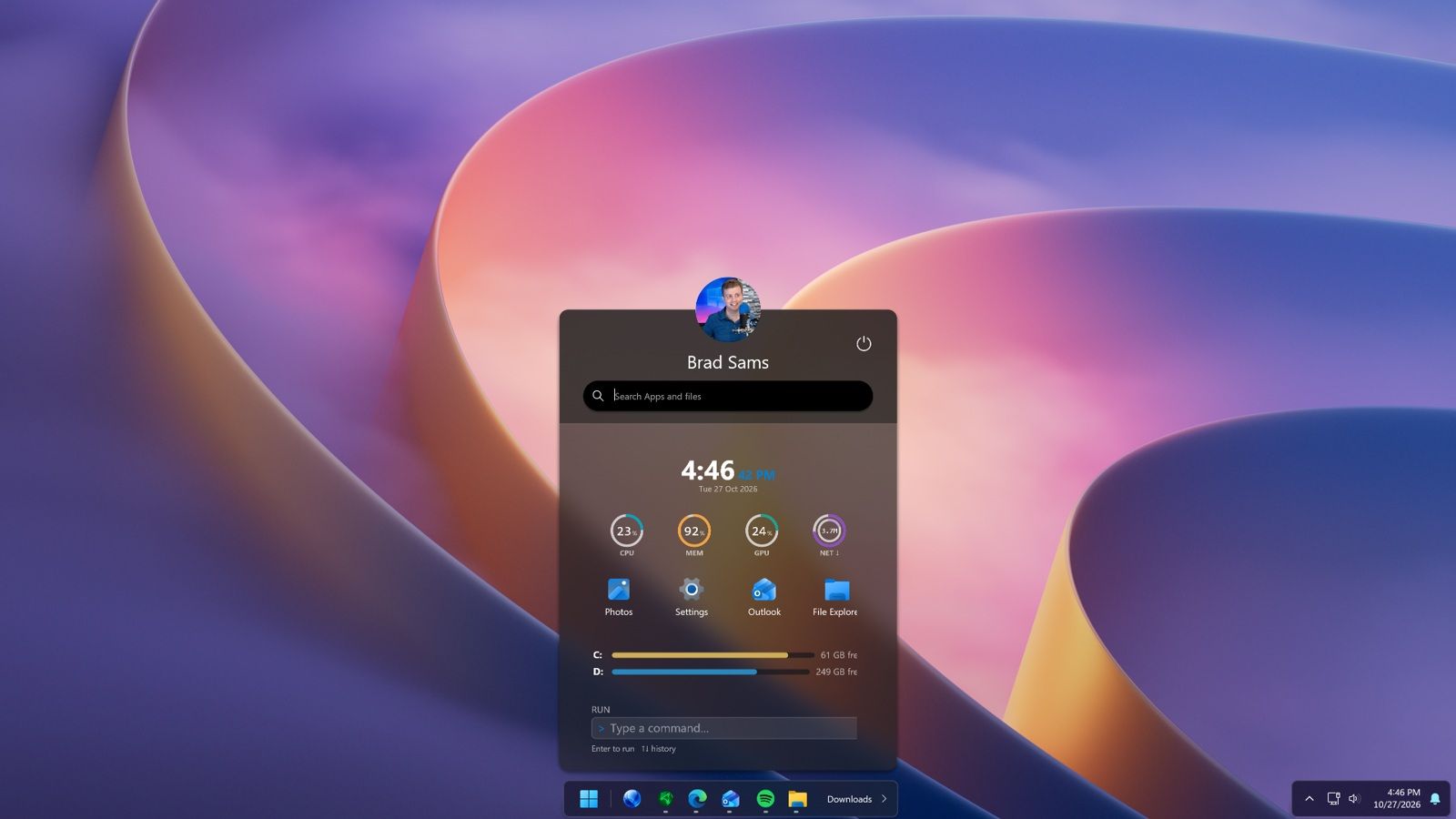
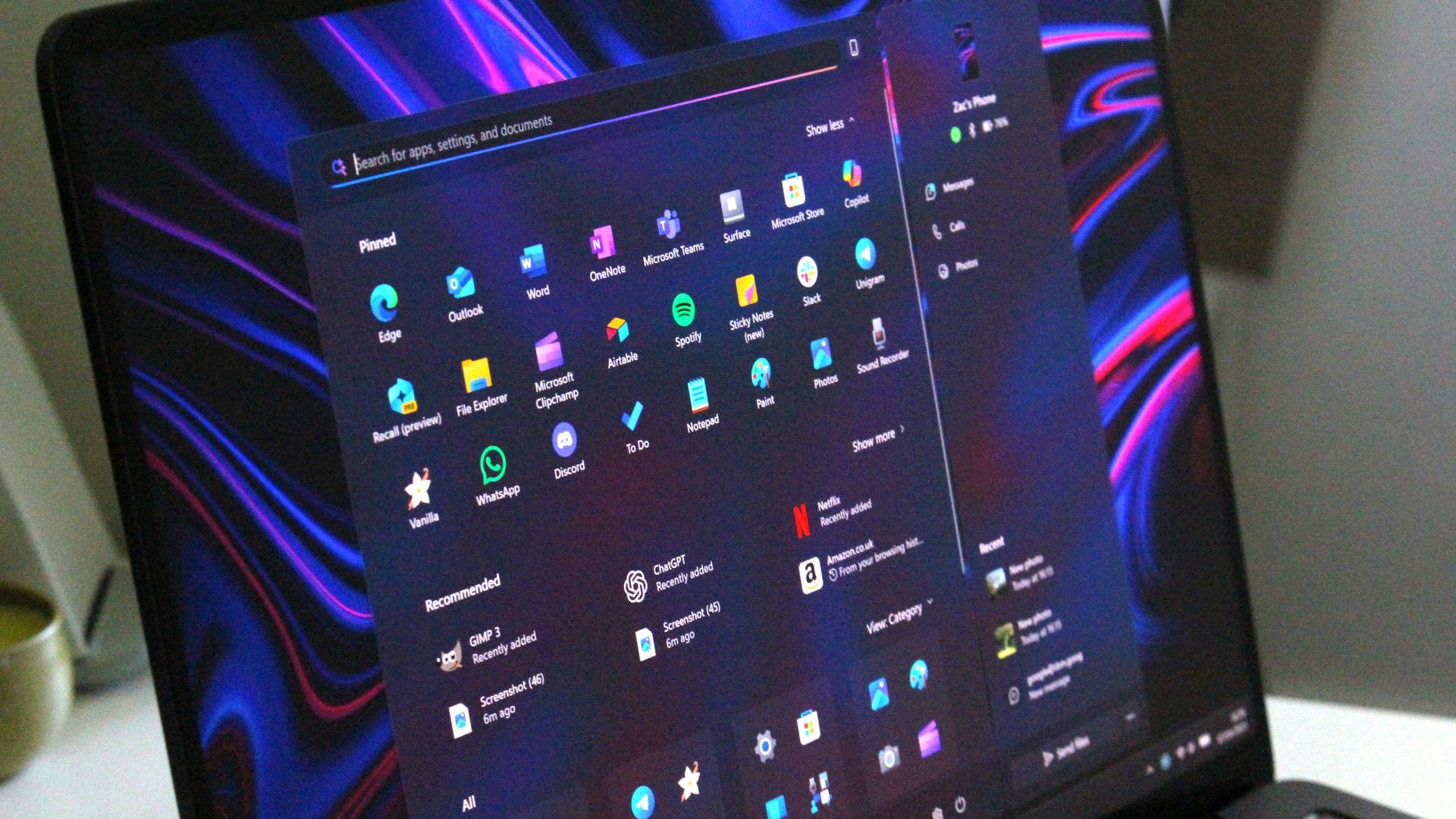
Start11 v3 adds support for widgets within the Start menu. There are 20 widgets available at launch, though most are fairly straightforward. Widgets like a clock or calendar may serve better as proof of concept than a core part of the Start menu.
The updated app also adds Taskbar Islands, which are a dock-like experience. They feel a little bit like macOS because they split the taskbar into smaller pieces that do not take up an entire section at the bottom of your screen. But the Taskbar Islands very much match the overall design and feel of Windows 11.
Start11 v3 introduces Taskbar Islands and app grouping, letting users organize related apps and create a more dock-like taskbar experience. (Image credit: Stardock)
Start11 adds support for grouping applications directly in the taskbar by holding Alt and dragging applications together. You can pin those groups as workspaces to launch multiple apps with a single click.
A new button in the taskbar provides quick access to recently closed applications, overflow items, and taskbar tools.
Stardock also added the ability to explore Start menu layouts from the community.
As much as I love apps that customize the look of Windows 11 and add new features, I only keep a few installed on my PC. Start11 is on the short list of apps I install right away, alongside PowerToys.
With Microsoft's recent improvements to the Start menu, an app like Start11 needs to do more to stand out. Start11 v3 does that with taskbar islands, widgets in the Start menu, and other new features.
(per year): was $10 now $8 Start11 lets you customize the Windows Start menu with several layouts, visual styles, and positioning options. If Microsoft's default Start menu isn't quite right for your workflow, Start11 gives you plenty of alternatives. Right now, it's on sale for $8 while v3 is in beta.View Deal
Join us on Reddit at r/WindowsCentral to share your insights and discuss our latest news, reviews, and more.
Copying and pasting continues to be an issue for those who install the latest updates from Microsoft. Just one month after an update broke functionality in Excel, October's release has caused the same issue.The latest issues are caused by the KB5002934 update for Microsoft Excel, which is for Excel 2016. That version replaces KB5002665, which included a hotfix for a copy/paste bug. Despite superseding the previous update, the KB5002934 update can also prevent you
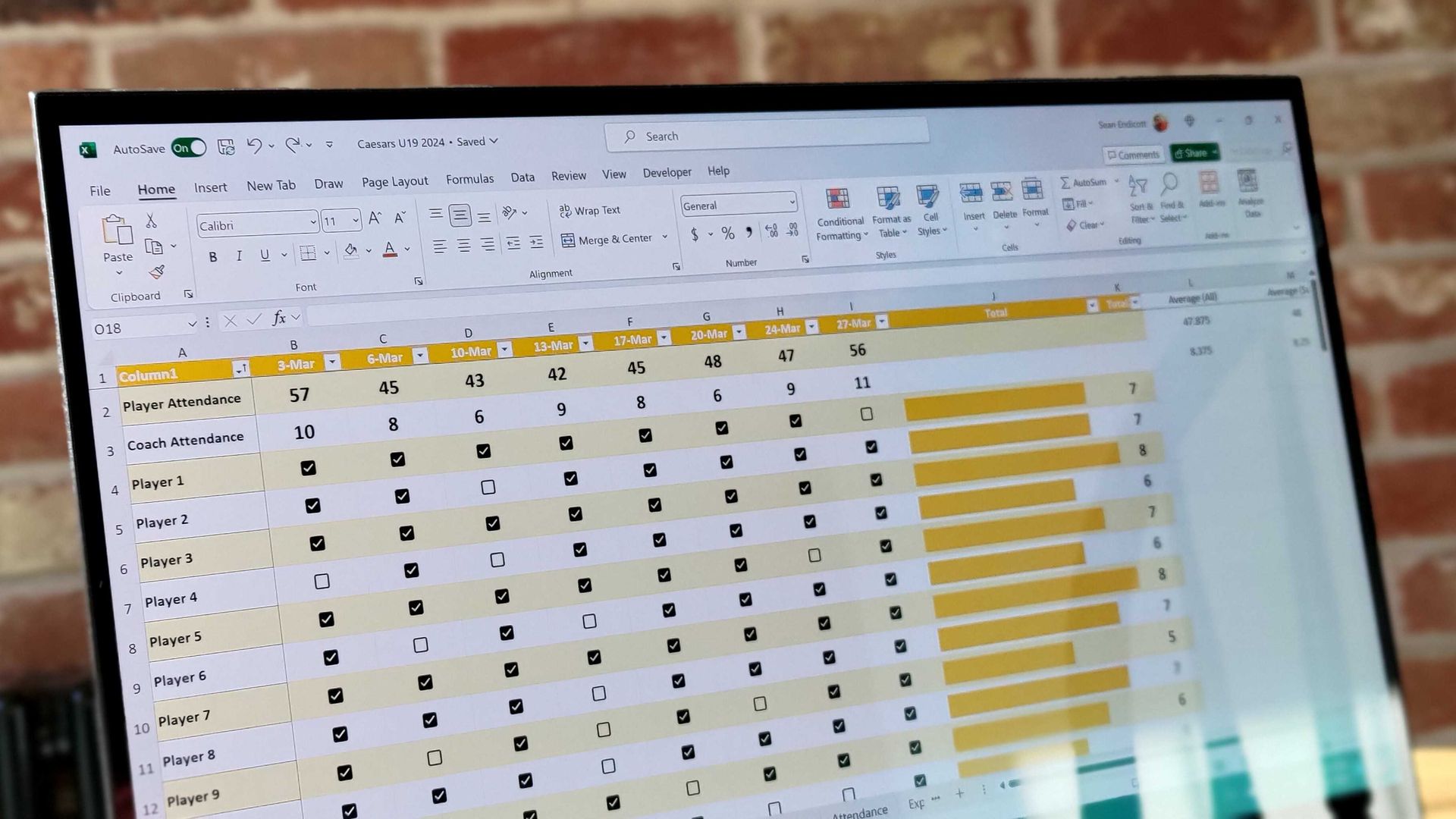
Copying and pasting continues to be an issue for those who install the latest updates from Microsoft. Just one month after an update broke functionality in Excel, October's release has caused the same issue.
The latest issues are caused by the KB5002934 update for Microsoft Excel, which is for Excel 2016. That version replaces KB5002665, which included a hotfix for a copy/paste bug. Despite superseding the previous update, the KB5002934 update can also prevent you from copying and pasting if a workbook contains conditional formatting.
Only a small set of Excel users should be affected by the bug, since it's limited to Excel 2016. Newer versions of Excel do not have the issue.
The bug appears in a way that may confuse those who run into it. Rather than Excel showing an error message or making a noise, the function simply fails.
The updates to Excel ship through Windows Update, though they aren't updates to the operating system itself. They function similarly to updates for other Microsoft apps such as Edge.
Luckily for those facing the issue, Microsoft has already fixed the bug. The company released a new build of Excel that fixes the issue. If Excel is running build 16.0.5574.1006 (or later), you should be fine.
You can check your Excel version by opening File > Account and looking under About Excel.
If for some reason you are still facing the issue, you can try these steps from Microsoft as a workaround:
On the Home tab, select the Paste dropdown list, and then select Paste Special.
In the Paste Special window, select one of the following options:
Formulas
Formulas & Number Formatting
Values
Values & Number Formatting
Link
I'm glad that Microsoft fixed the problem so quickly, but it's concerning that updates caused the same issues two months in a row.
Join us on Reddit at r/WindowsCentral to share your insights and discuss our latest news, reviews, and more.
Searching for a specific email in Outlook can prove challenging. Outlook search can sometimes return irrelevant results while missing the exact email you need. Microsoft is looking to improve that frustrating experience with a revamped search.The new search has a feature that genuinely removes the most frustrating part of Outlook for me. That phrase is thrown around a lot online and is often clickbait, but I mean it here emphatically.Outlook now handles stop word
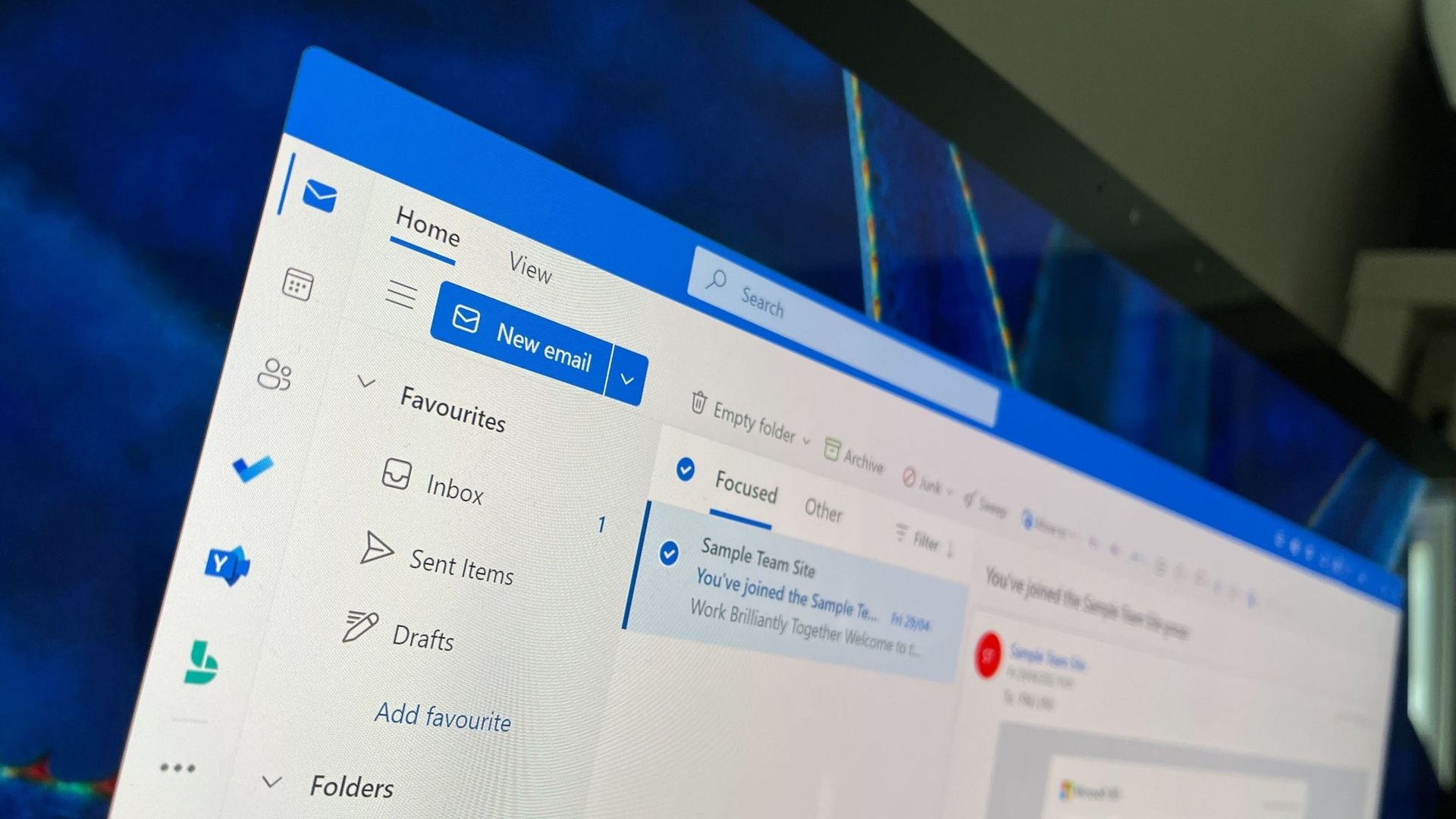
Searching for a specific email in Outlook can prove challenging. Outlook search can sometimes return irrelevant results while missing the exact email you need. Microsoft is looking to improve that frustrating experience with a revamped search.
The new search has a feature that genuinely removes the most frustrating part of Outlook for me. That phrase is thrown around a lot online and is often clickbait, but I mean it here emphatically.
Outlook now handles stop words better. Those words, such as "the," "and," and "is," often clog search results with irrelevant emails. I can't tell you how many times those tiny words have led to terrible searches that made me fish through the results that appear chronologically.
Microsoft's example from a blog post shows how drastically different the results are when searching "the FY27 budget" using the old Outlook search versus the new one.
Microsoft's example shows how Outlook's updated search ranks relevant emails higher in the results instead of surfacing messages that only happen to contain common search terms. (Image credit: Microsoft)
The improvements highlighted by Microsoft center around ranking emails better. Microsoft focused on three areas when building the new search tool in Outlook: better ranking, improved performance when connectivity is poor, and a tighter feedback loop.
When you search for an email within Outlook, you will see seven ranked results rather than three. Those emails are ranked based on recency, sender, how much the message has been interacted with, and other factors. Expanding the number of ranked messages presented should show users more relevant emails while also helping Microsoft improve its ranking systems over time.
The new ranking layout is available across several versions of Outlook, including the new and Classic versions.
There are other upgrades as well. Classic Outlook now automatically falls back to locally indexed content when connectivity is poor. That same functionality is on the way to new Outlook but will ship later.
Users of Classic Outlook should also see faster search results. Microsoft also said recent improvements reduced latency for the slowest 5% of Outlook searches.
The improved rankings in Outlook are the result of a small language model ranker built specifically for Outlook. That model is trained through distillation, meaning it is built under the supervision of a larger model.
Distillation helps Outlook search be more efficient than if it had to run a larger model just to look through and rank emails.
I'd probably be okay with using a larger model in Outlook if it cut out irrelevant results that appear simply for using an article or common verb like "is." I bet I'd still save some time that way. But I don't have to test that theory because the new Outlook search is lightweight.
Join us on Reddit at r/WindowsCentral to share your insights and discuss our latest news, reviews, and more.
We're quickly approaching XBOX's 25th anniversary. Many companies are celebrating the event with special accessories and gear, but you can also build your game library as part of the festivities. If you purchase an eligible Windows 11 PC, you can claim 25 XBOX games that have a total value of over $500.When Microsoft announced the promotion, it highlighted The Elder Scrolls V: Skyrim Special Edition, Halo: Combat Evolved Anniversary, Age of Empires II: Definitive
We're quickly approaching XBOX's 25th anniversary.Many companies are celebrating the event with special accessories and gear, but you can also build your game library as part of the festivities. If you purchase an eligible Windows 11 PC, you can claim 25 XBOX games that have a total value of over $500.
The Elder Scrolls IV: Oblivion Game of the Year Edition
Age of Mythology: Retold
Quake
Quake II
Wolfenstein: The New Order
The Outer Worlds
Rise of Nations: Extended Edition
As Dusk Falls
Battletoads
Pillars of Eternity II: Deadfire
Zoo Tycoon: Ultimate Animal Collection
Fuzion Frenzy
Gears Tactics
Crimson Skies: High Road to Revenge
BLINX: The Time Sweeper
That collection of games includes old classics like Fuzion Frenzy and recent AAA games. The bundle is a great way to grow your library or to help a friend or family member get started if you grab them a PC or gaming handheld as a gift.
Gaming handhelds are eligible
(Image credit: Windows Central)
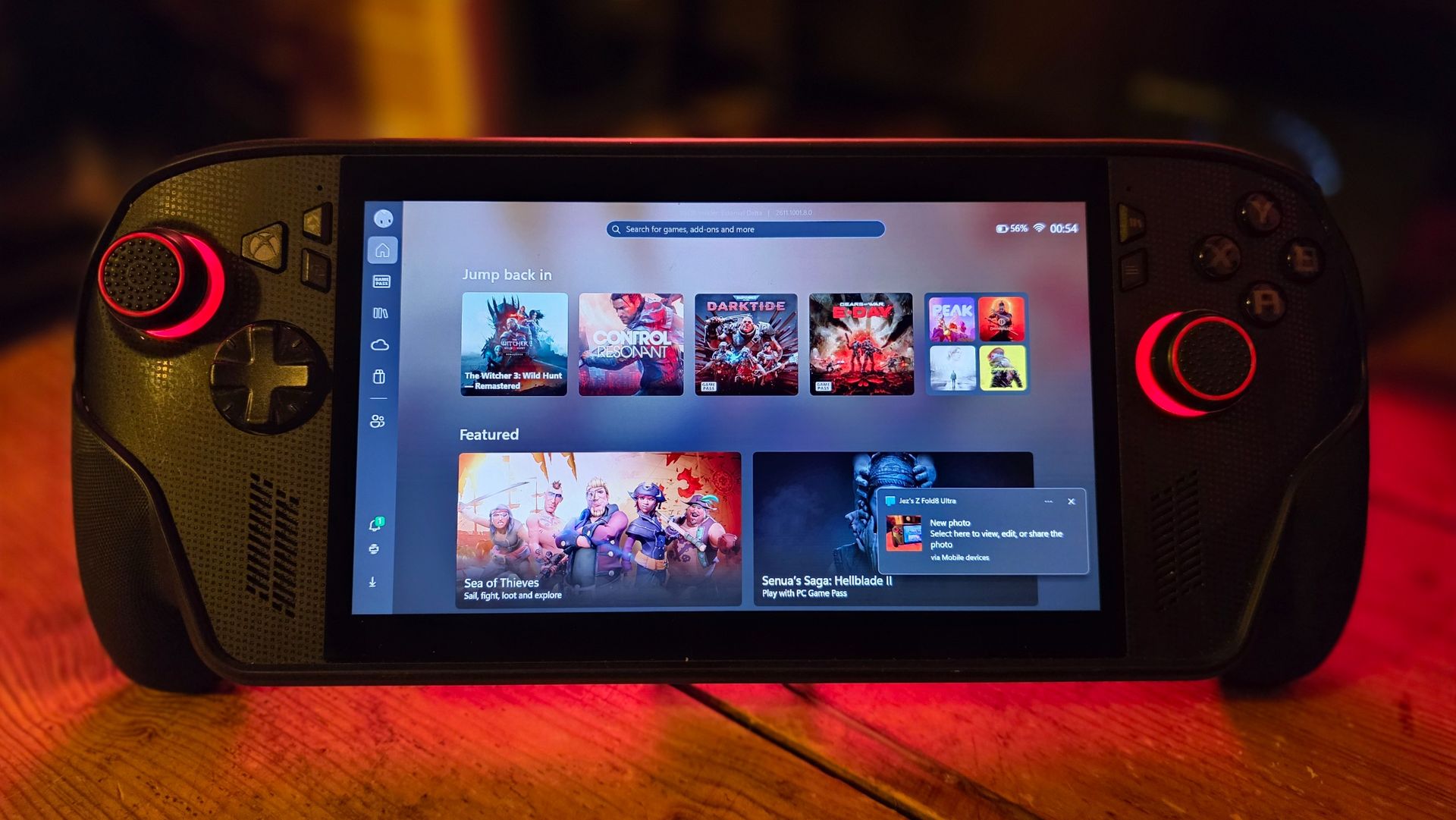
The X25 bundle can be claimed after purchasing any eligible PC running Windows 11, but I'd argue that it's best paired with a gaming handheld PC. Those types of devices are going to be popular gifts over the coming months. They allow you to take many of your favorite games on the go and are also a comfortable way to enjoy your favorite titles around your home.
Many of the games included in the bundle support XBOX Play Anywhere, meaning you can play them on your Windows PC and XBOX consoles. Age of Empires II: Definitive Edition, Gears of War: Reloaded, and The Elder Scrolls Online all support XBOX Play Anywhere.
There are some notable games that do not support XBOX Play Anywhere, meaning their Windows and XBOX versions are treated separately. Call of Duty: WWII, Fallout 76, Halo: Combat Evolved Anniversary, and Minecraft Dungeons are the biggest games from the bundle to not support XBOX Play Anywhere.
Our Managing Editor Jez Corden just re-reviewed the XBOX Ally X after using the gaming handheld for the past year. He called the gaming handheld "a fantastic device, a perfect companion for any XBOX player with a big Xbox Play Anywhere library."
That praise makes the XBOX Ally X arguably the best Windows PC to pick up when looking to claim the X25 bundle.
Terms and conditions
To get the free games, you need to purchase an eligible PC. Microsoft outlines the requirements:
"Eligible PCs include new Windows PCs and handhelds pre-installed with Windows Home and new Windows PCs pre-installed with Windows Pro running on NVIDIA RTX Spark silicon. Refurbished Windows PCs, and PCs purchased from unauthorized resellers, online marketplaces, liquidators, or auction websites, are not eligible."
The promotion runs from November 2, 2026 until December 31, 2026. You have to be in the United States to claim the games.
To claim the games, you'll have to open the Microsoft Store app on Windows 11. No later than November 30, 2026, the bundle will appear on eligible PCs and give you a chance to claim all 25 games.
Before you make any plans to purchase a PC to claim the free games then return the computer, Microsoft notes that it may revoke promotional benefits if a purchase is returned, canceled, or incomplete for other reasons.
Join us on Reddit at r/WindowsCentral to share your insights and discuss our latest news, reviews, and more.
Microsoft's plans for AI PCs include everything from laptops with only 8GB of RAM to supercomputers with over 128GB of RAM. The company's roadmap was outlined in slides shared on X by user "HXL."One slide, labeled "Windows is the home for hybrid intelligence" shows four tiers of PCs. The lowest one, Tier 0, is Windows PCs with 8GB of RAM that are powered by Intel Core Series 3 or 4, AMD Ryzen 100 or 200, and Snapdragon X or X Plus.Tier 1 covers Copilot+ PCs with
Microsoft's plans for AI PCs include everything from laptops with only 8GB of RAM to supercomputers with over 128GB of RAM. The company's roadmap was outlined in slides shared on X by user "HXL."
One slide, labeled "Windows is the home for hybrid intelligence" shows four tiers of PCs. The lowest one, Tier 0, is Windows PCs with 8GB of RAM that are powered by Intel Core Series 3 or 4, AMD Ryzen 100 or 200, and Snapdragon X or X Plus.
Tier 1 covers Copilot+ PCs with 16GB to 64GB of RAM. That tier spans a broad range of specs, from consumer-focused processors like the Snapdragon X2 Plus to the much more powerful AMD Ryzen AI MAX+ 400.
Tier 2 is builder PCs for building and running AI models locally. The hardware in that tier overlaps with the high end of Tier 1. It includes PCs powered by Intel Core Ultra Next, NVIDIA RTX Spark, and AMD Ryzen AI MAX+ 400.
The highest tier is for supercomputers designed to run frontier models locally. Those devices run on processors you'd never see in a consumer PC, such as Intel Crescent Island, NVIDIA GB300 DGX Station, and AMD Next chips.
Microsoft's roadmap is built around hybrid intelligence, with AI workloads split between local hardware and the cloud depending on the demands of each task. (Image credit: Microsoft (via user "HXL" on X))
What stands out most about the roadmap isn't the hardware itself but Microsoft's continued emphasis on hybrid intelligence. Rather than viewing local and cloud computing as competing approaches, Microsoft intends to use both.
We already knew that Copilot+ PCs required at least 16GB of RAM and that Microsoft had plans for workstations and supercomputers with top-end specs. NVIDIA's RTX Spark launched recently and powers several tier 2 PCs, such as the Surface Laptop Ultra.
Sam Altman may not be thrilled that Microsoft's AI roadmap includes PCs with more than 128GB of RAM. (Image credit: Getty Images | NurPhoto / Edit: Windows Central )
Microsoft's dream for AI computing is more like a nightmare for OpenAI CEO Sam Altman. He recently claimed that it's "actually quite terrible" for people to have RAM on their own computers. One theory is that OpenAI and other tech giants would prefer AI workloads to rely on centralized compute resources that can then be sold as a service.
Altman did not mention that specifically, but his comments suggest he views compute power as a resource AI companies have more of a right to than people do.
Microsoft has very different plans for AI in the form of hybrid intelligence. Rather than relying solely on cloud computing or local processing, people using hybrid intelligence will use a mixture of both.
We're still in the early days of hybrid intelligence, but a likely scenario is one in which users utilize the local compute power they have and then summon the cloud to complete tasks as needed. That setup would allow PCs across the entire roadmap to access AI.
Tier 0 and Tier 1 devices could perform less demanding tasks depending on their exact specs and lean more heavily on the cloud for compute-heavy workloads. Tier 2 and Tier 3 PCs would mostly stick to local processing but have the cloud as an option for exceptionally demanding projects.
Join us on Reddit at r/WindowsCentral to share your insights and discuss our latest news, reviews, and more.
Windows 11 has a new speed test feature in the works that will allow you to check your PC's connectivity without having to open a browser or a separate app. The feature is already in testing with Windows Insiders and looks promising so far.Windows 11 already has a shortcut for testing internet speed, but it's simply a button that opens Bing's speed test in a web browser. The new speed test feature is built-in, making it feel like part of Windows 11 rather than a
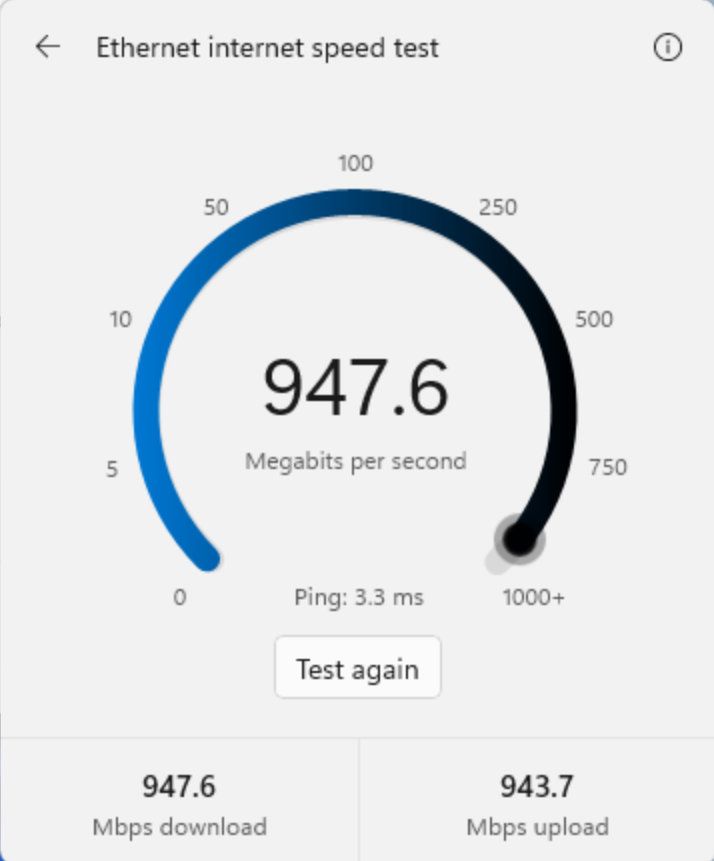
Windows 11 has a new speed test feature in the works that will allow you to check your PC's connectivity without having to open a browser or a separate app. The feature is already in testing with Windows Insiders and looks promising so far.
Windows 11 already has a shortcut for testing internet speed, but it's simply a button that opens Bing's speed test in a web browser. The new speed test feature is built-in, making it feel like part of Windows 11 rather than a tacked-on browser shortcut.
The addition has been well-received and sparked positive discussions online. Our Mauro Huculak said, "Windows 11 needs more features like this," and his wish may come true.
Marcus Ash, lead of Design and Research across Windows & Devices, discussed the new speed test feature and how the tool was created. According to Ash, the new speed test feature is the result of an agentic AI workflow guided by a real person.
"This is where I see a lot of potential in AI," said Ash. "Using agentic workflows and WinUI 3 to build more integrated Windows experiences. Getting from idea to customer value faster. Without AI slop. That is the way."
AI is under heavy scrutiny for a variety of reasons. Many criticize "vibe coding," which often results in low-quality projects. But there is a place for AI in certain workflows.
After looking at Ash's comment, it's easy to see why Microsoft chose to attach the term "Copilot" to many of its AI products. The company's leaders view AI as a tool that works alongside people to streamline workflows while still leaning on the guidance of human expertise.
Considering the positive reception of the new speed test tool, it seems likely that other parts of Windows 11 will be built with a similar workflow. I'm curious to see if they will all be well-received or if some people will push back solely due to the use of AI.
What do you think about Microsoft using AI as part of its development process? Let us know in the comments!
Join us on Reddit at r/WindowsCentral to share your insights and discuss our latest news, reviews, and more.
I recently highlighted an app that allows you to click and drag the taskbar to reposition it on Windows 11. In my piece, I said that "changing [the taskbar's] position still requires digging through Settings." That phrase and other parts of my piece led to a discussion online about the nature of coverage and being positive or negative when discussing apps and features.Microsoft's Vice President of Design Diego Baca, said the phrasing in my piece was "unnecessaril
I recently highlighted an app that allows you to click and drag the taskbar to reposition it on Windows 11. In my piece, I said that "changing [the taskbar's] position still requires digging through Settings." That phrase and other parts of my piece led to a discussion online about the nature of coverage and being positive or negative when discussing apps and features.
What stuck with me wasn't whether my wording was too harsh. It was the question of how we should respond when companies explain why a feature isn't necessary, especially when history shows those same features often arrive later.
Biggest News of the Week
I want to be clear about the nature of this piece. Baca's response to my article sparked this discussion, but it's not meant to call him out or criticize him. Every interaction I've had with Baca has been positive and I appreciate how much he interacts with the community on X and other platforms.
Baca was promoted to Vice President of Design at Microsoft in August. I've noticed a distinct increase in user engagement since then from both Baca and other members of Microsoft's design team.
I would also be a hypocrite if I criticized Microsoft for not looking at feedback and then ignored feedback myself. I echo Baca's sentiment that listening to feedback is important even if someone ultimately decides to go in another direction than what's suggested. Understanding how other people think can shape how we view things in the future.
For the record, the headline of the article is and always has been "This free app makes moving the Windows 11 taskbar so much easier"I have changed the wording within the article where the quote you mentioned appears, which, again, was not the headline. But I should say that I don't agree with your take. This was not meant in a negative tone.Windows 10 users that might have heard about Windows 11's new movable Taskbar may not know that its implementation is different. "You still need" meaning that while it can be moved now, you'll still need an app to restore the same draggable behaviors that you had on Windows 10. That's just us being clear about the experience.However, I do appreciate you explaining more about how you designed the movable experience on Windows 11! I like the W11 implementation a lot. Again, I want to be clear: "You still need" never once showed up in the headline. This was only ever present beneath the header as part of the article on the page.October 31, 2026
Explaining why your product lacks a feature that's available anywhere is easy. Defending why your product does not have a popular feature seen in other products is difficult. Justifying adding a feature after arguing against its value for years is almost impossible.
We've seen this with Apple and its touchscreen MacBook. Steve Jobs famously mocked the concept of a touchscreen laptop over a decade ago. In a similar manner, Tim Cook compared devices like the Surface Pro to combining a toaster and a refrigerator only for Apple to later release the iPad Pro, which is clearly similar to the Surface Pro in design.
Years after Steve Jobs argues vertical touch surfaces were "ergonomically terrible," Apple announced a touchscreen MacBook. (Image credit: Lance Ulanoff / Future)
Relating this back to Microsoft, the company tried to justify why the taskbar was immovable when Windows 11 shipped. Back in 2022, Tali Roth, head of product of Windows Core Experiences at Microsoft, explained why that was the case:
"When it comes to something like actually being able to move the taskbar to different locations on the screen, there's a number of challenges with that. When you think about having the taskbar on the right or the left, all of a sudden the reflow and the work that all of the apps have to do to be able to understand the environment is just huge...
And when you look at the data, while we know there is a set of people that love it that way and, like, really appreciate it, we also recognize that this set of users is really small compared to the set of other folks that are asking for other features. So, at the moment, we are continuing to focus on things that I hear more pain around."
In Roth's defense, she did not claim a movable taskbar was a broken concept. But she did say the effort to make it work was huge and that only a small set of users were passionate about the feature.
I doubt the amount of effort required changed dramatically. The number of users interested in the feature has likely remained relatively consistent as well, so why was a movable taskbar a top priority in Windows K2?
That's why I'm hesitant to treat explanations for missing features as the final word. Microsoft's reasons for not prioritizing taskbar positioning in 2022 did not make users wrong for wanting the feature, and they did not make criticism of that decision invalid. If anything, the feature later becoming a Priority 0 item proves that those complaints were worth making in the first place.
High expectations, not hostility
One of my first editions of Windows Wrap focused on holding a mirror up to Microsoft. (Image credit: Future | Edited with Gemini)
I love that Microsoft is improving Windows 11. I think the Windows K2 initiative is one of the most important consumer-focused initiatives the company has had in years. I also think it's okay to be critical while also noting improvements.
I am often critical of Microsoft and its products, but it's not for kicks or clicks. It comes from a genuine hope for the OS to improve. As I said back in January:
"My frustration with Windows 11 and Microsoft doesn't come from a place of "hate" — it comes from a place of high expectations. Whether Microsoft chooses to listen to its core enthusiasts or continues its current path toward an AI-bloated future remains to be seen. In the meantime, it's worth facing a mirror toward Redmond."
I've argued since March that Windows 11 isn't doomed and that Microsoft is fixing the operating system. But much of that change was inspired by passionate, and often negative, feedback — the squeaky wheel gets the grease and all that.
So, I may think twice about being overly negative about Microsoft in the future, but after doing so I'm still likely to press "Publish" on an article calling for change.
Join us on Reddit at r/WindowsCentral to share your insights and discuss our latest news, reviews, and more.
Windows 11 finally lets you move the taskbar, but Microsoft has not fully restored functionality lost when jumping from Windows 10 to Windows 11. To help bridge the gap, developer Michał Łeptuch created an app that makes it easier to move the taskbar.The simply-named "Taskbar Location Options" lets you right-click and move the taskbar to the top, left, right, or bottom of your screen. Alternatively, you can simply click and drag the taskbar to any edge of your di
Windows 11 finally lets you move the taskbar, but Microsoft has not fully restored functionality lost when jumping from Windows 10 to Windows 11. To help bridge the gap, developer Michał Łeptuch created an app that makes it easier to move the taskbar.
The simply-named "Taskbar Location Options" lets you right-click and move the taskbar to the top, left, right, or bottom of your screen. Alternatively, you can simply click and drag the taskbar to any edge of your display once the app is installed.
The inability to move the taskbar was one of the most criticized taskbar regressions when Windows 11 launched in 2021. One of the most-requested pieces of feedback for years was restoring the ability to move the taskbar to the sides or top of a display.
Microsoft finally restored that functionality last month, but changing the location of the taskbar still requires opening Settings, navigating to Taskbar settings, and selecting a new position from a dropdown menu.
The option to move the taskbar on Windows 11 is buried in the Settings app. (Image credit: Michał Łeptuch)
Łeptuch's app brings back the option to click and drag the taskbar. That feature was available on Windows 10 and previous versions of Windows. I always found it odd that Microsoft brought back the option to move the taskbar but buried it in the Settings app.
Dragging the taskbar is often faster, especially for users who frequently switch between desktop layouts or monitor configurations.
The installation process for Taskbar Location Options requires more steps than I'd like, but that should be smoothed out in the future. At the moment, you have to download a certificate, unblock the file, then run the file with PowerShell before installing the app.
The app's GitHub page includes a download link and a guide to install Taskbar Location Options.
Microsoft deserves credit for finally restoring the ability to move the taskbar, but the current implementation feels unnecessarily tucked away. Taskbar Location Options fills that gap by bringing back the quick drag-and-drop behavior Windows users enjoyed for years.
Join us on Reddit at r/WindowsCentral to share your insights and discuss our latest news, reviews, and more.
Windows 11 and wallpapers go together like peanut butter and jelly. Many of our laptop reviews are met with comments asking about our wallpapers. Microsoft deals with the same fervor for images. I spent weeks trying to find the wallpaper shown off during the RTX Spark event.Unfortunately, like the Jedi Archives, Microsoft's publicly shared collection of wallpapers is incomplete. The company has not shared that wallpaper from the RTX Spark event, but it has shared
Windows 11 and wallpapers go together like peanut butter and jelly. Many of our laptop reviews are met with comments asking about our wallpapers. Microsoft deals with the same fervor for images. I spent weeks trying to find the wallpaper shown off during the RTX Spark event.
Unfortunately, like the Jedi Archives, Microsoft's publicly shared collection of wallpapers is incomplete. The company has not shared that wallpaper from the RTX Spark event, but it has shared several images inspired by the Surface Laptop Ultra.
The official Microsoft Surface account shared a thread with a bunch of wallpapers. The collection includes an image that looks like an x-ray of the Surface Laptop Ultra, a rendering of the engineering to make that laptop, and some more abstract artwork inspired by the PC.
But one image immediately caught my eye. In the X post stating "It's all about the details," Microsoft shared an image of a grid of screws used in the Surface Laptop Ultra's construction.
As much as I love a good torque screw (side-eye at proprietary screws), that's not what drew my attention. What piqued my interest was that I first thought the image was the Galactic Senate from Star Wars. All it needs is a floating podium and an emergency powers vote.
Tell me I’m not the only one who saw the galactic senate at first.October 30, 2026
It turns out I'm not the only person whose brain jumped straight to Coruscant. My X post has drawn several replies and messages from people who saw the same thing.
I was tempted to make the headline of this piece something along the lines of "So this is how liberty dies, with glorious wallpapers," but I figured some people would not know the meme and assume I'm being negative.
For those who don't know, a famous scene from Star Wars Episode III sees Padmé Amidala watch the Senate cheer the rise of the Galactic Empire, prompting her famous line, "So this is how liberty dies... with thunderous applause."
In that scene, you'll see the senate chambers that Microsoft's new wallpaper resembles.
Star Wars jokes aside, the best way to download any of these wallpapers is to use the "Load in 4K" option on X. To do this, press and hold the image to bring up the share menu, then select "Load in 4K." This worked for me on iOS and I believe it's available on Android. As far as I can tell it is not an option on Windows or the web, so you'll have to grab the wallpaper from your phone and send it to your PC.
I quite enjoy the wallpapers shared by Microsoft and hope the company continues to release these types of images.
If you're similarly enthusiastic about the background of your desktop, you should check out the Microsoft Design website.
Join us on Reddit at r/WindowsCentral to share your insights and discuss our latest news, reviews, and more.
Microsoft Edge will soon launch faster on Windows 11 by using a feature no other browser has, at least for now. Accelerated app launch is a new feature on Windows 11 that streamlines the process of launching an app.In the case of Edge, the browser sees a 15 percent launch speed improvement because of the feature. If you're multitasking heavily on your PC, the app could launch up to 33 percent faster.The version of Edge with accelerated app launch support ships wi
Microsoft Edge will soon launch faster on Windows 11 by using a feature no other browser has, at least for now. Accelerated app launch is a new feature on Windows 11 that streamlines the process of launching an app.
In the case of Edge, the browser sees a 15 percent launch speed improvement because of the feature. If you're multitasking heavily on your PC, the app could launch up to 33 percent faster.
The version of Edge with accelerated app launch support ships with the October 2026 non-security update for Windows 11. That update, known as KB5127936, is available now as an optional release. It also includes the updated context menu as well as Cloud Rebuild.
Accelerated app launch requires both the app and Windows 11 to work together. Since Edge is the built-in browser on Windows 11, it should come as no surprise that Microsoft first shipped the feature to Edge.
Without accelerated app launch, clicking a link to open Edge requires Windows to determine whether Edge is already running. Doing so requires Windows to start an intermediary process that looks around for an instance of Edge. Microsoft explains that you probably won't notice sluggishness during this process on a freshly booted PC, but that you can notice things slow down when multitasking.
Accelerated app launch sends a registration request to Windows when the browser is launched initially. Windows can then find that registration quickly the next time you launch Edge through a link.
Because of how the feature works, you'll only see those launch speed improvements after Edge has already been opened and is running in the background.
The feature works in the Start menu, Taskbar, and supported links that open in Edge by default.
Not a selling point for Microsoft Edge
Microsoft is contributing the code for accelerated app launch to Chromium, so browsers such as Brave, Vivaldi, and Chrome can implement the feature. (Image credit: Windows Central)
Support for accelerated app launch is a nice addition to Edge, but it won't be a feature that convinces people to switch browsers. Microsoft is contributing its work related to the feature to Chromium, so other Chromium-based browsers can benefit from accelerated app launches on Windows.
As far as I can tell, there's nothing stopping non-Chromium browsers from doing the same thing, it would just require more work.
Microsoft is also working on opening PDF files using the feature.
So rather than an exclusive feature for Edge, accelerated app launch will help improve the overall Windows 11 experience by reducing how long it takes to open apps.
Join us on Reddit at r/WindowsCentral to share your insights and discuss our latest news, reviews, and more.
When I was a child my dad's office shelf was filled with plastic toys from McDonald's that I played with. Some of those sat there for years as a reminder of short stops on vacations for lunch. Since those days over three decades ago, McDonald's toys have evolved.Rather than a heavy plastic Grimace or another colorful mascot, McDonald's food now comes with computer accessories. That is, if you're in China.McDonald's China teamed up with Lenovo to create a wireless
When I was a child my dad's office shelf was filled with plastic toys from McDonald's that I played with. Some of those sat there for years as a reminder of short stops on vacations for lunch. Since those days over three decades ago, McDonald's toys have evolved.
Rather than a heavy plastic Grimace or another colorful mascot, McDonald's food now comes with computer accessories. That is, if you're in China.
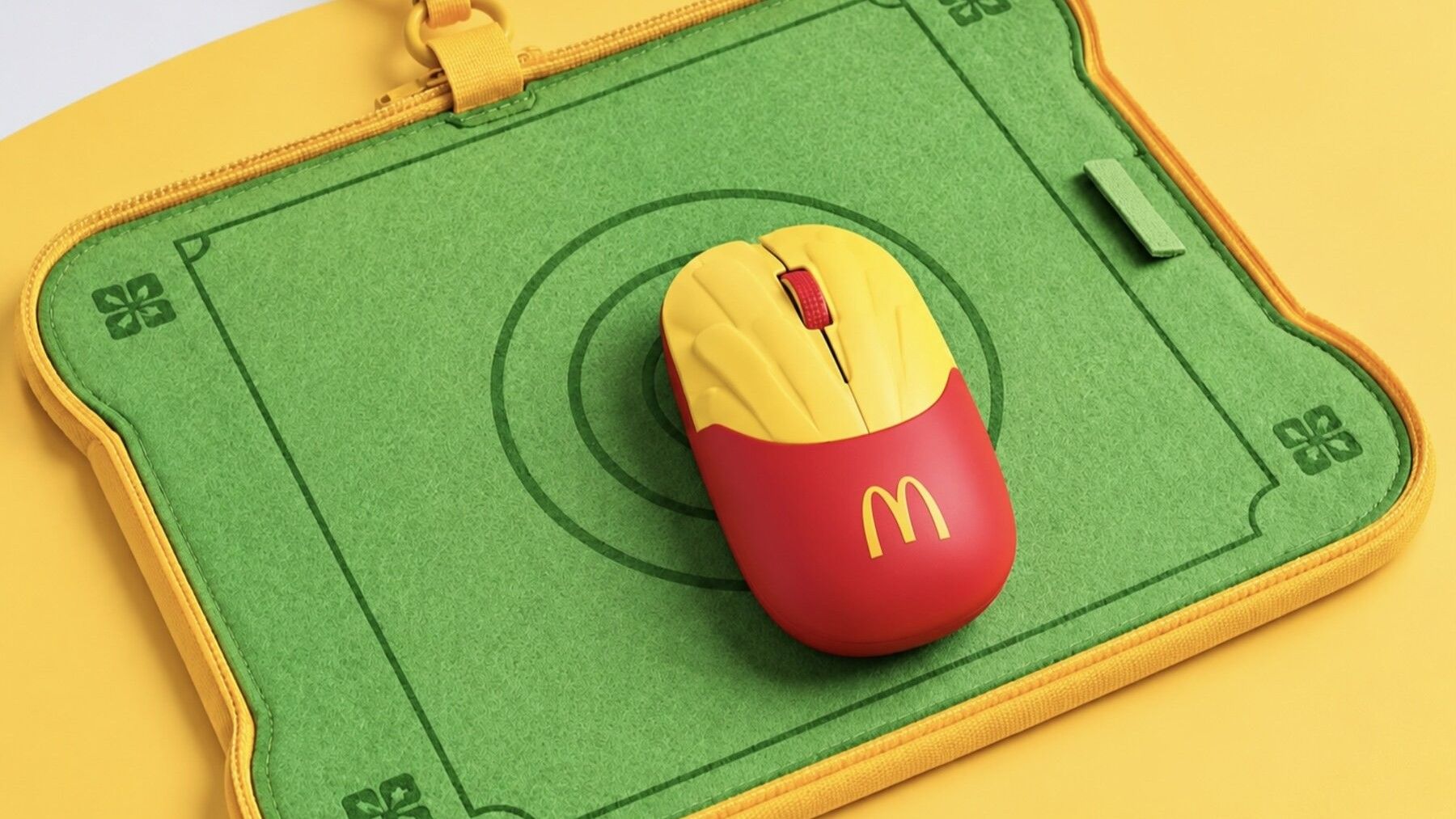
McDonald's China teamed up with Lenovo to create a wireless mouse that looks like a carton of McDonald's fries. Apart from looking like a fast food item, the mouse is rather unassuming. It features two buttons and a scroll wheel. It charges through USB-C, which is standard for mice these days.
McDonald's mice are made from around 60% recycled materials. Specifically, old Happy Meal toys were used.
The mouse comes with a carrying case that turns into a mousepad when you open it up, which is a clever design.
Unfortunately for myself and anyone else hoping to get their hands on one of the mice, McDonald's held a very limited run for the accessory. Only 4,000 units were made, and they were sold over a single weekend for roughly $14. There's also the geographic limitation of the fry mice only being made available in China.
McDonald's Moa McNuggets were dry and broke game lore, but I'd forgive those shortcomings to get a McDonald's mouse. (Image credit: Future)
My love of McDonald's is well documented. My Microsoft profile photo is me holding a Happy Meal. Call it a guilty pleasure or an occasional treat, I love a box of McNuggets or a taste of a limited-time item at McDonald's.
A new feature called Cloud Rebuild allows you to perform a full system reinstall for your Windows 11 PC without USB media or a custom image. The feature can even work without relying on the integrity of the currently installed operating system.Cloud Rebuild downloads Windows and your device drivers, allowing for a seamless install.The new feature is available through the latest non-security feature update for Windows 11, which is known as KB5127936. That update i
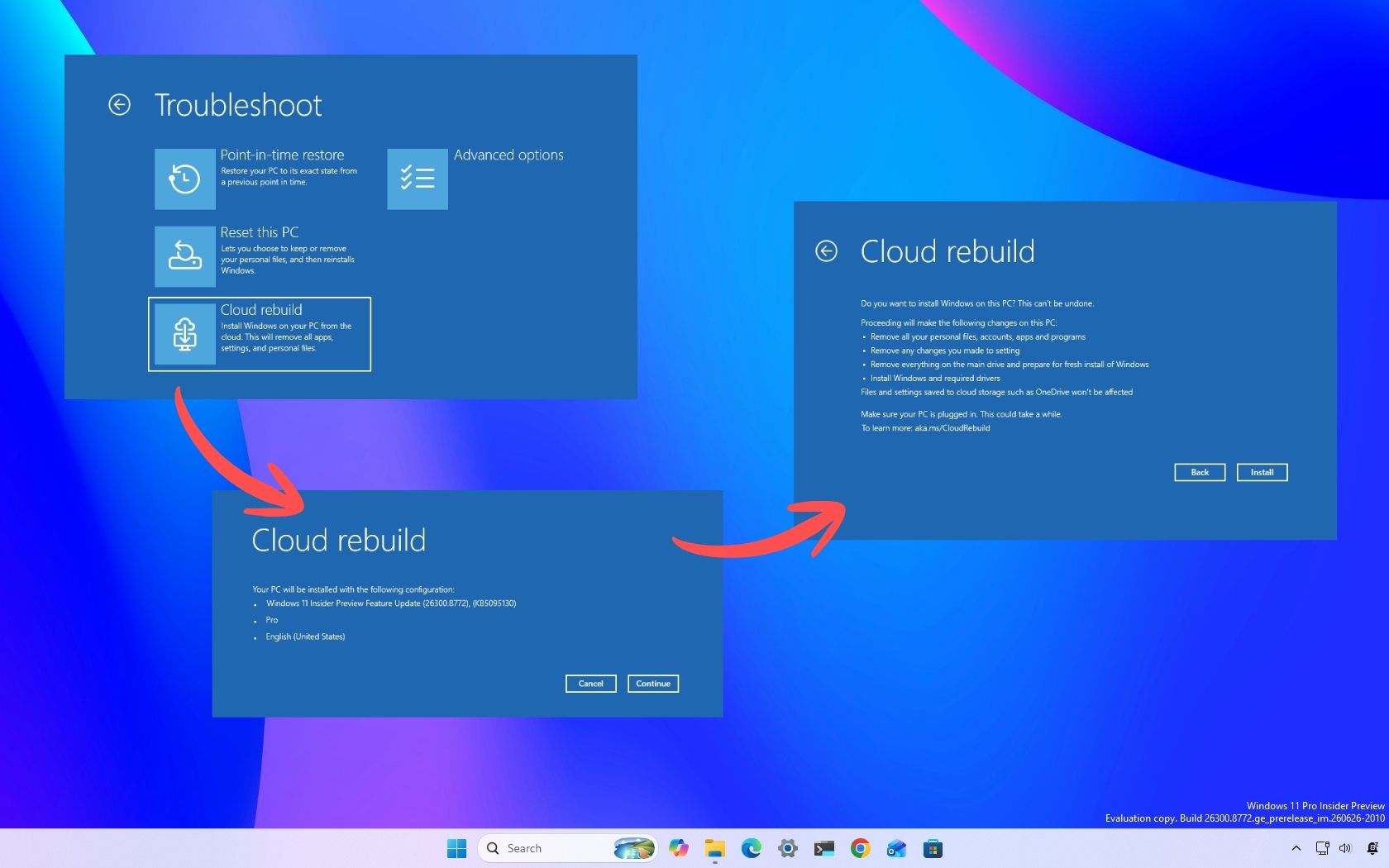
A new feature called Cloud Rebuild allows you to perform a full system reinstall for your Windows 11 PC without USB media or a custom image. The feature can even work without relying on the integrity of the currently installed operating system.
Cloud Rebuild downloads Windows and your device drivers, allowing for a seamless install.
The new feature is available through the latest non-security feature update for Windows 11, which is known as KB5127936. That update is available as an optional release. The feature should make its way to everyone relatively soon.
Windows 11 already included a Cloud Download recovery option, but Cloud Rebuild goes further by downloading both Windows and device drivers from Windows Update and by not relying on the integrity of the existing installation. Cloud Rebuild allows you to reinstall Windows 11 on a device that is unbootable.
Since Cloud Rebuild performs a full system reinstall, you should have all of your important files backed up before using it if at all possible. You also need to have your PC connected to the internet and plugged in to a power source while Cloud Rebuild runs.
For some users, Cloud Rebuild could eliminate the need to create recovery USB drives ahead of time, since Windows can now download the operating system and required drivers directly from Microsoft's servers when disaster strikes.
Because Cloud Rebuild is part of a gradual release, you may not see it right away. Going into the Windows 11 Settings app and enabling the toggle for "Get the latest updates as soon as they're available" will help you get the feature quicker, but does not guarantee you'll receive it right away.
Here's how Microsoft describes Cloud Rebuild in its release notes. You can also read more about the feature in Microsoft documentation.
Cloud Rebuild
New! This update introduces Cloud rebuild, a new recovery option that reinstalls Windows 11 using a Windows image and device drivers downloaded from Windows Update, including when Windows is unable to start. No USB media or custom image is required. Cloud rebuild includes:
Drive sanitization: Choose to remove your files or securely erase data using the storage hardware’s erase capability before Windows is reinstalled. Sanitization is irreversible.
Remote management: IT administrators can configure and start a Cloud rebuild remotely through the Recovery CSP using either the currently installed build or a specified target build.
To start Cloud rebuild:
In Windows, go to Settings > System > Recovery, and then select Rebuild PC. The device restarts into the Windows Recovery Environment and starts Cloud rebuild.
Alternatively, if Windows can't start, the device enters the Windows Recovery Environment automatically after repeated boot failures. From the Windows Recovery Environment (WinRE), select Troubleshoot > Recovery and uninstall > Cloud rebuild.
Connect to a wired Ethernet or Wi-Fi network.
Review the target Windows build, edition, and language, and then confirm the data loss warning before the rebuild begins. You can choose whether to remove files or remove and sanitize files prior to Windows reinstalling.
Join us on Reddit at r/WindowsCentral to share your insights and discuss our latest news, reviews, and more.
The Windows Security app is about to be redesigned to align with Windows 11. Soon, you will no longer feel like you've booted up a PC from a decade ago when managing the security features on your computer.Microsoft discussed several changes that are on the way to the app in its latest release notes. The company started sharing Insider release notes for apps earlier this year, including Calculator, Camera, and Windows Security.The change log describes several upda
The Windows Security app is about to be redesigned to align with Windows 11. Soon, you will no longer feel like you've booted up a PC from a decade ago when managing the security features on your computer.
Microsoft discussed several changes that are on the way to the app in its latest release notes. The company started sharing Insider release notes for apps earlier this year, including Calculator, Camera, and Windows Security.
The change log describes several updates to the design and user interface of Windows Security. The app already protects PCs through a collection of tools including Microsoft Defender Antivirus, Windows Firewall, and Smart App Control.
The Windows Security app is already functional and does a good job of protecting PCs. Its security tools are also updated regularly, so it's not as if the app needs to be overhauled from a security perspective.
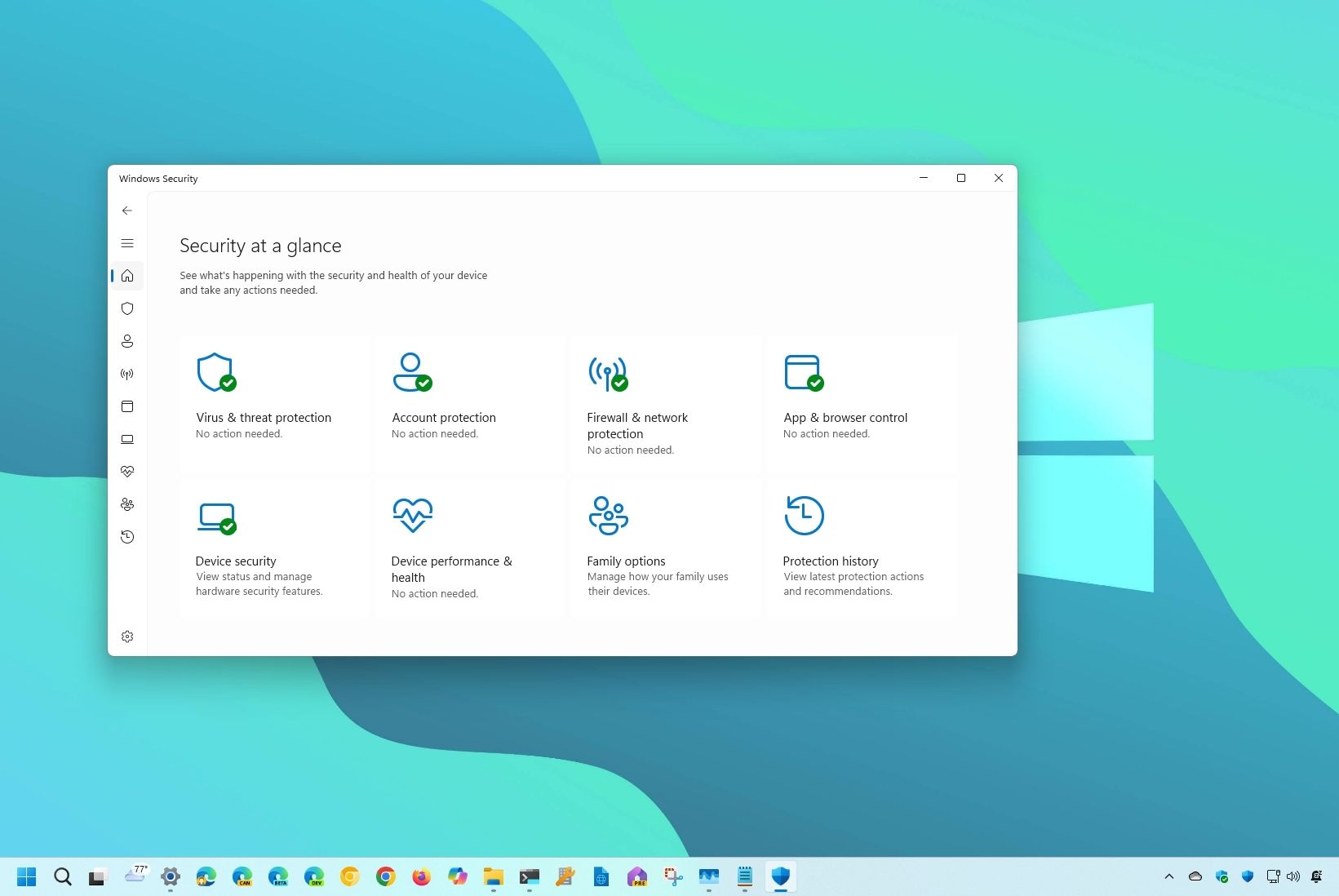
The current version of Windows Security still relies on navigation, layouts, and visual elements that feel noticeably older than Microsoft's modern Windows 11 apps.
Here's what Microsoft plans to do with the Windows Security app, as outlined by the company:
Updated navigation and layouts: Pages throughout Windows Security now use more consistent layouts and navigation, with improved behavior across different window sizes.
Modernized controls and dialogs: Controls, status indicators, typography, spacing, colors, and other visual elements have been refreshed to provide a more consistent experience throughout the app.
Clearer status and actions: We’ve made improvements to how status information and available actions are presented throughout Windows Security.
Improved device security information: On supported managed devices, device security details now load progressively so available information can appear sooner, along with improvements to progress, error, refresh, and performance-monitoring experiences.
Those changes are already available to Windows Insiders as long as they're running version 1000.29680.0.1000 of Windows Security.
The refresh should make Windows Security feel far more at home within Windows 11, bringing one of the operating system's oldest-looking built-in apps in line with modern experiences such as Settings.
Join us on Reddit at r/WindowsCentral to share your insights and discuss our latest news, reviews, and more.
October is the spookiest time of the year, but there are ways to celebrate apart from dressing up or going to haunts. Developer Joe Finney has turned October into "Tray-tober" by releasing a system tray utility each day throughout the month. All of the projects are on GitHub and available to try for free.Rather than linking 28 separate utilities, I'll just point you to the Tray-tober page managed by Finney. It has a calendar with links to each tool.It's easy to o
October is the spookiest time of the year, but there are ways to celebrate apart from dressing up or going to haunts. Developer Joe Finney has turned October into "Tray-tober" by releasing a system tray utility each day throughout the month. All of the projects are on GitHub and available to try for free.
Rather than linking 28 separate utilities, I'll just point you to the Tray-tober page managed by Finney. It has a calendar with links to each tool.
It's easy to overlook parts of Windows 11, such as the taskbar, quick settings area, and system tray. Many people leave them set to their system defaults and only interact with them occasionally. But much like a bag on Halloween, Windows 11's system tray can be filled with goodies.
The tools shared by Finney live in the system tray, though they aren't all focused solely on productivity. For example, Tray Battleship, which brings the classic board game to the system tray, shipped on October 3.
If you agree and like small cool apps in Windows, check out my project where I launched a new Windows tray utility every day in October!https://t.co/I2LKSk1hCGOctober 28, 2026
Other tools from Finney include Tray Converter for converting units, Trayulator (a calculator), and Tray Nudge, which reminds you to complete tasks.
TrayRadar shows you a weather forecast from NOAA, and Traysky lets you scroll through Bluesky right from the system tray. Finney has created quite the library of tools to try.
Since we're close to the end of October, almost all of the system tray tools have shipped. Only three more remain, and I'm curious to see what they are. Perhaps Tray Connect 4 is on the way?
One of my favorite tools is PowerDisplay, which is part of PowerToys. It allows you to adjust the brightness of your external monitor without reaching around for physical buttons. I keep it pinned to the system tray for quick access. Now, I can sneak in a quick game of battleship after adjusting the brightness of my monitor.
Join us on Reddit at r/WindowsCentral to share your insights and discuss our latest news, reviews, and more.
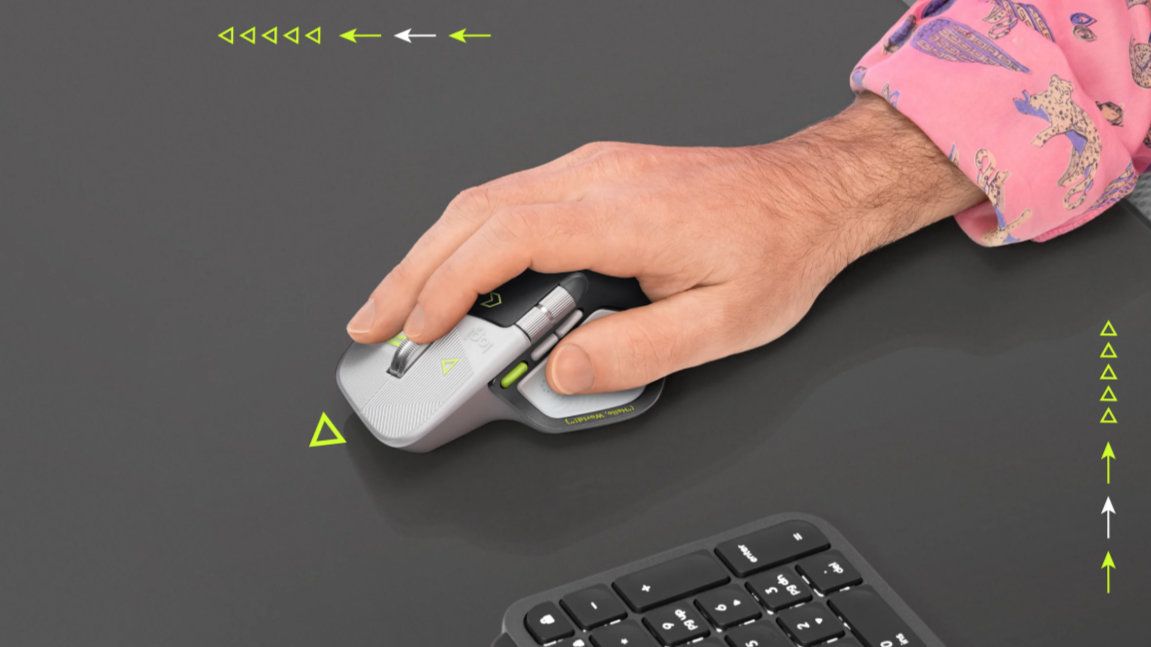
One of the most talked-about mice of 2026 now has a developer edition. The Logitech MX Master 4 earned a near-perfect score from our colleagues at Tom's Guide back in February. The mouse then received a significant upgrade that allows its haptics to work with Windows 11.The Logitech MX Master 4 Developer Edition has several Easter eggs and nods to developers, such as syntax annotations and markup tags that are laser-etched onto the mouse. It also features some im
One of the most talked-about mice of 2026 now has a developer edition. The Logitech MX Master 4 earned a near-perfect score from our colleagues at Tom's Guide back in February. The mouse then received a significant upgrade that allows its haptics to work with Windows 11.
The Logitech MX Master 4 Developer Edition has several Easter eggs and nods to developers, such as syntax annotations and markup tags that are laser-etched onto the mouse. It also features some important dates along the bottom of the mouse, including 09.17 (Linux kernel release date) and !04.01 (World Backup Day).
The mouse went live on Logitech's website this week, but it's currently only available for pre-order. The Logitech MX Master 4 Developer Edition is expected to start shipping on October 31, 2026.
As for the mouse itself, it has the same feature set as the regular Logitech MX Master 4. It's a premium mouse with a bunch of customization options and a DPI that can be set from 2,000 to 8,000. It's the successor to the Logitech MX Master 3S, which Tom's Guide called the king of mice.
The mouse has a plethora of buttons and wheels that can be customized, including setting commands on a per-app basis.
The side of the Logitech MX Master 4 has a touchpad for gesture controls and a button that opens Logitech's control ring (which can be used to perform commands).
The Logitech MX Master 4 was one of the first devices to support haptics on Windows 11. The new haptic system sends feedback signals when you perform certain actions on a PC. For example, toggling a setting on or off in the Windows Settings app makes supported hardware give a little bump.
Logitech's flagship mouse has a wide range of buttons and wheels that can be customized to different commands, as well as a gesture pad on the side. The developer edition of the mouse has nods to coding and development as well as a unique colorway.View Deal
What are haptics on Windows 11?
The new haptics in Windows 11 are a subtle addition that improves the overall experience of using a PC. Our Senior Editor Zac Bowden discussed the feature right after it launched:
"This is the kind of quality of life upgrade that I love to see. Windows has sorely lacked niceties like this in its UI and UX design over the last couple of years, so it's great to see Microsoft back on the horse and taking pride in the overall Windows experience like this. It's not a necessary addition, but it's an addition I'm so glad they've added regardless."
The new haptic system requires supported hardware. The Logitech MX Master 4 was among the first wave of supported devices, alongside the Surface Laptop 8. The new Surface Mouse also supports haptics.
Logitech is sending over a Logitech MX Master 4 for us to take a closer look at. I'm excited to have a mouse that adds a bit of color to my mostly black accessory setup.
Join us on Reddit at r/WindowsCentral to share your insights and discuss our latest news, reviews, and more.
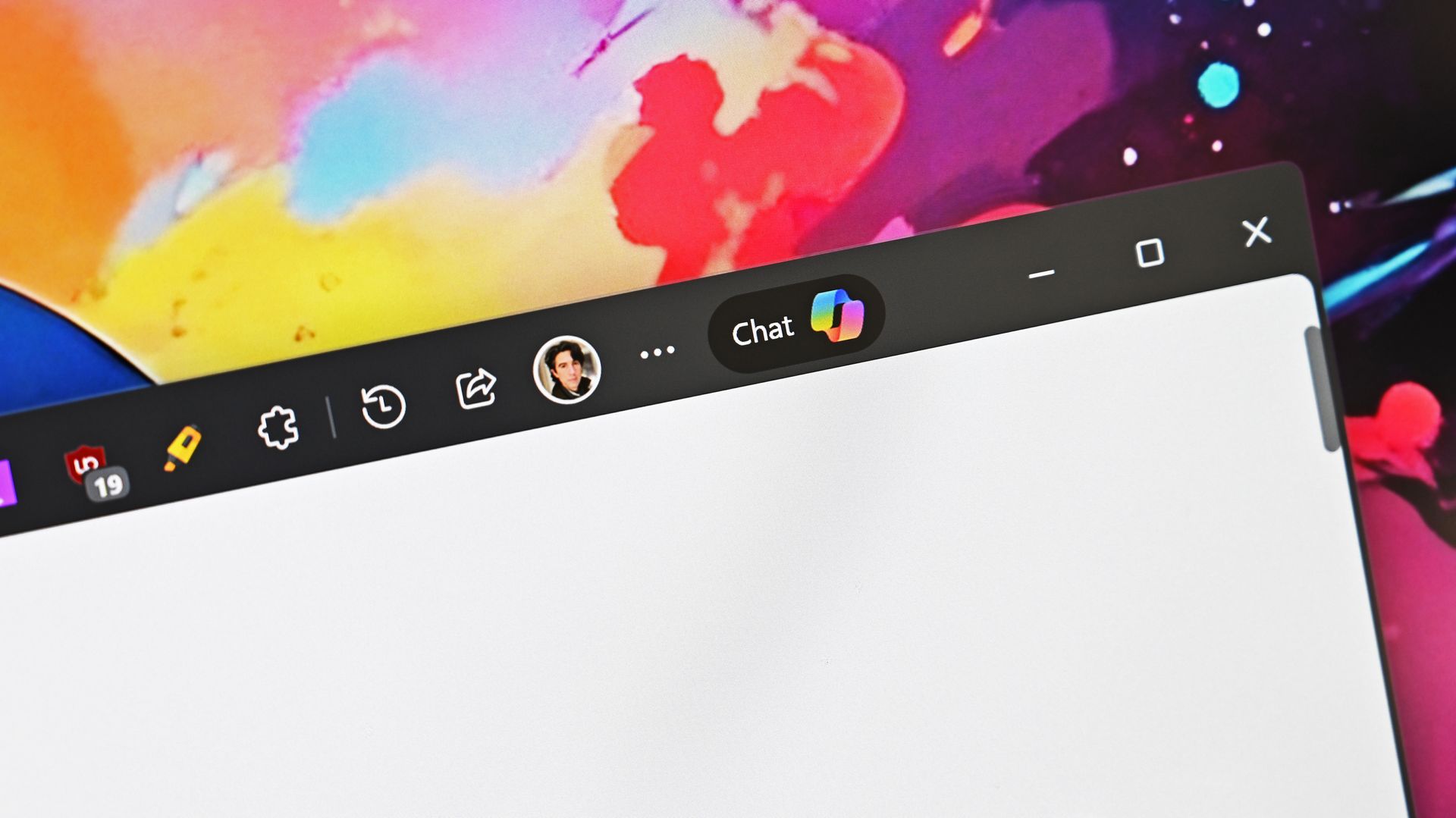
If you can't open Copilot in the Microsoft Edge Sidebar, you're not alone. People trying to use the AI tool in Edge may be met with a message stating Copilot is unavailable in that part of the browser during a migration to a new experience.Several members of our team ran into the message, as have some Reddit users. Here's what the browser says when you try to use Copilot in the Edge Sidebar:"Your Copilot is migrating to the new experienceIt may take a few days an
If you can't open Copilot in the Microsoft Edge Sidebar, you're not alone. People trying to use the AI tool in Edge may be met with a message stating Copilot is unavailable in that part of the browser during a migration to a new experience.
Several members of our team ran into the message, as have some Reddit users. Here's what the browser says when you try to use Copilot in the Edge Sidebar:
"Your Copilot is migrating to the new experience
It may take a few days and require restarting Edge. You will be able to use Copilot here and see all your chat history and settings once the migration completes. Until then, please use the new Copilot web experience copilot.com"
Microsoft does not explain what the "new experience" is within the message shown in Edge. The message likely references Microsoft's broader rollout of a unified Copilot experience across the web, apps, and other platforms, though Microsoft does not specifically mention the Edge Sidebar in its support documentation.
The notification suggests user data is being moved as part of the transition, stating chat history and settings will be available once the migration completes.
It also seems odd that the migration stops Copilot in the Sidebar from working at all until the new experience is available. I'd prefer to see Microsoft complete the migration in the background then ship the finished version with an Edge update. Instead, people who rely on Copilot in the Edge Sidebar have to jump to a different tab or use the dedicated Copilot app.
The awkward transition is particularly frustrating because Microsoft's actions over the last couple of years have made it clear the company values the Copilot experience in Edge. Microsoft retired the best parts of the Edge Sidebar to remove competition for Copilot.
Microsoft appears willing to temporarily disable Copilot in the Edge Sidebar for some users while migrating them to a new experience rather than maintaining access throughout the transition. That's surprising given how aggressively Microsoft has prioritized Copilot within Edge over the last several years.
Join us on Reddit at r/WindowsCentral to share your insights and discuss our latest news, reviews, and more.
Windows 11 feels a bit like a free-to-play game because of how many ads appear in the operating system. Between setting up a PC and using it daily, you'll run into a myriad of prompts, notifications, and suggestions to sign up for paid Microsoft services. An upcoming update will add one more prompt to Windows 11, though it's a bit different than other ads on the OS.One of the latest Windows Insider builds adds an inline experience that allows you to manage your M
Windows 11 feels a bit like a free-to-play game because of how many ads appear in the operating system. Between setting up a PC and using it daily, you'll run into a myriad of prompts, notifications, and suggestions to sign up for paid Microsoft services. An upcoming update will add one more prompt to Windows 11, though it's a bit different than other ads on the OS.
One of the latest Windows Insider builds adds an inline experience that allows you to manage your Microsoft 365 subscription within Windows 11's Settings app. Using the feature will save you the hassle of jumping into a web browser to manage your subscription.
Unsurprisingly, Microsoft does not position these types of prompts as ads. Instead, the company highlights them as ways to ensure the best experience across the Microsoft ecosystem. I consider anything that nudges users toward paying for a product or service to be an ad, regardless of how it's labeled.
"We're introducing a new inline experience that makes it easier for Microsoft 365 subscribers to manage their subscriptions in Windows. Subscribers who have recurring billing turned off can now turn it back on directly in Windows Settings, without leaving for a separate webpage. To get started, select Turn on recurring billing or Set up recurring billing from the Windows Settings Home page, the Accounts page, or the Start menu."
Windows 11 will soon let Microsoft 365 subscribers manage recurring billing directly through the Settings app. (Image credit: Microsoft)
The inline experience related to Microsoft 365 is a bit different since it is a way to manage an existing subscription rather than simply a prompt to sign up for a new one. I'm curious if that distinction matters to general users.
I would prefer that Windows 11 was a clean experience free from ads or prompts to use Microsoft services. During the latest Windows Central Podcast, our Editor-in-Chief Daniel Rubino jokingly asked if Zac Bowden would want notifications to sign up for OneDrive to appear on Project Helix.
Many people I've spoken with and seen online share similar sentiments.
An oddly annoying part of many prompts within Windows 11 is that they still appear even if you already subscribe to the service in question.
If you are fully engrossed in the Microsoft ecosystem, there are benefits to the prompts in Windows 11, but I still think people would prefer the option to have a clean OS. The new experience for managing Microsoft 365 subscriptions will test how people view these types of features in Windows 11.
Join us on Reddit at r/WindowsCentral to share your insights and discuss our latest news, reviews, and more.
This is a breaking news story, and we will update it as more information becomes available.Microsoft is offering roughly 60,000 employees the option to participate in a voluntary exit program. The new program allows eligible employees to leave Microsoft with financial support and career planning resources.An internal memo from Chief People Officer Amy Coleman was sent yesterday. That memo has since been edited slightly and shared publicly by Microsoft. CNBC share
This is a breaking news story, and we will update it as more information becomes available.
Microsoft is offering roughly 60,000 employees the option to participate in a voluntary exit program. The new program allows eligible employees to leave Microsoft with financial support and career planning resources.
An internal memo from Chief People Officer Amy Coleman was sent yesterday. That memo has since been edited slightly and shared publicly by Microsoft. CNBC shared additional information on the program, including the fact that around 60,000 Microsoft employees are eligible.
The offer has been extended to eligible employees in Canada, India, the United States, and the United Kingdom. The offer applies to employees who are level 70 or below.
"This offer gives eligible employees who may be considering a future outside the company a new choice to make that transition now with support. It also gives participating organizations another way to adapt their workforce to changing needs," said Microsoft.
The offer comes just six months after Microsoft announced a voluntary retirement program.
As of June 30, Microsoft had roughly 223,000 employees (per the company's 10-K form for 2026). That figure means the offer has been extended to about 27% of the company's workforce. It is unlikely that all 60,000 eligible employees will take the offer, however.
While Microsoft did not mention layoffs in its post about the voluntary exit program, those could be on the way. Microsoft announced its early retirement program in April and then announced layoffs in July. It is common for companies the size of Microsoft to give employees a voluntary exit ramp before layoffs.
Full Microsoft statement
Today, we’re introducing a new Voluntary Exit Offer (VEO) to eligible employees within participating organizations. This offer gives eligible employees who may be considering a future outside the company a new choice to make that transition now with support. It also gives participating organizations another way to adapt their workforce to changing needs.
The Voluntary Exit Offer reflects an important part of how we’re evolving our approach to change: creating greater flexibility and, where possible, more ways for employees to shape their next chapter. This builds on what we learned earlier this year through the Voluntary Retirement Program.
What employees should know
This offer will be available to eligible employees in participating teams in Canada, India, the United Kingdom and the United States at level 70 and below. This is a time-limited, voluntary program that gives those who are eligible the opportunity to leave Microsoft with financial support and career planning resources. Some organizations are providing the Voluntary Exit Offer, and some are not. Participation varies based on each business’s priorities, customer commitments and workforce needs.
Eligible employees will receive an email with a link to their Voluntary Exit Offer details within the next few hours.
Looking ahead
The Voluntary Exit Offer is new for us. We’ll learn from it. At the same time, we’ll keep helping people focus on the work that matters most, build new skills and, where it makes sense, find new opportunities across Microsoft. There is no one-size-fits-all approach for every team or every employee. These are a few of the ways we’re trying to meet different business needs while continuing to create opportunities for our own people to grow and contribute.
My promise is to continue to provide clarity, listen and learn and keep improving.
Thank you for everything you continue to do for our customers, Microsoft and for one another.
Amy
Join us on Reddit at r/WindowsCentral to share your insights and discuss our latest news, reviews, and more.
Some would be surprised to hear that Microsoft Edge has been available on macOS for years. The browser receives regular updates and gives users an easy way to extend their browsing experience across platforms. Soon, organizations that rely on Edge on macOS will have another option for which version of the browser is installed.Selecting the Microsoft Edge Extended stable channel will soon be an option for organizations. That channel receives major feature updates
Some would be surprised to hear that Microsoft Edge has been available on macOS for years. The browser receives regular updates and gives users an easy way to extend their browsing experience across platforms. Soon, organizations that rely on Edge on macOS will have another option for which version of the browser is installed.
Selecting the Microsoft Edge Extended stable channel will soon be an option for organizations. That channel receives major feature updates every eight weeks, giving organizations more time to validate changes to the browser.
The Edge Extended stable channel is already available on Windows. Next year, it will roll out to macOS. An entry in the AI at Work Roadmap (previously known as the Microsoft 365 Roadmap), outlines Microsoft's plans:
"Organizations managing macOS devices will be able to select the Microsoft Edge Extended Stable channel, providing a slower 8-week major release cycle, compared to the two-week major release cycle for Stable."
Edge stable, which is commonly just referred to as "Edge," receives major feature updates every two weeks.
Notably, both Edge Stable and Edge Extended Stable receive security updates as needed. Organizations using the Extended Stable channel do not have to wait eight weeks to receive critical security fixes.
Join us on Reddit at r/WindowsCentral to share your insights and discuss our latest news, reviews, and more.
Windows 11's speed test tool that's in testing opens from Quick Settings rather than opening a browser session of Bing. (Image credit: Microsoft)Windows 11 will no longer bump you to Bing when you try to test your internet speed. Microsoft is testing a new built-in speed test tool that opens directly from Quick Settings rather than opening your web browser.The change just rolled out to Windows Insiders in the Experimental channel with Build 26340.9767. That was o
Windows 11's speed test tool that's in testing opens from Quick Settings rather than opening a browser session of Bing. (Image credit: Microsoft)
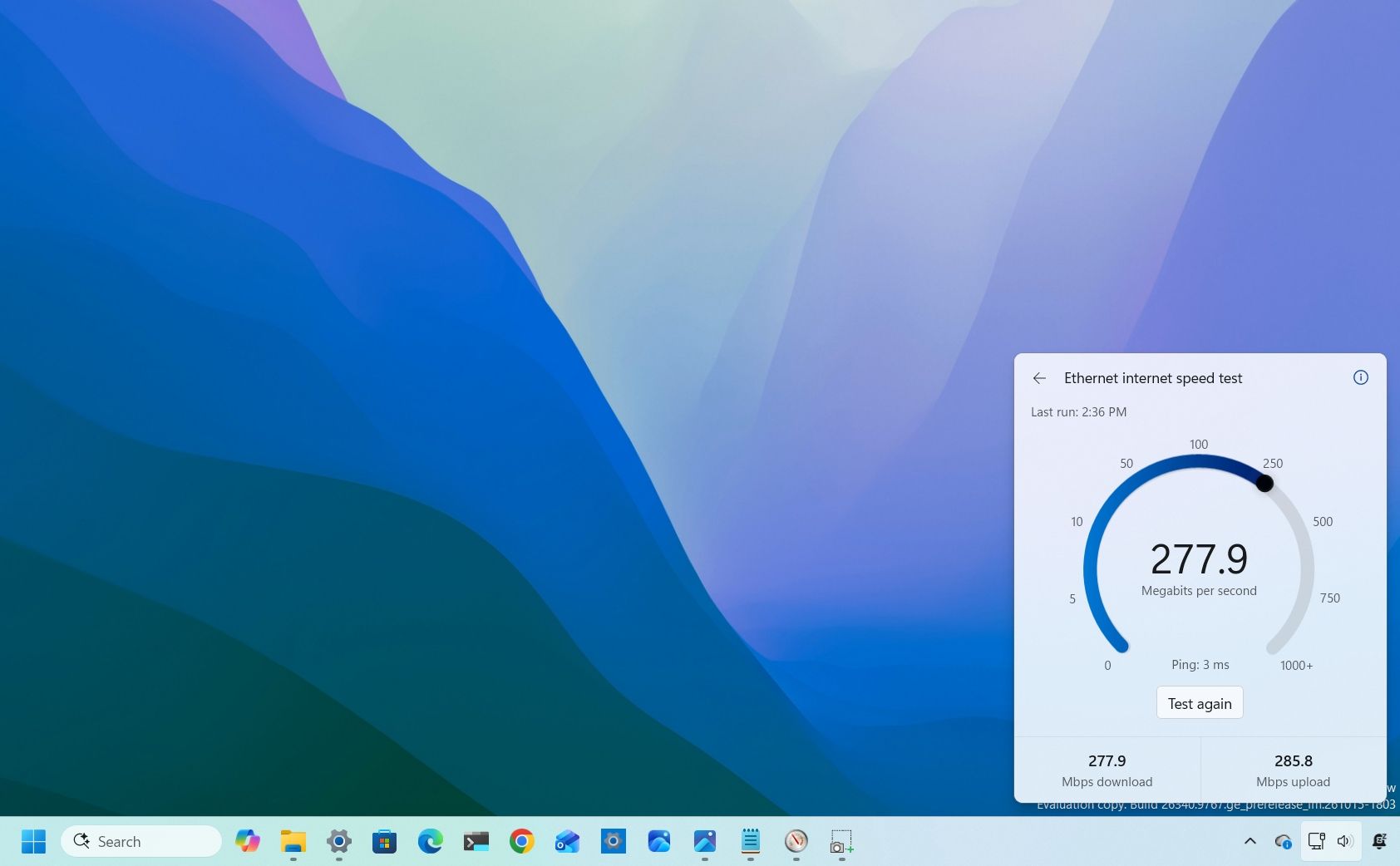
Windows 11 will no longer bump you to Bing when you try to test your internet speed. Microsoft is testing a new built-in speed test tool that opens directly from Quick Settings rather than opening your web browser.
The change just rolled out to Windows Insiders in the Experimental channel with Build 26340.9767. That was one of five builds to ship to Insiders recently. If you want to catch up on all the other changes, including the refreshed File Explorer context menu, check out my roundup of all the updates.
Microsoft first introduced a speed test to Quick Settings last year, but that feature was actually a shortcut to opening Bing. Even before that feature was announced, I said that it was a bad idea and that Microsoft should replace it with a built-in speed test tool within the taskbar.
Microsoft has since listened to feedback and designed a built-in speed test tool that opens directly from the Quick Settings.
The old speed test tool was actually a shortcut to open Bing in a browser. (Image credit: Mauro Huculak)
To access the speed test tool, you need to open the Wi-Fi or Cellular flyout within Quick Settings. Alternatively, you can right-click the network icon in the system tray and select "Test internet speed."
Microsoft is rebuilding several parts of Windows 11 as native or built-in tools. The new Start menu and the improved search experience are part of those efforts. While those larger elements make an immediate and sizeable impact on the Windows 11 experience, smaller changes like a built-in speed test tool help as well.
Internet Speed Test Release notes
We're making it faster and easier to check the performance of your internet connection in Windows. Windows Insiders can now run an internet speed test and see the results directly in Quick Settings, without being redirected to a browser.
Start a test from the new Speed test Quick Setting, from the Wi-Fi or Cellular flyout, or by right-clicking the network icon in the system tray and selecting Test internet speed. While the test runs, Quick Settings shows its progress and results, including download speed, upload speed, and ping.
Because the test runs against your active internet connection, you can quickly understand how your current connection is performing without leaving your workflow. This updated experience builds on the internet speed test we previously introduced for Windows Insiders, bringing the test and its results directly into Windows.
Join us on Reddit at r/WindowsCentral to share your insights and discuss our latest news, reviews, and more.

 Connexion