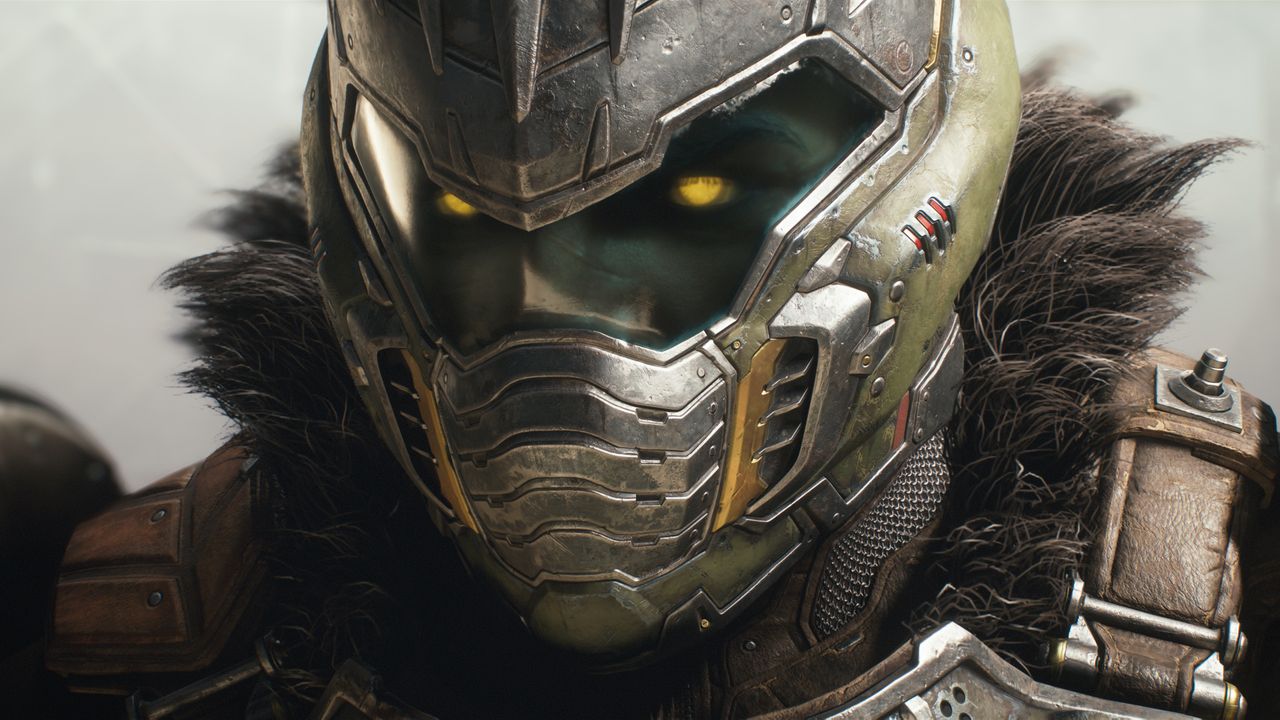
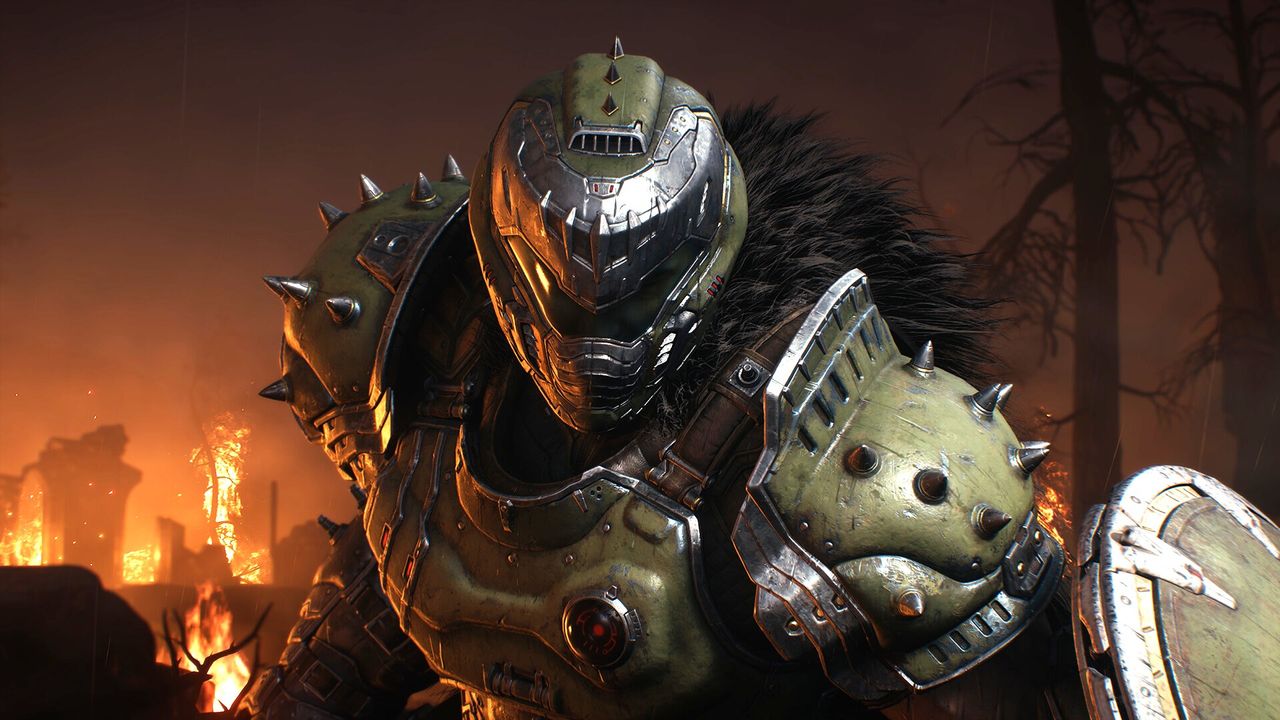
Of all the layoffs that came down on Xbox Game Studios developers this week as part of Microsoft and Xbox's 3,200 "reset" cuts and four studio divestments, the ones that hit the DOOM developer id Software were the most shocking to many given the popularity and success of its modern trilogy of games.
It's been reported that well over half of id was axed from Xbox, with 136 developers — 96 at its Texas headquarters and an additional 40 remote workers — let go from the studio. The cuts impacted nearly every department within the developer, including the teams building, maintaining, and improving its id Tech game engine used for a variety of ZeniMax projects.
"Thank you for all the support this week. While our studio was impacted, those changes were spread across teams. We still have the crew we need to build the games and tech we're known for," reads id's letter. "The team today is about the same size we were when making DOOM (2016). We have always had a flat studio where everyone is a maker, and we will remain true to that philosophy moving forward."
"We are focused on supporting each other and team members impacted. We're going to keep building the great games and tech that have defined us for the past 35 years, and we're looking forward to seeing you at QuakeCon this August," it added.
Notably, this statement confirms our recent, earlier report that in the wake of the layoffs, id Software is now about the size that it was when it released the 2016 DOOM reboot ten years ago, and that the studio isn't in danger of being closed or split away from Microsoft and Xbox.
Ultimately, this news is quite relieving to hear from id Software — though to be clear, I'm not downplaying the severity of the cuts in saying that. On the contrary, I'm glad that the developer still has a future under Xbox's wing despite how significantly it was affected by the dismissals.
What are your thoughts on the layoffs at id Software? Do you feel Microsoft and Xbox went too far with them based on everything we know? Share your take in the comments, and vote in the above poll.
Join us on Reddit at r/WindowsCentral to share your insights and discuss our latest news, reviews, and more.
DOOM: The Dark Ages
DOOM: The Dark Ages will not be id Software's last game, as the studio has confirmed it will weather Microsoft's Xbox layoffs and continue working on new projects.
Several public listings for the rally — titled "Save Our Devs" — have been spotted for Bethesda's various different locations, including its Rockville headquarters and offices in Austin, Dallas, and Montreal. These calls to action confirm that unionized OneBGS staffers are coordinating to march on July 15 next week.
"Microsoft and ZeniMax leadership have made the devastating decision to slash over 440 positions across BGS, ZOS, id, ZWU (QA) and ZeniMax corporate (including CTO and CSUR)," wrote the union. "Because we organized and certified our Unions, we have hard-won legal rights and protections that non-unionized studios simply do not have."
"The company wants us to accept this as a done deal and quietly disappear. We won't let that happen. Our next steps are to mobilize," it continued. "We need every single member visible and unified. To that end, we are announcing our Save Our Devs March across all studios on Wednesday July 15th."
In an email sent to union workers seen by Game Developer, OneBGS has reportedly stated that 35 Bethesda Game Studios devs have been let go in the US, with 12 also laid off in Montreal. This roughly lines up with a previous report that about 50 employees have been laid off from the studio.
According to Bethesda's OneBGS union, 440 workers across Bethesda Game Studios, ZeniMax Online Studios, id Software, and other ZeniMax teams have been cut by Microsoft's mass Xbox layoffs. (Image credit: Bethesda Game Studios)
Xbox CEO Asha Sharma stated the layoffs are part of a "reset" for the Xbox business after it "overextended" with its ambitions; OneBGS claims that Microsoft referred to them as an "entrepreneurial change in the scope of business," which is a notion it's fighting against as it negotiates to have affected developers brought into open roles across Xbox Game Studios.
"While we push that legal fight forward, Microsoft is still legally required right now to sit down with us for 'Effects Bargaining.' This means we have the right to negotiate exactly how these layoffs impact our people, and we are heading to the table to fight for every single affected worker," it explained.
"We are going to be demanding preferential transfers to force Microsoft to place affected BGS workers into open roles across Xbox and Microsoft first, stronger severance and extended healthcare to ensure no one is financially abandoned, as well as recall rights to ensure our laid-off members are the first ones hired back when BGS expands."
"Stay strong, look out for one another, and we look forward to seeing us all marching together on the 15th," concluded the union. Whether next week's protest has a meaningful impact or not remains to be seen, but ultimately, I hope it helps laid off ZeniMax and Bethesda devs find new opportunities and get the best severance and healthcare packages possible.
Join us on Reddit at r/WindowsCentral to share your insights and discuss our latest news, reviews, and more.
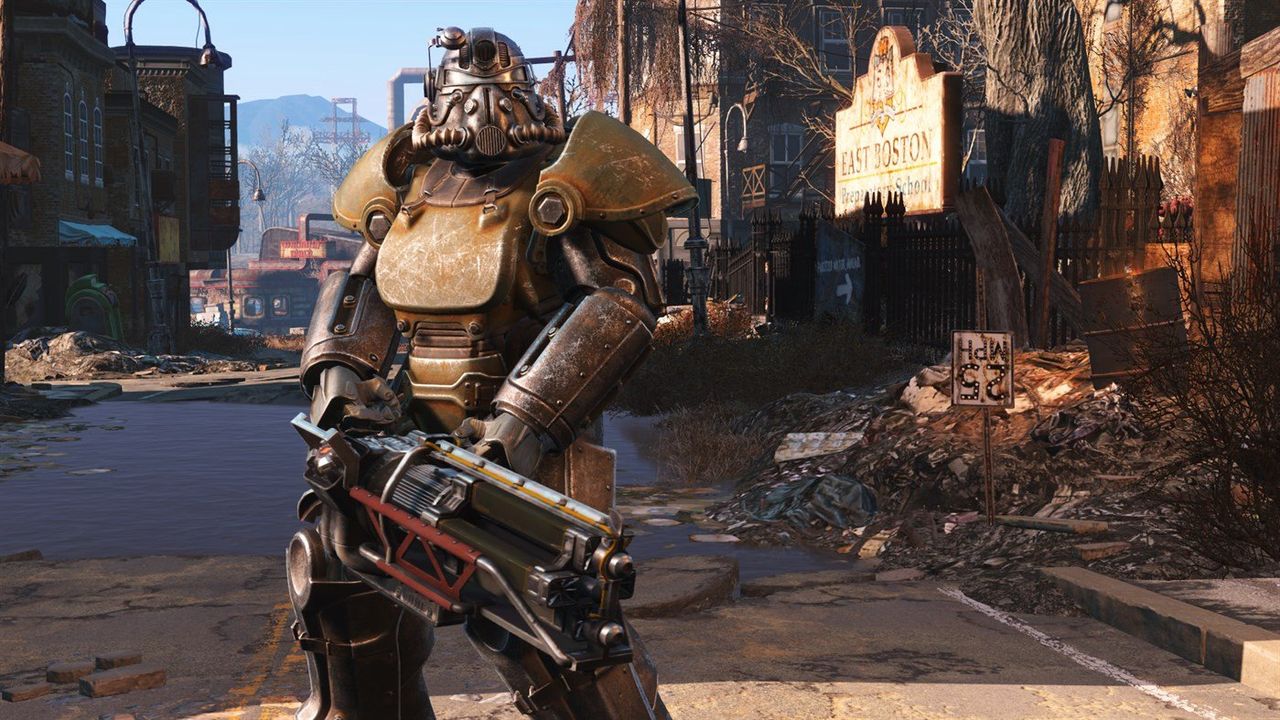
Fallout 4 power armor
Bethesda Game Studios' union is taking a stand against Microsoft and Xbox next week with a 'Save Our Devs' rally that will be held across all four of its development offices.
Microsoft’s latest sustainability report sparked claims that the company produced 34 million metric tons of carbon emissions in a single year. That figure was never reported by the company. What the report actually shows is a 25 percent year‑over‑year increase driven by AI datacenter expansion and Microsoft’s decision to stop buying unbundled renewable energy certificates.
The Microsoft Environmental Sustainability Report shows a complicated progression of rising emissions caused by AI datacenters, controversial "greenwashing" tactics, and enough wiggle room to leave space for debate.
Real emissions vs estimated emissions
When I first read the coverage surrounding the Microsoft Environmental Sustainability Report, it seemed like a clear case of AI hurting the planet and a tech giant callously damaging the environment. I was ready to write a piece calling out Microsoft for setting carbon neutral goals and then increasing carbon emissions by 25% in a single year.
But as I do with any story I cover, I went to the source material and did some digging. What surprised me is that the Microsoft Environmental Sustainability Report does not indicate unbridled burning of fuel to power AI datacenters. Instead, it shows efforts to reduce emissions and make meaningful changes.
I want to be clear, AI datacenters do create high carbon emissions. Microsoft is not faultless when it comes to energy use or pollution. I think there is a lot more the company could do to help the environment. I also think there's some misunderstood data seeping onto social media and throughout the web.
The most recent Microsoft Environmental Sustainability Report shows the actual emissions of the company (solid line) compared to the estimated emissions if Microsoft had not taken steps to reduce its emissions. (Image credit: Microsoft)
The above chart from the Microsoft Environmental Sustainability Report shows Microsoft's actual reported emissions over the years and the estimated emissions without select interventions. The footnote on the chart directs to a clarifying statement on the estimate. I'll include the full footnote here but highlight the most relevant text:
"The solid line represents Microsoft’s reported greenhouse gas emissions (Scopes 1, 2, and 3) for FY20–FY25, prepared in accordance with GHG Protocol and management’s criteria, and uses a market-based emissions approach. The dotted line represents an illustrative counterfactual scenario of estimated emissions had select, discrete carbon reduction initiatives not been undertaken. These initiatives include energy efficiency improvements for XBOX consoles, renewable energy purchases, sustainable aviation fuel (SAF) and sustainable marine fuel (SMF) certificates, and supply chain decarbonization of Surface devices. The difference between the two lines is an estimate of emissions avoided through these specific initiatives relative to a scenario without those initiatives occurring. This estimate is directional in nature, does not represent the full scope of Microsoft’s decarbonization efforts, and is not part of our reported greenhouse gas inventory. It should not be interpreted as a comprehensive measure of total emissions reductions or as additive to other carbon reduction or removal claims."
Basically, the chart shows Microsoft's actual emissions and then a rough estimate of how much the company would have emitted had it not taken steps to reduce its carbon footprint. But Microsoft did take those steps. Microsoft did not have 34 million metric tons of carbon emissions in the last year. The actual emissions figure is 20 million metric tons.
That's still a massive amount of emissions, and 20 million metric tons is a 25% increase year-over-year, but there's some needed context.
Microsoft's carbon emissions increased by 25% in a single year. The increase was driven primarily by Microsoft's expansion of datacenter infrastructure and the fact that the company paused the purchase of unbundled renewable energy certificates.
In February 2025, Microsoft announced that it "ceased purchasing non-additional, unbundled renewable energy certificates." That decision led to the massive jump in emissions seen in the recently published sustainability report (in conjunction with AI datacenter infrastructure expansion).
Renewable energy certificates (RECs) represent the legal ownership of the "renewable-ness" of generated electricity. Unbundled RECs are sold separately from the electricity itself.
The United States Environmental Protection Agency notes that "Unbundled Renewable Energy Certificates (RECs) refer to RECs that are sold, delivered, or purchased separately from electricity. RECs provide no physical delivery of electricity to customers and as such the customer is purchasing power from a separate entity than the one selling them the REC."
The separation of generated electricity from the legal ownership of the "renewable-ness" is controversial (that phrase comes straight from the EPA).
Many, including myself, view unbundled RECs as a form of greenwashing. Microsoft or any other company can legally say they are powered by renewable electricity without actually using the electricity that was generated.
The defense is that buying unbundled RECs financially contributes to the development of renewable energies.
Microsoft did not refer to unbundled RECs as a form of greenwashing, but its statement is telling:
"While we continue to apply the carbon fee to investments in emissions reductions, we have ceased purchasing non-additional, unbundled renewable energy certificates. We are refocusing the use of these funds on more long-term, higher-impact investments across carbon reduction, carbon removal, and clean electricity procurement. These interventions are expected to more effectively help us achieve our goal of becoming carbon negative by 2030 and may take us out of carbon-neutral position."
Microsoft implied that unbundled RECs are not the most effective way to have a long-term positive impact on the environment.
The rest of the report
The Microsoft Environmental Sustainability Report is 65 pages of dense information. It links to several external resources as well. If it were a paper report, there'd be a good joke here about an environmental report killing so many trees.
A large portion of the report is dedicated to discussion about Microsoft's use of water, which is a critical component of its environmental strategy. Notably, Microsoft replenished more water than it withdrew in the year.
Because of the size of the report, I've focused on the carbon emissions of Microsoft, but I suggest people read the entire report to get perspective on what's being done and where Microsoft still falls short.
Join us on Reddit at r/WindowsCentral to share your insights and discuss our latest news, reviews, and more.
Microsoft Fairwater Datacentre
Microsoft's Fairwater Datacenter is one of the most powerful datacenters in the world. It is one of many datacenters contributing to Microsoft's spike in carbon emissions.
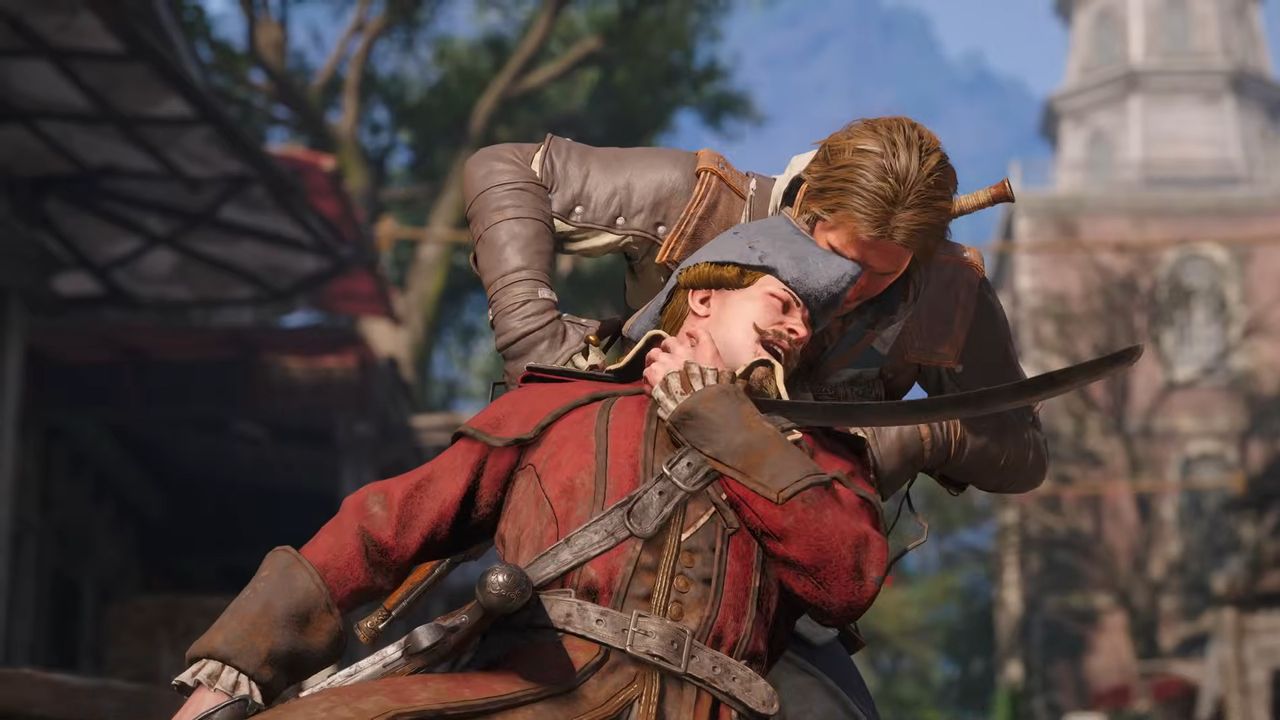
The launch of Assassin's Creed Black Flag: Resynced, the highly anticipated (and high-scoring) remaster of one of the best games in the Assassin's Creed series, has been followed by 51 of its game designers from Ubisoft Barcelona being laid off, according to an exclusive report by Tom Henderson at Insider Gaming.
The report states that Ubisoft tends to assign teams to new projects long before they finish their current project (sometimes up to a year in advance, at least). The developers tried to raise their concerns with Ubisoft's higher-ups about not being given a new project back in 2025, yet in this case, they were never given a new assignment to work on before being laid off.
In fact, one employee who was affected by these layoffs (who wishes to remain anonymous) informed Insider Gaming:
"These layoffs coincide with the broader context of ongoing workplace issues. This is not an isolated event; it reflects a pattern of constant mistreatment, loss of talent, forced departures resulting from the erosion of workers’ rights, and an increasingly top-down management culture that leaves employees with little voice in decisions affecting their work.”
The report then states that, in response to this, Ubisoft Barcelona's staff will go on strike every Tuesday and Thursday afternoon from June 30, 2026, to July 16, 2026.
Windows Central's take
To compound the severity of this depressing situation, these layoffs were announced shortly after Assassin's Creed Black Flag Resynced had a successful launch. It is currently enjoying a high overall Metacritic score of 84 — based on 84 critics — and fans are leaving mostly positive reviews on its Steam Page.
We even gave Assassin's Creed Black Flag Resynced a near-perfect 4.5 review score for improving upon the original Assassin's Creed IV: Black Flag's already stellar naval combat, beautiful graphics redone from the ground up, and new content along with story-rewrites that has made the story more compelling (the fact they got rid of the modern-day segments from the original game already makes this remake superior in my book).
This will no doubt degrade the morale of Ubisoft's developers, knowing that even if a game launches to critical and fan acclaim, they will still be laid off before the official sales numbers even start to come in.
Will the strike at Ubisoft Barcelona convince Ubisoft to improve working conditions? Will we see more layoffs at Ubisoft on the level of Xbox's massive 'Reset' that has laid off over 3,200 people? We'll watch for further developments.
Relive the tales of Edward Kenway as he sails the seven seas for treasure while unraveling a dark conspiracy of the evil Templars in Assassin's Creed Black Flag, remade for the modern era with new graphics, improved combat, and more.
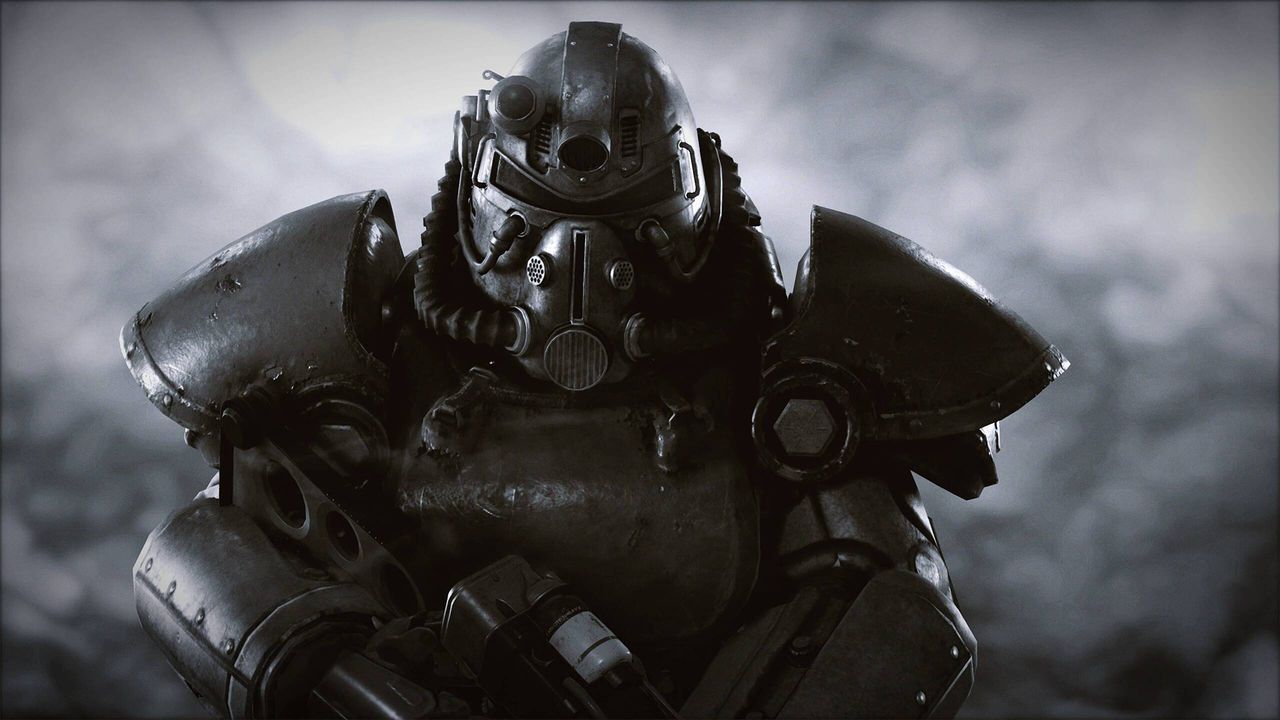
Though it launched to scathing criticism and widespread controversy in late 2018 due to lackluster content offerings and severe technical issues, Fallout 76 — Bethesda Game Studios' multiplayer-focused MMO-lite take on the post-apocalyptic RPG series — grew to become fairly popular over time, with the title still enjoying regular content updates and a healthy community eight years later.
It's been reported that over 50 staffers have been cut from Bethesda across its headquarters in Rockville, Maryland and its office in Dallas, Texas — a reduction in force that has The Elder Scrolls 6 devs fearing crunch on and delays of the long-awaited RPG moving forward. Some also worry that a significant amount of time will have to be spent training contractors to use Bethesda's proprietary tools like the Creation Engine.
Notably, though, one Bethesda developer commented to IGN that they "have no idea how they'll continue updating Fallout 76 without hiring an external studio," which suggests development of the experimental Fallout title could end at some point in the near future.
Fallout 76 has enjoyed eight years of steady patches and content updates, but support for the game may now be at risk after Microsoft's Xbox layoffs hit Bethesda.
We may also see external support for Fallout 76 come, as in a letter sent to staff, Bethesda president Jill Braff emphasized the need for the studio to better support its "strongest franchises" — echoing recent sentiment from Xbox's CEO Asha Sharma that it needs to "move faster" with core IPs like Fallout.
Ending support for the most recent game in the series would arguably go against that goal — especially while the extremely popular Fallout TV show is bringing countless new eyes to the property. With that said, Fallout 76 is now eight years old and isn't massively popular, and with Obsidian now making a new Fallout game, Microsoft may not see much value in continuing to invest resources in the title.
In the end, it's impossible to say what will happen with Fallout 76 moving forward until we hear something official from Microsoft, Xbox, or Bethesda. Based on the aforementioned comment from a developer, though, I do think it's likely that the game's live-service development will change in some way.
Whether it ends up stopping completely or just slowing down remains to be seen, but I can't imagine that this week's cuts won't be reflected in Fallout 76's update cadence somehow.
In the wake of Microsoft's Xbox layoffs, should support for Fallout 76 continue? Or do you think Bethesda should move on from the game? Let me know in the comments, and in the above poll.
Join us on Reddit at r/WindowsCentral to share your insights and discuss our latest news, reviews, and more.
Fallout
Microsoft's mass Xbox layoffs affected over 50 employees at Bethesda, and one developer fears support for Fallout 76 may not be able to continue without outside help as a result.
Microsoft is using AI to protect Windows against attackers. The development represents an arms race because AI is also being used increasingly to find vulnerabilities modern tech, as highlighted by The Hacker News.
Hackers can use AI to find and take advantage of vulnerabilities that could then be weaponized. It's not just discovery that's been sped up, reverse engineering security flaws is now a quicker process because of AI. That means attackers can find flaws and quickly take advantage of them before traditional methods of protection could take effect.
To combat those malicious actors and evolving tactics, Microsoft is deploying MDASH (Multi-Model Agentic Scanning Harness) at scale across Windows.
Pavan Davuluri, EVP of Windows and Devices at Microsoft, shared a blog post about the new methods the company is using to protect Windows.
"The fastest way to reduce customer exposure is to find issues before attackers can use them," said Davuluri. "Windows is expanding its ability across the platform to find issues earlier, accelerate the engineering work to fix them, strengthen validation, and deliver timely, high-quality updates that keep customers protected."
Using AI to identify potential flaws, prioritize fixes, and scale discovery across the codebase of Windows lets Microsoft quickly roll out protection to customers.
To scale MDASH to Windows, a dedicated cloud infrastructure was set up for scanning for potential flaws. A separate prove pipeline then is used to eliminate false positives. The Windows engineering team can then act on the most likely candidates that need addressing.
Microsoft will expand its use of AI for scanning and proving to other parts of the company.
Using AI to improve work
When Microsoft announced 4,800 layoffs across the company, its leaders emphasized that the eliminated roles are not being replaced by AI. People across a wide range of sectors are concerned about automation taking human jobs.
The approach Microsoft is using to scan for issues and streamline the selection process of candidates to address represents AI helping people rather than replacing workers.
When speaking of improving internal systems and practices, Davuluri said, "That means using AI to help identify potential issues earlier in the development process, while relying on human expertise to evaluate findings, make risk-based decisions and ensure fixes meet the quality bar customers expect."
The end result is that more security updates will be included in each security release, which should protect PCs from the growing number of attacks.
Join us on Reddit at r/WindowsCentral to share your insights and discuss our latest news, reviews, and more.
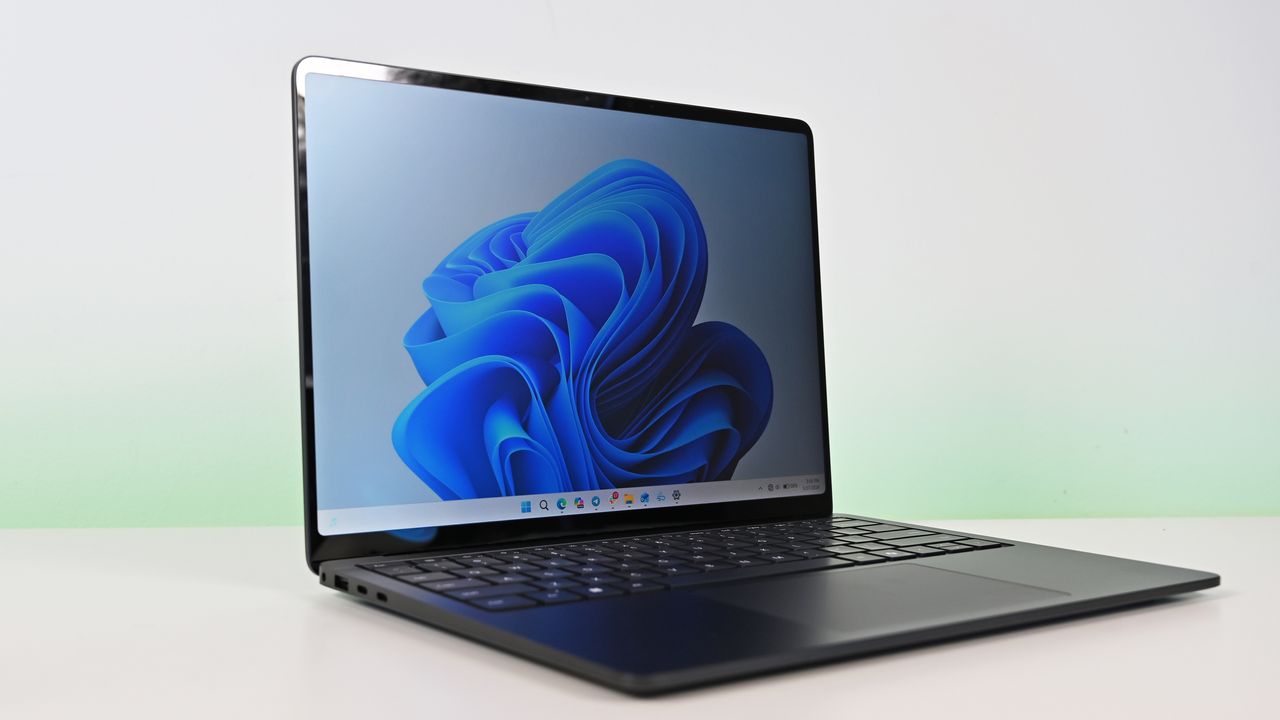
Suface Laptop for Business 8th Edition with a black keyboard and a modern design, displaying a blue abstract swirl on its screen, set against a light gradient background.
Suface Laptop for Business 8th Edition with a black keyboard and a modern design, displaying a blue abstract swirl on its screen, set against a light gradient background.
Bethesda Game Studios — the team behind Skyrim, Fallout 4, Starfield, and the upcoming The Elder Scrolls 6, among other titles — has also been hit, with reports of over 50 of its developers being let go. And according to a new report from IGN, that loss of talent will have a "substantial and cascading effect" on development of the next The Elder Scrolls RPG.
"Their loss will have a substantial and cascading effect on the game and morale of this studio," lamented one Bethesda staffer. "It's been a mix of every discipline: programmers, artists, and designers. One person who's been at the company since Morrowind [the third The Elder Scrolls game released in 2002] was cut," added another.
Those impacted by the layoffs include "key, high-performing people in the trenches" — and those who remain at Bethesda fear that their dismissal will lead to significant complications for The Elder Scrolls 6, including an extensive amount of time spent training contractors, unhealthy amounts of crunch and overtime, and delays for a title that's already reportedly two years away as it is.
Several ZeniMax and Bethesda studios, including id Software, ZeniMax Online Studios, and Bethesda Game Studios, have experienced significant cuts as a result of Microsoft's mass Xbox layoffs. (Image credit: Bethesda)
"There is a fear that we are going to be replaced by cheaper, contracted labor, or we will hire folks to replace them that will need to be onboarded [due to proprietary tools] resulting in more delays, and we'll need to crunch to make up the time," one Bethesda employee told IGN. Another noted they've heard colleagues have been asked to train new contractors already.
"We've all been very excited and hyped for TES 6 and this has had a crushing effect on morale," said another worker. "We were already running a tight ship and are worried about this delaying the game."
Reportedly, the team working on the RPG will receive support from ZeniMax Online Studios, though it's unclear how extensive of a role the The Elder Scrolls Online studio will play. I can't help but think it will be minor, given the fact that that team just suffered over 200 cuts.
Developers still at Bethesda have been assured they're safe from the 1,600 layoffs of the 3,200 that are coming throughout the next 12 months, though team members worry they'll eventually be let go as well. It's a rational fear, given Microsoft and Xbox's layoff history.
"The 'survivors' were told they're safe from those next 1,600 but it's not entirely reassuring," one asserted. "Even if that's true, who's to say there's not another 1,600 next year after that? It's had the chilling effect of realizing you don't get to retire off your work at Xbox. Your time ends when you quit or are laid off, that's it."
Join us on Reddit at r/WindowsCentral to share your insights and discuss our latest news, reviews, and more.
Skyrim Special Edition
The Elder Scrolls 6, the long, <em>long</em>-awaited sequel to 2011's beloved open-world RPG Skyrim, may be delayed as a result of Microsoft's mass Xbox layoffs that have struck Bethesda.
Microsoft's share price has slid 22% in the past year, as investors increasingly cast doubt on the firm's long-term AI strategy.
Artificial intelligence has been billed as the next coming by Big Tech, with everyone from Amazon to Google trying to figure out how to leverage the expensive technology to generate profits. The problem is, nobody is even close to having an answer.
Generative AI is incredibly costly to run, and the return on investment is unclear at best. Many companies are starting to discover that, in fact, it's cheaper and more effective to simply use human labor. Companies that previously laid off engineers in favor of AI models later found themselves crawling back to those fired, and others have put large restrictions on token expenditure as returns remain elusive.
I saw a clip on CNBC from Ed Zitron, creator of theWhere's Your Ed At newsletter and host of the Better Offline podcast recently. It summarized Microsoft's AI conundrum in pro wrestling terminology — which appealed to my simple brain. His full analysis is anything but simplistic, though. It speaks to the hard reality companies like Microsoft are facing: Is any of this actually worth it?
Zitron describes the challenges of companies like OpenAI and Anthropic joining SpaceX in going public, describing how the company's financial realities betray the almost demented hype around them.
"They'd be the first to be this bad, other than WeWork, and this is so much worse than that. OpenAI burned $20.9 billion dollars in 2025. The problem with these companies is ... their margins are getting worse. Their costs increase linearly with their revenues. There's no proof they can improve their margins. No amount of specialist silicon will bring these costs down.
"We're at a point where OpenAI is pushing their IPO to 2027 because they couldn't get a trillion-dollar valuation. People are wising up to the problem of generative AI: there's not really a business there."
Zitron posits that none of the hyperscalers and companies like OpenAI and Anthropic "encourage waste," while potentially stealing ideas generated by companies using their models, citing Claude Design and Figma. Indeed, the only public company that seems to be flying on its AI hype right now is Google. I would argue that's less to do with innovating, and more because they've found a way to steal revenue from human creators via Gemini's Google Search summary box — instantaneously creating infinite, dynamic (albeit hallucinating) ad-scaling opportunities.
This wholesale content theft is not as readily available to OpenAI, Anthropic, or Microsoft. Google Search remains the dominant tool for browsing the web, and thanks to Chrome and Android, Google owns the entire stack here.
Microsoft's data centers have come under increasing scrutiny for pollution, noise, electricity bill inflation, and water depletion. (Image credit: Microsoft)
Microsoft very much does not own the entire stack. It barely owns a stack at all here.
Microsoft's partnership with OpenAI is on the verge of collapse, pending contractual obligations that will expire over the next few years. It's already ditching OpenAI's pricey models in favor of supposedly more-efficient MAI home-grown models in some products. Microsoft Copilot is already barely used, despite being baked into Windows. It languishes at lower than 10% of the market, according to estimates, far behind the likes of Claude, Gemini, and ChatGPT.
CEO Satya Nadella's decision to give up on Windows Phone and internal Android projects has precluded Microsoft from any form of mobile play here. Mobile is where all new consumer tech will thrive, whether or not it's AI or something else. The historical open nature of Windows prevents it from reaching consumers with any of its products. Nobody uses Bing, Edge, or Copilot, and it's a result of Microsoft's wholesale lack of foresight.
Microsoft bet that it could provide the underlying infrastructure instead, and has spent monstrous amounts of CapEx on data centers in the past few years. But Zitron posited in a large report from May that it might be exaggerating, or perhaps even outright lying, about its data center expansion plans. Indeed, there's little evidence that Microsoft has actually expanded its capacity since 2024. Zitron tracked a variety of Microsoft-announced data center projects and found them in various states of incompletion.
Is this a signal that there's no real demand? Is Microsoft intentionally stalling and dragging out construction because it knows there's no actual ROI incoming from these projects?
Microsoft's OpenAI bet was called the smartest investment it had ever made a few years ago. On paper it still is. Imaginary, fantastical paper, at least.
AI-adjacent stocks, including SpaceX, Oracle, and Microsoft, have all been in near free-fall decline recently, as investors seem to bet that there's gross over-extension going on. Meta is also reportedly spinning up a cloud company to try and offload excess compute it had previously invested in AI specifically, despite not having any actual demand.
"The only reason Big Tech is investing in this is that they've run out of hypergrowth ideas," Zitron said, on the general AI industry. "They don't have a next iPhone, they don't have a new Google Search. They've put over a trillion, with trillions more to come, into a kind of dead-end industry. When that ends, they'll have to admit that they don't have anything else."
"In the future, I see [AI] as a boring hardware-based business, kind of the Oracle licensing hardware model. I think this is a $10 to $30 billion TAM [total addressable market] industry, pretending to be a $1 trillion industry."
"Everyone is just kind of pretending. It's the kayfabe of a tech industry that really has run out of ideas."
Join us on Reddit at r/WindowsCentral to share your insights and discuss our latest news, reviews, and more.
Alienware makes gaming laptops and desktops, sure, but the line I enjoy looking at most is its QD-OLED gaming monitors. They're immensely popular after being the first to market in 2022; they're generally well-rated, and they're usually competitively priced.
One of the most popular Alienware gaming monitors is the AW3425DW, and it has now received a significant update for 2026. Dell let me get my hands on the new AW3426DW ultrawide monitor early so I could get a true feel of what it's like, and I'm here to share my thoughts on whether or not it's worth a buy.
Dell had no input, nor saw the contents of this review, prior to publication.
It's worth noting that the older model is currently sitting at $649.99 after a $150 discount, and I wouldn't be surprised to see that price drop stick around now that the new model is here.
Here's a closer look at the specs that make up the Alienware AW3426DW.
Alienware AW3426DW
Size
34.18 inches
Panel
Samsung QD-OLED Penta Tandem (RGB stripe, 5-stack)
Resolution
3440x1440
Refresh rate
280Hz
Response time
0.03ms
Peak brightness
1,300 nits
Typical brightness
300 nits
HDR
HDR10, VESA DisplayHDR True Black 500, Dolby Vision
The main change arrives for the Quantum Dot-Organic Light Emitting Diode (QD-OLED) panel. It's using Samsung's new fifth-genPenta Tandem tech that was revealed earlier this year, which the company says has twice as long a lifespan as well as 1.3 times better brightness. Text should be easier to read, and there are improvements to dark colors in bright ambient light. More on that below.
Alongside the higher brightness, the monitor now has an anti-reflective coating to better combat glare. And, finally, the refresh rate has been raised from 240Hzto 280Hz.
What I like about the Alienware AW3426DW
The small Alien head and the power button are the only RGB elements you'll find. (Image credit: Future)
From a purely design standpoint, the Alienware AW3426DW hasn't changed much compared to the AW3425DW. Its case has a pleasant Interstellar Indigo color scheme, with minimal interruptions on the back panel.
An Alienware head logo is off to the left of the stand, and there's the secondary AI logo on the other side. These logos are surrounded by venting, altogether offering a clean look.
For a bit of extra jazz, the Alienware head has customizable lighting. The same applies to the monitor's power button on the bottom edge of the casing.
The front of the monitor features Alienware branding, and that's basically it. Bezels are nice and slim, and the rounded stand seems like a perfect pairing.
I like the bubbly, rounded look of the AW3426DW's stand. (Image credit: Future)
On that note, the stand is plenty sturdy. It doesn't offer much rotation (this is an ultrawide, after all), but there's enough tilt and swivel to keep me happy. If I were keeping the screen, it'd go onto my MSI dual-arm VESA mount thanks to 100x100mm compatibility.
All OSD settings are controlled with a single joystick. There are a ton of menu options to play around with should you want to tweak the picture, and the monitor includes quite a few presets for different tasks and gaming styles. You can also change shortcuts for easier control.
The OSD menu is controlled with a single joystick.FutureOSD menu controls in the Alienware AW3426DW are quite extensive.FutureOSD menu controls in the Alienware AW3426DW are quite extensive.FutureOSD menu controls in the Alienware AW3426DW are quite extensive.Future
Smart HDR, Dolby Vision, refresh rates, and much more are all customizable. You can choose how the monitor handles multiple inputs. And, for those who game and work on the same screen, I'm happy to report that the Picture-in-Picture (PiP) and Picture-by-Picture (PbP) features work flawlessly.
The older AW3425DW's OSD menu, or "Command Center," had issues with freezing and closing randomly, but I've not seen those issues in the newer AW3426DW model.
How is the Alienware AW3426DW's color and brightness?
It's hard to convey through photos how great the Alienware AW3426DW looks. (Image credit: Future)
Thanks to the new fifth-gen QD-OLED panel, Alienware's flagship line of ultrawide gaming monitors has never looked better.
One of the biggest complaints about the older model was that black colors often appeared purple when in a bright room. That's been significantly improved here, and it seems that no matter how much light is falling on the screen, dark colors remain dark.
This latest model includes a new anti-reflective finish that Dell says reduces glare by up to 30%. I can't test for that precisely, but I can say that the only time I had issues with glare was in a sun-drenched room with direct light hitting the screen. If you're in an office or a gaming room, you should have no issues.
The Alienware AW3426DW's brightness and contrast readout. (Image credit: Future)
It also helps that brightness has gone up from a 250-nit cap to 300 nits. Whereas the AW3425DW tested for roughly 252 nits of brightness, I saw the AW3426DW hit 330 nits in SDR, and it goes up to about 1,300 nits with HDR enabled. This additional brightness pushes its HDR certification up to VESA DisplayHDR 500.
You can see for yourself the brightness, color, contrast, and white point ratings in the above chart that I pulled from my SpyderX Pro colorimeter.
(Image credit: Future)
Color reproduction has actually improved slightly compared to the previous generation. Whereas we previously tested for 97% P3 and 94% AdobeRGB coverage, the new model hits 99% and 95%, respectively. It otherwise remains at 100% sRGB.
Is Alienware's AW3426DW good for gaming?
You're going to love gaming on Alienware's AW3426DW. (Image credit: Future)
Thanks to a curved panel, an ultrawide 21:9 aspect ratio, a 3440x1440 resolution, a 280Hz refresh rate, and a 0.02ms response time, the Alienware AW3426DW is an outstanding gaming monitor.
The resolution hits the sweet spot for most gamers, and once you go ultrawide, you'll find it's very hard to go back to a 16:9 aspect ratio. The 280Hz refresh rate has plenty of ceiling for high-end performance hardware, and it's fast enough that you shouldn't mind using it for competitive titles.
Because it's an ultrawide with room for (at least) three separate windows, it's also great for productivity. Text is easier to read with this generation of QD-OLED panel, and you might be surprised at how crisp everything looks if you're coming from an older model.
What I dislike about the Alienware AW3426DW
Ports on the Alienware AW3426DW are a bit more limited than I'd like. (Image credit: Future)
There's not much to dislike about this monitor from a display quality standpoint. But there are some drawbacks you should know about before buying.
The port selection is notably a bit lacking. There's no 3.5mm audio jack (and no built-in speakers), and for data, there's just USB-C (15W) and USB-A, feeding off an upstream USB-B port.
Alienware's AW3426DW is easy to love, whether you're gaming or working.
Video inputs include dual HDMI 2.1 with Fixed Rate Link (FRL) for uncompressed 4K@120Hz gaming, but the single DisplayPort is 1.4 standard with Display Stream Compression (DSC). Some newer monitors are shipping with DP 2.1 with less compression, and I'd say it only really matters for enthusiasts.
Should you buy the Alienware AW3426DW?
Alienware's AW3426DW is an outstanding gaming monitor, but it's also handy for productivity. (Image credit: Future)
You should buy this if ...
✅ You're looking for a competitively priced ultrawide gaming monitor featuring fifth-gen QD-OLED tech.
✅ You have a gaming PC that can handle a 3440x1440 resolution and that can make use of a 280Hz refresh rate.
You should not buy this if ...
❌ You're a competitive gamer who mostly plays at a 16:9 aspect ratio.
❌ You just want a QD-OLED ultrawide and don't care about the generation (go with the AW3425DW from last year that's now usually cheaper).
I loved my time with the Alienware AW3426DW, and it's something I'll recommend to anyone who's searching out a new QD-OLED ultrawide for gaming.
The 280Hz refresh rate is perfect for most people, the fifth-gen panel is better than ever, and the overall design is sleek and balanced.
Although some might complain that the port selection isn't generous enough or that the RGB lighting is lacking, others might not mind those drawbacks nearly as much.
And considering how many perks the monitor has, it's easy to see why this line of monitors from Alienware is so popular. I have to return the review sample, but the AW3426DW is at the top of my list for when it comes time to upgrade.
Penta Tandem
Alienware
AW3426DW
Alienware's AW3426DW makes several important upgrades over its predecessor, including a new Penta Tandem QD-OLED panel that ups brightness, improves color, and makes text easier to read. It's an outstanding option for work and for play, just as long as you can live with the (minor) downsides.
Join us on Reddit at r/WindowsCentral to share your insights and discuss our latest news, reviews, and more.
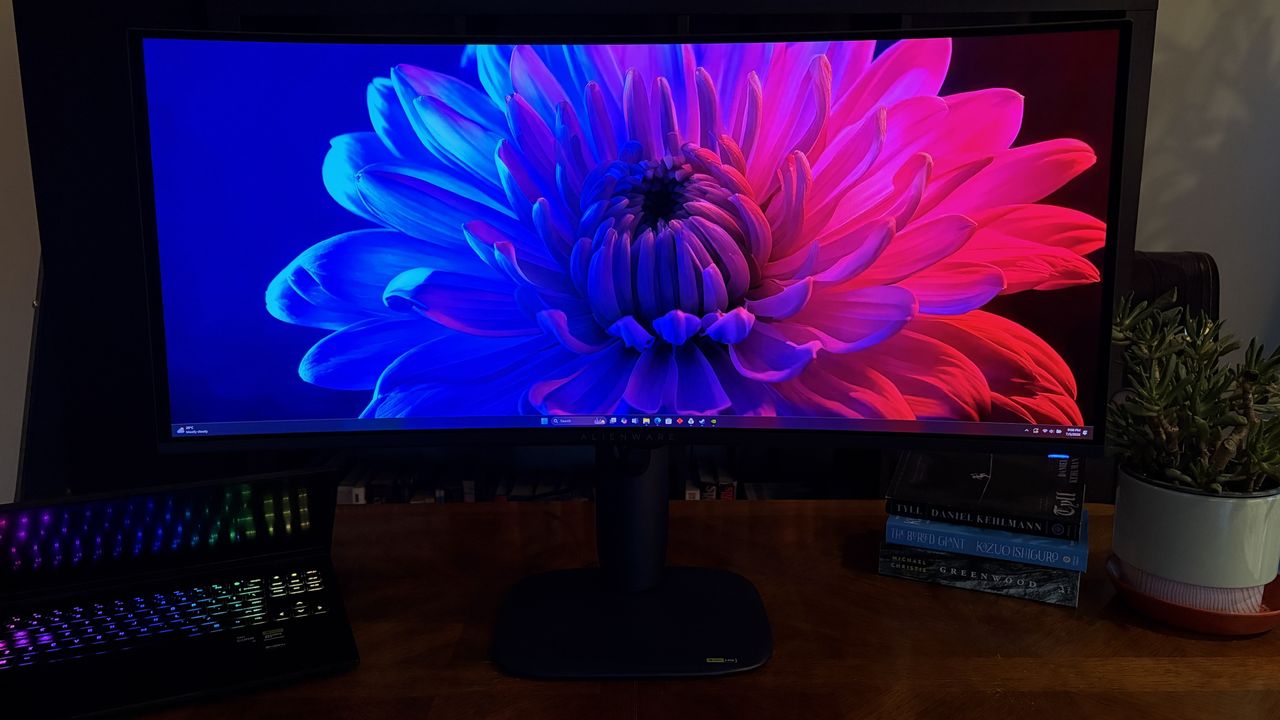
A curved Alienware AW3426DW widescreen monitor displays a vibrant flower image on a wooden desk, next to an open laptop with a lit keyboard, books, and a potted plant.
Alienware's new AW3426DW has landed with a host of improvements.
Though the redundancies have affected teams across all of Xbox, they've impacted certain game studios such as ZeniMax and Bethesda and Obsidian Entertainment quite disproportionately. Another developer that's experienced a severe reduction in force is id Software, the team that creates and oversees the modern DOOM games.
According to a new report, however, the total number of layoffs at the Texas-based developer is even larger. At first, it was believed that 96 roles were removed at id. Now, though, Game Developer writes that a Worker Adjustment and Retraining Notifications (WARN) notice — obtained by the outlet from the Texas Workforce Commission upon request — has revealed that 40 remote workers at the studio have been let go as well.
Microsoft's mass Xbox layoffs hit id Software just one day before the release of its new Revelations DLC for DOOM: The Dark Ages. (Image credit: Xbox Game Studios)
That brings the total number of id Software cuts up to 136, meaning that the studio's workforce has been hit significantly harder than early reports indicated. Notably, the WARN document also confirmed that 22 staffers have been affected at Bethesda Game Studios' office in Austin, Texas, with 158 Texas employees laid off across both teams.
With how concerning the news of the loss of half of id was, hearing that an additional 40 workers were laid off on top of that is extremely worrying. I can't help but be fearful about the studio's future, and that it no longer has a headcount sufficient for the efficient development of new DOOM games and other projects moving forward.
The painful irony of the situation is that these cuts have come at the same time id released its new Revelations DLC for its latest game, 2025's DOOM: The Dark Ages. So far, the new expansion has garnered strong reviews, and I'm glad to see it...but it's also heartbreaking to see that many of the creative minds responsible for it, The Dark Ages, and other modern DOOM titles are now gone.
Do you believe that Microsoft and Xbox went too far with the cuts made to id Software? Voice your feelings on the matter in the comments, and vote in our poll as well.
Join us on Reddit at r/WindowsCentral to share your insights and discuss our latest news, reviews, and more.
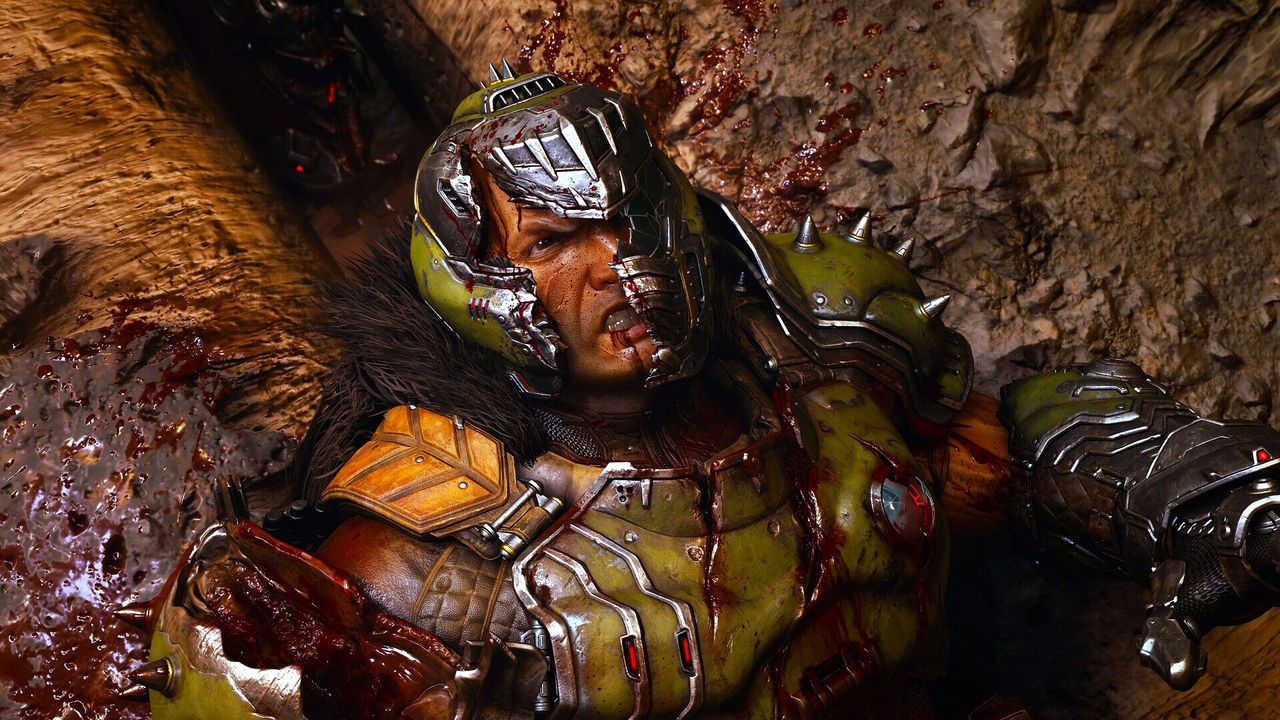
A warrior in a battle-scarred helmet and green armor lies on a gritty surface, covered in blood. His expression is defiant, with a futuristic and intense atmosphere.
An official screenshot of the Doom Slayer as he appears in the new DOOM: The Dark Ages "Revelations" DLC. The expansion came out one day after Microsoft's Xbox layoffs hit id Software.
That news comes from a new Bloomberg report that Windows Central can corroborate with our own sources. According to those familiar with the situation at the storied Irvine-based studio, multiple planned projects — including a sequel to 2025's Pillars of Eternity action RPG Avowed — have been canceled to prioritize the Fallout title.
Notably, the team working on the new Fallout game will be led by Josh Sawyer, the game director of Obsidian's legendary 2010 title Fallout: New Vegas that was developed in partnership with Bethesda to fill the gap between 2008's Fallout 3 and 2011's The Elder Scrolls 5: Skyrim. New Vegas is widely considered by many fans to be the series' best RPG, lauded for its writing quality, reactivity to player actions, and deep, systems-driven gameplay design.
Bloomberg reports that previously, Sawyer was working on an RPG that was "similar structurally and thematically to Fallout," but wasn't actually part of the iconic franchise.
In order to prioritize and focus on its newly planned Fallout game, Obsidian is canceling a sequel to its 2025 Pillars of Eternity RPG Avowed. (Image credit: Xbox Game Studios)
It's also been said that Bethesda Game Studios — the steward of the Fallout IP, and the developer behind the creation of Fallout 3, Fallout 4, Fallout 76, and the Fallout Shelter spinoff — will work with Obsidian on the new game. At the moment, it's unclear if this means the two studios will directly co-develop it together, or if Bethesda will merely provide support.
Demand for a new mainline Fallout entry is very strong right now, what with Amazon's extremely popular Fallout TV show, now filming its third season, driving significant excitement for and interest in the post-apocalyptic sci-fi property.
With Bethesda largely focused on The Elder Scrolls 6 after Starfield and Fallout 5 a long way off, I'm not surprised to see Microsoft and Xbox direct Obsidian to pivot over to the series. After all, given its experience working on it with New Vegas, you could argue there's not a team better suited for the task...though, Obsidian losing a quarter of its staffers — many of whom are reported to have been senior devs — makes me wonder how many of New Vegas' creators are actually still there.
As for the canceled Avowed sequel? Development on it was reportedly progressing smoothly and Obsidian was planning to announce it in 2027, but in the end, it didn't fit in with Xbox's new "reset" and plans to double down on its largest franchises. Its CEO Asha Sharma recently stated she wants the brand to "move faster" with core IPs like Fallout.
It's been said that some Obsidian devs will continue to work on the sequel with hopes that it will one day be fully greenlit again. Additionally, the studio will continue to develop planned DLC expansions for 2025's The Outer Worlds 2 RPG, as well as content for the Early Access survival game Grounded 2.
Are you excited for Obsidian to make a new Fallout, or would you have preferred it to finish its Avowed sequel? Let me know in our poll above, and in the comments below.
Join us on Reddit at r/WindowsCentral to share your insights and discuss our latest news, reviews, and more.
Fallout: New Vegas
Obsidian's 2010 RPG Fallout: New Vegas is widely regarded as one of the best games ever made, and also the best Fallout by many fans. That it's working on a new Fallout title will be exciting news to many.
As the arcade racing video game genre is absolutely flying, EA, it seems, wants no part in it any longer. At least that's how it appears if you read between the lines of a recent report from IGN at the studio responsible for much of the series, Criterion.
UK-based Criterion is hitting a big milestone: its 30th birthday. While it hasn't just been responsible for Need for Speed over the years, racing is responsible for some of its biggest hits. Lest we also forget the monumentally fun Burnout series.
But as Criterion celebrates its birthday, there's a stark reminder that the future for these two beloved franchises looks as non-existent as it could be. It's now "Criterion: A Battlefield Studio."
When I ask whether the Burnout and Need For Speed developer’s newly established scope might include projects other than Battlefield, Coutaz is clear: “We are solely focused on Battlefield.”
Phil Iwaniuk, IGN
This is such a boneheaded move, but then, this is also EA we're talking about. Thanks in large part to XBOX's Forza Horizon franchise, the thirst for arcade racers has never been higher.
Ubisoft's The Crew is on its third outing, with Motorfest still going strong and getting plenty of fresh content. Forza Horizon 6 has just arrived on the scene and will continue to draw players for years to come. Ex-Playground Games wizards went off and did their own thing and are due to drop Clutch in 2027.
Whether you think the most recent Need for Speed games were any good or not isn't the point. EA is a steward to one of the most famous brands in the space and seems content to leave it on the shelf.
EA is committed to F1, at least, but it's not the same. (Image credit: EA)
I'm pretty mad, which doesn't usually take much doing from EA these days. I wasn't thrilled when the company gobbled up another British studio making racing games, Codemasters, which had itself previously acquired Project Cars maker Slightly Mad Studios.
EA has under its ownership the F1 franchise, Dirt's library of rally games alongside EA WRC, Need for Speed, Burnout, Project Cars, and Grid. Right now, only one of those is alive.
Development on any future rally titles is on hold; Project Cars is dead; Grid is soon to be dead, with the servers on Grid Legends being shut off later this year. Burnout hasn't seen any life since 2018, and now the studio that has most recently been looking after Need for Speed is all-in on Battlefield.
F1 25 is all that really remains with its live service platform in tow. All that greatness in the locker, and EA is chasing a pot of gold at the end of a rainbow it will never reach.
Battlefield 6 is fine, but it's never going to catch Call of Duty. (Image credit: Michael Hoglund)
Battlefield 6 is fine; I don't really enjoy it, but it's doing well, and it's a perfectly good game. But I feel like EA is sacrificing some much-loved franchises to help chase that Call of Duty money. Which just isn't going to happen.
Everything has to be live service from the biggest publishers with the biggest budgets these days, and that's fine, too. It's not going away, so we may as well accept it. But Forza Horizon 6 and The Crew Motorfest are living proof that the model works for arcade racers and that generally we're happy and enjoying it.
PlayStation players jumped on Forza Horizon 5 in massive numbers. A game that was, at the time, four years old. The newest one is flying on Xbox and PC right now, and we're looking forward to Clutch. But I don't understand why Need for Speed, especially, has been put on the shelf.
In the golden age of The Fast and the Furious, Need for Speed: Underground arrived, and it was all my friend group was talking about. My 180mph orange Corsa packed with a ludicrous body kit and neon lights was just pure joy. EA could do anything with this franchise.
We are lucky that there are still studios out there making amazing games we can enjoy, but all of this is just another notch on the belt of ongoing disappointment I'm feeling with gaming as a whole of late.
Join us on Reddit at r/WindowsCentral to share your insights and discuss our latest news, reviews, and more.
Need for Speed Heat
It looks like a dark future for Need for Speed, and that's a mistake.
So when Microsoft killed off the Surface Studio, I was incredibly sad. Although I never really used the Surface Studio's unique canvas hinge, I did very much enjoy its design and display, and so when the time came to replace it, I was never entirely satisfied with my options. I moved to the HP Envy 32, then the HP Envy 34, before switching to a Lenovo Yoga AiO 32 line last year.
I've been happily daily-driving my Lenovo Yoga AiO 32 for over a year, and while it looked good on a desk, it wasn't a head turner. Well, it appears Lenovo has taken that criticism to heart, as the follow-up is a complete redesign that puts sexy front and center.
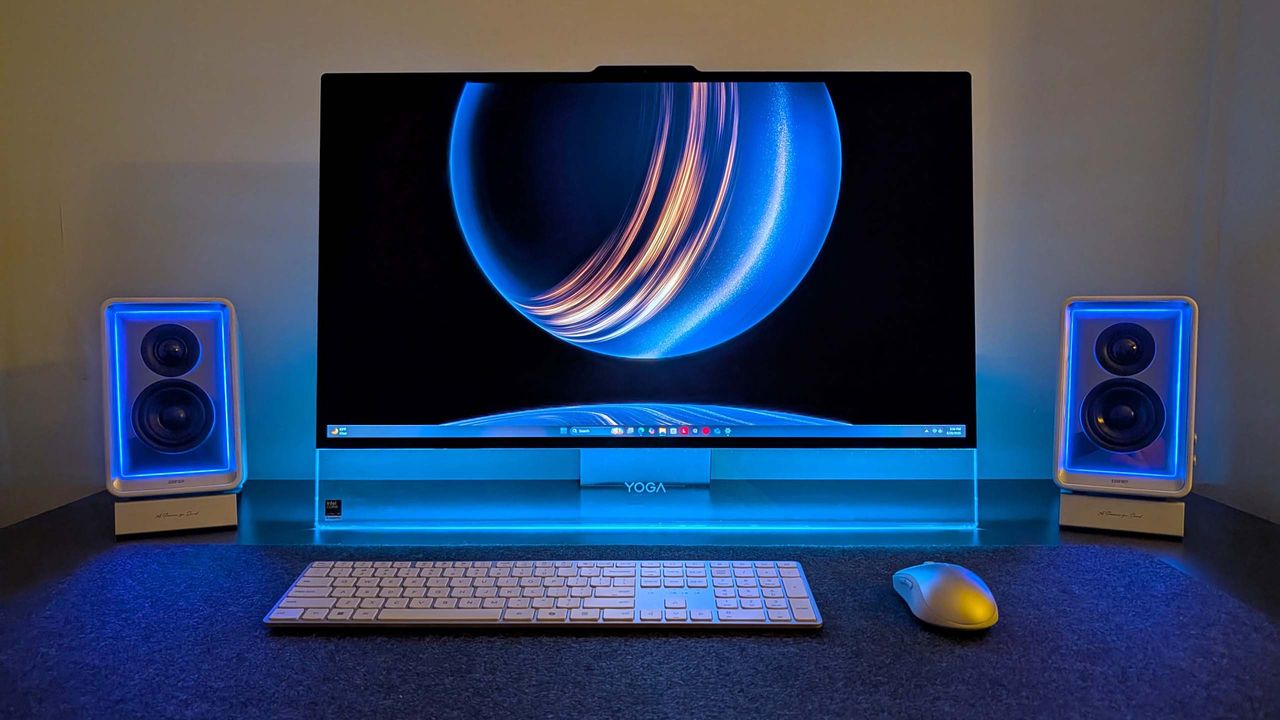
The new Lenovo Yoga AiO i 32 Aura Edition is a true sight to behold. Complete with a transparent display chin that incorporates RGB lighting, a new upside-down V-shaped stand that's unlike anything I've ever seen, an incredibly thin but capable computer built into said stand, and the best display I've ever seen on an all-in-one.
I've been daily driving this AiO for the last three weeks, and this is my full review.
This review was made possible via a review sample supplied by Lenovo. The company had no editorial input and did not view the contents of this review before publication.
Yoga AiO i 32 Aura Edition: Price and specs
Prepare to be mesmerized by its design. (Image credit: Zac Bowden / Windows Central)
The Lenovo Yoga AiO i 32 Aura Edition is a mouthful of a name, but it does make it easy to find online. You can find the device available for purchase directly on Lenovo's website for an eyewatering $3,097.99. There's only one configuration available, so there's no wiggle room on that price for now.
That configuration comes with an Intel Core Ultra X7 358H, paired with 32GB RAM and 1TB m.2 SSD storage. It also includes the Intel Arc B390 GPU, which drives the incredible 32-inch 4K OLED panel at 165Hz. Unfortunately, there are no configurations with a dedicated GPU from NVIDIA or AMD.
Lenovo's new Yoga AiO i 32 Aura Edition is a sight to behold, complete with a unique design that features a transparent display chin with RGB lighting, the best 4K OLED I've ever seen fitted to an AiO, and incredible performance. View Deal
Yoga AiO i 32 Aura Edition specs
Specification
Details
Processor
Intel® Core™ Ultra X7 358H (E‑cores up to 3.50 GHz, P‑cores up to 4.80 GHz)
Wireless Mouse; Wireless Helios Gen 2 Keyboard (Seashell, English US)
Connectivity
Wi‑Fi 7 2×2 BE & Bluetooth® 5.4
Warranty
1 Year Mail‑in
Color
Seashell
Xbox Game Pass
Included
Part Number
F0JK0009US
Price
$3097.99
Yoga AiO i 32 Aura Edition: What I like
These ports and buttons are easily reachable on the side. (Image credit: Zac Bowden / Windows Central)
In a word, the Lenovo Yoga i AiO 32 Aura Edition is sexy. It's probably the best-looking desktop computer you can buy right now, and that's thanks to its absolutely insane design that places the entire computer in the stand that holds the screen up, allowing the display to take all your attention.
From a normal sitting position, you can't even see the stand. Unlike traditional stands that have a base that sits on the desk, the AiO's stand is more like a kickstand, with the weight of the display leaning against the stand, and the bottom of both the stand and the display chin making contact with the desk to form an upside-down V shape.
This is unique on its own, but when paired with the awesome-looking transparent display chin, the result is an all-encompassing 4K OLED display that looks like it floats. It's honestly super mesmerizing, and with the built-in RGB lighting enabled that shines through the transparent chin, the whole thing just looks amazing.
That RGB lighting can be controlled via Lenovo's included Vantage app, or by Windows itself using Microsoft's new Dynamic Lighting feature. This is the first time I've been able to use Windows 11's native RGB controls, and they're quick and awesome. You have a number of settings, including gradients that let you choose two colors to alternate between, and it's overall very easy to set up.
The transparent chin is a sight to behold. (Image credit: Zac Bowden / Windows Central)
It's an incredibly eye-catching design that will turn heads whenever someone who has never seen it before comes across it. While the light-up chin is the first thing they'll notice, the second thing they'll be blown away by is the sheer quality of the 4K OLED display that sits on top of it.
This 32-inch 4K OLED panel is amazing. It's a true 10-bit panel at 165Hz, making Windows animations and scrolling look super smooth and games feel incredible to play. This is undoubtedly the best display you can find on an all-in-one PC right now, blowing the iMac and the last-gen Lenovo 32-inch AiO out of the water.
This is undoubtedly the best display you can find on an all-in-one PC right now, blowing the iMac and the last-gen Lenovo 32-inch AiO out of the water.
Colors simply pop on this screen. It's also incredibly color accurate, with a 99% DCI‑P3 and 100% sRGB rating making it great for video editors and photo artists. It's plenty bright, with up to 1,000 nits peak brightness in HDR content too. The display is surrounded by thin uniform bezels, with a metal frame that's cold to the touch and feels incredibly premium.
On the right side of the display is a USB-C port, which makes plugging in flash drives and other peripherals super easy and convenient. There's also a 3.5mm audio jack on this same display edge, which is nice for plugging in headphones. The rest of the ports are located on the stand, most of which are at the very back.
There's a door that covers this USB-A port. (Image credit: Zac Bowden / Windows Central)
On the stand, you'll find a single USB-A port on the side of the stand, which is designed for a wireless keyboard and mouse dongle (but you can plug anything into it) behind a door. On the back, there are two USB-C ports, two USB-A ports, an HDMI port, and that's it. I do wish there was maybe an additional USB-A and USB-C port, and an Ethernet jack wouldn't have gone amiss either.
Along the top of the display is a 16MP webcam that looks great and is a significant upgrade over the last gen Lenovo AiO. It's much clearer, and Windows Hello face unlock works a little faster as a result. There's a webcam kill switch on the right side of the display that's easy to reach for when you don't want anyone looking at you.
The AiO comes with a nice keyboard and mouse as well. These are automatically paired with the PC when you unbox, as the wireless dongle comes plugged in from the factory. The keyboard is hefty but premium-feeling, featuring a chiclet-style typing experience that's quiet yet satisfying.
Yoga AiO i 32 Aura Edition: What I don't like
It's pretty even from behind. (Image credit: Zac Bowden / Windows Central)
Unfortunately, there are some things about the Lenovo Yoga AiO 32 Aura Edition that aren't my favorite. While this device is overall amazing and I would recommend it to pretty much anyone, that does come with a few caveats.
First of all, the design of this computer does have a few trade-offs. Firstly, the space required to set up the computer optimally on your desk is a significantly larger area than your usual AiO that sits on a normal stand with a base. The upside-down V-shape nature means that to angle the screen comfortably, you need to widen the gap between the two points of contact on the desk.
This isn't going to be an issue if you have a large desk, but for those on smaller desks, you might find the display ends up being slightly too close to you, or the stand ends up uncomfortably close to the edge of the desk. The underside of the stand is covered in a grippy texture, so it won't slide anywhere, but it's still a little unnerving.
It's incredibly thin. Where even is the computer? (Image credit: Zac Bowden / Windows Central)
You also lose usable desk space with this design. Sure, you can put things behind the display between it and the stand if you wanted, but that would mean you'll need to reach around the display whenever you need access to whatever it is you've put behind it. Plus, the transparent chin means you can see all the mess behind there at all times.
On the subject of that transparent chin. I love it, I really do, but my goodness, is it a dust and fingerprint magnet. Be prepared to be cleaning it on the daily. I don't know how fingerprints even end up there, as I'm never actively touching the chin, but somehow I'm always cleaning them off.
On this new model, you have no choice but to get up, lean around the display, and fondle your way into plugging your peripheral in. It's quite annoying.
This design also results in the position of the ports being really difficult to reach. While there is a single USB-C port on the side of the display, which is super easy to access and great to have, all the other ports are on the stand, most of which are at the back on the very bottom. This makes them basically impossible to reach when sitting in front of the display.
I complained about the position of the ports on the last-gen AiO from Lenovo, but at least on that device you could reach through the display stand to get to the ports from a sitting position. On this new model, you have no choice but to get up, lean around the display, and fondle your way into plugging your peripheral in. It's quite annoying.
These speakers have a problem... (Image credit: Zac Bowden / Windows Central)
I'd also argue that for a device being targeted at creators, it's quite lacking in the port section. There are just two USB-C and three USB-A ports on the whole device, four of which are on the back. Plus, there's no Ethernet jack for wired internet, and no SD card reader of any kind. I do wish that it had an SD card reader at the very least.
The last thing I don't like about the AiO is the built-in speaker system. In my testing, I can't help but think there's something wrong with them. Whenever the audio channel is open, an audible hissing/whooshing noise is present. This noise is present regardless of the audio being played, but is more noticeable when the volume is on medium or low settings. It's even audible when the device is muted and an audio track is playing, and it goes away entirely when the audio channel is closed.
It's so noticeable that I reached out to Lenovo to request a new review unit, thinking mine was defective, only to find the second sample has the same problem. So, I don't know if this is a hardware defect or something that can be fixed via firmware updates. I couldn't tell you what's causing the noise, but it is there.
If you've ordered one of these AiOs, let me know if this issue is present on your unit, or if I just somehow received two defective models back to back. This problem is easily solved by using an external set of speakers, which is what I do, completely bypassing the built-in speaker system. Still, it's not something you should have to put up with when paying this amount of money for a device, so if yours has this issue and you're unhappy, be sure to return it.
Yoga AiO i 32 Aura Edition: Performance
The transparent chin does have logos etched into it. (Image credit: Zac Bowden / Windows Central)
This AiO is one that strikes a perfect balance between performance and quiet operation. This thing is whisper-quiet for 99% of the time you'll be using it, with the fans only spinning up under heavy sustained load for long periods. Even when on full blast, the fans aren't offensively loud.
Powered by the Intel Core Ultra X7 358H (Core Ultra Series 3) and Intel Arc B390 GPU, this AiO is well equipped to handle your usual day-to-day tasks, as well as high-intensity tasks such as video and photo editing, rendering, and 3D modeling. It's even a competent gaming machine, though I wouldn't buy one for dedicated gaming.
This thing is whisper-quiet for 99% of the time you'll be using it, with the fans only spinning up under heavy sustained load for long periods.
The Intel Core Ultra X7 358H CPU is where this machine truly shines, flexing massive numbers in multi-threaded tasks thanks to its advanced architectural efficiency. With a Geekbench single-core score of 2,851 and a multicore score of 16,964, it breezily handles heavy multitasking, AI workloads, and complex data processing.
In everyday productivity, it achieved a CrossMark score of 2,128, which means it has snappy execution across office applications. For rendering workloads, the Cinebench benchmarks reveal a single-core score of 501 and a robust multicore score of 4,927. The device has minimal thermal throttling, and as mentioned above, rarely gets loud.
The Yoga logo sits proud in the middle of the transparent chin. (Image credit: Zac Bowden / Windows Central)
The inclusion of the Intel Arc B390 GPU elevates this machine beyond your usual standard integrated graphics. It's a highly efficient, modern graphics solution that I'd describe as more than good enough for light to moderate gaming, intensive content creation, and smooth video editing. Here are our 3DMark benchmark results:
Benchmark
Score
Performance Context
Night Raid
48,631
Excellent for esports and casual titles
Time Spy
7,793
Solid DX12 performance for 1440p gaming
Time Spy Extreme
3,630
Handles moderate 4K workloads
Steel Nomad Light
5,633
Great lightweight cross-platform performance
Steel Nomad
1,100
Pushes the integrated graphics to its limit
It's clear that the Intel B390 isn't going to be great at running the latest games at their highest settings at 4K 120Hz, but bumping things down to medium-high graphics settings and 1080p or 1440p will result in a perfectly fine gaming experience, which should be more than enough for those who are only gaming casually on their PCs.
Games like Halo: The Master Chief Collection or Hitman run great on the AiO. Cyberpunk 2077 also runs really well when set to 1440p high settings. Older games like GTA V run at high frame rates with all their settings maxed out, even at 4K. So it really will come down to the kind of games you play and how graphically intensive they are.
The Intel B390 is a step above your typical integrated graphics, but it's no dedicated GPU from NVIDIA or AMD. So expectations should be tempered if you're looking to game. Most modern games should run more than fine if you set their graphics settings to medium 1080p. It's fair to say the Intel B390 is better served for content creators, being an excellent GPU for rendering video, 3D models, and more.
The Intel B390 is a step above your typical integrated graphics, but it's no dedicated GPU from NVIDIA or AMD.
I do wish Lenovo offered the PC with the option of being configured with a dedicated GPU, as the B390 on its own might be disappointing for some, especially at these prices.
The last-gen flagship Lenovo Yoga AiO featured an NVIDIA RTX 4050, which provides roughly the same level of performance as the Intel B390, but I've found that some games run slightly better with smoother frame rates on the older NVIDIA card. So we're not seeing any real performance upgrades across generations, outside of the fact that the Intel B390 is a more efficient GPU overall.
For storage speeds, the CrystalDiskMark results are top-tier, clocking in at an impressive 7,008.27 MB/s read and 5,807.32 MB/s write speeds. This should mean boot times, app loading, and file transfers stay nice and fast.
Conclusion
I mean, c'mon. Just look at it. (Image credit: Zac Bowden / Windows Central)
You should buy this PC if...
✅ You want a beautiful Windows all-in-one
✅ You want one of the best OLED displays on a Windows PC
✅ You're a creator who focuses on video and photo editing
You should not buy this PC if...
❌ You have a small desk
❌ You frequently need to plug in and unplug peripherals
❌ You rely heavily on built-in speakers
❌ You're a hardcore gamer who wants to game
Overall, I believe the Lenovo Yoga i AiO 32 Aura Edition is an almost perfect all-in-one. It's definitely at the top of the list when it comes to an aesthetic design point, but those design choices aren't without their own minor annoyances. For me, I'm happy to sacrifice easy port access in exchange for sheer beauty.
With that said, there's clearly a problem with the built-in audio setup on two of the units I tested. Once again, I'm hoping that this issue is software-related and can be fixed via a firmware update. Some may not even notice the hissing noise, but it's very audible and distracting for me.
The lack of a dedicated GPU option may also upset some people, especially those that are wanting to game. While the Intel Arc B390 is good, it's by no means great, especially for the over $3,000 you'll be paying for this PC new.
Those issues aside, I have to say that this AiO is the first one I've used since the Surface Studio that has blown me away. It's just jaw-droppingly good to look at, and it's something I'm proud to have sitting on my desk. There's nothing boring or corporate about it; it's simply mesmerizing.
The design, paired with the glorious 4K 165Hz OLED panel and great performance under the hood, results in an incredible experience at a high cost, which unfortunately can't be helped given the ongoing component pricing crisis. If Lenovo is able to get the speaker issue sorted, this device is a clear winner in my book.
Lenovo
Yoga AiO i 32 Aura Edition
Lenovo's new Yoga AiO i 32 Aura Edition is a sight to behold, complete with a unique design that features a transparent display chin with RGB lighting, the best 4K OLED I've ever seen fitted to an AiO, and incredible performance.
Join us on Reddit at r/WindowsCentral to share your insights and discuss our latest news, reviews, and more.
Lenovo Yoga AiO i Aura Edition
Lenovo's latest flagship all-in-one might be the best-looking Windows AiO we've ever seen.
As it is, Assassin’s Creed Black Flag is one of the greatest Assassin’s Creed games ever made. Buckling gameplay from bow to stern, Black Flag is the title that set a pirate craze in the world. To the point that Ubisoft spent well over a decade developing the cursed game Skull and Bones.
Black Flag Resynced factsheet
(Image credit: Ubisoft)
Genre: Open-world action-adventure Released: July 9, 2026 Developer: Ubisoft Available on: PC, Xbox Series X|S, PlayStation 5 Price: $59.99 at Best Buy Xbox Play Anywhere: ❌ Xbox Game Pass: ❌
Even with the dastardly failure of the game, Ubisoft’s vision of a pirate game has crawled its way back in the form of the Black Flag remake, Assassin’s Creed Black Flag Resynced. As a player who gained every single achievement in the original game, you can bet your coin that I had high expectations when it came to this remake.
I’m happy to say that a little over a dozen years after the original game, Resynced is back to claim the piracy title.
Assassin's Creed Black Flag Resynced: The Story
A dashingly handsome man if I do say so myself. (Image credit: Michael Hoglund)
You’re Edward Kenway, the ever-loving and charismatic privateer with a dashing Welsh accent. Driven by dreams of wealth for his wife and glory to boot, Edward sets sail for the West Indies in search of riches beyond measure.
From the start, Edward finds himself in turmoil under a naval encounter that sees his world unraveled and shipwrecked. A shady figure by the name of Duncan Walpole crosses paths with Edward, and an entire world beyond the realm of piracy unfolds before him. One of the shadow and ancient struggles between the Templars and Assassins. The fight between true freedom and control.
Within hours, players will find themselves commanding their very own vessel, the Jackdaw. A versatile ship under the command of a man with legendary pirate friends like Edward "Blackbeard" Thatch, Anne Bonny, Charles Vane, and more. With his trusty crew and mythical friends, Edward looks to create a pirate paradise free from the control of the outside world.
Faced with the decision to play again, I will twice more! (Image credit: Michael Hoglund)
Along this path, Edward discovers the Observatory, Black Flag’s integral piece left behind by the First Civilization that both Assassins and Templars are fighting for. A device that could potentially locate any person across the globe, powers beyond Edward’s imagination begin to clash, with him caught right in the middle.
With everything at stake, Black Flag Resynced, like the game before it, does a wonderful job of depicting a struggle of self-discovery as Edward grapples with his own ambitions as they come at odds with protecting what truly matters in the world.
Unlike the original Black Flag, none of the original modern-day storyline is present. Instead, the entire game is set from beginning to end within the eyes and confines of Edward Kenway. No more will the player find themselves going through the motions of some Abstergo office.
On top of the original story, players can expect extra epilogue missions as well that add more to the world of Edward Kenway.
Assassin's Creed Black Flag Resynced: Sail beyond the original
A blast from the past, but with updated manual aim mechanics similar to Assassin's Creed Rogue. (Image credit: Michael Hoglund)
Everything you loved from the original Black Flag returns in Resynced, alongside a plethora of new activities to explore. From new locations to entirely new end-game missions that expand upon the original story, Resynced is more than just a remake, all while packing itself into a single game.
Modern-day stories have been replaced by Rifts, which are optional quests within the Animus that provide players with a unique “what-if” perspective shift. I won’t spoil anything, but a single one of these missions is far better than all of the modern-day experiences found in the original game, combined.
Alongside the main story, side-quests have also been expanded upon. With entirely new missions that give a better glimpse into some of the game’s most iconic characters, as well as other contracts that begin to number beyond what I’m willing to write about. Needless to say, even players who come fresh from the original will find tons of newly packed story content in Resynced!
There are new dive locations for players to discover as well! (Image credit: Michael Hoglund)
With all the newly minted narrative pieces, Ubisoft also delivered the goods when it came to combat on foot and on the high seas. First, let’s talk about Edward’s expanded repertoire.
Edward’s melee capabilities have been expanded with perfect parries and heavy attacks. Now, when an enemy takes a parryable swing at Edward, a perfectly timed parry will open them up for a devastating finisher.
Players can also add heavy attacks to their swashbuckling swings to engage in melee beatdowns on enemies on their heels. These heavy hits are multi-enemy swings that apply to all melee weapons in the game.
I never get tired of these finishers. (Image credit: Michael Hoglund)
Another fantastic “addition” is the rope dart, a mechanic that was part of the original, but many players felt was unlocked far too late in the game to be of any use. Correcting this mistake, Ubisoft has unlocked it for use within the first few hours of gameplay, as well as expanding on its combat capabilities.
Naval combat, as I said earlier, has also been heavily expanded. Each and every weapon on the Jackdaw now has an added secondary fire mode that drastically changes how the weapon performs. For instance, let's talk about the heated shot for the broadside cannons.
Rather than a single please-don’t-miss-shot, the heated-shot is a close-quarters monster. Enabling a rapid-fire “fire” shot that barrages the enemy with flaming cannonballs. The heated-shot is an up-close face melter when it comes to naval combat, and something I could never go back to the original without.
That’s just one of the added secondary weapons as well, with the upfront chain shots, swivel gun, mortars, and fire barrels all getting some fantastic additions to their arsenals. Open-water combat that was once perfection is now peak perfection.
Assassin's Creed Black Flag Resynced: Looks and runs amazingly
Harpooning is back on the menu! (Image credit: Michael Hoglund)
Very rarely do I get to see a remake that captures the magic of the original while surpassing it in every way. Generally, there’s always something that seems to throw me off, something that the new team felt was needed but doesn’t quite fit the world of the initial creation.
Having played through the entirety of the original Black Flag in 2013, I went into Resynced immediately astonished. The world I had once known has been captured and enhanced in ways my nostalgia-driven mind thinks the original always looked.
Iconic cities like Nassau have been overhauled with incredibly new, detailed textures and meshes, all while triggering memory circuits in my brain I thought had been long lost. My first time on shore activated something in my head that I assumed I had completely forgotten. The buildings all fit perfectly in their places as I had once remembered them.
I can't believe a remake looks this good! (Image credit: Michael Hoglund)
Even trees contain the same pathways I once ran through, while paths leading from ships initiate the same but greatly updated animations of the originals. The entire Resynced experience is absolutely breathtaking in terms of how closely the world has been reimagined while remaining faithful to its predecessor.
With that, you’d think a massive performance hit would come as well, but as someone playing on PC through Ubisoft Connect, it didn’t!
I’m happy to report that I achieved well over 120 frames per second on my build with a little DLSS Quality and Nvidia Frame Generation set to 2x. I know, I know, “frame generation sucks!” I’m here to tell you that as a competitive player, frame generation is perfectly fine in this case, given the native performance I was getting was well beyond 60 fps.
My current build is an RTX 5080, 9800X3D, and 64GB of DDR5 RAM. I was running the game on the Very High preset for most of my gameplay. I bumped it to Ultra settings with ray-tracing and field-of-view maxed, and Resynced still managed to maintain an average of 110+ frames per second.
Assassin's Creed Black Flag Resynced: Should you buy it?
The double Edward experience. (Image credit: Michael Hoglund)
If you loved the original game, then yes, you definitely should. If you've never played it, but love that older-school Assassin's Creed formula, then yes, you should too!
For everyone else, it really comes down to what you're looking for in a game.
While Assassin's Creed Black Flag Resynced is massive, players can adhere to most of the mainline story without too much side-tracking. So if these larger-than-life open-world games aren't your cup of tea, just know that Black Flag Resynced can be played as a sort of linear experience.
For collectathon people like myself, Resynced isn’t quite as bad as the latest Legend of Zelda entries, but you’ll definitely be busy running around each and every island, crossing off the to-do checklist you’re presented with. Especially if you want to grab every cosmetic as I do.
Then there’s an added layer of their new Animus Hub that was originally introduced with Assassin’s Creed Shadows. More points mean more unlocks, which all just feels like an expanded version of their original Ubisoft Uplay Store.
At the end of the day, Assassin’s Creed Black Flag Resynced is everything I’ve ever loved about the series, now dressed to the Blackbeard nines and bursting with new features to keep gamers busy for days. Sure, I’ve been overwhelmed by the treasure trove of things to do, but not once have I played without a grin plastered across my face.
Assassin's Creed Black Flag Resynced
Black Flag Resynced is everything a remake should be, the new gold standard. Whether you played it before or not, you're going to want to check it out.
Join us on Reddit at r/WindowsCentral to share your insights and discuss our latest news, reviews, and more.
Join us on Reddit at r/WindowsCentral to share your insights and discuss our latest news, reviews, and more.
Assassin's Creed Black Flag Resynced screenshot of
Toys for Bob, the studio behind revivals of the classic Crash Bandicoot series with a long-awaited 4th installment and doing the same with Spyro the Dragon with "Spyro: A Realm Beyond", has recently expressed interest in reviving another classic platformer series, Banjo-Kazooie.
Toy for Bob confirmed its interest during an episode of the Kinda Funny Gamescast, in which the show's hosts approached them about Banjo-Kazooie. They replied: "It's a franchise we love. As platformer fans, Banjo's top of the heap."
"We have some huge, huge fans of that franchise on our staff – I'm talking, they've got the Jiggie as their profile pic, kind of a thing. They're that level of fan. If the opportunity ever arose, that would be amazing. We love the franchise."
They continued: "If you look at the through-line of the types of games we like to make, I can imagine that's part of that staple as well. I think of [those characters] as timeless. They're iconic, and I think the types of games we want to produce are ones that speak to a timeless place in the player as well, an ageless place – we call it the "inner child". So, I think they're wonderful games; we're huge fans."
While I never played Banjo-Kazooie growing up, I am fully aware of how much impact the original game had on 3D platformers, as it, along with Super Mario 64, helped set the standard for how the genre should be made for generations to come with their timeless cartoon charm and gameplay.
Unfortunately, despite popular demand, there hasn't been a new entry in the franchise since the controversial Banjo-Kazooie: Nuts & Bolts from 2008, which traded the series' iconic platforming gameplay for open-world car racing and building.
Plus, the title characters themselves, Banjo & Kazooie, haven't made an appearance in a game since they were included in Super Smash Bros. Ultimate in 2019. However, if there's any studio out there that can pull a miracle in bringing the lovable duo out from Microsoft's vault, I believe it's Toys for Bob.
Toys for Bob has done a fantastic job making platformers with their awesome remasters of the classic Crash Bandicoot and Spyro trilogies, as well as Crash Bandicoot 4, and the studio clearly loves the Banjo-Kazooie franchise, judging by how enthusiastic the developers were in the interview.
Plus, Toys for Bob fought tooth and nail to get the green light for a new Spyro game while winning back their independence at the same time, which shows they're willing to go to any length to make a new game for any franchise they cherish.
However, time will tell if Toys for Bob will be fortunate enough to be given the chance to take the reins of Banjo-Kazooie, but for now, I'll be looking forward to Spyro: A Realm Beyond because I can't wait to finally play a true sequel to the original classic Spyro trilogy I grew up playing on the PlayStation 1 during the 1990s.
How do you feel about the idea of Toys for Bob making a new Banjo-Kazooie game? Do you think they're fit for the job, or would you have another developer make a new game?
If you have any thoughts on the matter, please let us know through the poll, the comments section, or our Reddit community.
Join us on Reddit at r/WindowsCentral to share your insights and discuss our latest news, reviews, and more.
A bear plays a banjo energetically, while a red bird perched on its back sings into a blue horn. They're in a lush forest at sunset, creating a lively atmosphere.
Is it high-time for Banjo-Kazooie to make a comeback?
The ongoing memory crisis has taken a heavy toll on tech, forcing PC prices to rise regardless of how much we need them in our daily lives, whether that's communicating with family or working with remote colleagues millions of miles away (or simply watching Netflix).
But we'll always find deals on a range of Windows laptops so you can enjoy fast performance, crisp displays, and sizeable storage that regularly drop below $1,000, with this recent collection being a prime example.
This roundup includes the speedy and reliable Dell 14, now 43% off at $699.99 at Dell (list price $1,229.99), or the most budget-conscious ASUS Vivobook 14, now on sale for $519.99 at Amazon (list price $639.99).
"This laptop is the perfect all-rounder for my studies and professional work, offering a seamless experience that has completely transformed my daily productivity. It is incredibly fast, handling dozens of browser tabs and demanding multitasking without a hint of lag, while its near-instant boot-up times make it reliable for jumping straight into meetings or lectures. The build quality is exceptional yet light enough for easy portability." ~ Sandile, customer review
"The Dell 14 Plus 2-in-1 is a great convertible laptop option for those on a budget (like students) who want more performance and functionality than you'd find in a Chromebook, but its display is lackluster, which might be a dealbreaker for some." ~ John Loeffler, Components Editor at TechRadar
"The Asus Vivobook 14 won’t win hearts, but it will quietly help you meet deadlines with a focus on ergonomics, decent mid-range performance, solid battery life and an affordable price." ~ Jason England, Managing Editor at Tom's Hardware
"Lenovo's 16-inch Yoga 7i 2-in-1 has strong positives for travelers who refuse to compromise on screen size and would benefit from a transforming screen." ~ Ben Wilson, Senior Editor
"The Lenovo IdeaPad Slim 3x is a remarkably cheap laptop, yet it delivers good performance and amazing battery life in a slim, elegant chassis with a comfy keyboard." ~ Stevie Bonifield, Writer at Tom's Guide
You generally can't add more RAM to many of these modern laptops, as the memory is usually soldered to the motherboard (LPDDR). Where applicable, models with SO-DIMM memory can be upgraded. You can, however, often add extra storage space by replacing internal M.2 SSDs with larger ones or by connecting external SSDs.
Are these laptops good for gaming?
No. The laptops in this roundup are primarily designed for productivity tasks, not for PC gaming, so they were never intended for intensive AAA titles.
Join us on Reddit at r/WindowsCentral to share your insights and discuss our latest news, reviews, and more.
Four laptops with diverse screens are surrounded by gadgets, including a smartwatch, smartphone, and chargers, on a gray surface. The vibe is modern and tech-savvy.
Dell's 14 Plus 2-in-1 joins this week's bargain roundup.
This week saw Microsoft and Xbox initiate the single biggest layoff wave in the gaming brand's history, with 3,200 Xbox and game development roles cut — 1,600 immediately, and another 1,600 throughout the next 12 months — as well as four studios divested from the Xbox Game Studios publishing division.
Given the strong success of the DOOM 2016 reboot, DOOM Eternal, and last year's DOOM: The Dark Ages — which has a new Revelations DLC coming out today, one day after the cuts — the fact that id Software has been affected so significantly by the Xbox layoffs has come as a shock to many. Cuts to the id Tech team are surprising as well, as the studio's engine has historically run well and has been used for non-DOOM projects like the Wolfenstein games and Indiana Jones and the Great Circle.
That shock extends to id's developers themselves, many of whom have taken to social media platforms to express their astonishment and frustrations with the layoffs. One such employee, gameplay animator Skai Chow, has reacted to them with a scathing message for both Microsoft as well as for those "celebrating and worshipping" the cuts as a "move in the right direction."
"For my friends and followers who don't work in game development celebrating and worshipping that the layoffs yesterday were 'necessary for change and a move in the right direction'...I sure hope the sixth round of layoffs is worth our pain and your pleasure," wrote Chow. "After all, things are gonna be different this time around. Right?"
The new Xbox CEO Asha Sharma contends that these latest cuts were a difficult but necessary move as part of a "reset" for the brand after it "overextended" with lots of expansion and "overly complex" internal systems.
Regardless of how true that ultimately is or isn't, I can't blame Chow or any other developer for feeling angry and bitter. Throughout the last four years, several thousand layoffs have wracked both Xbox and the wider gaming industry at large following overinvestment in gaming during the pandemic, resulting in extreme volatility and repeated devastating losses of talent.
I don't know what the right path forward is, especially with tariffs and the RAM crisis further complicating matters, but it's clear that the business as it is now isn't sustainable — and Chow is correct to highlight that layoffs haven't yet solved the problem. We can only hope for brighter times as Xbox and the industry reorganize.
Do you believe Microsoft and Xbox have gone too far with the layoffs at id Software? Share your thoughts below, and vote in our poll.
Join us on Reddit at r/WindowsCentral to share your insights and discuss our latest news, reviews, and more.
An official screenshot of the Doom Slayer as he appears in 2025's DOOM: The Dark Ages.
id Software's latest game, DOOM: The Dark Ages, has a new Revelations DLC coming out today — one day after Microsoft's Xbox layoffs cut half the studio.
Have you ever wondered why minimum specs continue to creep upward? Part of the problem is that developers don't need to be as efficient as they did decades ago.
A recent video by Dave Plummer highlights the bloat of modern applications by following the journey of Plummer making a notepad that's just 2,686 bytes.
App development is complex, and there are genuinely good reasons that games and programs require such high specs in 2026. But generally speaking, programming doesn't have the constraints of yesteryear, so developers don't need to trim code.
A single app not being optimized is not that much of an issue, but when every program on your PC is bloated, problems pop up. The same productivity workflow today requires more RAM than it did in 2015.
For context, Windows 10 launched with a minimum requirement of just 1GB (for 32-bit) and 2GB of RAM (for 64-bit). Windows 11 requires at least 4GB just to boot the operating system, but most users want much more memory. It was controversial when Microsoft and other companies started offering new PCs with 8GB of RAM this year.
Plummer is best known for creating the Windows Task Manager. He also discusses programming and Windows history on his YouTube channel.
In a recent video, Plummer shared how he made a small notepad application that's smaller in size than a YouTube thumbnail.
Tiny Retro Pad has the core functionality of the original Notepad app built by Microsoft. Notably, it lacks the modern features seen in Notepad, such as Copilot. Considering Notepad's addition of Copilot was mocked by many, Tiny Retro Pad is an improvement in some ways.
Making a notepad app that's under 4,096 bytes is more about working within constraints than the specific size of the final app. In the early days of Windows, there were several limits placed on developers, such as hardware caps. Having to work within those constraints forced developers to be more efficient.
Plummer was able to keep Tiny Retro Pad small by utilizing what's already in Windows.
"A tiny native Windows program does not bring along its own entire civilization. It arrives with a lunchbox and a map of the city," said Plummer.
Later in the video, he added, "The program is small because it is not carrying what the platform already has. And that is a lesson that modern software could stand to remember. Not every app needs to bundle the universe. Not every utility needs to ship with a browser engine."
Nowadays, PCs, tablets, and phones have absurd specs. Even modest devices have several gigabytes of memory and tons of storage. Those specs make modern workflows possible, but they also leave room for lazy development.
"Somehow it seems modern software manages to go the other way. You just want a text box and somehow you've imported a runtime, a layout engine, a renderer, a dependency tree, a telemetry client, an auto updater, and a small portion of Chromium," said Plummer.
No one needs a notepad application that's less than 4,000 bytes, but if more app developers focused on efficient code, Windows 11 would feel smoother across the board.
Join us on Reddit at r/WindowsCentral to share your insights and discuss our latest news, reviews, and more.
Windows interface showing an open notepad application. A dropdown menu is open and "new" is selected.
Windows interface showing an open notepad application. A dropdown menu is open and "new" is selected.
Two major highlights from this batch include Tony Hawk's Pro Skater 1+2, a remake two-pack of the first games in the classic skateboarding franchise, and Gears of War: Reloaded, an enhanced remaster of the original game that kickstarted the Gears of War series.
Here is the full list of Xbox Game Pass titles from this batch as stated on Xbox Wire:
Game
Date Available
Available on (Game Pass versions)
Winds of Arcana: Ruination
July 6, 2026
Cloud, Console, Handheld, and PC (Ultimate, Premium, PC Game Pass)
Gears of War: Reloaded
July 9, 2026
Cloud, Xbox Series X|S, Handheld, and PC (Premium, Ultimate and PC Game Pass)
Tamashika
July 9, 2026
Cloud, Xbox Series X|S, Handheld, and PC (Premium, Ultimate and PC Game Pass)
Ascend to Zero
July 13, 2026
Cloud, Xbox Series X|S, and PC (Ultimate and PC Game Pass)
PBA Pro Bowling 2026
July 14, 2026
Cloud, Xbox Series X|S, Handheld, and PC (Premium, Ultimate and PC Game Pass)
Quarantine Zone: The Last Check
July 15, 2026
Cloud, Xbox Series X|S, and PC (Premium, Ultimate and PC Game Pass)
Mavrix by Matt Jones
July 16, 2026
Cloud, Xbox Series X|S, Handheld, and PC (Premium, Ultimate and PC Game Pass)
FixForce
July 17, 2026
Cloud, Xbox Series X|S, and PC (Premium, Ultimate and PC Game Pass)
Fogpiercer
July 17, 2026
PC (Ultimate and PC Game Pass)
The Planet Crafter
July 21, 2026
Cloud, Xbox Series X|S, and PC (Premium, Ultimate and PC Game Pass)
Tony Hawk’s Pro Skater 1 + 2
July 21, 2026
Cloud, Console, and PC (Premium, Ultimate and PC Game Pass)
Games leaving Xbox Game Pass (July 15)
JDungeons of Hinterberg (Cloud, Console, and PC)
EA Sports Football Club 24 (Cloud, Console, and PC)
Stellaris (Cloud, Console, and PC)
Golf With Your Friends (Cloud, Console, and PC)
Minami Lane (Cloud, Console, and PC)
Powerwash Simulator (Cloud, Console, and PC)
Shadow of the Tomb Raider Definitive Edition (Cloud, Console, and PC)
Splitgate: Arena Reloaded (Cloud, Console, and PC)
Super Fantasy Kingdom (Game Preview) (PC)
Techtonica (Game Preview) (Cloud, Console, and PC)
Windows Central's take
Of course, the biggest highlight of this batch is Gears of War: Reloaded.
This game takes the iconic 2006 third-person shooter and gives it a shiny coat of 4K resolution with 120 fps for improved graphical fidelity and all of the original game's post-launch content, such as a bonus single-player campaign act, multiplayer maps, cosmetics, and more, in one definitive package.
So, if you're looking to kill time while waiting for Gears of War: E-Day to drop on October 6, 2026, then Gears of War: Reloaded is a great way to do it, as it proves the original game has held up significantly well and is, literally, a bloody-good way to catch new fans up to speed before the prequel arrives, especially in co-op.
What do you think of Xbox Game Pass' first batch of games for July 2026? Which titles are you looking forward to playing the most?
If you have any thoughts on the matter, please let us know in the comments, on Reddit, or in the poll.
Relive the classic shooter that birthed the iconic and brutal Gears of War franchise, remastered with next-gen graphics, along with online cross-play and cross-progression in Gears of War: Reloaded.
Join us on Reddit at r/WindowsCentral to share your insights and discuss our latest news, reviews, and more.
Upcoming games on Xbox Game Pass displayed on a green background, featuring titles like Gears of War and Tony Hawk’s Pro Skater 2, each with vibrant cover art, indicating availability on various platforms such as PC, console, and cloud, evoking excitement and anticipation.
Xbox Game Pass' line-up for the first half of July 2026

 Connexion