❌

Vue normale

  • ✇Yanko Design
  • The 5 Best Outdoor Gear of November 2026
    A campsite gets complicated through small inconveniences: a flashlight that’s running low, cookware competing for space, nowhere inviting to sit once dinner is done. Those are useful starting points for an outdoor gear roundup. This November’s selection looks at designs that address the practical business of spending time outside, with room for a telescope that gives you a reason to stay out long after the dishes have been put away. These are our editorial picks for November 2026, selected for
     

The 5 Best Outdoor Gear of November 2026

7 novembre 2026 à 07:40

A campsite gets complicated through small inconveniences: a flashlight that’s running low, cookware competing for space, nowhere inviting to sit once dinner is done. Those are useful starting points for an outdoor gear roundup. This November’s selection looks at designs that address the practical business of spending time outside, with room for a telescope that gives you a reason to stay out long after the dishes have been put away.

These are our editorial picks for November 2026, selected for their approach to carrying, setting up, and using outdoor equipment. They aren’t five releases from the same month, and this isn’t a ranking based on comparative field testing. Each offers a specific design detail worth considering, along with compromises that deserve attention before anything joins your packing list. Think of the collection as five different possibilities, not one mandatory kit.

1. Olight Baton 4 Premium Edition

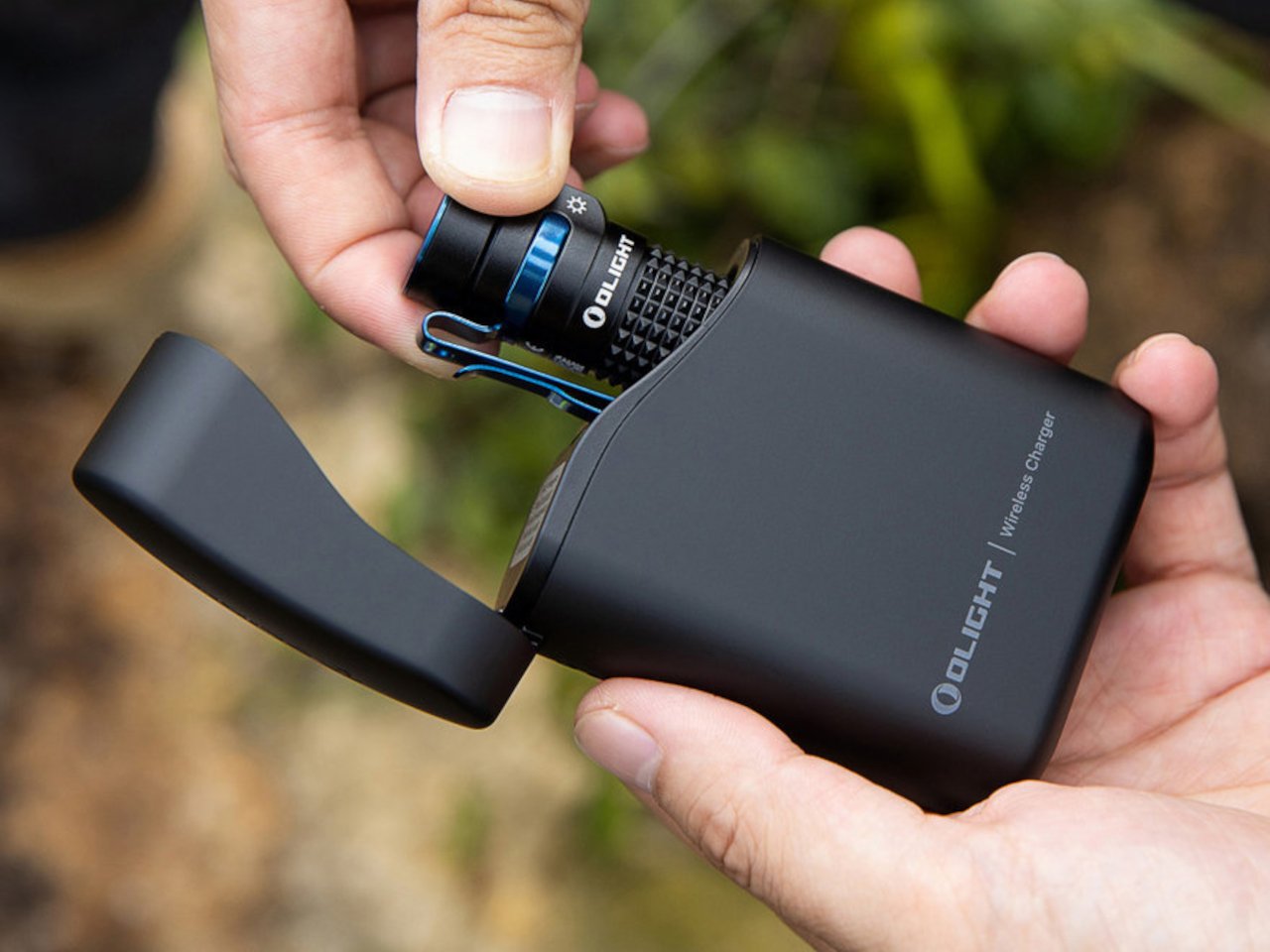
The smartest part of Olight’s Baton 4 Premium Edition is the case. Its flip-top enclosure carries a 5,000mAh battery, recharges the flashlight, and lets you operate the light without removing it. Open the lid, press the case’s button, and the flashlight can illuminate while remaining docked. Holding the button adjusts brightness. That gives the enclosure a useful role beyond storage, particularly when you only need a quick look inside a bag or around the campsite before putting everything away again.

The flashlight itself measures just 2.48 inches long and weighs 52.5 grams with its battery. Olight rates its maximum output at 1,300 lumens, though the manual shows that turbo brightness begins stepping down after 90 seconds. The case also supplies USB-C power to external devices, offering backup charging without another dedicated battery pack. There’s a packing tradeoff: the 142-gram case weighs considerably more than the light. Bring both when charging flexibility matters; carrying only the flashlight keeps things much lighter.

What we like

  • The flashlight remains usable while docked in its charging case.
  • USB-C output gives the case a second job: powering other devices.

What we dislike

  • The charging case adds considerably more weight than the flashlight alone.
  • The 1,300-lumen maximum is a brief turbo setting, not sustained output.

2. DWARFLAB Draco Smart Telescope

DWARFLAB’s Draco is the indulgence in this selection: a preorder smart telescope designed for photographing the night sky. Its 90mm aperture, folded optics, and integrated cameras bring several astronomy components into one portable instrument. The particularly interesting mechanism is a rotating imaging sensor that compensates for field rotation, the apparent twisting of stars across an image during an exposure. DWARFLAB advertises single exposures of up to 300 seconds, with guiding hardware built into the telescope instead of attached as another accessory.

The practical appeal is how much setup the system takes on. Through the DWARFLAB app, Draco automates focusing, targeting, tracking, and image stacking, while its wide-angle and telephoto cameras can capture simultaneously. Scheduled shooting also makes an overnight session possible without constant supervision. At 5.5 kilograms, though, this is equipment to transport rather than casually add to a hiking bag.

Click Here to Buy Now: $1599

What we like

  • Integrated guiding and automated capture reduce the number of separate components to manage.
  • Simultaneous wide-angle and telephoto imaging offers two views of the same night.

What we dislike

  • A 5.5-kilogram body makes this a substantial addition to your luggage.
  • Preorder status rules it out as a dependable purchase for an imminent trip.

3. Zempire Stealth-Jet Wide Camp Stove

Zempire’s Stealth-Jet Wide addresses a familiar packing problem: a camp kitchen can occupy a surprising amount of the trunk. This two-burner stove closes into a powder-coated pressed-steel body just 2 inches thick. Its packed footprint remains a substantial 23.2 by 12 inches, but the shallow profile gives you a flatter object to arrange around other equipment. Open it, and the extra width provides space for larger pots and pans, with independently controlled burners rated at up to 10,000 BTUs each.

The supporting details are refreshingly practical. Rear and side wind shields surround the cooking area, pull-switch piezo ignition removes the need for matches during normal operation, and a removable pot stand provides access for cleaning. The $210 stove includes a propane canister hose connector, though fuel is separate. At 10 pounds, 13 ounces, its thinness solves storage bulk rather than backpack weight. That makes it a sensible design to consider for car camping, where fitting equipment matters more than carrying it.

What we like

  • The 2-inch packed profile reduces the stove’s storage bulk.
  • Two independently controlled burners provide flexibility for cooking a meal.

What we dislike

  • Its nearly 11-pound weight makes it poorly suited to backpacking.
  • A compatible propane canister and fuel must be purchased separately.

4. Nike ACG x Helinox Chair Zero LT

The Nike ACG x Helinox Chair Zero LT makes its construction the visual attraction. An orange frame sits beneath translucent Ghostgrid fabric, drawing attention to the supporting structure rather than hiding it under a substantial upholstered seat. Helinox describes Ghostgrid as a monofilament mesh with a reinforced ripstop grid, developed to balance low weight with resistance to abrasion and tearing. It’s an appropriate material story for a chair whose appeal depends on how little furniture you’re willing to carry outdoors.

The specifications make that argument concrete: 534 grams packed, a 265-pound stated capacity, and a carry case measuring 14 by 4.5 by 4.5 inches. Shock-corded aluminum poles form the frame, while an included X-Strap increases ground contact area to help reduce sinking on softer surfaces. Fit deserves attention before the branding: Helinox identifies adults under 5 feet, 9 inches among its ideal users.

What we like

  • A 534-gram packed weight makes the case for carrying a separate seat.
  • The included X-Strap addresses sinking on softer ground.

What we dislike

  • Helinox’s stated ideal-user guidance makes fit worth checking for taller buyers.
  • The collaboration is currently sold out on the US site.

5. Clip&Go Radio

The Clip&Go Radio puts its carrying method directly into the body. A built-in carabiner attaches the 220-gram device to a backpack or other gear, keeping its AM, FM, and shortwave radio accessible without assigning it an interior pocket. The design makes particular sense for something combining everyday listening with backup functions. There’s a flashlight, an audible SOS alarm with a flashing light, and a replaceable 2,000mAh battery that can also supply power to compatible smartphones.

The charging hierarchy is worth understanding before heading out. USB-C is the recommended primary method, with the shop listing approximately two hours for a full charge. The hand crank and solar panel are emergency alternatives, with listed charging times of approximately six and 67 hours, respectively. Neither should be mistaken for a quick substitute for plugging in. The replaceable 18650 cell is the more appealing ownership detail: when the battery wears out, you can replace it rather than retire the radio.

Click Here to Buy Now: $60.00

What we like

  • The integrated carabiner keeps it accessible.
  • Its 18650 battery is replaceable.

What we dislike

  • Solar charging is extremely slow.
  • Hand-crank charging is a lengthy backup method.

Packing Around the Trip

Before adding any of these to your equipment, decide what kind of outing you’re packing for. A trunk, a bicycle pannier, and a backpack impose different limits. Put the complete setup on the scale, including cases, cables, fuel, and accessories, rather than judging an object by its headline measurement. A thin stove still needs room around it; a compact instrument can still represent a substantial share of what you’re carrying.

It’s also worth separating the job you need done from the extra functions that sound appealing on a product page. Choose lighting around how you’ll use it, seating around your body, and specialist equipment around an activity you genuinely enjoy. Multifunctional gear earns its place when those functions match your habits. The better purchase may be the object that replaces something awkward, rather than another addition to an already crowded bag.

The post The 5 Best Outdoor Gear of November 2026 first appeared on Yanko Design.

  • ✇Yanko Design
  • This $129 Portable Jacuzzi turns any bathtub into a personal spa
    Installing a jetted tub usually means a new tub, a plumber, a dedicated electrical circuit, and some tile you never planned on replacing. That’s a lot of renovation for the simple pleasure of moving water. WAVORA’s Z1 shrinks the whole idea into a cordless puck that fits in your palm and suction-mounts inside the tub you already own. It’s roughly a hockey puck’s chubbier cousin, and it runs on a rechargeable battery, so there’s no cord dangling over the edge or near the water. Think of it as a
     

This $129 Portable Jacuzzi turns any bathtub into a personal spa

6 novembre 2026 à 21:45

Installing a jetted tub usually means a new tub, a plumber, a dedicated electrical circuit, and some tile you never planned on replacing. That’s a lot of renovation for the simple pleasure of moving water. WAVORA’s Z1 shrinks the whole idea into a cordless puck that fits in your palm and suction-mounts inside the tub you already own. It’s roughly a hockey puck’s chubbier cousin, and it runs on a rechargeable battery, so there’s no cord dangling over the edge or near the water. Think of it as a jetted tub’s greatest hit with the remodel left out.

WAVORA, a Louisville, Kentucky brand, sealed the Z1’s motor away from the bath water entirely, so there’s no spinning shaft poking through a rubber seal and waiting to leak. Most compact pumps use a rotating shaft that passes through the housing, guarded by a dynamic seal that rubs and wears every time the motor spins. The Z1 separates the drive from the transmission and closes everything up with static seals, which have no moving surfaces to grind down. The surrounding water doubles as coolant, pulling heat off the housing while it runs, which is a neat bit of free engineering. Your bath, in other words, is also the radiator.

Designer: WAVORA

Click Here to Buy Now: $129 $235 (45% off) Hurry! Only 6 days left.

A Grapefruit-Sized Jet That Mounts on the Wall or the Floor

The Z1 measures 4.3 by 3.5 inches (109 x 89mm) and weighs about 19 ounces (545g), which puts it in medium-sized citric fruit territory. Its form is a soft, cream-white drum with a slatted grille where the water exits and two control buttons on its flank. Small indicator LEDs glow through the shell, so you can check the setting without fishing the thing out. Most cordless bath jets on Amazon are taller cylinders with swiveling nozzles, and they tend to look like pool equipment. The Z1 reads closer to a diffuser or a candle, which helps when it’s sitting on a shelf between soaks.

A double-sided suction mount does the holding, sticking to the tub on one face and the Z1 on the other. It grips best on smooth, non-porous surfaces, which covers acrylic, enamel, glass, polished stainless steel, and glazed tile, so most American tubs qualify. Mount it on the side wall and you get a directional stream that sweeps across the tub like a classic jet aimed at your back. Set it on the floor and the water pushes upward through the bath instead, closer to a spring welling up from below. Swapping between the two takes seconds, which means you pick where the movement starts every night, something a built-in jet can never do.

Three Flow Modes and Up to Five Hours Per Charge

Gentle Flow keeps a soft, steady current moving around you, perfect for a bath with a book in one hand. Power Flow cranks up circulation and shoves water and existing bath foam around the whole tub, which is the setting for sore legs after a long run. Spa Rhythm pulses the intensity up and down in waves, mimicking the ebb and surge of a proper spa jet. One button cycles through all three, so switching moods doesn’t require reading a manual with wet hands. The Z1 moves water rather than injecting air, so the fizzy, aerated feel of a whirlpool comes from your bath bombs, which the launch bundle conveniently includes.

Gentle Flow runs for up to five hours on one charge, Power Flow for about two, and the pulsing Spa Rhythm for around an hour. Five hours in the gentlest mode covers several evening soaks before you need to think about a cable, unless you’re the type who refills the hot water three times. Charging happens over the included USB cable outside the tub, so the only thing near the water is a sealed puck on battery power. Being cordless also frees the Z1 from the nearest outlet, which in most bathrooms sits over by the sink. Corded rivals solve that with a 13-foot cable, which is a lot of wire to drape around a tub of water.

An Outlet You Can Rinse in the Sink, and a $129 Launch Price

Built-in jets have a reputation, and anyone who has fired one up after months of disuse has seen the flakes that come out of the plumbing. The Z1’s outlet section detaches completely, so hair, petals, and bath bomb debris get rinsed out at the sink instead of building up inside. Smaller snags come off by hand without removing anything. The entire water path lives inside a body you can hold under a faucet, so there’s no hidden pipework for gunk to colonize. Budget bath jets on Amazon run about $30 to $70, and their swiveling nozzle assemblies offer more nooks for that gunk to settle into.

The Z1 launches at $129 in a Spa Ritual Set, against a $235 MSRP, bundled with a USB charging cable, the double-sided suction mount, and a manual. WAVORA throws in six botanical bath bombs, six bath liners, and a mesh pouch, which turns the box into a ready-made gift. A single cream-white finish appears across the launch materials, with no other colors announced. Orders ship worldwide, including the US, with delivery estimated for January 2027. WAVORA hasn’t listed warranty terms yet, so check the product page before ordering. That’s a jetted tub’s worth of moving water for the price of a nice dinner, and the tile gets to stay exactly where it is.

Click Here to Buy Now: $129 $235 (45% off) Hurry! Only 6 days left.

The post This $129 Portable Jacuzzi turns any bathtub into a personal spa first appeared on Yanko Design.

  • ✇Yanko Design
  • This fan-made LEGO McDonald’s combo comes with everything except the McFlurry
    In 1999, LEGO sold an official McDonald’s restaurant brickset through its Shop at Home catalog in the US, and it was adorably tiny. Set 3438 used 98 pieces to build a little drive-through window, a car, and an umbrella table, with stickers doing most of the branding work. The employee was basically a standard LEGO chef with the logo slapped on his chest. One collector paid $75 for a sealed copy back in 2011, for a set that cost around ten bucks new. Twenty-seven years later, a fan builder think
     

This fan-made LEGO McDonald’s combo comes with everything except the McFlurry

6 novembre 2026 à 18:30

In 1999, LEGO sold an official McDonald’s restaurant brickset through its Shop at Home catalog in the US, and it was adorably tiny. Set 3438 used 98 pieces to build a little drive-through window, a car, and an umbrella table, with stickers doing most of the branding work. The employee was basically a standard LEGO chef with the logo slapped on his chest. One collector paid $75 for a sealed copy back in 2011, for a set that cost around ten bucks new. Twenty-seven years later, a fan builder thinks the next LEGO McDonald’s should skip the building entirely and go straight for the food.

Called McDonald’s Menu, brickbybrick_’s LEGO Ideas submission rebuilds a classic combo big enough to hold its own on a shelf. There’s a red tray with giant Golden Arches in the middle, a cheeseburger, a red carton overflowing with fries, and a white cup loaded with transparent ice and a striped straw. Zero minifigures, zero drive-through, all lunch. The project went up on October 29 and is already sitting at 1,440 supporters, which tells me a lot of AFOLs (adult fans of LEGO) are hungry. I’m one of them, and I’m writing this before lunch.

Designer: brickbybrick_

Red plates form the tray, finished with a raised, rounded rim and a handle at each end, so it reads as molded plastic instead of a stack of bricks. A big yellow set of Golden Arches sits dead center, breaking up what would otherwise be a whole lot of red. The food is arranged in the classic triangle: burger front left, cup at the back, fries off to the right. It’s the exact layout you’d find on any table at your local McDonald’s around noon. That framing makes the build look like a meal someone just set down, which is half the fun of it.

The cheeseburger starts with a dome of tan curved elements, smooth on top like a plain hamburger bun. Under it sits a red layer that reads as tomato, then bright green leaf pieces fanning out as lettuce, a slice of yellow cheese, and a dark brown patty. Those leaves are a nice bit of NPU (nice part usage, for the uninitiated), taking foliage meant for LEGO gardens and jungles and turning it into a salad. Each layer sticks out at slightly uneven angles, giving the burger that freshly squished look of something just pulled from its wrapper. Real fast food never comes perfectly stacked, and this one looks like it survived a lunch rush.

A pile of yellow plates and bricks spills out of the red fry carton at every angle, some standing tall and some flopped over the edge the way the last few always are. The carton gets the real thing’s shape right, the one McDonald’s introduced in 1970 with a wide mouth for quick scooping and a profile that keeps the fries from falling out. The Golden Arches appear on its face in yellow, the same red-and-yellow combo that has been selling fries for over five decades. Building fries in LEGO is easy, but making them look casually messy takes real effort. My only complaint is that I can’t salt them.

My favorite detail, though, is the drink. The white cup’s top is left open, showing a load of transparent pieces packed in as ice, with a red-and-white striped straw sticking out at a jaunty angle. That straw does three jobs at once. It gives the composition its tallest point, adds a splash of red to an otherwise white element, and nods to a real McDonald’s quirk, since the chain says its straws are slightly wider than average so more Coke hits your taste buds. The ice tells its own story, because McDonald’s pre-chills its syrup and sets the ratio expecting the ice to melt. Leaving the lid off is what lets you see all of it.

Back in 2021, adammark’s McDonald’s Franchise 1955-1969, a walk-up burger stand with a Speedee System kitchen, hit 10,000 supporters and reached the Third 2021 Review. It was one of 36 projects in that round, and Hocus Pocus ended up as the only one approved. brickbybrick_ takes a different route, shrinking the subject from a restaurant down to a single meal sized for a shelf. The build is unlicensed, so those Golden Arches are a fan’s tribute, and any official version would need McDonald’s on board. The two companies have teamed up before, going back to LEGO’s first Happy Meal promotion in 1983, so the precedent exists.

McDonald’s Menu currently has 1,440 supporters and 599 days left to reach its next milestone of 5,000. LEGO Ideas runs on community momentum: fans submit their builds, supporters rally behind the ones they love, and projects that hit 10,000 get reviewed by LEGO for a shot at becoming real sets. It’s a long climb for a lunch order, but every Ideas set on store shelves started at zero votes. If you’d like to see this combo in a box, head to the LEGO Ideas page and give it your vote. Personally, I’m holding out for a Super Size edition, which McDonald’s retired in 2004 but LEGO is more than welcome to bring back.

The post This fan-made LEGO McDonald’s combo comes with everything except the McFlurry first appeared on Yanko Design.

  • ✇Yanko Design
  • Midea’s award-winning blender concept can both heat and cool your mixture down
    Picture a blender with a stovetop hidden in its base, so it can turn soybeans into hot soy milk or rice into congee without you touching a pot. Heated blenders like this are a breakfast staple across China, and most share one annoying flaw: the drink comes out scalding, leaving you to blow on it like it owes you money. Midea’s Fully Automatic Air Flow Blender targets that wait with an airflow system designed to help with both cooking and cooling. Midea claims it brings drinks down to 131°F (55°
     

Midea’s award-winning blender concept can both heat and cool your mixture down

6 novembre 2026 à 15:20

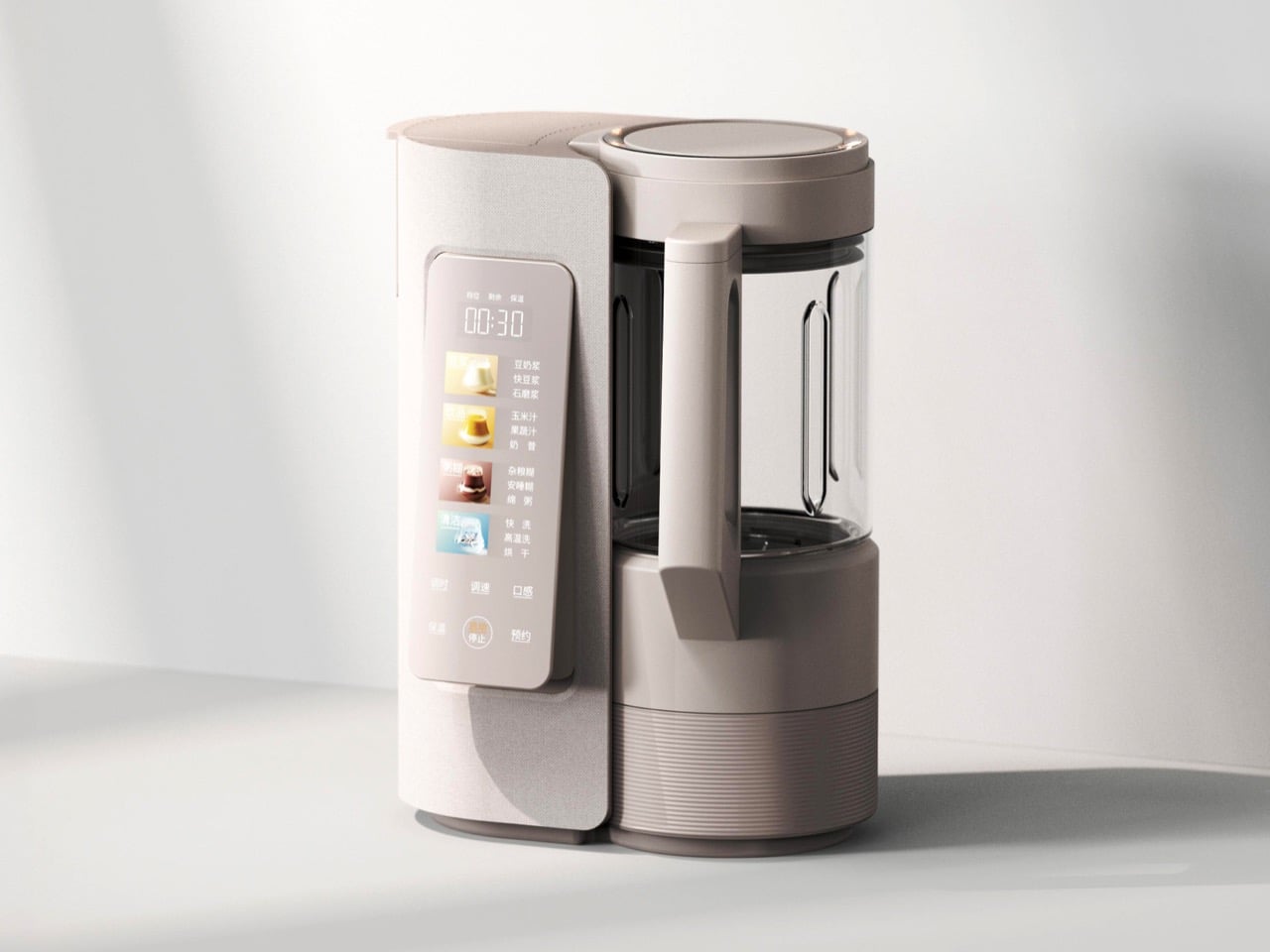
Picture a blender with a stovetop hidden in its base, so it can turn soybeans into hot soy milk or rice into congee without you touching a pot. Heated blenders like this are a breakfast staple across China, and most share one annoying flaw: the drink comes out scalding, leaving you to blow on it like it owes you money. Midea’s Fully Automatic Air Flow Blender targets that wait with an airflow system designed to help with both cooking and cooling. Midea claims it brings drinks down to 131°F (55°C) within five minutes of finishing. That’s roughly where breakfast stops being a dare and starts being breakfast.

The machine comes from Guangdong Midea Consumer Electric, with a design team led by Peng Xi and Wang Jin, and it received a Red Dot Award: Design Concept 2026 in the Ready for Market track. That track recognizes near-finished products that haven’t reached shelves, judged partly on whether they can realistically ship within a year. Midea says the airflow lets the motor blend at full power without soy milk foaming over. A built-in water tank sits alongside the blending jar, and the linen-textured shell looks ready for a Scandinavian café. The Chinese-language interface suggests a launch in China first, though there’s no word yet on US availability.

Designers: Peng Xi, Wang Jin, Li Qianlun, Jo Jeongmin, Ru Guanhong & Wang Xingzhe

Soybeans contain saponins, compounds that contribute to soy milk’s bubble-bath foam when heated. Heated blenders typically manage this by blending in short bursts and pausing the heat to keep the foam from reaching the lid. That stop-start rhythm helps explain why a batch of soy milk on Midea’s existing machines takes around 30 minutes. The company credits its airflow system with cutting prep time in half, though it hasn’t detailed how the system controls foam.

A freshly cooked batch of soy milk or congee can come out near 212°F (100°C), then sit in the jar cooling a degree at a time while you wait. Midea’s existing heated blenders hold drinks at 131°F (55°C) on keep-warm for up to six hours, so the target is familiar territory for the brand. The new machine’s trick is getting there fast: Midea says cooling takes about five minutes. That’s roughly the time it takes to find your shoes and your keys. Paired with overnight scheduling, it could have freshly made soy milk ready to drink when you wake up.

Visually, the appliance splits into two towers that share a figure-eight footprint. On the left, a linen-textured column holds a water tank that lifts straight out from the top, with a corrugated grip that echoes the ribbed base beneath the glass jar. On the right, the jar wears a copper-colored lid ring that appears to double as a status light. Midea’s description of the surface as a linen texture suggests a molded finish rather than real cloth, a sensible call next to a jar of hot congee. The touch panel flips up for easier reading and carries illustrated buttons for soy milk, juices and milkshakes, porridges, and cleaning, including one porridge program labeled for better sleep.

The closest thing US readers will recognize is the Ninja Foodi Cold & Hot Blender, which pairs an 800-watt heating element with a 64-ounce glass pitcher and sells for around $200 at Walmart. It can cook soup from raw ingredients, but you’re still the one pouring in water and waiting for everything to cool. Midea’s pitch is to automate more of that work, drawing water from the built-in tank and offering a high-temperature wash and drying cycle through the menu. The tank will still need refilling, of course. There’s no price or US release date yet, so this one stays on the wishlist.

The post Midea’s award-winning blender concept can both heat and cool your mixture down first appeared on Yanko Design.

  • ✇Yanko Design
  • The Nubeo Ecliptic watch puts a tiny spacecraft control panel on your wrist
    Hollywood loves a sequel, and so does the watch world, though watch sequels trade explosions and cameos for colorways. Nubeo’s Ecliptic Retrograde Dual Time first landed in October 2024, and the square-cased space watch is back for 2026 in six new colorways, from the blue-strapped Firewater Blue to the moodily named Steel Phantom. The core recipe stays put: a 45mm steel case, a matte black dial, and a second time zone displayed by a hand that sweeps a retrograde arc before snapping back to zero
     

The Nubeo Ecliptic watch puts a tiny spacecraft control panel on your wrist

6 novembre 2026 à 14:20

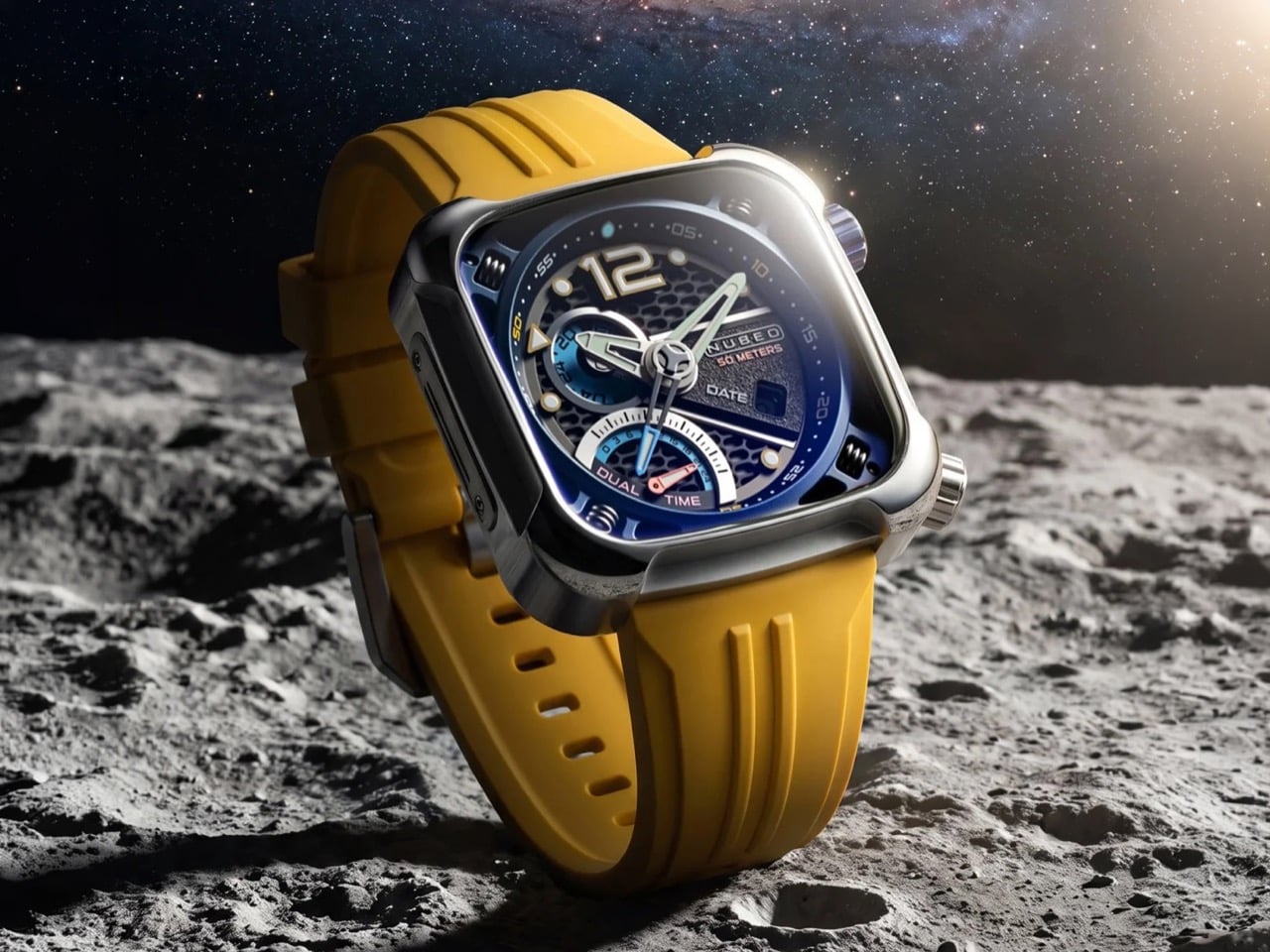
Hollywood loves a sequel, and so does the watch world, though watch sequels trade explosions and cameos for colorways. Nubeo’s Ecliptic Retrograde Dual Time first landed in October 2024, and the square-cased space watch is back for 2026 in six new colorways, from the blue-strapped Firewater Blue to the moodily named Steel Phantom. The core recipe stays put: a 45mm steel case, a matte black dial, and a second time zone displayed by a hand that sweeps a retrograde arc before snapping back to zero.

That hand crawls from 0 to 24 across the lower dial, then flies back to the start like it just remembered it left the stove on. Nubeo pairs it with a big date, a 24-hour subdial, and a caseback engraved with the sun, Earth, and the ecliptic plane. That last detail explains the name, since the ecliptic is the path the sun appears to trace across our sky over a year. Every colorway runs on a Japanese quartz movement and lists for $250, with an advertised 20% launch discount bringing it to $200.

Designer: Nubeo

A Dial Built Like a Spacecraft Control Panel

Nubeo stacks this dial in layers, starting with a matte black honeycomb mesh at the base. A raised chapter ring sits above it with a printed 05 to 55 minute track, while an oversized applied 12 anchors the top. The 24-hour subdial sits near 9 o’clock, the framed date window is at 4, and the dual time arc wraps across the bottom third. Applied indices and hands carry Japanese lume for low-light visibility. Each colorway also changes the accents on a few of these elements.

Putting the second time zone on its own arc separates it from the main time display, a useful distinction on a dial this busy. A traditional GMT, like the Rolex GMT-Master, adds a fourth hand that points to a 24-hour scale around the edge. The Ecliptic moves that reading to the lower dial instead. On the blacked-out version, green lume emphasizes the hands and markers. The coil-spring details at the four corners are decorative, reinforcing the spacecraft-control-panel look. Honestly, this dial looks like it should come with a launch sequence.

Square, Steel, and 155 Grams of Attitude

The stainless steel case measures 45mm across (about 1.77 inches), 45mm lug to lug, and 16mm thick (0.63 inches). Square cases tend to wear larger than round ones of the same width because the corners fill out more of the wrist. The matching width and lug-to-lug measurements keep the case from extending farther along the wrist, but this is still a substantial watch at 155 grams (5.5 ounces), paired with a 26mm rubber strap. An anti-reflective mineral crystal covers the dial, and water resistance is rated at 5 ATM.

The square sports case has plenty of precedent, from Bell & Ross’s cockpit-instrument BR 03 to Hublot’s Square Bang. Nubeo takes a similar instrument-panel approach, adding recessed channels with exposed screws along the case flanks and a crown finished in each colorway’s accent shade. Inside sits a Japanese quartz movement, though Nubeo doesn’t name the specific caliber. Quartz makes sense for a dual time watch that might spend a week in a drawer between trips, keeping both time displays running without winding.

Six New Colorways, Same Cosmic Recipe

The 2026 lineup includes Firewater Blue, Cardinal Teal, Forest Veil, Royal Twilight, Dark Alloy, and Steel Phantom, all built on the same matte black dial. The differences are in the dial accents, crown color, case finish, and rubber strap. Across the lineup, you’ll find yellow straps, blue straps, gray straps with yellow details, and a blacked-out case for anyone allergic to shiny things. The original 2024 variants included Space Blue, Hazard Red, and Golden Black, which Nubeo sold as limited editions. The caseback in the press images carries a limited-edition marking too, though Nubeo hasn’t listed an edition size for the new run.

The Ecliptic fits into Nubeo’s catalog, which leans heavily on space and pop culture with collaborations like the Space Invaders Automatic and the Atari Asteroids watches. This one draws on astronomy rather than a licensed property and costs considerably less than those collaborations. Citizen’s Eco-Drive BR0120 offers retrograde dual time too, wrapped in a classic round case for the buttoned-up crowd. The Ecliptic is the more conspicuous option, with its square case, layered dial, and bright strap choices. Nubeo lists it at $250 before the launch discount, with free shipping and a two-year warranty.

The post The Nubeo Ecliptic watch puts a tiny spacecraft control panel on your wrist first appeared on Yanko Design.

  • ✇Yanko Design
  • Urban Desk Saves Space Without Making You Move Your Monitor
    A monitor is an awkward thing to put away at the end of a workday. The screen, stand, cables, and nearby lamp make packing up feel like a small relocation project. Leave everything out, though, and the living room keeps looking like an office long after you’ve closed your laptop. Urban Desk, from German furniture brand UrbanNature, addresses that everyday friction by letting part of the workspace retreat while the equipment stays put. Designed by Jörg Brachmann, the desk takes a refreshingly mo
     

Urban Desk Saves Space Without Making You Move Your Monitor

6 novembre 2026 à 12:20

A monitor is an awkward thing to put away at the end of a workday. The screen, stand, cables, and nearby lamp make packing up feel like a small relocation project. Leave everything out, though, and the living room keeps looking like an office long after you’ve closed your laptop. Urban Desk, from German furniture brand UrbanNature, addresses that everyday friction by letting part of the workspace retreat while the equipment stays put.

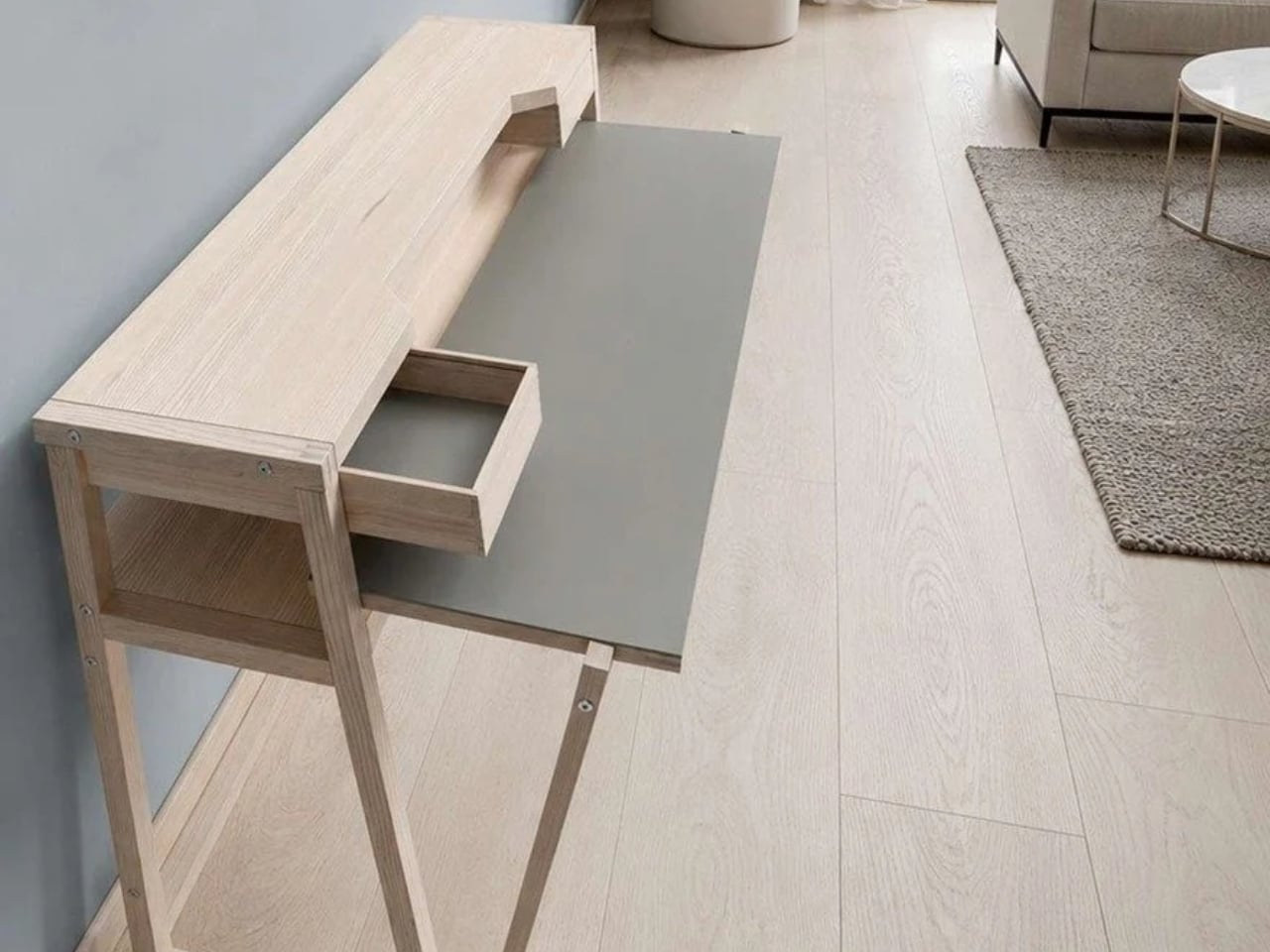
Designed by Jörg Brachmann, the desk takes a refreshingly modest approach to working in a room that also has other jobs. Its lower work surface pulls forward for use and slides back afterward. A fixed upper structure holds the monitor and other accessories, so changing the desk’s configuration doesn’t require rebuilding your setup. It’s an existing product offered through UrbanNature’s online store, rather than a concept asking us to imagine the practical details.

Designer: UrbanNature

The distinction between a moving surface and a stationary shelf is the important design decision here. According to the project’s Green Product Award entry, the tabletop extends horizontally without lowering or tilting, while the rigid upper structure accommodates a monitor. I like that the transformation has a limited, understandable purpose. You’re bringing more work surface toward you, then returning it when you’re done. The furniture doesn’t need to perform an elaborate disappearing act to earn its place.

UrbanNature lists the movable worktop at approximately 16.5 inches deep when retracted and 26 inches when extended. That’s roughly 9.4 inches of additional depth during use. The base itself is about 19.7 inches deep, so the smaller worktop measurement shouldn’t be mistaken for the entire desk’s footprint. Those distinctions matter when you’re measuring a bedroom corner or deciding how much passage space you’ll have beside a sofa.

For me, the appeal is permission to leave a functional setup alone. A space-saving design loses some of its usefulness if putting it away becomes another chore. Here, the separation between equipment and working surface suggests a less demanding routine. You still have to manage whatever you’ve spread across the moving section, of course. A notebook doesn’t file itself because the furniture has a clever mechanism.

The materials also suit that domestic role. UrbanNature specifies solid ash or oak alongside a blockboard worktop finished with linoleum, plus exposed wooden joints. Two A4-sized drawers sit beneath the monitor shelf. Those are useful places for notebooks, pens, and charging accessories, rather than an invitation to accumulate an entire office archive. I’d rather have a little storage close to hand than add another cabinet beside a desk chosen to save space.

There’s a fair compromise in the name of this arrangement: your office never fully disappears. The monitor remains visible, as does the desk. Core77 aptly describes it as a partial hideaway. That won’t satisfy someone who wants work equipment completely out of sight during dinner. Personally, I find the compromise reasonable. Keeping a screen ready for tomorrow can be worth more than achieving a perfectly office-free room tonight.

I’d want to check the setup against my own equipment before buying, particularly the monitor’s position and how comfortably the extended surface meets a chair. The fixed upper shelf establishes part of that arrangement for you. UrbanNature itself notes that an appropriate chair and correct screen height still matter. A compact footprint is useful, but it shouldn’t become the only measurement that gets your attention.

The online listing currently ranges from €995 to €1,429, including VAT. International buyers would need to confirm delivery and the total cost; the shipping policy notes possible additional charges outside the EU. At that price, I’d want the pull-out surface to earn its keep daily. The strongest argument for Urban Desk is simple: it lets you keep a ready-to-use workstation while asking a little less of the room once work is over.

The post Urban Desk Saves Space Without Making You Move Your Monitor first appeared on Yanko Design.

  • ✇Yanko Design
  • WOLOLOW’s UFO Lamp Uses a Bulb You Can Actually Replace
    A bedside lamp ought to survive a burned-out bulb, especially when its shape is the reason you bought it. I’d hate to retire a little flying saucer over a lighting component. That’s the practical appeal of WOLOLOW Night Lamp Ver 2.0: beneath its Space Age exterior sits a replaceable LED bulb. The object gets to keep its personality when the light source needs changing, a sensible priority for something designed to be displayed. Designed by Arthur Koshatahyan and Kostya Trunov, the lamp is curre
     

WOLOLOW’s UFO Lamp Uses a Bulb You Can Actually Replace

6 novembre 2026 à 10:20

A bedside lamp ought to survive a burned-out bulb, especially when its shape is the reason you bought it. I’d hate to retire a little flying saucer over a lighting component. That’s the practical appeal of WOLOLOW Night Lamp Ver 2.0: beneath its Space Age exterior sits a replaceable LED bulb. The object gets to keep its personality when the light source needs changing, a sensible priority for something designed to be displayed.

Designed by Arthur Koshatahyan and Kostya Trunov, the lamp is currently a Kickstarter project, with a working prototype documented by its makers. Its flattened, elliptical body has a ring of oval portholes and stands on three angled metal legs. The reference is wonderfully specific: Matti Suuronen’s 1968 Futuro House, translated into an object you can put beside your bed rather than climb into for the weekend.

Designers: Arthur Koshatahyan and Kostya Trunov

The architectural backstory gives that familiar UFO silhouette a little more substance. Futuro began with a commission for a ski lodge that could be assembled on difficult terrain and heated quickly. Its rounded plastic shell belonged to an optimistic vision of how people might live. I like seeing that ambition brought down to nightstand scale. You don’t need to know its history to enjoy the lamp, but knowing it makes the reference feel less arbitrary.

At 10 inches across and 6.5 inches tall, WOLOLOW 2.0 needs a meaningful patch of tabletop. The campaign specifies an ABS plastic body, polycarbonate windows, and a metal base with coated tips. Those dimensions are worth checking against your nightstand before getting attached to the miniature-house idea. It may be a small building, but it isn’t an especially tiny bedside accessory.

The five proposed finishes give the same silhouette quite different personalities: white, yellow, orange, sky blue, and mirror chrome. My vote goes to orange, which feels comfortably committed to the retro-futurist premise. Chrome makes a stronger decorative statement, while white would be my choice for a room that already has plenty happening. Color matters here because the lamp has such a recognizable outline. It doesn’t need a dramatic finish to announce itself.

Version 2.0 also drops the previous generation’s integrated battery in favor of external power. I’m comfortable with that trade for a lamp intended to stay beside a bed. A cord is less appealing if you want to move it around frequently, but keeping another decorative object charged wouldn’t be my preference either. The more consequential change is the user-replaceable bulb, which makes the lighting hardware less permanently tied to the sculptural shell.

Inside is a socket for a compatible 12V MR16 LED with a GU5.3 base. Smart features depend on the bulb you install, rather than being built into WOLOLOW itself. A compatible smart bulb could provide dimming, colors, or scheduling, but the prototype demonstration uses a standard warm-white bulb. The makers haven’t demonstrated smart operation in that video, so compatibility deserves attention before buying an upgrade.

The campaign lists a warm-white bulb and magnetic USB power cable as included, with the cable connecting beneath the lamp. A wall adapter and optional smart bulb are separate purchases. Individual lamp rewards currently carry an estimated March 2027 delivery date, which remains a crowdfunding target rather than a confirmed arrival. I’d approach it as backing a design still headed toward production, not ordering a lamp already sitting in a warehouse.

For me, the appeal comes down to giving an everyday object enough character that you’d want to keep it. The little windows make sense as part of the architectural reference and as openings for light; the legs give the saucer its landed posture. WOLOLOW is playful without asking the owner to treat it as a joke. I’d happily leave the smart-bulb possibilities alone and let the warm-white version do its thing. A small illuminated house beside the bed already has a pretty good job.

The post WOLOLOW’s UFO Lamp Uses a Bulb You Can Actually Replace first appeared on Yanko Design.

❌