Vue normale

  • ✇Yanko Design
  • This Mod Made a Steam Machine Faceplate Charge Your Steam Controller
    The Steam Machine has swappable faceplates, which is a genuinely good idea that Valve doesn’t appear to have fully exploited. The concept is essentially that the front panel of the console is a blank cosmetic slate, open to third parties and hobbyists to design around. So far, most of what’s been proposed has leaned on that word: cosmetic. Different textures, different graphics, different visual personalities for what is otherwise a matte black gaming cube. This faceplate mod takes a different
     

This Mod Made a Steam Machine Faceplate Charge Your Steam Controller

Par : JC Torres
6 août 2026 à 13:20

The Steam Machine has swappable faceplates, which is a genuinely good idea that Valve doesn’t appear to have fully exploited. The concept is essentially that the front panel of the console is a blank cosmetic slate, open to third parties and hobbyists to design around. So far, most of what’s been proposed has leaned on that word: cosmetic. Different textures, different graphics, different visual personalities for what is otherwise a matte black gaming cube.

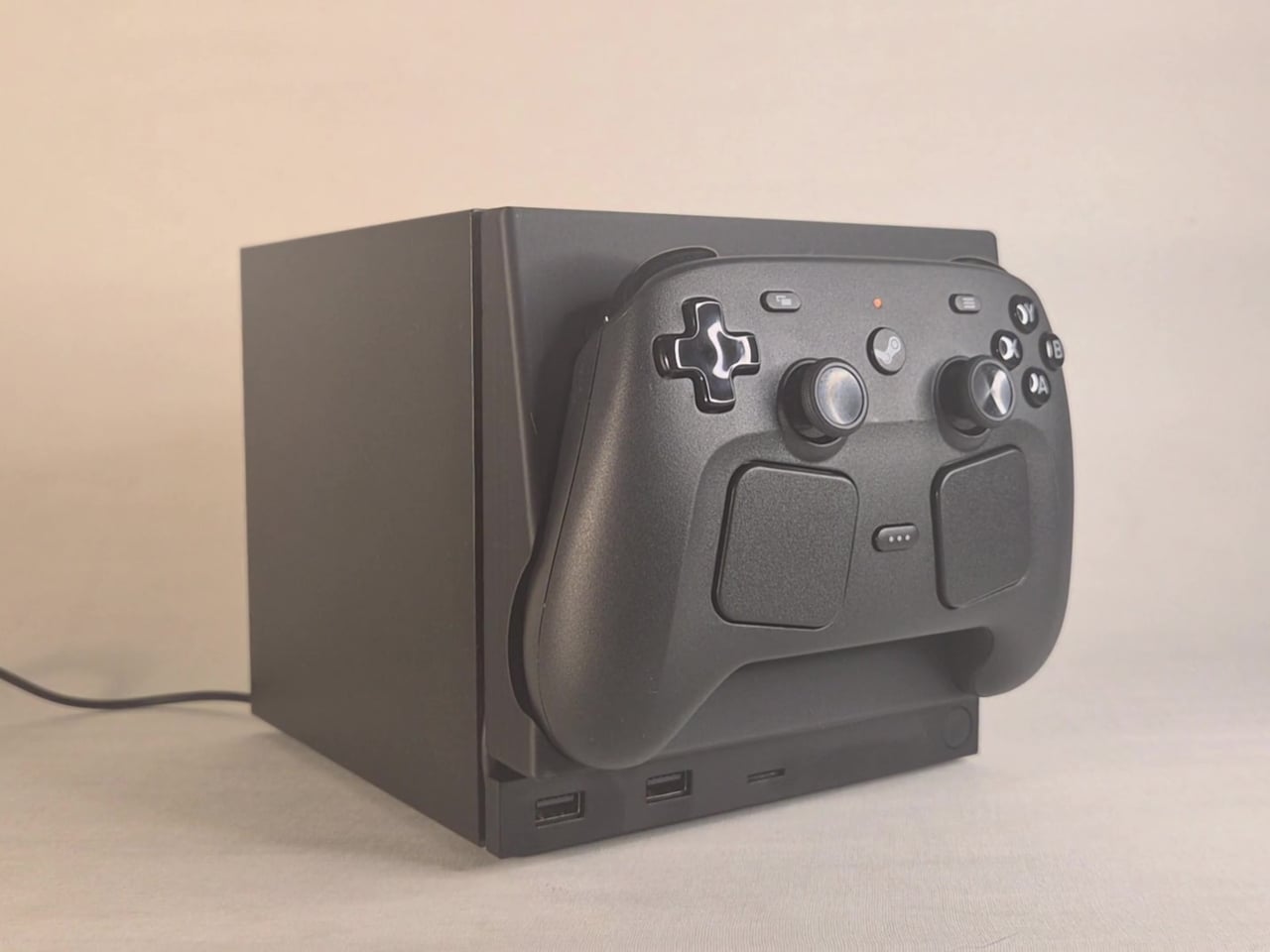
This faceplate mod takes a different approach by asking what the panel could actually do. The result is a replacement front cover that integrates a charging cradle for the Steam Controller directly into the face of the console, turning what would normally be dead real estate into a functional docking station. Set the controller down, it charges. Pick it up, it’s ready. No separate charging puck dangling off to the side.

Designer: NefariousnessWhole25

The charging mechanism uses the Steam Controller’s own wireless puck seated inside the faceplate cradle, with a USB cable routed discreetly around the inside edge of the panel and into one of the Steam Machine’s existing USB ports. It’s a routing solution rather than a rewiring one, which keeps the electrical side simple and reversible. The puck sits in the cradle, the controller sits on the puck, and the whole arrangement slots onto the front of the machine like any other faceplate.

What makes it more than a wall mount with ambition is the kickstand built into the rear of the panel. It folds out from the back of the faceplate, propping the cradle up at an angle, turning the entire assembly into a standalone desk dock that works independently from the Steam Machine. Take the faceplate off the console and prop it up on a table, and it functions as a charging stand on its own terms.

The inspiration came partly from Valve’s own demonstration of an e-ink faceplate, which showed that the panel slot was capable of doing more than holding a decorative cover in place. That demonstration didn’t ship as a product, but it established the idea that the faceplate system had functional potential beyond aesthetics. This mod picks up that thread and takes it somewhere more immediately useful for anyone who has both pieces of Valve’s current hardware sitting on the same desk.

Design files haven’t been released yet, and there are no confirmed plans to sell finished units. The prototype is out, it works, and it raises a question worth asking about Valve’s approach to the faceplate ecosystem: if a single modder can turn the front panel into a functioning charging dock over a weekend, what would a dedicated accessory program actually look like at scale?

The post This Mod Made a Steam Machine Faceplate Charge Your Steam Controller first appeared on Yanko Design.

  • ✇Yanko Design
  • This Umbrella Is Actually a 500-Year-Old Korean Hat in Disguise
    Anyone who has seen K-Pop Demon Hunters or an episode of a Korean historical drama is familiar with what a gat is. Even if you don’t know what it’s actually called, it’s pretty recognizable: the black hat with its cylindrical crown and wide, dramatic brim that sometimes hides the eyes or even the entire face. It was traditionally worn by men of high social standing during the Joseon era, serving as a marker of Confucian values, refinement, and status. It’s rarely worn now unless someone is shoo
     

This Umbrella Is Actually a 500-Year-Old Korean Hat in Disguise

6 août 2026 à 09:20

Anyone who has seen K-Pop Demon Hunters or an episode of a Korean historical drama is familiar with what a gat is. Even if you don’t know what it’s actually called, it’s pretty recognizable: the black hat with its cylindrical crown and wide, dramatic brim that sometimes hides the eyes or even the entire face. It was traditionally worn by men of high social standing during the Joseon era, serving as a marker of Confucian values, refinement, and status. It’s rarely worn now unless someone is shooting a drama or attending some sort of costume party, though the gat did have a major pop culture moment thanks to Netflix’s Kingdom, where it became instantly iconic worldwide.

The National Museum of Korea called for designers to reimagine the gat for a modern setting. Design studio TOSO created the winning entry, the Gat Umbrella, which is exactly what it sounds like. This is part of the MU (the official merchandise brand of the National Museum Foundation of Korea) competition that invites designers to reinterpret historical objects into something that can actually be used in modern times. It’s a brilliant initiative that bridges Korea’s rich cultural heritage with contemporary everyday life.

Designer: TOSO

The Gat Umbrella looks like a regular umbrella when folded, but when opened, it looks like you’re standing under a huge gat, with the added bonus of an actual canopy to keep you dry. It’s around 33 inches long and has a width of 1,050 millimeters when opened. The canopy is made from PVC with a fiberglass-reinforced frame, its tip from polypropylene, and the handle from EVA material. The deep black canopy is a direct callback to the traditional color of the gat, and the proportions of the brim have been carefully scaled to capture that wide, commanding silhouette. When held up against a grey sky, you can almost picture the Joseon-era scholar it was inspired by.

Aside from being a status symbol, the original gat was also used to protect its wearer from the sun, rain, and wind, which makes this reimagining feel even more intentional. Anyone who has watched enough K-dramas knows those dramatic scenes where characters brave storms with a gat firmly in place, rain streaming off its wide brim. So this transformation of the headwear is still a clever nod to its origins. It’s just more modern looking and has the added protection of a proper canopy, since the elements now tend to be a lot more mercurial.

What makes the Gat Umbrella especially appealing is how it straddles the line between functional product and cultural artifact. It’s not just a novelty item you display on a shelf. It’s something you actually take out on a rainy Tuesday and suddenly feel like the most stylish person on the street. There’s something deeply satisfying about a design that takes centuries of history and makes it wearable (or in this case, holdable) in the most practical way possible. And given the global reach of Korean culture right now, something tells us this won’t stay a niche item for long.

It also arrives at a moment when the global appetite for Korean culture is at an all-time high. From K-dramas to K-pop to Korean food, the world is paying attention, and the Gat Umbrella is exactly the kind of conversation starter that lets people engage with that culture in a tangible, everyday way. It’s not just merchandise; it’s a story you carry with you. The kind of thing that makes strangers stop you in the street and ask where you got it.

Whether you’re a K-culture enthusiast, a design collector, or simply someone who appreciates carrying a piece of history through a rainstorm, this is the kind of purchase that feels both indulgent and meaningful. It’s proof that heritage doesn’t have to stay locked behind glass. Sometimes, the best way to honor the past is to take it out into the rain.

The post This Umbrella Is Actually a 500-Year-Old Korean Hat in Disguise first appeared on Yanko Design.

  • ✇Yanko Design
  • The $33 Box That Locks Your Phone and Judges You for Opening It Early
    Screen time management has spawned an entire industry of apps, built-in focus modes, notification filters, and weekly usage reports that most people glance at and promptly ignore. The fundamental problem with all of them is that they live on the same device you’re trying to avoid, which keeps willpower in charge of the whole arrangement. And willpower, predictably, tends to lose that particular argument somewhere around the third notification. The Sonic Digitox The Routine sidesteps that proble
     

The $33 Box That Locks Your Phone and Judges You for Opening It Early

Par : JC Torres
6 août 2026 à 06:07

Screen time management has spawned an entire industry of apps, built-in focus modes, notification filters, and weekly usage reports that most people glance at and promptly ignore. The fundamental problem with all of them is that they live on the same device you’re trying to avoid, which keeps willpower in charge of the whole arrangement. And willpower, predictably, tends to lose that particular argument somewhere around the third notification.

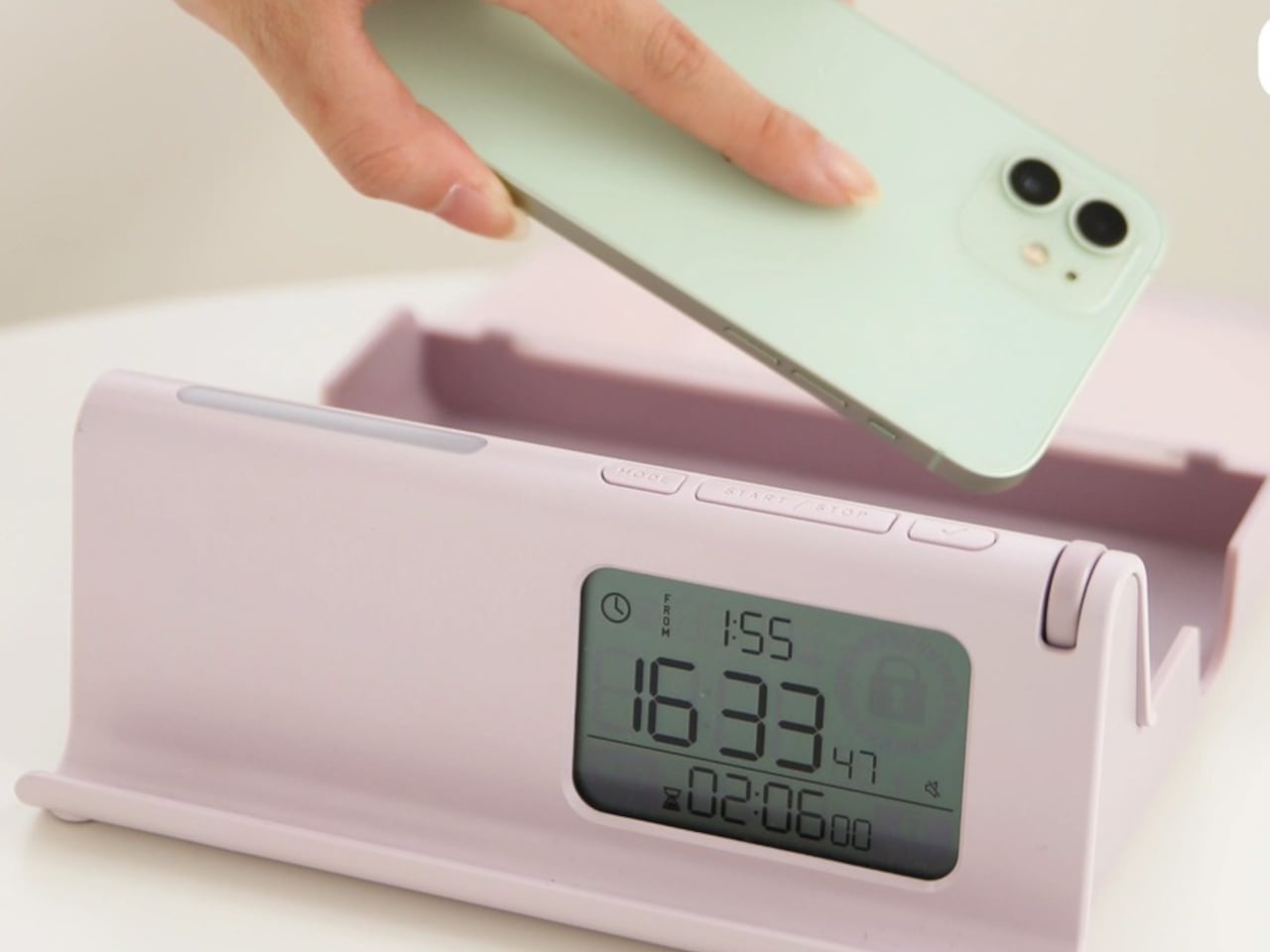
The Sonic Digitox The Routine sidesteps that problem entirely by making your phone physically unreachable for as long as you decide. It’s a timed lock case with no app to disable, no passcode to talk yourself into entering, and no settings menu to rationalize your way through. You put the phone in, set the lock, and that’s the end of your access until the timer says otherwise.

Designer: Sonic

Two lock modes handle different approaches to the problem. Routine Lock works on a schedule, letting you define repeating daily windows during which the case locks automatically and signals each transition with light and sound. If 11 PM to 7 AM is meant to be phone-free, the case enforces that without asking for your cooperation every night, which is precisely the point.

Timer Lock handles the more immediate situation where you need to focus right now, without a preset schedule. You set a countdown of up to 99 hours and 59 minutes, and the phone stays sealed until it runs out. For a study session, a focused work morning, or a dinner where nobody at the table needs to be somewhere else digitally, it removes the option before the habit has a chance to argue back.

Neither mode traps you completely. An emergency reset function exists for genuine urgency, but it isn’t quiet about it. Triggering it sounds a one-minute alarm and leaves a RESET mark displayed on the case for 24 hours afterward. The friction is deliberate, designed to make the difference between an actual emergency and a momentary craving feel tangible rather than theoretical.

Two additional modes round out the four-mode system for lighter use. Time Display shows the time without any lock, while a Timer mode runs a count-up or countdown without physically securing the phone. The case also includes a goal sticker and a smartphone contract form, a pairing that makes it a practical tool for parent-child agreements around device time, where putting terms in writing and then sealing the phone inside creates a layer of accountability that app-based controls don’t quite replicate.

The body is ABS plastic with a polycarbonate lid, running on three AAA batteries, and the whole thing measures approximately 190mm x 70mm x 170 mm. It comes in white, blue, and pink, and was recognized with a category award at the 2026 Japanese Stationery Awards, which is about as specific an endorsement as a phone lock case can hope for.

There’s a refreshing bluntness to what the Digitox offers. Most products in the digital wellness space treat phone overuse as a behavioral settings problem, one more toggle away from being solved. This one treats it as a custody problem, and the solution is handing custody over to a box that doesn’t negotiate. At roughly $33, it costs less than a single month of most productivity apps and requires no subscription to keep working.

The post The $33 Box That Locks Your Phone and Judges You for Opening It Early first appeared on Yanko Design.

❌