Canva's restructuring affects 1,271 workers through layoffs, role changes, and relocation. Here's what it means for tech workers and enterprise customers.
The post Canva Announces Layoffs in Restructure Affecting 1,271 Workers appeared first on TechRepublic.
Canva's restructuring affects 1,271 workers through layoffs, role changes, and relocation. Here's what it means for tech workers and enterprise customers.
Google's Android Family Hub could bring subscriptions, family accounts, and shared locations into one Settings menu, but availability remains uncertain.
The post Google Confirms Android Family Hub — What’s Inside the New Settings Menu? appeared first on TechRepublic.
Google's Android Family Hub could bring subscriptions, family accounts, and shared locations into one Settings menu, but availability remains uncertain.
OpenAI tests AI for hardware design and vehicle engineering. Explore manufacturing limits and what businesses should check before adopting these tools.
The post OpenAI Expands AI Engineering Tests From Devices to Vehicles appeared first on TechRepublic.
OpenAI tests AI for hardware design and vehicle engineering. Explore manufacturing limits and what businesses should check before adopting these tools.
Senseonics has begun testing Freedom, an implanted glucose monitor that could track blood sugar for a year without wearable hardware. Here's how it would work.
The post New Glucose Monitor Enters Human Testing: No Skin-Worn Device Needed appeared first on TechRepublic.
Senseonics has begun testing Freedom, an implanted glucose monitor that could track blood sugar for a year without wearable hardware. Here's how it would work.
Spotify Jam lets party guests add songs from their own phones. Here's how to set up a shared queue, invite friends, and manage playback controls.
The post Hosting a Halloween or Holiday Gathering? Here’s How to Use Spotify Jam appeared first on TechRepublic.
WHOOP plans to test whether wearable coaching can help improve blood sugar and blood pressure. See how its Abu Dhabi study could affect future health wearables.
The post WHOOP to Study Wearable Coaching for Blood Sugar and Blood Pressure appeared first on TechRepublic.
WHOOP plans to test whether wearable coaching can help improve blood sugar and blood pressure. See how its Abu Dhabi study could affect future health wearables.
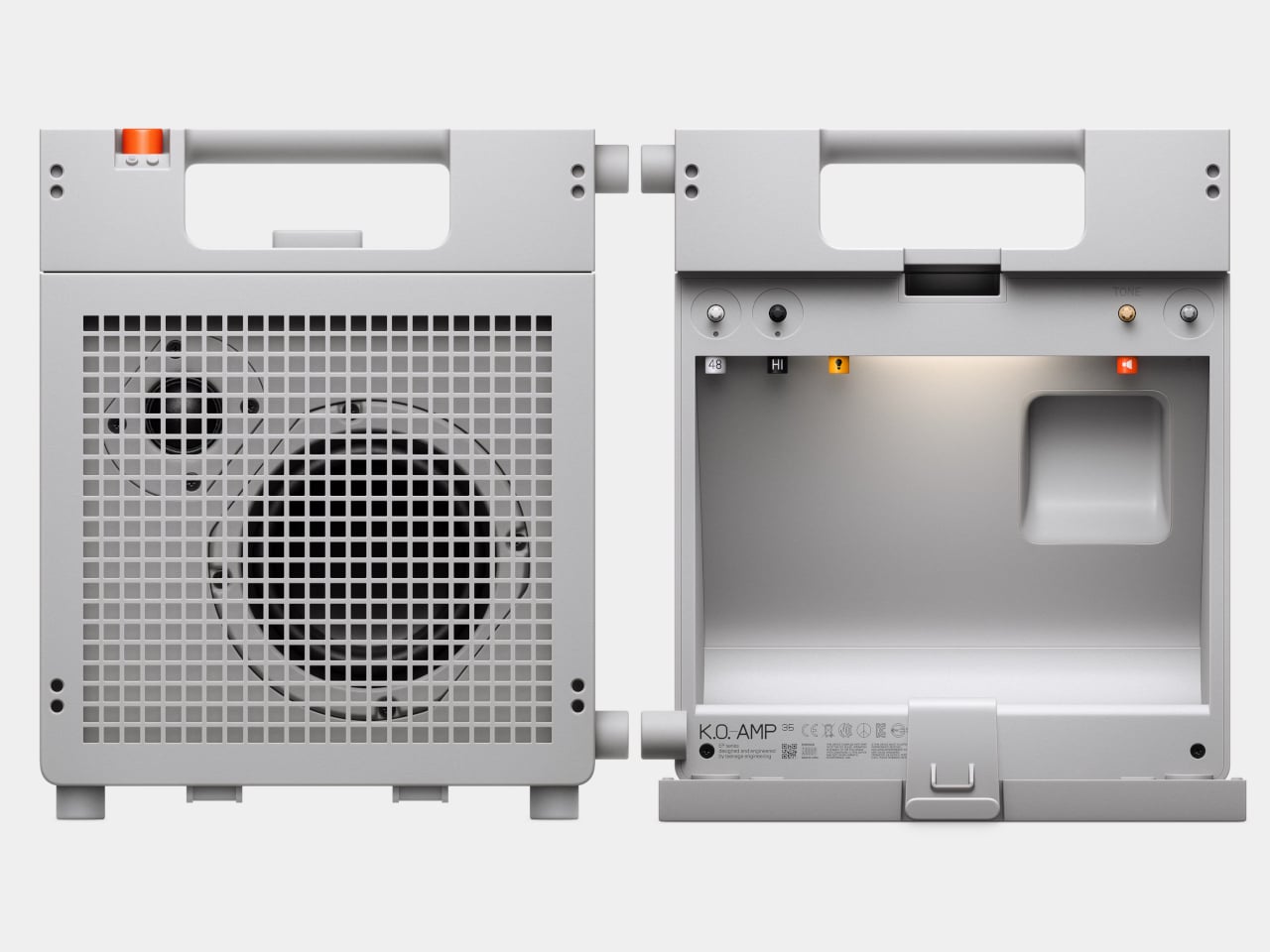
The back of Teenage Engineering’s EP-35 opens to reveal a compartment for cables and accessories. It’s a wonderfully unglamorous feature to put on a music gadget. An amp can look perfectly composed in a product photo, but taking it anywhere means figuring out where the supporting cast goes. Giving those loose pieces a home inside the speaker feels like an acknowledgment of how people actually use their equipment.
That practical streak extends beyond storage. Listed for sale at $399, the EP-35 c
The back of Teenage Engineering’s EP-35 opens to reveal a compartment for cables and accessories. It’s a wonderfully unglamorous feature to put on a music gadget. An amp can look perfectly composed in a product photo, but taking it anywhere means figuring out where the supporting cast goes. Giving those loose pieces a home inside the speaker feels like an acknowledgment of how people actually use their equipment.
That practical streak extends beyond storage. Listed for sale at $399, the EP-35 combines a portable speaker, an instrument amplifier, and a USB audio interface. It accepts guitar, microphone, line-level, Bluetooth, and USB audio, with multiple sources able to play together. The problem it addresses is straightforward: playing guitar over a backing track, or adding vocals, shouldn’t require assembling a small equipment department. Here, those connections meet in one box.
Visually, the EP-35 has the charm of equipment that might belong in a very stylish school science lab. Its gray body, square grille, integrated handle, and orange accents are deliberately matter-of-fact. I like that the speaker drivers remain visible behind the grid. They give the front a slightly awkward, almost characterful expression. Nothing about the proportions suggests an object desperate to disappear into your decor, which is part of its appeal.
The controls make a similar impression. There are physical dials for choosing effects and adjusting their intensity, with eight presets each for guitar and microphone. That’s an approachable arrangement: select a sound, turn a control, hear what changes. I’d rather see that direct relationship on something intended for casual playing than a screen full of options. The microphone effects even include presets called “robo choir” and “frog,” which gives you a fair idea of the intended mood.
The USB audio interface is less visually entertaining but potentially more useful. Connect the EP-35 to a computer and it can serve as a recording interface, giving the same object a role at a desk after it comes home. That continuity makes sense to me. A portable device earns its shelf space more easily when it doesn’t become redundant the moment you’re near a power outlet and a laptop.
Inside the storage compartment, Teenage Engineering has also included a small camp light. It can illuminate the compartment automatically when opened, stay on, or react to incoming audio in disco mode. Tilting the speaker backward makes those LEDs display the battery level. Some of this is useful, some is cheerfully unnecessary. I’m happy with that balance. Checking a battery through a small physical gesture is a more memorable interaction than another tiny percentage readout.
Portability does need a little perspective, though. At about seven pounds, the EP-35 is something you carry by its handle, not casually toss into a small shoulder bag. Teenage Engineering rates battery life at 12 hours with the volume set to five, so that figure shouldn’t be treated as an all-day guarantee at any loudness. It’s also splash-resistant rather than waterproof. Those distinctions matter if the appealing camp light has you mentally packing it for a weekend outdoors.
There’s room to expand the setup, too. Two EP-35s can play Bluetooth audio in stereo through broadcast mode. Teenage Engineering’s instructions let you assign left and right channels by tilting each speaker before starting that mode. Connected instruments take a different route: linking their sound between speakers requires a line-out-to-line-in cable. That’s worth understanding before imagining a completely wireless mini stage. The wireless convenience applies specifically to Bluetooth playback.
For me, the $399 price makes the most sense if those musical connections will get regular use. Someone who only wants background listening would be paying for considerable capability they might never touch. Sound quality still needs a listening test; clever packaging can’t settle that question. But I appreciate the attention paid to what happens between sessions. The music stops, the cables come out, and the EP-35 gives you somewhere to put them. That’s a modest design decision with a very recognizable payoff.
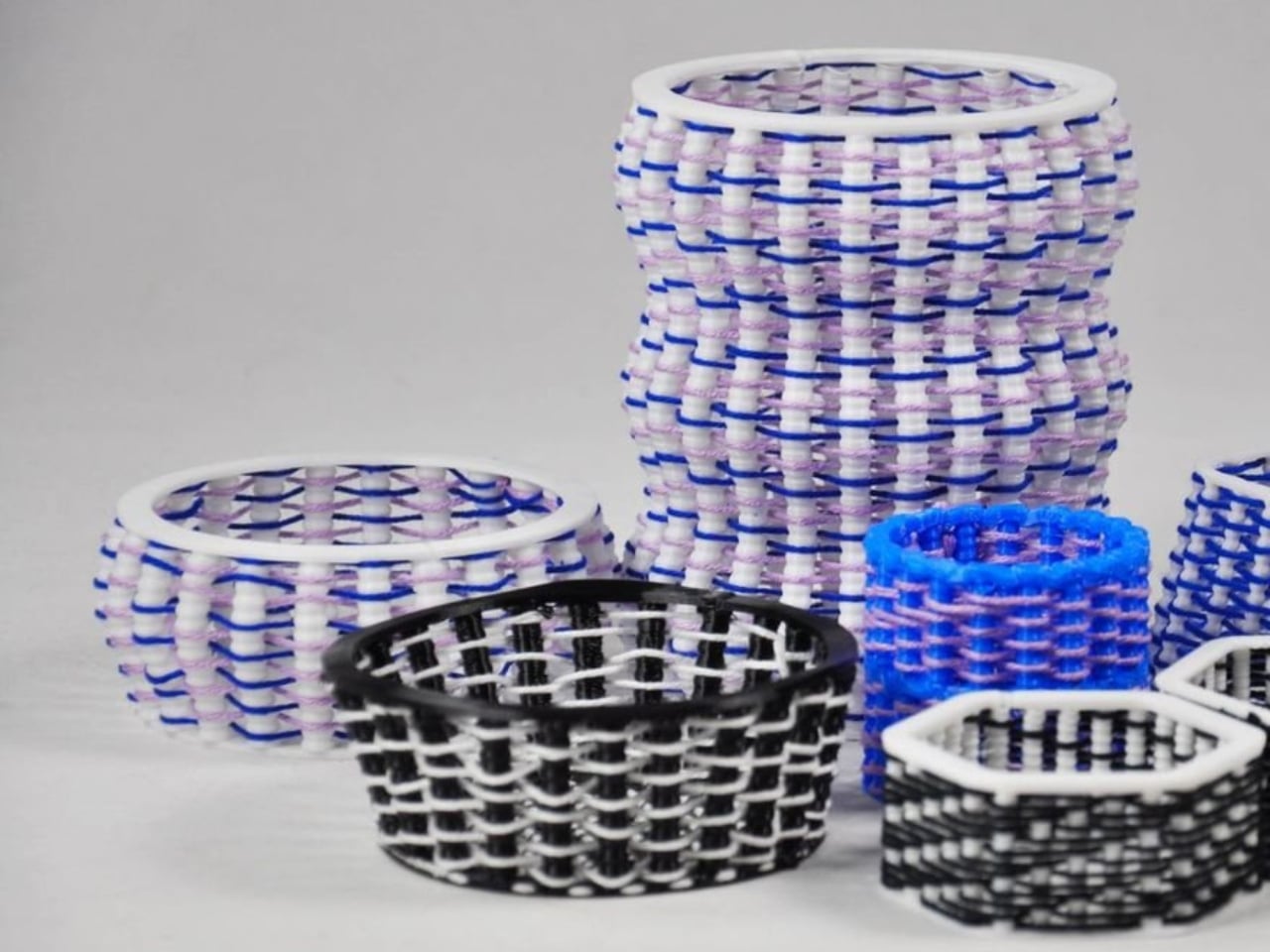
Blue and lilac yarn snakes through white plastic ribs in one of FilaLoom’s samples, giving the object a basketlike appearance that makes me want to pick it up. The appeal is easy to understand: intricate geometry only gets you so far when you want an object with a textile character. FilaLoom brings actual yarn into the process, letting the fibers remain visibly, unapologetically themselves.
Developed by industrial and computational designer Joram de Haas for his master’s thesis in Integrated Pr
Blue and lilac yarn snakes through white plastic ribs in one of FilaLoom’s samples, giving the object a basketlike appearance that makes me want to pick it up. The appeal is easy to understand: intricate geometry only gets you so far when you want an object with a textile character. FilaLoom brings actual yarn into the process, letting the fibers remain visibly, unapologetically themselves.
Developed by industrial and computational designer Joram de Haas for his master’s thesis in Integrated Product Design at TU Delft, FilaLoom lets a desktop 3D printer automatically weave yarn into printed objects. It addresses a practical fabrication problem: combining printed structures with thread without making yarn placement a separate manual task. It’s a working research project, with DIY files available, rather than a finished consumer accessory.
Designer: Joram de Haas
The prototype uses a Bambu Lab A1 fitted with a yarn-depositing tool and a parking station. The printer builds plastic anchor points, picks up the tool, and guides yarn between them. It then parks the tool and resumes printing, securing the yarn where needed. That alternating sequence allows the structure and its textile elements to develop together, rather than requiring someone to thread a completed plastic skeleton afterward.
I like the restraint in the mechanism. FilaLoom uses the printer’s existing movement system, with no additional electronics. A mechanical coupling handles tool changes, while a spring-loaded spool provides adjustable yarn tension. The machine already knows how to move precisely; this attachment gives that movement another useful job.
Visually, the blue-and-lilac sample is a persuasive introduction. Its white vertical elements remain clearly legible, while the colored yarn establishes a contrasting horizontal rhythm. Neither material disappears into the other. To my eye, that makes the construction more interesting than a uniformly textured surface. You can follow the relationship between the ribs and the thread, which gives the pattern a purpose beyond decoration. It looks assembled through its own making.
The thesis also explores soft yarn textures and cable-driven interactions, extending the idea beyond basketlike objects. That range matters because a recognizable woven pattern could easily become the project’s entire identity. I’d be more interested in seeing designers use the process to decide where an object should bend, where it needs structure, or where a different surface character would be welcome. Those are design questions worth experimenting with.
The DIY format gives curious makers somewhere to start. De Haas’s GitHub repository provides printable component files and Grasshopper scripts for generating compatible GCode, the instructions that direct the printer’s movements. Still, that’s a more involved proposition than downloading a decorative planter file and pressing print. For a general audience, the useful distinction is that FilaLoom is an invitation to experiment with a fabrication method, not a ready-made home gadget.
There are physical compromises, too. The researchers report that the attachment reduces the A1’s usable combined printing-and-weaving volume to 54% of its original build volume. Yarn tension also needs care: too much can deform a print or pull it off the build plate. These constraints make the prototype more convincing to me, because its expanded capabilities come with clearly described boundaries.
I wouldn’t judge this project by how quickly it might replace a familiar manufacturing process. Its more immediate value is giving designers a way to test combinations they might otherwise have to assemble by hand. Even a small sample can help answer whether a pattern deserves to become a larger object. That feels like an appropriately useful ambition for a research tool.
For me, the strongest outcome would be an object whose form genuinely needs both materials. The yarn shouldn’t have to justify itself as a decorative flourish, and the plastic shouldn’t merely serve as a bulky substitute for thread. FilaLoom makes that relationship available for exploration. I’d happily trade another perfectly smooth printed vase for an experiment that leaves a little more to discover under your fingertips.
Send unlimited files with real-time tracking, custom branding, and GDPR-compliant infrastructure — no fees.
The post Transfr Pro Replaces WeTransfer With a Single $79.99 Payment appeared first on TechRepublic.
REA
, pour "Reverse Engineer Anything", c'est un serveur MCP qui buzze ces derniers jours et qui permet de connecter votre agent IA (Claude Code, Codex, Cursor...) sur Ghidra, Hopper ou IDA, et sur des analyseurs pour les applis Electron, .NET ou les sites web.
Vous repérez ainsi une fonction qui vous plaît dans une appli, puis l'agent la décortique sans le code source et vous en code une version toute fraiche...
Tiens ça me rappelle quelque chose...
Comme je voula
REA
, pour "Reverse Engineer Anything", c'est un serveur MCP qui buzze ces derniers jours et qui permet de connecter votre agent IA (Claude Code, Codex, Cursor...) sur Ghidra, Hopper ou IDA, et sur des analyseurs pour les applis Electron, .NET ou les sites web.
Vous repérez ainsi une fonction qui vous plaît dans une appli, puis l'agent la décortique sans le code source et vous en code une version toute fraiche...
Tiens ça me rappelle quelque chose...
Comme je voulais voir ce que ça donnait, je me suis donc monté un petit banc d'essai à l'arrache sur mon ordi avec Claude Code en Opus 5.5, REA 6.4.0 comme seul serveur MCP et Ghidra comme moteur.
Mes tests se découpent donc en 4 exercices : un keygen, un patch, une fonction d'appli à recréer ainsi que des codes de triche. Pour les deux premiers, j'ai bien sûr compilé des programmes maison avec un faux système de licence afin de ne pas sombrer dans l'illégalité en codant un vrai keygen ou un crack (et au passage me faire delete mon compte Anthropic ^^).
rea doctor valide Ghidra 12.1.4
Mon crackme, c'est donc une fausse app nommée "PixelNote Pro" qui réclame un nom d'utilisateur et une clé d'activation, compilé pour Mac ARM.
Une fois que je lui ai dis ce que je voulais faire, l'agent a donc ouvert le binaire dans Ghidra via REA, lu le pseudo-code, l'a recoupé avec l'assembleur là où le décompilateur écrivait une rotation de bits sous une forme peu lisible, et m'a pondu un keygen en Python en 2 minutes chrono pour un coût API de Claude 50 centimes. J'ai ensuite fait tourner son générateur sur 479 noms tirés au hasard et le binaire les a tous acceptés.
Le crackme ouvert à la main dans Ghidra : la fonction entry et son pseudo-code
La boucle de calcul de la clé, dans le pseudo-code que REA sert à l'agent
Le patch, c'est le plus bluffant j'ai trouvé. Le petit utilitaire que je me suis fait a pour mission de compter les lignes et les mots d'un fichier texte. C'est très basique. Et j'ai donc voulu faire un patch pour qu'il affiche aussi les caractères. Comme REA, avec Ghidra, ne touche pas aux octets de l'exécutable, l'agent a donc dû faire le reste à la main... il a logé ses instructions dans une zone remplie de zéros de la partie exécutable, détourné trois instructions d'origine vers elles, puis re-signé le binaire pour que macOS le lance :
Le compteur d'origine, sa version patchée par l'agent, puis le keygen du crackme accepté par le binaire
Pour mon 3ème exercice, je me suis dit que j'allais cloner la fonction d'
Amphetamine
qui garde mon Mac éveillé tant qu'une appli donnée est ouverte. Via Ghidra, malheureusement REA a refusé le binaire universel Intel et ARM d'Amphetamine, alors l'agent en a extrait lui-même la partie ARM. Il a alors trouvé qu'Amphetamine posait une assertion d'énergie du système et surveillait la liste des applis lancées. Et magie de l'IA, il a ensuite codé en Swift un petit outil qui fait tout pareil. J'ai testé avec la Calculatrice, ça marche, à condition de lui donner le nom de l'appli dans la langue du système, ou son identifiant.
pmset ne montre l'assertion d'éveil que pendant que la Calculatrice est ouverte
Et le dernier, c'est Wolfenstein 3D (j'ai pris la version shareware 1.4) dont l'exécutable DOS est compressé. L'agent a donc écrit son propre décompresseur, puis retrouvé dans le code le raccourci clavier pour tricher (c'est M+L+I qui met santé à 100, munitions, clés, mitrailleuse... et score remis à zéro), le paramètre goobers qui, avec Maj gauche + Alt + Retour arrière, débloque les touches de debug comme le mode Dieu, et même un juke-box caché. Tout correspond au code source publié depuis par id Software.
Par contre, ses logs montrent qu'il cherchait ces codes par leur nom avant de les avoir vus. Je me suis donc fait avoir puisque le modèle les connaissait déjà. Par contre, il les a bien retrouvé dans le binaire.
Début de partie du shareware 1.4 dans DOSBox, lancé avec le paramètre goobers
Les trois occurrences de goobers dans l'exécutable décompressé
Alors, REA est-il indispensable ?
Hé bien pour le savoir, j'ai relancé les quatre exercices avec le même modèle, les mêmes fichiers et les mêmes consignes, mais avec REA en moins... juste Claude Code qui pilote Ghidra. Hé bien Claude tout nu a tout réussi lui aussi, mais en écrivant quand il en avait besoin ses propres scripts Ghidra en Java, là où REA lui servait le pseudo-code et l'assembleur sur un plateau.
Bref, ce que je peux vous dire avec mes tests, c'est que REA ne fait pas mieux qu'un Claude à qui on demande d'installer Ghidra et de l'utiliser. Par contre, REA a été plus rapide sur le keygen (2 minutes 22 contre 2 minutes 48 pour Claude), sur Amphetamine (9 minutes contre 16 minutes pour Claude) et sur Wolfenstein (10 contre 14 pour Claude), mais plus lent sur le patch (7 minutes et demie contre un peu plus de 2 pour Claude).
A voir ce que ça donnerait avec un modèle local genre Qwen (débloqué avec
Heretic
, alleeeez)...
REA est sous licence MIT et l'analyse tourne en local (même si ses résultats partent quand même chez le fournisseur de votre modèle, donc évitez d'y passer un binaire confidentiel), et Hopper comme IDA restent des outils commerciaux dont REA ne fournit aucune licence.
Notez aussi que son créateur exclut le contournement de licences et la fabrication de patchs pour les jeux, d'où encore une fois mon crackme fait maison et les codes qu'id a lui-même mis dans Wolfenstein ^^.
Autre précaution à prendre si vous vous lancez et qui touche cette fois à la fiabilité de ce que l'agent IA peut vous raconter : Des chercheurs ont publié fin mai un préprint montrant qu'un binaire piégé peut
donner ses propres ordres à l'IA qui l'analyse
. Pour cela, il suffit d'y glisser des chaînes de texte sans effet à l'exécution, qui se retrouvent ensuite dans le code décompilé et soufflent de fausses instructions au modèle, pour lui faire mal interpréter le programme. Je n'ai pas testé REA là-dessus, mais le principe vaut a priori pour tout agent branché sur Ghidra, donc faites bien attention avant de donner un échantillon suspect à votre agent IA préféré.
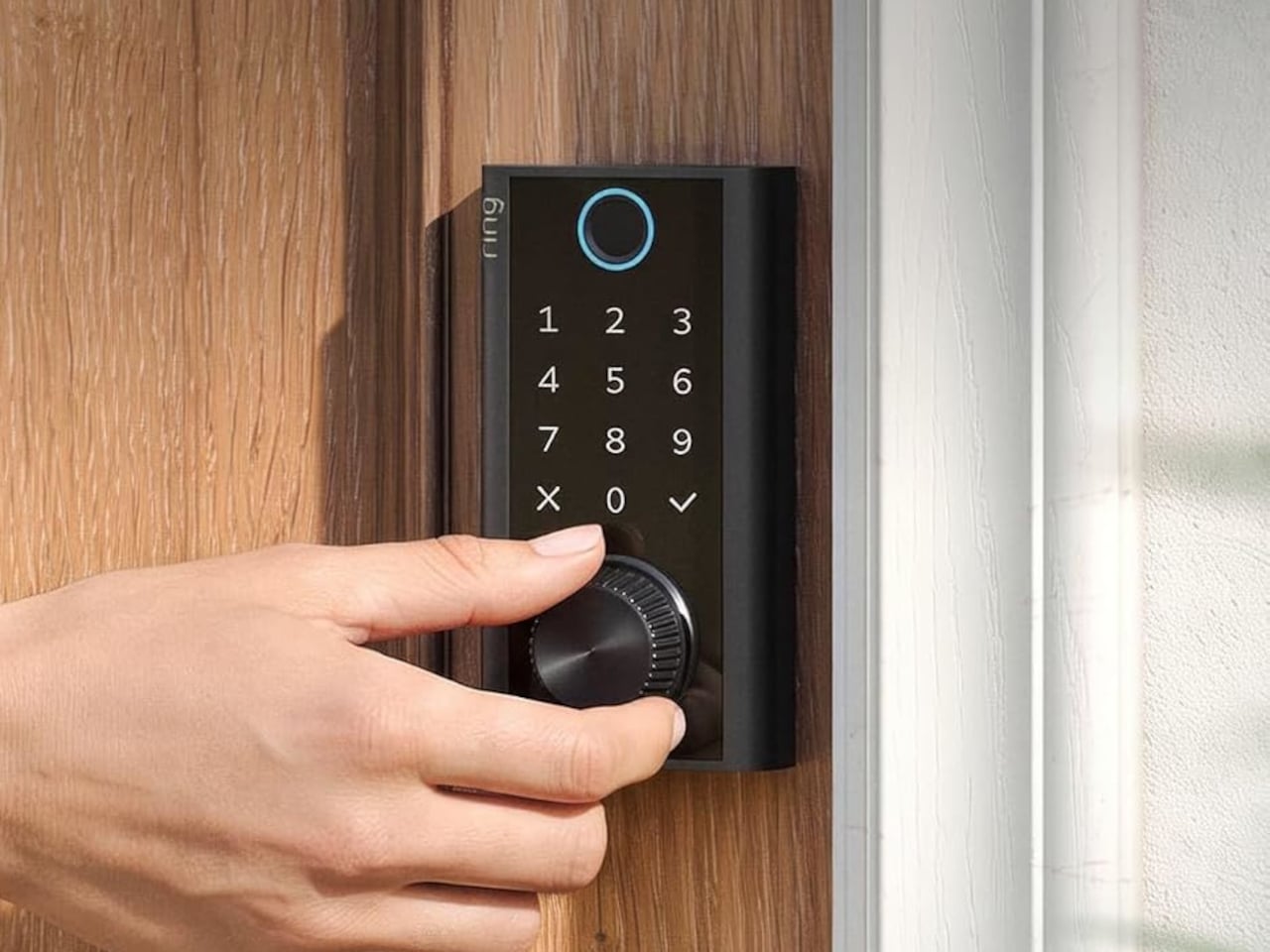
Smart locks sound like the future until you’re standing outside with groceries and the lock won’t wake up because of a dead battery. Although there are different methods to address that, Ring’s first-ever Smart Lock has a rather ingenious solution: an almost literal crank. Simply turn a dial a few times to power the keypad just long enough to key in your code.
It’s simple yet effective, and it doesn’t require you to fumble for a cover to replace the battery. The knurled dial sits beneath the b
Smart locks sound like the future until you’re standing outside with groceries and the lock won’t wake up because of a dead battery. Although there are different methods to address that, Ring’s first-ever Smart Lock has a rather ingenious solution: an almost literal crank. Simply turn a dial a few times to power the keypad just long enough to key in your code.
It’s simple yet effective, and it doesn’t require you to fumble for a cover to replace the battery. The knurled dial sits beneath the backlit touchscreen keypad, with a circular fingerprint reader topping them all. All in all, the design looks more like a stack of controls instead of a deadbolt with electronics just bolted on.
Designer: Amazon
On regular days or nights, you can simply touch the fingerprint reader instead of digging for keys in your bag or pocket. You can also give a visitor a PIN that only works during a set time window. The Ring app also offers yet another way to let you in, and it also allows you to check the lock remotely, including Alexa voice control. These are the typical features you’d expect from a smart lock, but Ring does one better.
Most keyless locks require a cable or a spare battery before they even wake up, which isn’t exactly the fastest or the easiest when you only have one hand free. Ring puts that backup in that same free hand, figuratively. Simply turn the dial to “charge” the lock, almost like cranking some lever for power. It’s an almost comical analogy, but it gets the job done.
Of course, you don’t charge the Ring Smart Lock by turning the dial endlessly. That’s what the Quick Release Ultra Battery Pack is for. That battery is rechargeable, which means you don’t need to worry about extra wiring or hardware when installing the Smart Lock. It works with a standard single-cylinder deadbolt, making it immediately compatible with many doors.
One thing to note is that remote features depend on Amazon Sidewalk rather than your home Wi-Fi. That could spare you a trip back to check whether the door locked, or let you admit someone while you’re away, provided there’s coverage where you live. Ring says unlocking at the door happens locally, but Sidewalk remains a requirement for the connected functions. It’s a condition beneath the promise of convenience.
The lock can share the Ring app’s activity feed with Ring’s other products such as doorbell, cameras, and alarms, so you get a more holistic view of everything that happens at home even when you’re away. That said, it doesn’t have a camera of its own, which is a subtle nudge to get a Ring doorbell, too.
Black, silver, and brass finishes are planned, with a $249 price and U.S. availability expected in early 2027, pending regulatory authorization. For now, some details about the Ring Smart Lock have yet to be fully disclosed, including battery life. Regardless, it’s an interesting and low-tech solution to a high-tech problem that makes you feel you’re in control, even in such an emergency.
Microsoft is continuing its major Xbox restructuring, with another 268 roles being eliminated across Xbox’s first-party studios, Halo Studios, and its central management and support functions. The latest changes were announced by Xbox executive Matt Booty in a September 22 message to employees titled “Continuing Our Reset.” Booty said the changes are part of the […]
Microsoft is continuing its major Xbox restructuring, with another 268 roles being eliminated across Xbox’s first-party studios, Halo Studios, and its central management and support functions. The latest changes were announced by Xbox executive Matt Booty in a September 22 message to employees titled “Continuing Our Reset.” Booty said the changes are part of the […]
Mighty DOOM, le petit shoot roguelite que Bethesda avait sorti sur mobile en mars 2023, tourne de nouveau !! Alors bien sûr pas sur les serveurs officiels, qui sont éteints depuis deux ans, mais sur un serveur monté et hébergé par des fans, qui ont refait tout le boulot à la main.
Mais avant, pour ceux qui ont raté un épisode, en fait, le jeu est mort parce
Mighty DOOM, le petit shoot roguelite que Bethesda avait sorti sur mobile en mars 2023, tourne de nouveau !! Alors bien sûr pas sur les serveurs officiels, qui sont éteints depuis deux ans, mais sur un serveur monté et hébergé par des fans, qui ont refait tout le boulot à la main.
Mais avant, pour ceux qui ont raté un épisode, en fait, le jeu est mort parce que Microsoft a fermé Alpha Dog Games, le studio qui le développait, en mai 2024, c'est-à-dire en même temps qu'Arkane Austin et Tango Gameworks (le studio de Redfall et celui de Hi-Fi Rush... tout ça le même jour, l'hécatombe). Et ce qui devait arriver arriva, puisque trois mois plus tard, le 7 août 2024, les serveurs de Mighty DOOM se sont arrêtés.
Et ce n'est pas rien parce que le jeu avait quand même été téléchargé 7,6 millions de fois sur mobile...
C'est pour ça que le projet
Mighty Resurrection
a décidé de redistribuer lui-même un APK Android du jeu. Il nécessite Android 10 minimum et il pointe directement sur le serveur de la communauté, dont le compteur annonçait déjà au moment d'écrire ces lignes, 449 comptes enregistrés.
Au-delà de l'APK "client", ce qui est cool, c'est qu'en face, il y a un logiciel serveur
dont le code est public
et que vous pouvez également lancer chez vous, si vous le souhaitez.
Ce qui est impressionnant surtout, c'est le taf. Parce qu'il a fallu régler l'authentification, les chapitres du jeu, l'inventaire des objets, les talents, la boutique, le battle pass, et même tout ce qui était achats intégrés et gestion de l'identité Xbox. En gros, chaque morceau que le jeu Android réclamait au serveur officiel, il a fallu entièrement le recoder.
Le truc un peu fou, c'est qu'Alpha Dog Games a retrouvé son indépendance cet été. Le studio est donc de nouveau entre les mains de ses fondateurs, sauf que la licence DOOM, elle, ne lui appartient pas. Donc impossible pour eux de rallumer leur propre jeu. Par contre, ils ont les sources, donc je me dis que s'ils étaient un petit peu sympas, ils pourraient aider les développeurs de Mighty Resurrection en leur offrant le code.
Après quatre ans de travail, le bidouilleur canadien DiscoStarslayer
a annoncé
que son firmware du MechaCon était enfin sorti ! Si vous ne connaissez pas le MechaCon, c'est la puce de sécurité que Sony avait posée en 1999 dans les premières PlayStation 2, et c'était encore jusqu'à aujourd'hui, l'un des derniers composants de la console dont personne n'avait pu obtenir le code...
Ce MechaCon tire son nom de la mécanique qu'il surveille, à savoir le lecteur optique et la mémoire fl
Après quatre ans de travail, le bidouilleur canadien DiscoStarslayer
a annoncé
que son firmware du MechaCon était enfin sorti ! Si vous ne connaissez pas le MechaCon, c'est la puce de sécurité que Sony avait posée en 1999 dans les premières PlayStation 2, et c'était encore jusqu'à aujourd'hui, l'un des derniers composants de la console dont personne n'avait pu obtenir le code...
Ce MechaCon tire son nom de la mécanique qu'il surveille, à savoir le lecteur optique et la mémoire flash, sauf que ces petits malins de Sony lui ont confié bien plus que ça... En effet, cette bestiole sais déchiffrer les cartes mémoire MagicGate, et surtout c'est elle qui décide si le disque que vous venez d'insérer est authentique ou pas. Donc une PS2 dont le MechaCon est raide mort, ça devient une jolie brique
La puce, soudée sur une carte mère Sony de 1999 (
Source
)
Pour aller lire dedans, il a fallu y aller à la manière forte... La puce a donc été ouverte chimiquement pour mettre le silicium à nu, puis lue au microscope. C'est une opération délicate qui consiste à recopier optiquement le contenu de la ROM directement depuis le circuit. C'est lent, et c'est source d'erreur, mais ces dumps crasseux n'étaient pas le but, mais plutôt le moyen... En effet, Libby, un autre hacker qui a collaboré au projet, y a trouvé une faille exploitable, et c'est cette faille qui a ensuite permis de sortir le contenu de la puce via logiciel.
Comme ça, plus besoin de sacrifier une console pour en lire une.
Le firmware extrait, ouvert dans un éditeur hexadécimal : les chaînes laissées par le développeur Sony sont encore dedans (
Source
)
Après attention, il s'agit pour le moment uniquement du premier MechaCon, c'est à dire de celui des PS2 d'avant les SCPH-500xx. Celui des modèles suivants, un ARM que Sony avait baptisé Dragon, était déjà tombé au combat, et c'est de ce dump-là qu'était sorti par la suite
l'exploit MechaPwn
. Donc ni les Slim ni les dernières Fat ne sont concernées ici par ce nouvel exploit.
Alors qu'est-ce que ça débloque ?
TechPowerUp
écrit qu'il y a de bonnes chances que ça finisse par permettre un vrai émulateur de lecteur optique, un de ces boîtiers qui remplacent le bloc optique par une carte SD, ce que les fans réclament depuis des années. Sauf qu'un des développeurs qui ont participé au reverse
est allé démentir ça sur Hacker News
: les dumps seuls ne donnent pas assez d'informations pour fabriquer un tel boîtier. En effet, il manque de quoi rejouer le dialogue côté lecteur, et c'était justement ça la partie difficile.
Après pour lancer des copies de jeux non plus, il n'y a rien de neuf là-dedans puisqu'on les lance déjà depuis une carte mémoire, un disque dur ou l'exploit du lecteur DVD. Ce qui devient envisageable par contre, c'est une puce qui prendrait la place du MechaCon en laissant le processeur de signal de la console continuer à lire les disques. Autrement dit, une console que son MechaCon a brické pourrait être réparée au lieu de finir à la poubelle.
Et ça, je trouve que c'est plutôt une bonne nouvelle même si la méthode d'extraction écrit énormément dans la NVRAM de la console, et ça use le matériel.
Ahet il n'y a pas que des consoles de salon dans l'affaire puisqu'on retrouve également le MechaCon dans des cartes d'arcade à base de PS2, dont les Namco System 246 et System 256.
Quoiqu'il en soit, ces dumps serviront aussi à l'émulation, parce que toute la sécurité des cartes mémoire et des exécutables signés passe par cette puce. Ça devrait être bien utile !
Every idea deserves somewhere to go, and for a lot of 3D printing hobbyists, that place has been missing. ELEGOO wants to change that with ELEGOO DAY 2026, launching September 10, its annual celebration built around bringing creators together on Nexprint. This year folds in a creator fund, a design contest, new model generators, and a sale, all pointing toward one goal: getting more people to create, share, and be part of a growing community.
Most of that action happens on Nexprint, ELEGOO’s op
Every idea deserves somewhere to go, and for a lot of 3D printing hobbyists, that place has been missing. ELEGOO wants to change that with ELEGOO DAY 2026, launching September 10, its annual celebration built around bringing creators together on Nexprint. This year folds in a creator fund, a design contest, new model generators, and a sale, all pointing toward one goal: getting more people to create, share, and be part of a growing community.
Most of that action happens on Nexprint, ELEGOO’s open-source 3D model platform, built on the belief that creation should be open to anyone with an idea. Think of it as the hub tying everything together: models get uploaded, tools get discovered, and creators get a real reason to keep contributing. That shift is slowly turning ELEGOO from a printer maker into a community built around making.
The centerpiece is the new $1,000,000 Creator Fund, ELEGOO’s way of recognizing and rewarding people for sharing 3D models on Nexprint, not just paying for output but investing in the community itself. Rewards start with your very first submission, no waiting for likes or rankings to climb first. Individual models can earn up to $100, and stacking incentives push that ceiling to $300 per model.
There’s more structure built in too. Extra rewards unlock at 3, 5, 10, 20, and 50 submissions, so consistency pays off as much as any single hit model. Monthly rankings hand exclusive prizes to the top five creators, including actual ELEGOO printers, while a new bonus-card mechanism can push individual payouts even higher. It feels less like a marketing gimmick and more like a system built to grow alongside its creators.
From September 10 to October 30, ELEGOO runs the MakeItReal contest on Nexprint, and the premise couldn’t be simpler: take a flat idea, in whatever form it takes, and give it dimension, no design background required. There’s no theme to chase, just that shift from flat to physical. Winning entries will be picked and announced on November 20, each earning up to $300 in ELEGOO coupons for the trouble.
The idea behind it is almost sentimental for a hardware company, echoing ELEGOO’s belief that 3D printing works best as a creative outlet, not a manufacturing shortcut. A photo on your phone or a doodle in a notebook can end up as something you actually hold, not just imagine. Creators don’t need advanced modeling skills to compete, either. Nexprint’s upcoming Text and Image to 3D Generator lets anyone shape a contest entry straight from a photo or a written description, no CAD needed.
That generator is one of three new tools ELEGOO just added to Nexprint, alongside a Vase Generator and a Nameplate Generator, each built to make creation easier for beginners and veterans alike. All three do the same basic job: they take a drawing, a photo, or a few typed words and turn it into a printable model within minutes. None of it replaces real design skill, but it removes the blank-page problem that stops many from starting.
Put it together, and the loop makes sense. Someone sketches an idea, runs it through a generator, shares the result on Nexprint, enters it into MakeItReal, and picks up Creator Fund rewards along the way. None of those steps demand deep technical skill. This is the connected ecosystem ELEGOO keeps referencing, not a slogan, but an actual sequence anyone can walk through starting today.
All this activity lines up with the ELEGOO DAY Sale, with discounts of up to 54% on selected products, running September 8 through 29 with regional pricing, ELEGOO’s way of putting that ecosystem into more hands. The Saturn 4 Ultra 16K brings high-resolution resin printing for detailed sculptures, jewelry prototypes, and miniatures. The Centauri Carbon 2 Combo handles multicolor prints for home décor and personalized gifts. The Mars 5 Ultra offers a smaller resin option with sharp detail for tight workspaces.
What stands out about ELEGOO DAY 2026 isn’t any single feature; it’s the shape of the whole thing. A hardware company built its business on printers, then quietly built systems for sharing, competing, and earning that turn a machine into a habit. For ELEGOO, that’s what building an ecosystem means: more chances for people to create, connect, and turn ideas into something real.
There are power tools, and then there are smart tools. A power tool gives you brute force; a smart tool gives you controlled, consistent results. Think of a simple drill that just spins versus one that manages its own torque to avoid stripping a screw. For delicate work like trimming EVA foam for a cosplay project or cleaning up support structures on a 3D print, you definitely want the smart one. The problem is, most handheld cutters are pretty basic, giving you one speed and just hoping for th
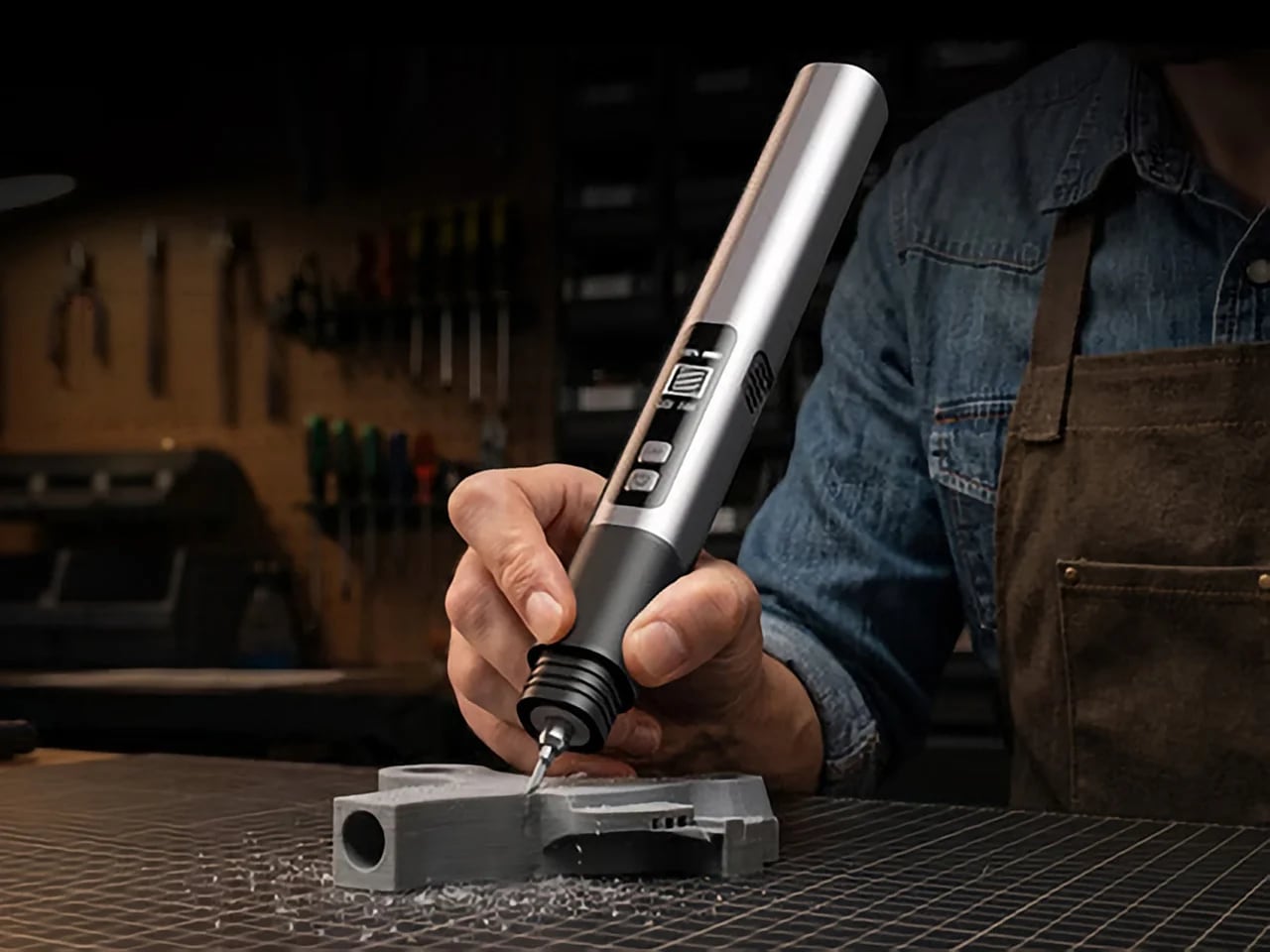
There are power tools, and then there are smart tools. A power tool gives you brute force; a smart tool gives you controlled, consistent results. Think of a simple drill that just spins versus one that manages its own torque to avoid stripping a screw. For delicate work like trimming EVA foam for a cosplay project or cleaning up support structures on a 3D print, you definitely want the smart one. The problem is, most handheld cutters are pretty basic, giving you one speed and just hoping for the best.
The SonicMax Slice 10 is aiming for that higher IQ. It’s a cordless ultrasonic cutter that senses the material you’re cutting and adjusts its own power output in real time. Slice through dense plastic and it pushes harder; trim the thin walls of a resin print and it eases back. This adaptive system, combined with cooling that prevents heat-related power drops, makes it feel like proper workshop equipment in the palm of your hand. It runs at 40kHz, delivers up to 50 watts of dynamic peak power, and does all of this without a single cable getting in your way.
Most ultrasonic cutters on the market use transducers with a mechanical quality factor, or Qm, somewhere between 150 and 250. A higher Qm means the transducer converts electrical energy into vibration more efficiently, which directly translates to less heat generated during use. SonicMax claims a Qm of over 500 for the Slice 10, and lab data backs that up with a verified measurement of 541.1. That’s roughly two to three times higher than a typical competing tool, and it’s the foundational reason the Slice 10 can sustain longer sessions without thermal drama. That single transducer decision cascades into everything else, from runtime and cut quality to how comfortable the tool actually stays in your hand.
As the blade meets resistance, the Slice 10’s Smart Material Auto-Detection reads that feedback and adjusts power output and vibration frequency without you touching anything. Cutting through a stiff chunk of EVA foam feels different from trimming the thin walls of a resin print, and the tool responds to each material accordingly. You’re not locked into a fixed setting that works okay for most things but perfectly for nothing. The system also preserves cut quality across a long session, where material resistance can shift as the blade warms. The result is consistent cuts from the first pass to the last, regardless of what you’re running the blade through.
Heat is the reason most cordless ultrasonic cutters force you to stop every five to ten minutes, and the Slice 10 attacks that problem from two directions. Corded bench tools sidestep this issue by drawing steady power and dissipating heat more easily, but you give all of that up the moment you cut the cord. The high-efficiency transducer generates less heat from the start, and the built-in active cooling fan manages whatever thermal load does build up during a session. Overheat protection kicks in automatically at 80 degrees Celsius at the motherboard level, so the tool protects itself without you having to babysit it. You only appreciate how good this is after you’ve spent a session on a cutter that kept shutting itself off on you mid-cut.
A 5000mAh 21700 lithium-ion battery powers the Slice 10, and SonicMax made it user-replaceable, which you’ll end up appreciating far more than any spec sheet number. The 21700 is a high-performance cell format found in premium flashlights and power tools, so sourcing replacements from SonicMax or compatible third-party brands should never be a problem. SonicMax’s own branded replacement cell is rated for 500 charge cycles at 80% capacity retention, a reasonable lifespan for a tool you’re actually putting to work regularly. An 18W USB-C pass-through charging system brings it from zero to full in about 70 minutes, and the tool keeps running while plugged in. Claimed runtime sits at up to four hours, and when you run low mid-project, swapping in a spare takes seconds.
Blade choice gives the Slice 10 a lot of its bench-tool personality. SonicMax offers five blade styles that let the same handheld body take on very different jobs: a Standard Utility Blade for everyday trimming, a Precision Long Blade for tighter access and more delicate reach, a Fine Chisel Blade for careful cleanup work, a Heavy Duty Chisel Blade for more aggressive material removal, and a Wide Flat Scraper Blade for broader surface work. That range matters because it turns the Slice 10 into something closer to a compact cutting system than a one-trick knife. If you’re the kind of maker who bounces between foam, plastic, supports, edges, and surface cleanup in the same afternoon, this is where the tool starts looking properly versatile.
Lift-to-Activate sensing turns the tool on when you pick it up and off when you set it down, keeping your fingers away from controls mid-session and preventing accidental activation on the bench. A small OLED display shows real-time power output and battery level, so you’re never left guessing how much runtime remains. Built-in LED lighting illuminates the cut line, which sounds like a minor detail until you’re trying to trace a clean edge on a dark-colored print at your desk at some ungodly hour. Auto-shutdown kicks in after five minutes of idle, and low-battery protection activates before the cell drops to a damaging voltage. Together, these details make the Slice 10 feel like a tool that respects your workflow rather than constantly asking you to manage it.
The Slice 10 measures 260.5mm long and 28mm across, weighing 236 grams, keeping it firmly in single-hand, pen-grip territory across long sessions. Just the Slice 10 is available for a discounted $119, and ships with 10 replaceable Standard Utility blades. Upgrade to the Maker’s Bundle for $169 and you get the Slice 10 along with 50 blades spread across the five blade profiles (standard, precision long, fine chisel, heavy duty chisel, and flat scraper) as well as a 5000mAh replacement battery. If you’re looking for versatility and pushing your prints to the max, the $50 price bump does bring a fair share of value. You can also buy extra blades and batteries as add-ons. Shipping is expected to begin mid-October 2026 with worldwide delivery available, and SonicMax has not publicly confirmed warranty terms at the time of writing.
Our brain is still a mystery, of which only a small part has been completely understood. Every single decision we make, every move in stressful situations, and the ability to plan way ahead of time can be attributed to the grey matter between the ears. While most wearables want to bring the prowess of advanced medical-grade brain monitoring to everyday life, the strings attached nullify the comprehensive level of scanning required for deeper insight.
Atlas Mankind, a startup, wants to change th
Our brain is still a mystery, of which only a small part has been completely understood. Every single decision we make, every move in stressful situations, and the ability to plan way ahead of time can be attributed to the grey matter between the ears. While most wearables want to bring the prowess of advanced medical-grade brain monitoring to everyday life, the strings attached nullify the comprehensive level of scanning required for deeper insight.
Atlas Mankind, a startup, wants to change that with a $500 wearable that sticks to the back of your ears to function in the background as we go on with our daily lives. That’s a leap from other similar wearable gadgets, which require the wearer to stay still or only function while you are asleep. Dubbed Atlas 1.0, the advanced EEG gadget monitors electrodermal activity, voice patterns, and head movements throughout the day to make precise readings of what your brain is doing.
According to Atlas Mankind, the compact EEG tracker doesn’t restrict the wearer’s movement or only function in certain situations, thereby making it a more natural and unbiased instrument for understanding the internal state of the wearer. It creates a longitudinal record of the brain’s activity in real-life situations, “which is much more meaningful than a single test or isolated brain scan.” The wearable functions in conjunction with the compatible app to track three metrics, which are Presence, Stress, and Energy Burn. That is much more comprehensive than having the half-baked metrics of your stress levels, heart rate, skin temperature, sleep analysis, and generic brain activity that other advanced wearables tout.
Coming back to the three main metrics on which Atlas 1.0 excels – Presence represents whether your attention is inwards or outwards. For instance, during a conversation with your friend, how engaged you actually were. This is done by analyzing the speech patterns and the hemisphere of the brain that was activated during that time. Then there is the Stress tracking, which keeps a very close tab on your physiological stress in the background. The last one is Energy Burn that identifies the activities that were most taxing during the course of the day.
In conjunction with the app that connects to your calendars, event logs, and schedules, the wearable determines the level of shift in these metrics for an in-depth analysis of the brain state over a period of time. The patterns revealed can help the user identify which habits and activities are worth taking up and which ones are better avoided if possible. Atlas 1.0 sticks to the skin behind the ears on an adhesive pad and records the brain waves, as well as voice patterns (not the actual speech for data safety) and movement 24×7. With a dataset of more than 50,000 brain recordings to power the advanced algorithm, the prospects here are exciting.
According to Ana Montero, co-founder & chief executive officer, “For the first time, some of the most important moments in a human life are becoming measurable.” This is supported by André Marques-Smith, PhD: co-founder & chief technology officer, who says, “commitment to accuracy makes ATLAS a tool for genuine mastery and personal science, not just measurement and vanity metrics.” He adds that the engineering challenge of capturing “research-grade data while in motion” is what makes Atlas 1.0 special.
The company is already taking pre-orders for the non-invasive wearable, and it does come with a $30 monthly subscription to keep going. It’ll be interesting to see how accurate the wearable turns out to be, since it is not cheap and you’ll have to keep paying a monthly subscription to make it relevant.
"Maintenant", ce n'est pas qu'un adverbe à la con pour apprécier l'instant présent ou faire péter ses ordres comme votre Belle Mère !
C'est également un conteneur à lancer,
qui se connecte en lecture seule à un socket Docker pour réaliser en un battement de cil, tout l'inventaire de votre home lab !
Il relève ainsi l'état de chaque conteneur, ses healthchecks, ses boucles de redémarrage, ses logs, et vos projets Compose regroupés comme vous les avez écrits.
Ensuite, tout ce qui v
"Maintenant", ce n'est pas qu'un adverbe à la con pour apprécier l'instant présent ou faire péter ses ordres comme votre Belle Mère !
C'est également un conteneur à lancer,
qui se connecte en lecture seule à un socket Docker pour réaliser en un battement de cil, tout l'inventaire de votre home lab !
Il relève ainsi l'état de chaque conteneur, ses healthchecks, ses boucles de redémarrage, ses logs, et vos projets Compose regroupés comme vous les avez écrits.
Ensuite, tout ce qui vous alerte pour de bon se déclare à la main. Les checks HTTP et TCP se configurent sous la forme de labels sur les conteneurs à surveiller. Par exemple, un maintenant.endpoint.http avec son intervalle et son seuil d'échec, un maintenant.endpoint.tcp pour la base...etc. Pas besoin donc d'aller mettre votre gros nez dans un fichier de config spécifique.
Vos tâches planifiées reçoivent chacune une URL à appeler quand elles finissent comme ça si la sauvegarde de trois heures du matin ne se manifeste pas, vous êtes prévenu. Vos certificats HTTPS sont surveillés et signalés cinq fois avant leur expiration, un mois avant puis de plus en plus près. Il compare aussi l'empreinte de vos images à celle publiée sur le registre, ce qui vous permet ensuite de savoir lesquelles ont pris du retard sans lancer des docker pull à l'aveugle. Ah et il sert une page de statut publique pour vos utilisateurs.
Le tout tient dans un binaire Go qui occupe environ 17 Mo de RAM et qui se repose sur une simple base SQLite.
Par contre, l'édition gratuite (Community) gère une seule machine. Si vous voulez du multi-hôte, il faudra passer par la case payante. Toujours en gratuit, il y a aussi des plafonds... Vous avez le droit uniquement à 10 endpoints, 5 heartbeats, 5 certificats, 3 composants de page de statut et uniquement 7 jours d'historique.
Attention quand même, y'a 2 choses à savoir avant de vous enflammer et de poser ça sur une machine exposée sur le net. Il n'y a aucune authentification intégrée, et de ce que j'ai compris, c'est assumé ! A vous donc de mettre en place un reverse proxy et un Authelia ou un Authentik devant.
Pour situer "Maintenant" par rapport à d'autres solutions que je vous ai déjà présentées,
Beszel
fait les métriques par conteneur sans aucun plafond gratos, mais pas les checks HTTP.
Uptime Kuma
lui, fait les checks, mais ses monitors doivent être créés un par un dans l'interface, sauf à lui greffer
AutoKuma
pour lire les labels. Donc, il n'y a pas vraiment de solution tout-en-un gratuite...
Vous jouez sous Linux et votre bibliothèque Steam, GOG ou Epic tourne à peu près entièrement grâce à
Proton
? Cela signifie que, malheureusement, vos jeux Xbox PC et ceux du Game Pass, eux, restent à la porte... C'est con d'avoir un catalogue entier, payé tous les mois rubis sur l'ongle et de ne pas pouvoir y toucher ailleurs que sous Windows, via le streaming cloud.
Mais cette époque est révolue puisque Xodus est un projet open source qui rétro-ingénierie la chaîne Xbox PC pour
Vous jouez sous Linux et votre bibliothèque Steam, GOG ou Epic tourne à peu près entièrement grâce à
Proton
? Cela signifie que, malheureusement, vos jeux Xbox PC et ceux du Game Pass, eux, restent à la porte... C'est con d'avoir un catalogue entier, payé tous les mois rubis sur l'ongle et de ne pas pouvoir y toucher ailleurs que sous Windows, via le streaming cloud.
Mais cette époque est révolue puisque Xodus est un projet open source qui rétro-ingénierie la chaîne Xbox PC pour faire tourner ces jeux directement sur Linux. Son dépôt coche déjà la connexion de l'appareil, celle du compte, l'autorisation Xbox, la récupération des licences, le téléchargement des paquets de jeu et le déchiffrement des exécutables à la demande. Bref, la douane est passée (non pas Hamza, celle de Microsoft).
Ce qui bloquait n'a jamais été Proton puisqu'en fait un jeu Xbox PC moderne repose sur le GDK de Microsoft et arrive emballé dans un conteneur MSIXVC chiffré, dont les clés dépendent de la licence attachée au compte.
Rien à voir donc avec un .exe posé dans un dossier.
L'équipe, emmenée par Paweł Lidwin qui contribue aussi à
Heroic
, a donc dû fabriquer ses propres briques, une bibliothèque d'authentification Xbox, un lecteur capable de parcourir ces conteneurs, et surtout une réimplémentation libre de xgameruntime.dll, le composant par lequel les jeux réclament les services Xbox (Celle-là est toujours en chantier). Le projet entretient même ses propres versions modifiées de Wine et de Proton.
Sauf qu'on ne joue toujours pas... Aucun binaire n'est distribué, il faut tout compiler soi-même, et les fameux services Xbox doivent encore être servis aux jeux à travers Wine. Le lancement, c'est donc le gros morceau restant même si un jeu auquel vous avez droit se récupère et se déchiffre.
Côté catalogue, il faut du GDK et du MSIXVC. Le MSIXVC2 n'est pas géré, Gears of War 4 reste sur le carreau, et les titres rétrocompatibles se récupèrent mais réclameront peut-être des correctifs dans wine ou dxvk. Quant au déchiffrement, il s'appuie sur les instructions AES du processeur. Cela signifie que sur une machine trop vieille pour les avoir, ça ne ramera même pas... ça s'arrête juste net sur une instruction "illegal".
Et puis, vous vous en doutez, il y a Microsoft... Le projet n'est ni affilié ni approuvé par Redmond, donc c'est à utiliser à vos risques et périls, car rien n'empêche l'éditeur de changer une clé ou de modifier un bout du protocole et de refermer la porte du jour au lendemain. Avec Xodus, personne n'a rien promis, et c'est un pari sur un avenir incertain... Toutefois le
dépôt
avance bien quand même, sans binaire à la clé pour le moment.

 Connexion