❌

Vue normale

Will Your iPhone or Android Change Time on Nov. 1? Check These Settings Before Sunday

26 octobre 2026 à 11:03

Most phones should adjust automatically on Nov. 1, but new Canadian time-zone rules could affect some devices. Here's what iPhone and Android users should check.

The post Will Your iPhone or Android Change Time on Nov. 1? Check These Settings Before Sunday appeared first on TechRepublic.

  • ✇Yanko Design
  • AYN Odin 3 Portal Handheld Pairs a Flat Glass Front With Sculpted Grips
    Putting a large screen on a gaming handheld is easy compared with making the whole thing comfortable to hold. AYN’s Odin 3 Portal approaches that problem with a 7-inch OLED up front and sculpted grips behind it. Now available for preorder, the Android handheld combines a broad, glass-covered face with physical controls that give your fingers somewhere other than the screen to go. That front surface stretches across the display and surrounding control areas, giving the device a flatter, more uni
     

AYN Odin 3 Portal Handheld Pairs a Flat Glass Front With Sculpted Grips

Par : JC Torres
23 octobre 2026 à 10:20

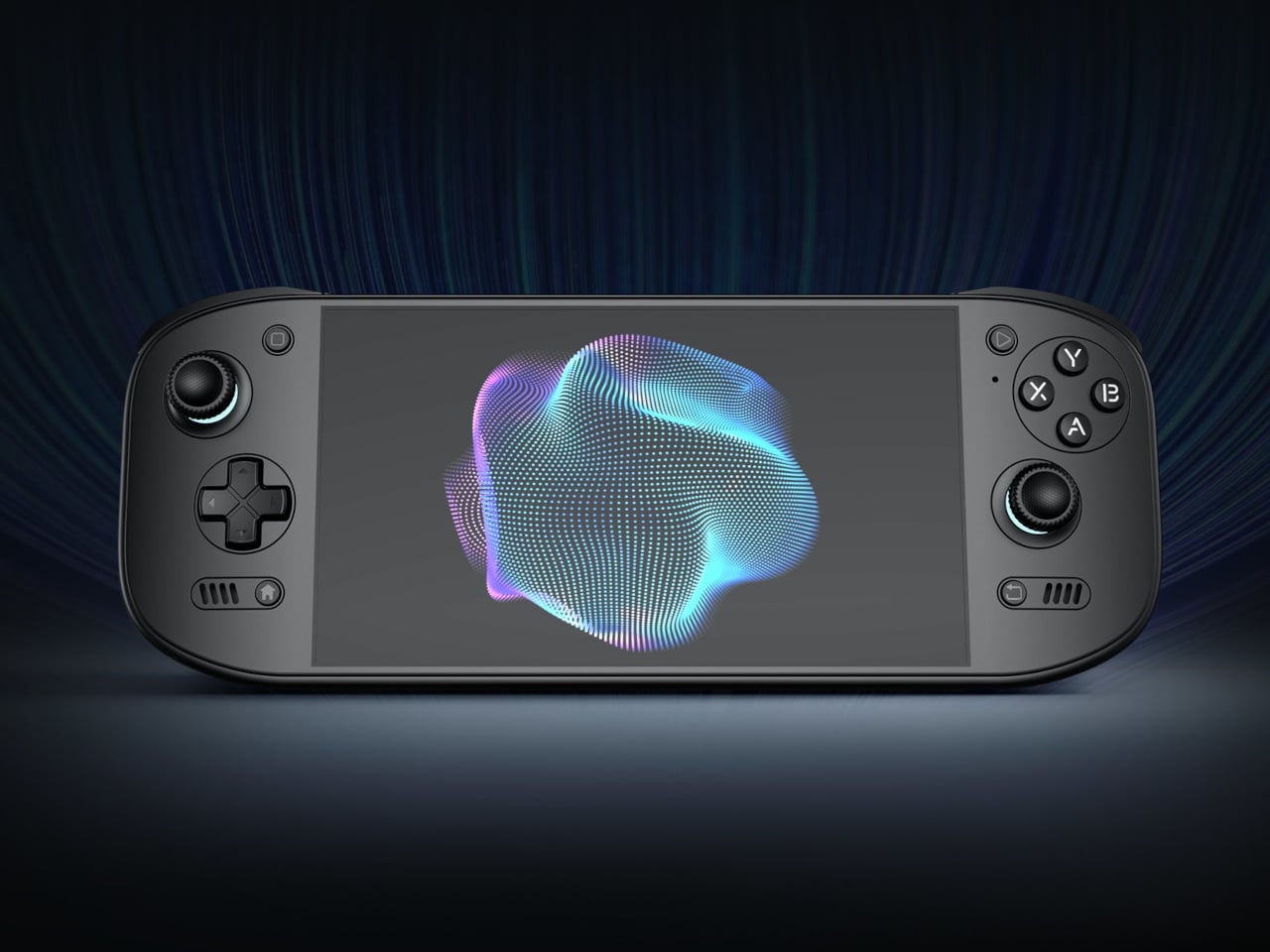
Putting a large screen on a gaming handheld is easy compared with making the whole thing comfortable to hold. AYN’s Odin 3 Portal approaches that problem with a 7-inch OLED up front and sculpted grips behind it. Now available for preorder, the Android handheld combines a broad, glass-covered face with physical controls that give your fingers somewhere other than the screen to go.

That front surface stretches across the display and surrounding control areas, giving the device a flatter, more unified appearance than a screen dropped into a chunky frame. Black keeps the boundary between panel and housing less conspicuous, while White and Cold Grey emphasize it. The latter’s purple buttons add retro flavor without turning the machine into a tribute to another console.

Designer: AYN

Turn it over, and the shape becomes less concerned with looking flat. Rounded bulges give your palms somewhere to settle, while textured shoulder buttons meet your index fingers above. The full-size Hall-effect sticks have ridged edges, and a dome D-pad sits below the left stick. These details aim to improve control, though actual comfort will depend on your hands and how you play.

The screen is a 1920×1080 OLED with a 120Hz refresh rate, giving supported games room to show smoother motion without asking you to peer at a tiny display. That doesn’t mean every game will run at 120 frames per second, of course, nor should you always crank it up. It depends on the game, settings, and your remaining battery.

Behind that screen is Qualcomm’s Dragonwing Q8 processor, paired with Android 15 and active cooling. A broad rear grille gives the internal fan room to draw air, making ventilation part of the exterior rather than hiding it completely. That’s worth remembering when you settle in with the handheld against a cushion, since the cooling system still needs an unobstructed path to breathe.

Power comes from a 9,000mAh battery, with support for 60W charging when you need to plug back in. Actual playtime will depend on the game and screen settings, so that capacity doesn’t translate into a guaranteed afternoon away from an outlet. At about 15.9 ounces, the handheld puts weight behind that screen, especially when a quick session somehow becomes an entire evening.

Storage starts at 128GB with 12GB of RAM, while the top model offers 1TB and 16GB of RAM. There’s also a microSD slot, so choosing less built-in storage doesn’t close off future expansion. AYN specifies that no games come preinstalled, however. You’re buying the hardware for your own library and setup, not a ready-made collection of nostalgic favorites waiting behind the power button.

Launch pricing starts at $399, with the 1TB version reaching $669 and shipping expected to begin in early November 2026. The pricier configuration doesn’t buy a different screen or processor, just more memory and storage than the base model. That leaves a practical choice between keeping a larger library installed and keeping the price down, particularly when a memory card remains an option.

The post AYN Odin 3 Portal Handheld Pairs a Flat Glass Front With Sculpted Grips first appeared on Yanko Design.

OPPO Find X10 Pro Max vs. Xiaomi 18 Pro Max: What Buyers Should Check

22 octobre 2026 à 13:39

Compare the OPPO Find X10 Pro Max and Xiaomi 18 Pro Max on cameras, battery, displays, and pricing, plus regional differences to check before buying.

The post OPPO Find X10 Pro Max vs. Xiaomi 18 Pro Max: What Buyers Should Check appeared first on TechRepublic.

Oppo Find X10 Series Launches Globally: What Buyers Should Check

22 octobre 2026 à 12:45

Oppo’s Find X10 series brings 200MP cameras to global markets. Check prices, regional battery differences and AI feature limits before choosing a phone.

The post Oppo Find X10 Series Launches Globally: What Buyers Should Check appeared first on TechRepublic.

  • ✇Yanko Design
  • Oppo Find X10 Pro Max Review: Stunning Imaging, Well-Balanced Flagship, Big Price
    PROS: Industry-first triple 200MP camera system Natural, consistent photo colors across all cameras Strong video capability Bright, immersive AMOLED display with thin bezel Excellent battery life CONS: High price Optional teleconverter kit limits lens options while in use RATINGS: AESTHETICSERGONOMICSPERFORMANCESUSTAINABILITY / REPAIRABILITYVALUE FOR MONEYEDITOR'S QUOTE:With standout cameras and top-tier hardware, the Find X10 Pro Max nails nearly every mark. Just be ready
     

Oppo Find X10 Pro Max Review: Stunning Imaging, Well-Balanced Flagship, Big Price

Par : Aki Ukita
21 octobre 2026 à 11:00

PROS:


  • Industry-first triple 200MP camera system

  • Natural, consistent photo colors across all cameras

  • Strong video capability

  • Bright, immersive AMOLED display with thin bezel

  • Excellent battery life

CONS:


  • High price

  • Optional teleconverter kit limits lens options while in use

RATINGS:

AESTHETICS
ERGONOMICS
PERFORMANCE
SUSTAINABILITY / REPAIRABILITY
VALUE FOR MONEY

EDITOR'S QUOTE:

With standout cameras and top-tier hardware, the Find X10 Pro Max nails nearly every mark. Just be ready to pay for the privilege

In 2026, nearly every major phone maker is eager to add “Pro Max” to their flagship lineups. Oppo is now joining this trend with its Find X10 Pro Max. Whether you see the naming as bold or just another industry move, one thing is hard to ignore. Even when manufacturers like Oppo pack their phones with leading-edge hardware and arguably superior imaging, they still face the ongoing challenge of measuring up to Apple’s influence at the top of the market.

This device brings a massive 6.78-inch AMOLED display and debuts the industry’s first trio of 200-megapixel cameras. Its battery is also among the largest found in any mainstream smartphone. Oppo claims this phone stands out for both design and capability. After spending time with the Find X10 Pro Max, I set out to discover if this “Pro Max” truly lives up to its name or simply chases a label.

Designer: OPPO

Aesthetics

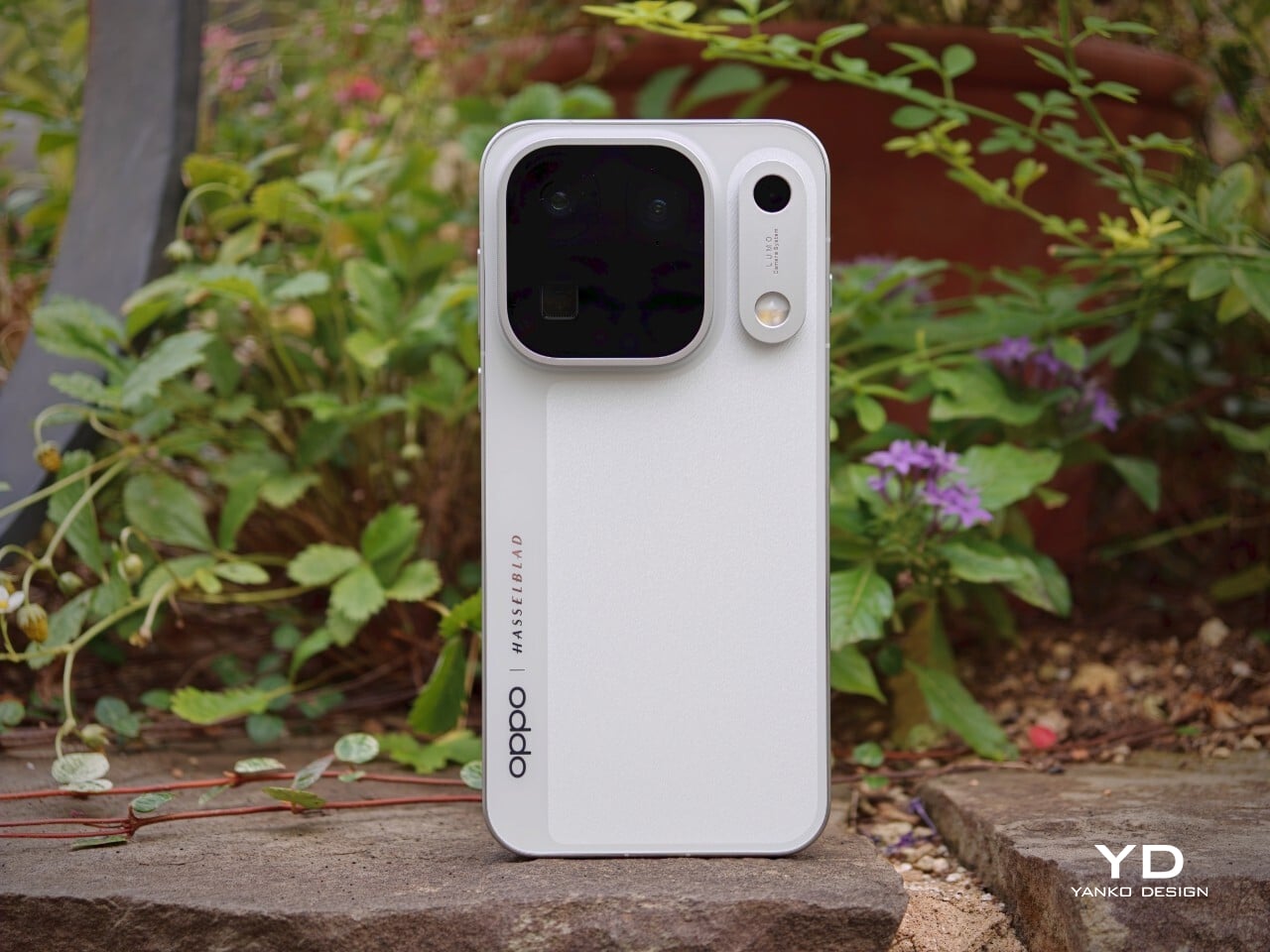
The Oppo Find X10 Pro Max carries forward some of the Find X9 Pro’s most recognizable design elements, including its signature square camera bump, now paired with an oval accent for the color sensor and LED. Oppo offers this flagship in two finishes. The Titanium Grey edition features a single sculpted piece of glass with contours that flow seamlessly into the camera area, softening the visual impact and giving the phone an understated, professional vibe. The grey itself is subtle, with hints of mauve appearing under certain lighting conditions.

For this review, I received the Luna White edition, which channels inspiration from classic cameras and reimagines the look for a contemporary audience. The camera island sports a matte silver metallic finish with knurled detailing, highlighted by Hasselblad’s signature orange accent ring. The back showcases a subtle fabric-inspired pattern, with Oppo and Hasselblad branding on the side. While both colors exude sophistication, those who prefer darker tones or bolder shades may find themselves wishing for greater variety in the color lineup.

Ergonomics

Despite its impressive size and powerful hardware, the Oppo Find X10 Pro Max manages to feel thoughtfully balanced in hand. My review unit is the global version, which comes with a substantial 8000mAh battery and weighs 235 grams (about 8.29 ounces) in Titanium Grey or 233 grams (about 8.22 ounces) in Luna White. The EU version features a slightly smaller 7150mAh battery and is a bit lighter at 228 grams (about 8.04 ounces) for Titanium Grey and 226 grams (about 7.97 ounces) for Luna White. Measuring 161.32 x 76.57 x 8.40 mm, or approximately 6.35 x 3.02 x 0.33 inches, this phone clearly fits into the large flagship category, yet its slim profile keeps it manageable.

The weight of the Find X10 Pro Max is certainly noticeable each time you pick it up, although the distribution helps maintain comfort during longer use. Both color options have a matte back and frame that do an excellent job resisting fingerprints and smudges, while also offering a velvety texture that is genuinely pleasant to touch. The device maintains a clean look throughout the day and feels luxurious with every interaction. The edges are only slightly curved, almost flat and straighter than on many other flagships, so they do not dig into your hand but may affect comfort depending on how you hold the phone over time.

Performance

The Oppo Find X10 Pro Max delivers the kind of fluid, responsive experience you expect from a flagship. Powered by the Dimensity 9600 Pro, the phone handles daily tasks, multitasking, and demanding apps without any noticeable lag or slowdowns. ColorOS 17 brings a polished feel with more refinement than revolution, ensuring that every interaction is smooth and intuitive. Everything from app launches to switching between tasks happens with impressive speed and reliability.

The large 6.78-inch LTPO AMOLED display stands out with a sharp 2772 × 1272 resolution and vibrant colors, thanks to BT.2020 coverage and 10-bit color support. Bezels measure just 1.15mm and are perfectly symmetrical, which makes the screen feel even more expansive. With up to 3,600 nits peak HDR brightness, visibility outdoors is excellent. The adaptive refresh rate ranges from 1 to 120Hz for smooth scrolling, while 144Hz is available in select gaming scenarios for extra fluidity. The speakers provide plenty of volume, though sound quality does not really stand out.

Hasselblad Hi-Res (50MP) mode, main camera, 1x

Main Camera, 1x

Over the past few years, smartphone cameras have leaned heavily on computational processing to overcome the limitations of small lenses. Sometimes the results are impressive, but too much digital magic can leave photos looking punchy or even artificial. With the Find X10 Pro Max, Oppo takes a different route by aiming for images that genuinely match what you saw in real life. The brand continues its collaboration with Hasselblad to fine-tune color science, and this generation introduces the LUMO True Image Engine, which keeps colors believable and resists the urge to overdo sharpening or saturation.

Oppo debuts the industry’s first triple 200-megapixel camera system in the Find X10 Pro Max. You get a 200MP main camera (Samsung ISOCELL HPC, 1/1.3″, f/1.5 with OIS), a 200MP ultra-wide (Samsung ISOCELL HP5, 1/1.56″, f/2.2 with autofocus), and a 200MP periscope telephoto (Samsung ISOCELL HP5, 1/1.56″, f/2.1 with OIS). Flip the phone around and you’ll find a 50MP front camera (Samsung ISOCELL JN5, 1/2.75”, autofocus, 100° FOV).

Ultrawide, 0.5x

Telephoto, 3x

Telephoto, 6x

The headline megapixel count is only part of the story. The main sensor leverages DeepPix technology, redesigning each pixel to improve light-gathering efficiency and preserve detail even in challenging conditions. It delivers up to 17 stops of dynamic range for images full of nuance from shadow to highlight. Daylight photos are crisp and vibrant, and low-light shots stay clear and accurate.

Most flagships treat ultra-wide cameras as a weak spot, but Oppo breaks that trend by using the same large sensor in both its ultra-wide and telephoto modules as in the main camera. The ultra-wide’s 13mm-equivalent focal length provides an expansive 124-degree field of view and captures sharp images across the frame. There is still some noticeable lens distortion at the edges, which is common for lenses this wide, but overall image quality remains impressively crisp. Color consistency is another area where Oppo truly excels. Tones stay remarkably uniform across all three lenses, so your shots always look cohesive.

Ultrawide, 0.5x

Main Camera, 1x

Main Camera, 1x

Telephoto, 3x

Personally, I love shooting with the telephoto camera on the X10 Pro Max. It is genuinely a treat for anyone who enjoys zoom photography. Hasselblad Master mode is another highlight because it delivers a more natural, less processed look that gives images a classic photographic character rather than an overdone “smartphone” feel. For those who want total control, Pro mode within Hasselblad Master mode allows for granular manual adjustments.

For users seeking more flexibility, Oppo offers a Hasselblad Teleconverter Kit in Luna White that includes a MagSafe-compatible case, lens adapter plate, teleconverter lens, lens bracket, shoulder strap, and pouch, all in silver or white with orange accents to match the Luna White phone version. While I love how visually unified the kit appears, attaching the lens adapter plate blocks both the main and ultra-wide lenses at once, just like on the Find X9 Pro teleconverter. This can limit your photo options when using the kit.

Telephoto Converter, 20x

Telephoto Converter, 40x

Oppo’s camera app supplies a nice set of filters. The selection is not as broad as Vivo’s catalog but still offers plenty of creative and customizable choices. Each filter lets you tweak tonality, saturation, and intensity to match your style preferences. My main gripe is with how OPPO lays out these filters: instead of small thumbnails along the bottom edge like most brands use, you only see one filter preview filling the UI at a time. This makes it tougher to quickly browse options and can slow down creative experimentation.

Filter UI

Open Gate Mode

Video performance keeps pace with stills. All three rear cameras support up to 8K at 30fps, 4K at 60fps, and even 4K at 120fps for dramatic slow motion. The front camera supports up to 4K at 60fps for sharp selfies and vlogs. If you apply creative filters during recording, output is capped at 1080p at 30fps. Open Gate recording is available on all rear cameras as well, so creators can leverage every pixel for flexible cropping in post-production.

My global review unit features a massive 8000mAh battery, while the EU version is equipped with a still-impressive 7150mAh cell. Both models support fast charging, with 80W SUPERVOOC wired charging making it easy to top up quickly and 50W AIRVOOC wireless charging for added convenience. Battery life is outstanding. It easily lasts more than a full day of heavy use and can reach two days with moderate usage.

Main Camera, 1x, Night

Sustainability

Oppo positions the Find X10 Pro Max as a durable and future-proof flagship, but most of its claims align with what’s now expected at the high end. The phone comes with IP66, IP68, and IP69 ratings, so it stands up well to dust and water in a wide range of scenarios. Both the front and back are protected by OPPO Crystal Guard Glass, co-developed with Corning, promising solid scratch and drop resistance. SGS Five-Star Drop Resistance Certification adds further reassurance, though these certifications have become standard for premium smartphones.

Oppo also states that the battery should retain over 80% of its original capacity after five years of typical use, which is consistent with leading brands but does not set a new bar. The promise of five years of major Android OS updates and six years of security patches is definitely good news for long-term owners and matches current flagship expectations. That said, it would be great to see Oppo take additional steps in sustainability, such as using more recycled materials in construction and offering easier repair options, to truly stand out in this space.

Value

Official pricing was unavailable at the time of writing this review, but the Oppo Find X10 Pro Max is rumored to launch at €1,799 (about $1,900) for the 16GB+512GB EU version. This firmly places it among the highest-priced flagships on the market and marks a clear jump from last year’s Find X9 Pro (€1,299, or around $1,370) and even the Find X9 Ultra (€1,699, or about $1,790). A significant part of this price hike likely comes from soaring RAM and storage costs, driven by increased demand from the AI boom and broader tech trends.

If these figures are correct, Oppo will face an uphill battle. Even with top-of-the-line hardware and some of the best mobile imaging features available, nearly two thousand dollars is a serious investment, especially as many consumers are feeling economic pressure. The EU version of the Find X10 Pro Max is even more expensive than both the iPhone 18 Pro Max with 512GB of storage and the Samsung Galaxy S26 Ultra 512GB model in the U.S. For Oppo to justify this price point, buyers will need to be truly convinced by its unique camera system and design philosophy. Otherwise, many may find more value in established alternatives from Apple or Samsung.

Verdict

The Oppo Find X10 Pro Max stands out as a well-balanced flagship that gets almost everything right and, at times, feels nearly flawless. What really sets it apart is its excellent mobile photography, from the industry-first triple 200-megapixel camera system to the natural color science developed in partnership with Hasselblad. Everyday performance is smooth, build quality is unquestionably premium, and battery life ranks among the best available in any flagship.

On the flip side, the high price tag puts the Find X10 Pro Max in direct competition with industry giants. While it delivers top-tier hardware and leading imaging capability, buyers must be willing to stretch both their expectations and their budgets. For those who put a premium on cutting-edge camera features and want an alternative to Apple or Samsung, Oppo’s latest is a compelling choice. For everyone else, especially those mindful of budget, there are several strong alternatives on the market that may offer a more accessible fit.

The post Oppo Find X10 Pro Max Review: Stunning Imaging, Well-Balanced Flagship, Big Price first appeared on Yanko Design.

Samsung One UI 9 vs Nothing OS 5.0: Which Is Better?

21 octobre 2026 à 09:31

Compare Samsung One UI 9 and Nothing OS 5.0 on Android 17, including AI, privacy, customization, multitasking, compatibility, and our winner.

The post Samsung One UI 9 vs Nothing OS 5.0: Which Is Better? appeared first on TechRepublic.

Android 17 QPR3 Beta 2 Targets Pixel Crashes and Connectivity Bugs

21 octobre 2026 à 09:16

Google’s Android 17 QPR3 Beta 2 addresses Pixel crashes, calling and Bluetooth bugs. Check supported devices and what to know before joining the beta.

The post Android 17 QPR3 Beta 2 Targets Pixel Crashes and Connectivity Bugs appeared first on TechRepublic.

Galaxy A56 One UI 9 Update Expands Globally: What’s New and What’s Missing?

20 octobre 2026 à 04:38

Samsung's Galaxy A56 One UI 9 update has expanded beyond South Korea, bringing Android 17 and new customization features, but not every Galaxy AI capability.

The post Galaxy A56 One UI 9 Update Expands Globally: What’s New and What’s Missing? appeared first on TechRepublic.

  • ✇Korben
  • Keepsweeper - Un Démineur avec des péons et des dragons
    Keepsweeper , c'est la célèbre grille toute grise du Démineur de Windows, qui sous ses cases numérotées ne cache pas des mines mais tout un royaume à faire évoluer en temps réel. Ce jeu est signé Michael Flarup, un designer danois à qui on doit aussi les App Icon Books, qui m'a écrit après être passé sur mon article consacré à UnDUNE II . Charger la vidéo depuis YouTube Ce clic autorise une connexion à Google : adresse IP transmise et tra
     

Keepsweeper - Un Démineur avec des péons et des dragons

19 octobre 2026 à 04:32

Keepsweeper , c'est la célèbre grille toute grise du Démineur de Windows, qui sous ses cases numérotées ne cache pas des mines mais tout un royaume à faire évoluer en temps réel. Ce jeu est signé Michael Flarup, un designer danois à qui on doit aussi les App Icon Books, qui m'a écrit après être passé sur mon article consacré à UnDUNE II .

Ce clic autorise une connexion à Google : adresse IP transmise et traceurs possibles. En savoir plus Voir cette vidéo sur YouTube

Le principe de Keepsweeper ne dépaysera pas les emplois fictifs sous Windows que vous êtes, puisque chaque chiffre compte ce qui se cache dans les 8 cases alentour, diagonales comprises. Seulement ici, c'est la couleur qui indique ce qui se passe... Si c'est doré, c'est un trésor, si c'est bleu, c'est un repaire d'ennemis qui peut abriter des gobelins ou un troll, et si c'est rouge, alors là, aïe aïe aïe, c'est un repaire de DRAGONS !!! Et bien sûr, le chiffre baisse quand vous détruisez ce qu'il comptabilise ou que vous vous emparez de son trésor.

Par contre, ce n'est pas à vous de retournez les cases. En bon roi, vous désignez celles à creuser et ce sont vos ouvriers qui s'en occuperont. Les soldats quand à eux, défendront les alentours, et quand un repaire apparaîtra, vous pourrez les envoyer le détruire en 1 clic. La seule règle à vraiment respecter c'est de protéger absolument votre Donjon "quoiqu'il en coûte" comme dirait notre pervers narcissique national, car le perdre mettrait alors immédiatement fin à la partie.

Les chiffres bleus, dorés et rouges autour du Donjon, pendant qu'un ouvrier creuse la case encadrée

Et ce que vous déterrez servira ensuite à bâtir des fermes, des maisons et des défenses, avec des bâtiments qui pourront se "soutenir" les uns les autres. Par exemple les moulins soutiennent les fermes, les forges équipent les soldats et les chapelles permettent de garder l'armée debout. C'est fou de se dire que tout ce gameplay tient dans une stupide fenêtre de Démineur avec ses boutons en relief qui sentent bon le Windows 95.

Côté contenu, il y a pour le moment 4 quêtes, dont une chasse au dragon, des expéditions aléatoires dans les Terres sauvages, et un Siège où il faut tenir face à des vagues d'ennemis toujours plus nombreux. Ensuite, les Sceaux royaux gagnés en route débloqueront des bâtiments, des améliorations et des récompenses permanentes qui vous serviront pour les parties suivantes.

Sachez également que vous pouvez jouer en solo bien sûr (et donc mettre en pause pour cogiter quand ça devient chaud) mais aussi jouer en ligne de deux à quatre joueur, et même fabriquer ses propres cartes dans l'éditeur.

Sur iPhone et iPad l'app est gratuit pour les 2 premiers niveau de chaque quête et après faudra débourser un peu moins de 6 euros pour acheter le jeu (c'est un achat unique, y'a pas d'abonnement à la con). Et bonne nouvelle, la version web quand à elle est entièrement gratuite ! Le jeu existe aussi sur Android, une version Steam est annoncée pour bientôt !

Merci à Michael pour le partage, et bonne chasse au dragon à tous !

Source : Keepsweeper

Google Makes It Easier to Put Your Own AI-Built App on Android

14 octobre 2026 à 16:07

Google lets eligible users run AI-built Android apps through Google Play without a developer account. Learn who can use it and what limits to check.

The post Google Makes It Easier to Put Your Own AI-Built App on Android appeared first on TechRepublic.

Nothing OS 5.0 Android 17 Rollout Begins: Which Phones Get It Next?

14 octobre 2026 à 12:12

Nothing OS 5.0 brings Android 17 to 10 phones. See the full rollout schedule, eligible Nothing and CMF devices, new features, and when to expect the update.

The post Nothing OS 5.0 Android 17 Rollout Begins: Which Phones Get It Next? appeared first on TechRepublic.

iQOO Neo12 Pairs 185Hz Display With 9,000 mAh Battery

14 octobre 2026 à 10:23

iQOO reveals Neo12 specs, including a 185Hz display, 9,000 mAh battery and cooling fan. Here’s what buyers should weigh before its expected China launch.

The post iQOO Neo12 Pairs 185Hz Display With 9,000 mAh Battery appeared first on TechRepublic.

WhatsApp Tests Scheduled Messages That Send Even When You’re Offline

14 octobre 2026 à 09:31

WhatsApp is testing scheduled messages for Android beta users, allowing texts and media to be delivered later even when the sender's phone is offline.

The post WhatsApp Tests Scheduled Messages That Send Even When You’re Offline appeared first on TechRepublic.

Samsung Galaxy S26 Ultra Cheat Sheet: New Price, Specs, Features, and More

13 octobre 2026 à 15:21

Samsung Galaxy S26 Ultra prices have increased. Explore the latest pricing, specs, cameras, AI features, and whether the flagship is worth buying.

The post Samsung Galaxy S26 Ultra Cheat Sheet: New Price, Specs, Features, and More appeared first on TechRepublic.

  • ✇Korben
  • gbos-vm - Pour vous amuser dans Googlebook OS depuis votre Mac
    Vous avez envie de voir à quoi ressemble Googlebook OS , mais pas du tout envie de dégainer +1000 balles pour un ordi bridé ? Ça tombe bien, un développeur a codé gbos-vm , un outil open source sous licence MIT qui lance sur un Mac Apple Silicon l'image de recovery de Google (conçu à l'origine pour le Dell Googlebook), dans une machine virtuelle boostée par le GPU. Ce n'est donc pas un Android générique habillé en Googlebook mais un script qui télécharge l'image off
     

gbos-vm - Pour vous amuser dans Googlebook OS depuis votre Mac

9 octobre 2026 à 04:54

Vous avez envie de voir à quoi ressemble Googlebook OS , mais pas du tout envie de dégainer +1000 balles pour un ordi bridé ? Ça tombe bien, un développeur a codé gbos-vm , un outil open source sous licence MIT qui lance sur un Mac Apple Silicon l'image de recovery de Google (conçu à l'origine pour le Dell Googlebook), dans une machine virtuelle boostée par le GPU.

Ce n'est donc pas un Android générique habillé en Googlebook mais un script qui télécharge l'image officielle (la build 16471258, ARM64, Android 17), en vérifiant l'empreinte, puis la fait démarrer sous QEMU avec Vulkan traduit vers Metal. Et rien de chez Google n'est redistribué dans le dépôt (pas de Playstore de base donc...).

Côté Mac, il vous faut donc un Mac avec archi Silicon, Homebrew, les outils en ligne de commande de Xcode, un JDK et le SDK Android (plateforme API 34 minimum) avec son NDK. Et comptez 16 Go de RAM en pratique car la VM en squatte 4 mais les compilations successives en auront besoin d'un peu plus. Et le script installera de lui-même tout ce qui vous manquera côté Homebrew, sans jamais vous demander un accès via sudo. Comptez environ 9 Go pour le download de tout ça et minimum 60 Go de libre pour la VM.

git clone https://github.com/skylartaylor/gbos-vm.git
cd gbos-vm
./install.sh

Ensuite, vous ouvrez l'application construite (dispo dans work/host/Googlebook VM.app), dont la mission est de lancer la VM et de l'éteindre proprement quand vous la quittez.

Le premier boot prendra environ 45 secondes sur un MacBook M5 et si un sélecteur d'utilisateur s'affiche, cliquez juste sur "User" et y'a pas de mot de passe. Notez que la souris est capturée par défaut, et que le raccourci ⌃⌥ la libèrera.

Voilà, c'est pas encore parfait car le bluetooth peut crasher, on est limité à 60 images par seconde max et que les échanges entre la VM et l'hôte (le mac) sont un peu instables mais j'imagine que tout ceci se bonifiera avec le temps...

  • ✇Korben
  • Googlebook - Le débloquer oui, mais le rooter pas encore
    J'sais pas si vous avez vu, mais Google vient de mettre en ligne une page d'aide qui explique comment déverrouiller le bootloader d'un Googlebook ! Je pensais pas écrire ça un jour. Les Googlebook, ce sont des portables mi-Android mi-ChromeOS qui sont commercialisé en France depuis hier, pour la modique somme de 1 099 euros. Perso, je ne vois toujours pas l'intérêt d'acheter ce truc... Je vois vraiment ça comme un PC bridé, ou un Android avec un gros clavier et je pense que c'est
     

Googlebook - Le débloquer oui, mais le rooter pas encore

6 octobre 2026 à 03:08

J'sais pas si vous avez vu, mais Google vient de mettre en ligne une page d'aide qui explique comment déverrouiller le bootloader d'un Googlebook ! Je pensais pas écrire ça un jour. Les Googlebook, ce sont des portables mi-Android mi-ChromeOS qui sont commercialisé en France depuis hier, pour la modique somme de 1 099 euros.

Perso, je ne vois toujours pas l'intérêt d'acheter ce truc...

Je vois vraiment ça comme un PC bridé, ou un Android avec un gros clavier et je pense que c'est bien se compliquer la vie que d'acheter ce truc plutôt que de prendre un vrai PC ou un petit Macbook. Sauf, évidemment, si on est une personne qui n'a pas envie de s'emmerder la vie à apprendre quoique ce soit de nouveau, et qu'on veut juste aller sur le site de La Poste consulter le prix des timbres, ou faire un Mappy pour savoir comment se rendre au bureau de vote le plus proche.

Mais grâce à cette "possibilité" de déverrouillage, John Wu, le créateur de Magisk , a annoncé travailler sur une version de Magisk pour ces machines.

Pour déverrouiller le Googlebook, vous devez donc activer le déverrouillage OEM dans les options pour développeurs, vous passez ensuite en mode récupération avec Échap + F2 puis le bouton d'alimentation, et l'option "Unlock bootloader" se trouvera dans les options avancées. Google précise également que ça efface toutes les données, que ça désactive la sécurité de l'appareil, que les modifications ne sont pas supportées et que la garantie peut y passer.

Et côté root, Wu a posté dans la nuit du 4 au 5 octobre "Magisk on Googlebook", en promettant du code et des instructions dans les jours suivants.

Son profil indique d'ailleurs qu'il bosse sur Android chez Google, et il voit dans le Googlebook la plateforme idéale pour bidouiller ! En effet, sur un téléphone rooté, les applis bancaires et de paiement cassent, alors qu'ici vous pouvez y accédez depuis le navigateur, comme sur n'importe quel portable.

Le blocage, selon lui, vient du mode utilisateur du système. Googlebook OS fait tourner Android en Headless System User Mode, c'est-à-dire que l'utilisateur 0 reste en arrière-plan et que vous travaillez sur un compte secondaire, alors que Magisk part du principe qu'il n'y a qu'un utilisateur principal. Le support de ce mode a été fusionné dans la branche principale du dépôt dans la nuit du 5 au 6 octobre, par contre, aucun commit ne cite pour le moment le Googlebook.

Reste que rien n'est livré officiellement encore... La dernière version stable de Magisk, la 30.7, date de février et donc aucune version stable ne contient ce code. Sans oublier que pour flasher la machine, Wu explique que le fastboot par USB ne marche pas sans câbles spécialisés. Cependant, il dit avoir trouvé une solution, sans la détailler.

Donc voilà... aujourd'hui, le root d'un Googlebook n'a aucune méthode publique, et le déverrouiller maintenant en suivant la technique de Google, revient à couper la sécurité de la machine sans rien pouvoir en faire de plus côté root. Donc autant attendre les instructions de Wu pour Magisk qui devraient arriver dans les jours qui viennent.

Source : 9to5Google

  • ✇Korben
  • PipePipe - Un fork de NewPipe qui zappe les pubs
    PipePipe est un client Android libre qui permet de regarder YouTube, mais aussi les plateformes asiatiques comme NicoNico et BiliBili. Vous l'aurez compris, c'est un fork de NewPipe que son auteur a sorti début 2022 pour le développer de son côté avec les trucs dont il avait envie. Comme PipePipe ne reprend pas les mises à jour de NewPipe et ne lui en envoie pas non plus, cela veut dire qu'un changement fait dans NewPipe n'arrive pas forcément dans PipePipe et vice versa. Ceci ét
     

PipePipe - Un fork de NewPipe qui zappe les pubs

29 septembre 2026 à 03:06

PipePipe est un client Android libre qui permet de regarder YouTube, mais aussi les plateformes asiatiques comme NicoNico et BiliBili. Vous l'aurez compris, c'est un fork de NewPipe que son auteur a sorti début 2022 pour le développer de son côté avec les trucs dont il avait envie. Comme PipePipe ne reprend pas les mises à jour de NewPipe et ne lui en envoie pas non plus, cela veut dire qu'un changement fait dans NewPipe n'arrive pas forcément dans PipePipe et vice versa.

Ceci étant dit, ce qui va vous intéresser, c'est qu'il intègre avant tout le fameux SponsorBlock , une base collaborative qui recense les passages sponsorisés des vidéos pour les sauter tout seul comme un grand. Ça fonctionne aussi bien sur YouTube comme sur BiliBili.

Vous avez aussi Return YouTube Dislike qui ne sert pas à grand chose mais qui permet de retrouver l'ancien compteur de pouces baissés de Youtube, ainsi que les titres d'origine visible à la place des titres "traduits" de Youtube (beurk).

Et vous pouvez aussi y masquer les (poom poom) Shorts, les vidéos payantes ou tout ce qui contient un mot-clé de votre choix ou en provenance d'une chaîne dont vous ne voulez plus entendre parler !! Et pour ceux qui écoutent plus qu'ils ne regardent, il y a même un mode lecteur de musique en arrière-plan avec, s'il vous plait, minuteur de sommeil, histoire que ça ne tourne pas toute la nuit.

Le panneau SponsorBlock de PipePipe, avec les segments repérés dans la vidéo et l'interrupteur pour les sauter

Alors peut-être que ça ne vous touche une sans faire bouger l'autre, mais par exemple SponsorBlock, l'équipe de NewPipe n'en veut pas afin de ne pas pénaliser les créateurs de contenu.

Après, attention si vous filtrez la pub au niveau du DNS, avec un Pi-hole, un AdGuard Home ou NextDNS. Ces trucs-là bloquent parfois les domaines googleapis.com / google.com, ce qui fait planter la lecture de YouTube. Donc, il faut les mettre dans votre liste d'exceptions, plutôt que de stopper tout le filtrage si ça ne marche pas la lecture sur votre téléphone. Et si ça foire toujours le wiki du projet liste d'autres causes, comme le blocage anti-bot de YouTube.

Côté compte, PipePipe n'en demande aucun et ne synchronise absolument rien vers un cloud quelconque. Tous vos abonnements, votre historique et vos playlists restent stockées bien au chaud sur votre smartphone. Et surtout, ce que j'apprécie, c'est que la connexion à YouTube est facultative. En fait, il n'est conseillé de l'activer que lorsque vous rencontrez des blocages IP ou une limite liée à votre âge, ah et aussi pouvoir extraire de l'audio à partir des vidéos de ce que j'ai compris.

Voilà, pour ceux qui utilisent des Tubular qui, malheureusement, est à l'arrêt , c'est peut-être une bonne alternative, tout comme BravePipe qui intègre lui aussi SponsorBlock.

Voilà, pour installer BravePipe, il vous faudra Android 6 minimum et vous rendre sur la fiche F-Droid ou directement télécharger l'APK sur GitHub .

  • ✇Korben
  • Mighty DOOM - Bethesda l'a éteint mais ses joueurs l'ont rallumé
    Mighty DOOM, le petit shoot roguelite que Bethesda avait sorti sur mobile en mars 2023, tourne de nouveau !! Alors bien sûr pas sur les serveurs officiels, qui sont éteints depuis deux ans, mais sur un serveur monté et hébergé par des fans, qui ont refait tout le boulot à la main. Mais avant, pour ceux qui ont raté un épisode, en fait, le jeu est mort parce
     

Mighty DOOM - Bethesda l'a éteint mais ses joueurs l'ont rallumé

22 septembre 2026 à 06:00

Mighty DOOM, le petit shoot roguelite que Bethesda avait sorti sur mobile en mars 2023, tourne de nouveau !! Alors bien sûr pas sur les serveurs officiels, qui sont éteints depuis deux ans, mais sur un serveur monté et hébergé par des fans, qui ont refait tout le boulot à la main.

Mais avant, pour ceux qui ont raté un épisode, en fait, le jeu est mort parce que Microsoft a fermé Alpha Dog Games, le studio qui le développait, en mai 2024, c'est-à-dire en même temps qu'Arkane Austin et Tango Gameworks (le studio de Redfall et celui de Hi-Fi Rush... tout ça le même jour, l'hécatombe). Et ce qui devait arriver arriva, puisque trois mois plus tard, le 7 août 2024, les serveurs de Mighty DOOM se sont arrêtés.

Et ce n'est pas rien parce que le jeu avait quand même été téléchargé 7,6 millions de fois sur mobile...

C'est pour ça que le projet Mighty Resurrection a décidé de redistribuer lui-même un APK Android du jeu. Il nécessite Android 10 minimum et il pointe directement sur le serveur de la communauté, dont le compteur annonçait déjà au moment d'écrire ces lignes, 449 comptes enregistrés.

Au-delà de l'APK "client", ce qui est cool, c'est qu'en face, il y a un logiciel serveur dont le code est public et que vous pouvez également lancer chez vous, si vous le souhaitez.

Ce qui est impressionnant surtout, c'est le taf. Parce qu'il a fallu régler l'authentification, les chapitres du jeu, l'inventaire des objets, les talents, la boutique, le battle pass, et même tout ce qui était achats intégrés et gestion de l'identité Xbox. En gros, chaque morceau que le jeu Android réclamait au serveur officiel, il a fallu entièrement le recoder.

Le truc un peu fou, c'est qu'Alpha Dog Games a retrouvé son indépendance cet été. Le studio est donc de nouveau entre les mains de ses fondateurs, sauf que la licence DOOM, elle, ne lui appartient pas. Donc impossible pour eux de rallumer leur propre jeu. Par contre, ils ont les sources, donc je me dis que s'ils étaient un petit peu sympas, ils pourraient aider les développeurs de Mighty Resurrection en leur offrant le code.

On verra bien si ça leur traverse l'esprit.

Merci à Maxime pour l'info.

Source : le site de Mighty Resurrection et le dépôt du serveur sur GitLab .

  • ✇Yanko Design
  • Poco F9 Ultra Review: Great Sound, Grown-Up Design
    PROS: Bose-tuned speaker remains a genuine standout big , bright 185Hz display Huge 8,050mAh battery Great performance CONS: Relatively large and heavy body will not suit everyone Ultrawide still does not feel especially wide RATINGS: AESTHETICSERGONOMICSPERFORMANCESUSTAINABILITY / REPAIRABILITYVALUE FOR MONEYEDITOR'S QUOTE:The F9 Ultra feels like Poco growing into its strengths, with Bose-tuned sound still leading the experience. The Poco F8 Ultra f
     

Poco F9 Ultra Review: Great Sound, Grown-Up Design

Par : Aki Ukita
19 septembre 2026 à 18:30

PROS:


  • Bose-tuned speaker remains a genuine standout

  • big , bright 185Hz display

  • Huge 8,050mAh battery

  • Great performance

CONS:


  • Relatively large and heavy body will not suit everyone

  • Ultrawide still does not feel especially wide

RATINGS:

AESTHETICS
ERGONOMICS
PERFORMANCE
SUSTAINABILITY / REPAIRABILITY
VALUE FOR MONEY

EDITOR'S QUOTE:

The F9 Ultra feels like Poco growing into its strengths, with Bose-tuned sound still leading the experience.

The Poco F8 Ultra felt like a turning point for Poco. Up to that point, the brand had always been easy to understand. You bought a Poco for speed, sharp pricing, and a bit of swagger. The F8 series added something new to that formula with Bose-tuned speakers, and that changed the feel of the phone in a way a faster chip or brighter screen usually does not.

It was not just about volume or clarity. The whole device felt more built around entertainment. Games had more punch, films had more room to breathe, and even everyday audio felt less like an afterthought. The denim-inspired rear panel helped give the F8 Ultra a bit of tactile identity too, even if the finish was more denim-adjacent than truly fabric-like, but the thing that stayed with you was the sound.

Designer: POCO

The Poco F9 Ultra takes that idea and pushes it further. Rather than treating the Bose-tuned system as a one-off flourish, Poco seems to be building on it with more confidence this time, wrapping that sound-first approach in a package that feels bigger, more polished, and more ambitious. If the F8 Ultra introduced a new side of Poco, the F9 Ultra feels like the phone that tries to make it stick.

Aesthetics

If the Poco F8 Ultra leaned young and fashionable, the Poco F9 Ultra leans sophisticated. It keeps the brand’s taste for visual confidence, but expresses it in a more restrained way, swapping tactile playfulness for cleaner lines, flatter surfaces, and a more polished sense of control.

That shift is obvious the moment you look at the back. The denim-inspired treatment from the F8 Ultra is gone, replaced by a finish that feels more metallic and more architectural. The overall silhouette is simpler, but it does not come across as plain. Instead, it feels like Poco has traded novelty for composure, letting shape and proportion do more of the work.

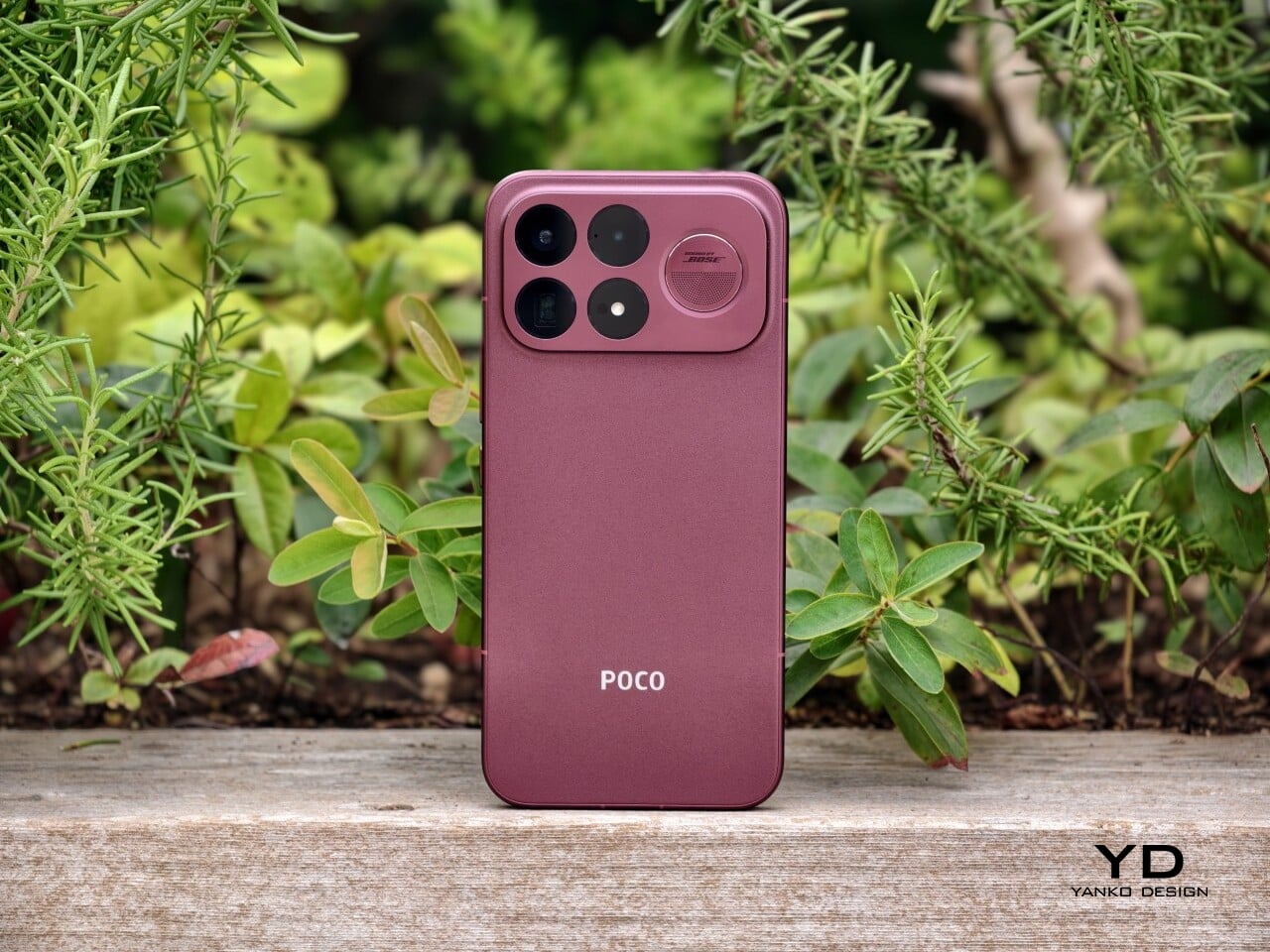
The camera island design remains largely the same as its predecessor, but it feels more resolved here. A large rectangular module sits across the top portion of the phone, housing three cameras and an LED flash in a neat 2 by 2 arrangement, with the speaker grille set off to the right. It is still a bold layout, but one that now feels less experimental and more like a defining part of the phone’s identity.

New to the F9 Ultra is a dynamic light ring built around the speaker grille. It supports personalized visual effects for incoming calls, games, and music. The effect itself appears to be fairly simple, closer to a clean white LED accent than anything overly flashy, but that may be exactly the point. It feels like Poco’s way of keeping a hint of gaming-phone energy alive without letting it overwhelm the more sophisticated direction of the design.

The two colors also tell slightly different stories. The Dark Cherry finish is the more expressive option, bringing warmth and a bit of drama without tipping into flashiness. The Black version feels more understated and technical, especially with the red side-button accent adding a small but effective point of contrast. Both work, but they speak to different moods. One is richer and more characterful, while the other is cooler and more controlled.

Ergonomics

That more sophisticated look does come with a more substantial physical presence. At 235g, the Poco F9 Ultra is about 15g heavier than the F8 Ultra, and you feel that extra weight immediately. It sits firmly on the heavier side, especially in one-handed use, where its size and mass are hard to ignore.

Its dimensions, 163.49 x 77.94 x 8.74mm, are broadly in line with its predecessor, so the overall footprint will feel familiar if you are coming from the older model. It is still a wide phone, though, and not the easiest to manage with one hand. The curved edges do help soften the grip and make it feel less severe than the numbers suggest, but this is still a device that feels more at home in two-handed use.

The matte finish does its part as well. It feels premium, pleasant to touch, and better at disguising smudges than a glossier surface would be. Add in the familiar button placement and unchanged in-display fingerprint scanner, and the F9 Ultra ends up feeling less like a phone you need to relearn and more like one you simply need to get used to carrying.

Performance

The F9 Ultra runs on Qualcomm’s Snapdragon 8 Elite Gen 5, the same flagship platform used in the F8 Ultra. Poco has also retained the VisionBoost D8, a dedicated chip aimed at improving gaming and video performance. In practice, that makes the F9 Ultra feel less like a leap in raw power and more like a refinement of an already capable performance formula.

The F9 Ultra pairs that gaming focus with a 6.9-inch 1.5K AMOLED display, and it is exactly the kind of panel you would want on a phone built around entertainment. It is large, sharp, and vibrant, with a refresh rate that gives the phone a clear performance edge in games that can actually take advantage of it. Outside of gaming, that same smoothness carries over into scrolling, animations, and general navigation, even if the practical difference becomes less dramatic in everyday use.

Brightness is another clear strength. Poco says this is the first global lineup to use the new M11 luminescent material, which helps the panel reach up to 4,500 nits in peak brightness and as high as 10,000 nits for HDR highlights. The numbers are extreme, but the more practical takeaway is that the screen stays very readable outdoors and gives bright scenes a stronger sense of punch and contrast without losing too much detail.

The F9 series is also Poco’s first to push to 185Hz, with support for 24 games running at a native 185fps. That sounds more dramatic than it always feels in practice, because the benefit depends heavily on the kind of game you are playing. In faster titles like Blood Strike, Crossfire: Legends, and Brawl Stars, the higher refresh rate does make a difference. Motion looks cleaner, visual updates come faster, and the game feels a little more immediate under your fingers. In slower games like Clash of Clans, Clash Royale, or Hearthstone, the gain is much smaller. You still get smoother animations and interface movement, but not the same kind of gameplay advantage.

In an hour-long session of Blood Strike at the highest graphic settings, the F9 Ultra was able to hold 185fps without any obvious frame drops. Just as importantly, it did not get uncomfortably hot, staying at around 40 degrees Celsius on the surface. There is clearly enough cooling here to keep performance from falling off over time, but the more important takeaway is that the phone stays consistent under load.

Main Camera, 1x

Portrait mode, Main Camera, 3.1x

The F9 Ultra is the second phone to come out of Poco’s partnership with Bose, which makes the collaboration feel less like a one-off experiment and more like part of the series identity. The Bose-tuned speaker system remains one of its most distinctive features, and also one of the easiest to appreciate in daily use. Poco says it has redesigned the acoustic port and upgraded the dual speakers for clearer sound and richer bass. It also keeps the sound profile presets and 10-band EQ introduced on the F8 Ultra, which means there is still plenty of room to tailor the sound to your liking.

Telephoto Camera, 5x

Telephoto Camera, 10x

In use, the speakers are easy to like. Just like the F8 Ultra, the F9 Ultra delivers some of the best smartphone audio you can get. The sound is fuller and more open than what most phones manage, with enough bass presence to give games, films, and music a bit more body. Dialogue comes through clearly, and the overall presentation feels less cramped than the average smartphone speaker setup.

Main Camera, 1x

Telephoto Camera, 5x

Telephoto Camera, 10x

The F9 Ultra upgrades the main camera from 50MP on the F8 Ultra to 200MP here, though the sensor itself is smaller, dropping from 1/1.31-inch to 1/1.56-inch. That makes it less a straightforward upgrade and more a different kind of tradeoff. The rest of the setup remains familiar, with a 50MP 5x telephoto, a 50MP ultrawide, and a 32MP front camera.

Poco has also made a subtle but useful change to the focal lengths. The F9 Ultra uses a 24mm-equivalent main camera and a 17mm-equivalent ultrawide, compared with 23mm and 18mm on the F8 Ultra. The shift is small, and the ultrawide still does not feel especially expansive, but the added separation between the two lenses makes the jump from main to ultrawide feel a little more purposeful.

Ultrawide Camera, 0.7x

Main Camera, 1x

Telephoto Camera, 10x

In use, the main camera captures photos with good detail, solid dynamic range, and vibrant color. The 5x telephoto is also capable, though it tends to produce images that look a bit more saturated and contrast-heavy. Video is solid too, with crisp footage and enough consistency to make the camera system feel dependable for everyday shooting.

Night Shot, Ultrawide Camera, 0.7x

Night Shot, Main Camera, 1x

Night Shot, Telephoto Camera, 5x

Night Shot, Telephoto Camera, 10x

Battery life remains one of the F9 Ultra’s biggest strengths. The 8,050mAh battery is enormous even by flagship standards, and it gives the phone a clear advantage in the kind of heavy use it is designed for. In my use, it was easy to stretch the phone across two days on a charge, which suits the F9 Ultra’s media-heavy, gaming-friendly character especially well.

Charging is just as capable, with 100W wired and 50W wireless support, plus 27W wired reverse charging and 22.5W wireless reverse charging. It is a battery setup that feels as well-rounded as the rest of the phone.

Sustainability

The F9 Ultra is not a phone that talks much about sustainability in the material-driven sense, but it does make a decent case for longevity. Its IP68 rating and Corning Gorilla Glass 7i should help it stand up to everyday wear, which is still one of the most practical ways a phone can stay useful for longer.

Poco also promises four major Android OS updates and six years of security patches, which gives the F9 Ultra a fairly credible long-term support story. That matters because software support plays a big role in whether a phone remains worth keeping. Poco may not be leading the conversation around recycled materials or repairability here, but the basics of durability and usable lifespan are in place.

Value

The F9 Ultra starts at $799 for the 12GB/256GB version, which puts it $70 above the F8 Ultra. That is still an increase, but not an especially aggressive one in the current climate, where similar phones have seen price jumps closer to $100. Some of that restraint may come from Poco reusing the same Snapdragon 8 Elite Gen 5 platform, which likely helped balance out the rising cost of RAM and other components.

As an upgrade, though, the case is less convincing. If you already have the F8 Ultra, moving to the F9 Ultra does not make a lot of sense unless you specifically want the new design, the 185Hz display, or the 200MP main camera. As a fresh buy, however, it remains one of the best affordable flagship-level phones around. Poco may be edging upward in price, but it still knows how to deliver a lot of phone for the money.

Verdict

The Poco F9 Ultra feels like Poco settling into a formula that actually works. The design is more mature, the gaming side is still strong, and the Bose-tuned speakers remain one of the best reasons to care about the series in the first place. Add the huge battery and the 185Hz display, and you end up with a phone that feels very sure of what it wants to be.

If you already have the F8 Ultra, I do not think this is the upgrade to chase. The older phone is still good enough that the differences here feel more iterative than urgent. But if you are buying fresh, the F9 Ultra is still one of the better affordable flagship-level phones around, especially if you care as much about sound and gaming as you do about the usual specs.

The post Poco F9 Ultra Review: Great Sound, Grown-Up Design first appeared on Yanko Design.

  • ✇Yanko Design
  • TECNO CAMON Slim 5G Review: Thinner than a Pencil, Tough as a Tank
    PROS: Unbelievably slim and lightweight design Striking and stylish art-inspired finish Large 6,000mAh battery despite slim profile Exceptional durability with quad-IP rating, supporting underwater photography CONS: Modest hardware specs No dedicated telephoto camera RATINGS: AESTHETICSERGONOMICSPERFORMANCESUSTAINABILITY / REPAIRABILITYVALUE FOR MONEYEDITOR'S QUOTE:Slim, art-inspired, and tougher than it looks, the TECNO CAMON Slim 5G packs a 6,000mA
     

TECNO CAMON Slim 5G Review: Thinner than a Pencil, Tough as a Tank

Par : JC Torres
18 septembre 2026 à 11:20

PROS:


  • Unbelievably slim and lightweight design

  • Striking and stylish art-inspired finish

  • Large 6,000mAh battery despite slim profile

  • Exceptional durability with quad-IP rating, supporting underwater photography

CONS:


  • Modest hardware specs

  • No dedicated telephoto camera

RATINGS:

AESTHETICS
ERGONOMICS
PERFORMANCE
SUSTAINABILITY / REPAIRABILITY
VALUE FOR MONEY

EDITOR'S QUOTE:

Slim, art-inspired, and tougher than it looks, the TECNO CAMON Slim 5G packs a 6,000mAh battery into a body thin enough to turn heads.
award-icon

Slim phones have always come with a catch. Shave down the body and something else usually gets sacrificed: usually the battery, sometimes the durability, occasionally both. The TECNO CAMON Slim 5G doesn’t play by that old rulebook. At just 6.39mm thick, it still packs a 6,000mAh battery, 5G connectivity, and a durability rating most phones twice its thickness wouldn’t dare claim.

This review spent real time with the phone away from spec sheets, mostly to see if the design holds up once the initial wow wears off. That meant handling the Neo Mondrian finish TECNO sent for testing, carrying it through a normal week, testing the camera in situations that actually matter, and checking whether the durability claims survive contact with water and everyday clumsiness. The design conversation comes first.

Designer: TECNO

Aesthetics

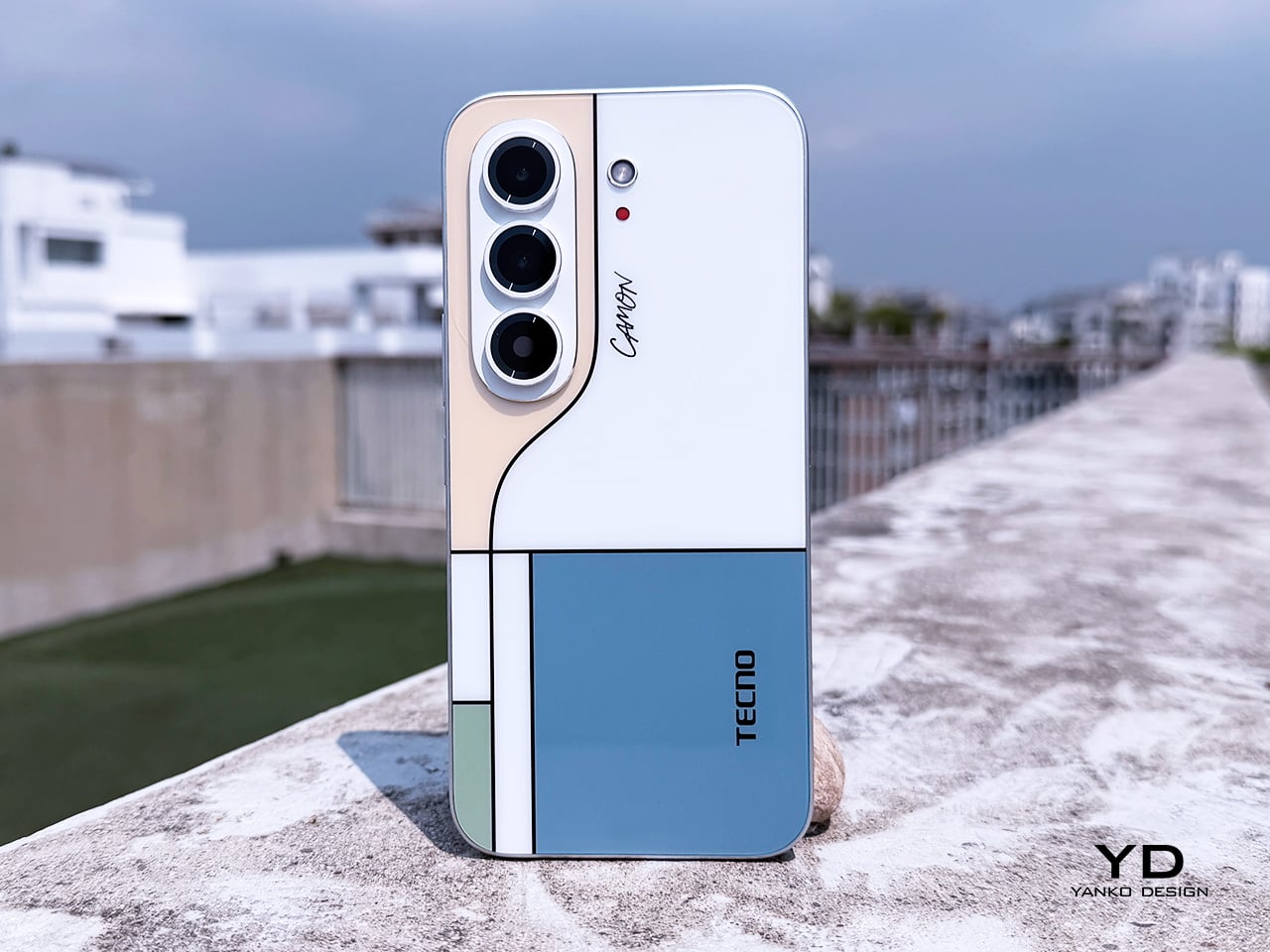
Pull the CAMON Slim 5G out in public and watch what happens. People notice a phone this thin the way they’d notice a watch too elegant for its price tag, usually with a double take and a request to hold it. TECNO carried over the swan-neck curve from the CAMON 50 series, and on a body this slender, that curve reads like a signature rather than a spec sheet footnote.

TECNO sent the Neo Mondrian colorway for this review, and it’s the strongest argument for treating a phone back as an actual canvas. Expose the panel to sunlight and yellow, green, and cyan blocks slowly bloom out of white, forming the grid Piet Mondrian made famous a century ago. It’s a photochromic trick, but watching it happen feels less like a gimmick and more like a magic show.

Neo Mondrian isn’t the only finish doing something interesting. Van Gogh Blue uses similar light-reactive techniques to make its swirling nebula pattern look like it’s actually rotating as shadows shift across it, closer to a painting than a phone back. Matisse Black leans into fluorescent green or pink color blocks that echo the artist’s cut-out work, while Burgundy Red blends fiberglass and matte texture into a warm, understated finish. Rebel Pink keeps things simpler, pairing a black body with sharp pink accents for something a little more playful.

Phone backs used to be an afterthought, something to protect rather than admire, which is why so many people slapped an opaque case on day one without a second thought. That’s changing. As manufacturers invest more in finishes, textures, and light-reactive coatings, more owners are leaving their phones bare, treating the back panel the same way they’d treat a piece of art they paid good money to display.

Ergonomics

Carrying the CAMON Slim 5G is where the thin body actually pays off day to day. It slides into a front pocket without that telltale bulge, sits flat against a jacket without pulling on the fabric, and feels lighter in hand than the display size suggests. After a few days, reaching for a thicker phone almost feels like picking up a brick by comparison.

Those flat edges aren’t just a style choice borrowed from boxier design trends. They give fingers something to actually grip onto, instead of sliding off a rounded rim the way slippery slab phones tend to do. The matte texture on the Neo Mondrian panel adds even more confidence, and TECNO’s wet and oily finger recognition keeps the touchscreen responsive when hands aren’t exactly dry or clean.

Performance

The 6.78-inch AMOLED display runs at 1.5K resolution and 144Hz, and both numbers translate into a screen that looks sharp and feels fast under a thumb. Photos pop with the kind of contrast only AMOLED delivers, video looks great for a lunch break binge, and scrolling through a feed never feels like it’s fighting the hardware. TÜV Rheinland’s low blue light certification is a nice bonus for long reading sessions.

Under the hood sits a MediaTek Dimensity 7300e, a processor built for balance rather than benchmark bragging rights. It handles social apps, photo editing, and everyday multitasking without hiccups, though demanding 3D games will ask more of it than it’s built to give. The 8GB of RAM stretches to 24GB with virtual memory extension, which covers most multitasking habits without needing to close every open app.

The 50MP Sony LYTIA 700C handles most of the photography workload, and it earns that responsibility. A 1/1.56-inch sensor paired with an f/1.8 lens pulls in plenty of light for evening shots, while the closed-loop ball motor keeps focus locked even when subjects won’t sit still. The 8MP ultra-wide feels more like a footnote, and there’s no telephoto here, but the main camera rarely leaves you wanting one.

The real showstopper is the 6,000mAh battery, a number that seems almost impossible once you remember this phone measures 6.39mm thick. It comfortably carries a full day of camera use, video, and scrolling without the battery anxiety that usually comes with slim designs. That same waterproofing also unlocks a dedicated underwater photography mode, one that kicks in automatically the moment the phone senses it’s gone for a swim.

Sustainability

TECNO rates the CAMON Slim 5G at IP69K, IP69, IP68, and IP66, a combination that’s rare even among phones that don’t have to worry about staying thin. That covers everything from high-pressure water jets to dust particles to full submersion, which is a lot of technical armor for a phone this delicate-looking. Finding this rating on a 6.39mm body is the kind of detail that quietly impresses.

There’s also a MIL-STD-810 rating covering shock and drop resistance, which pairs nicely with features like Rain Touch and Waterproof Case Touch that keep the screen usable in a downpour or behind a case. This doesn’t read like a feature bolted on at the last minute. It feels like TECNO wanted this phone to survive actual daily chaos, not just look good sitting still on a shelf.

Longevity extends past the hardware, too. TECNO promises three major OS upgrades and five years of security patches, plus a 60-month smoothness certification from TÜV SÜD. That’s a meaningful commitment in a market where phones often get abandoned after two update cycles. A well-built object is worth keeping around, and TECNO seems to be betting that owners will want to hold onto this one for a while.

Value

TECNO hasn’t confirmed global pricing yet, but early indications point to somewhere around $400. At that number, buyers get a phone with genuine art-inspired finishes, a 6.78-inch 144Hz AMOLED screen, a Sony-backed 50MP camera with real stabilization, a 6,000mAh battery, and a durability rating that most phones twice the price don’t bother chasing. That’s a fairly generous list for a phone that costs less than most flagships.

Most phones in this price range make you pick a lane. Go thin, and the battery usually suffers, or the body skips water resistance entirely, or the software support runs out after a couple of years. TECNO’s five-year update promise and its layered durability ratings quietly add up to lower long-term cost, since a phone built and supported to last half a decade doesn’t need replacing as often.

This phone makes the most sense for people who are tired of carrying an identical black slab and want something that says a little more about them. It’s not the right pick for hardcore mobile gamers chasing max frame rates, or photographers who need optical zoom on tap. For nearly everyone else, it covers daily needs while looking like it belongs on a gallery shelf.

Verdict

After a few days of actual use, the 6,000mAh battery and the quad-IP rating stop feeling like marketing footnotes and start feeling like the whole point. TECNO built a phone that looks like it belongs in a design museum and still survives a rainy commute or a splash at the sink. The Neo Mondrian panel alone gives it a personality that’s genuinely hard to find anywhere near this price.

Plenty of phones ask you to choose between something beautiful and something dependable, and most buyers have quietly accepted that trade-off as the cost of owning a nice-looking device. The CAMON Slim 5G makes a strong case that the choice was never as necessary as the industry made it seem. It’s a phone that looks good on a café table and still works fine after falling off of one.

The post TECNO CAMON Slim 5G Review: Thinner than a Pencil, Tough as a Tank first appeared on Yanko Design.

❌