❌

Vue normale

  • ✇Yanko Design
  • Hollow Clock V Trades a Solid Dial for a Ring of Hidden Gears
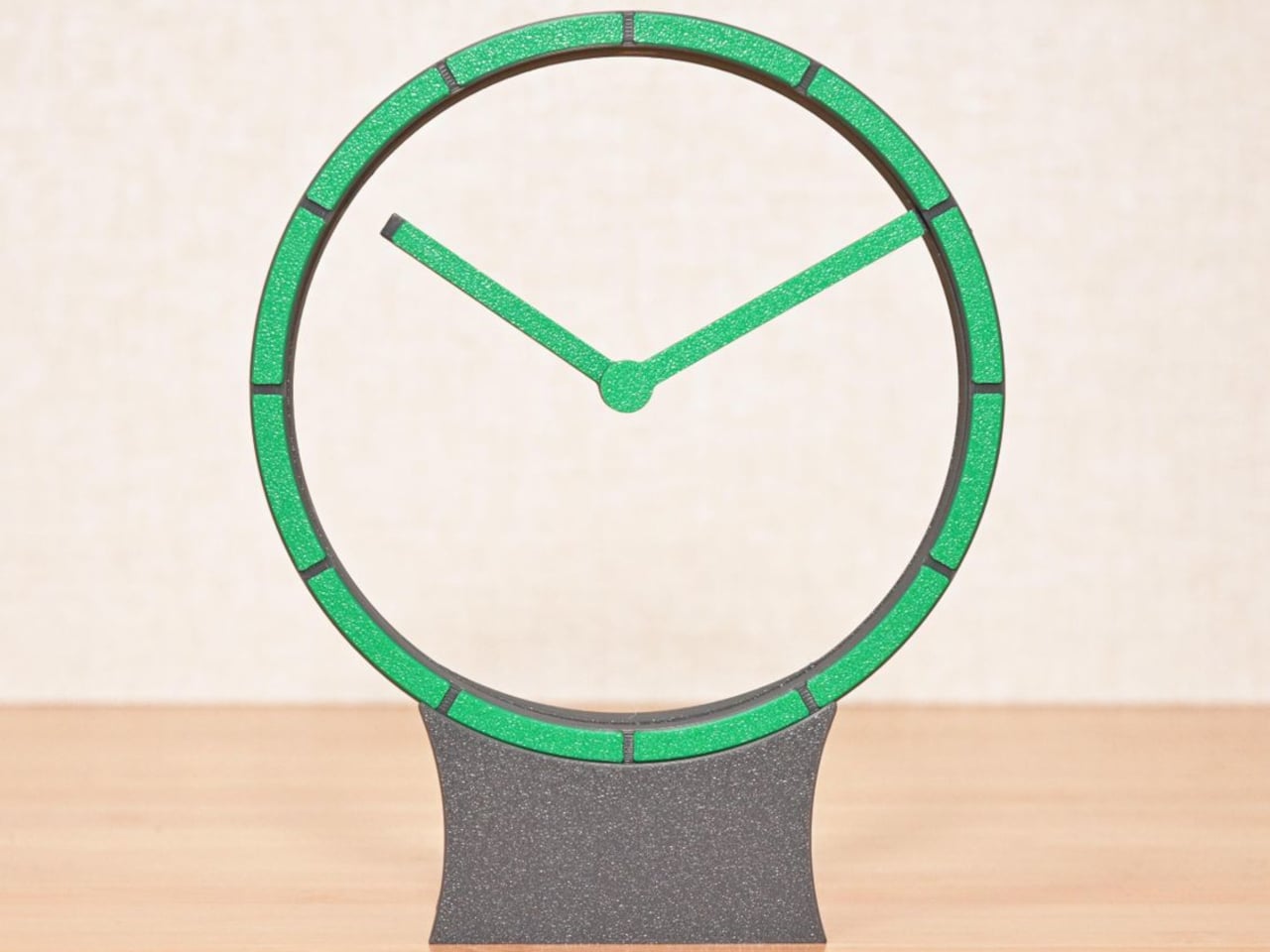
    Most clocks give their hands somewhere obvious to stand, usually a solid face hiding the mechanism behind it. Hollow Clock V leaves that space empty, making its hands appear to hover inside a slender ring. This working DIY project uses 3D-printed parts, hidden gears, and magnets to pull off a trick that doesn’t require a transparent panel to work. The minute hand provides the first clue, since its outer end connects to a rotating ring concealed within the frame. Its center supports the hour han
     

Hollow Clock V Trades a Solid Dial for a Ring of Hidden Gears

Par : JC Torres
9 novembre 2026 à 13:20

Most clocks give their hands somewhere obvious to stand, usually a solid face hiding the mechanism behind it. Hollow Clock V leaves that space empty, making its hands appear to hover inside a slender ring. This working DIY project uses 3D-printed parts, hidden gears, and magnets to pull off a trick that doesn’t require a transparent panel to work.

The minute hand provides the first clue, since its outer end connects to a rotating ring concealed within the frame. Its center supports the hour hand on a small pivot, so the pair isn’t actually levitating. The hour hand’s position is controlled magnetically by another rotating ring, allowing it to keep pointing at the right hour while the longer hand travels around.

Designer: Shinsaku Hiura

That second ring carries two neodymium magnets, which interact with a third tucked into the hour hand. Their T-shaped arrangement helps keep the hand aligned without adding a connection across the opening. Down in the base, a stepper motor and a combination of worm and bevel gears drive the minute ring 12 times faster than the hour ring, without a bulky central hub.

All that machinery makes the spare appearance deceptive. The ring has a border only about 0.28 inches wide, with hour markers replacing a conventional numbered dial. Screws are kept out of sight when the clock is assembled, apart from the central hand fastener. A rear USB-C connection sends the cable away from the front, leaving the open center to do the distracting.

The finish is also shaped by the way the parts are printed, rather than treated as an afterthought. Front surfaces sit against the printer’s build plate, picking up its texture instead of exposing filament paths across the face. Changing filament during printing gives the markers a contrasting color. It’s a small manufacturing decision that makes the homemade object look a little more deliberate.

Setting the time stays physical, too. You lift the display ring out of the base, freeing it from the drive gears, move the hands to the desired time, and slot it back in. There’s no tiny adjustment knob to hunt for behind the housing. For a clock that hides so much of its mechanism, this particular interaction is refreshingly easy to understand.

Getting to that point takes more effort than the finished clock lets on. The project involves printing, soldering, loading firmware, and assembling the moving parts, although the supplied print orientations don’t require supports. Smooth gear surfaces matter, and the guide includes lubrication and tuning advice. The uncluttered desk ornament is also a small mechanical project, with patience required before it starts keeping time.

The ratchet is designed to compensate for missed motor steps, though it also introduces a reason to think twice about bedside placement. The guide describes removing its hook for quiet operation only when the mechanism runs smoothly enough. On a desk or shelf, that choice comes down to how much of the clock’s engineering you’re prepared to hear as well as admire.

The post Hollow Clock V Trades a Solid Dial for a Ring of Hidden Gears first appeared on Yanko Design.

  • ✇Yanko Design
  • HOA A1 Camera Lets You Stay Face-to-Face While Taking Photos
    Taking someone’s photograph often means hiding your own face behind a camera or phone. That’s a rather strange way to capture a shared moment, especially when you’re trying to keep a conversation going. HOA’s upcoming A1 camera takes a different approach, using a large, open frame as its viewfinder so you can look directly at the person you’re photographing with both eyes open. The shape is almost comically simple, leaving a rectangular border, a solid lower section, and a circular lens assembl
     

HOA A1 Camera Lets You Stay Face-to-Face While Taking Photos

Par : JC Torres
9 novembre 2026 à 09:20

Taking someone’s photograph often means hiding your own face behind a camera or phone. That’s a rather strange way to capture a shared moment, especially when you’re trying to keep a conversation going. HOA’s upcoming A1 camera takes a different approach, using a large, open frame as its viewfinder so you can look directly at the person you’re photographing with both eyes open.

The shape is almost comically simple, leaving a rectangular border, a solid lower section, and a circular lens assembly that overlaps the opening. Rather than squeezing a tiny viewfinder into one corner, the body gives you a generous space to look through. The lens still occupies part of that view, of course, but there’s considerably less camera standing between you and your subject.

Designer: Lutra

That could make photographing friends feel a little less like asking them to perform for a gadget. You can keep talking, watch their expressions, and press the shutter without switching your attention to a live preview. Accurate composition is another matter, however. How closely that opening matches the final photograph, particularly as you move it away from your face, still needs testing.

Inside that unusual outline is a Sony 16MP sensor paired with an autofocus lens offering a 26mm-equivalent field of view. That’s a wide-angle perspective suited to keeping some surroundings in the picture, rather than concentrating on a distant face. HOA lists a weight of about 4.9 ounces and a battery rated for up to 90 minutes of continuous shooting on a single charge.

Your phone returns to the process when it’s time to see what you’ve captured. HOA says tapping a smartphone against the camera’s back will let you view photographs, although detailed instructions are still pending. You can shoot without Wi-Fi, so a walk with your camera doesn’t require finding an internet connection first. Getting authentication certificates through the companion app requires going online, however.

Those certificates belong to ShootProof, HOA’s proposed system for checking whether a photograph has changed since capture. The company says a secure chip signs each image’s digital fingerprint, with that record entered into a blockchain registry. That’s a record of the file’s integrity, not a guarantee that the scene was truthful. Photographing something staged doesn’t make it honest, certificate or no certificate.

There’s a more personal kind of signature as well, and this one actually appears in the photograph. An optional Signature mode places your chosen mark in a corner of each shot, much like signing a print. You can leave a little trace of yourself on photographs of friends or familiar places, rather than adding your signature to every individual photograph by hand afterward.

The planned December 21 release is limited to 100 numbered First Edition cameras, priced at $289. That makes the A1 an unusual purchase before its image quality and phone workflow are fully demonstrated. Its open frame offers an appealing way to keep looking at people while photographing them, but the photographs still have to justify carrying another device alongside your phone.

The post HOA A1 Camera Lets You Stay Face-to-Face While Taking Photos first appeared on Yanko Design.

  • ✇Yanko Design
  • Clear-Shell Game Boys Never Made the Screen Transparent, Arduview Did
    Every gadget on a desk is built to hide what makes it work. Phones, consoles, controllers, they’re all sealed slabs designed to keep the copper and silicon out of sight. Arduview refuses that logic entirely. Its shell is clear, its circuit board is clear, and its OLED display lets you watch pixels light up while seeing straight through to the components producing them. Retro handhelds have flirted with transparency before. Clear-shell Game Boys and modded Miyoo units let you glimpse a shadow of
     

Clear-Shell Game Boys Never Made the Screen Transparent, Arduview Did

Par : JC Torres
9 septembre 2026 à 05:15

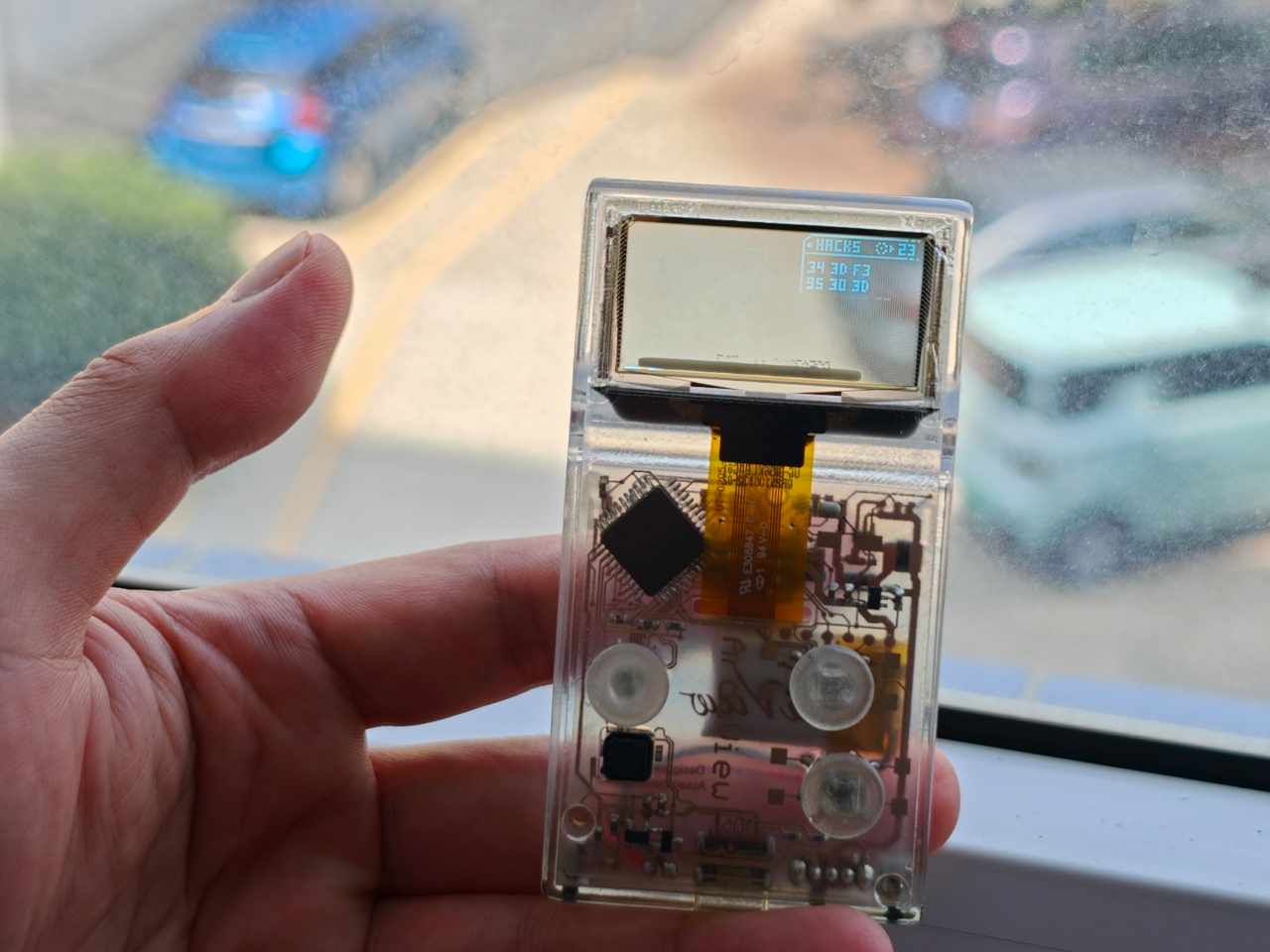
Every gadget on a desk is built to hide what makes it work. Phones, consoles, controllers, they’re all sealed slabs designed to keep the copper and silicon out of sight. Arduview refuses that logic entirely. Its shell is clear, its circuit board is clear, and its OLED display lets you watch pixels light up while seeing straight through to the components producing them.

Retro handhelds have flirted with transparency before. Clear-shell Game Boys and modded Miyoo units let you glimpse a shadow of the board through tinted plastic, but the display itself stayed opaque, a black rectangle sitting in an otherwise see-through frame. Arduview closes that gap by making the screen itself transparent, so nothing on the device breaks the illusion of looking clean through it.

Designer: Louis Huang

Peer through the front and the internals aren’t just visible; they’re the entire visual identity. The board, the chip, an orange copper flex cable, the button domes, and the USB-C port all sit in plain view, arranged the way a watchmaker might arrange gears behind sapphire crystal. Nothing here was designed to be hidden later. It was designed to be looked at from day one.

That philosophy extends to how the thing works, not just how it looks. Built on Arduboy, an open-source handheld platform, Arduview skips the layers that usually complicate small electronics. There’s no app store hunting, no Wi-Fi pairing, no account setup standing between you and 400 preloaded games. Power it on and it plays, the same instant gratification that made simple handhelds addictive in the first place.

At 50 grams and roughly the footprint of a credit card, the size does real work here. A device this small and this light stops being a dedicated gaming session and starts being something you carry the way you’d carry a keychain or a pocketknife, small enough to disappear until the moment you want it. Pull it out on a train platform or set it on a desk between meetings, and it reads less like a toy and more like a curiosity someone can’t resist picking up.

That reaction seems to be the entire point. A transparent gadget invites touching in a way an opaque one never does, because there’s an implicit dare in showing your internals: come look closer. Arduview leans into that dare completely, treating the space usually reserved for a case as prime real estate for the very thing most companies spend their design budgets concealing.

Retro gaming has always had a strong current of nostalgia running through it: chunky buttons, pixel art, low-resolution charm. Arduview borrows all of that while adding something genuinely new to the mix: a device that looks like it belongs in a display case at a design museum as much as it belongs in a pocket.

The post Clear-Shell Game Boys Never Made the Screen Transparent, Arduview Did first appeared on Yanko Design.

❌