Vue normale

  • ✇Yanko Design
  • Apple’s Coolest Watch Feature Has Nothing To Do With Health… It Lets You Rewind Time.
    “Could you come again?” “Pardon?” “Huh?” “Wait, say that one more time?” These are examples of phrases that make you seem dumber than you really are. Nothing destroys aura more than unironically asking someone to repeat something they said because A. you weren’t listening, or B. you were but just didn’t happen to comprehend what they were saying. Apple has a solution for that, and it’s wrapped up in their latest smartwatch. The new Live Rewind feature, powered by Apple’s new S11 chip, allows yo
     

Apple’s Coolest Watch Feature Has Nothing To Do With Health… It Lets You Rewind Time.

9 septembre 2026 à 16:30

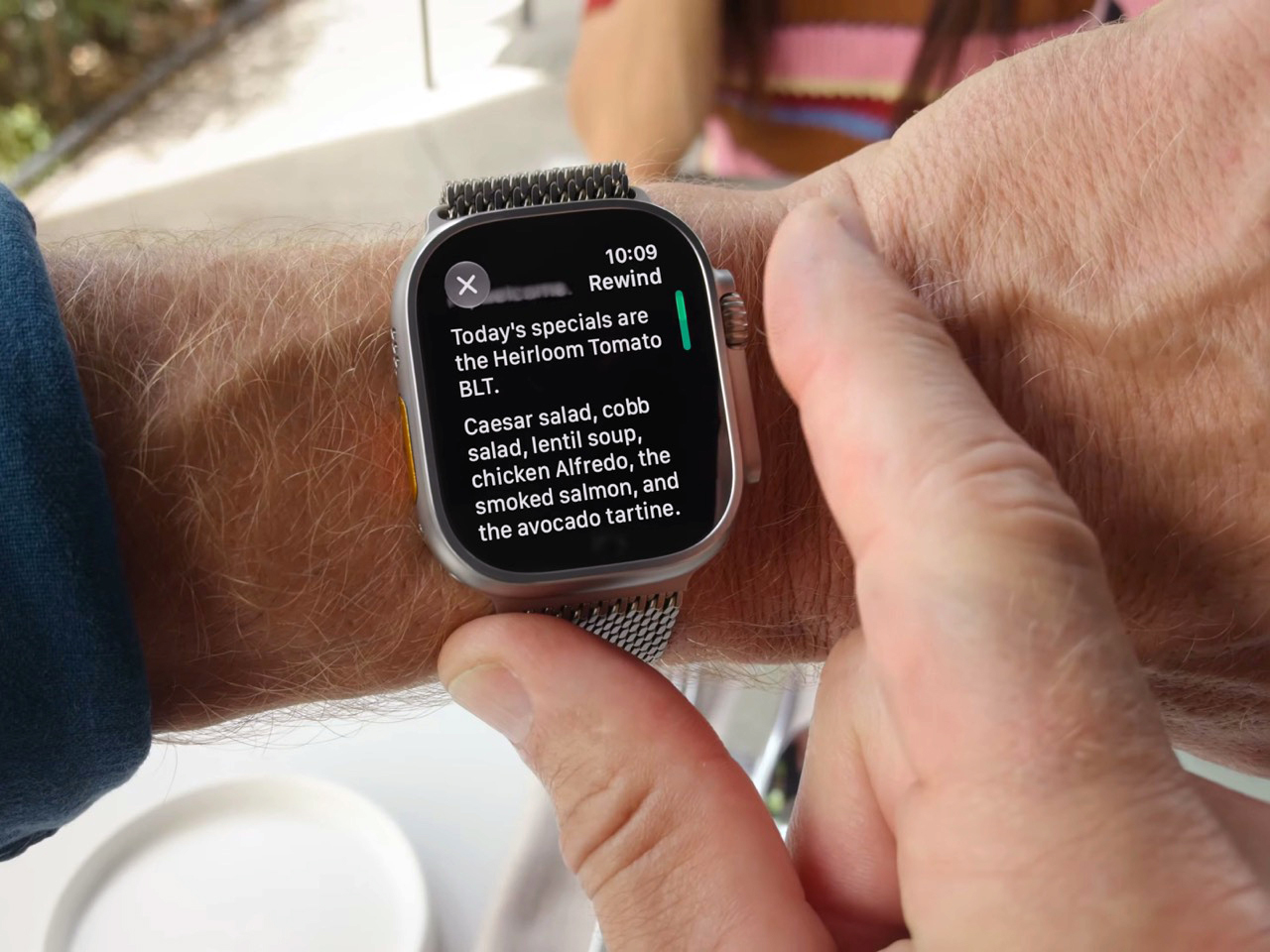
“Could you come again?” “Pardon?” “Huh?” “Wait, say that one more time?” These are examples of phrases that make you seem dumber than you really are. Nothing destroys aura more than unironically asking someone to repeat something they said because A. you weren’t listening, or B. you were but just didn’t happen to comprehend what they were saying. Apple has a solution for that, and it’s wrapped up in their latest smartwatch. The new Live Rewind feature, powered by Apple’s new S11 chip, allows you to instantly transcribe the past 15 seconds of any conversation and read its chat logs. Press the digital crown on the new Watch twice, and you pretty much get ‘subtitles’ for the past 15 seconds, so you don’t have to “excuse me” your way into a repetition.

Your watch, just like your phone, earbuds, smart speaker, and smart home hub, is always listening. It’s waiting for the magic words “Hey Siri” or Alexa, or Google depending on which ecosystem you’re tied into. The point is, it’s always listening, so Apple simply created a way to package that into a feature that feels impressive rather than invasive. Think of how a dashcam can auto-log the past 3 minutes of video AFTER an accident occurs (using a feature called loop recording), Apple just brought that to your watch, packaged as a part of its new Audio Intelligence suite of features. Impressive, no?

Designer: Apple

Once you’ve got the transcript, you can ask Siri about it directly, or save it into the new Siri app to dig up later. Say your coworker rattles off a Wi-Fi password or a colleague mentions a book recommendation mid-hallway chat. Instead of fumbling for your phone, you catch it on your wrist and move on. Apple says none of this gets recorded in the traditional sense. Audio flows into a secure buffer inside the S11’s Secure Exclave, a hardware compartment isolated from the rest of the system, and once the transcript is generated, the raw audio is gone. No file, no clip, nothing to subpoena, because nothing exists.

Sitting next to Live Rewind is Siri Recap, which does the same basic trick but for an entire conversation instead of a 15 second clip. Turn it on before a meeting or a parent teacher conference, and Apple Intelligence quietly builds a title, a summary, and a list of key points you can review afterward in the Siri app. You control the boundaries here more than you’d expect. Leave it running all day, schedule it for work hours only, or flip it off entirely from Control Center whenever the conversation turns private. Summaries auto delete after seven days unless you save them, and saved ones sync end to end encrypted, so not even Apple can read them back.

Audio Intelligence isn’t just built for eavesdropping on your own life. Sound Recognition listens for sirens, alarms, doorbells, and crying babies, then buzzes your wrist even when your phone is nowhere nearby, which makes it a genuinely useful accessibility tool for anyone who is deaf or hard of hearing. Shazam gets folded in too, sitting in the Smart Stack and naming whatever song is playing around you without you having to pull out a phone. Four features, one microphone, and one chip doing the quiet work behind all of them.

Both Live Rewind and Siri Recap need Siri AI to function, and Siri AI is still in beta, so expect this to roll out gradually starting in English before other languages follow. You’ll also need an iPhone 16 or newer paired to the Watch, so the 16e and anything older is out of luck. Apple Watch Series 12 itself starts at $399, is available for preorder today, and ships September 18. The health sensors got a real upgrade this generation too, but for once, that isn’t the headline. The mic is.

The post Apple’s Coolest Watch Feature Has Nothing To Do With Health… It Lets You Rewind Time. first appeared on Yanko Design.
Xiaomi Smart Band 11 vs Smart Band 10: What Actually Changed?

4 septembre 2026 à 09:26

Xiaomi Smart Band 11 keeps the Band 10’s display size and 21-day battery claim but adds more brightness, a thinner design, and new health features.

The post Xiaomi Smart Band 11 vs Smart Band 10: What Actually Changed? appeared first on TechRepublic.

  • ✇Yanko Design
  • Plaud One Hands-On at IFA 2026: AI Earbuds That Transcribe Meetings, Then Draft Emails And Decks For You
    For three years, Plaud made very good tape recorders with a PhD. You pressed a button, it captured a meeting, and mere minutes later a summary showed up. The Plaud One, launched at IFA 2026 for €249.90, reverses that arrow. Its charging case now holds four beamforming mics, a speaker, an agent button and a built in eSIM, so it stays online without a phone nearby. Hold the agent button and the AI talks back, asks what you meant, then builds the deck or drafts the email while you get on with your
     

Plaud One Hands-On at IFA 2026: AI Earbuds That Transcribe Meetings, Then Draft Emails And Decks For You

3 septembre 2026 à 20:28

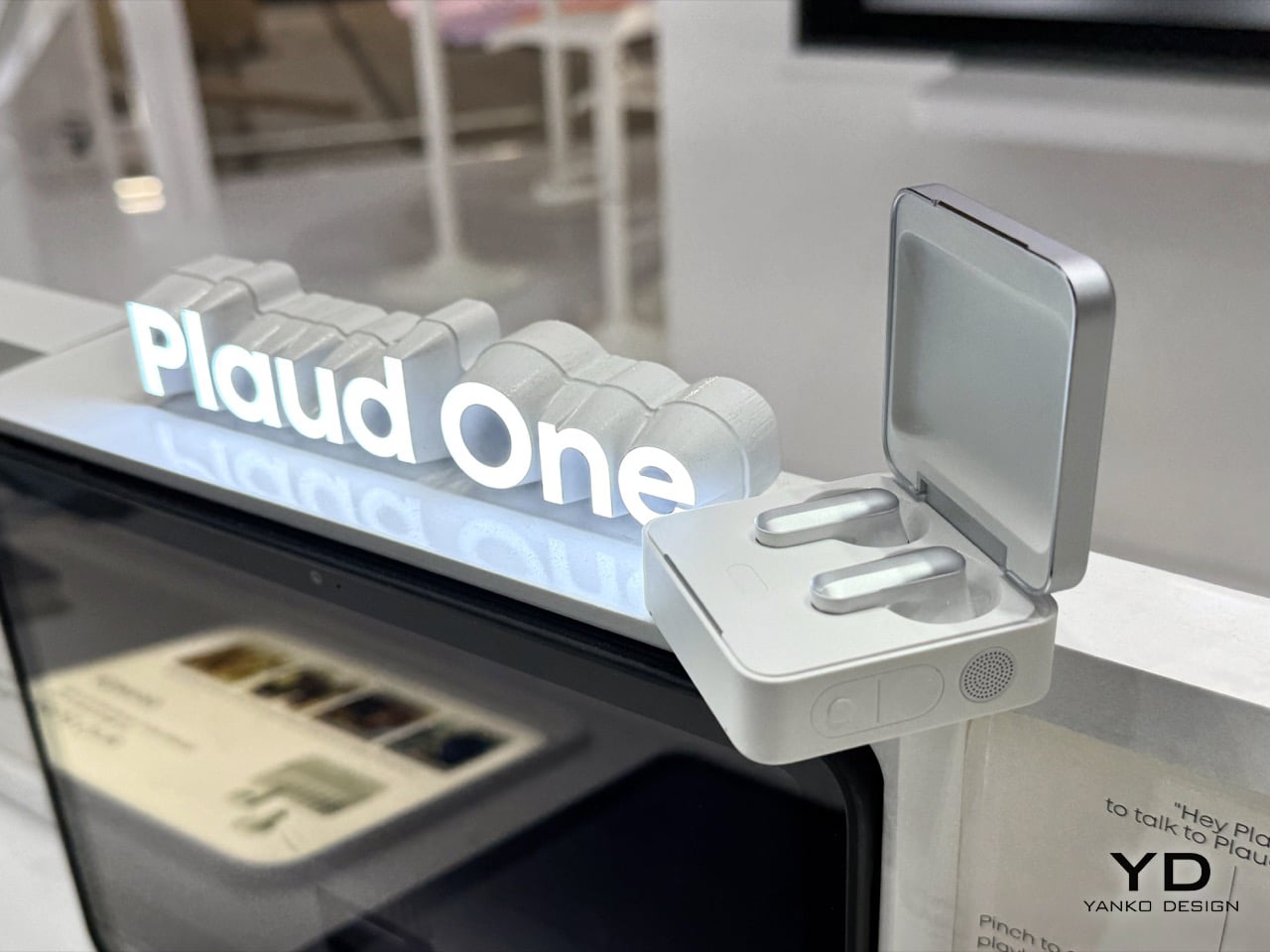
For three years, Plaud made very good tape recorders with a PhD. You pressed a button, it captured a meeting, and mere minutes later a summary showed up. The Plaud One, launched at IFA 2026 for €249.90, reverses that arrow. Its charging case now holds four beamforming mics, a speaker, an agent button and a built in eSIM, so it stays online without a phone nearby. Hold the agent button and the AI talks back, asks what you meant, then builds the deck or drafts the email while you get on with your day.

That flip from recording to doing needed hardware nobody had built yet. Not a pendant, not a pin, not another app crammed onto a phone you were already staring at. Plaud built a palm sized aluminum box with a fluted lid that looks like a Rimowa suitcase went through a shrink ray, sitting on a table, listening across a room, and talking back like a colleague who never needs coffee. The Explorer Edition opens for pre order now, capped at 2,000 units worldwide, with deliveries landing in Q4. A public version follows in 2027, once Plaud has watched two thousand early adopters put the thing through its paces.

Designer: Plaud

The original Plaud Note clipped onto a phone and did one job, listen to a meeting and hand back a transcript once it ended. The Note Pro added a screen and better mics. The NotePin S shrank the format onto a lanyard clip. Every generation stayed reactive by design, a smart recorder waiting for you to press stop before it did anything useful. That business built Plaud’s 2.5 million user base and reportedly crossed $100 million in annual software revenue by June, which is exactly the kind of runway that lets a company gamble on reinventing its own hardware category from scratch.

Vertical fluting runs down the case’s aluminum lid, the same visual trick Rimowa has stamped into cabin luggage since the 1950s, giving a 62 gram object a sense of density it has no right to carry. Flip it open and the earbuds sit half in ear, silver capped, in a tray that reads closer to a jewelry box than a charging dock. A speaker grille, a record button and a separate agent button line the case’s edge, the three controls that turn a charger into a device you actually talk to. None of it apes a phone. It reads like furniture for a desk, not gear for a pocket.

Earlier Plaud devices leaned on your phone for both processing and connectivity, so the intelligence always sat one hop away from the microphone. Plaud One’s case carries its own 4G LTE connection through a built in eSIM, closing that gap entirely. Capture, transcription and agent response now run in one box, independent of any other screen in your life. Leave your phone in a bag, walk into a cafe, and the case still records the table’s conversation, answers a question out loud through its speaker, or fires off a follow up email on command. Every pendant and pin that came before this quietly depended on a phone doing the real work behind the scenes. Plaud One is the first in the category that genuinely does not.

Plaud Agent drafts a follow up email the moment a client call ends. Feed it a meeting and it builds a slide deck while you sit through your next call, then drops the finished file straight into Notion with zero copy pasting. The platform connects to Gmail, Google Workspace, Microsoft Teams, Slack and Notion today, with more integrations promised as the software matures. Set it loose on a standing task, a monthly competitor scan for instance, and it runs quietly in the background, waiting with a finished report the next time you check. This is the actual bet Plaud is making, that an assistant worth having has to act, not just remember.

Pre orders for the Explorer Edition are open now at €249.90, with the first 2,000 units shipping in Q4. Buyers get $200 in Plaud Credits toward the heavier agent features on top of a starter transcription plan, so the price buys a running start on the software as much as the hardware. Calling this an Explorer Edition rather than a finished release is the honest move, an open beta wearing genuinely sharp industrial design. Plaud spent three years building the best possible way to listen. Plaud One is its first real attempt at building something worth talking to.

The post Plaud One Hands-On at IFA 2026: AI Earbuds That Transcribe Meetings, Then Draft Emails And Decks For You first appeared on Yanko Design.

Libre Duo 10 Day: The First Wearable to Track Glucose and Ketones

3 septembre 2026 à 10:36

Abbott’s Libre Duo 10 Day continuously tracks glucose and ketones from one sensor, with a US launch planned for later in 2026.

The post Libre Duo 10 Day: The First Wearable to Track Glucose and Ketones appeared first on TechRepublic.

  • ✇Yanko Design
  • This $500 Wearable Tracks Your Brain All Day, Even While You’re Moving
    Our brain is still a mystery, of which only a small part has been completely understood. Every single decision we make, every move in stressful situations, and the ability to plan way ahead of time can be attributed to the grey matter between the ears. While most wearables want to bring the prowess of advanced medical-grade brain monitoring to everyday life, the strings attached nullify the comprehensive level of scanning required for deeper insight. Atlas Mankind, a startup, wants to change th
     

This $500 Wearable Tracks Your Brain All Day, Even While You’re Moving

2 septembre 2026 à 16:30

Our brain is still a mystery, of which only a small part has been completely understood. Every single decision we make, every move in stressful situations, and the ability to plan way ahead of time can be attributed to the grey matter between the ears. While most wearables want to bring the prowess of advanced medical-grade brain monitoring to everyday life, the strings attached nullify the comprehensive level of scanning required for deeper insight.

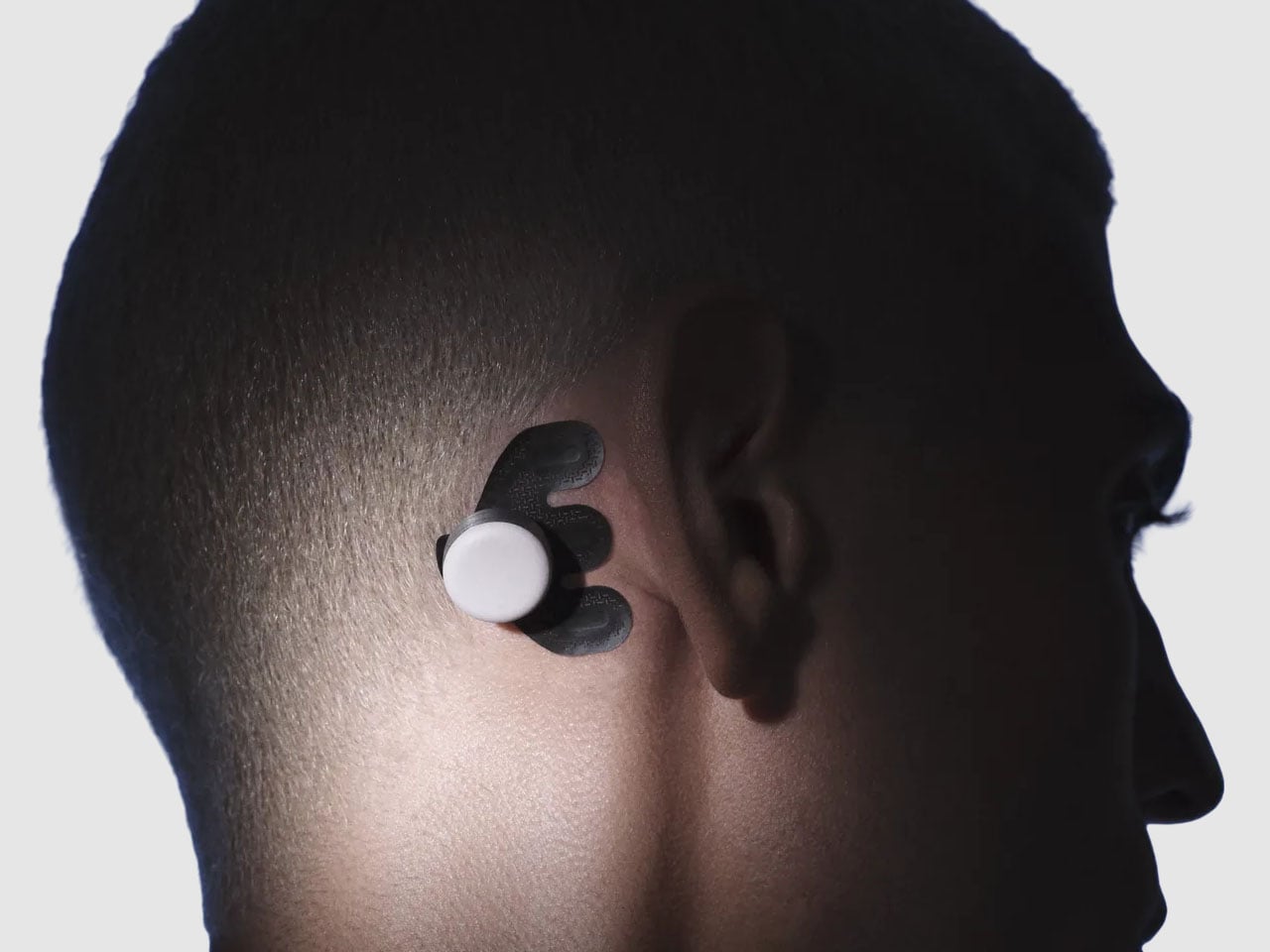
Atlas Mankind, a startup, wants to change that with a $500 wearable that sticks to the back of your ears to function in the background as we go on with our daily lives. That’s a leap from other similar wearable gadgets, which require the wearer to stay still or only function while you are asleep. Dubbed Atlas 1.0, the advanced EEG gadget monitors electrodermal activity, voice patterns, and head movements throughout the day to make precise readings of what your brain is doing.

Designer: Atlas Mankind

According to Atlas Mankind, the compact EEG tracker doesn’t restrict the wearer’s movement or only function in certain situations, thereby making it a more natural and unbiased instrument for understanding the internal state of the wearer. It creates a longitudinal record of the brain’s activity in real-life situations, “which is much more meaningful than a single test or isolated brain scan.” The wearable functions in conjunction with the compatible app to track three metrics, which are Presence, Stress, and Energy Burn. That is much more comprehensive than having the half-baked metrics of your stress levels, heart rate, skin temperature, sleep analysis, and generic brain activity that other advanced wearables tout.

Coming back to the three main metrics on which Atlas 1.0 excels – Presence represents whether your attention is inwards or outwards. For instance, during a conversation with your friend, how engaged you actually were. This is done by analyzing the speech patterns and the hemisphere of the brain that was activated during that time. Then there is the Stress tracking, which keeps a very close tab on your physiological stress in the background. The last one is Energy Burn that identifies the activities that were most taxing during the course of the day.

In conjunction with the app that connects to your calendars, event logs, and schedules, the wearable determines the level of shift in these metrics for an in-depth analysis of the brain state over a period of time. The patterns revealed can help the user identify which habits and activities are worth taking up and which ones are better avoided if possible. Atlas 1.0 sticks to the skin behind the ears on an adhesive pad and records the brain waves, as well as voice patterns (not the actual speech for data safety) and movement 24×7. With a dataset of more than 50,000 brain recordings to power the advanced algorithm, the prospects here are exciting.

According to Ana Montero, co-founder & chief executive officer, “For the first time, some of the most important moments in a human life are becoming measurable.” This is supported by André Marques-Smith, PhD: co-founder & chief technology officer, who says, “commitment to accuracy makes ATLAS a tool for genuine mastery and personal science, not just measurement and vanity metrics.” He adds that the engineering challenge of capturing “research-grade data while in motion” is what makes Atlas 1.0 special.

The company is already taking pre-orders for the non-invasive wearable, and it does come with a $30 monthly subscription to keep going. It’ll be interesting to see how accurate the wearable turns out to be, since it is not cheap and you’ll have to keep paying a monthly subscription to make it relevant.


The post This $500 Wearable Tracks Your Brain All Day, Even While You’re Moving first appeared on Yanko Design.

Garmin Fenix 9 vs Fenix 9 Pro: Is the $100 Upgrade Worth It?

2 septembre 2026 à 13:51

The $100 jump to Garmin’s fēnix 9 Pro buys a titanium case and access to solar and inReach configurations, not a completely different watch platform.

The post Garmin Fenix 9 vs Fenix 9 Pro: Is the $100 Upgrade Worth It? appeared first on TechRepublic.

Sennheiser Momentum True Wireless 5: Key Features and Price

2 septembre 2026 à 10:26

Sennheiser’s $299.95 Momentum True Wireless 5 adds user-replaceable batteries to both the earbuds and charging case, plus longer battery life and Bluetooth 6.0.

The post Sennheiser Momentum True Wireless 5: Key Features and Price appeared first on TechRepublic.

HONOR Watch 6: Everything You Need to Know

2 septembre 2026 à 09:43

HONOR Watch 6 combines long battery life, dual-band GPS, health tracking, and NFC, but some features depend on your phone, bank, and region.

The post HONOR Watch 6: Everything You Need to Know appeared first on TechRepublic.

Oura Ring’s AI Sleep-Tracking Claims Face Legal Scrutiny in Proposed Class Action

24 août 2026 à 13:33

Oura faces a proposed class action challenging its sleep-tracking accuracy claims, raising broader questions about how wearables present estimated health data.

The post Oura Ring’s AI Sleep-Tracking Claims Face Legal Scrutiny in Proposed Class Action appeared first on TechRepublic.

Google Tests Smartphone Photos for Insulin Resistance Risk

20 août 2026 à 15:21

Google tests AI-powered smartphone photos to estimate body composition and insulin-resistance risk, hinting at a new path for blood sugar tracking tools.

The post Google Tests Smartphone Photos for Insulin Resistance Risk appeared first on TechRepublic.

Samsung Galaxy H1 Leak Points to New Over-Ear Headphones: What We Know

17 août 2026 à 07:10

Samsung may be preparing a return to full-size wireless headphones with a device reportedly known as Galaxy H1. App code offers the first clues, but key details remain unconfirmed.

The post Samsung Galaxy H1 Leak Points to New Over-Ear Headphones: What We Know appeared first on TechRepublic.

Samsung: New Galaxy Foldables Beat Previous Preorder Record by 30%

6 août 2026 à 09:02

Samsung’s Galaxy Z Fold8 leads record foldable preorders in the US and South Korea as more buyers move from Flip models to the larger Fold lineup before launch.

The post Samsung: New Galaxy Foldables Beat Previous Preorder Record by 30% appeared first on TechRepublic.

  • ✇Yanko Design
  • Motorola’s Patent Isn’t a Phone You Wear, It’s a Watch You Unfold
    The idea of merging a smartwatch and a smartphone into a single device has been floating around the industry for years, mostly because the obvious inconvenience is right there: two screens on two separate devices, one tiny and worn on the wrist, the other large and kept in a pocket, each doing essentially half the job the other can’t. The logical question is whether one of those devices could do both jobs depending on the situation. Motorola’s latest patent, officially registered as US12,693,70
     

Motorola’s Patent Isn’t a Phone You Wear, It’s a Watch You Unfold

Par : JC Torres
6 août 2026 à 04:45

The idea of merging a smartwatch and a smartphone into a single device has been floating around the industry for years, mostly because the obvious inconvenience is right there: two screens on two separate devices, one tiny and worn on the wrist, the other large and kept in a pocket, each doing essentially half the job the other can’t. The logical question is whether one of those devices could do both jobs depending on the situation.

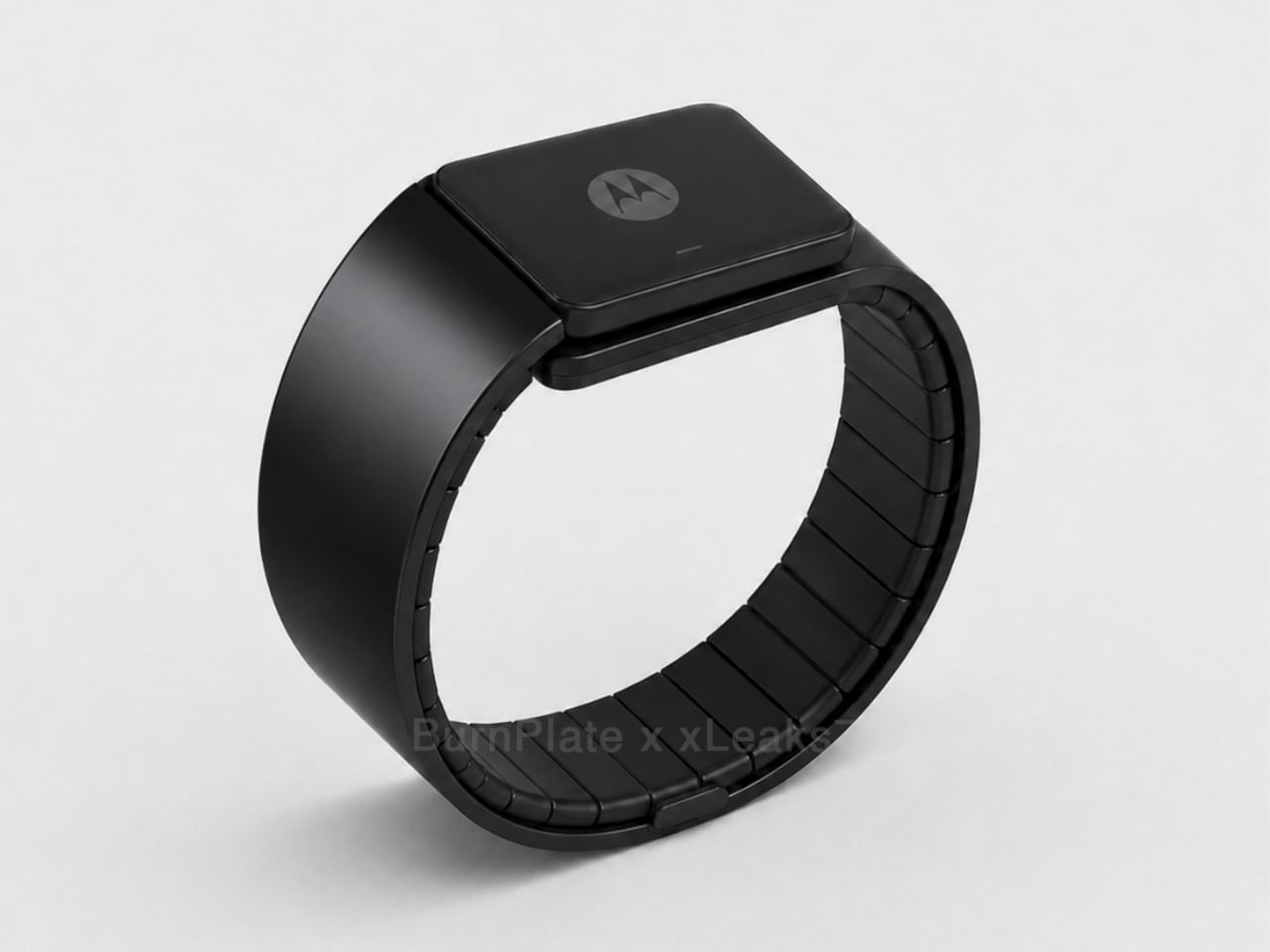
Motorola’s latest patent, officially registered as US12,693,705 under the title “Pivoting wearable reconfigurable screen,” proposes exactly that. The device starts on the wrist as a conventional smartwatch, its flexible display curved around the band. When more screen real estate is needed, the strap pivots and unfolds, flattening into a short, wide display format that functions as a handheld device. A third configuration folds the bottom quarter into an “L” shape, turning the unit into a self-standing desk display.

Designer: Motorola (via Burnplate, David Kowalski/xeaks7)

The mechanism that makes it possible is the strap itself. Rather than housing a traditional watch face with a fixed display, almost the entire outer surface of the band carries a flexible screen. Worn, it reads like a standard wearable. Removed and unfolded, that same surface becomes the display area of a compact, landscape-oriented device. The pivot point is what separates this from simply being a wrist-wrap phone like earlier concepts.

That distinction matters because Nubia tried the wrist-phone idea back in 2018 with the Alpha, and the result was a fascinating but limited object. The Alpha wrapped a 4.01-inch OLED display around the upper wrist, delivering more screen real estate than any smartwatch before it, but the display stayed wrapped. It curved beautifully, could make calls, take photos, and run apps, but it never transformed into anything. The watch was the watch, full stop.

Nubia Alpha

Motorola’s patent reverses the logic. Rather than making a phone you can wear, it proposes a watch you can unfold. The distinction isn’t purely semantic. A device that starts as a watch and transforms into a handheld is solving a different problem than one that starts as a phone and straps to your wrist. The first carries a reasonable identity in both states; the second always feels like a compromise in one of them.

Nubia Alpha

The Nubia Alpha’s sticking point wasn’t the display, which was genuinely impressive and ahead of its time. It was the software, the battery, and the form factor’s limits in practice. Nubia never took the concept further after the original and a 2020 follow-up. The flexible display remained horizontal and wrist-bound, never taking the step toward becoming a genuinely detachable, self-sufficient screen.

Whether Motorola’s patented concept eventually ships as a real device is a separate question entirely. Patents are filed routinely without becoming products, and this one would require flexible display technology durable enough to handle daily wrist bending and regular unfolding, a battery that fits within strap dimensions, and software that transitions cleanly between modes. None of those are trivial problems.

Still, the direction of thinking has clearly shifted since 2018. Nubia asked what happens when a smartphone lives on your wrist. Motorola is asking what happens when a watch becomes a screen the moment you need one.

The post Motorola’s Patent Isn’t a Phone You Wear, It’s a Watch You Unfold first appeared on Yanko Design.

Fitbit Data Can Now Sync Directly With Apple Health

4 août 2026 à 09:25

Google Health now sends Fitbit workouts, sleep, steps, and vitals to Apple Health, removing the need for third-party syncing apps.

The post Fitbit Data Can Now Sync Directly With Apple Health appeared first on TechRepublic.

Samsung Galaxy Watch Blood Sugar Tracking: Timeline, Research, Rumors & What Works Today

18 juin 2026 à 16:47

Samsung Galaxy Watch blood sugar tracking is still a rumor, not reality. Here’s the timeline, research, current options, and what users can do today.

The post Samsung Galaxy Watch Blood Sugar Tracking: Timeline, Research, Rumors & What Works Today appeared first on TechRepublic.

Apple Watch Ultra 4 Rumors Point to Thinner Design, New Health Sensors

26 mai 2026 à 22:05

Apple Watch Ultra 4 rumors point to a thinner body, redesigned sensors, and potential health-tracking upgrades ahead of a fall launch.

The post Apple Watch Ultra 4 Rumors Point to Thinner Design, New Health Sensors appeared first on TechRepublic.

Google Rebrands Fitbit App as ‘Google Health’ in Major AI Wellness Push

8 mai 2026 à 09:59

Google is turning the Fitbit app into Google Health, adding Gemini-powered coaching, medical record tools, and the new screenless Fitbit Air tracker.

The post Google Rebrands Fitbit App as ‘Google Health’ in Major AI Wellness Push appeared first on TechRepublic.

❌