❌

Vue normale

  • ✇Yanko Design
  • This $129 Portable Jacuzzi turns any bathtub into a personal spa
    Installing a jetted tub usually means a new tub, a plumber, a dedicated electrical circuit, and some tile you never planned on replacing. That’s a lot of renovation for the simple pleasure of moving water. WAVORA’s Z1 shrinks the whole idea into a cordless puck that fits in your palm and suction-mounts inside the tub you already own. It’s roughly a hockey puck’s chubbier cousin, and it runs on a rechargeable battery, so there’s no cord dangling over the edge or near the water. Think of it as a
     

This $129 Portable Jacuzzi turns any bathtub into a personal spa

6 novembre 2026 à 21:45

Installing a jetted tub usually means a new tub, a plumber, a dedicated electrical circuit, and some tile you never planned on replacing. That’s a lot of renovation for the simple pleasure of moving water. WAVORA’s Z1 shrinks the whole idea into a cordless puck that fits in your palm and suction-mounts inside the tub you already own. It’s roughly a hockey puck’s chubbier cousin, and it runs on a rechargeable battery, so there’s no cord dangling over the edge or near the water. Think of it as a jetted tub’s greatest hit with the remodel left out.

WAVORA, a Louisville, Kentucky brand, sealed the Z1’s motor away from the bath water entirely, so there’s no spinning shaft poking through a rubber seal and waiting to leak. Most compact pumps use a rotating shaft that passes through the housing, guarded by a dynamic seal that rubs and wears every time the motor spins. The Z1 separates the drive from the transmission and closes everything up with static seals, which have no moving surfaces to grind down. The surrounding water doubles as coolant, pulling heat off the housing while it runs, which is a neat bit of free engineering. Your bath, in other words, is also the radiator.

Designer: WAVORA

Click Here to Buy Now: $129 $235 (45% off) Hurry! Only 6 days left.

A Grapefruit-Sized Jet That Mounts on the Wall or the Floor

The Z1 measures 4.3 by 3.5 inches (109 x 89mm) and weighs about 19 ounces (545g), which puts it in medium-sized citric fruit territory. Its form is a soft, cream-white drum with a slatted grille where the water exits and two control buttons on its flank. Small indicator LEDs glow through the shell, so you can check the setting without fishing the thing out. Most cordless bath jets on Amazon are taller cylinders with swiveling nozzles, and they tend to look like pool equipment. The Z1 reads closer to a diffuser or a candle, which helps when it’s sitting on a shelf between soaks.

A double-sided suction mount does the holding, sticking to the tub on one face and the Z1 on the other. It grips best on smooth, non-porous surfaces, which covers acrylic, enamel, glass, polished stainless steel, and glazed tile, so most American tubs qualify. Mount it on the side wall and you get a directional stream that sweeps across the tub like a classic jet aimed at your back. Set it on the floor and the water pushes upward through the bath instead, closer to a spring welling up from below. Swapping between the two takes seconds, which means you pick where the movement starts every night, something a built-in jet can never do.

Three Flow Modes and Up to Five Hours Per Charge

Gentle Flow keeps a soft, steady current moving around you, perfect for a bath with a book in one hand. Power Flow cranks up circulation and shoves water and existing bath foam around the whole tub, which is the setting for sore legs after a long run. Spa Rhythm pulses the intensity up and down in waves, mimicking the ebb and surge of a proper spa jet. One button cycles through all three, so switching moods doesn’t require reading a manual with wet hands. The Z1 moves water rather than injecting air, so the fizzy, aerated feel of a whirlpool comes from your bath bombs, which the launch bundle conveniently includes.

Gentle Flow runs for up to five hours on one charge, Power Flow for about two, and the pulsing Spa Rhythm for around an hour. Five hours in the gentlest mode covers several evening soaks before you need to think about a cable, unless you’re the type who refills the hot water three times. Charging happens over the included USB cable outside the tub, so the only thing near the water is a sealed puck on battery power. Being cordless also frees the Z1 from the nearest outlet, which in most bathrooms sits over by the sink. Corded rivals solve that with a 13-foot cable, which is a lot of wire to drape around a tub of water.

An Outlet You Can Rinse in the Sink, and a $129 Launch Price

Built-in jets have a reputation, and anyone who has fired one up after months of disuse has seen the flakes that come out of the plumbing. The Z1’s outlet section detaches completely, so hair, petals, and bath bomb debris get rinsed out at the sink instead of building up inside. Smaller snags come off by hand without removing anything. The entire water path lives inside a body you can hold under a faucet, so there’s no hidden pipework for gunk to colonize. Budget bath jets on Amazon run about $30 to $70, and their swiveling nozzle assemblies offer more nooks for that gunk to settle into.

The Z1 launches at $129 in a Spa Ritual Set, against a $235 MSRP, bundled with a USB charging cable, the double-sided suction mount, and a manual. WAVORA throws in six botanical bath bombs, six bath liners, and a mesh pouch, which turns the box into a ready-made gift. A single cream-white finish appears across the launch materials, with no other colors announced. Orders ship worldwide, including the US, with delivery estimated for January 2027. WAVORA hasn’t listed warranty terms yet, so check the product page before ordering. That’s a jetted tub’s worth of moving water for the price of a nice dinner, and the tile gets to stay exactly where it is.

Click Here to Buy Now: $129 $235 (45% off) Hurry! Only 6 days left.

The post This $129 Portable Jacuzzi turns any bathtub into a personal spa first appeared on Yanko Design.
  • ✇Yanko Design
  • This fan-made LEGO McDonald’s combo comes with everything except the McFlurry
    In 1999, LEGO sold an official McDonald’s restaurant brickset through its Shop at Home catalog in the US, and it was adorably tiny. Set 3438 used 98 pieces to build a little drive-through window, a car, and an umbrella table, with stickers doing most of the branding work. The employee was basically a standard LEGO chef with the logo slapped on his chest. One collector paid $75 for a sealed copy back in 2011, for a set that cost around ten bucks new. Twenty-seven years later, a fan builder think
     

This fan-made LEGO McDonald’s combo comes with everything except the McFlurry

6 novembre 2026 à 18:30

In 1999, LEGO sold an official McDonald’s restaurant brickset through its Shop at Home catalog in the US, and it was adorably tiny. Set 3438 used 98 pieces to build a little drive-through window, a car, and an umbrella table, with stickers doing most of the branding work. The employee was basically a standard LEGO chef with the logo slapped on his chest. One collector paid $75 for a sealed copy back in 2011, for a set that cost around ten bucks new. Twenty-seven years later, a fan builder thinks the next LEGO McDonald’s should skip the building entirely and go straight for the food.

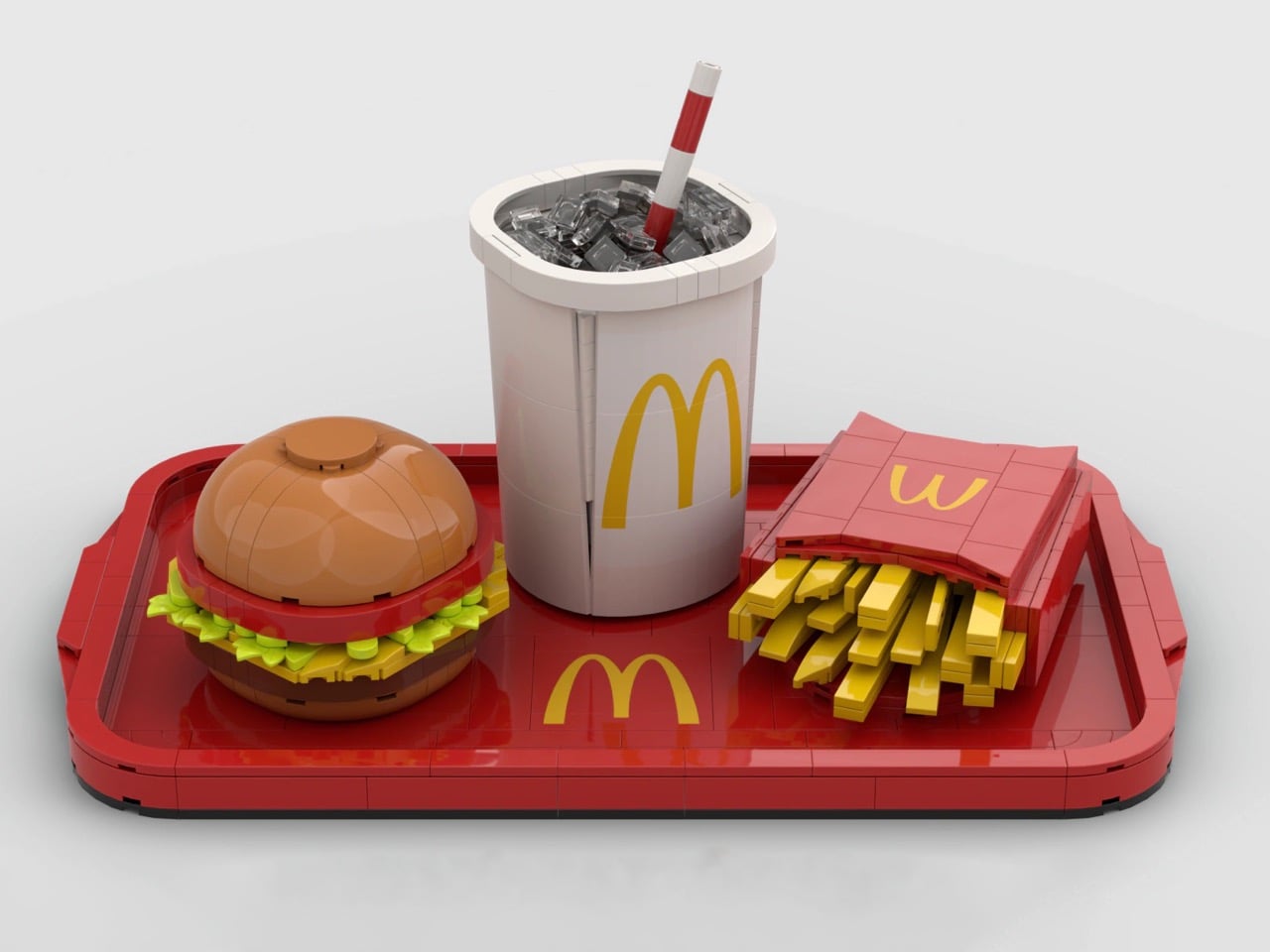
Called McDonald’s Menu, brickbybrick_’s LEGO Ideas submission rebuilds a classic combo big enough to hold its own on a shelf. There’s a red tray with giant Golden Arches in the middle, a cheeseburger, a red carton overflowing with fries, and a white cup loaded with transparent ice and a striped straw. Zero minifigures, zero drive-through, all lunch. The project went up on October 29 and is already sitting at 1,440 supporters, which tells me a lot of AFOLs (adult fans of LEGO) are hungry. I’m one of them, and I’m writing this before lunch.

Designer: brickbybrick_

Red plates form the tray, finished with a raised, rounded rim and a handle at each end, so it reads as molded plastic instead of a stack of bricks. A big yellow set of Golden Arches sits dead center, breaking up what would otherwise be a whole lot of red. The food is arranged in the classic triangle: burger front left, cup at the back, fries off to the right. It’s the exact layout you’d find on any table at your local McDonald’s around noon. That framing makes the build look like a meal someone just set down, which is half the fun of it.

The cheeseburger starts with a dome of tan curved elements, smooth on top like a plain hamburger bun. Under it sits a red layer that reads as tomato, then bright green leaf pieces fanning out as lettuce, a slice of yellow cheese, and a dark brown patty. Those leaves are a nice bit of NPU (nice part usage, for the uninitiated), taking foliage meant for LEGO gardens and jungles and turning it into a salad. Each layer sticks out at slightly uneven angles, giving the burger that freshly squished look of something just pulled from its wrapper. Real fast food never comes perfectly stacked, and this one looks like it survived a lunch rush.

A pile of yellow plates and bricks spills out of the red fry carton at every angle, some standing tall and some flopped over the edge the way the last few always are. The carton gets the real thing’s shape right, the one McDonald’s introduced in 1970 with a wide mouth for quick scooping and a profile that keeps the fries from falling out. The Golden Arches appear on its face in yellow, the same red-and-yellow combo that has been selling fries for over five decades. Building fries in LEGO is easy, but making them look casually messy takes real effort. My only complaint is that I can’t salt them.

My favorite detail, though, is the drink. The white cup’s top is left open, showing a load of transparent pieces packed in as ice, with a red-and-white striped straw sticking out at a jaunty angle. That straw does three jobs at once. It gives the composition its tallest point, adds a splash of red to an otherwise white element, and nods to a real McDonald’s quirk, since the chain says its straws are slightly wider than average so more Coke hits your taste buds. The ice tells its own story, because McDonald’s pre-chills its syrup and sets the ratio expecting the ice to melt. Leaving the lid off is what lets you see all of it.

Back in 2021, adammark’s McDonald’s Franchise 1955-1969, a walk-up burger stand with a Speedee System kitchen, hit 10,000 supporters and reached the Third 2021 Review. It was one of 36 projects in that round, and Hocus Pocus ended up as the only one approved. brickbybrick_ takes a different route, shrinking the subject from a restaurant down to a single meal sized for a shelf. The build is unlicensed, so those Golden Arches are a fan’s tribute, and any official version would need McDonald’s on board. The two companies have teamed up before, going back to LEGO’s first Happy Meal promotion in 1983, so the precedent exists.

McDonald’s Menu currently has 1,440 supporters and 599 days left to reach its next milestone of 5,000. LEGO Ideas runs on community momentum: fans submit their builds, supporters rally behind the ones they love, and projects that hit 10,000 get reviewed by LEGO for a shot at becoming real sets. It’s a long climb for a lunch order, but every Ideas set on store shelves started at zero votes. If you’d like to see this combo in a box, head to the LEGO Ideas page and give it your vote. Personally, I’m holding out for a Super Size edition, which McDonald’s retired in 2004 but LEGO is more than welcome to bring back.

The post This fan-made LEGO McDonald’s combo comes with everything except the McFlurry first appeared on Yanko Design.

  • ✇Yanko Design
  • Tesla is ending Cybertruck production in Texas, hinting at discontinuing the model entirely
    Tesla is pulling the plug on the Cybertruck, and the official reason involves real estate. Elon Musk posted on X on November 6 that production at Gigafactory Texas will wind down around the middle of 2027 to make room for more Cybercab production. That would be a reasonable explanation if Giga Texas were a studio apartment. The factory has more than 10 million square feet (roughly 929,000 square meters) of floor space, and the Cybertruck line has been running at a fraction of its installed capa
     

Tesla is ending Cybertruck production in Texas, hinting at discontinuing the model entirely

6 novembre 2026 à 16:30

Tesla is pulling the plug on the Cybertruck, and the official reason involves real estate. Elon Musk posted on X on November 6 that production at Gigafactory Texas will wind down around the middle of 2027 to make room for more Cybercab production. That would be a reasonable explanation if Giga Texas were a studio apartment. The factory has more than 10 million square feet (roughly 929,000 square meters) of floor space, and the Cybertruck line has been running at a fraction of its installed capacity. Call it the most polite breakup text in automotive history.

The less polite version is that nobody’s buying it. Electrek estimates Tesla is moving around 30,000 Cybertrucks a year on a line built for 250,000, and Cox Automotive counts just 11,586 US sales through the first nine months of 2026. This is the same truck that debuted in 2019 with a promised $39,900 price tag and a pair of freshly shattered “Armor Glass” windows. Back then I called it a Toblerone on wheels, and being right seven years later brings me zero joy. Okay, maybe a little. The truck peaked on a stage in 2019, and nothing it did on the road ever topped that.

Price cuts, price hikes, and a convenient excuse

A cheaper rear-wheel-drive Cybertruck launched in 2025 and vanished within months, setting the tone for two years of Tesla trying one pricing strategy after another. A more affordable dual-motor trim reached customers this summer, then Tesla raised prices by $5,000 in August, putting that version at $74,990. Some of the most dependable demand came from inside the family, with S&P Global Mobility data showing SpaceX bought 1,279 Cybertrucks in the last quarter of 2025. Musk’s companies accounted for roughly 19% of US Cybertruck registrations that quarter. When your rocket company is one of your best customers, the truck has a demand problem.

Tesla used the same “make room” framing earlier this year, when it ended Model S and Model X production to free up its Fremont factory for Optimus humanoid robots. Retiring a product sounds a lot better when it’s framed as making space for the future. The Cybertruck’s exit also leaves plenty unanswered: no firm end date, no word on outstanding orders, and nothing yet on parts and service for existing owners. Tesla hadn’t responded to Gizmodo’s request for comment, either. The closest thing to an official goodbye came from lead engineer Wes Morrill, who posted that the truck “lives on through Cybercab.” Engineers write better eulogies than CEOs, apparently.

A mood board of movie cars met a real winter

The Cybertruck’s problems started on the mood board. A photo Walter Isaacson shared from Tesla’s design studio shows a wall of film and game vehicles, including James Bond’s submarine Lotus Esprit and the Back to the Future DeLorean, and Musk has openly credited Blade Runner as a major influence. Movie cars only have to look incredible for the length of a shot. Chief designer Franz von Holzhausen later conceded that most of the studio hated the final faceted shape, and Musk shot down every attempt to soften it, famously declaring he doesn’t do focus groups. One man’s taste beat an entire design team, and the market eventually sided with the team.

In early 2024, owners in rain-soaked California started posting photos of orange rust specks on their stainless panels after just a couple of days of driving. Morrill blamed surface contamination that cleans right off, which is technically reassuring and terrible marketing for a truck sold as indestructible. A year later, Tesla recalled 46,096 trucks because a stainless trim panel called the cant rail, bonded with structural adhesive, could delaminate and detach. Owners had reported failures in cold weather. In between, 3,878 trucks were recalled because an unapproved dab of soap during assembly let the accelerator pedal pad slip loose and get trapped in the trim. Armor, it turns out, still depends on glue.

The Cybertruck became a statement about its creator

No other Tesla carried Elon Musk’s fingerprints like the Cybertruck. The Model 3 is a mainstream sedan, while the Cybertruck was one person’s vision, pushed through over his own design studio’s objections. That made it the most personal object Tesla ever sold, and its meaning shifted with its creator’s public image. As Musk became one of the most polarizing figures in American politics, buying a Cybertruck started reading as a political statement. One Yahoo Finance commentator put it bluntly, calling it a middle finger on four wheels. Tesla even tried controlling who owned one, briefly threatening early buyers with a $50,000 penalty for flipping their trucks.

A Yale study put a number on that effect, estimating Musk’s “polarizing and partisan actions” cost Tesla between 1 million and 1.26 million US sales from October 2022 to April 2025. Rival EV and hybrid makers saw their sales rise 17% to 22% over the same stretch. CleanTechnica argued the headline figure was far too high, while agreeing that the partisan effect was real. Federal Election Commission data also shows Musk as the 2026 midterm cycle’s biggest individual donor, at roughly $446 million to Republican-aligned groups. That money came from his own pocket, and the Cybertruck got its end date three days after Election Day. A car built as a personal statement eventually gets judged as one.

The engineering lives on in Cybercab, and so does the playbook

The Cybertruck did introduce some significant engineering changes for Tesla, starting with the company’s first 800-volt architecture. Higher voltage means less current for the same power, which can allow thinner cables and faster charging. It also swapped the industry-standard 12-volt low-voltage system for a 48-volt one, reducing wiring requirements. Its steer-by-wire setup eliminated the mechanical steering connection entirely, a first for a production car and something even the Infiniti Q50 retained as a backup. Morrill’s farewell points straight at the Cybercab, the gold two-seat robotaxi with no steering wheel, pedals, or mirrors that Tesla started building in April. The truck basically served as a very large, very shiny test bench.

Last month, Tesla unveiled a new Roadster with cold-gas thrusters, asking for $50,000 deposits for the Performance version and $250,000 for the Thrust version, under a reservation agreement that says Tesla can’t guarantee when, or if, the car will be delivered. That’s nine years after Tesla first took deposits on a next-gen Roadster that never shipped. The Semi, unveiled that same year with production promised for 2019, only reached volume production this September, and the Cybercab is already facing two NHTSA reviews. Back in 2019, I wrote that the only number that would matter for the Cybertruck was its sales. I’d like to think Elon’s announcement is the proof I was looking for.

The post Tesla is ending Cybertruck production in Texas, hinting at discontinuing the model entirely first appeared on Yanko Design.

  • ✇Yanko Design
  • Midea’s award-winning blender concept can both heat and cool your mixture down
    Picture a blender with a stovetop hidden in its base, so it can turn soybeans into hot soy milk or rice into congee without you touching a pot. Heated blenders like this are a breakfast staple across China, and most share one annoying flaw: the drink comes out scalding, leaving you to blow on it like it owes you money. Midea’s Fully Automatic Air Flow Blender targets that wait with an airflow system designed to help with both cooking and cooling. Midea claims it brings drinks down to 131°F (55°
     

Midea’s award-winning blender concept can both heat and cool your mixture down

6 novembre 2026 à 15:20

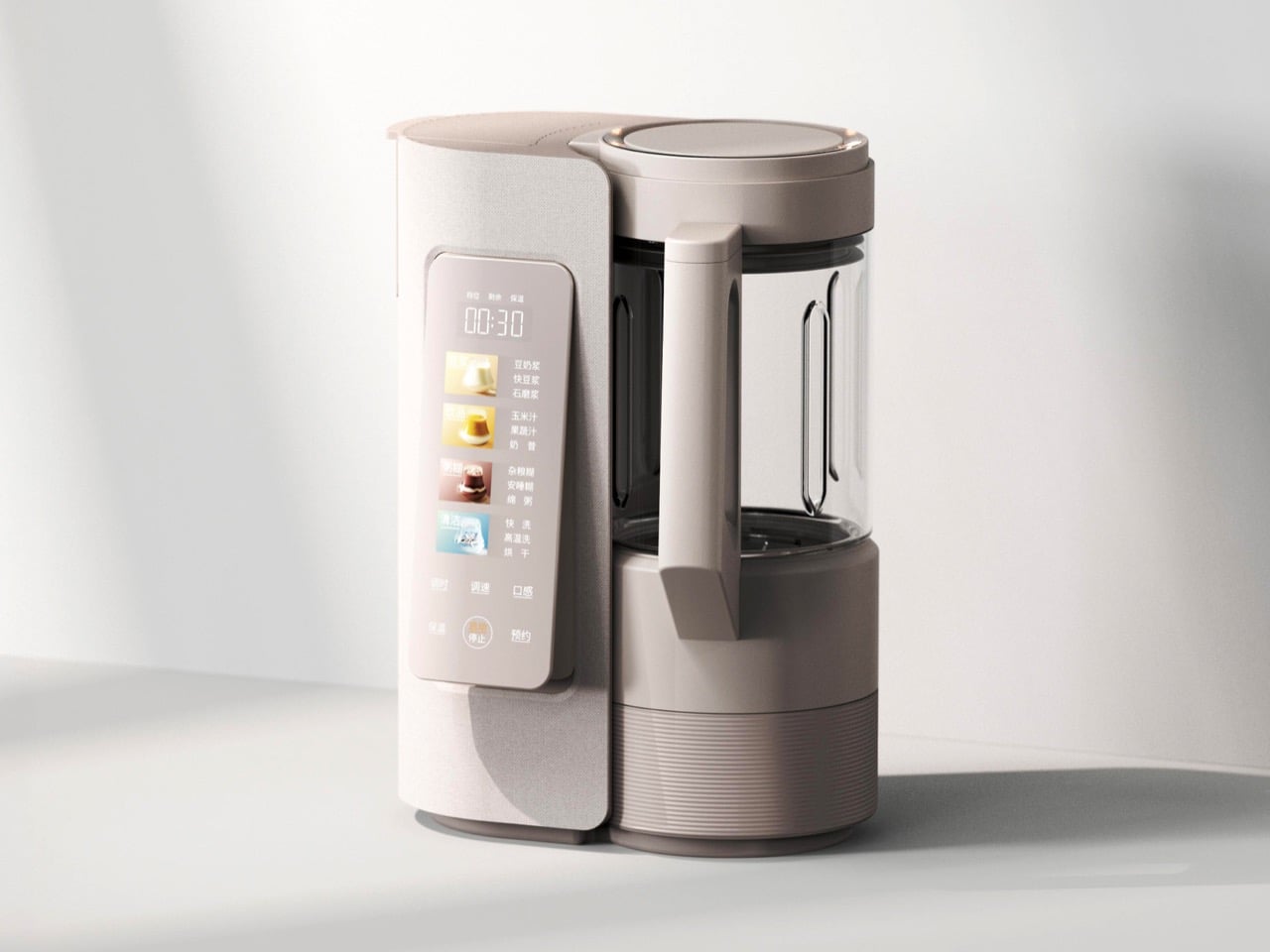
Picture a blender with a stovetop hidden in its base, so it can turn soybeans into hot soy milk or rice into congee without you touching a pot. Heated blenders like this are a breakfast staple across China, and most share one annoying flaw: the drink comes out scalding, leaving you to blow on it like it owes you money. Midea’s Fully Automatic Air Flow Blender targets that wait with an airflow system designed to help with both cooking and cooling. Midea claims it brings drinks down to 131°F (55°C) within five minutes of finishing. That’s roughly where breakfast stops being a dare and starts being breakfast.

The machine comes from Guangdong Midea Consumer Electric, with a design team led by Peng Xi and Wang Jin, and it received a Red Dot Award: Design Concept 2026 in the Ready for Market track. That track recognizes near-finished products that haven’t reached shelves, judged partly on whether they can realistically ship within a year. Midea says the airflow lets the motor blend at full power without soy milk foaming over. A built-in water tank sits alongside the blending jar, and the linen-textured shell looks ready for a Scandinavian café. The Chinese-language interface suggests a launch in China first, though there’s no word yet on US availability.

Designers: Peng Xi, Wang Jin, Li Qianlun, Jo Jeongmin, Ru Guanhong & Wang Xingzhe

Soybeans contain saponins, compounds that contribute to soy milk’s bubble-bath foam when heated. Heated blenders typically manage this by blending in short bursts and pausing the heat to keep the foam from reaching the lid. That stop-start rhythm helps explain why a batch of soy milk on Midea’s existing machines takes around 30 minutes. The company credits its airflow system with cutting prep time in half, though it hasn’t detailed how the system controls foam.

A freshly cooked batch of soy milk or congee can come out near 212°F (100°C), then sit in the jar cooling a degree at a time while you wait. Midea’s existing heated blenders hold drinks at 131°F (55°C) on keep-warm for up to six hours, so the target is familiar territory for the brand. The new machine’s trick is getting there fast: Midea says cooling takes about five minutes. That’s roughly the time it takes to find your shoes and your keys. Paired with overnight scheduling, it could have freshly made soy milk ready to drink when you wake up.

Visually, the appliance splits into two towers that share a figure-eight footprint. On the left, a linen-textured column holds a water tank that lifts straight out from the top, with a corrugated grip that echoes the ribbed base beneath the glass jar. On the right, the jar wears a copper-colored lid ring that appears to double as a status light. Midea’s description of the surface as a linen texture suggests a molded finish rather than real cloth, a sensible call next to a jar of hot congee. The touch panel flips up for easier reading and carries illustrated buttons for soy milk, juices and milkshakes, porridges, and cleaning, including one porridge program labeled for better sleep.

The closest thing US readers will recognize is the Ninja Foodi Cold & Hot Blender, which pairs an 800-watt heating element with a 64-ounce glass pitcher and sells for around $200 at Walmart. It can cook soup from raw ingredients, but you’re still the one pouring in water and waiting for everything to cool. Midea’s pitch is to automate more of that work, drawing water from the built-in tank and offering a high-temperature wash and drying cycle through the menu. The tank will still need refilling, of course. There’s no price or US release date yet, so this one stays on the wishlist.

The post Midea’s award-winning blender concept can both heat and cool your mixture down first appeared on Yanko Design.

  • ✇Yanko Design
  • The Nubeo Ecliptic watch puts a tiny spacecraft control panel on your wrist
    Hollywood loves a sequel, and so does the watch world, though watch sequels trade explosions and cameos for colorways. Nubeo’s Ecliptic Retrograde Dual Time first landed in October 2024, and the square-cased space watch is back for 2026 in six new colorways, from the blue-strapped Firewater Blue to the moodily named Steel Phantom. The core recipe stays put: a 45mm steel case, a matte black dial, and a second time zone displayed by a hand that sweeps a retrograde arc before snapping back to zero
     

The Nubeo Ecliptic watch puts a tiny spacecraft control panel on your wrist

6 novembre 2026 à 14:20

Hollywood loves a sequel, and so does the watch world, though watch sequels trade explosions and cameos for colorways. Nubeo’s Ecliptic Retrograde Dual Time first landed in October 2024, and the square-cased space watch is back for 2026 in six new colorways, from the blue-strapped Firewater Blue to the moodily named Steel Phantom. The core recipe stays put: a 45mm steel case, a matte black dial, and a second time zone displayed by a hand that sweeps a retrograde arc before snapping back to zero.

That hand crawls from 0 to 24 across the lower dial, then flies back to the start like it just remembered it left the stove on. Nubeo pairs it with a big date, a 24-hour subdial, and a caseback engraved with the sun, Earth, and the ecliptic plane. That last detail explains the name, since the ecliptic is the path the sun appears to trace across our sky over a year. Every colorway runs on a Japanese quartz movement and lists for $250, with an advertised 20% launch discount bringing it to $200.

Designer: Nubeo

A Dial Built Like a Spacecraft Control Panel

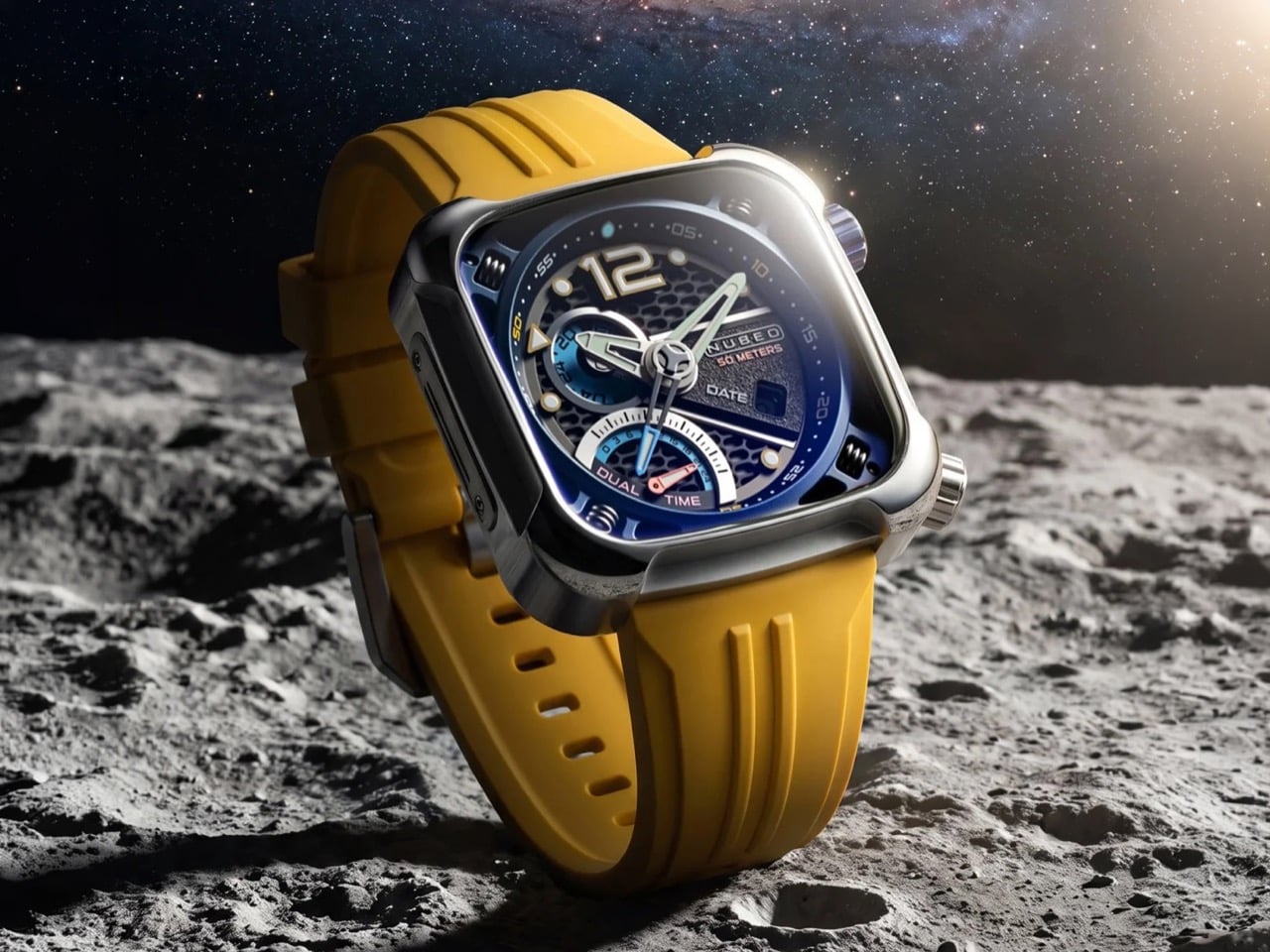
Nubeo stacks this dial in layers, starting with a matte black honeycomb mesh at the base. A raised chapter ring sits above it with a printed 05 to 55 minute track, while an oversized applied 12 anchors the top. The 24-hour subdial sits near 9 o’clock, the framed date window is at 4, and the dual time arc wraps across the bottom third. Applied indices and hands carry Japanese lume for low-light visibility. Each colorway also changes the accents on a few of these elements.

Putting the second time zone on its own arc separates it from the main time display, a useful distinction on a dial this busy. A traditional GMT, like the Rolex GMT-Master, adds a fourth hand that points to a 24-hour scale around the edge. The Ecliptic moves that reading to the lower dial instead. On the blacked-out version, green lume emphasizes the hands and markers. The coil-spring details at the four corners are decorative, reinforcing the spacecraft-control-panel look. Honestly, this dial looks like it should come with a launch sequence.

Square, Steel, and 155 Grams of Attitude

The stainless steel case measures 45mm across (about 1.77 inches), 45mm lug to lug, and 16mm thick (0.63 inches). Square cases tend to wear larger than round ones of the same width because the corners fill out more of the wrist. The matching width and lug-to-lug measurements keep the case from extending farther along the wrist, but this is still a substantial watch at 155 grams (5.5 ounces), paired with a 26mm rubber strap. An anti-reflective mineral crystal covers the dial, and water resistance is rated at 5 ATM.

The square sports case has plenty of precedent, from Bell & Ross’s cockpit-instrument BR 03 to Hublot’s Square Bang. Nubeo takes a similar instrument-panel approach, adding recessed channels with exposed screws along the case flanks and a crown finished in each colorway’s accent shade. Inside sits a Japanese quartz movement, though Nubeo doesn’t name the specific caliber. Quartz makes sense for a dual time watch that might spend a week in a drawer between trips, keeping both time displays running without winding.

Six New Colorways, Same Cosmic Recipe

The 2026 lineup includes Firewater Blue, Cardinal Teal, Forest Veil, Royal Twilight, Dark Alloy, and Steel Phantom, all built on the same matte black dial. The differences are in the dial accents, crown color, case finish, and rubber strap. Across the lineup, you’ll find yellow straps, blue straps, gray straps with yellow details, and a blacked-out case for anyone allergic to shiny things. The original 2024 variants included Space Blue, Hazard Red, and Golden Black, which Nubeo sold as limited editions. The caseback in the press images carries a limited-edition marking too, though Nubeo hasn’t listed an edition size for the new run.

The Ecliptic fits into Nubeo’s catalog, which leans heavily on space and pop culture with collaborations like the Space Invaders Automatic and the Atari Asteroids watches. This one draws on astronomy rather than a licensed property and costs considerably less than those collaborations. Citizen’s Eco-Drive BR0120 offers retrograde dual time too, wrapped in a classic round case for the buttoned-up crowd. The Ecliptic is the more conspicuous option, with its square case, layered dial, and bright strap choices. Nubeo lists it at $250 before the launch discount, with free shipping and a two-year warranty.

The post The Nubeo Ecliptic watch puts a tiny spacecraft control panel on your wrist first appeared on Yanko Design.

❌