Vue normale

Il y a de nouveaux articles disponibles, cliquez pour rafraîchir la page.
À partir d’avant-hierFlux principal

Le FBI a bâti une fausse ville entière dans un hangar, juste pour la pirater

16 juin 2026 à 14:01

Le FBI possède sa propre ville, sauf que personne n'y habite, et pour cause, elle a été montée de toutes pièces dans un hangar de Huntsville, en Alabama, avec ses maisons meublées, son hôtel, sa station-service, son épicerie, son tribunal, son hôpital et jusqu'à sa compagnie d'électricité, le tout dans un seul but assez vertigineux, la pirater dans tous les sens sans jamais déranger âme qui vive.

Le décor porte d'ailleurs un nom, le Kinetic Cyber Range, près de 2 000 mètres carrés de fausse bourgade américaine ouverte en février 2025 et pensée comme un gigantesque bac à sable pour cyberattaques en conditions réelles.

Rien là-dedans n'est pourtant en toc, puisque chaque bâtiment grouille d'appareils et de systèmes qui réagissent exactement comme dans une vraie commune ou une vraie entreprise, à une nuance près, tout reste confiné à l'intérieur pour qu'une attaque lancée pendant un exercice de derappe jamais et impacte de vrais habitants.

Le nom vient justement de là, puisque le terme kinetic renvoie aux dégâts bien physiques d'un piratage, ce moment où une simple ligne de code éteint un feu rouge, bloque une pompe à eau ou plante les machines d'un hôpital.

Au cœur du dispositif, on trouve du coup une salle bourrée de plus de 200 serveurs physiques, ces gros ordinateurs qui font tourner les services d'une entreprise, pour moitié sous Windows et pour moitié sous Linux, histoire de coller au capharnaüm que les enquêteurs découvrent réellement quand ils débarquent après une intrusion ou avec un mandat de perquisition. Le responsable du site, Dave Beachboard, n'enjolive d'ailleurs rien et décrit des salles froides, exiguës, bruyantes et sombres, bref aussi pénibles que dans la vraie vie.

Plus de 1 400 personnes y sont quand même déjà passées, des agents du FBI mais pas seulement, puisque s'y ajoutent des collègues d'autres administrations fédérales et locales venus s'entraîner sur le terrain.

Le gros morceau de la formation, ce sont les rançongiciels, ces logiciels qui prennent vos fichiers en otage et réclament une rançon pour vous les rendre, l'objectif étant d'apprendre à garder son sang-froid pendant qu'une attaque se déroule sous les yeux tout en travaillant la criminalistique numérique, c'est-à-dire l'art de fouiller une machine après le passage des pirates pour reconstituer qui a fait quoi.

Si le FBI se donne autant de mal, c'est que c'est un problème massif, son rapport sur la cybercriminalité chiffre les pertes américaines à près de 21 milliards de dollars sur l'année et place les rançongiciels en tête des menaces qui visent les infrastructures critiques, ces hôpitaux, réseaux électriques et stations d'eau dont on oublie l'importance jusqu'au jour où ils s'arrêtent net.

Bref, bâtir une ville entière dans le seul but de la pirater, c'est quand même assez fou.

Source : TechCrunch

The F1 Engineer Who Turned Time Into a Kinetic Sculpture

Par : Ida Torres
8 avril 2026 à 16:20

Most clocks are honest about what they are. They count. They tick. They remind you, with mild urgency, that you are late or almost late or about to be. Robert Spillner’s Luna is not a clock that measures time. It stages it. That’s a subtle but loaded distinction, and it’s exactly why this object is worth paying attention to.

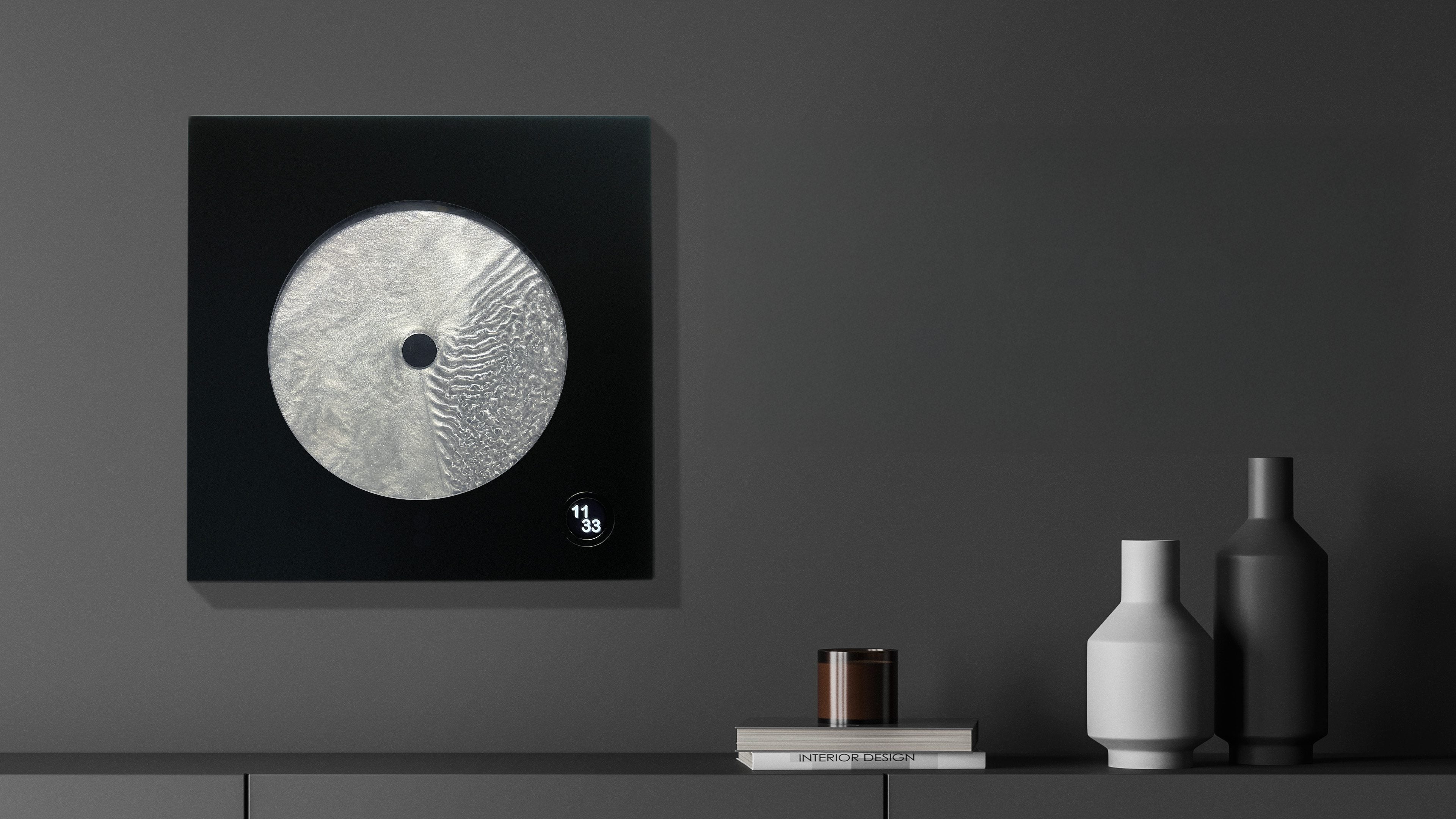
Luna is a fluid wall object that translates the principle of the single-hand watch into a kinetic sculpture, making the moment between past and future perceptible. Behind the hand, a trace of turbulent patterns marks the touched past. Ahead of it stretches calm liquid: the untouched future. The present is the thin, moving line between them. It sounds poetic because it is, but it’s also technically precise, which is kind of the whole point.

Designer: Robert Spillner

Spillner trained as an engineer and initially developed components for Formula 1 cars, used by numerous teams, in a culture where speed, optimization, and victory are everything. With Luna, that paradigm is reversed. Instead of lap times, the focus is on mindful observation; instead of chasing the fastest, it is about pausing, about stillness. The pivot reads like a philosophical reversal, not just a career change, and that tension is embedded in the object itself.

At the heart of Luna is a specially developed fluid Spillner calls Zero Flow Technology. Its core consists of distilled water, additives, micro-particles, and a minimal quantity of genuine lunar dust. The exact composition remains deliberately undisclosed, part of the mystery that invites the observer to immerse themselves in the visual experience rather than merely explain it technically. I think that’s the right call. Part of what makes Luna compelling is that it resists easy explanation. You’re not supposed to look at it and think “clever fluid dynamics.” You’re supposed to feel like time has texture.

The lunar dust takes the cosmic concept to its logical conclusion. These are particles billions of years old that once fell from space to Earth, and they are now carriers of time. Each piece comes with a certificate of authenticity documenting the origin of this cosmic additive. That detail is not just a marketing flourish. It changes the nature of the object.

Aesthetically, Luna presents itself as a square wall or stand object, approximately 400 by 400 millimeters, with a black front and a cast acrylic glass pane at its centre that becomes the stage for the fluid time, framed by a solid, matte-black wooden frame. A small LCD touchscreen, 35 millimeters in diameter, merges the cosmic and digital realms. Time and display brightness can be adjusted easily. The screen is discreet enough that it doesn’t compete with the fluid for visual dominance. It supports the piece without stealing from it, and that balance isn’t easy to pull off.

Luna is handcrafted in Germany as a limited edition. The fluid mixture, developed over years in collaboration with a laboratory, requires weeks of fine-tuning for each unique piece. Every Luna carries an engraved serial number and year of manufacture, signed by the artist, and comes with a certificate for the meteorite dust. Only 99 pieces per year are planned, all made on demand. Luna defines itself clearly as an art object with a time function, not as an industrial small series. That self-awareness matters.

The question people tend to ask about objects like this is whether they’re worth it. I’d reframe the question. Luna isn’t competing with your iPhone or your smartwatch. It’s not trying to optimize anything in your day. It’s making an argument about how we relate to time, which is a thing most of us don’t think about until we’re running out of it. The fact that it’s beautiful while doing this isn’t a bonus. It’s the method. Design, when it’s working at its best, changes how you see the thing it’s describing. Luna does that with time. And for an object that started life inside Formula 1 engineering labs, that’s a remarkable distance to travel.

The post The F1 Engineer Who Turned Time Into a Kinetic Sculpture first appeared on Yanko Design.

❌
❌