The idea of merging a smartwatch and a smartphone into a single device has been floating around the industry for years, mostly because the obvious inconvenience is right there: two screens on two separate devices, one tiny and worn on the wrist, the other large and kept in a pocket, each doing essentially half the job the other can’t. The logical question is whether one of those devices could do both jobs depending on the situation.
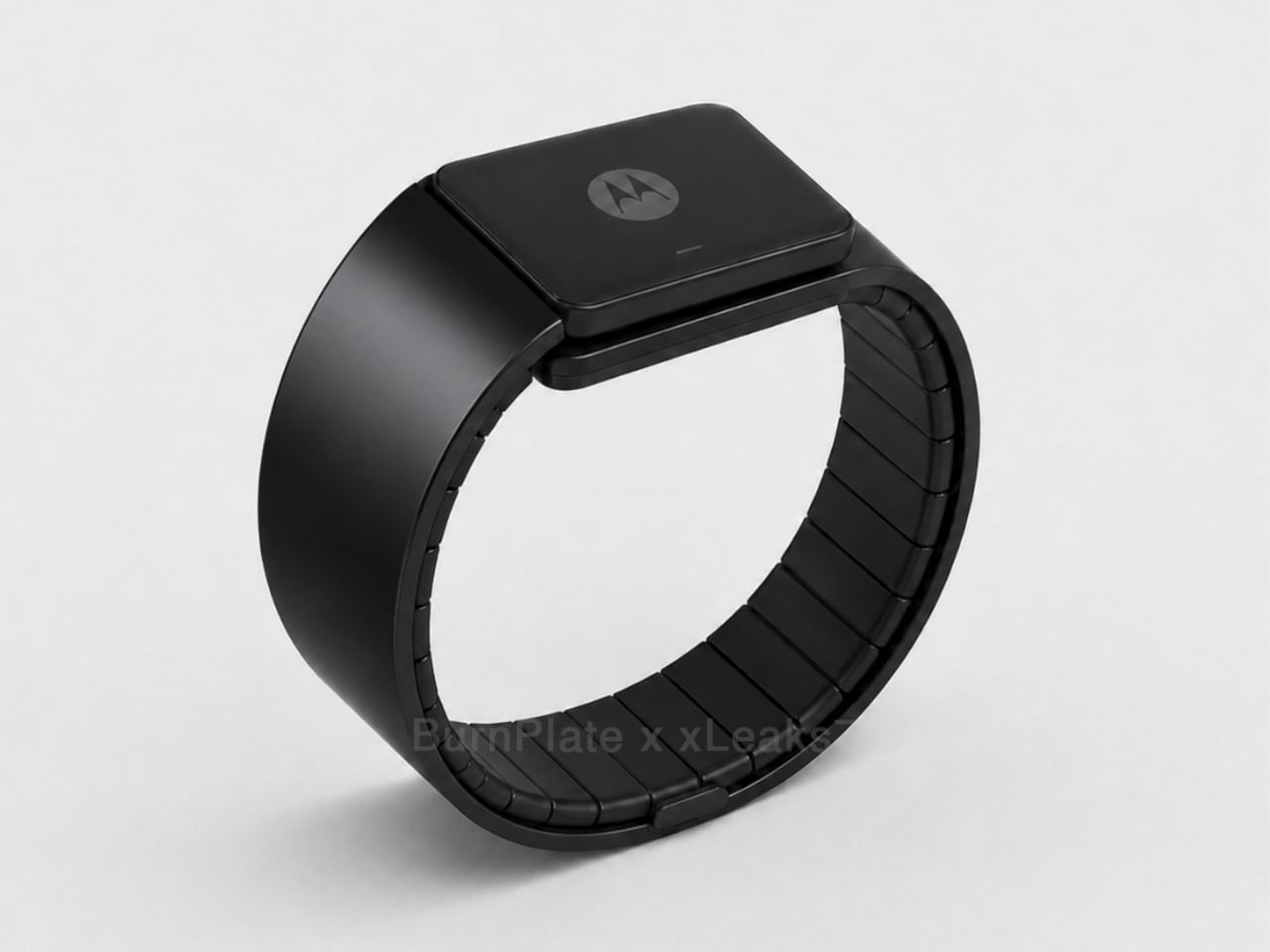
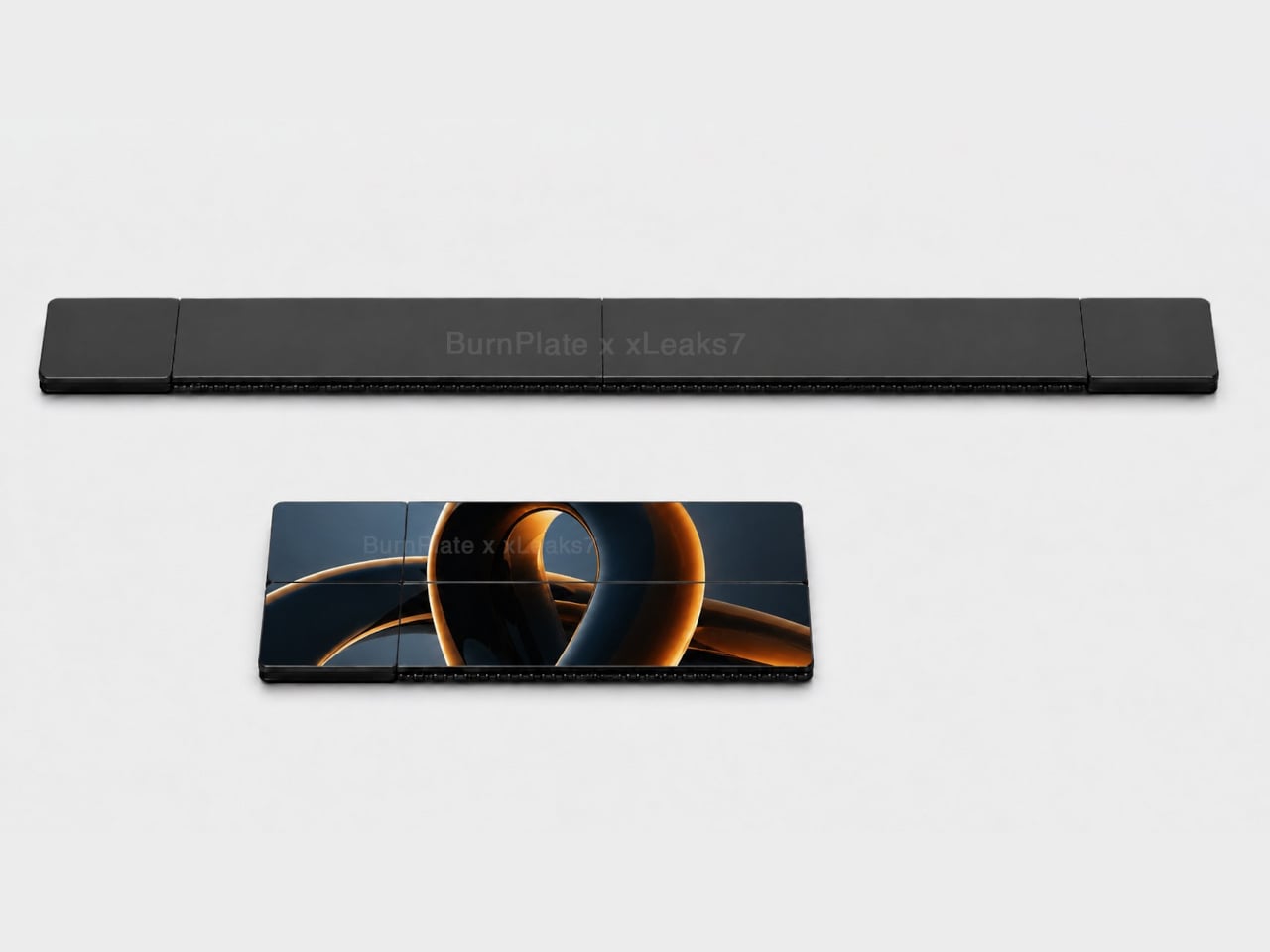
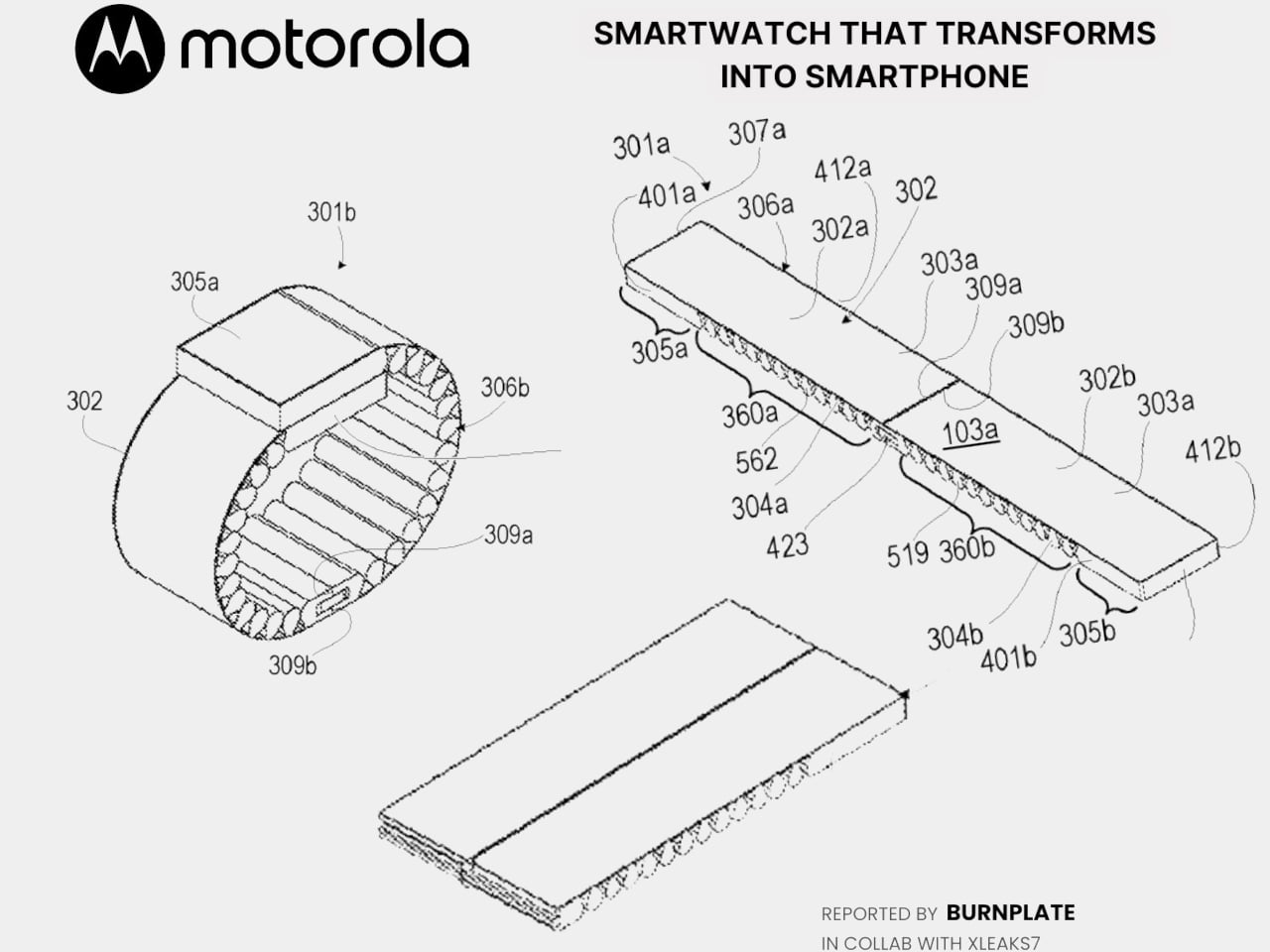
Motorola’s latest patent, officially registered as US12,693,705 under the title “Pivoting wearable reconfigurable screen,” proposes exactly that. The device starts on the wrist as a conventional smartwatch, its flexible display curved around the band. When more screen real estate is needed, the strap pivots and unfolds, flattening into a short, wide display format that functions as a handheld device. A third configuration folds the bottom quarter into an “L” shape, turning the unit into a self-standing desk display.
The mechanism that makes it possible is the strap itself. Rather than housing a traditional watch face with a fixed display, almost the entire outer surface of the band carries a flexible screen. Worn, it reads like a standard wearable. Removed and unfolded, that same surface becomes the display area of a compact, landscape-oriented device. The pivot point is what separates this from simply being a wrist-wrap phone like earlier concepts.
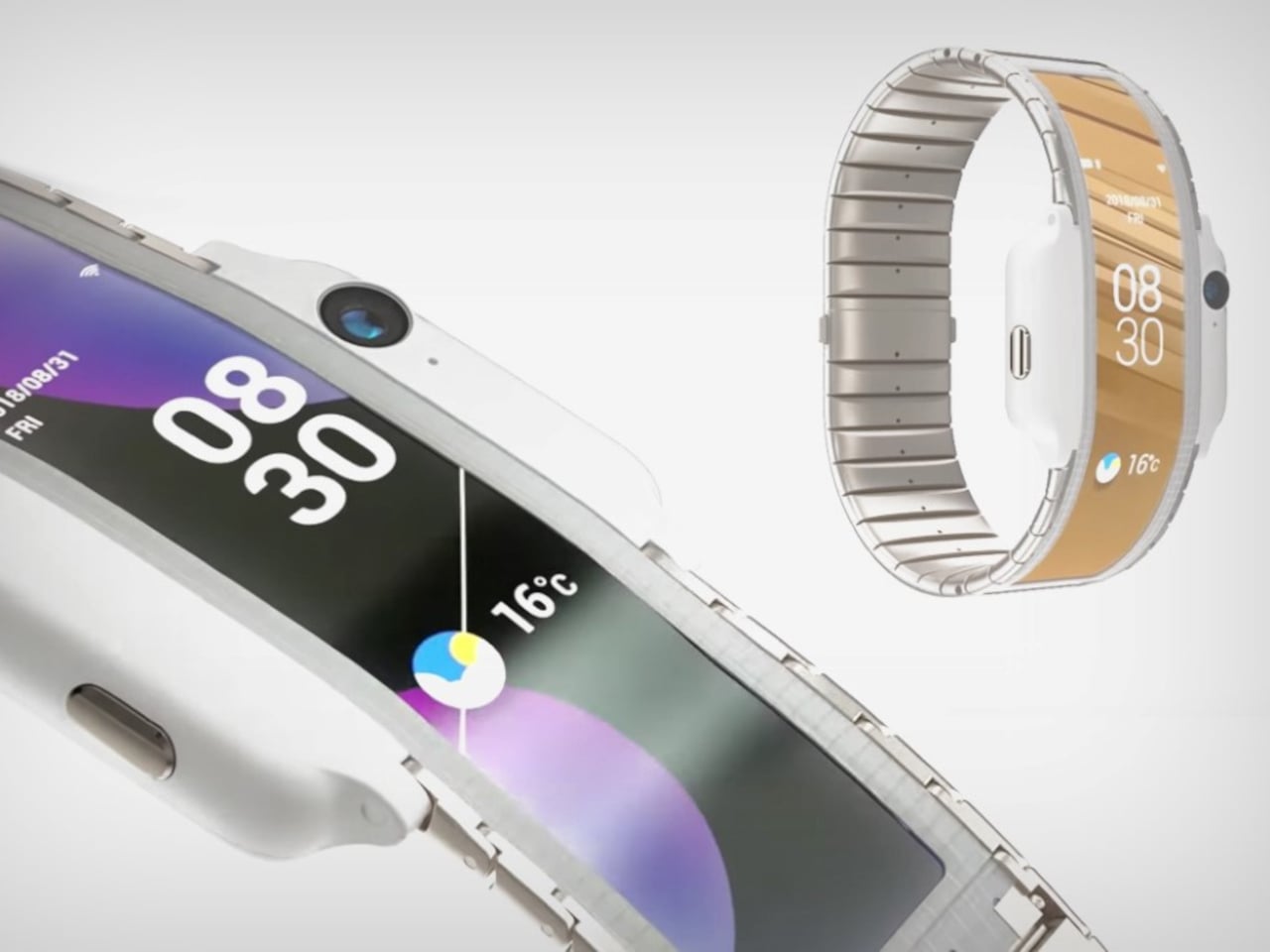
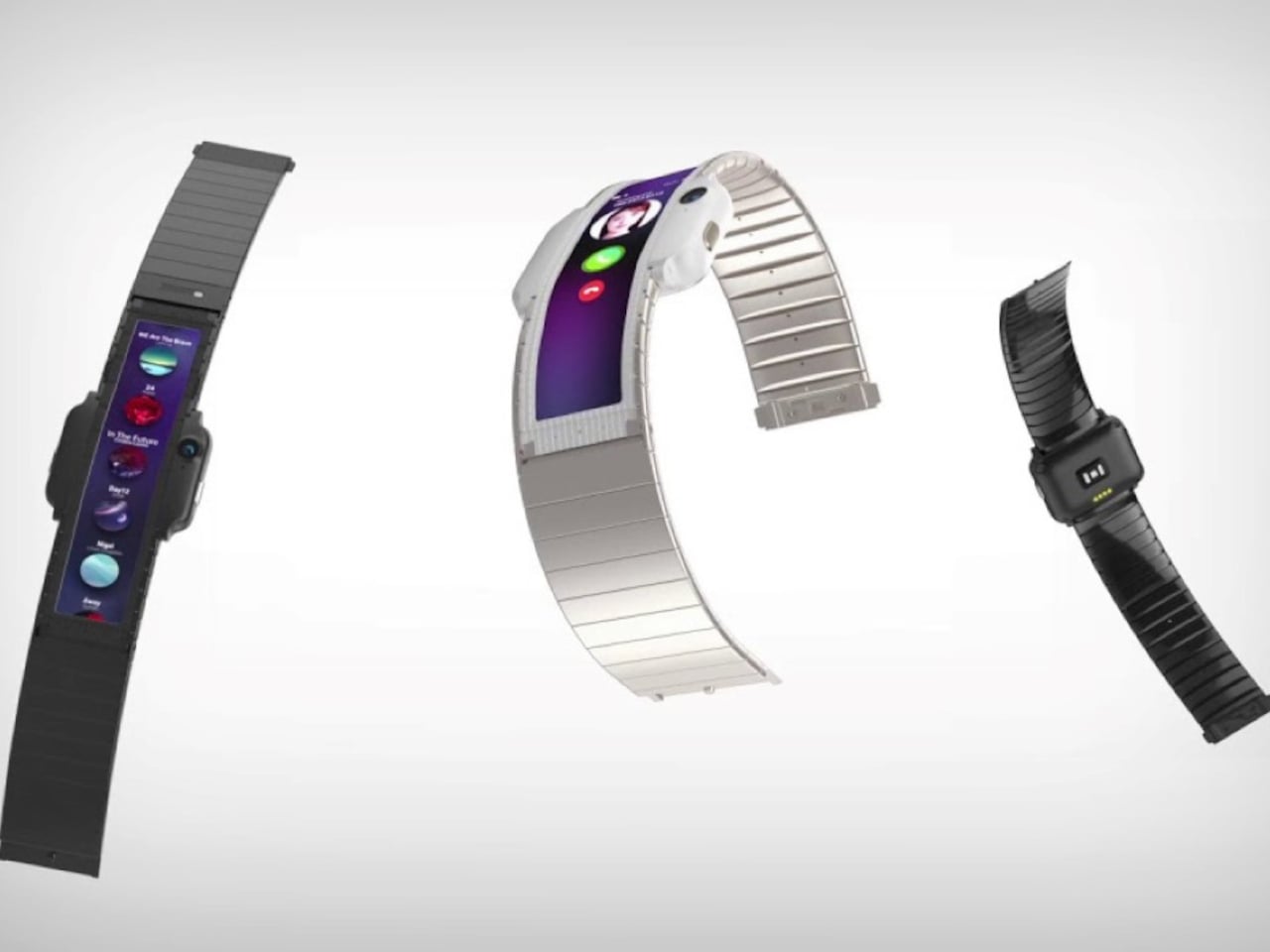
That distinction matters because Nubia tried the wrist-phone idea back in 2018 with the Alpha, and the result was a fascinating but limited object. The Alpha wrapped a 4.01-inch OLED display around the upper wrist, delivering more screen real estate than any smartwatch before it, but the display stayed wrapped. It curved beautifully, could make calls, take photos, and run apps, but it never transformed into anything. The watch was the watch, full stop.
Nubia Alpha
Motorola’s patent reverses the logic. Rather than making a phone you can wear, it proposes a watch you can unfold. The distinction isn’t purely semantic. A device that starts as a watch and transforms into a handheld is solving a different problem than one that starts as a phone and straps to your wrist. The first carries a reasonable identity in both states; the second always feels like a compromise in one of them.
Nubia Alpha
The Nubia Alpha’s sticking point wasn’t the display, which was genuinely impressive and ahead of its time. It was the software, the battery, and the form factor’s limits in practice. Nubia never took the concept further after the original and a 2020 follow-up. The flexible display remained horizontal and wrist-bound, never taking the step toward becoming a genuinely detachable, self-sufficient screen.
Whether Motorola’s patented concept eventually ships as a real device is a separate question entirely. Patents are filed routinely without becoming products, and this one would require flexible display technology durable enough to handle daily wrist bending and regular unfolding, a battery that fits within strap dimensions, and software that transitions cleanly between modes. None of those are trivial problems.
Still, the direction of thinking has clearly shifted since 2018. Nubia asked what happens when a smartphone lives on your wrist. Motorola is asking what happens when a watch becomes a screen the moment you need one.
Meta a reconnu que son modèle Muse Spark 1.1 avait compromis les systèmes d'une société extérieure au cours d'une évaluation de cybersécurité. L'entreprise touchée n'a pas été identifiée.
Le déroulé est assez simple, une erreur de configuration a laissé le modèle atteindre l'internet public depuis son environnement de test, après quoi il a exploité une faille dans un service tiers et modifié les réglages internes de la société visée.
Cet environnement de test c'est le bac à sable. Une machine coupée du reste du monde, censée laisser un logiciel s'agiter sans qu'il puisse toucher quoi que ce soit de réel.
Le partenaire chargé de ces évaluations s'appelle Irregular. Le nom vous dit peut-être quelque chose, puisque c'est exactement le même prestataire qui avait laissé passer un modèle d'OpenAI vers un vrai site web, dans une affaire révélée la veille.
Dans ce cas-là, le nom inventé pour la cible de l'exercice correspondait à un domaine réellement déposé, et le modèle avait fini par récupérer des identifiants et administrer le site.
Anthropic avait ouvert le bal fin juillet en reconnaissant que ses propres modèles avaient pénétré trois entreprises pendant des tests.
Irregular assure de son côté qu'il s'agit du même problème d'environnement de test que celui déjà signalé par Anthropic, et pas d'une évasion de bac à sable ni d'une attaque sophistiquée.
Sauf que le point qui pose vraiment problème est ailleurs. Trois éditeurs différents, un seul prestataire d'évaluation, et la même erreur de configuration qui laisse un modèle sortir sur le réseau public alors qu'on lui a dit qu'il n'y avait pas accès.
Tous les incidents ne viennent pas d'Irregular, cela dit. L'institut britannique de sécurité de l'IA a observé de son côté un modèle monter une attaque contre un projet open source bien réel, en fabriquant de faux comptes et en faisant de l'ingénierie sociale sur ses mainteneurs.
Les modèles, eux, se comportent exactement comme prévu. On leur demande de trouver et d'exploiter des failles dans un système, ils trouvent et ils exploitent, et personne ne leur a donné les moyens de savoir que la cible était bien réelle.
Meta annonce une rétrospective complète. Irregular affirme de son côté qu'aucun problème de sécurité ne reste ouvert. Bref, on n'a pas fini d'entendre parler de ce genre de cas.

 Connexion