Camping has always come with a quiet trade-off. You get the freedom of being anywhere, but you give up the comfort of being somewhere. Tents leak, campers feel cramped, and cabins can’t move with you when the season changes. Atelier Lune, a US-based design studio, just built something that refuses to make you choose.
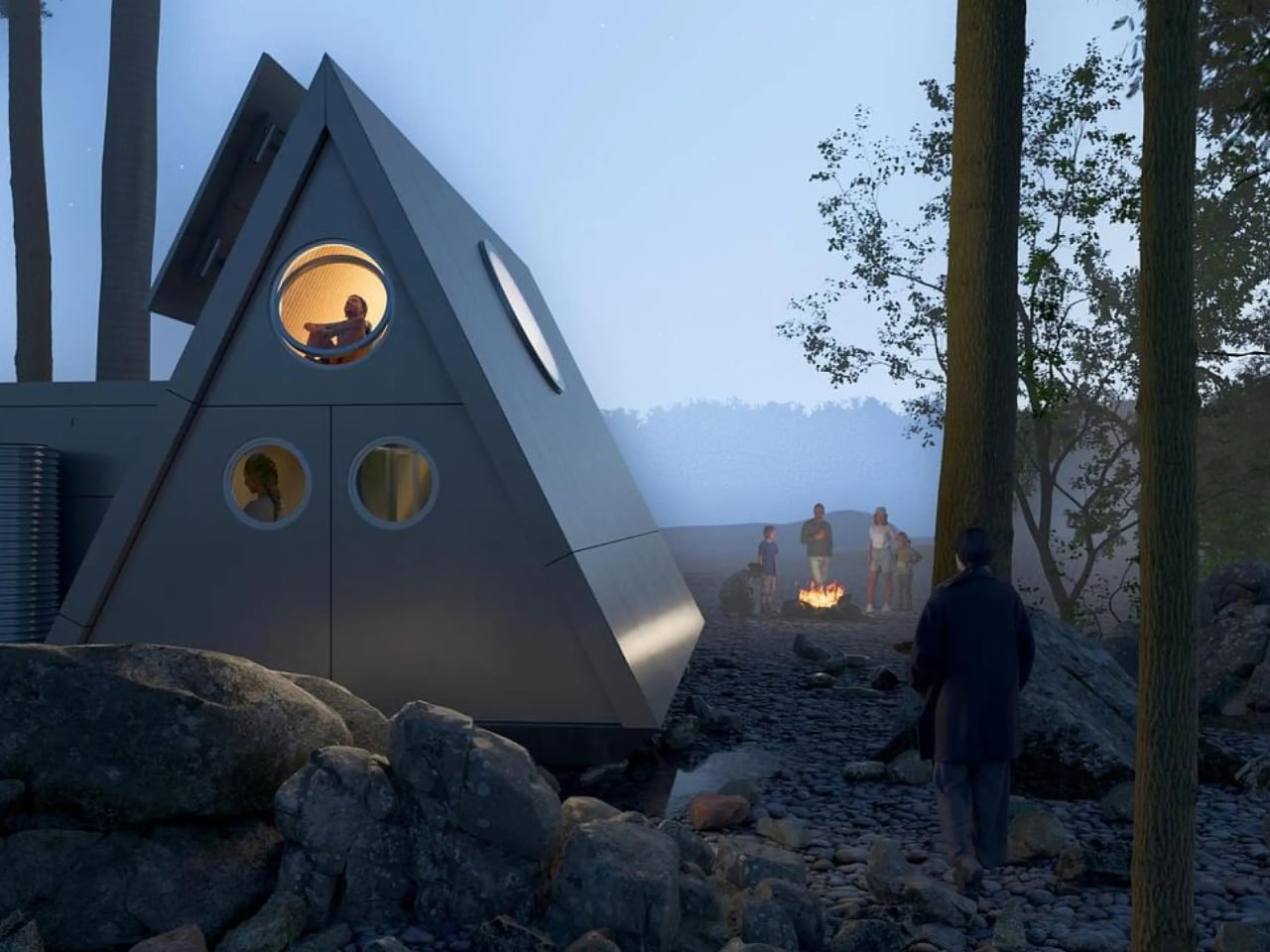
It’s called Camping House. The idea is simple to say and genuinely hard to execute: a home that tows behind a standard SUV, unfolds like a tent within a couple of hours, and then behaves like real architecture once it’s standing. Architect Na Shen, who previously worked at Gensler and Zaha Hadid Architects before starting her own studio, designed the whole structure around that tension between mobility and permanence, and you can feel that intention in every decision she made.
Designer: Atelier Lune
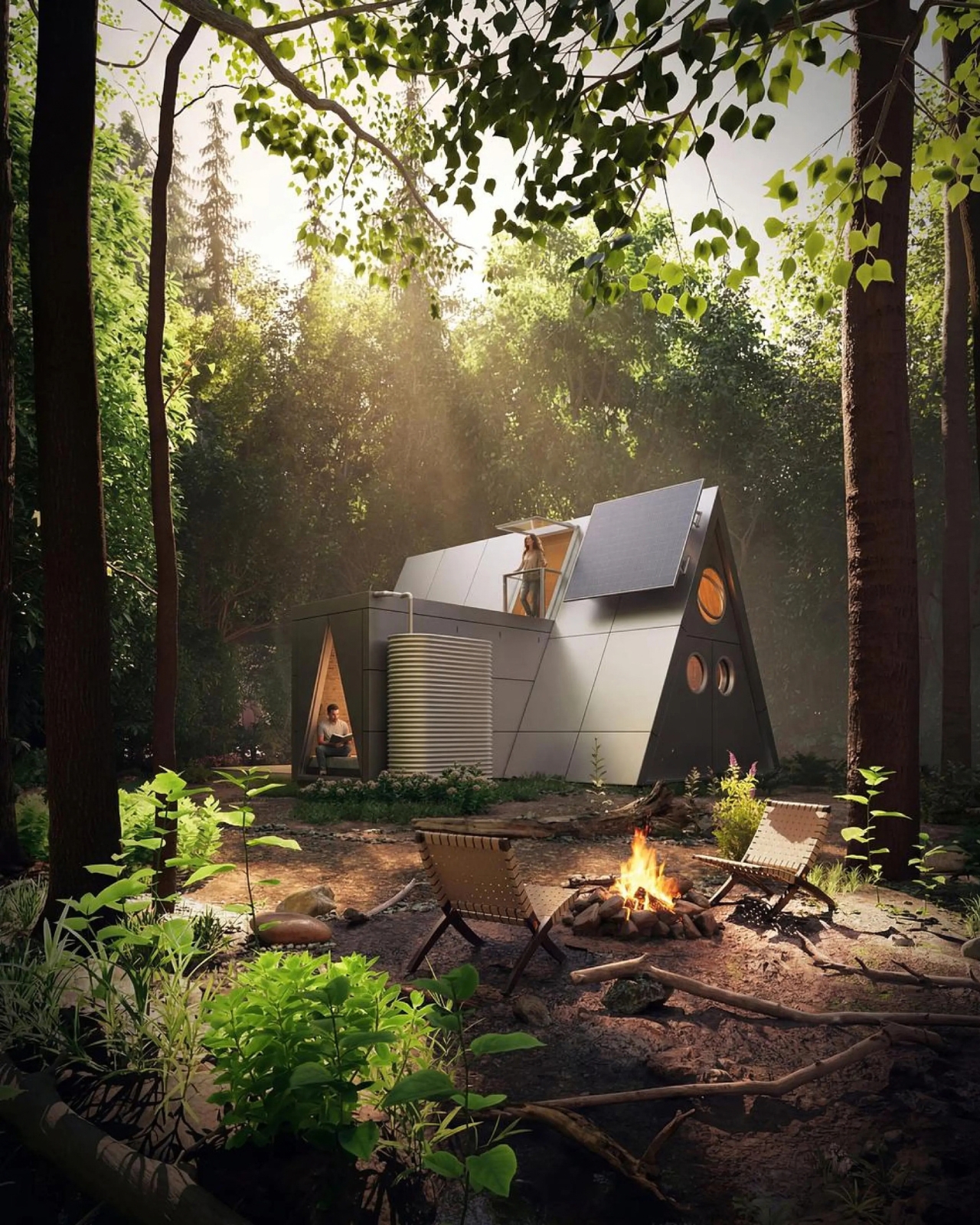
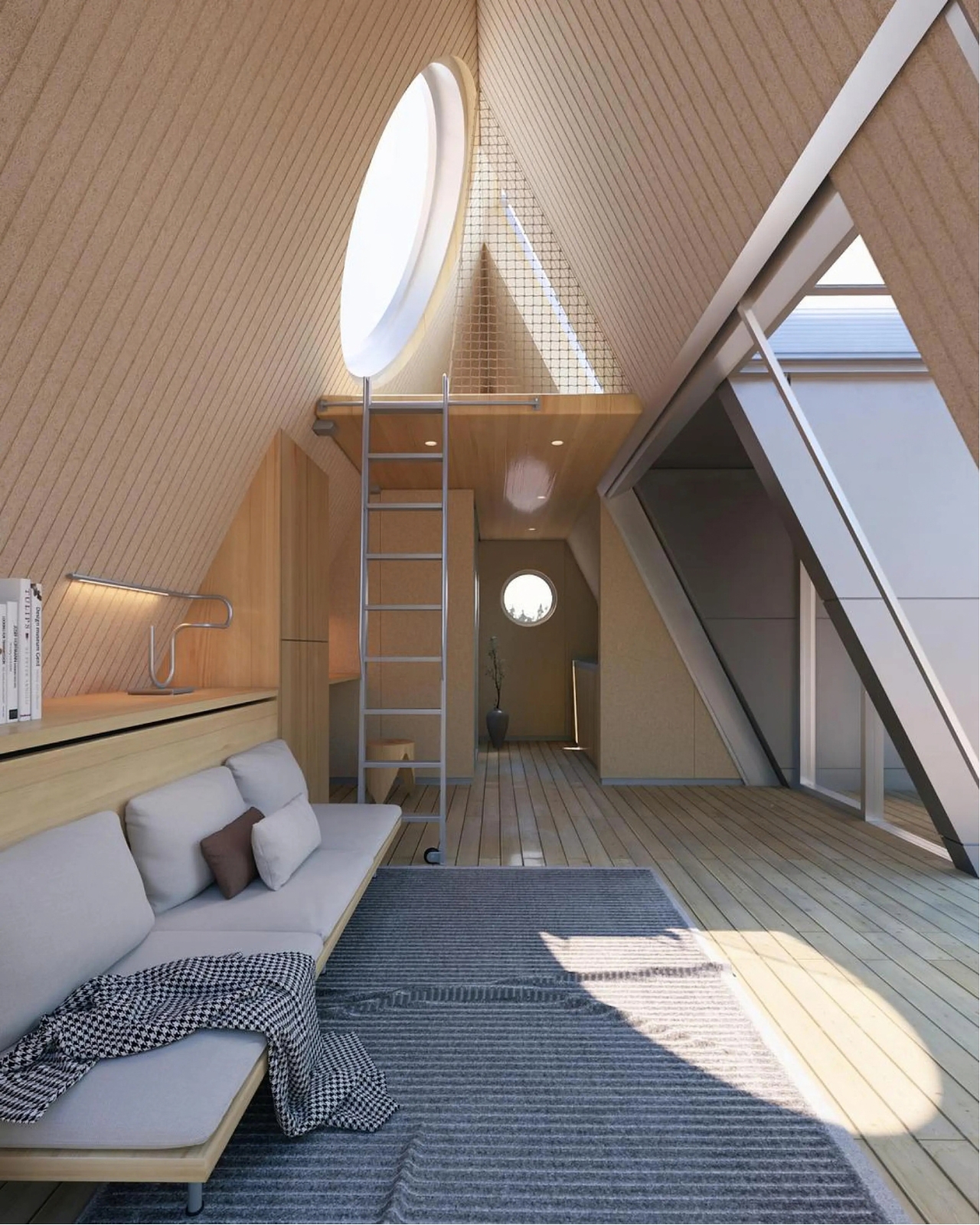
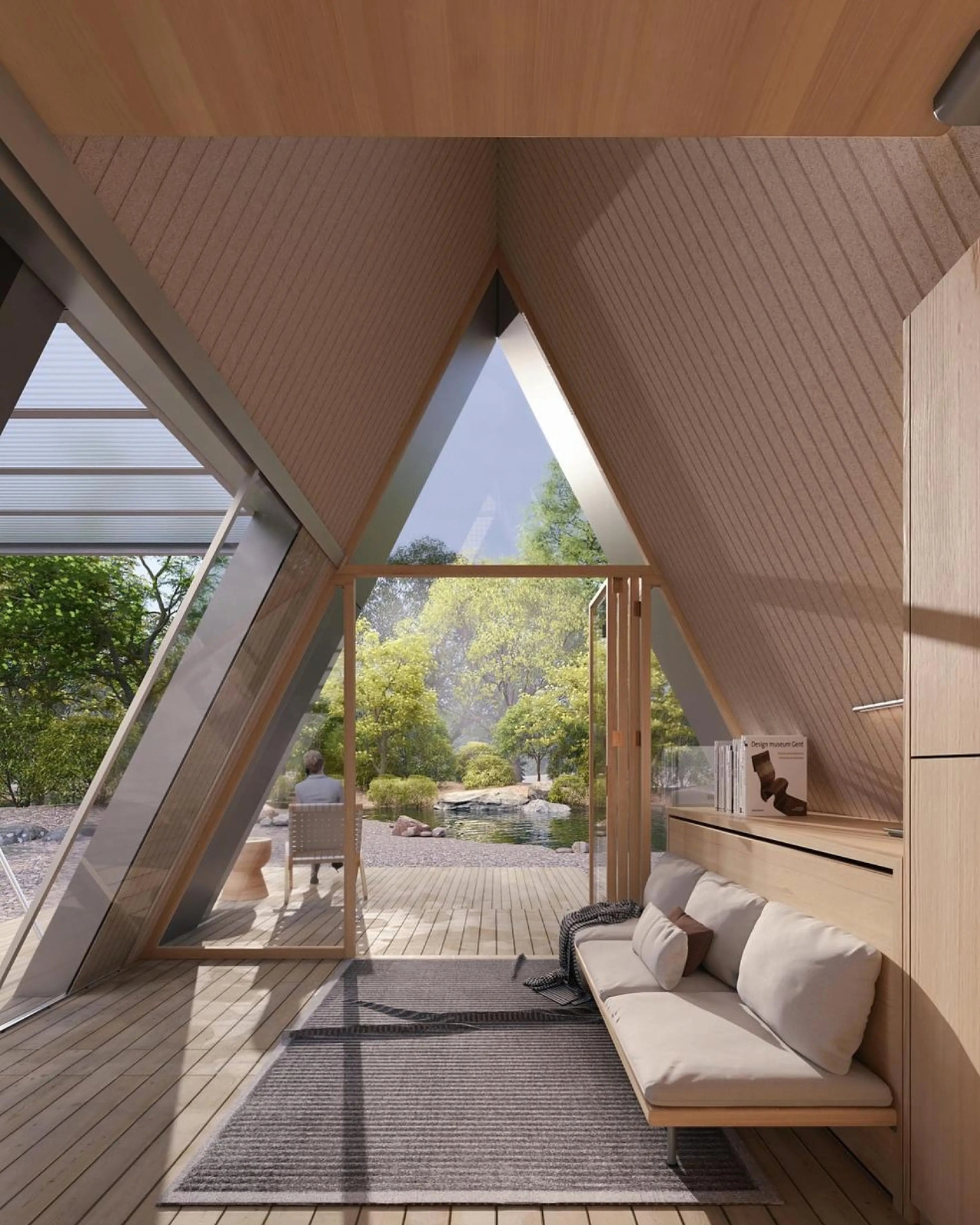
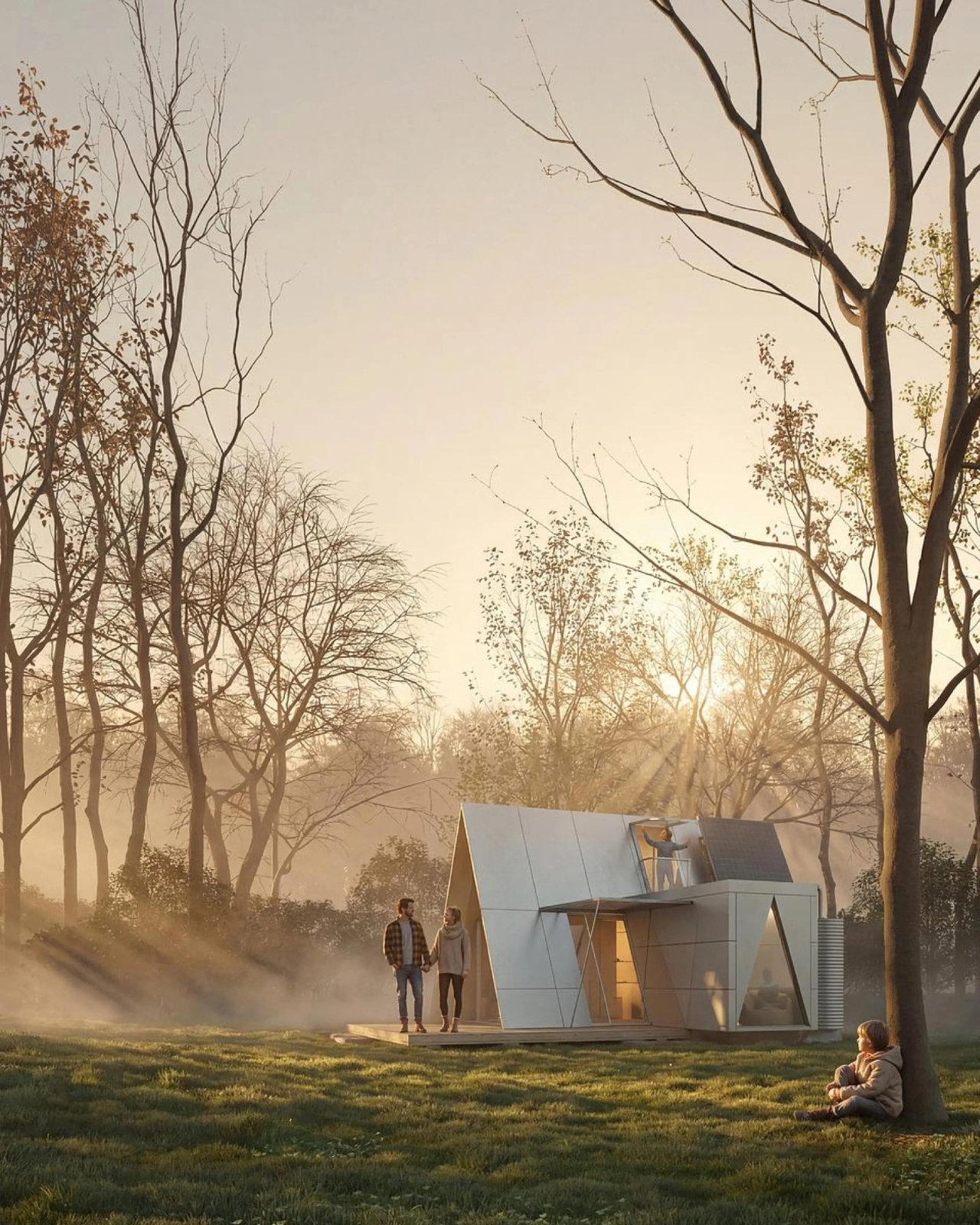
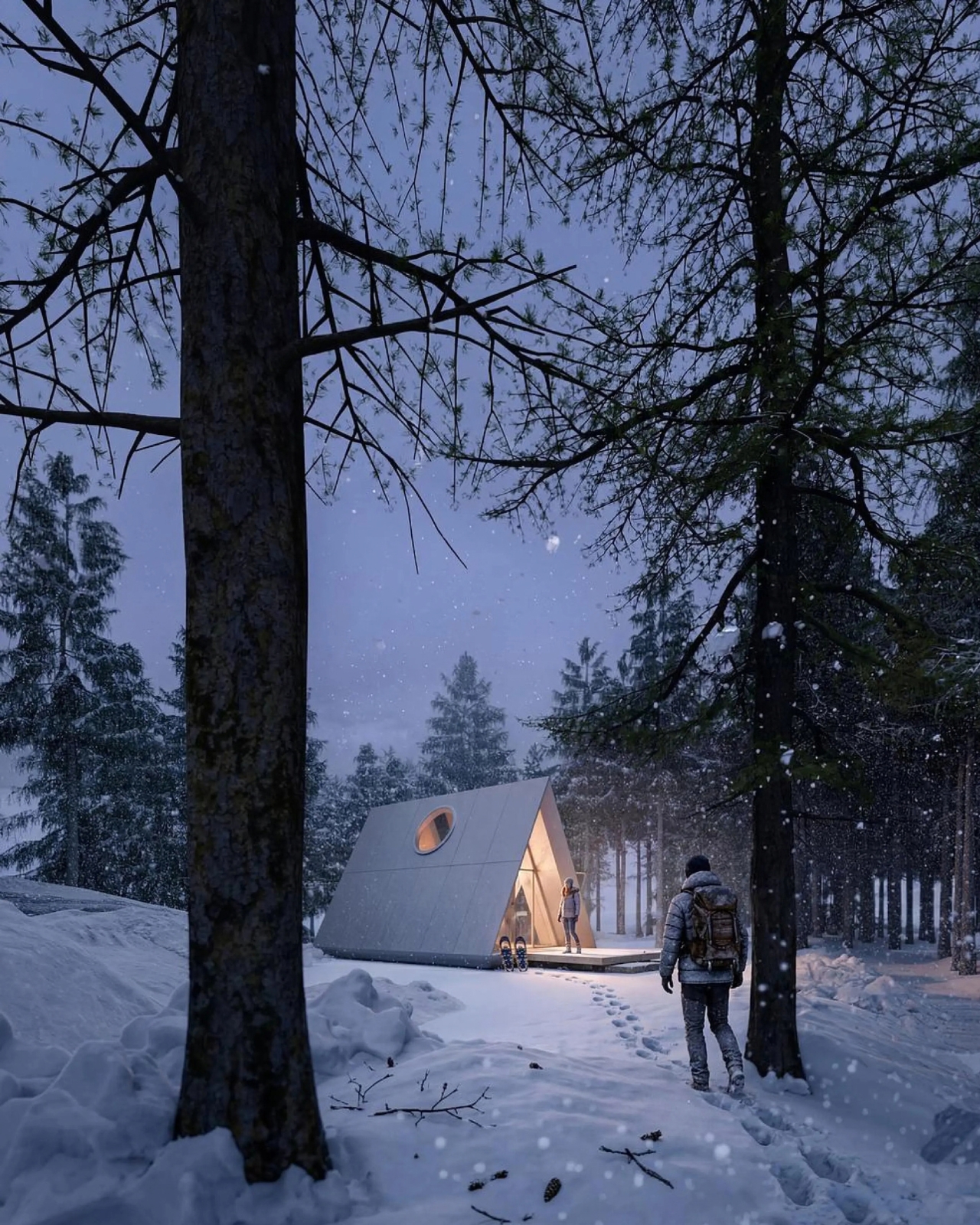
That last part is the actual innovation. Plenty of tiny homes are mobile, but most of them stay rigid once you get them there, basically a smaller box on wheels. Camping House does something different. The structure is a folding shell that fans open on-site into a steep A-frame, then locks into place with weather-sealed joints and insulated panels built to hold up through an actual winter. The A-frame isn’t just an aesthetic choice either. It’s structurally efficient, sheds rain and snow naturally, and creates a dramatic interior volume that reads much larger than the footprint suggests.
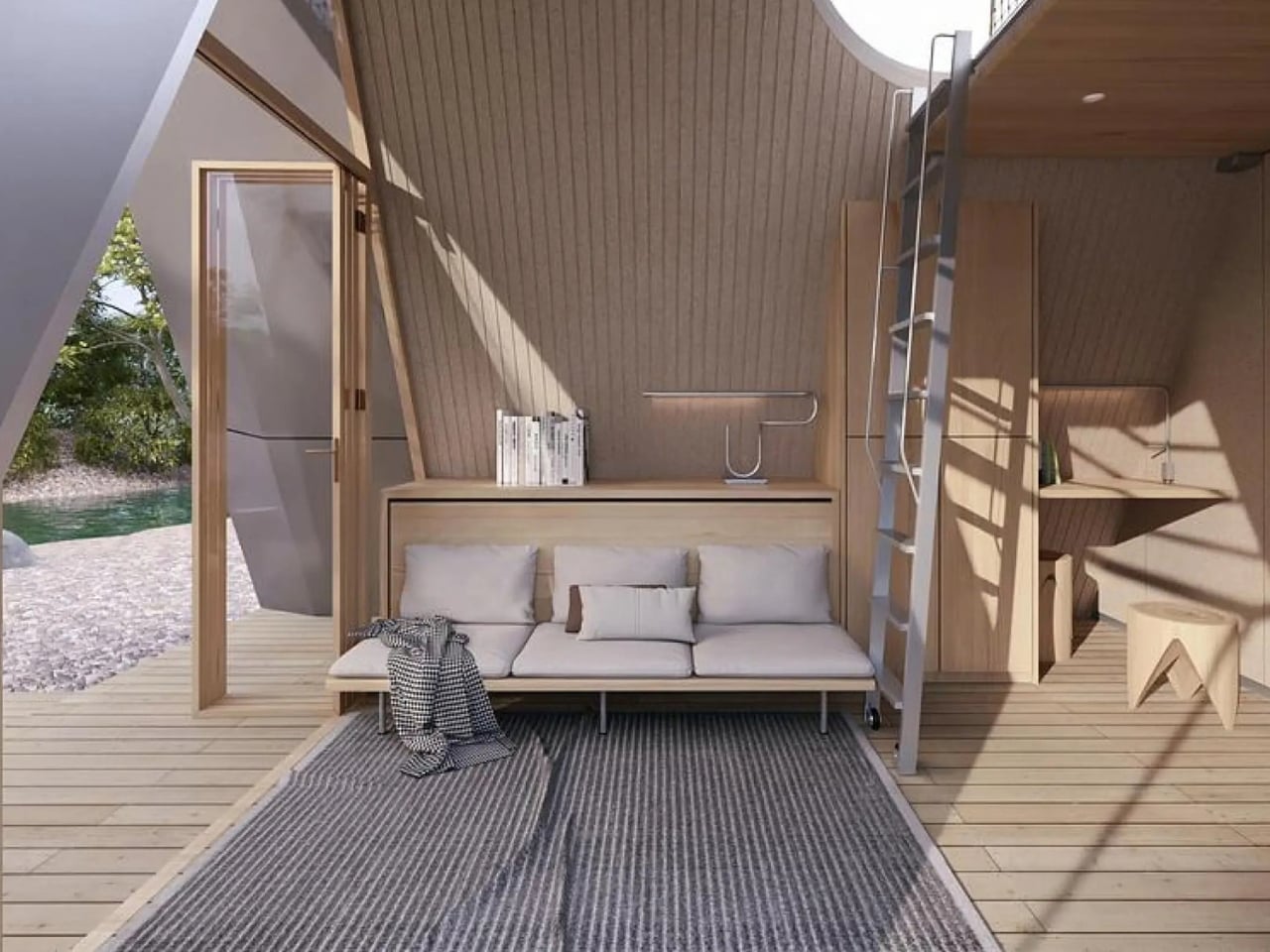
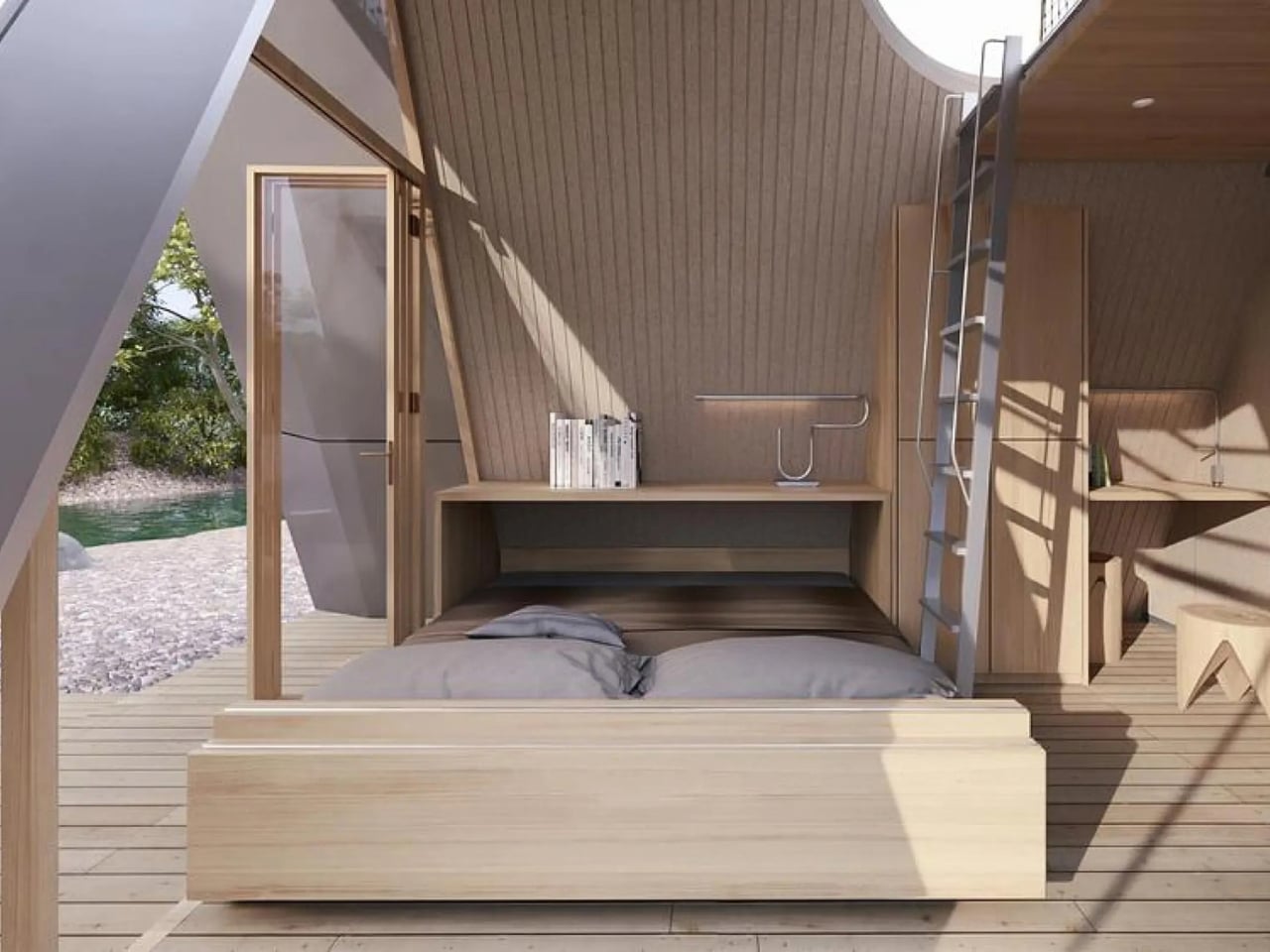
The system is built around three modules the studio calls Ports. The Residential Port handles living and sleeping, with furniture that flips from day mode to night mode in seconds. The Utility Port carries a real kitchen and a real bathroom, not a camper-van compromise version of either. The Extended Port clips on when you need a workspace, storage, or room for guests. You arrive, stabilize the base, release the hinges, and the shell swings open into a two-level interior that looks nothing like what fit on the trailer an hour earlier. The joinery and panel system that makes this possible is where most of the real design work lives, hidden in the hinges and seals rather than announced by the exterior.
What makes this feel like it’s arriving at the right moment is who it’s actually for. Remote work untethered a lot of people from a single address, and the appetite for spending real time outdoors, not just weekend camping but seasonal living, has grown alongside it. Camping House is designed with that shift in mind: off-grid solar integration, rainwater harvesting, passive cross-ventilation through a solar chimney, and no permanent foundation required. It leaves the ground beneath it essentially undisturbed, which matters if you’re setting up somewhere ecologically sensitive, or if you just don’t want to explain a poured foundation to a national forest.
There’s a practical honesty to designing for departure instead of designing for permanence. Most residential architecture asks how a building holds its ground. Camping House asks how a building lets go of it. Multiple units can even couple together into small clusters, which opens the door to uses beyond personal travel: disaster relief housing, temporary shelter during regional housing shortages, or small eco-tourism outposts that can be struck at the end of a season without leaving scars.
None of this is on the market yet. It’s a concept, and concepts have a habit of staying concepts. But two people can reportedly assemble it in under two hours, which is a modest ask for what you get in return: a structure with actual dignity, not a glorified pop-up tent with delusions of permanence.
The bigger idea Camping House is testing is whether shelter has to pick a lane between temporary and permanent. For a long time, those felt like separate categories with separate architecture. This project treats them as two settings on the same machine. Whether or not this exact version reaches driveways, the question it’s asking, why should mobility mean sacrificing comfort, feels like one more designers are going to keep chasing.
September camping arrives with a specific quality that July doesn’t have. The mornings carry an edge, the light sits lower, and every good weekend feels like one of the last ones worth using properly. What earns a spot in the car changes. It stops being about what’s most impressive and starts being about what actually works when the temperature drops and the fire needs to stay going longer than planned.
This list covers five pieces of gear built for car camping and overlanding weekends: a radio, a grill, a shelter, a power source, and a pillow. Each one was chosen for the same reason — not because it leads its category on a spec sheet, but because it solves a specific friction point that camping has quietly accepted for too long as part of the deal.
1. Camp Napper
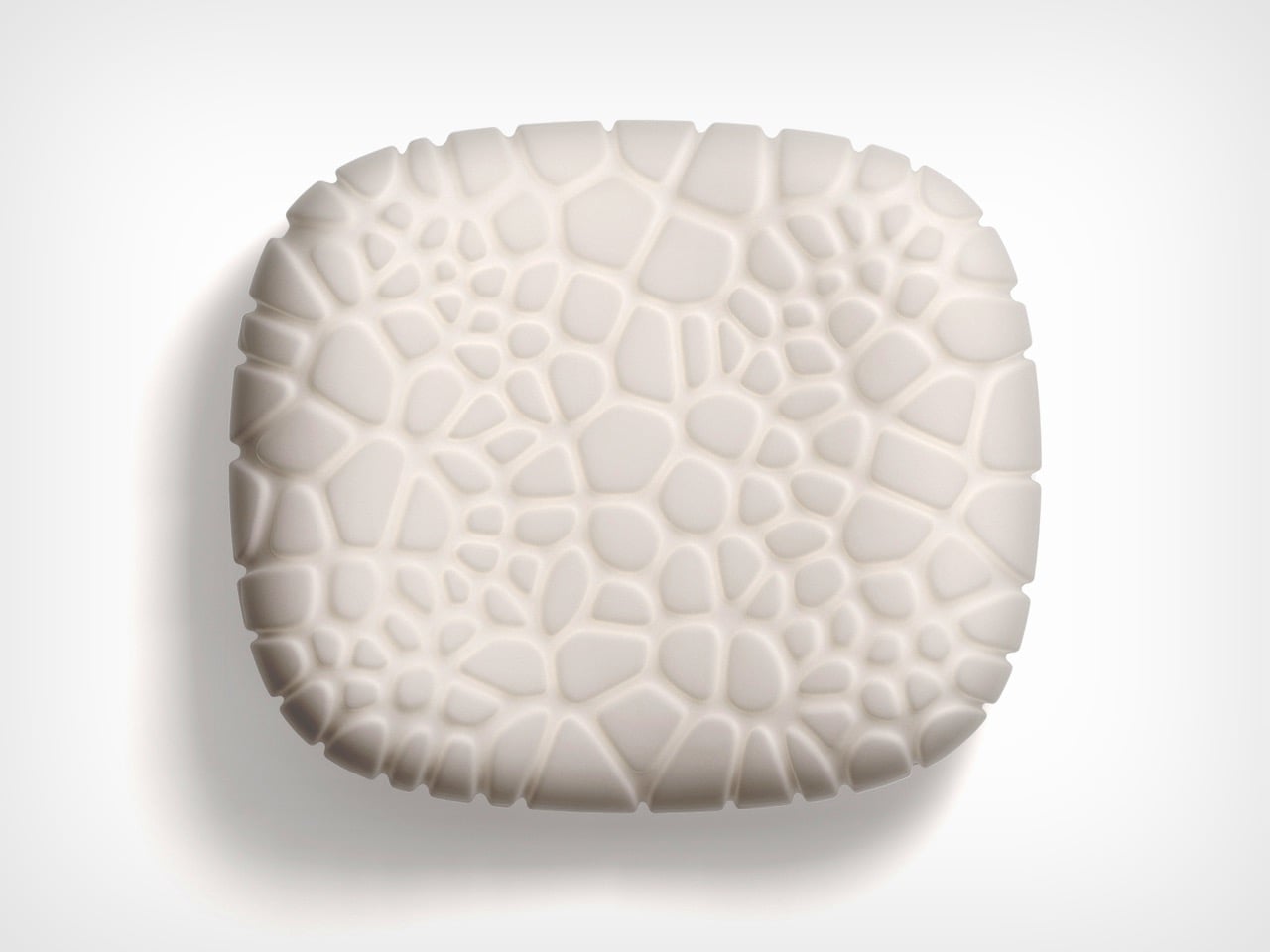
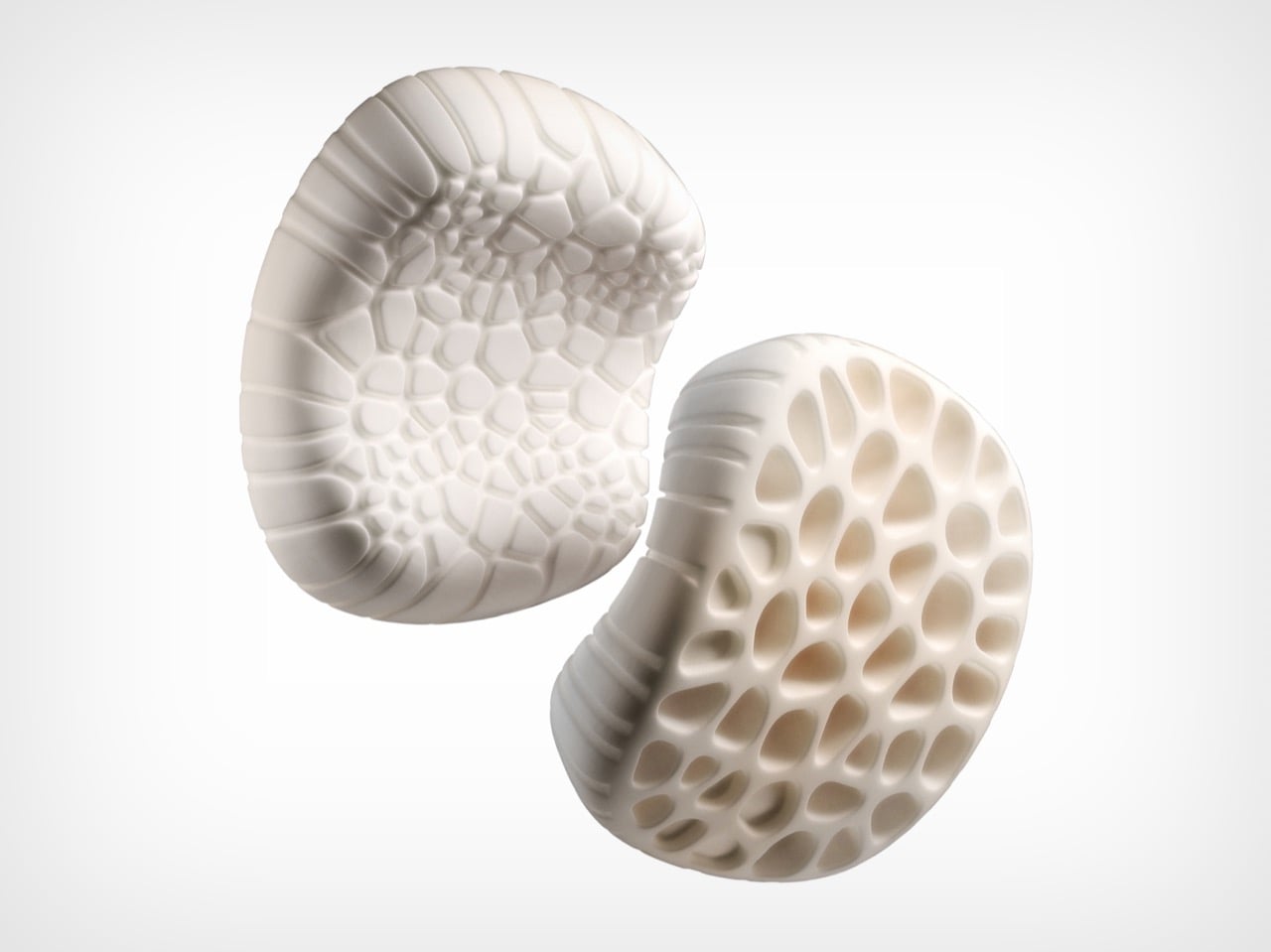
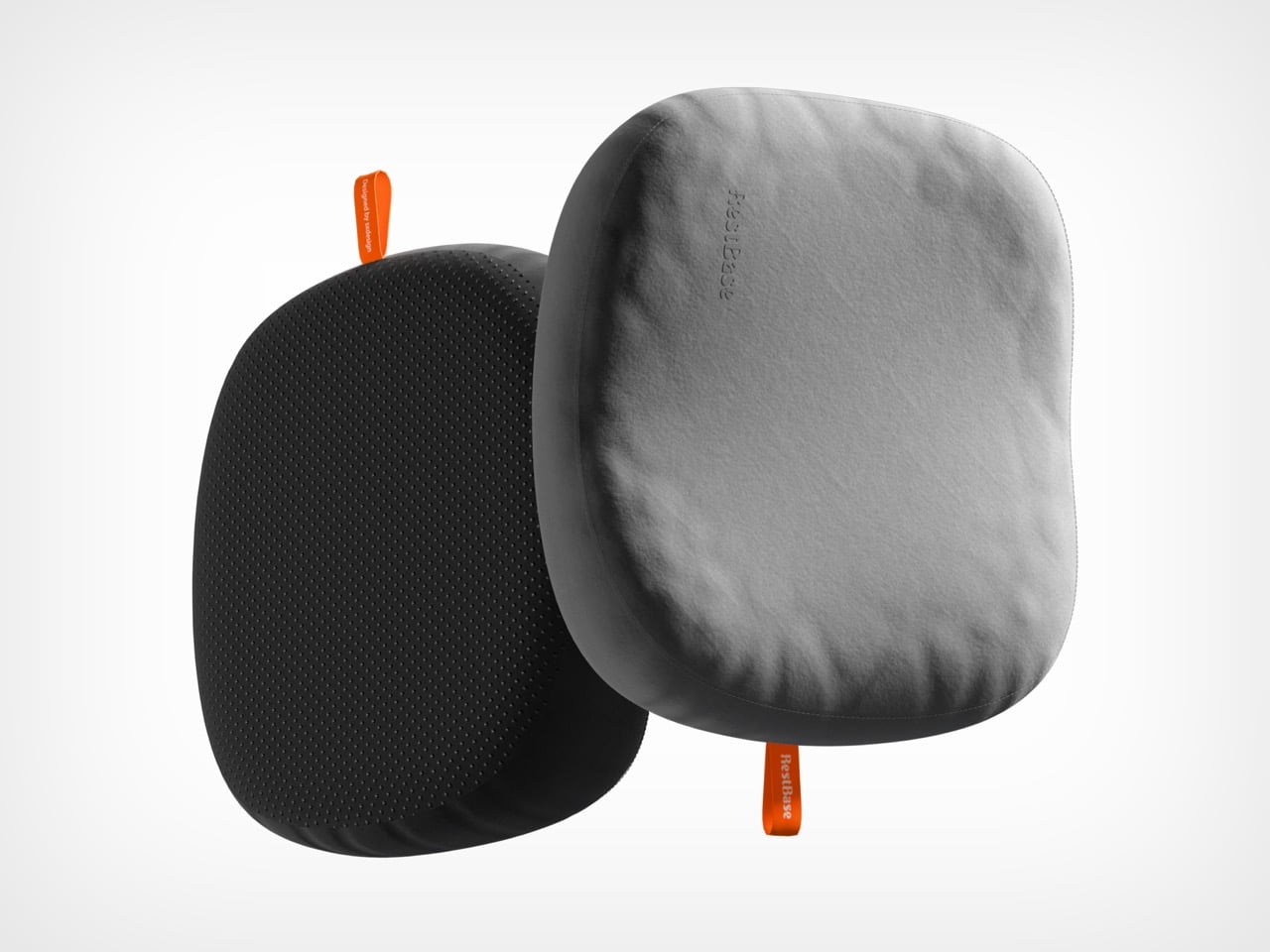
Inflatable camping pillows fail in a consistent pattern: they sound like pool floats each time you shift, lose pressure by 3 a.m., and pack into a shape that takes up more space than it deserves. Designer Chen Xu, working for RestBase, treated the camping pillow as an engineering problem instead. The Camp Napper’s surface geometry is derived from fungal spore texture, mapped through Voronoi polygon modelling across real pressure data from volunteer sleepers. Trypophobia alert: the surface is visually distinctive.
The internal structure mirrors hollow plant stem geometry, shedding mass without losing the ability to hold form under repeated compression. Total weight is 400 grams. Packed size is roughly the dimensions of a water cup. Memory foam conforms to different sleepers without nightly pressure adjustments, and anti-slip rubber particles on the base keep it in place across sleeping pads, camp chairs, and car seats equally. Note: retail price was not confirmed at time of writing — verify before purchasing.
What we like
Voronoi-modelled surface and bionic internal structure represent engineering at a level the camping pillow category hasn’t previously applied
400 grams compressed to water-cup dimensions is genuinely packable, not just marketed as such
What we dislike
The cellular surface texture warrants a trypophobia alert before gifting or introducing to someone who hasn’t seen it
Retail price was unconfirmed at the time of writing; verify availability before purchasing
2. RetroWave 7-in-1 Radio
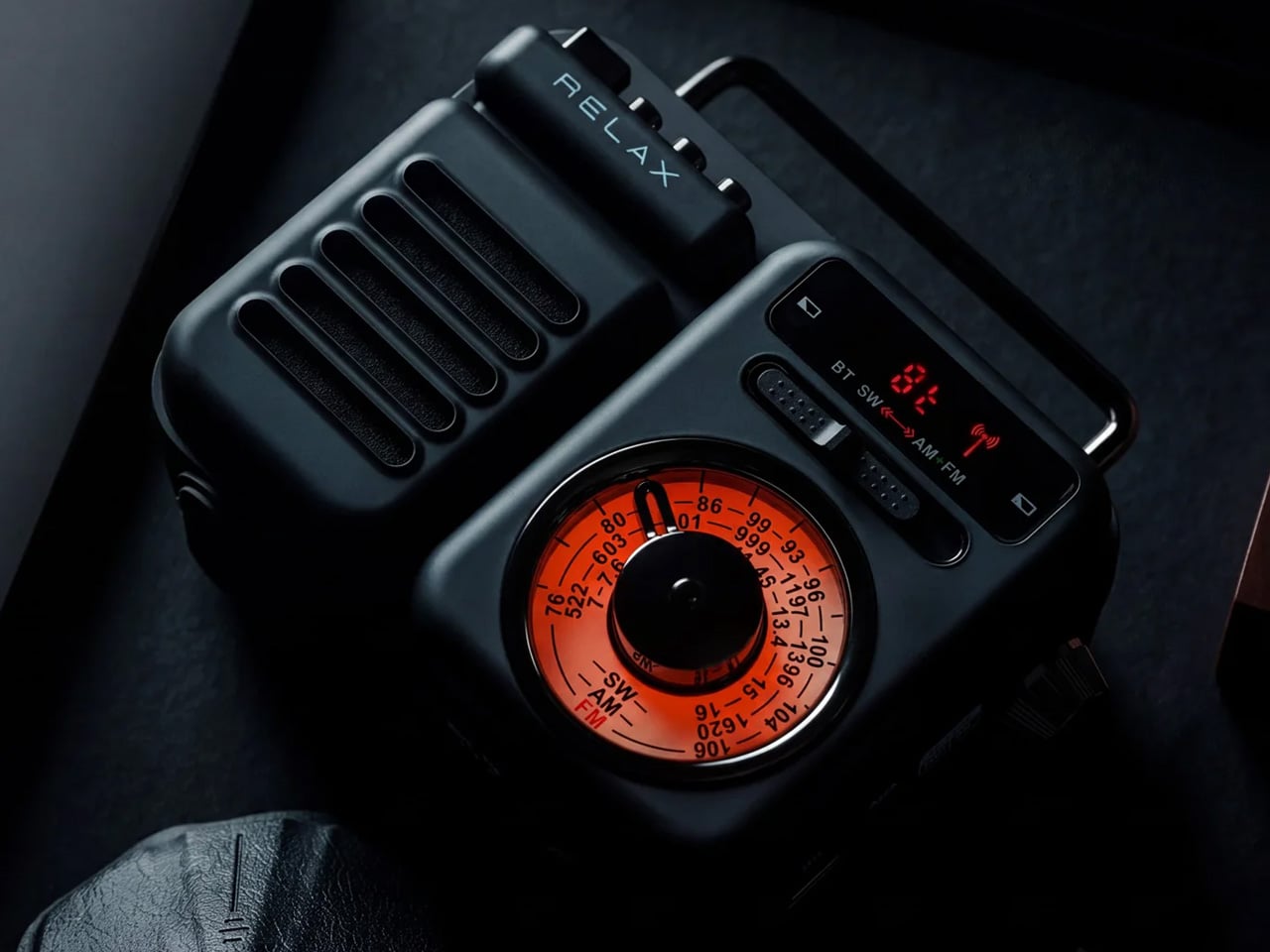
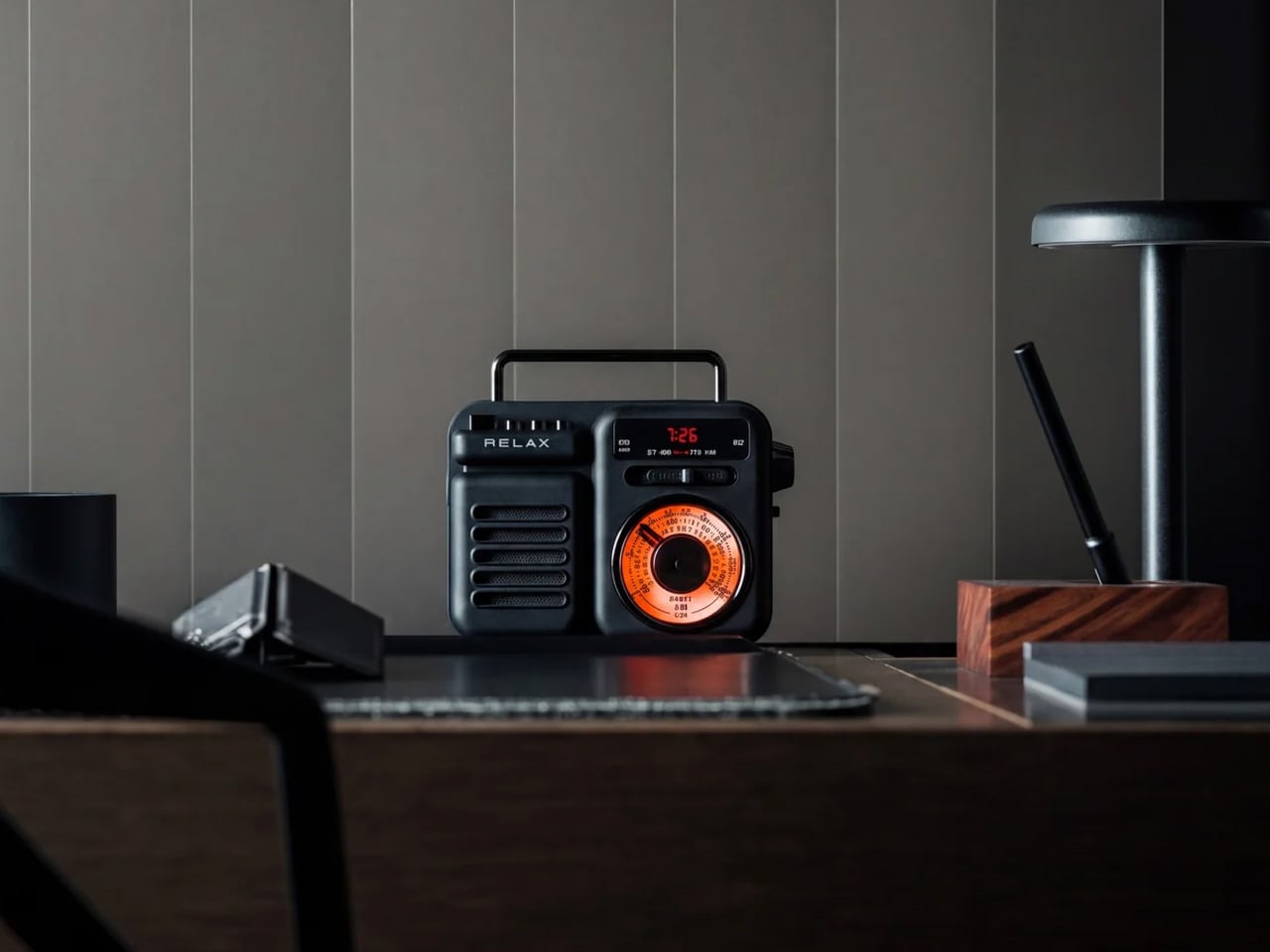
The RetroWave earns its place not through specifications but through atmosphere. It’s a 7-in-1 radio with solar charging and a hand-crank backup, both of which keep it running off-grid without a charged battery or a Bluetooth pairing screen. It simply works when it’s turned on, which is a lower bar than it sounds and one that a surprising amount of audio gear fails to clear by the second day of a trip.
The solar panel handles afternoon charging on any reasonable day. The hand crank handles everything else. Shortwave reception varies with terrain, so dense forest or mountain valleys will limit broadcast range — worth knowing before the trip rather than during it. For weather, local stations, and background sound that makes a campsite feel inhabited rather than silent, it performs without hesitation.
Solar and hand-crank charging eliminate any dependency on outlets or other devices’ battery reserves
Seven band frequencies in one object requiring no phone, no app, and no pairing sequence to operate
What we dislike
Shortwave reception degrades noticeably in heavily forested or mountainous terrain
The retro form tends to read as decorative to first-time buyers who haven’t yet used it in the field
3. Puffer Tent
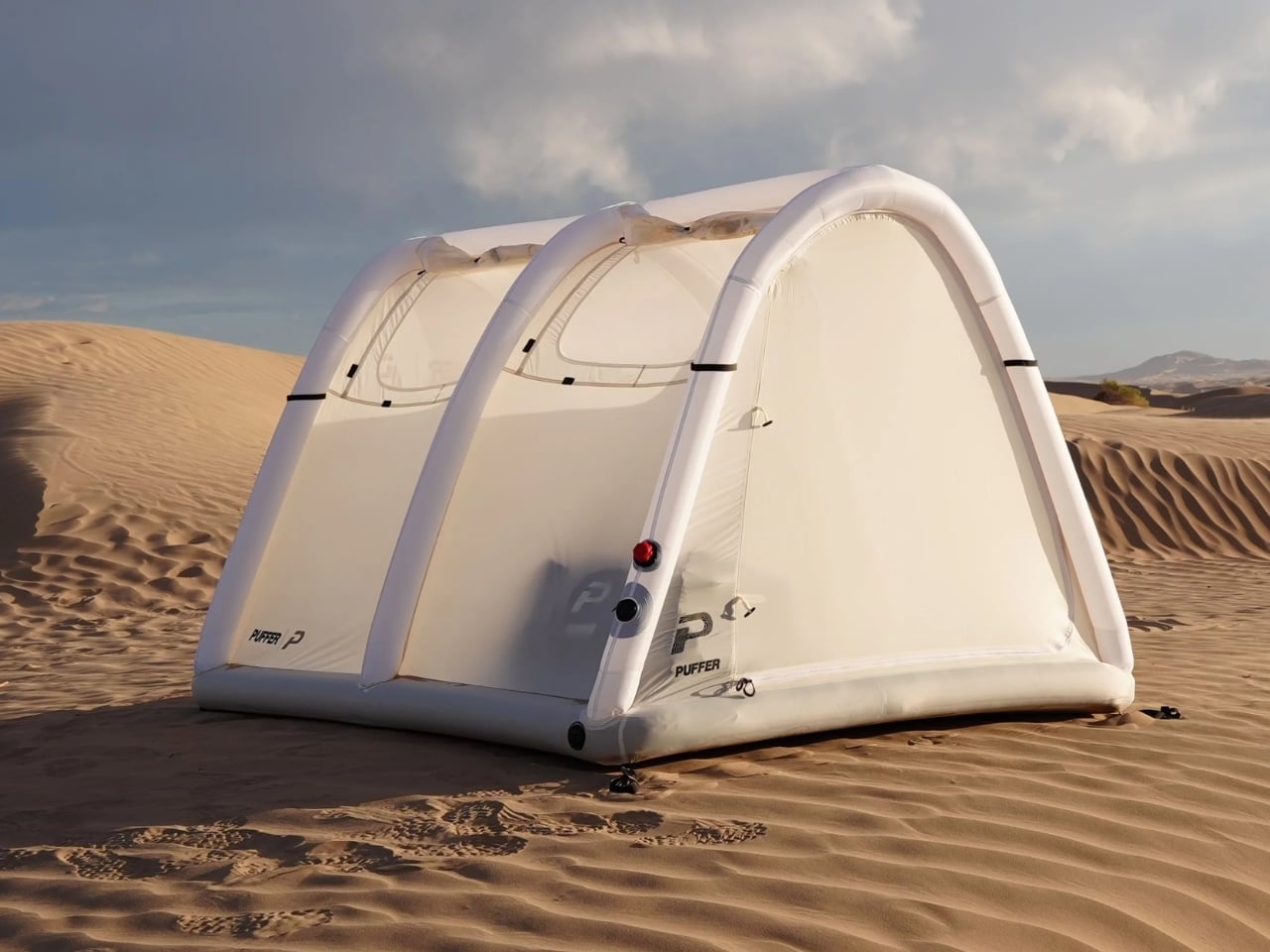
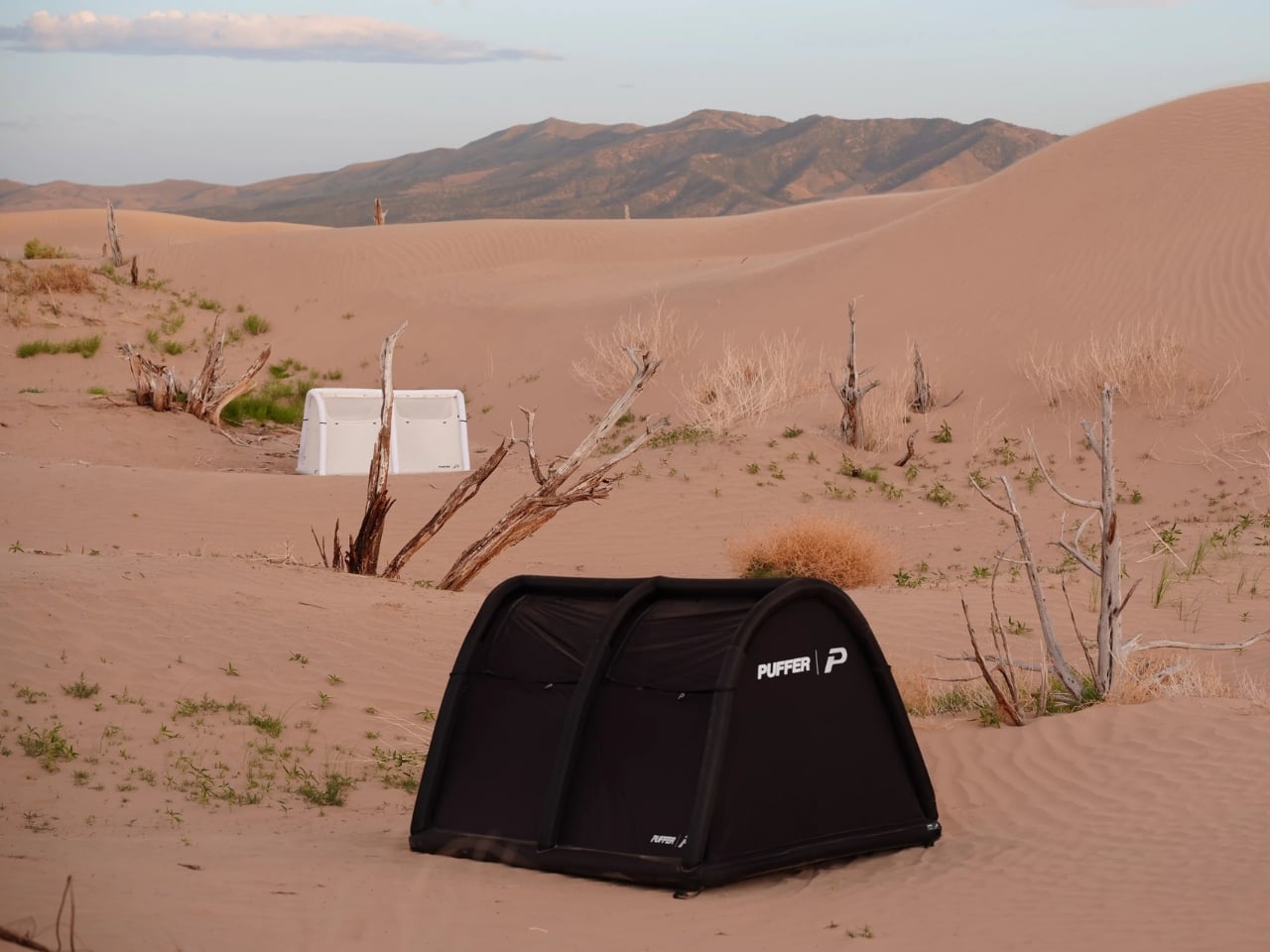
The standard camping shelter setup involves a sequence of separate problems: tent, sleeping pad, sleeping bag, and then the 2 a.m. realignment when everything shifts. The Puffer tent collapses that sequence into a single bag. It’s an inflatable A-frame with the mattress built into the structure — shelter and bed arriving together, packed into 10 × 25 × 10 inches, with firmness adjustable from soft to firm to hard.
Founder Sam Peery spent five years prototyping this, which explains why the details feel intentional rather than approximate: valve placement, pressure labeling, pump connection. At 18.2 pounds, it’s a car camper and overlander’s tent, not a backpacker’s — a distinction the brand makes honestly. Priced at $649.99 with the electric pump included, the more instructive comparison is against a rooftop tent setup, not a $40 nylon shelter from a big box store.
What we like
Tent and mattress in a single integrated system removes the multi-piece setup sequence that opens most camping trips
Adjustable firmness from soft to hard gives sleepers real control over the sleeping surface
What we dislike
At 18.2 pounds, it’s unsuitable for backpacking trips where pack weight is a primary constraint
The $649.99 price requires genuine commitment from anyone who already owns a functional shelter
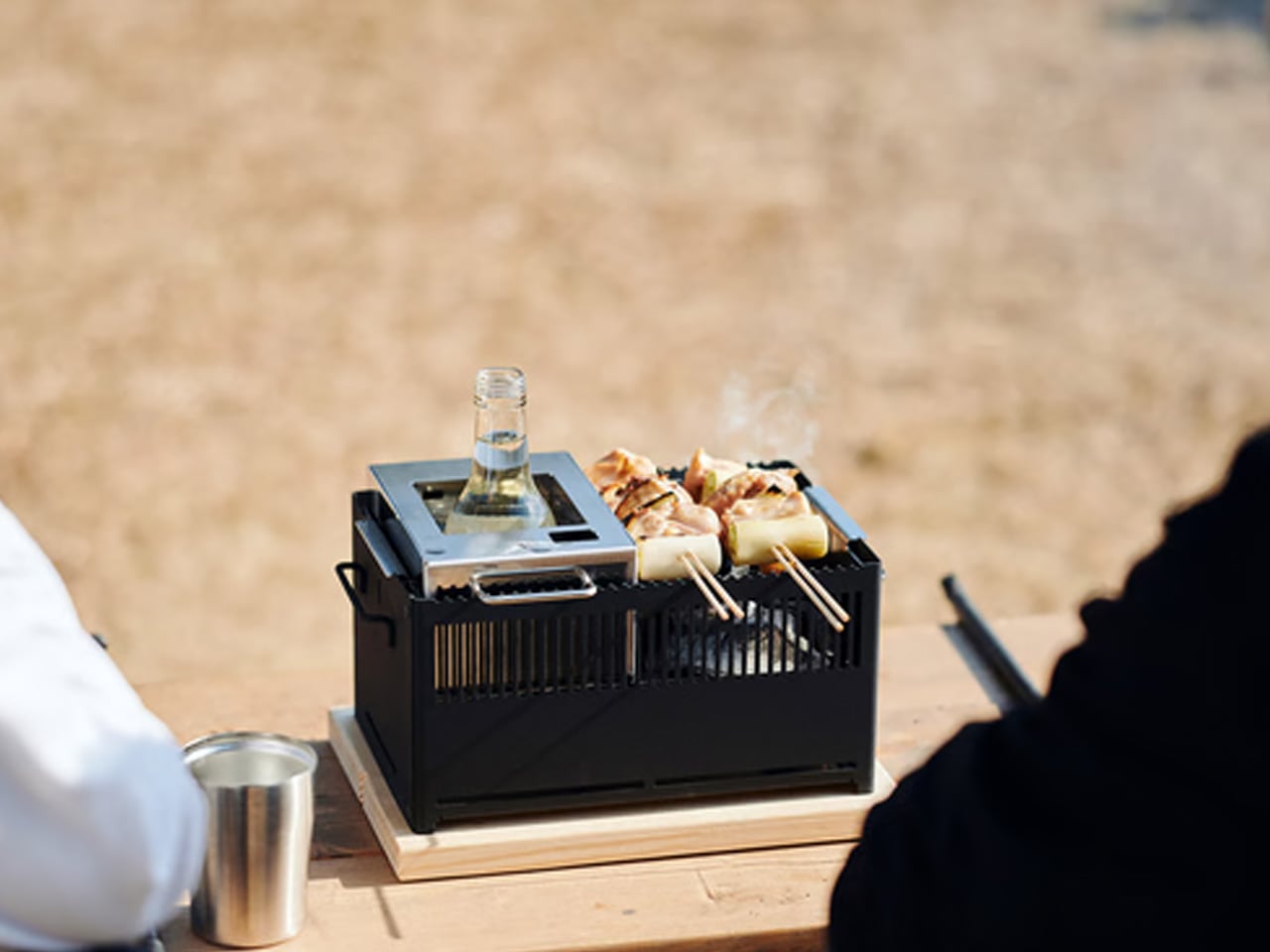
4. All-in-One Grill
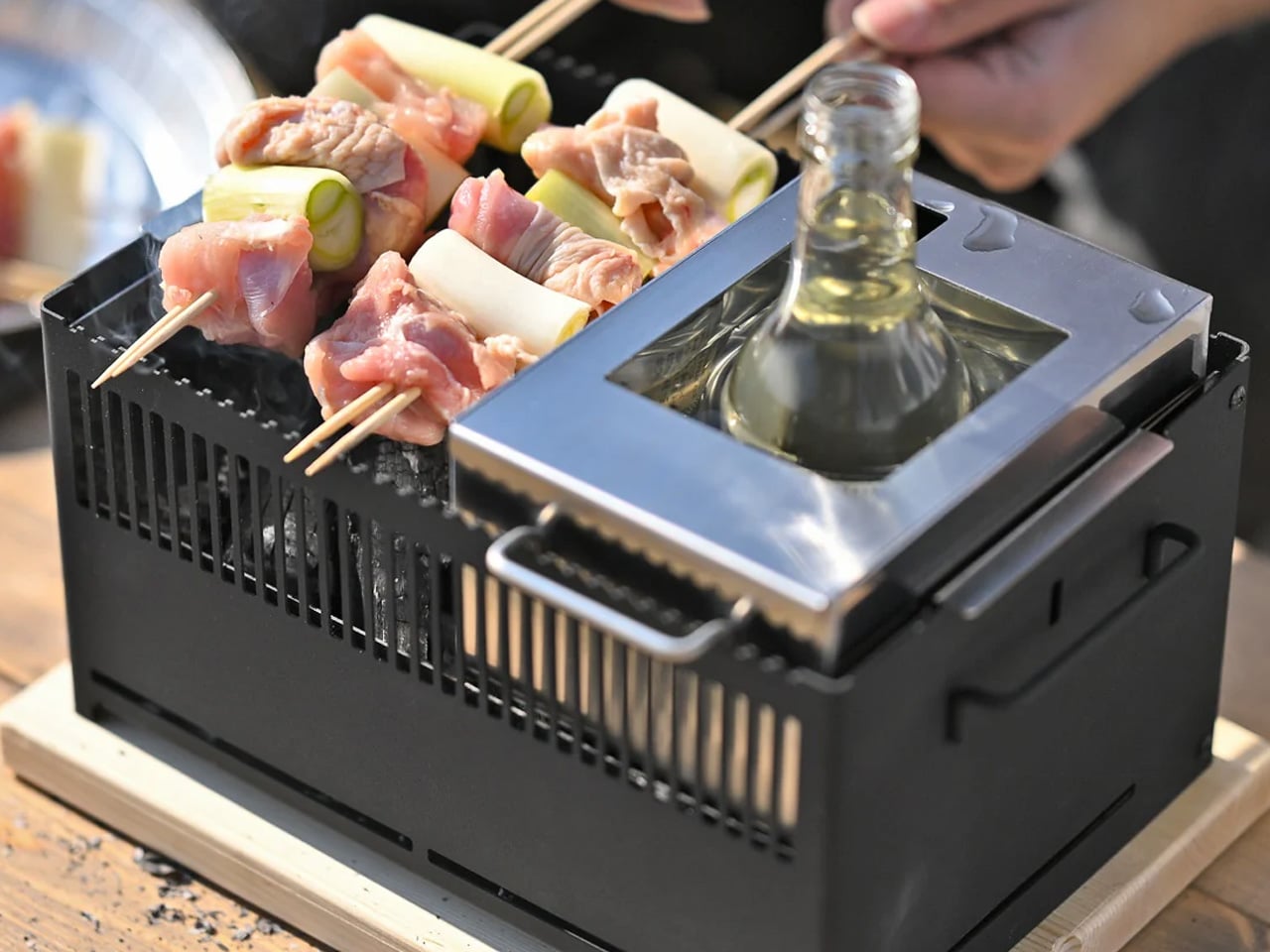
Bar grates collect residue from the first meal and carry it into every meal that follows. Cleaning them properly requires time and water that aren’t always conveniently available between the fire and the food. The All-in-One Grill’s flat tabletop surface removes that problem entirely — no gaps, no angles, nothing for debris to settle into. On a two-day trip with multiple meals, that difference compounds into something genuinely useful by Sunday morning.
Surface area fits two people cleanly, which covers the most common camping scenario without unnecessary bulk. Cooking for four or more requires staggering meals, adding real time to every camp dinner. There’s also no heat source included — this is a cooking surface that sits above a fire or stove, not a replacement for one. Within those parameters, it does its job at $449 with the kind of simplicity that makes a camp kitchen feel considered.
Flat surface cleans in a fraction of the time a traditional bar grate requires, a gain that compounds across a multi-meal trip
Tabletop sizing matches the most common two-person camping scenario without adding unnecessary pack weight
What we dislike
Cooking for groups larger than two requires staggering meals, adding real time to every camp dinner
No integrated heat source means it functions as a companion to a fire or stove, not a standalone cooking solution
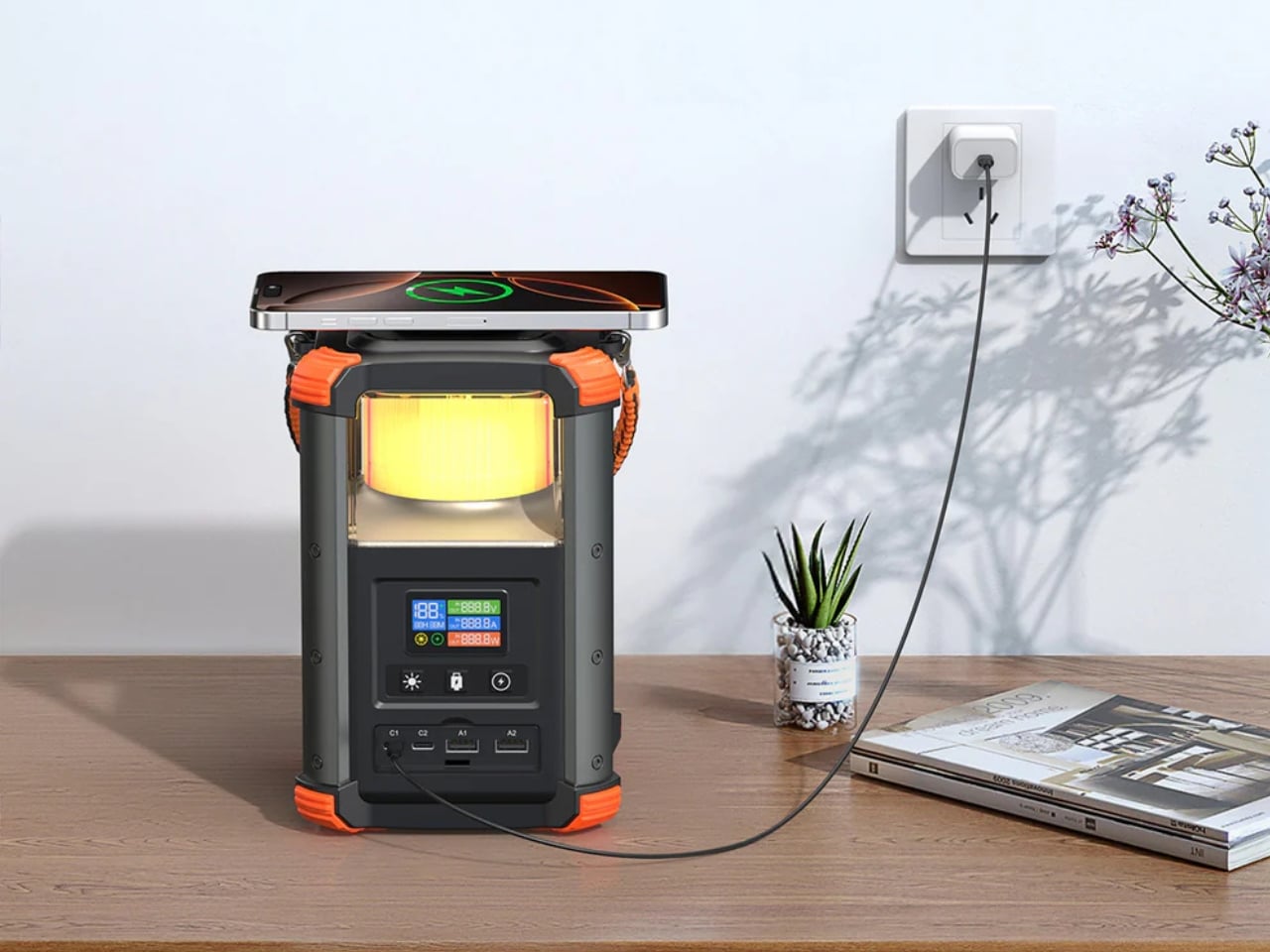
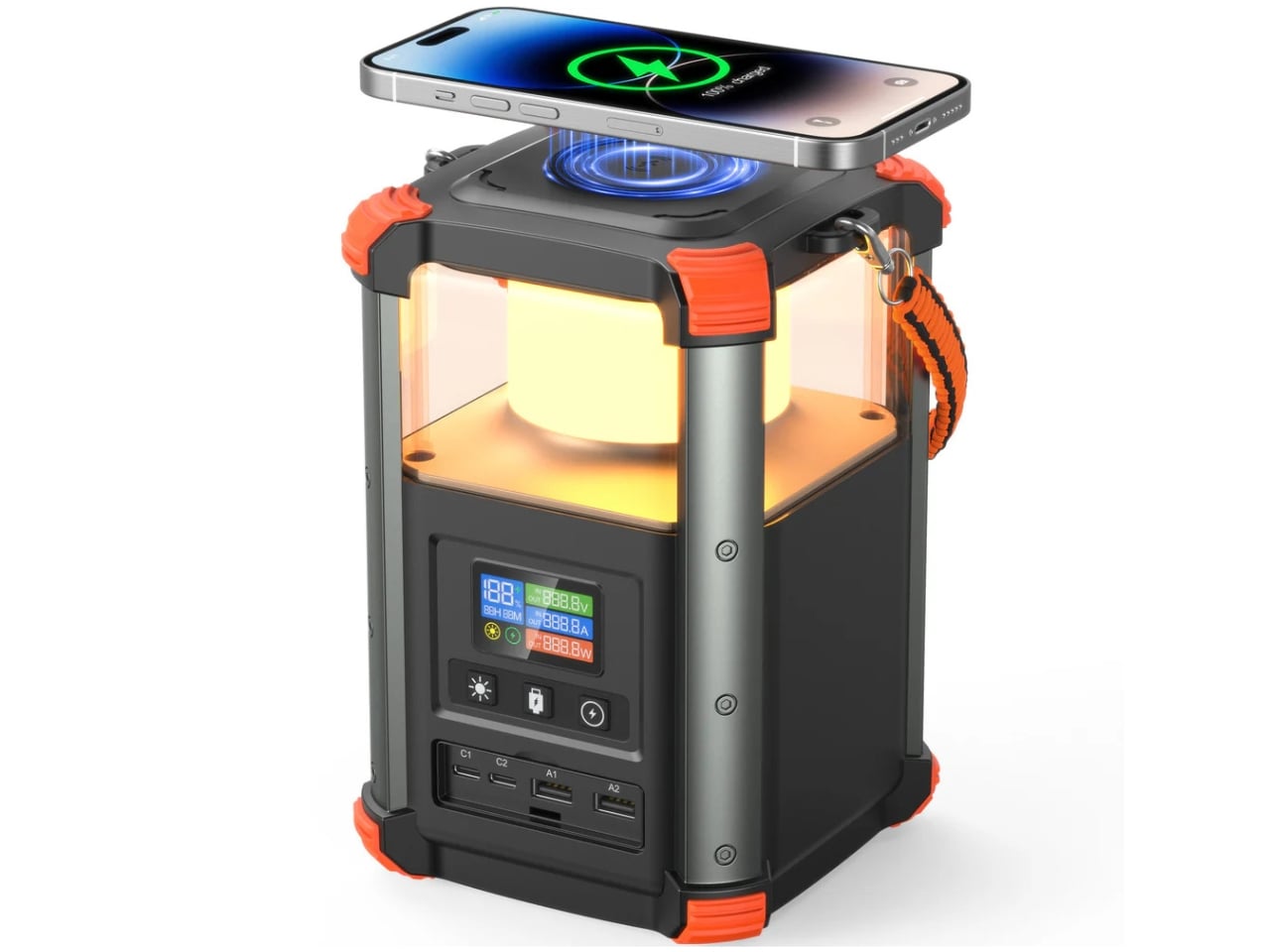
5. Blavor PN-W43 Power Station + Camping Lantern
Most power stations are rectangular, featureless, and indifferent to the environment they’re meant to operate in. The Blavor PN-W43 builds a 4W LED lantern directly into the body, producing a 64,000mAh device barely larger than a tall water bottle that covers light and power from a single object. Five charging pathways — solar, AC, car adapter, USB-C, and micro USB — handle both off-grid and in-transit scenarios without adapter juggling.
At $135, it replaces two separate items, a lantern and a power bank, that together would cost more and occupy more space. It pairs naturally with the RetroWave Radio in this list: the radio’s solar charging handles daytime audio independently, while the Blavor manages device charging and nighttime light without overlap. At 236.8Wh, it’s sized for a weekend trip, not an extended off-grid expedition — which is exactly the use case this article is built around.
What we like
Integrated 4W lantern eliminates a separate light source without adding meaningful size or weight to the kit
Five charging pathways, including solar and AC, cover off-grid and in-transit scenarios without separate adapters
What we dislike
236.8Wh capacity suits two to three night trips; longer off-grid expeditions will need more headroom than this provides
The cylindrical form sits awkwardly alongside flat gear in a structured pack and requires deliberate placement
The Trips You Actually Remember Are the Ones You Showed Up For
September has a way of making outdoor trips feel more deliberate than they do in the middle of summer. The season is moving and the weekends are numbered, which concentrates attention on what actually matters about being outdoors. The gear that earns a place in that context isn’t the most technically advanced option in its category. It’s the piece that makes the trip slightly better without making it harder to plan.
Each of these five picks does something specific. The RetroWave sets the tone without needing a phone. The All-in-One Grill removes the cleanup that makes cooking feel like a chore by day two. The Puffer Tent reduces setup to a single bag. The Blavor handles light and power as one object. The Camp Napper delivers actual sleep. None of them require the whole kit to change. Any one of them is enough of a reason to go.
The Labor Day weekend has a way of separating gear that belongs from gear that ends up in the car boot. Not by price or feature count, but by how well each object earns its spot before the drive out begins. A Labor Day weekend runs on a different logic than a single overnight. The fire has to hold. The food has to be worth cooking. Everything else has to justify the weight it occupies.
The seven objects here cover the full range: fire, power, cooking, light, water, sound, and one small tool that navigates all of it after dark. What connects them is a commitment to solving a specific outdoor problem with enough precision that the solution becomes the whole reason you own it. Pack these, and the only question left is where to go.
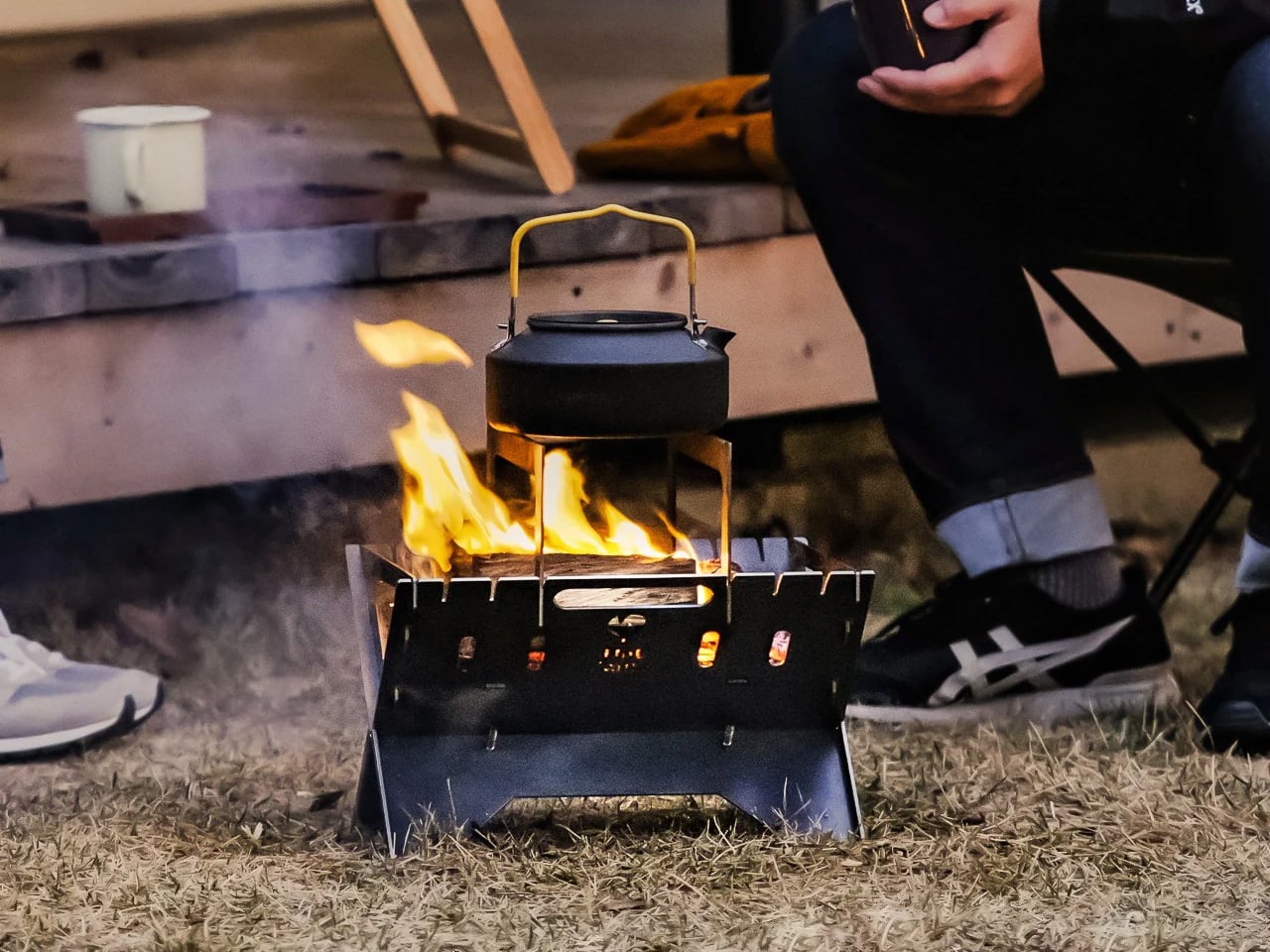
1. Portable Fire Pit Stand
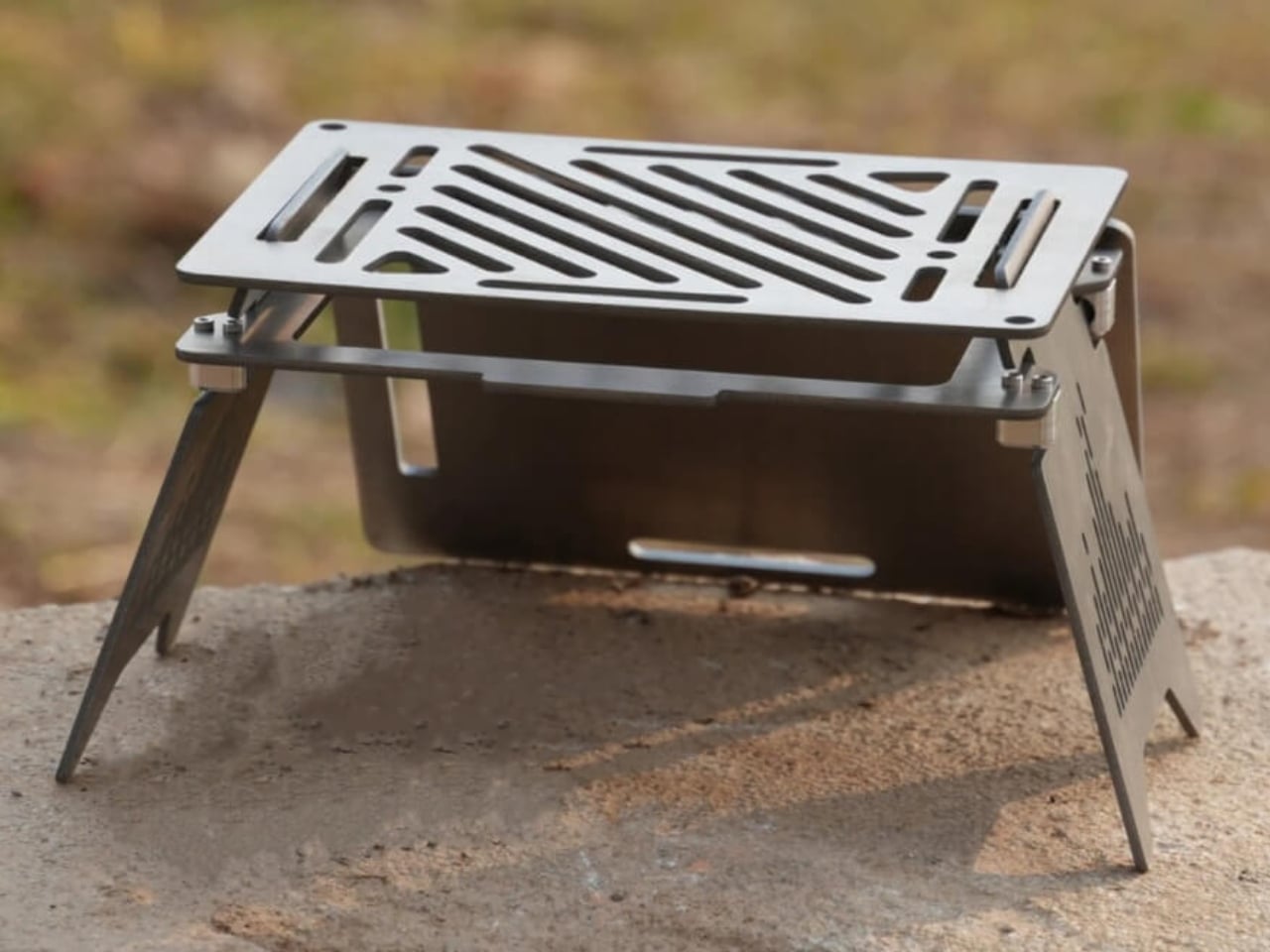
The fire pit category is full of oversized objects that need a truck bed and a second person to manage. The Portable Fire Pit Stand sidesteps that entirely. Precision-cut black steel plates resist warping under sustained heat, assemble without tools, and fold flat when the trip is over. What you get at the campsite is a fire that earns its place as both a functional heat source and the visual anchor every site needs to feel worth sitting around past sundown.
The stand elevates fire off the ground, making it viable on sensitive terrain and at campgrounds where ground fires are restricted. That single design decision opens up far more sites than a standard ring allows. The black steel construction does not bow or distort after repeated use the way cheaper alternatives do, and the footprint is compact enough to work on a picnic table or against a stone wall. It is the kind of gear that earns a permanent place in the kit after a single evening out.
Heat-resistant steel construction holds its shape through repeated use across multiple camping seasons
Elevated design meets leave-no-trace standards on campgrounds where ground fires are restricted
What we dislike
Steel construction adds weight that backpackers counting grams will notice over a long carry
No integrated grill grate, which means a separate purchase for cooking directly over the fire
2. Blavor Power Station + Camping Lantern
Most portable power stations look like they were designed by someone who has never spent a night outdoors. The Blavor PN-W43 solves that by building a 4W LED camping lantern directly into the form factor. The result is a 64,000mAh device barely bigger than a tall water bottle that covers five charging pathways — solar, AC, car adapter, USB-C, and micro USB — with bidirectional 100W fast charging and a digital display that keeps battery status visible in the field without guesswork.
The real value is how naturally the two functions coexist. When the lantern is on, the power bank is right there. When you are charging devices overnight, the ambient glow handles the tent interior without a separate light source. For campers who have always carried both a dedicated lantern and a backup battery pack, the consolidation alone pays for the weight before the first night ends. A lanyard ships in the box, which tells you someone at Blavor has actually camped.
What we like
Five charging pathways give genuine flexibility across grid-connected and fully off-grid environments
Lantern and power bank coexist without compromising each other — the dual function feels designed in, not added on
What we dislike
At 236.8Wh, capacity suits a weekend trip rather than an extended off-grid expedition
The cylindrical form can sit awkwardly alongside flat gear in a structured pack
3. Camprit TiStove
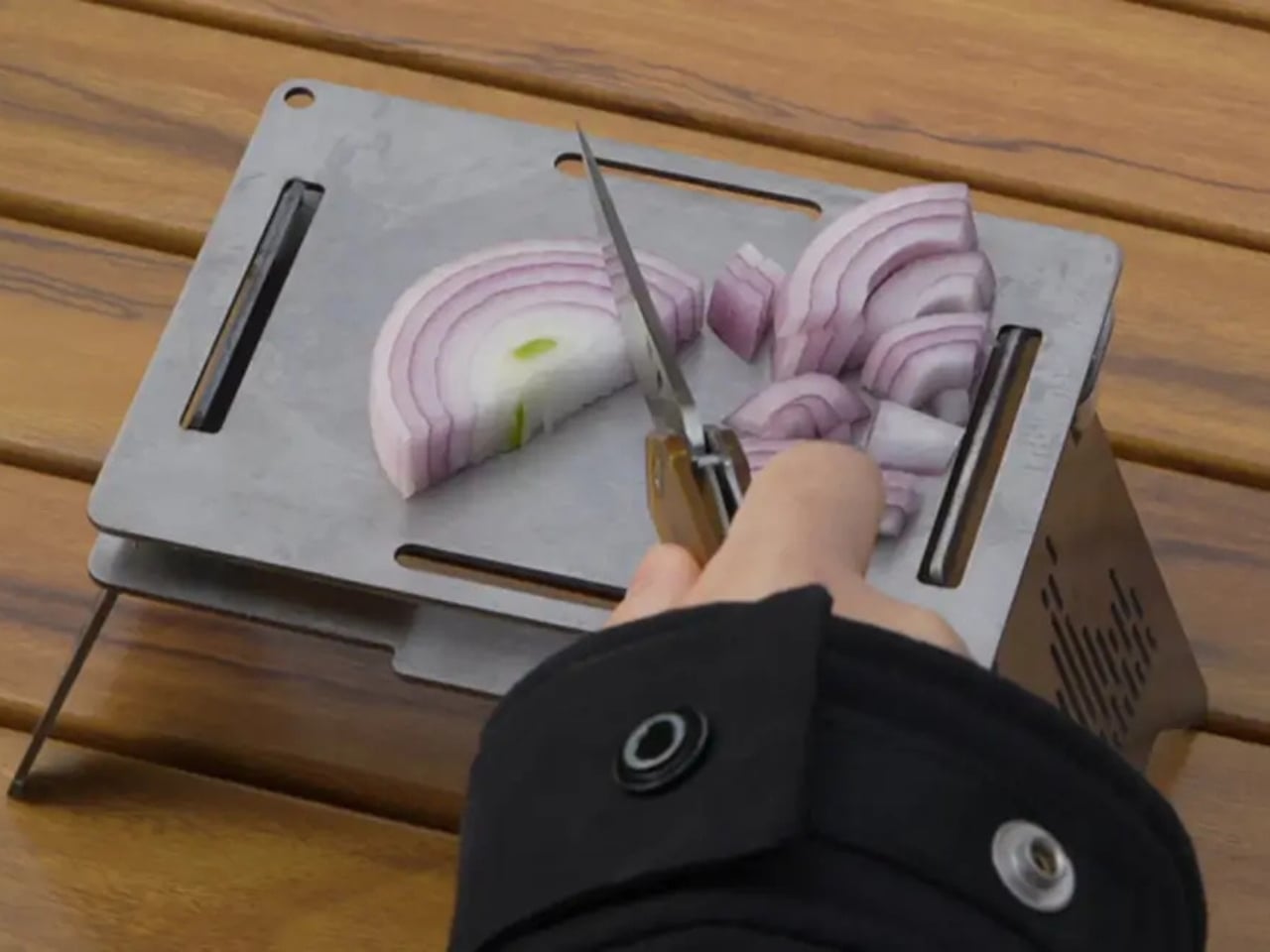
Five flat pieces of Grade 5 titanium, two foldable legs, and three interchangeable cooking panels that together weigh under 1.5 pounds and pack completely flat. The Camprit TiStove reconfigures for boiling, grilling, or searing depending on which panels you assemble, and the extra panels double as a windshield. As heat accumulates over a season, the titanium changes color naturally, giving each stove a visible record of every meal cooked on it. Yours becomes genuinely yours over time.
There is no ignition system to fail at altitude, no gas canister threading to seize in the cold, and no assembly logic that requires reading a manual after dark. The pieces lock together without fasteners and disassemble in seconds. Compatible with wood, gas burner, and alcohol, it adapts to whatever fuel the terrain allows rather than locking you into a single system that can fail or run out. For anyone who has stood over a dead stove in the cold, this addresses the problem where it starts.
What we like
Packs completely flat under 1.5 lbs with three interchangeable cooking configurations for different meal types
Compatible with any fuel source, removing dependency on a single system in the field
What we dislike
Requires a separate burner or fuel source — nothing is self-contained out of the box
Titanium panels need careful packing to avoid scratching each other in transit
4. All-in-One Grill
Made in Japan from stainless steel, the All-in-One Grill approaches camp cooking from a completely different position than the TiStove. Where that one is built for portability and fuel flexibility, this is built for the campsite where you are staying put and eating well. A modular lid system converts it between six distinct cooking methods — barbecuing, frying, grilling, steaming, smoking, and stewing — without requiring separate cookware for each. One object covers an entire outdoor kitchen without asking for a second bag.
Japanese stainless steel holds heat evenly, cleans without drama, and does not carry the flavor of every previous meal the way cast iron can. For a long weekend where the grill is the centerpiece of three evenings rather than a convenience, this is the object that makes the drive worth it. The modular configuration grows with the meal rather than limiting it, and the compact footprint fits the full camp kit without demanding its own dedicated storage alongside everything else.
Six cooking methods in one stainless steel body remove the need to pack separate cookware for different meals
Japanese stainless steel construction holds heat evenly and cleans efficiently after each use
What we dislike
At $449, the investment makes the most sense for campers who cook seriously rather than occasionally
Charcoal and wood fuel require ash management that demands more effort in the field than gas alternatives
5. NoxTi Tritium Keychain
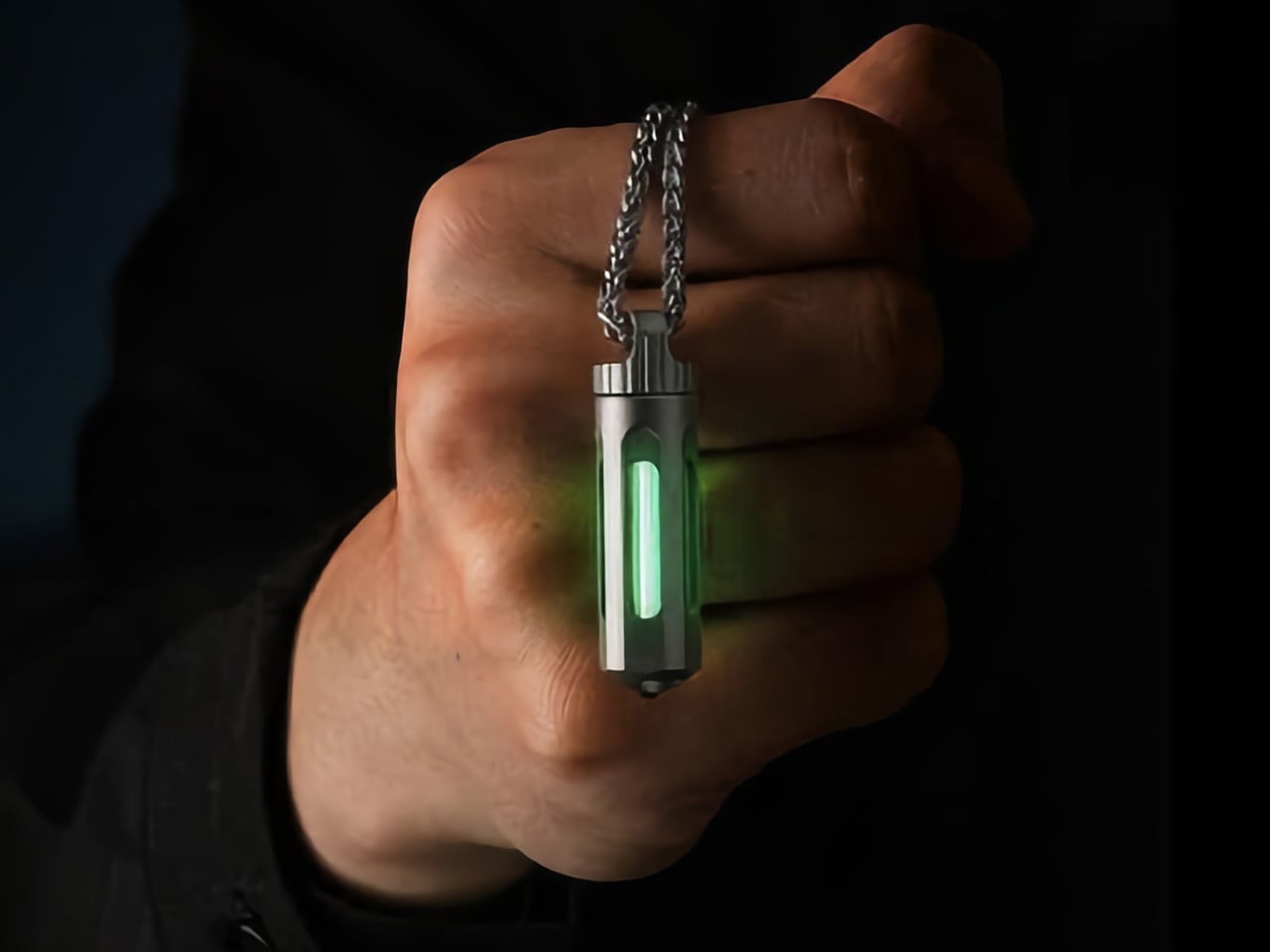
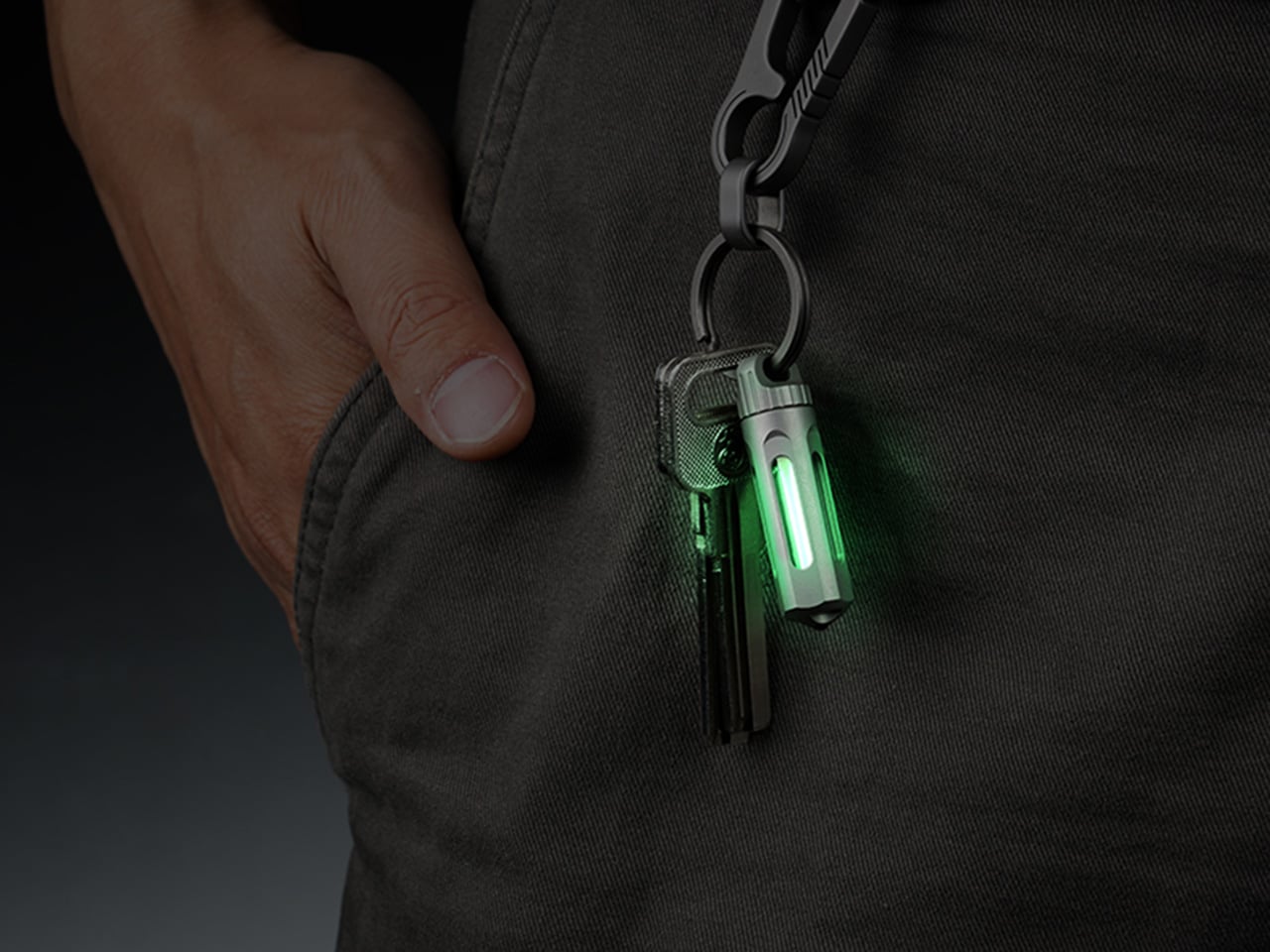
A 45mm CNC-machined Grade 5 titanium cylinder weighing 10.7 grams. The NoxTi carries a tritium vial inside a precision quartz tube with 92% light transmission and glows continuously for 25 years through radioactive decay. No switch, no battery, no charging. Tritium beta particle decay strikes a phosphor coating and produces light as a straightforward byproduct of existing. At a campsite, it marks your tent entrance, your keys at the bottom of a bag, and your gear in the dark without asking anything of you in return.
The ceramic-tipped glass breaker at the tail end adds genuine emergency utility without changing the form. When the vial dims after two decades, the titanium body stays: press the old tube out, slide a new one in. Six glow colors are available, including Apple Green for maximum visibility and Red for preserving night vision. Two silicone O-rings hold the vial suspended and centered inside the shell, which creates the impression of looking into a piece of precision engineering rather than anything from a keychain rack.
What we like
25-year continuous glow powered entirely by physics, with no battery, no charging, and no failure point to manage
Fully user-serviceable titanium body becomes a platform you keep and update indefinitely across decades of use
What we dislike
Glow output is intentionally faint — it marks and locates in the dark but does not illuminate a surface
The tritium light source needs a short explanation before the value proposition fully lands for first-time buyers
6. GoSun Flow Solar Water Purifier
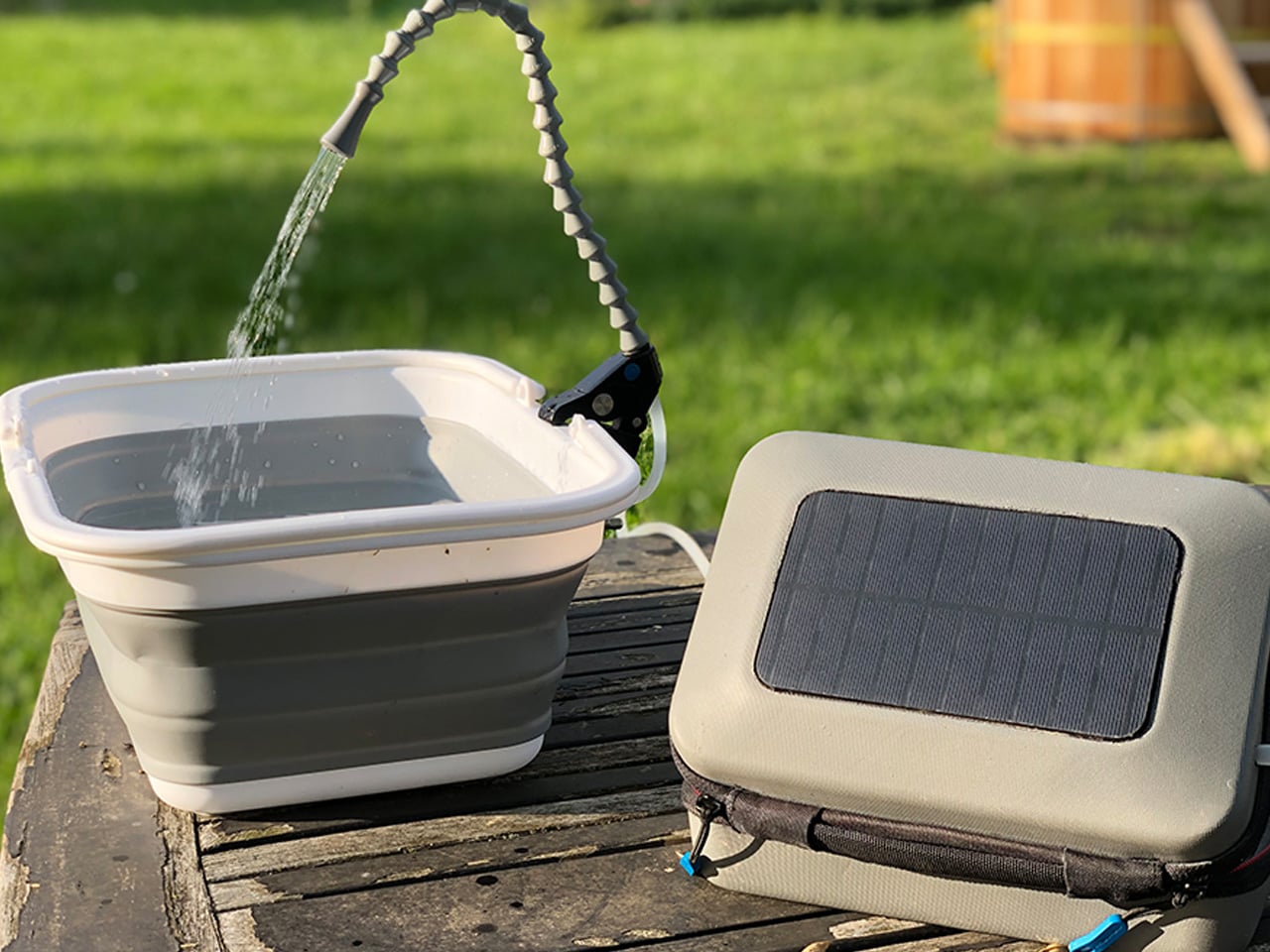
Water is camping’s most basic constraint, and the GoSun Flow addresses it at the source. A solar-powered three-stage cartridge filter eliminates 99.99% of waterborne pathogens while pumping one liter of clean water per minute from any freshwater source. The system compresses into a backpack, and the flexible faucet clamps to branches, tables, or tailgates — opening to 58mm — turning any water access point into a functional camp station. USB power keeps it running when solar is unavailable.
It doubles as a portable handwashing station and solar-heated shower. Thirty minutes of sun delivers a five-minute warm shower, which changes what clean means across a three-day trip without the bulk of carrying a separate shower bag and a purifier as two distinct items. The filter handles 1,000 liters before replacement, and the power bank driving the pump recharges through an integrated solar panel. For anyone who has ever compromised on hygiene to protect pack weight, this removes that trade-off before you even start packing.
What we like
Purifies 99.99% of pathogens and delivers a solar-heated shower from a single system that compresses into a backpack
1,000-liter filter life with USB power backup covers a full camping season without resupply
What we dislike
Cannot process saltwater, which limits utility at coastal campsites
Multiple components increase the number of parts to track and keep together across a multi-day trip
7. RetroWave 7-in-1 Radio
The RetroWave earns its place in a camping kit through an argument that has little to do with aesthetics, even if the aesthetics are genuinely good. A tactile tuning dial, compact body, and warm visual language drawn from classic Japanese radio design make it worth looking at. What it is actually doing is more pragmatic: running AM, FM, and NOAA weather radio without an app, streaming via Bluetooth when connectivity holds, and charging via solar panel and hand-crank when it does not. Seven functions, one charging cable.
Smart speakers go silent when Wi-Fi drops. Earbuds die at the wrong moment. Phones drain precisely when you need them most. The RetroWave does not ping you, does not demand ideal conditions, and does not need a charging window before it becomes useful. It plays, charges other devices, lights, signals, and tells the time across a full weekend without complaint. At the end of the trip, it goes back into the same bag it came out of, ready for the next one.
Seven functions in a single body remove the need to carry and manage multiple separate items across a trip
Solar and hand-crank charging keep it fully operational off-grid with no outlet access required at any point
What we dislike
The retro aesthetic can read as decorative to buyers who have not yet used it in an actual off-grid situation
Shortwave reception quality varies depending on geographic location and surrounding terrain
The Campsite Has Always Been Good. The Gear Finally Caught Up.
The equipment on this list shares one quality that outdoor gear rarely earns: it removes a specific friction from the experience without replacing it with a different one. The fire stand works where others cannot. The purifier turns proximity to water into access to clean water. The stove adapts to whatever fuel the terrain provides. Each object was designed around the constraint it actually faces in the field, which is the harder and more honest design brief.
A Labor Day weekend with gear this considered starts to feel different from the first hour of setup. Not because everything is easier in an obvious sense, but because the small decisions have already been made. Where the water comes from. How the fire holds through the night. What you reach for in the dark. These are solved before the weekend begins, which leaves the actual weekend free to be what it was always supposed to be.

 Connexion