❌

Vue lecture

This fan-made LEGO McDonald’s combo comes with everything except the McFlurry
In 1999, LEGO sold an official McDonald’s restaurant brickset through its Shop at Home catalog in the US, and it was adorably tiny. Set 3438 used 98 pieces to build a little drive-through window, a car, and an umbrella table, with stickers doing most of the branding work. The employee was basically a standard LEGO chef with the logo slapped on his chest. One collector paid $75 for a sealed copy back in 2011, for a set that cost around ten bucks new. Twenty-seven years later, a fan builder thinks the next LEGO McDonald’s should skip the building entirely and go straight for the food.

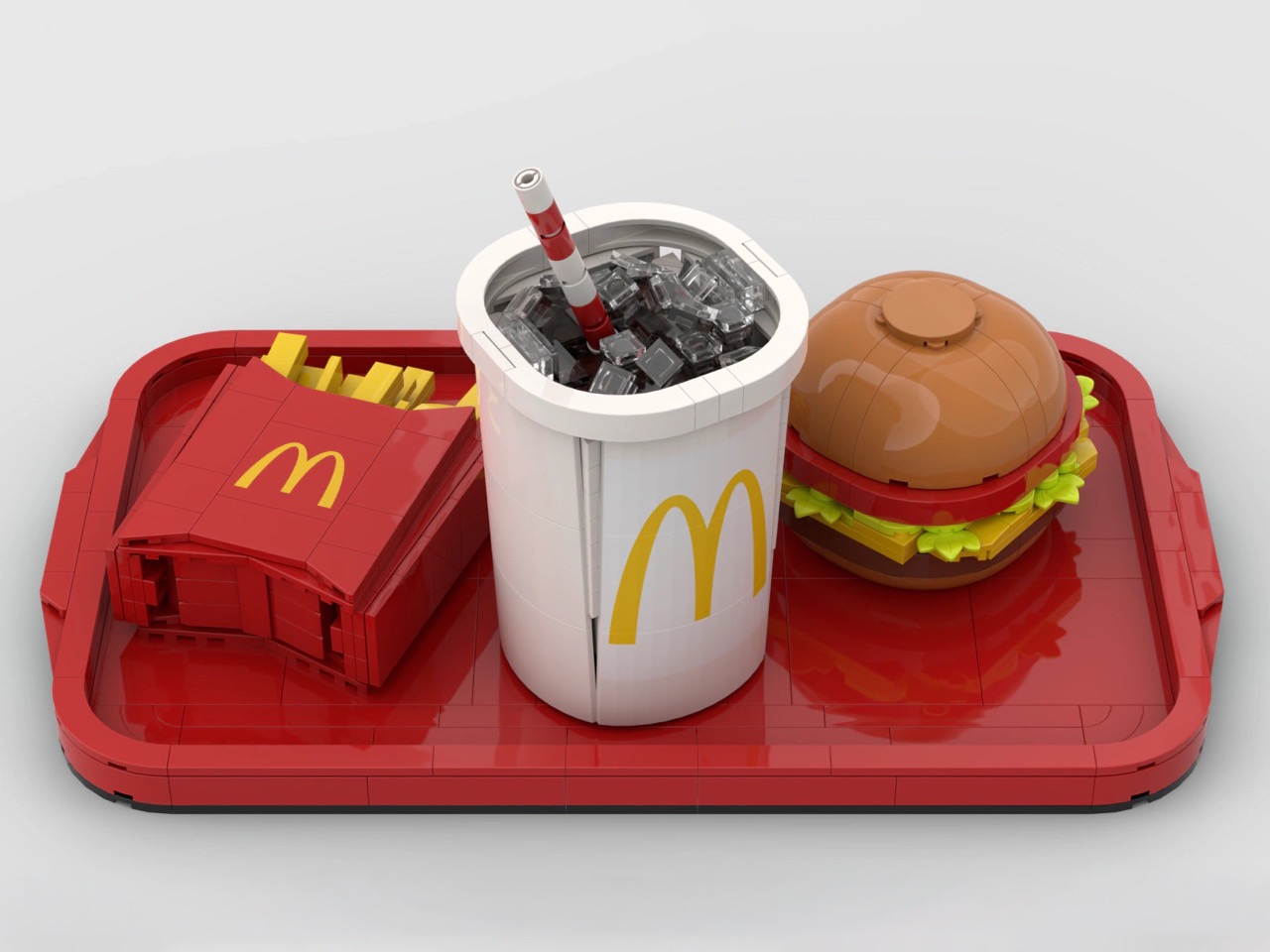
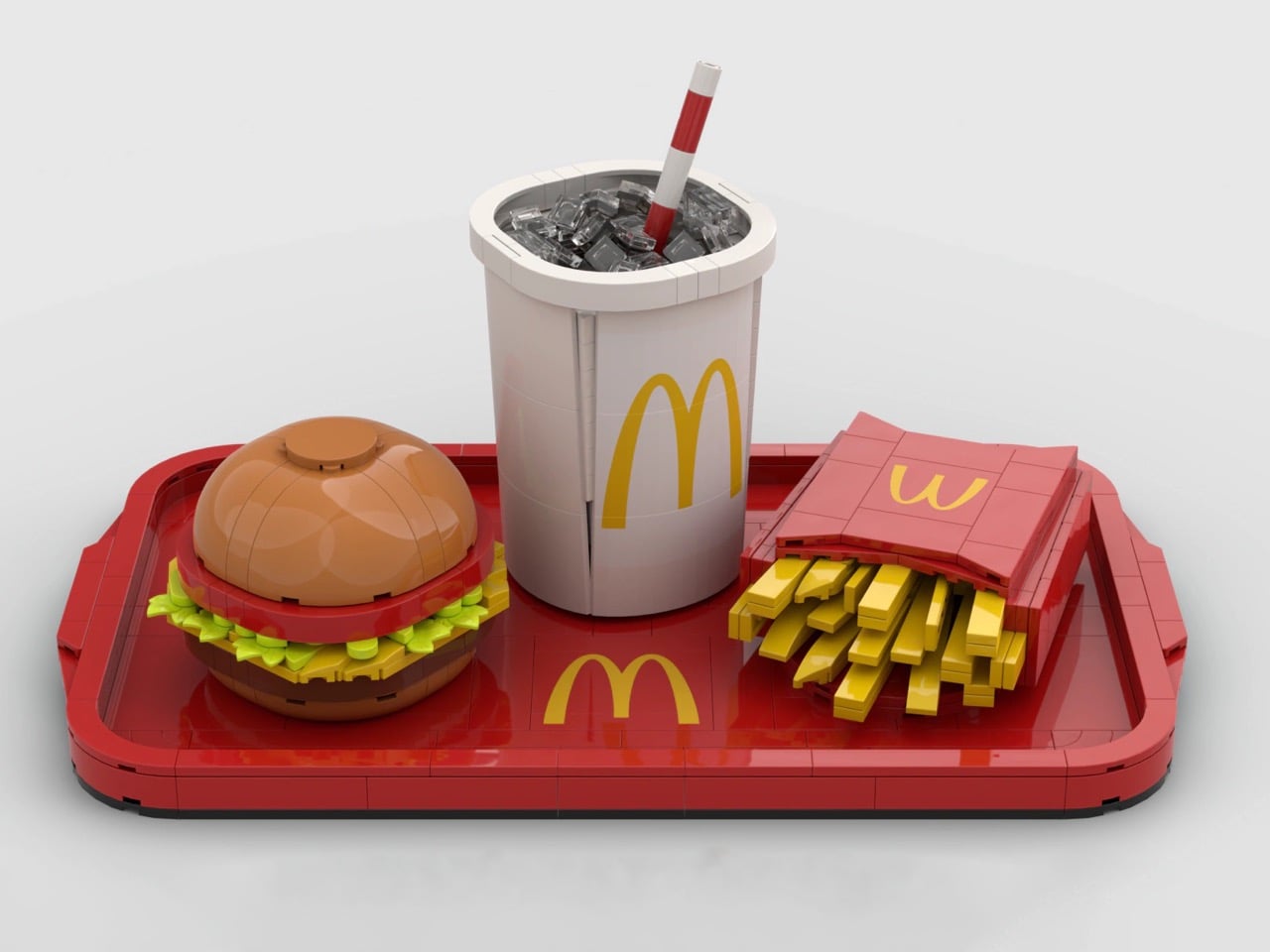
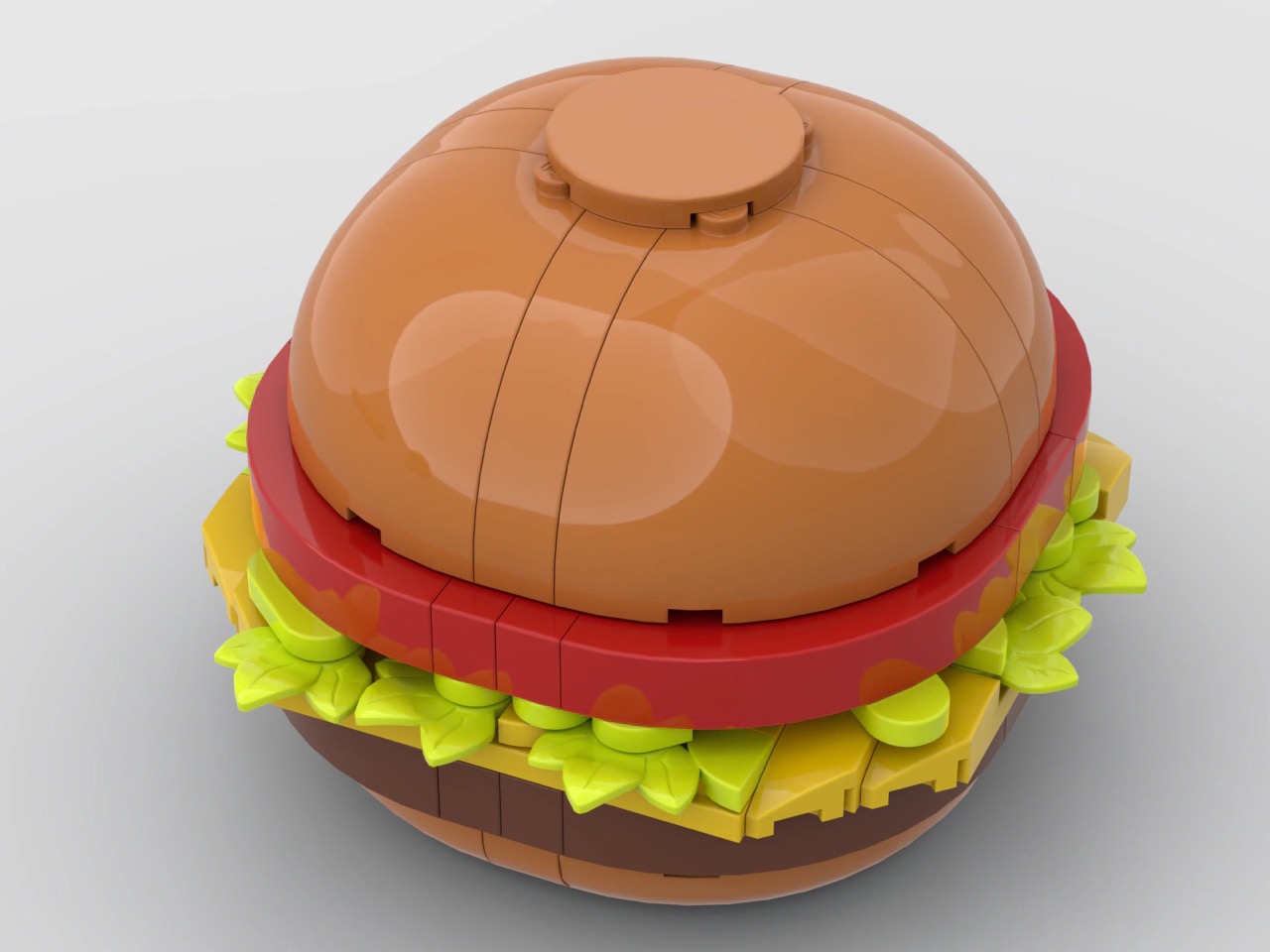
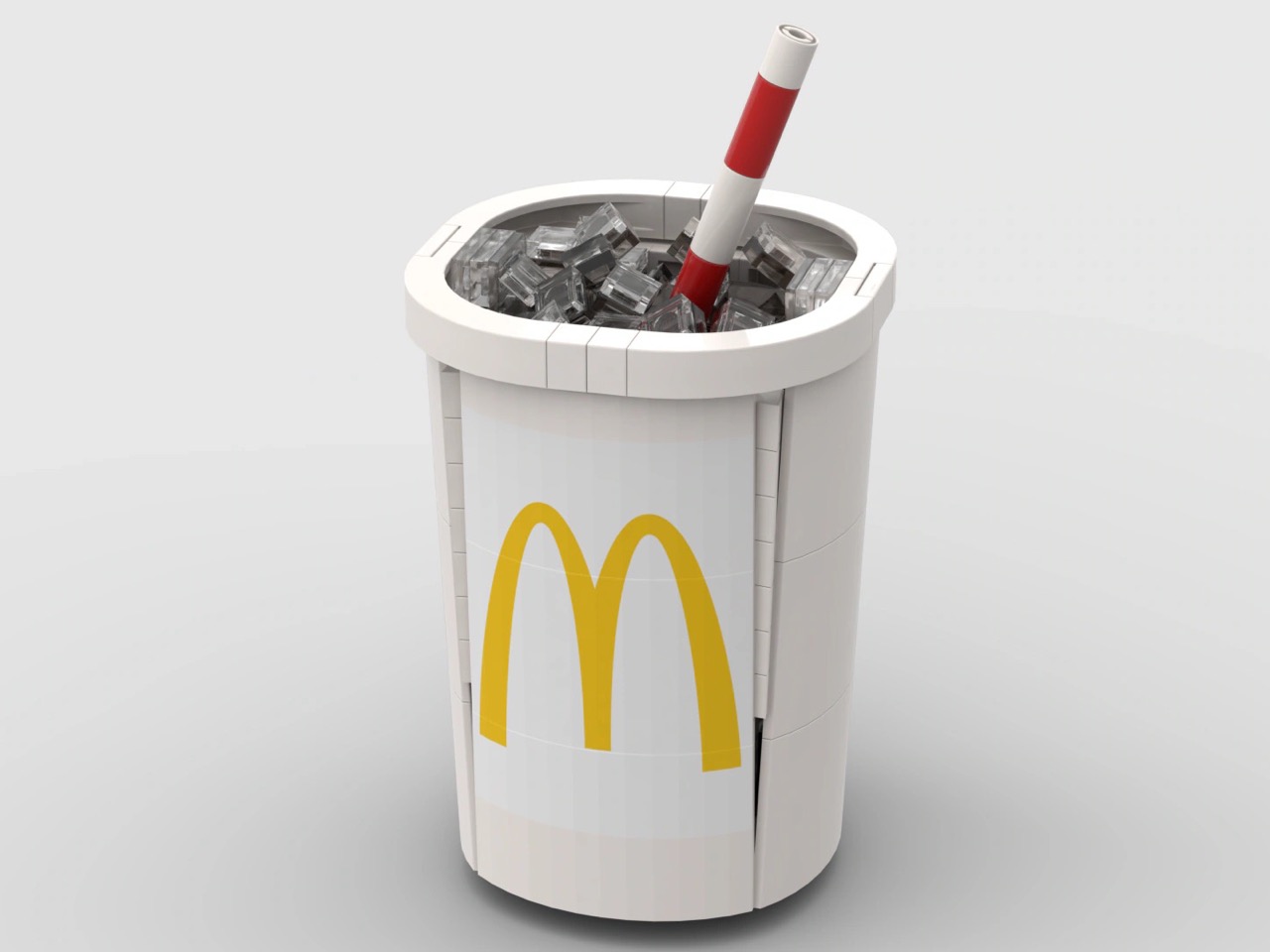
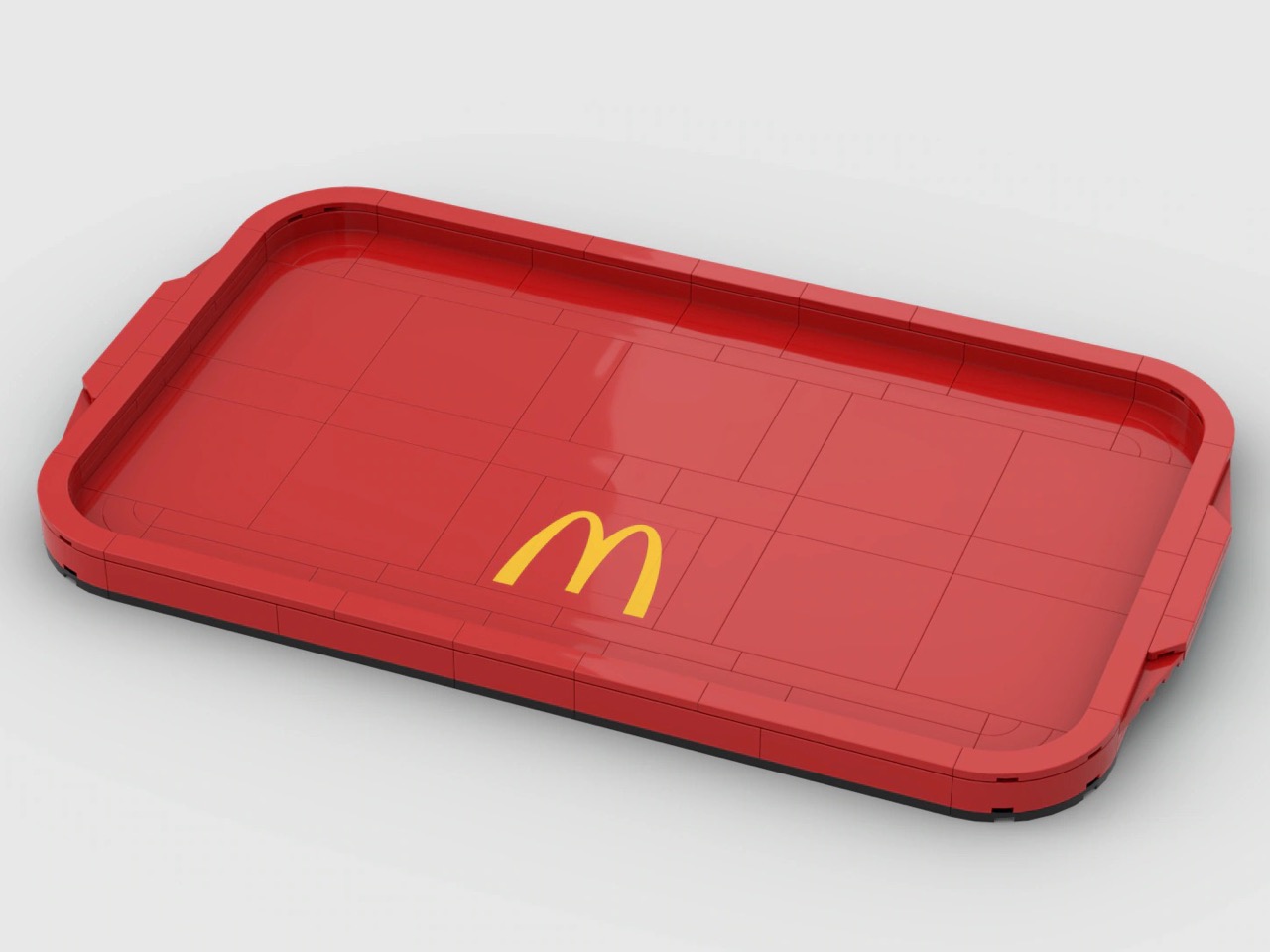
Called McDonald’s Menu, brickbybrick_’s LEGO Ideas submission rebuilds a classic combo big enough to hold its own on a shelf. There’s a red tray with giant Golden Arches in the middle, a cheeseburger, a red carton overflowing with fries, and a white cup loaded with transparent ice and a striped straw. Zero minifigures, zero drive-through, all lunch. The project went up on October 29 and is already sitting at 1,440 supporters, which tells me a lot of AFOLs (adult fans of LEGO) are hungry. I’m one of them, and I’m writing this before lunch.

Designer: brickbybrick_
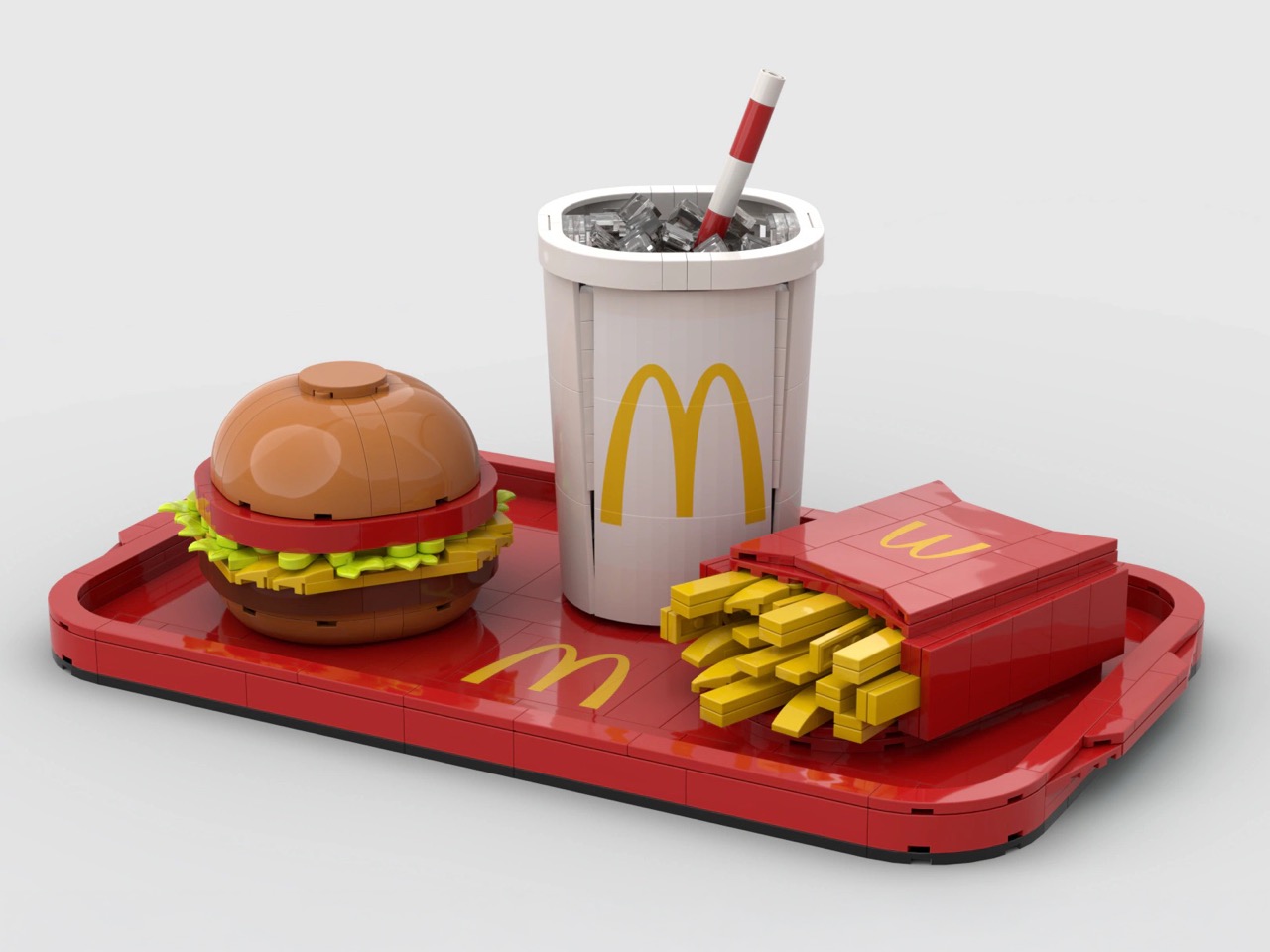
Red plates form the tray, finished with a raised, rounded rim and a handle at each end, so it reads as molded plastic instead of a stack of bricks. A big yellow set of Golden Arches sits dead center, breaking up what would otherwise be a whole lot of red. The food is arranged in the classic triangle: burger front left, cup at the back, fries off to the right. It’s the exact layout you’d find on any table at your local McDonald’s around noon. That framing makes the build look like a meal someone just set down, which is half the fun of it.

The cheeseburger starts with a dome of tan curved elements, smooth on top like a plain hamburger bun. Under it sits a red layer that reads as tomato, then bright green leaf pieces fanning out as lettuce, a slice of yellow cheese, and a dark brown patty. Those leaves are a nice bit of NPU (nice part usage, for the uninitiated), taking foliage meant for LEGO gardens and jungles and turning it into a salad. Each layer sticks out at slightly uneven angles, giving the burger that freshly squished look of something just pulled from its wrapper. Real fast food never comes perfectly stacked, and this one looks like it survived a lunch rush.
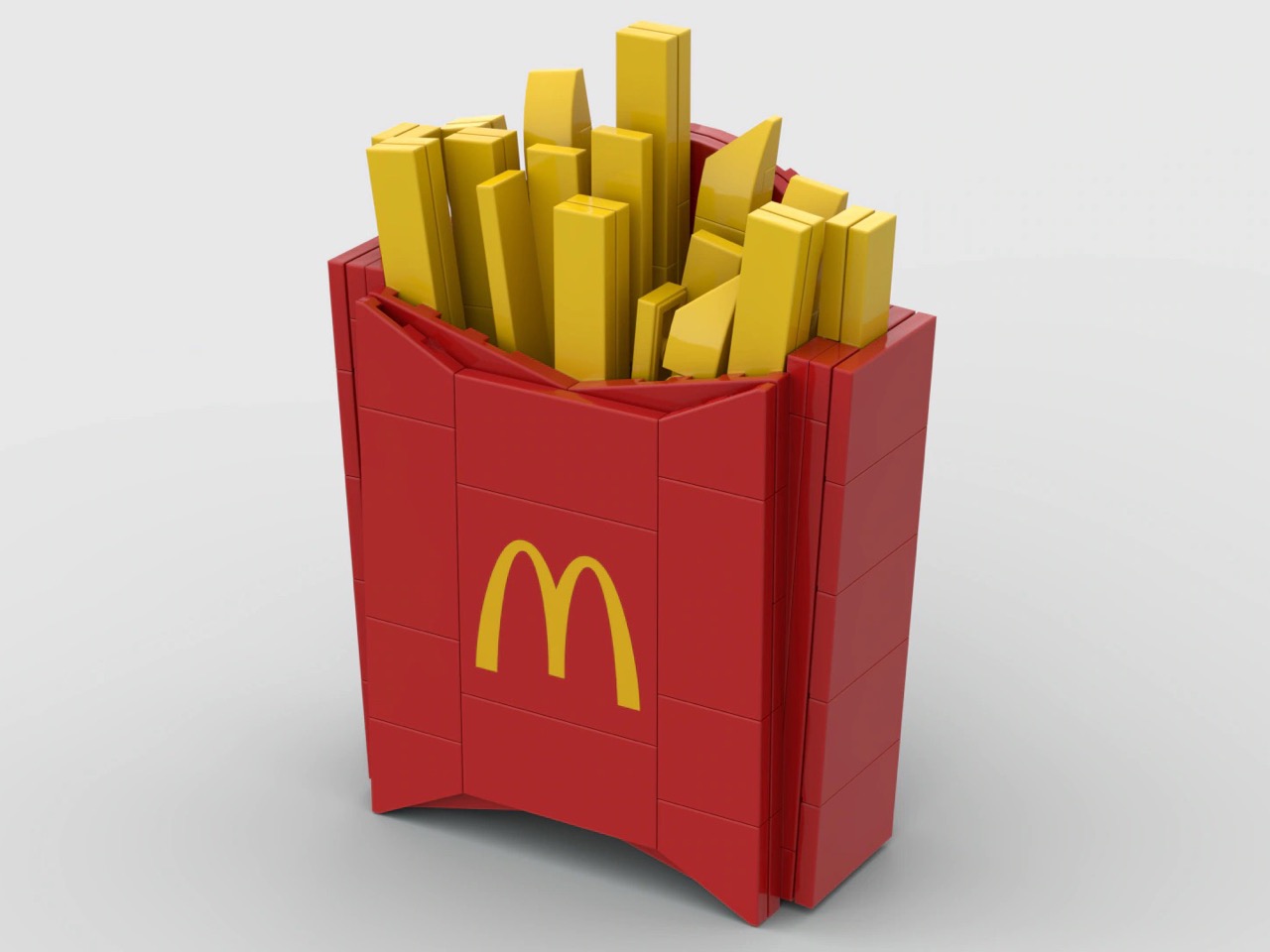
A pile of yellow plates and bricks spills out of the red fry carton at every angle, some standing tall and some flopped over the edge the way the last few always are. The carton gets the real thing’s shape right, the one McDonald’s introduced in 1970 with a wide mouth for quick scooping and a profile that keeps the fries from falling out. The Golden Arches appear on its face in yellow, the same red-and-yellow combo that has been selling fries for over five decades. Building fries in LEGO is easy, but making them look casually messy takes real effort. My only complaint is that I can’t salt them.

My favorite detail, though, is the drink. The white cup’s top is left open, showing a load of transparent pieces packed in as ice, with a red-and-white striped straw sticking out at a jaunty angle. That straw does three jobs at once. It gives the composition its tallest point, adds a splash of red to an otherwise white element, and nods to a real McDonald’s quirk, since the chain says its straws are slightly wider than average so more Coke hits your taste buds. The ice tells its own story, because McDonald’s pre-chills its syrup and sets the ratio expecting the ice to melt. Leaving the lid off is what lets you see all of it.
Back in 2021, adammark’s McDonald’s Franchise 1955-1969, a walk-up burger stand with a Speedee System kitchen, hit 10,000 supporters and reached the Third 2021 Review. It was one of 36 projects in that round, and Hocus Pocus ended up as the only one approved. brickbybrick_ takes a different route, shrinking the subject from a restaurant down to a single meal sized for a shelf. The build is unlicensed, so those Golden Arches are a fan’s tribute, and any official version would need McDonald’s on board. The two companies have teamed up before, going back to LEGO’s first Happy Meal promotion in 1983, so the precedent exists.

McDonald’s Menu currently has 1,440 supporters and 599 days left to reach its next milestone of 5,000. LEGO Ideas runs on community momentum: fans submit their builds, supporters rally behind the ones they love, and projects that hit 10,000 get reviewed by LEGO for a shot at becoming real sets. It’s a long climb for a lunch order, but every Ideas set on store shelves started at zero votes. If you’d like to see this combo in a box, head to the LEGO Ideas page and give it your vote. Personally, I’m holding out for a Super Size edition, which McDonald’s retired in 2004 but LEGO is more than welcome to bring back.

The post This fan-made LEGO McDonald’s combo comes with everything except the McFlurry first appeared on Yanko Design.
  •  

Salvador Dalí’s melting clocks are now a 3D LEGO diorama, ants included

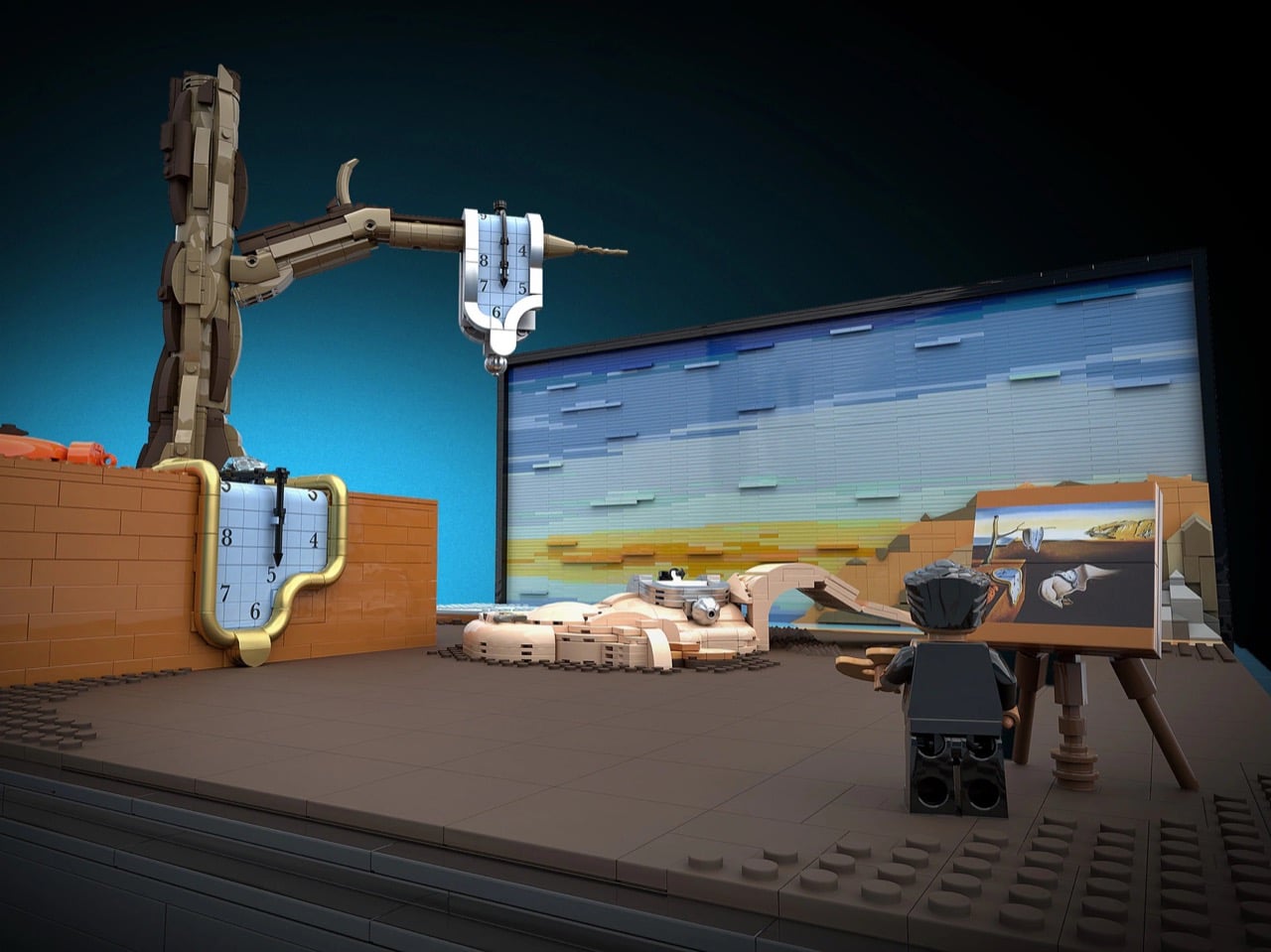
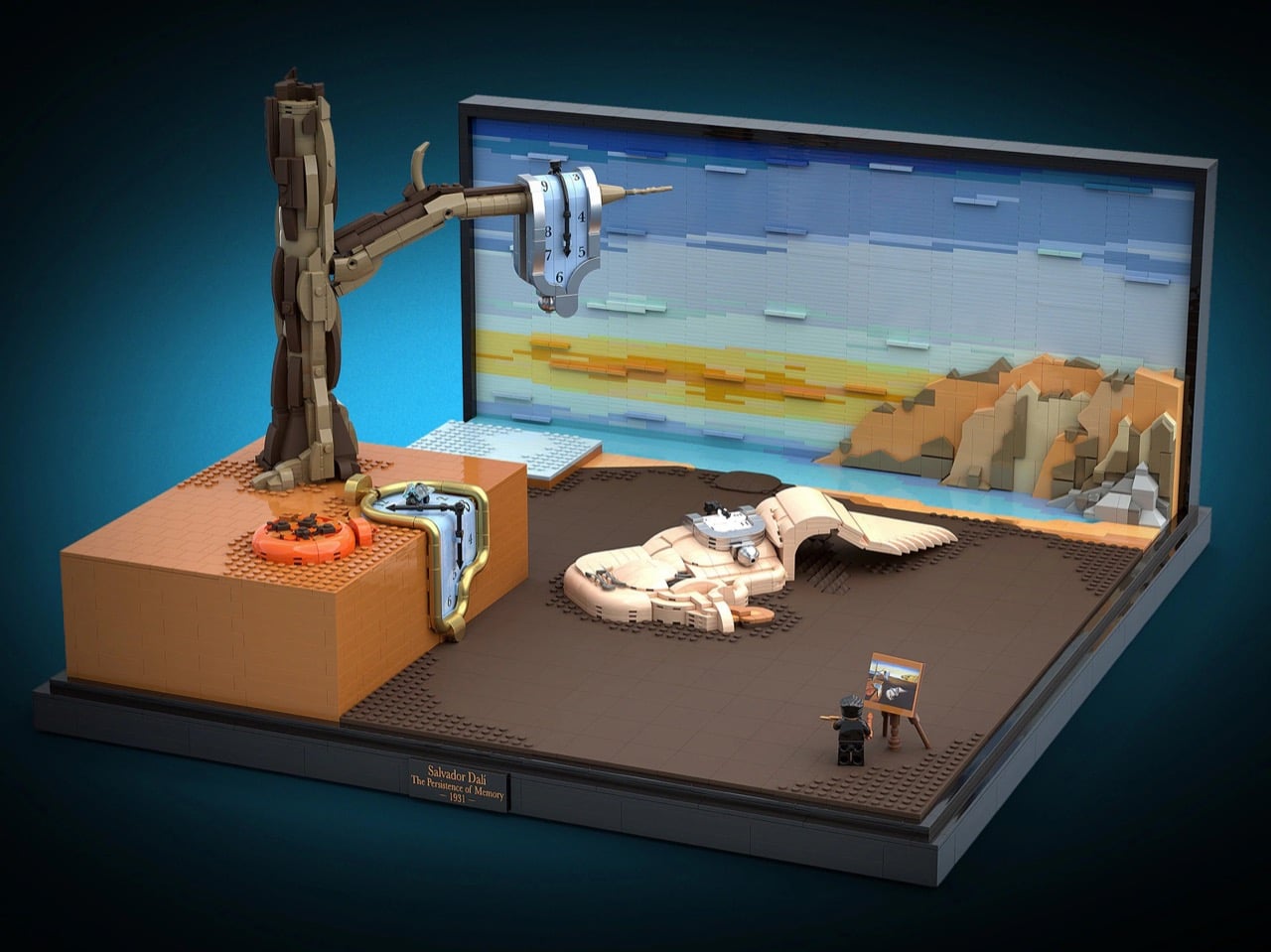
MoMA owns The Starry Night, The Persistence of Memory, and a set of LEGO bricks designed by Godtfred Kirk Christiansen in the 1950s. The museum brought two of those together in 2022, when it partnered with LEGO on the Starry Night set that grew out of a LEGO Ideas submission. A new Ideas project wants to complete the triangle. BrickRelativity has rebuilt Salvador Dalí’s 1931 painting of melting clocks as a 3D brick diorama, complete with the dead tree, the ant-covered watch, and the weird sleeping figure sprawled across the beach. If MoMA wanted a sequel, it wouldn’t even need to leave the building.

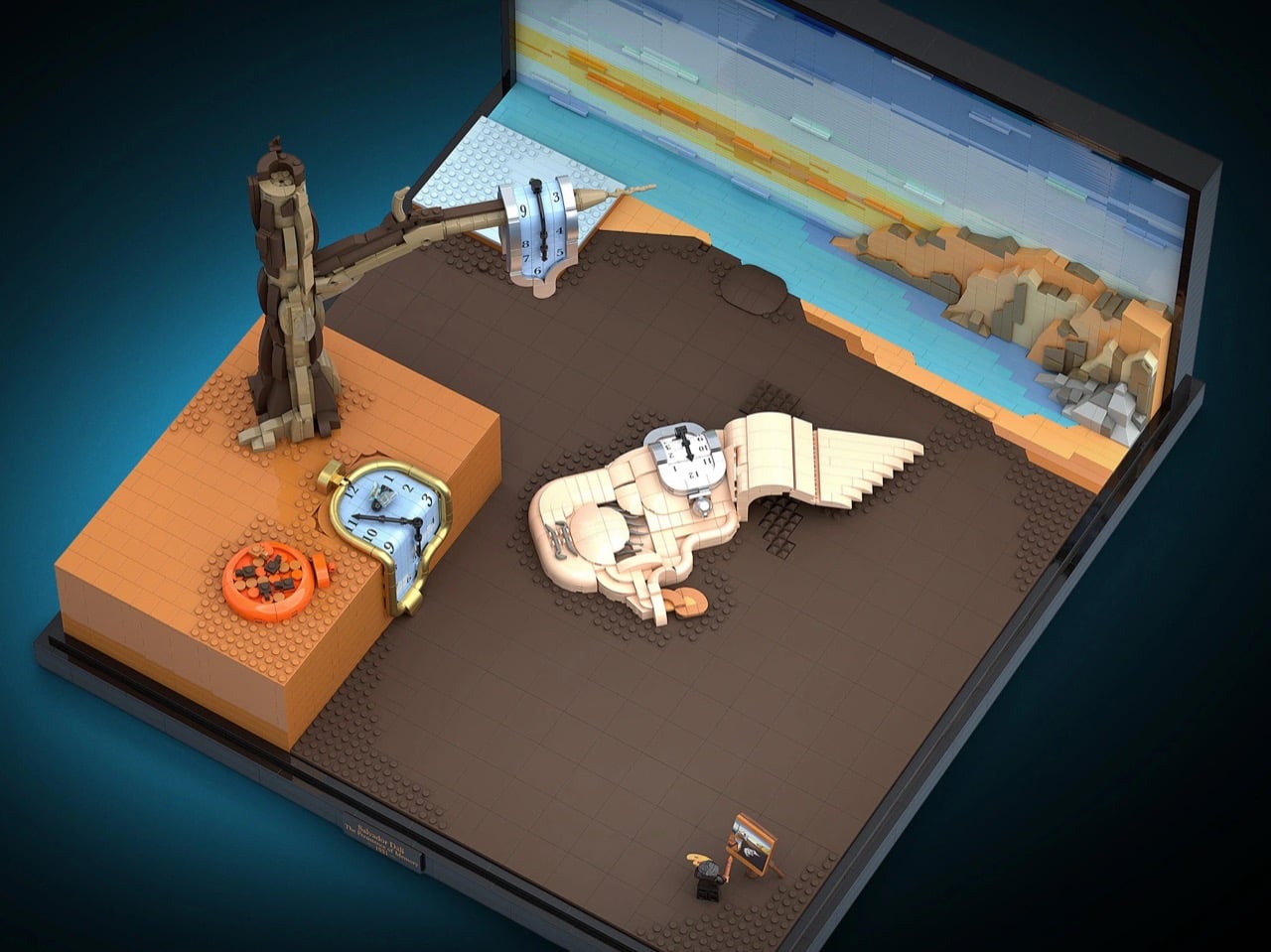
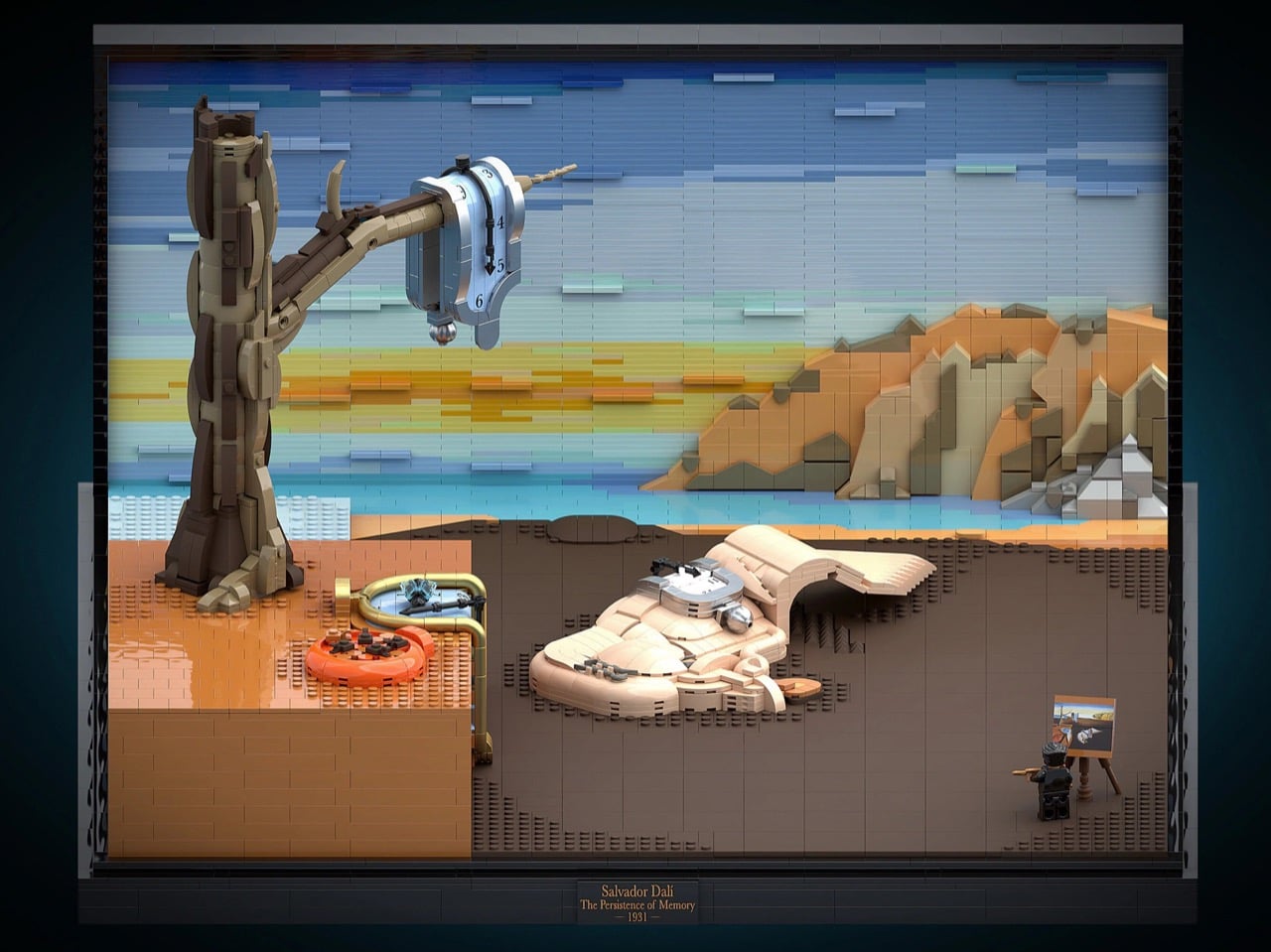
Dalí’s original is tiny, just 9.5 by 13 inches (24 by 33 cm), which catches plenty of first-time visitors off guard. The brick version spreads the scene across a black display base with a gallery plaque and a sky built from horizontal bands of blue, aqua, and sunset-yellow plates. BrickRelativity says the central blob was one of the toughest challenges, since soft, shapeless forms and rigid LEGO elements get along about as well as cats and bathtubs. The clocks came a close second, their faces rebuilt from tile grids that warp along with the melt. LEGO Art has already worked through Hokusai, Van Gogh, and Monet, so Surrealism feels overdue.

Designer: BrickRelativity

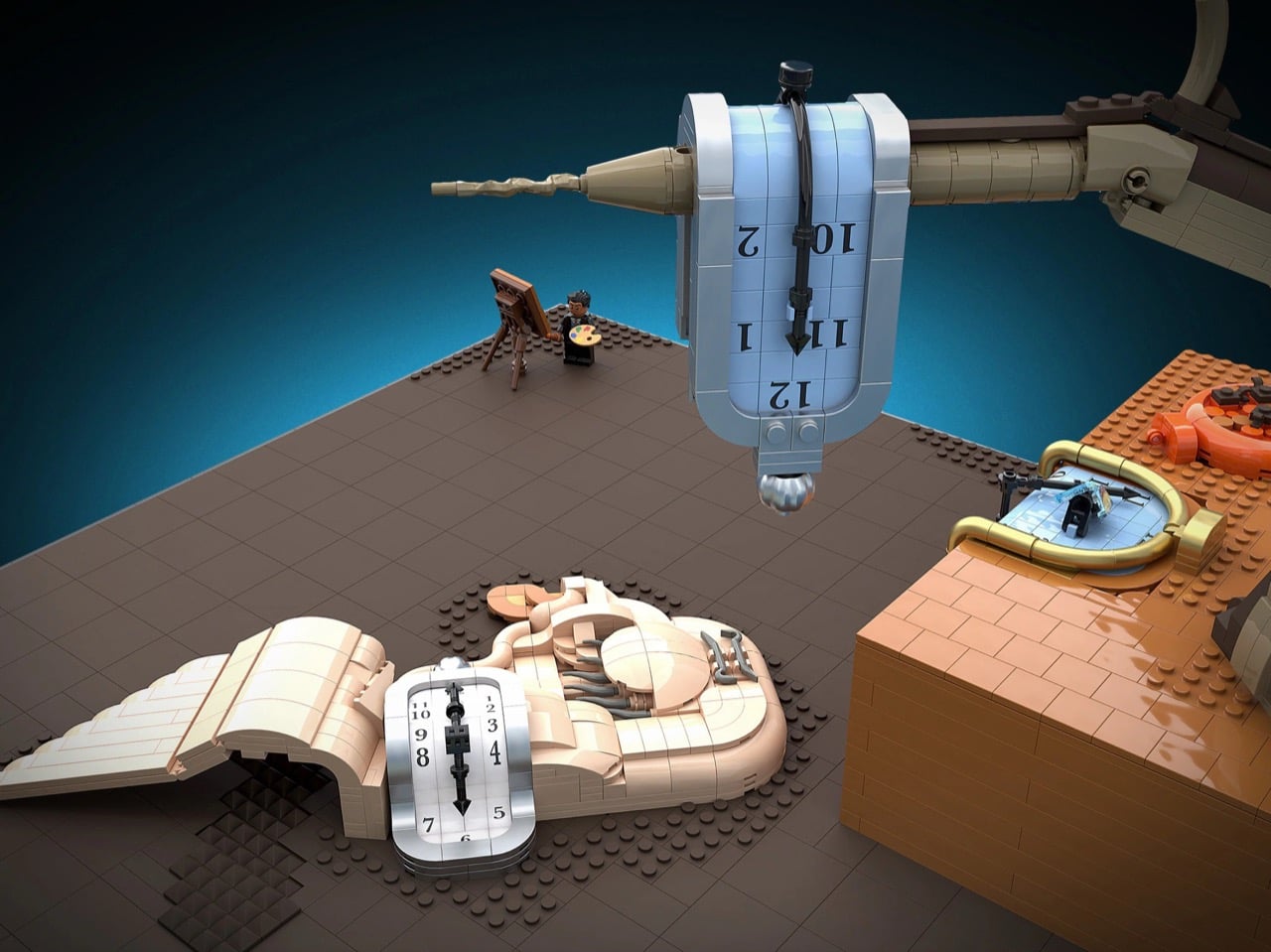
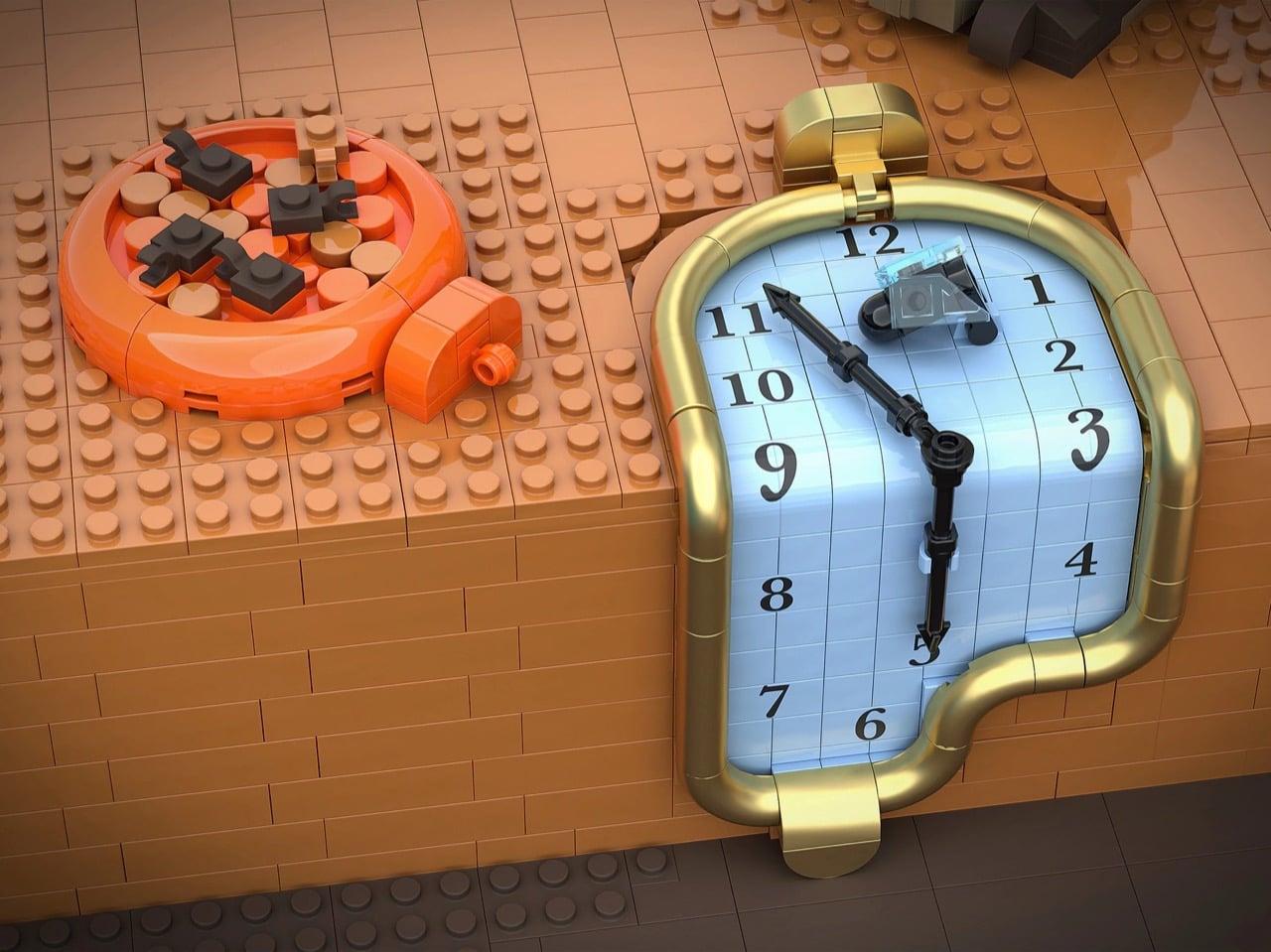
Three clocks melt across the scene, and each gets its own construction trick. The one hanging off the tree branch wears a pearl-silver bezel that folds over the wood, with a small silver ball at its lowest point standing in for the drip. The pocket watch sliding off the orange ledge swaps silver for pearl-gold tube elements that kink around corners, with a transparent fly perched on its face. The third clock drapes over the sleeping figure in the middle, following the curve of the body underneath it. Numerals were applied as decals directly to the curved surfaces, while every clock hand is built from LEGO elements.

My favorite detail, though, is the face of that gold pocket watch. BrickRelativity built it from a grid of light-blue tiles, and as the face slumps over the ledge, the seams between them bend with it. The result looks like graph paper caught in a heat wave. The grid also gives the numerals a place to sit and recalls the stud-by-stud mosaics of LEGO Art, now visibly coming apart. A warped coordinate system feels very Einstein, which is funny, because Dalí insisted his soft watches came from cheese rather than relativity.

Dalí reportedly based the sleeping figure on a rock formation at Cap de Creus, and it’s generally read as a squashed self-portrait. BrickRelativity layered curved slopes in tan and pale flesh tones until the blob looked properly boneless. Dark gray bars and curves form a closed eye with long lashes, and a wing-like membrane of stacked plates trails off behind it. Back on the ledge, the closed orange pocket watch is a ring of curved elements with a little crown nub. A cluster of tiny ants made from dark clip plates swarms its lid, turning Dalí’s recurring symbol of decay into a minifig-scale infestation.

The landscape skips a printed backdrop entirely. Horizontal bands of blue, aqua, pale yellow, and orange plates build up the sunset sky. The Cap de Creus cliffs on the right use stepped wedges and slopes in tan, dark tan, orange, and gray, placed at different depths to make the coastline recede. Dark brown tiles cover the beach, with patches of exposed studs breaking up the flat surface like scrubby ground. Viewed head-on, that depth collapses back into the painting’s flat composition. BrickRelativity has some practice with perspective tricks: previous Ideas projects turned M.C. Escher’s impossible staircases into bricks.

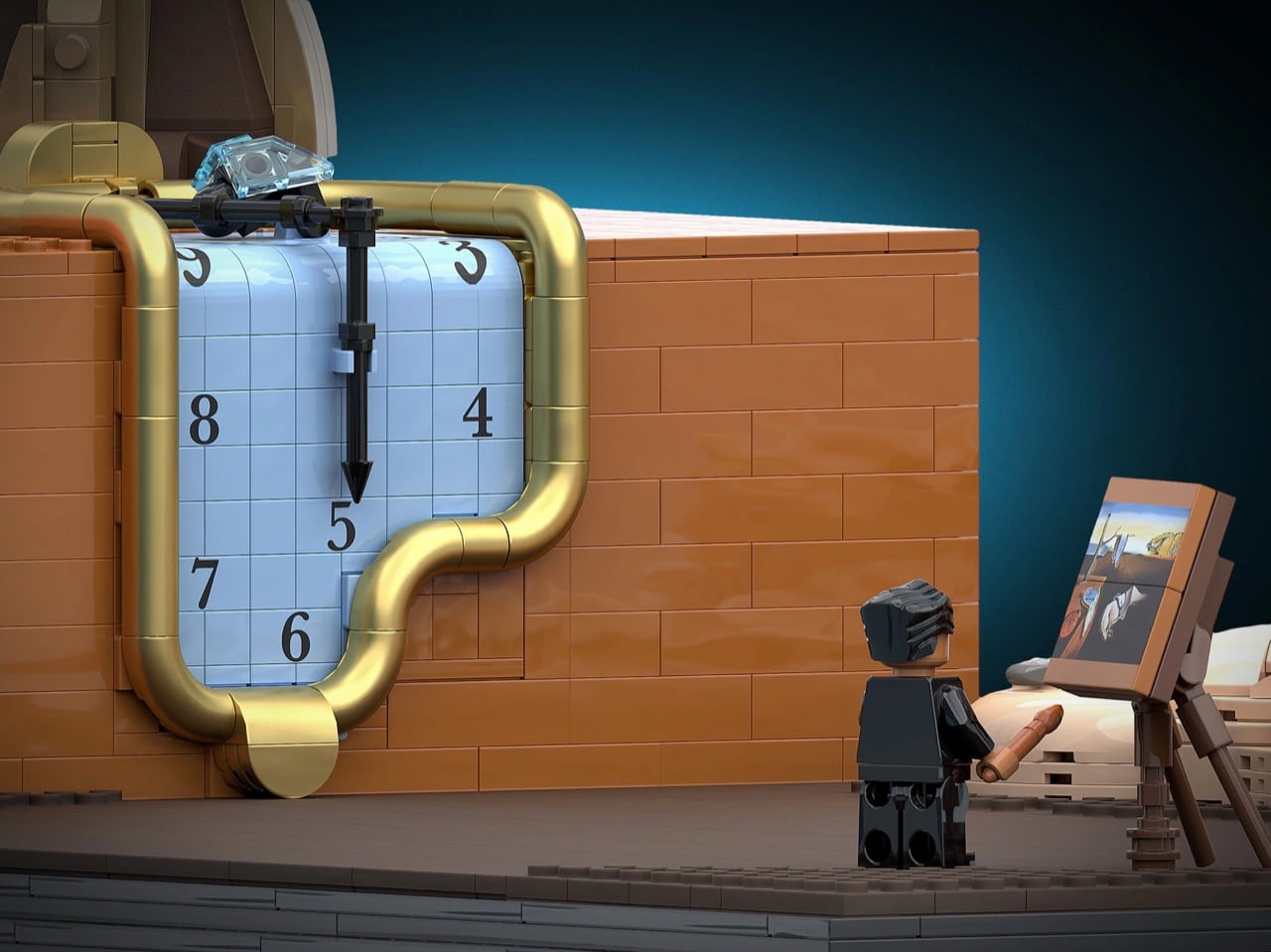
Down in the front corner, a tiny Dalí minifig with swept gray hair, a patterned tie, and that famous upturned mustache paints at an easel holding a miniature copy of the painting. It’s a direct callback to the Van Gogh minifig and easel that shipped with the Starry Night set. A black base and a small plaque bearing the artist’s name, the title, and the year finish the gallery look. Fan builders have been chasing this museum energy all year, from a 1,117-piece Picasso portrait to a Brick Dangerous melting clock that just qualified for LEGO’s third 2026 review. Dalí’s copyright is managed by the Fundació Gala-Salvador Dalí, so any official version would need the estate’s blessing.

The project currently sits at 1,849 supporters, with 602 days left to hit the next milestone of 5,000. LEGO Ideas lets fans submit builds and rack up supporters, and projects that reach 10,000 move on to LEGO’s official review for a shot at becoming a real set. You can head to the LEGO Ideas page and give BrickRelativity your vote, which costs nothing but a LEGO account. Dalí already turned this painting into floating bricks once, in his 1954 sequel The Disintegration of the Persistence of Memory. Seems only fair to let someone finish the job properly, with clutch power this time.

The post Salvador Dalí’s melting clocks are now a 3D LEGO diorama, ants included first appeared on Yanko Design.

  •  

Nike and LEGO’s new space-themed sneakers let kids take their basketball style beyond Earth

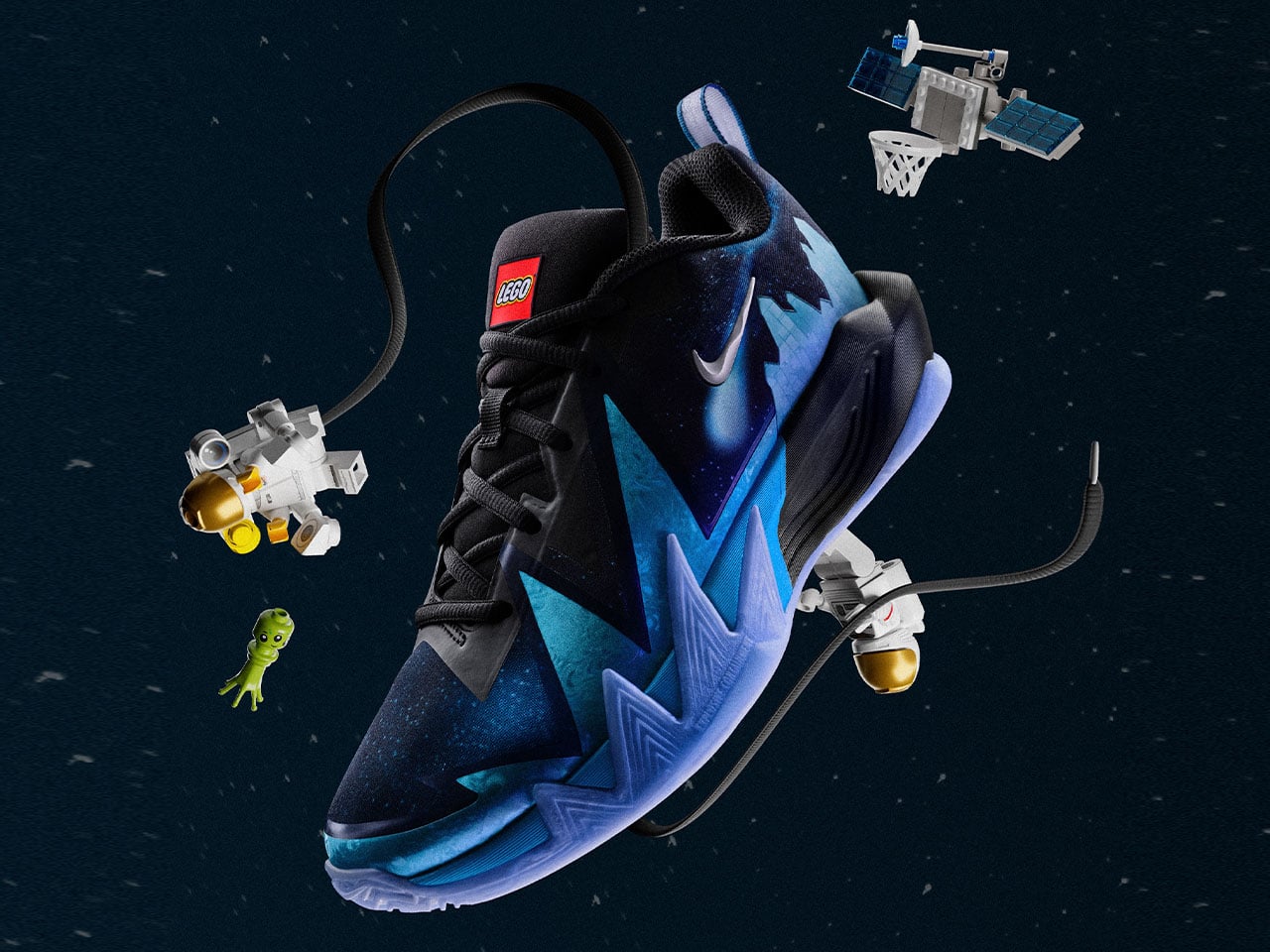
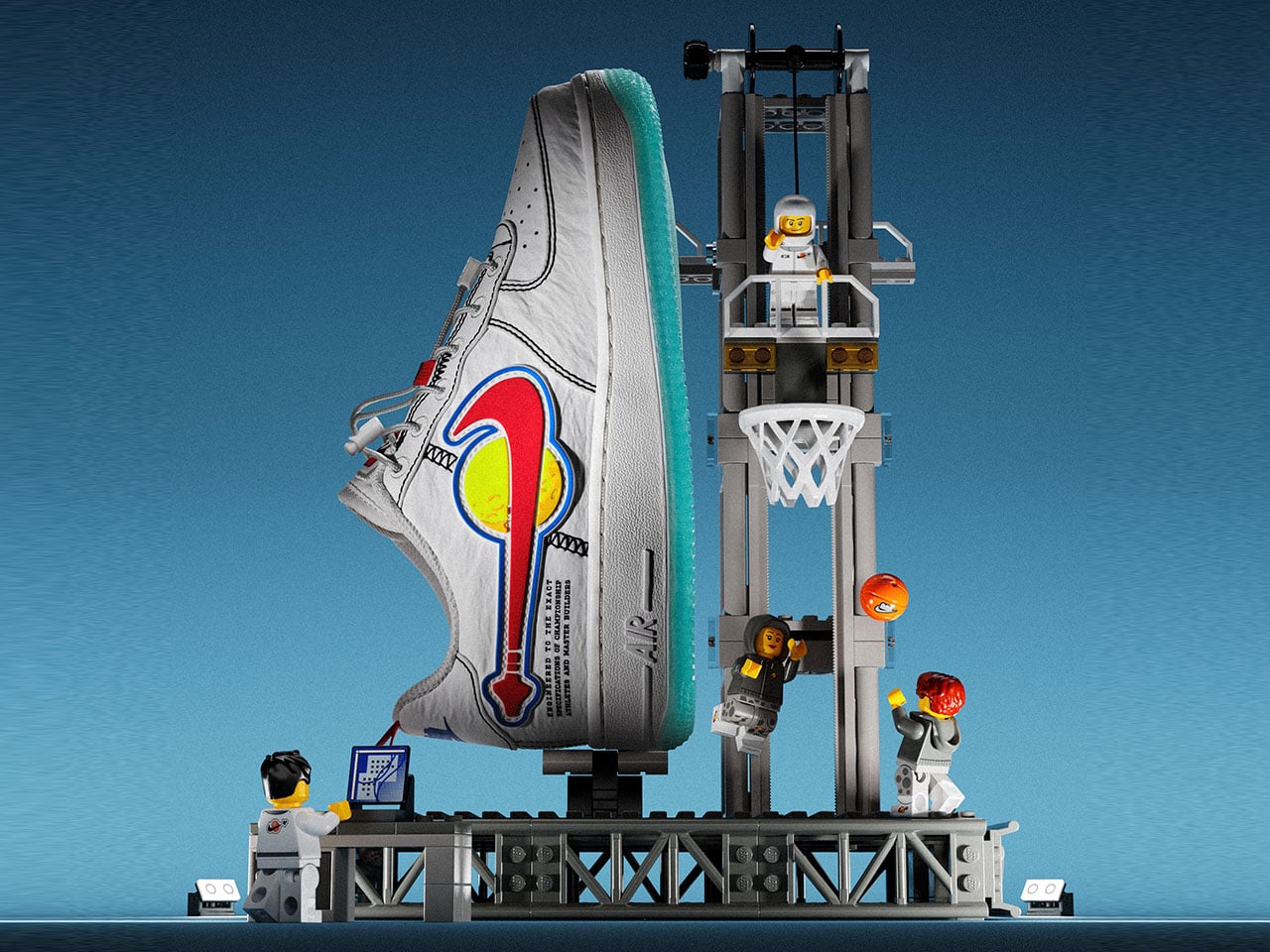
Nike and LEGO kicked off their in-line product collaboration with the LEGO x Nike Air Max Dn bright yellow sneaker in August 2025. Now the duo is targeting kids this holiday season with new additions to their multi-year partnership. Within a month from the the release of the Jordan’s 30th-anniversary Space Jam collection, Nike has teamed up with LEGO to unveil the space-inspired kids’ basketball collection that comprises Air Force 1 Low LV8 and S.T. Dynamite sneakers.

The two new space-inspired basketball sneakers are from the same collection, but are starkly different from each other, right from their DNA to the aesthetics. The Nike x LEGO collaboration, which has been limited to the courts on Earth until, is now inviting kids to imagine basketball beyond the court, in outer space, if you may.

Designer: Nike

As mentioned, the Nike x LEGO basketball collection is radically different, but shares the space theme. It has been, according to Nike, “created for basketball-loving kids.” The company says, “the collection gives young athletes new ways to connect with the sport,” without compromising personal style or their seriousness toward the sport.

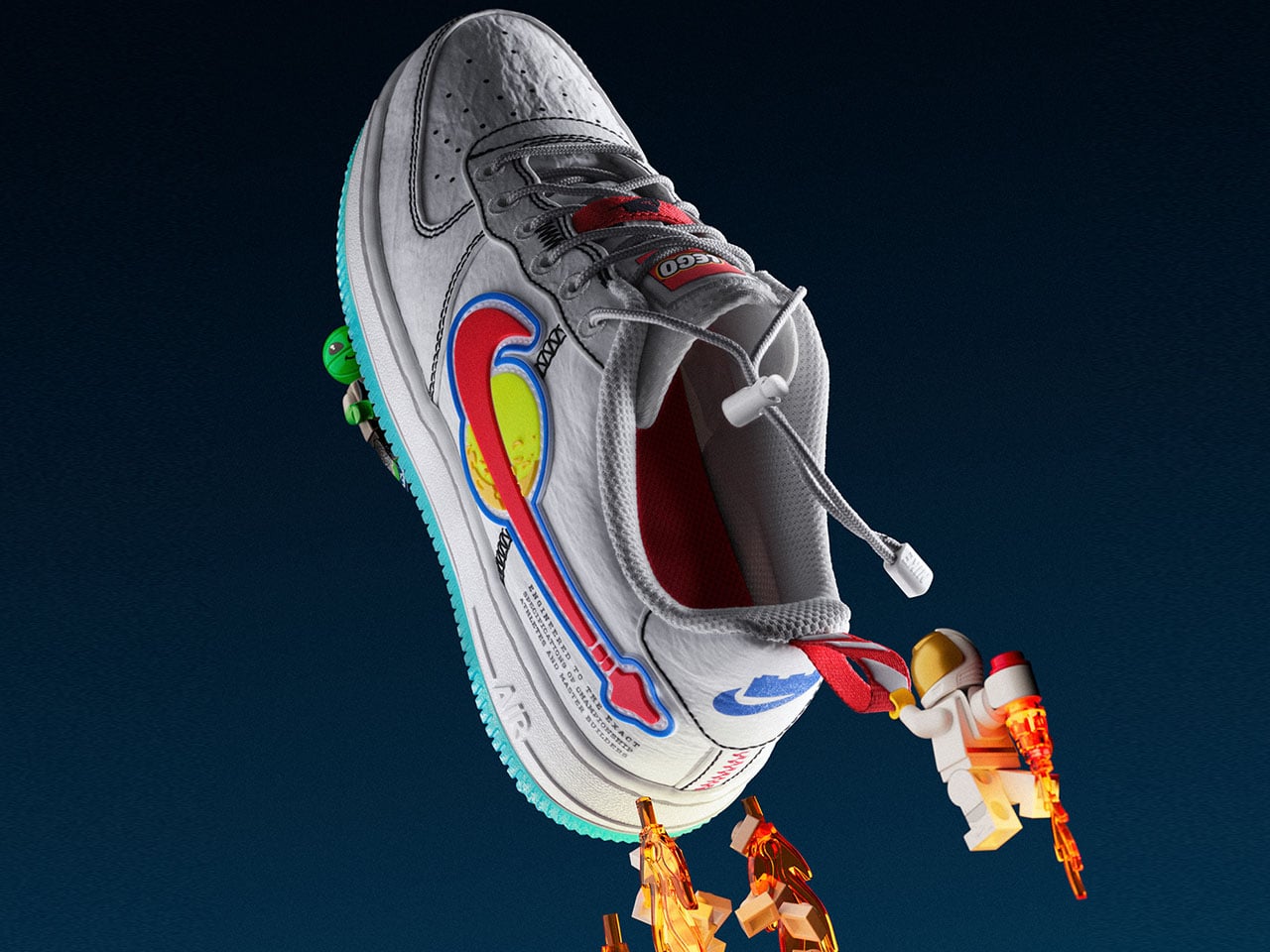
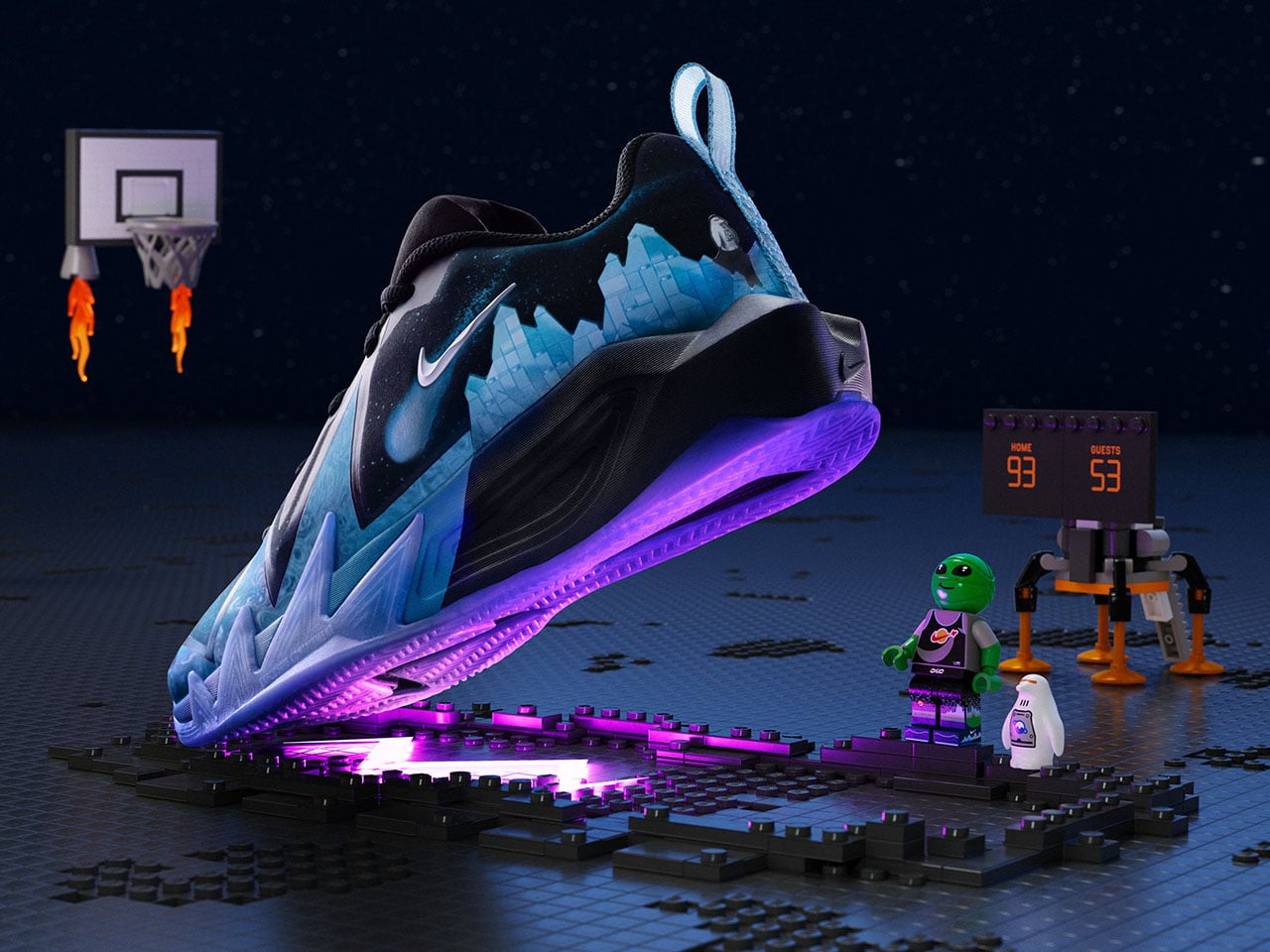
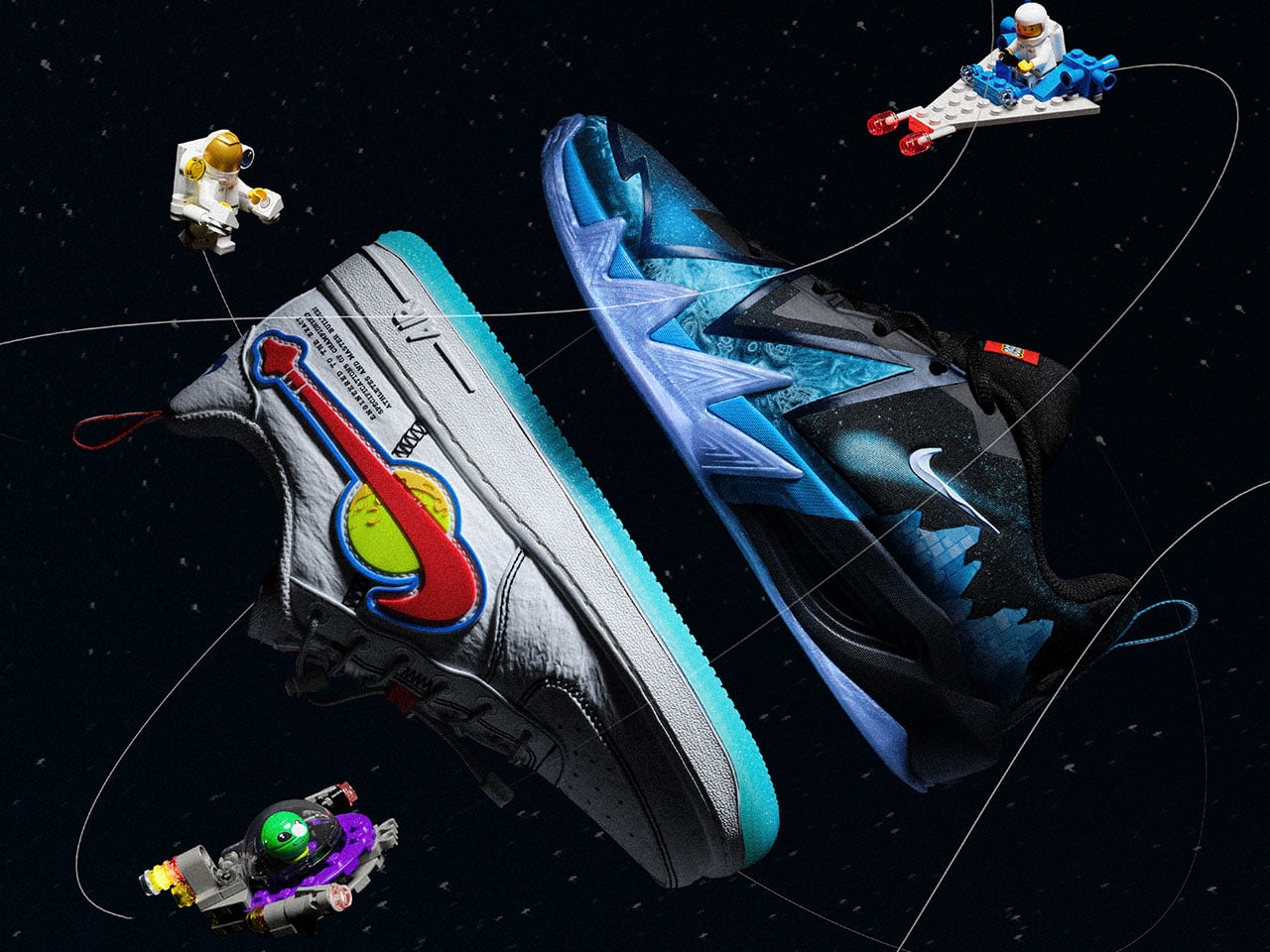
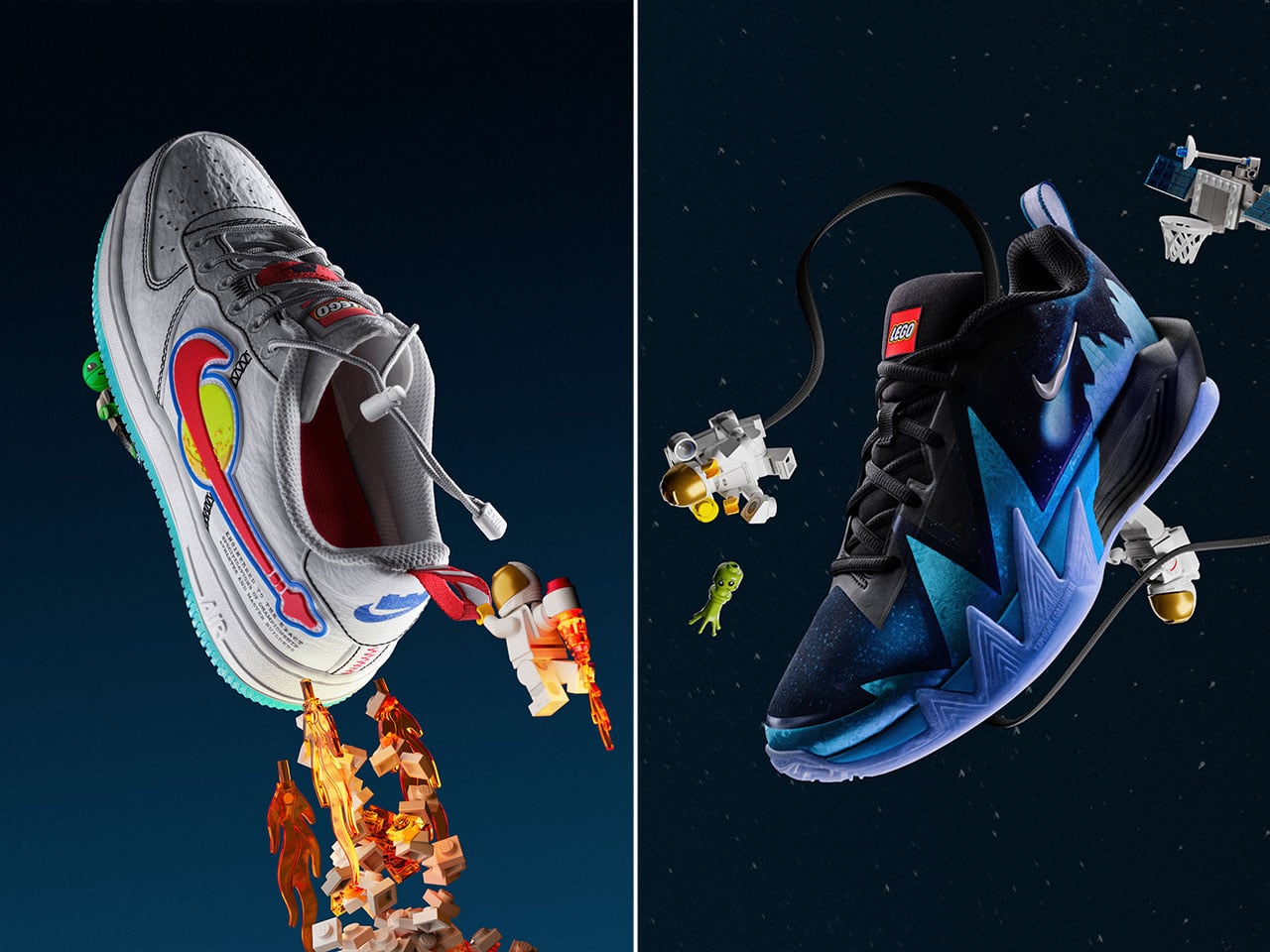
If you’re interested, the Air Force 1 Low LV8 borrows its appearance from an actual astronaut spacesuit, while the S.T. Dynamite seems prepared for a game in an icy blizzard. The shoes are available in sizes ranging from 10.5C to 7Y.

The Nike Air Force 1 Low LV8 is reimagined with an upper that looks like an astronaut’s spacesuit. The sketched stitch detailing adds a constructed feel and playfulness, while the LEGO space-themed Swoosh and minifigs give the Air Force 1 a new feel that kids are definitely going to appreciate. It wouldn’t be surprising if basketball fans line up outside Nike stores to get a pair for their kids, not because they can’t get it in their size but for their little one to feel the fanfare.

The Nike x LEGO collaboration gets a deeper meaning with the Nike S.T.Dynamite that takes basketball – the kids’ collection – to an “ice planet.” The sneaker wears a color-shifting finish and a glittering outsole to generate that outer space icy look. Alongside the space-inspired aesthetics, these new collaborative sneakers have multidirectional treads in the sole, bouncy foam cushioning, and a lightweight upper.

The Nike x LEGO kids basketball collection is not limited to footwear alone. The sneaker duo, which will be available in North America from November 24 (but is in stores elsewhere starting November 2), comes with printed ripstop trousers, a graphic T-shirt, and Dri-FIT basketball shorts with a lunar landscape print. Also, part of the collection is a full-zip fleece hoodie equipped with a basketball minifigure patch that changes as you move.

The post Nike and LEGO’s new space-themed sneakers let kids take their basketball style beyond Earth first appeared on Yanko Design.
  •  

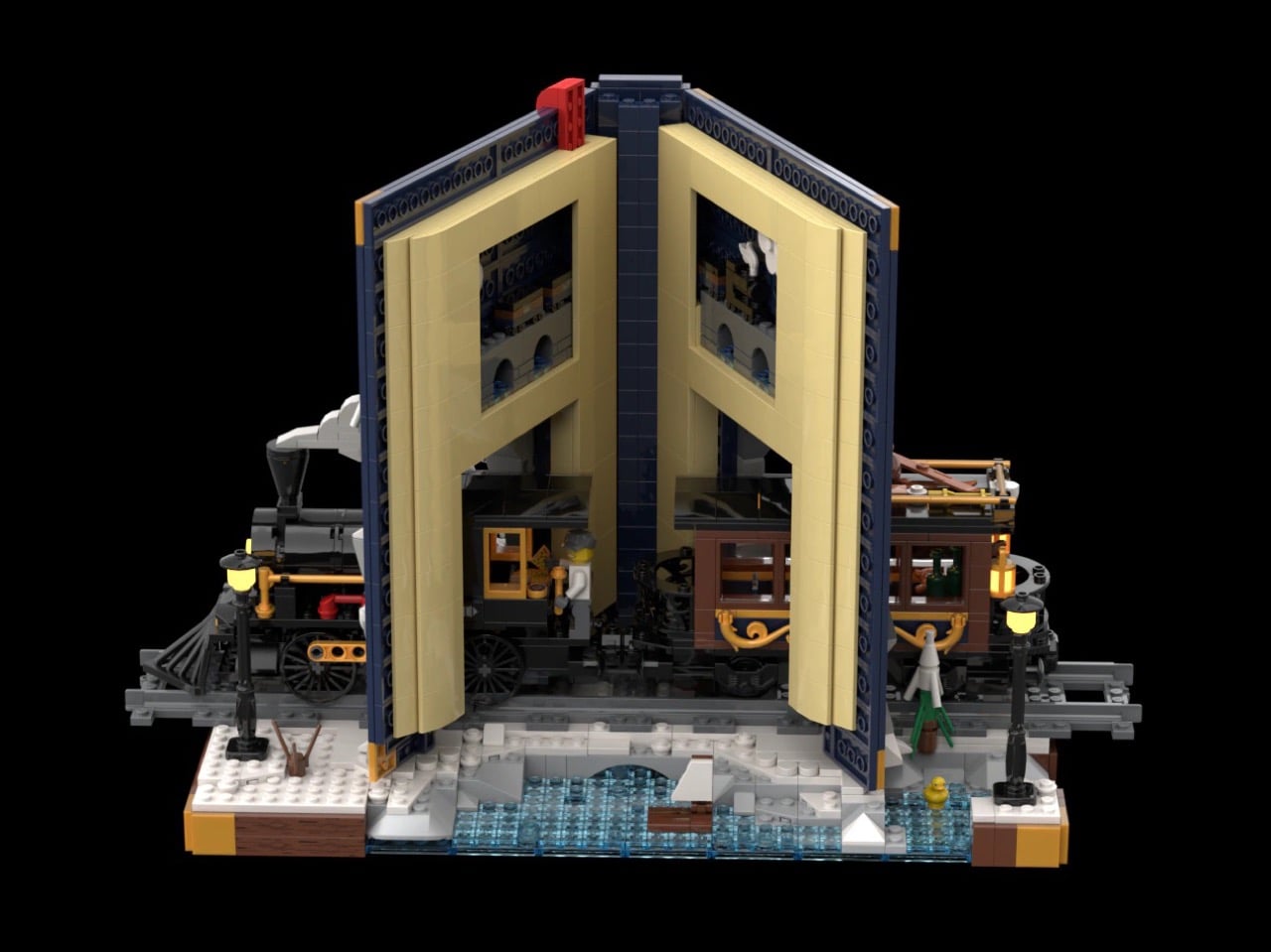
Gorgeous LEGO Book Nook Has a Steam Train Blasting Straight Through Its Snowy Pages

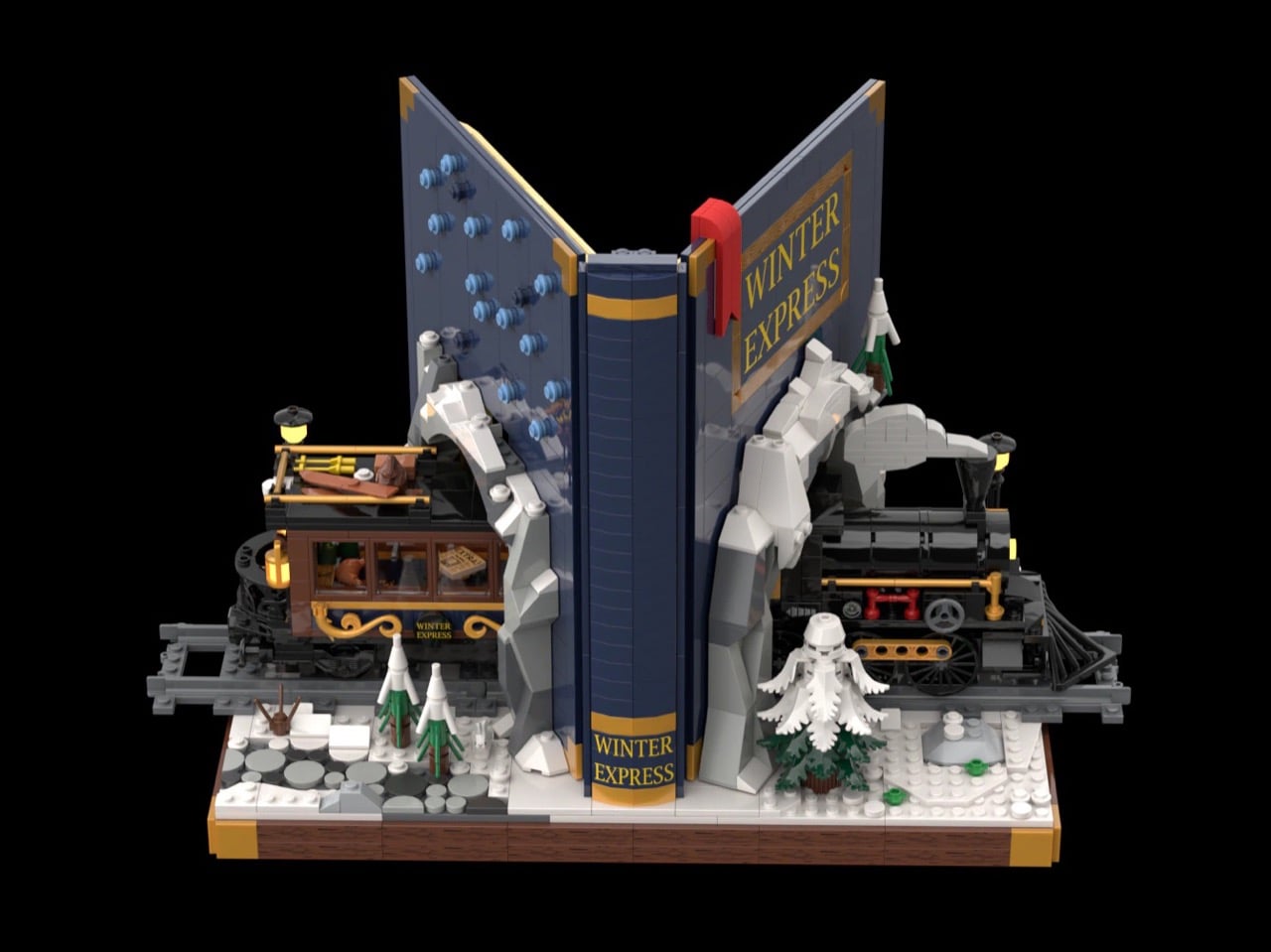
Every kid who grew up with Chris Van Allsburg’s The Polar Express remembers that moment where the story stops behaving like a story. A train just shows up, chugging straight out of the snow and into a kid’s actual bedroom, and suddenly bedtime reading feels a little bit dangerous in the best way. That’s the exact energy LEGO builder CrazyInventor is chasing with Winter Express, and yes, I see what you did there with that title, very smart way to dodge a certain mouse-shaped legal team while still getting the reference across loud and clear. Except here the train doesn’t stop at bursting out of the pages. It runs straight through the whole book, cover to cover, like the story just wasn’t big enough to hold it.

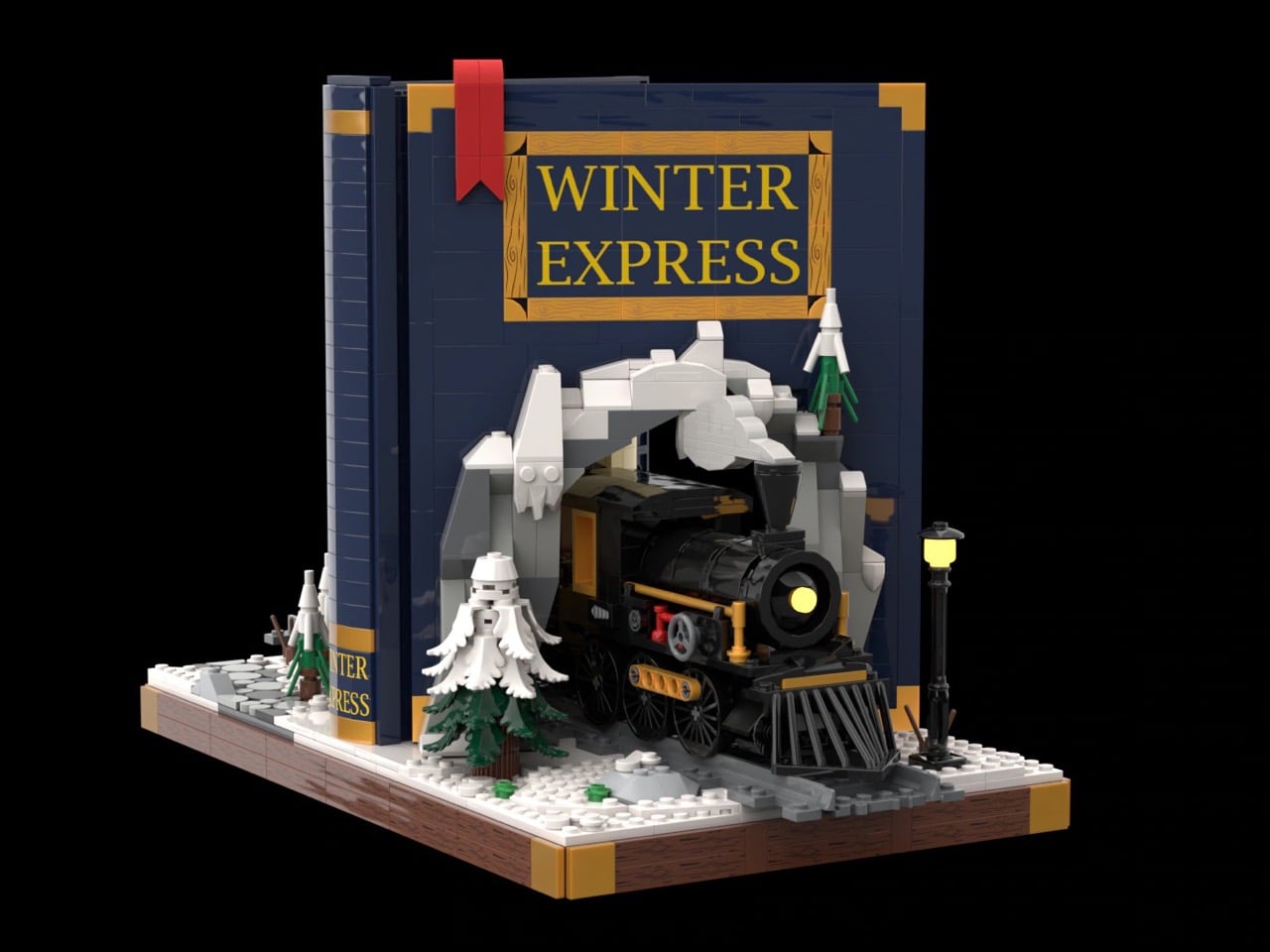
The result looks like someone left a hardback open on a shelf and a Victorian steam engine decided to use it as a shortcut. Gold trim, a red ribbon bookmark, snow dusted across the back cover like a sky full of stars, this thing reads more like a diorama that happens to be shaped like a book than a book that happens to have a train in it. And once you spot the tiny second train hiding inside the pages, you’ll understand why this project cracked 1,000 supporters in about three days flat.

Designer: CrazyInventor

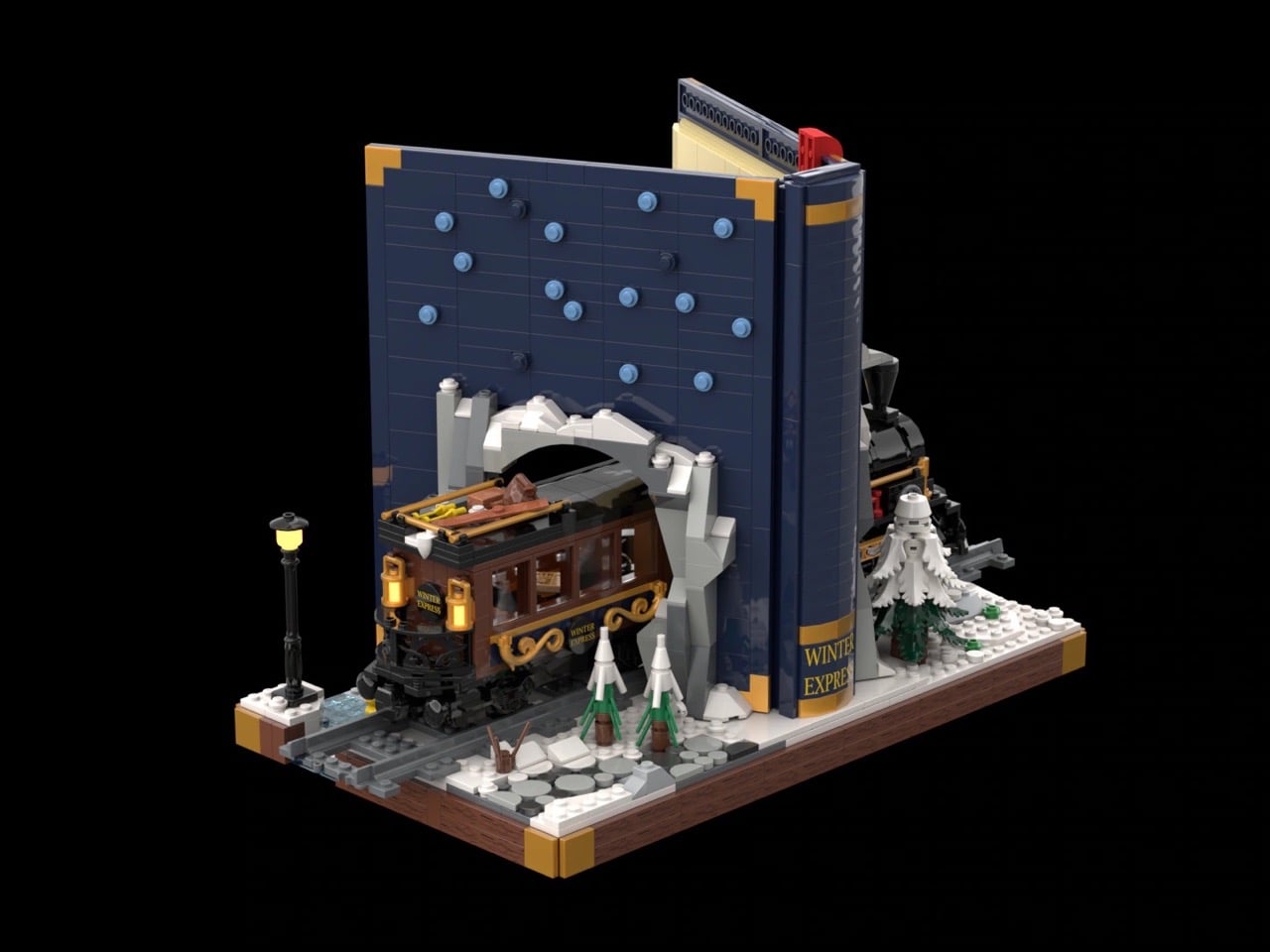
The book itself steals the show before the train even enters the conversation. It’s a navy blue hardback with rounded gold corner guards and matching gold bands running down a curved spine, the kind of cover treatment you’d expect on a leather-bound classic rather than a pile of ABS plastic. A gold plaque on the front reads “Winter Express” in a wood-grain frame, and a red ribbon bookmark hangs off the top edge like someone set the book down mid-chapter and wandered off to make tea. Flip to the back cover and it’s scattered with pale blue round studs, doing double duty as either falling snow or a starry winter sky, depending on how you’re feeling that day.

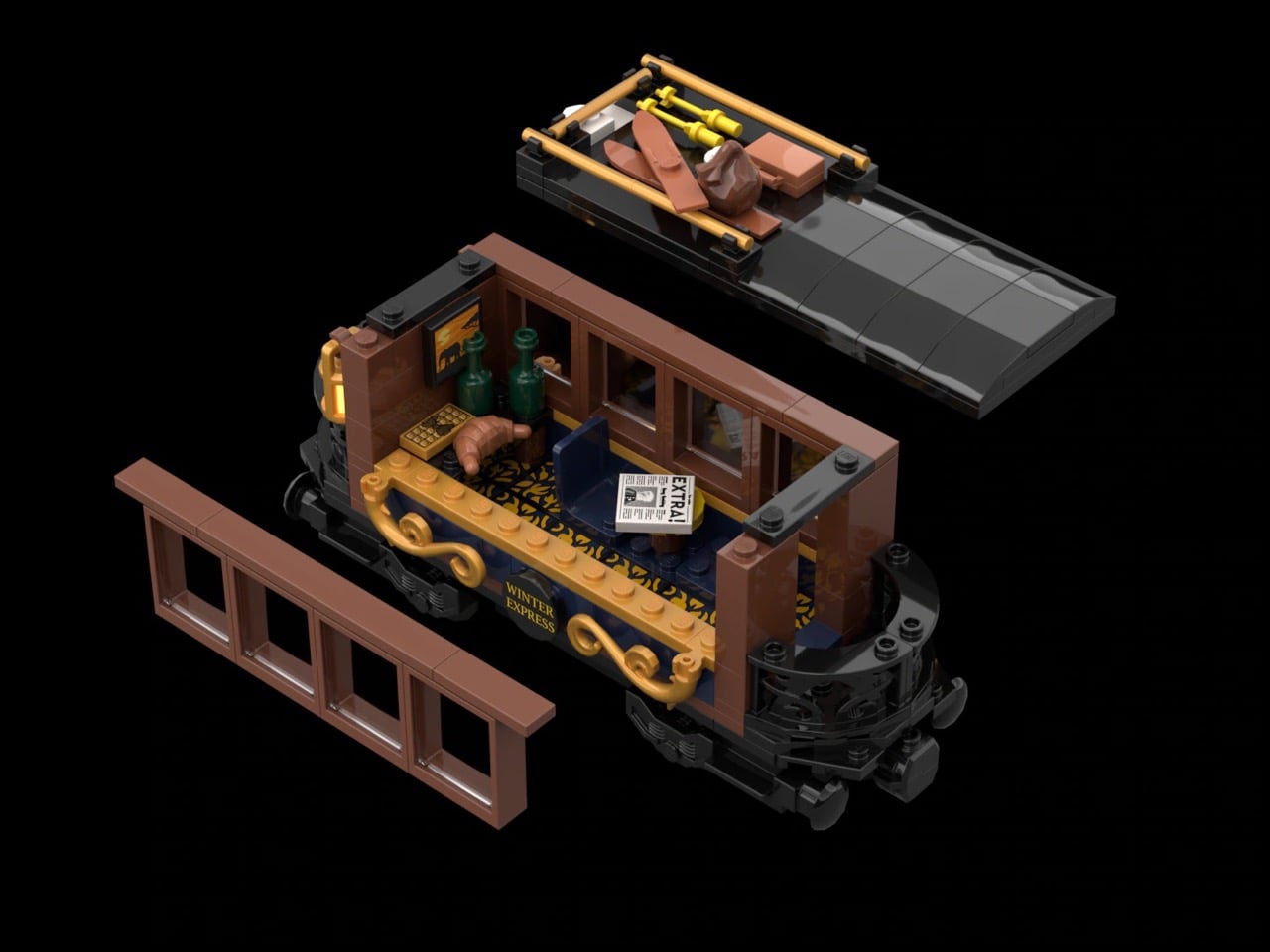
A black and gold Victorian locomotive takes over from there, complete with a glowing headlamp, a cowcatcher up front, and Technic side rod detailing, coming straight out of a snow-capped rock tunnel carved into the front cover. A matching passenger coach trails out the other side through the spine, decked out in scrollwork trim with its own lit lanterns and a roof stacked with skis and sleds. Snowy pine trees, cobblestone tiles, and two working lampposts fill out the base, along with a frozen little pond built from trans-blue tiles.

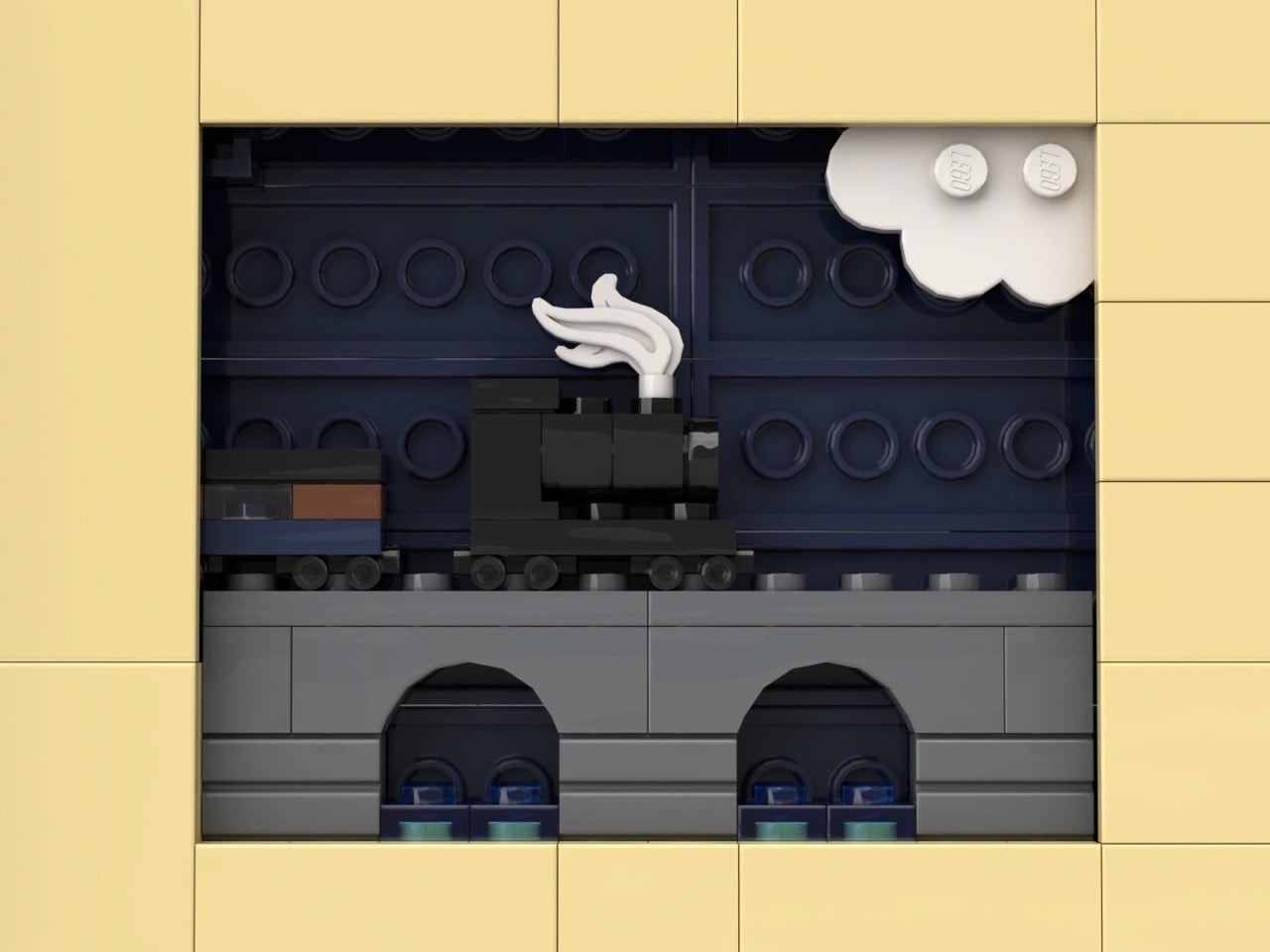
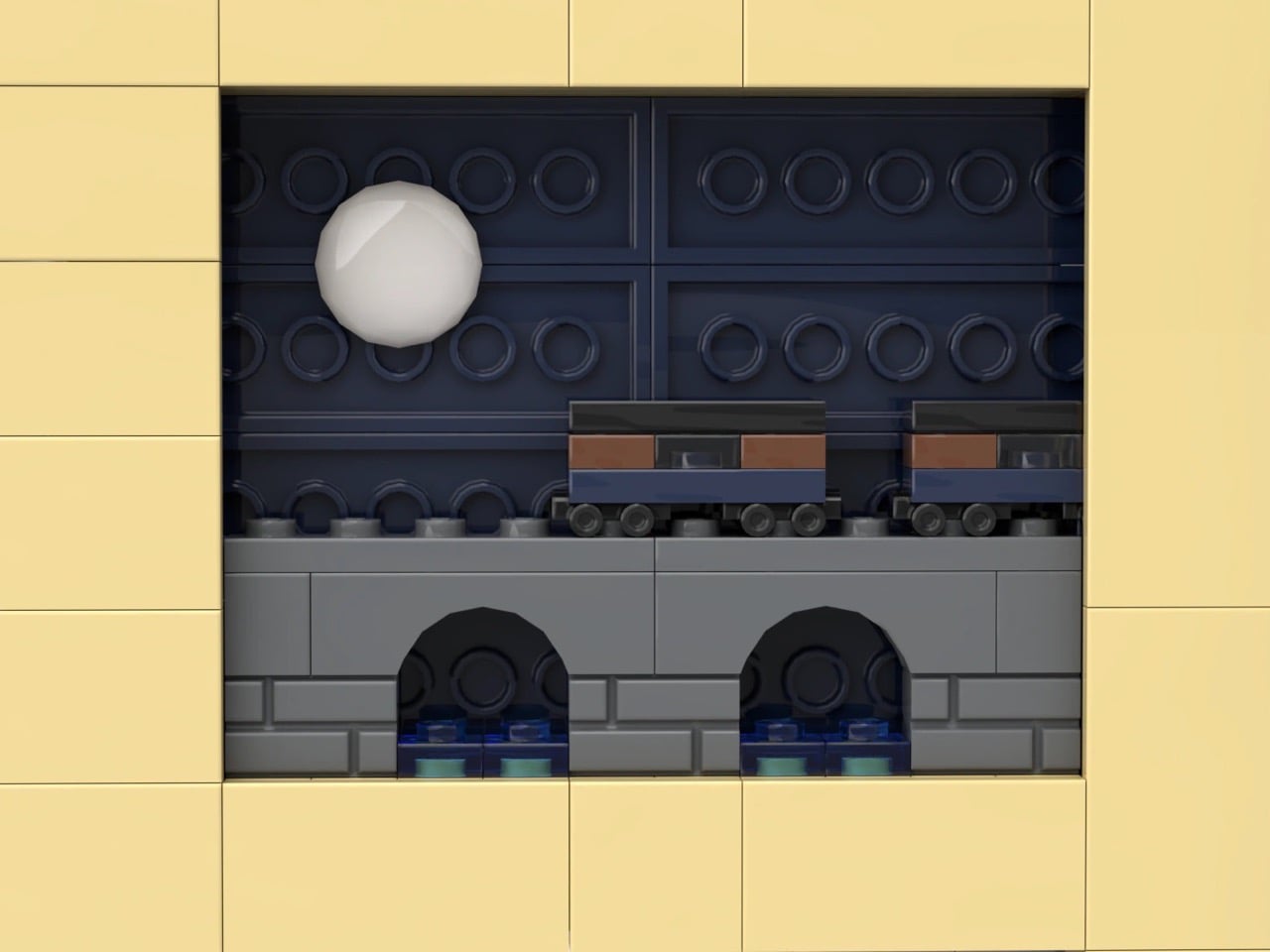
My favorite detail is buried in the pages themselves. Look closely at the tan interior spread and there are cutout windows revealing a second, micro-scale train crossing a tiny stone viaduct, a whole miniature railway hiding inside the book that the big train is currently smashing its way through. It’s a small touch, but it’s the kind of layered thinking that separates a fun MOC from a genuinely great one.

Winter Express landed on LEGO Ideas on September 15 and has already pulled in 1,291 supporters, cruising well past the first 1,000-vote milestone toward the 5,000 mark it needs next. If cozy winter dioramas with a little bit of chaos baked in are your thing, go to the LEGO Ideas page and add your support and watch this one keep climbing.

The post Gorgeous LEGO Book Nook Has a Steam Train Blasting Straight Through Its Snowy Pages first appeared on Yanko Design.
  •  

Lando Norris’ New LEGO Helmet Is Weirdly Emotional to Build

McLaren just hit 1,000 Grands Prix, which in Formula 1 years is basically ancient royalty status. Only Ferrari has been around longer in this sport, and Ferrari acts like it too. So when a team crosses a milestone like that, you throw a party, you paint a special livery on the car, and apparently, you also get LEGO to build you a commemorative brick helmet with your driver’s face on the box.

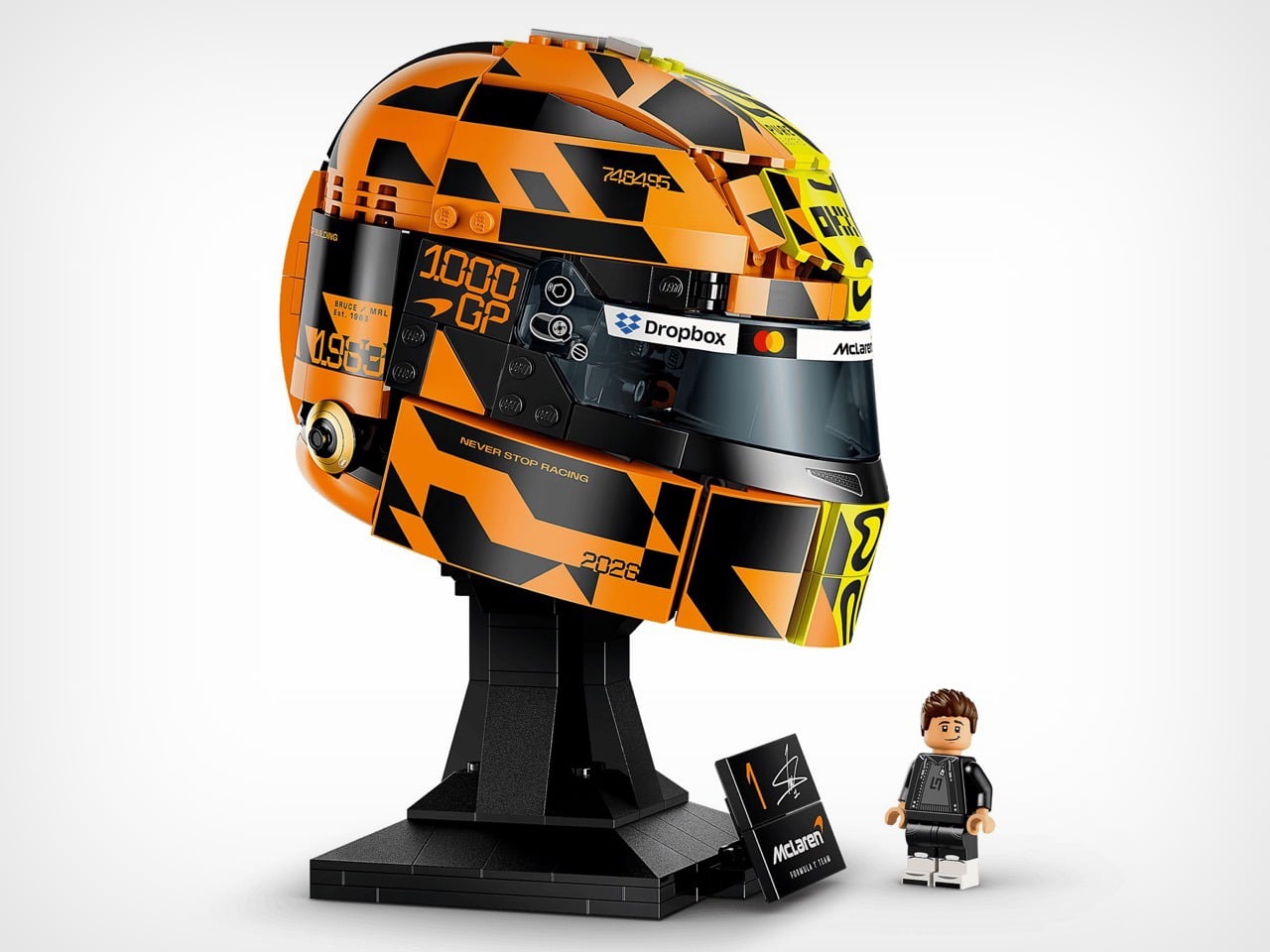
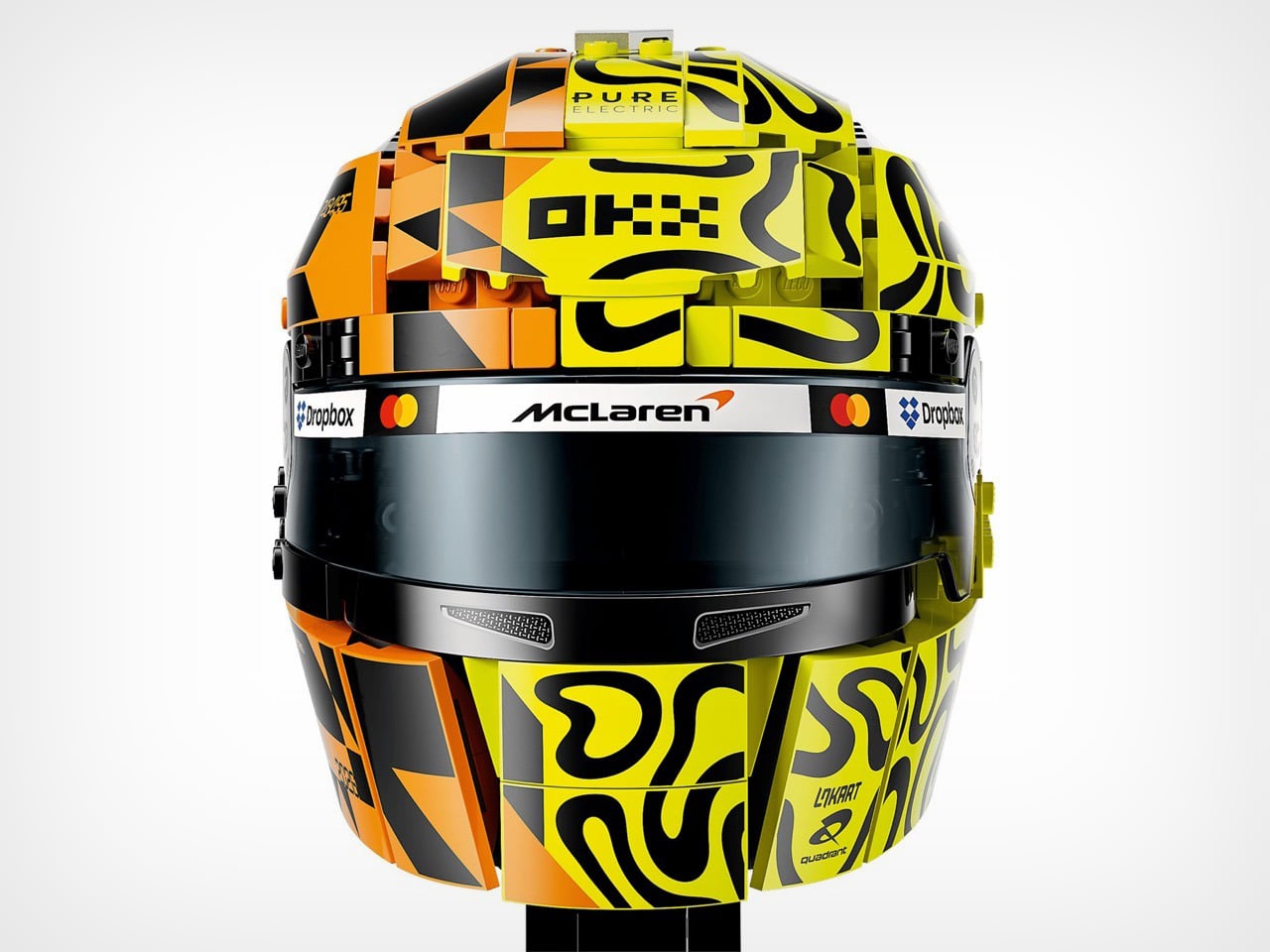
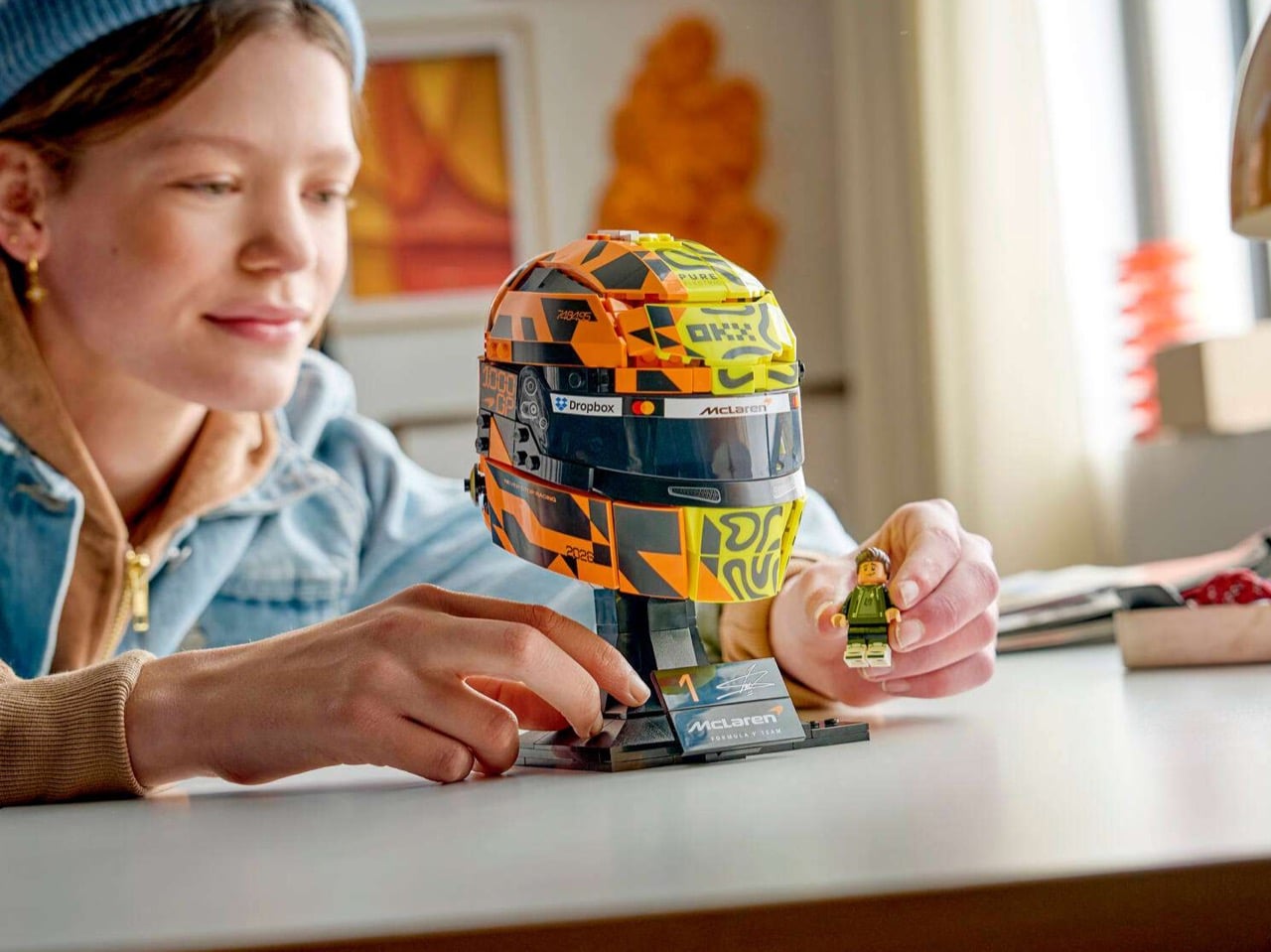
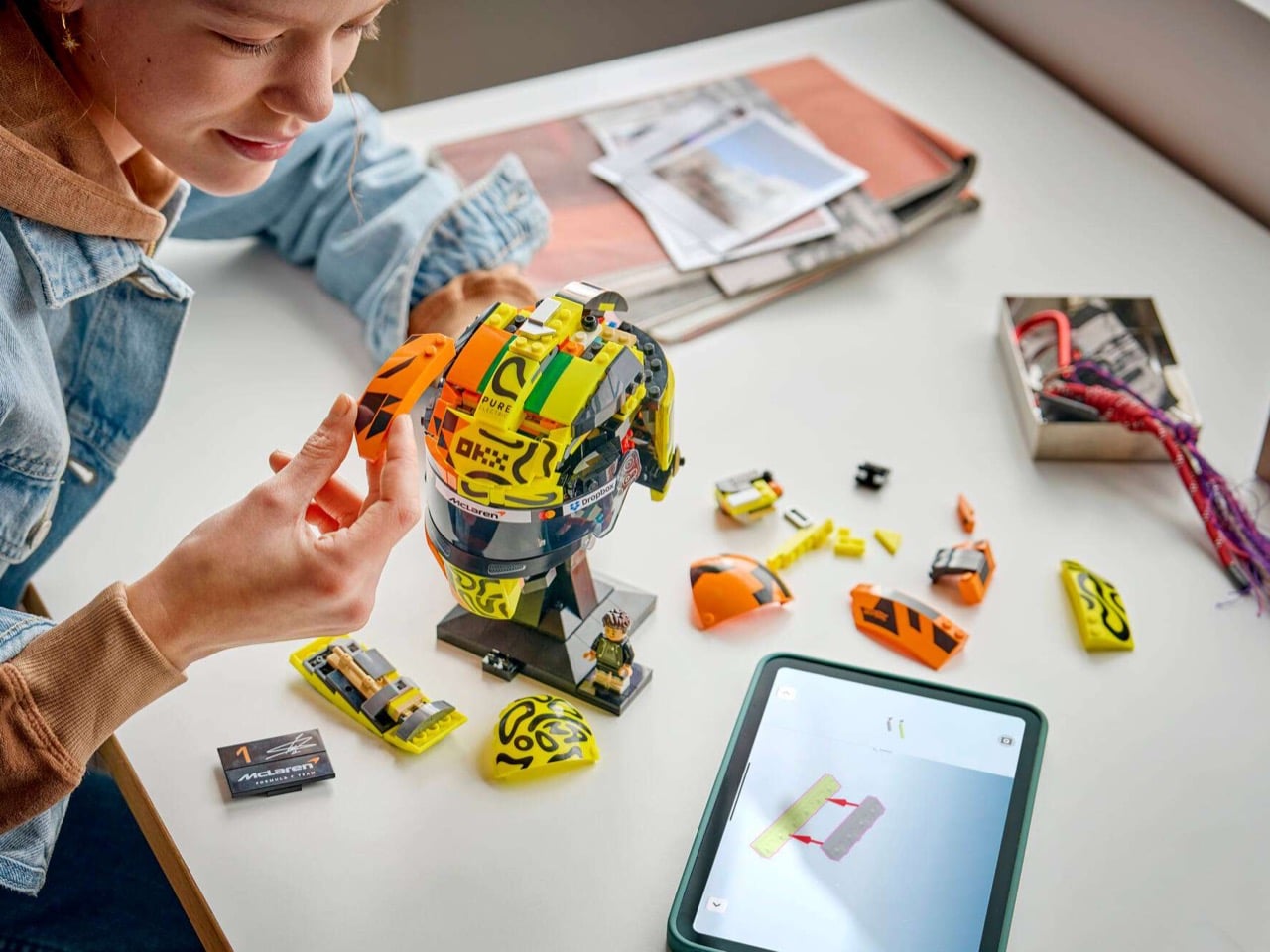
That is exactly what happened with Lando Norris’s set, a 793 piece build that packs his signature yellow and black “blob” design (his words, not mine) onto one side of a papaya orange helmet shell. It is McLaren history and Norris’s personal branding smashed together into a display piece, and somehow LEGO made that combination look genuinely good instead of like a marketing fever dream.

Designer: LEGO Design Team, co-created with Lando Norris

What makes this one different from your average licensed tie in set is that Norris was actually in the room for it. This was not LEGO grabbing some reference photos and calling it a day. The drivers worked directly with LEGO’s design team to shape both the Norris helmet and its companion piece for teammate Oscar Piastri, and the real helmets both drivers wore trackside at Monaco were based on the LEGO designs, not the other way around. That is a genuinely rare flex for a toy company. Daniel Meehan, LEGO’s Creative Lead for F1, put it well when he said building organic helmet curves at this scale “presents exciting opportunities for exploring new building techniques and creative parts usage,” which is design speak for “yeah, this was hard and we are proud we pulled it off.”

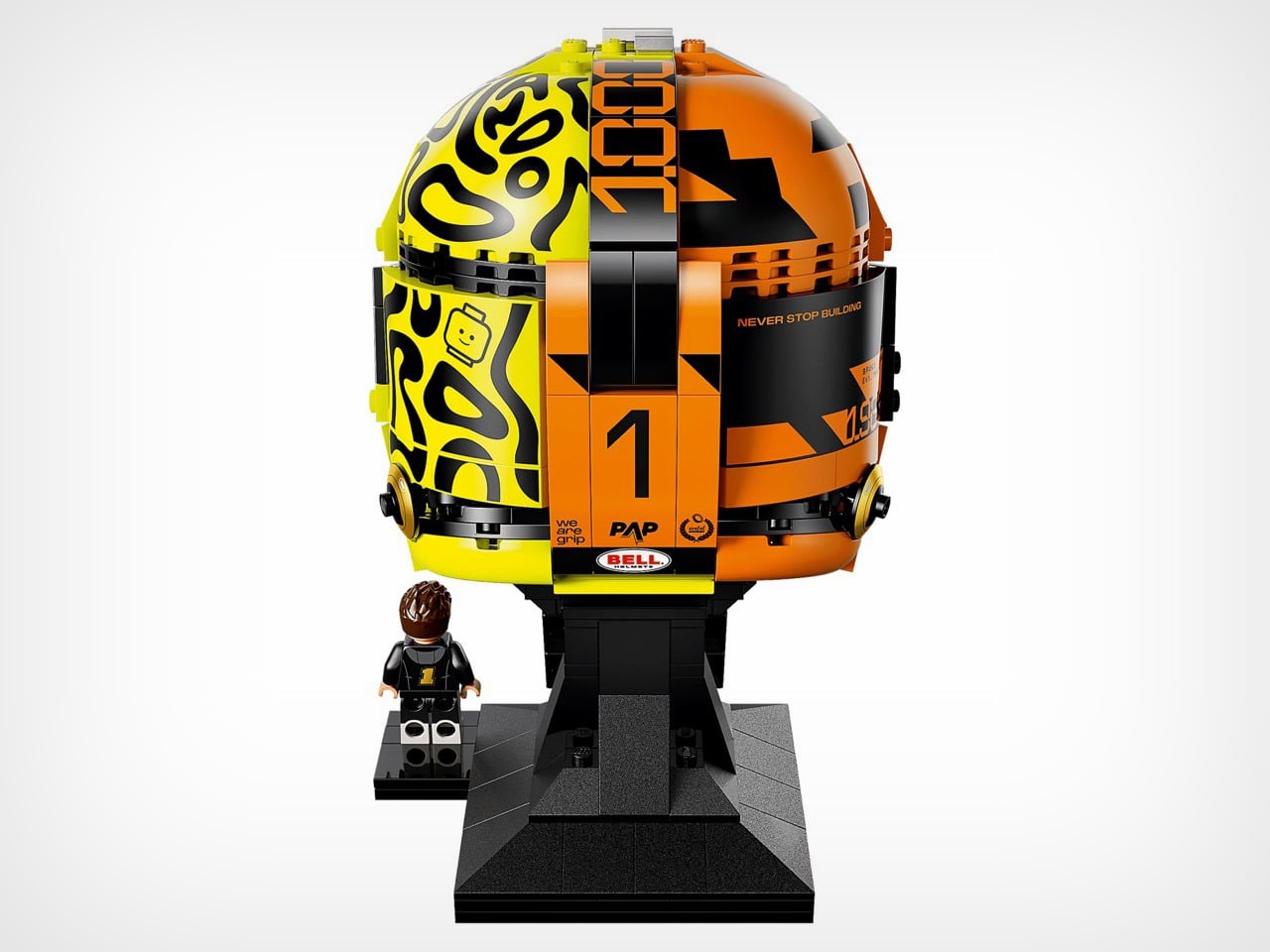
And they did pull it off. The papaya orange half and the neon yellow squiggle half meet along a seam that somehow still reads as one continuous helmet, not two mismatched shells taped together. Printed tiles handle every sponsor logo along the brow, McLaren, Mastercard, Dropbox, OKX, all sitting exactly where they would on the real thing. The back of the helmet is where the emotional weight lives though. LEGO printed “1.000 GP” and “1963” across the rear in bold anniversary numerals, with a small nod to “Bruce / Mal Est. 1963,” a reference to Bruce McLaren founding the team over sixty years ago. “NEVER STOP RACING” runs along the base of the visor. It is a lot of history packed into a helmet the size of a grapefruit.

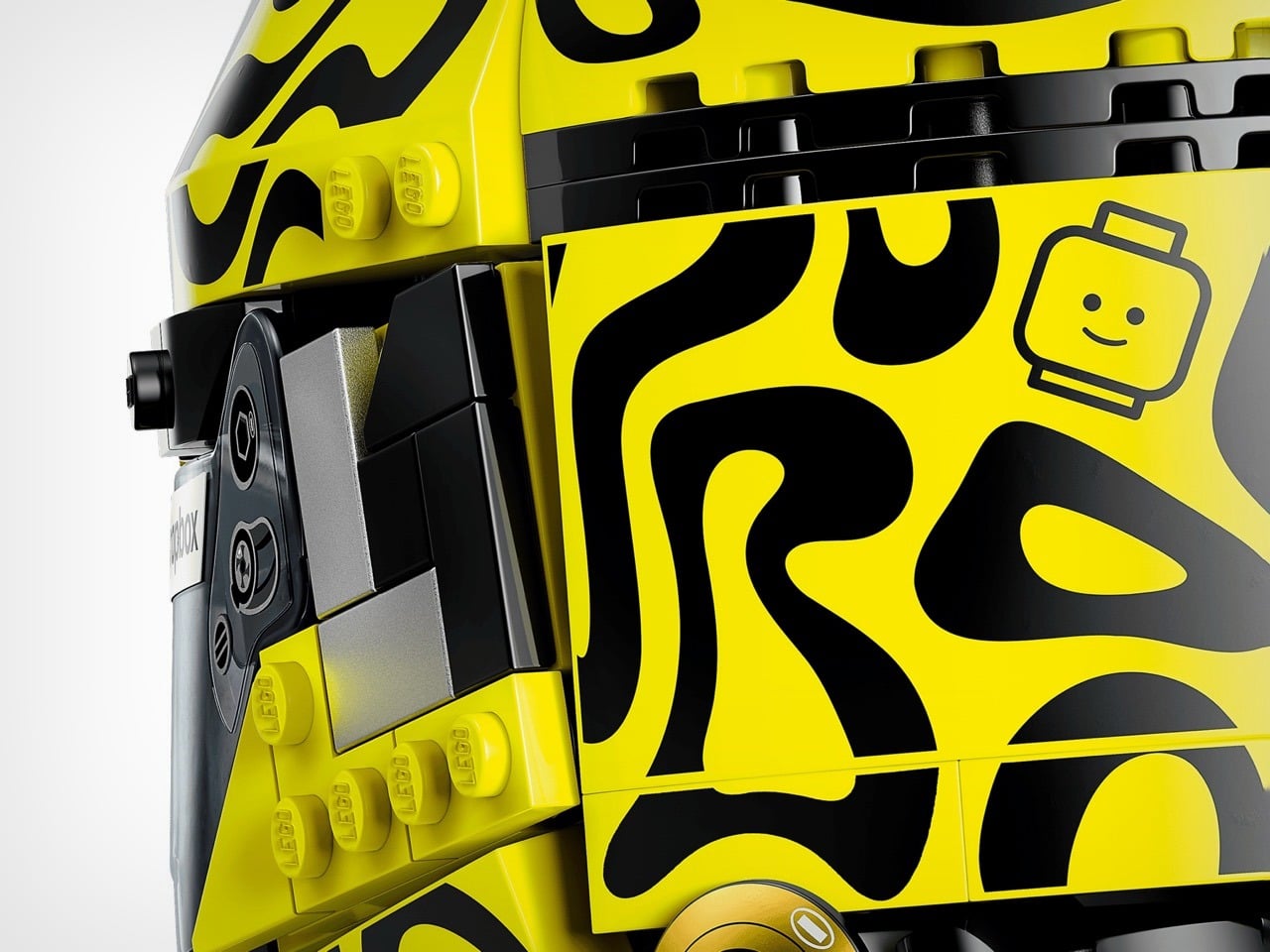
My favorite detail, though, is buried in the yellow side paneling where LEGO snuck in a tiny printed minifig head, smiling face and all, hidden right inside Norris’s own design pattern. It is such a small thing, but it is basically LEGO signing its own work, and it tells you the people building this actually cared about more than just slapping a logo on a shelf piece.

The set comes mounted on a black display stand with Norris’s number 1 and a printed signature plaque, plus a minifigure of Norris himself in off track team gear, reportedly the first time he has been rendered as a LEGO minifig. It also plugs into the LEGO Builder app so you can rotate and zoom your progress mid build, which is a nice touch if you like tracking your pit stops digitally.

This helmet drops right after LEGO built ten full size, actually driveable F1 cars for a stunt at last year’s Miami Grand Prix, so the brand’s relationship with the sport is clearly only ramping up. The Lando Norris McLaren Mastercard F1 Team Helmet (set 43023) is available now for $89.99 on LEGO.com and through McLaren’s official store, alongside the matching Oscar Piastri edition if you want the full garage set.

The post Lando Norris’ New LEGO Helmet Is Weirdly Emotional to Build first appeared on Yanko Design.
  •  

Castor - Votre flux vidéo web sur la télé, en top qualité

Vous avez déjà pesté contre votre télé qui refuse de lire une vidéo pourtant toute bête trouvée sur le web ? Hé bien Kilian Houpeurt aussi et c'est pourquoi il a décidé, plutôt que de râler dans le vide comme un mec lambda sur Twitter, qu'il allait prendre le taureau par les cornes et coder sa propre solution.

Ça s'appelle Castor et évidemment ça envoie du bois, lol. En fait c'est un outil en ligne de commande écrit en Go qui est open source et qui permet d'envoyer le vrai flux vidéo d'une page Web directement sur votre télévision en qualité max sans avoir besoin de Chromecast, ni d'AirPlay.

L'astuce, c'est qu'il ne recopie pas votre écran comme le ferait un mirroring (qui rame et qui compresse tout, on est d'accord...). Vous lui donnez simplement l'adresse d'une page Web et lui va la charger dans un Chrome Headless, c'est-à-dire sans interface et capter le trafic réseau grâce au Chrome Devtools Protocol. C'est le flux vidéo ensuite qui transite qui est repéré et qu'il prend à la source.

Derrière, vous vous en doutez, ffmpeg transcode à la volée pour votre télé pendant que ffprobe détecte le format qui arrive. Pour alimenter Castor, vous avez alors trois possibilités, soit vous lui fournissez une page Web avec la commande castor cast player, soit vous lui passez un flux brut en .m3u8 avec la commande castor cast url, ou alors simplement un identifiant IMDB/TMDB que Castor résoudra via les sources que vous avez configurées de votre côté.

Et si vous renseignez une clé TMDB, castor cast tout court vous sortira alors un navigateur interactif en plein terminal Et c'est là-dedans que vous pourrez filtrer par genre (ou peu importe la métadonnée que vous voulez) ou parcourir les films comme vous le feriez sur Netflix, ou encore aller explorer les épisodes d'une série. Qui vous fait envie. Tout ça sans jamais quitter votre terminal. Ça a quand même un peu de gueule !

Le navigateur TMDB de Castor, directement dans le terminal.

Castor sait les générer lui-même les sous-titres avec whisper.cpp avant de les incruster dans la vidéo, Mais attention quand même, le modèle par défaut ne comprend que l'anglais, si vous voulez du français, faudra faire pointer Castor vers un modèle whisper multilingue.

Enfin, côté réception, Castor sait causer DLNA / UPnP, un protocole que Samsung, LG, Sony Bravia, Panasonic, Philips, Hisense ou encore TCL savent gérer depuis des années. Un petit castor scan et il vous liste tous les récepteurs qui traînent sur votre réseau et vous verrez que Kodi, VLC et Plex répondront aussi présents. Pour ce qui est du support du Chromecast, c'est encore un peu expérimental, donc ne comptez pas trop dessus pour le moment.

L'installation sur Mac se fait via brew install --cask stupside/tap/castor. Prévoyez juste Chrome ou Chromium sur la machine + ffmpeg et ffprobe accessibles dans le PATH. Une image Docker existe avec tout dedans, mais méfiance sur Docker Desktop macOS ou Windows puisque la découverte réseau ne passe pas le bridge, donc le conteneur ne verra jamais votre télé.

Maintenant, ce n'est pas un outil de piratage, puisque Castor n'héberge rien du tout. C'est un outil générique qui pousse un flux vers une TV, et c'est à vous de respecter la loi ainsi que les conditions d'usage des sites. Bref, ne castez que ce que vous avez le droit de regarder. Pour envoyer un flux IPTV ou un bête .m3u8 sur l'écran du salon, c'est en tout cas, super pratique.

Si vous bidouillez un serveur média maison, allez donc jeter un œil à Castor , le dépôt vaut le détour !

  •  
❌