❌

Vue lecture

This titanium watch turns Yuri Gagarin’s first orbit into a dial

Ask any American watch nerd about space watches and you’ll hear one word within three seconds: Speedmaster. Moon landing, NASA certification, the whole legend. Meanwhile, eight years before Apollo 11, a Soviet pilot strapped on a standard-issue navigator’s watch and went around the planet first, and that story gets a fraction of the airtime. I love a Speedy as much as anyone. Still, the first human in orbit deserves a little more wrist love, and a Moscow designer just delivered some.

Alexey Yakushik’s Yuri Gagarin: First in Space is that delivery. His brand launched in 2025, and this is a big step up from its earlier releases on Vostok and Luch movements. The case is Grade 5 titanium, 45mm across (about 1.8 inches), with a domed sapphire crystal, a Miyota 8215 automatic sits under a custom module, and a rocket hand circles a blue Earth every hour. It collected two European Product Design Award wins this year. The run is 130 pieces, split between natural titanium and black PVD, at about $4,150 each, sold only through the brand’s Russian site.

Designer: Alexey Yakushik

A polished blue Earth sits dead center of the dial, and a rocket-shaped minute hand laps it once an hour. Minute numerals ring the globe like a launch-control readout. Hours sit lower down as bold Arabic numerals, with a red marker picking out the current one. Four plates on the diagonals spell СССР in Cyrillic, which is about as subtle as a Soviet space poster should be. For the record, Vostok 1 took roughly 89 minutes to orbit the planet and the rocket does it in 60, but I won’t be filing a complaint about the pacing.

The case and the integrated bracelet are both Grade 5 titanium, the alloy aerospace engineers love because it is strong, light, and unbothered by most of what life throws at it. At 45mm the case is large on paper, though titanium weighs far less than steel, and the brand hasn’t published the weight or thickness. The domed sapphire crystal is 35mm across and bulges up over the globe like a capsule window, which is the whole porthole idea in one piece of glass. Water resistance is 100 meters, the lume is BGW9, and the links look faceted and angular in the renders. Nobody is mistaking it for a dress watch.
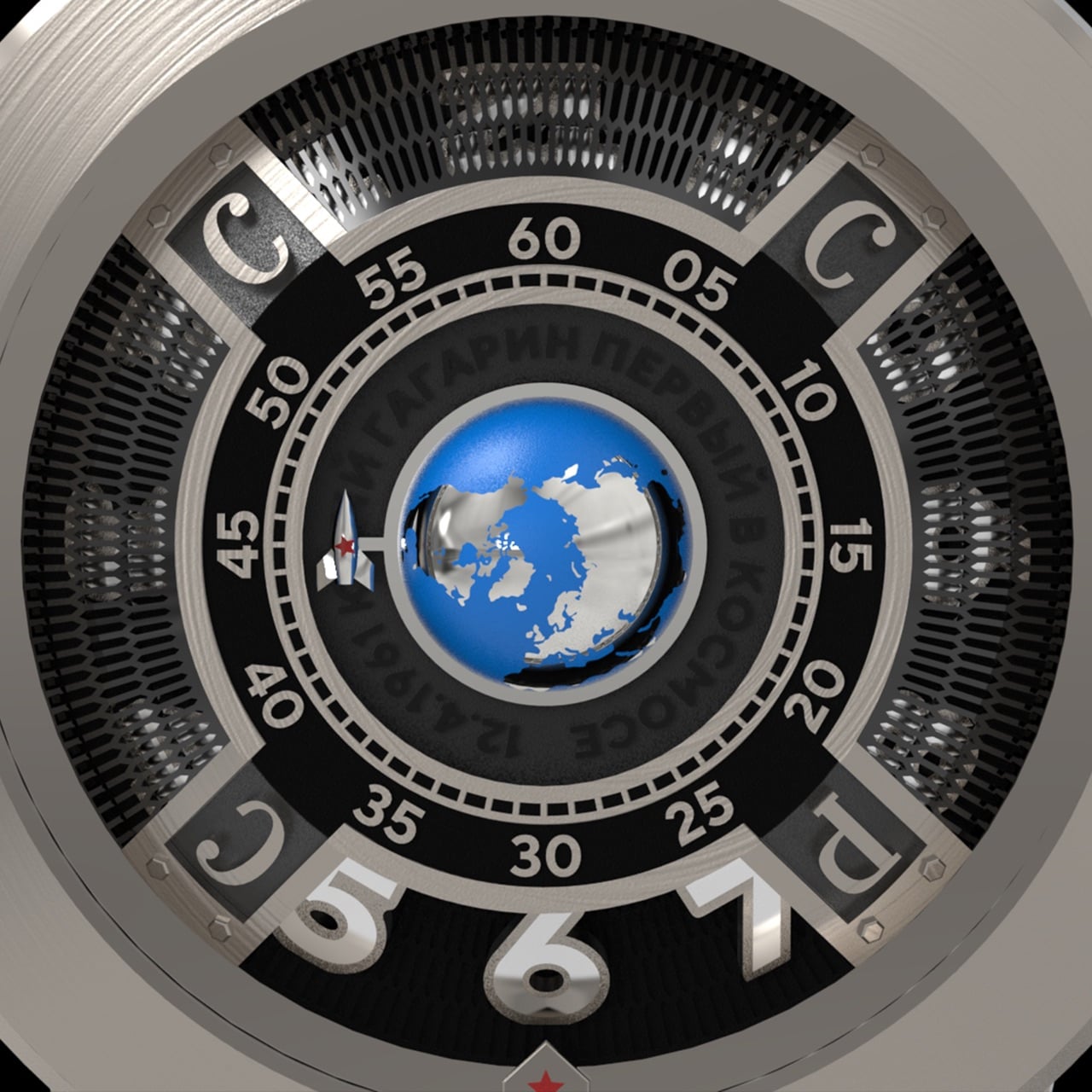

Underneath sits the Miyota 8215, a 21-jewel Japanese automatic workhorse that keeps time reliably and stays out of the dial’s way, with the brand’s AYW001.1 module built on top. The renders show a custom rotor stamped with 1961, СССР, and 2026, the sort of detail only the owner will ever see. Yuri Alekseyevich Gagarin’s full name wraps the sapphire caseback window, and every watch carries its own number, such as 01/65. Hiding a love letter on the back of a watch is a wearer-only flex, and I’m here for it. Nobody across the table will ever read it, which is exactly the point.

Yakushik says the project has the blessing of Gagarin’s daughters, Galina and Elena, along with Roscosmos support. It launched April 16, 2026, timed to the flight’s 65th anniversary, and the first piece went to the Moscow Museum of Cosmonautics. The European Product Design Award is a paid-entry Farmani Group competition that covers concepts and finished products, so read the two wins as a nod to the design and leave the horological verdict to others. At about $4,150, the money goes to the titanium, the bracelet, the dome, and the custom display more than the base caliber. Gagarin carried a 33mm brass tool into orbit, and sixty-five years later his flight has a 45mm titanium watch of its own.

The post This titanium watch turns Yuri Gagarin’s first orbit into a dial first appeared on Yanko Design.
  •  

This Jenga tower is also a lamp, and it lights up as you stack it

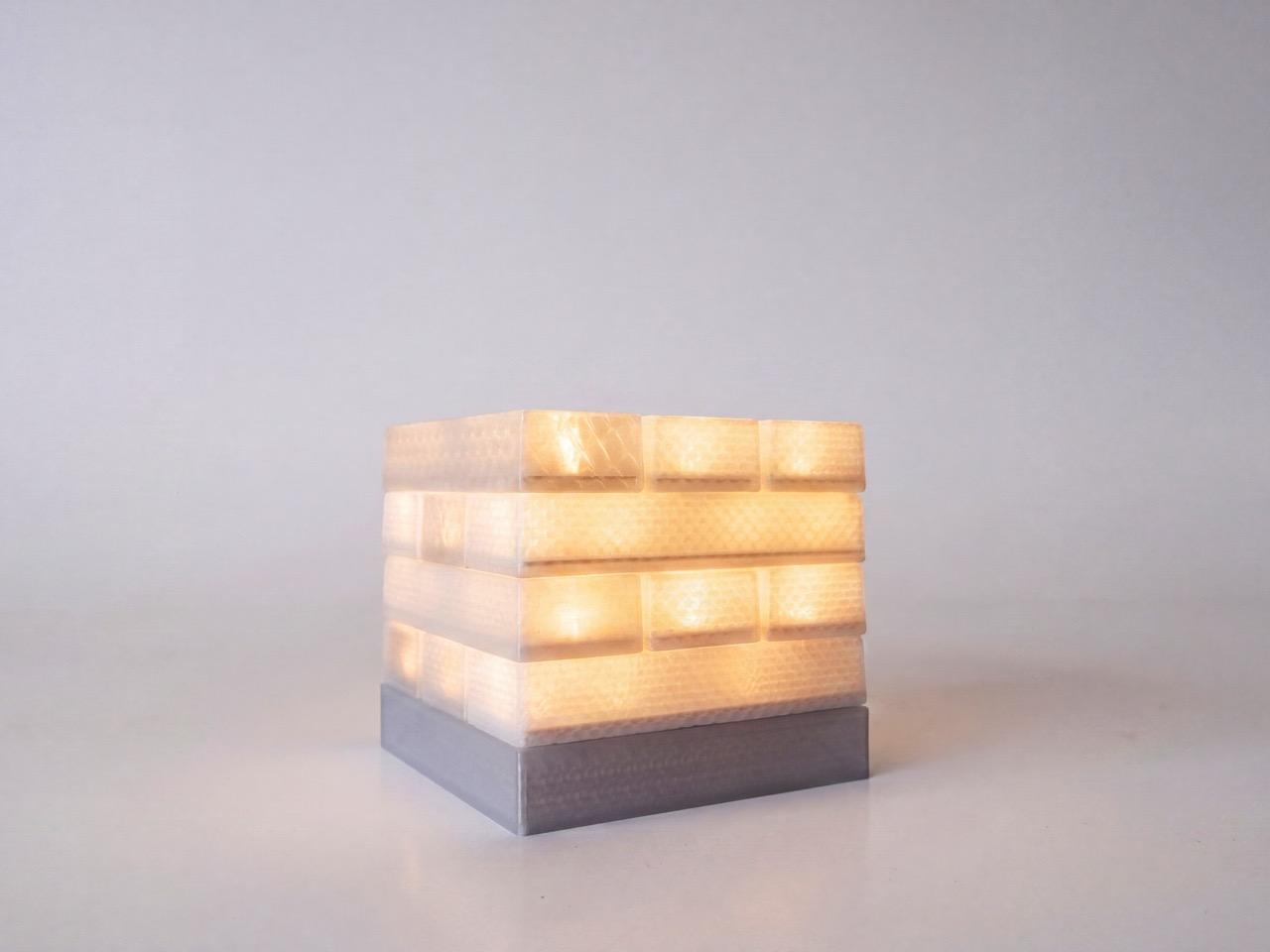
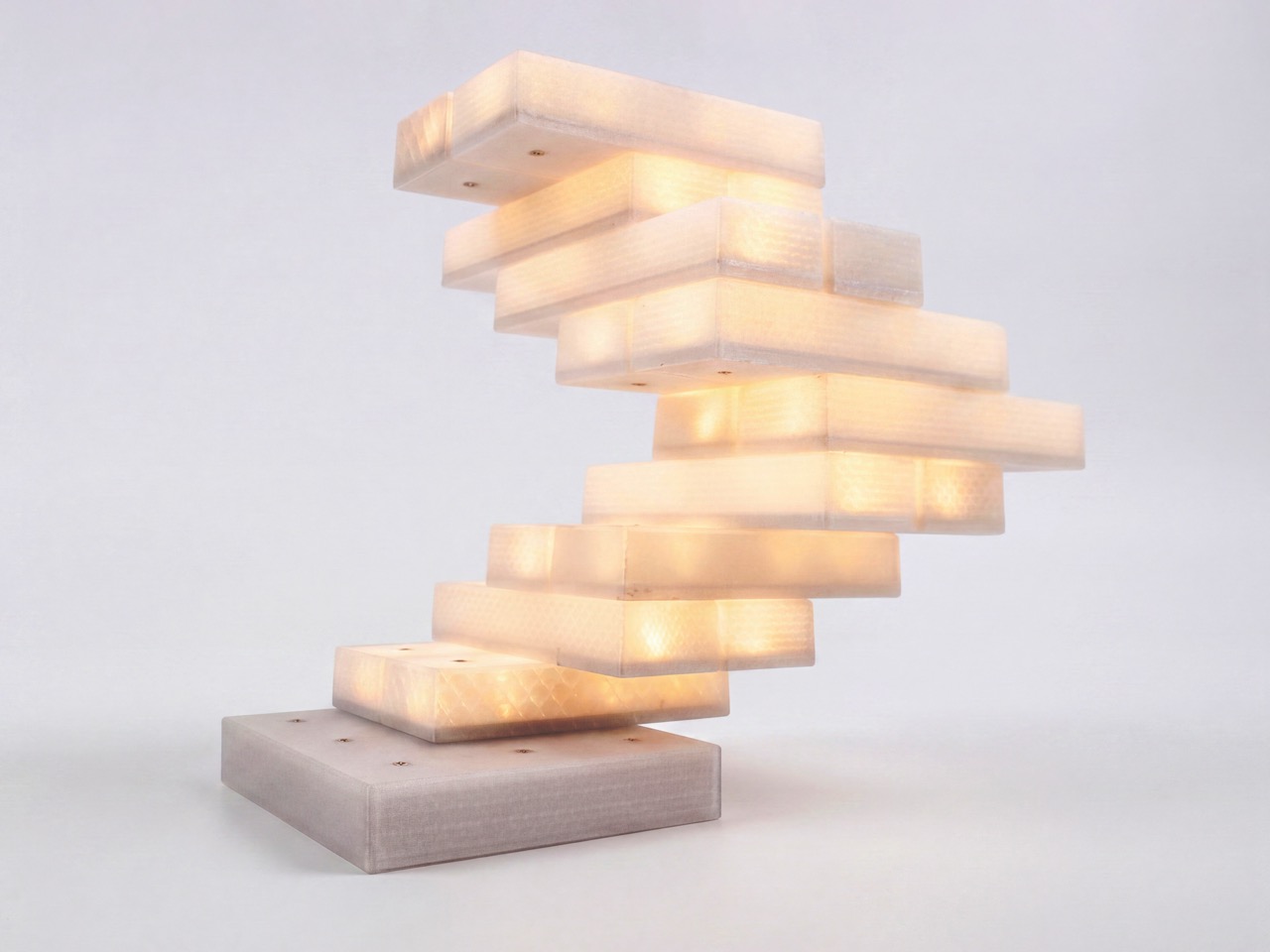
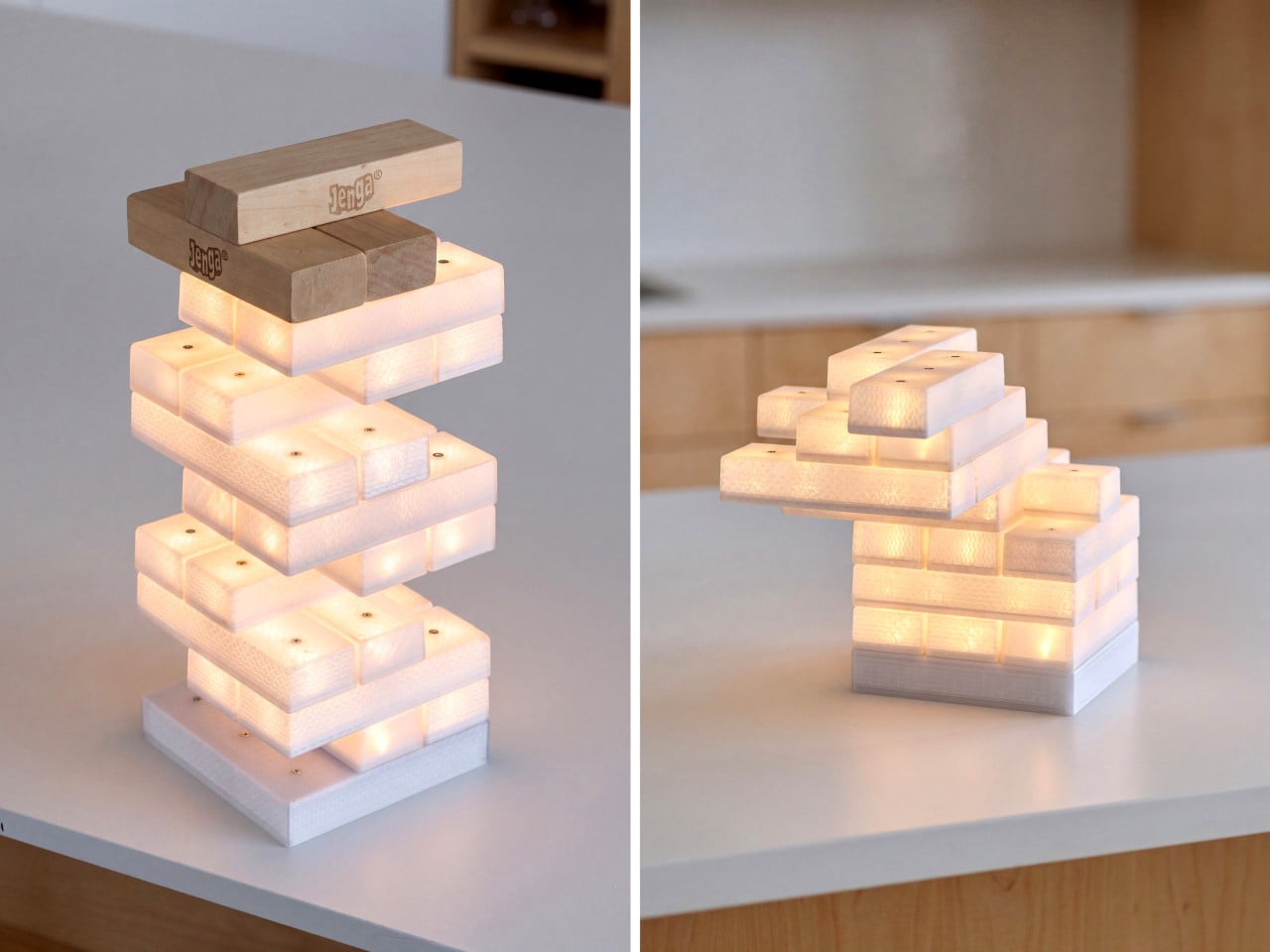
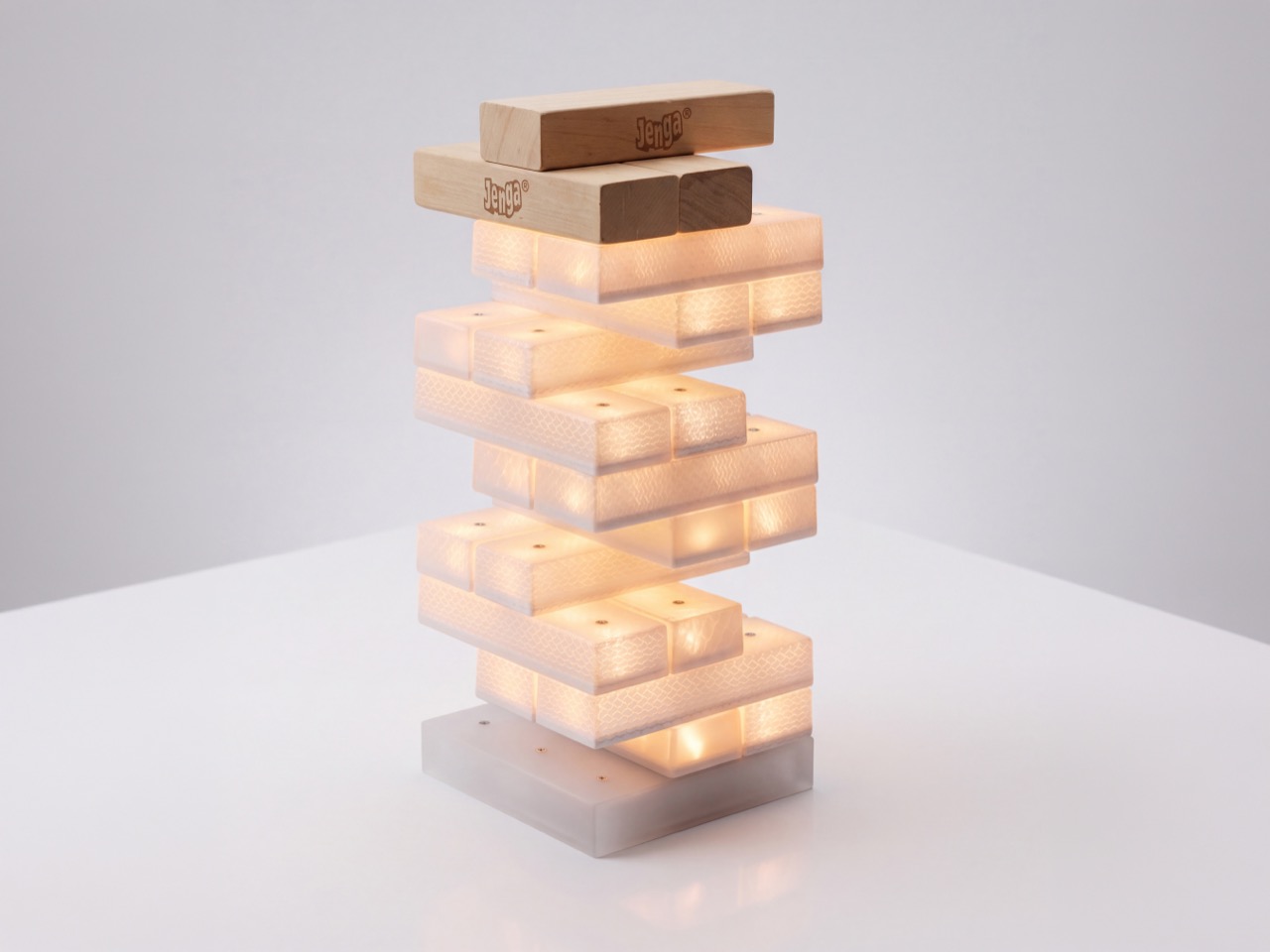
Give an architect a box of blocks and they’ll tell you it’s research. Toronto architecture studio PARTISANS took that excuse all the way and came out the other side with a lamp. The Jenga Light rebuilds the game’s famous rectangles in a translucent material that glows from inside. Set the blocks on a powered base and electricity travels upward through every point where one block rests on another. The path the weight takes is the same path the power takes. That one idea turns a party game about collapse into a lamp you build by hand, one glowing brick at a time.

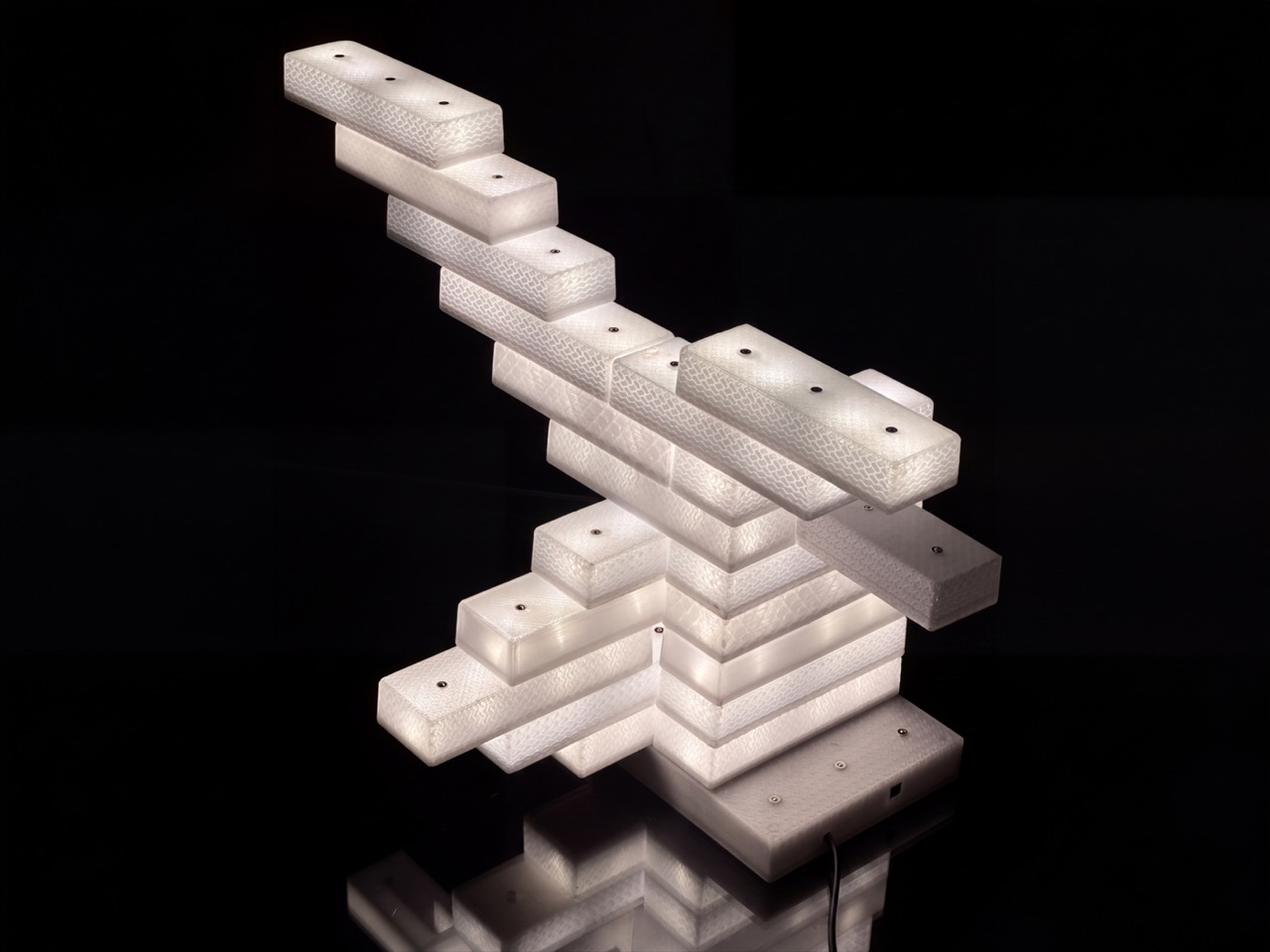
Lead designer Alex Josephson and teammate Teddy Shropshire solved the fiddliest part of the problem with a component most people have never heard of. The blocks hide bridge rectifiers, tiny circuits that make polarity a non-issue. Flip a block, rotate it, or push it into a cantilever that looks like it’s daring gravity, and it still lights. The lamp won its category, Home Lighting: Lamps and Luminaires, at the 2026 European Product Design Award, an international competition that welcomes prototypes as well as finished designs. Pricing and availability haven’t been announced yet. Meanwhile, I’m trying to figure out how many blocks it takes to reach the ceiling.

Designers: Alex Josephson & Teddy Shropshire

How bridge rectifiers make every block reversible

Every electrical connection has a positive side and a negative side, and most stacking lamps deal with that by forcing pieces to go one way. A bridge rectifier is four diodes arranged in a loop, and it sends current out the same way no matter which way it comes in. Tuck them inside the blocks and “upside down” stops meaning anything. A brick can sit flat, sit flipped, or spin around, and its LEDs get the right polarity every time. That one cheap part deletes every rule you’d otherwise have to learn before playing. It’s the electrical version of a USB-C plug, which also stopped caring which way you hold it.

Compare that with the Tetris lamp ThinkGeek sold around 2012, where a powered bottom piece fed light to the tetrominoes stacked above it and the interlocking shapes did the steering. Later patents for modular light kits went mechanical, adding magnets and contacts shaped to avoid short circuits when blocks meet at odd angles. LumiBlocks took the magnetic route too, pairing snap-together blocks with app control and RGBCW LEDs. PARTISANS skips magnets entirely, letting electronics handle orientation and gravity handle everything else. The result asks nothing of you except a steady hand. That also happens to be the only thing Jenga ever asked.

Translucent printed bricks and a grid of contacts

From the photos, the bricks appear 3D-printed in a translucent plastic, with visible layer lines and a wavy internal infill. Most designers would sand or hide that texture, but here it does the job of a lampshade. Light passes through the infill and paints a woven, scaly pattern across every face, so each block glows with a grain that frosted acrylic could never give you. The shots mostly show warm white light, with one hero image running cooler. PARTISANS hasn’t published brightness or color temperature figures yet. Stack enough bricks and the whole thing reads like a lantern built by someone who really loved masonry.

Small metal contacts dot the top of each block, three in a row on the long pieces, while the base carries more, plus a power cord and a small port on one side. Those dots likely form a grid that decides how far one block can overhang the next and still stay lit. They also mean you can’t play an actual round of Jenga on it, since shimmying a brick out of the middle of a tower will just disconnect the entire top half of the lamp. Think of it as Jenga-inspired, with the building half of the game kept and the pulling half retired. A bumped table can still flatten a ten-minute spiral, which is the most Jenga thing left about it.

From a Toronto toy fair to a Toronto studio

Jenga began as a family game Leslie Scott played with wooden blocks growing up in Ghana, and it launched at the London Toy Fair in 1983. Its real break came in 1986 at the Toronto Toy Fair, where Hasbro’s chairman reportedly decided he had to have it. Forty years later, a Toronto studio has turned the same stack into a table lamp. PARTISANS is mostly an architecture practice, best known for the cedar-lined Grotto Sauna on Georgian Bay, yet Josephson keeps drifting into lighting. His Gweilo lamps, made from hand-molded acrylic sheets, won the 2016 AZ Award for Best Lighting Installation.

Playful lighting has had a good run lately, from Analog lamps, which grew out of LEGO play and now sell at MoMA, to app-controlled magnetic blocks for desk setups. The Jenga Light skips apps and color modes and bets everything on the hands-on part. The European Product Design Award judges entries anonymously and accepts prototypes, so this win recognizes the idea and its engineering ahead of any retail launch. PARTISANS hasn’t announced pricing or a release date. Until it does, I’m staring at my old Jenga set and wondering how hard bridge rectifiers really are to solder.

The post This Jenga tower is also a lamp, and it lights up as you stack it first appeared on Yanko Design.
  •  

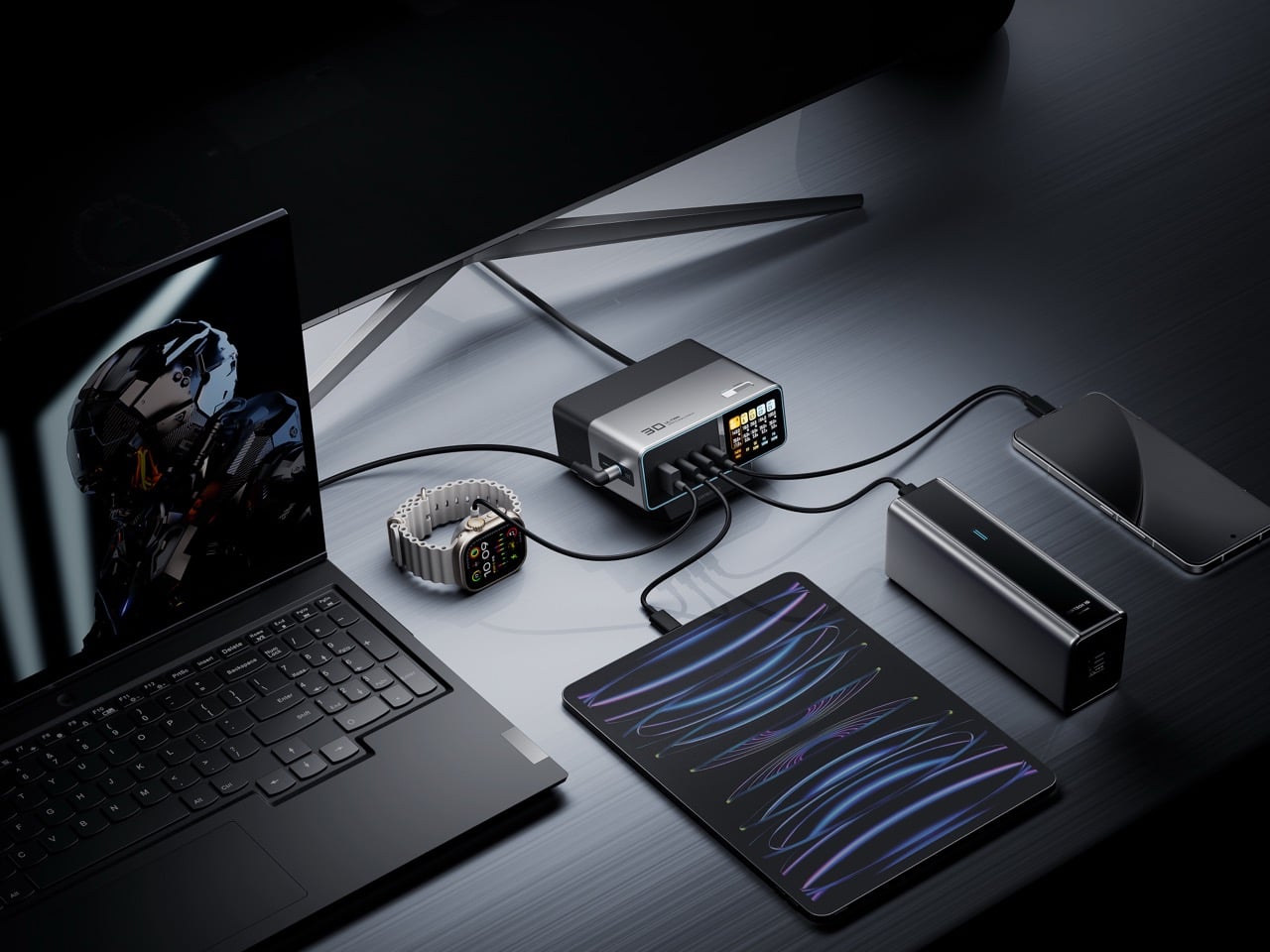
CUKTECH’s 300W Desktop Charger Wants to Replace Your Entire Drawer of Power Bricks

If you have ever charged a Xiaomi phone with the bundled brick, there is a decent chance CUKTECH’s engineers had a hand in it, even though the name never made it onto the packaging. The company started in 2016 as a straight up OEM, building chargers behind the scenes for Xiaomi and other big players, before merging with ZMI in 2022 and finally launching products under its own name. It is the classic story of a supplier deciding it was tired of being invisible.

That decision has paid off. The CUKTECH 30 Charging Station Ultra just picked up two wins at the European Product Design Award, one for computer accessories and one for office appliances, thanks to a 300W GaN powered design from Chong Wang and Ziyao Wang. We have followed the brand’s climb as its power banks and chargers kept getting screens, better materials, and sharper industrial design with every release. This latest charging station, with its five ports and a live readout of exactly what your gear is pulling, is the moment the sleeper brand stops sleeping.

Designers: Chong Wang & Ziyao Wang

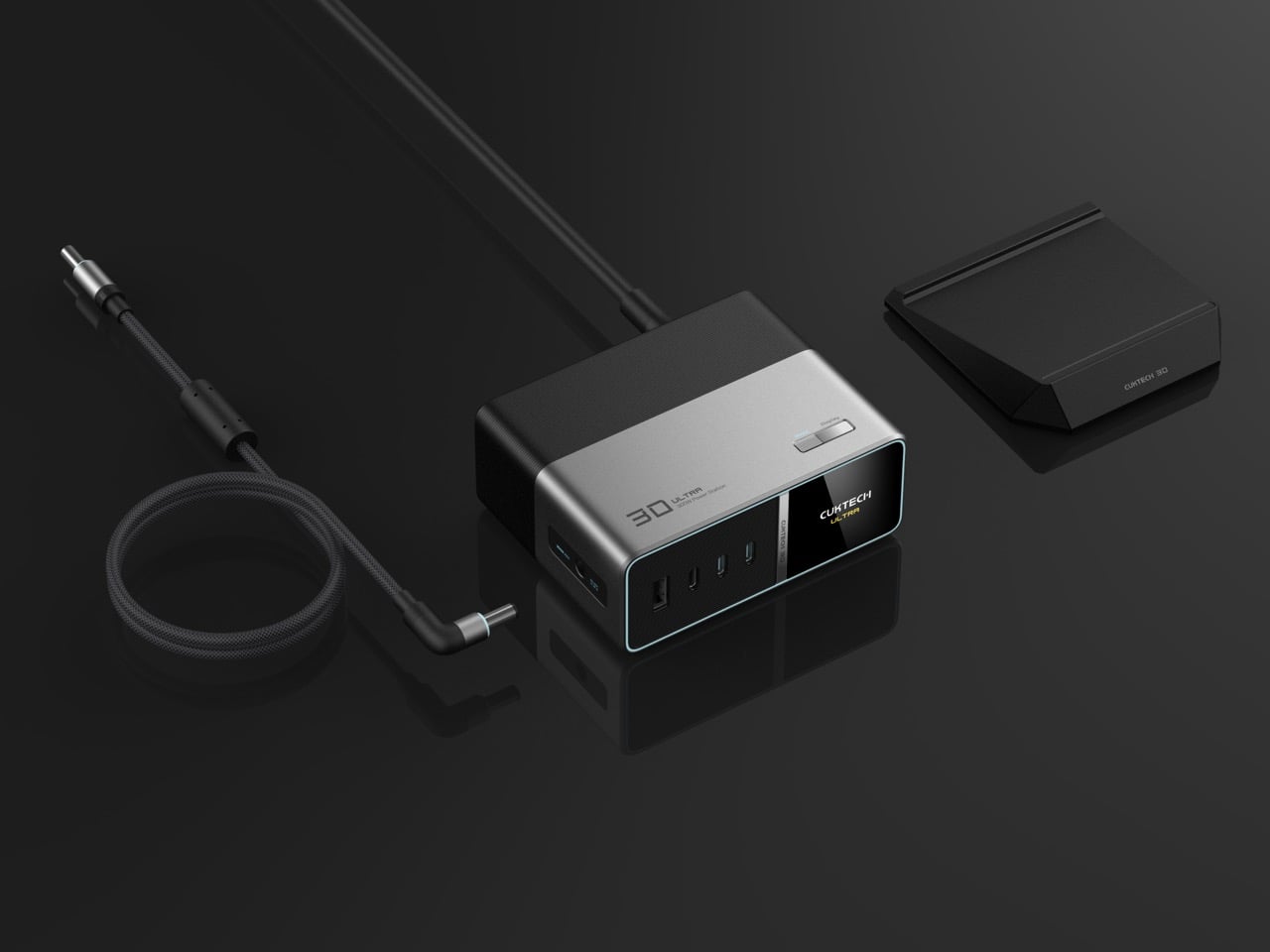
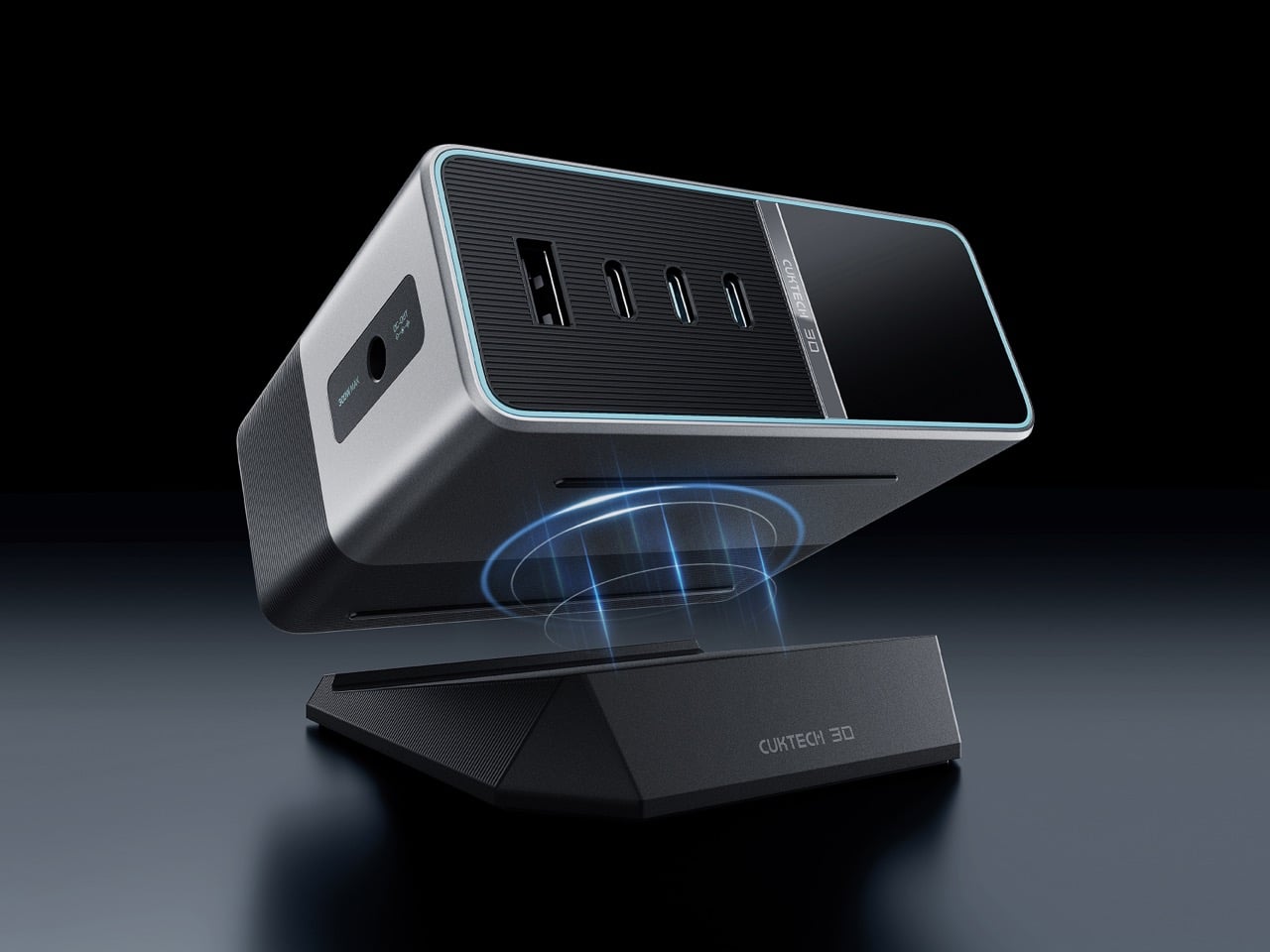
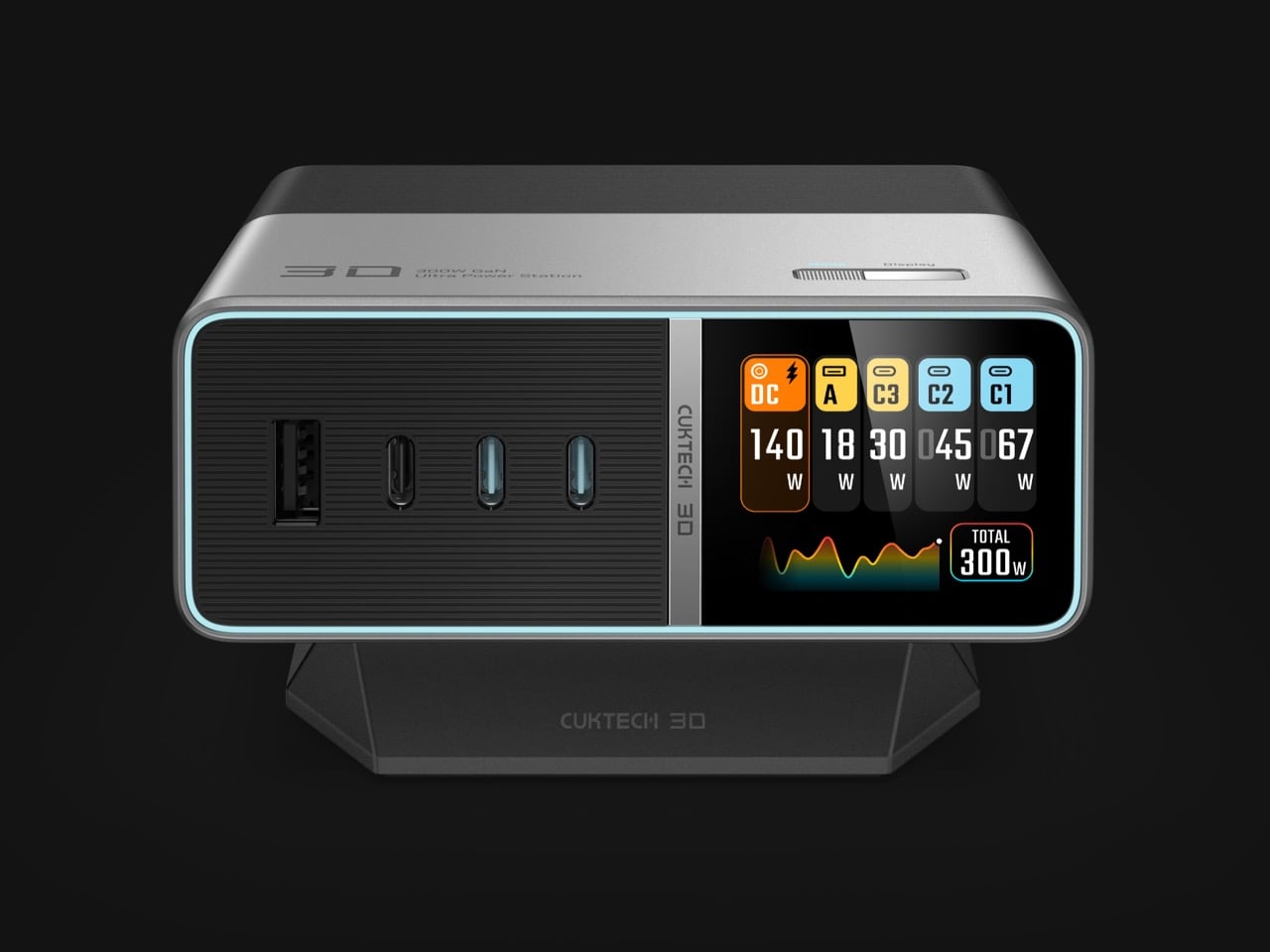
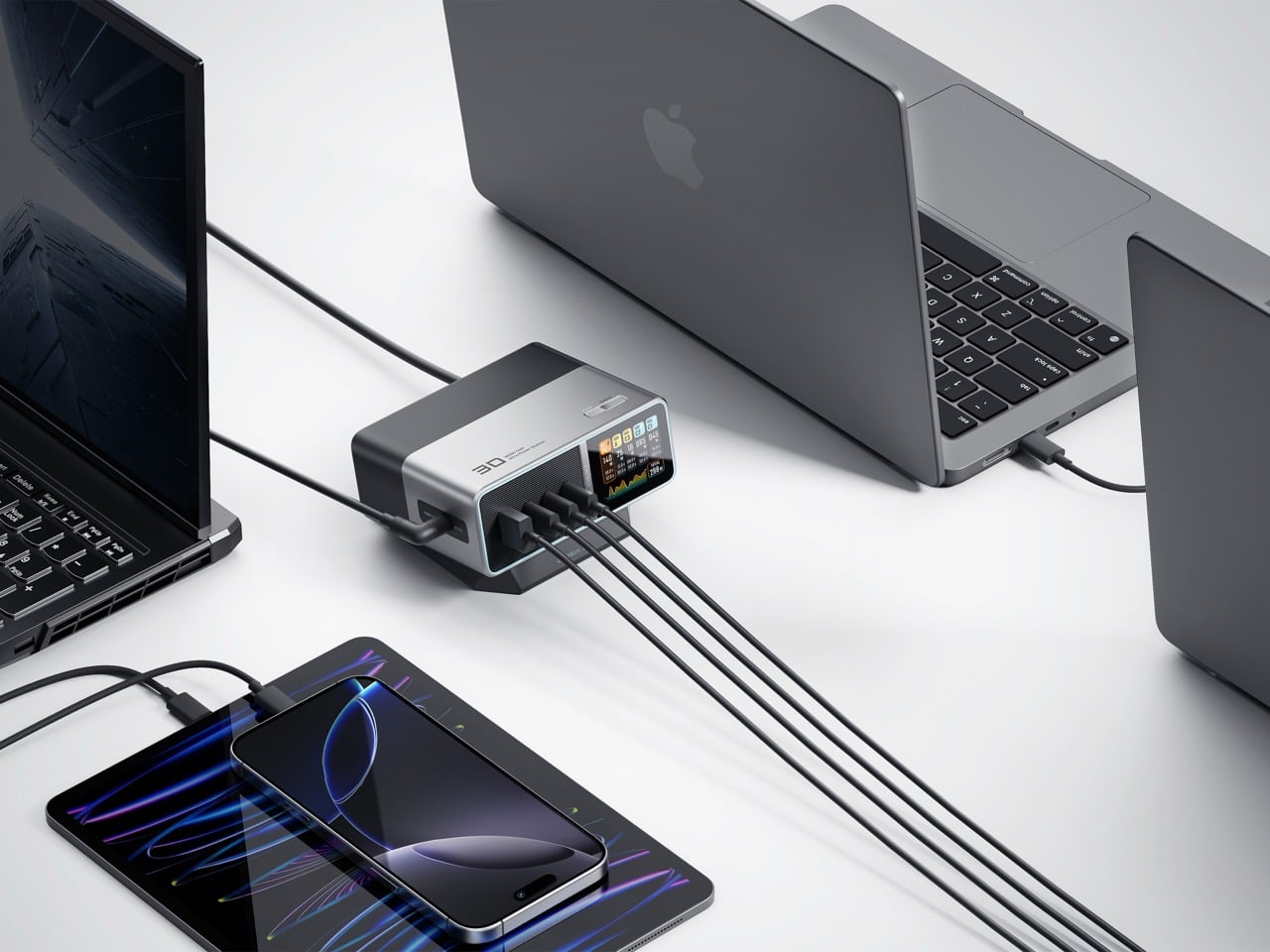
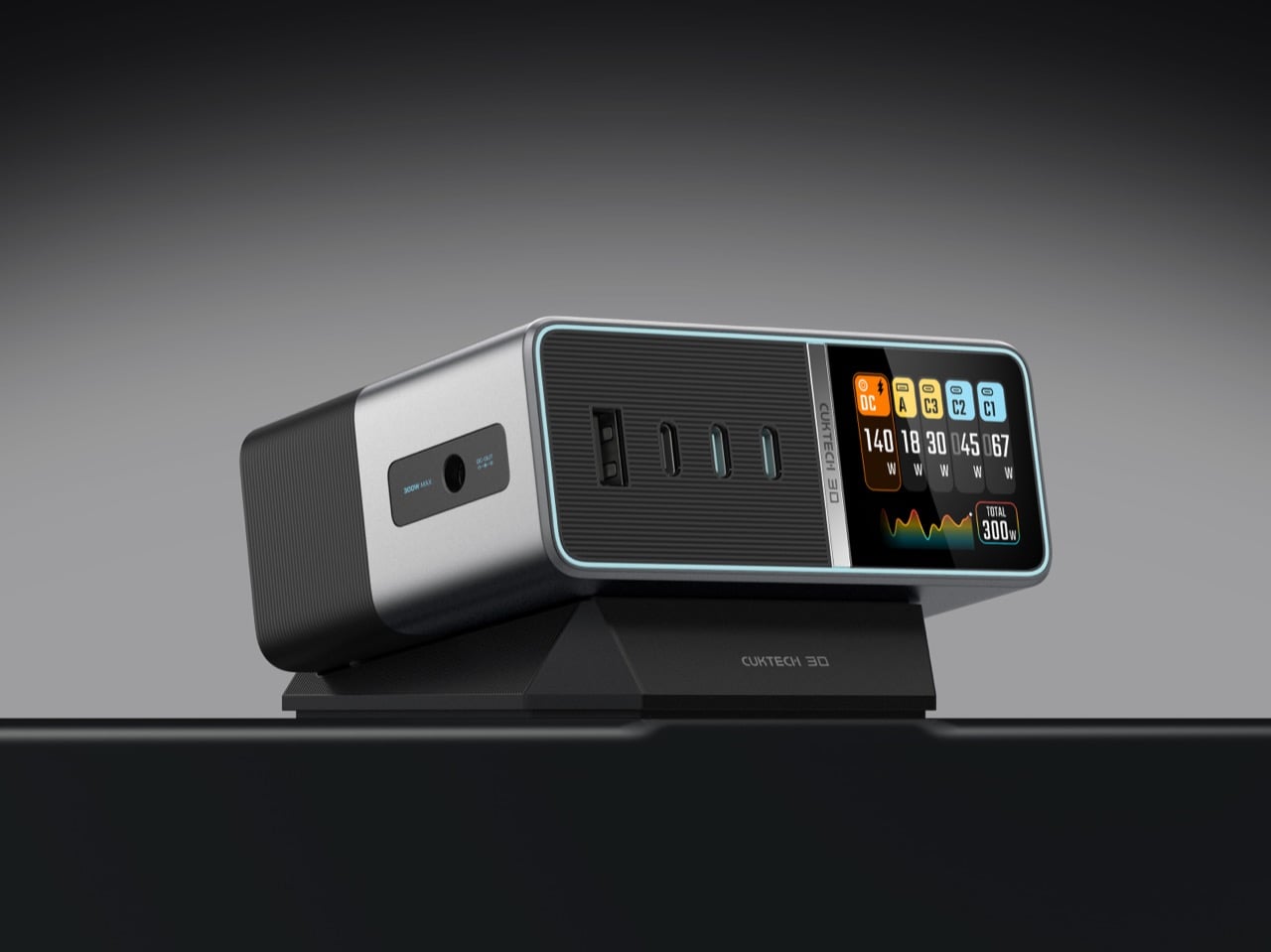
Three USB-C ports, one USB-A port, and a dedicated DC output share the front face, and together they can push out up to 300W total. The two primary USB-C ports handle up to 140W each under PD 3.1, which covers most modern laptops without breaking a sweat, but the real number only shows up when you route power through the DC port. That single line is built to talk directly to compatible laptops and can hit the full 300W ceiling on its own, essentially replacing the oversized proprietary brick that usually ships in the box. I have three of those bricks sitting in a drawer right now doing absolutely nothing, and a single box that can outmuscle all of them at once is exactly the kind of consolidation I did not know I needed.

Third generation GaN sits at the core of the whole system, paired with what CUKTECH calls a PFC plus LLC dual architecture, a combination chosen specifically to keep five simultaneous charging sessions stable without the unit turning into a space heater. Gallium nitride has become the default material for anyone chasing high wattage in a small footprint, since it switches more efficiently than older silicon designs and sheds heat faster under sustained load. Thirteen fast charging protocols are baked in, including PD 3.1, PPS, Xiaomi’s own 120W standard, UFCS, Huawei SCP, and both QC and AFC, which is a genuinely broad net for a single charger to cast. Intelligent power allocation reads what is plugged in and redistributes wattage on the fly, with specific tuning for handhelds like the Steam Deck and ROG Ally that tend to confuse less sophisticated multi port chargers.

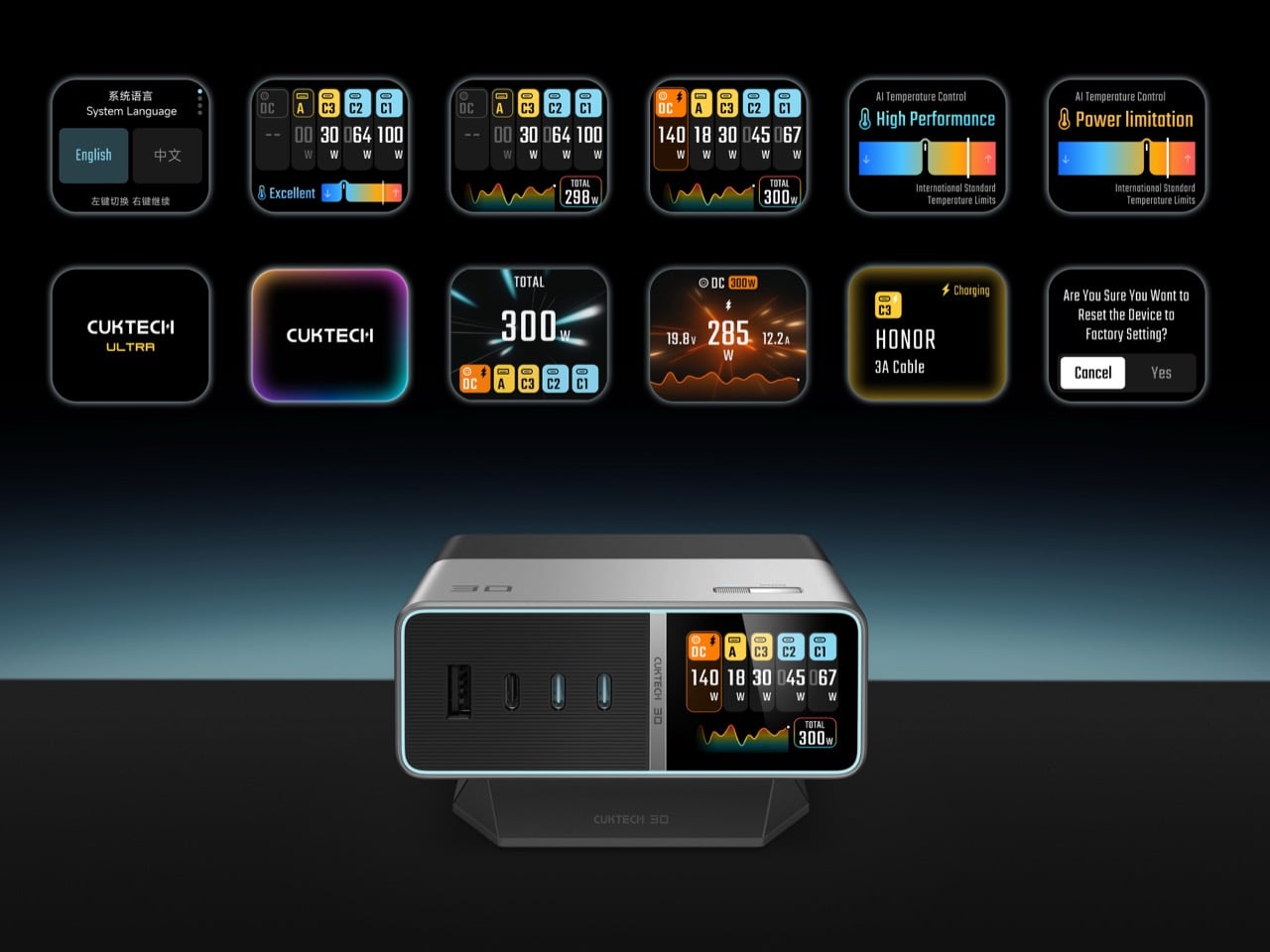
A 1.83 inch IPS display sits front and center, color coded per port, tracking wattage, voltage, and current across all five connections in real time, with a small running graph of total load underneath. Most chargers ask you to trust a single LED and hope for the best. This one just tells you, continuously, which is a small shift that changes how the object feels to live with on a desk. Nine layers of protection cover temperature, over-voltage, and over-current scenarios, which matters more than usual given how much power is moving through a chassis this size.

The form itself leans minimal, angled slightly on a magnetic tilting base so the screen stays readable without craning your neck, and finished in a two tone silver and black that reads more like studio monitor than power strip. A right angle DC cable keeps the desk tidier than the usual straight jack, and the grounded three pin AC cable is a small nod to safety that a lot of competitors skip to save a few cents.

None of this would matter much if the pricing did not make sense, and at $159.99 it lands right where a serious desk upgrade should, undercutting rivals capped at 140W or 200W while offering meaningfully more headroom. CUKTECH spent a decade building other companies’ chargers before it ever put its own name on a box. Two design award wins later, it is clear that decade taught them exactly which details actually matter.

The post CUKTECH’s 300W Desktop Charger Wants to Replace Your Entire Drawer of Power Bricks first appeared on Yanko Design.
  •  
❌