Vue lecture

The $100 Keypad That Puts Each AI Coding Tool Behind Its Own Button

Every developer juggling AI agents right now knows the feeling of context switching until the whole workflow blurs together. Copilot suggests something in one window, Claude Code runs a task in another, and a dozen prompts live scattered across notes and muscle memory. The Logitech MX Keypad exists to collapse all of that into nine small screens sitting next to the keyboard, each one a physical shortcut into a specific piece of that chaos.

Every key on the keypad carries its own full-color LCD display, so instead of memorizing which function key does what, you glance down and see an icon that actually represents the command underneath it. Press one, and it can refactor a function, trigger a prompt macro, or hand off a task to an AI agent entirely. That small visual feedback loop turns an abstract keyboard shortcut into something closer to a labeled button on a control panel.

Designer: Logitech
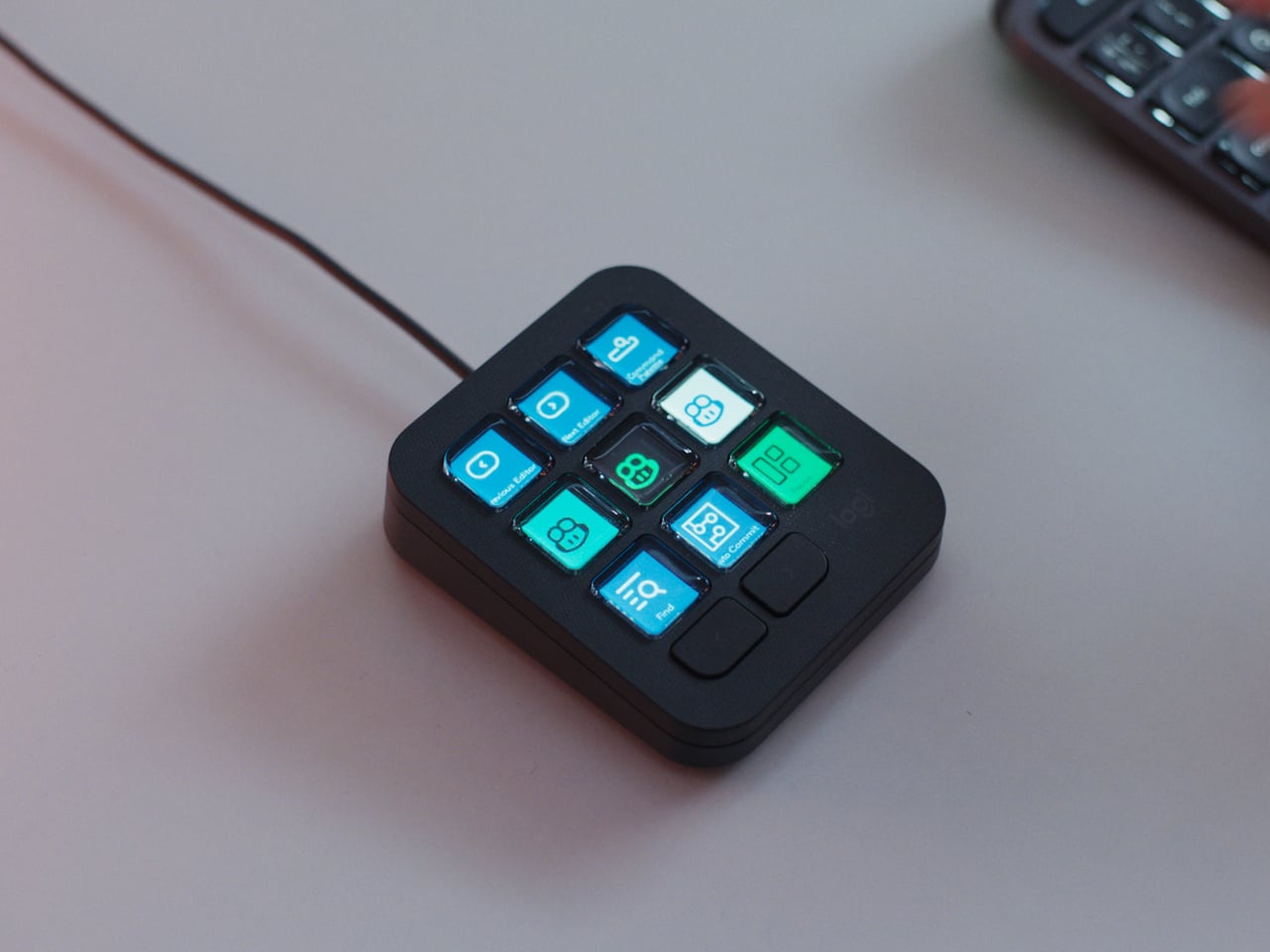
What makes the hardware worth paying attention to is where Logitech chose to draw the compatibility line. Instead of building this around one coding environment, the MX Keypad works across GitHub Copilot, Claude Code, VS Code, and IntelliJ IDEA at once. A developer bouncing between an IDE and a terminal-based AI agent doesn’t need separate tools for each, just a different page of keys pulled up on the same nine buttons.


That pattern of paging matters more than it sounds. The keypad can hold multiple profiles, so switching from a Python project running through Copilot to a JavaScript refactor handled by Claude Code becomes a single tap rather than a mental reset. Anyone who has lost a train of thought hunting through browser tabs for the right prompt will recognize the value in never breaking eye contact with the code itself.
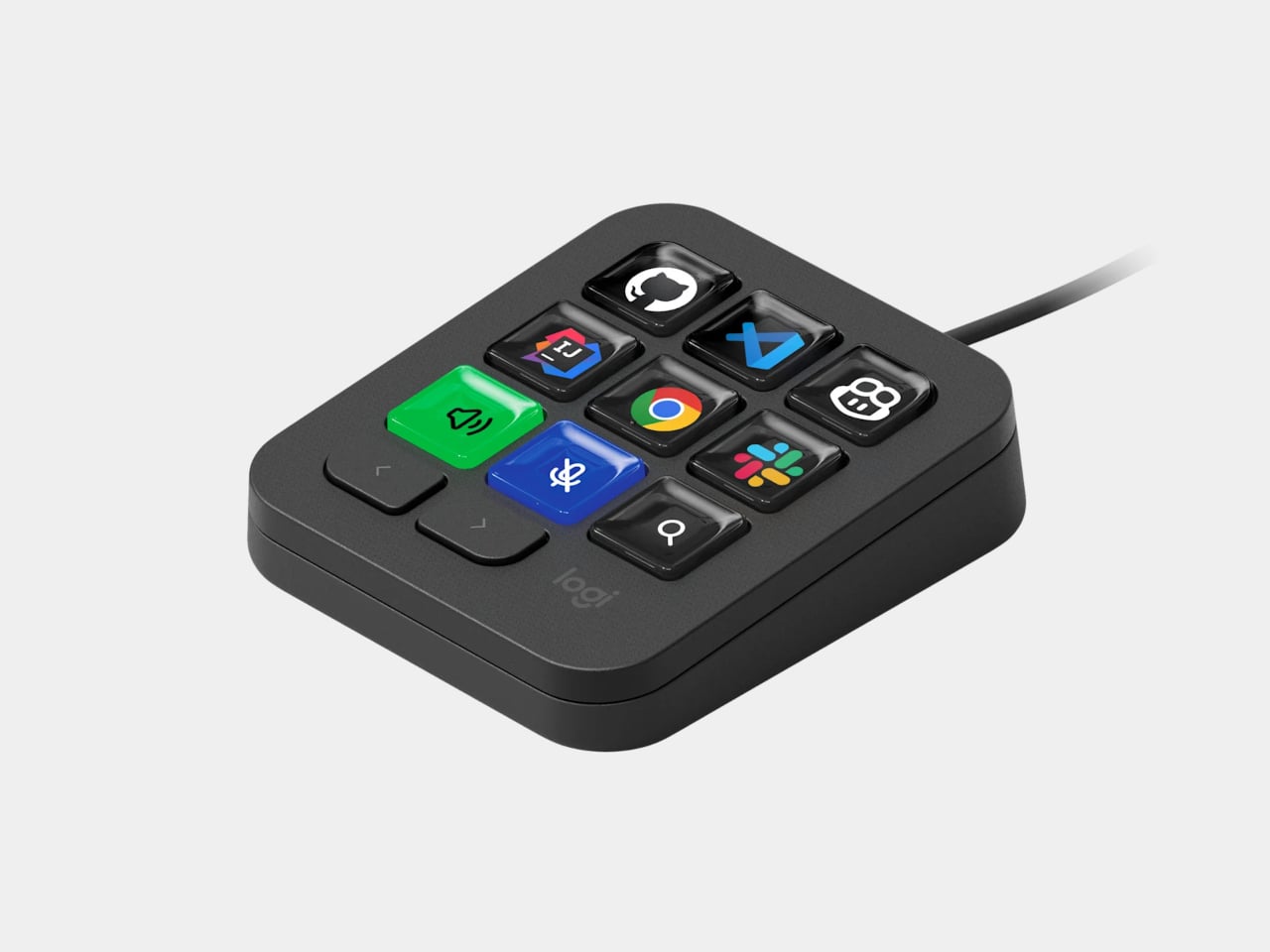
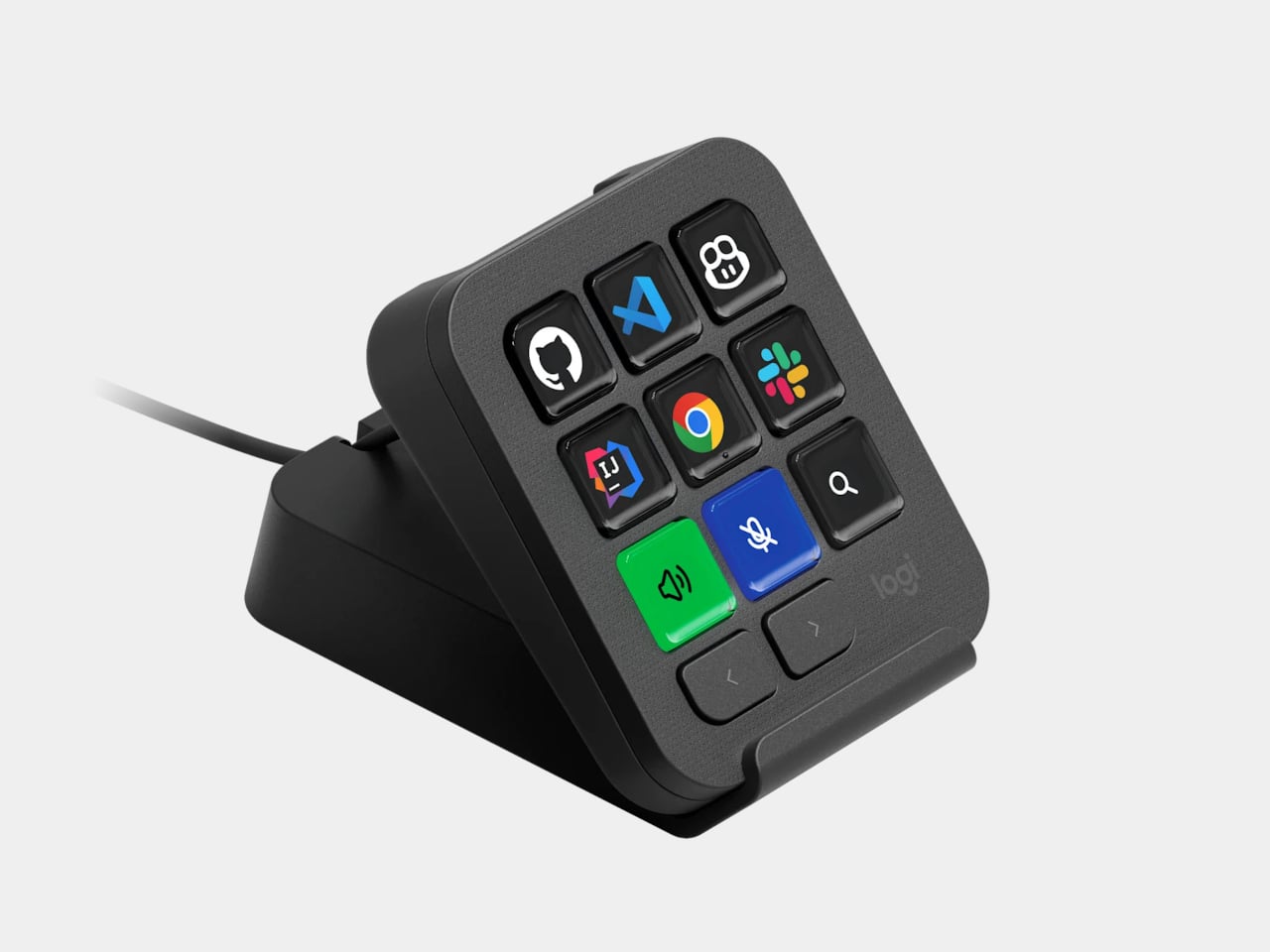
Underneath the surface, the MX Keypad ships with prebuilt plugins that Logitech had developers test directly against real coding platforms, rather than shipping generic templates and hoping they fit. An SDK opens the door further, letting teams build their own tools around internal workflows, while a community marketplace means the plugin library keeps growing without waiting on Logitech’s own release schedule.

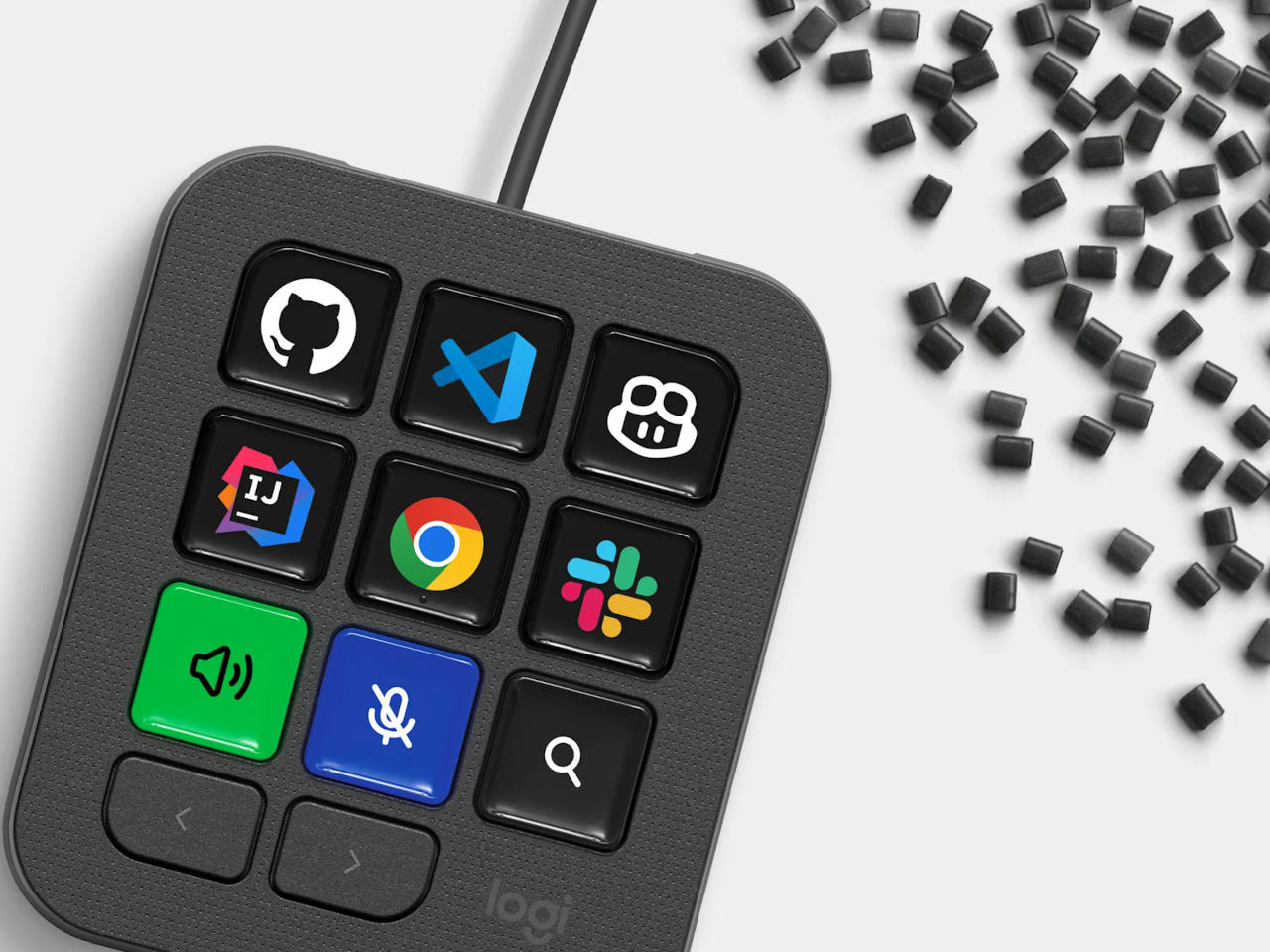
None of that ambition comes wrapped in bulky, wasteful materials either. The body is made with recycled plastics, keeping the hardware in line with the sustainability commitments Logitech has built into its broader MX ecosystem. It is a small detail, but for a device meant to live permanently on a desk, it matters that the object itself doesn’t feel disposable.

At $99.99, the MX Keypad occupies a strange but clarifying position in a developer’s setup. It doesn’t replace a keyboard, and it doesn’t try to be an AI tool in its own right. Instead, it works like a translator between fast-moving human intent and the growing swarm of coding agents developers now manage daily, one labeled key at a time.

The post The $100 Keypad That Puts Each AI Coding Tool Behind Its Own Button first appeared on Yanko Design.

  •  

Nvidia s'offrirait Hugging Face pour 12,9 milliards

Voilà le genre de rumeur qui fait tousser tout un secteur. D'après plusieurs médias américains bien branchés, Nvidia serait sur le point de poser 12,9 milliards de dollars sur la table pour avaler Hugging Face. Aucun des deux ne confirme, l'accord peut encore capoter, mais l'annonce serait proche.

Un mot pour ceux qui ne connaissent pas. Hugging Face, c'est un peu le GitHub de l'IA, un immense dépôt en ligne où les développeurs du monde entier rangent, échangent et récupèrent des modèles d'intelligence artificielle libres, avec les paquets de données qui vont avec.

Toute une communauté y a planté sa tente, celle qui triture l'IA loin des grosses forteresses fermées d'OpenAI ou de Google, et qui en a fait son point de ralliement.

En rachetant Hugging Face pour un tel montant, Nvidia n'empocherait pas uniquement la bibliothèque ultime des modèles IA, mais elle poserait aussi ses grosses fesses en plein milieu du carrefour où tout l'IA mondiale ouverte transite. C'est loin d'être négligeable.

Rappelons que la boîte tient déjà les puces qui font tourner à peu près toute l'intelligence artificielle de la planète. Ajoutez le dépôt où les développeurs vont piocher leurs modèles, et vous obtenez les deux bouts de la ficelle dans la même main, ce qui fait tout de même beaucoup pour un seul acteur.

En plus de ça, il y a la question du Cloud, un sujet qui intéresse très fort Nvidia depuis bien longtemps. Racheter Hugging Face permettrait à l'entreprise de refourguer sa puissance de calcul à tous les clients de la plateforme, qui ont tous de vrais besoins en cloud.

Ce flirt ne date d'ailleurs pas d'hier. Nvidia y avait déjà glissé quelques billets en 2023, quand Hugging Face valait 4,5 milliards, puis tenté d'y remettre 500 millions fin de l'année dernière, sauf que la réponse a été non. On est donc passé du pied dans la porte à l'envie de tout emporter.

Source : Techcrunch

  •  

Amazon détruit des livres pour nourrir ses IA

Si comme moi, vous aimez les livres, ce que je vais vous raconter aujourd'hui va vous rendre fous ! Hier, 404 Media a publié une enquête qui suit le trajet d'un AirTag. Mais pas n'importe lequel... C'est un AirTag qu'un libraire a glissé, à la demande de la rédaction, dans un livre parti au sein d'une commande d'un millier d'ouvrages. Et son terminus va vous surprendre (ou pas, parce qu'on commence à les connaitre les lascars...) : un entrepôt Amazon de Las Vegas.

Ce qu'on apprends dans l'article de 404 Media c'est qu'en fait, là-bas, une équipe interne baptisée VGT3 reçoit des tonnes de cargaisons de livres, en découpe les reliures et les passe au scanner afin d'en numériser les pages.

Pour la blague, le logo de cette équipe est un tyrannosaure gueule ouverte qui semble dévorer un livre. Ironique n'est-ce pas ?

Des salariés du site racontent eux-mêmes sur un forum d'employés Amazon, que les livres ne survivent pas à l'opération.

Et c'est ça qui rend dingo tout le monde, moi le premier !

Amazon, interrogé, a répondu qu'il achetait des livres par des canaux commerciaux pour "développer et améliorer ses produits et services". Oui, c'est vague mais c'est fait exprès.

Maintenant, calmez vos palpitations cardiaques, ce qu'ils numérisent (et détruisent), ce ne sont pas des incunables , c'est-à-dire des livres anciens édités avant l'invention de l'imprimerie (donc faits à la main). Les libraires interrogés précisent en effet, que les commandes en gros n'incluent jamais les ouvrages les plus anciens sans codes ISBN. Ce qu'ils achètent en fait, ce sont des titres sans presque aucun marché de revente, tirés à peu d'exemplaires ou écrits dans une langue que peu de gens lisent.

Et c'est pile poil ce qui fait leur valeur pour un entraîneur de modèle IA. Ces textes n'ont jamais été numérisé, donc ils n'ont jamais été aspirés par personne, et ont été imprimés avant que le web ne se remplisse de slop IA. Ces livres-là ne sont pas vraiment "précieux" mais comme ils sont rares et de niche, ils sont convoités par les géants de l'IA.

Maintenant ce qui me met en colère quand je lis cet article, c'est surtout cette histoire de destruction du bouquin... Parce que numériser un livre sans l'abîmer, ce n'est pas un rêve utopiste d'archiviste, hein... C'est possible avec des machines qu'il est facile de se procurer. Je pense par exemple à ce ScanRobot autrichien qui est sur le marché depuis 2007 et déjà vendu dans plus de soixante pays.

Ce clic autorise une connexion à Google : adresse IP transmise et traceurs possibles. En savoir plus Voir cette vidéo sur YouTube

Il glisse un prisme dans la pliure, aspire les pages de part et d'autre via des petits trous, remonte en photographiant le texte, puis retourne la page d'un souffle d'air grâce à des capteurs optiques et des lasers repèrent le moment où deux feuilles se lèvent ensemble. Et la cadence est plutôt bonne puisqu'elle peut aller jusqu'à 2 500 pages à l'heure, sans que le dos du livre ne soit tranché.

La Bibliothèque du Congrès en a une, le Trinity College Dublin aussi, l'université de Sydney, le Getty Research Institute...etc. L'Internet Archive, lui, tournait déjà en 2021 à environ 3 500 livres par jour dans une vingtaine de centres.

D'ailleurs, j'en parlais dans un article sur un scanner à 250 pages par minute en novembre 2012. J'écrivais qu'au début ça y allait au massicot, et que depuis, les bras robotisés avaient pris le relais pour les ouvrages anciens. Et là on est presque 14 ans plus tard, la plus grosse librairie du monde est retournée au massicot, comme des bourrins préhistoriques.

Sur le motif de la découpe elle-même, Ars Technica avance que la vitesse et le moindre coût ont pris le pas sur la conservation, et c'est vrai que ces bouquins existent ailleurs, et que découper un exemplaire d'occasion sans valeur marchande ne fait de mal à personne. Oui c'est vrai mais c'est incroyablement triste car on peut faire autrement. La preuve, quand Google, OpenAI ou Microsoft numérisent des livres, eux les empruntent dans des bibliothèques ou les offrent ensuite à celles-ci. Les livres peuvent continuer leur vie, alors qu'Amazon n'est pas du tout dans ce cercle vertueux. Et c'est sans parler des auteurs de tous ces livres qui ne savent même pas que leur travail vient d'être absorbé pour l'éternité par une IA...

Bref, Amazon prend un exemplaire dont le texte n'a jamais été numérisé, le déstructure en tokens pour son propre profit puis détruit le livre... Si tout le monde faisait ça, au bout d'un moment, de nombreux ouvrages anciens disparaitraient je pense... Et faut pas oublier que cette destruction de livres c'est surtout un choix délibéré de leur part.

Ray Bradbury doit se retourner dans sa tombe, mais je suis certain que si les gens protestaient massivement contre ça, ils changeraient leurs méthodes de sagouins.

Source : 404 Media

  •  

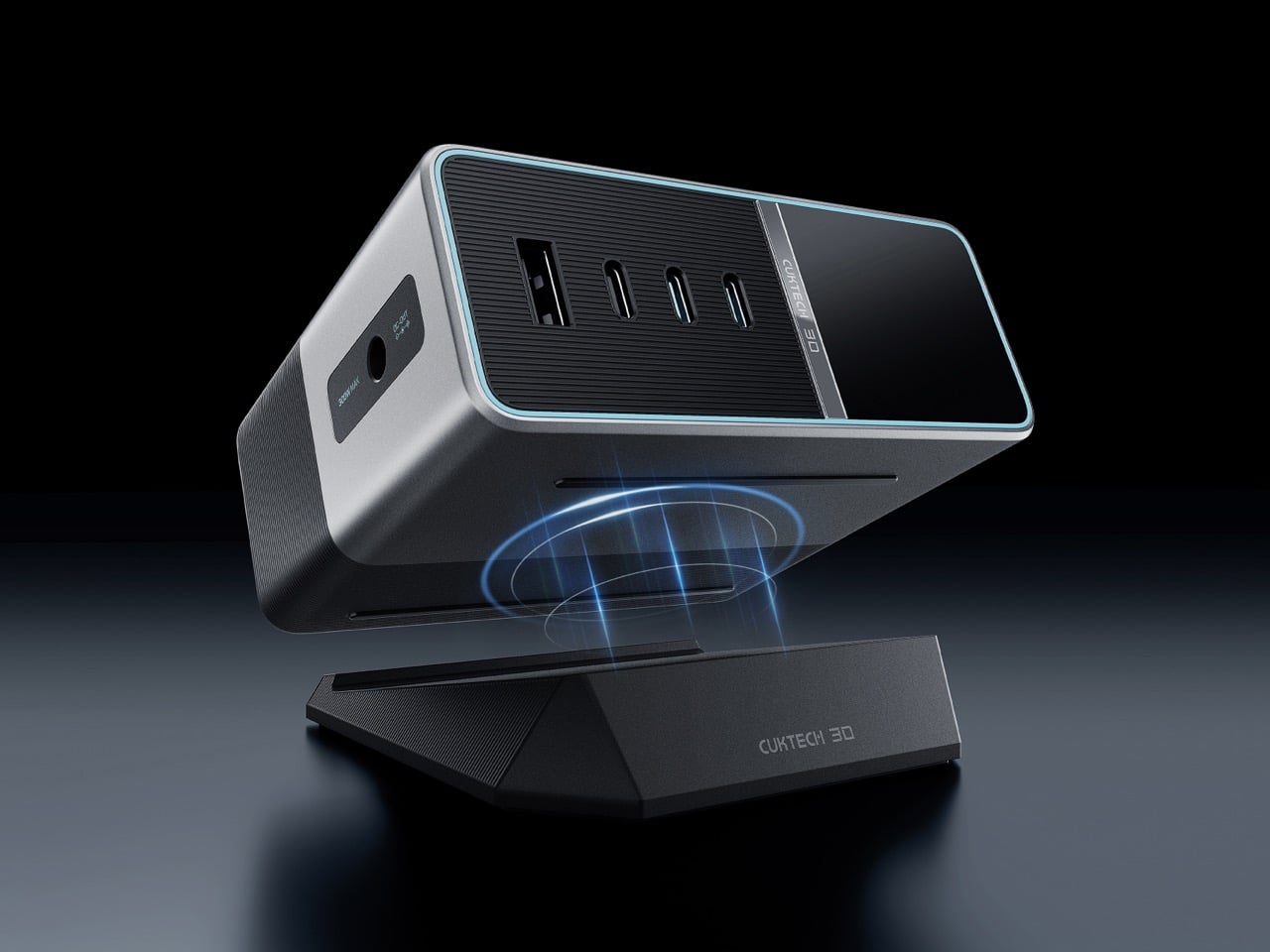
CUKTECH’s 300W Desktop Charger Wants to Replace Your Entire Drawer of Power Bricks

If you have ever charged a Xiaomi phone with the bundled brick, there is a decent chance CUKTECH’s engineers had a hand in it, even though the name never made it onto the packaging. The company started in 2016 as a straight up OEM, building chargers behind the scenes for Xiaomi and other big players, before merging with ZMI in 2022 and finally launching products under its own name. It is the classic story of a supplier deciding it was tired of being invisible.

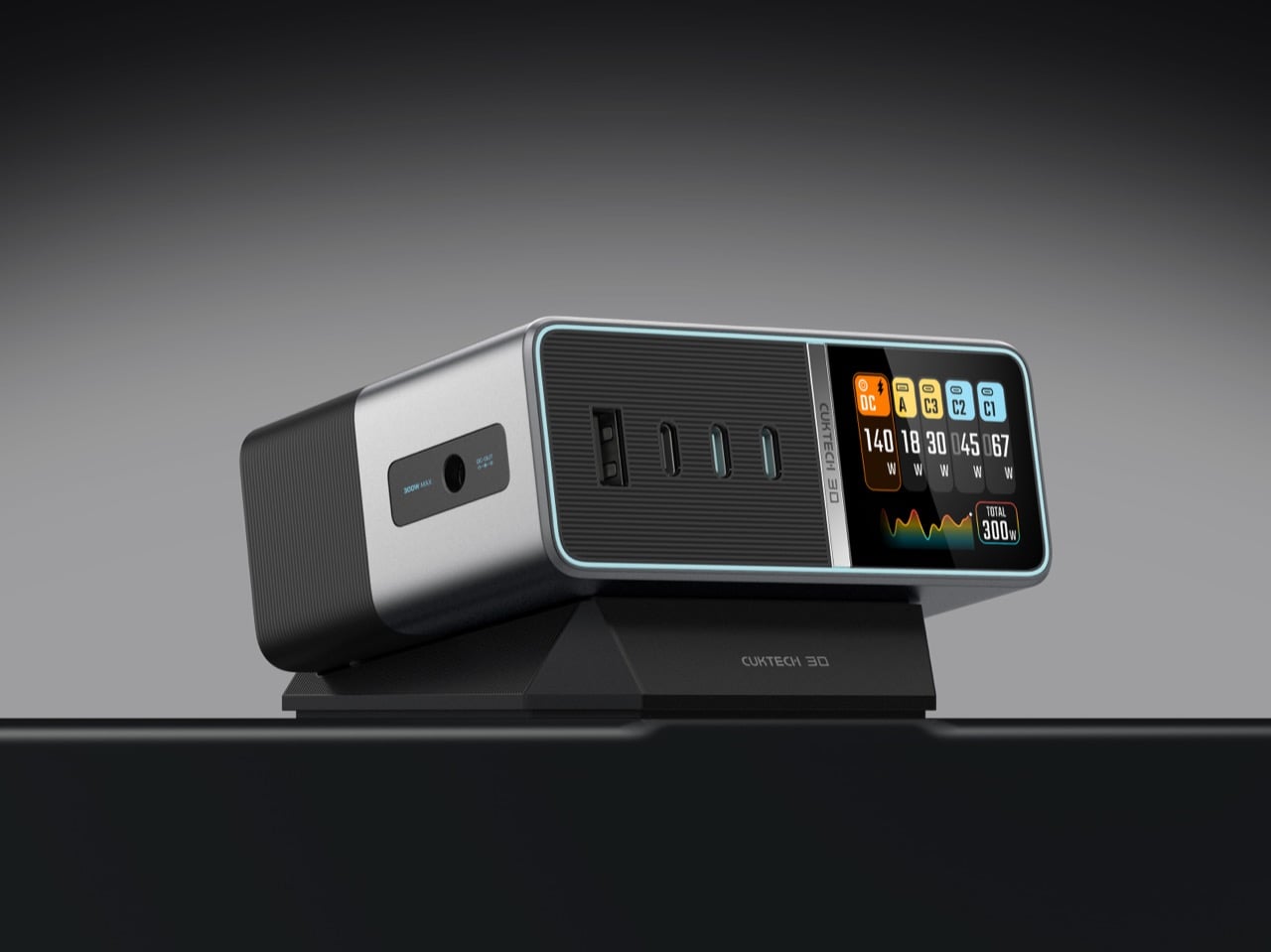
That decision has paid off. The CUKTECH 30 Charging Station Ultra just picked up two wins at the European Product Design Award, one for computer accessories and one for office appliances, thanks to a 300W GaN powered design from Chong Wang and Ziyao Wang. We have followed the brand’s climb as its power banks and chargers kept getting screens, better materials, and sharper industrial design with every release. This latest charging station, with its five ports and a live readout of exactly what your gear is pulling, is the moment the sleeper brand stops sleeping.

Designers: Chong Wang & Ziyao Wang

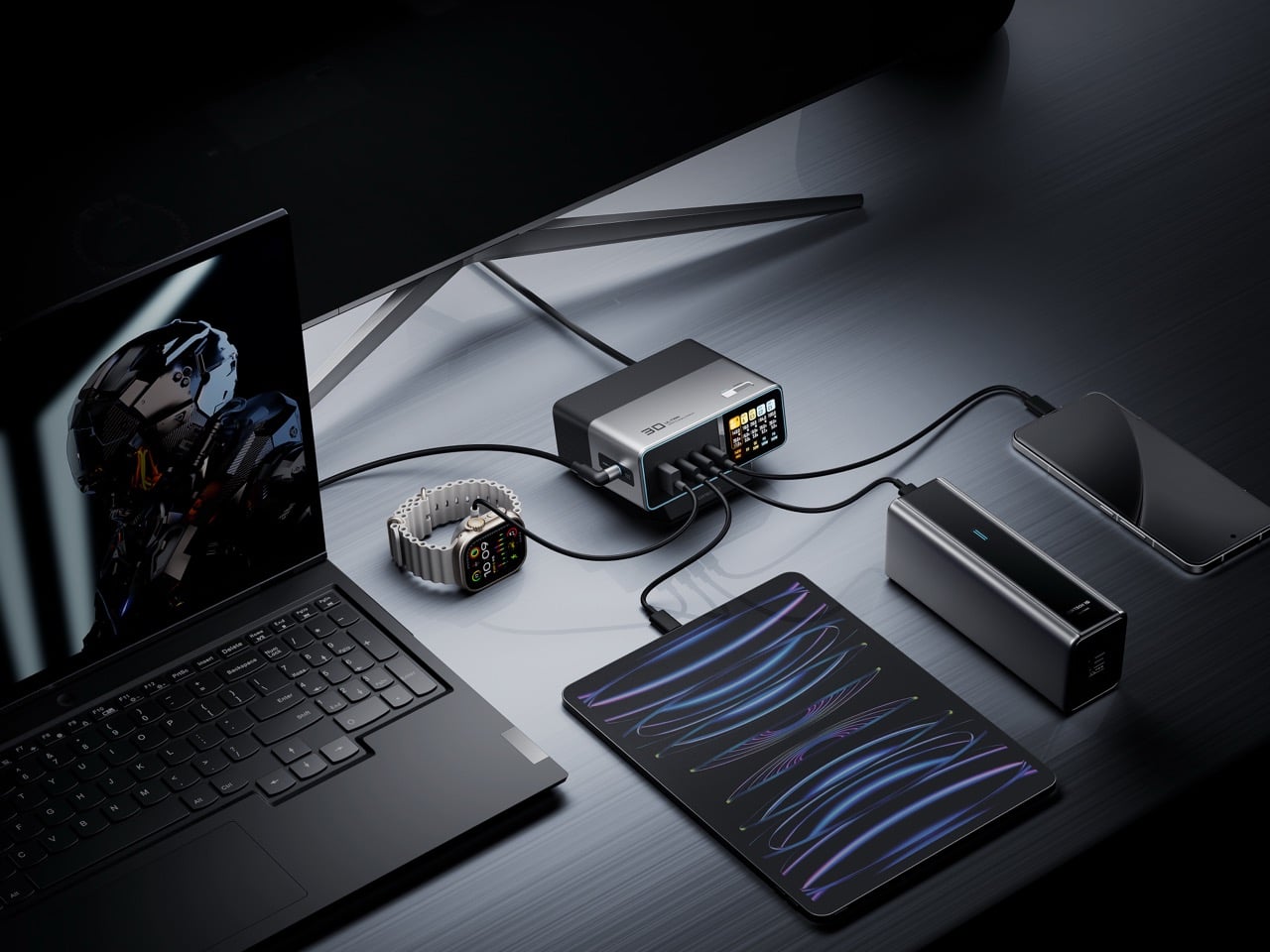
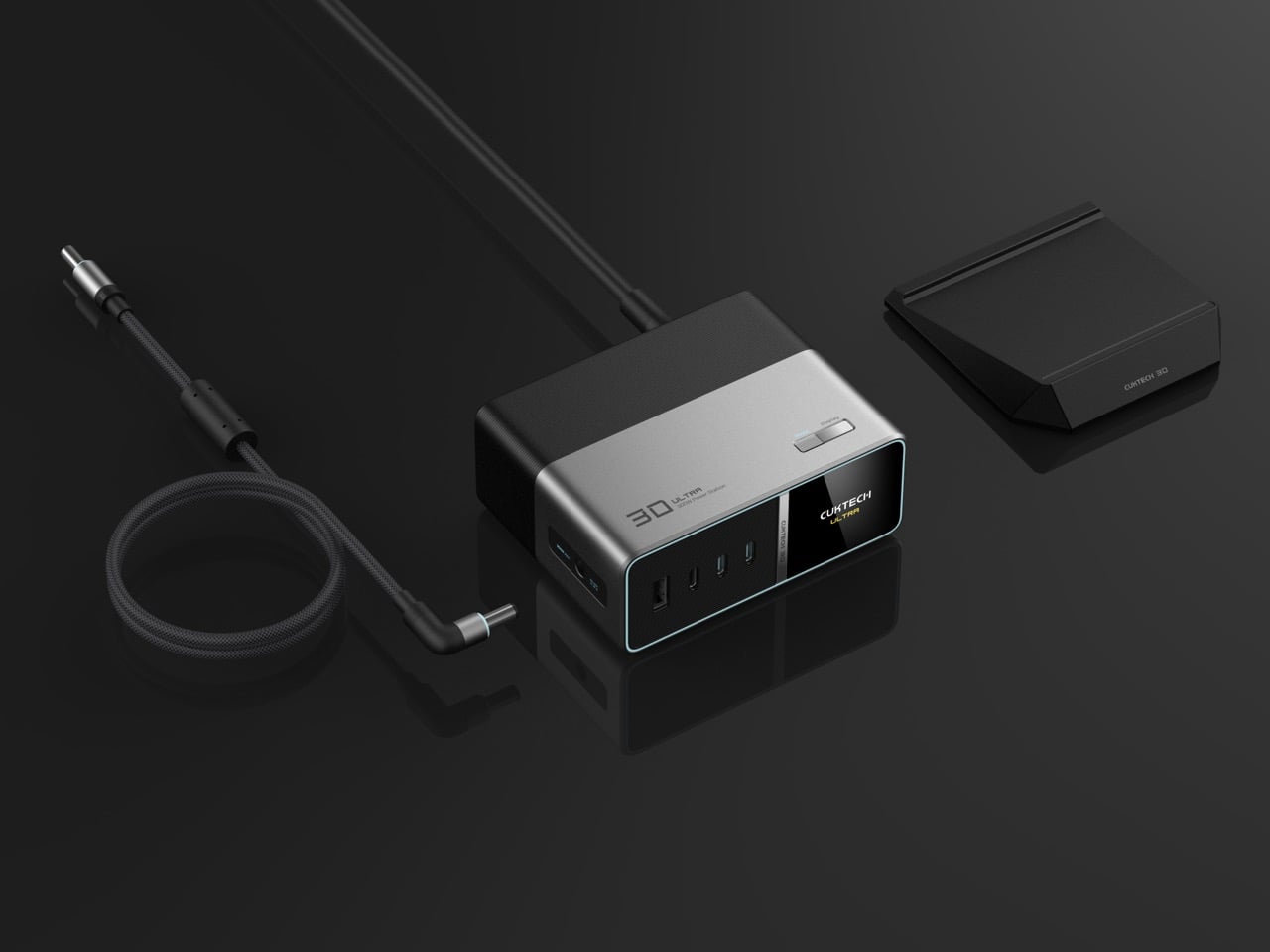
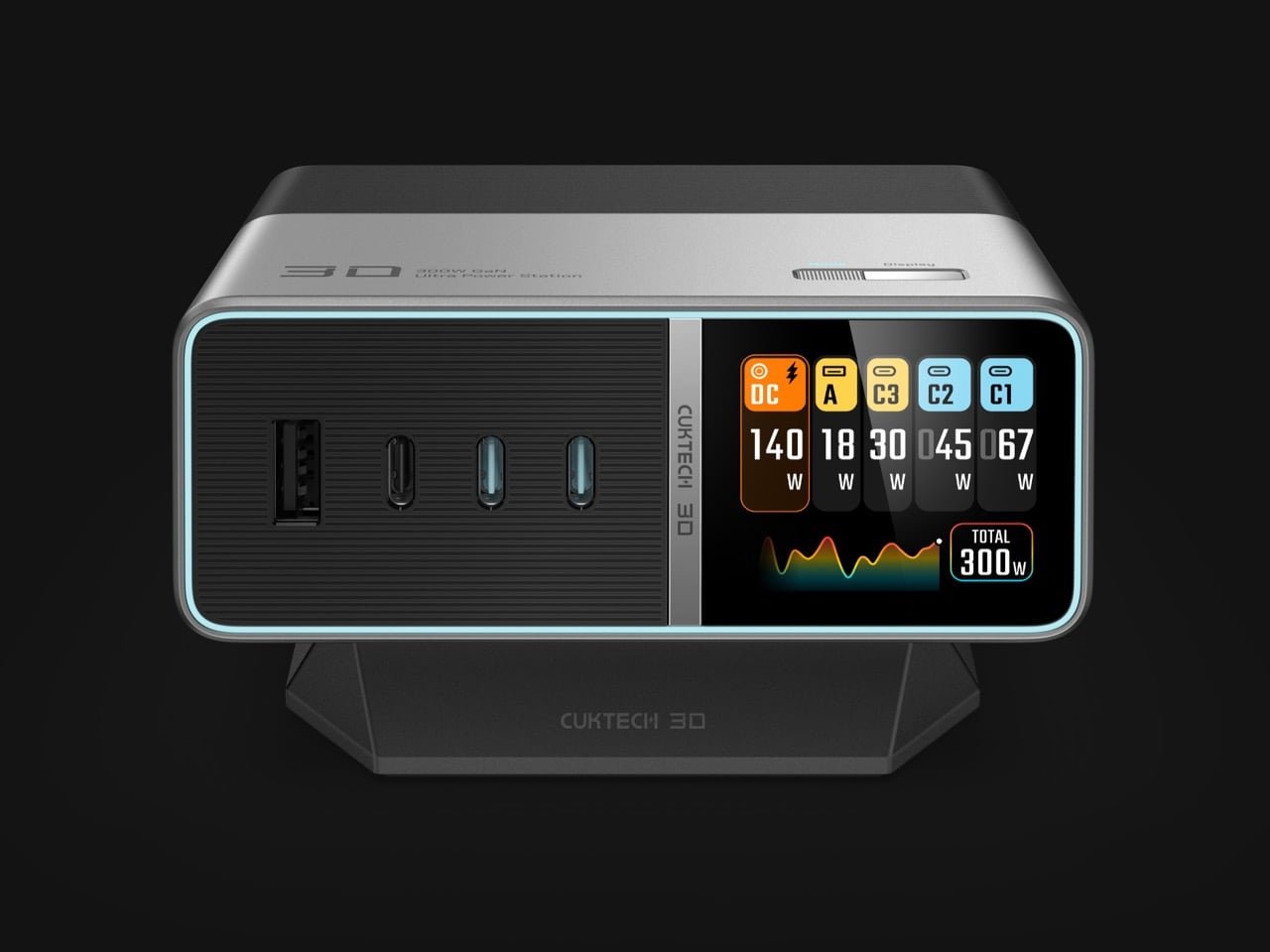
Three USB-C ports, one USB-A port, and a dedicated DC output share the front face, and together they can push out up to 300W total. The two primary USB-C ports handle up to 140W each under PD 3.1, which covers most modern laptops without breaking a sweat, but the real number only shows up when you route power through the DC port. That single line is built to talk directly to compatible laptops and can hit the full 300W ceiling on its own, essentially replacing the oversized proprietary brick that usually ships in the box. I have three of those bricks sitting in a drawer right now doing absolutely nothing, and a single box that can outmuscle all of them at once is exactly the kind of consolidation I did not know I needed.

Third generation GaN sits at the core of the whole system, paired with what CUKTECH calls a PFC plus LLC dual architecture, a combination chosen specifically to keep five simultaneous charging sessions stable without the unit turning into a space heater. Gallium nitride has become the default material for anyone chasing high wattage in a small footprint, since it switches more efficiently than older silicon designs and sheds heat faster under sustained load. Thirteen fast charging protocols are baked in, including PD 3.1, PPS, Xiaomi’s own 120W standard, UFCS, Huawei SCP, and both QC and AFC, which is a genuinely broad net for a single charger to cast. Intelligent power allocation reads what is plugged in and redistributes wattage on the fly, with specific tuning for handhelds like the Steam Deck and ROG Ally that tend to confuse less sophisticated multi port chargers.

A 1.83 inch IPS display sits front and center, color coded per port, tracking wattage, voltage, and current across all five connections in real time, with a small running graph of total load underneath. Most chargers ask you to trust a single LED and hope for the best. This one just tells you, continuously, which is a small shift that changes how the object feels to live with on a desk. Nine layers of protection cover temperature, over-voltage, and over-current scenarios, which matters more than usual given how much power is moving through a chassis this size.

The form itself leans minimal, angled slightly on a magnetic tilting base so the screen stays readable without craning your neck, and finished in a two tone silver and black that reads more like studio monitor than power strip. A right angle DC cable keeps the desk tidier than the usual straight jack, and the grounded three pin AC cable is a small nod to safety that a lot of competitors skip to save a few cents.

None of this would matter much if the pricing did not make sense, and at $159.99 it lands right where a serious desk upgrade should, undercutting rivals capped at 140W or 200W while offering meaningfully more headroom. CUKTECH spent a decade building other companies’ chargers before it ever put its own name on a box. Two design award wins later, it is clear that decade taught them exactly which details actually matter.

The post CUKTECH’s 300W Desktop Charger Wants to Replace Your Entire Drawer of Power Bricks first appeared on Yanko Design.
  •  
❌