Vue lecture

People are paying $2,599 for MSI’s latest handheld gaming PC because apparently RAM shortages, AI demand, and fiscal self-preservation are all optional now

When I reviewed the MSI Claw 8 EX AI+ a few months back, I noted how it was a generational jump over AMD’s latest Zen 2 chips found in competing handheld gaming PCs, and when combined with Intel XeSS, it really gave gamers the ultimate handheld we’ve been yearning for.

But there were two problems. One was price. Due to RAM and NAND shortages due to demand for AI compute, MSI had to jack the price by at least $500, putting it at an MSRP of $1,799, which is kind of absurd.

The other was, surprisingly, extremely tight supply. Despite being sold at Best Buy, Amazon, Newegg, and B&H, it sold out everywhere within 24 hours (often due to preorders).

Since its release, that resupply still hasn’t happened. All those retailers are still listing it as out of stock as of me writing this today, and this seems to regularly happen with MSI and its Intel-based handhelds (whether it’s MSI's or Intel’s fault, I’m trying to find out).

So, out of curiosity, I checked eBay to see what that scene was like for the MSI Claw 8 EX AI+, and sure enough, some online stores are selling the hard-to-find handheld, but at an even more exorbitant $2,599 – which is an $800 surcharge over retail!
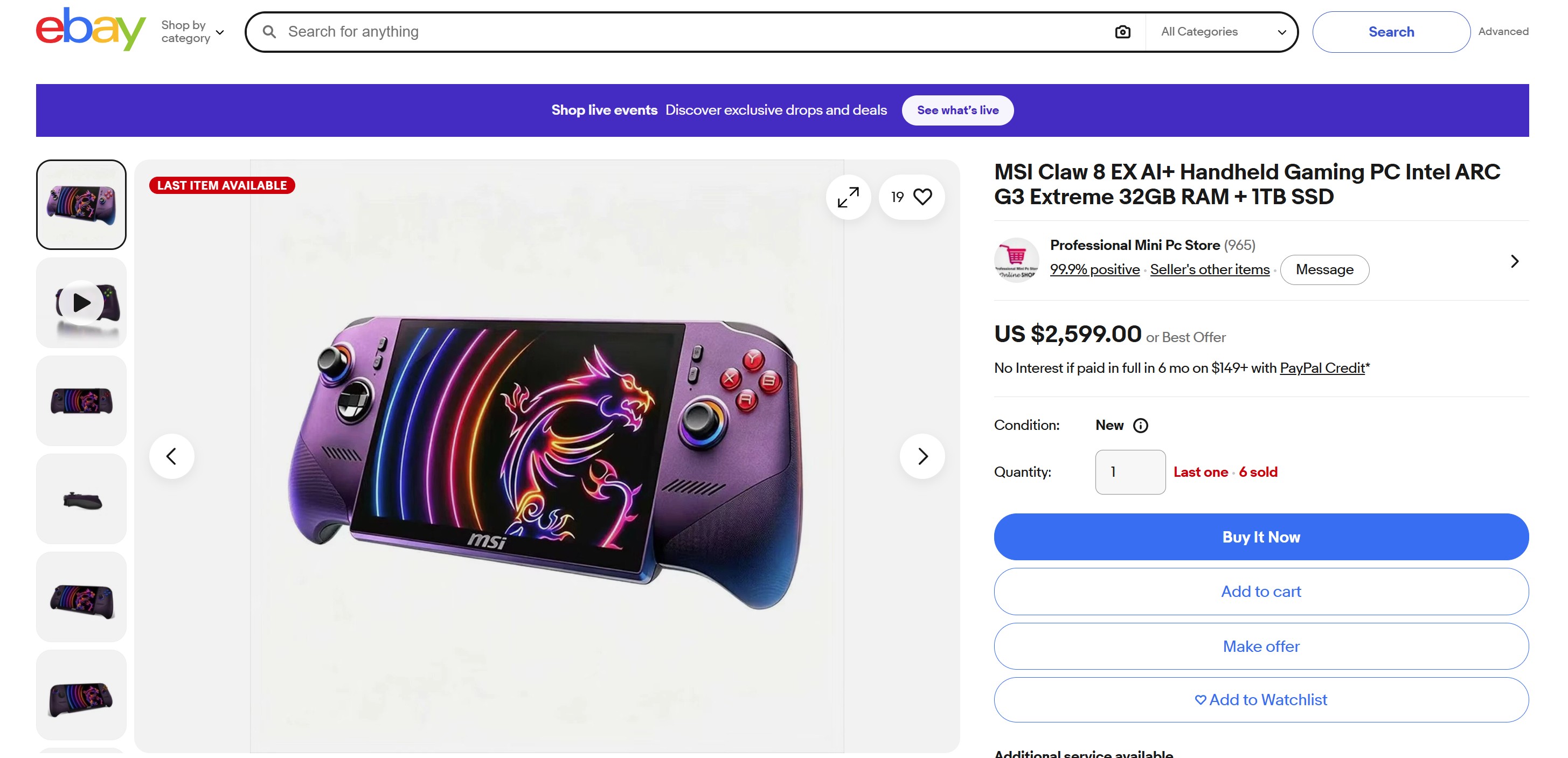
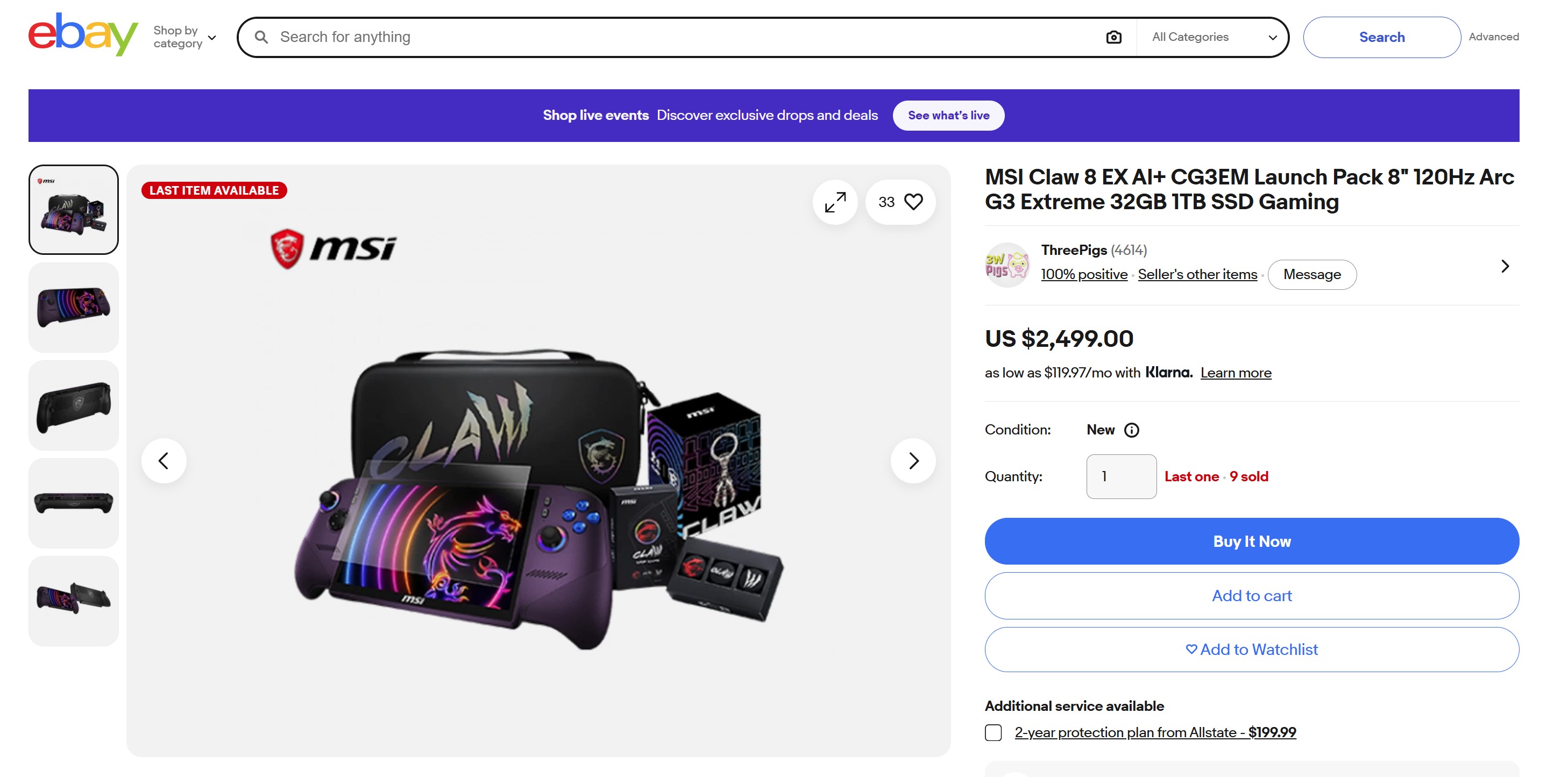
Listings on eBay for auctions of the MSI Claw 8 AI EX+ handheld gaming PC.
ebay | MSI
Listings on eBay for auctions of the MSI Claw 8 AI EX+ handheld gaming PC.
ebay | MSI

You may be thinking, but sure, it’s eBay, and people can list items for any price, but are people buying them? The answer appears to be yes. One retailer, seen in the above screenshot, had seven of them in stock but has already sold six, giving a real FOMO to anyone eyeing that last one.

To be fair, I did find a seller with one in stock for $2,299.99 (after coupon, plus $20 shipping), so you’re “only” paying $500 over MSRP. Another seller had nine available, with one remaining for $2,499.
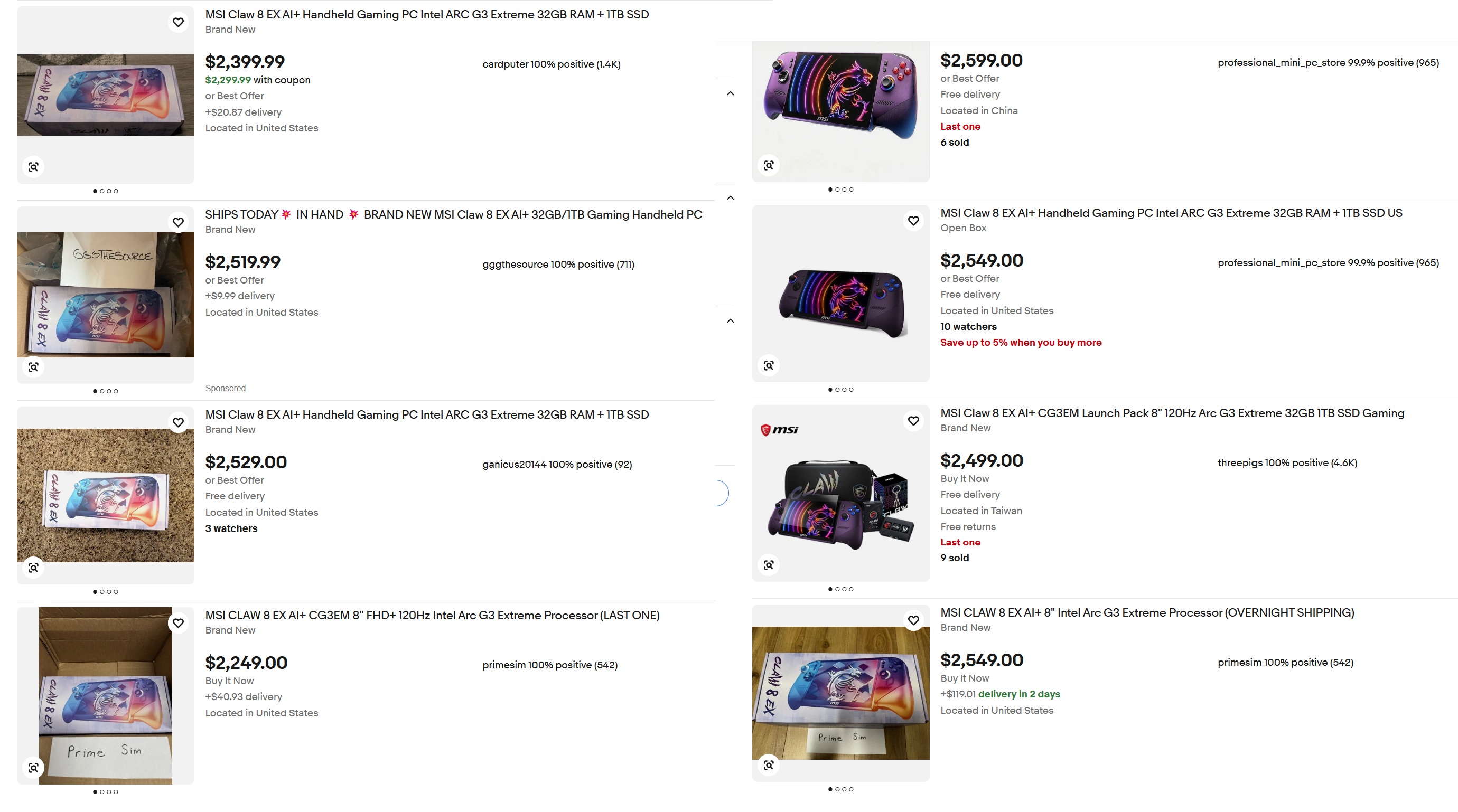
Listings on eBay for auctions of the MSI Claw 8 AI EX+ handheld gaming PC.

Some of the many hard to find MSI Claw 8 AI EX+ handheld gaming PC auctions on eBay. (Image credit: ebay | MSI)

But you get the point. Not only is the MSI Claw 8 EX AI+ insanely expensive at retail, but its shortage is driving up its price by $500 to $800, with people buying it. It’s why I’ve always noted on our podcast that PC gaming is recession-proof. No matter how bad the economy gets, or how high prices go, there is usually someone willing to pay for it.

Not the first time this has happened

Back in December, I noted a similar trend for Lenovo’s excellent Legion Go 2 with its giant 8.8” VRR OLED display and removable controllers. It’s a killer combo of a device, even if it’s better suited for your couch than travel.

For whatever reason, Lenovo can’t keep it in stock, so much so that it eventually removed it from its own website despite excellent reviews and, yes, demand for it, as people were paying $650 over retail just to have one.

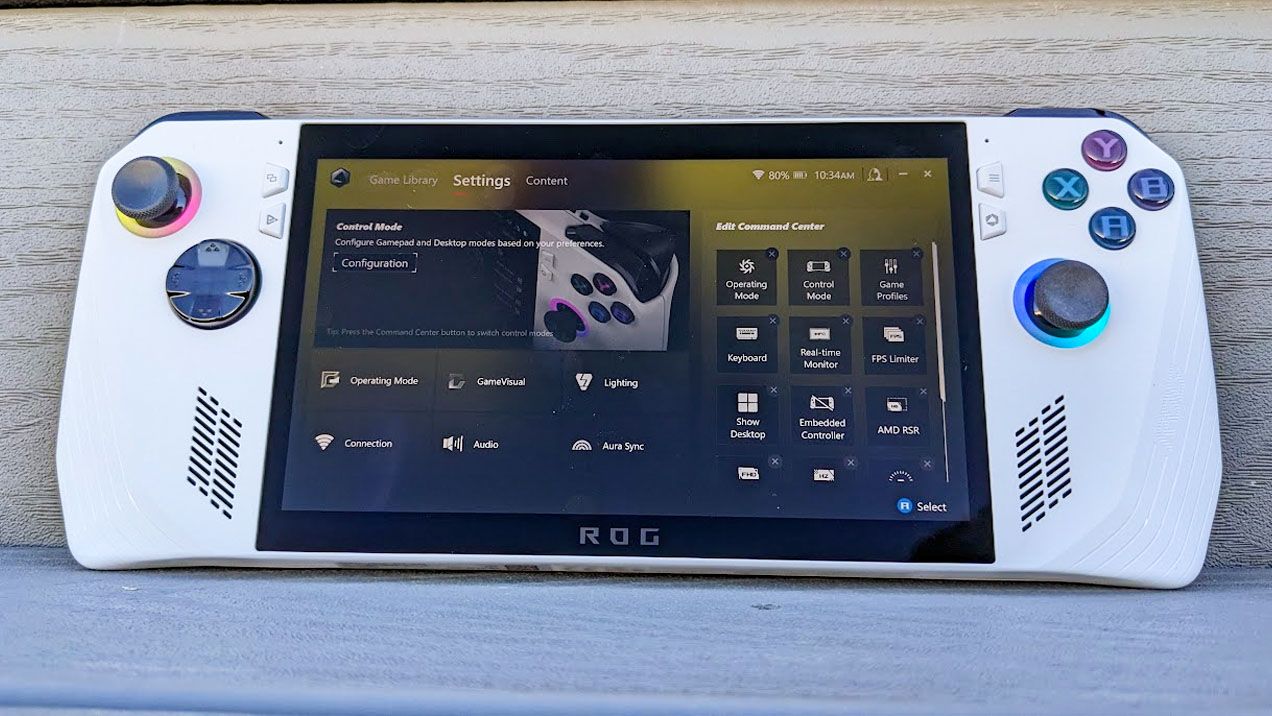
Interestingly, ASUS has been the king of “you want it, just buy it,” as the original ROG Ally and the newer ROG Xbox Ally and Ally X are still widely available online and at your local Best Buy. Moreover, ASUS hasn’t even raised the price, keeping them at $599 and $999, respectively.
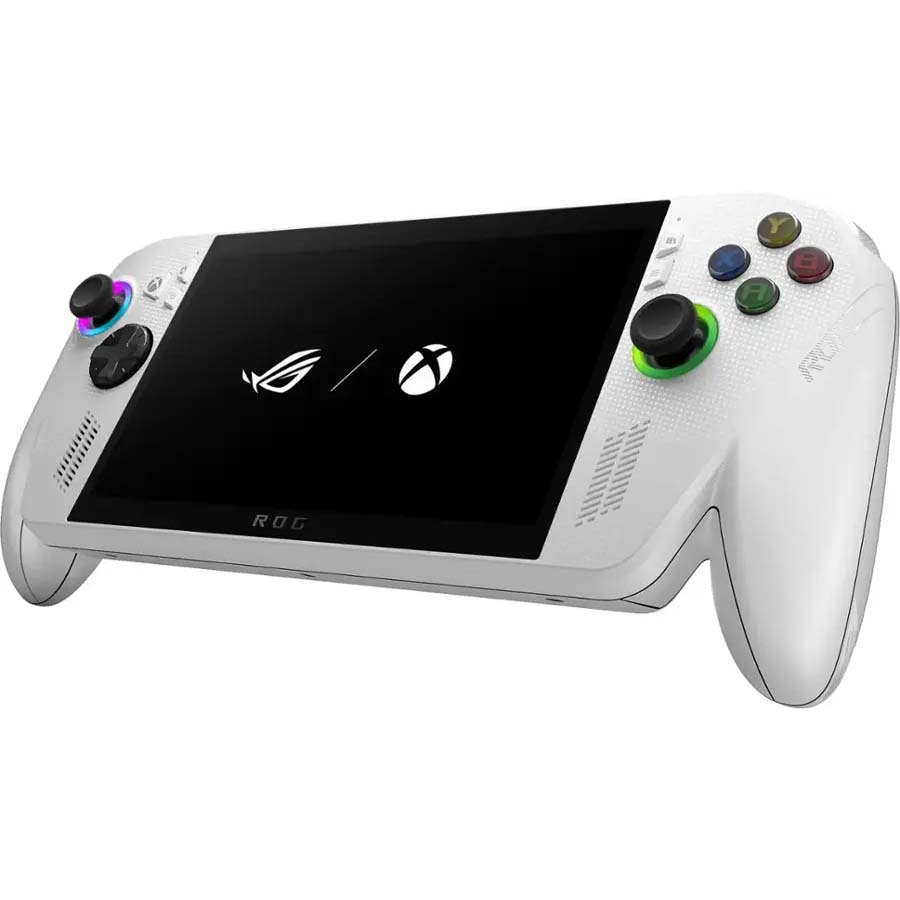
The ROG Xbox Ally features a 7-inch 1080p, 120Hz touchscreen and includes an AMD Ryzen Z2 A processor, 16GB LPDDR5 RAM, 512GB PCIe 4.0 SSD, and a 60Wh battery. It's designed for PC gaming across various services.

👉 Order at: Antonline | Best BuyView Deal
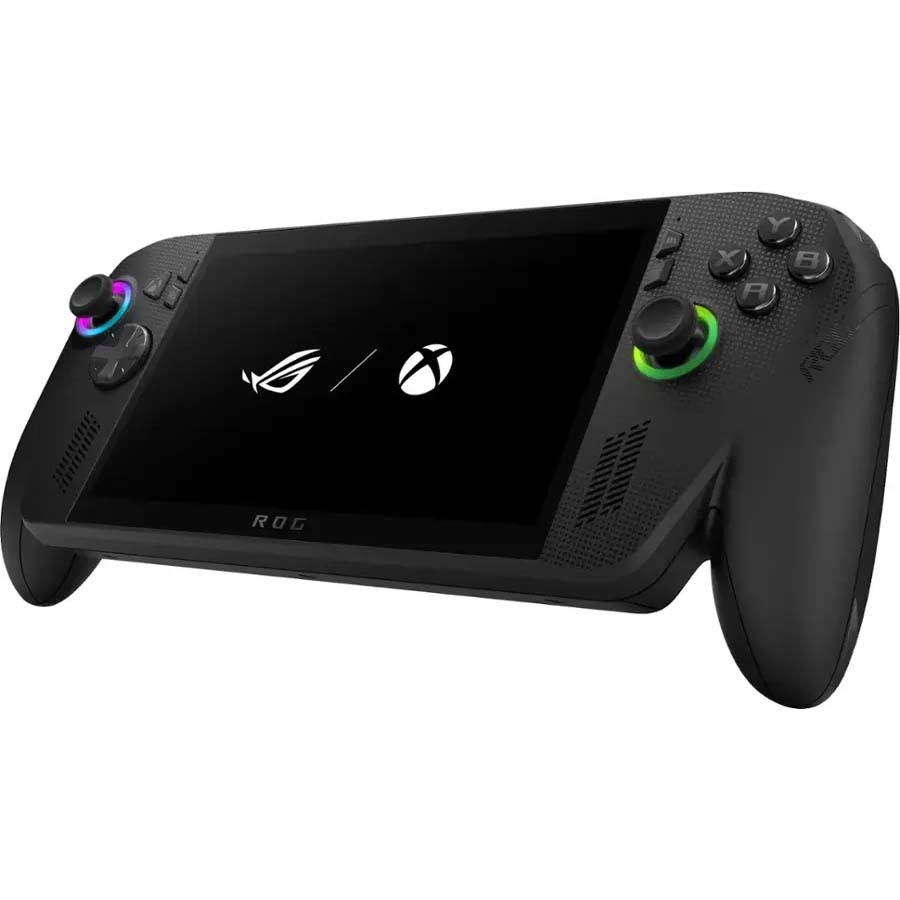
The premium Xbox Ally X has a more powerful AMD Ryzen AI Z2 Extreme processor, 24GB RAM, 1TB SSD. It's a better choice for people who want to play more graphically demanding PC games.

👉 Order at: Best BuyView Deal

I hope ASUS can maintain those stock and price levels, as both devices are really solid choices for those looking into handheld gaming. Sure, the Ally X pales in performance to the new MSI Claw 8 EX AI+, but it’s still a really good experience with an outstanding design (a design that will improve with the forthcoming Xbox Ally X20 anniversary edition that features a larger OLED display and many smaller fixes; I expect to be reviewing that when it releases, so stay tuned).

So where does that leave you in this silicon soap opera? Has the RAM/NAND crunch shoved your handheld plans into “maybe in 2028” territory, or are you already rationalizing a purchase with phrases like “long-term investment” and “I deserve this”?

Let me know in the comments what your breaking point is for handheld pricing — and whether $2,599 is where you draw the line, or merely where your wallet starts quietly begging for mercy.

Click to join us on r/WindowsCentral

Join us on Reddit at r/WindowsCentral to share your insights and discuss our latest news, reviews, and more.

Front shot of the MSI Claw 8 EX AI+ under vibrant pink lighting, displaying the Windows 11 taskbar and a neon dragon wallpaper on its large screen.
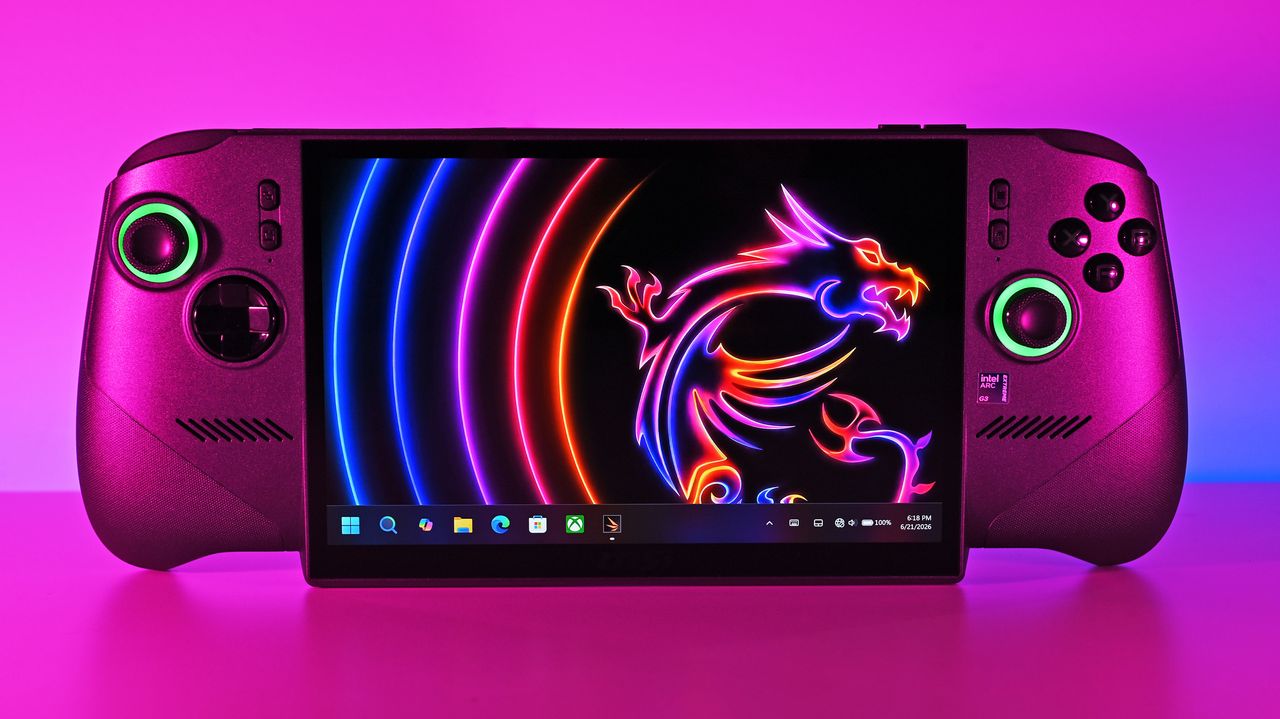
Front shot of the MSI Claw 8 EX AI+ under vibrant pink lighting, displaying the Windows 11 taskbar and a neon dragon wallpaper on its large screen.
  •  

Standalone RTX 5090s now cost at least $4,800, more than entire pre-built PCs with the same GPU inside — Who's buying anything when the market is this chaotic?

I haven't seen a sane GPU price in what feels like almost a year, and the landscape isn't getting any better for gamers.

The NVIDIA RTX 5090, which arrived at a $1,999 MSRP in 2025, is now listed at Newegg starting at $4,799.99. The MSI Ventus 3X OC is indeed the lowest price I could find, and there are other options that push well beyond $5,000.

Bad luck if you're shopping for a new RTX 5090 alone. The high-end of NVIDIA's consumer GPU stack has become inaccessible for the average gamer, and there's no real alternative in sight.

Well, that's sort of true. While perusing various storefronts this morning, it quickly became evident that I can buy an entire pre-built gaming PC with an RTX 5090 inside for less than the card alone.

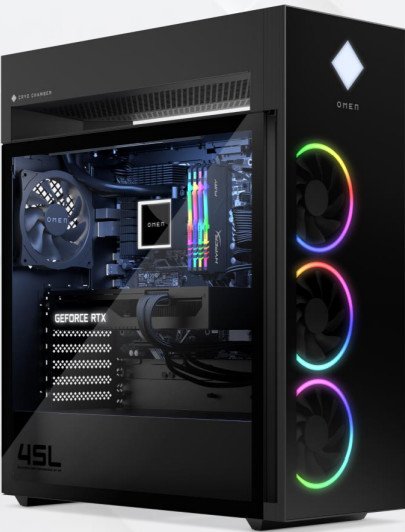
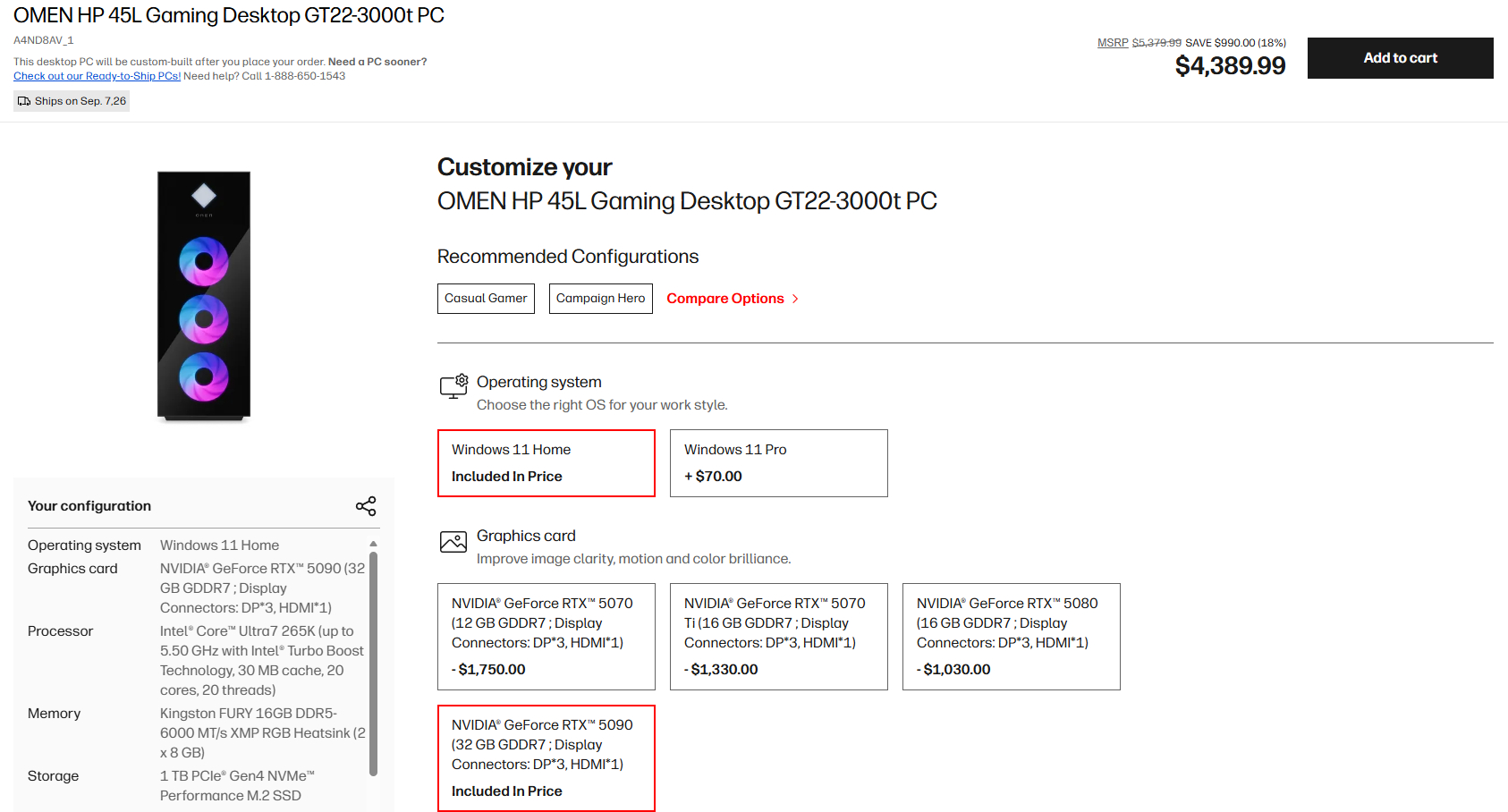
Configuration page for OMEN HP 45L Gaming Desktop GT22-3000t PC, featuring a sleek black desktop with illuminated circular vents and options for operating system and graphics card.

A look at the current promo pricing on a full gaming PC with RTX 5090. (Image credit: HP)

HP's Omen 45L desktop is my prime example. It has an NVIDIA RTX 5090 GPU, an Intel Core Ultra 7 265K CPU, 16GB of DDR5-6000 RAM, a 1TB M.2 PCIe 4.0 NVMe SSD, and everything else you need for a full build.

At the time of writing, this Omen 45L model costs $4,389.99. That's $410 less than the cheapest RTX 5090 listed on Newegg. Of course, the Omen 45L is on sale, with a regular price of $5,379.99. That's still less than the ASUS TUF Gaming RTX 5090 model, which sits at $5,429 on Newegg.

Buy a pre-built gaming PC for the card and sell the rest?

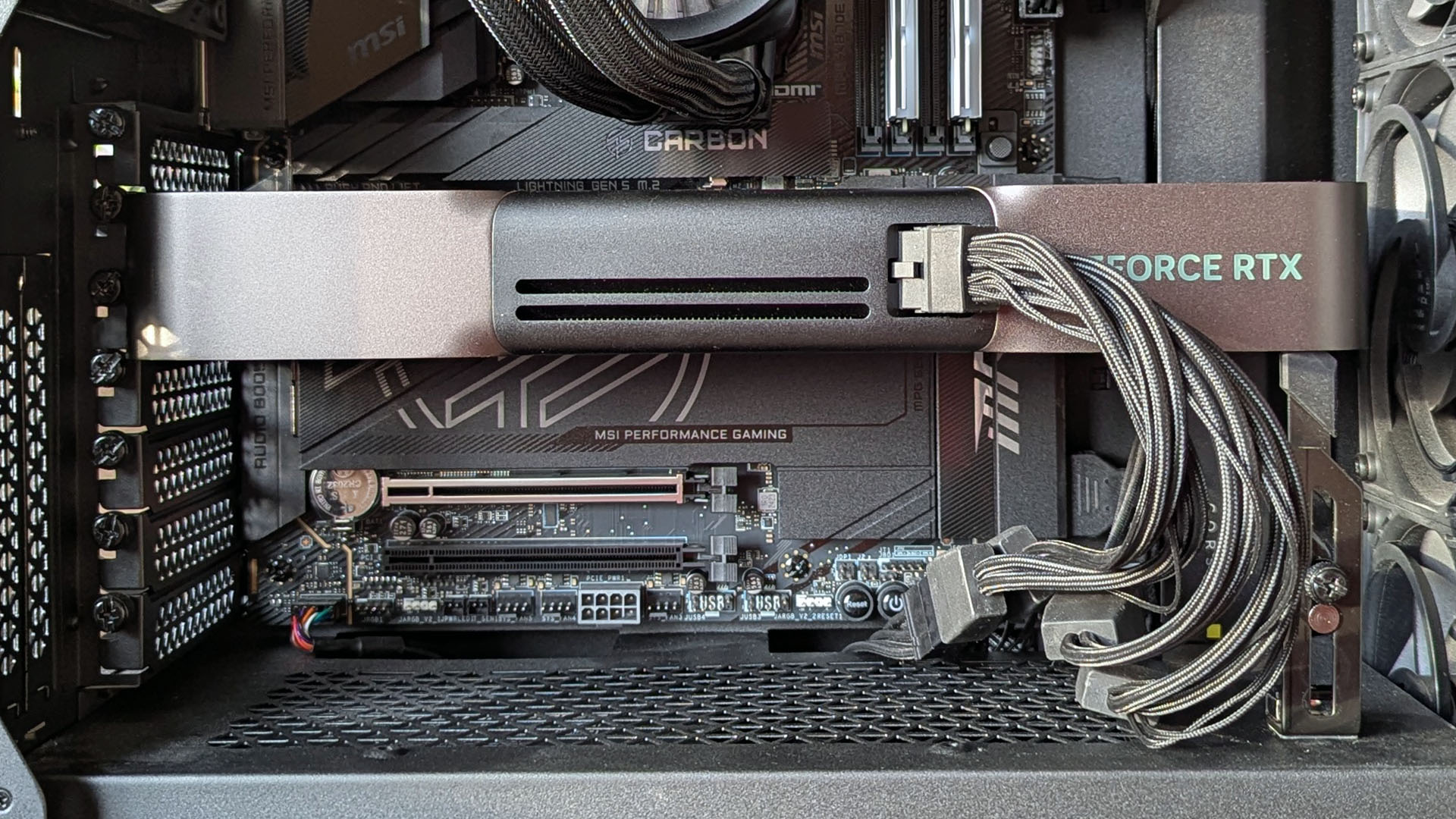
NVIDIA GeForce RTX 5090 Founders Edition installed in a PC with a 600W adapter

NVIDIA's RTX 5090 has hit costs I never imagined, but there are some alternative options. (Image credit: Windows Central | Ben Wilson)

The math gets more upside down when you factor in all the extra hardware you get with a pre-built PC.

The Omen 45L's CPU adds about $300, the 16GB of Kingston Fury DDR5-6000 RAM adds about $330, and the 1TB M.2 PCIe 4.0 NVMe SSD adds roughly $200. That's about $800 worth of extra components before even considering the 1200W PSU, motherboard, cooling, and case.

I can imagine a lot of readers will see this and wonder why they don't just buy a pre-built, remove the RTX 5090, and sell the rest of the components. I'm wondering the same thing.

HP isn't the only place that I'm seeing this pricing deficit in effect. Over at iBuyPower, I put together a system with an Intel Core i5-14400F CPU, 32GB of DDR5 RAM, a 1TB M.2 PCIe 4.0 NVMe SSD, a 1000W PSU, and an NVIDIA RTX 5090 that costs $5,596.

With the right initiative to sell the extra components, you could definitely end up paying less or the same for a standalone card and still end up with some extra hardware for future upgrades.

Omen 45L: was $5379.99 now $4389.99

HP's pre-built desktop equipped with an RTX 5090 is now considerably more affordable than buying an RTX 5090 GPU alone.

👉 See at HP.com

Why are GPU prices so high in 2026?

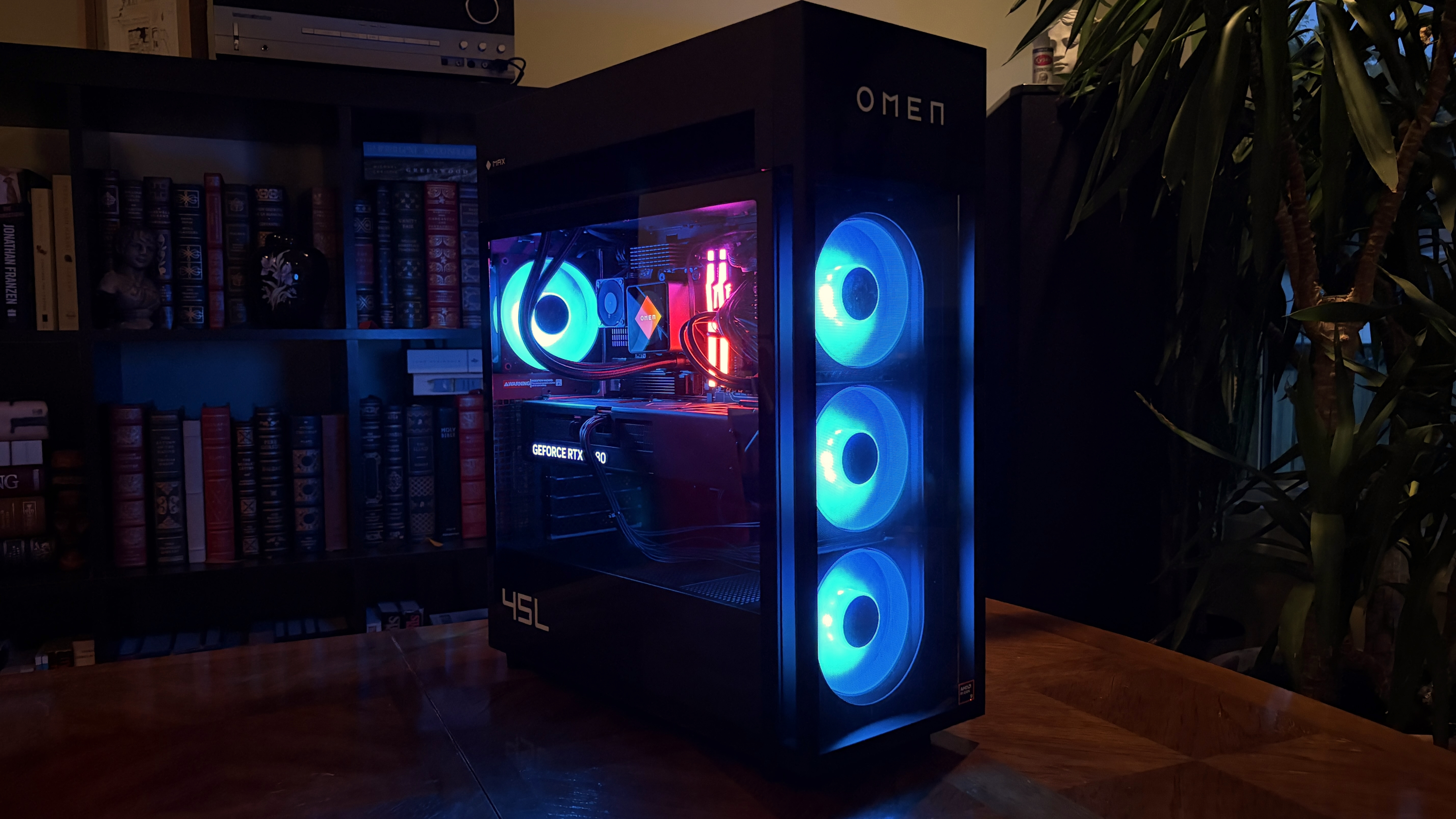
A black HP Omen Max 45L gaming computer tower with blue LED lights and visible internal components, displayed on a wooden table against a bookshelf backdrop.

The HP Omen Max 45L I reviewed isn't perfect, but if it's cheaper than a lone GPU, it's hard to fault. (Image credit: Future)

The current state of GPU prices is due to the ongoing RAM and storage crisis that's sending NAND, DRAM, and other PC component prices into deep space.

As a result of the VRAM that goes into these cards hitting such high costs, NVIDIA jacked up the prices of GPU kits for its board partners (companies like ASUS, MSI, Gigabyte, and Zotac that build full GPUs using NVIDIA's kit) in July. Shortly after, it was reported that the hike could go as high as 30%.

We're now starting to feel those price hikes at retailers, as evidenced above. I suspect that HP's prices will also eventually be on the rise, but there are different market factors at play.

OEM builders can lock in large supplies of parts at a lower cost, so prices often don't catch up until after regular consumers begin to see them. I saw the same thing happen with Windows laptops this year. Components eventually run out, companies have to buy more, and those new costs are then passed down to consumers.

There's one caveat: when I reviewed the Omen Max 45L, I noticed that the RTX 5080 is a custom unit designed by HP. The same applies to the RTX 5090. Does that really matter? Not really. It's still NVIDIA's GPU inside, and my testing showed no difference compared to standalone cards.

Whatever happens to HP's pre-built PC pricing, there's no denying that the entire PC market is in chaos. You might not love the idea of a pre-built PC, but I definitely recommend seeing what's out there before you buy a standalone RTX GPU. You might just end up with a whole lot more than you expected for a lower price.

Click to join us on r/WindowsCentral

Join us on Reddit at r/WindowsCentral to share your insights and discuss our latest news, reviews, and more.

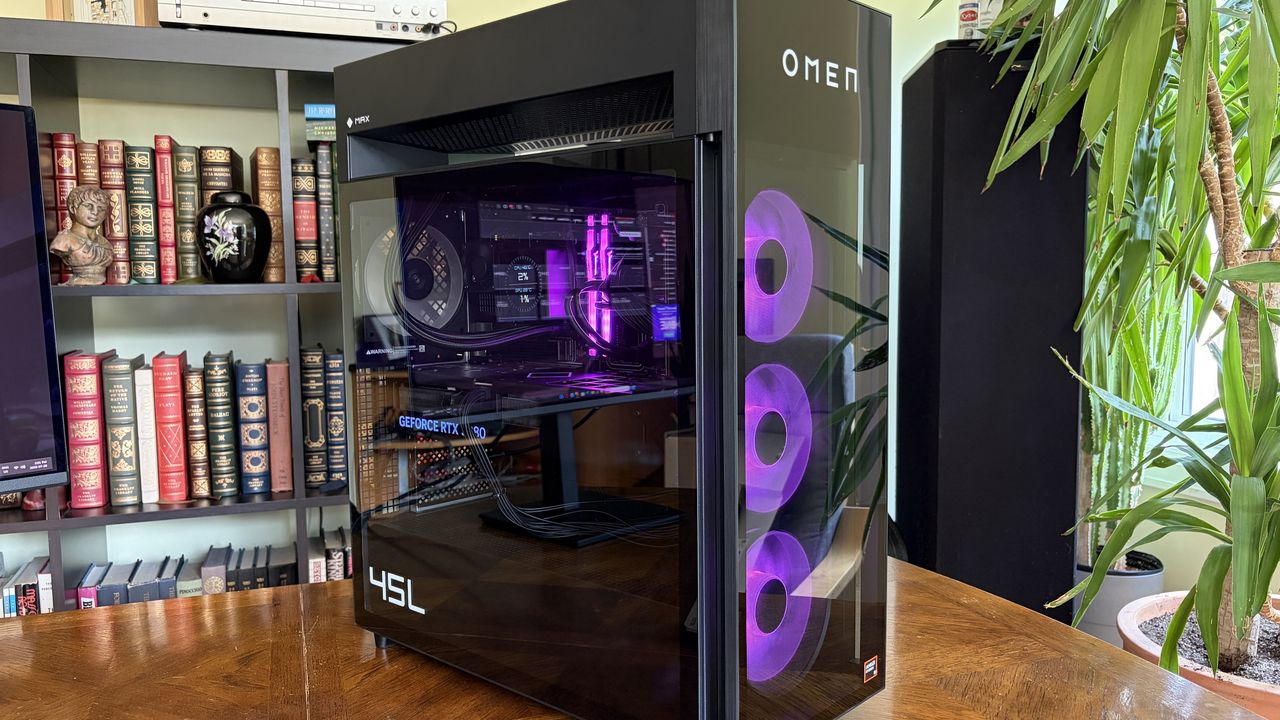
An Omen Max 45L with a transparent side panel displays its internal components, including a GeForce RTX 508 graphics card, against a backdrop of a bookshelf.

An Omen Max 45L with a transparent side panel displays its internal components, including a GeForce RTX 508 graphics card, against a backdrop of a bookshelf.

  •  

"Market response has far exceeded our expectations" — ASUS can't make enough laptops with RTX Spark ahead of their expected Q4 launch

I was at Computex this year when NVIDIA's RTX Spark System-on-Chip (SoC) was revealed to the world, and from the start, I had a hunch that it would be a big deal.

A powerful chip for Windows on ARM that can run every Windows app ever made? That was one of NVIDIA CEO Jensen Huang's first promises.

With Microsoft as its launch partner, the Surface Laptop Ultra was one of the first RTX Spark laptops announced, but ASUS was right up there with its ProArt P16 and ProArt P14, two laptops I got to see firsthand in Taipei.

Incredibly sleek and streamlined, these laptops were a smash hit on the show floor. Apparently, they're also far more popular than ASUS was expecting.

In a recent ASUS Q2 earnings call, it was revealed that the company is completely out of ProArt P14 and P16 units to ship to its partners (aka third-party retailers and distributors) as part of pre-order efforts.

As one of the first manufacturers to launch RTX Spark-based systems, the market response to pre-orders for our ProArt notebook P16 and P14 has been intense. They are currently completely sold out. [...] Regarding current demand, the market response has far exceeded our expectations. Essentially, the initial quantities we planned have already been fully pre-ordered by our channel partners. We’re continuing to place additional orders with our partners.

S.Y. Hsu, Co-CEO ASUS (ASUS Q2 earnings call)

More RTX Spark laptops are on the way, of course, and ASUS has some time to shore up supplies before the planned Q4 2026 release of the new Spark-powered ProArt PCs.

It's too bad that the earnings call doesn't mention anything about exact volumes, because it's hard to say exactly how popular these laptops really are. However, ASUS says that it's "very optimistic about next year's sales" thanks to the "high AI computing power relative to its compact size" in the RTX Spark laptops.

What is NVIDIA's RTX Spark?

ASUS ProArt P16 laptop samples on display shelving highlighting chassis and features at Computex 2026

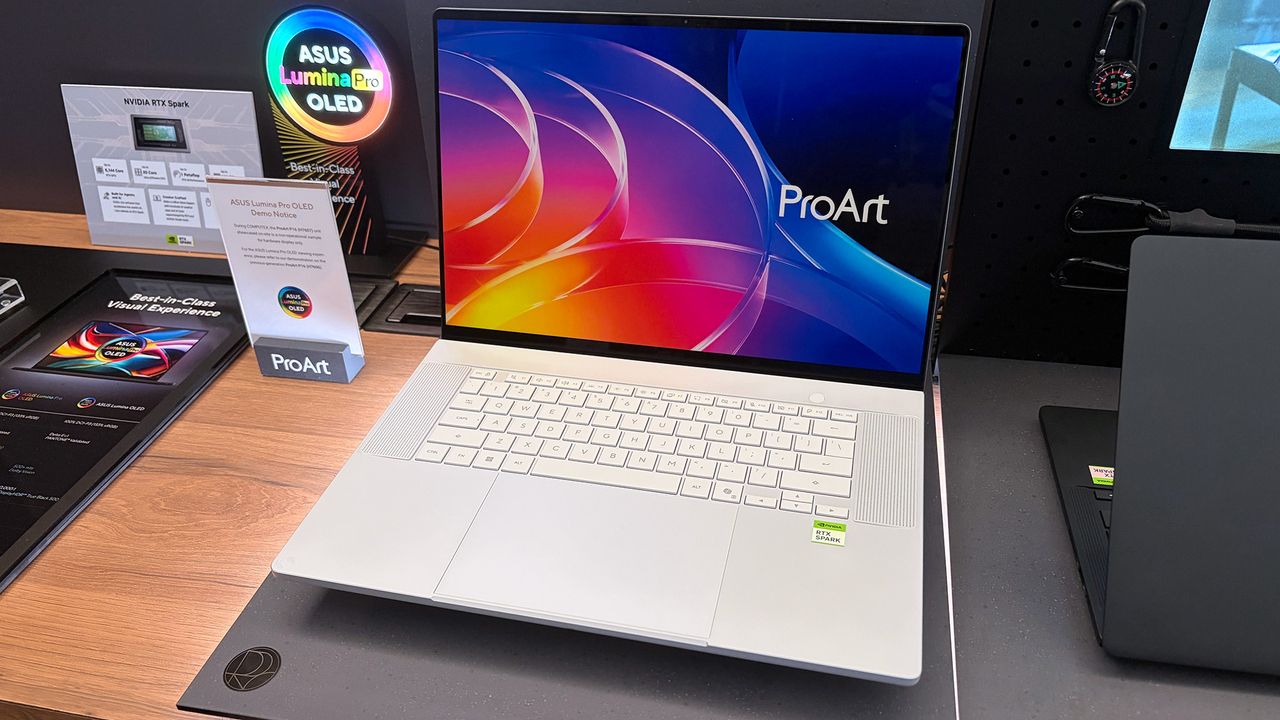
A look at the NVIDIA RTX Spark chip that's (normally) inside the ProArt P16. (Image credit: Cale Hunt | Windows Central)

NVIDIA's RTX Spark is an ARM-powered SoC that's expected to compete directly with the likes of Intel, AMD, and Qualcomm for space in Windows 11 PCs.

I covered rumors of the "N1X" chip for months in the lead-up to Computex 2026, and indeed it seems just as powerful and efficient as pre-announcement estimates.

Spark takes efficient ARM-based CPU cores similar to those found in Qualcomm Snapdragon chips and pairs them with an NVIDIA Blackwell RTX GPU, all while drawing from a unified memory setup that can hit 128GB.

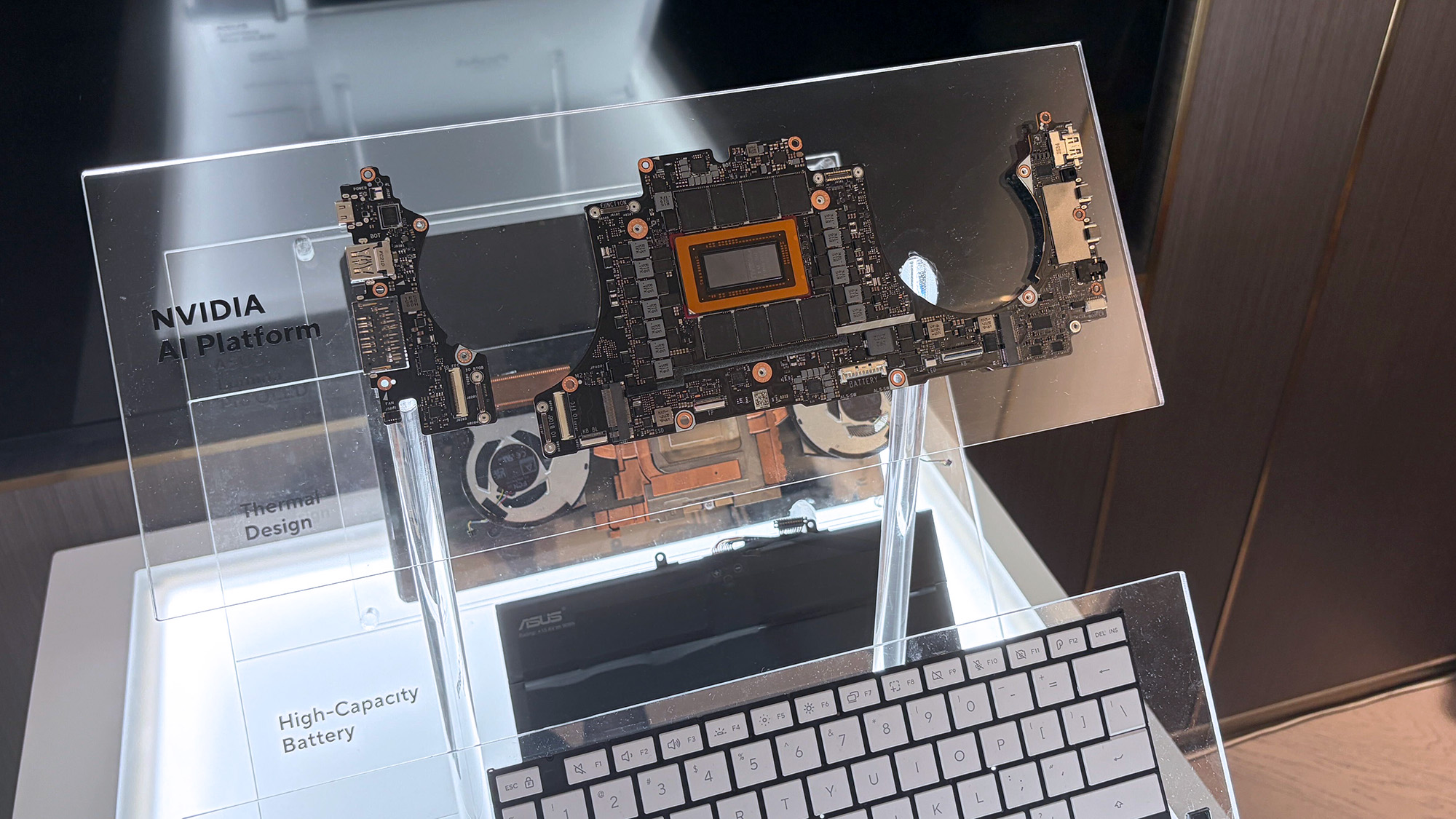
ASUS ProArt P16 laptop samples on display shelving highlighting chassis and features at Computex 2026

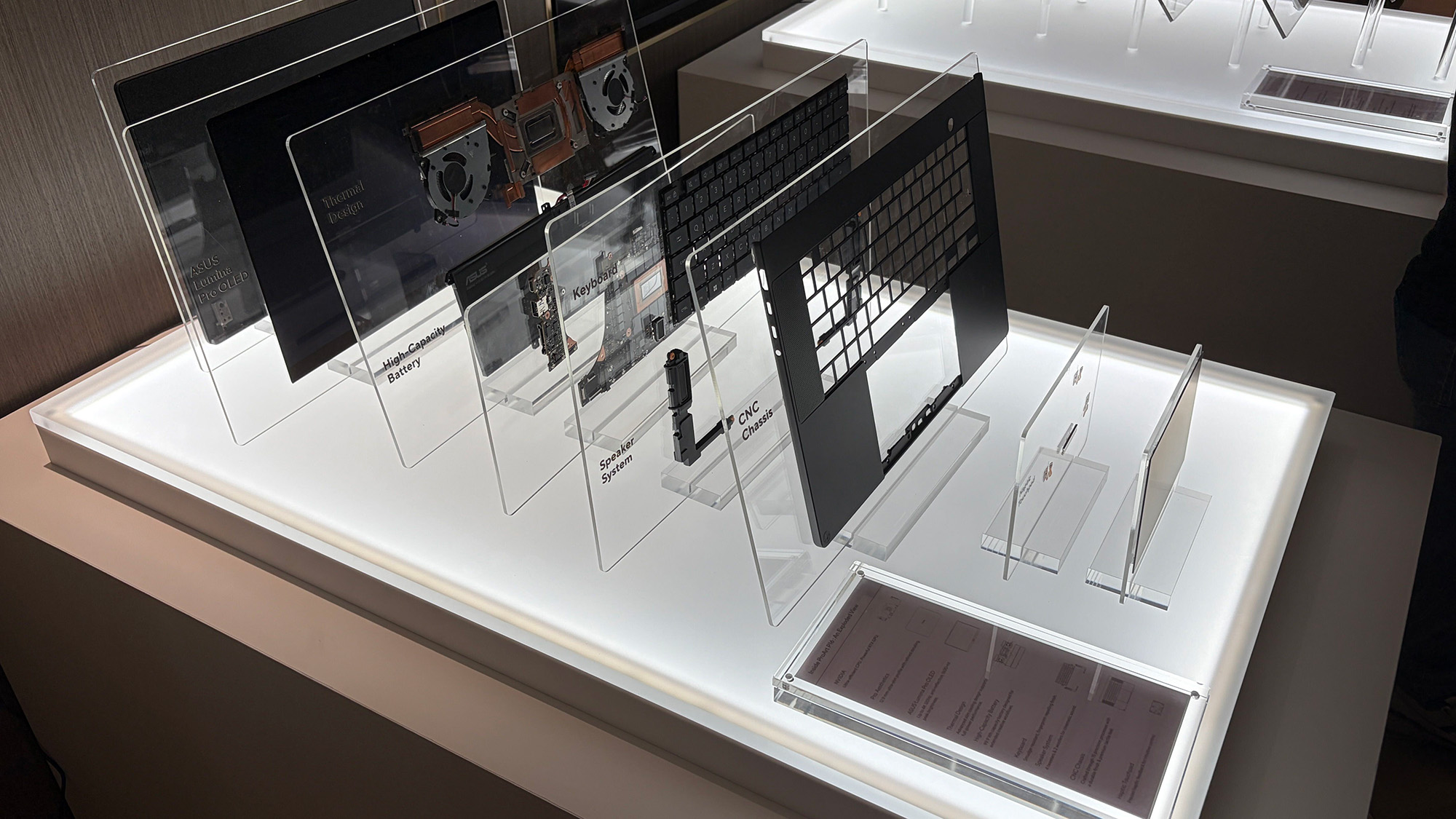
A broken-down example of the ASUS ProArt P16 with RTX Spark. (Image credit: Cale Hunt | Windows Central)

This combination allows for massive performance that can shred standard and AI-related tasks without requiring a bulky discrete GPU.

Throw these chips into ASUS ProArt laptops with "all-day-long" battery life, wide port variety, super slim bodies, and 4K OLED displays, and it's easy to see why there's so much interest from retail partners.

(via VideoCardz)

Click to join us on r/WindowsCentral

Join us on Reddit at r/WindowsCentral to share your insights and discuss our latest news, reviews, and more.

ASUS ProArt P16 laptop samples on display shelving highlighting chassis and features at Computex 2026

ASUS ProArt P16 laptop samples on display shelving highlighting chassis and features at Computex 2026

  •  

I tested a CPU cooler that looks like a V8 engine — and this air-powered monster performs like one, too

I've generally leaned towards all-in-one (AIO) liquid cooling for my own custom PC builds for the past decade or so, but air cooling is practically forcing its way back into my habits because it keeps proving its worth via reviews like these. The Cooler Master V8 ACE 3DHP caught my eye mostly because of its "V8 engine" throwback gimmick, but there's a clever secret hiding inside its fins — something that Hyper 212 3DHP cooler owners will recognize.

Cooler Master provided a sample but did not see, nor did it have any input on, the contents of my article before publishing.

How much does the V8 ACE 3DHP cost?

The Cooler Master V8 ACE 3DHP Black CPU cooler box sits on a wooden desk, showing the product image, branding, and specifications. Other PC components are visible in the background.

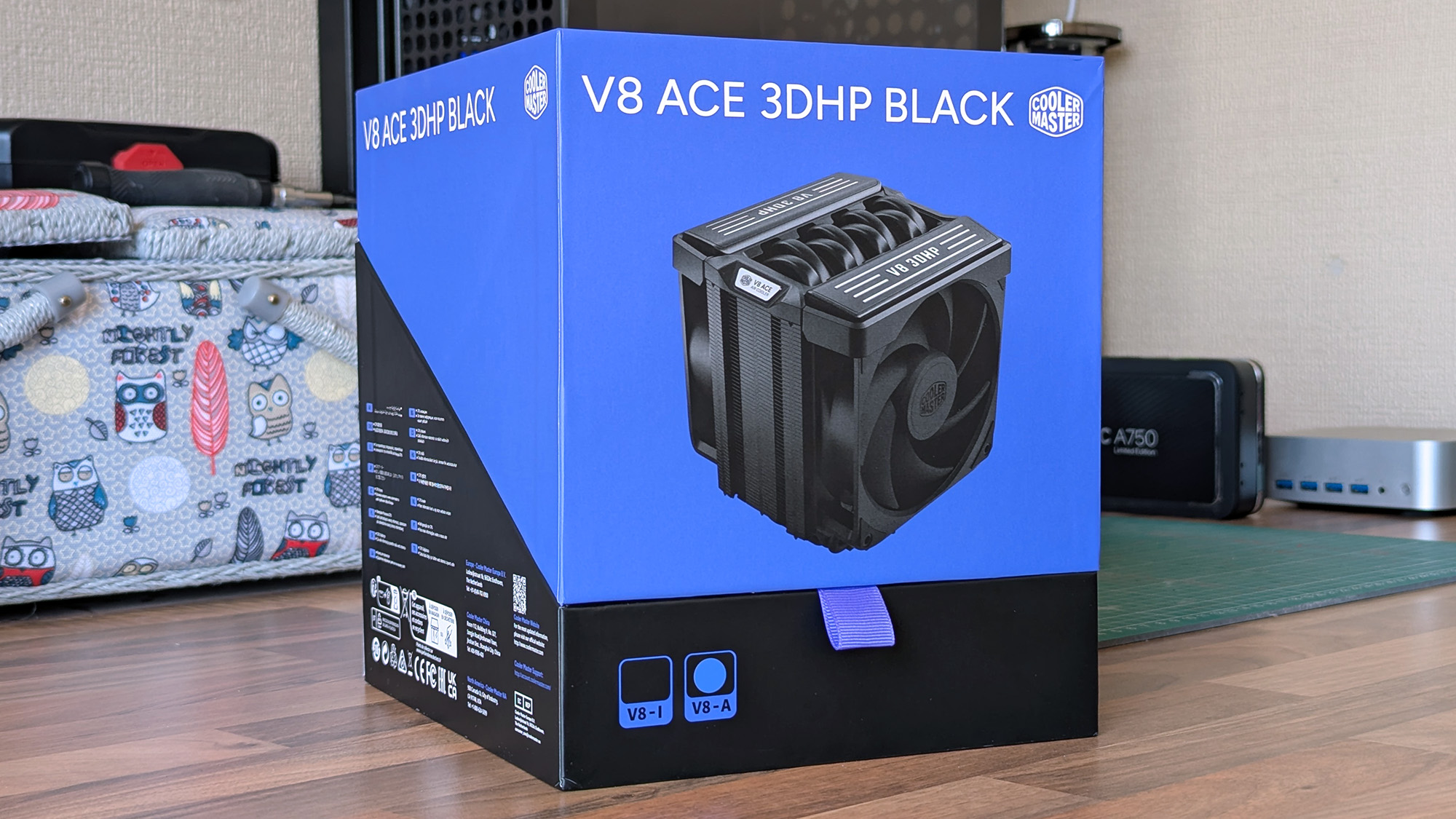
Built separately for AMD and Intel, each base plate has a specific design, but brackets are included for both. (Image credit: Ben Wilson | Windows Central)

At the time of writing, the best place to buy the Cooler Master V8 ACE 3DHP designed for AMD (AM4/AM5) processors is Newegg at $119.99, or Amazon for the same price via Newegg Business. I also found it sold above MSRP by third parties at Best Buy, which could be a last resort.

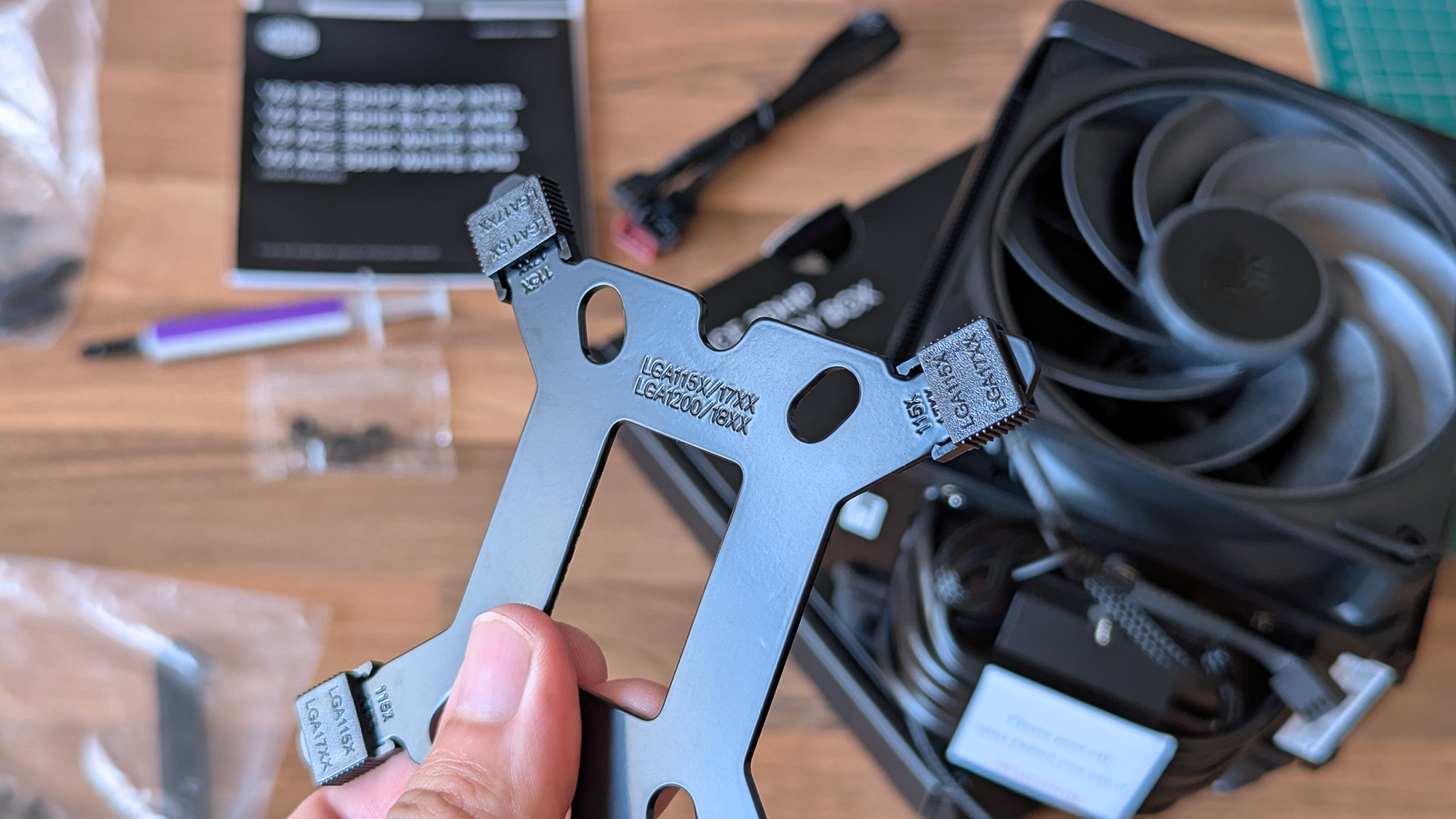
Otherwise, the Intel (LGA 1851/1700/1200/115X) variant isn't listed on the official Cooler Master US store, Newegg, or other third-party stores. For now, availability is skewed towards the AMD side, and though you do get an Intel bracket inside the box, it isn't perfectly optimized for those chips.

Cooler Master V8 ACE 3DHP (AMD) specifications

Component

Spec

Socket support

AMD AM4/AM5
Intel LGA LGA 1851/1700/1200/115X (with included bracket)

Dimensions

138.95 x 136.47 x 167.3mm

Weight

2.57 lbs (1.17 kg)

Fans

120 x 120 x 30mm, 89.6 CFM (front)
120 x 120 x 30mm, 61.0 CFM (rear)

Thermal paste

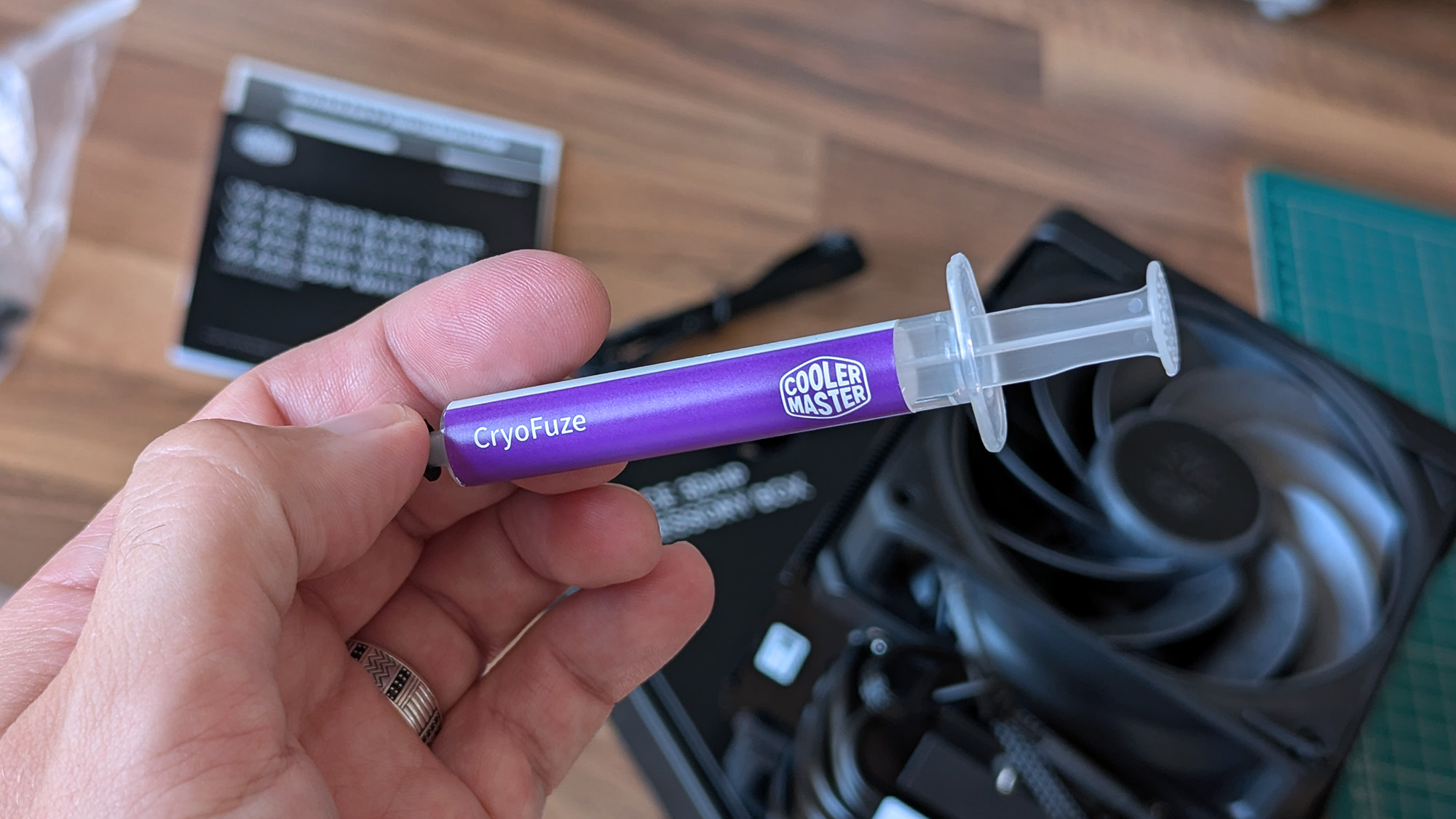
Cooler Master CryoFuze

Warranty

6 years

V8 ACE 3DHP: $119.99

Newegg is, so far, the best place to buy.

👉 Also available: £111.59 at Newegg UKView Deal

Is the V8 ACE 3DHP a good CPU cooler?

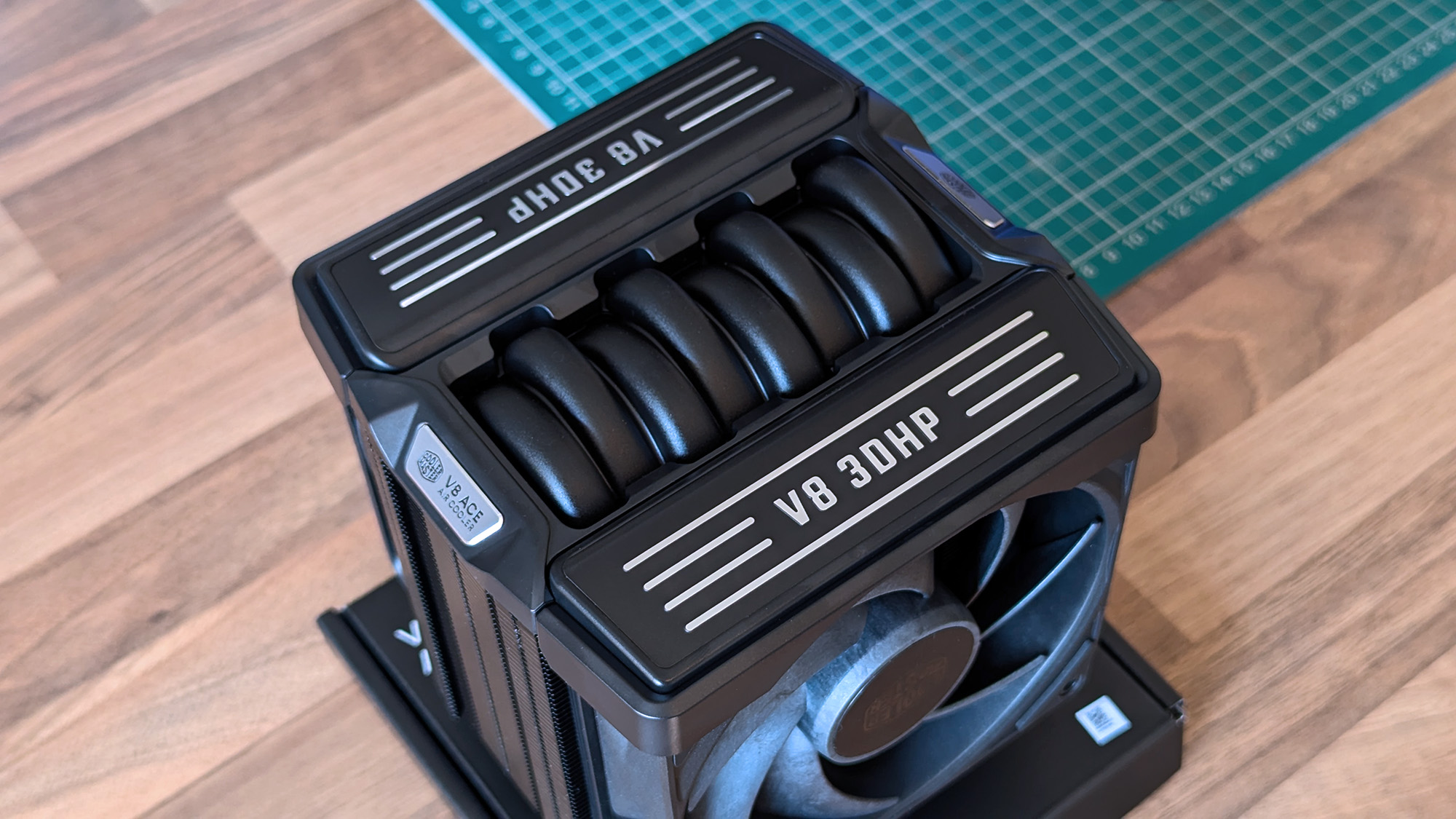
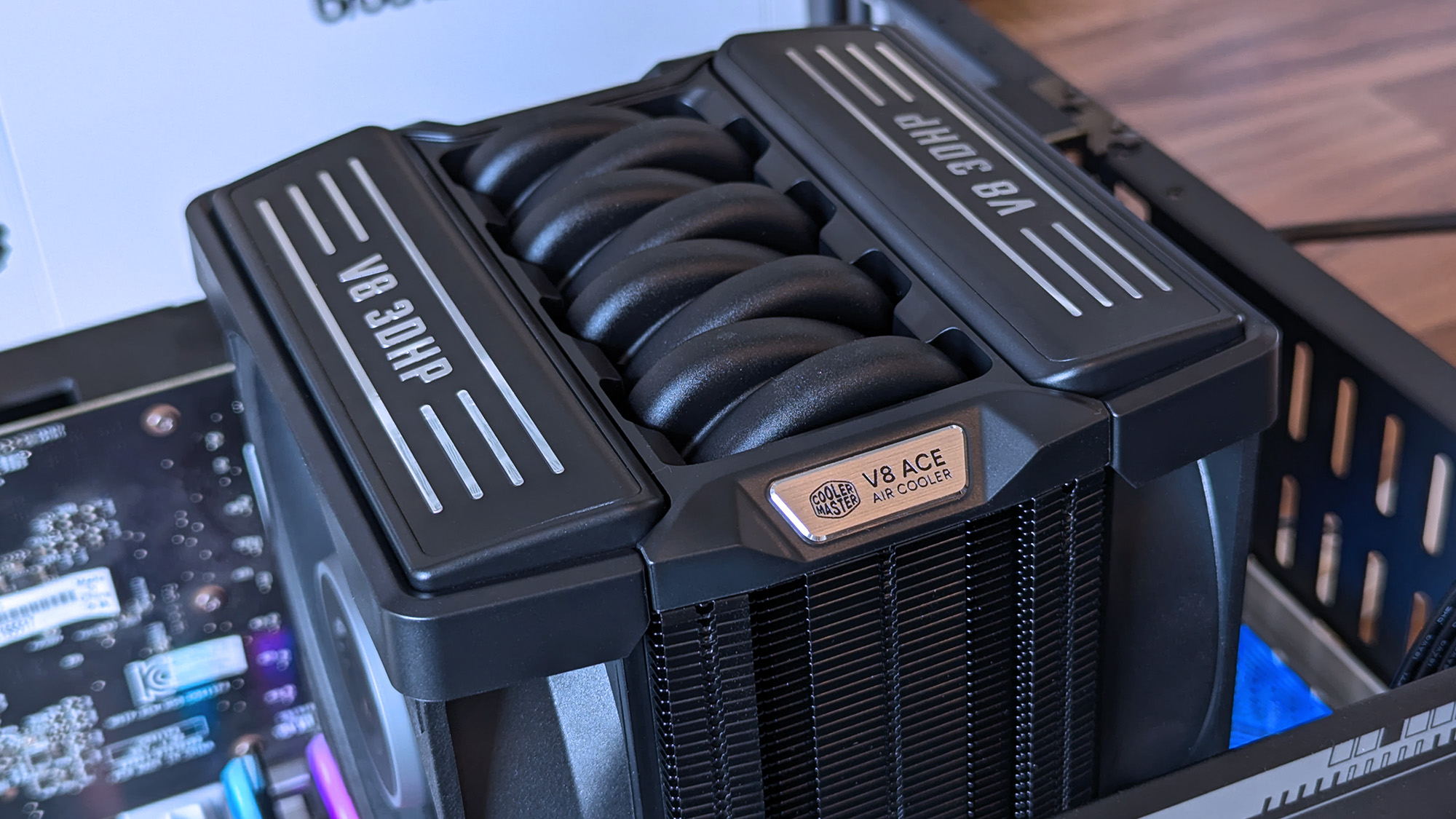
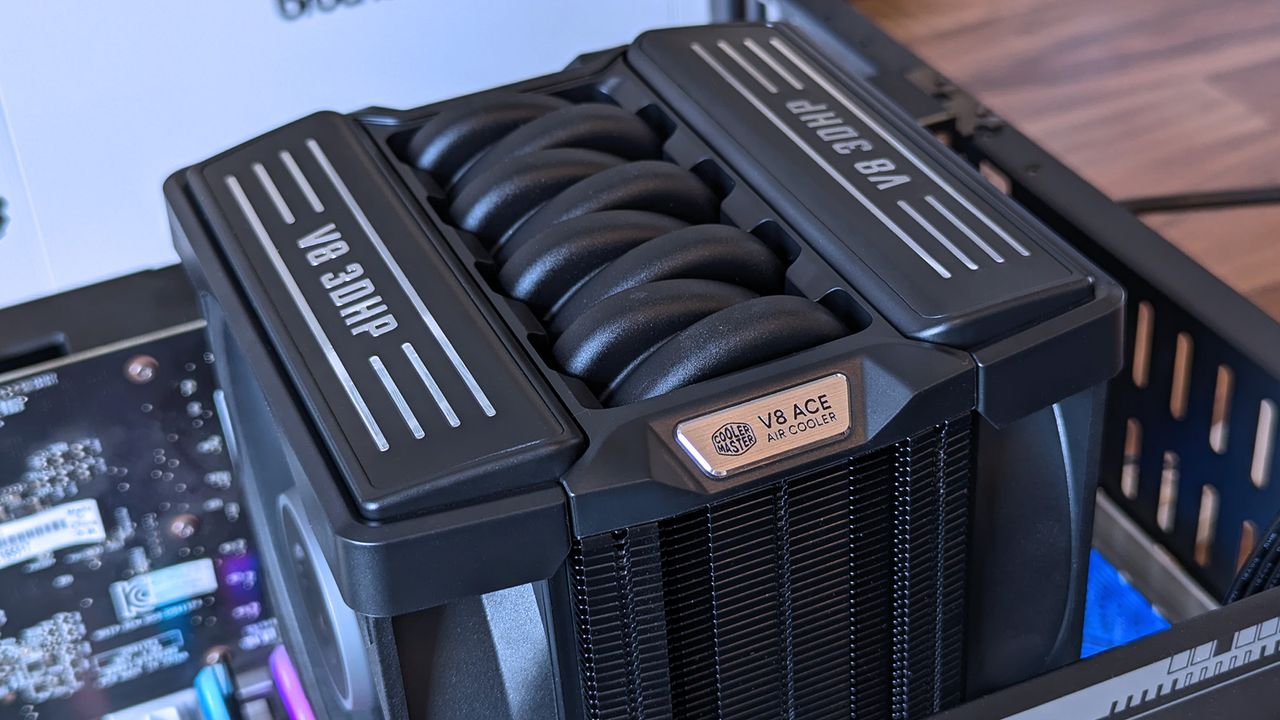
Close‑up of the Cooler Master V8 ACE 3DHP CPU cooler showing its engine‑inspired top shroud with “V8 3DHP” and “V8 ACE Air Cooler” branding.
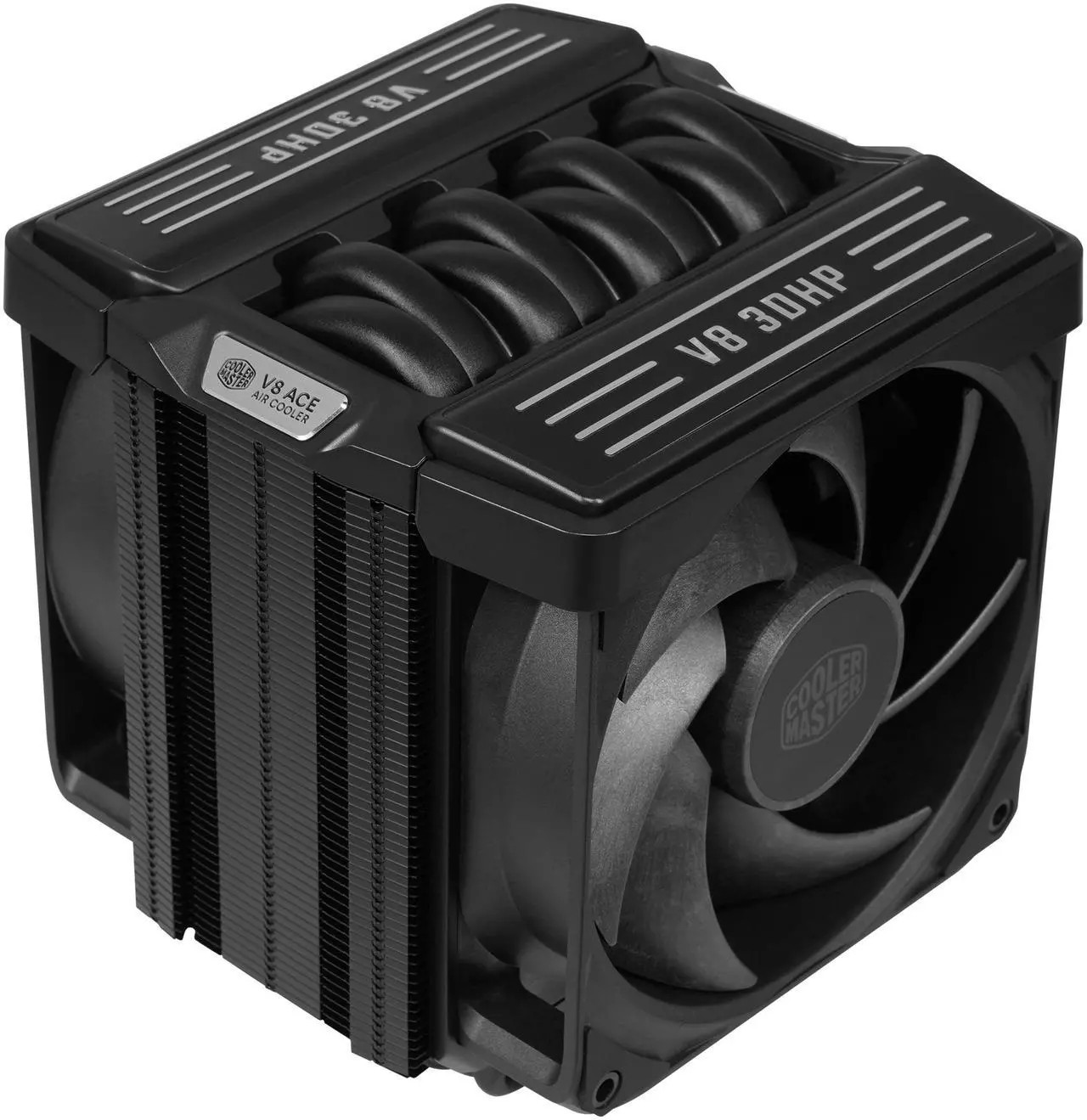
Those aren't the heatpipes on top; it's just a plastic cover, but I dig it.Ben Wilson | Windows Central
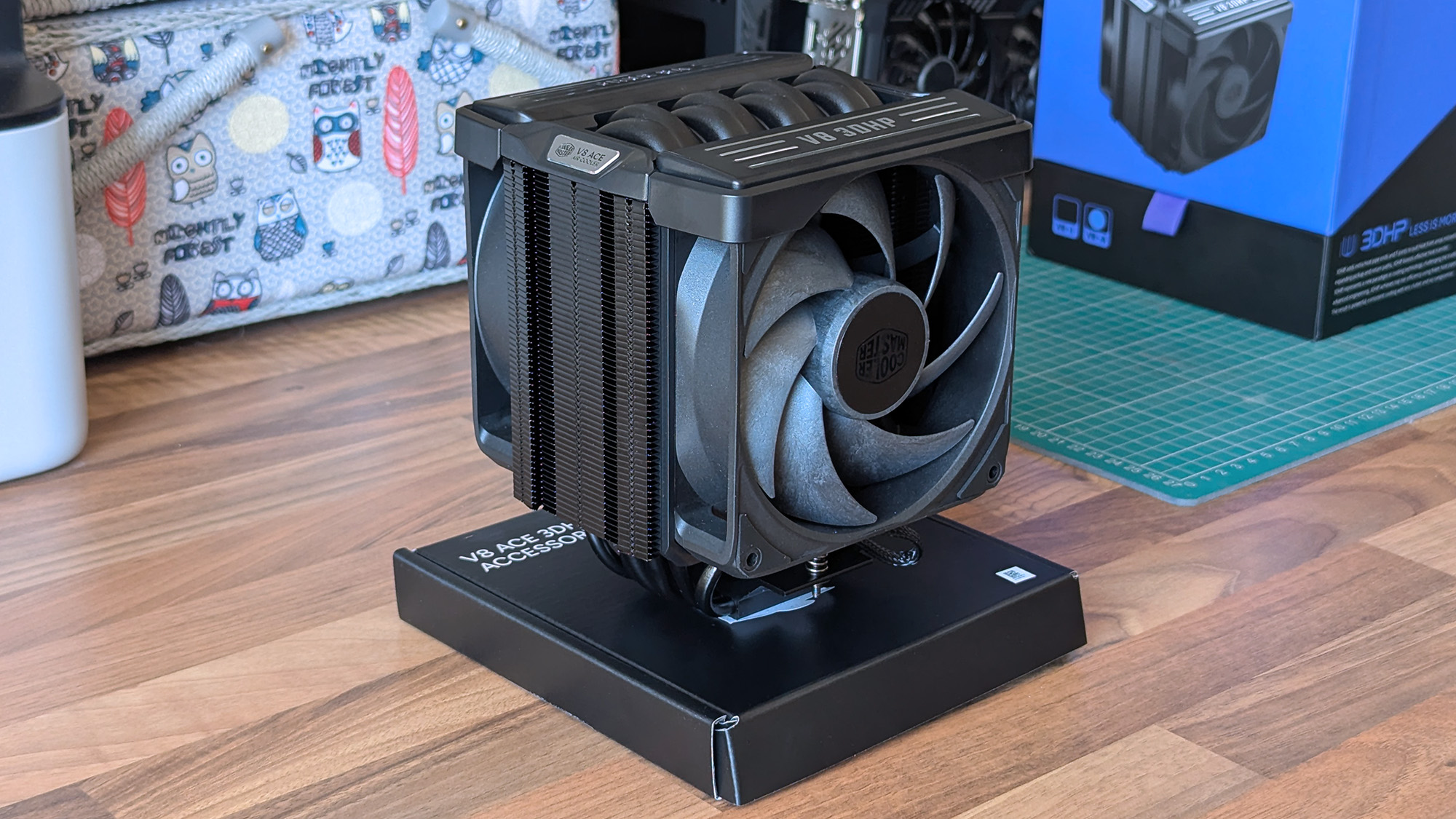
The Cooler Master V8 ACE 3DHP CPU cooler sits on a wooden desk, displaying its dual‑fan layout, heat pipe array, and black shroud with “V8 3DHP” labeling.
It's tall, wide, and heavy, but surprisingly easy to install.Ben Wilson | Windows Central
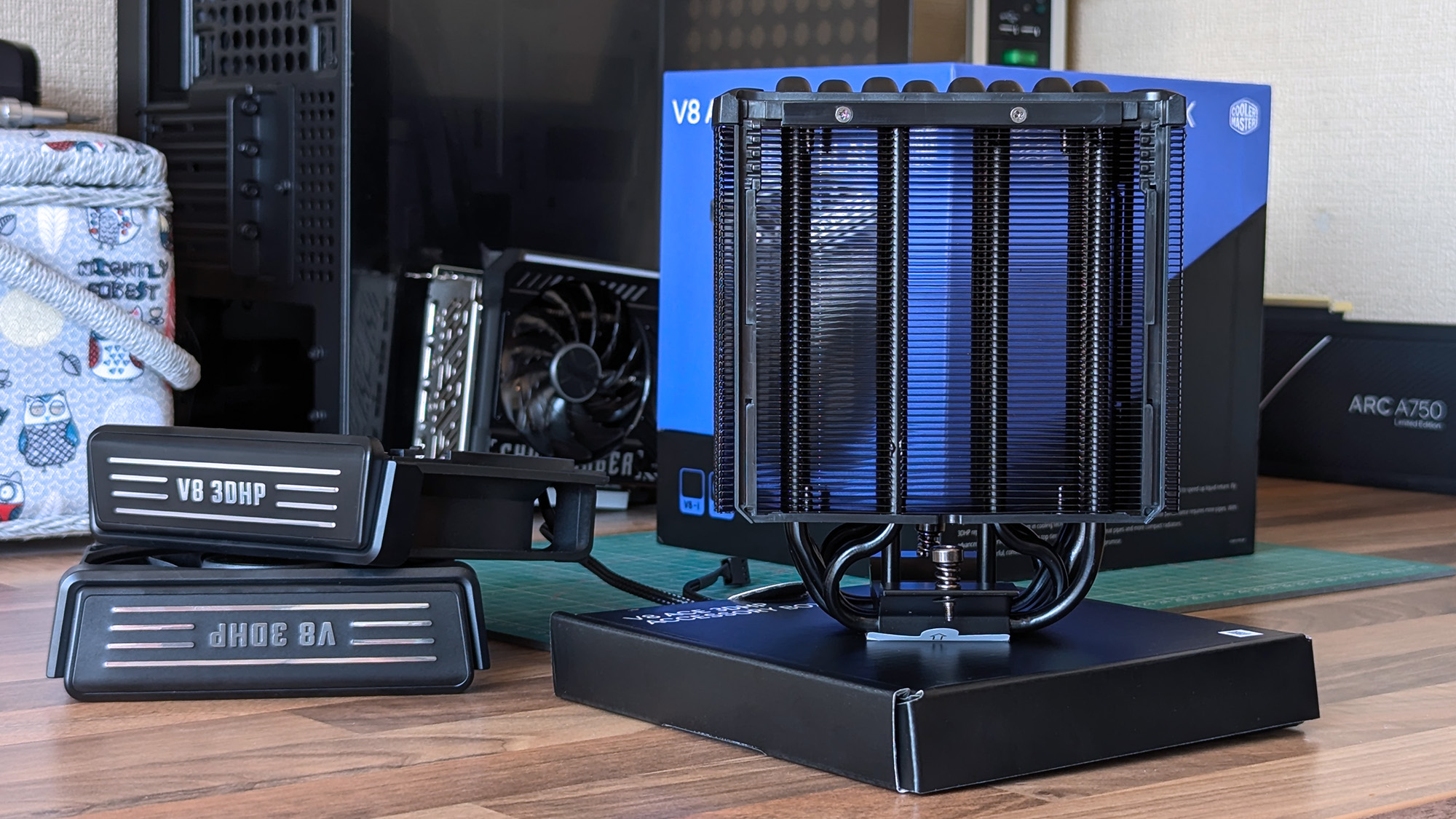
The Cooler Master V8 ACE 3DHP CPU cooler stands upright on a desk, displaying its heat pipes. Graphics cards, product boxes, and other hardware fill the background of the workspace.
A glimpse through the dense fins reveals the extra "3D" heatpipes.Ben Wilson | Windows Central
A hand holds a metal CPU cooler mounting bracket labeled for Intel LGA sockets. Screws, cables, a fan, and thermal paste are scattered across the desk behind it.
Despite its AMD-first design, this variant still comes with an Intel bracket.Ben Wilson | Windows Central
A hand holds a Cooler Master CryoFuze thermal paste syringe above a V8 ACE 3DHP Black CPU cooler on a desk.
I'll never turn my nose up at a free tube of thermal paste.Ben Wilson | Windows Central

Before I ever installed this cooler onto a motherboard, I loved the way it looked. It isn't quite as extreme as Cooler Master's V8 GTS from 2013 — which almost resembled an alien motorbike engine — opting for a single-tower setup this time with incredibly dense fins on the heatsink. It's still a chunky air cooler, just like its ancestor, but now it actually looks more like a V8 car engine.

The V8 ACE 3DHP offers separate fine-tuned versions for AMD and Intel, though you still get mounting brackets for both.

Aesthetics aside, the hype centers on the setup of 4x traditional heatpipes plus 2x "3D heatpipes" (3DHP) that run vertically from the base plate through the heatsink. It's all about pulling as much heat away from your chosen CPU as possible, which is why the V8 ACE 3DHP offers separate fine-tuned versions for AMD and Intel, though you still get mounting brackets for both.

Cooler Master V8 ACE 3DHP installed on a test bench with RAM, power supply, and graphics card visible with various motherboard power cables.
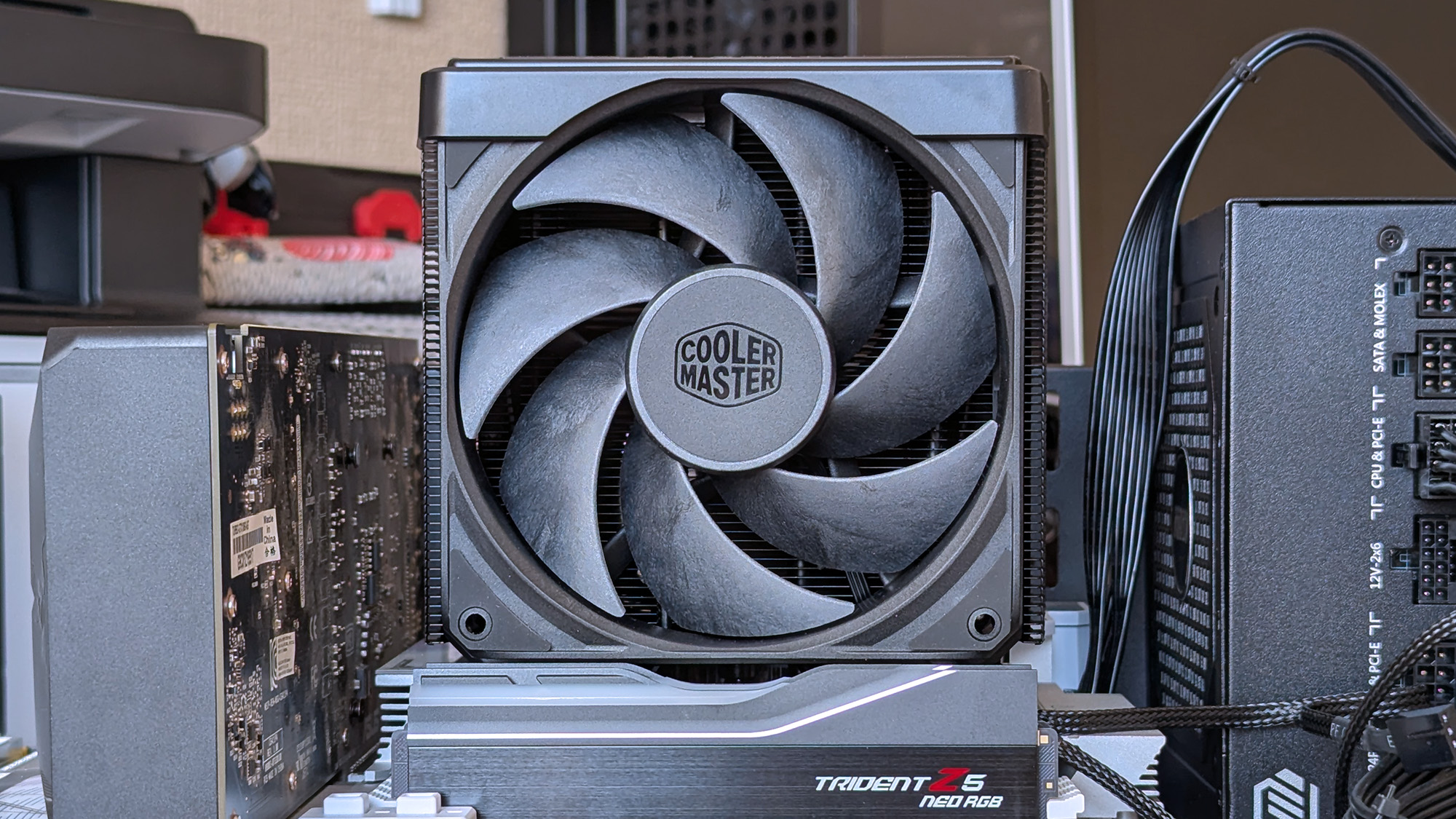
Even on an open-air test bench, this is an imposing air cooler.Ben Wilson | Windows Central
Cooler Master V8 ACE 3DHP installed on a test bench with RAM, power supply, and graphics card visible.
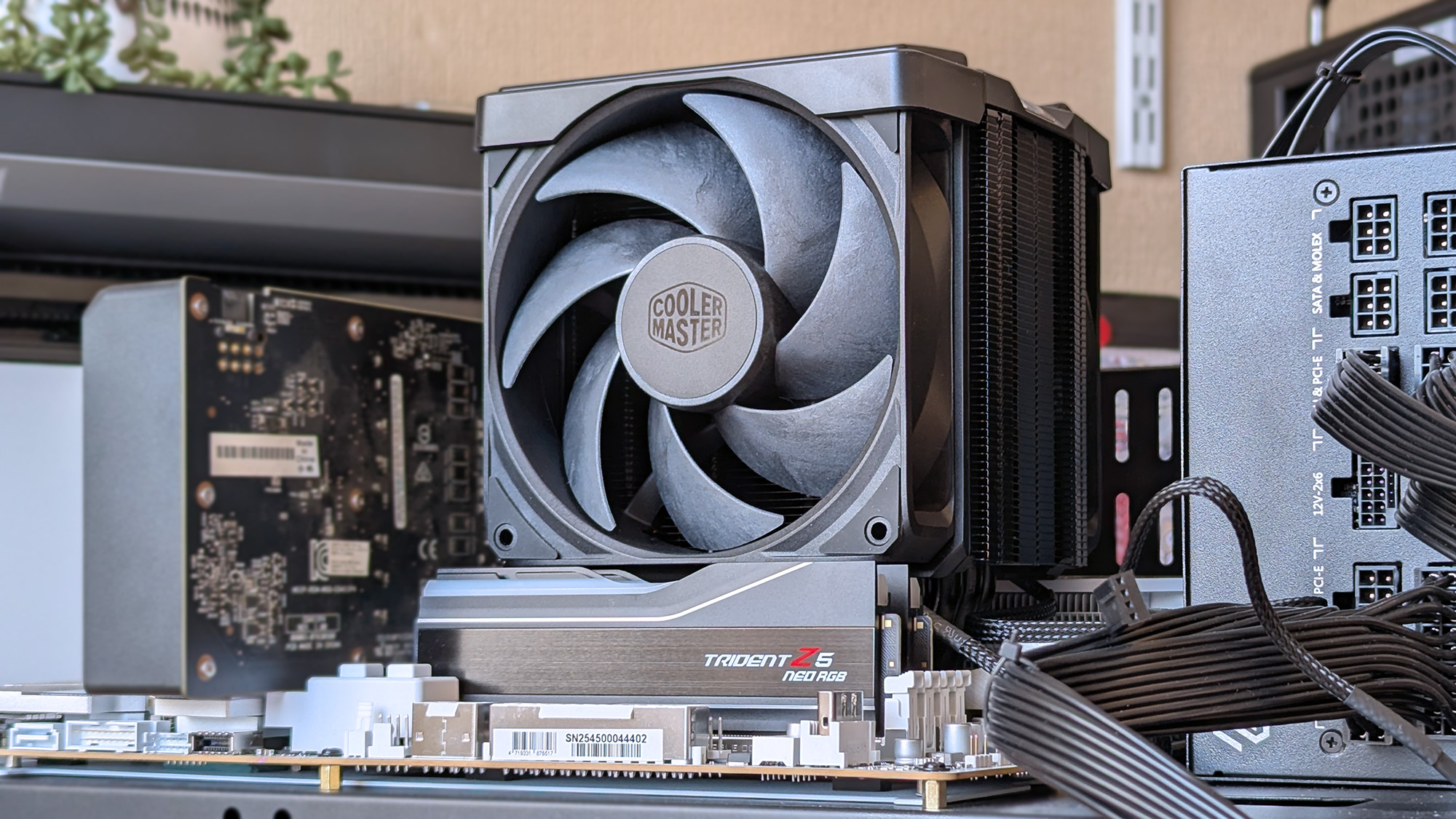
Nevertheless, I didn't experience any RAM clearance issues.Ben Wilson | Windows Central
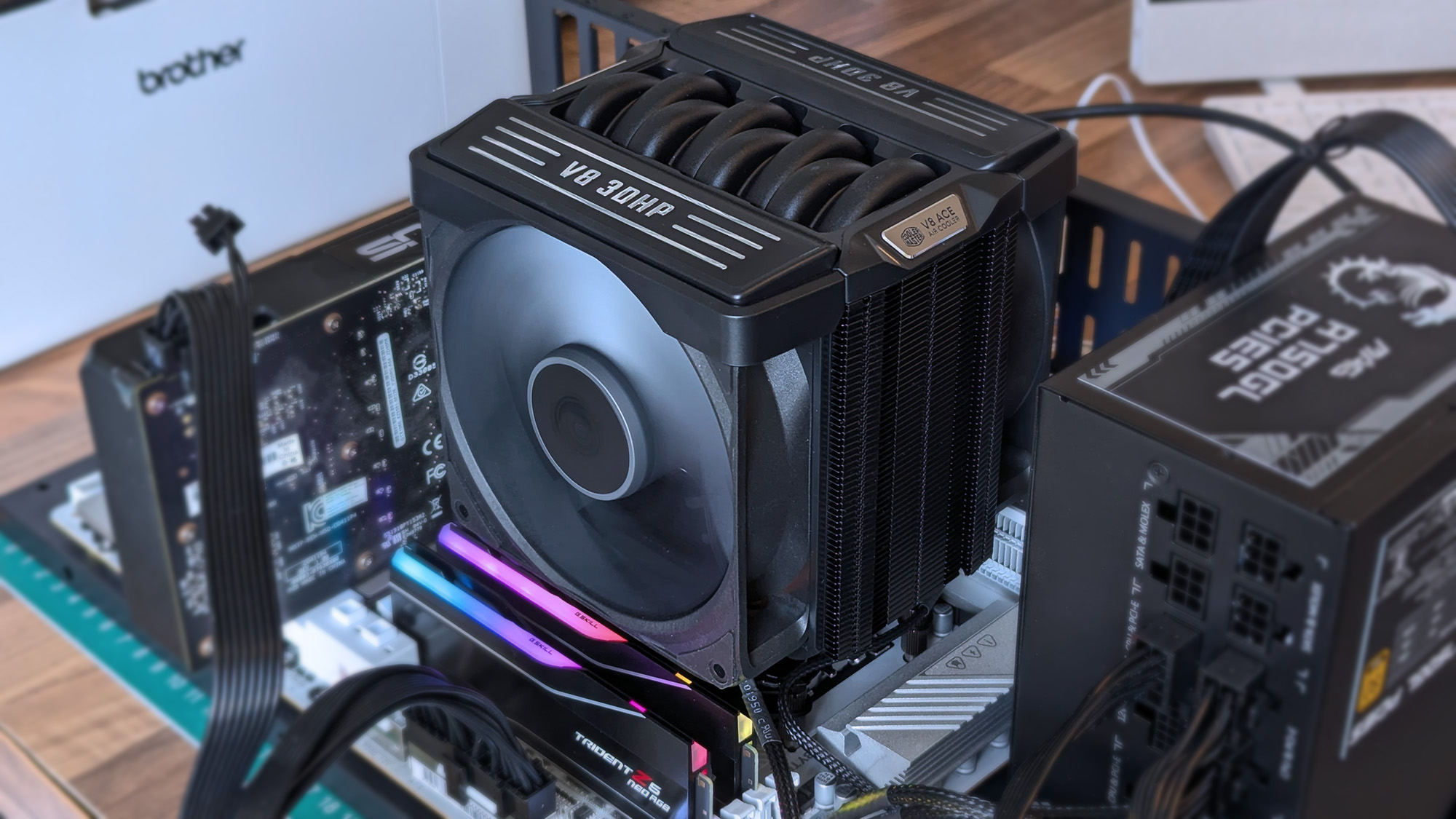
Cooler Master V8 ACE 3DHP CPU cooler installed inside a test bench with running fans above RGB RAM
There's no RGB, and I don't see any reason to raise the cost further by including it.Ben Wilson | Windows Central
Close‑up of the Cooler Master V8 ACE 3DHP CPU cooler installed inside a test bench, showing its engine‑inspired shroud, curved heat pipes, and fin stack.
This is the part you'll want to show off, so make sure your PC case has a clear side panel.Ben Wilson | Windows Central

Installation was a breeze. The V8 ACE 3DHP attaches to the standard AM5 backplate with four thumbscrews, two plates, and four more screws to hold it in place. The fans slide off the heatsink, so I can attach the two threads and tighten everything up. Finally, the fans are reattached and daisy-chained together, connecting to the CPU_FAN header.

Clearance is slim, but it fits cleanly over my RAM and the Gigabyte X870E Aorus Master X3D ICE SSD heatsink, with a slight amount of breathing space over G.Skill Trident Z5 Neo RGB modules. Running an AMD Ryzen 7 9850X3D on my open-air test bench at around 5.2GHz for 15 minutes kept an average temperature of 81.5°C, peaking at 83.5°C.

Unsurprisingly, it maintains a lower temperature on this powerful chip than my ~$35 Thermalright Peerless Assassin 120 SE — and our sister site goes deeper into V8 ACE 3DHP benchmarks over at Tom's Hardware if you're craving more specific test results — while its fans thankfully showed no signs of rattles or other unwanted motor noise.

Does the V8 ACE 3DHP have any issues?

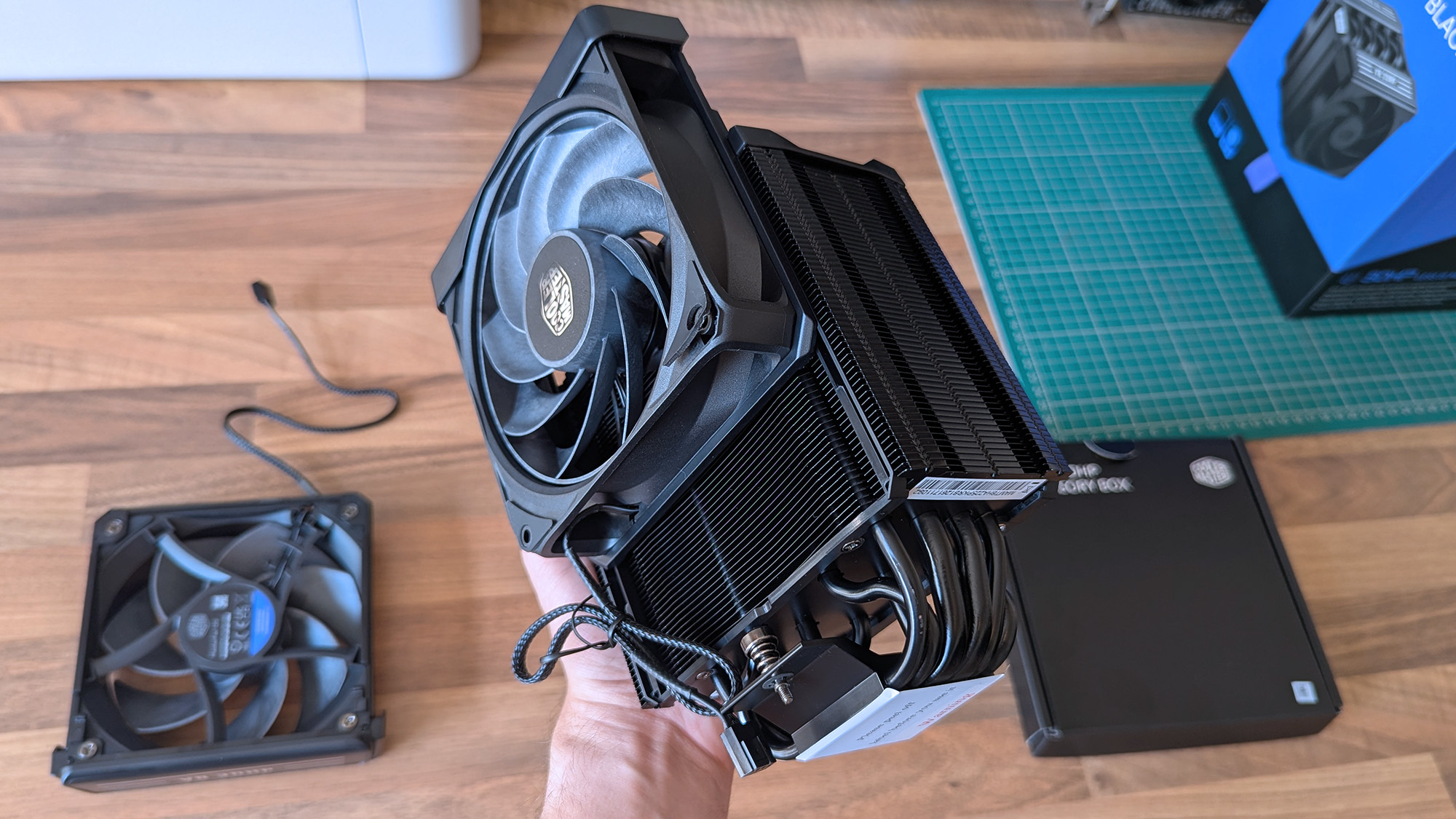
A hand lifts the Cooler Master V8 ACE 3DHP CPU cooler, showing its large heatsink, multiple heat pipes, and mounted fan. Another fan, product box, and PC parts are arranged on the desk below.
They won't slip off without a firm pull, but the heatsink's weight alone can dislodge the fans.Ben Wilson | Windows Central
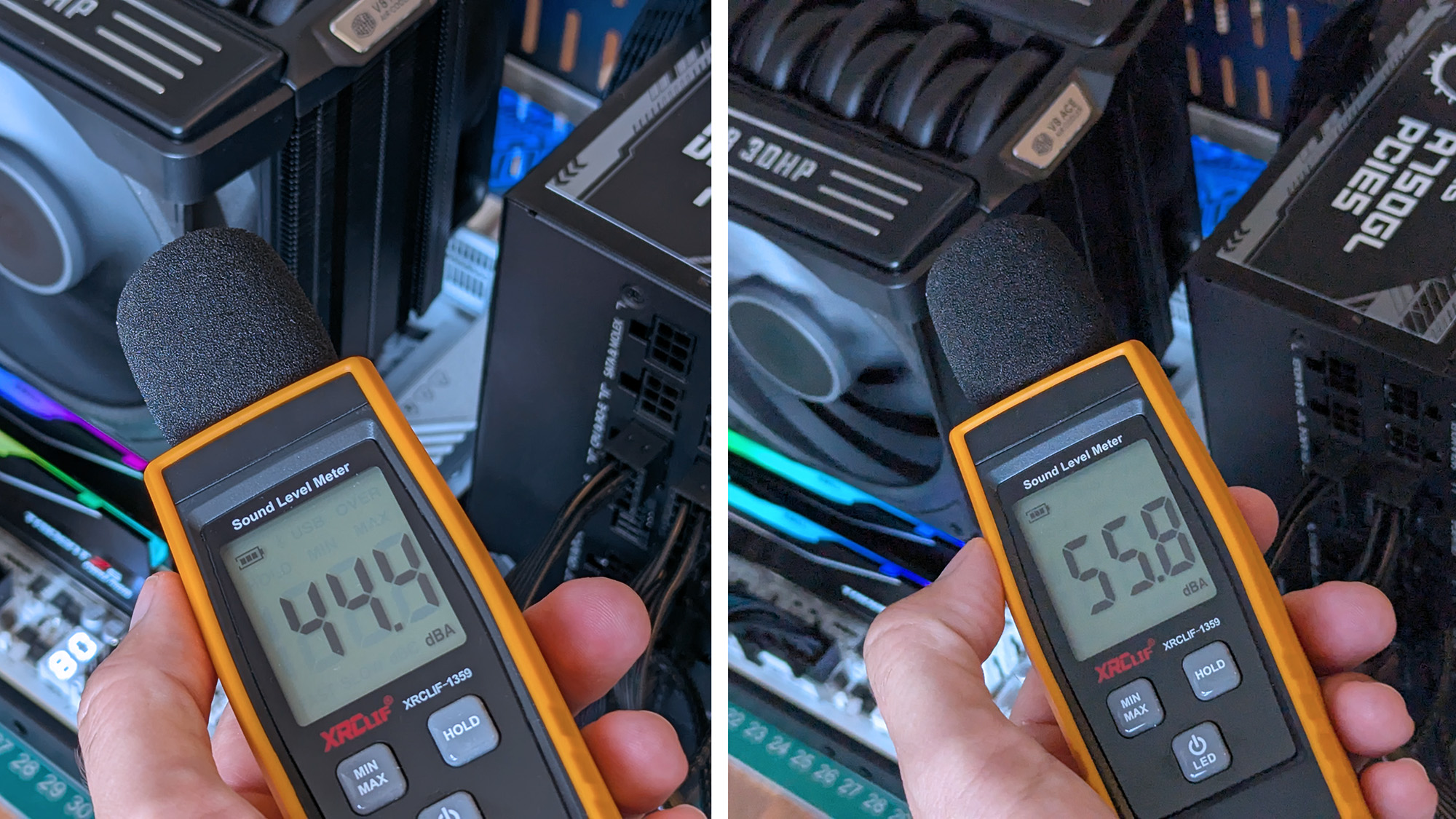
Handheld sound level meter readings of 44.4 dBA and 55.8 dBA positioned near an open PC test bench, measuring acoustic output from the Cooler Master V8 ACE 3DHP cooler.
It isn't the loudest cooler in the world, but remember, my open setup had plenty of space to breathe.Ben Wilson | Windows Central

Being such a chunky cooler with a performance focus, the V8 ACE 3DHP is heavy — around 2.57 lbs (1.17 kg) — and it'll need plenty of cool, strong intake airflow to feed its thick, 30mm PWM fans, which generate at least 55 dBA of noise under load. PC builders tempted by this cooler will surely take its dimensions and clearance considerations into account, but it's still surprisingly big.

The V8 ACE 3DHP is heavy — around 2.57 lbs (1.17 kg) by my estimate — and it'll need plenty of cool, strong intake airflow to feed its thick, 30mm PWM fans.

Because those fans slide into place on rails, you'll also want to be careful when handling this cooler. Although I'd mostly held it by the center section, I had once shifted my grip to one of its fans, which slipped down before I quickly caught it. I think my heart fell further than the cooler physically did, but it was a lesson learned. Nice feature, but be safe handling those detachable fans.

Should you buy the V8 ACE 3DHP?

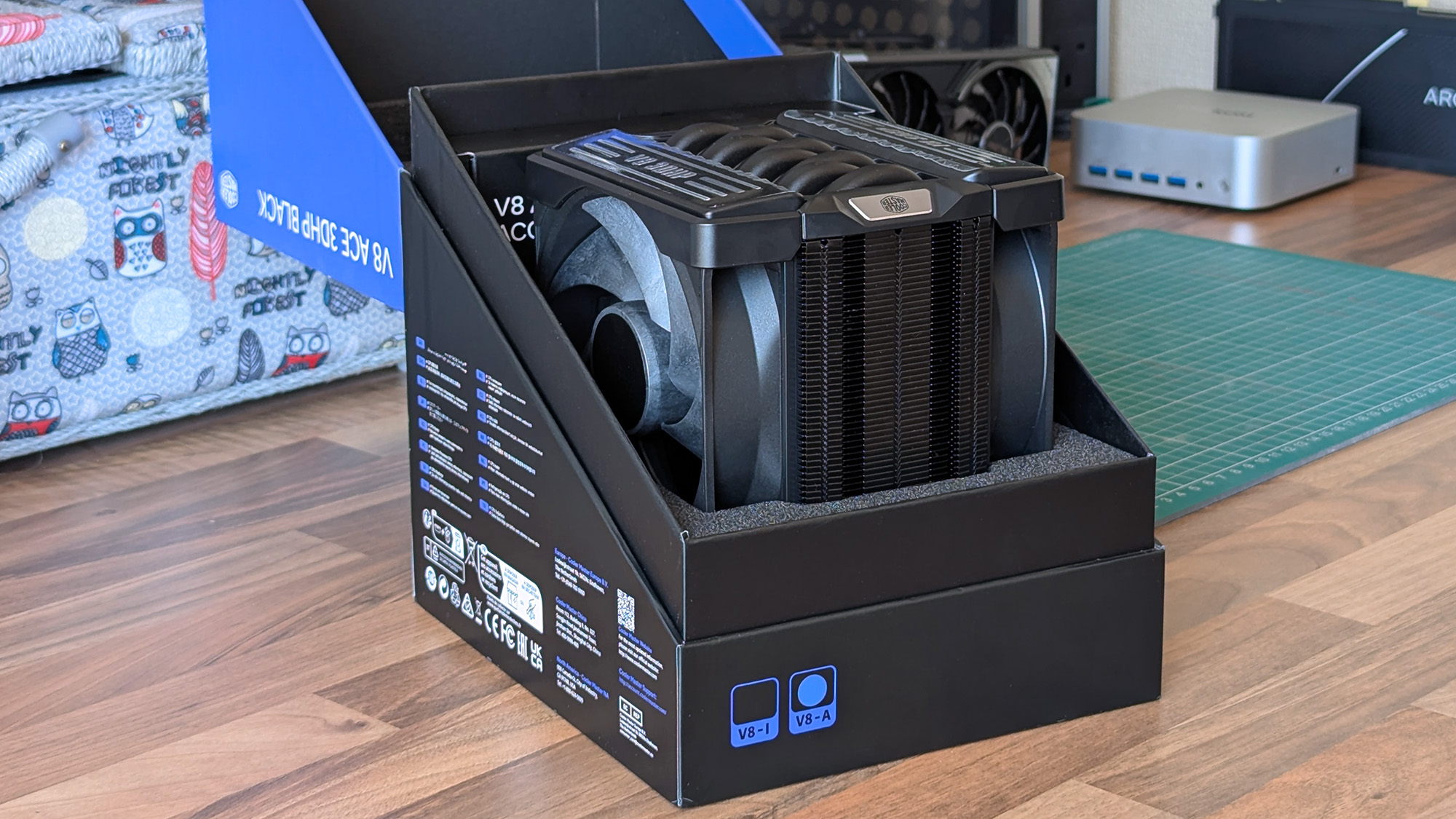
The Cooler Master V8 ACE 3DHP Black CPU cooler rests inside its open box, revealing its dual‑fan design and dense fin stack. Surrounding PC parts and tools sit on a desk with a green cutting mat.

If you're going all out on a high-end CPU, then the V8 ACE 3DHP could replace the usual AIO liquid setup. (Image credit: Ben Wilson | Windows Central)

You should buy this if ...

✅ You want to cool a powerful, high-performance CPU

✅ You're building in a PC case with plenty of airflow

You should not buy this if ...

❌ You're planning a compact gaming PC

The V8 Ace 3DHP is an impressive feat, but it demands a constant source of cool air moving through its thick heatsink. As long as you're planning ahead with a PC case that supports healthy airflow with a proper setup of intake and exhaust fans, then this'll be a great pairing for a higher-end, high-TDP processor.

Push it close to a demanding GPU, and there's a chance you'll see less-than-optimal CPU performance if the ambient temperature inside grows unchecked. However, if you're certain you know what you're doing, it wouldn't be impossible to keep this cooler happy in a miniature case with the right airflow setup.

Cooler Master V8 ACE 3DHP CPU cooler render

Cooler Master
V8 Ace 3DHP CPU Air Cooler

Built for AMD AM4/AM5 sockets, Cooler Master includes thermal paste and optional mounting brackets for Intel LGA.

Close‑up of the Cooler Master V8 ACE 3DHP CPU cooler installed inside a test bench, showing its engine‑inspired shroud, curved heat pipes, and fin stack.

Cooler Master's V8 ACE 3DHP CPU is expensive, but I'm impressed nonetheless.

  •  

One of our favorite Snapdragon X Plus Surface Laptops just dropped 27% — finally making it affordable again

Back in April, Microsoft raised the prices of all of its Surface laptops as a consequence of the ongoing RAM crisis, making these once valuable desktops nearly untenable for most people who can't afford them.

Yet not all hope is lost for these critically acclaimed laptops, as they do occasionally get generous discounts to bring their prices back down to more manageable levels.

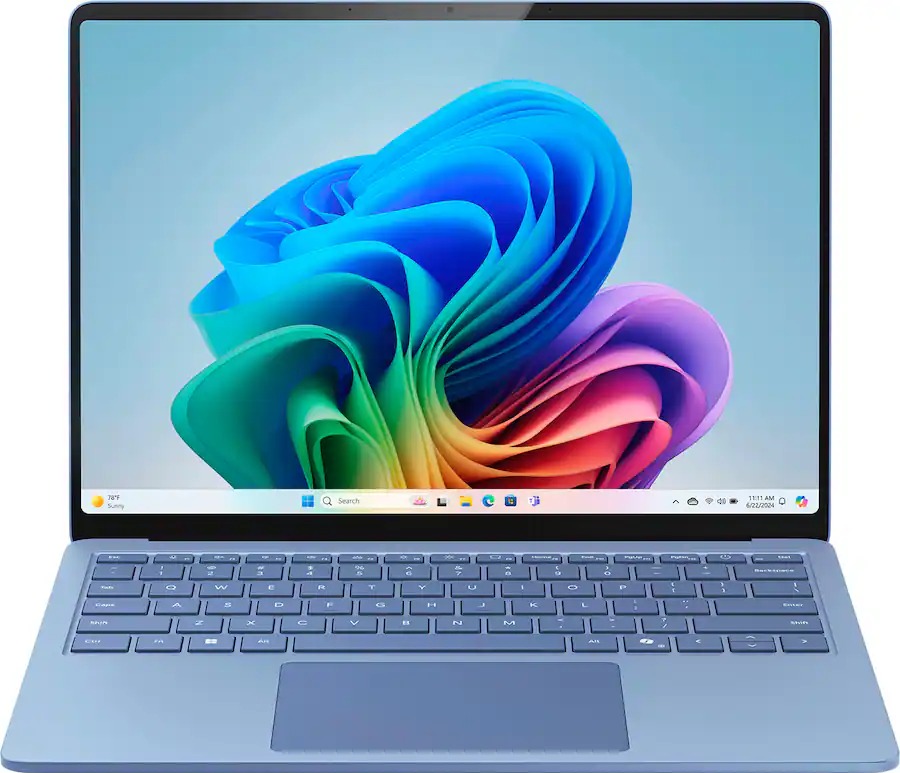
Such is the case with the Microsoft Surface Laptop (7th Edition) with the Snapdragon X Plus CPU, 13.8-inch display, 16GB of RAM, and 512GB SSD configuration that's now on sale with a 27% discount for $1099.99 at Best Buy.

Surface Laptop (7th Edition) (13.8-inch touchscreen, Snapdragon X Plus [2024], 16GB RAM, 516GB SSD): was $1499.00 now $1099.99

"Microsoft's Surface Laptop 7 is the clamshell form factor perfected. With a gorgeous new design, incredible keyboard and trackpad, smooth 120Hz display, good all-day battery life, and excellent Snapdragon X Elite processor under the hood, this is the laptop to beat in 2024." — Zac Bowden, Senior Editor

Windows Central review (Snapdragon X Elite configuration): ⭐⭐⭐⭐⭐View Deal

What makes the Microsoft Surface Laptop (7th Edition) worth the money?

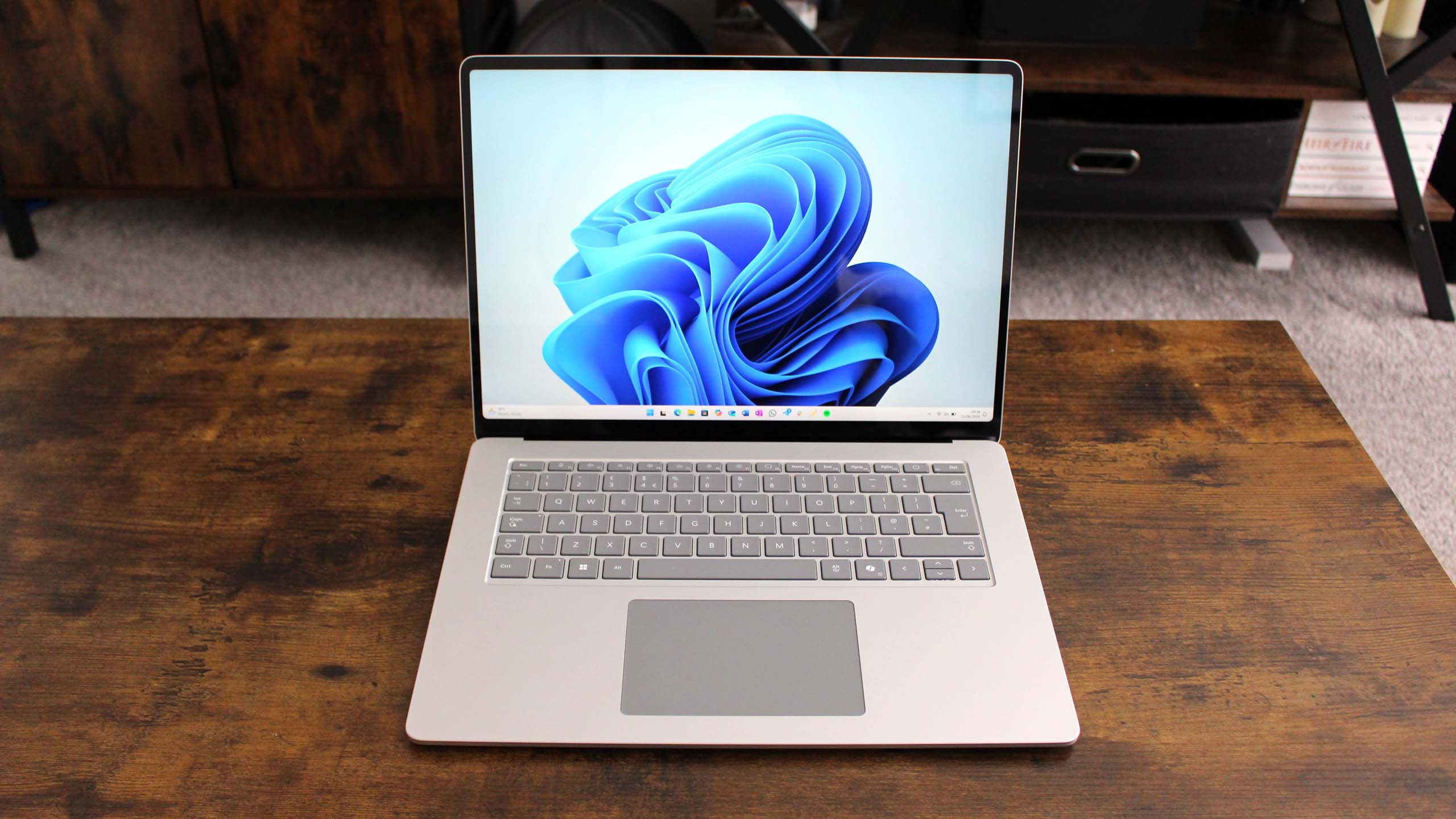
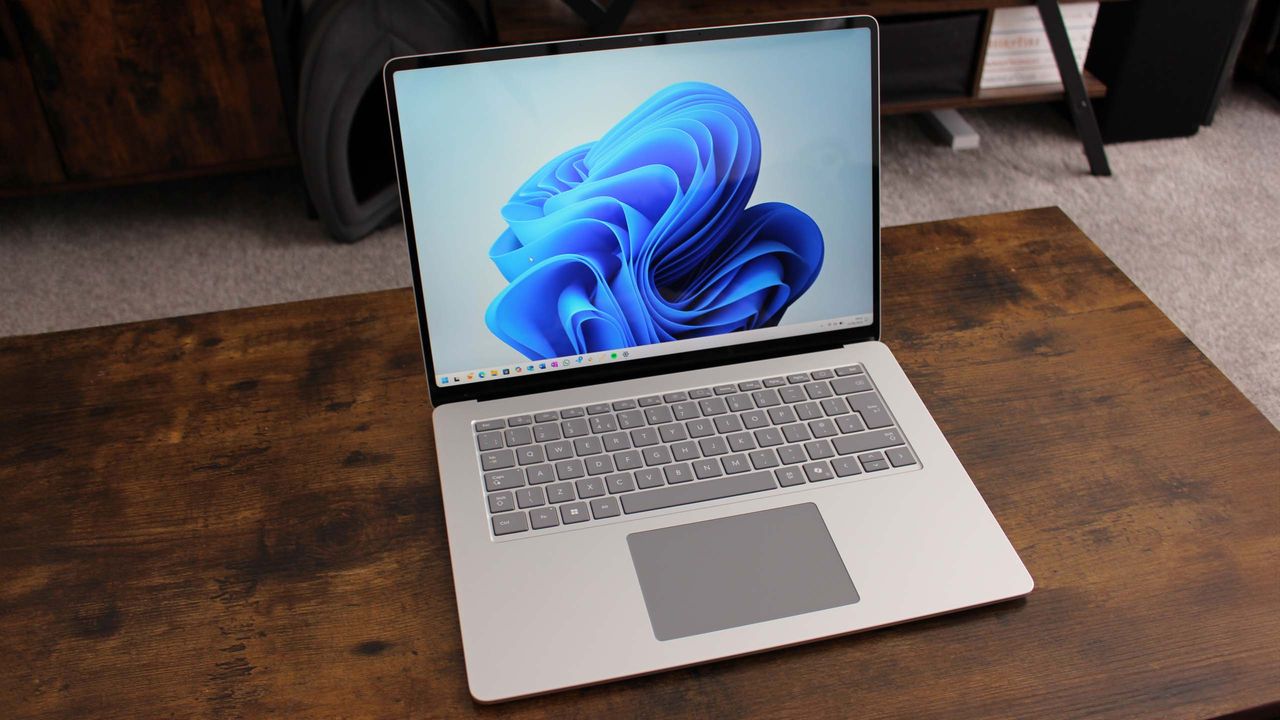
A silver laptop with a blue abstract wallpaper on its screen sits open on a dark brown wooden desk in front of a blurred wooden furniture piece.

The Microsoft Surface Laptop (7th Edition) on display (Image credit: Windows Central (Zac Bowden) | Microsoft)

Despite current times being the worst time to buy a Surface Laptop, that shouldn't deter you from getting one if it's on sale, as they boast the best specs for conquering daily office workflows or finishing homework on time at school.

The 13.8-inch, 7th Edition Microsoft Surface Laptop is no exception, as it delivers exceptional performance on everyday tasks thanks to its Snapdragon X Plus processor and 16GB of RAM.

It also features a splendid, ultra-thin clamshell design that's pretty to look at, practical enough to carry around while traveling, durable enough to withstand accidental (or intentional) bumps or bruises, and comfy enough to hold in your hands while working.

Other notable features include a 2K touchscreen display with a 120Hz refresh rate to render images with crystal-clear 2304x1536 resolution, a respectable battery life of around 18-19 hours, and a Neural Processing Unit (NPU) with 45 TOPS to efficiently run AI-related programs like Recall or Windows Studio Effects.

If you need to browse the net for research notes fast or write down your work on documents or spreadsheets using Microsoft Office without slowdown, you can't go wrong with the Microsoft Surface Laptop (7th Edition) now that it's on sale, as it's one of the best Windows laptops around.

FAQ

Is it good for AAA PC gaming?

No, the Microsoft Surface Laptop was never designed for AAA PC gaming. As a result, high-end PC games will either barely be able to run at mid-low graphical settings or not function at all.

Is its RAM and SSD replaceable?

The Microsoft Surface Laptop (7th Edition)'s default SSD can be replaced, but its default RAM cannot, as it's soldered into the motherboard. So, you will need to decide how much RAM it will have during checkout while shopping online or locally.

Does legacy software work on this laptop?

Most native apps and internet browsers will function on the Microsoft Surface Laptop (7th Edition). However, specialized or more aged x86/x64 software will need Prism emulation to function properly on this laptop.

Click to join us on r/WindowsCentral

Join us on Reddit at r/WindowsCentral to share your insights and discuss our latest news, reviews, and more.

Surface Laptop 7

The Microsoft Surface Laptop (7th Edition) on display.

  •  

School life is tough, but this durable 2-in-1 laptop with a touchscreen display makes work and exams a lot more bearable

Best Buy's back-to-school sale continues to provide illustrious discounts on all kinds of computers and laptops built to help students succeed in school.

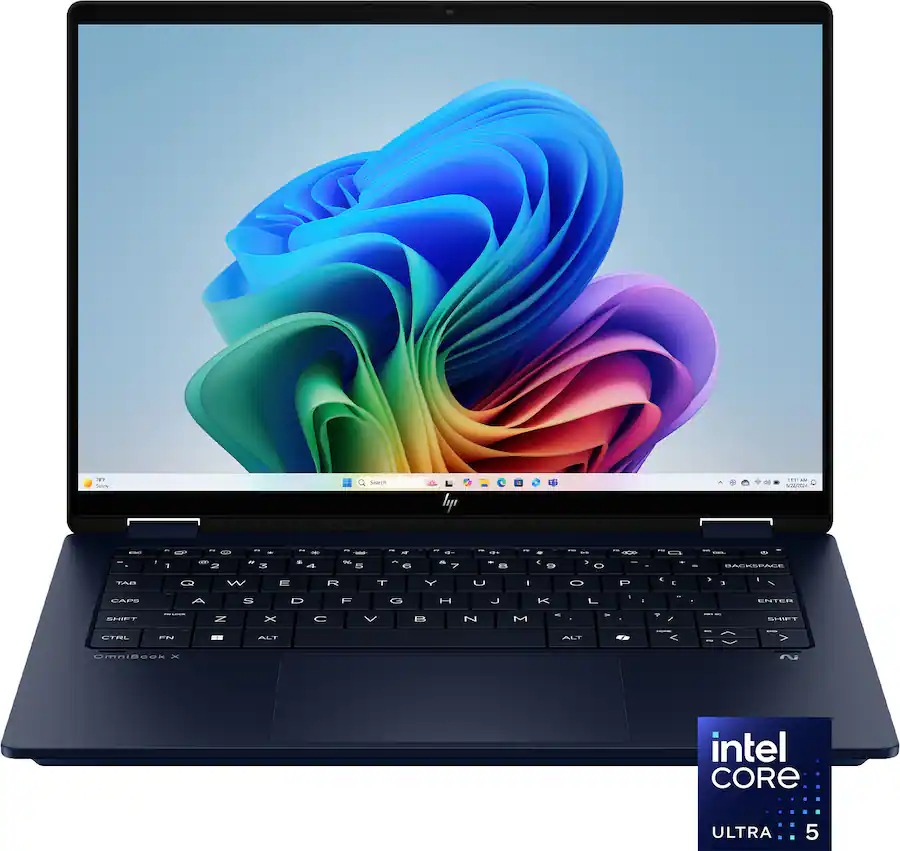
If you're looking for a high-quality laptop with solid performance and a clear display that has vastly benefited from this sale, then look no further than the 2025 edition of HP OmniBook X Flip 14", which is now 30% off for $699.99 at Best Buy.

OmniBook X Flip 14" (Intel Core Ultra 5 226V, 16GB RAM, 512GB SSD, Copilot+, 2-in-1 2K Touchscreen): was $999.99 now $699.99

"The HP OmniBook X Flip 14 (2025) isn't an exciting laptop, but it does tick a lot of boxes for a capable and reliable mid-range 2-in-1 PC." — Zachary Boddy, Former Staff Writer

Windows Central review: ⭐⭐⭐⭐View Deal

Why buy the HP Omnibook X Flip 14"?

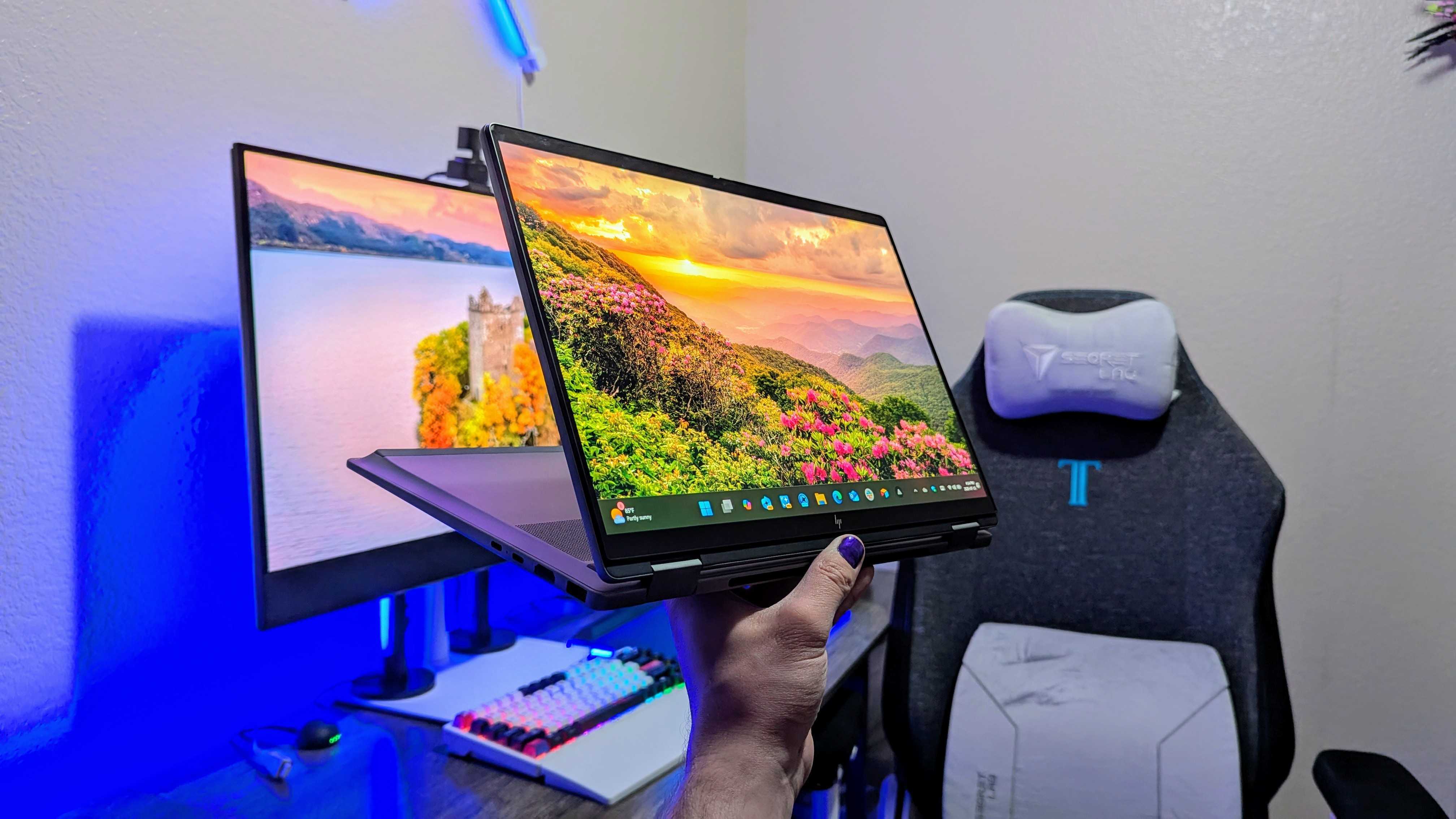
Image of the HP OmniBook X Flip 14 (2025) laptop.

The HP OmniBook X Flip 14 (2025) in its tablet mode. (Image credit: Windows Central | Zachary Boddy)

The HP OmniBook X Flip 14" (2025) laptop variant that's on sale right now comes configured with an Intel Core Ultra 5 (Lunar Lake) 226V CPU, 16GB of RAM, and a 512GB SSD for storage.

For those who don't speak techno-wizardry, all this means is that this laptop can run software like Microsoft Office, browse the web, email, and multitask with multiple apps at once without any slowdown.

It's also great for creating digital artwork as it features a 14-inch, 1920x1200 touchscreen display capable of loading and rendering images with crisp clarity so you can make out all the details much easier when drawing.

Speaking of drawing, the HP Omnibook X Flip 14" (2025) is compatible with stylus pens (which are sold separately), so you will be able to draw on the screen instead of using a mouse if you prefer drawing that way.

Add to that a respectable battery life of up to 22 hours with its Intel chip, a durable and portable-friendly design, and an HP 5MP IR Camera for video conferencing, and you have a sweet mid-range laptop for work whose value has risen dramatically thanks to Best Buy's 30% discount.

FAQ

Is this a Copilot+ PC?

Yes, the HP Omnibook X Flip 14" (2025) laptop is a Copilot+ PC as it has an NPUcapable of 45 TOPS to help it perform AI-related tasks with fast and stable performance rates.

What parts can be upgraded?

The only part of the HP Omnibook X Flip 14" (2025) laptop that can be upgraded is its 512GB SSD.

Can its RAM be upgraded?

The HP OmniBook X Flip 14" (2025) laptop's 16GB RAM is soldered, so it can't be replaced.

Click to join us on r/WindowsCentral

Join us on Reddit at r/WindowsCentral to share your insights and discuss our latest news, reviews, and more.

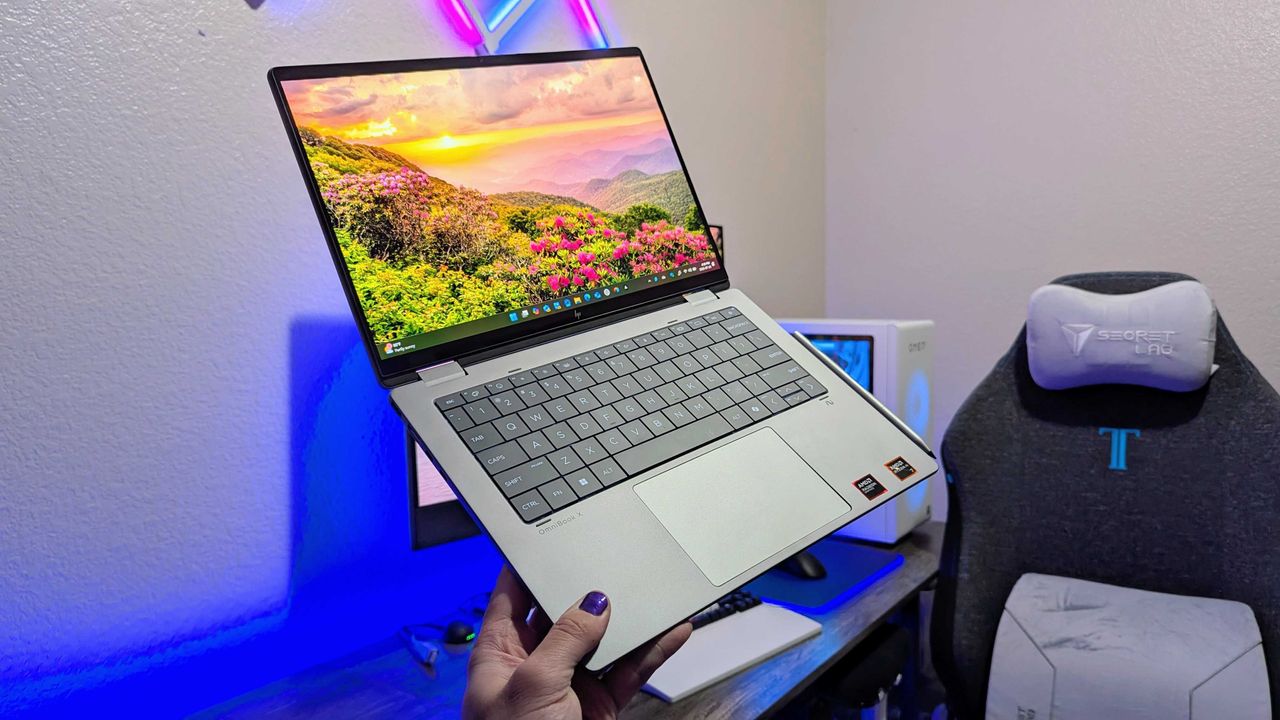
A person holds a sleek silver laptop with a vivid screen displaying a sunrise over a flower-filled landscape. A gaming chair and PC setup are in the background.

HP's Omnibook X Flip 14 laptop with an AMD configuration.

  •  

Did the Surface Phone FINALLY leak? The Windows Central Podcast breaks down what we know about the mysterious Windows Phone prototype, plus a recap of the latest news from Windows and Xbox

Join Zac Bowden and Jez Corden on this week’s Windows Central Podcast as they dive deep into unreleased Microsoft hardware, AI developments, and big Xbox announcements!

  • The Lost "Surface Phone" Prototype: Zach and Jez dissect newly leaked images and video of an unreleased 2013-era Microsoft-built Windows Phone prototype, reminiscing about the Lumia era, Nokia’s acquisition, and what could have been.
  • Microsoft Copilot’s Super App & AI Disillusionment: A look at the rollout of the new unified Copilot experience (merging consumer and Microsoft 365 features), dropped functionalities (Group Chat, Podcast mode, Deep Research), and a frank discussion on AI hype, practical workflows, and "AI psychosis".
  • Xbox Backward Compatibility Coming to Windows PC: The hosts break down the official announcement of original Xbox/Xbox 360 emulation on Windows, potential licensing hurdles, Play Anywhere integration, and upcoming achievement support.
  • Gaming Rumors & Franchise Future: Updates on The Elder Scrolls VI codename rumors (Sentinel), long development cycles across Bethesda/Obsidian, and a candid critique of the state of the Halo franchise following Halo Campaign Evolved and project cancellations.
  • New Xbox Console Features & Live Q&A: A discussion of the upcoming "Platinum Trophy" achievement equivalent, party/mic audio in Game DVR captures, and a live Q&A touching on Windows K2 progress, mobile shells for Windows on ARM, MSN's automation, and modern foldable vs. slab phones.

This episode of the Windows Central Podcast is sponsored by Surfshark VPN. Unlimited devices, access your content from anywhere, and auto-block malware on Windows, Edge, and other platforms from $2.50/mo, with 3 months extra FREE. Sign up today!

Have a question you want us to answer on the podcast? Send it to us at [email protected]

Hosts:

Subscribe to the Windows Central Podcast

If you like the show, please let us know by give us a rating on your podcast platform of choice. It really helps us!

LIVE Video Podcast

You can watch the live, uncut version of the Windows Central Podcast on our YouTube channel!

Click to join us on r/WindowsCentral

Join us on Reddit at r/WindowsCentral to share your insights and discuss our latest news, reviews, and more.

Zac and Jez on the Windows Central Podcast

Zac and Jez on the Windows Central Podcast

  •  

A YouTuber just stress-tested a Snapdragon X2 laptop for 17 hours straight

The Lenovo Yoga Slim 7x (Gen 11) is one of the best laptops we've reviewed all year. Our Cale Hunt called the PC a "top choice for students, small business pros, and even casual Windows users who want a premium laptop." Now, thanks to a YouTuber, the laptop can also claim the title of a streaming battlestation.

YouTuber "DevonDoesTech" used the Yoga Slim 7x to power his streaming and content creation setup for a 17-hour stream marathon. DevonDoesTech was sent the laptop by Qualcomm and tested the PC by using it as the heart of his stream.

The latest Yoga Slim 7x runs on a Snapdragon X2 processor. The one DevonDoesTech used has the Snapdragon X2 Elite inside. The idea behind the stream was to see how the chip handled real-world usage.

It's a clever way to showcase the new chip from Qualcomm. Snapdragon X processors have had respectable specs for a while, but posts about the chips on social media often include people asking about app compatibility.

An Arm blog post from July 2025 stated that 90% of time spent on Windows on ARM PCs is spent on natively compiled apps. Since then, NVIDIA has announced RTX Spark, which adds another major name to the Windows on ARM platform.

But boasting about how many apps are natively compiled is not the same as showing ARM-based PCs can actually be used to get work done. The DevonDoesTech stream required OBS Studio, Meld Studio, DaVinci Resolve, Discord, and other apps.

DevonDoesTech streamed for over 1,000 minutes during his stream. The setup had both a horizontal stream on YouTube and a vertical stream on Twitch that ran simultaneously.

"I didn't notice a difference. Never once during the 17-hour stream, never once during my testing, never once during my road trip did I say 'Dang, I really wish that I had the power of my desktop computer.'"

He added that the Yoga Slim 7x is "kind of blowing [his] mind."

While ARM-based computing has come a long way, there are still games that do not work with Snapdragon X chips. Kernel-level anti-cheat is required for some games and is still an awkward spot. But even in that area there's promise for improvement.

Yoga Slim 7x (Gen 11): was $2099.99 now $1449.99

This laptop has a sleek design and enough power to handle everything from daily productivity to creative work. This model has 32GB of RAM and 1TB of storage.View Deal

Yoga Slim 7x (Gen 11): was $1499.99 now $899.99

If you love the look and design of the Lenovo Yoga Slim 7x but don't need the power and specs shown off in DevonDoesTech's video, this model is for you. It runs on a Snapdragon X2 Plus processor and is part of a massive doorbuster deal.View Deal

It's not just DevonDoesTech

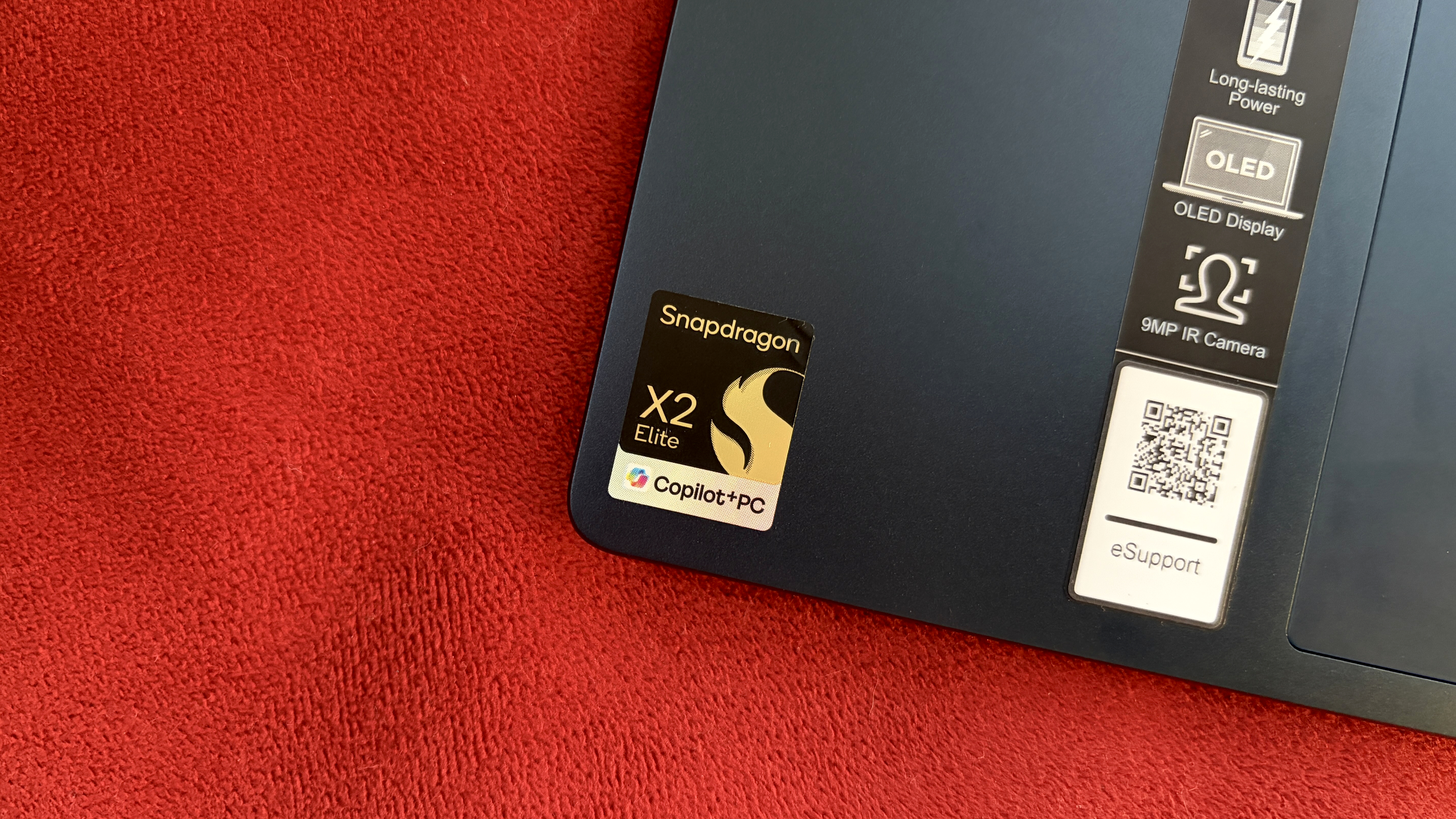
Corner of a laptop on a red fabric surface, featuring a Snapdragon X2 Elite sticker, indicating the use of a powerful processor and Copilot+PC technology.

Our expert was also impressed with the Snapdragon X2 Elite and the Lenovo Yoga Slim 7x during his testing.

DevonDoesTech's praise is quite effusive, but it aligns with our own experience. The Yoga Slim 7x earned a 4.5 out of 5 in our review and Hunt said the Snapdragon X2 Elite chip and the laptop are a "blast" to use.

After using a PC with a Snapdragon X2 for one month, Hunt was "totally sold on Snapdragon X2." He also spoke on app compatibility:

"For a fairly casual Windows user like me, ARM64 app compatibility is a complete non-issue. You can see for yourself if the apps you use are native or emulated on the extremely useful WorksOnWOA website."

There was a time when ARM-based laptops were lackluster compared to their x86 counterparts. I'm happy to see those days are behind us.

Click to join us on r/WindowsCentral

Join us on Reddit at r/WindowsCentral to share your insights and discuss our latest news, reviews, and more.

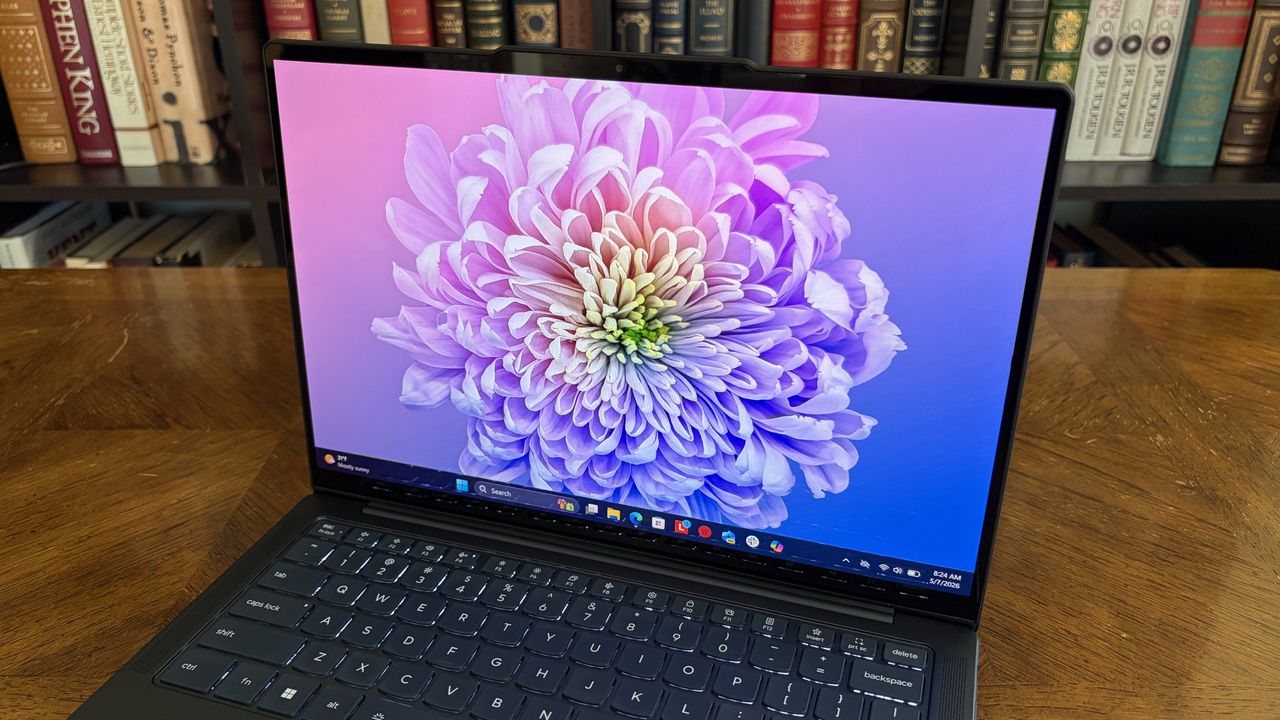
A laptop on a wooden table displays a vibrant, colorful chrysanthemum on its screen. Background: a bookshelf lined with assorted books. Cozy ambiance.
A laptop on a wooden table displays a vibrant, colorful chrysanthemum on its screen. Background: a bookshelf lined with assorted books. Cozy ambiance.
  •  

Snapdragon C specs mean Qualcomm could eat Intel's lunch with budget laptops: Here's what we know (and what we still don't)

We now have more details about Qualcomm's Snapdragon C chips. The processors were officially announced in May, but we did not have full specs or details at the time.

Snapdragon C chips are designed to power budget laptops that start around $300. Qualcomm has updated its product pages for the processors, including full specs.

The specs are promising and stack up well against offerings from competitors, such as the Intel N250. Qualcomm shared some favorable comparisons between Snapdragon C and Intel N250 that suggest Qualcomm's new chip could compete very well in the budget laptop space.

Snapdragon C specs and details

Snapdragon C logo in a white transparent environment resembling a motherboard.

Snapdragon C chips will power budget-friendly laptops starting at around $300. (Image credit: Qualcomm)

Snapdragon C promises up to 67% faster performance than Intel N250 according to Qualcomm. The biggest difference between the chips appeared in Cinebench MT testing, but Snapdragon C defeated Intel across a range of Qualcomm's tests.

Those performance tests are when both chips are running on battery power, which leans in Qualcomm's favor. Snapdragon processors often thrive in unplugged testing.

Qualcomm claims Snapdragon C delivers 106% better power efficiency during Netflix playback. Microsoft Teams (99% better) and YouTube (86% better) are both wins for Snapdragon C as well.

Power usage by idle apps is 39% better in power efficiency, according to Qualcomm.

Snapdragon C specs

CPU

Qualcomm Kryo CPU (6nm)

CPU cores

8

CPU max clock speed

3.0 GHz

GPU

Qualcomm Adreno

NPU

Qualcomm Hexagon

Memory

LPDDR5x

Maximum memory

16GB

Wi-Fi

Wi-Fi 6E, Wi-Fi 6

Bluetooth

Bluetooth 6.0

Snapdragon C has a dedicated NPU, which helps with AI tasks. I doubt AI usage will be heavy among budget laptop users, so CPU performance and other specs will likely be bigger factors for those shopping for affordable PCs.

Windows 11 on ARM has improved greatly when it comes to app compatibility, so that should not be as much of a concern as it would have been just a few years ago. For many people, app compatibility is no longer a concern for Windows 11 on ARM.

There are some legacy and enterprise apps that are not compatible with Snapdragon C and other ARM-based processors, but the list of the best native Windows on ARM apps continues to grow and includes big-name and niche apps.

For non-native apps, Microsoft's Prism emulation has improved over the years as well. That means even apps running in emulation perform better.

What we still don't know about Snapdragon C

The official specs of Snapdragon C are promising, as are the figures shared by Qualcomm. But there are still several key facts we do not know, some of which won't be confirmed until laptops with the new chips launch.

We also need to know how the chips perform when laptops are plugged in and how that performance compares to that of Intel chips.

All of the claims about performance and efficiency come straight from Qualcomm, so we'll need to see them verified independently.

Qualcomm has a good track record with claims like this. Benchmarks and comparisons shared with the press about previous chips proved accurate in real-world testing.

Qualcomm has always been bullish about how well its Snapdragon processors perform when unplugged compared to Intel's chips. Qualcomm had an entire ad campaign highlighting differences on that front.

I'm confident that Snapdragon C chips will perform well and compete with similar chips from Intel, but we need concrete figures from the wild and hands-on experiences to know exactly how the new chips stack up.

Click to join us on r/WindowsCentral

Join us on Reddit at r/WindowsCentral to share your insights and discuss our latest news, reviews, and more.

Snapdragon C logo on a colorized transparent motherboard component.

Snapdragon C logo on a colorized transparent motherboard component.

  •  

Boeing 737 - 60 secondes pour hacker l'avion

Six chercheurs d'UC San Diego et d'Oberlin College ont présenté le 13 août dernier à l'USENIX Security Symposium de Baltimore un implant assez petit qui se branche sur un port de maintenance de la baie électronique d'un Boeing 737 et s'intercale ainsi entre le calculateur de vol et l'écran par lequel les pilotes le programment.

La trappe présente sur l'avion, qui y mène n'a ni serrure ni contrôle d'accès et est accessible depuis le sol, sans échelle. Les chercheurs estiment que ça peut se mettre en place en moins de 60 secondes, ouverture et refermeture comprises. Le boîtier, lui, disparaît sous le capuchon anti-poussière du connecteur.

Hé oui c'est un simple capuchon en plastique qui "protège" l'accès aux commandes de navigation d'un avion de ligne. C'est beau non ?

Ce connecteur donne un accès aux bus ARINC 429 qui transmette les échanges entre le calculateur, le FMC, et le clavier-écran du cockpit, le MCDU. La norme date de 1977 et ne prévoit aucune authentification et comme vous vous en doutez, c'est connu depuis longtemps, même si le plus souvent, les attaques envisagées sur les systèmes d'un avion visaient plutôt ses liaisons radio.

Toutefois, se brancher sur le bus ne suffit pourtant pas à le contrôler, puisque les autres équipements continuent d'émettre par-dessus. Sauf que les émetteurs légitimes passent par des résistances de 37,5 ohms qui brident leur courant, alors que le connecteur de maintenance, lui, attaque le bus en direct.

L'implant en profite alors pour pousser plus de courant que l'émetteur d'origine et écraser physiquement son signal. Les chercheurs appellent ça une attaque Bus Driver, et elle donne une interception complète du dialogue sans couper ni épisser le moindre fil.

Une fois ce dialogue sous contrôle, le boîtier ajoute un point de passage à la route programmée. Normalement, sur un 737, cette modification doit être confirmée par le pilote, qui appuie sur le bouton EXEC. Mais l'implant, lui, appuie tout seul, l'autopilote change de cap, et comme le voyant du bouton passe par le même bus, il reste éteint. Et comme les pages affichées sont réécrites en live pour montrer encore l'ancienne route, rien à l'écran ne trahit le changement.

Le même mécanisme peut servir aussi à fausser la masse de l'appareil saisie avant le départ, ou la température retenue pour calculer la poussée. Une masse sous-évaluée ou une température trop basse, et le calculateur commande alors une poussée insuffisante au décollage.

Bref, c'est la cata assurée... Et cela vaut pour tous les 737 NG et MAX.

Maintenant, reste à savoir dans quelles conditions cette attaque peut être réalisée. Car jusqu'à présent, tout a été validé mais uniquement sur un banc de vraies pièces de 737 câblées selon les schémas Boeing, et jamais sur un avion en service. Le Wi-Fi est bien intégré au boîtier, mais le papier précise que les auteurs n'ont pas pu tester si le signal de la cabine traverse le plancher de la baie.

Boeing a bien sûr été prévenu en avril 2020, et les chercheurs ont rejoué l'attaque avec succès sur le banc d'essai du constructeur en décembre 2023. Ils proposent de boucher ce type de connecteur, ou d'y déplacer les résistances de limitation. Boeing, lui, estime que "les couches de protection en place sur l'avion" limitent déjà "significativement la faisabilité et le risque d'attaques en conditions réelles".

Ouais les gars ont la flemme de sécuriser leur truc on dirait...

Source

  •  

Snapdragon X Plus laptops make mincemeat out of homework and exams, and one of our favorites is now on sale in time to help struggling students

Laptops outfitted with Qualcomm Snapdragon CPUs are some of the best in the market for people looking to crush their daily quotas or survive mountains of schoolwork due to their reliable performance rates. long battery lives and sturdy designs.

Yet, many of them have had their price jacked through the roof thanks to the ongoing memory crisis, making their value not worth the investment for most people with low budgets and incomes.

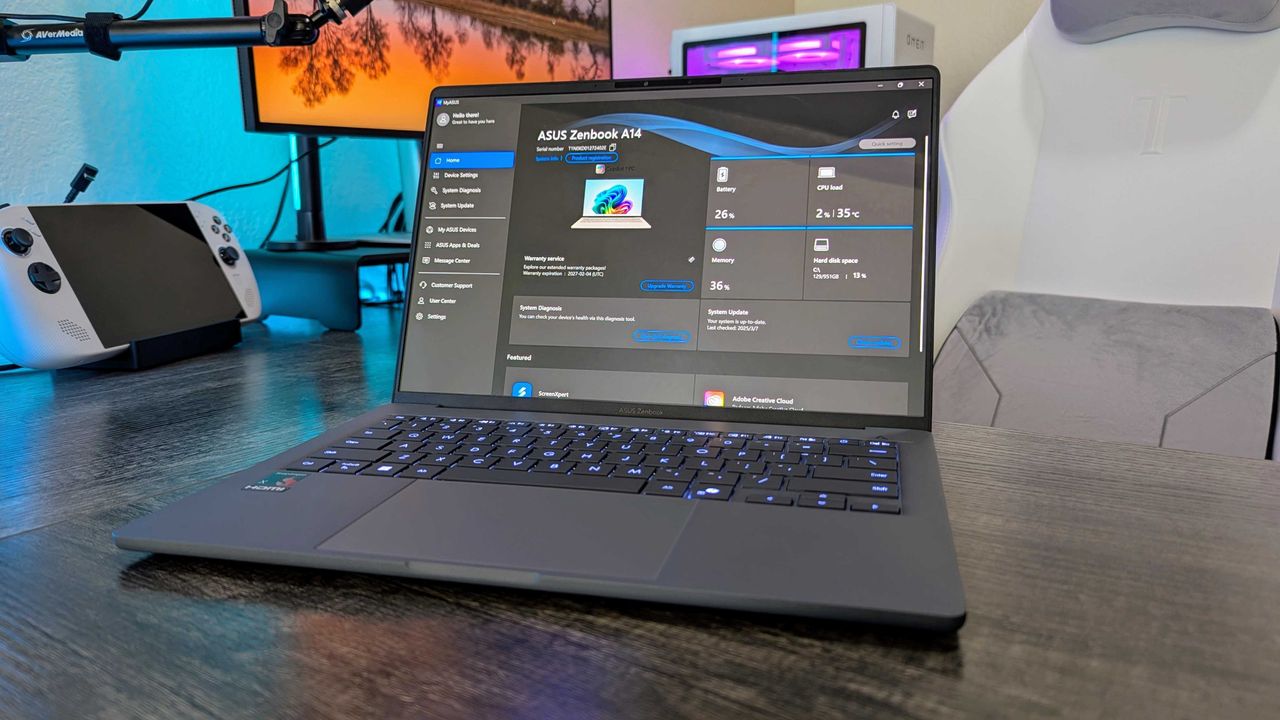
Fortunately, one of these laptops, the ASUS Zenbook A14 (2025), has managed to snag a sneaky 30% discount to give people an edge in completing their daily workloads for the reduced price of $699.99 at Best Buy (listing price was $999.99).

Zenbook A14 (2025): was $999.99 now $699.99

"With a magnesium chassis as light as air and as tough as stone, Snapdragon X series chipsets that barely sip on the physics-defying massive battery, and a great balance of practical function and aesthetic form, the Zenbook A14 is one of the best laptops of the year." ~ Zachary Boddy, former Staff Writer

Windows Central Review: ⭐⭐⭐⭐½View Deal

Why buy the ASUS Zenbook A14?

Image of the ASUS Zenbook A14 (2025).

The ASUS Zenbook A14's OLED display in action. (Image credit: Windows Central | Zachary Boddy)

If you're looking for a high-quality mid-range laptop that can get homework and work office tasks done fast with no fuss, the ASUS Zenbook A14 is the machine for you.

Why you may? Well, first of all, its performance rates are strong, as it's able to perform productivity activities like browsing the internet for info, opening up hundreds of emails, and running Microsoft Office and AI-empowered programs with great speed with little to no slowdown thanks to its mighty Snapdragon X Plus CPU, 16GB of RAM, and NPU capable of 45 TOPS.

Additionally, it has a clean and beautiful 2K OLED display screen that renders images in crisp detail so you don't miss out on any details when viewing documents or art pieces, an intuitive operating system, and a massive selection of USB and HDMI ports.

Throw in a massive battery life of roughly 32 hours with a sleek, minimalist design that doesn't compromise its durability for the sake of portability, and you have one of the best workhouse laptops in the mid-range spectrum, especially now that it won't cost you $1,000 thanks to this 30% discount at Best Buy.

FAQ

Is this ASUS ZenBook A14 (2025) RAM and SSD upgradeable?

It's RAM is unupgradable to due to being soldered onto the laptop's motherboard. It's factory-installed 512GB SSD, however, can be replaced and upgraded with a larger SSD up to 1TB to fit more data.

What's so special about its Snapdragon X Plus processor?

The Snapdragon X Plus is a very potent ARM-based processor capable of powering up mid-range laptops' battery efficiency and performance rates when multitasking AI programs, web browsing, Microsoft Office apps, and more daily workloads without hiking the price of whatever laptop it's installed in.

How long does its battery life last?

The ASUS ZenBook A14 (2025)'s battery life lasts around 32 hours before needing to recharge or lower, depending on how many intensive programs you run or sustained workloads you put it through.

Click to join us on r/WindowsCentral

Join us on Reddit at r/WindowsCentral to share your insights and discuss our latest news, reviews, and more.

Image of the ASUS Zenbook A14 (2025).

The ASUS Zenbook A14 (2025 model) on display.

  •  

Quote of the day by NVIDIA CEO Jensen Huang: "Moore's law is dead. It's completely over" — Will GPUs ever be affordable again?

Mourning the concept of affordability in the custom PC-building scene isn't a new trend; on the contrary, the eulogy for "Moore's law" was read years ago, around when hardware like NVIDIA's high-end GeForce RTX 40 Series graphics cards came with astronomical prices, and possibly even earlier than that.

Moore's law is dead [...] the ability for Moore's Law to deliver twice the performance at the same cost, or at the same performance and half the cost, every year and a half is over. It's completely over.

Jensen Huang, NVIDIA CEO, 2022

If you've never heard of the term — named after Intel co-founder Gary Moore — it's a prediction (not really a law) of how computing power increases every few years by doubling transistor counts without a severe cost impact. Anyone who follows graphics card, RAM, or storage prices knows that dream is over.

On a more widely known subject, the demands of generative AI quickly became obvious as more models were widely adopted, and building them on local hardware is how that all gets started. Since then, our sister site, Tom's Hardware, has watched GeForce RTX 50-series GPU prices spike by up to 39%. Sure, MSRP always felt like a suggestion rather than a rule with GPUs, but it's getting worse.

Today's GPU for the price of yesterday's PC

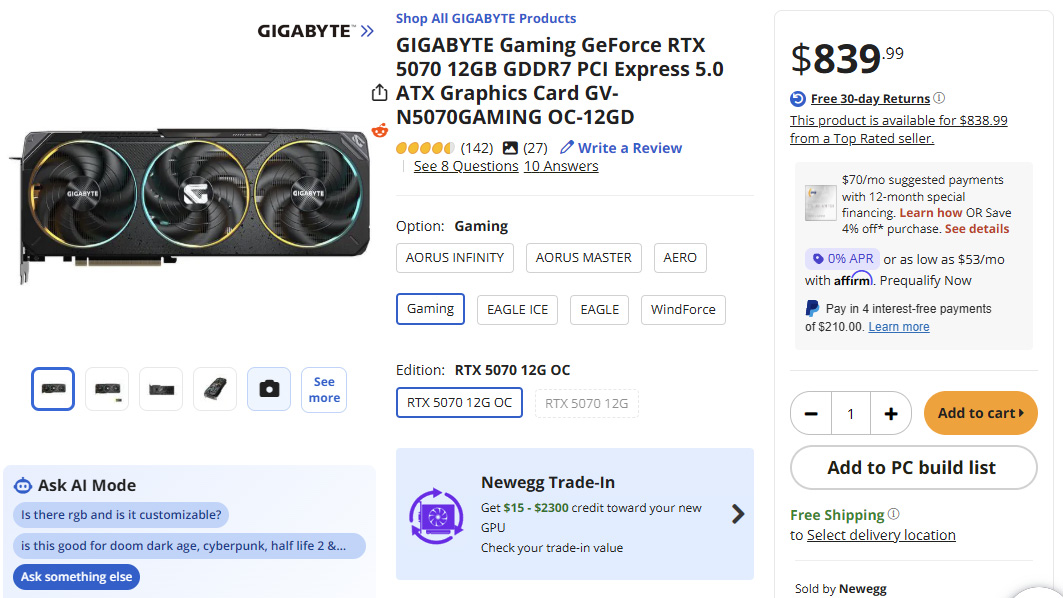
A Newegg product page displaying the GIGABYTE Gaming GeForce RTX 5070 graphics card. The listing is priced at $839.99, alongside ratings, reviews, edition options, and trade‑in credit details.

What should be a mid-range RTX 50 Series GPU now costs hundreds of dollars over its intended MSRP. (Image credit: Newegg)

As it stands, encouraging novices to build their first custom Windows rig is particularly difficult because it usually means settling for the absolute bare-bones, entry-level GPU to stand a chance of keeping your build under $1,500. No matter how many advancements NVIDIA puts into DLSS — which I maintain is still the best graphics upscaler on the scene — it can't solve everything.

The idea that a chip is going to go down in cost over time, unfortunately, is a story of the past.

Jensen Huang, NVIDIA CEO, 2022

Plus, all these GPU headaches come before you start the painful process of finding a storage drive and suitable RAM modules to pair with it. Once you start approaching $2,000, I generally nudge people toward high-end gaming handhelds like the MSI Claw 8 EX AI+ for something more entertaining. Then again, nothing beats the satisfaction of building your own rig from scratch.

Of course, the reality is that Moore's Law has its scientific limits. We can only go so far into microscopic process nodes before manufacturing hits the borders of what's currently possible. That doesn't excuse inflated prices, and a commercial obsession with artificial intelligence still pulls the brunt of that blame, but why isn't there any AI-free hardware for the rest of us?

Would any brand go against the grain?

Lip-Bu Tan, chief executive officer of Intel Corp., during a news conference on the sidelines of the Computex conference in Taipei, Taiwan, on Monday, May 19, 2025.

Could Intel's CEO, Lip-Bu Tan push his company into funding more desktop graphics cards? (Image credit: Getty Images | Bloomberg)

Realistically, practically any functional computer can run a local AI model on its CPU, GPU, NPU, or a combination of the three on a single SoC processor. Much like the crypto-mining fad that saw graphics cards scalped for their usefulness in Bitcoin earnings, modern components are at the mercy of AI, and it's a bubble that shows no signs of bursting (whether I like it or not).

Since the advent of Intel's Arc graphics hardware, particularly the first-generation "Alchemist" A750, which powered my wife's gaming PC for years with gradually improving performance, I've become an advocate for what the brand is trying to do. It's a similar story on AMD's Radeon graphics side, as both have an opportunity to steal the entry-level market away from NVIDIA.

After all, if NVIDIA isn't under enough threat from its competition, why would there be any incentive to lower prices? Intel has made impressive advancements in its own XeSS upscaling tech, which is part of what makes Intel Arc G3-powered handhelds so appealing. If it could commit to more affordable discrete GPUs with its long-awaited "Celestial" range, it could shake up the game.

Then again, Intel's CEO, Lip-Bu Tan, seems more interested in a return to the memory business (via Tom's Hardware), which would push Intel's desktop graphics even further down the list of priorities. It's much the same story as NVIDIA's minuscule — if utterly dominant — consumer GPU business compared to its monstrous data center and artificial intelligence side.

Could gigantic desktop graphics cards even seem ridiculous a decade from now, when NVIDIA's RTX Spark chips become its main priority? Doubtful, but who knows? Either way, Moore's Law is seemingly dead, and regular consumers are eating the costs passed on from major manufacturers as the march towards AI psychosis continues. I'll keep my eyes peeled for any signs of that changing.

Click to join us on r/WindowsCentral

Join us on Reddit at r/WindowsCentral to share your insights and discuss our latest news, reviews, and more.

Jensen Huang, co-founder and chief executive officer of Nvidia Corp., speaks while holding one of the company's new GeForce RTX 50 series graphics cards during the 2025 CES event in Las Vegas, Nevada

NVIDIA's CEO Jensen Huang called it years ago: Chip production costs will never go down.

  •  

A severe ASUS Armoury Crate vulnerability affects laptops, handhelds, and desktop PCs — Here's how to check if you're in the clear

ASUS Armoury Crate is but one piece of specialized management software that many of us have installed on our PC, perhaps without even knowing it. It comes preinstalled on ASUS gaming handhelds, including the Xbox Ally X, as well as ASUS gaming laptops.

If that sounds like hardware you use, it's time to check up on Armoury Crate. According to an August 10 update on the official ASUS advisory board, "a component used by Armoury Crate" is vulnerable and could be leaving you open to attacks.

Alongside that unmentioned component of Armoury Crate, ASUS has also released security updates for its GPU Tweak III, GPU Tweak II, and AI Suite 3 software.

This vulnerability, listed as CVE-2026-8917, comes with an 8.4 rating. That's out of a maximum of 10, meaning this isn't an issue you should ignore for long.

What does this ASUS vulnerability entail?

According to the CVE record, an "IOCTL vulnerability allows a local attacker to write a specific value to an arbitrary memory address, potentially leading to privilege escalation."

Although the CVE record doesn't mention Armoury Crate by name, it's clear that ASUS is concerned with that "certain component" alongside its other standalone software.

How do I update the vulnerable ASUS software?

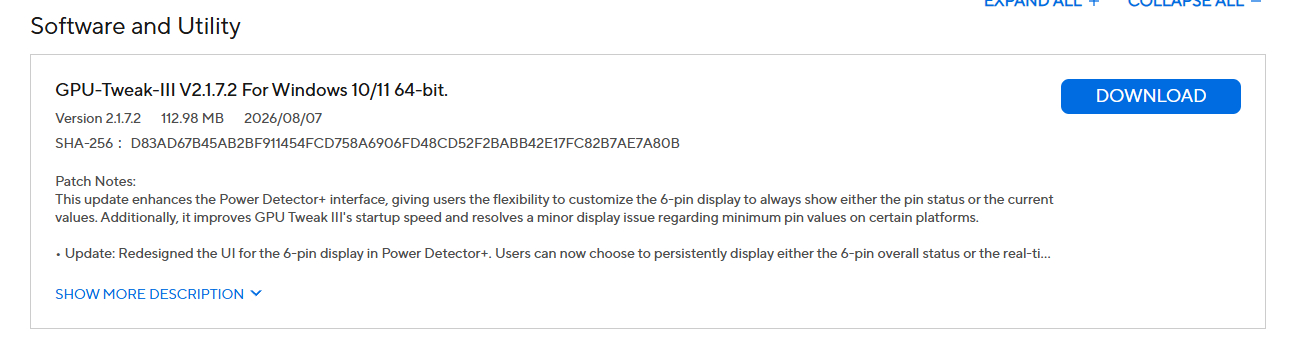
Screenshot of GPU-Tweak-III software update details, including version, size, release date, SHA-256 hash, and patch notes with a

A look at the GPU Tweak III download page at the ASUS support website. (Image credit: ASUS)

Updated versions of GPU Tweak III, GPU Tweak II, and AI Suite 3 software can be directly downloaded from the ASUS support website.

You want to be sure that you're grabbing the most recent version. For GPU Tweak III, I'm seeing version 2.1.7.2. This appears to be a newer version than what's listed as affected on the CVE website.

Download interface for GPU Tweak II version 2.4.0.0, showing file details and a prominent download button.

The GPU Tweak II version on the ASUS support page appears to still be the one affected. (Image credit: ASUS)

For GPU Tweak II, I'm seeing version 2.4.0.0 on the ASUS support page; unfortunately, this version is listed on the CVE page as vulnerable, so I can only guess that ASUS hasn't yet made the necessary updates to its download packages.

It's unclear why ASUS hasn't yet made the secure version of GPU Tweak II available for download. If you're concerned, my best advice is to simply remove the software entirely until it's updated.

For AI Suite 3, I'm seeing version 3.01.10, which is thankfully newer than the affected version 2.1.2.0 listed on the CVE page.

And for the actual Armoury Crate software, you can choose to update from within the app itself.

Is there any alternative to ASUS Armoury Crate?

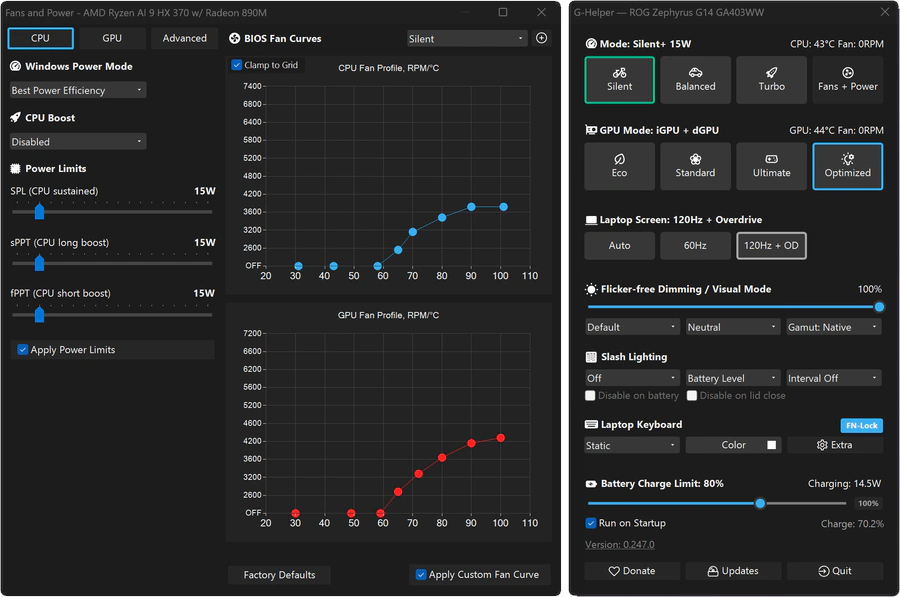
Computer interface showing CPU and GPU fan settings and performance modes for a ROG Zephyrus G14 laptop, featuring graphs and sliders for fan control and power limits.

A look at the G-Helper app interface for ASUS laptops and gaming handhelds. (Image credit: Seerge (g-helper.com))

I often use Armoury Crate on my desktop gaming PC to control certain ROG and TUF components, but most of the time it sits idly in the background. It's not the best software, vulnerabilities aside, but it seems to get the job done.

I've read tales of some specific ASUS desktop hardware absolutely requiring Armoury Crate to function properly, but for other ASUS gaming devices, it can be replaced entirely.

Let me introduce you to G-Helper. It's designed to work with ASUS laptops and gaming handhelds, doing what Armoury Crate does in a streamlined, unbloated app that only eats up about 5MB of space.

You can download G-Helper for free from its official website.

via PC Gamer

Click to join us on r/WindowsCentral

Join us on Reddit at r/WindowsCentral to share your insights and discuss our latest news, reviews, and more.

Armoury Crate menu on ROG Ally.

The ROG Ally handheld with Armoury Crate shown on the display.

  •  

Students finally have real Windows laptop options that don't break the $1,000 barrier — head back to school with the right PC

There's a lot of debate around minimum memory requirements for Windows laptops at the moment, and that often comes with the discussion of rising costs for the same components. It could be confusing for students looking for a new portable PC as they head back to school, but there are genuinely great options out there.

Back to school deals up to $900 off PCs and more at Dell

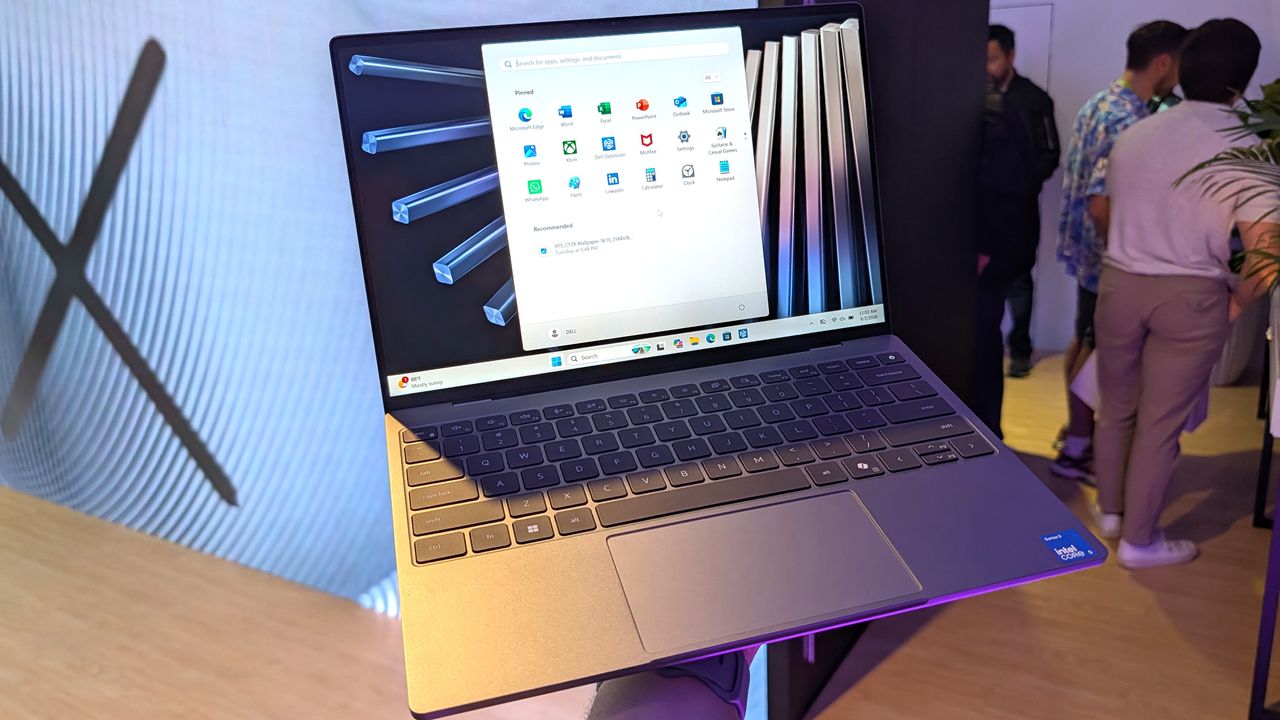
Dell's latest XPS 13 offers student pricing starting at $599, and comes with the absolute latest "Wildcat Lake" processors from Intel. Yes, it sticks with an entry-level 8GB of RAM — though it is high-speed (7,467 MT/s) LPDDR5x memory — but at 2.2 lbs, it's still one of the most lightweight and portable options available right now. Need more? I have some options.


Dell returns to its iconic branding with the "thinnest & lightest XPS laptop ever," and its choice of Intel processor delivers up to 17 hours of battery life.

👉 Standard pricing: $699.99 at Dell.comView Deal


This previous-generation model doubles its SSD capacity and adds a larger display, powered by a traditional x86-64 AMD CPU and DDR4-3200MT/s RAM.View Deal


Go even larger with this 16-inch touchscreen display and a last-generation "Hawk Point" CPU from AMD, paired with 16GB of DDR5-5600MT/s RAM.View Deal

How much RAM does Windows really need?

Dell XPS 13

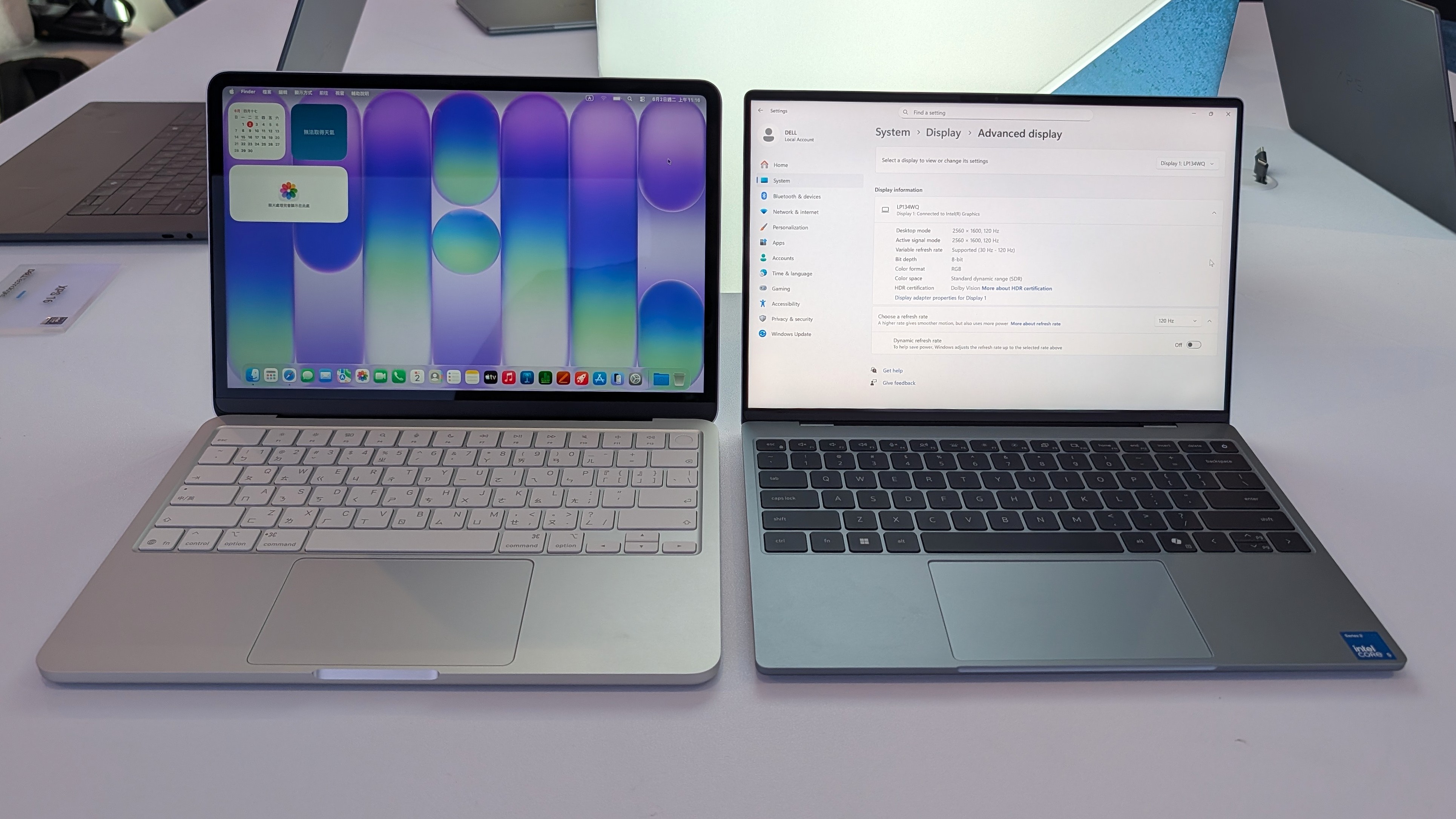
Dell's new XPS 13 (right) is essentially the Windows equivalent of Apple's MacBook Neo (left). (Image credit: Zac Bowden / Windows Central)

There's no doubt that manufacturers like Dell started flexing their design muscles even harder after Apple launched its MacBook Neo for $599 — later rising to $699 —and it's arguably led to better choices for Windows PC consumers on a budget. We saw the new XPS 13 at Computex, a technology convention held earlier this year in Taiwan, and learned more about its choice of Intel Wildcat Lake processors.

Dell's Konstantin Tuv described it as "a great student device" [...] we want this to be their first XPS", and revealed that it was in production far before the Neo ever appeared, so it certainly isn't some knee-jerk reaction to rush an affordable laptop to market. Indeed, the XPS 13 was designed from the beginning to be a featherweight companion for students and workers alike. Still, its release didn't suddenly remove its in-house alternatives from sale.

Everyone [in the PC industry] is getting more aggressive and trying to redefine what 'good' looks like.

Konstantin Tuv, Dell VP, Head of Product

Microsoft itself is committed to optimizing Windows 11 for 8GB of RAM, as CVP Marcus Ash told us directly: "We're relentless at reducing the memory footprint." However, if you're certain you need more memory (RAM) or storage (SSD space), Dell still offers its 15-inch and 16-inch laptops with modern DDR5 and previous-generation DDR4 modules, so you can choose a variant that suits you.

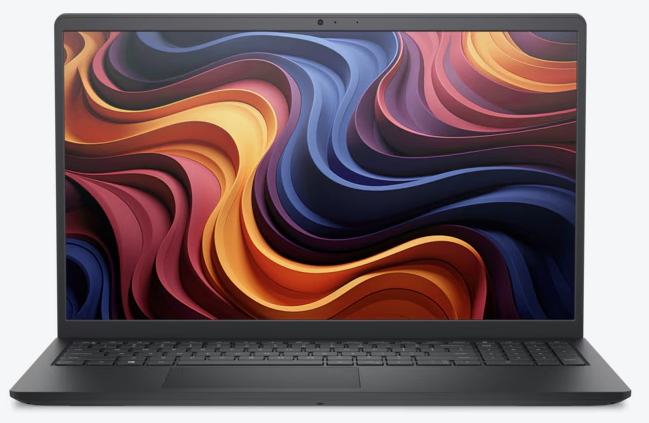
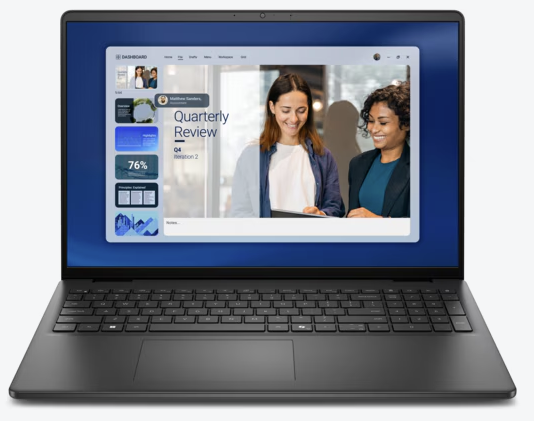
Ultimately, the $599.99 Dell 16 comes closest to satisfying each category, albeit with a larger display (though you'll have access to its touchscreen) and increased weight at 4.18 lbs, but you get 16GB of RAM and the same sensible 512GB of storage as the $599/$699 XPS 13. Otherwise, if you're prioritizing portability, the $549.99 Dell 15 doubles the SSD to 1TB, giving you more space for your files.

Whatever you choose, it's refreshing to see Dell pushing its capable laptops below $1,000, even if it takes back-to-school-themed sales to do it. If you've been holding out for a new Windows PC, there are still brief moments of savings happening like this where it's smart to shop.

Click to join us on r/WindowsCentral

Join us on Reddit at r/WindowsCentral to share your insights and discuss our latest news, reviews, and more.

Dell XPS 13

Dell's new XPS 13 laptop offers a $100 discount for students.

  •  

My biggest Steam Deck regret was losing native PC Game Pass, but an open-source project called Xodus might finally undo that mistake

I've spent a lot of time this summer gaming on my Steam Deck. It's hot outside, it's hot inside, and my desktop gaming PC simply creates too much heat.

The only major problem I have with my Steam Deck is that it doesn't play nicely with PC Game Pass, to which I'm a subscriber. Yeah, I could stream games to my handheld, but there's now a better solution in the works.

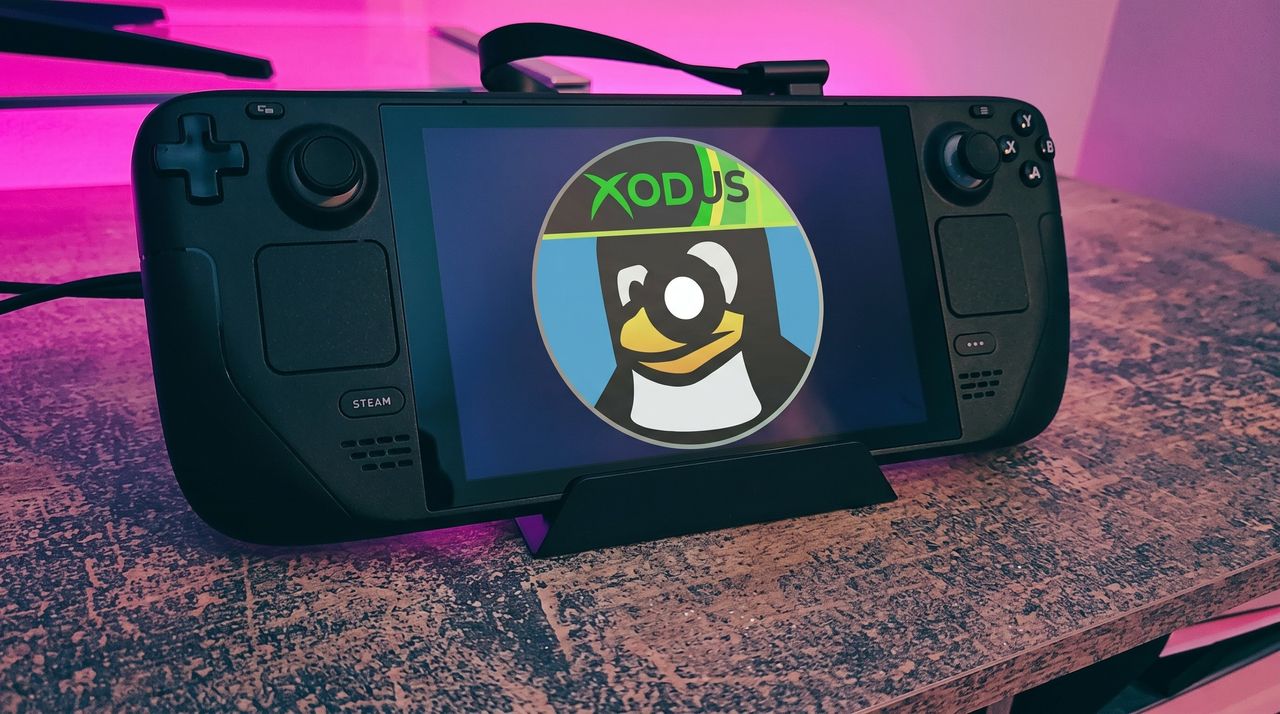
I'm talking about Xodus, an open-source project that's attempting to build a bridge between PC Game Pass and Linux systems, including the Steam Deck. The project is also attempting to iron out similar issues on macOS. No Windows install needed.

Xodus comes from the developers behind the Heroic Games Launcher, a separate open-source app that brings Epic, GOG, and Amazon Prime titles to Steam Deck (it also works on Windows, macOS, and other Linux systems).

The developers are undoubtedly up against a grind with this project. Xbox PC games that come from the Xbox app rely primarily on a Microsoft Game Development Kit (GDK) runtime, which is a far cry from DirectX and Win32 layers that Valve's Proton already handles quite well.

This Microsoft GDK is really what has kept PC Game Pass from running directly on the Steam Deck (and macOS) for so long.

Is Xodus ready for public release?

Steam Deck Steam button.

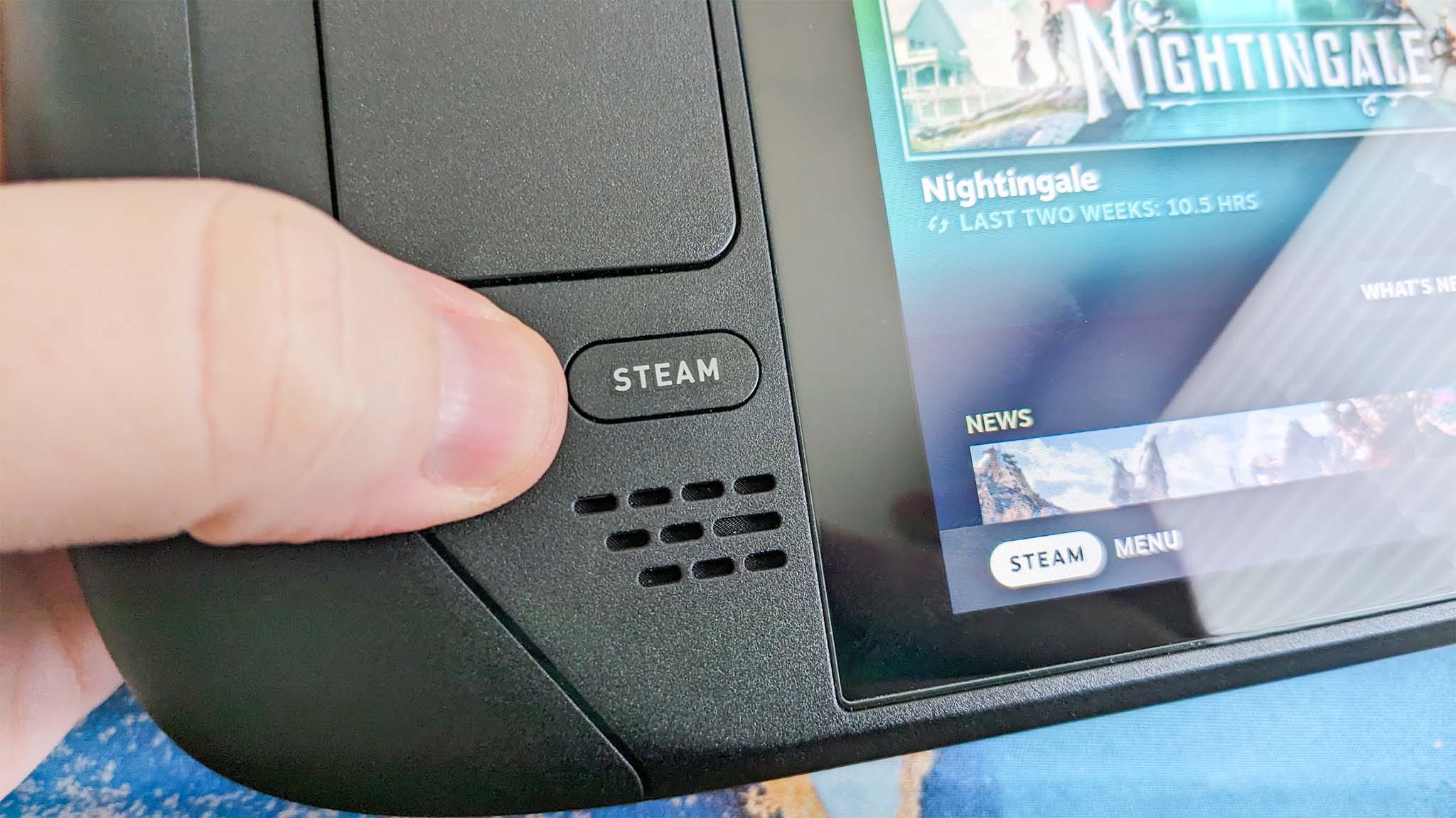
Xodus could finally bridge the gap between PC Game Pass and Steam Deck. (Image credit: Rebecca Spear / Windows Centarl)

According to updates shared on the Xodus GitHub page, the developers have cracked Xbox authorization, license checks, and MSIXVC package (the containers that PC games come in) download and decryption.

In a Reddit post, a Xodus developer noted that the team's main focus is now getting the Software Development Kit (SDK) for each title to run through Wine. It appears that Xodus has its own Wine and Proton forks for this purpose, as well as an open-source version of the xgameruntime.dll file that Game Pass games depend on.

Xodus likely won't support all Game Pass games when it launches, either. Older games that eschew GDK and MSIXVC for UWP will likely come later, if at all.

Why I'm so excited to try out Xodus on my Steam Deck

Steam and PC Game Pass

PC Game Pass on Steam would open up a whole lot of new options for gaming on the go. (Image credit: Future)

As mentioned, the biggest drawback to my Steam Deck, aside from its growing age, is its lack of native PC Game Pass support.

Sure, I could upgrade to a newer handheld that natively runs Windows, but it looks like I might not need to quite yet. That's especially exciting considering just how expensive gaming handhelds have become of late.

Then there's the Steam Machine, another Valve device running the Linux-based SteamOS. A whole bunch of gamers recently got their hands on the Steam Machine when it launched in June, and making PC Game Pass an option can only benefit Microsoft.

Here's the rub: Xodus has no affiliation with Microsoft. It's an unofficial community project created by independent developers. Does that mean Microsoft will have a problem with it? Not likely, but you never can tell.

Xodus still doesn't have an official release date, but it's something I'll be keeping my eyes on as it progresses. If you're a Linux gamer who wishes they could use PC Game Pass natively, you'll definitely want to keep watch as well.

What do you think about Xodus as a bridge between Steam Deck/Machine and PC Game Pass? Is it something you'd use regularly? Do you already have an alternative method that works better for you? Let me know in the comments section below!

(via VideoCardz.com)

Click to join us on r/WindowsCentral

Join us on Reddit at r/WindowsCentral to share your insights and discuss our latest news, reviews, and more.

A black Steam Deck handheld gaming device displaying a penguin logo with a cap that says "XODUS," set against a softly illuminated pink and purple background on a textured surface.

Microsoft isn't doing it, so someone else is trying.

  •  

You can dodge rising prices with a discount on one of Razer's best gaming keyboards — and it totally helps with your studies, too

Razer's gaming keyboards rank among the best on the market, whether you're looking to crush the competition in games or type up school reports. However, if you've ever shopped around, you've probably noticed how many are on the higher end of the affordability scale.

Crush the new semester with Razer keyboards

Fortunately, one of Razer's top-rated wired gaming keyboards, the Huntsman V3 Pro 60%, has managed to evade lofty pricing for a limited time, thanks to a 28% discount bringing it to $129.99 at Best Buy, giving you a chance to get a leg up on multiplayer and get a head start on your studies for less.


"Your hands are certainly going to fall in love with the textured keycaps, robust switch feel, and fantastic analog features." — Tabitha Baker, Managing Editor (Hardware) at our sister site, GamesRadar+

GamesRadar+ review: ⭐⭐⭐⭐½View Deal

What buy the Razer Huntsman V3 Pro Mini 60%?

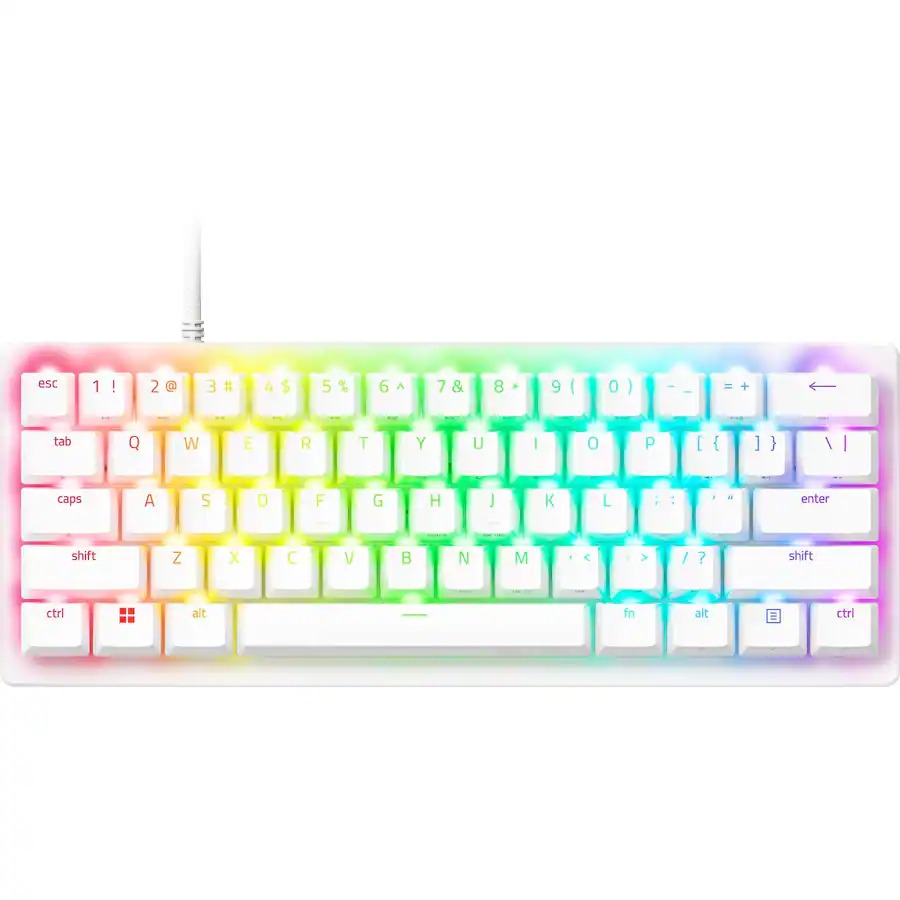
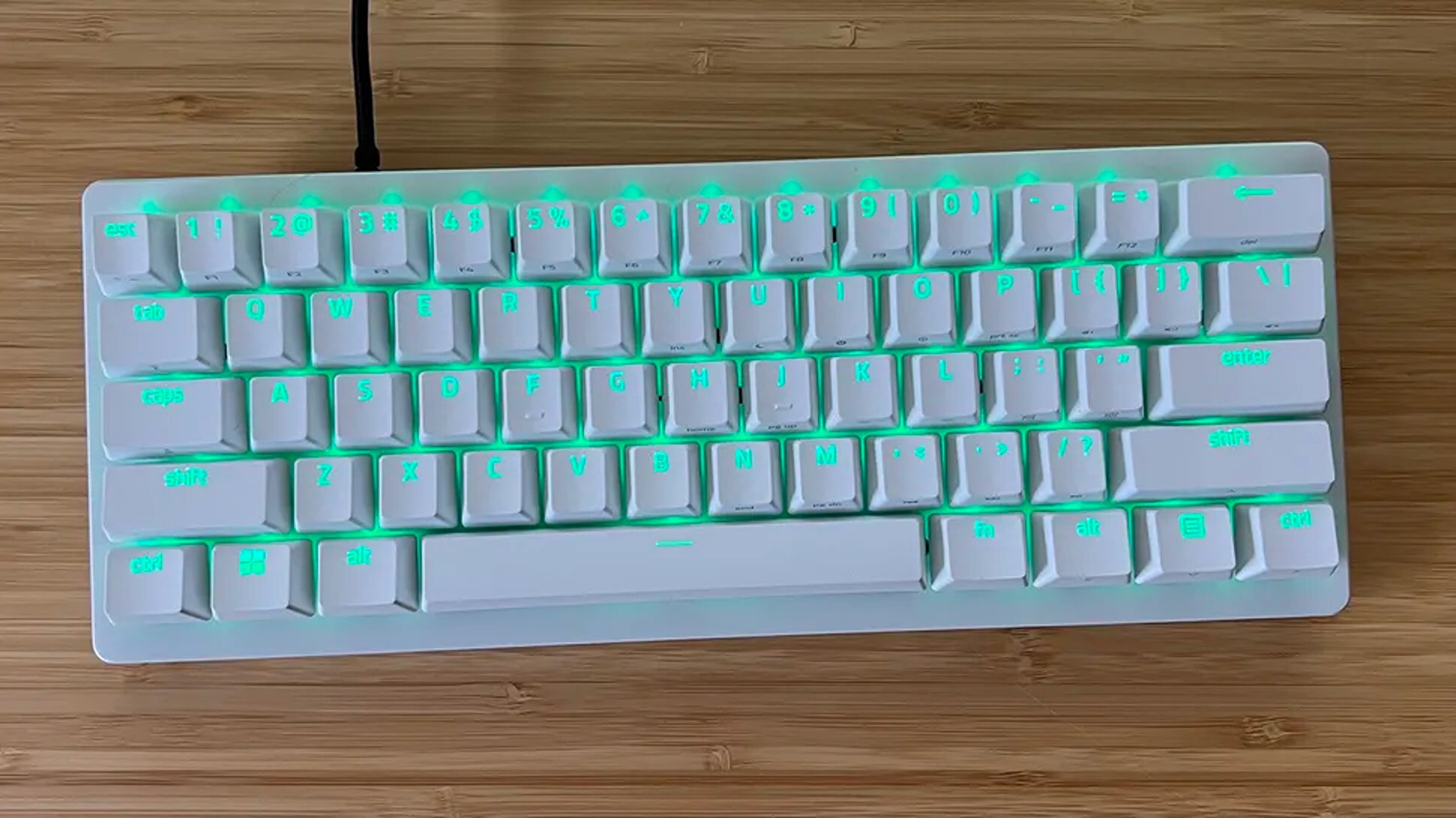
A compact white mechanical keyboard with glowing green backlighting sits on a light brown wooden desk, viewed from directly above in a top-down shot.

A top view of the Razer Huntsman V3 Pro 60% keyboard. (Image credit: GamesRadar (Tabitha Baker) | Razer)

For starters, this keyboard features Razer's Analog Optical Gen-2 switches, which grant it extremely precise and responsive input detection speeds, which can be enhanced further with a Rapid Trigger mode and adjustable actuation that ranges between 0.1 mm and 4.0 mm.

The Huntsman V3 Pro 60% also features textured double-shot PBT keycaps with a keystroke lifespan of 100-million clicks to help it endure many years of intense button mashing.

Other notable features include a sleek and compact 60% form factor that makes it very portable-friendly while saving tons of vital desk space, buttons that double as arrow keys, and a Razer Snap Tap feature, which prioritizes the latest input between two selected keys without letting go of the previous one for near-instant directional movements in action games.

The only noticeable drawbacks of this keyboard are the somewhat noisy switches with no sound dampening (as noted in GamesRadar's review), the lack of wireless connectivity, and its usually steep listing price of $179.99.

So, it's a blessing to see its high price taken down to somewhat more affordable levels thanks to Best Buy's 28% discount, especially during this general RAM crisis where almost everything else in tech has become so insanely expensive.

If you're looking for a high-quality wired gaming keyboard that doubles as a high-speed workhorse keyboard for helping you ace exams or assignments, you can't go wrong with the Razer Huntsman V3 Pro 60%.

Frequently Asked Questions

Is it wireless?

No, this keyboard connects to devices purely through wired connections via a detachable USB-C to USB-A cable.

Is compatible with consoles?

While it can connect other devices via USB connections, the Razer Huntsman V3 Pro Mini 60% keyboard's configuration software is only operable on Windows PCs.

What is it a 60% keyboard?

60% keyboards are 60 percent the size of a standard, full-sized keyboard that removes the numpad, top row function keys (F1-F12), arrow keys (although the Razer Huntsman V3 Pro 60% keys that double as arrow keys), and the navigation cluster, leaving only the main typing key area intact to save desk space and make it more portable-friendly.

Click to join us on r/WindowsCentral

Join us on Reddit at r/WindowsCentral to share your insights and discuss our latest news, reviews, and more.

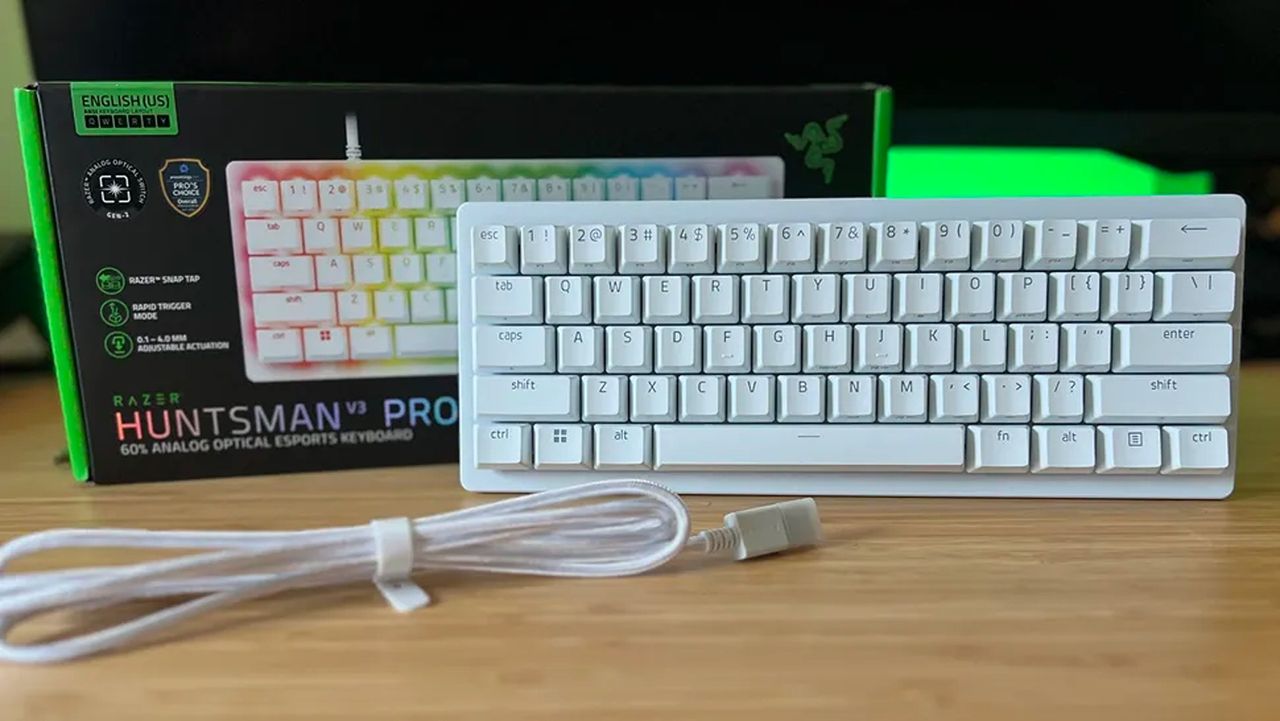
A white Razer Huntsman V3 Pro 60% analog optical esports keyboard sits in front of its black product box on a wooden desk with a coiled white cable.

The Razer Huntsman V3 Pro 60% keyboard with its box and detachable USB cable

  •  

Is this Microsoft’s canceled Surface Phone from 2014? Mysterious Windows Phone prototype appears in new photos

Before Microsoft acquired Nokia, the company was heavily rumoured to be working on its own in-house Windows Phone device that was expected to ship in 2014 under the Surface moniker alongside its Surface Pro device. Unfortunately for Windows Phone fans, such a device never saw the light of day, but newly published images of a mysterious prototype might have just given us our first and only look at what Microsoft was exploring internally.

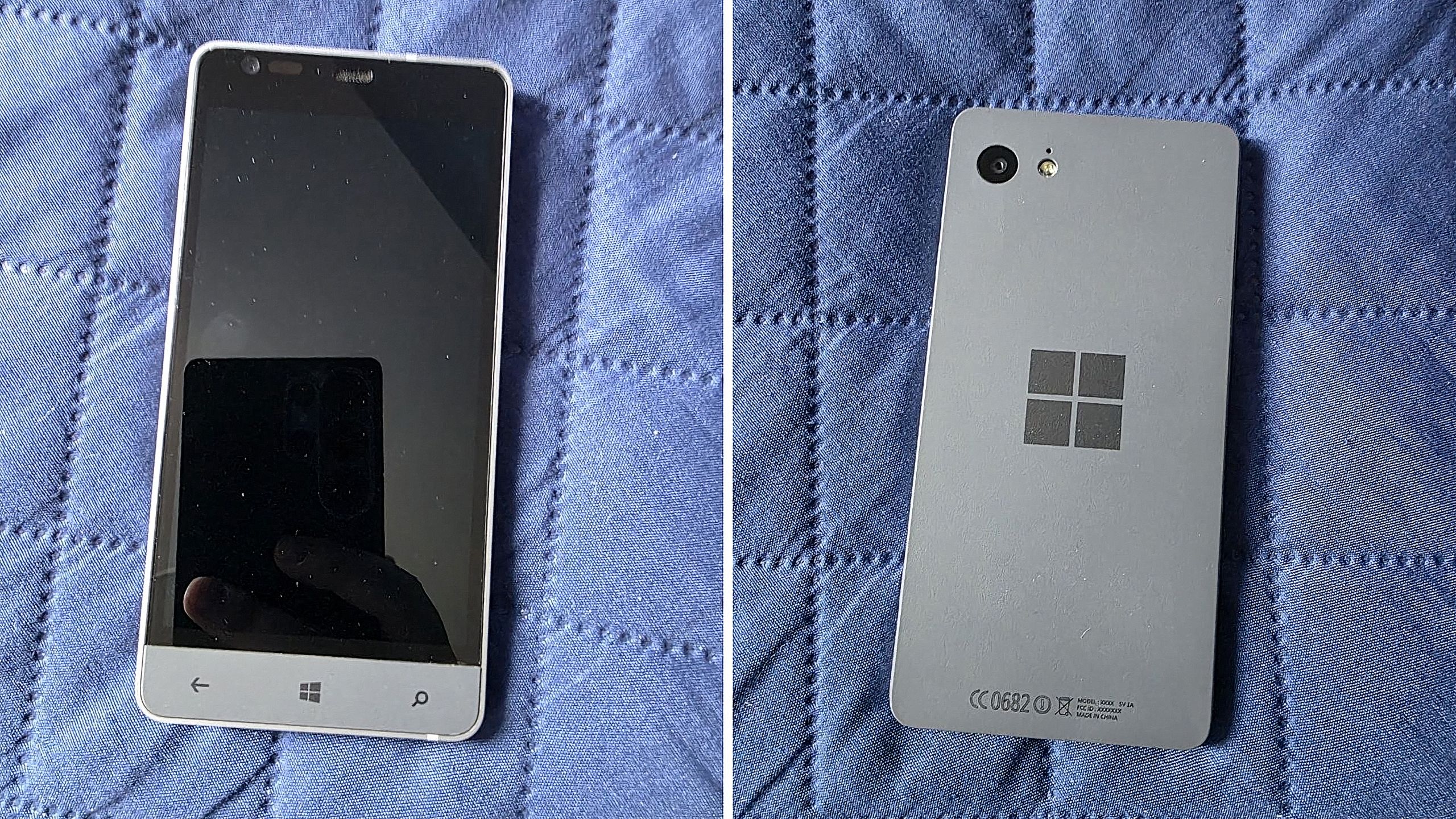
Possibly codenamed Raven, there isn't much information available about this prototype, other than the fact that it’s from the 2013-2014 time frame and is running an early pre-release build of Windows Phone 8.1. It’s powered by an unknown Qualcomm chip, has a 720p screen, features a Microsoft logo on the back, and a silver metal frame that matches the colour of the Surface 2 that released that same year.

We can see in the photos that it has dedicated hardware keys for navigation, which are also coated in the same silver color as the chassis. The build of Windows Phone that it’s running appears to be from September 2013, and is from an internal development branch building towards what eventually became Windows Phone 8.1.

Windows Phone Prototype

Real images of this mysterious Windows Phone prototype. (Image credit: Telegram/Discord)

While not viewable in the images, I understand the device features individual up and down volume buttons and a camera button on the right-hand side of the device, and a power button on the top of the device. It also features a micro-USB port and headphone jack on the bottom side, and a SIM card slot on the left side.

This is likely one of dozens of prototype designs that Microsoft’s hardware teams cooked up during this era, but it’s certainly a fascinating look at what could have been, and it does look so clean. Development on this device was likely paused once Microsoft moved to acquire Nokia in 2014.

Back in 2013, I remember hearing from sources that Microsoft was experimenting with the concept of a "Skype Phone," a Windows Phone device with mobile data that utilized Skype for calls and messaging instead of traditional carrier networks. Perhaps this device was going to be that? Who knows.

The Surface Phone we eventually got arrived as the Surface Duo, which started development in 2016 and launched to the public in 2020. In that time, Microsoft shipped Nokia designs in the form of the Lumia 640, 650, 950, and 550 running Windows Phone, before abandoning the platform in 2017.

Click to join us on r/WindowsCentral

Join us on Reddit at r/WindowsCentral to share your insights and discuss our latest news, reviews, and more.

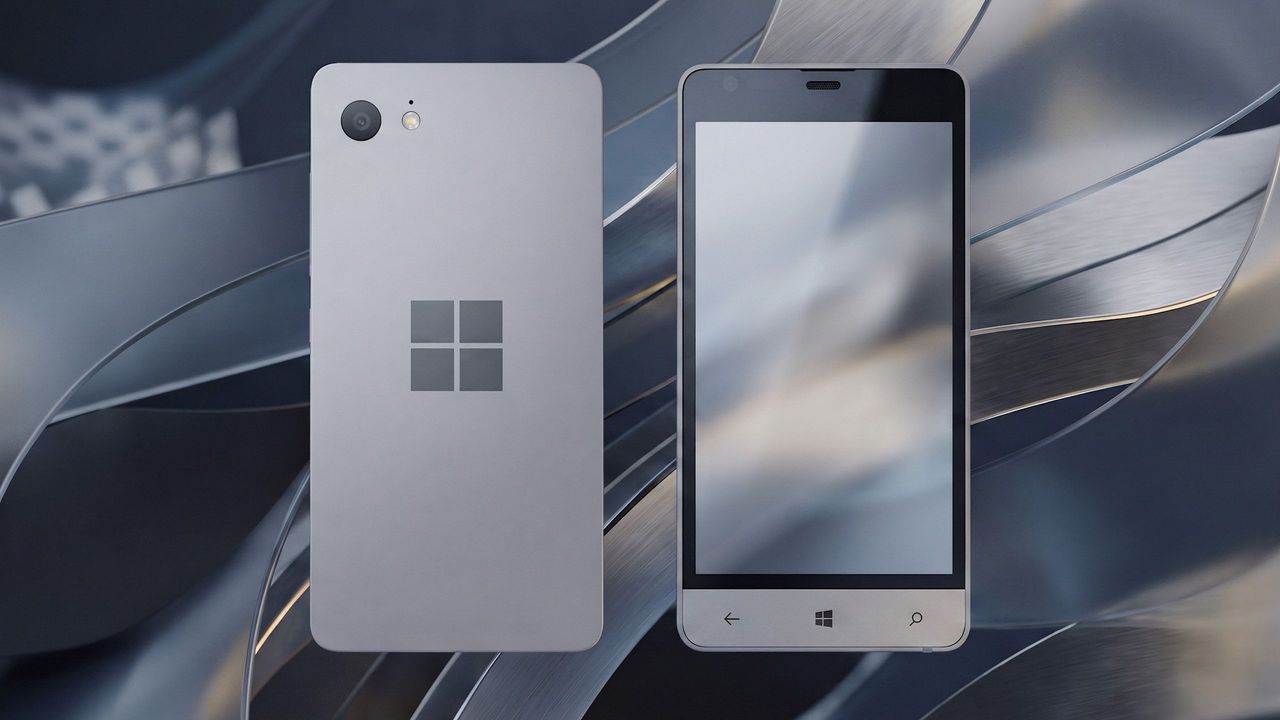
Surface Phone Render

Render based on real images of the prototype (seen below.)

  •  
❌