Vue lecture

GeForce NOW planque un vrai Windows derrière vos jeux

Je m'en doutais un peu mais c'est confirmé, derrière chaque session GeForce NOW tourne un vrai Windows, et cette machine virtuelle est moins verrouillée qu'elle en a l'air. En effet, une démo du moddeur Zortos montre le service qui s'ouvre non pas sur un jeu, mais sur un bureau complet, avec barre des tâches, menu démarrer et icônes.

La manip passe par le jeu Trove... Pendant le lancement, Zortos ouvre le navigateur web intégré de Steam, se balade dans les dossiers de la machine, récupère un exécutable et remplace quelques chemins dans le répertoire du jeu. Au démarrage suivant, Windows s'affiche alors à la place du jeu. Tout ça repose sur SalsaNOW , un outil open source signé dpadGuy.

Une fois le bureau ouvert, la machine encaisse à peu près tout ce qui ne réclame pas de droits administrateur. Zortos y a fait tourner Wallpaper Engine pour les fonds animés et LM Studio avec le modèle Gemma 4. Et pour les logiciels qui exigent une installation privilégiée, ils peuvent sans souci être préparés en version portable sur son propre PC, puis décompressés là-haut.

Reste que ce bureau est un bac à sable. La session tourne en compte utilisateur simple, donc pas de droits administrateur, pas d'anticheat noyau, et beaucoup d'installations qui finissent sur un refus d'accès.

L'autre mur, c'est la persistance. Sans l'option de stockage payante, tout disparaît à la déconnexion. Et même en la prenant, la machine ne conserve que vos Documents, l'AppData du compte, baptisé kiosk, et le contenu du lecteur I:. Tout le reste repart de zéro à la session suivante, et fermer l'explorateur de fichiers coupe la connexion sur-le-champ.

Dernier filtre, et pas le moindre, ça ne fonctionne que sur les abonnements payants, ceux dont je détaillais les formules quand Nvidia a sorti son client Linux natif . L'offre gratuite est hors jeu, tout comme les GeForce NOW opérés par les partenaires alliance.

Ce clic autorise une connexion à Google : adresse IP transmise et traceurs possibles. En savoir plus Voir cette vidéo sur YouTube

Maintenant, qu'en est-il du règlement ? Eh bien comme vous vous en doutez, les conditions d'utilisation interdisent formellement de contourner les mécanismes de sécurité ou d'authentification du service, et Nvidia se réserve le droit de suspendre ou de restreindre un compte à sa discrétion. En cas de suspension, la période coupée n'est pas remboursée.

Mais à ce jour, aucun bannissement lié à ces méthodes n'a été rapporté, et Nvidia n'a sorti ni correctif ni communiqué. Voilà, c'est rigolo comme bidouille, mais si vous vous lancez, c'est votre compte que vous mettez en jeu.

Reste maintenant à voir combien de temps la porte restera ouverte.

Source

  •  

Quote of the day by NVIDIA CEO Jensen Huang: "Moore's law is dead. It's completely over" — Will GPUs ever be affordable again?

Mourning the concept of affordability in the custom PC-building scene isn't a new trend; on the contrary, the eulogy for "Moore's law" was read years ago, around when hardware like NVIDIA's high-end GeForce RTX 40 Series graphics cards came with astronomical prices, and possibly even earlier than that.

Moore's law is dead [...] the ability for Moore's Law to deliver twice the performance at the same cost, or at the same performance and half the cost, every year and a half is over. It's completely over.

Jensen Huang, NVIDIA CEO, 2022

If you've never heard of the term — named after Intel co-founder Gary Moore — it's a prediction (not really a law) of how computing power increases every few years by doubling transistor counts without a severe cost impact. Anyone who follows graphics card, RAM, or storage prices knows that dream is over.

On a more widely known subject, the demands of generative AI quickly became obvious as more models were widely adopted, and building them on local hardware is how that all gets started. Since then, our sister site, Tom's Hardware, has watched GeForce RTX 50-series GPU prices spike by up to 39%. Sure, MSRP always felt like a suggestion rather than a rule with GPUs, but it's getting worse.

Today's GPU for the price of yesterday's PC

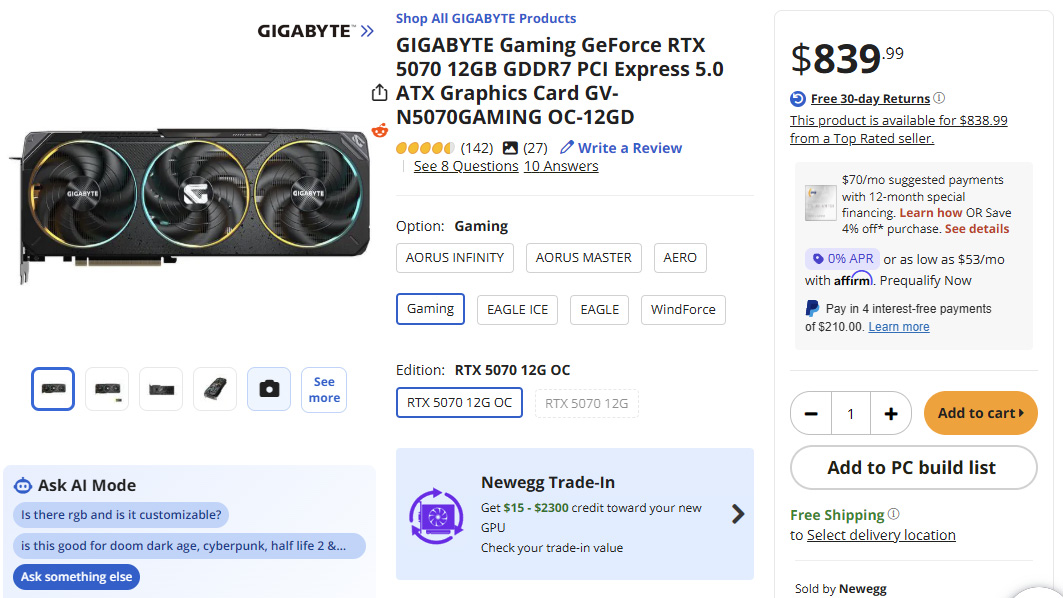
A Newegg product page displaying the GIGABYTE Gaming GeForce RTX 5070 graphics card. The listing is priced at $839.99, alongside ratings, reviews, edition options, and trade‑in credit details.

What should be a mid-range RTX 50 Series GPU now costs hundreds of dollars over its intended MSRP. (Image credit: Newegg)

As it stands, encouraging novices to build their first custom Windows rig is particularly difficult because it usually means settling for the absolute bare-bones, entry-level GPU to stand a chance of keeping your build under $1,500. No matter how many advancements NVIDIA puts into DLSS — which I maintain is still the best graphics upscaler on the scene — it can't solve everything.

The idea that a chip is going to go down in cost over time, unfortunately, is a story of the past.

Jensen Huang, NVIDIA CEO, 2022

Plus, all these GPU headaches come before you start the painful process of finding a storage drive and suitable RAM modules to pair with it. Once you start approaching $2,000, I generally nudge people toward high-end gaming handhelds like the MSI Claw 8 EX AI+ for something more entertaining. Then again, nothing beats the satisfaction of building your own rig from scratch.

Of course, the reality is that Moore's Law has its scientific limits. We can only go so far into microscopic process nodes before manufacturing hits the borders of what's currently possible. That doesn't excuse inflated prices, and a commercial obsession with artificial intelligence still pulls the brunt of that blame, but why isn't there any AI-free hardware for the rest of us?

Would any brand go against the grain?

Lip-Bu Tan, chief executive officer of Intel Corp., during a news conference on the sidelines of the Computex conference in Taipei, Taiwan, on Monday, May 19, 2025.

Could Intel's CEO, Lip-Bu Tan push his company into funding more desktop graphics cards? (Image credit: Getty Images | Bloomberg)

Realistically, practically any functional computer can run a local AI model on its CPU, GPU, NPU, or a combination of the three on a single SoC processor. Much like the crypto-mining fad that saw graphics cards scalped for their usefulness in Bitcoin earnings, modern components are at the mercy of AI, and it's a bubble that shows no signs of bursting (whether I like it or not).

Since the advent of Intel's Arc graphics hardware, particularly the first-generation "Alchemist" A750, which powered my wife's gaming PC for years with gradually improving performance, I've become an advocate for what the brand is trying to do. It's a similar story on AMD's Radeon graphics side, as both have an opportunity to steal the entry-level market away from NVIDIA.

After all, if NVIDIA isn't under enough threat from its competition, why would there be any incentive to lower prices? Intel has made impressive advancements in its own XeSS upscaling tech, which is part of what makes Intel Arc G3-powered handhelds so appealing. If it could commit to more affordable discrete GPUs with its long-awaited "Celestial" range, it could shake up the game.

Then again, Intel's CEO, Lip-Bu Tan, seems more interested in a return to the memory business (via Tom's Hardware), which would push Intel's desktop graphics even further down the list of priorities. It's much the same story as NVIDIA's minuscule — if utterly dominant — consumer GPU business compared to its monstrous data center and artificial intelligence side.

Could gigantic desktop graphics cards even seem ridiculous a decade from now, when NVIDIA's RTX Spark chips become its main priority? Doubtful, but who knows? Either way, Moore's Law is seemingly dead, and regular consumers are eating the costs passed on from major manufacturers as the march towards AI psychosis continues. I'll keep my eyes peeled for any signs of that changing.

Click to join us on r/WindowsCentral

Join us on Reddit at r/WindowsCentral to share your insights and discuss our latest news, reviews, and more.

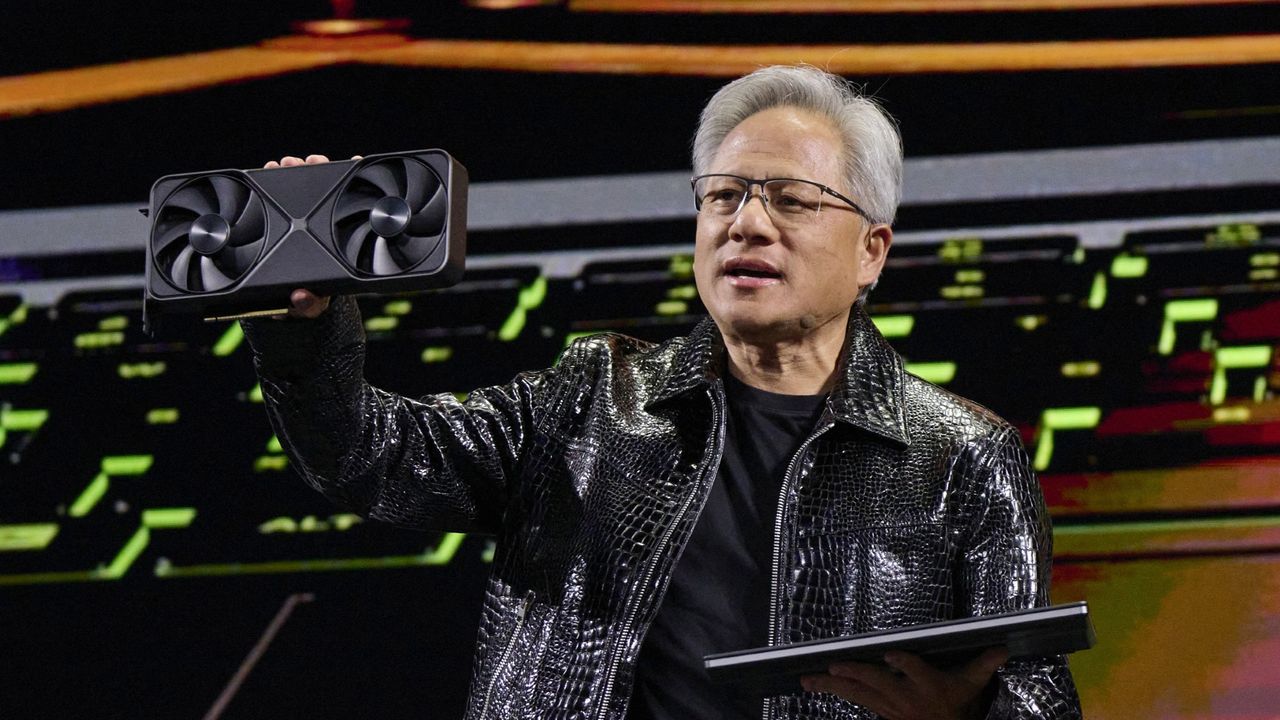
Jensen Huang, co-founder and chief executive officer of Nvidia Corp., speaks while holding one of the company's new GeForce RTX 50 series graphics cards during the 2025 CES event in Las Vegas, Nevada

NVIDIA's CEO Jensen Huang called it years ago: Chip production costs will never go down.

  •  

NVIDIA GeForce RTX 50 SUPER Reportedly Delayed as Rising GDDR7 Memory Costs Force Pricing Rethink

NVIDIA’s next wave of graphics cards may not arrive as soon as many PC enthusiasts expected. According to multiple industry reports, the rumored GeForce RTX 50 SUPER series has already reached at least some add-in board (AIB) partners, indicating that hardware production is well underway. However, the company is reportedly holding back the official launch […]

  •  

Microsoft unveils the next-generation AI PCs powered by NVIDIA RTX Spark

NVIDIA RTX Spark powered AI PCsMicrosoft and NVIDIA announced a major step towards AI-powered computing with the introduction of Windows PCs powered by the new NVIDIA RTX Spark superchip. The tech giants claim that these PCs will be the world’s most powerful and efficient thin-and-light Windows PCs ever. These computer systems will be capable of running advanced AI models locally, […]

The post Microsoft unveils the next-generation AI PCs powered by NVIDIA RTX Spark appeared first on TheWindowsClub News.

  •  

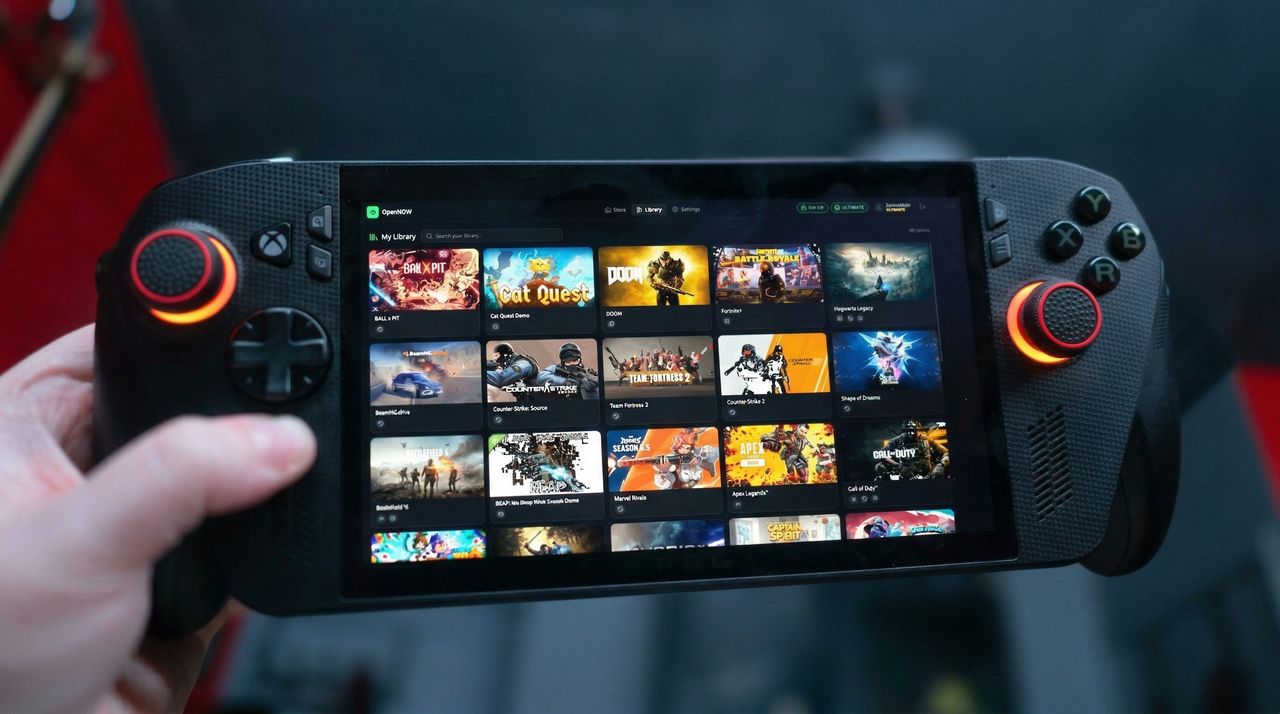
"I hope NVIDIA's legal team lets this slide": I dive into OpenNOW, an open-source GeForce Now alternative that's trending in cloud gaming — for good reason

OpenNOW is quickly gaining popularity as a quality GeForce Now app alternative, all thanks to its open-source nature. It still has some limitations compared to the official software, but it's on the right path ... assuming NVIDIA's legal team doesn't get involved.

Xbox Ally with OpenNOW app displayed edited in Gemini

Xbox Ally with OpenNOW app displayed edited in Gemini

  •  

NVIDIA’s new Dynamic MFG feature could make games smoother… or just weirder. Either way, the real GPU battleground is shifting to software.

Early tests of NVIDIA's new DLSS 4.5 features, Dynamic Multi Frame Generation (MFG) and MFG 6X, have shown positive results. It certainly seems like AI-assisted software is the new GPU frontier, and one day that won't be controversial.

BEIJING, CHINA - AUGUST 01: In this photo illustration, an Nvidia chip is seen through a magnifying glass on August 1, 2025 in Beijing, China. (Photo by VCG/VCG via Getty Images)

NVIDIA's Dynamic MFG and MFG 6X have arrived with DLSS 4.5, and the results are being largely applauded by testers.

  •  

Even the studios highlighted in NVIDIA's DLSS 5 reveal were shocked by the generative AI showcase — game developers "found out at the same time as the public"

Developers at Ubisoft and Capcom reportedly learned about Nvidia’s DLSS 5 at the same time as the public, raising questions about developer control and AI use.

Resident Evil Requiem protagonist enhanced with NVIDIA DLSS 5 in front of Ubisoft and Capcom logos

Developers at Ubisoft and Capcom reportedly learned about Nvidia’s DLSS 5 at the same time as the public.

  •  

“They’re completely wrong.” NVIDIA’s CEO defends DLSS 5 while gamers point to real problems. So who is right?

Nvidia CEO Jensen Huang responds to backlash surrounding DLSS 5, dismissing criticism while defending the company’s use of AI-driven neural rendering and developer control over visuals.

Jensen Huang of NVIDIA with AI imposed in the background

Jensen Huang, CEO of NVIDIA, during his visit to The Cambridge Union to receive the Professor Stephen Hawking Fellowship 2025 on November 04, 2025 in Cambridge, Cambridgeshire.

  •  
❌