The ChatGPT maker indicated that its new partnership with Amazon will help enhance its enterprise market share while highlighting key constraints in its Microsoft tie-up.
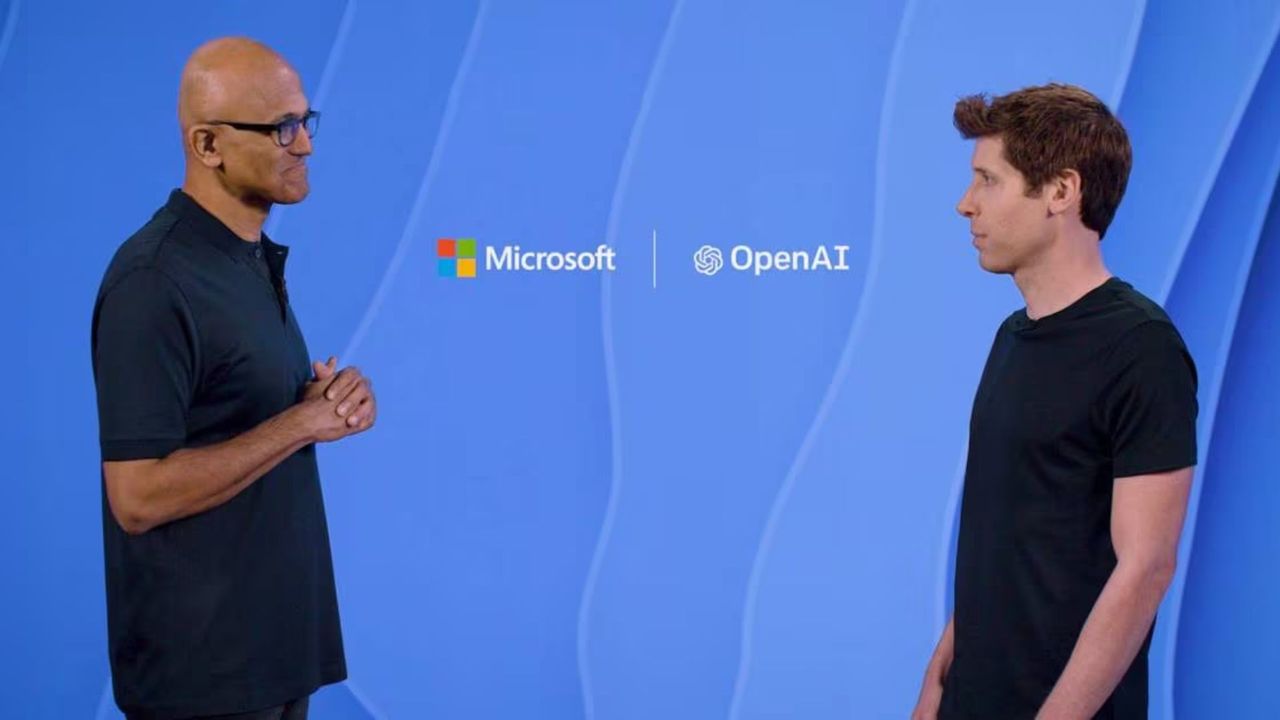
Satya Nadella with Sam Altman at a conference
Sam Altman is apparently openly hostile towards Microsoft.
Security researchers discovered a remote code execution (RCE) vulnerability in Apache ActiveMQ Classic that has gone undetected for 13 years and could be exploited to execute arbitrary commands. [...]
Every time you type a prompt into ChatGPT, something happens somewhere far away. Servers spin up. Electricity moves. Carbon gets generated. The whole transaction is so clean and invisible on your end that it might as well not be happening. That’s by design, and it’s worth thinking about. Although with the way we use technology these days, we seldom think about the consequences on our environment.
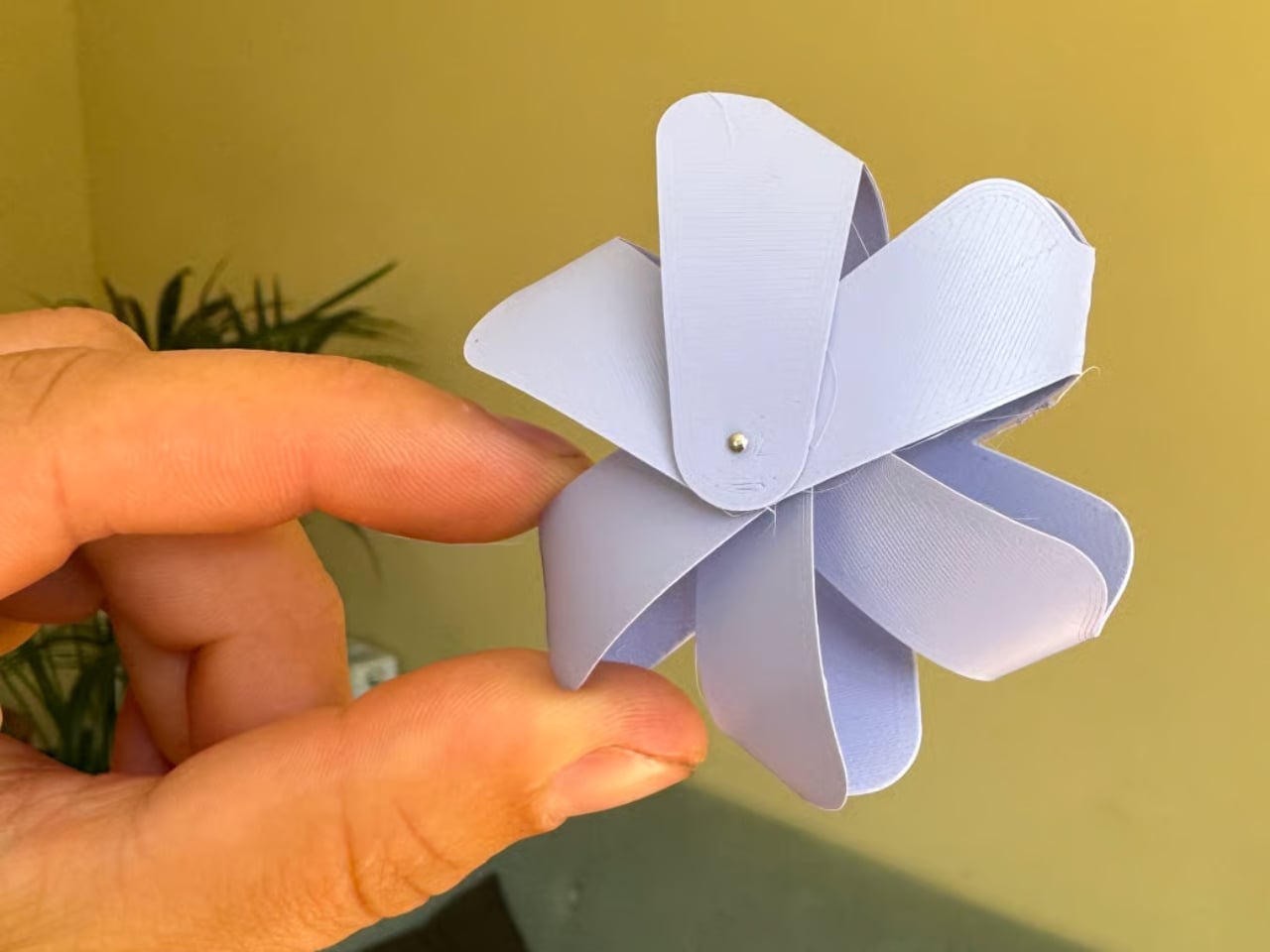
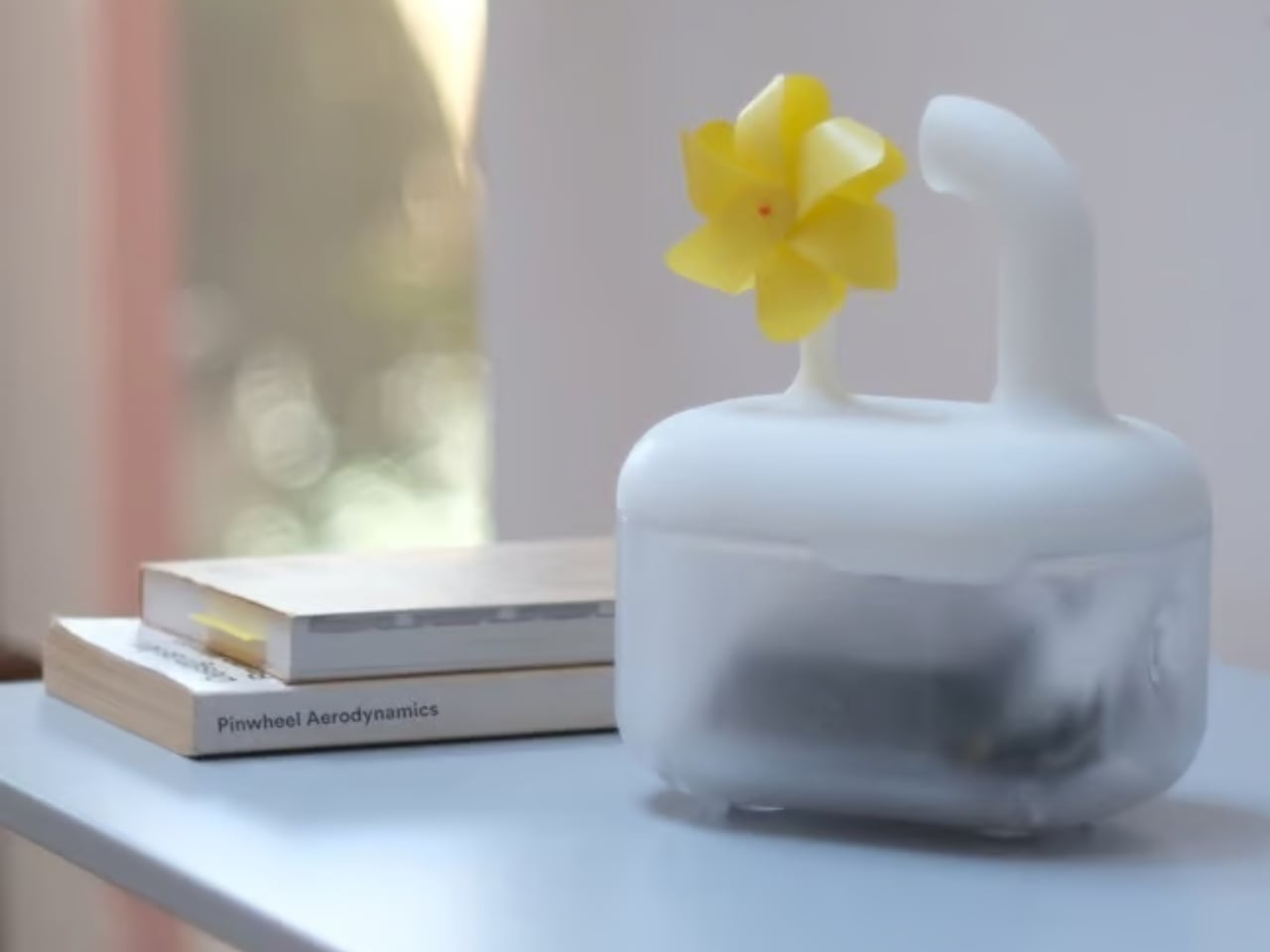
London-based creative studio Oio wants to change that, starting with a small 3D-printed box and a bright yellow pinwheel. Their project, the Hot Air Factory, is a domestic AI device that processes your questions and requests locally, without connecting to the cloud, and every time it thinks, it physically exhales. Hot air pushes out of the top of the device and spins that cheerful little pinwheel. The harder it thinks, the faster it spins. You’re watching computation happen in real time, which turns out to be a surprisingly powerful thing.
The concept is simple: make the invisible visible. We know AI uses energy. We’ve read the headlines. But knowing abstractly that data centers are energy-hungry is different from watching a pinwheel turn every time you ask your AI assistant to summarize something. One is a statistic. The other is a moment of honest accountability.
What makes the Hot Air Factory smart, beyond its obvious design appeal, is how it translates cost into human-readable terms. It doesn’t give you kilowatt-hours because most people have no idea what that means. Instead, it tells you something like “that prompt cost the equivalent of brewing a cup of tea” or “watching Netflix for five minutes.” Suddenly the math becomes personal. Suddenly you start wondering whether you really needed a 500-word AI response to a question you could have Googled.
Oio co-founder Matteo Loglio describes it as “a small, domestic AI that reveals the hidden energy cost behind every prompt.” The factory also lets you dial up or down the level of intelligence it uses. Want a quick answer? Use a lighter model, spend less energy. Need something more complex? Crank it up, and watch that pinwheel work for it. You can even schedule your heavier prompts for the night shift, when energy is cleaner and the grid is quieter. These are design decisions that carry real ethical weight, and they’re baked in with zero condescension.
The playfulness and the seriousness aren’t in conflict here. They’re exactly the point. The Hot Air Factory is built in a Frutiger Aero visual language, all soft curves and clean optimism, the kind of aesthetic that makes you want to put it on a shelf next to your plants. But underneath that approachable exterior is a genuinely complicated machine running open-source large language models on a local GPU. It looks like something a friendly robot would carry. It functions like a small act of protest.
AI companies have very little incentive to make their energy costs legible to users. Invisibility is convenient. It keeps things frictionless. It keeps you prompting without thinking about the bill. A report from the US Department of Energy projected that by 2028, data centers could account for 12% of total electricity consumed in the US. That’s not a small number, and it keeps growing every time we treat AI like it runs on good intentions and cloud magic.
The Hot Air Factory isn’t saying AI is bad. It isn’t demanding you stop using it. What it’s doing is quieter and more persuasive than that. It’s asking you to look. To see. To feel, just a little, what your digital habits cost in the physical world. That’s the argument made not through a lecture or a campaign, but through a yellow pinwheel spinning in your living room.
Design can do that. Sometimes a small, well-made object says more than a policy paper ever could. The Hot Air Factory is currently looking for collaborators to help bring it to a wider audience, still working its way from experiment to something anyone can own. If the goal is conscious computing, the first step might just be this: a tiny box, a spinning fan, and the quiet discomfort of watching a machine breathe.
Lenovo and HP have both devised on-device AI assistants designed to make your digital life easier. I dug into the features to discover similarities and differences.
Microsoft is changing how OneDrive handles deleted files. Soon, cloud deletions won't hit your local Recycle Bin, forcing you to use the web for recovery.
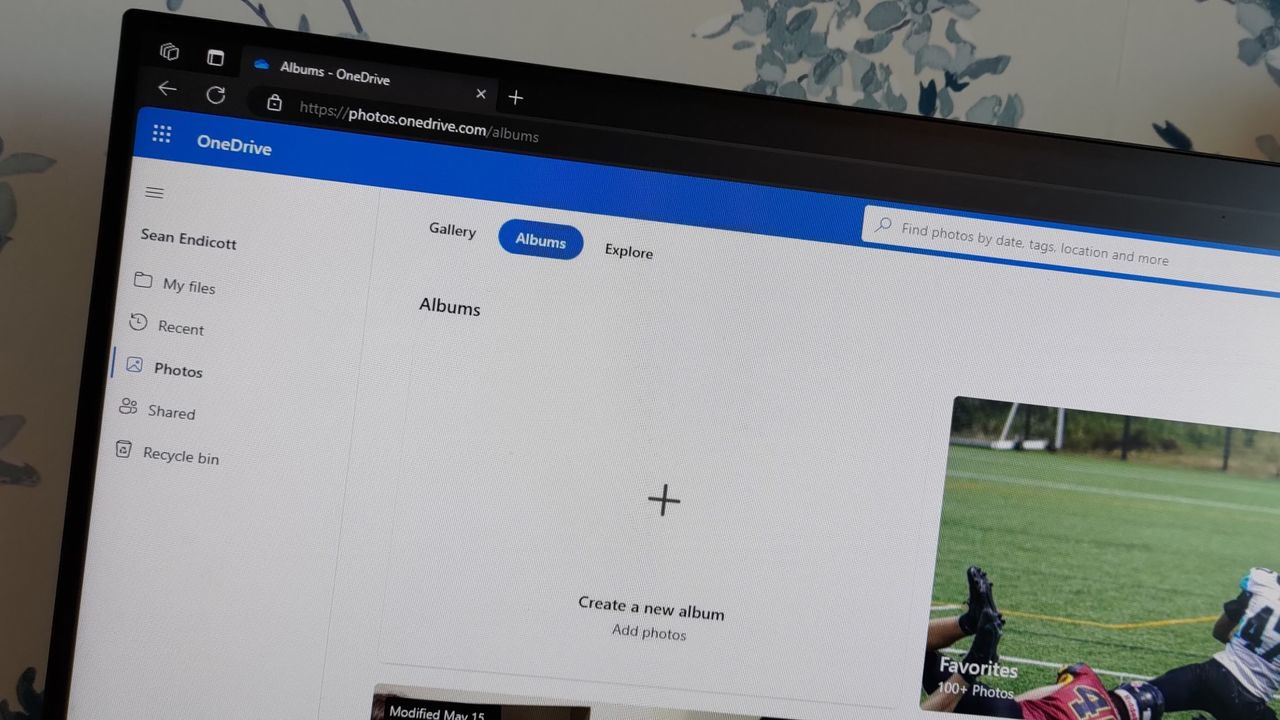
OneDrive web albums
<p>OneDrive on the web will soon have a version of Copilot to help you with your files.</p>
Copilot's terms of use indicated that it's for entertainment purposes only. However, Microsoft has indicated that the phrasing is a legacy language from when Copilot originally launched as a search companion service in Bing.
In this photo illustration, Microsoft Copilot AI logo is seen on a smartphone screen.
Microsoft has indicated that the trending Copilot terms are old news.
Hackers are exploiting a maximum-severity vulnerability, tracked as CVE-2025-59528, in the open-source platform Flowise for building custom LLM apps and agentic systems to execute arbitrary code. [...]
Microsoft MVP Lance McCarthy highlights how easy it actually is to add AI to an app using Microsoft's Windows AI APIs during development. I want to see more of this type of AI and less of the unecessary bloat that's giving it a bad name.
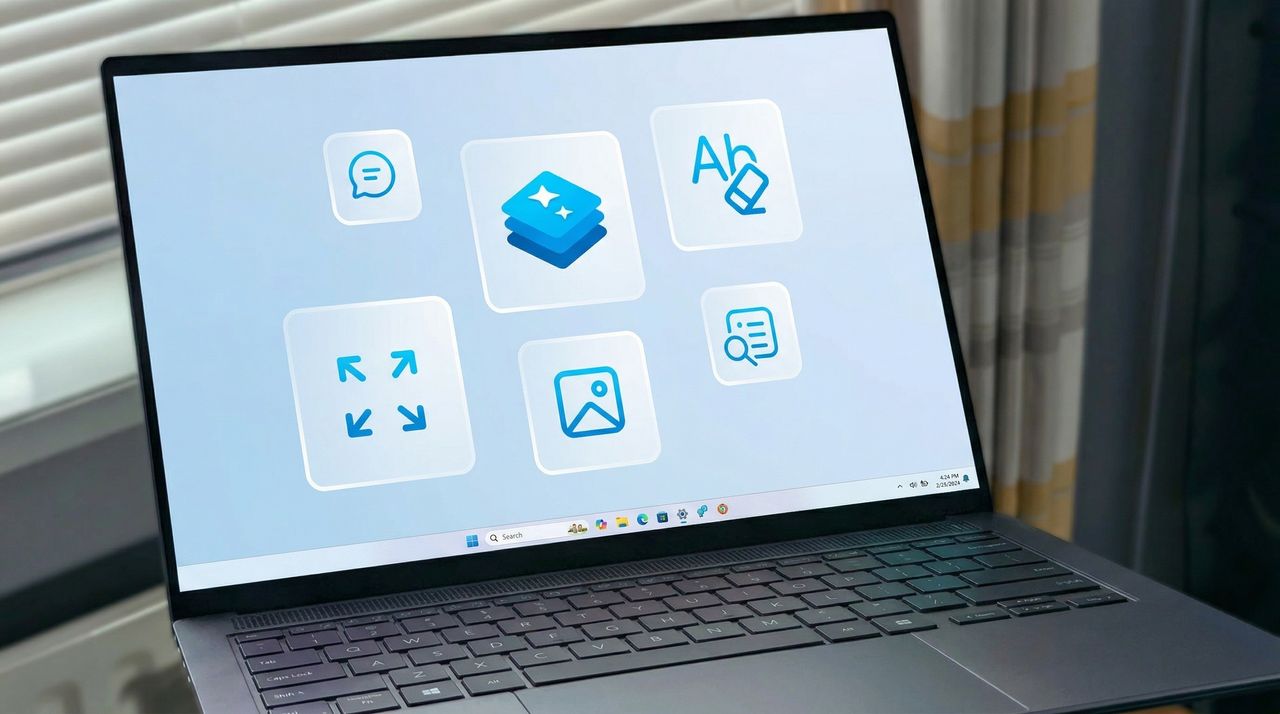
Microsoft AI APIs on a Zenbook 14
If you're an app developer, what's stopping you from using Windows AI APIs?
Your AI PC's Neural Processing Unit (NPU) is a useful piece of hardware, but are you making the most out of it? I dug up 7 apps that make good use of the NPU; which ones are you using?
Microsoft has unveiled a host of in-house AI models, including MAI-Transcribe-1, MAI-Voice-1, and MAI-Image-2, which will be available via Microsoft Foundry.
Microsoft AI CEO Mustafa Suleyman.
AI CEO Mustafa Suleyman leads Microsoft in unveiling a host of in-house AI models, which will be available via Microsoft Foundry.
Microsoft’s latest hire is bringing OpenClaw and personal AI agents to Microsoft 365, but it also raises questions about the company's commitment to reducing AI integrations across its tech stack.
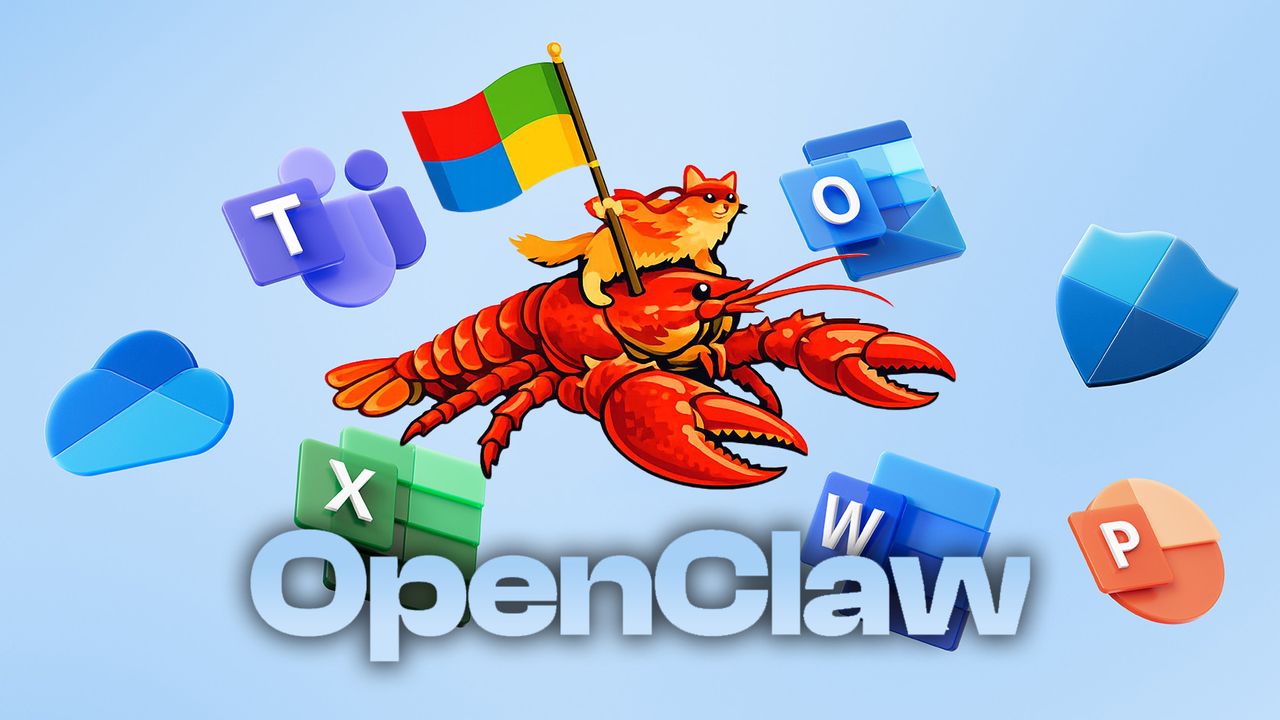
Microsoft 365 icons with OpenClaw text logo and a cartoon ninja cat riding a lobster
Microsoft 365 icons with OpenClaw text logo and a cartoon ninja cat riding a lobster
Anthropic says it accidentally leaked the source code for Claude Code, which is closed source, but the company says no customer data or credentials were exposed. [...]
GitHub is adopting AI-based scanning for its Code Security tool to expand vulnerability detections beyond the CodeQL static analysis and cover more languages and frameworks. [...]
Threat actors are evading phishing detection in campaigns targeting Microsoft accounts by abusing the no-code app-building platform Bubble to generate and host malicious web apps. [...]
Has humanity achieved the vaunted "AGI" AI benchmark? Jensen Huang thinks so. Microsoft has some specific clauses with OpenAI around these claims though ...
NVIDIA CEO Jensen Huang holding OpenAI and Microsoft logos, crudely photoshopped on top by Jez Corden
Jensen Huang's recent comments might have Microsoft's legal team uniquely nervous ...
OpenAI’s IPO faces risks from its reliance on Microsoft, Musk’s lawsuits, and soaring compute costs, raising investor concerns about its $730B valuation.
Microsoft CEO Satya Nadella speaks during an OpenAI DevDay event.
OpenAI’s IPO faces risks from its reliance on Satya Nadella's Microsoft.

 Connexion