Connexion

Someone built a PlayStation arcade cabinet on ebay, and now I want to play Tekken
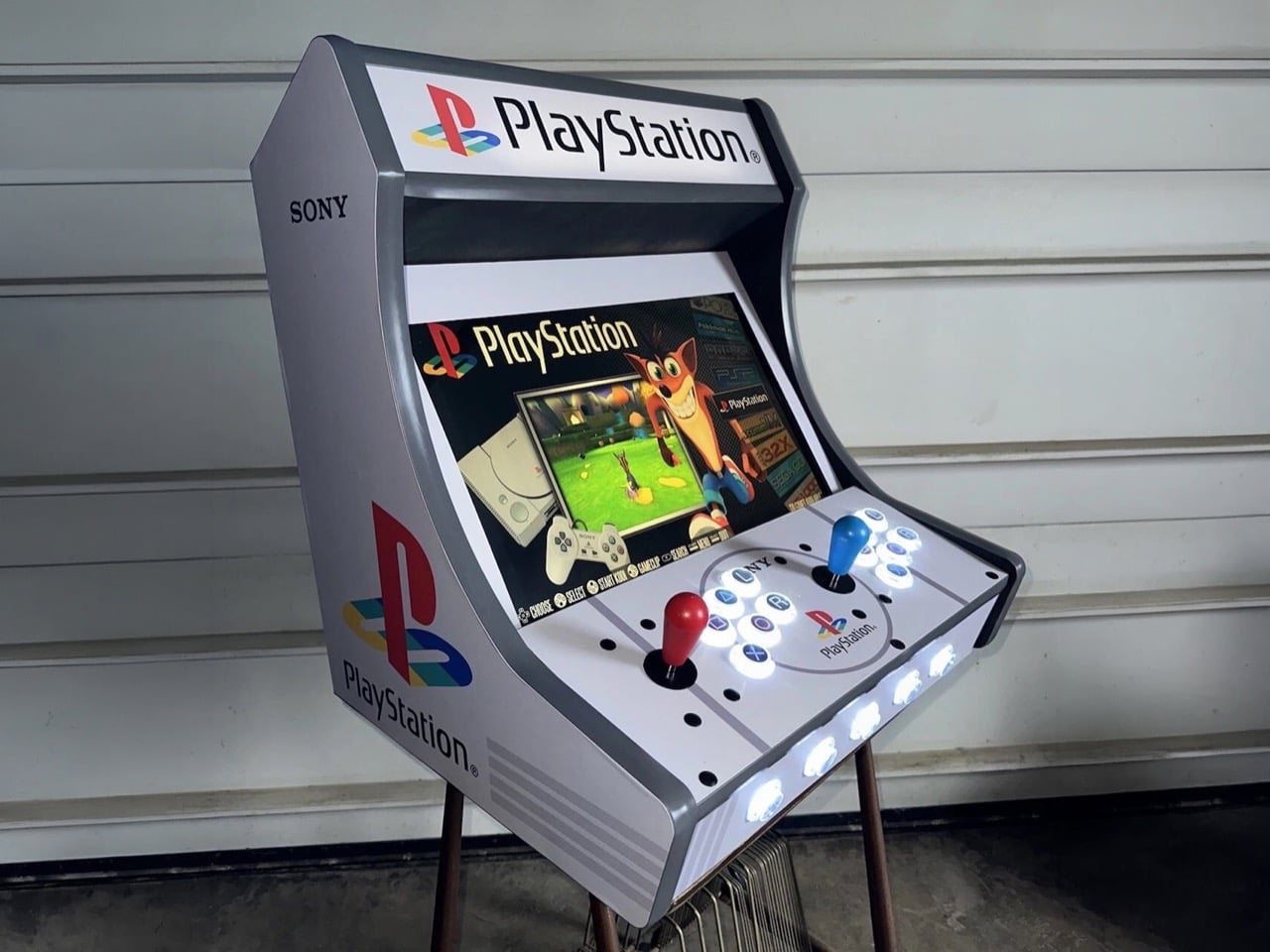
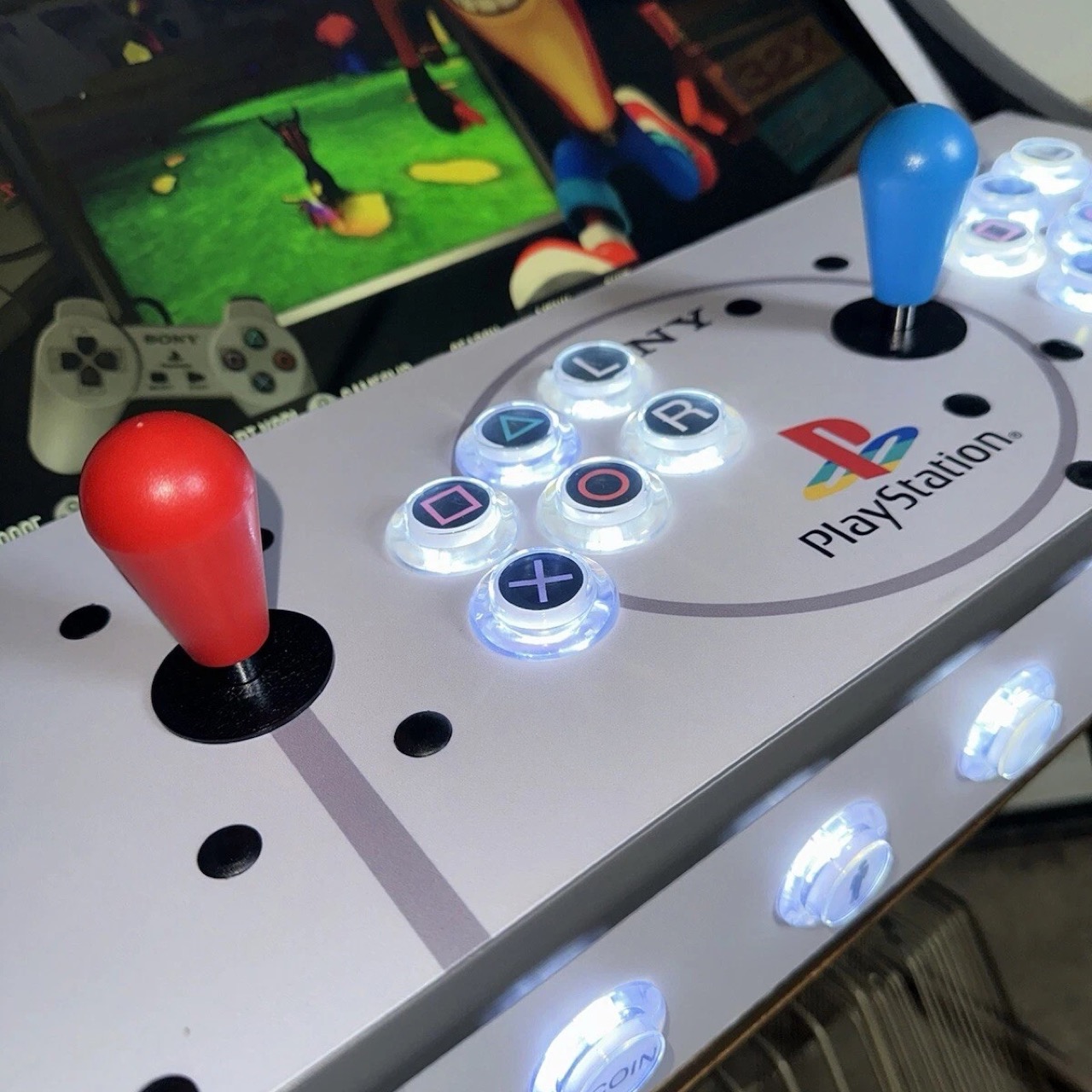
The PlayStation 5 is having a wild autumn. Modders have cracked it wide open, and people are now hauling Steam games onto the console and PS5 games onto their PCs, like two neighbors who swapped houses just to see what happens. Meanwhile, an eBay seller called arcadeplug has gone in the opposite direction, building a PlayStation-themed bartop arcade cabinet that plays the original PS1 library old-school style, standing up with a joystick in hand. It runs on a Raspberry Pi 4 with RetroPie, uses a 19-inch screen, and costs $1,029.99. Sony never made this machine. Somebody with a lot of vinyl and a free weekend decided the universe needed it anyway.
I’ll admit the first photo got me. The gray body, the four-color PS logo on the side, and the glowing triangle, circle, cross, and square buttons hit the same part of my brain that still remembers the PS1 boot-up sound. It’s a fan build in official-looking clothes, and the clothes are excellent. The funny part is the history, because PlayStation hardware actually powered ’90s arcade cabinets, running Tekken on Namco’s System 11 board months before the console launched. Those machines wore other companies’ art. This one wears Sony’s art with zero Sony hardware inside, which is a deliciously backwards way to close the loop.
Designer: arcadeplug
Sony Snuck the PlayStation Into Arcades Before It Hit Living Rooms
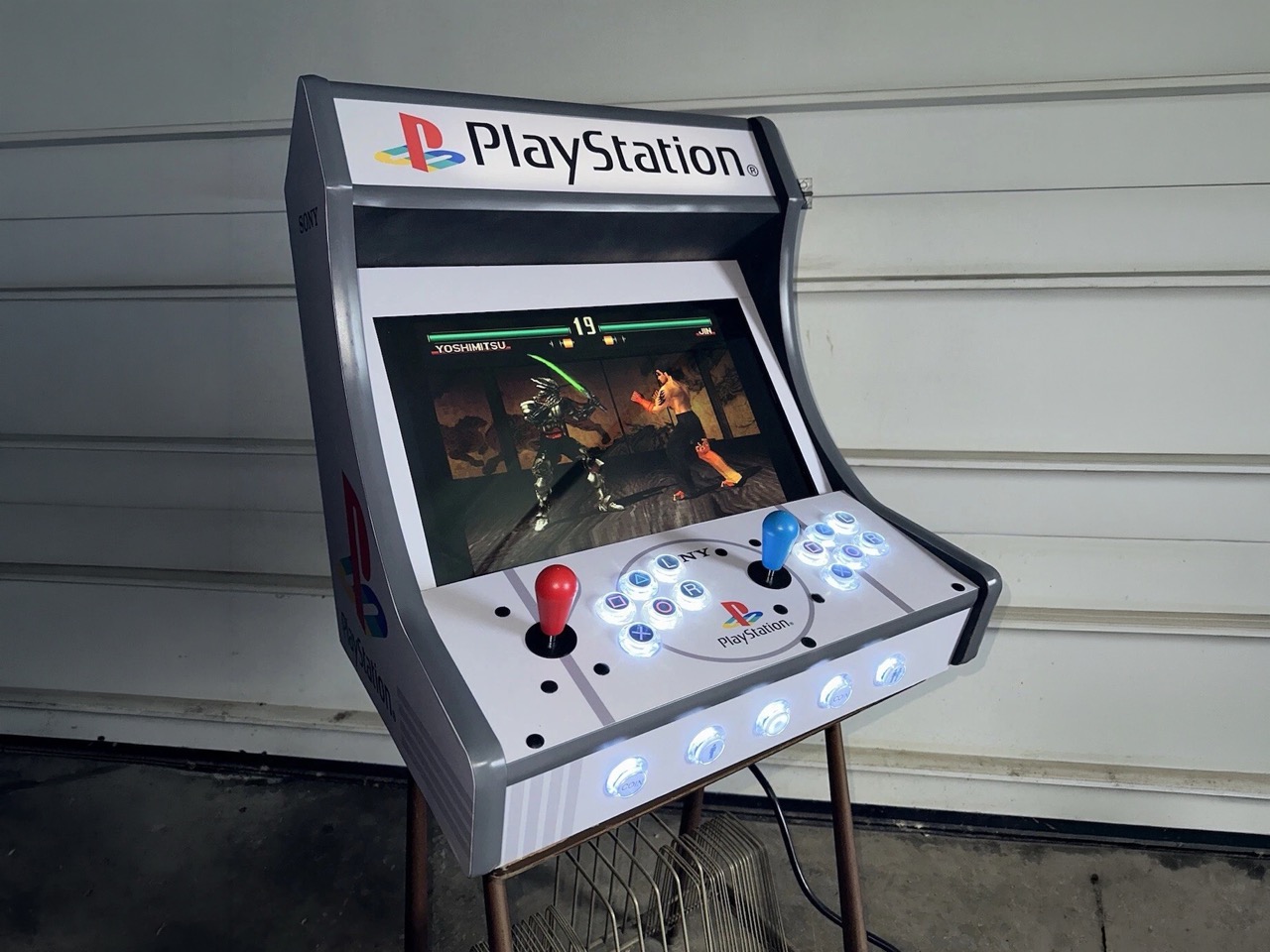
Tekken’s road to the arcade ran through a 1993 meeting where Sony’s Ken Kutaragi walked Namco’s Shegeichi Nakamura through the early PlayStation specs. Namco had been building Tekken for its pricey System 22 board, a machine meant to slug it out with Sega’s Virtua Fighter 2. After that meeting, the project moved to System 11, a cheaper board built on PlayStation architecture. The plan was simple economics, leaving Sega the big arcades while Tekken chased the smaller ones that couldn’t afford premium hardware. Bringing the game home was easy, since the arcade board and the console were basically siblings. An upgraded System 12 followed, debuting with Tekken 3 in March 1997.
Sony also built its own arcade boards, the ZN-1 and ZN-2, and handed them to studios like Capcom, Taito, and Tecmo. Street Fighter EX, Battle Arena Toshinden 2, and Tetris: The Grand Master all ran on PlayStation-derived silicon, though nothing on the cabinets told you so. Sony kept the boards unbranded, letting each publisher put its own name and art on the outside. My favorite slip comes from Acclaim, whose NBA Jam Extreme manual casually calls it the “Sony Play Station Arcade Board.” Sony’s arcade boards were PlayStations in disguise. This cabinet is the disguise with no PlayStation inside.
Why the PS1’s Graphic Design Looks This Good Blown Up
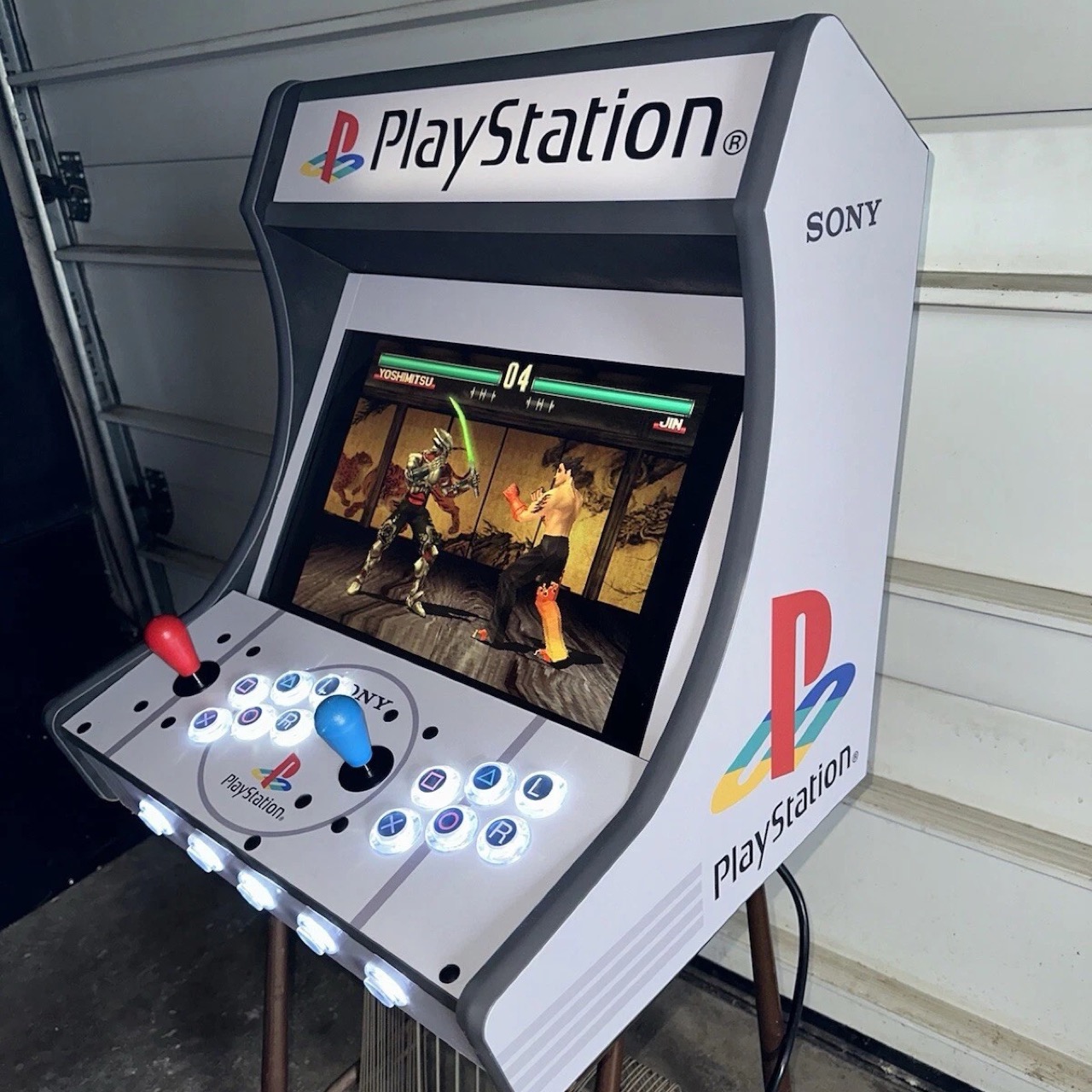
Teiyu Goto, the designer behind the original PlayStation and its controller, picked shapes for the face buttons because every rival was using letters. Each shape carried a meaning, with the circle and cross standing for yes and no, the triangle for a viewpoint, and the square for a sheet of paper or a menu. He gave them colors too, and had to convince management that the red circle and blue cross were intentional. Three decades later, those four shapes work as a logo in their own right. On this cabinet, they sit on translucent arcade buttons lit from within, and you can read them from across the room.
Manabu Sakamoto’s 1994 PS logo takes over the side panels, printed big enough to study how it works. Sakamoto wanted the mark to suggest 3D without simply adding thickness, so he stood the P upright and laid the S flat behind it, using four primary colors. At cabinet scale, that illusion of depth looks better than it ever did on a console lid. The body borrows the PS1’s light gray, and a ring around the center of the control panel frames another PS logo, which reads to me like a nod to the original console’s round disc lid. All of it is laminated vinyl, and it sells the fantasy completely.
A Raspberry Pi, Six Buttons, and a $1,029.99 Price Tag
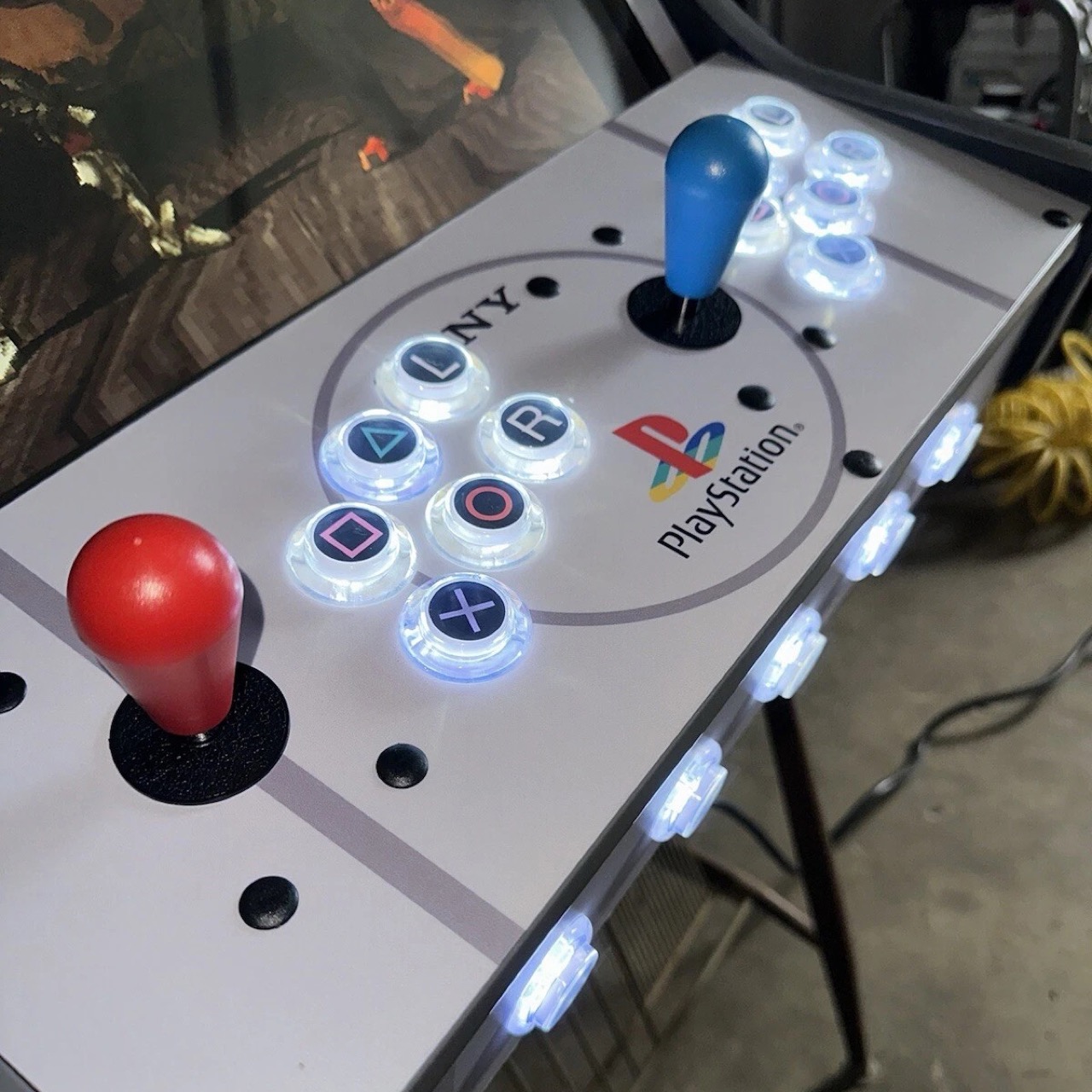
Inside sits a Raspberry Pi 4 with a 128GB build running RetroPie, the open-source software that bundles emulators for the Pi. Games play out on a 19-inch LCD, backed by a pair of 4-inch speakers, Sanwa-clone joysticks and buttons, and LED lighting throughout. Each player gets one stick and six buttons, the four PlayStation symbols plus an L and an R. That layout drops the original controller’s second pair of shoulder buttons, which suits Tekken and Street Fighter Alpha far better than a 40-hour Final Fantasy run. You’ll also be standing the whole time, which feels right for a fighter and slightly brutal for a JRPG.
On eBay, the Custom PlayStation Multicade cabinet goes for $1,029.99 or best offer, shipping from Ohio with a one-year warranty covering the speakers, buttons, and Pi. For scale, Arcade1Up’s licensed Street Fighter II cabinets run roughly $350 to $650, and a SuperStation One FPGA console costs about $210 to $250 if you just want PS1 games on a TV. Neither comes dressed like this, though. The timing makes me smile, because Sony is ending physical game disc production in 2028, and here’s a shrine to the console that made CDs the default for a generation. Modders are prying the PS5 open to see what it can become. Somebody in Ohio gave the PS1 the arcade cabinet it never had.
The post Someone built a PlayStation arcade cabinet on ebay, and now I want to play Tekken first appeared on Yanko Design.