❌

Vue lecture

Jackery shrank its power station into a 96Wh cube with 140W USB-C
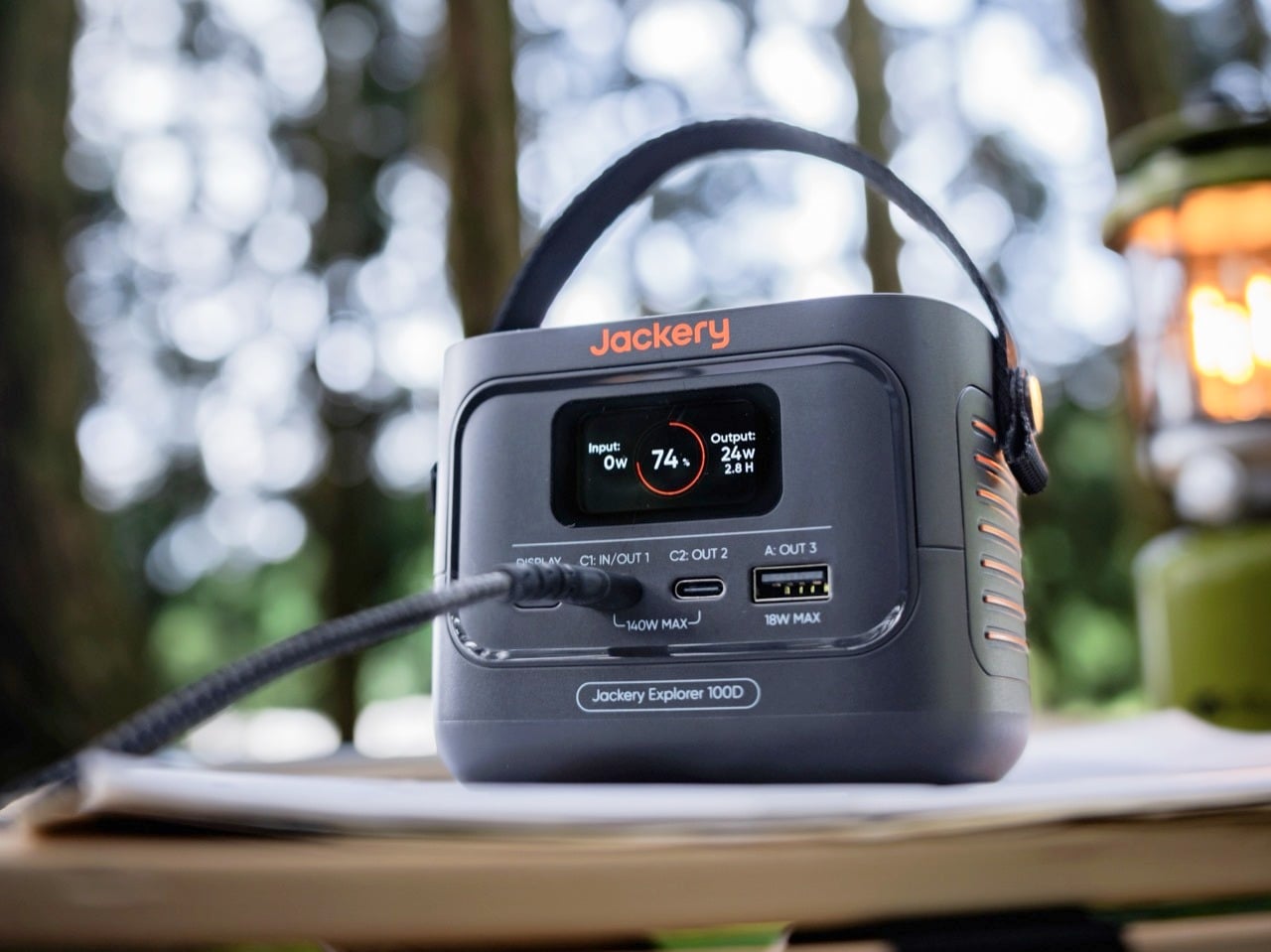
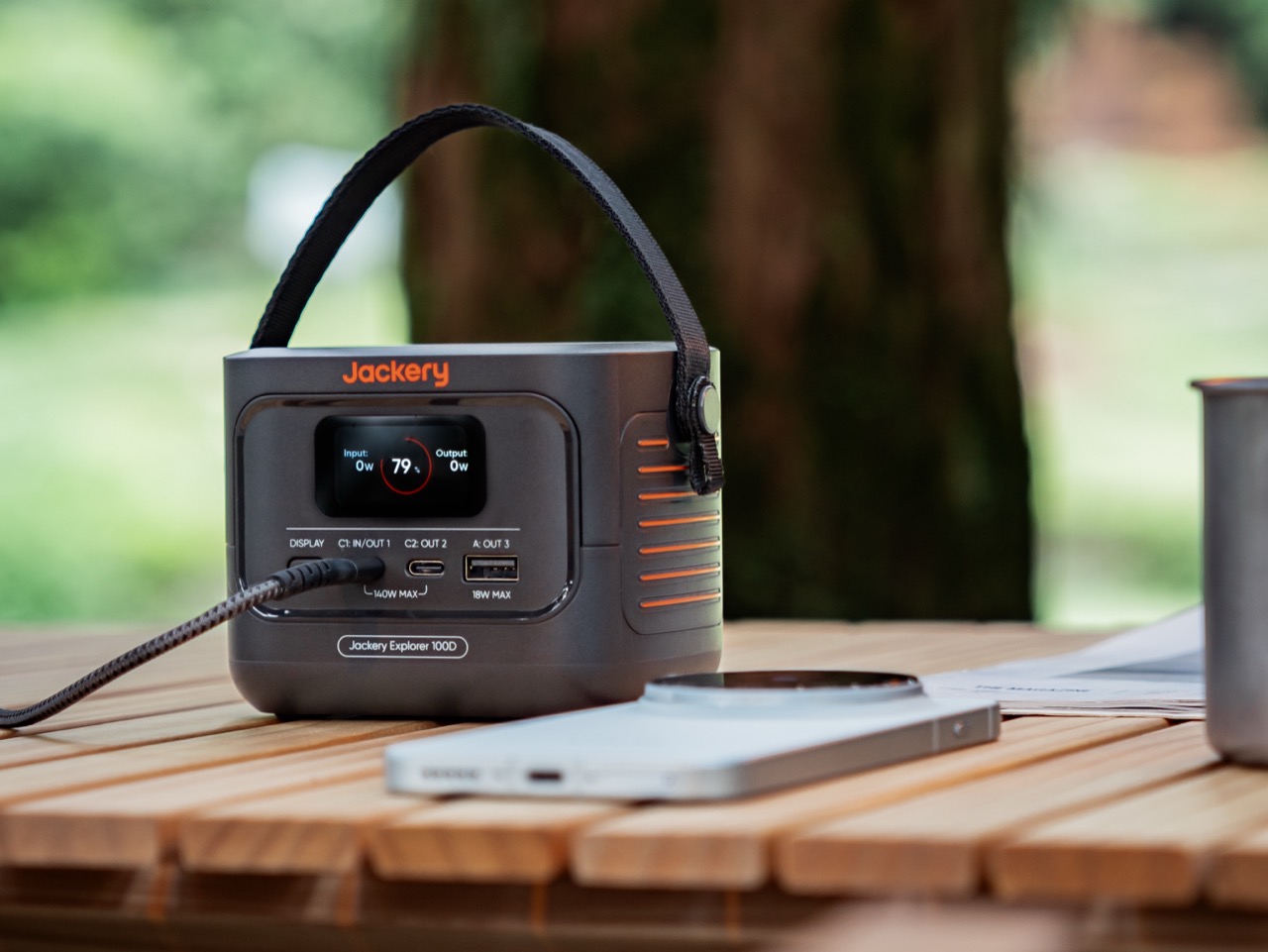
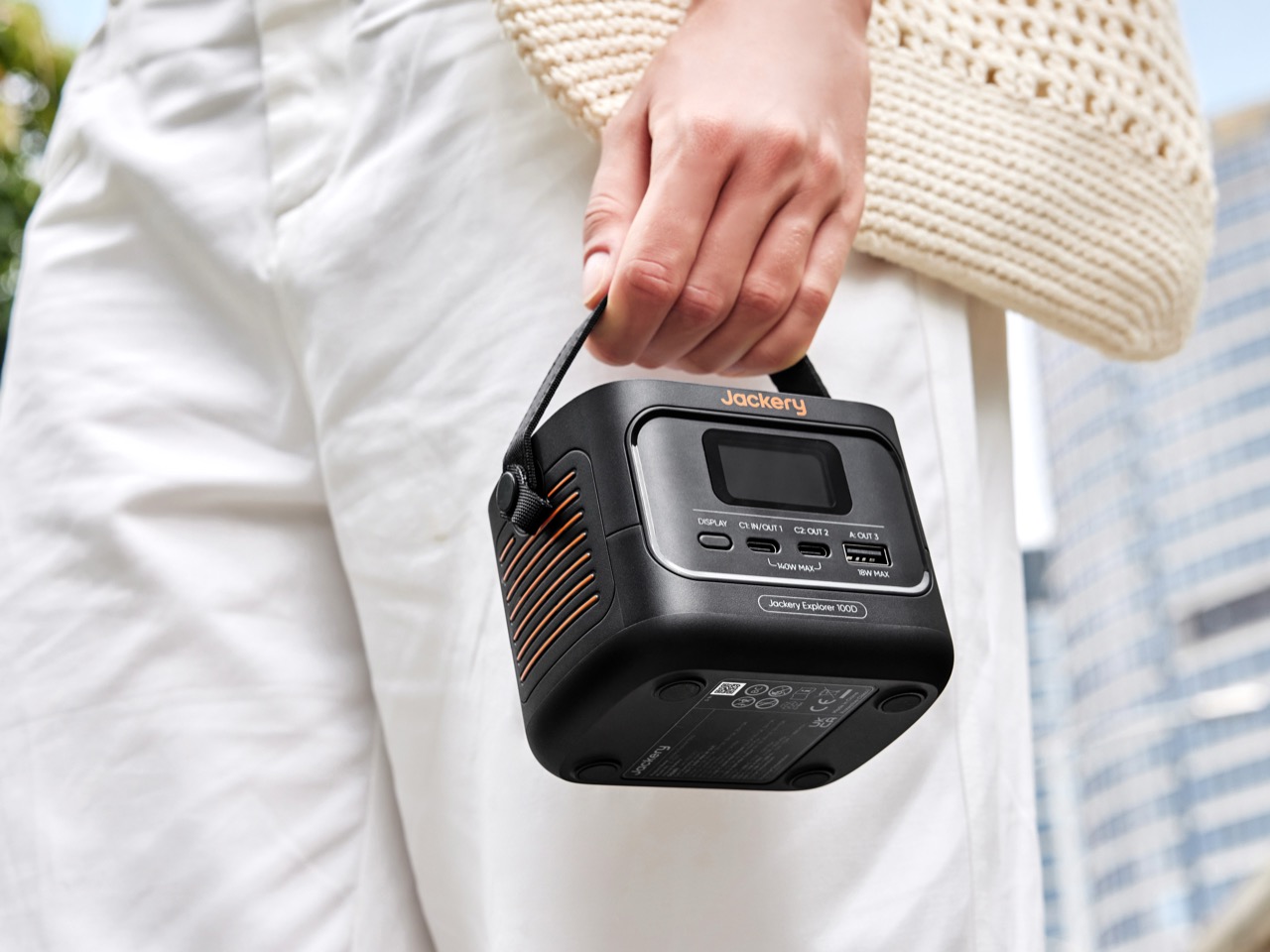
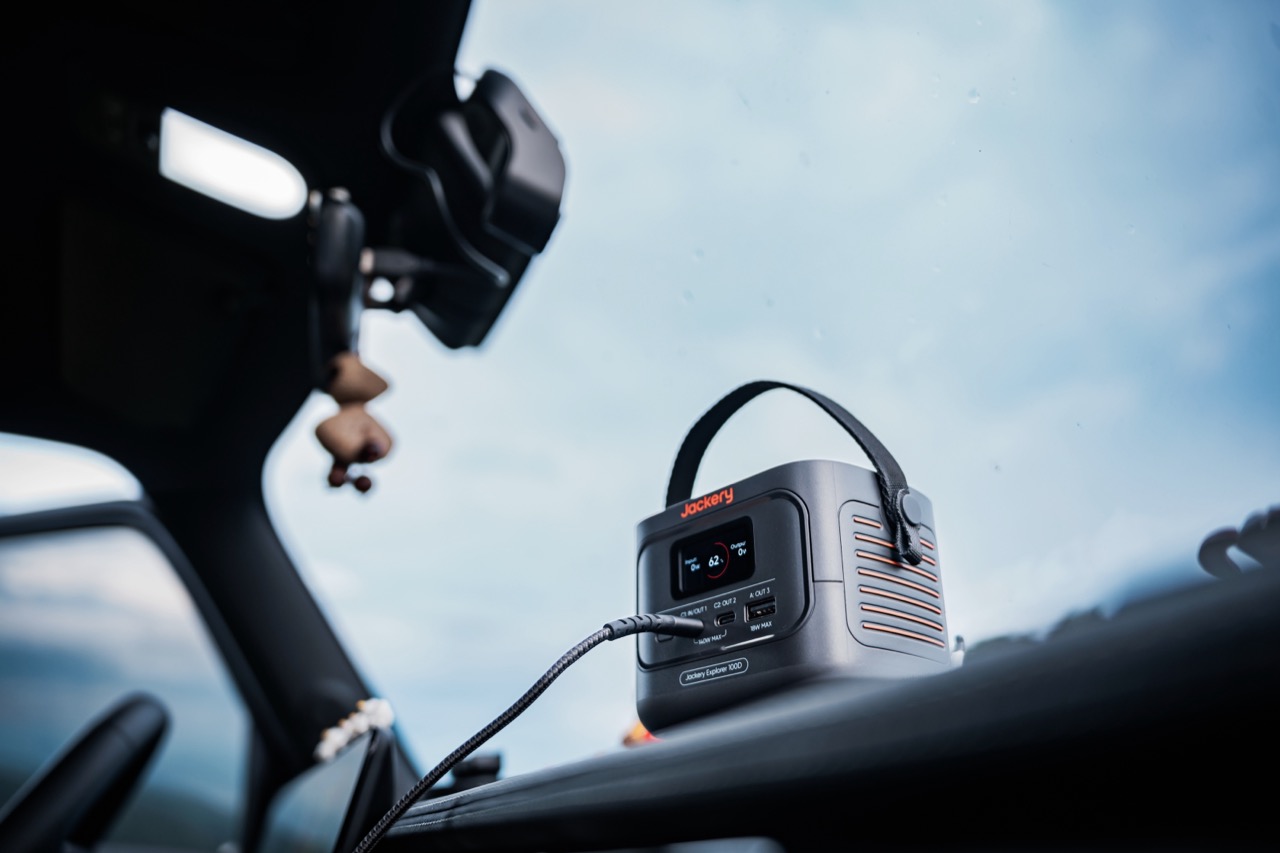
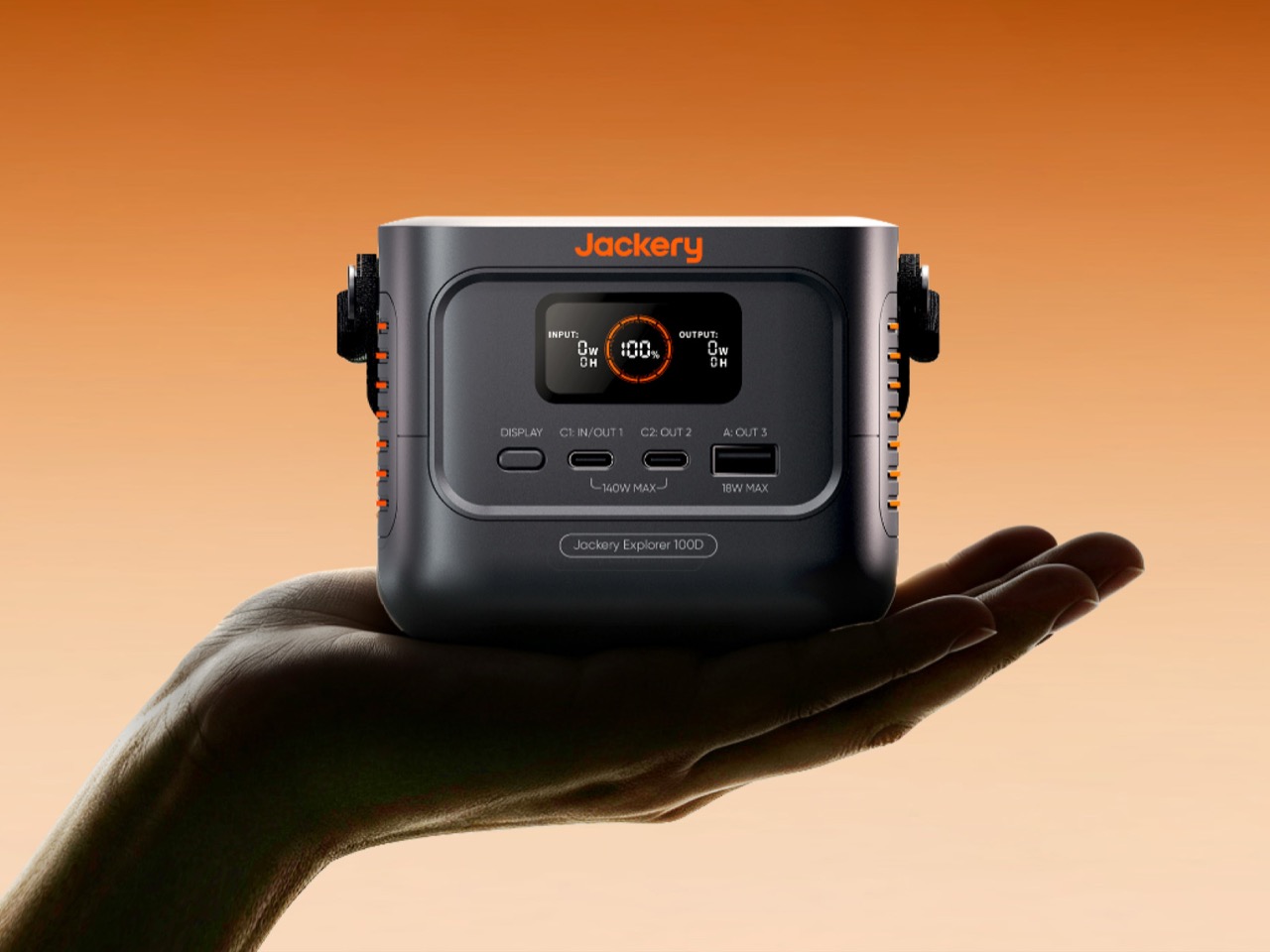
Jackery’s new Explorer 100D looks like it should play AM radio. The squat little cube has a framed front panel, orange slatted vents down its sides, and a webbing strap you’d expect on a vintage transistor set. Instead of tuning into ballgames, it stores 96Wh of energy and delivers up to 158W across two USB-C ports and one USB-A port. It measures 4.67 by 3.25 by 3.37 inches (11.9 x 8.3 x 8.6cm), making it roughly softball-sized, and weighs 1.87 pounds (850g). It’s the smallest power station Jackery has ever built.

Jackery’s D-series models skip the AC outlet entirely, and that decision explains much of the design. They don’t need an inverter, a bulky component that generates heat and often requires a cooling fan. Leaving it out lets the box shrink to desk-friendly proportions, while the 96Wh battery sits just below the FAA’s 100Wh threshold for batteries carried without airline approval. Jackery estimates more than four charges for an iPhone 17 or Galaxy S26, or roughly one full recharge for a 14-inch MacBook Pro. That’s a useful reserve in something that weighs less than the laptop it’s charging.

Designer: Jackery

One Button Runs the Whole Show
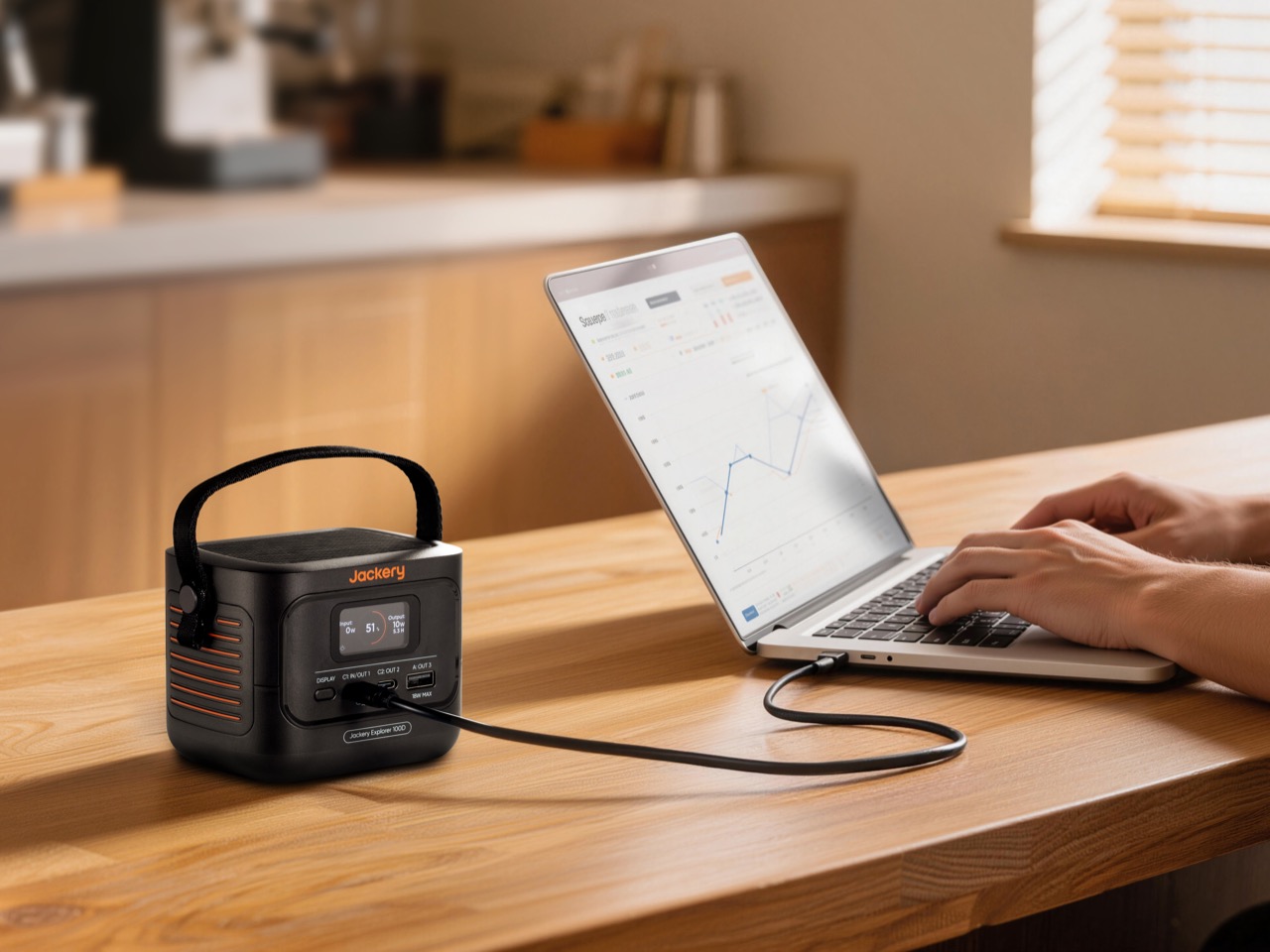
A TFT display on the front tracks input and output wattage, battery level, and estimated runtime, with additional screens for battery health, cycle count, and internal temperature. One DISPLAY button handles it all. Tap once to flip between status screens, double-tap to keep the screen on or switch it off, and hold for three seconds to enter Low-Power Charging Mode. That last trick is for smartwatches and earbuds. Some power banks stop supplying power when a device draws too little current, leaving you with AirPods stuck at 40%. Jackery’s dedicated mode is designed to keep power flowing to those smaller gadgets.

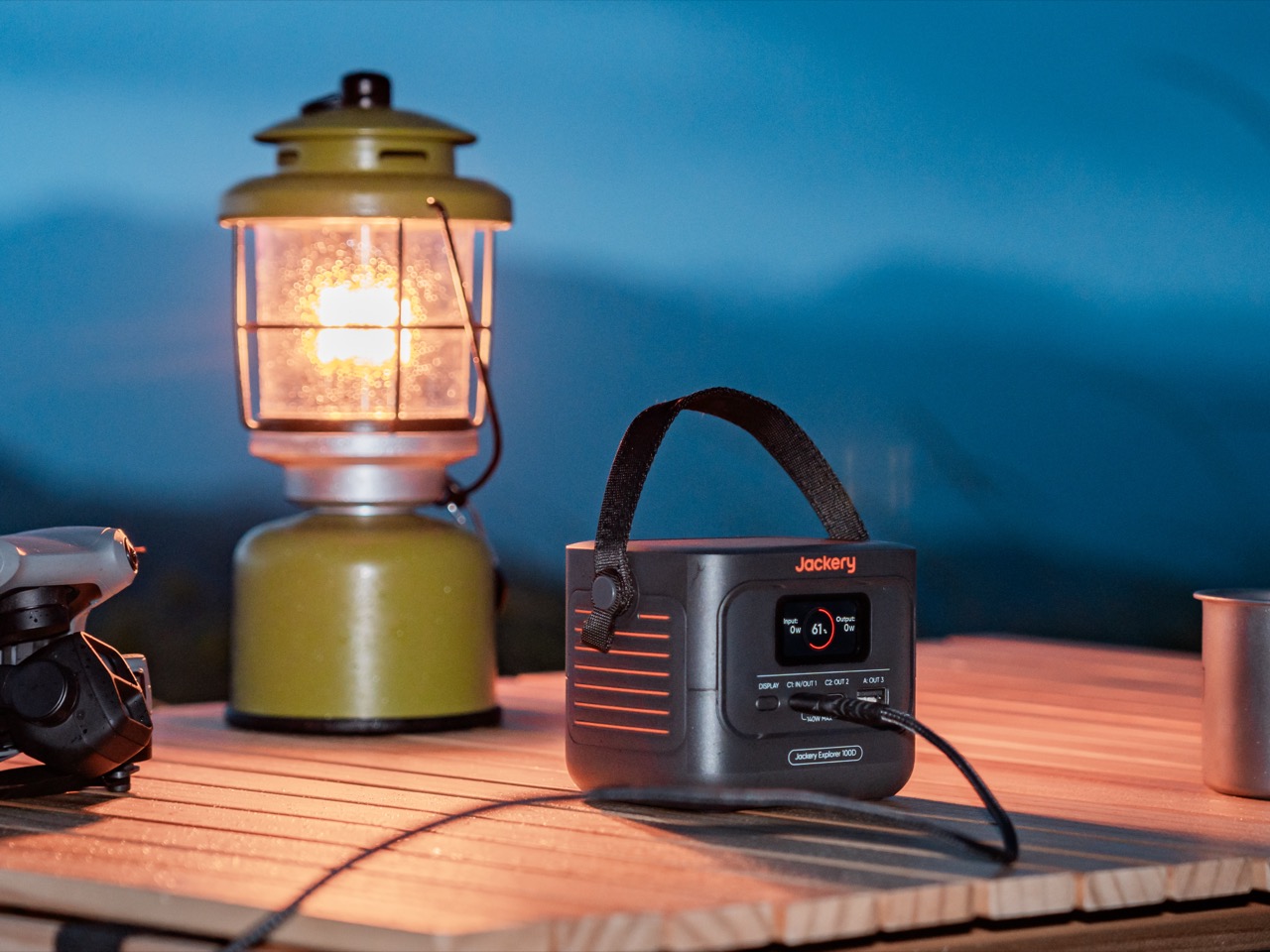
The screen resembles a car’s instrument cluster, with a circular battery gauge in the middle and input and output readouts flanking it. A glossy, framed front panel groups the display and ports into a single face, which is where the transistor-radio vibe comes from. Port labels are printed directly on the panel, and a small bracket under the two USB-C ports marks their 140W maximum. The horizontal vent slats carry Jackery’s signature orange. Four rubber feet help keep it steady on a café table, and the strap fastens to round studs on either side.

140 Watts That Fit in a Tote Bag
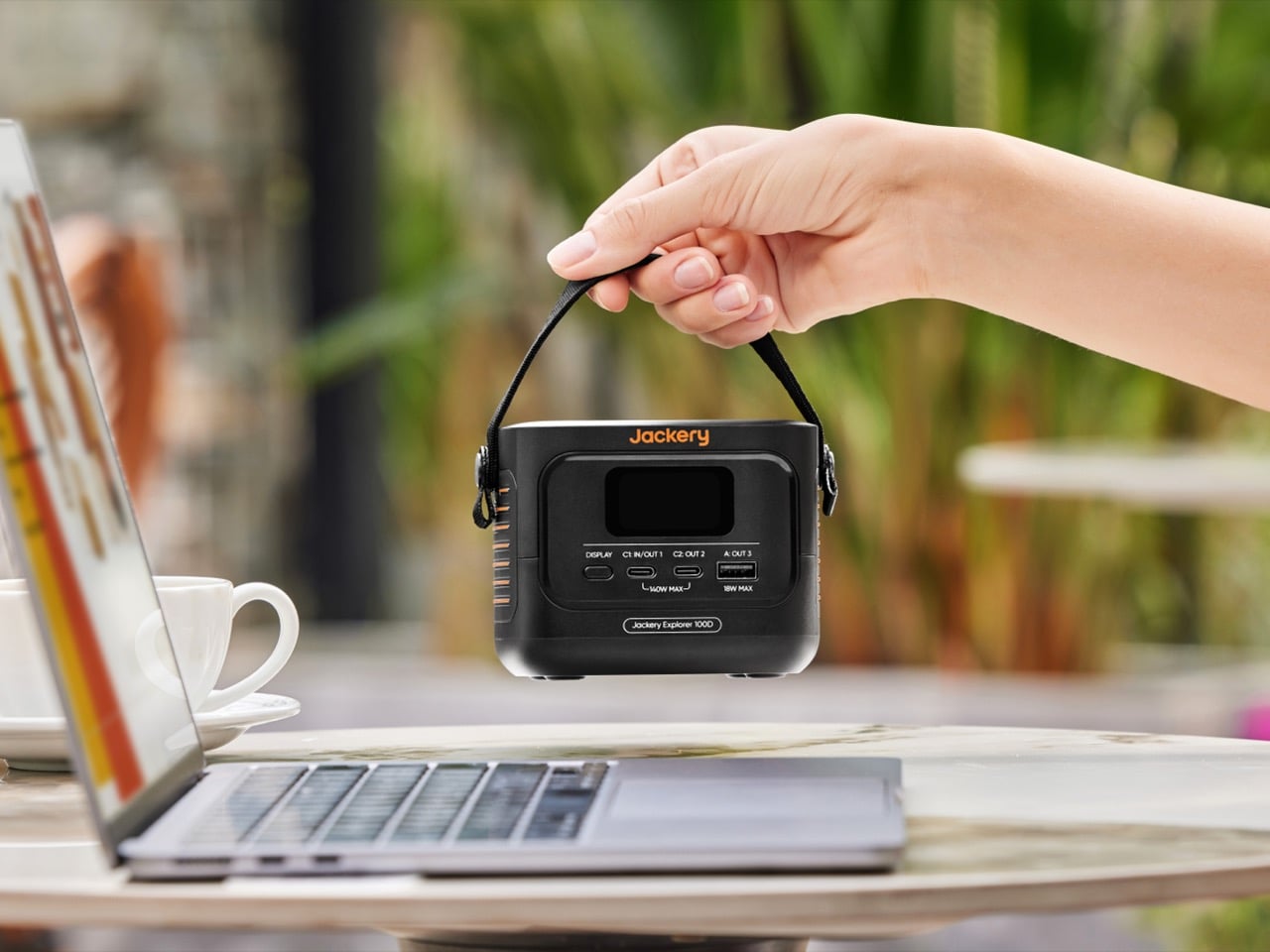
The USB-C ports offer up to 140W and support three fast-charging protocols: USB Power Delivery (PD), Programmable Power Supply (PPS), and Adjustable Voltage Supply (AVS). PD serves modern laptops, PPS fine-tunes voltage for compatible devices, including Samsung phones, and AVS is the newer addition Jackery highlights for Apple gear. Jackery claims the 100D can charge an iPhone 17 to 50% in 21 minutes. Total output across all three ports reaches 158W, allowing a laptop, phone, and pair of earbuds to share it. The 18W USB-A port handles whatever legacy cable is still living in your bag.

Recharging options include a 140W USB-C wall charger, a 100W car charger, or a 100W solar panel. Jackery quotes 1.7 hours from zero to 80% on solar. Car charging supports both 12V and 24V sockets, covering semi-truck cabs as well as hatchbacks. Car and solar charging use a USB-C to DC8020 adapter connected to C1, the only port that accepts input. When charging the battery and powering devices simultaneously, input and output are capped at 100W each, worth knowing if you plan to use it as a desk hub. Jackery rates the LFP cells for 3,000 cycles before capacity drops to 80%, equivalent to more than eight years of daily cycles.

The Pocket-Size Panic Buy
The 100D replaces the Explorer 100 Plus, Jackery’s previous smallest station, with several improvements. Weight drops from 2.13 pounds to 1.87, output climbs from 128W to 158W, and rated cycles rise from 2,000 to 3,000, with a 3Wh reduction in capacity. The one step back: only one USB-C port accepts input, whereas the 100 Plus could charge through either. Anker’s Solix C200 DC is an obvious rival, offering 192Wh for $149. That doubles the energy but exceeds the FAA’s 160Wh upper limit for spare lithium-ion batteries in passenger baggage, ruling it out for air travel.

Walmart is scheduled to start selling the 100D for $99 on November 15, Costco already offers a two-pack for $179.99, and Jackery lists it at $119 on its own site, with sign-ups for preorder alerts. It’s a compact entry into 2026’s power-station panic buy. Large home-backup stations are built to keep appliances running during an outage. The 100D is for the laptop deadline at an airport gate where every outlet is taken, or the campsite with no plug for miles. It’s a power station you might actually use on a Tuesday.
The post Jackery shrank its power station into a 96Wh cube with 140W USB-C first appeared on Yanko Design.
  •  

Do yourself a favor and buy a power station now, before the energy crisis gets worse

Every crisis has its panic buy. In 2020 it was toilet paper and N95 masks, in 2021 it was graphics cards, in 2025 it was RAM chips, and in 2026 my money is on lithium iron phosphate. With Iran attacking tankers in the Strait of Hormuz, gas sitting at a record-for-October $4.36 a gallon, and heating oil bills forecast to climb 21% this winter, the case for keeping your own stash of electrons has never been stronger. A portable power station from Anker, EcoFlow, or Jackery keeps your fridge cold and your lights on when the grid gives up. It also runs indoors without trying to poison you, and it never needs a trip to the gas station.

Stockpiling toilet paper made you look a little unhinged. Owning a power station makes you the neighbor everyone suddenly wants to befriend during an outage. Black Friday could knock a few more dollars off, sure, but fall sale prices are already the best we’ve seen this season, and winter storms rarely wait for a coupon code. I’ve narrowed the field to one value pick from each brand, all hovering around the 2kWh mark, enough to keep a fridge humming for well over a day. Anker gets first crack, because its S2000 squeezes 2,010Wh into a 35.7-pound body that costs less than a decent espresso machine.

[Editor’s Pick] Anker S2000 2,010Wh Portable Power Station: $699.99

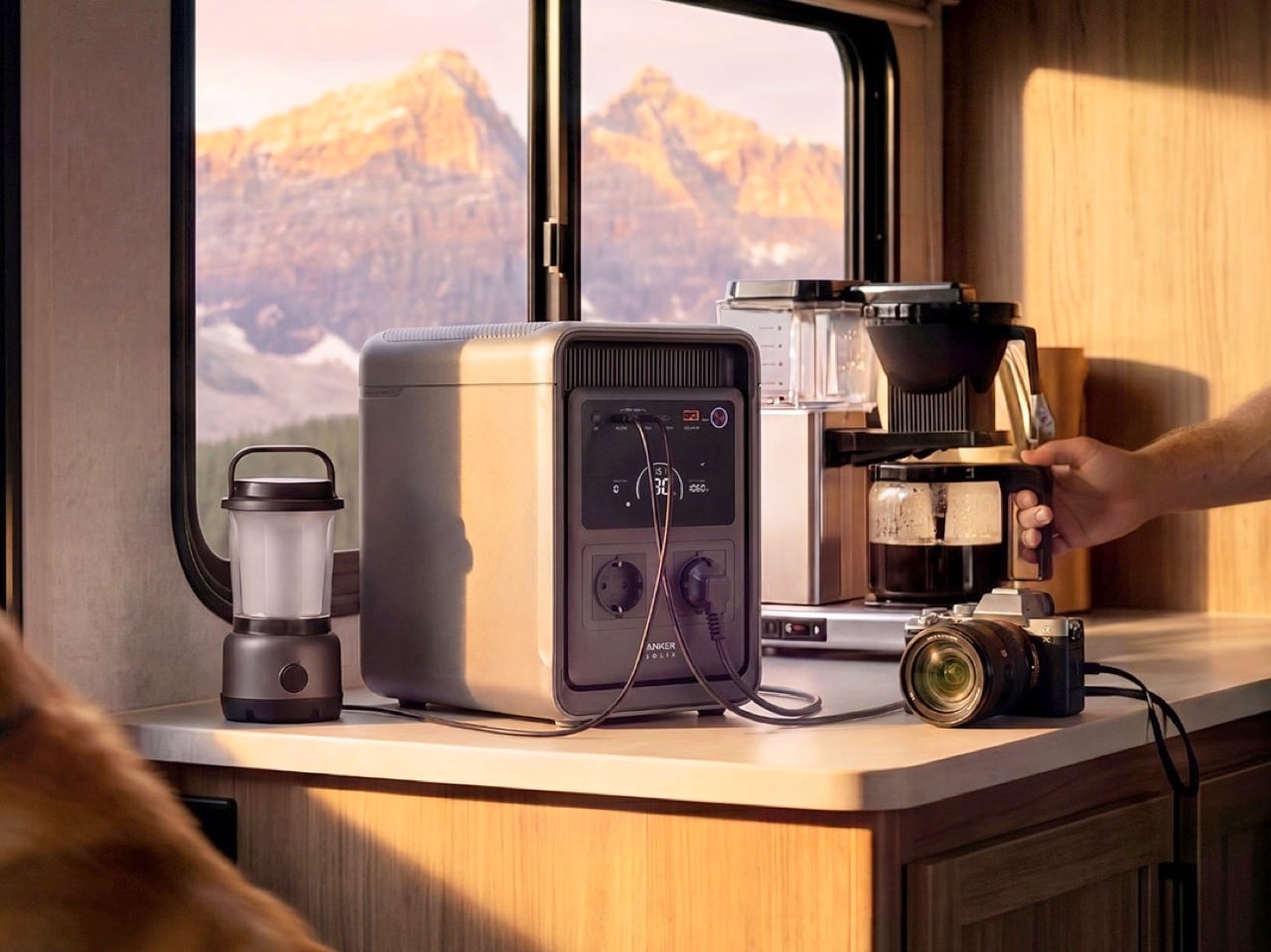
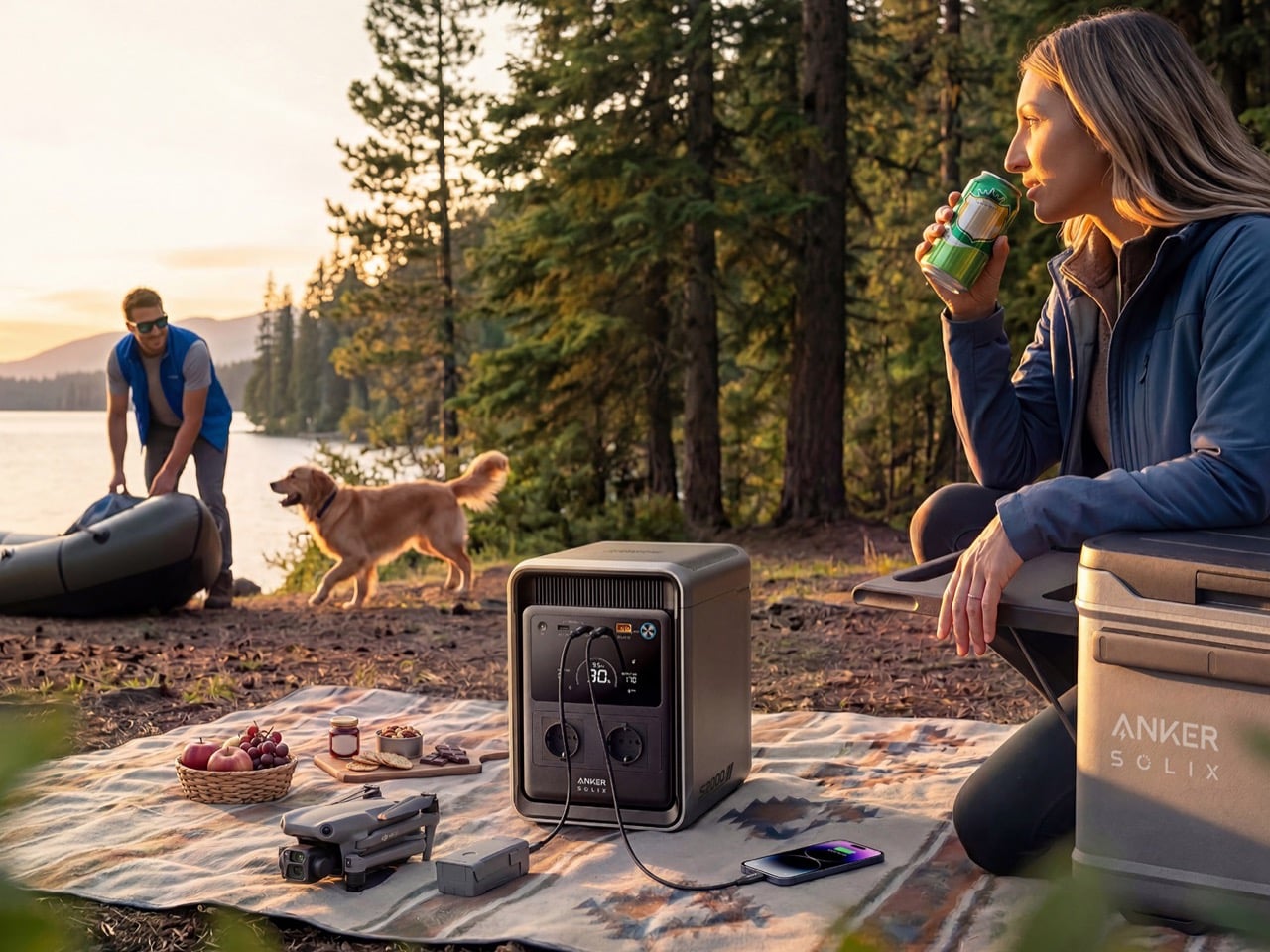
Anker announced at IFA 2026 that its SOLIX power station brand is folding into the Anker name, so you’ll still spot “SOLIX” on boxes and Amazon listings while the switch plays out over the next couple of years. Same company, same warranty, simpler logo. The S2000 makes a great poster child for the new identity, because it looks like it wandered over from the home appliance aisle. At 8.2 x 11.1 x 12.7 inches (208 x 282 x 323mm) and 35.7 pounds (16.2kg), it takes up roughly the counter space of a coffee maker. That makes it nearly 4 pounds lighter than Jackery’s Explorer 2000 v2 and 9 pounds lighter than EcoFlow’s DELTA 3 Max.

Inside are 314Ah lithium iron phosphate cells rated for 6,000 cycles to 80% capacity and 10,000 to 60%, the same chunky format used in grid-scale storage. Anker estimates a 15-year design life, so this thing could easily outlast your fridge. Output tops out at 1,500W continuous with a 3,000W surge, plenty for a fridge, router, lights, laptops, and a CPAP. The real magic is efficiency, with idle draw of just 6W, which helped it keep a fridge running for 34 hours and 15 minutes in GearJunkie’s testing. At $599.99 for subscribers, that works out to roughly $300 per kilowatt-hour, the cheapest of our three picks by a wide margin.

Click Here to Buy Now

What we like

  • At 35.7 pounds, it’s the lightest 2kWh station you can buy right now, and compact enough to live on a kitchen counter.
  • A UPS switchover of 10ms or less keeps your router and desktop online the moment the grid drops.
  • Long-life cells and roughly $300 per kWh make it the best value of the three.

What we dislike

  • Solar input caps at 400W, which means about five hours of ideal sunshine to refill, and winter rarely delivers ideal.
  • It isn’t expandable, so 2kWh is your ceiling.
  • 1,500W of output rules out running a space heater alongside much of anything else.

Jackery Explorer 2000 v2 2,042Wh Portable Power Station: $899

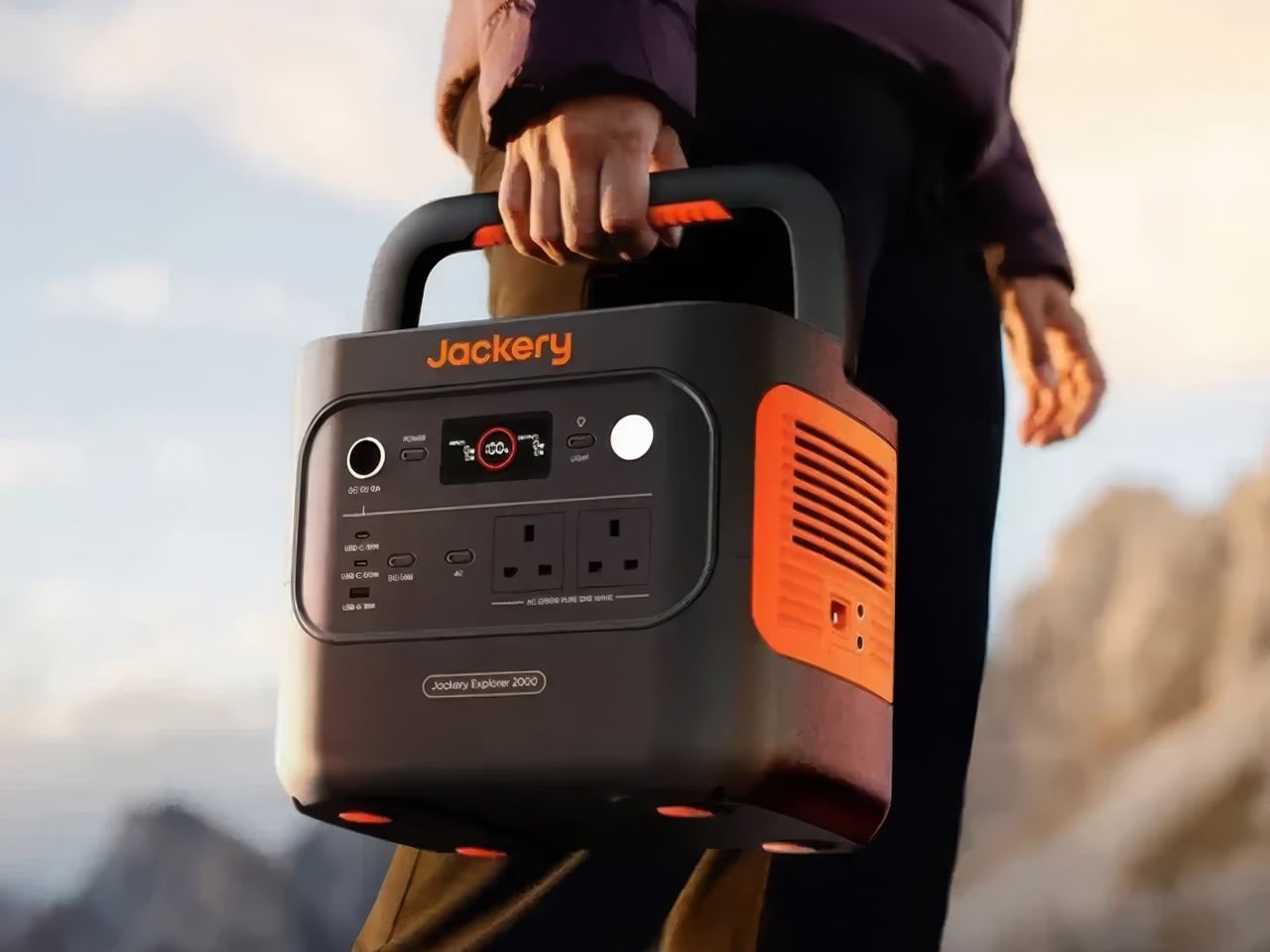
Jackery’s orange-trimmed Explorers were the default power station for years, long before Anker, EcoFlow, and Bluetti started crowding the category. The Explorer 2000 v2 keeps that familiar look but trims the bulk, measuring 13.2 x 10.4 x 11.5 inches (335 x 264 x 292mm) and weighing 39.5 pounds (17.9kg). Its proportions are squatter and more cube-like than the Anker’s, which makes it easier to tuck under a desk or beside a fridge. Jackery marketed it as the lightest and most compact 2kWh LiFePO4 station around, a crown the S2000 snatched this year by shedding nearly four more pounds. The two brands are basically locked in a very nerdy weight-loss competition.

Output is where the Jackery pulls ahead of the Anker, with 2,200W continuous and a 4,400W peak spread across three AC outlets. That’s enough headroom for a sump pump, a fridge compressor, or a microwave without the station breaking a sweat. Jackery’s ChargeShield 2.0 system layers in 62 protection mechanisms, and Silent Charging Mode keeps noise under 30dB, roughly a whisper, which is handy if it ends up in your bedroom during an outage. The cells are rated for 4,000 cycles and a 10-year lifespan, fewer than Anker promises but still plenty for daily use well into the 2030s. At $899, you’re paying about $440 per kilowatt-hour, dropping to $416 when it dips to $849.

Click Here to Buy Now

What we like

  • 2,200W of continuous output handles bigger appliances than the Anker can.
  • Silent Charging Mode stays under 30dB, so it won’t keep you up at night.
  • A 3-year standard warranty plus a 2-year extension covers you for five years total.

What we dislike

  • Only three AC outlets, so a power strip becomes part of the kit.
  • It isn’t expandable, and solar input maxes out at 400W.
  • It won’t charge below 32°F (0°C), so an unheated garage in January is a bad home for it.

EcoFlow DELTA 3 Max 2,048Wh Portable Power Station: $899

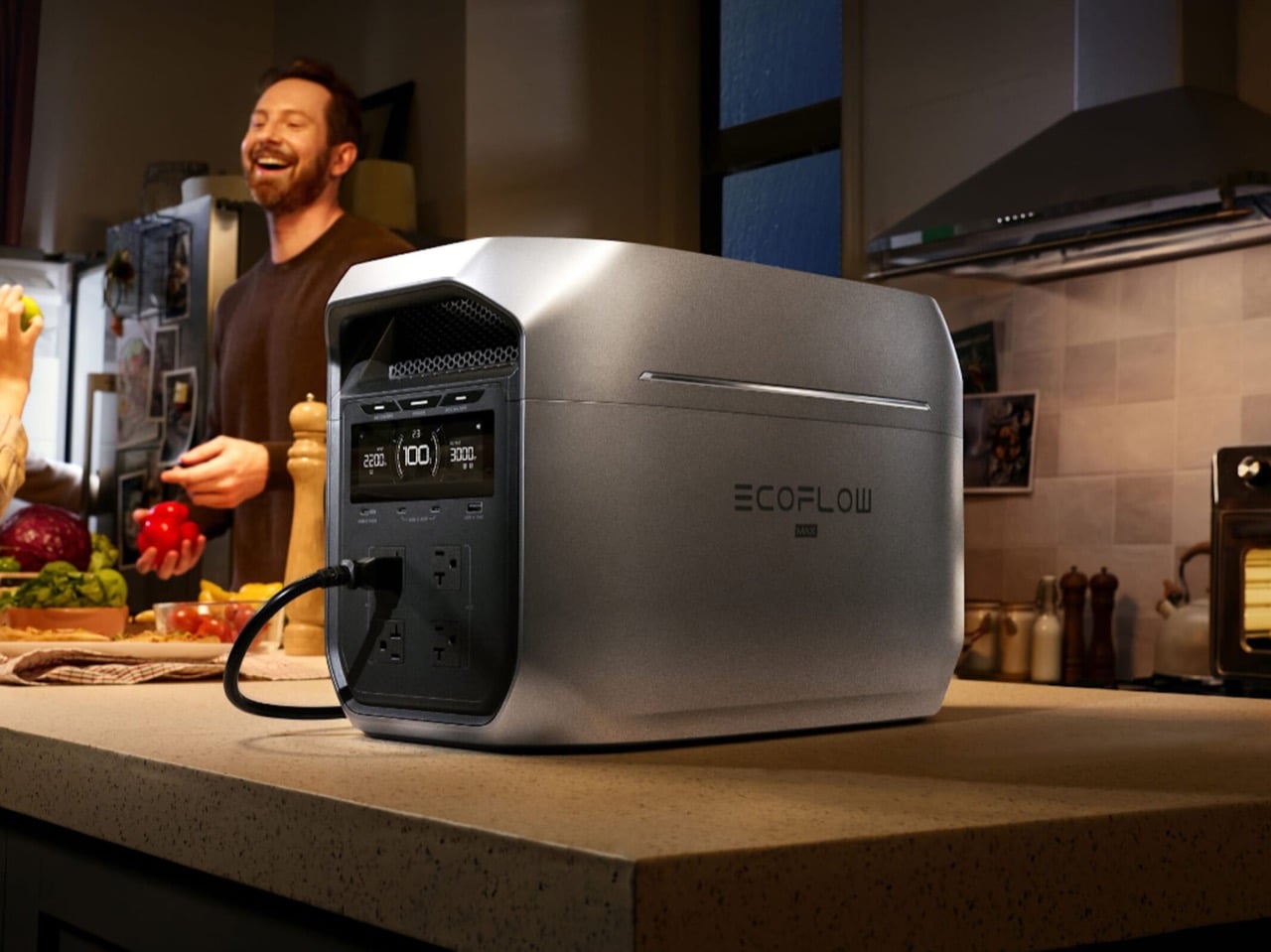
EcoFlow’s DELTA family is the brand’s bread and butter, and the DELTA 3 Max is the 2kWh sweet spot of the current lineup. It’s also the chunkiest of our three picks, measuring 19.45 x 9.41 x 12.01 inches (494 x 239 x 305mm) and weighing 44.8 pounds (20.3kg). That long, low, suitcase-like shape belongs on the floor next to the fridge, and you’ll want two hands whenever you move it. EcoFlow spends that extra bulk on muscle, and the trade feels fair once you see the output numbers. The Halloween sale has it at $899, down from $1,199, which puts it neck and neck with the Jackery on price.

You get 2,400W continuous across four AC outlets, the most of our three picks, plus EcoFlow’s X-Boost mode for resistive appliances up to 3,400W. X-Boost works by dropping the voltage, so a kettle or hair dryer runs a little slower instead of tripping the station. That’s enough headroom to run a 1,500W space heater with the fridge and router still plugged in. EcoFlow also rates it at 25dB or less when charging or discharging at 600W, which is quieter than a library. At $899, it lands at about $439 per kilowatt-hour, essentially tied with the Jackery, so the choice comes down to extra watts versus a lighter box.

Click Here to Buy Now

What we like

  • 2,400W continuous output, with X-Boost up to 3,400W, makes it the most powerful of the trio.
  • Four AC outlets, one more than the Jackery.
  • It stays under 25dB at moderate loads, so it’s easy to live with indoors.

What we dislike

  • At 44.8 pounds, it’s the heaviest of the three, roughly 9 pounds more than the Anker.
  • The long footprint eats more floor space than its boxier rivals.

The post Do yourself a favor and buy a power station now, before the energy crisis gets worse first appeared on Yanko Design.

  •  
❌