
 Connexion
The Georgia Art Show Turning 9 Broken 3D Prints Into Music
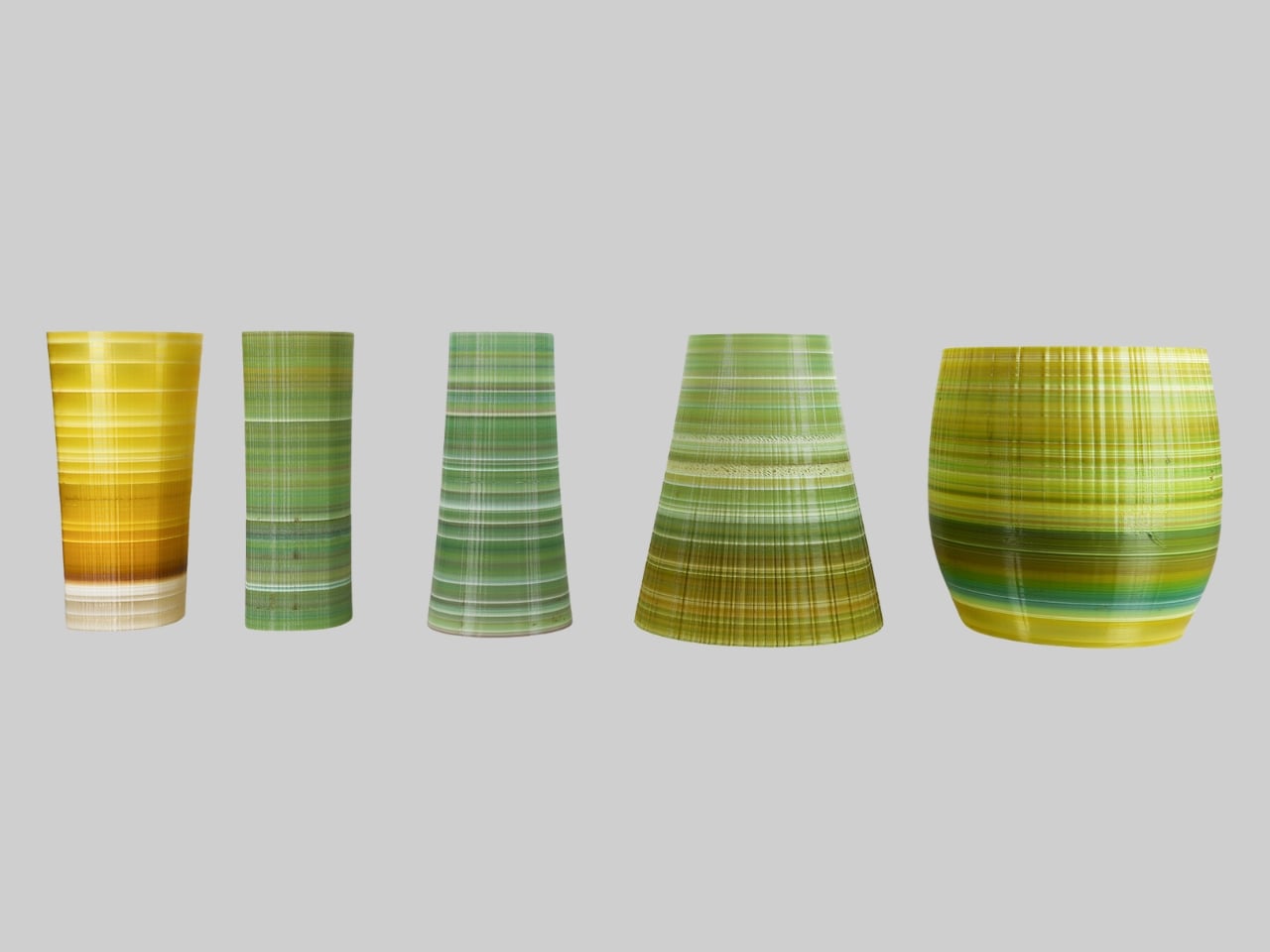
Every fabrication lab in the country is quietly accumulating a problem. Failed prints, test runs, leftover filament, the ghost of every prototype that didn’t make the cut. Most of it ends up in the bin. Architect Hyojin Kwon noticed this and, instead of moving on, asked a different question: what if all that discarded plastic could hold a note?
The result is Ninefold: A Distributed Resonant Field, a collaboration between Kwon’s design studio Pre- and Post-, percussionist and composer Jeremy Muller, and architect and material researcher Misri Patel. It’s currently on view at the Reeves House Visual Arts Center in Woodstock, Georgia, through September, and it is one of the more quietly radical things happening in design right now.
Designers: Hyojin Kwon × Jeremy Muller x Misri Patel
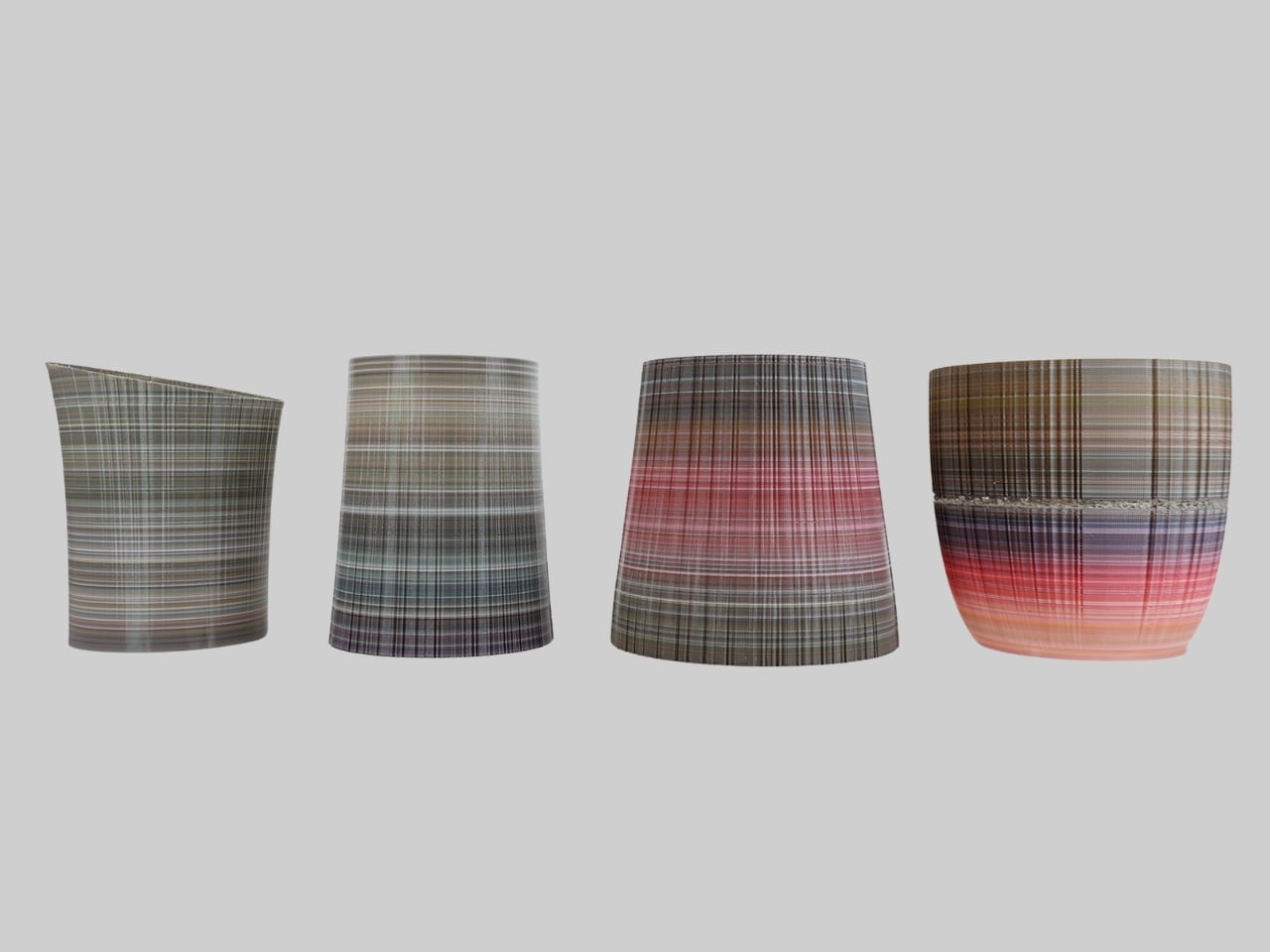
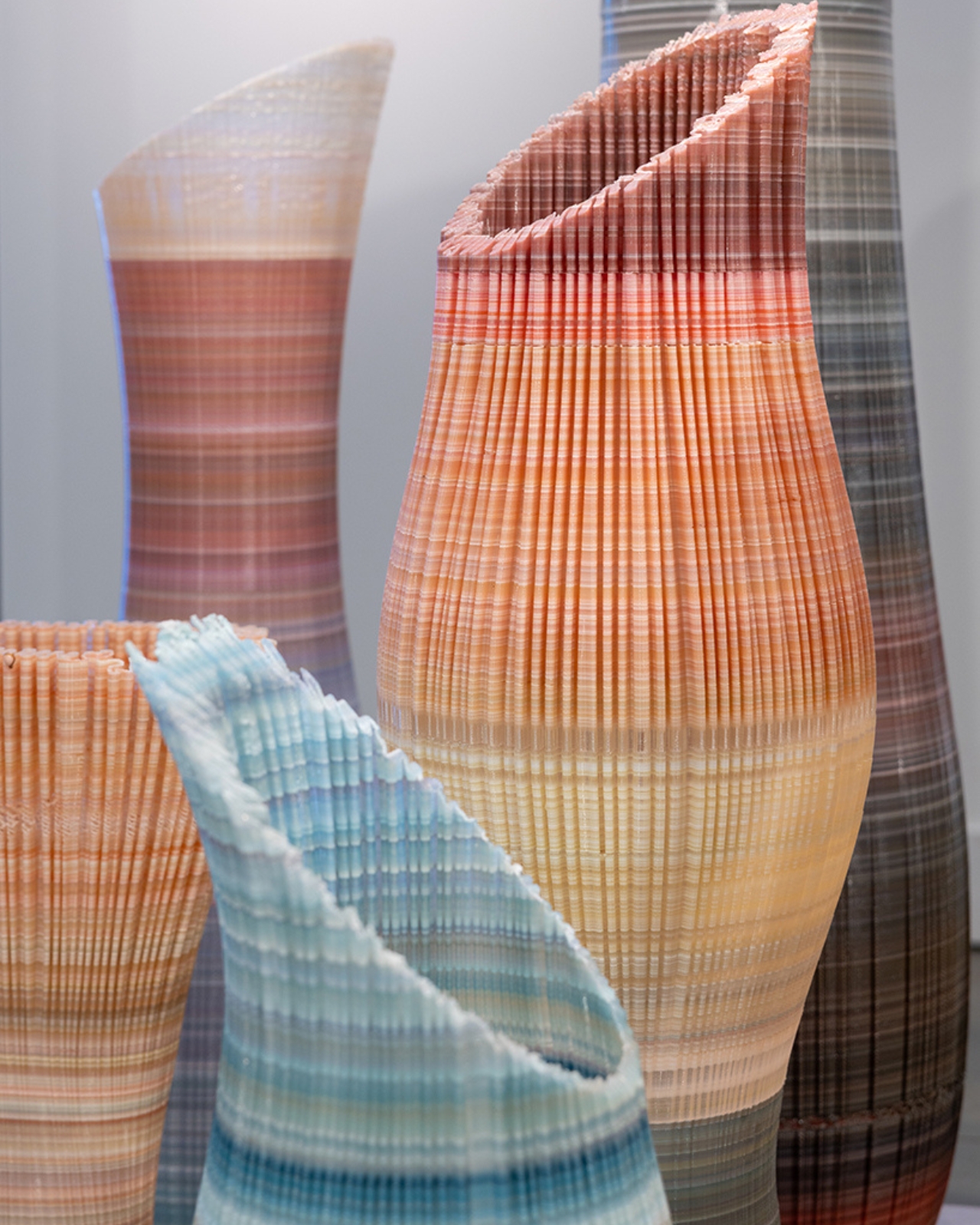
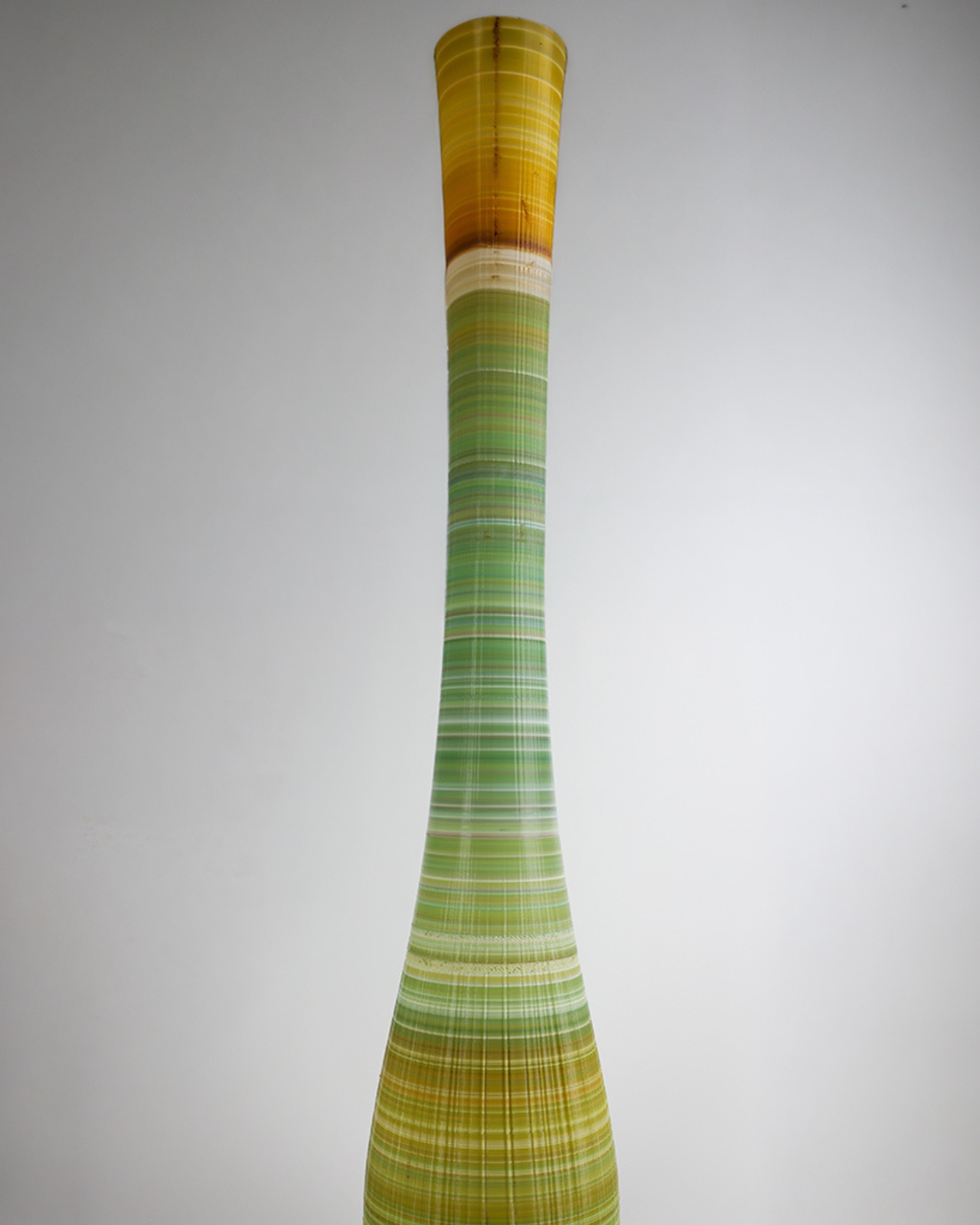
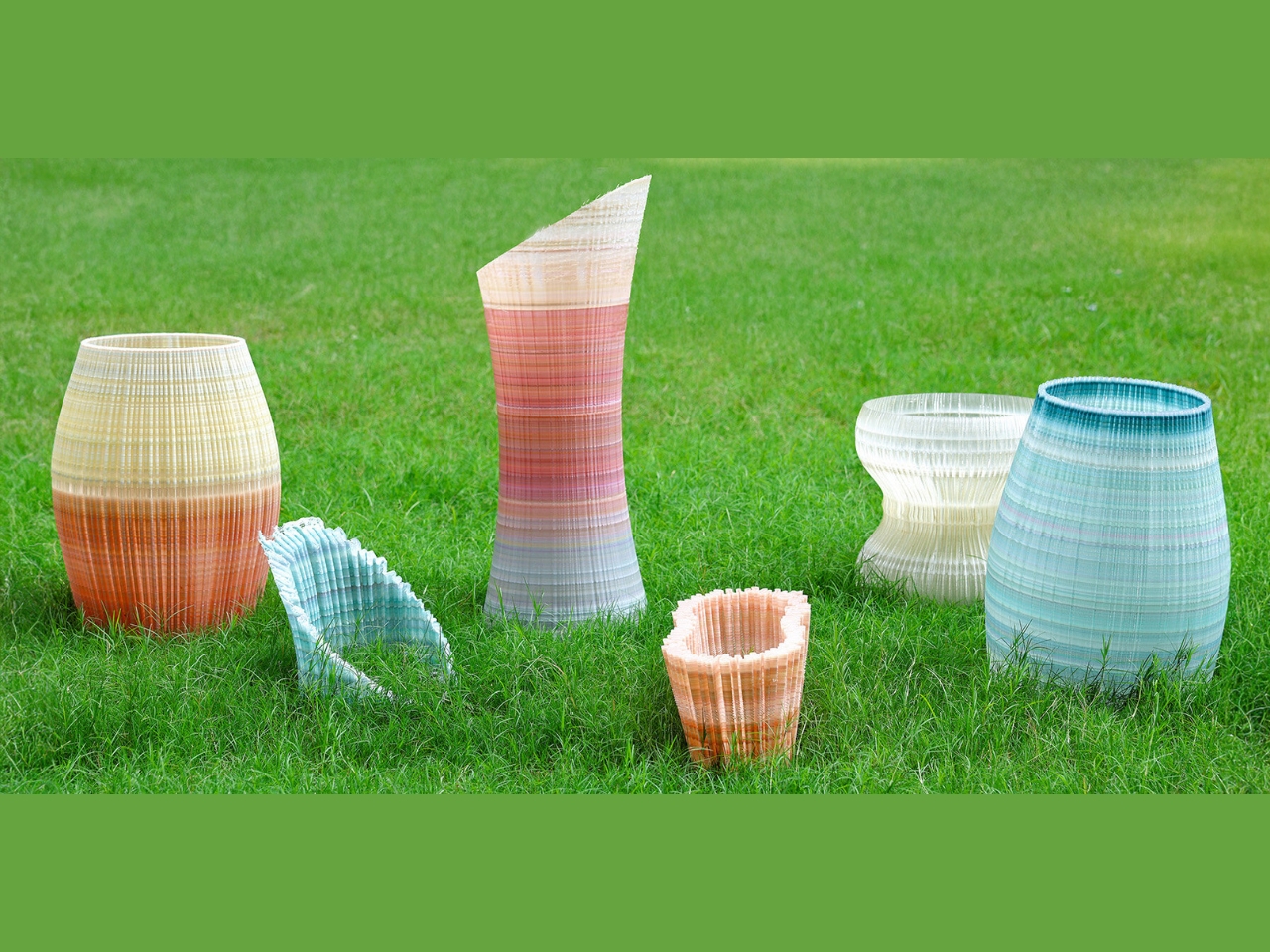
The installation is made up of nine large-scale forms, each one 3D-printed from discarded PLA collected from campus makerspaces and fabrication labs. The team shredded that waste into pellets, blended it with virgin material, and ran it through a pellet-based additive manufacturing process. The resulting objects are not identical. Some grow into tall, slender columns. Others widen into chambers or narrow toward their centers. Each carries its own texture, its own layered color variation from the mixed-batch sourcing, and its own distinct harmonic frequency. Together, they form a distributed sound field, meaning the sound is never coming from one place. It moves with you.
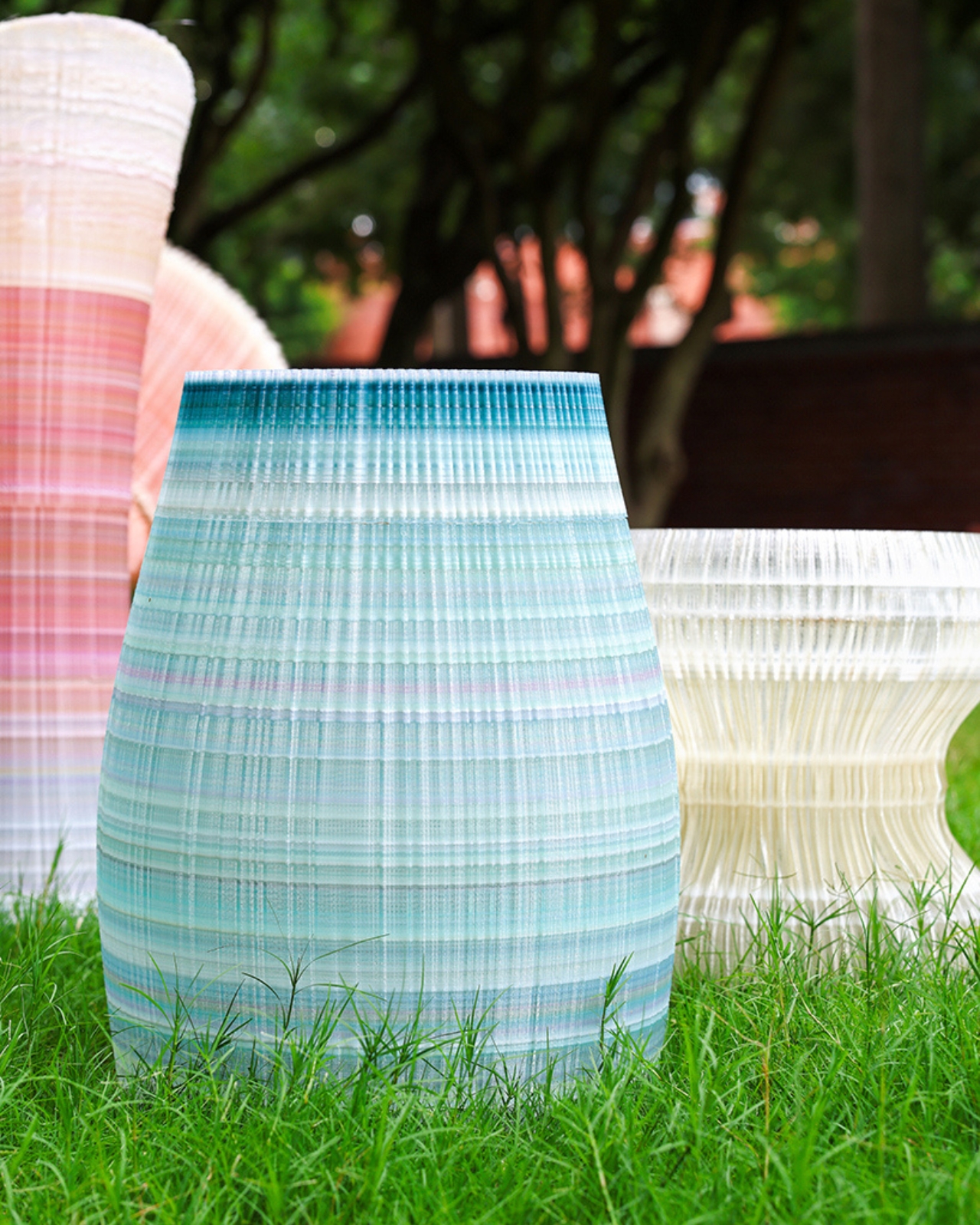
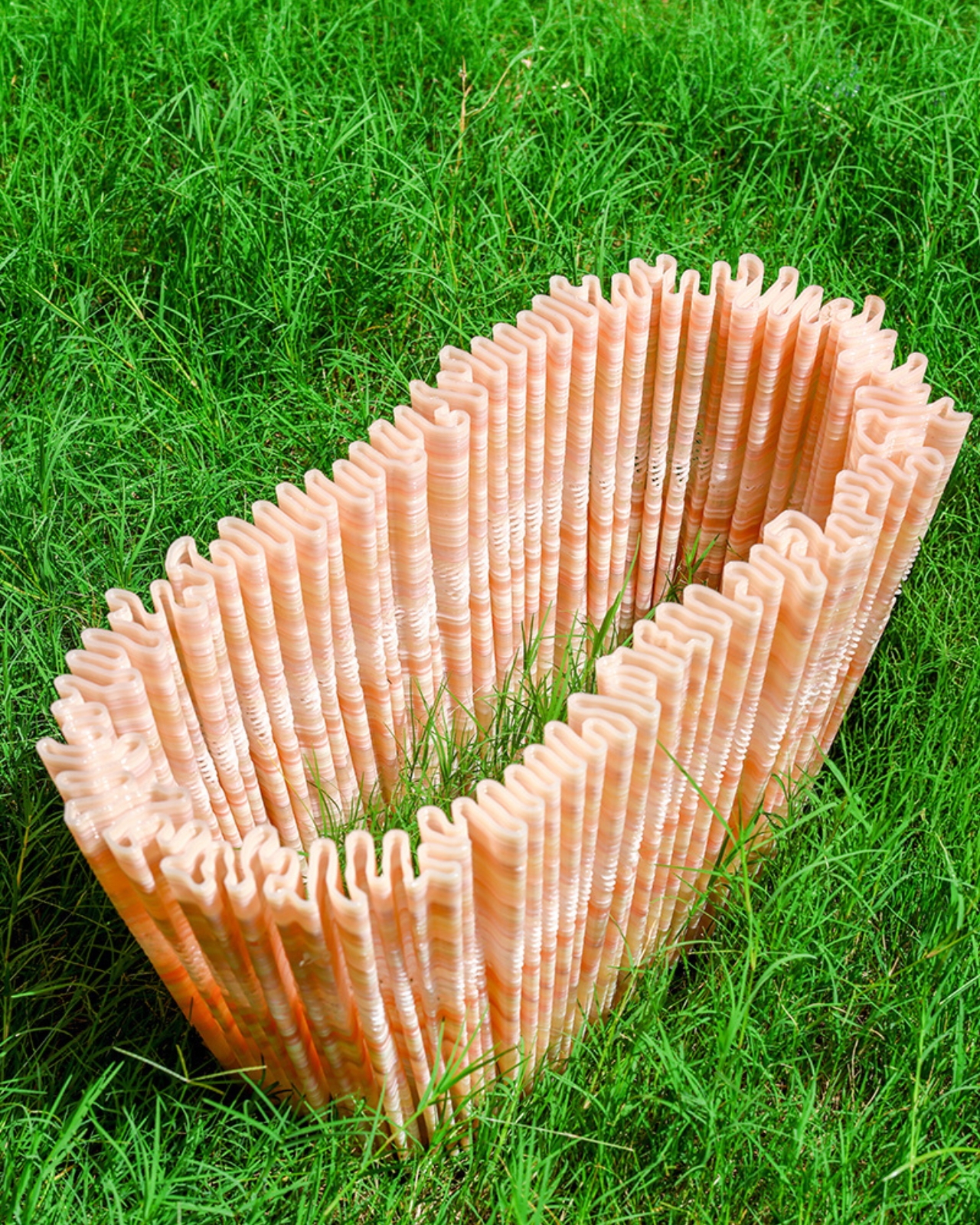
That last part is what makes this more than a sculpture show with a good concept. As you walk through the space, your position changes the acoustic picture entirely. Tones overlap, separate, recede. You’re not passively observing nine objects; you’re completing the field. The project draws on the thinking of composer Edgard Varèse, who called for “organized sound” as architecture, and on the spatial music systems of Iannis Xenakis and Le Corbusier. Those are not small reference points. They’re pointing at a lineage that treats space itself as a musical instrument, and Kwon, Muller, and Patel are building within that tradition using material that would have otherwise ended up as landfill.


The aspect of Ninefold that deserves real attention is how seriously it takes the material. The layered plastic isn’t hidden or smoothed over into something that looks deliberately “designed.” The texture is part of the expression. You can see the deposition, the color shifts, the history of what it was made from. The project doesn’t pretend the recycling didn’t happen; it foregrounds it. That honesty feels important at a moment when sustainability has become more of a marketing category than an actual practice.
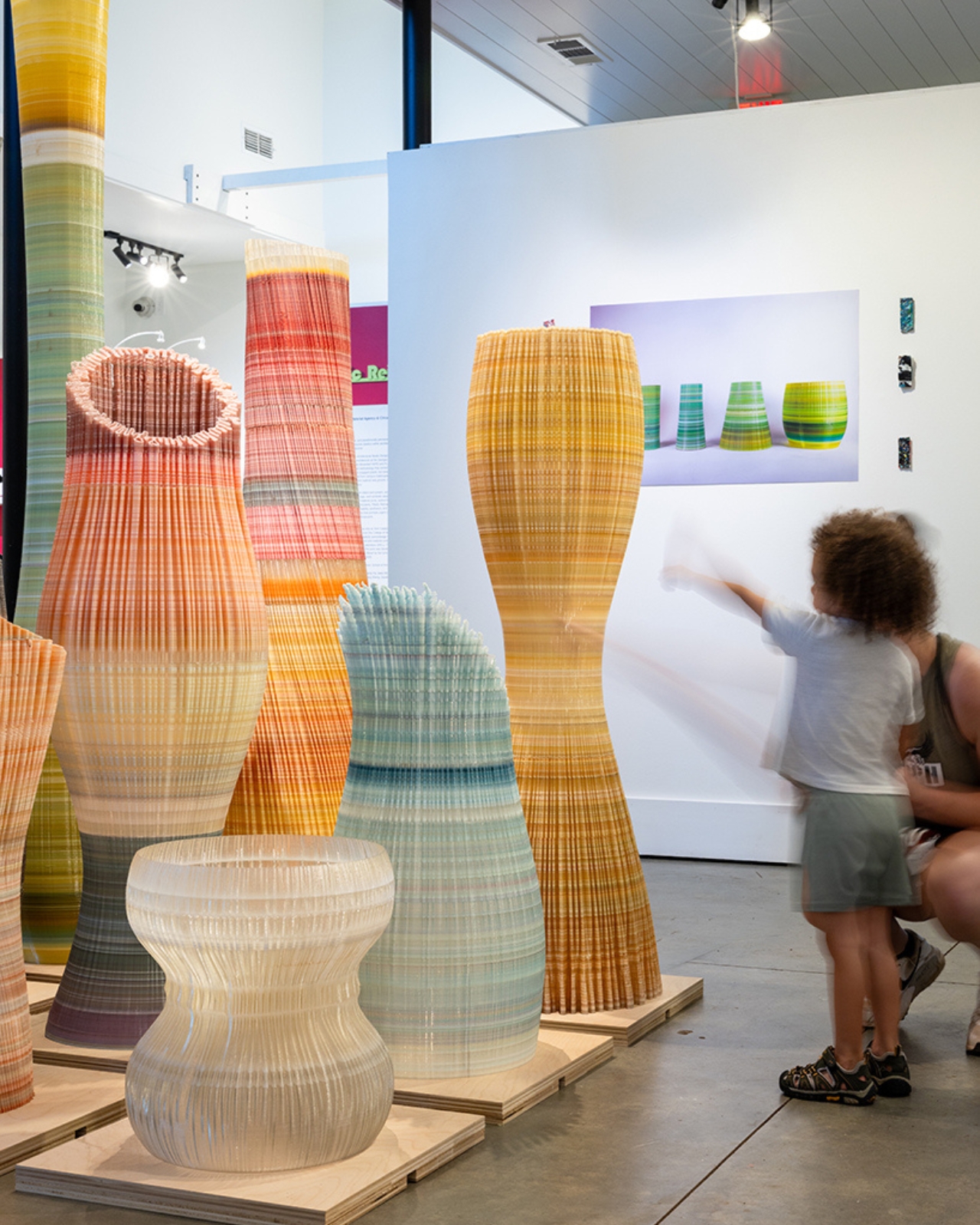
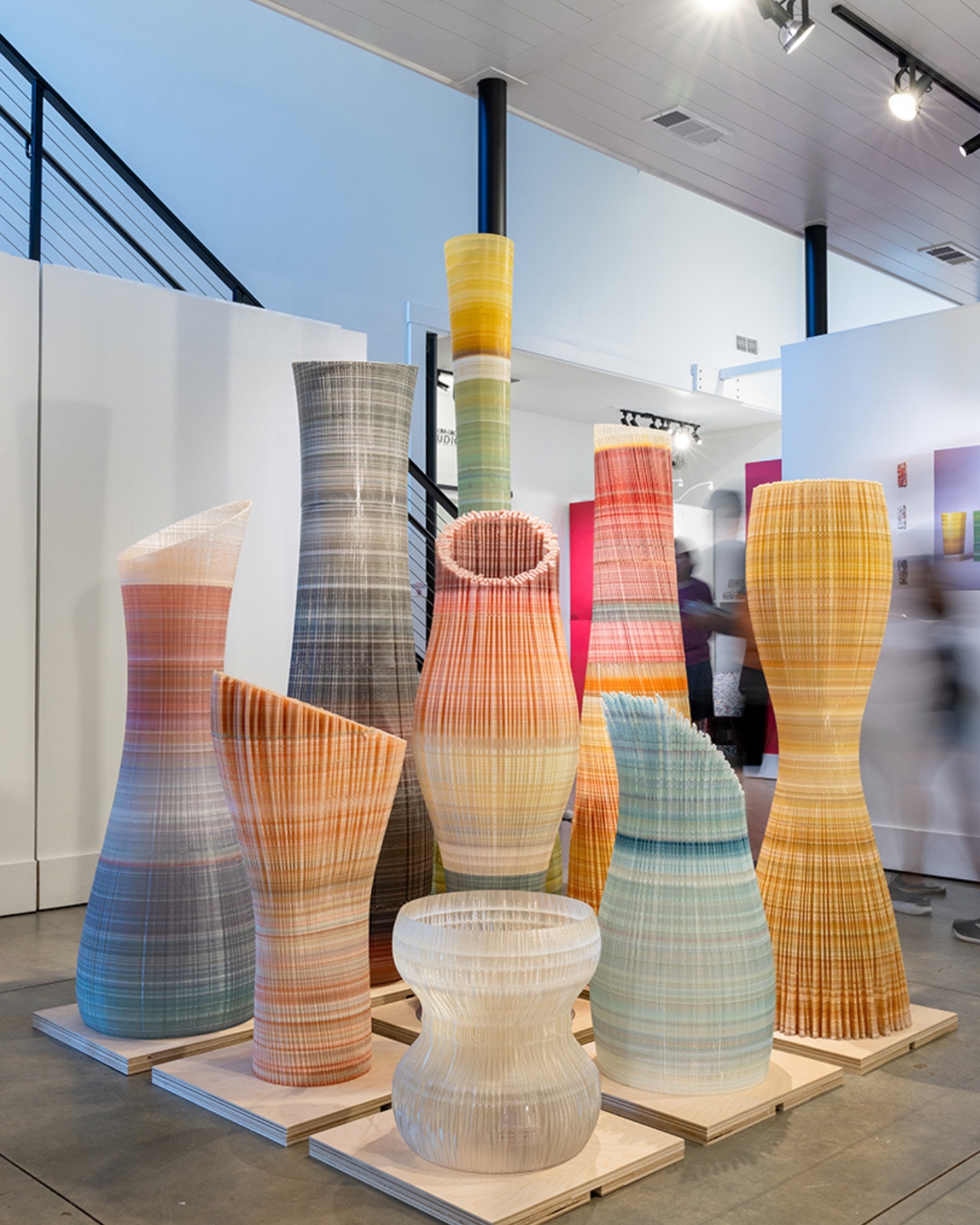
The nine forms were also fabricated in modular sections, which means they can be transported, reconfigured, and reinstalled elsewhere. That might seem like a logistical footnote, but it matters: an installation about material longevity should probably have a long life. These objects weren’t made to be shown once and archived.
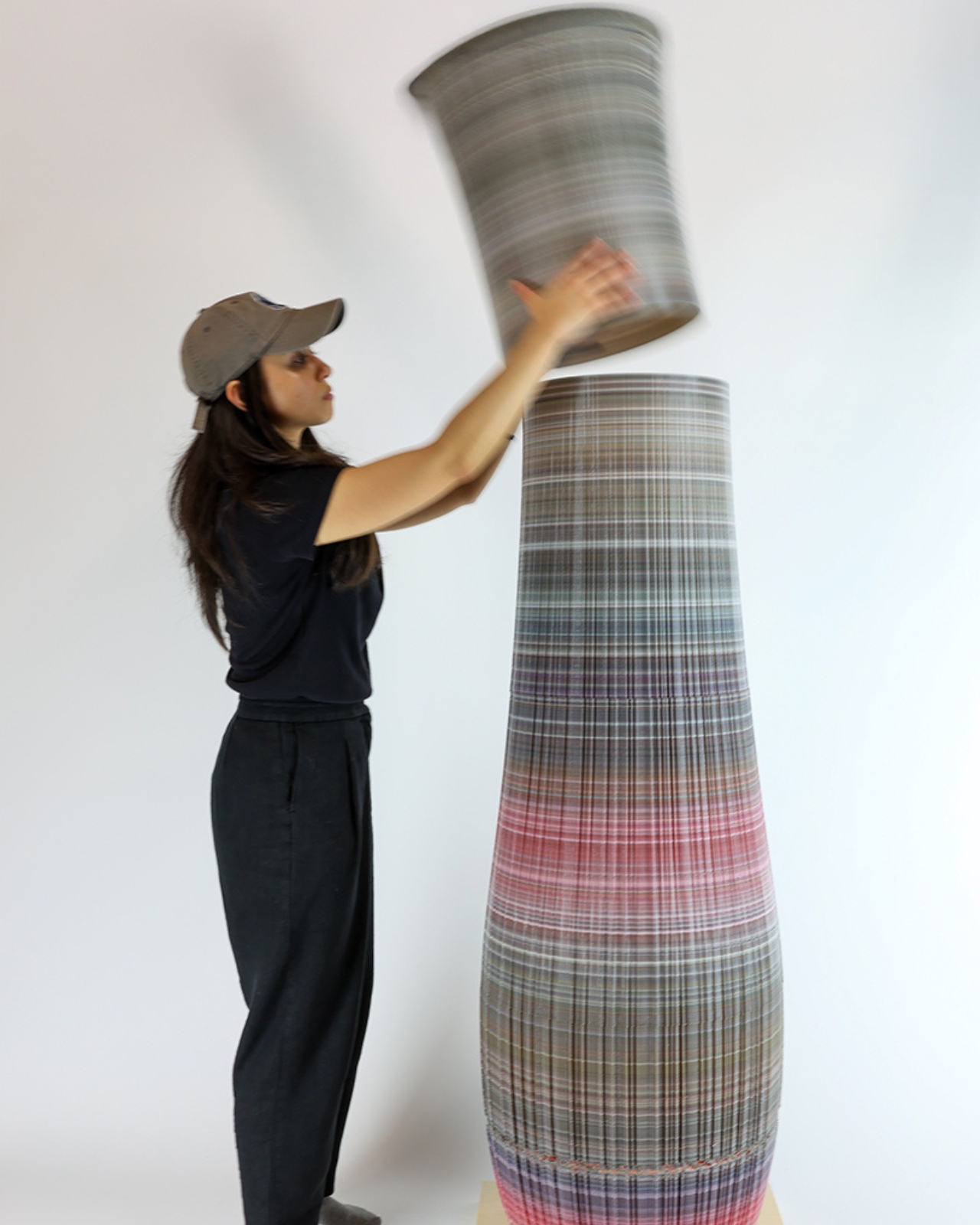
Ninefold is part of a dual exhibition that also includes Plastic Reimagined: Material Agency & Circular Design, developed with students from Georgia Tech’s graduate architecture program and curated by Carolina Cuevas. The full show runs through September at the Reeves House, and admission is free. If you’re near Woodstock, Georgia, it’s worth the trip. If you’re not, the images alone carry something worth sitting with. A lot of projects right now wear sustainability as a label. Ninefold actually earns it, and then manages to also be beautiful, which is rarer than it should be.
The post The Georgia Art Show Turning 9 Broken 3D Prints Into Music first appeared on Yanko Design.


