Vue lecture

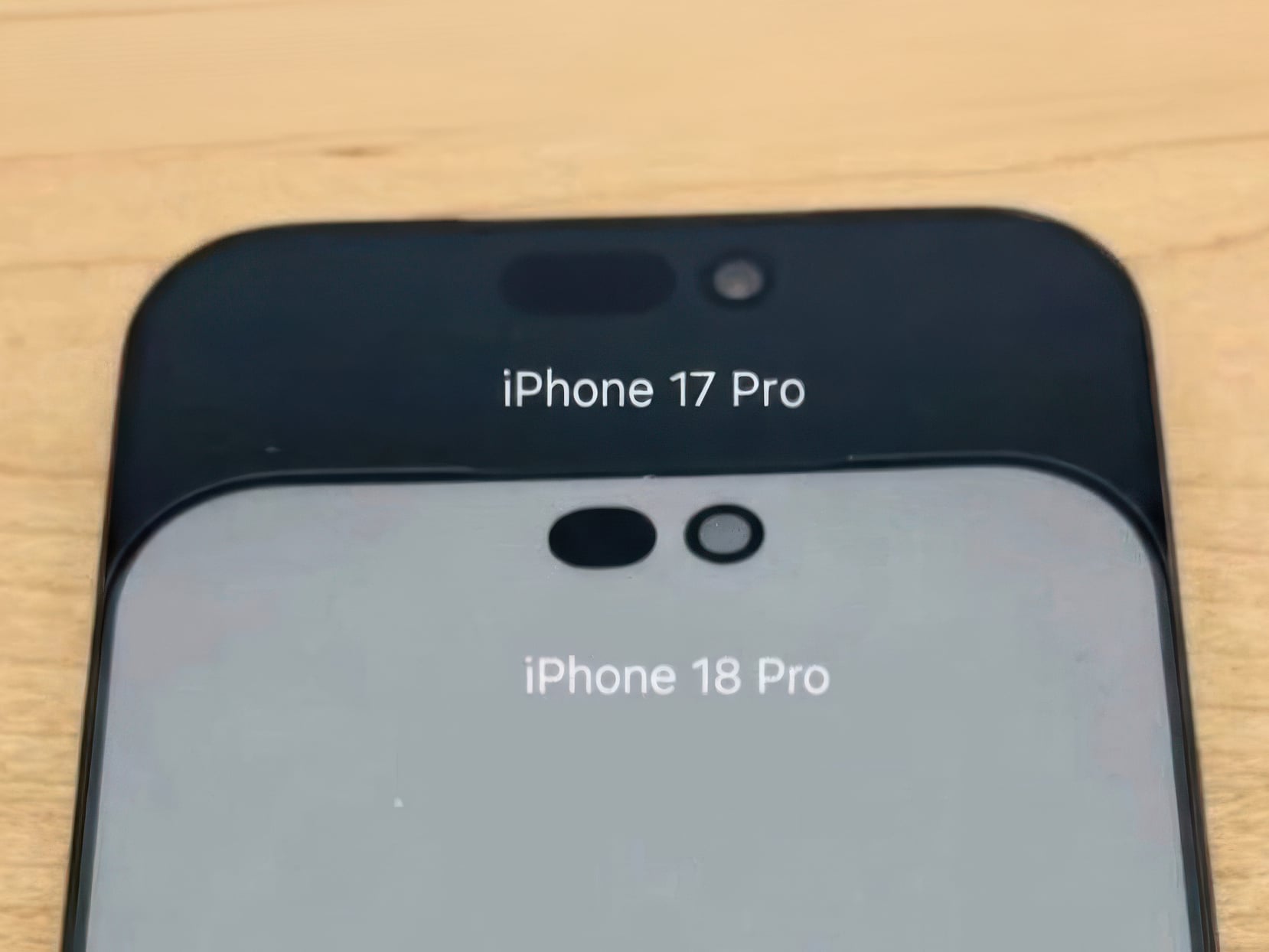
Leaked iPhone 18 Pro Screen Protector Shows A 35% Smaller Dynamic Island

Four years is a long time in smartphone design, long enough for entire product categories to rise, peak, and fade. Samsung has cycled through multiple foldable generations. Google has rebooted its Pixel lineup twice. Nothing has gone from startup curiosity to legitimate contender. Apple, meanwhile, has kept the Dynamic Island exactly where it was when it debuted with the iPhone 14 Pro, same width, same height, same visual footprint. Leaked screen protectors for the iPhone 18 Pro, sourced from Weibo, suggest that Apple has finally decided four years is long enough.

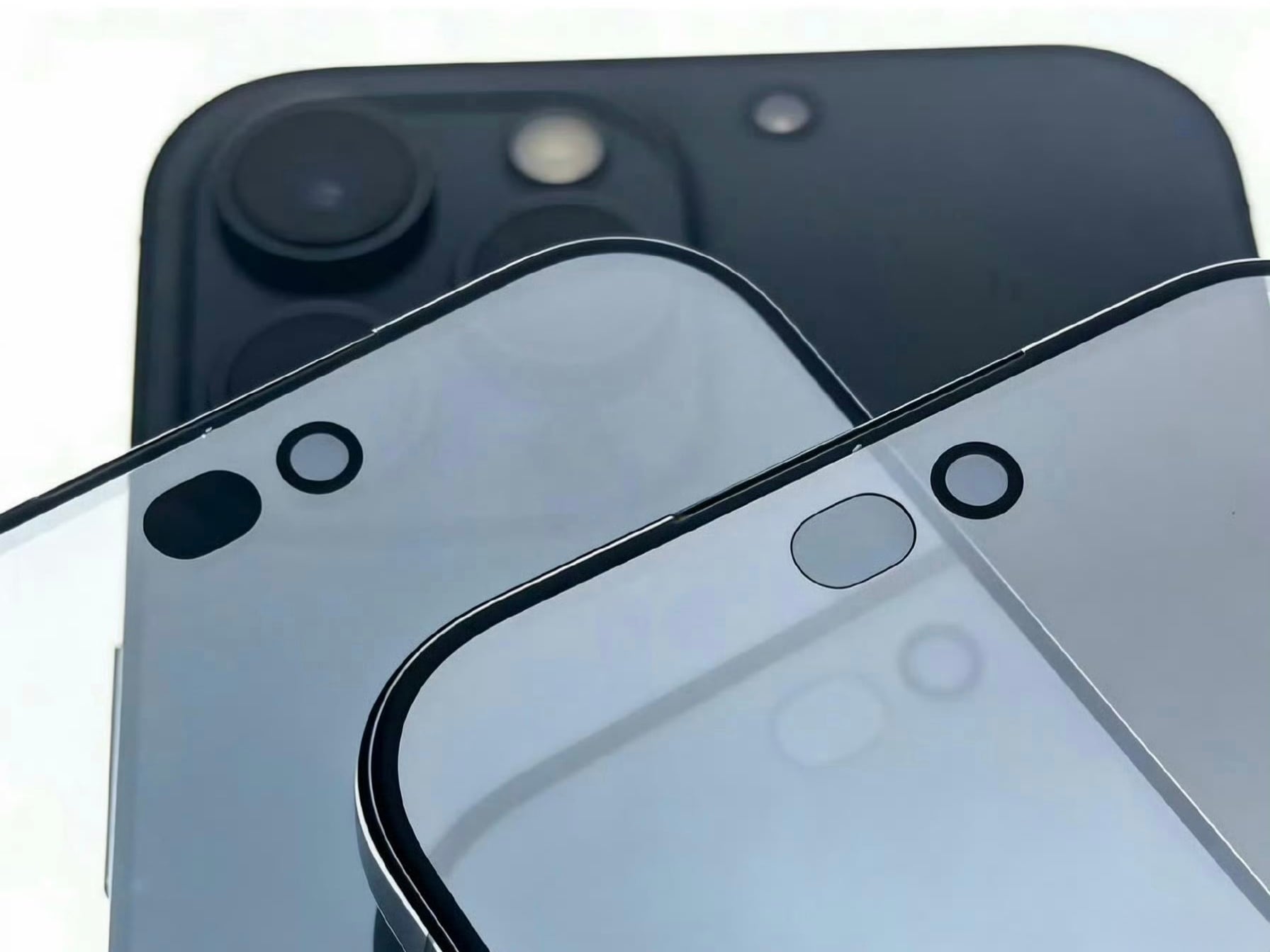
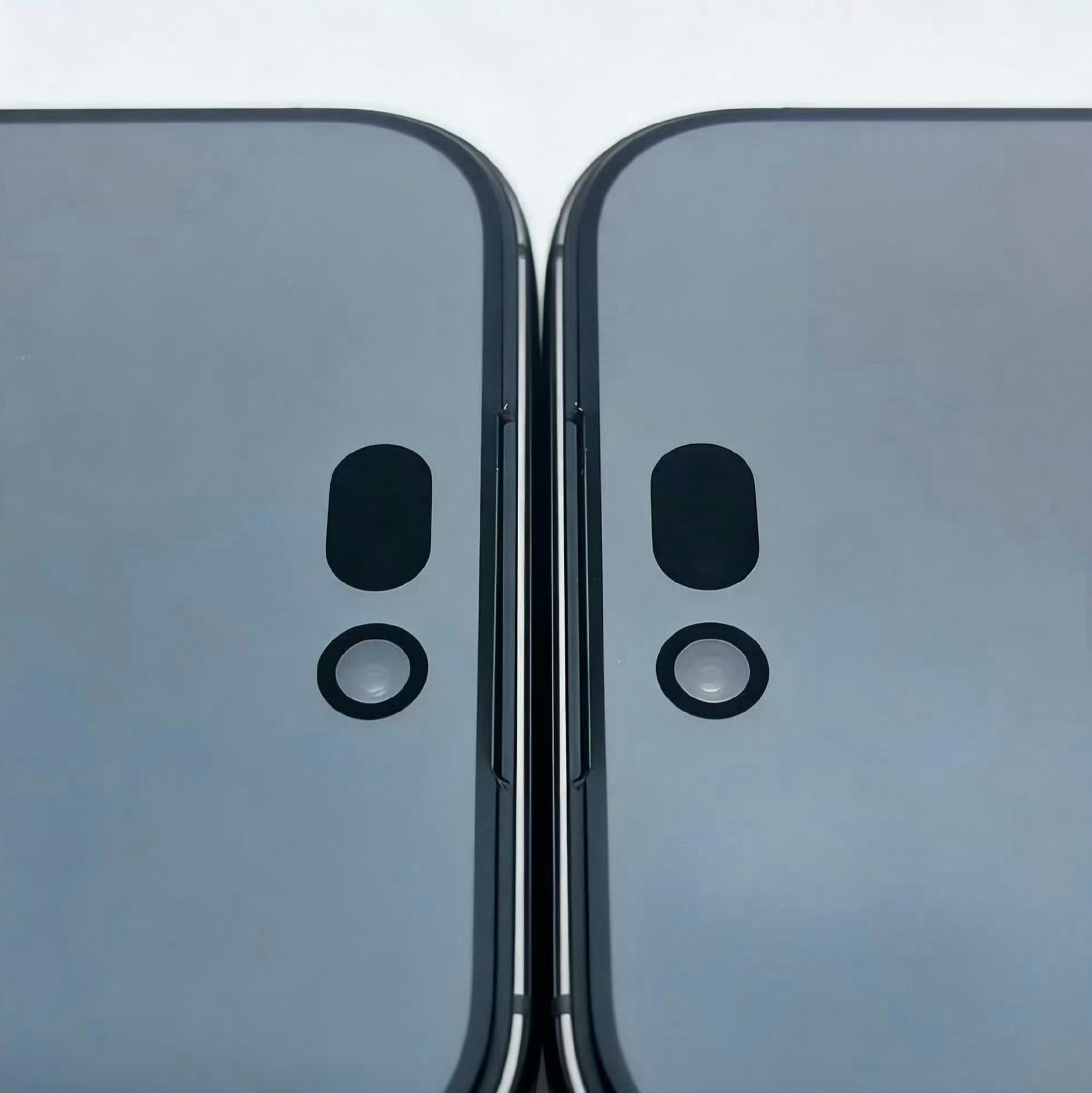
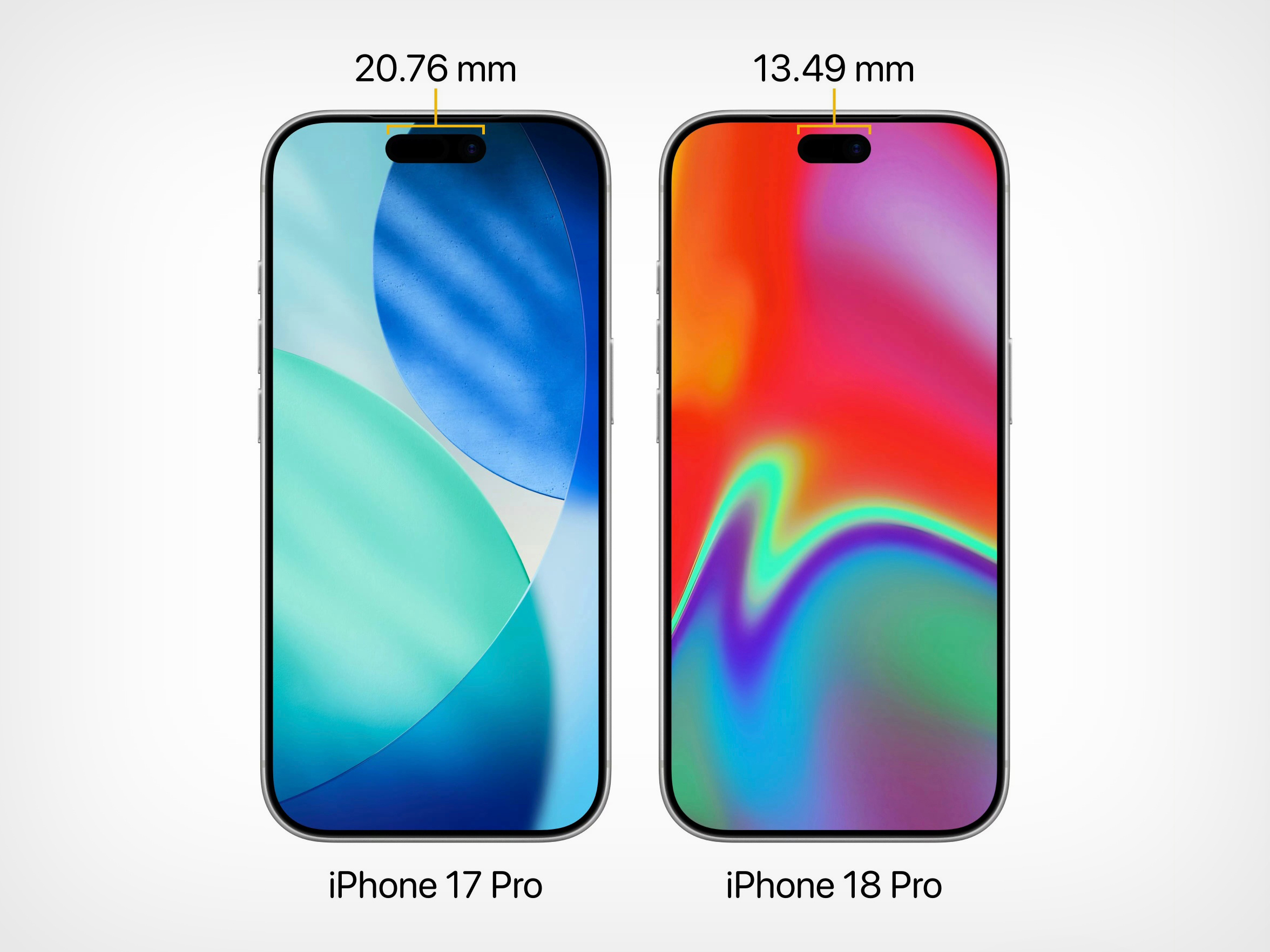
According to the leak, the infrared flood illuminator that powers Face ID is moving under the display on the iPhone 18 Pro, leaving only the infrared camera requiring a physical cutout alongside the front-facing lens. The result is a Dynamic Island roughly 35% smaller than what ships on the iPhone 17 Pro today. Apple is also expected to pair this with its first 2nm chip, the A20 Pro, along with a variable aperture system on the main camera. The 20th anniversary iPhone in 2027 is widely expected to go further with a fully clean display, but the 18 Pro represents the clearest signal yet that Apple is working its way there on a deliberate schedule.

Image Credits: Weibo

The size reduction is more significant than the percentage suggests when you look at the two side by side. The iPhone 17 Pro’s Island is a wide, commanding presence even at rest. The 18 Pro’s leaked cutout reads almost delicate by comparison, a narrow pill sitting unobtrusively at the top of the screen. Apple will still need to revisit four years of Live Activities design and the entire interaction vocabulary built around the existing Island’s dimensions, which is a reasonable explanation for why this transition is taking as long as it is.

Android manufacturers have shipped under-display cameras for years, with visible quality tradeoffs that Apple’s user base simply would not accept on a thousand-dollar phone. Holding the line until the technology meets the standard, rather than shipping it to win a spec sheet argument, is the kind of call that frustrates people in the short term and builds loyalty over time. The iPhone 18 Pro may read as a modest update on paper. That smaller pill tells a different story.

The post Leaked iPhone 18 Pro Screen Protector Shows A 35% Smaller Dynamic Island first appeared on Yanko Design.

  •  

5 Best Waterdrop Filter Systems for Spring 2026, From Renters to Full Family Kitchens

The water coming out of your tap has traveled through infrastructure that, in many American cities, predates the internet by several decades. Municipal treatment plants catch most of what they’re supposed to catch, but aging pipes, PFAS compounds from industrial and agricultural runoff, and lead from corroding plumbing each leave their own signature in what eventually fills your glass. Two people living thirty miles apart can have genuinely different water problems, and the solution that works perfectly in one kitchen may be entirely wrong for the other. Spring tends to be when many families actually act on this, a natural reset point where the habits and home conditions worth changing finally get real attention.

Waterdrop Filter has spent the better part of the last decade building a filtration lineup that treats water quality as a variable, not a constant. Five of their systems are currently on sale on Amazon through March 31st, spanning the full range of how people actually live: renters who can’t drill into cabinets, families running a high-demand kitchen with PFAS and lead on their radar, people who want their minerals preserved, and anyone who wants instant hot filtered water without the plumbing commitment. Each one is built around a different problem, and this guide helps narrow down which one is built around yours.

Waterdrop Filter G3P800 Tankless RO System: The Under-Sink Performer That Stays Out of Sight
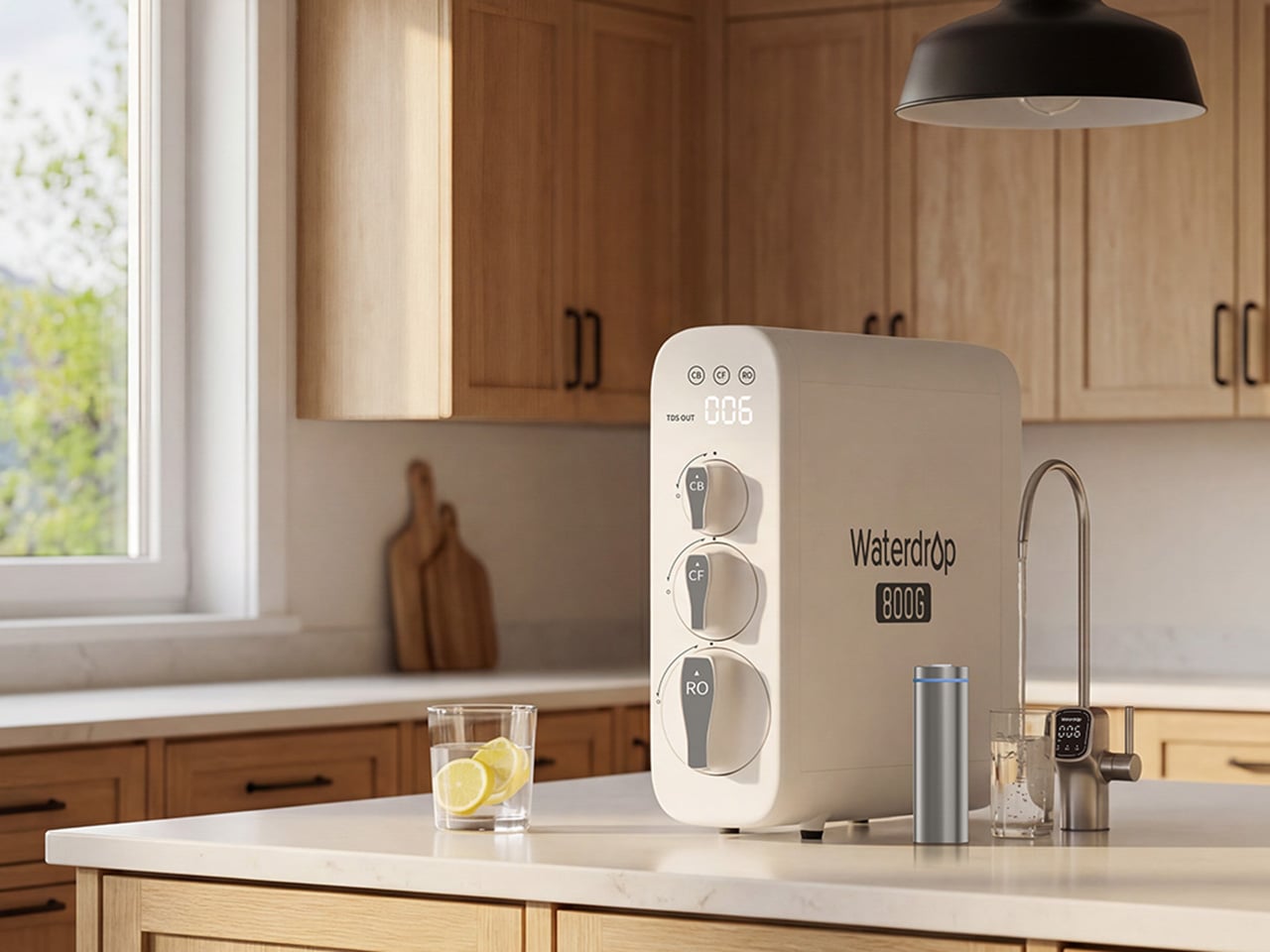
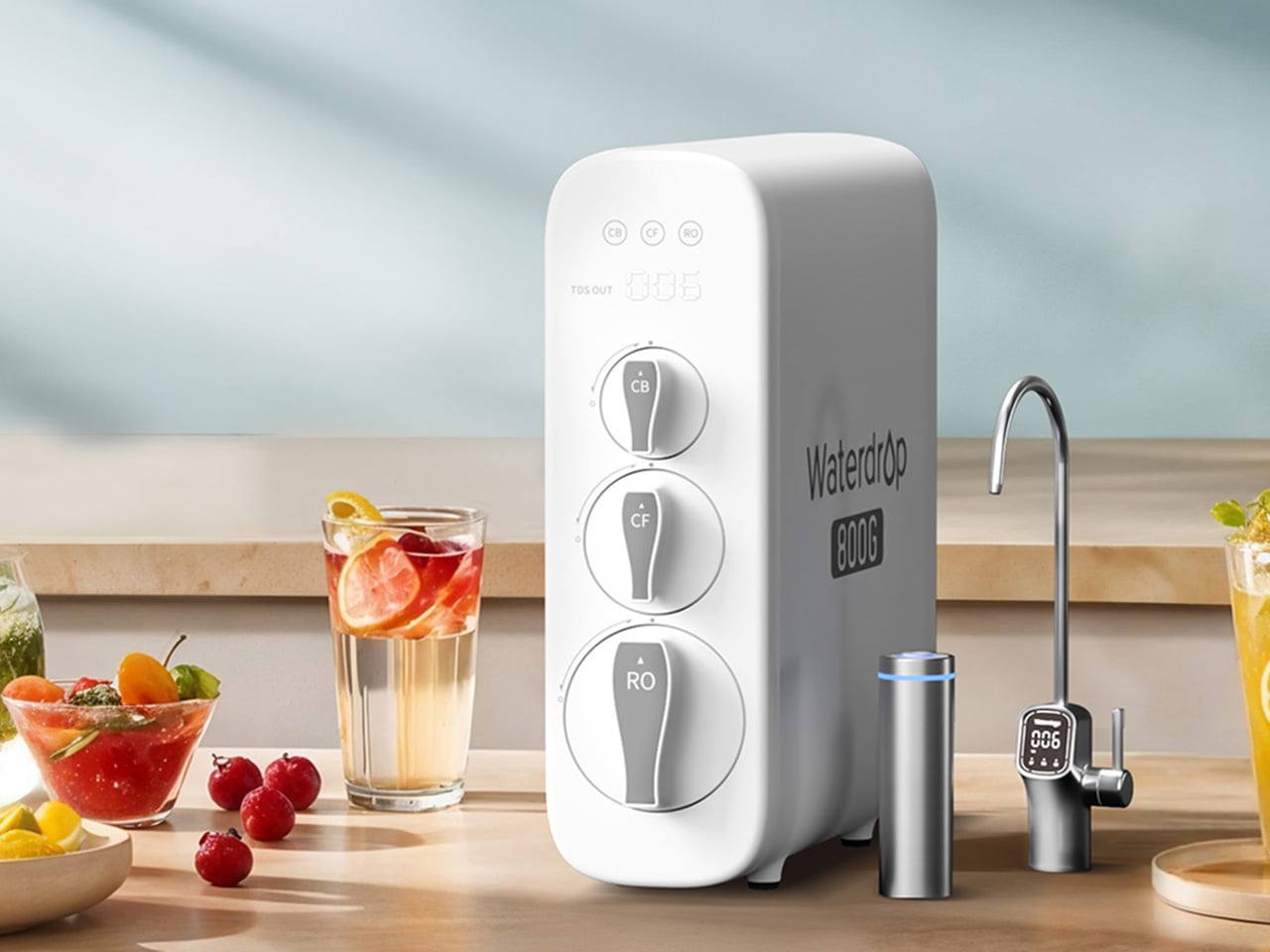
For families thinking seriously about what’s actually in their water this spring, the G3P800 is where Waterdrop Filter’s under-sink lineup earns its bestseller status. The concerns driving most of those conversations, PFAS compounds, lead from aging pipes, chlorine byproducts, are precisely what this system addresses. Its 10-stage RO filtration achieves 98% PFOA reduction, 99% PFOS, and over 99% lead, numbers that carry particular weight for households with infants, pregnant women, or elderly members. NSF/ANSI certifications across standards 42, 53, 58, and 372 back those claims with third-party verification. The tankless design reclaims 50 to 70 percent of under-sink cabinet space, and the UV sterilization stage catches bacteria and viruses that even a high-precision RO membrane cannot address alone.

At 800 gallons per day, the G3P800 handles the full rhythm of a busy family kitchen, from drinking water and cooking to coffee and baby formula preparation. A brushed nickel smart faucet displays real-time TDS readings and filter status at a glance, keeping the system legible without demanding attention. The 3:1 pure-to-drain ratio reflects a genuine shift in responsible RO design, producing meaningfully less drain water than older systems. Spring tends to be the moment families finally act on water quality concerns sitting in the back of their minds, and the G3P800 meets that decision with something durable, rigorously certified, and quietly capable of handling daily household demand for years.

Click Here to Buy Now: $699 $999 (30% off). Hurry, deal ends in 48-hours! Website Here.

Waterdrop Filter X12 RO System: The Flagship That Puts Minerals Back Where They Belong

Where the G3P800 is built for families who want serious filtration at serious capacity, the X12 is for those willing to push further. At 1,200 gallons per day across 11 stages of precision RO filtration, it represents Waterdrop Filter’s most complete answer to the growing list of contaminants giving health-conscious households pause this spring. The PFAS reduction figures here are among the strongest in the lineup, achieving 98.88% PFOA and 98.97% PFOS reduction, alongside a greater than 99.87% lead reduction rate. Certified against NSF/ANSI standards 58 and 372, the X12 carries the kind of third-party verification that families with infants or elderly members look for before trusting a system with daily drinking water and formula preparation.

What genuinely separates the X12 from most flagship RO systems is what it does after filtration. Reverse osmosis at this level of thoroughness strips water down comprehensively, which is where the built-in alkaline mineralization stage earns its place. Calcium and magnesium are reintroduced post-filtration, supporting bone health over time and restoring the balanced, naturally mineral-rich character that makes water taste the way good water should. For families prioritizing both purity and nutritional quality, particularly those with growing children, that combination is difficult to replicate elsewhere. The smart digital faucet handles real-time TDS monitoring and filter life tracking with the same quiet intelligence found across the range. Spring health resets tend to go deeper for some households, and the X12 is designed for exactly that level of commitment.

Click Here to Buy Now: $854.05 $1299 (34.2% off). Use code YKSPRING26 during checkout. Hurry, deal ends in 48-hours! Website Here.

Waterdrop Filter DLG-P: Serious PFAS Protection Without the Installation Headache
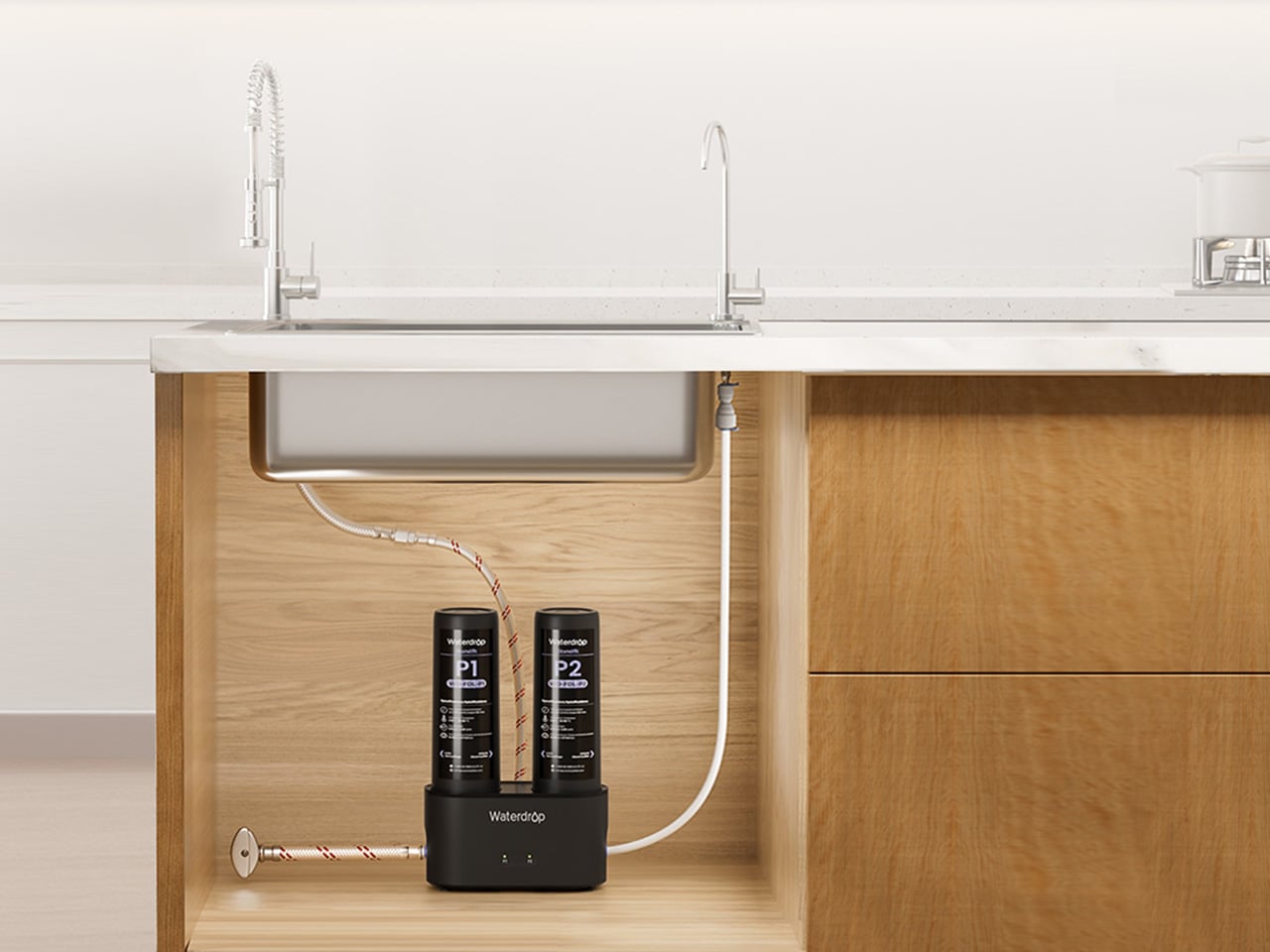
The conversation around PFAS and lead tends to center on high-capacity RO systems, and for good reason. But the reality of how many people actually live, in rentals, in first homes, in apartments where permanent under-sink modifications are off the table, means that access to serious water filtration has historically required commitment that many households simply couldn’t meet. The DLG-P is Waterdrop Filter’s answer to that gap. It installs in around three minutes without specialist tools, routes filtered water through an innovative dual-outlet design serving both a dedicated drinking faucet and the main kitchen tap, and achieves 99.7% PFOA and 99.6% PFOS reduction that rivals systems at considerably higher price points. For renters prioritizing PFAS protection this spring, those numbers reframe what budget-friendly filtration can actually deliver.

The system reduces chlorine, fluoride, sediment, and odors across its filtration stages, covering contaminants that affect daily drinking water quality in the most direct ways. A smart filter life indicator removes guesswork from maintenance, flagging replacement needs before performance drops. Filter cartridge replacement takes around three seconds, keeping upkeep genuinely frictionless for fast-paced households where the water filter is expected to work reliably in the background. The black finish gives it a contemporary presence that holds up in modern kitchen environments, and the compact footprint respects the limited under-sink space that comes with rental kitchens. For those who have looked at the G3P800 or X12 with interest but need a solution that fits a different budget and living situation, the DLG-P covers more ground than its entry price suggests.

Click Here to Buy Now: $91.19 $119.99 (24% off). Use code YKSPRING26 during checkout. Hurry, deal ends in 48-hours! Website Here.

Waterdrop Filter TSU: The Case for Filtration That Knows When to Stop
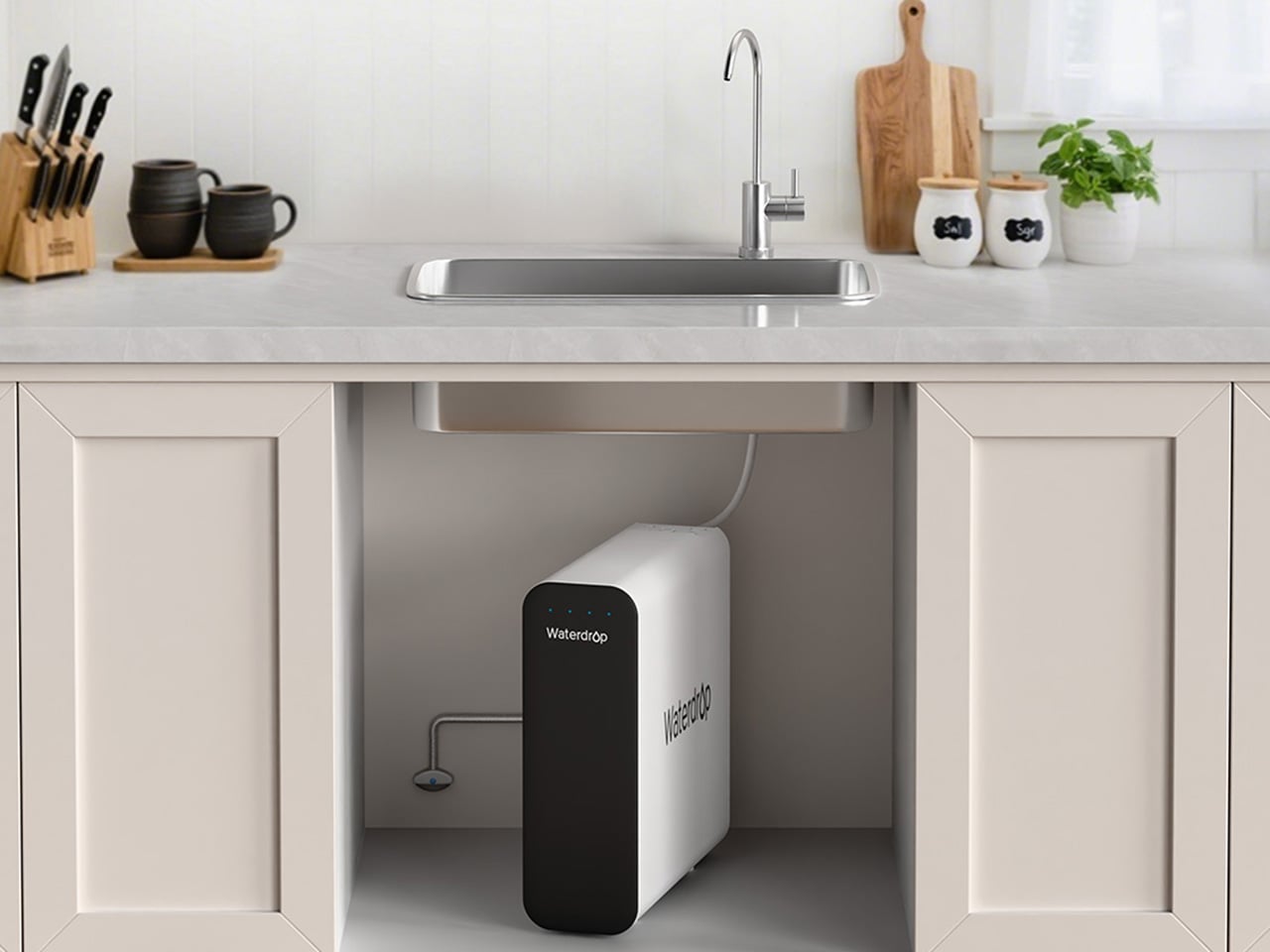
Not every household is starting from the same water quality baseline. In homes where municipal supply is reasonably clean but carrying chlorine taste, sediment, bacteria, and trace heavy metals like lead, deploying a full reverse osmosis system is a longer route than necessary. The TSU operates on that logic. Its 0.01-micron ultrafiltration membrane reduces 99.9% of bacteria, intercepts rust, sediment, fluoride, and heavy metals including lead, while leaving the water’s natural mineral content completely intact. Where the X12 reintroduces calcium and magnesium through a dedicated remineralization stage, the TSU simply never removes them, which for households with acceptable source water is both more efficient and more elegant.

What makes the TSU particularly compelling as a spring upgrade is what it doesn’t require. No electricity, no pump, zero wastewater, running entirely on standard water line pressure with nothing added to the utility bill. The 3-stage tankless system saves 50 to 70 percent of under-sink cabinet space. A brushed nickel dedicated faucet comes included, and the filter lifespan runs up to 24 months, meaning maintenance stays minimal across nearly two years. For busy families where easy installation and low ongoing upkeep matter as much as performance, the zero-waste design also reduces environmental impact and running costs over time. For households that want clean water supporting healthier spring routines without rebuilding their entire under-sink setup, the TSU makes a case that’s difficult to argue with.

Click Here to Buy Now: $123.99 $189.99 (34.7% off). Use code YANSPRING26 during checkout. Hurry, deal ends in 48-hours! Website Here.

Waterdrop Filter C1H: Countertop RO With a Trick Up Its Sleeve

Every system covered in this guide has required going under a sink. The C1H abandons that requirement entirely. It sits on the counter, plugs into a standard outlet, connects to a water source without drilling or permanent modification, and starts delivering six-stage reverse osmosis filtered water with no installation window and no landlord conversation. The 0.0001-micron RO membrane targets the same field of contaminants that motivates most spring filtration upgrades, including PFAS, chlorine, heavy metals, and TDS. The detachable tank design means it moves between a kitchen, an office, or a bedroom without friction, which matters for parents with young children or elderly family members who want safe, filtered water accessible across different rooms rather than anchored to a single tap.

The feature that sharpens the C1H’s appeal for spring routines is instant hot water delivered in three seconds across five adjustable temperature settings. Morning tea, pour-over coffee, baby formula, and quick meal preparation all lose the waiting step that a separate kettle introduces. A Favorite Mode remembers preferred temperature and volume combinations so the same result comes out consistently. Smart touch controls manage everything from volume selection to real-time TDS monitoring and filter life tracking. The 3:1 pure-to-drain ratio and a twelve-month filter lifespan keep both environmental impact and ongoing upkeep to a minimum. For households that have followed this guide and still need a solution on entirely different terms, the C1H closes that gap with confidence.

Click Here to Buy Now: $219 $279 (22% off). Hurry, deal ends in 48-hours! Website Here.

The post 5 Best Waterdrop Filter Systems for Spring 2026, From Renters to Full Family Kitchens first appeared on Yanko Design.

  •  

Small, Aggressive, and Under $80: Meet The Kansept Wasp Button Lock Knife

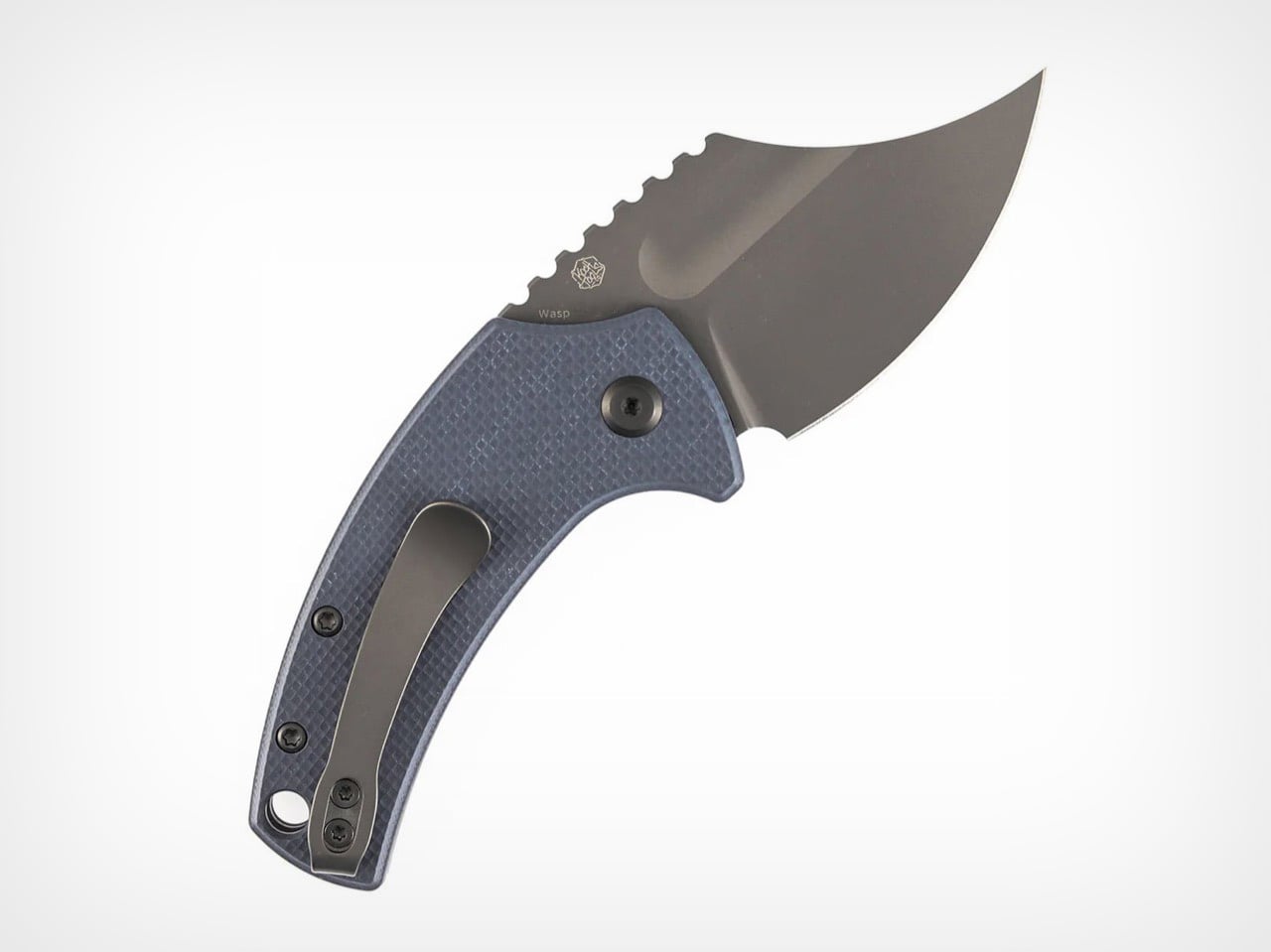
A wasp’s design is a lesson in efficiency. It combines a potent stinger with a small, agile frame to create a threat that commands respect far beyond its physical size. Koch Tools Design captured this spirit perfectly with the Kansept Wasp, a folder where compact dimensions and aggressive geometry work in concert. The knife’s upswept Harpoon Wharncliffe tip acts as a visual stinger, while the sub-3-inch length ensures it remains a nimble and unobtrusive carry. This folder embodies a philosophy of calculated capability, proving that a small tool can still project a serious and purposeful presence.

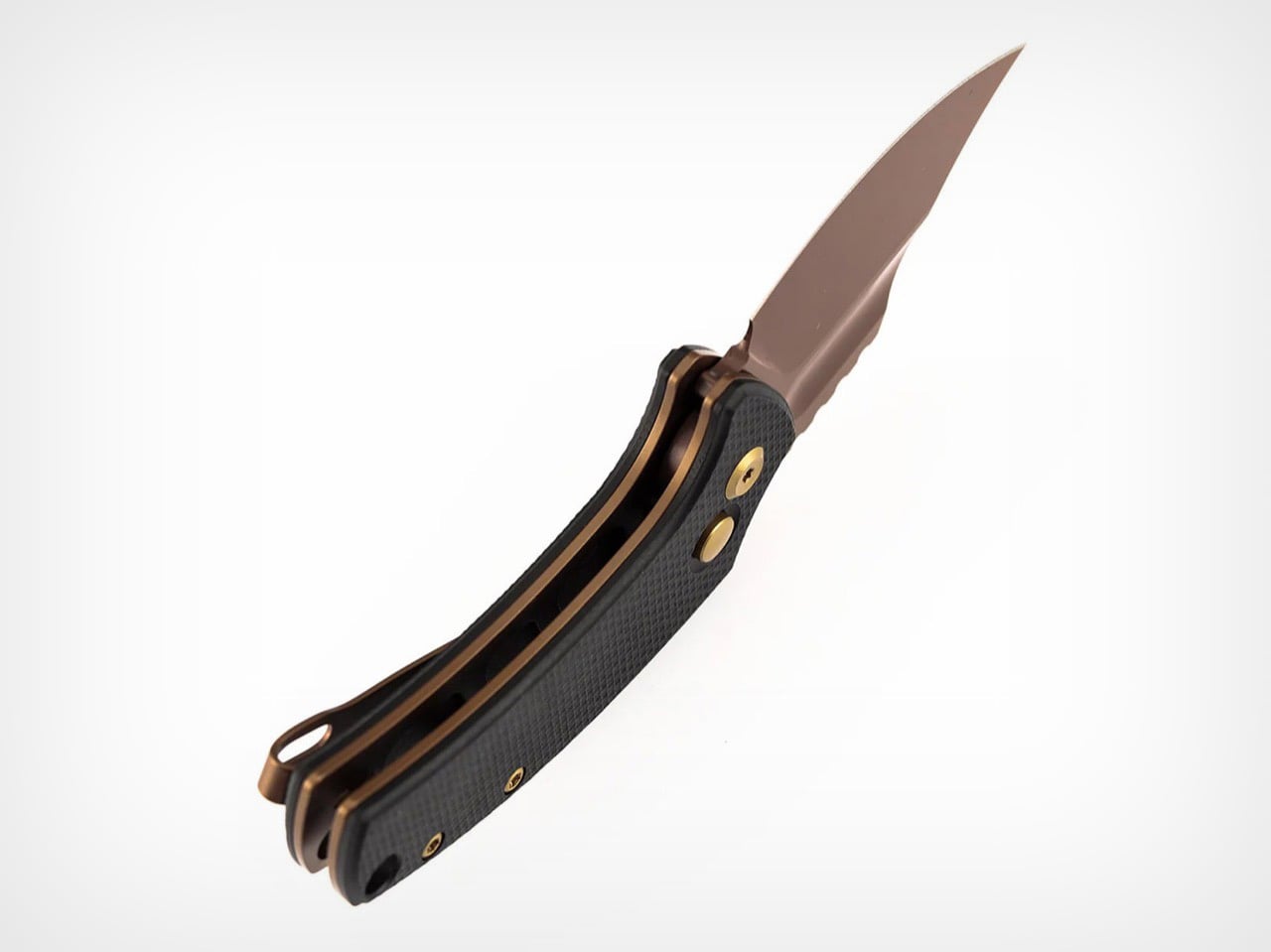
At its core, the Wasp is a button lock folder built from a 2.36-inch 154CM blade and textured G10 handle scales. The Koch Tools collaboration provides the confident stance and deliberate lines, which Kansept executes with a durable gray TiCn blade coating on several models. This finish offers both corrosion resistance and a sharp visual contrast against the vibrant handle options. The button lock itself sits neatly flush with the spine, allowing for a clean profile when closed and delivering a satisfying snap upon deployment. Priced at $75.89, the Wasp targets the intersection where enthusiast-level design becomes accessible to a much broader audience.

Designer: Koch Tools Design

The Harpoon Wharncliffe blade profile delivers exceptional tip control for detail work and piercing tasks. The upswept curve terminates in a fine point that excels at controlled cuts, while the flat cutting edge provides clean slicing performance across its full 2.36-inch length. Aggressive jimping runs along the spine, offering secure thumb purchase during precision work or when applying forward pressure. A tactical swedge grinds down the spine near the tip, reducing drag and sharpening the visual aggression of the blade. The 154CM steel handles daily cutting tasks with reliable edge retention, and the gray TiCn coating hardens the surface against wear while adding a matte finish that reads as tactical rather than decorative.

Button locks remain a standout feature at this price point. Most folders under $80 default to liner locks or frame locks, mechanisms that work fine but lack the tactile satisfaction and mechanical interest of a button system. The Wasp’s button sits recessed into the handle spine, protected from accidental activation while remaining easy to locate by feel. Deployment feels crisp and deliberate, with the blade snapping into lockup with authority. The mechanism adds a layer of fidget-worthiness that liner locks simply can’t match, which matters when a knife spends most of its time sitting in a pocket waiting to be used.

Handle construction splits across multiple G10 variants, each delivering a different personality. The light gray and orange versions feature solid scales with diagonal texturing that provides grip without being abrasive. Yellow and jade colorways introduce skeletonized cutouts that reduce weight and create visual drama through negative space. The handle shape tapers toward the base, aiding retention during use and preventing the knife from feeling blocky despite its compact proportions. Closed length measures just over 3 inches, placing the Wasp comfortably in the keychain-compatible category while still offering enough real estate for a full three-finger grip when deployed.

The Wasp competes directly with knives like the Civivi Elementum and CJRB Feldspar, both of which hover around the same price and size. The button lock and Koch Tools pedigree give it an edge in that comparison, offering mechanical and design credibility that budget folders often lack. For collectors chasing variety, the multiple colorways mean there’s likely a version that fits personal taste without compromising on function.

The post Small, Aggressive, and Under $80: Meet The Kansept Wasp Button Lock Knife first appeared on Yanko Design.

  •  

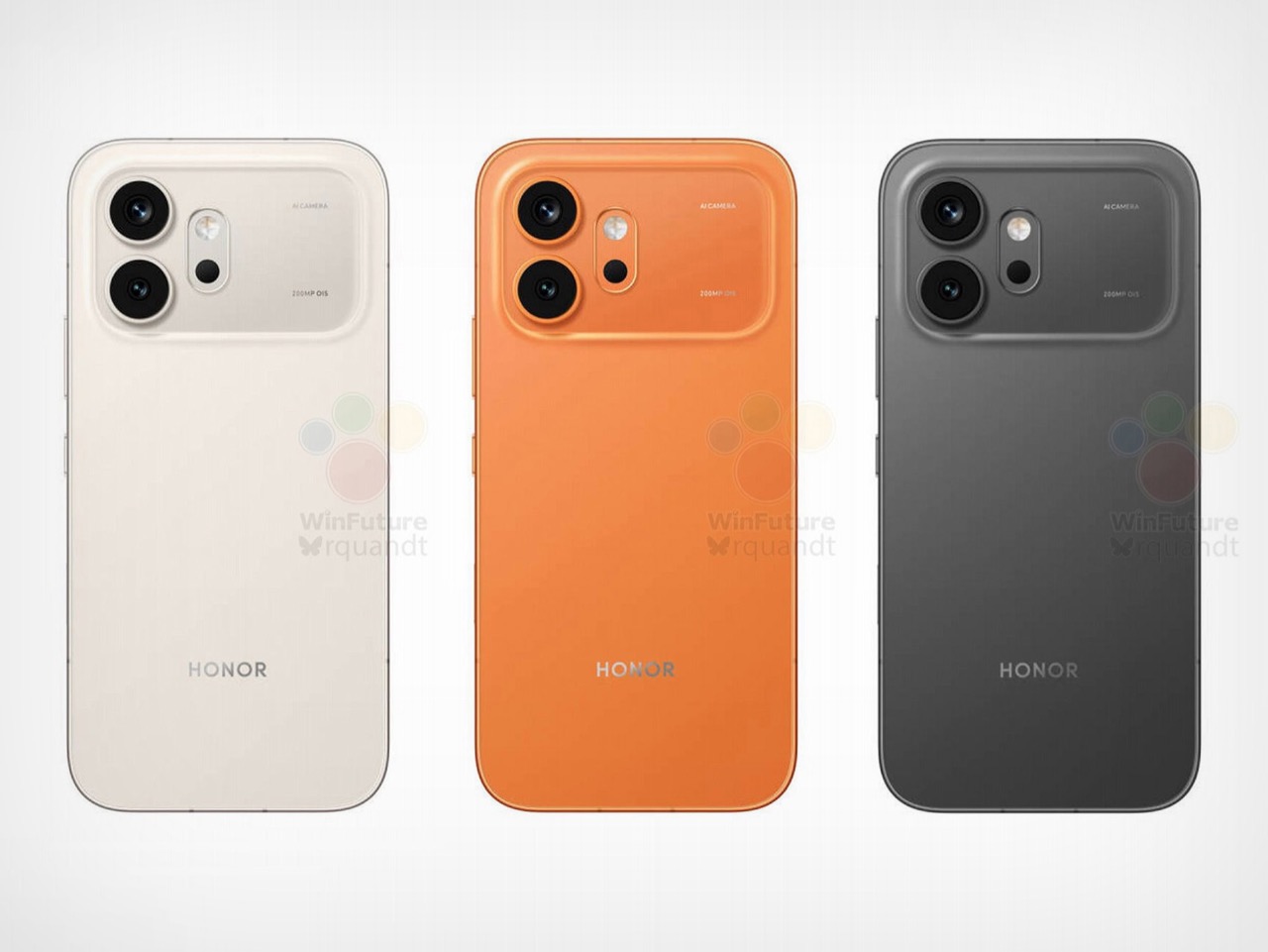
Leaked Honor 600 Pro looks a lot like the iPhone 17 Pro, but with a much bigger battery

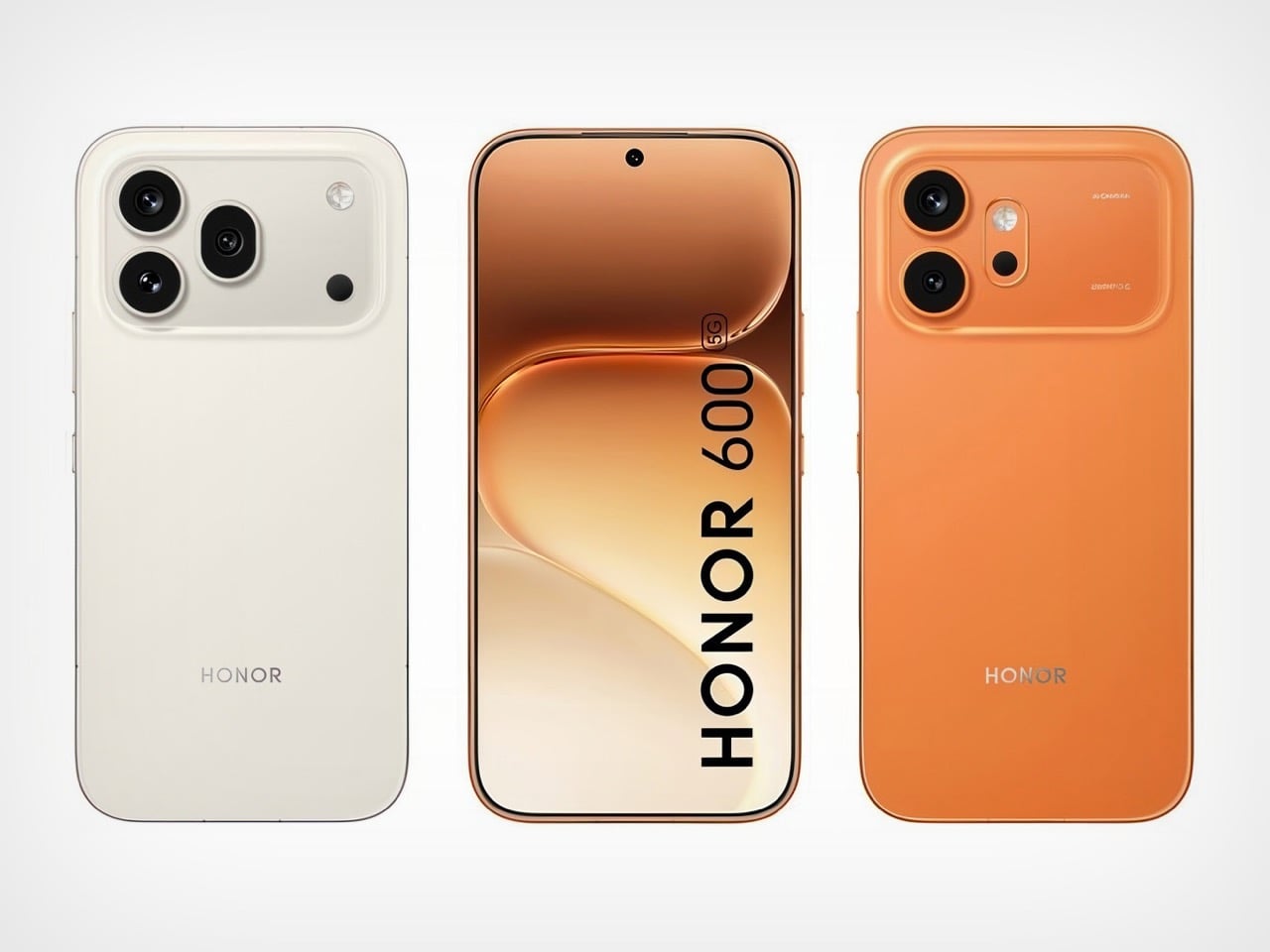
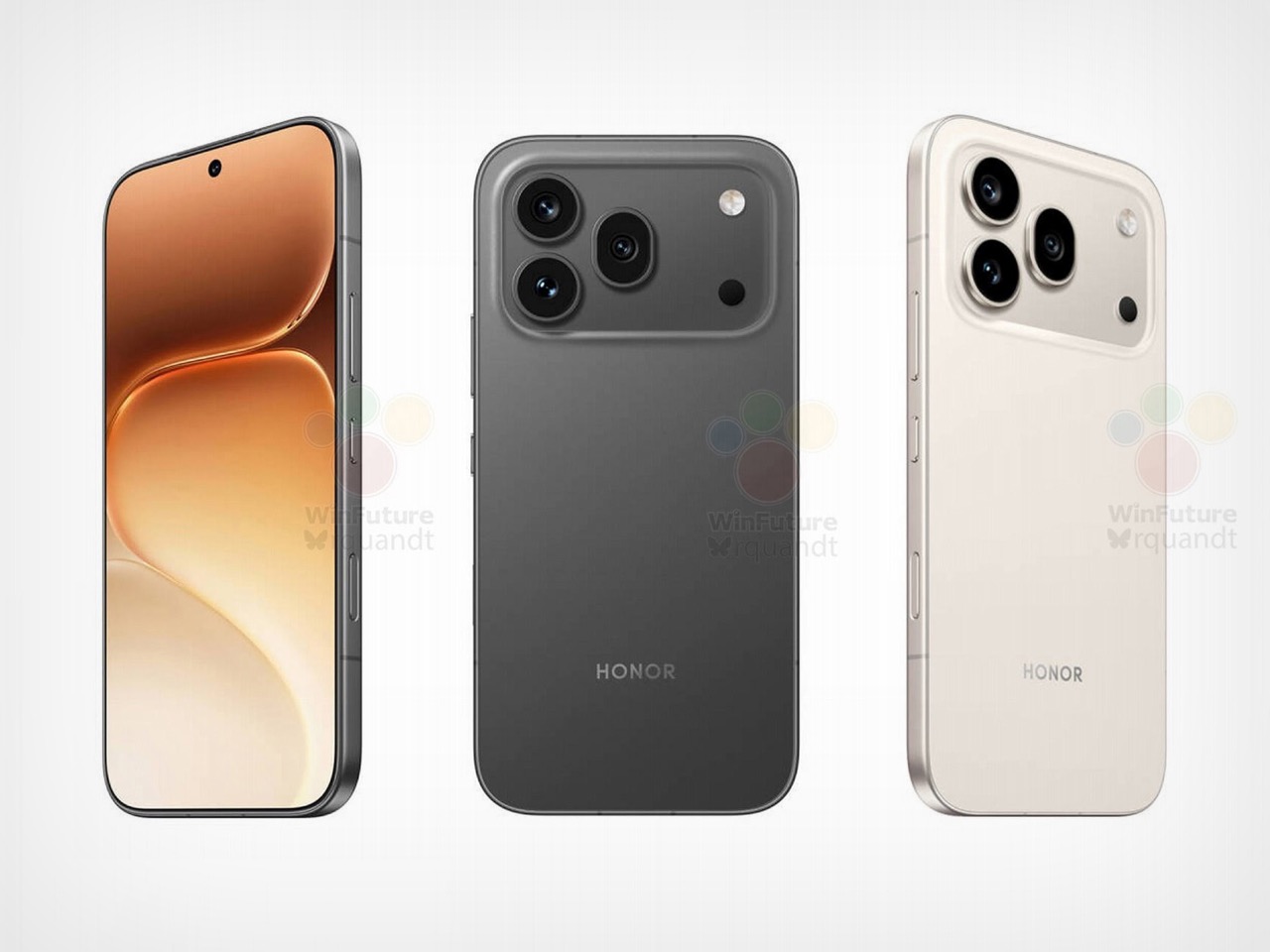
I have to hand it to Honor, they are consistent. When I wrote about the Magic8 Pro Air and its striking similarity to the iPhone Air, I thought we had seen the peak of their “inspiration.” It turns out that was just the warm-up act. The main event has arrived in the form of the Honor 600 and 600 Pro, and this time they have perfectly mimicked the iPhone 17 Pro. The new renders, courtesy of WinFuture, show a design that lifts every key element from Apple’s latest flagship. The full-width camera bar, the arrangement of the lenses, the flat metal frame, and even the color options are all present and accounted for. It’s a remarkable feat of reverse-engineering that feels both impressive and completely shameless.

What makes this strategy so fascinating is that Honor isn’t just making a cheaper clone. They are using the familiar, market-tested design as a vessel for a totally different philosophy. The Honor 600 is expected to ship with a 200MP camera and a 9,000mAh battery, specs that are practically alien to Apple’s ecosystem. It’s a phone designed to look like an iPhone from a distance but to function like an endurance-focused Android powerhouse up close. Honor is essentially telling the world that you can have Apple’s style without having to accept Apple’s compromises, and that’s a powerful message.

Designer: HONOR

The horizontal camera bar is not just vaguely similar, it’s dimensionally faithful. Both models feature the same raised rectangular module spanning nearly the full width of the device, with lenses, flash, and sensor cutouts arranged in a configuration that directly mirrors Apple’s layout. The standard Honor 600 goes with a dual rear camera setup, with its LED flash and laser autofocus tucked into a separate pill-shaped island below. The Pro model steps it up with a triple-lens arrangement, going all-in on the vertical stack. Even the colorways follow Apple’s playbook closely, with glossy black, metallic gold, and a bright orange finish that lands somewhere between homage and photocopy. Honor’s team clearly studied the iPhone 17 Pro with the intensity of an art student sketching a masterpiece in a museum.

The hardware rumors add even more intrigue to the picture. A 9,000mAh silicon battery in a flagship-tier device is almost unheard of in 2026, delivering the kind of multi-day endurance that the iPhone 17 Pro can only dream about. Both phones also get a 6.57-inch 120Hz OLED display at 1.5K resolution, wireless charging, a 3D ultrasonic in-display fingerprint sensor, and a Snapdragon 8 series chipset. There’s even a dedicated camera button on the side, which is, yes, another very Apple-like touch. Honor is effectively saying: if you love how the iPhone looks but wish it prioritized endurance and camera specs over thinness, we built that phone for you. Whether that resonates with buyers remains to be seen, but the logic behind it is hard to argue with.

The post Leaked Honor 600 Pro looks a lot like the iPhone 17 Pro, but with a much bigger battery first appeared on Yanko Design.

  •  

This Tungsten-tipped Nutcracker Works On Walnuts, Seafood, and even Car Windows in an Emergency

Think for a moment about three common tools: the nutcracker that sends shell fragments flying across the room, the bulky hammer you have to retrieve for the simple task of hanging a photo, and the emergency window breaker you bought for your car but have since forgotten about. Each serves a purpose, yet each comes with its own inconvenience, whether it’s mess, cumbersomeness, or the simple fact that it’s never around when you actually need it. These are the kinds of minor but persistent frustrations that we tend to accept as normal, the small design flaws in our daily routines.

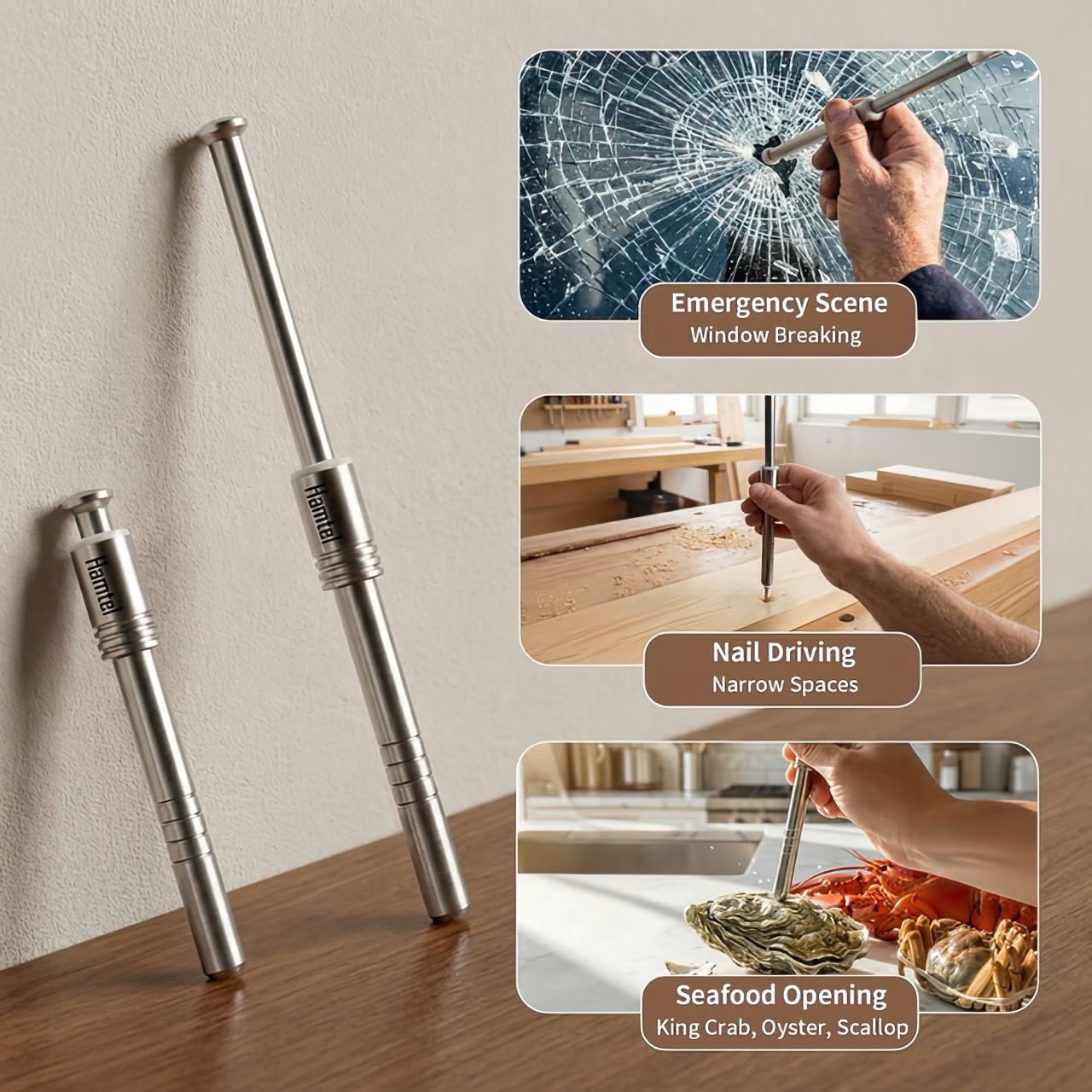
The Hamtel was born from a refusal to accept those flaws. It was conceived as a direct answer to these distinct problems, elegantly combining their solutions into a single, compact device. Its core function is a spring-loaded impact mechanism that cracks nuts with precision, eliminating mess and preserving the kernel. With a simple adjustment, that same tool becomes a capable mini-hammer for light-duty tasks. Finally, its tungsten steel tip provides the reliable performance of a dedicated car safety hammer, creating a single tool that is practical enough for daily use and critical in an emergency.

Designer: Hamtel

Click Here to Buy Now: $66 $124 (47% off) Hurry! Only 9 days left.

The real draw for anyone with an appreciation for good gear is the sheer tactile satisfaction of its action. You pull back the plunger to arm the manganese alloy steel spring, a process that feels deliberate and mechanical, like chambering a round. Placing the tip on the target and pressing down unleashes an explosive force reportedly moving at over 530 meters per second. This impact-driven deployment is what separates it from every dull lever-action cracker on the market. It’s a clean, contained, and frankly, an incredibly cool way to apply force. This is the kind of thoughtful engineering that gets EDC enthusiasts talking, turning a mundane kitchen task into an opportunity to use a well-made instrument.

The body is stainless steel, providing a solid, weighted feel in the hand, while the business end features a high-hardness tungsten steel tip rated at HRC60+. This is the material specification you expect in high-end cutting tools or industrial equipment, not something designed to crack walnuts. This choice is critical for its dual-purpose role as a car window breaker, ensuring the tip remains sharp and effective even after repeated use. That effectively means your walnut or macadamia or brazil nut stands absolutely no chance. The tip works remarkably well against seafood too, letting you crack into crab and lobster claws/shells without breaking out industrial equipment.

This precision translates directly to its performance in the kitchen. It boasts a 95% kernel preservation rate, a number that seems ambitious until you consider the physics at play. Instead of crushing a shell with slow, brute force, the Hamtel delivers a sharp, localized impact that fractures the shell without pulverizing the contents. This makes it just as effective for delicate jobs, like cracking open crab legs or lobster claws without shredding the meat inside. It brings a surprising level of finesse to a category of tools typically defined by their crudeness, making it a genuinely useful upgrade for any kitchen.

Initial pricing puts the Hamtel at $66, which is a compelling entry point considering its planned retail is set at $124. Logistics are refreshingly simple, with a flat $9 shipping fee for delivery anywhere in the world. An optional nut pick can be added for just a few dollars, making it a complete package for dealing with stubborn shells. For the price of a single-purpose emergency tool, you’re getting a device that serves three distinct functions, some life-changing, others life-saving. But for most of the time, bon appetit!

Click Here to Buy Now: $66 $124 (47% off) Hurry! Only 9 days left.

The post This Tungsten-tipped Nutcracker Works On Walnuts, Seafood, and even Car Windows in an Emergency first appeared on Yanko Design.

  •  

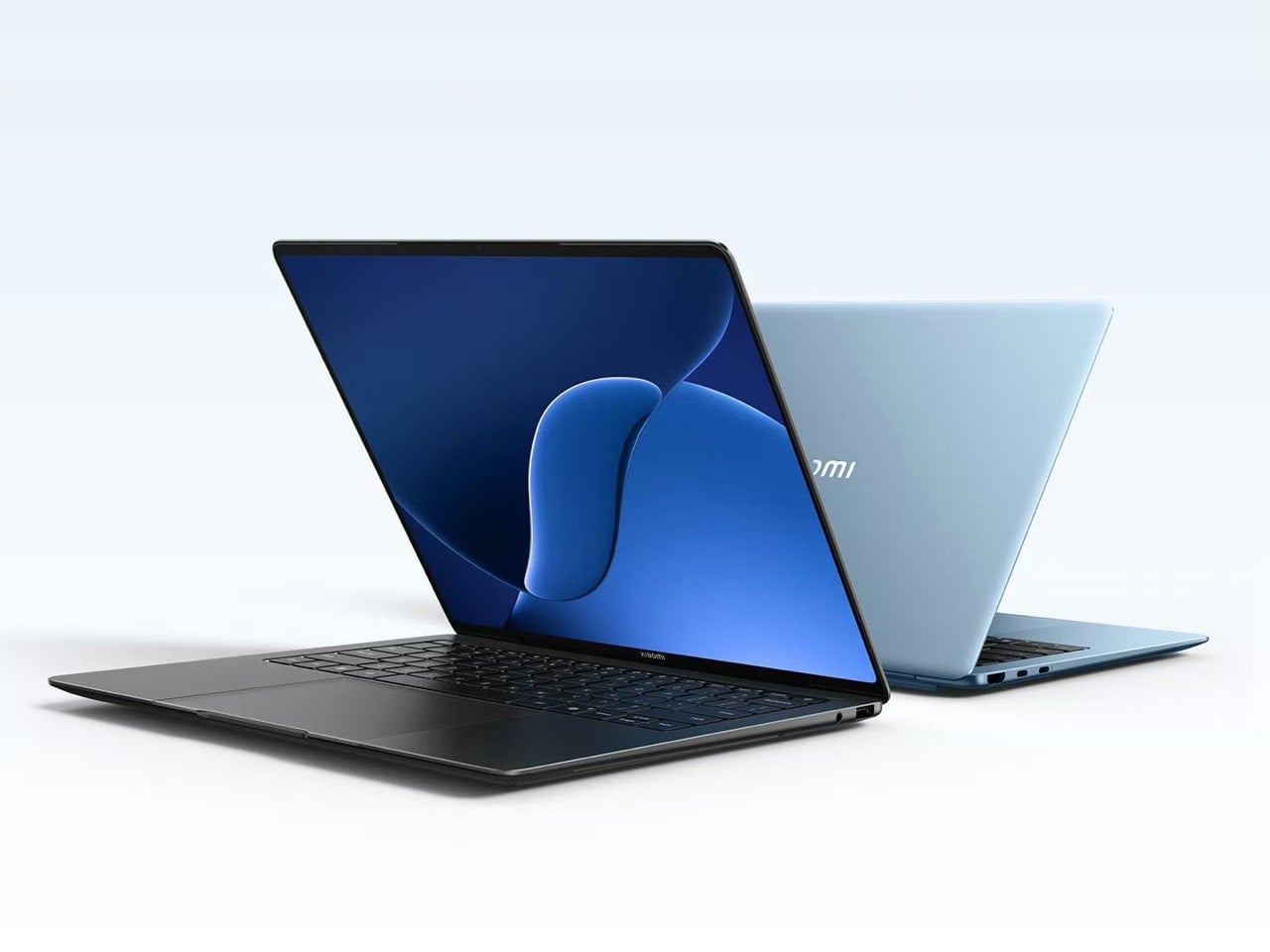
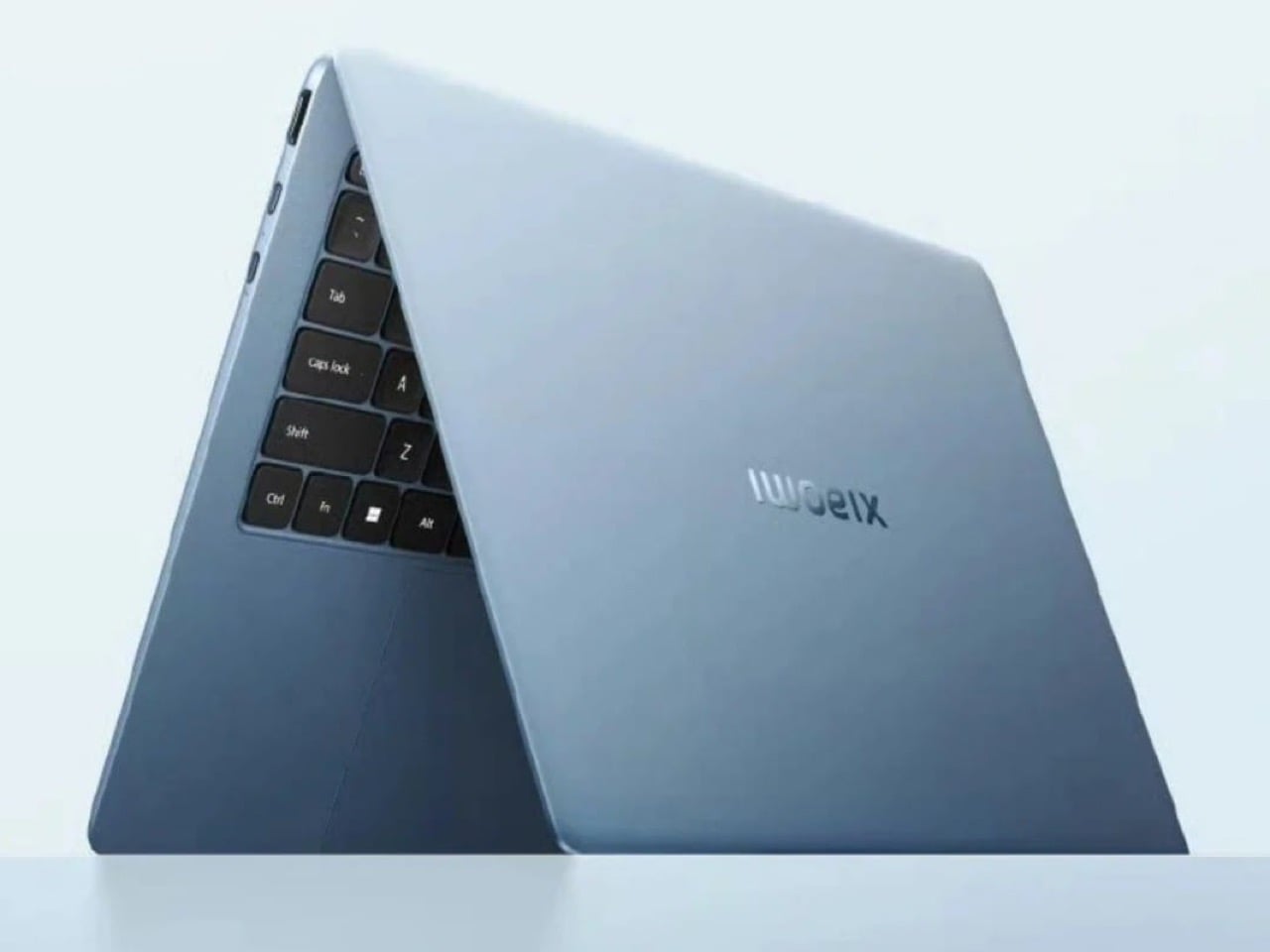
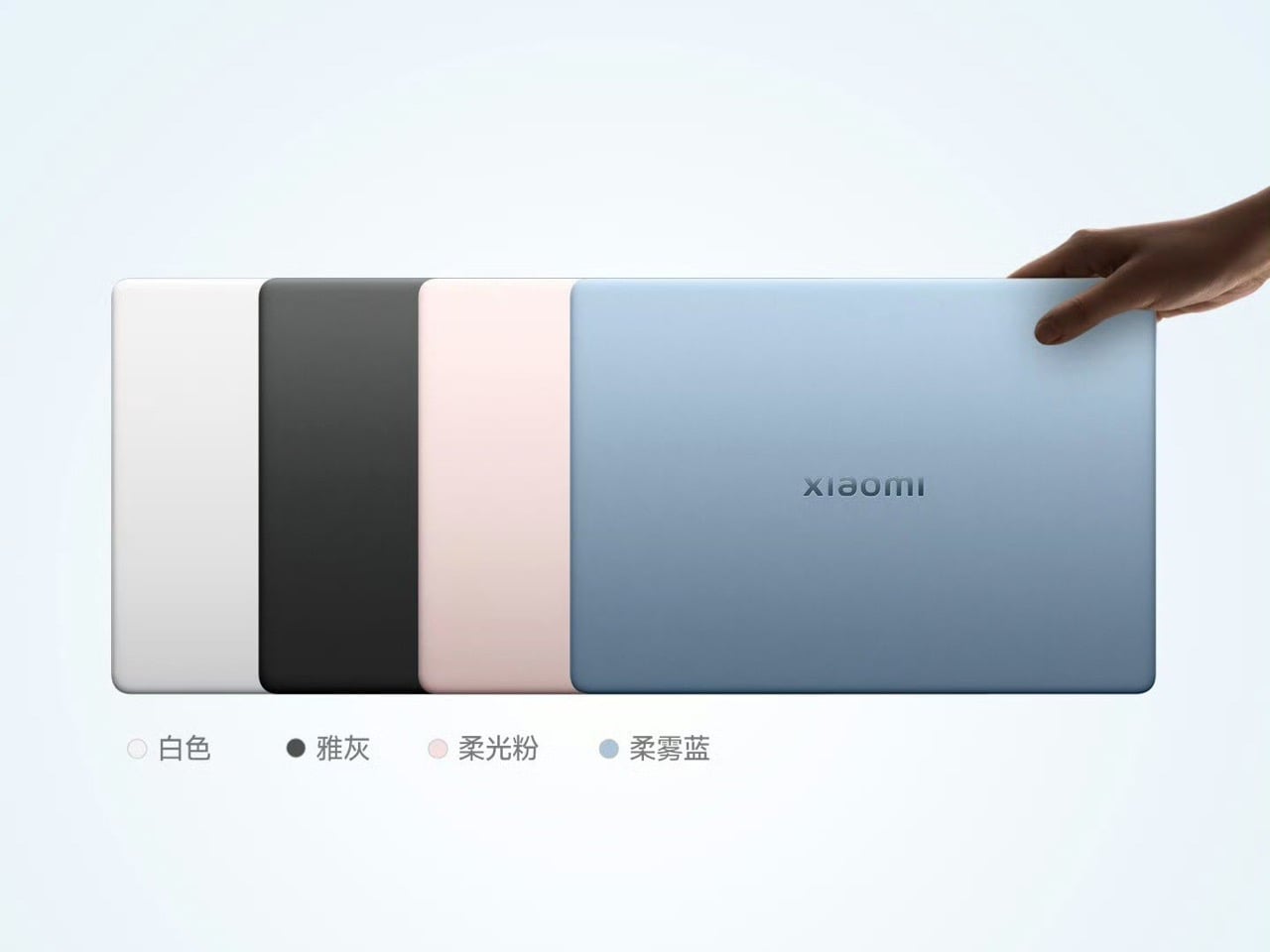
Xiaomi Returns to Laptops After Four Years with a MacBook Air Rival That Outclasses It on Paper for $1,275

The laptop market has a predictable rhythm. Apple sets the benchmark, everyone else reacts. Since the M1 MacBook Air landed in late 2020 and redrew the definition of thin-and-light computing, the entire Windows ultrabook category has essentially been running in response to that one product. Some challengers land close, most fall short on one or two crucial dimensions, and the cycle repeats. What makes Xiaomi’s return to the laptop space interesting is that the company has been watching all of this from the sidelines for four years, and the Book Pro 14 it just launched in China reads less like a desperate catch-up attempt and more like a deliberate, calculated swing at a very specific gap in the Air’s armor.

Xiaomi has just made a discreet release in the laptop segment after a four-year break, returning with the Book Pro 14, a capable thin-and-light that positions itself as a direct answer to the MacBook Air. The headline spec is the display: a 14.6-inch OLED panel with touchscreen support, 3.1K resolution, a 120Hz refresh rate, and a peak brightness of 1,600 nits. Under the hood, Xiaomi equips the notebook with Intel’s Panther Lake platform, up to an Intel Core Ultra 7 358H, with 24GB RAM on the base configuration and 1TB of SSD storage. Pricing, when converted from Chinese yuan, puts the laptop at approximately $1,275, just over $100 more than a base M5 MacBook Air, and for that small premium you get a higher-resolution 120Hz OLED panel, more RAM, and a more robust port selection.

Designer: Xiaomi

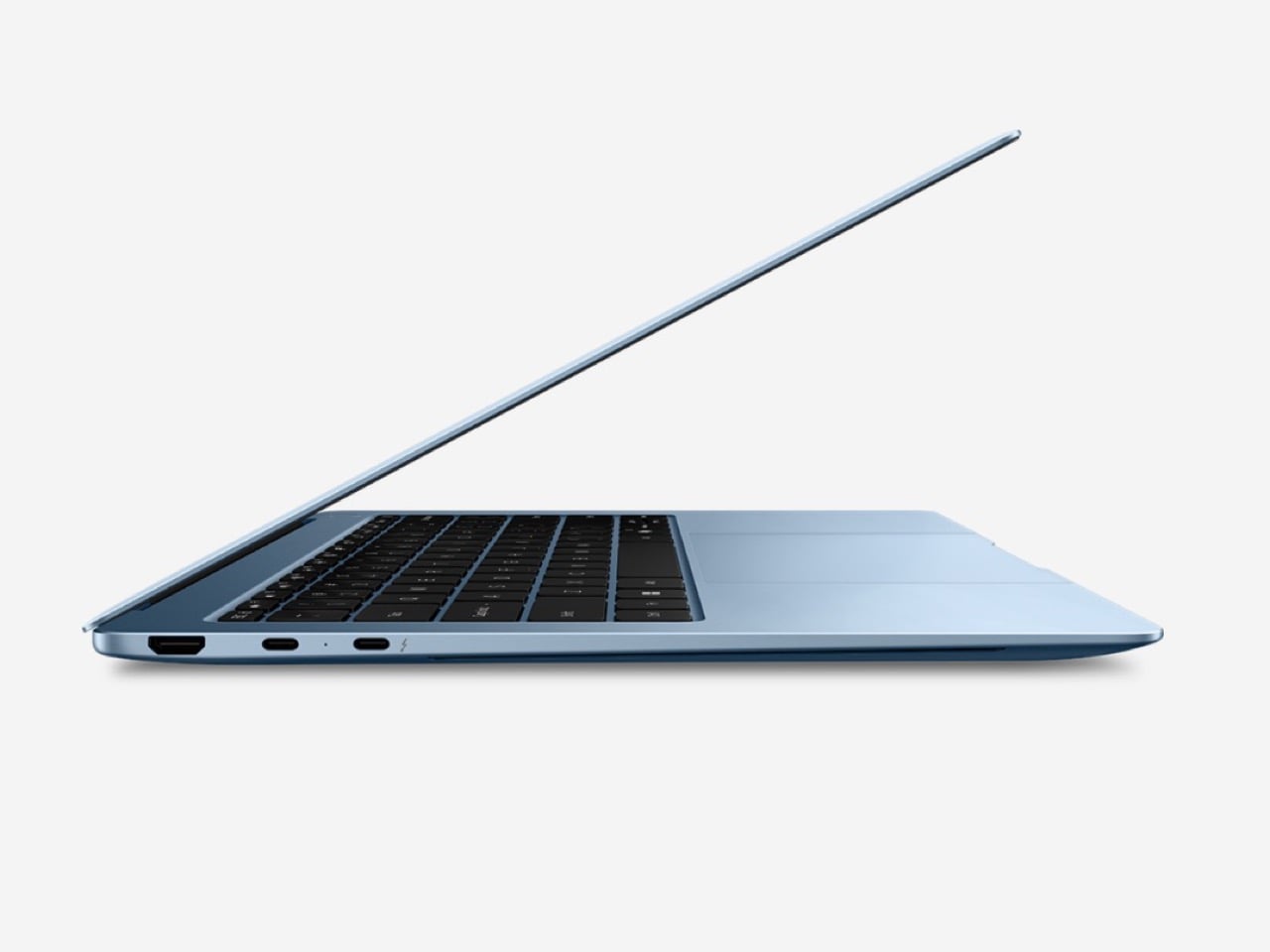
You’re probably itching to ask about ports, because the MacBook Air famously doesn’t pack enough of them. The Book Pro 14 includes Thunderbolt 4, USB-C, USB-A, HDMI 2.1, and a 3.5mm audio jack, compared to the MacBook Air’s two Thunderbolt 4 ports and a headphone jack. That is a meaningful difference for anyone who has ever reached for a dongle mid-presentation or had to choose between charging and connecting to a display. Xiaomi’s decision to include a full-size HDMI port and a USB-A jack signals an awareness that real-world desk setups are messier than Apple’s minimalist port philosophy acknowledges. Whether that matters to you depends entirely on your workflow, but it is a deliberate product decision and one that reads as a direct response to a documented frustration with the Air.

The Book Pro 14 achieves a weight of 1.08 kg and a thickness of 14.95 mm through a chassis built from magnesium alloy with a carbon fiber lid. That actually makes it lighter than the M5 MacBook Air, which tips the scales around 1.24 kg, and the thickness is comparable. Keeping the specs cool is a three-channel cooling system incorporating a high-performance fan, a 10,000mm² vapor chamber, and graphene cooling components capable of sustaining 50W of continuous performance. That last figure matters more than it might initially seem. Apple’s fanless MacBook Air is a thermally constrained machine, and sustained workloads do cause it to throttle, a tradeoff that has been well-documented since the M1 era, and a system that can sustain 50W continuously without a corresponding weight penalty represents a genuine engineering achievement.

Xiaomi makes bold claims on the Book Pro 14’s battery life, overshooting even the latest M5 MacBook Air by nearly two hours. The 72Wh battery is rated for up to 19.8 hours of continuous use, with the 100W fast charging system capable of restoring 50% in approximately 26 minutes. The MacBook Air M5 posts similarly impressive endurance numbers in real-world use, so this will be a tightly contested dimension. The Intel Panther Lake architecture powering the Book Pro 14 is also the first Intel mobile platform in recent memory that genuinely changes the conversation around Windows laptop efficiency, borrowing a page from Apple’s playbook by targeting the sub-10W idle efficiency range that made the M-series Macs so compelling. Independent testing will be the real arbiter here, but the stated numbers are ambitious enough to take seriously.

The Book Pro 14 is currently only available in China, with no clear indication of a global release date, which severely limits its immediate relevance for the overwhelming majority of potential buyers. Xiaomi has a track record of launching products domestically and gradually expanding to other markets, and given the attention this machine has received in the first 24 hours of coverage, the commercial logic for a global rollout is hard to argue against. The question is timing. If Xiaomi moves quickly, the Book Pro 14 could arrive in Western markets before the M5 MacBook Air has fully consolidated its footprint. If the rollout stalls or gets diluted through regional variants with compromised specs, the window closes. The hardware is genuinely compelling, and the only outstanding question that actually matters is whether Xiaomi’s global distribution ambitions match what the engineering team has clearly delivered.

The post Xiaomi Returns to Laptops After Four Years with a MacBook Air Rival That Outclasses It on Paper for $1,275 first appeared on Yanko Design.

  •  

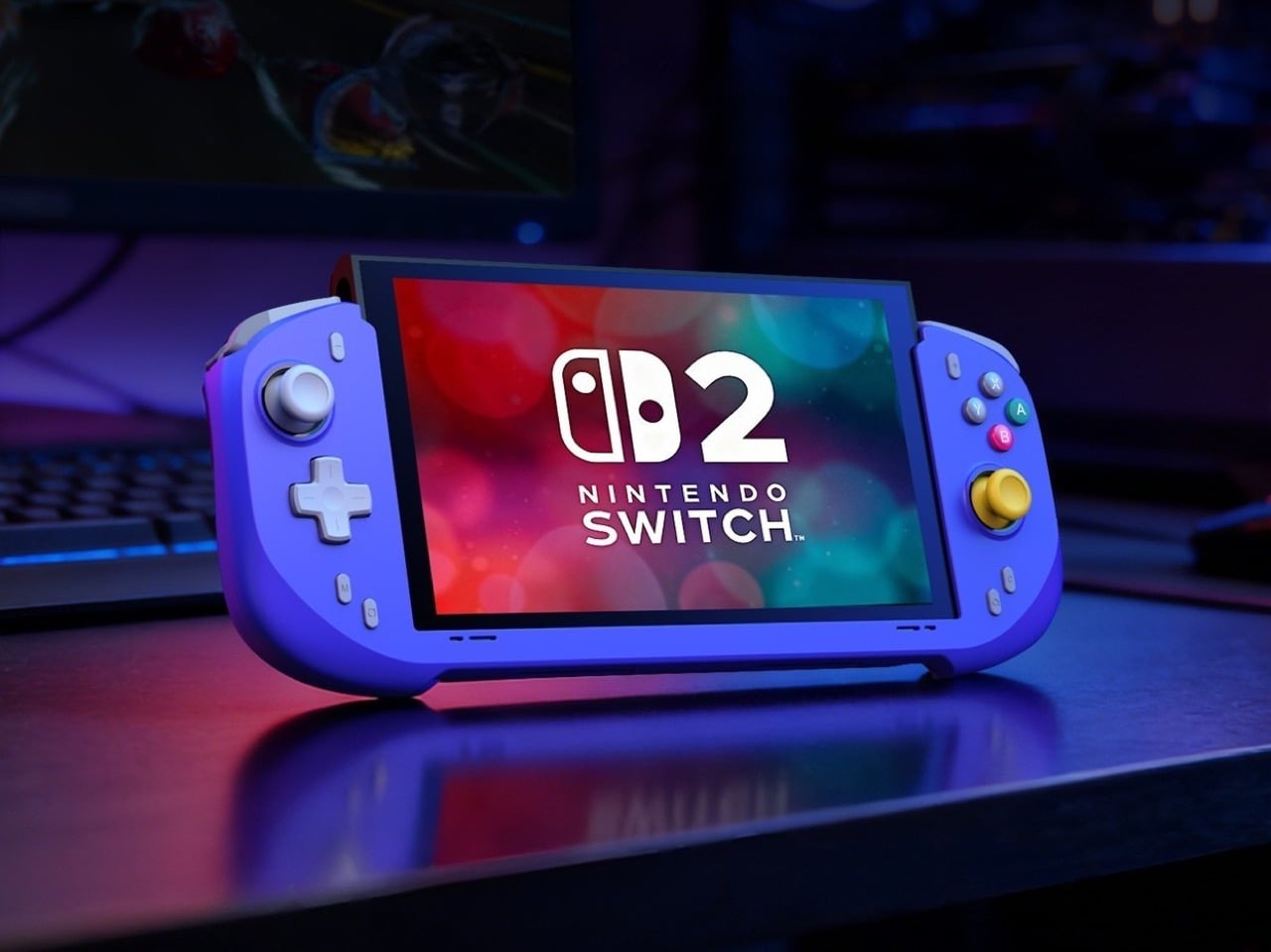
A GameCube Controller on the Nintendo Switch 2? Meet Abxylute’s Deck-style Joy-Con Alternatives

When the Nintendo Switch 2 arrived in June 2025 at $449.99, it came with a 7.9-inch display, a faster processor, and a Joy-Con that doubles as a mouse. What it didn’t come with was a comfortable way to hold it for long sessions. The handheld form factor has always been a compromise between portability and ergonomics, and for players who log serious hours, that compromise starts showing up as wrist fatigue, awkward thumb angles, and a nagging wish for something with a proper grip. The accessory market has tried to fill that space for years, with results ranging from decent to deeply uninspiring.

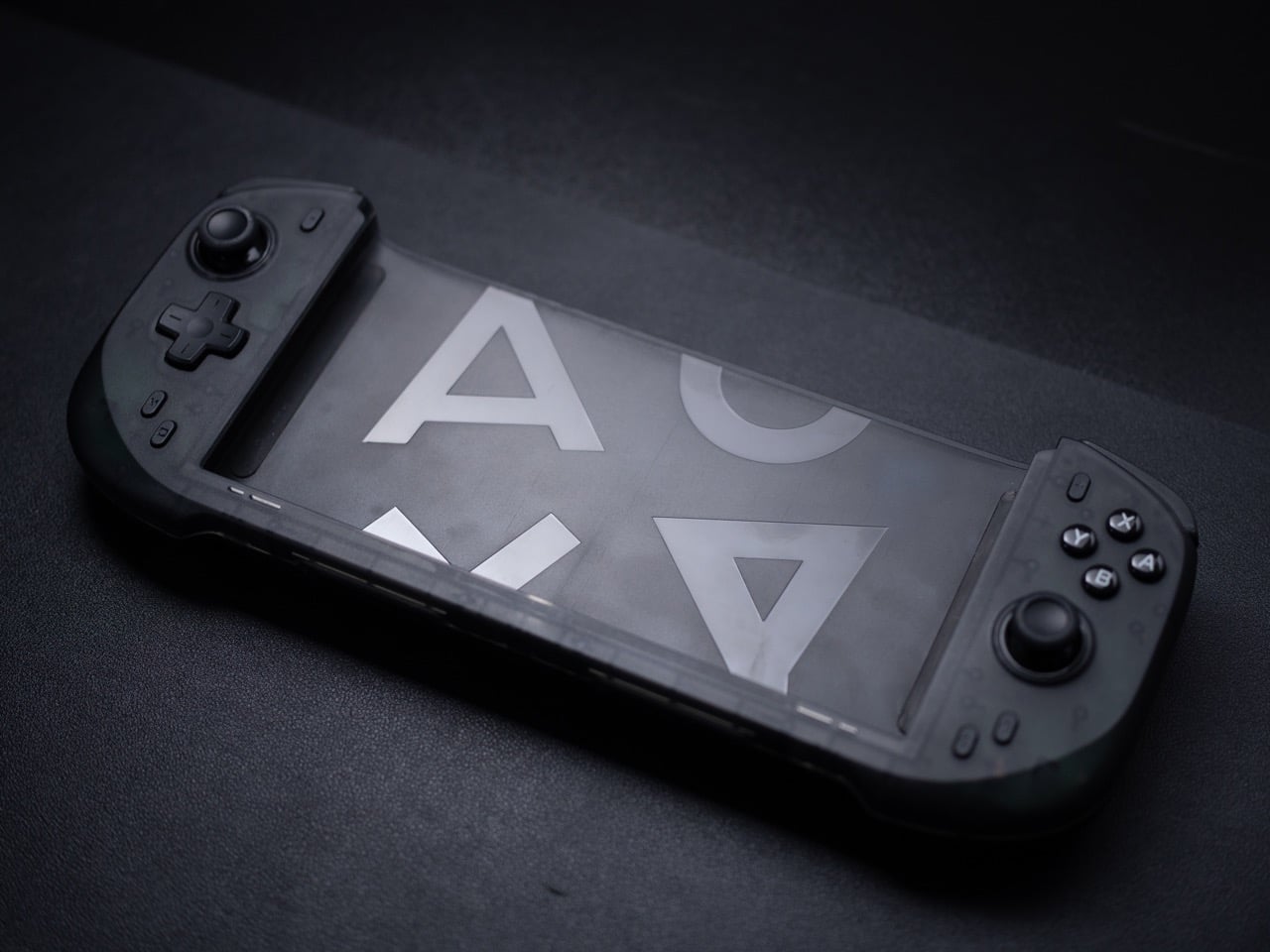
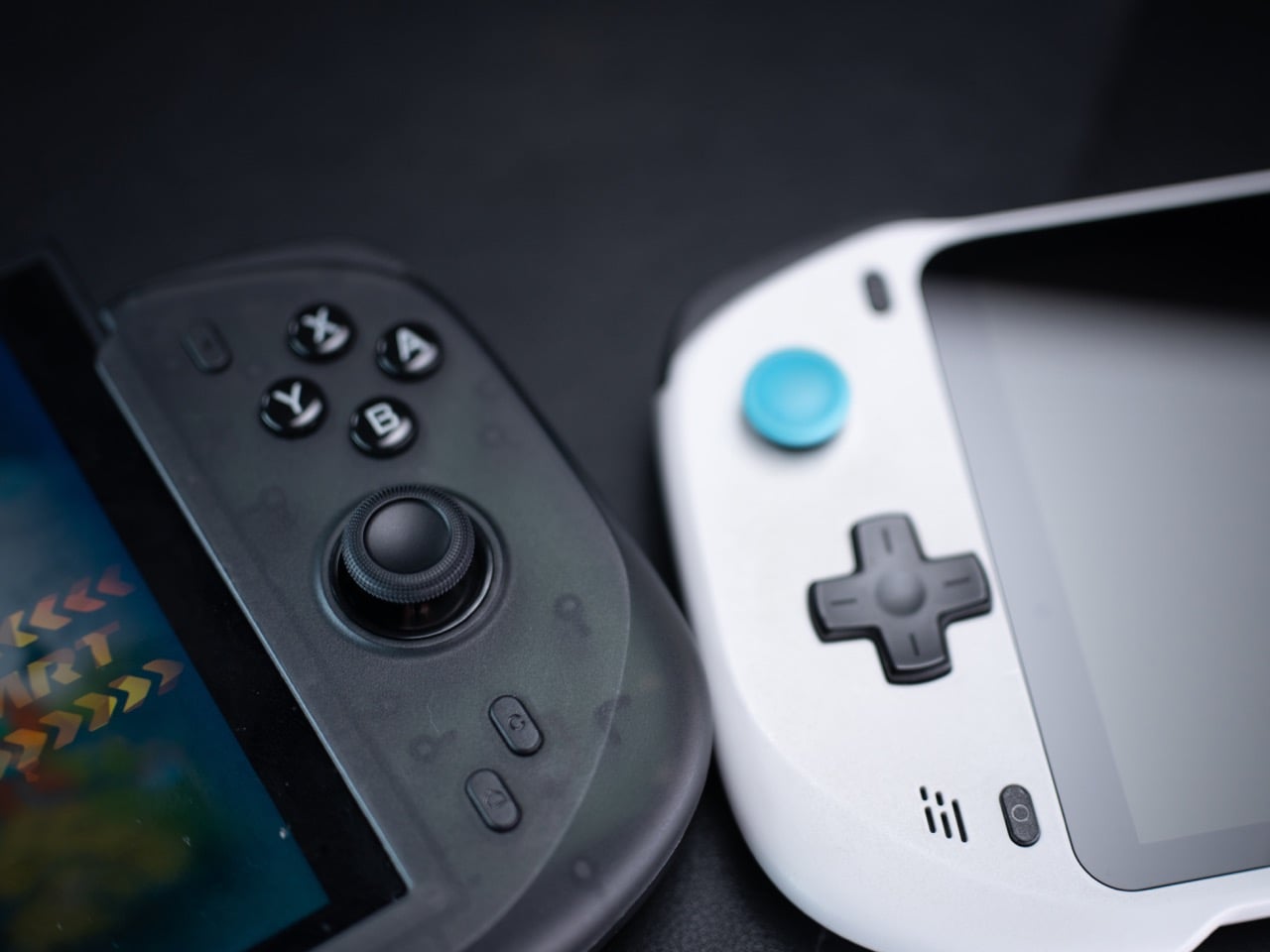
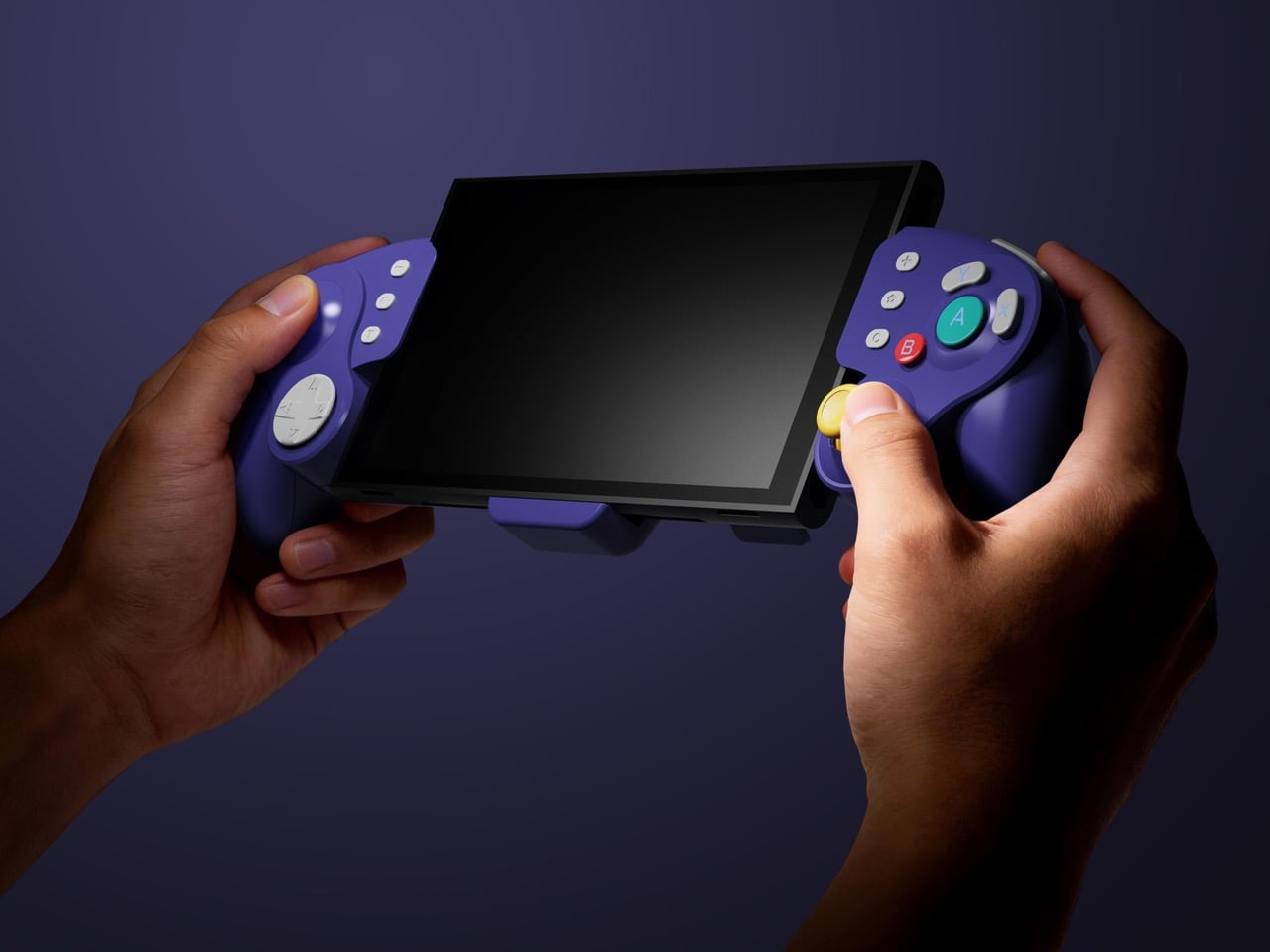
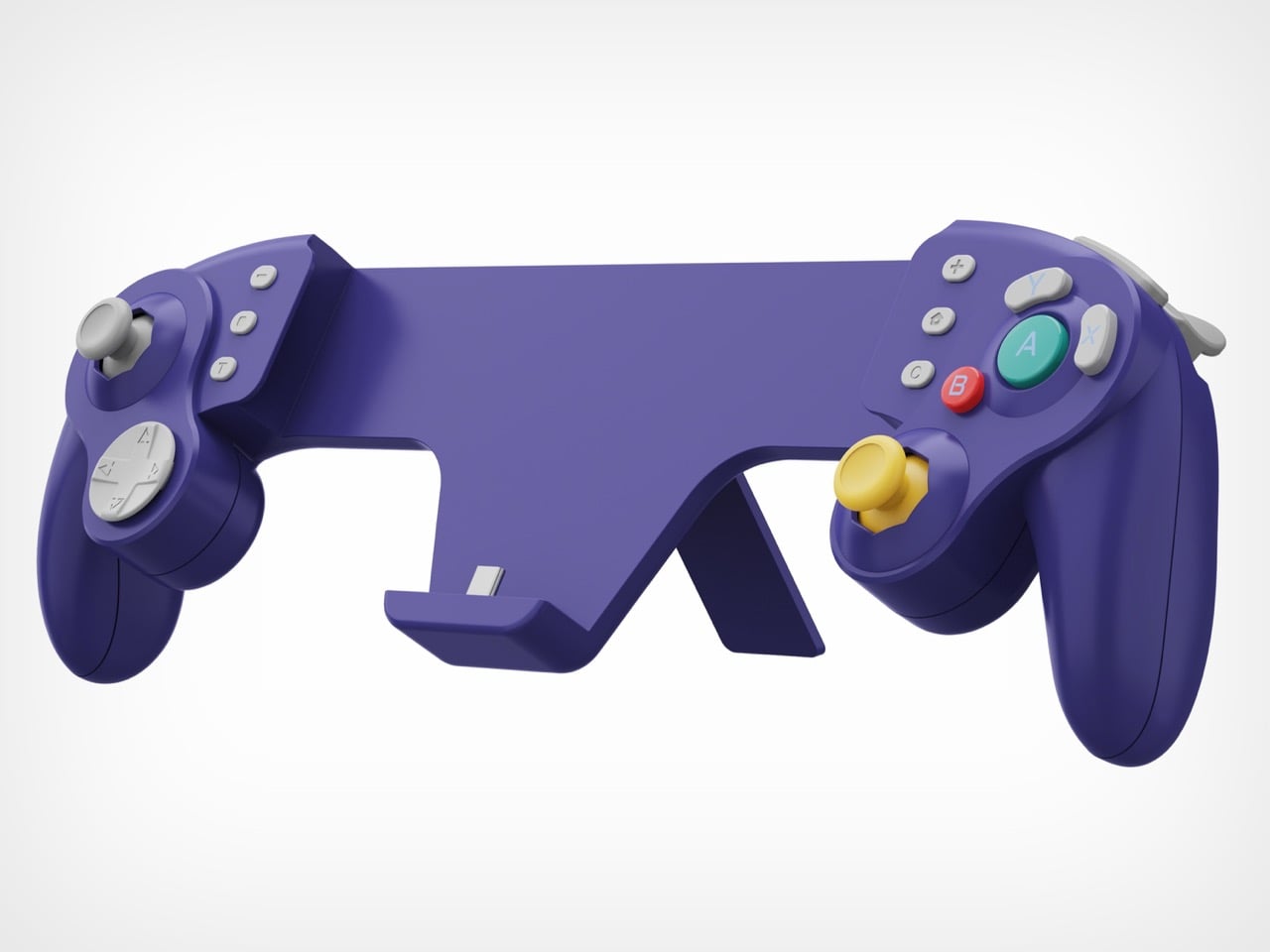
Abxylute’s answer comes in two forms: the N6 and the N9C, both deck-style controllers purpose-built for Switch 2 play. The N6 wraps the console in a full-size ergonomic grip with Hall-effect joysticks, native 9-axis motion control, a dedicated C Button for GameChat, and adjustable vibration levels the player can cycle through without leaving a session. The N9C leans into personality, drawing from GameCube design DNA with mechanical buttons, trigger switches, and a capacitive joystick system paired with swappable gates.

Designer: Abxylute

Click Here to Buy Now: $79 $110 (28% off) Hurry! Only 10 days left.

Joy-Cons were engineered for flexibility: detachable, shareable, usable solo or in pairs, functional as individual controllers for two-player sessions on a single console. That versatility comes at the cost of ergonomics, because a controller small enough to slide into a rail and function independently will never offer the grip depth, trigger travel, or palm support of something purpose-built for extended solo play. The N6 and N9C abandon that modularity entirely in favor of doing one thing exceptionally well, which is making handheld Switch 2 sessions feel like you’re holding a full-size controller instead of a tablet with thumbsticks glued to the sides. The tactile feedback is immediate and familiar, the kind of responsiveness you get from hardware designed around sustained single-player sessions rather than multi-function compromise. Both controllers connect via wired USB-C, skipping wireless pairing lag entirely, because when the target is solo handheld performance, eliminating variables takes priority over flexibility.

The N6’s open-top design is the first thing people will argue about online, and they’ll mostly be wrong. The Switch 2 stands over 11 cm tall, and a fully enclosed grip pushes that height further, putting your palms in the kind of awkward hover position that builds exactly the fatigue you were trying to avoid. Abxylute held the grip height at 8.5 cm, matching full-size controller proportions, so your palms have something to rest against rather than squeeze. The 7-inch grip width sits narrower than the console body deliberately, keeping your hands at a natural, relaxed spread instead of forcing them wide across a bulky frame. The physics of holding something for two hours straight are pretty straightforward, and this design reads those physics correctly.

Hall-effect joysticks solve a specific, measurable problem that standard potentiometer sticks fundamentally cannot. Potentiometer sticks use resistive contact that physically degrades over repeated use, which is why drift rates climb after a year or two of regular play. Hall-effect reads joystick position magnetically, with zero physical contact between moving components, and the N6 bumps the stick travel angle to 23 degrees compared to 18 degrees on Joy-Con, giving your thumbs more range for fine-grained inputs. A POM anti-wear ring around each stick handles mechanical stability without adding stiffness or noise to the movement. It’s a small detail, but the kind that separates purpose-built hardware from a generic controller with a different shell. On a device you use daily, that engineering choice compounds in your favor in a way that contact-based sticks simply never will.

Inputs across the N6 break down by material type, and the distinctions matter. ABXY buttons use conductive rubber for cushioned presses that reduce finger fatigue; the D-pad uses tactile switches for sharper directional accuracy; shoulder buttons deliver tactile clicks for faster responses in action-heavy play; and the linear digital triggers provide a genuine 0-100% input range rather than binary on/off clicks. That trigger range matters considerably in racing games and anything relying on gradual pressure inputs. Vibration adjusts at four levels, 0%, 40%, 70%, and 100%, switchable via button combo directly on the controller, bypassing the game-by-game settings adjustment that the Pro Controller requires. The grip’s internal structure forms a resonance chamber that redirects the Switch 2’s speakers forward and reinforces bass by around 10%, which you’ll register in a quiet room as fuller, punchier audio than bare Joy-Cons produce.

The N9C is doing something more niche and, honestly, more interesting. Where the N6 chases Pro Controller parity, the N9C chases the GameCube controller’s specific feel, complete with a centered A button and asymmetric face layout, rebuilt for a modern console using mechanical micro-switches and ALPS tactile shoulder buttons. Capacitive joysticks sidestep magnetic interference entirely, and the swappable 8-way and circular gate rings mean you can dial in a tight directional gate for fighters and swap to a smooth circular gate for platformers. A built-in battery hatch holds two replaceable batteries that reverse-charge the Switch 2 directly during play. Most grips on the market ignore battery life almost entirely, and a reverse charge system that powers the Switch 2 directly from the controller is a differentiator almost nothing else in this category offers.

The N9C carries four programmable rear buttons, two per side compared to the N6’s one per side, and each supports the same macro-recording system that chains directional inputs and actions into a single trigger. Switch 2 system-level button remapping works natively, requiring no third-party software, so a custom layout travels across every game without reconfiguring anything. An integrated rear stand sets the N9C apart from virtually every grip in this category, giving the Switch 2 a propped tabletop angle without relying on the console’s own kickstand. The primary connection is wired USB-C for ultra-low latency, with BLE available for configuration only, keeping the input chain clean during actual play. Every N9C ships with both C-stick and ring-style joystick caps in the box, so players can dial in the stick feel before the packaging hits the trash.

Mass production kicked off in March 2026, with shipping expected between April and June. Super Early Bird pricing runs $79 for the N6 (retail $110) and $89 for the N9C (retail $120), with a bundle sitting at $159. Nintendo’s own Pro Controller for Switch 2 retails at $79.99 and carries none of the Hall-effect sticks, programmable back buttons, or turbo functionality. Abxylute has shipped over 120,000 units across more than 20 projects to 100,000-plus customers, so the production infrastructure exists. What they’re solving for is specific: handheld Switch 2 play that performs at Pro Controller level without forcing players to accept the Joy-Con’s ergonomic ceiling as permanent.

Click Here to Buy Now: $79 $110 (28% off) Hurry! Only 10 days left.

The post A GameCube Controller on the Nintendo Switch 2? Meet Abxylute’s Deck-style Joy-Con Alternatives first appeared on Yanko Design.

  •  

The Shargeek 300 is a Cyberpunk-style Power Bank that can charge two MacBook Pros

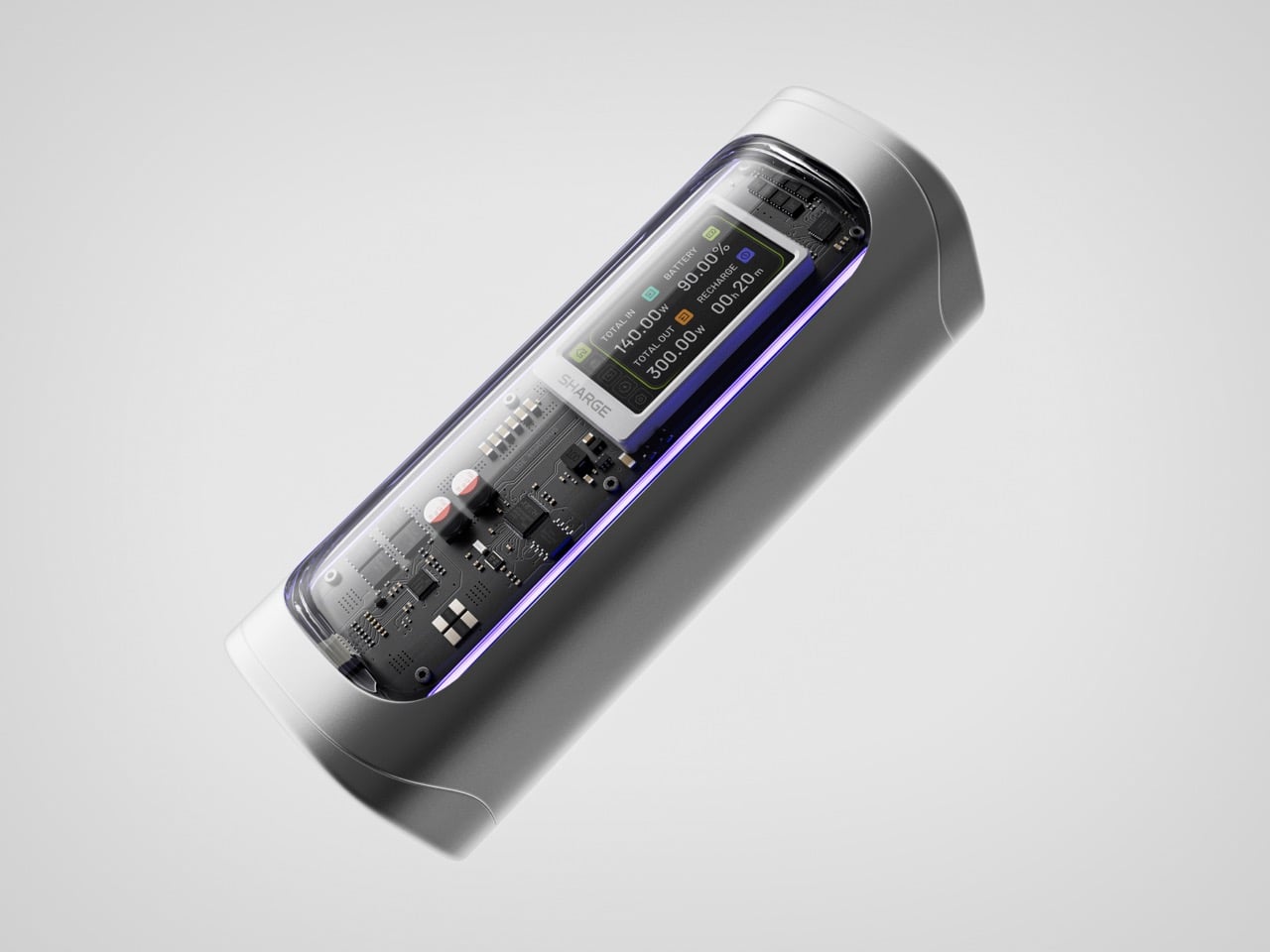
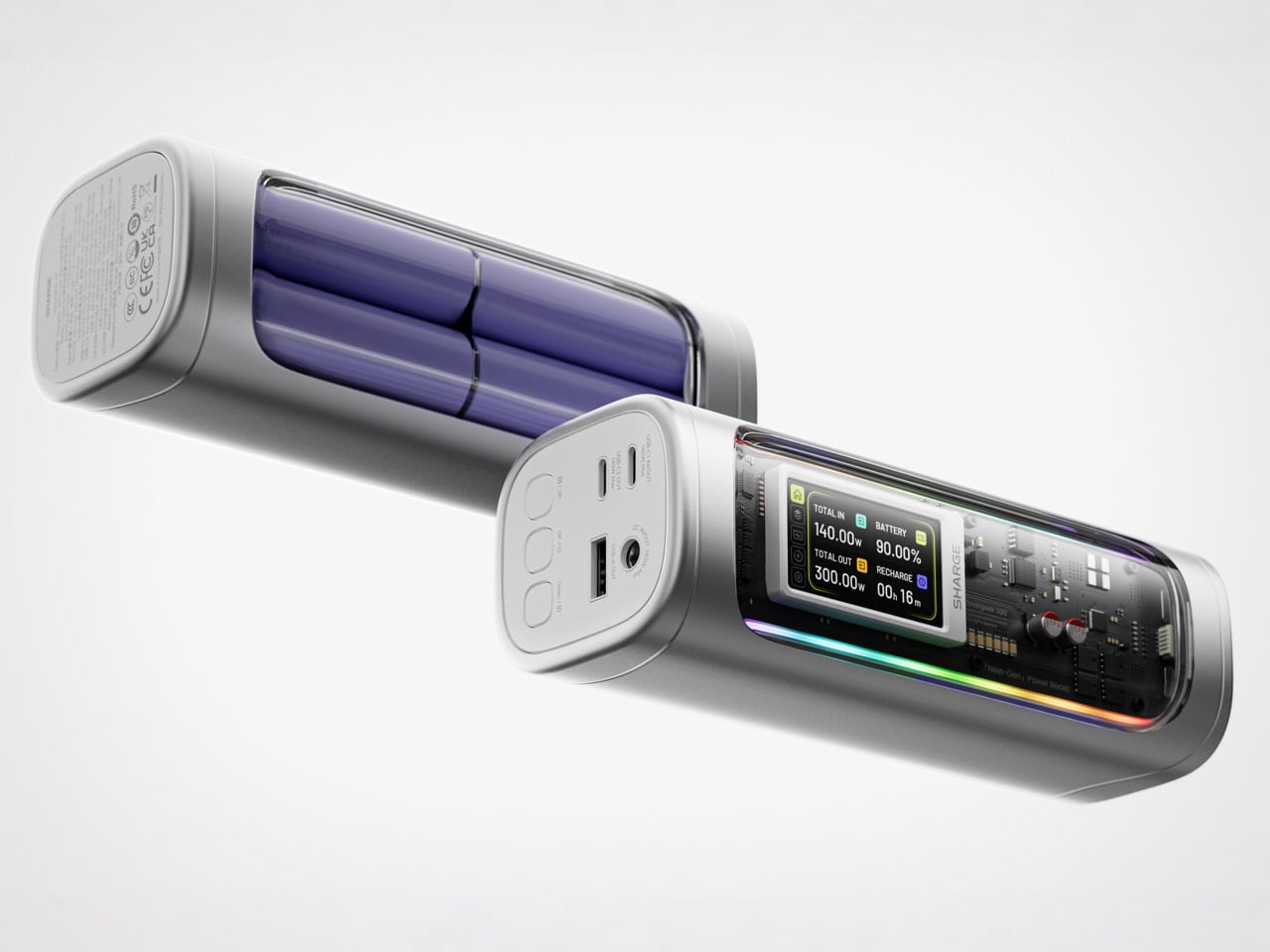
Power banks have spent years being boring on purpose. Black rectangles, white rectangles, the occasional textured finish. The category settled into a kind of utilitarian invisibility, as if the industry collectively decided that anything carrying electrons should look like a bar of soap. SHARGE never got that memo. The Shargeek 300 looks like a prop from a near-future thriller, with transparent panels revealing glowing circuitry beneath, RGB light bars running along its flanks, and a CNC aluminum body that catches light the way expensive things tend to. It belongs on a desk you’d actually want to show people.

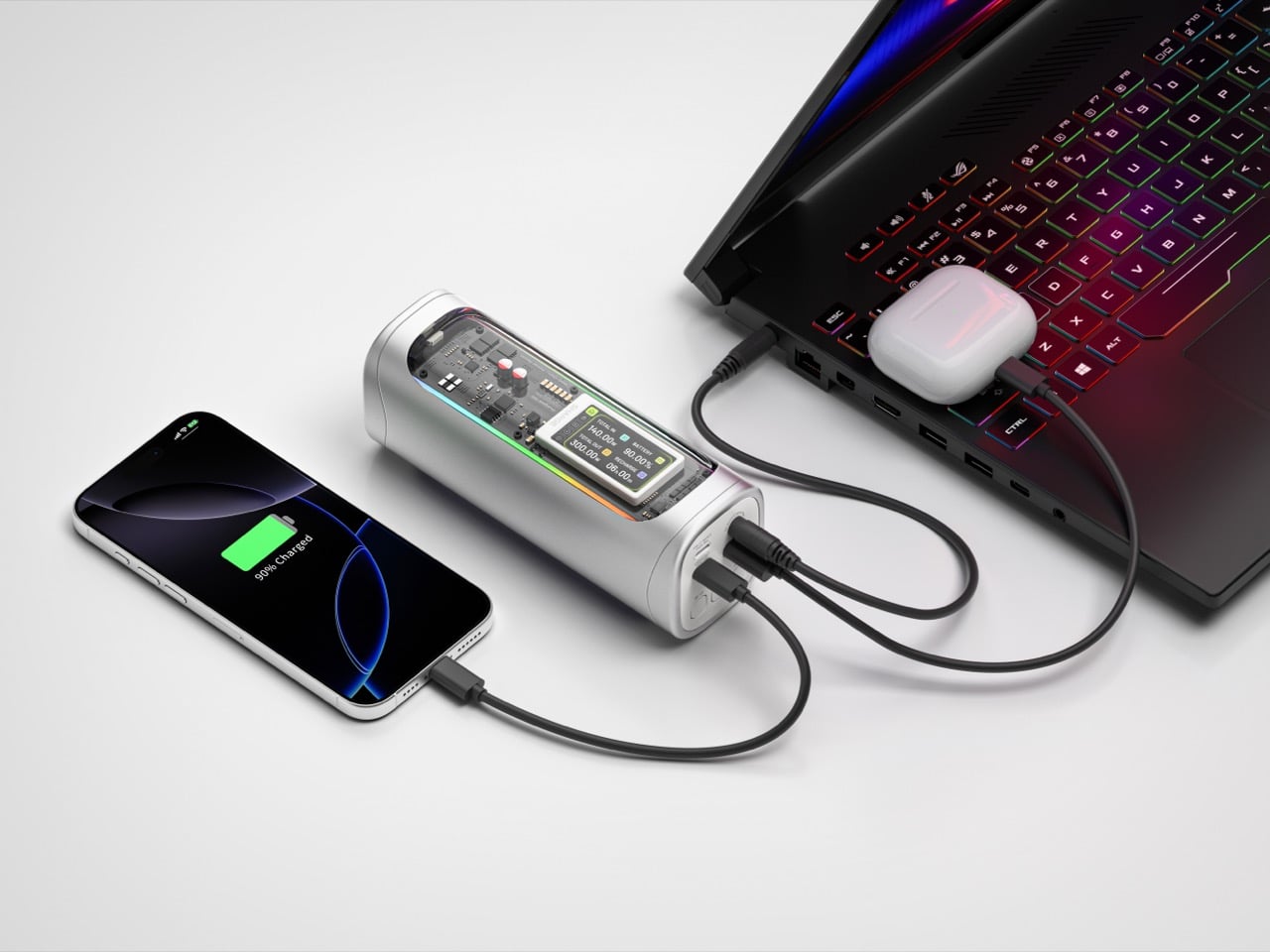
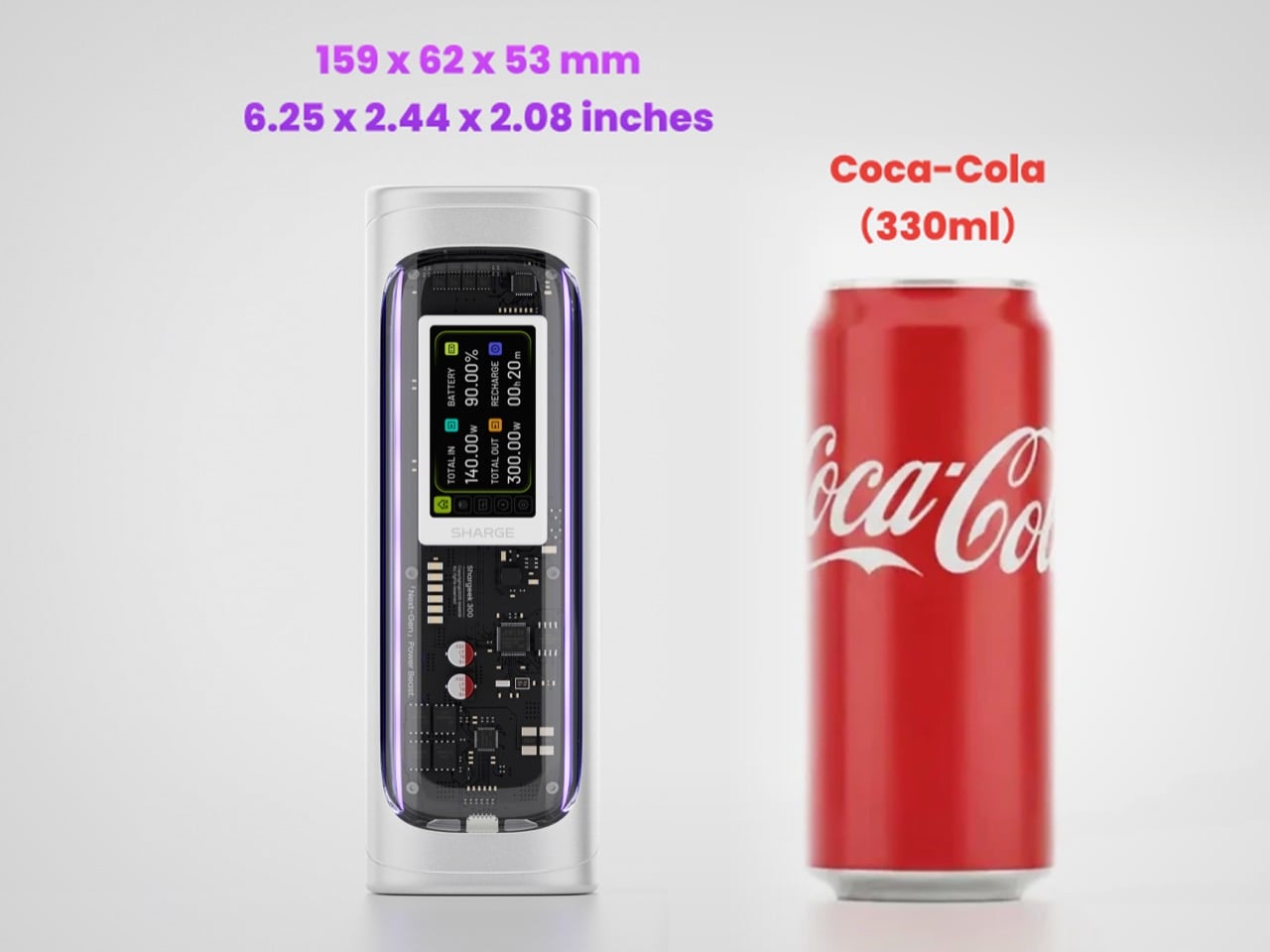
Founded in 2020, SHARGE built its identity around the conviction that charging hardware deserves the same design attention as the devices it powers. The original Shargeek 100, launched in 2021, was the proof of concept: a transparent, display-equipped power bank with DC charging that found a devoted audience almost immediately. The Shargeek 300 is what four years of that bet looks like fully cashed in. It pushes 300 watts of total output, enough to charge two 16-inch MacBook Pros simultaneously while still fast-charging a smartphone on a third port. The 24,000mAh battery lands at 86.4Wh, sitting just under the 100Wh threshold airlines enforce for carry-on batteries. Recharge time from flat to full is 75 minutes with a 140W input. The whole unit is roughly the size of a 330ml can of cola. SHARGE spent 40 months getting here, and the result makes most rivals in the category look underprepared.

Designer: Sharge

Click Here to Buy Now: $159 $199 ($40 off) Hurry! Only 6 days left.

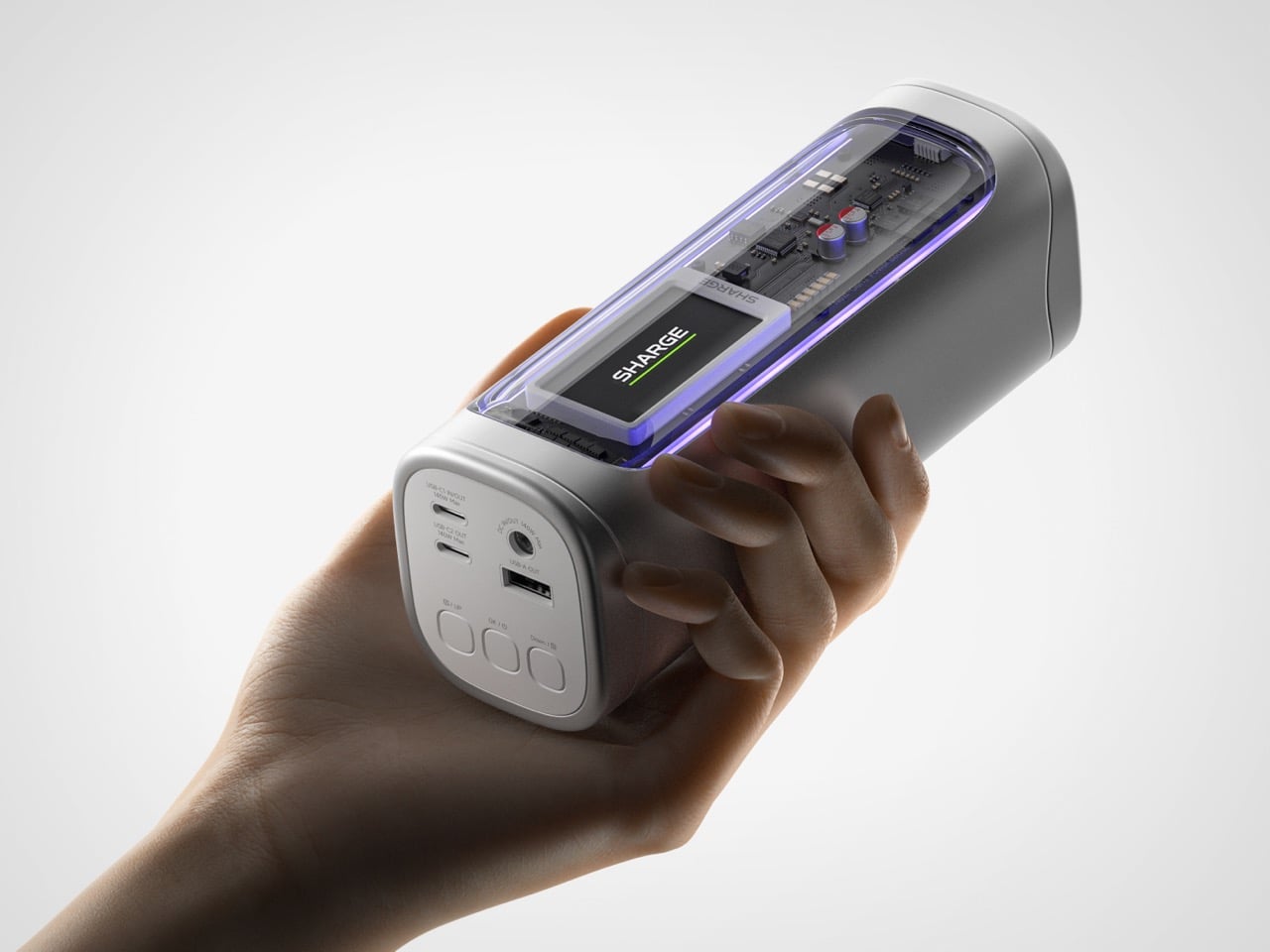
That meticulous attention to detail is most obvious in the physical construction. The main body is a matte silver CNC aluminum frame, which is then given a 180-grit sandblasted, anodized finish for a smooth, premium feel. The company’s head of production is even quoted as personally comparing the feel of every unit to an iPhone to ensure they are equally premium. The signature transparent casing is not just a window, but a piece of safety equipment, made from V0 flame-retardant, UL94-certified polycarbonate that resists both scratches and heat. The dual RGB light bars are fully customizable, allowing users to adjust brightness, change colors, and cycle through effects via the onboard display, turning a functional object into a piece of personalized desk art.

Inside that striking shell is technology that sets a new benchmark for portable power. The Shargeek 300 is the first power bank to use the same Full-Tab Battery Cell technology pioneered by Tesla. This design significantly lowers internal resistance compared to conventional cells, a change that unlocks faster charging speeds, higher sustained output, and superior heat dissipation. This internal efficiency is the key to how a device this compact can safely manage a 300W total output without overheating or degrading quickly. The advanced battery structure results in a longer-lasting, more stable power source that can handle the demanding, continuous power draws required by high-performance laptops and other professional equipment, putting truly next-generation power in your hands.

This power is routed through a versatile array of four output ports designed to handle nearly any device. The stars of the show are the two USB-C ports, both of which support the Power Delivery 3.1 standard to deliver a massive 140W of power each. This is what allows the Shargeek 300 to simultaneously fast-charge two 16-inch MacBook Pros at their maximum charging speed. A third USB-A port provides up to 20W for legacy devices and smartphones. The fourth and most unique port is the adjustable DC barrel port, a feature carried over from the Shargeek 100. It now supports up to 140W and its voltage can be manually set between 5V and 28V, unlocking compatibility with a world of gear that USB-C cannot serve, from professional camera equipment to high-performance drones. The 24,000mAh capacity provides enough energy for approximately one full charge of a modern MacBook Pro, six charges for an iPhone 16 Pro, or two charges for an iPad Pro.

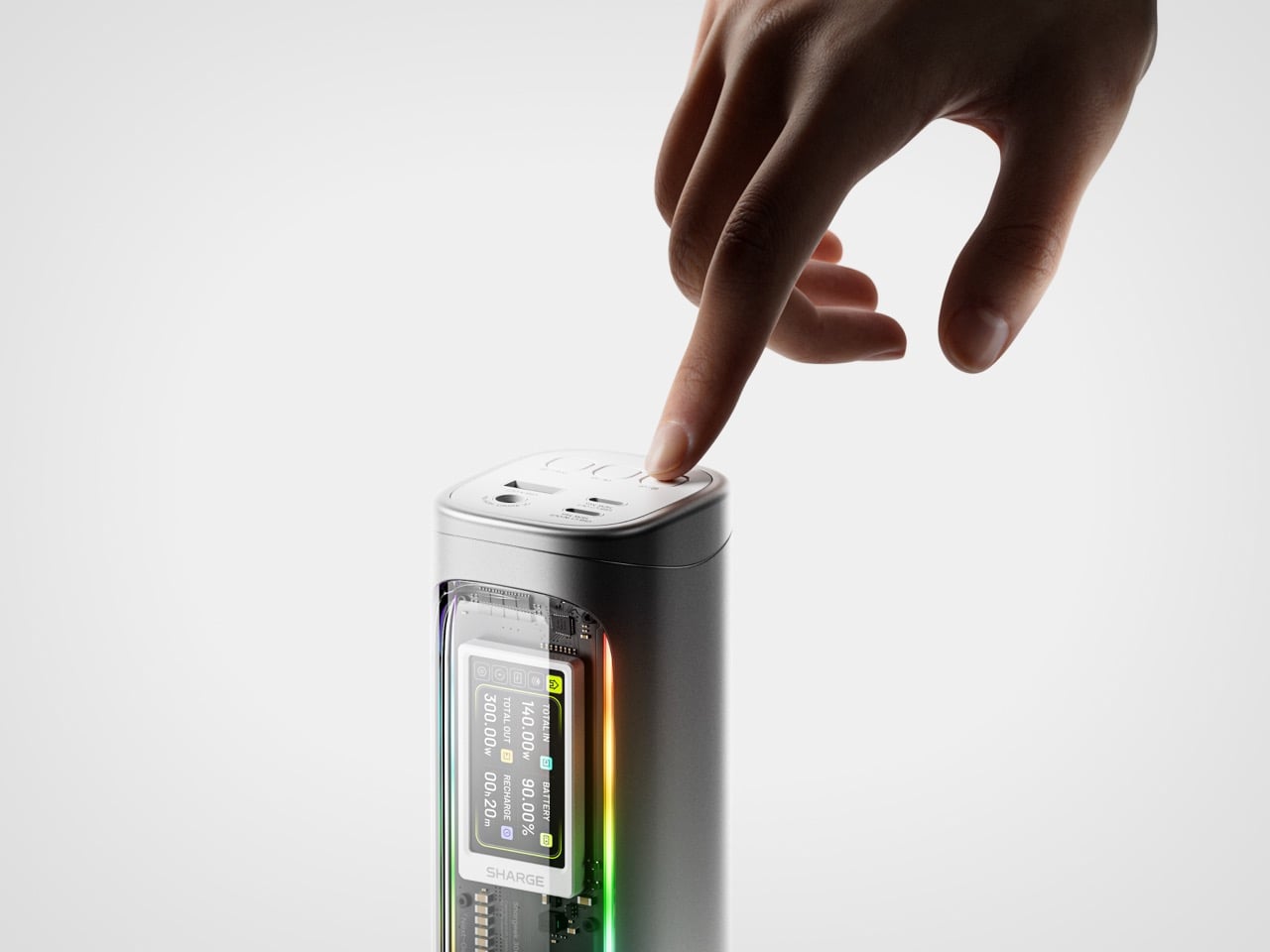
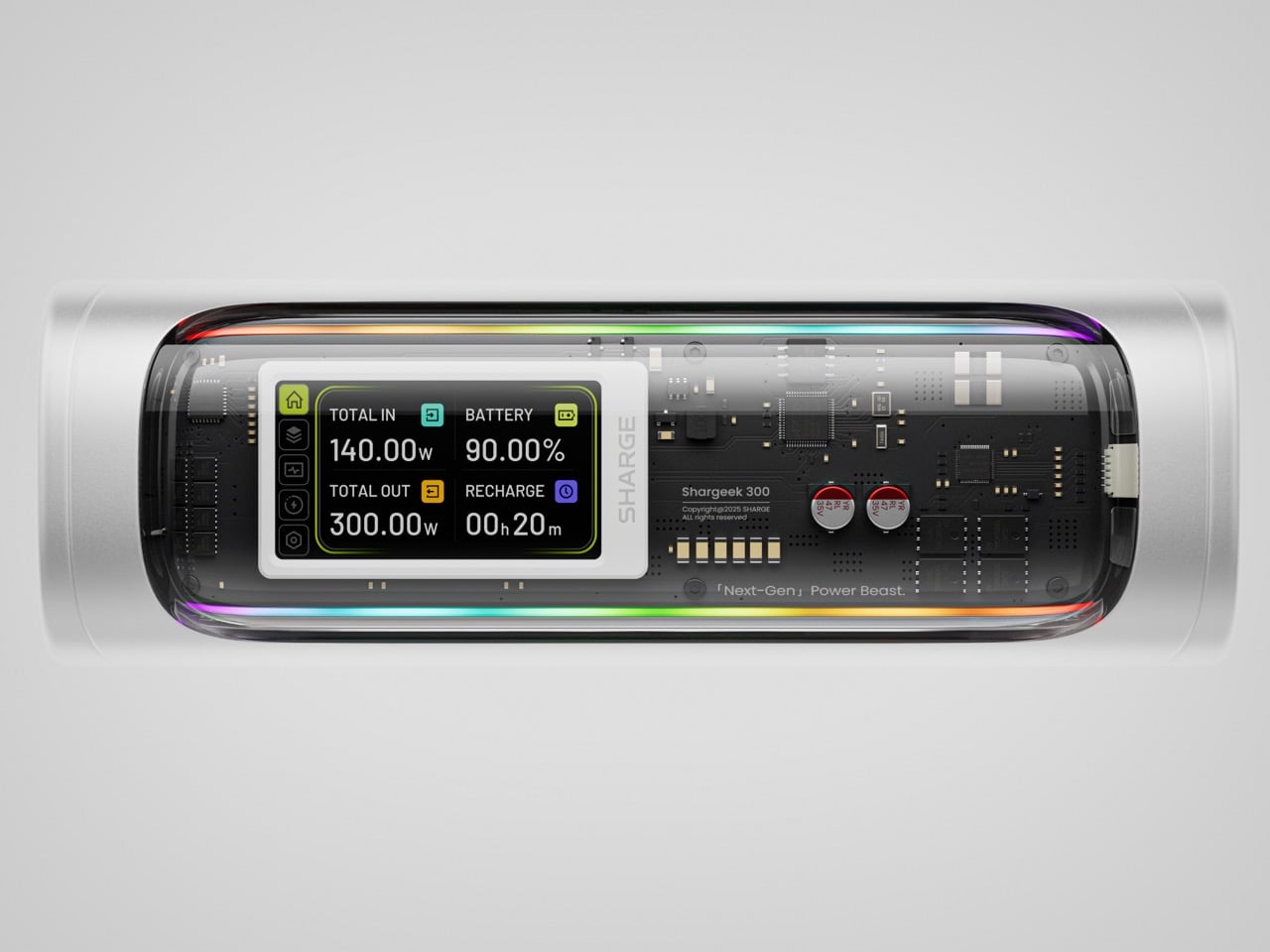
The user experience is managed through a 1.9-inch IPS display, which is 60% larger than the screen on the previous model. It provides a level of control that is unheard of in this category. Beyond showing real-time input and output wattage, the display allows you to monitor battery health, track charging cycles, and check internal temperatures. You can use it to precisely adjust the DC output voltage, set a custom welcome message, and configure the RGB lighting. This smart display transforms the power bank from a simple battery into an intelligent power hub. This intelligence extends to its handling of delicate electronics. A dedicated Low-current Mode ensures that devices like earbuds, smartwatches, and fitness trackers receive a safe, optimized charge, preventing the overcharging that can damage the small batteries in those devices.

This combination of raw power and intelligent control is backed by a comprehensive suite of safety features, including overvoltage, undervoltage, short-circuit, and real-time temperature protection. This commitment to safety extends to its travel-readiness. Crucially, the power bank’s 24,000mAh capacity is engineered to a rating of 86.4Wh, keeping it comfortably under the 100Wh limit imposed by airlines for carry-on luggage. This makes it one of the most powerful charging solutions that can be legally carried onto a plane, a critical detail for mobile professionals. The low standby power consumption is another practical benefit, allowing the Shargeek 300 to retain over 90% of its charge after 15 days of inactivity. For anyone who has pulled a power bank from a bag after weeks only to find it unexpectedly dead, this is a genuinely valuable feature.

The Shargeek 300 starts at $199 but is available at a discounted $159 price for earlybird backers. Cobble together $209 and you can get the power bank along with its companion Pixel 140W PD 3.1 wall charger from Sharge with its adorable pixel-matrix display. The Shargeek 300 comes with a 12-month warranty, and ships globally as early as May 2026.

Click Here to Buy Now: $159 $199 ($40 off) Hurry! Only 6 days left.

The post The Shargeek 300 is a Cyberpunk-style Power Bank that can charge two MacBook Pros first appeared on Yanko Design.

  •  

Stay Classy, San Diego: This LEGO Anchorman Set Recreates the Entire Channel 4 Newsroom in 1,500 Bricks

Anchorman: The Legend of Ron Burgundy turned twenty in 2024, and somehow, the film has only gotten funnier with age. What started as a Will Ferrell comedy about a hilariously fragile male ego navigating the very real 1970s newsroom gender wars became one of the most quoted, most meme’d, most endlessly rewatchable comedies in modern American film history. “I’m kind of a big deal,” “I love lamp,” “60% of the time it works every time” – the lines are so deeply embedded in pop culture at this point that people quote them without even knowing where they came from. San Diego’s most legendary fictional anchor deserves better than a passing reference in a listicle, and LEGO Ideas builder footonabrick clearly agrees.

The result is a just-over-1,500-piece MOC (My Own Creation) that reconstructs the Channel 4 News Team’s world with an almost obsessive attention to detail, covering the broadcast studio, the newsroom offices, and even the KVWN news van parked out front. The studio section is immediately recognizable: a curved tan backdrop wall, three wall clocks ticking away above the anchor desk, dual blue Channel 4 News Team screens flanking the set, and the full team seated behind that iconic brown desk with their Channel 4 mugs. It looks like a freeze-frame from the film, and that’s entirely the point.

Designer: footonabrick

The broadcast desk is the centerpiece, and footonabrick nails the warm tan-and-brown palette of that gloriously dated 70s newsroom aesthetic. Ron and Veronica sit front and center behind their Channel 4 mugs, with Brian Fantana, Champ Kind, and Brick Tamland flanking them across the curved desk. The curved wall behind them is one of the trickier builds to pull off cleanly in LEGO, and the segmented panel construction keeps it looking smooth without losing the layered depth of the real set. Camera equipment on the studio floor, a boom-arm mic stand, and a vanity mirror station on the side round out the production floor detail beautifully.

Turn to the office areas and you’ll find a bunch of details and easter eggs. Ron’s private office has his nameplate desk, a glass of scotch rendered in a transparent amber round piece, and a “Missing” poster for Baxter tucked onto a side shelf. Brian Fantana’s cologne closet, one of the film’s most beloved gags, is recreated with an open cabinet stocked with colourful brick-built bottles, with a “Brian Fantana” book sitting on his desk for good measure. The hallway outside features a glass-panel wall looking into Ron’s office, and a Ron Burgundy door nameplate that even Veronica would have to respect. My favorite detail, though, is the row of four team portrait tiles mounted on the exterior office wall, each one a miniature LEGO-art-style illustration of the Channel 4 crew. Tiny, considered, and completely unnecessary in the best way.

The eight minifigures are pitch-perfect. Ron arrives in his burgundy suit with a jazz flute and a scowl that says “I have many leather-bound books.” Brick Tamland, naturally, comes with his trident. Champ has his signature cowboy hat, Fantana carries what appears to be a cologne bottle, and Veronica is rendered in her pink suit with that particular expression of someone perpetually tolerating Ron’s nonsense. Baxter the dog is included as a separate figure, and there’s even a bonus Ron on a tiny red bicycle, which is exactly the kind of specific deep-cut that separates a good MOC from a great one.

footonabrick’s Anchorman set is currently gathering votes on LEGO Ideas, the community platform where fan-created MOCs (My Own Creations) need 10,000 supporters to trigger an official LEGO review and potential retail production. With 344 votes on the board and 421 days left on the clock, there’s plenty of runway. If you want to see this land on store shelves, head to the LEGO Ideas page and cast your vote. You stay classy.

The post Stay Classy, San Diego: This LEGO Anchorman Set Recreates the Entire Channel 4 Newsroom in 1,500 Bricks first appeared on Yanko Design.

  •  
❌