❌

Vue normale

Maingear Zero review: The cleanest pre-built I’ve tested in years

I've spent more than a decade testing gaming PCs, and even the best pre-builts usually have cables you simply can't hide. That made my first look inside Maingear's new Zero genuinely surprising, even after my previous Maingear MG-1 review.

There's almost nothing there. Power connections have been moved behind the motherboard, the panoramic glass is uninterrupted, and the components that normally compete with bundles of cabling finally get the spotlight. It's one of the cleanest pre-built PCs I've tested.

Clean doesn't necessarily mean better, though. After a few weeks of gaming, benchmarking, stress testing, and poking around inside, I wanted to know whether Maingear's cable-free approach actually improves the PC or simply makes for prettier photos.

Maingear sent Windows Central a review unit on loan for testing. It had no input, nor saw the contents of this review, prior to publication.

How much does the Maingear Zero cost?

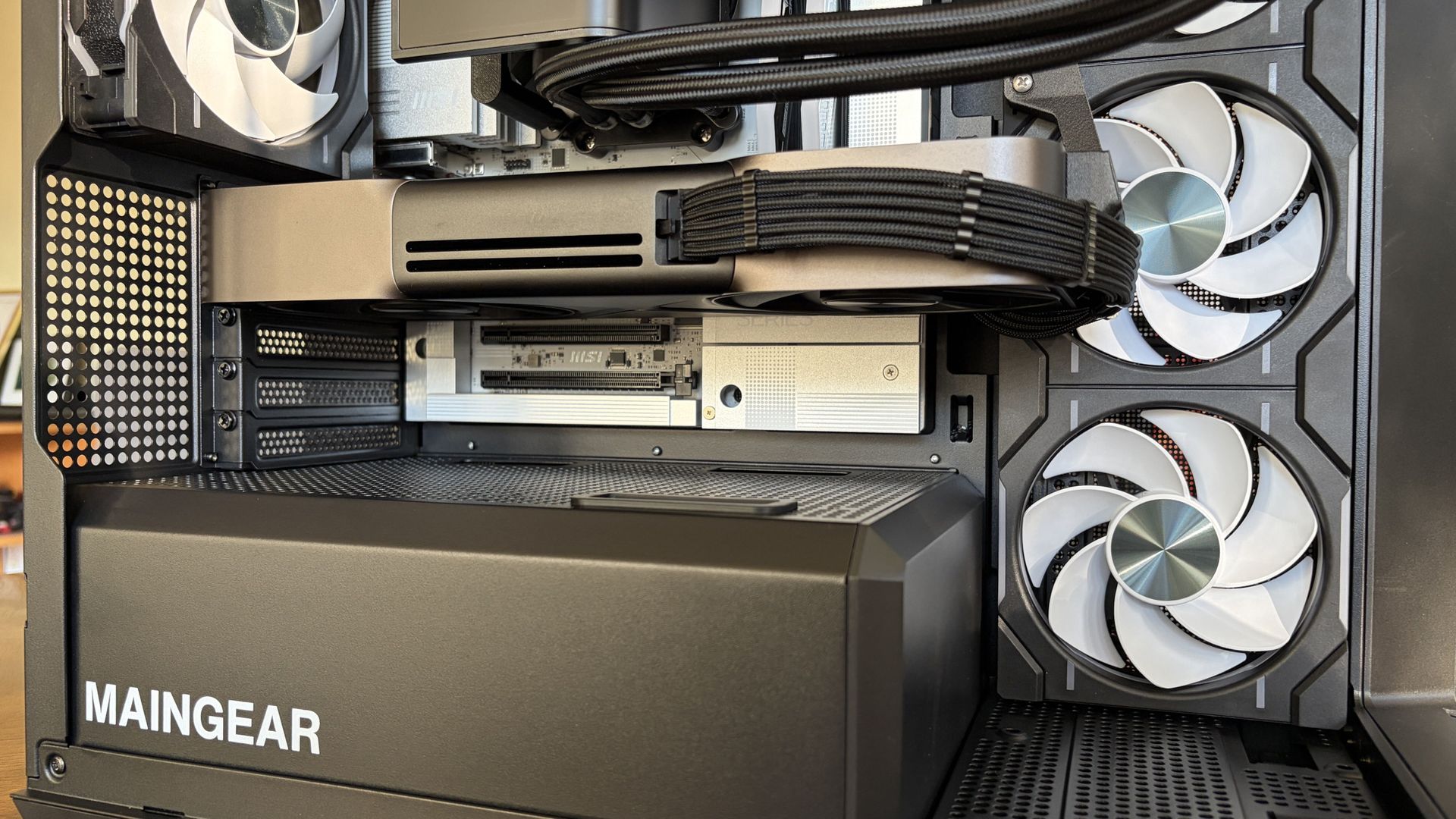
A polished MAINGEAR gaming PC interior shows neatly routed black cables, a large graphics card, and white cooling fans in a sleek, high-performance build.

The RTX 5090 has the only visible power connector in the Maingear Zero. (Image credit: Future)

My review unit is an extreme $8,676 configuration built around AMD's Ryzen 7 9850X3D and NVIDIA's RTX 5090 Founders Edition. Don't let that price scare you away from the Zero entirely, though. Here's what Maingear packed into my high-end loaner:

  • AMD Ryzen 7 9850X3D CPU
  • NVIDIA RTX 5090 Founder's Edition (FE) GPU
  • 32GB DDR5-6000MHz RAM
  • 2TB M.2 PCIe 4.0 NVMe SSD
  • TRYX Panorama SE AiO
  • MSI Pro B850M-A WIFI PZ motherboard
  • 1,250W MSI MAG A1250GL PSU
  • Zero MK.II case

But you don't need to spend anywhere near $8,676 to get the Zero's signature design. Models start at $2,799, with the baseline configuration landing you the same Zero MK.II case, an Intel Core Ultra 5 250K Plus CPU, NVIDIA RTX 5070 FE GPU, 32GB DDR5-6000 RAM, 2TB SSD, and a 360mm AiO.

That starting price is more competitive than I expected. A comparable DIY build came to roughly $2,850 when I priced it out, putting it remarkably close to Maingear's $2,799 starting price. Component prices fluctuate, of course, but Maingear isn't asking for an enormous boutique-PC premium just to get the Zero's distinctive design and professional assembly.

Why is this Maingear PC called Zero?

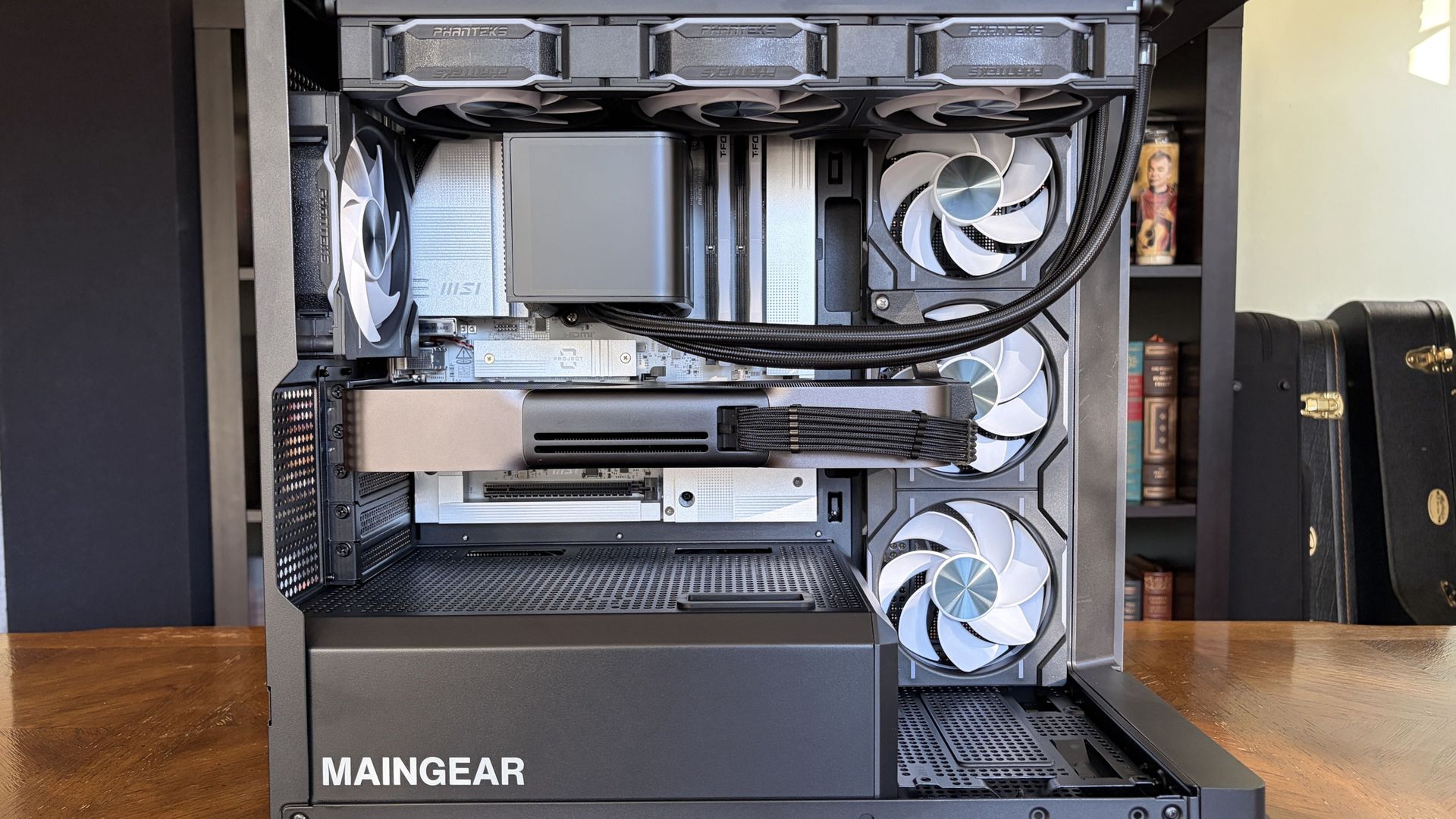
An open MAINGEAR gaming PC showcases a graphics card, liquid-cooling tubes, and white-lit fans in a sleek, carefully assembled desktop build.

The Maingear Zero keeps cables out of sight thanks to MG-RC motherboard connectors. (Image credit: Future)

Maingear's Zero steps away from the MG-1 with a more compact case. Rather than the MG-1's interchangeable front faceplate, panoramic glass extends from back to opposite front.

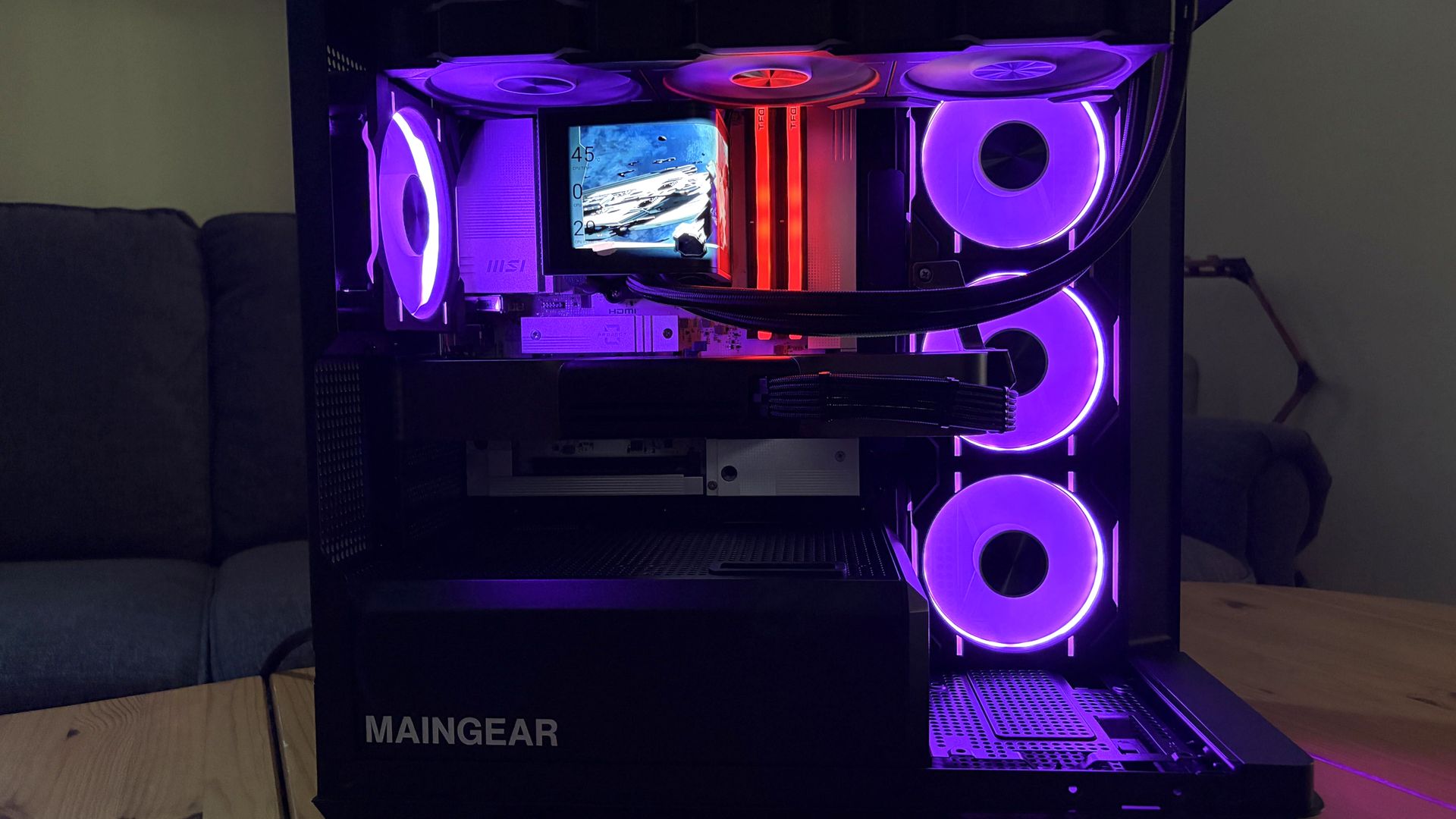
It's an immaculate look emphasized by customizable internal RGB lighting. I hate the look of exposed case LEDs, and this has none.

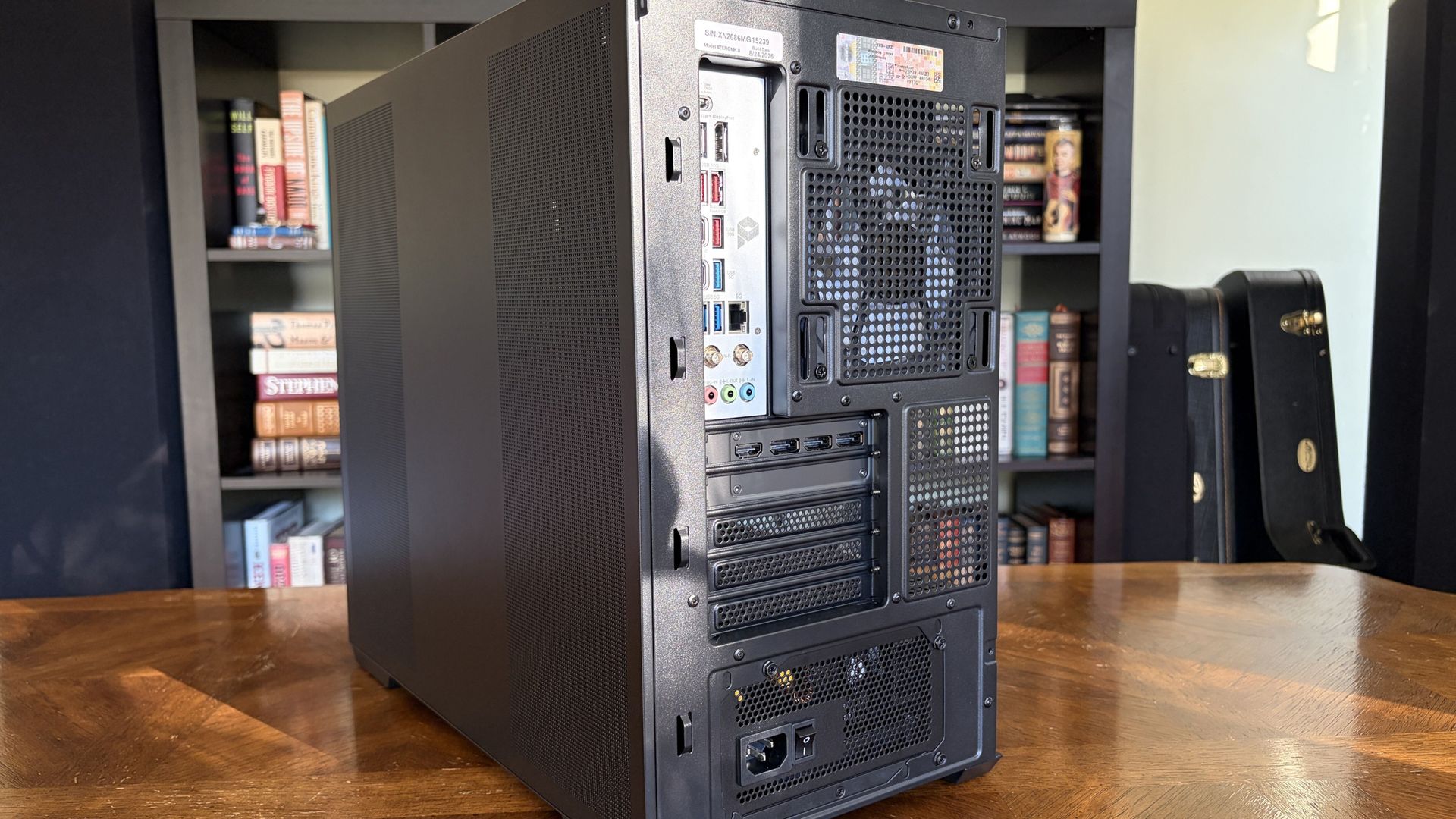
A black Maingear Zero desktop computer tower sits on a wooden desk, its rear ports and ventilation panels visible, with books and cases on shelves behind it.

The motherboard hosts the majority of ports, and there's space for expansion inside the case. (Image credit: Future)

The case's foundational layout isn't too different from the average PC. Five slots on the back for expansion, dedicated spot for the PSU, side intake with three fans, AiO CPU cooler installed on top, and exhaust on the back.

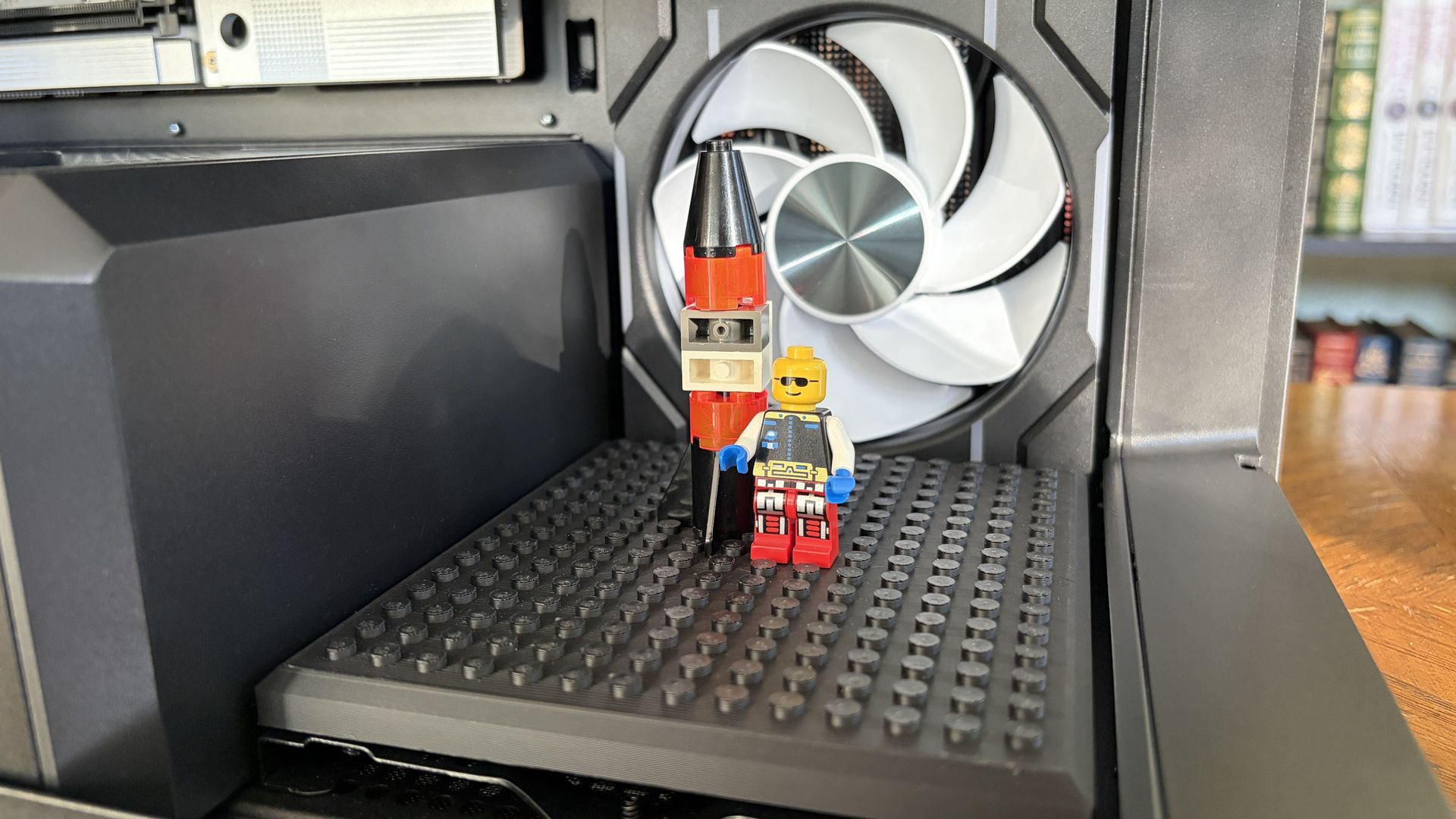
A yellow-haired LEGO minifigure stands on a black studded platform inside a computer case, dwarfed by a large white cooling fan; playful tech scene.

You can use either the LEGO stand or a figure stand inside the Zero's case. (Image credit: Future)

Maingear makes good use of extra internal space towards the front. Leaving this open will interfere less with airflow, but it's designed to hold either a figurine stand or a "studded brick stand" for your custom LEGO creations.

I already use LEGO in my own PC to hold up my GPU, and I love this little Maingear addition.

For anyone who appreciates a minimalist approach, this is the ultimate design.

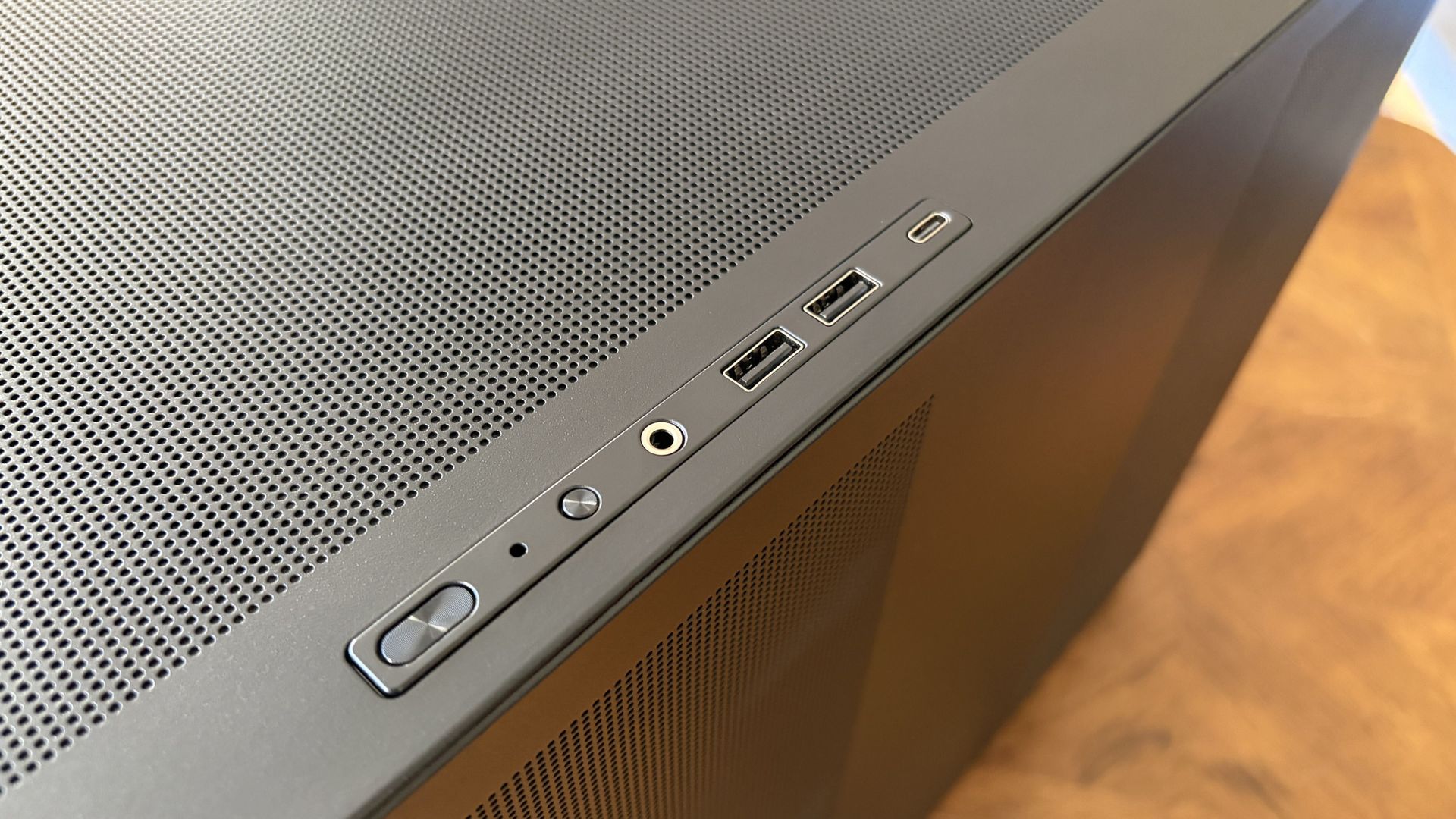
At the front of the case, dual USB-A (5Gbps) ports, one USB-C (10Gbps), and a 3.5mm audio combo are present for quick hookups. I'd like to see faster connections here, but they ultimately get the job done as is.

The MSI motherboard in use offers much better I/O. There's USB4, tons of USB-A, and audio connections. The PC also has cutting-edge Wi-Fi 7 and Bluetooth 5.4; no worries about future-proofing there.

Close-up of a sleek Maingear Zero PC with a perforated grille, power button, headphone jack, and USB ports, shown in warm light.

Front ports on the Maingear Zero are pretty average. (Image credit: Future)

I also appreciate the way the case comes apart. The side and top panels are held in place with pressure points; you can pull them away without using any tools.

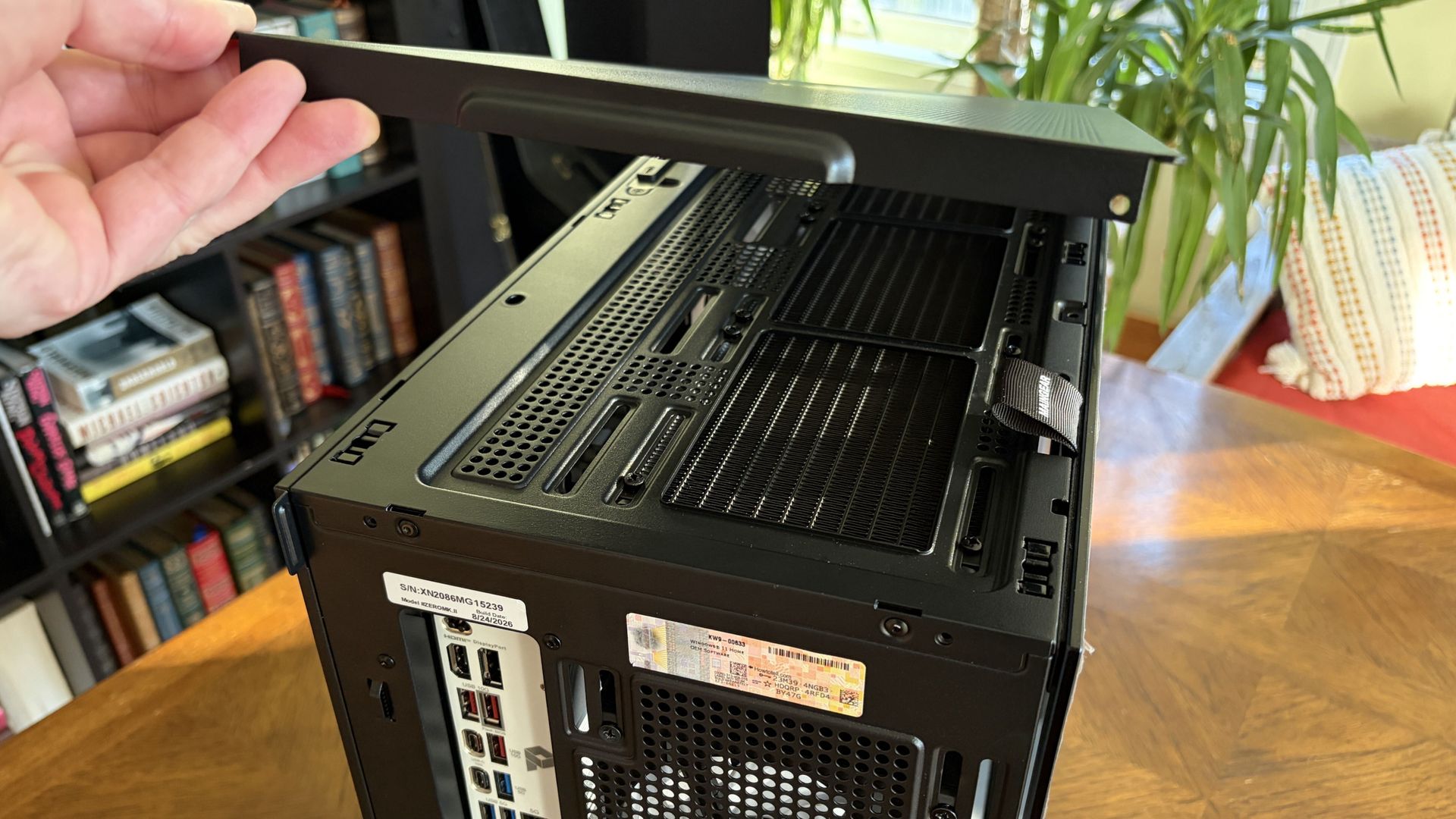
These panels have rather fine pinhole venting in all the right areas, and they seem to be doing a decent job of keeping out dust.

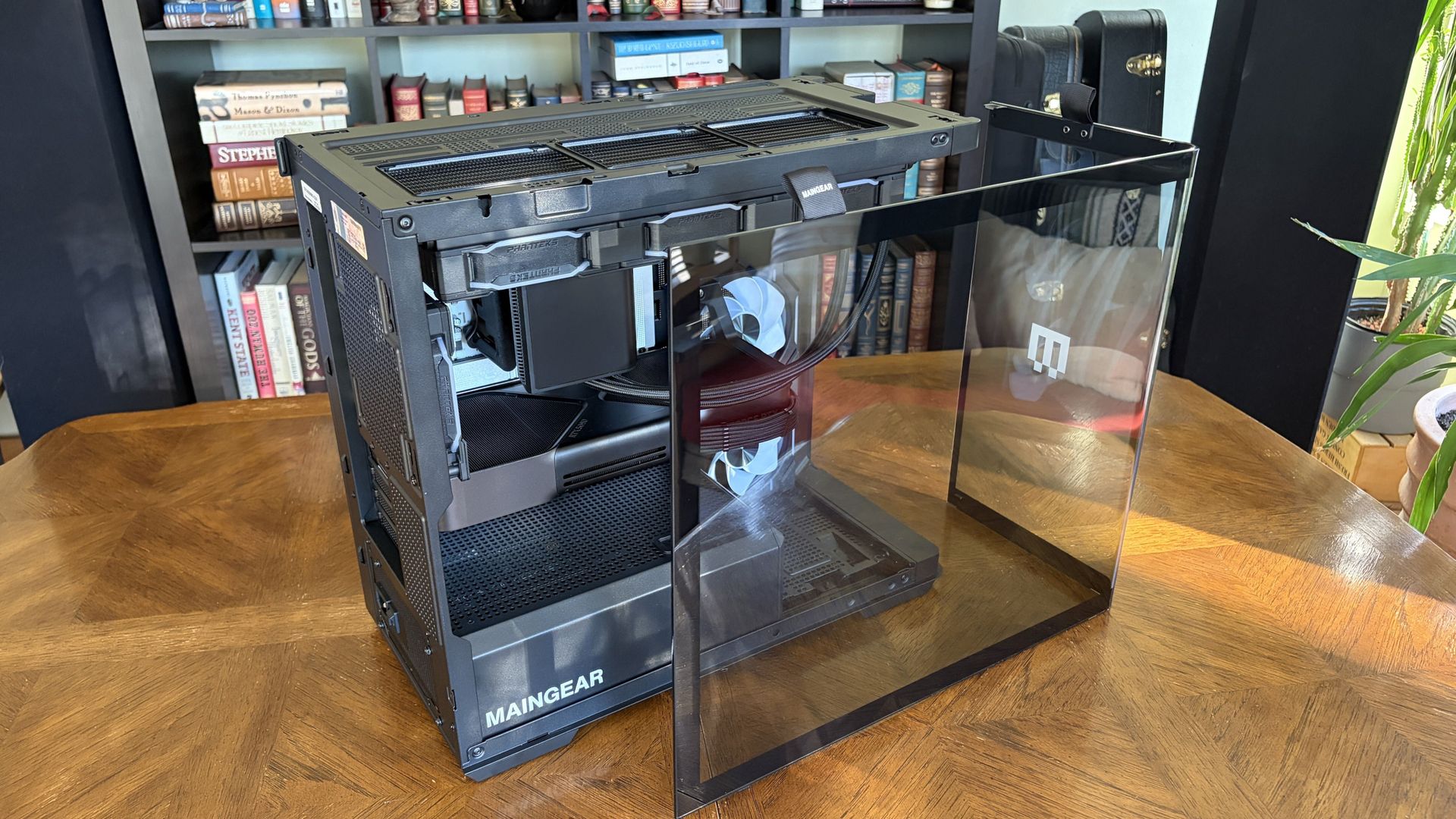
The panoramic glass panel is different. It's held in place with two screws, but once removed, you just grab two fabric pull tags to safely carry the glass. No more fingerprint smudges.

Yes, it requires a screwdriver to get into, but because of the reverse connectors, you should be spending a lot less time inside the front of the case.

A black MAINGEAR gaming PC tower sits on a wooden table, its glass side panel open to reveal fans and internal hardware; shelves of books fill the background.

The panoramic glass panel comes away as one piece. Pull tabs along the top make it easy to move without smudging. (Image credit: Future)

One other thing I want to call out is the massive bottom air intake covering practically the entire case, PSU included.

Best part? It has a removable dust screen that makes cleaning a breeze. If you live with cats like me, this is a nice addition.

Exploring the Maingear Zero's pristine internal layout

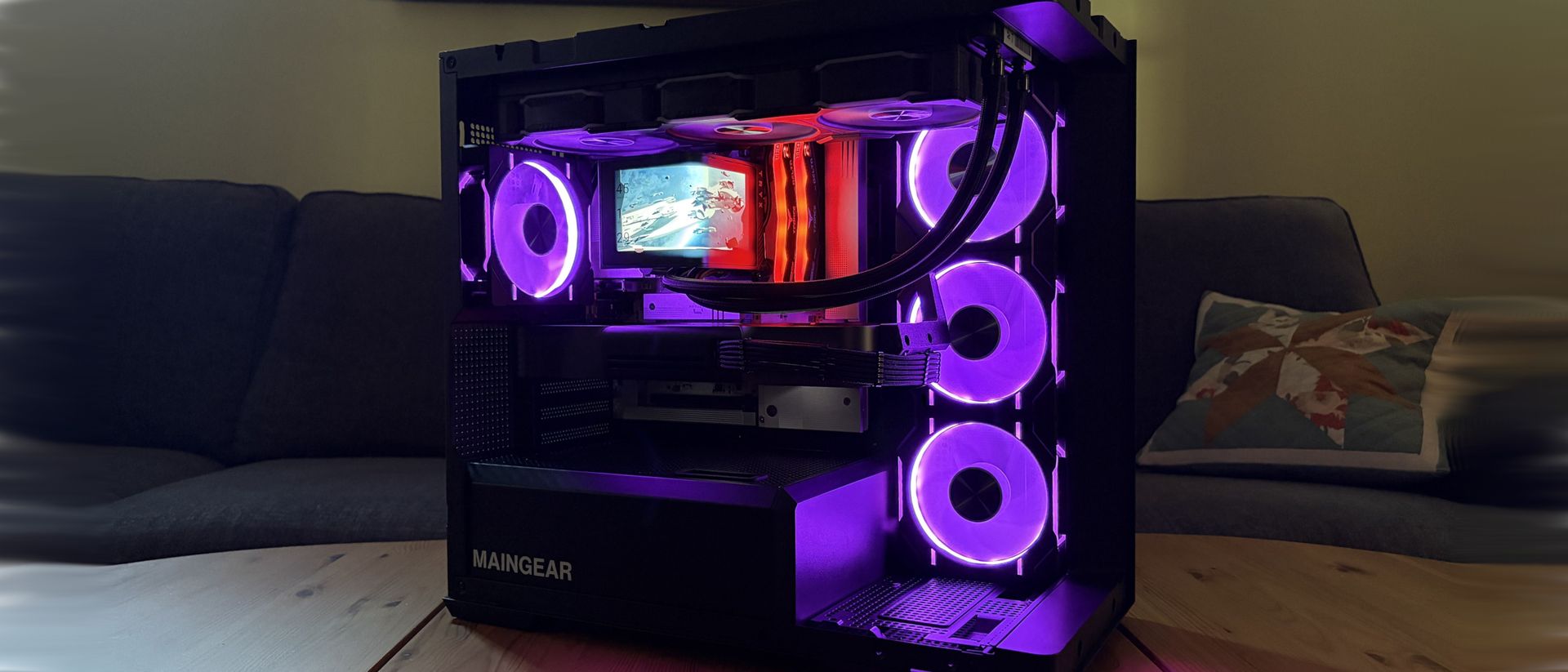
A custom MAINGEAR gaming PC glows with vivid purple RGB fans and red-lit memory, displaying a car on its small internal screen in a dim living room.

The Maingear Zero puts your hardware into the spotlight. (Image credit: Future)

Inside the Zero is where things really get interesting.

The only visible cabling runs to the RTX 5090 GPU, and that runs tight to the card. Exchange hoses run from the CPU to AiO cooler. That's it. For anyone who appreciates a minimalist approach, this is the ultimate design.

This rear connector fad hitting motherboards and cases lately was first patented as "MG-RC" by Maingear itself in 2011. It has taken a long time to get the recognition I think it deserves, but the industry seems to finally be coming around.

As far as I'm concerned, this is the best direction to take PC building. As you'll see below, this setup not only looks clean but also leaves air free to flow through the PC.

How is Maingear Zero's hidden cable management?

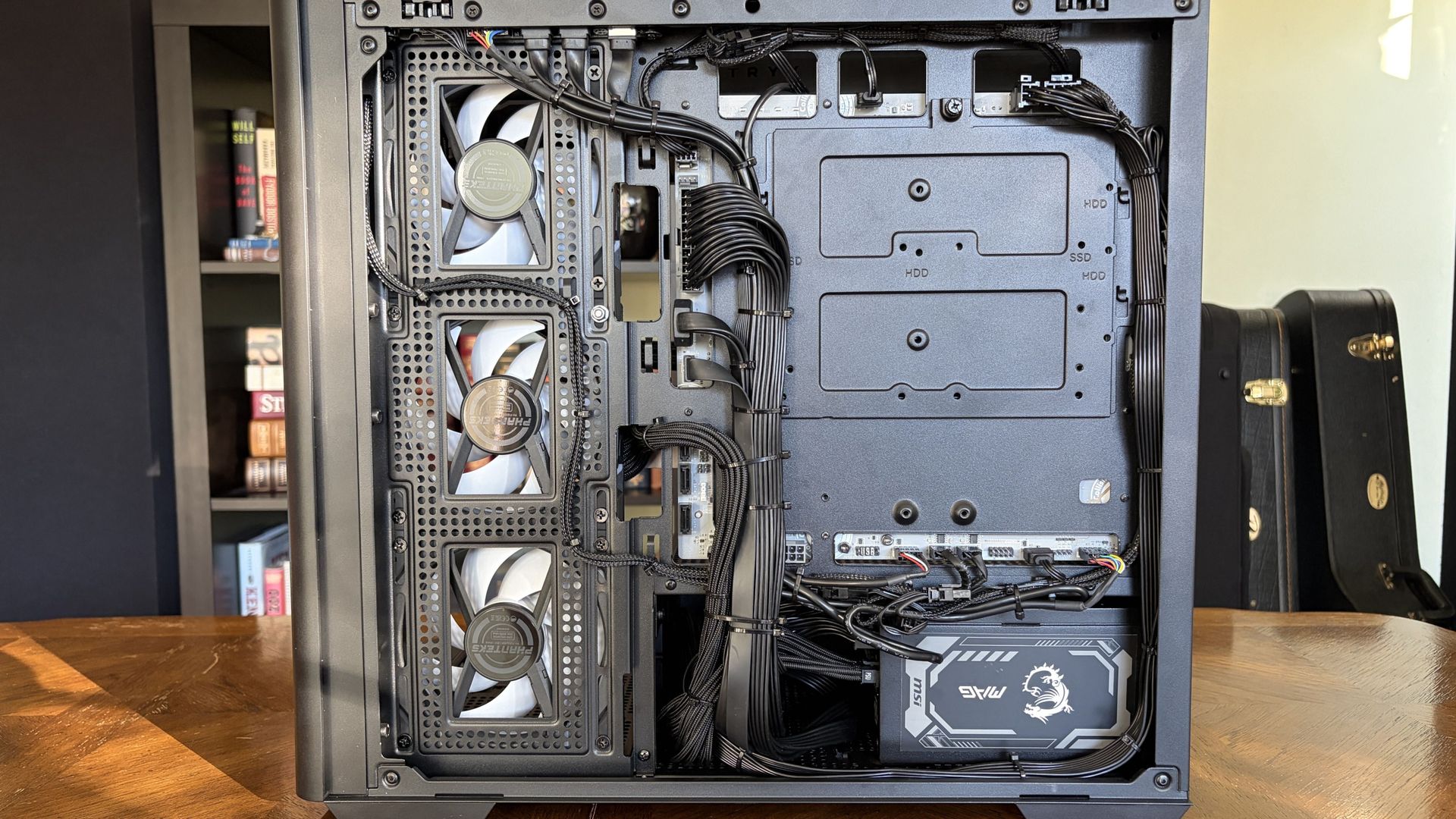
An open Maingear Zero desktop computer tower on a wooden desk reveals three cooling fans, bundled cables, and internal components in a tidy workspace.

A look at the back side of the Maingear Zero and the rear motherboard hookups. (Image credit: Future)

Upon removing the steel side panel, I'm greeted by just about the cleanest cable management I've seen in a prebuilt PC.

Because the cables plug straight into the back of the motherboard, they can all be channeled together much more tightly.

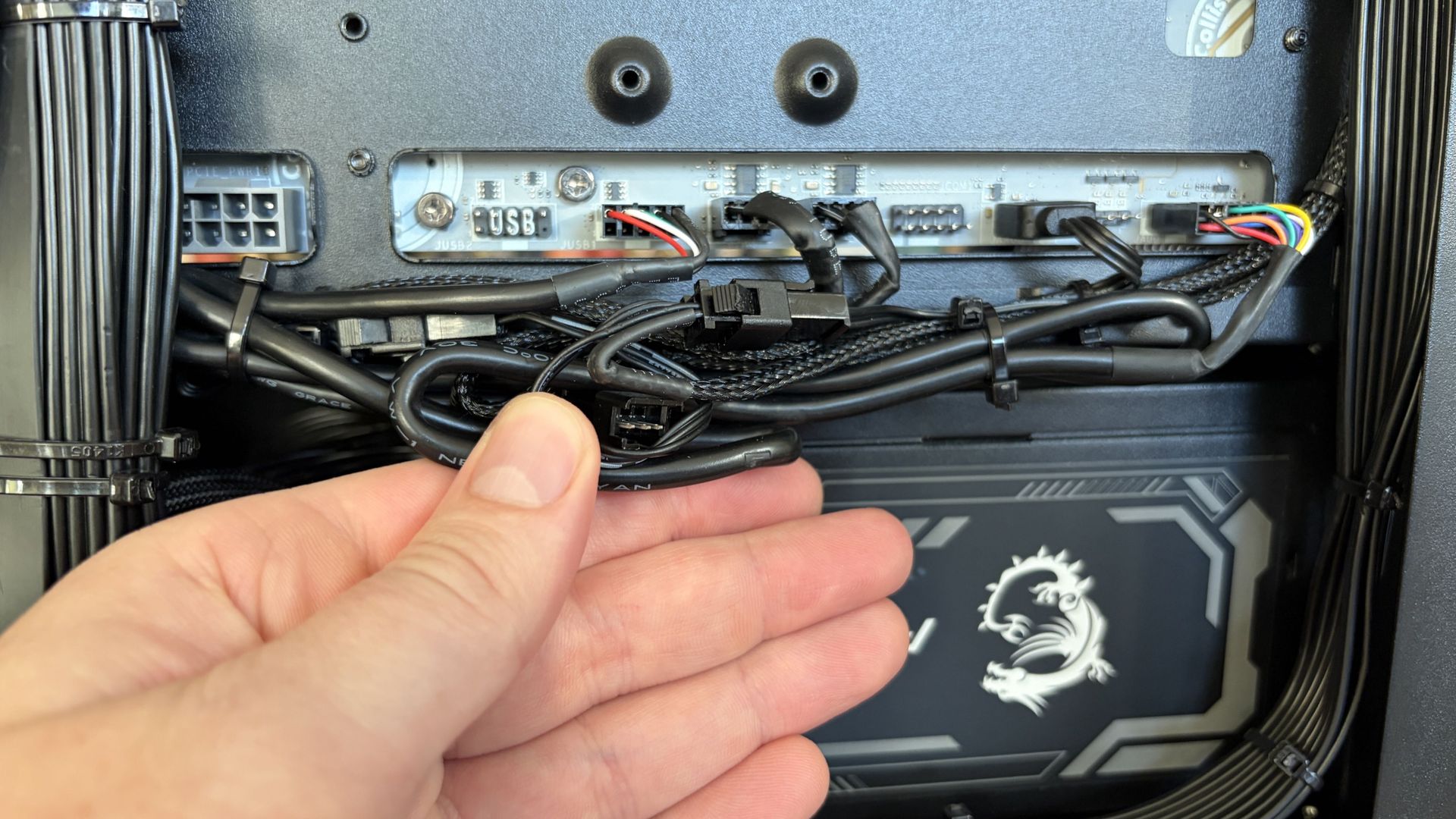
Like the MG-1, the Zero uses plastic zip ties to hold the majority in place. Maingear has designed a PC around accessibility and cleaner cable routing, but then uses disposable cable ties that make servicing those hidden cables less convenient.

Velcro/reusable straps would fit the philosophy of the Zero better.

A hand lifts tangled black cables beneath a computer’s rear ports, revealing connectors and wiring during a hands-on setup or repair.

I clipped a couple of zip ties to check fan connections. I'll have to replace the ties with Velcro. (Image credit: Future)

The case has a second, lower compartment that hides the modular PSU. I've seen some real cable messes jammed into this space in some PCs; Maingear keeps everything clean and tidy.

Does Maingear's MG-1 keep cool with good airflow?

The Maingear Zero's Ryzen 7 9850X3D CPU and NVIDIA RTX 5090 GPU speak for themselves. This combination will run any game you want at high, smooth frame rates.

I grabbed some results from synthetic benchmarking software to help compare against other PCs we've tested.

Maingear Zero 3DMark Speed Way results in a graph against a black background.
Future
Maingear Zero 3DMark Steel Nomad results in a graph against a black background.
Future
Maingear Zero 3DMark Port Royal results in a graph against a black background.
Future
Maingear Zero CrystalDiskMark results in a graph against a black background.
Future
Maingear Zero Cinebench 2026 results in a graph against a black background.
Future
Maingear Zero Geekbench 7 results in a graph against a black background.
Future

There are no surprises in these results. The CPU and GPU are performing as expected, right out of the box, with no additional steps required. I just unpacked, plugged in, and turned on.

What I'm more interested in is how this PC handles heat from the high-end components. If it keeps cool with this level of hardware, there should not be any issues with the more affordable configurations.

No big drops or spikes, which means you can game without worrying about what the system is doing.

I ran a 20-minute full-system stress test on the PC in a 21°C room. I made no changes to the stock fan curve that Maingear set up.

The PC got as loud as 50.5 decibels from about a foot away, and there was some coil whine to be heard, likely from the GPU. This is a common issue with NVIDIA's high-end GPUs.

Altogether, though, it runs fairly quietly, and there's lots of space for improvement if you don't mind adjusting fan curves.

A hand lifts the side panel of a black Maingear Zero gaming PC tower, revealing internal vents and components; a bookshelf and leafy plant frame the tidy workspace.

The top and bottom of the case have plenty of cutouts for airflow. (Image credit: Future)

The RTX 5090 never went above 80°C, remaining steady throughout the stress test. The CPU remained at a cool 62.5°C for most of the test, but I was less concerned thanks to the beefy AiO liquid cooler.

Best part? Performance was super steady over the course of the stress test. No big drops or spikes, which means you can game without worrying about what the system is doing.

That was ultimately my experience with the Maingear Zero. It's all set up when it arrives, sans any bloatware, and it games like it should right out of the box.

Should you buy the Maingear Zero?

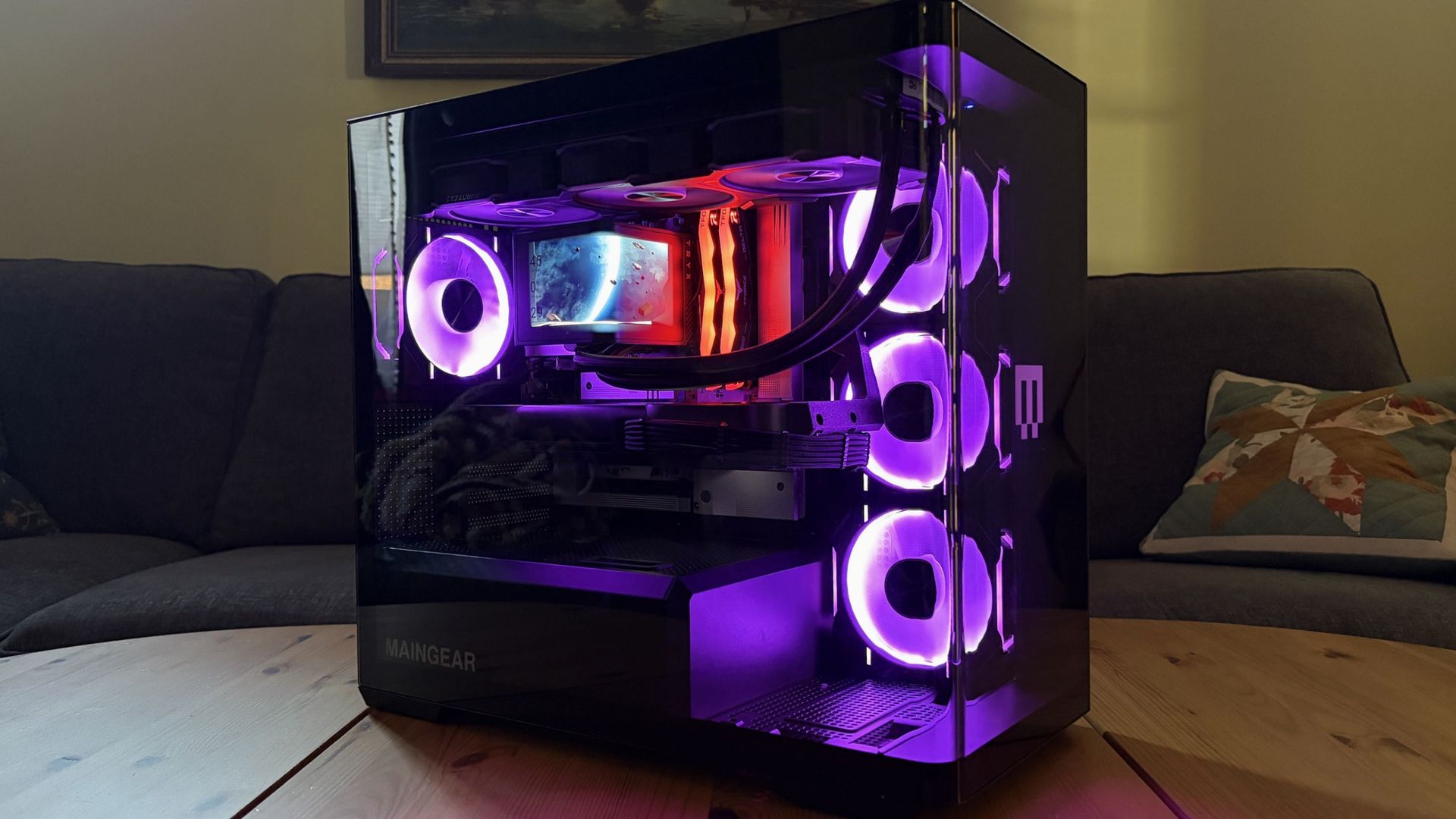
A custom Maingear Zero gaming PC tower glows with purple RGB fans and colorful liquid cooling, displayed on a wooden table before a dark sofa for a dramatic, futuristic look.

The Maingear Zero's panoramic glass provides an uninterrupted look inside the PC. (Image credit: Future)

You should buy this if ...

✅ You love a gaming PC with minimal visible cabling.

✅ You don't want to build your own rig and are OK with spending a bit more for the convenience.

✅ You want to be able to configure everything about your PC, right down to the cabling.

You should not buy this if ...

❌ You're looking for the most affordable gaming PC out there.

❌ You don't care about showcase aesthetics enough to pay for them.

Windows Central Best Award

The Zero feels like the clearest expression yet of what Maingear has been working toward with the MG-RC design (and I still recommend the MG-1). Moving the connections behind the motherboard doesn't just produce better photos; it makes the PC easier to admire, keeps the main chamber remarkably uncluttered, and does it without creating the thermal problems I was worried about.

Sure, there's room for improvement. The front I/O should be better at this price, and reusable cable straps would make servicing the beautifully hidden wiring less frustrating. My review unit also arrived with a loose fan connector that required some troubleshooting.

None of that changes my larger takeaway after living with the Zero. I've spent years looking through glass panels at increasingly powerful PC hardware surrounded by cables. After seeing how clean Maingear can make a high-end gaming PC without sacrificing cooling, performance, or practical access, I don't particularly want to go back.

Maingear Zero black gaming PC against a white background.

No cables
Maingear
Zero

Aside from a couple of minor inconveniences, the Maingear Zero is an impressive PC with great airflow, strong performance, and an impeccable design that shows off your hardware (and more). I still like Maingear's MG-1, but the reverse connectors in use here are the future of PC building.
Trying a €70,000 Porsche racing simulator spoiled my own sim racing setup for good

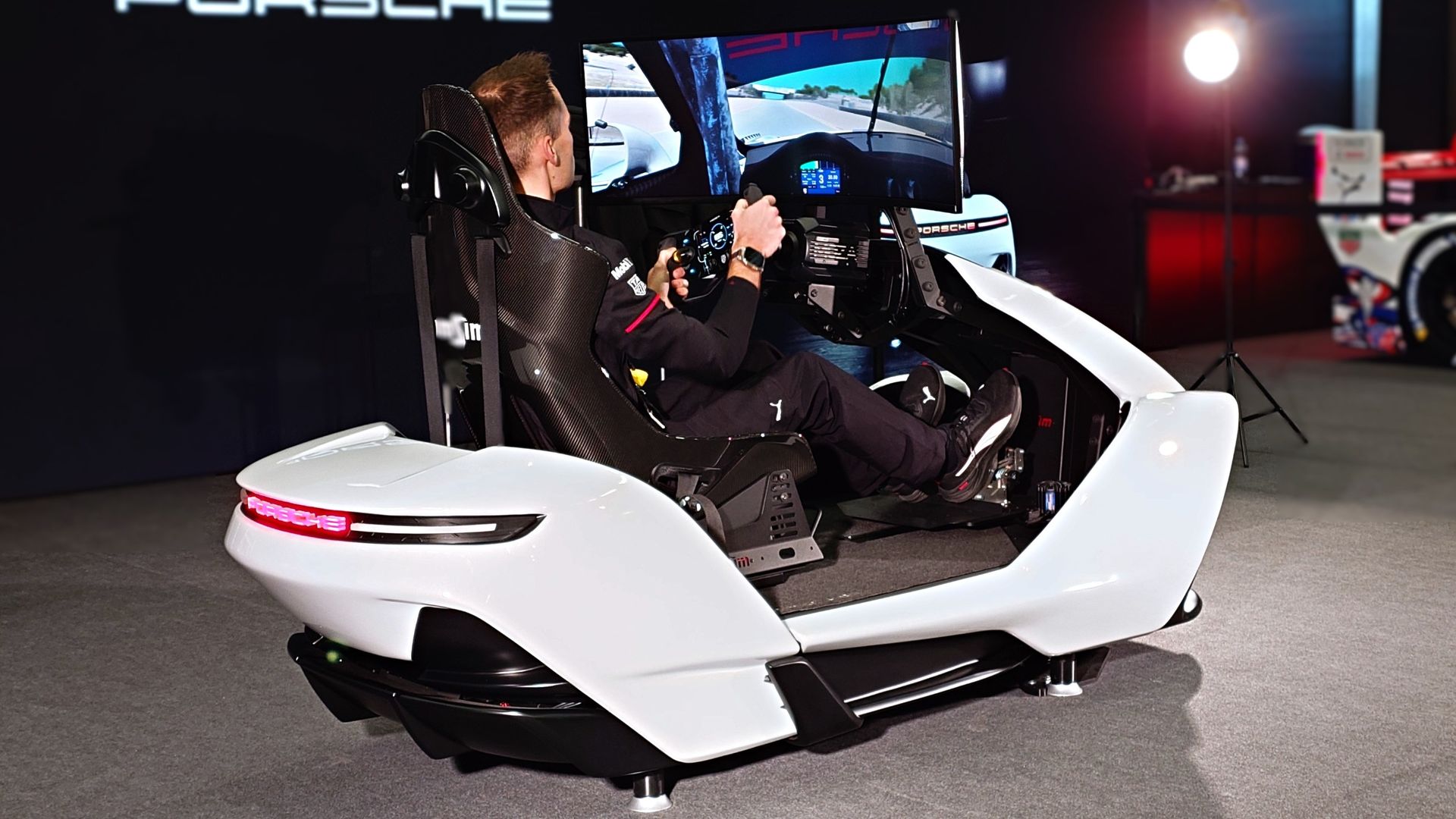
On my recent jaunt to the SimRacing Expo in Frankfurt I got to play with a lot of incredible tech, but nothing like this. The ImSim Porsche Raceborn is designed in collaboration with the legendary German automaker, so it definitely looks the part.

The idea was not to simply slap some Porsche branding on one of ImSim's existing simulators but instead to create a bespoke product with a tailor-made look and feel. The level of detail is extraordinary, right down to the carpet.

Yes, the Raceborn has genuine Porsche carpet. Just as it has Porsche lights on the front and a lit-up, true-to-life Porsche logo on the rear. Does your expensive racing sim need lights and a carpet? Of course not. But in this case it's part of the experience.

You can even choose the color of the 'paintwork' and custom liveries if you've got the budget.

An all-in-one racing sim with integrated gaming PC

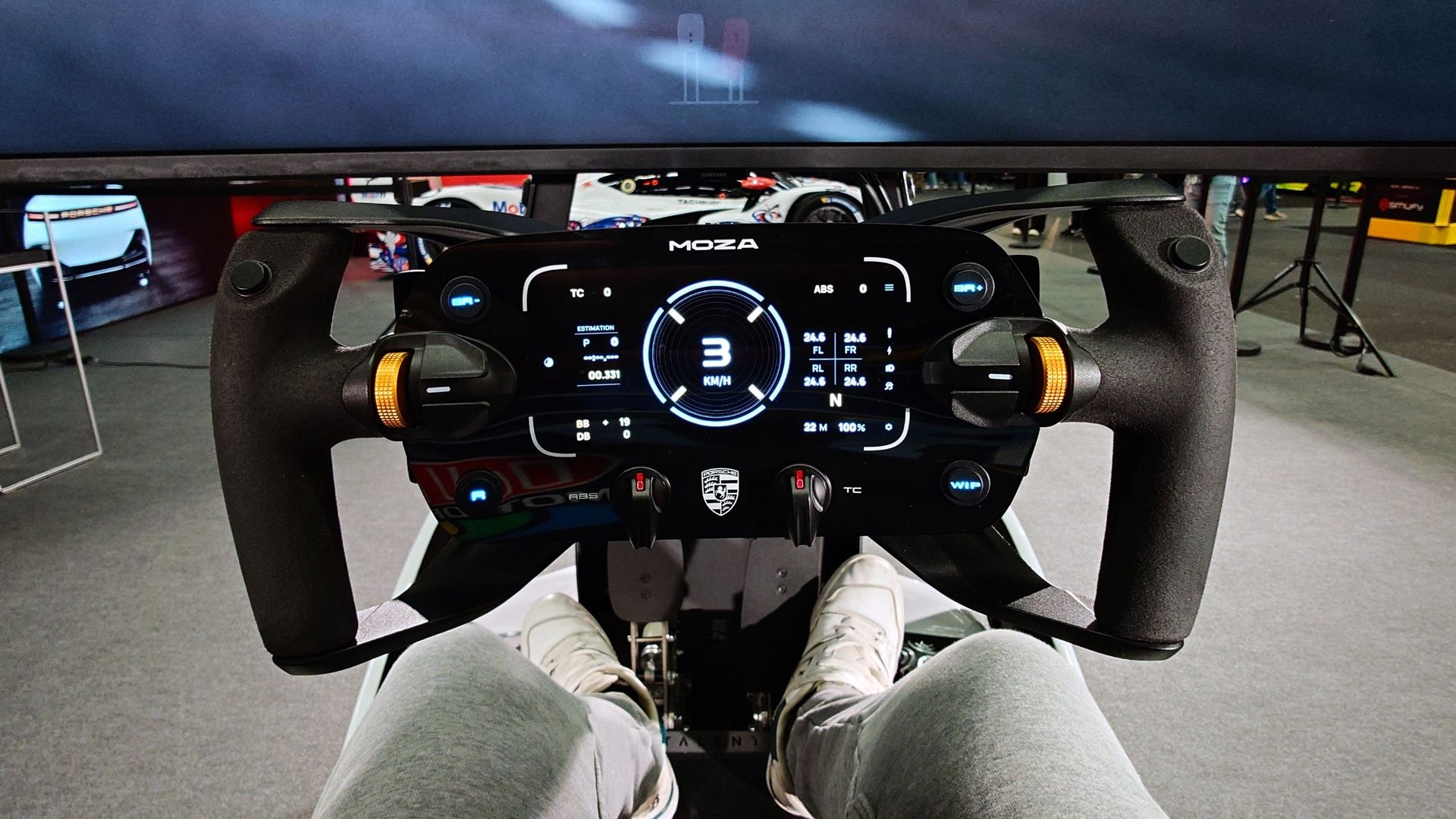
A photo of a Moza Porsche racing sim wheel from the POV of driving the ImSim Porsche Raceborn simulator.

Naturally, it comes with a Porsche wheel. This one's from Moza. (Image credit: Windows Central)

Speaking of, the one I tried at the event had a price tag quoted as €70,000 (approx. $78,000). Yeah, it's very expensive. But it's also not a product with a consumer target, not even the keenest of sim racers. Given how expensive even an RTX 5090 is these days, the PC alone will account for a decent chunk of it.

It is a perfect example of how far sim racing technology has advanced in recent years, though. The Raceborn is a complete system that can integrate a high-end gaming PC, ultrawide display, motion platform, haptics, and even active seatbelts. Yes, those are a thing now. And obviously, your choice of wheelbase and wheel.

The display and its mounting also deserve shouting out. It's integrated into the Raceborn unit, but it doesn't move. As the simulator's motion platform operates, the display remains perfectly still. What this also means is that if you'd prefer a three-monitor setup over the ultrawide I experienced, you can have just that. Or you can have VR if you wish. The entire product can be built as you wish.

Closeup photo of the ImSim Porsche Raceborn simulator showing the Porsche logo
Porsche crest, check. Windows Central
Closeup photo of the ImSim Porsche Raceborn simulator showing the Porsche logo
It comes with signature Porsche lights, because why not. Windows Central
Closeup photo of the ImSim Porsche Raceborn simulator showing the Porsche logo
Real Porsche carpet in a simulator. Windows Central

The haptics are provided by a quartet of ButtKicker transducers, one for each wheel on the car. Each operates individually and has their respective vibrations isolated from the others. Paired with telemetry from the simulator, these are able to reproduce incredibly accurately what's happening with the tires and communicate the overall feeling of the car back to the driver.

So, what's it like to actually use? Honestly, it's the sort of experience I find hard to put into words. Just as in real life, when I've driven supercars on a track, knowing I'll never have the budget to own one. The same applies here. I thought for a second about taking my shoes off; the carpet looks so nice.

It is truly a magical thing to experience, though. The craftsmanship is sublime, and it feels like a Porsche product. The Raceborn at the SimRacing Expo was, naturally, top-spec, with a 21 nm wheelbase. The PC specs were undisclosed, but as with everything else, they can be customized to a customer's demands.

It FEELS like driving a car, not a video game

A photo of the ImSim Porsche Raceborn simulator in white showing glowing red Porsche lights on the rear.

It's surprisingly comfortable, too, to say you're being tossed around a bit. (Image credit: Windows Central)

I've tried motion platforms before, and my feelings vary. Sometimes it feels like a roller coaster, but not the Raceborn. The motion platform is quite subtle but effective, and paired with the haptic feedback, the sensation of driving a car is very much there. It feels alive. The seatbelts even pull you in. The feedback is incredible.

One issue I've always had at home with titles such as iRacing is that because I only have feedback through the wheel, I'm constantly thinking, constantly trying to decipher how I think the car is behaving. On a setup like the Raceborn you don't have to think. Like driving a real car, you just instantly understand how much grip you have, whether you're starting to slide or whether someone just rear-ended you.

It's a gold-standard example of how sim racing is no longer just playing a racing game with a wheel and pedals. The hardware and software out there nowadays can put an extremely lifelike experience into anyone's hands. Sure, it all comes at a cost, but I can promise you that even a basic sim setup with haptics is cheaper than going racing in the real world.

As for the Raceborn, it's disappointing to know I'll never be in a position to own something that brilliant (though always holding out hope for a cheeky lottery win). Sure, rich people who buy Porsches will buy them, but I also see a different possible outcome.

For one, this is an exceptional marketing tool for Porsche. Why wouldn't a dealership or something like the Porsche Experience Centre at Silverstone get in one or two of these? While you wait for your service, hop on the sim, and drive the 963 prototype racer round Le Mans?

Something like this also opens up the possibility of giving actual racing drivers access to a world-class simulator without having to go to the factory. I've toured an F1 factory before, and their simulators take up an entire and large room. The technology is now getting to a point that drivers can get most of the experience from their own homes.

The ImSim Porsche Raceborn is a mindblowing product from every possible angle. The design and attention to detail, the quality of the driving experience, and the fact that it's a complete PC setup and I could barely even spot a cable. What a magical thing it is.

A final note too: The SimRacing Expo will be returning to Charlotte, North Carolina, on May 21 - 23, 2027. So if you're in the States and want to check out some of the latest and greatest virtual racing gear, I highly recommend a visit. The added bonus is it happens right next door to the NASCAR Hall of Fame.

Click to join us on r/WindowsCentral

Join us on Reddit at r/WindowsCentral to share your insights and discuss our latest news, reviews, and more.

❌