❌

Vue normale

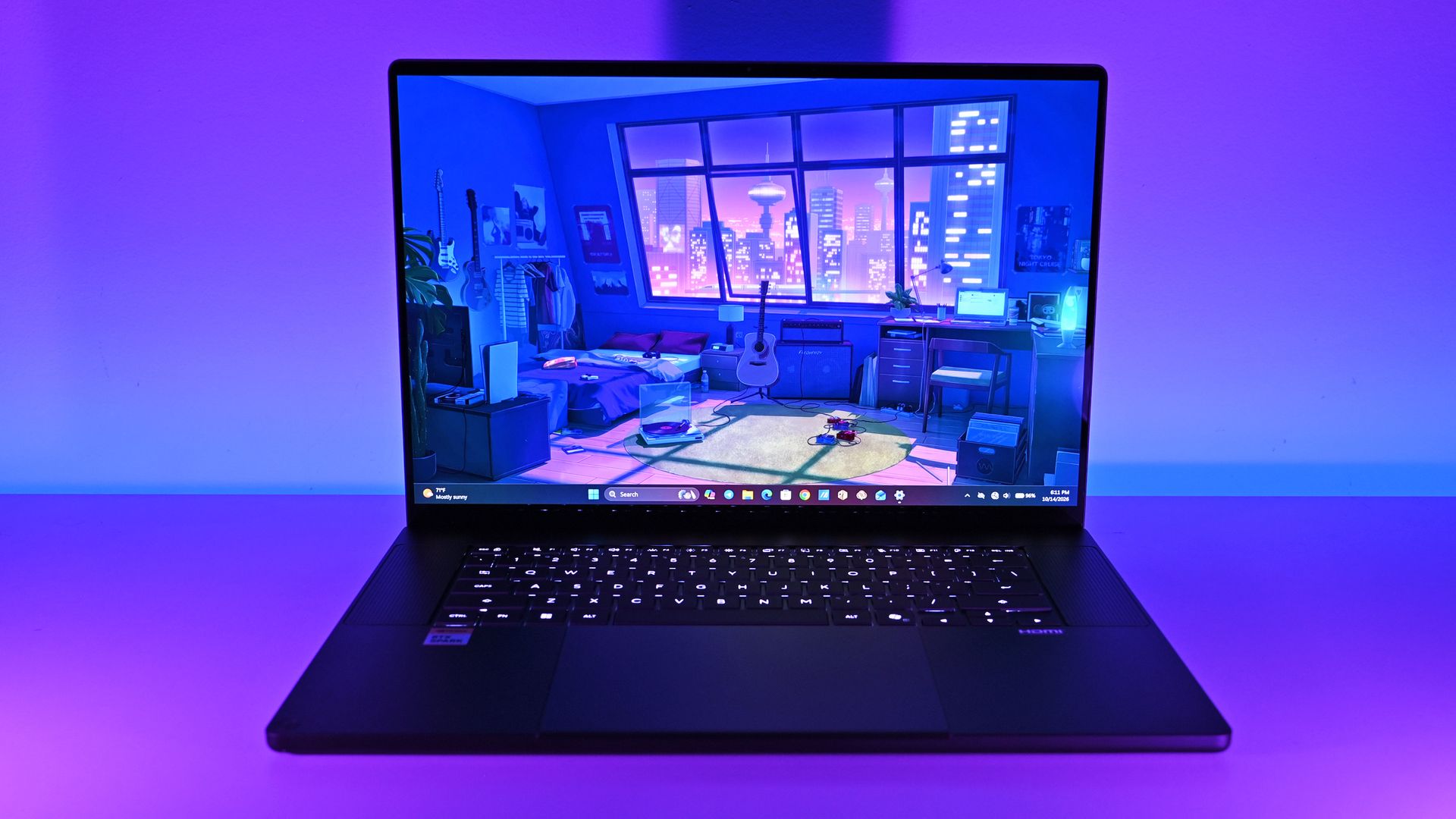
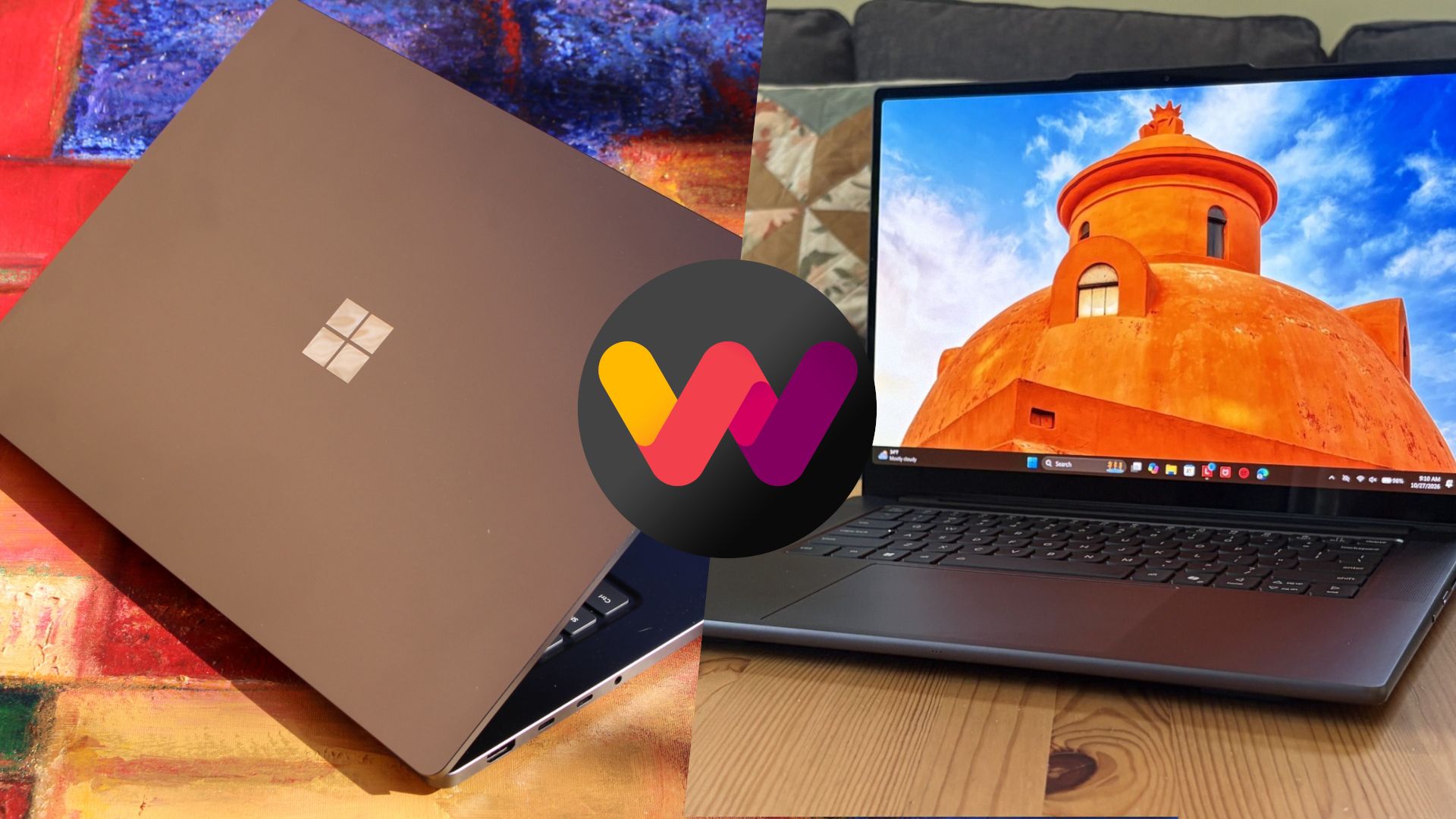
Lenovo's Pro 9n looks like a better buy than the Surface Laptop Ultra

Microsoft Surface Laptop Ultra renderMini-LED

Microsoft
Surface Laptop Ultra

The Surface Laptop Ultra starts at a more affordable price, but evens out as you add hardware. It lacks pen support, its mini-LED display isn't as impressive, plus it's overall thicker and heavier.

Pros

  • Mini-LED display gets way brighter
  • Taller 3:2 aspect ratio and higher resolution
  • Starts at a lower price (for less hardware)
  • Has a smaller footprint
  • Magnetic USB-C connector is genius

Cons

  • No inking
  • Lower display refresh rate
  • Mini-LED has some backlight bloom
  • Weighs more and is thicker

Lenovo Pro 9n 15OLED

Lenovo
Pro 9n

Lenovo's Pro 9n starts at a higher price, but actually gets cheaper than Surface as you add hardware. Its OLED display, top-firing speakers, haptic touchpad with inking, and 9.1MP webcam are all benefits you won't get from Surface.

Pros

  • Superior webcam and top-firing speakers
  • OLED display delivers better contrast and no blooming
  • Thinner and lighter
  • 165Hz refresh rate and NVIDIA G-Sync are good for gaming
  • Haptic touchpad works with the included pen

Cons

  • Starts at a higher price
  • Display not as high-res or as bright
  • One fewer port

Microsoft's Surface Laptop Ultra and Lenovo's Pro 9n are among the first NVIDIA RTX Spark laptops that the Windows Central team has tested and reviewed. The Surface Laptop Ultra received 4 stars, while the Pro 9n bumped the score up to 4.5 stars.

Although we reviewed both laptops favorably, there are some major differences beyond the new NVIDIA chip that you'll certainly want to know about before buying.

Surface Laptop Ultra vs. Lenovo Pro 9n: Specifications and price

There are plenty of similar specs across these laptops, and I know it's handy to have a quick reference table to compare.

Surface Laptop Ultra

Lenovo Pro 9n

CPU

NVIDIA N1X
18-core/20-core

NVIDIA N1X
18-core/20-core

GPU

NVIDIA RTX
5120-core/6144-core

NVIDIA RTX
5120-core/6144-core

RAM

24GB, 32GB, 48GB, 64GB, 128GB LPDDR5X unified

32GB, 64GB, 128GB LPDDR5X unified

Storage

512GB M.2 PCIe 4.0 NVMe SSD
1TB, 2TB M.2 PCIe 5.0 NVMe SSD
Upgradable

512GB, 1TB M.2 PCIe 4.0 NVMe SSD
2TB M.2 PCIe 5.0 NVMe SSD
Upgradable

Display

15 inches, 3270x2180, touch, mini-LED, 3:2 aspect ratio, 120Hz VRR, Dolby Vision IQ, 1000 nits (SDR)

15.3 inches, 2560x1600, touch or non-touch, OLED, 16:10 aspect ratio, 165Hz VRR, Dolby Vision, G-Sync, 500 nits (SDR)

Wireless

Wi-Fi 7
Bluetooth 5.4

Wi-Fi 7
Bluetooth 5.4

Camera

FHD with IR

9.2MP with IR

Audio

4x Omnisonic speakers (Dolby Atmos)

4x speakers (Dolby Atmos)

Battery

92Wh

92.5Wh

Ports

2x USB4, 1x USB4 with Magnetic Connect, 1x HDMI 2.1b, 1x USB-A 3.1, SD card reader, 3.5mm audio

2x USB4, 1x HDMI 2.1, 2x USB-A 3.1, UHS-II SD card reader, 3.5mm audio

Dimensions

12.95 x 9.40 x 0.71-0.75 inches (328.8mm x 238.7mm x 17.99-19.16mm)

13.66 x 9.53 x 0.66 inches (347mm x 242mm x 16.7mm)

Weight

4.41 pounds (2kg)

3.64 pounds (1.65kg)

Colors

Platinum, Nightfall

Thunder Grey

The Surface Laptop Ultra starts at $2,599.99 for a model with the 18-core CPU, 5120-core GPU, 24GB of RAM, and 512GB SSD.

Lenovo's Pro 9n with the 18-core CPU, 5120-core GPU, 32GB of RAM, and 512GB SSD starts at 2,999.99. I imagine a lot of that price difference comes from the extra RAM, but as you'll see below, Lenovo's laptop also has some concrete benefits over the Surface.

Surface Laptop Ultra models with upgraded 20-core CPU, 6144-core GPU, 32GB of RAM, and 1TB SSD start at $3,699.99.

Lenovo's Pro 9n jumps to a 20-core CPU, 6144-core GPU, 64GB of RAM, and 1TB SSD for the higher-end config, starting at $4,249.99. If I compare a similar Surface Laptop Ultra config with these specs, it comes out to 4,299.99.

Basically, the Surface Laptop Ultra starts at a more affordable price thanks to more config options, but once you make the performance hardware comparable, Lenovo's PC actually becomes more affordable.

Lenovo's laptop is thinner and lighter than the Surface Laptop Ultra

Surface Laptop Ultra

The Surface Laptop Ultra is rather sleek, but it's not as thin and light as the Lenovo Pro 9n. (Image credit: Zac Bowden / Windows Central)

Microsoft's new Surface Laptop Ultra has a slightly smaller footprint than the Lenovo Pro 9n, but I don't think it's enough to make a difference in your bag. The real story is the Pro 9n's 0.66-inch chassis that's noticeably thinner than the Laptop Ultra's 0.71-0.75-inch measurement.

Lenovo's laptop is also lighter, starting at 3.64 pounds compared to the Surface Ultra's 4.41 pounds. That's a considerable difference that you'll notice each time you use the PC, and if you're always on the move, this should be a win for Lenovo.

Close-up of a slim laptop on a wooden table, showing its keyboard and side ports; a patterned mug and cushions create a cozy workspace.

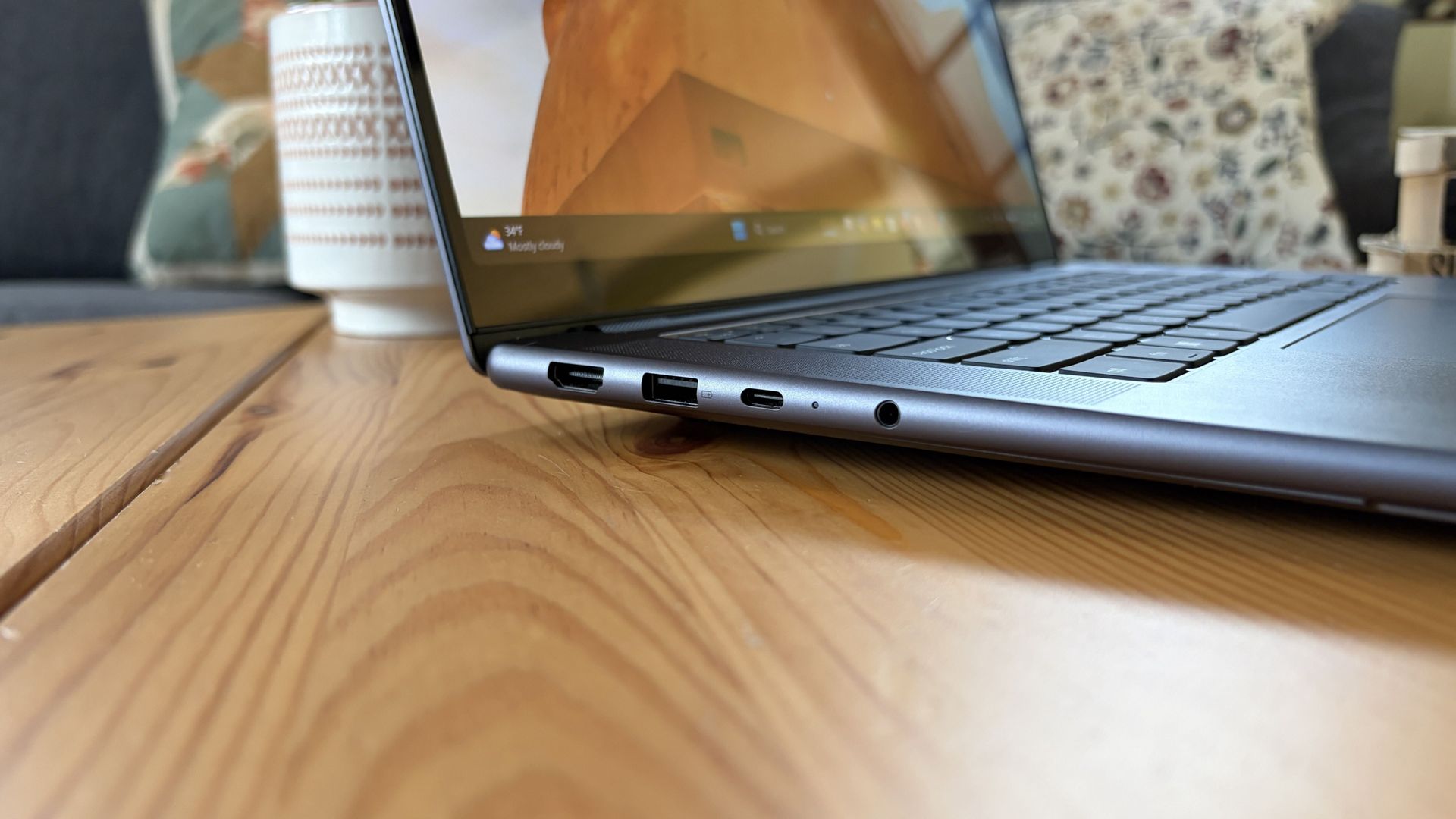
Lenovo's Pro 9n is thinner and lighter than the Surface Laptop Ultra. (Image credit: Future)

Both laptops are built into a sleek aluminum chassis that doesn't get much more premium. Windows Central Senior Editor Zac Bowden commented in his Surface Laptop Ultra review:

Yes, Surface Laptop Ultra looks an awful lot like a MacBook Pro. [...[...] But I'm not here to tell you that's a bad thing. The MacBook Pro is a beautiful device, which is to say Surface Laptop Ultra is also very beautiful. In fact, I think it even improves upon the MacBook Pro's design in subtle ways.

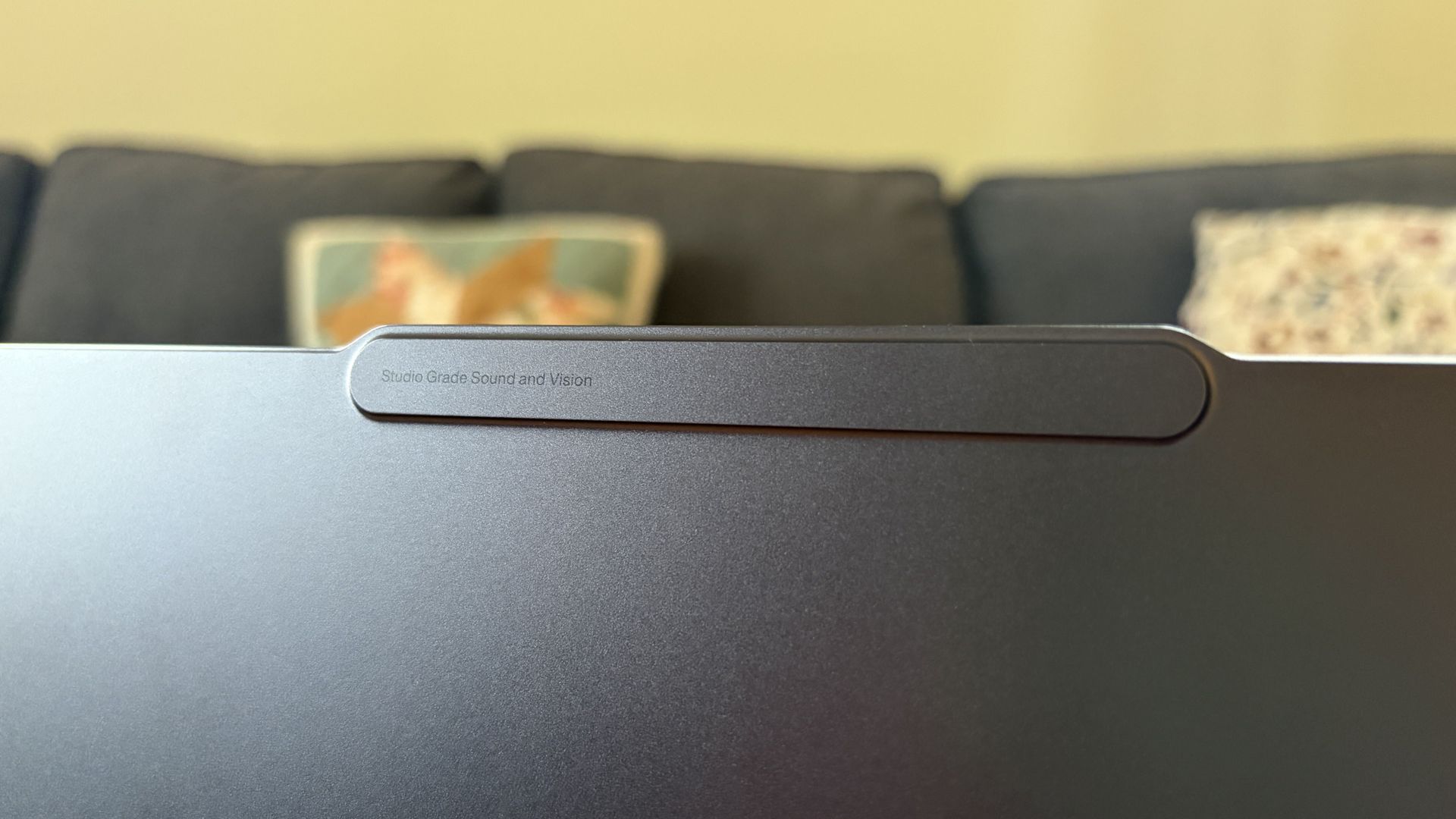
Lenovo's Pro 9n takes a slightly different approach, often seen in its Yoga series, with rounded edges, top-firing speakers flanking the keyboard, and a raised comms bar above the display to fit a superior webcam.

Close-up of a dark gray laptop or monitor edge with a slim, rounded bar; a softly blurred sofa and cushions create a calm indoor backdrop.

The raised comms bar on the Lenovo Pro 9n leaves more space for a superior webcam. (Image credit: Future)

On that note, anyone who's often taking video calls, Teams meetings, etc. should consider Lenovo's 9.2MP webcam over the Surface Laptop Ultra's rather standard 1080p camera.

Both will get the job done, sure, but Lenovo's camera offers more clarity. I also found it quite good at dealing with low light. At least both laptops come with an IR sensor for facial recognition through Windows Hello.

Which laptop has better ports?

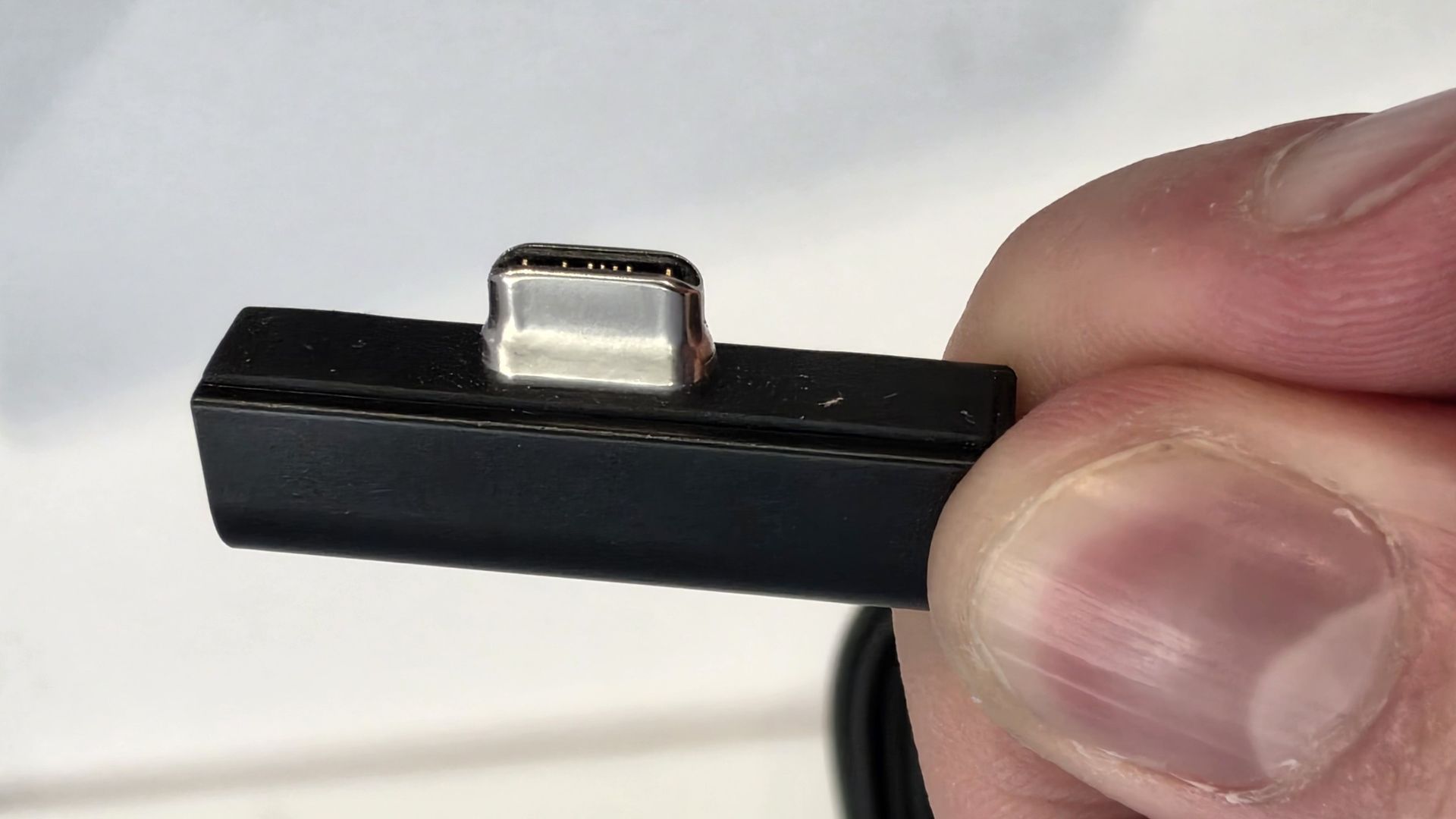
Surface Laptop Ultra magnetic charging cable

A look at the Surface Laptop Ultra's magnetic USB-C adapter. (Image credit: Zac Bowden / Windows Central)

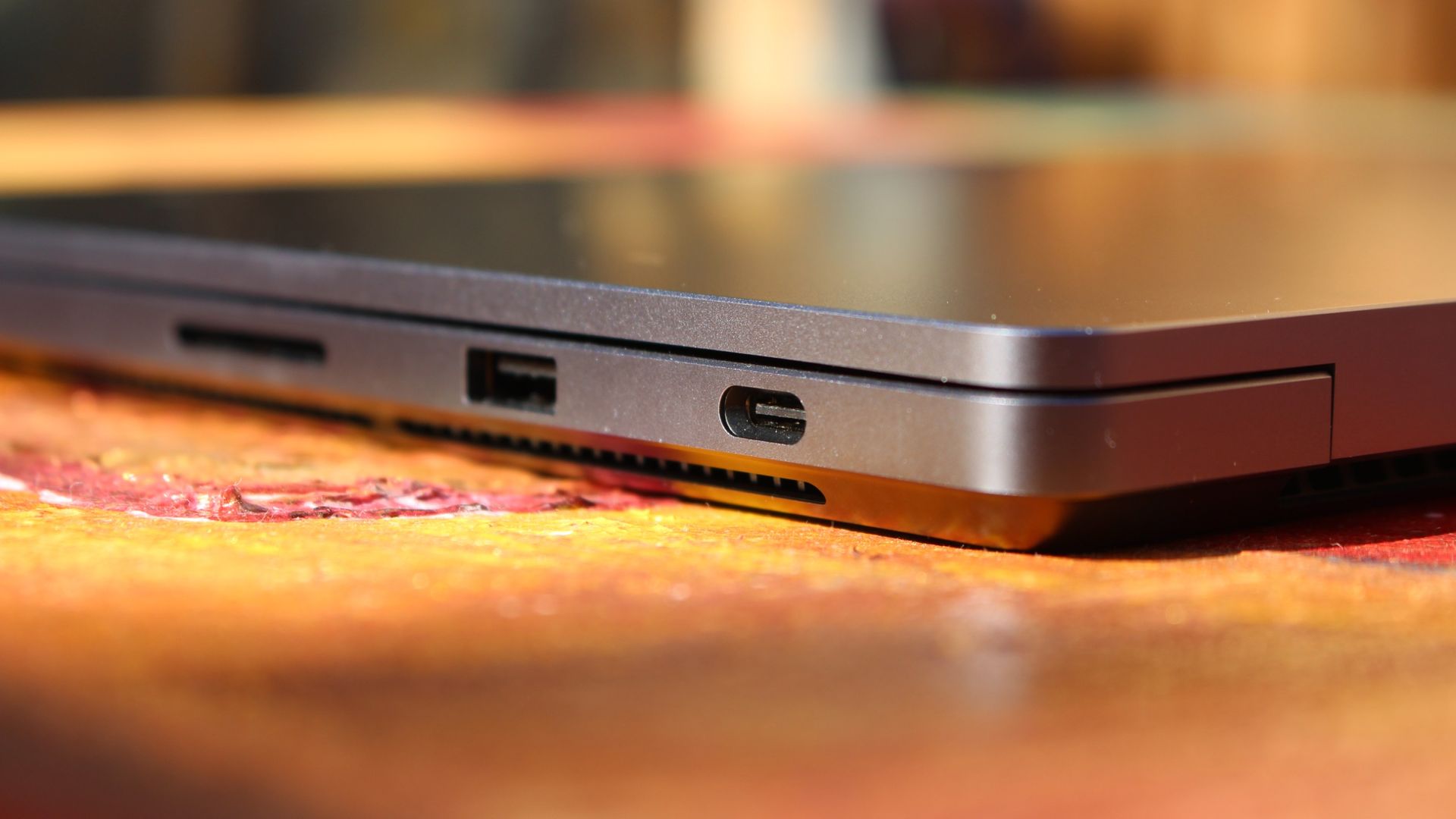
Ports across both laptops are the same except for one major standout. I'm talking about the Surface Laptop Ultra's additional magnetic USB-C connector that's designed to pull away from the PC when it gets snagged or tripped over.

It's a lot like Apple's MagSafe tech, and I'm all about it; I hope it comes to more Windows PCs soon.

Other than the extra USB-C port, the Surface Laptop Ultra and Lenovo Pro 9n have the same selection of ports, including dual USB4, dual USB-A at 10Gbps each, HDMI 2.1, UHS-II SD card reader, and 3.5mm audio jack.

Is there a superior keyboard or touchpad?

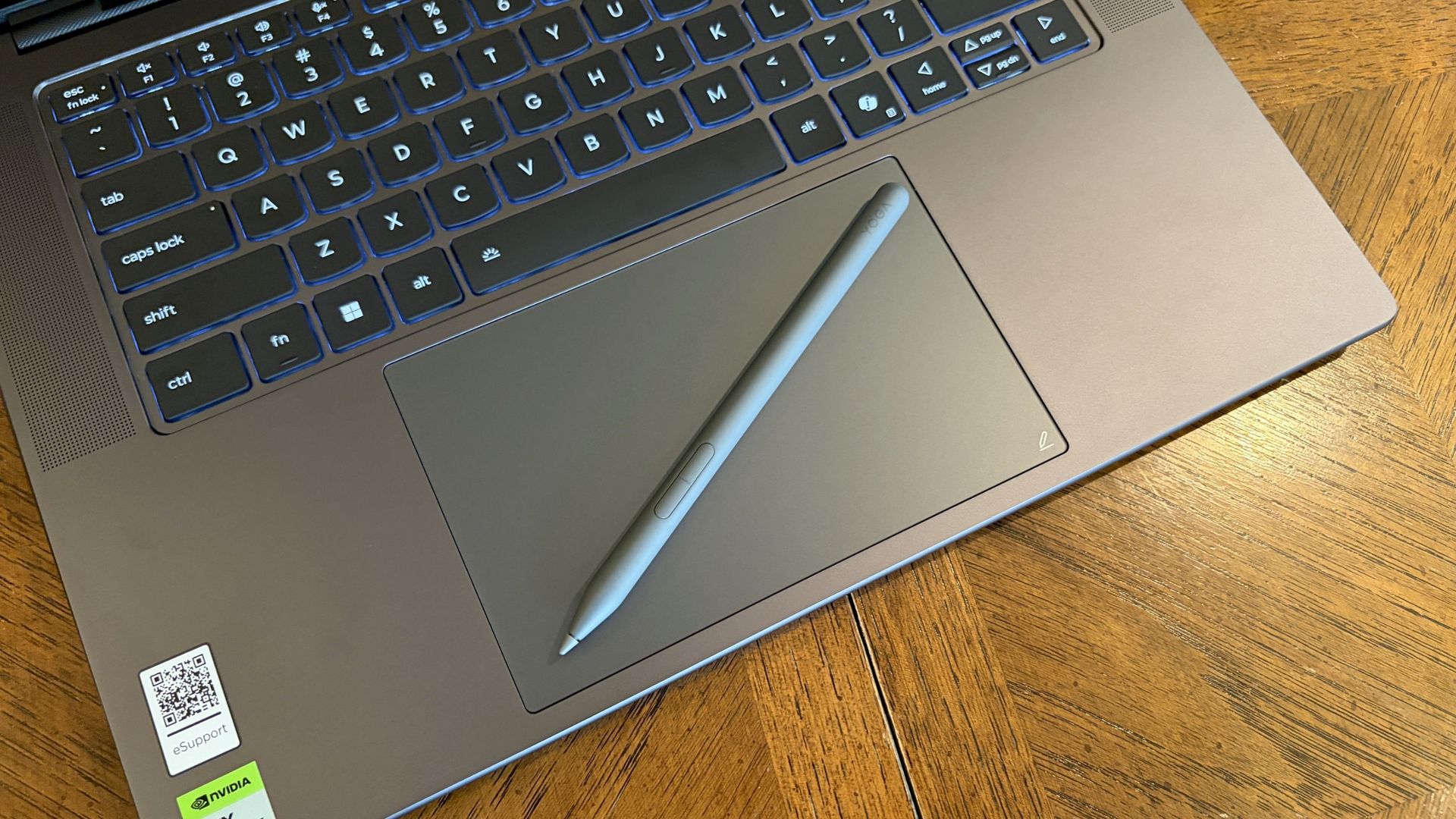
Close-up of a Lenovo Pro 9n laptop with a blue-backlit keyboard and stylus resting diagonally across its large touchpad, on a wooden table. The scene feels calm and practical.

Lenovo's Pro 9n includes a Yoga Pen 2 that writes directly on the haptic touchpad. (Image credit: Future)

Windows Central Senior Editor Zac Bowden said, "This is probably the best keyboard and trackpad experience I've ever had on a Windows laptop to date" in his review. I'd wager that the Yoga Pro 9n takes things one step further.

Whereas the Surface Laptop Ultra has 1.4mm key travel, Lenovo pushes it to 1.5mm. Lenovo's touchpad is also slightly larger than the one on the Surface, giving you more space to point.

Both use haptic touchpads, meaning there aren't any moving parts. Clicks and feedback are simulated with small haptic motors below the surface. There are fewer mechanical parts to break down, and generally, you get a smoother experience.

But Lenovo goes one step further with inking compatibility on its touchpad. Each Pro 9n comes with a Yoga Pen 2, and I found it to be quite handy when jotting down notes or sketching ideas.

Does one laptop have better speakers?

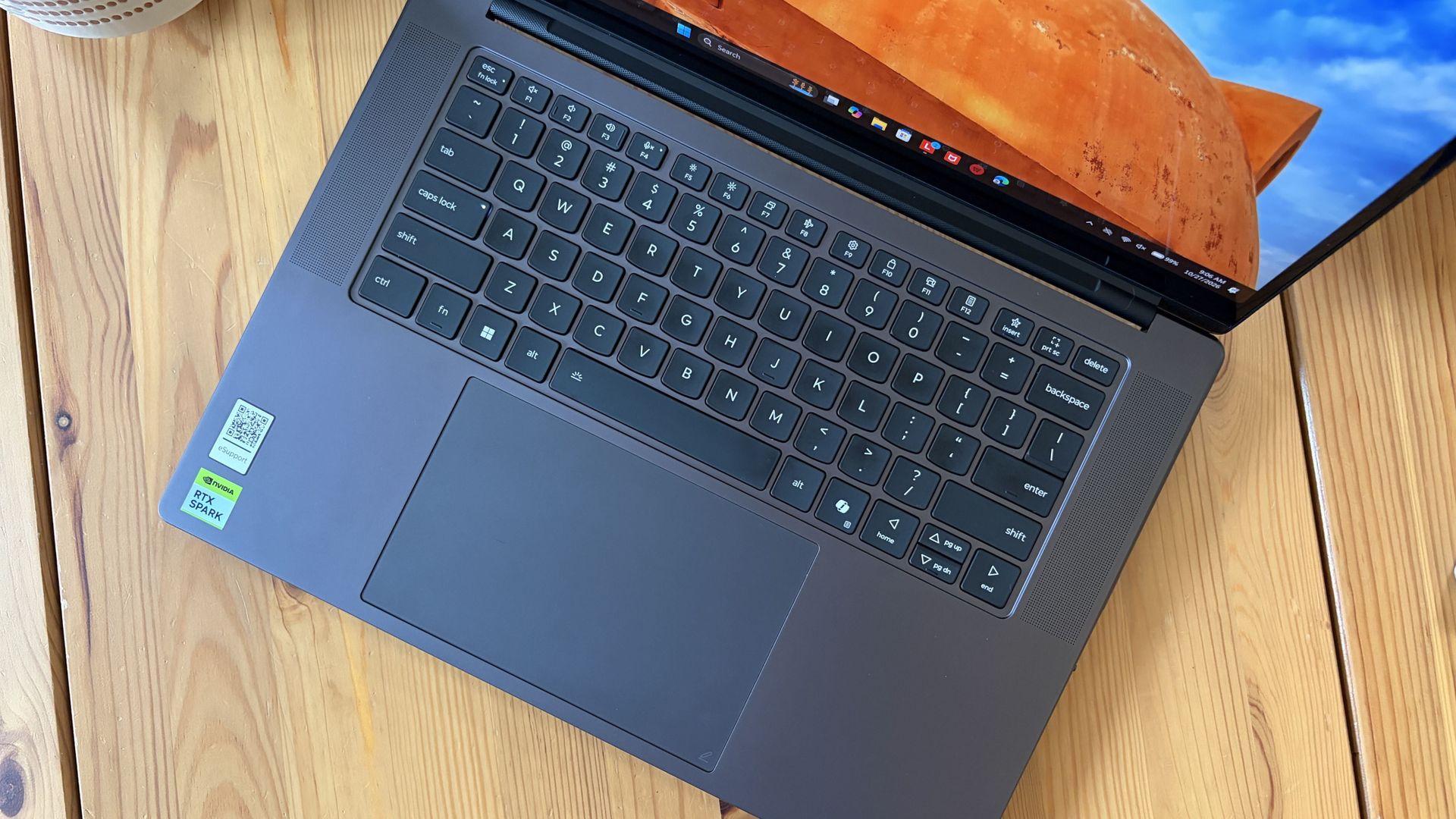
A dark gray laptop sits diagonally on a pale wooden table, its keyboard and touchpad visible beneath a screen showing orange earth and blue sky.

A look at the speakers flanking the Pro 9n's keyboard (Image credit: Future)

Having checked out both laptops, I'd say that audio quality is a wash unless you care about placement.

Both laptops have four speakers, and both produce some of the best audio we've ever heard in a Windows laptop. No matter what, you get deep bass, clear highs, and loud volume.

The big difference is that the Pro 9n has two of its speakers flanking the keyboard for unmuffled audio. The Surface Laptop Ultra keeps all four of its speakers on the underside of the chassis.

Microphones are also excellent across both laptops. You won't need to worry at all about adding a microphone for calls and video chats.

Do you value brightness or color in your display?

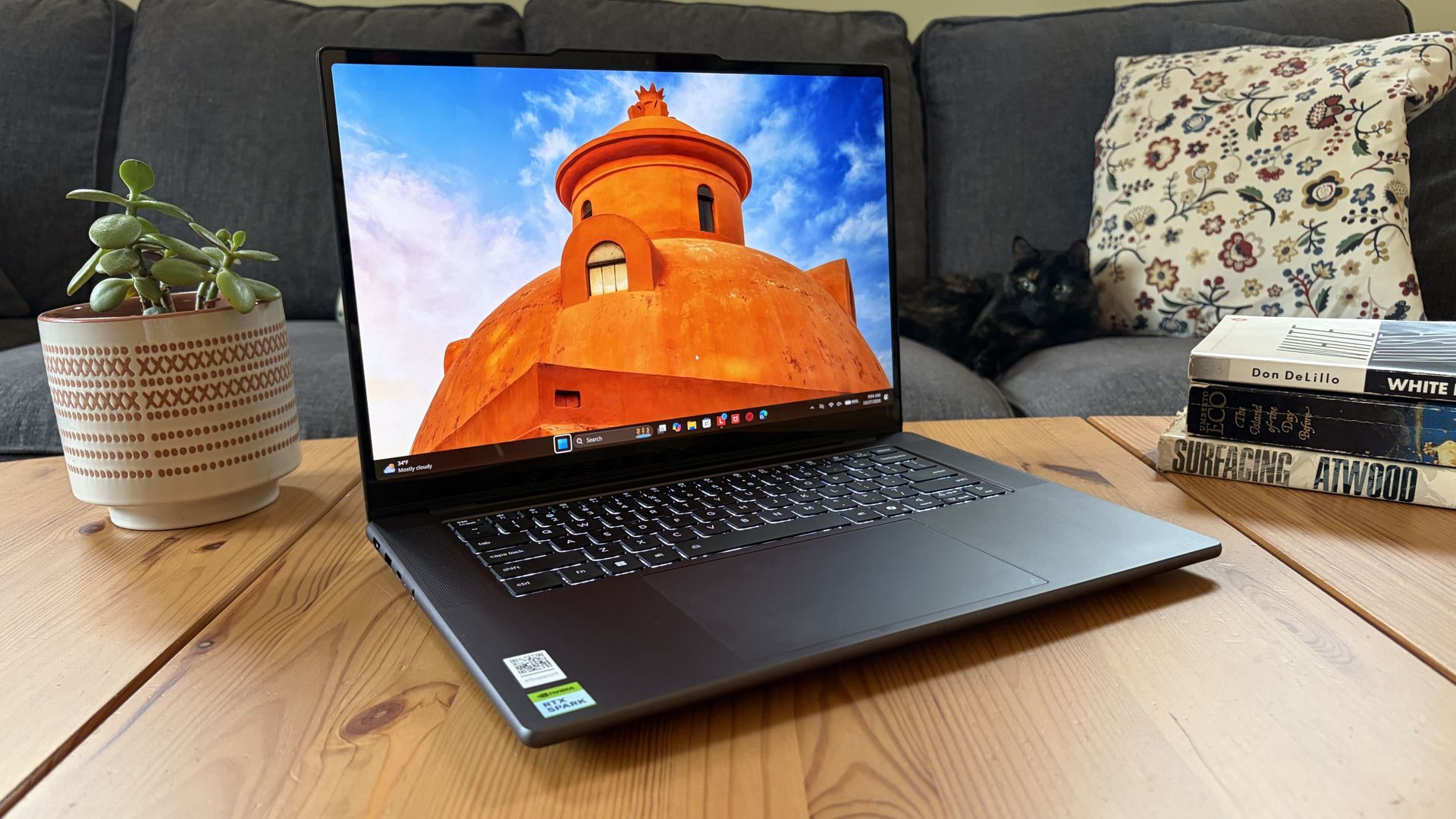
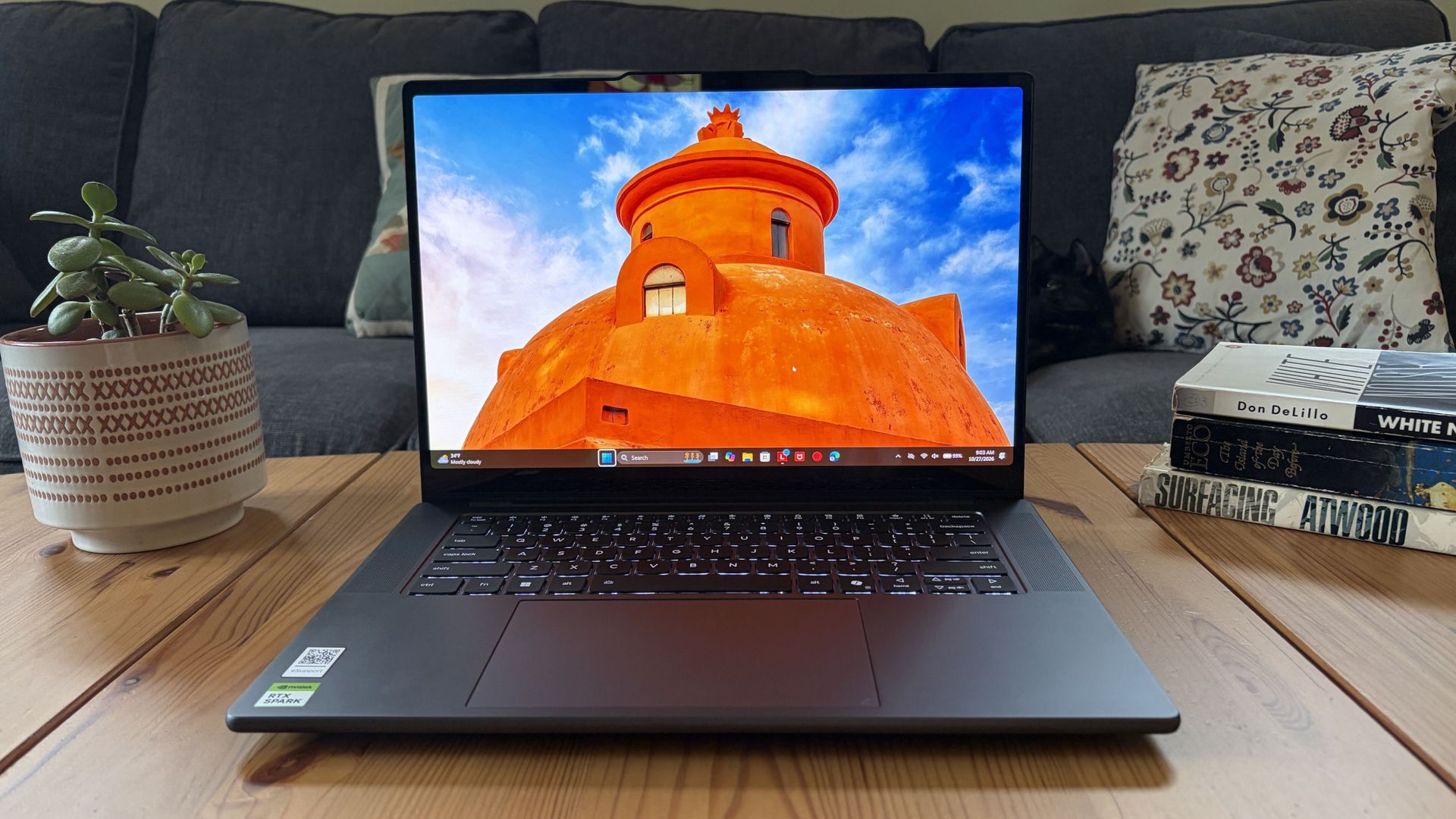
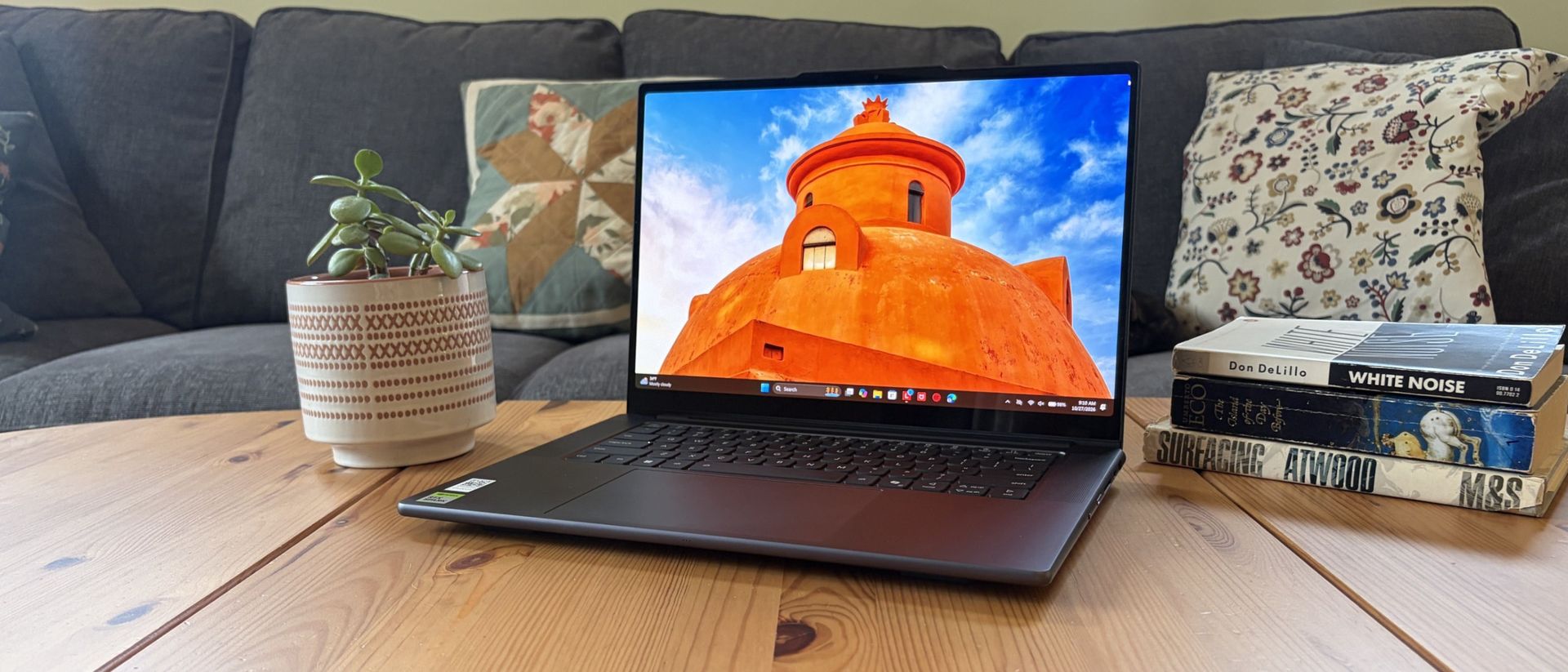
A Lenovo Pro 9n laptop on a wooden coffee table displays a vivid orange domed building against a blue sky, beside a potted plant, books, and a gray sofa.

A look at the Lenovo Pro 9n's OLED display. (Image credit: Future)

Display preferences could make or break your decision here. The Surface Laptop Ultra has a 15-inch mini-LED screen with a 3270x2180 resolution, 3:2 aspect ratio, 120Hz variable refresh rate, and Dolby Vision IQ support.

Its mini-LED panel has 1,344 dimming zones, and it manages to climb to about 2,000 nits brightness with HDR enabled. Otherwise, it tops out at about 1,000 nits.

This is great if you're often working in brightly lit areas, as you'll have much less trouble there than with the Pro 9n's maximum of 1,100 nits. However, as Zac Bowden notes, the mini-LED panel can show "a bit of blooming around bright elements on a dark background."

That's not the case with the OLED panel in the Lenovo Pro 9n. It offers perfect contrast and deep color, so there's no blooming or backlighting issues whatsoever.

Lenovo's laptop also offers a higher 165Hz variable refresh rate, and it's able to cover all color gamuts for specialized work. That higher refresh rate can help with gaming, as can the display's NVIDIA G-Sync compatibility.

The big downside is that it doesn't have as many pixels with a 2560x1600 resolution.

Is there a difference in RTX Spark performance?

Surface Laptop Ultra

The Surface Laptop Ultra has the same NVIDIA RTX Spark chip options as the Lenovo Pro 9n.

What's probably not a surprise for many is that NVIDIA's RTX Spark system-on-chip (SoC) performs similarly across laptop brands.

In this case, Zac Bowden tested the Surface Laptop Ultra with the 20-core CPU and 6144-core GPU, while I tested the 18-core CPU and 5120-core GPU in the Lenovo Pro 9n.

Unsurprisingly, the more expensive chip in the Surface Laptop Ultra comes out ahead in all relevant tests we performed. The gap isn't huge, and, of course, you can always add the 20-core chip to the Pro 9n to make up the difference.

Benchmark graph showing Lenovo Pro 9n with 18-core RTX Spark chip against other RTX Spark laptops with 20-core chips.
Future
Benchmark graph showing Lenovo Pro 9n with 18-core RTX Spark chip against other RTX Spark laptops with 20-core chips.
Future
Benchmark graph showing Lenovo Pro 9n with 18-core RTX Spark chip against other RTX Spark laptops with 20-core chips.
Future
Benchmark graph showing Lenovo Pro 9n with 18-core RTX Spark chip against other RTX Spark laptops with 20-core chips.
Future

The Pro 9n model I tested arrived with an M.2 PCIe 4.0 NVMe SSD, which is a generation behind the M.2 PCIe 5.0 NVME SSD in the Surface Laptop Ultra model we tested.

It's no surprise that the newer SSD is faster, and keep in mind that both laptops have the option for the upgraded PCIe 5.0 drive.

Which laptop has better battery life?

Surface Laptop Ultra

The Surface Laptop Ultra's battery is rated for 0.5Wh more than the Pro 9n. (Image credit: Zac Bowden / Windows Central)

Battery capacity across laptops only differs by 0.5Wh, and in our experience, both laptops were able to hit around 10 hours of real-world usage before needing a charge.

I'm talking about lighter fare for that 10-hour runtime, like web browsing, Excel, Word, email, streaming, etc.

Once you start adding demanding tasks that press the GPU — especially AI-related work — you'll see battery life falling quite a bit faster.

For reference, when I gamed on the Lenovo Pro 9n, The Witcher 3: Wild Hunt Remastered with settings cranked up and ray tracing enabled was only seeing about 10 minutes of playtime for each 10% of battery life.

Surface Laptop Ultra vs. Lenovo Pro 9n

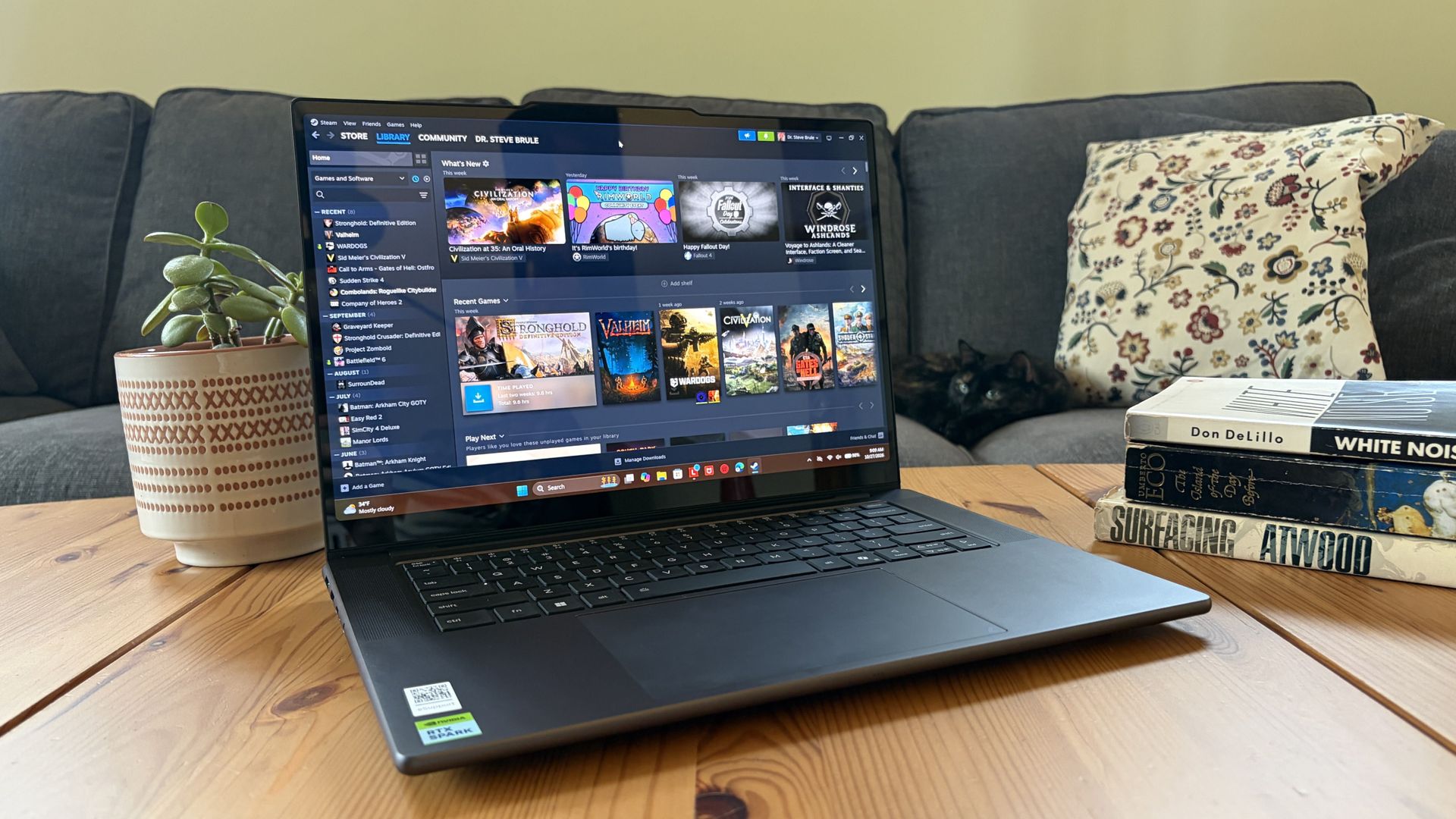
A Lenovo Pro 9n laptop showing a digital game library sits on a wooden coffee table, beside a potted plant and stacked books, with a patterned cushion on the sofa.

I'm taking the Lenovo Pro 9n over the Surface Laptop Ultra, but your decision might be different. (Image credit: Future)

Microsoft's Surface Laptop Ultra starts at a more affordable price, and that will resonate with a lot of people despite it coming with less powerful hardware. If you're just looking for a more affordable RTX Spark system, Surface is the way to go.

However, once you start adding similar hardware tiers, Lenovo's PC becomes more affordable. With the price in mind alongside the host of benefits from the Pro 9n that I've laid out above, I'm leaning towards Lenovo.

Microsoft Surface Laptop Ultra render

Mini-LED
Microsoft
Surface Laptop Ultra

The Surface Laptop Ultra starts at a more affordable price, but evens out as you add hardware. It lacks pen support, its mini-LED display isn't as impressive, plus it's overall thicker and heavier.

Lenovo Pro 9n 15

OLED
Lenovo
Pro 9n

Lenovo's Pro 9n starts at a higher price, but actually gets cheaper than Surface as you add hardware. Its OLED display, top-firing speakers, haptic touchpad with inking, and 9.1MP webcam are all benefits you won't get from Surface.

Click to join us on r/WindowsCentral

Join us on Reddit at r/WindowsCentral to share your insights and discuss our latest news, reviews, and more.
Acer's OLED Swift 16 AI laptop gets a huge discount before Black Friday

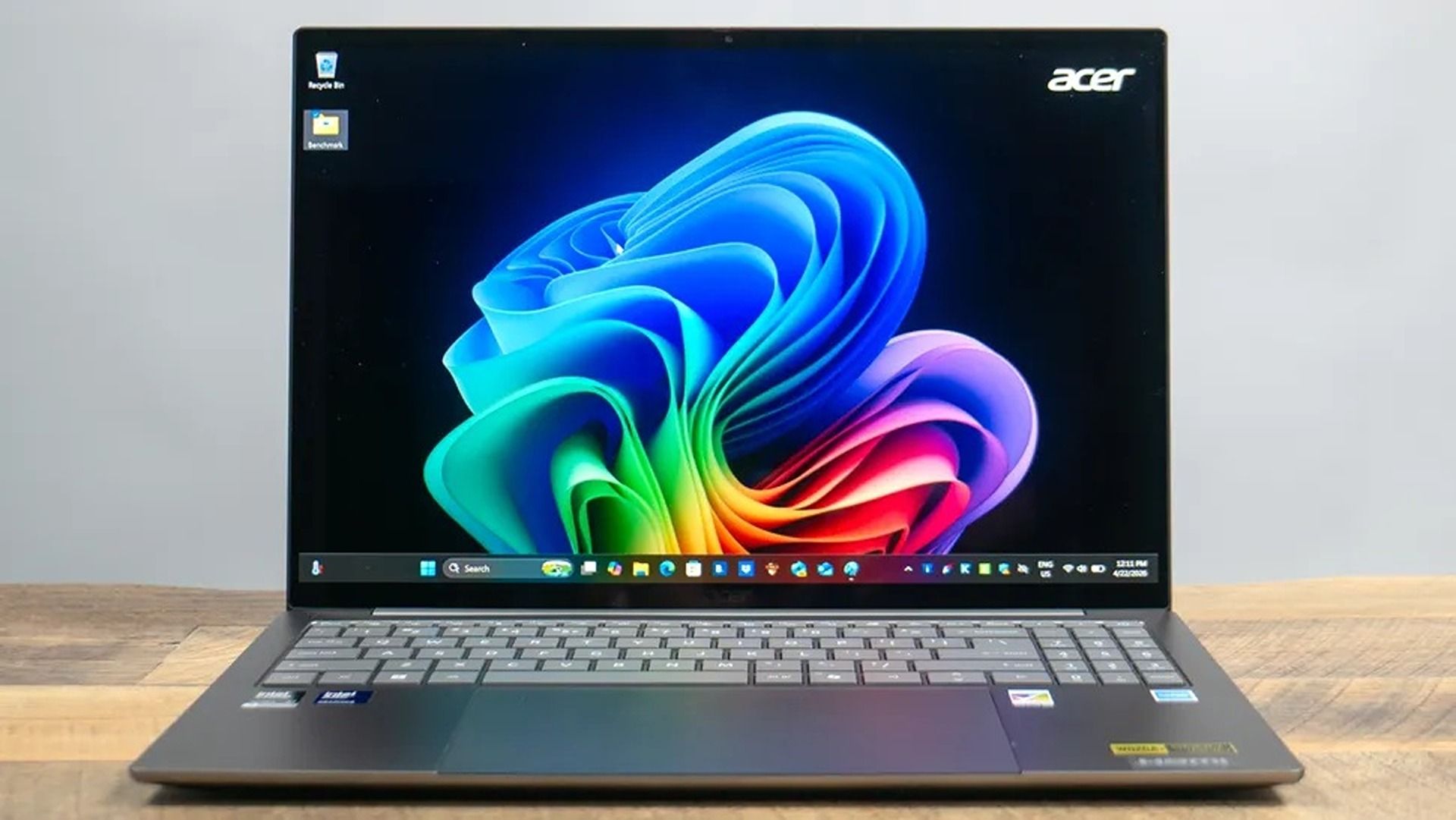
The Swift 16 AI is one of the latest Windows laptops featuring Intel's "Panther Lake" processors (Core Ultra Series 3) that balance productivity, power, and efficiency for all-day battery life, plus Acer's stunning OLED touchscreen.

It's already on sale for just $999.99 at Best Buy long before Black Friday, with a hefty $550 discount that knocks 35% off its listing price. With 16GB of RAM and 1TB of storage, it's a great option for anyone looking to upgrade their everyday laptop without spending the usual ~$1,200+ costs.

Swift 16 AI (Core Ultra X7 358H, 16GB RAM, 1TB SSD): was $1549.99 now $999.99

"Impresses with its vibrant 16-inch OLED panel, powerful Panther Lake-powered performance, ultraportable design, and long-lasting battery life." — Tony Polanco, Senior Computing Writer, Tom's Guide

Tom's Guide review: ⭐⭐⭐⭐View Deal

Why should you buy this laptop?

An open Acer laptop sits on a wooden desk, displaying Windows 11’s vivid blue, teal, and pink abstract wallpaper in a bright, minimal setting.

Side-view of the Acer Swift 16 AI laptop. (Image credit: Tom's Guide (Tony Polanco) | Acer)

Powered by Intel's Core Ultra Series 3 "Panther Lake" X7 358H processor and integrated Arc B390 graphics, the Swift 16 AI delivers plenty of performance for everyday productivity workloads, including multitasking across dozens of browser tabs, content creation, and even some gaming. That integrated B390 graphics chip is far more powerful than its lower-end variants; in fact, you'll find the same one in high-end gaming handhelds.

Beyond that, Acer boasts a full day of usable battery life in a laptop with a thin chassis and a sharp 3K (2880x1800) OLED touchscreen. That means vibrant colors, strong contrast, and even a super-smooth 120Hz refresh rate as a bump over the usual 60Hz standard you'd find in many others.

You'll get dual USB-C ports alongside two more traditional USB-A ports, HDMI-out for external monitors, and a 3.5mm audio jack for wired headphones, reducing the need for too many dongles when you're traveling. Plenty of peripherals are wireless these days, but it's always nice to have the option for wired alternatives.

Acer's bigger trackpad might not suit everyone, and the speakers were never made for movie-watching, but neither detracts from what is otherwise a well-rounded productivity laptop. Alternatively, an AMD-based Swift 16 AI with a WUXGA (1920x1200) touchscreen is also on sale for $799.99 at Walmart. However, it is sold by a reseller, not Walmart itself, so there's a chance it will disappear much faster.

Should I wait for Black Friday for a better deal?

Even if you're hesitant to buy before Black Friday, Best Buy's 'Price Match Guarantee' may allow eligible customers to request a refund of the difference if Best Buy lowers its own price during the applicable return window: "If our price goes lower during the holiday season, we’ll match it."

Is it good for gaming?

The Acer Swift 16 AI is surprisingly competent at running games for a non-gaming laptop. It can run graphically intensive games like Cyberpunk 2077 at 1080p on medium settings, and lower-end games like Fortnite at 1080p at 60 FPS or higher.

Can you adjust the trackpad?

You can shrink its detection range by a quarter or half its size within the included AcerSense software app to prevent accidental clicks.

Click to join us on r/WindowsCentral

Join us on Reddit at r/WindowsCentral to share your insights and discuss our latest news, reviews, and more.

HP OmniBook Ultra 16 RTX Spark review: This excellent AI laptop has one problem I can't ignore

The weird thing about reviewing the HP OmniBook Ultra 16 is that I really like this laptop. After three weeks with it, I have very few complaints about actually using it.

HP's build quality is fantastic. The 3K OLED display is one of my favorites on any laptop I've used this year. Its new keyboard is excellent, the haptic touchpad is huge, battery life is surprisingly good, and NVIDIA's RTX Spark delivers exactly the kind of performance I expected.

Then I pick it up.

At 4.9 pounds, the OmniBook Ultra 16 weighs a full pound more than the ASUS ProArt P16 I recently reviewed, despite delivering largely the same RTX Spark performance. ASUS's laptop is thinner and lighter, has similarly excellent thermals and an OLED display, and includes a few premium features HP inexplicably left out.

That's a problem because after testing several RTX Spark laptops, raw performance is becoming one of the least interesting ways to distinguish between them.

So, as much as I like HP's OmniBook Ultra 16, the question after three weeks isn't whether it's good. It's whether HP has given me enough reasons to carry around that extra pound.

HP and NVIDIA had no input, nor did it see the contents of this review, prior to publication.

Price and specs: The 32GB model makes a lot of sense

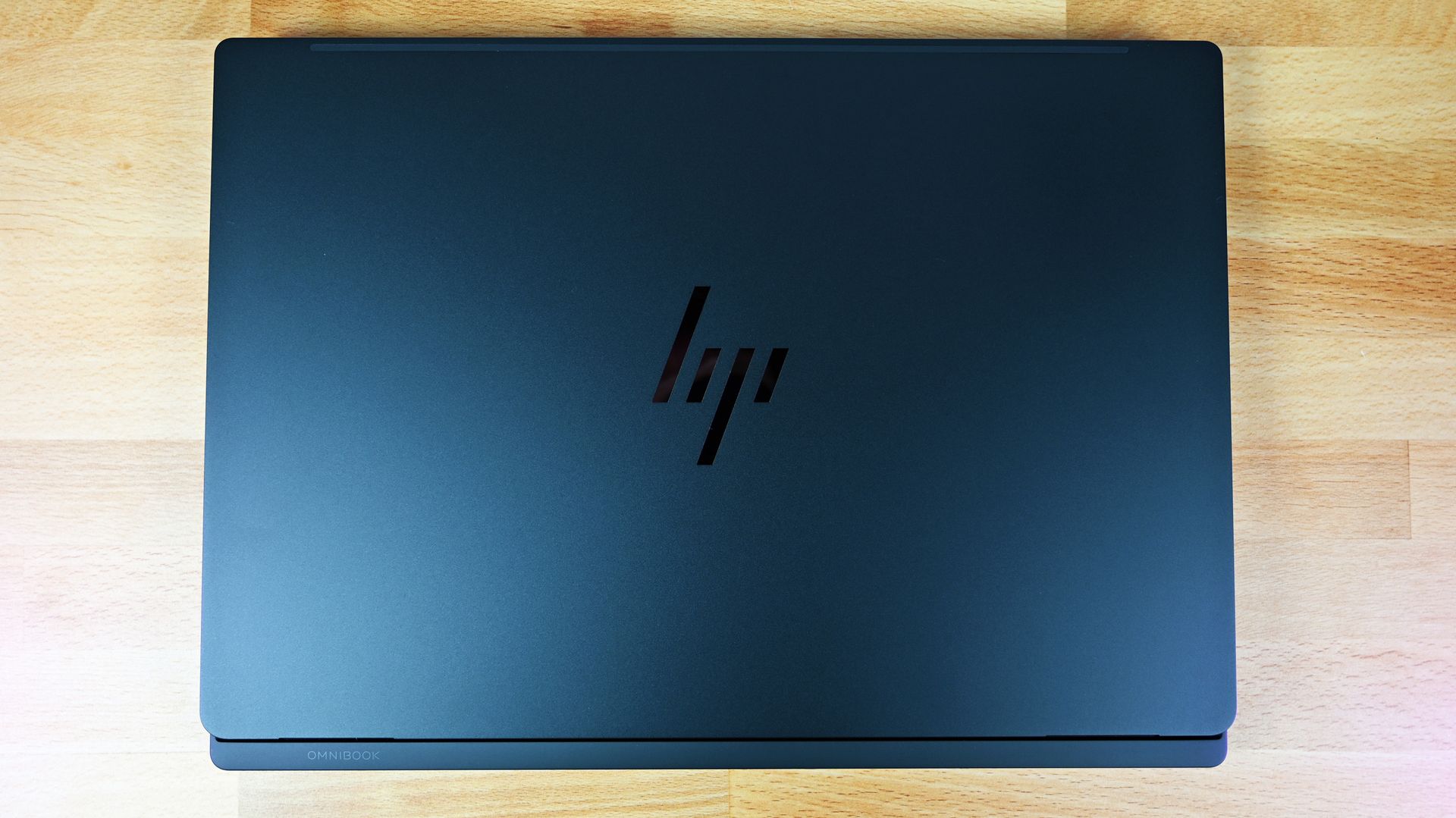
Top-down view of the closed HP OmniBook Ultra 16 RTX Spark on a wooden desk, showing the centered modern HP logo.

Top-down view of the closed HP OmniBook Ultra 16 RTX Spark. (Image credit: Daniel Rubino)

I tested the OmniBook Ultra 16 with NVIDIA's 20-core RTX Spark N1X, 32GB of unified memory, a 1TB SSD, and a 16-inch 2880 x 1800 OLED touchscreen.

It normally costs $3,199.99, but Best Buy currently has it discounted by $400 to $2,799.99, which changes the value equation considerably.

In fact, this might be the RTX Spark configuration I'd recommend to more people. If you're doing video and photo editing, light CAD or 3D work, or beginning to experiment seriously with local AI models, 32GB gives you access to NVIDIA's new platform without spending workstation money on memory you might never use.

For people who will use it, however, HP scales RTX Spark considerably higher, including configurations with up to 128GB of unified memory. That's where this architecture gets especially interesting for running larger local models and working with bigger datasets. HP also sells a 64GB/2TB configuration with LPDDR5X-9400 memory and a PCIe Gen5 SSD.

Design: HP might actually beat ASUS, until you pick it up

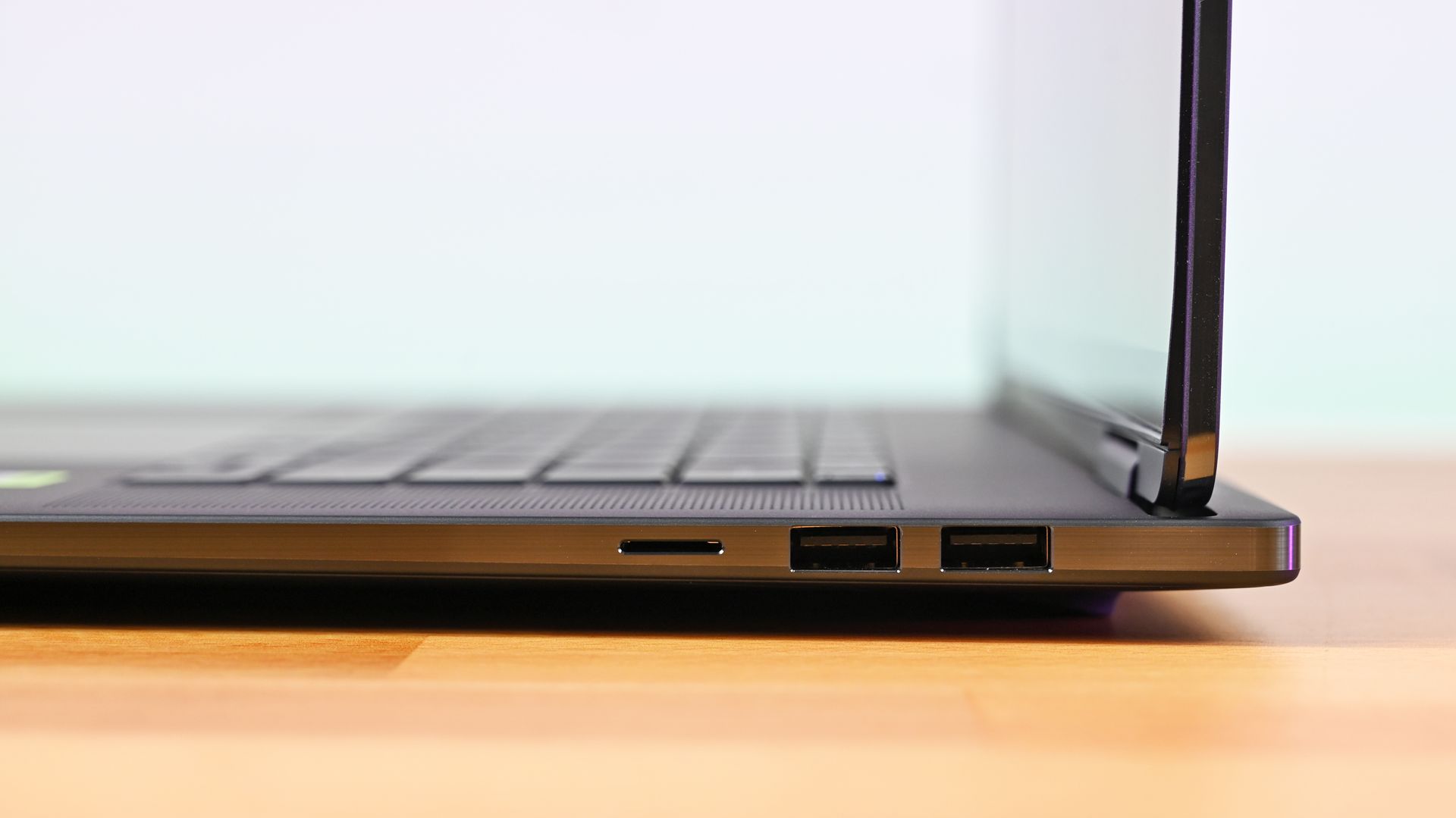
Profile view of the right ports and upright screen hinge on the HP OmniBook Ultra 16 RTX Spark laptop

Profile view of the right ports and upright screen hinge on the HP OmniBook Ultra 16, with dual USB-A ports and micro SD. (Image credit: Daniel Rubino)

HP knows how to make premium hardware, and I think the OmniBook Ultra 16's overall build quality is a smidge better than the ASUS ProArt P16.

The three-piece CNC-machined aluminum chassis feels exceptionally solid. Eclipse Gray looks fantastic and has a lovely texture that also does an unusually good job resisting fingerprints.

Then there's HP's tower hinge and trunk architecture. Beyond looking cool, the design creates additional room behind the hinge for airflow and rear exhaust. HP combines that with two 79-blade fans, three heat pipes, and internal temperature monitoring, with the system designed to sustain up to 70W.

The results are good, although not dramatically better than ASUS.

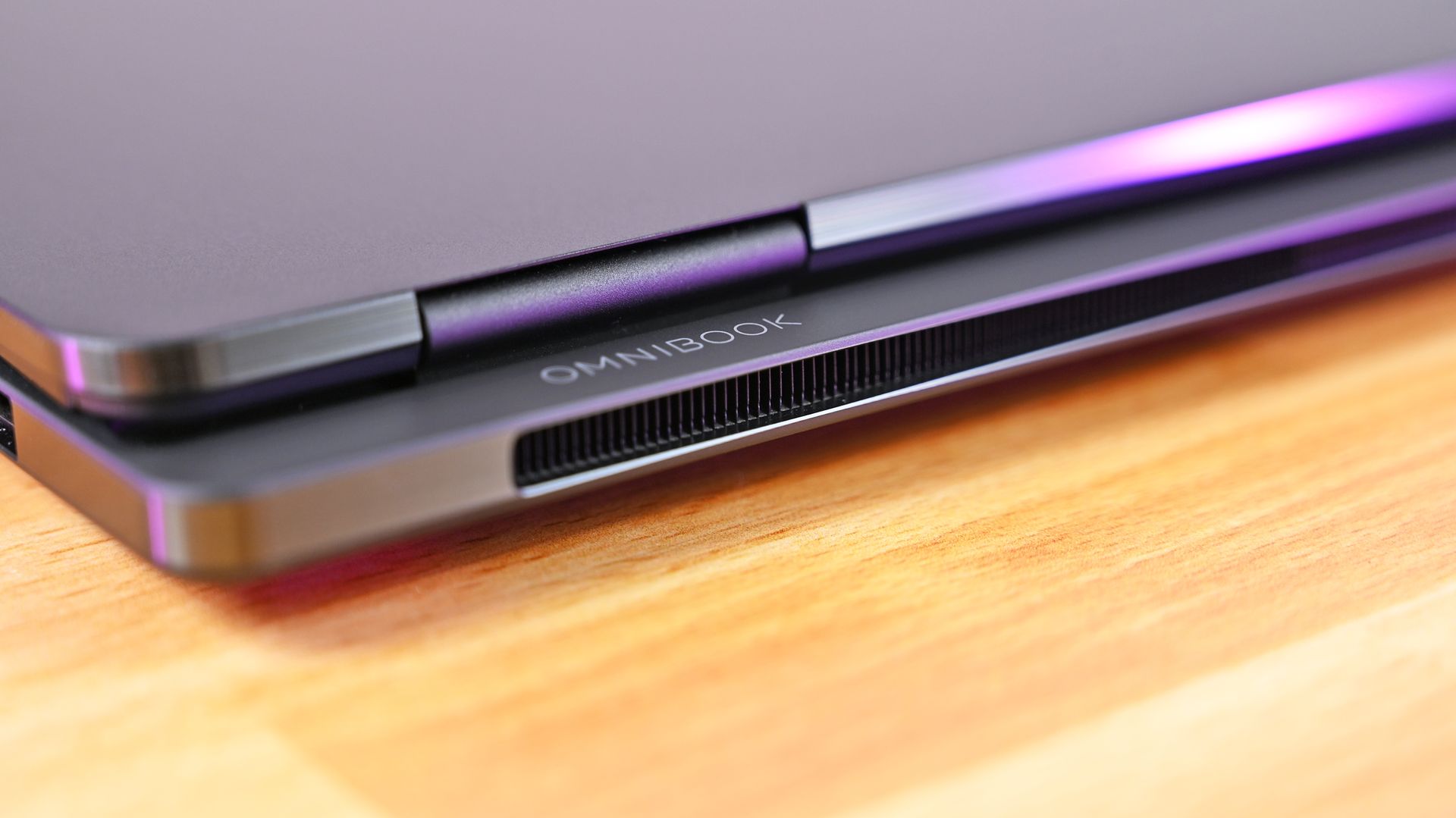
Rear view of the HP OmniBook Ultra 16 RTX Spark showing the cooling grille and hinge with

Slick design! Rear view of the HP OmniBook Ultra 16 RTX Spark, showing the cooling grille and hinge. (Image credit: Daniel Rubino)

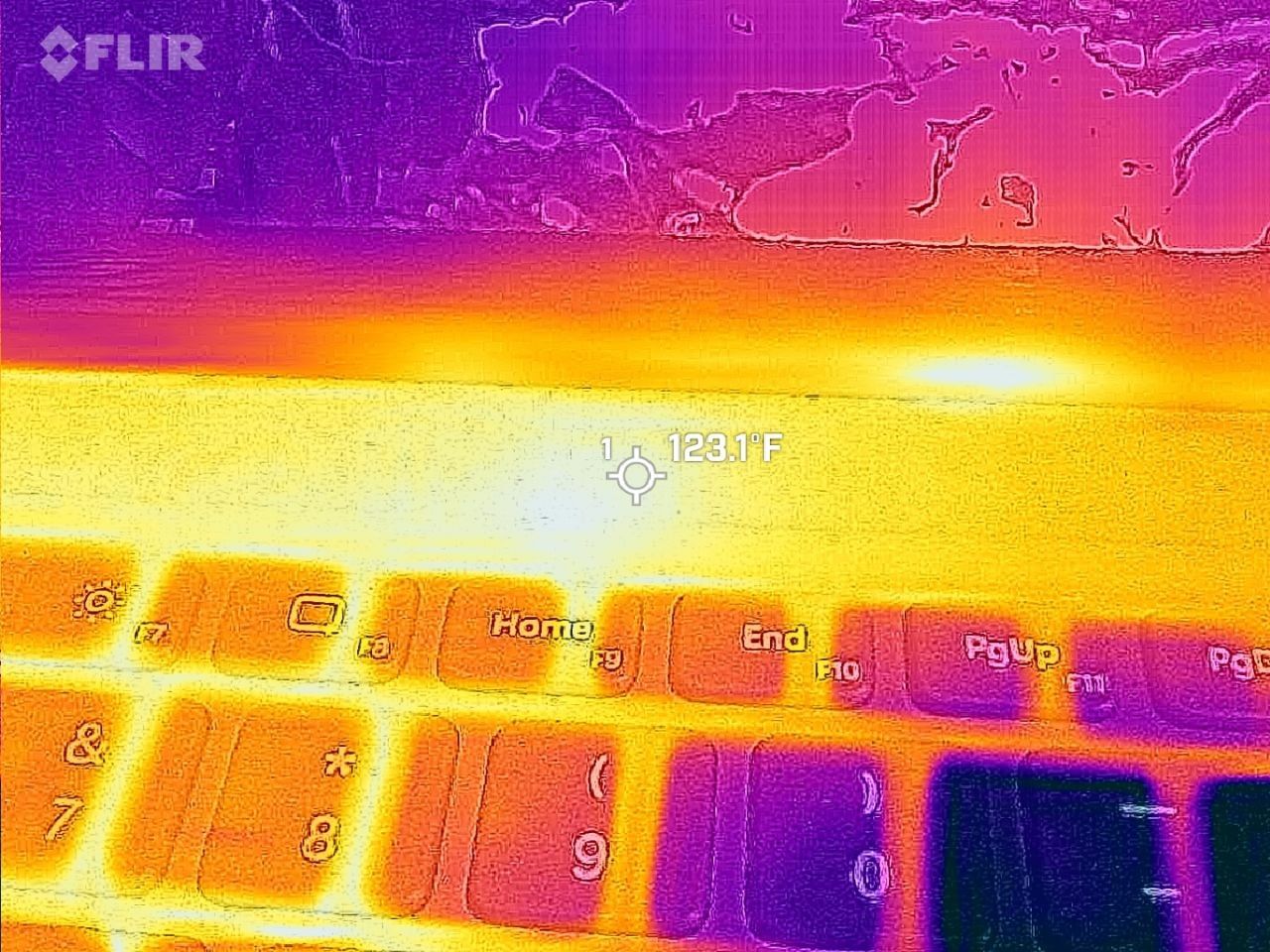
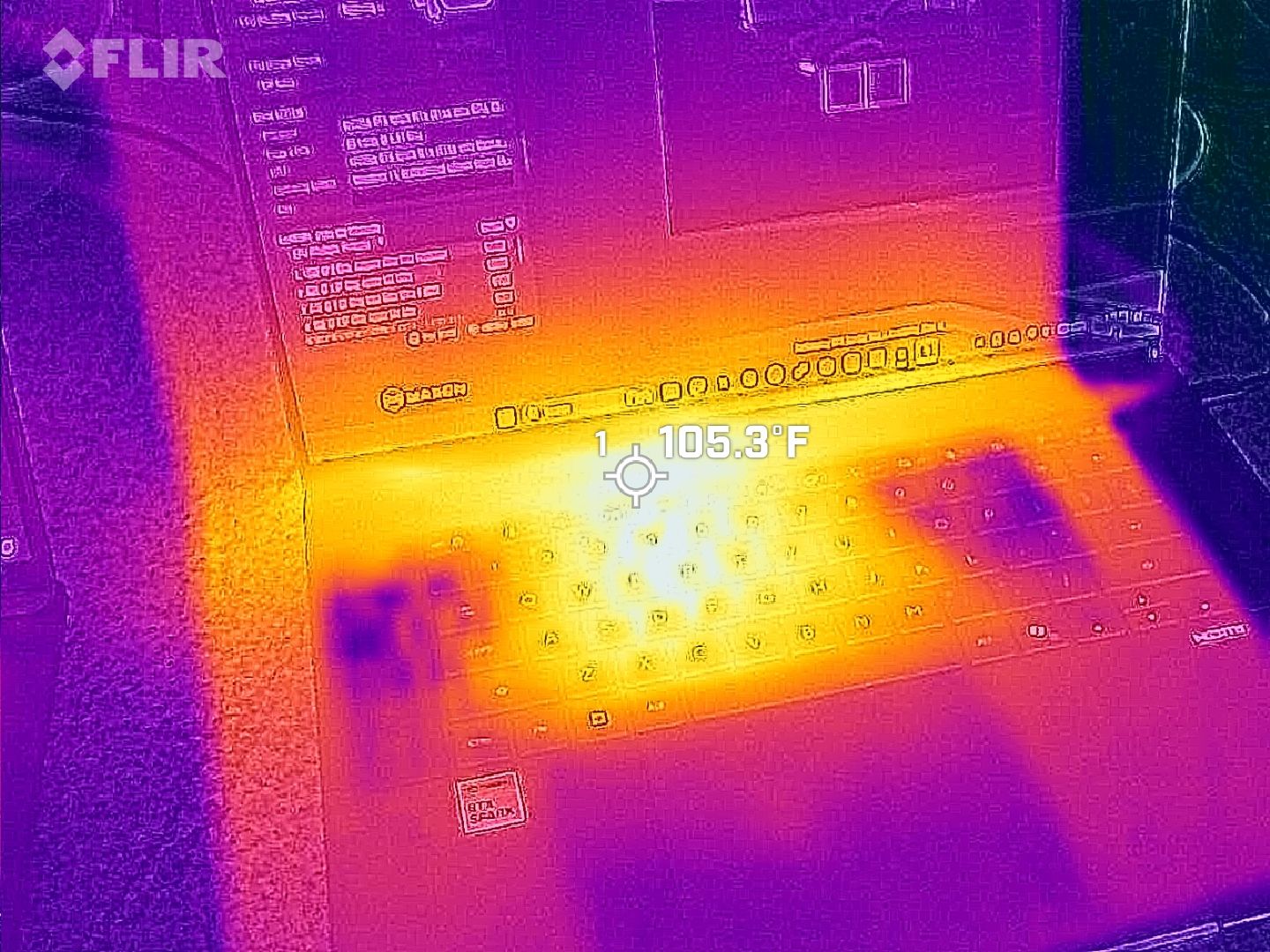
My OmniBook reached around 113 degrees Fahrenheit (45 degrees Celsius) at its hottest point under a sustained load and generally ran slightly warmer than my ProArt P16. That's nothing I'd consider concerning or even notice during regular use. The fans are also excellent and broadly comparable to ASUS, generally remaining below 50dB.

Thermal image of the HP OmniBook Ultra 16 side exhaust vent under load, recording a peak exhaust temperature of 111.3°F.
Daniel Rubino
Thermal image of the HP OmniBook Ultra 16 upper keyboard and hinge under load, showing a hotspot measuring 109.6°F.
Daniel Rubino
Thermal image of the HP OmniBook Ultra 16 underside under load, showing central heat dissipation at 105.7°F between dual fans.
Daniel Rubino
Thermal image of the HP OmniBook Ultra 16 keyboard deck under load, showing heat centered at 106.2°F with cooler palm rests.
Daniel Rubino

I just don't see a huge thermal payoff for the added bulk.

Because, yes, this thing weighs 4.9 pounds.

That's an entire pound heavier than the 3.9-pound ProArt P16. Even Microsoft's Surface Laptop Ultra comes in around 4.5 pounds.

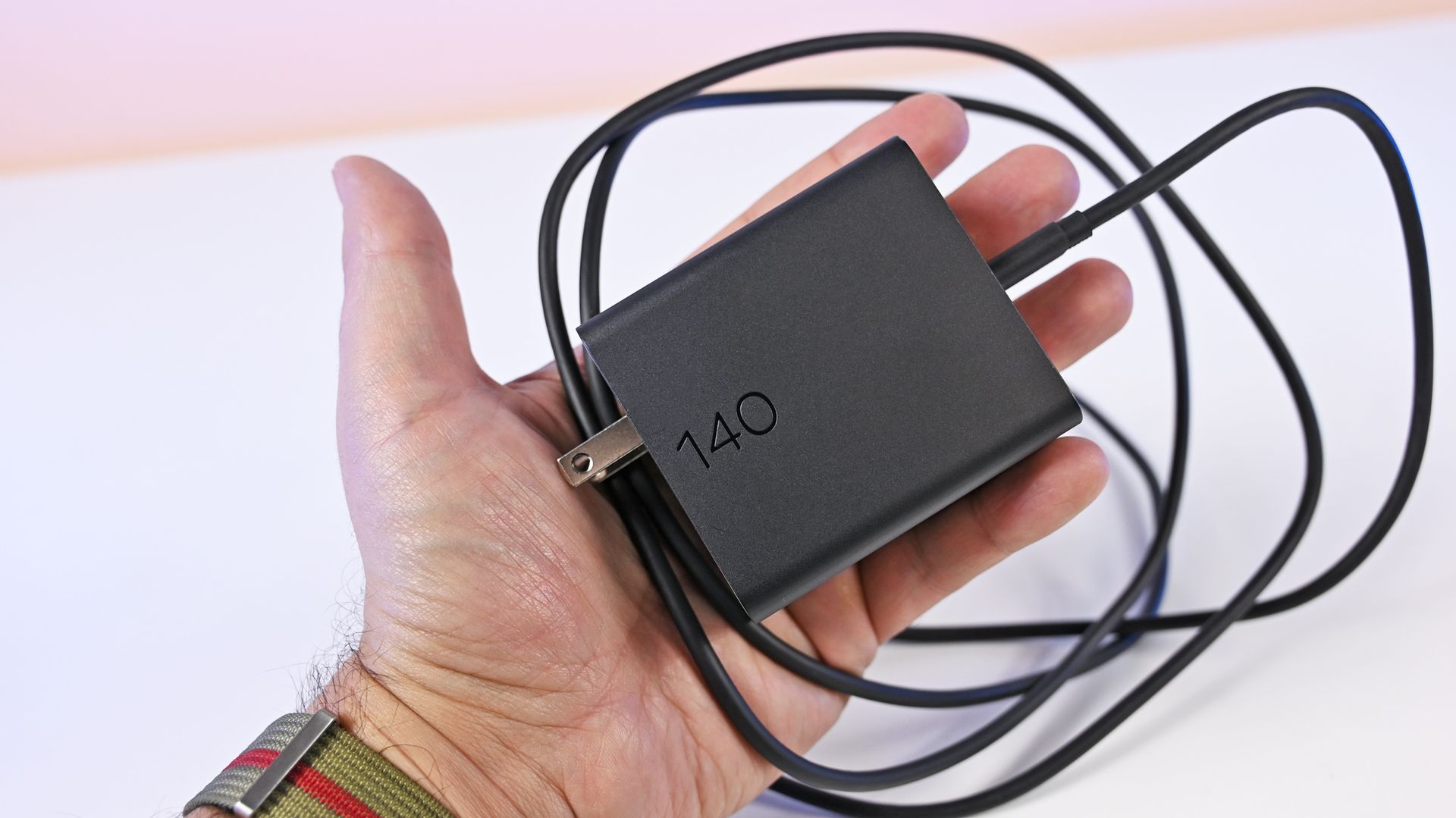
A hand holding the compact matte black 140W GaN power adapter and attached USB-C cable for the HP OmniBook Ultra 16 RTX Spark.

HP's compact matte black 140W GaN power adapter is an excellent addition. (Image credit: Daniel Rubino)

Leave the HP on a desk and none of this matters. Carry it around every day, and ASUS suddenly becomes much more appealing.

Ironically, HP makes up some of that difference with the best charger I've seen on an RTX Spark PC. The included 140W GaN charger is remarkably small, uses a detachable Type-C cable, and has folding prongs. HP says it's 43% smaller and 28% lighter than its previous adapter.

Display, keyboard, and touchpad: Some of HP's best work

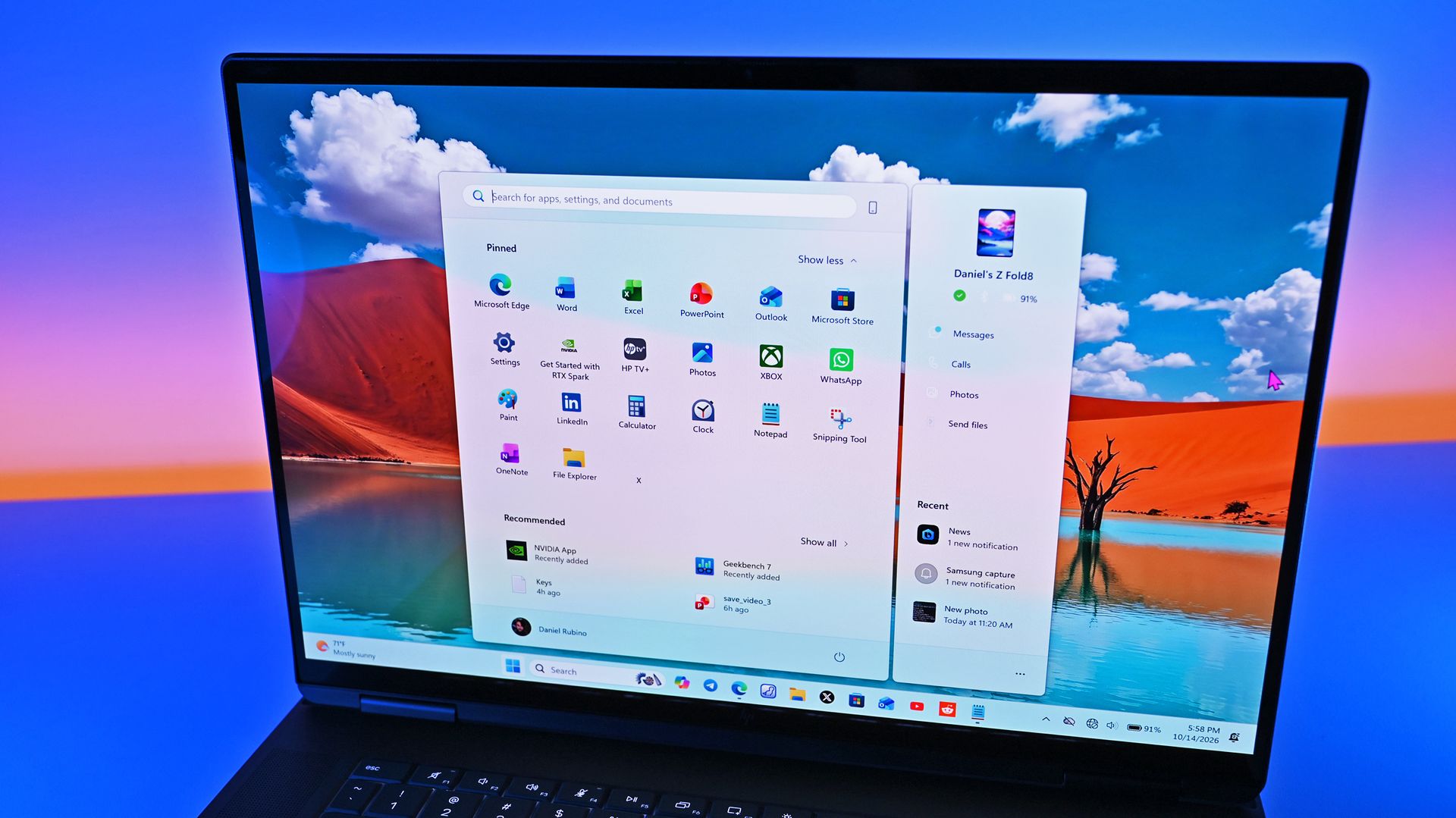
The screen of the HP OmniBook Ultra 16 RTX Spark running Windows 11, displaying an open Start menu and Phone Link widget against an orange desert wallpaper.

HP's OLED panel is really well done. (Image credit: Daniel Rubino)

The 3K OLED touchscreen might be my favorite thing about this laptop.

ASUS also has a fantastic OLED panel, but HP's looks slightly more natural to me. Colors appear clean and balanced without becoming excessively saturated.

HP rates it at 2880 x 1800 resolution, up to 120Hz (VRR), 500 nits SDR, 1,100 nits HDR, and 100% DCI-P3.

Extreme close-up of the dark keys on the HP OmniBook Ultra 16 RTX Spark illuminated by subtle purple edge backlighting.
Daniel Rubino
Close-up of the
Daniel Rubino
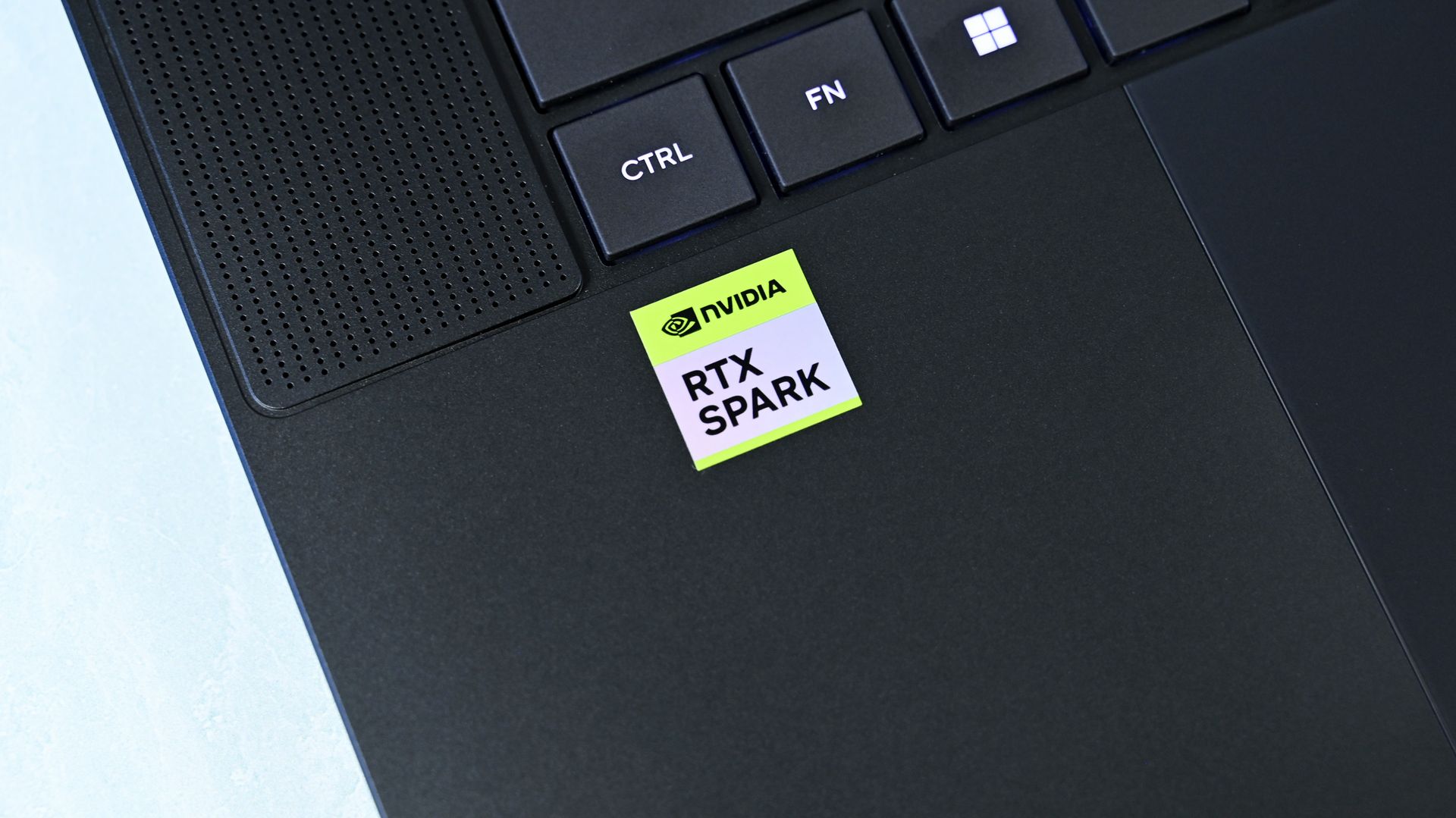
Overhead perspective of a hand resting on the oversized glass touchpad of the HP OmniBook Ultra 16 RTX Spark, with the NVIDIA RTX SPARK badge visible on the right palm rest.
Daniel Rubino
Angled close-up of the keyboard deck on the HP OmniBook Ultra 16 RTX Spark, highlighting the perforated top-firing speaker grille positioned along the left edge of the keys.
Daniel Rubino

It's glossy, although surprisingly tolerable for someone like me who complains about glossy laptop displays all the time. Reflections bother me considerably less here than on Surface Laptop Ultra.

The second-generation latticeless keyboard is another winner. HP says it increased the spacing between keys and deepened the key dishes based on feedback from its first attempt, and whatever it did worked.

It looks great, feels precise, and is genuinely fun to type on.

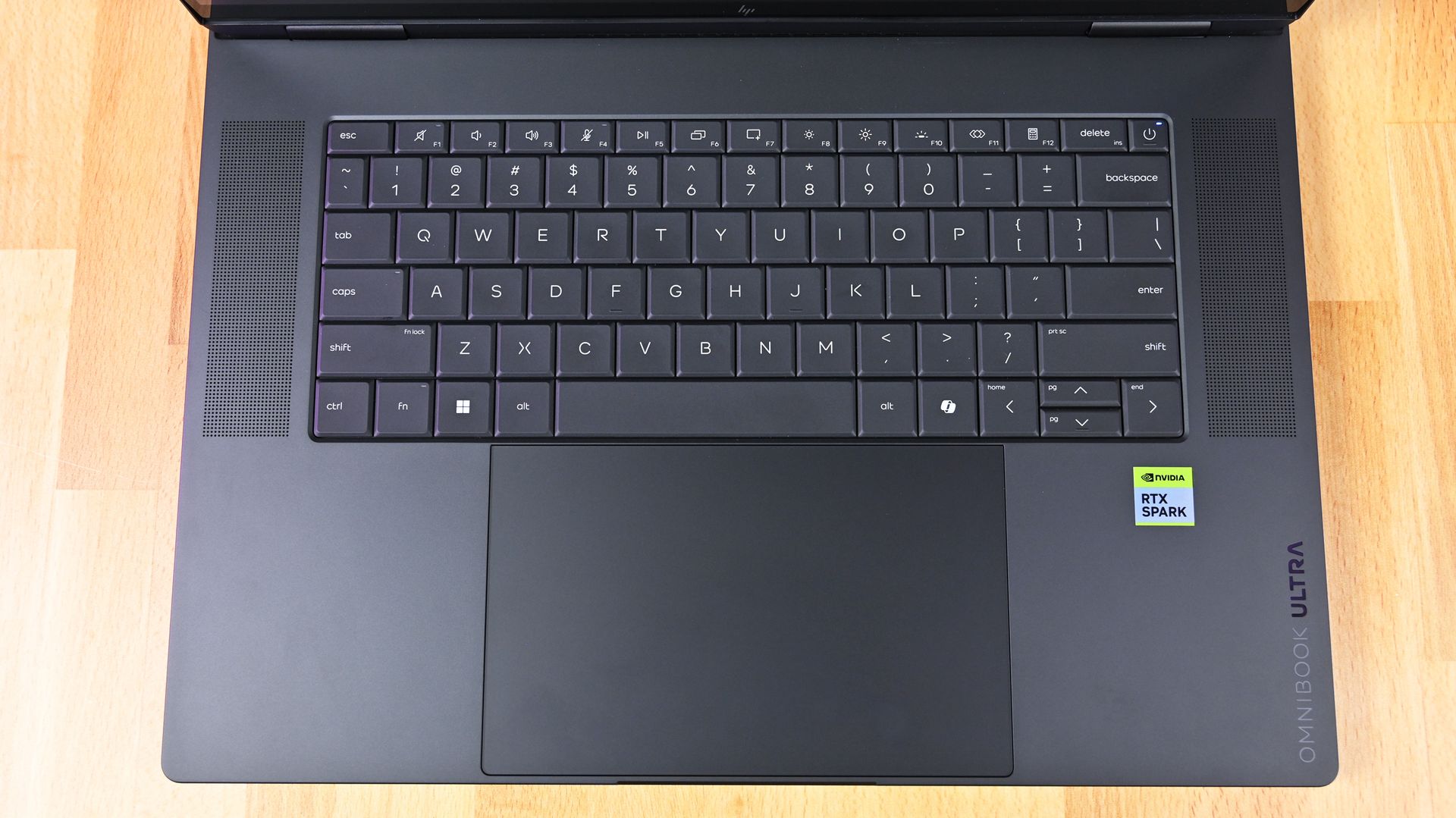
Overhead top-down view of the HP OmniBook Ultra 16 RTX Spark keyboard deck, flanked by dual speaker grilles, a trackpad, an NVIDIA RTX SPARK sticker, and embossed

Overhead top-down view of the HP OmniBook Ultra 16 RTX Spark keyboard deck, flanked by dual speaker grilles. (Image credit: Daniel Rubino)

My complaint is the backlighting. You get only two brightness levels versus three on ASUS, and there's no ambient light sensor, so you're manually switching it on and off.

The enormous haptic touchpad is also excellent, with crisp, consistent feedback across its entire surface. Yet bizarrely, it doesn't support Windows 11 Haptic Signals like ASUS and Surface do (which means it chose an older haptic design).

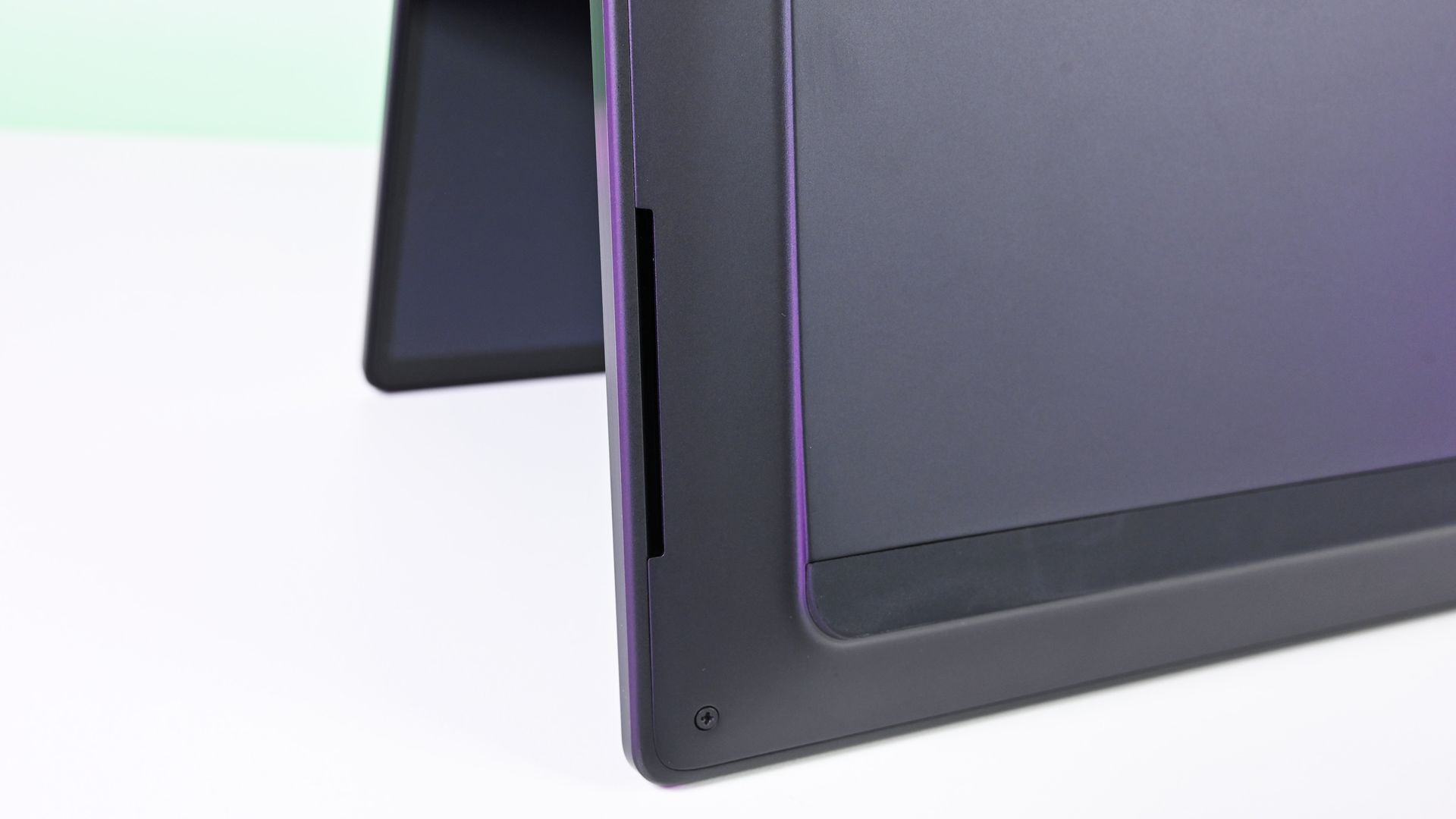
Detailed macro shot of the bottom edge and corner of the HP OmniBook Ultra 16 RTX Spark chassis, showing an elongated speaker cutout and assembly screw under purple accent lighting.

The bottom edge and corner of the HP OmniBook Ultra 16 RTX Spark chassis, showing an elongated speaker cutout. (Image credit: Daniel Rubino)

HP also skips ASUS's adaptive color and ambient light sensors, although it does provide human presence detection. Kind of weird to be missing those first two sensors on such a premium Windows laptop, not gonna lie.

Audio is excellent and roughly comparable to ASUS, while the 5MP webcam is simply okay. It's somewhat soft but perfectly usable. For that audio, you get a quad-speaker system that combines two speakers and a tweeter with DTS X Ultra and spatial audio. I generally prefer Dolby Atmos (which is what ASUS and Surface use), but DTS X Ultra is fine here.

Ports: Plenty of them, but why are both USB-C ports over here?

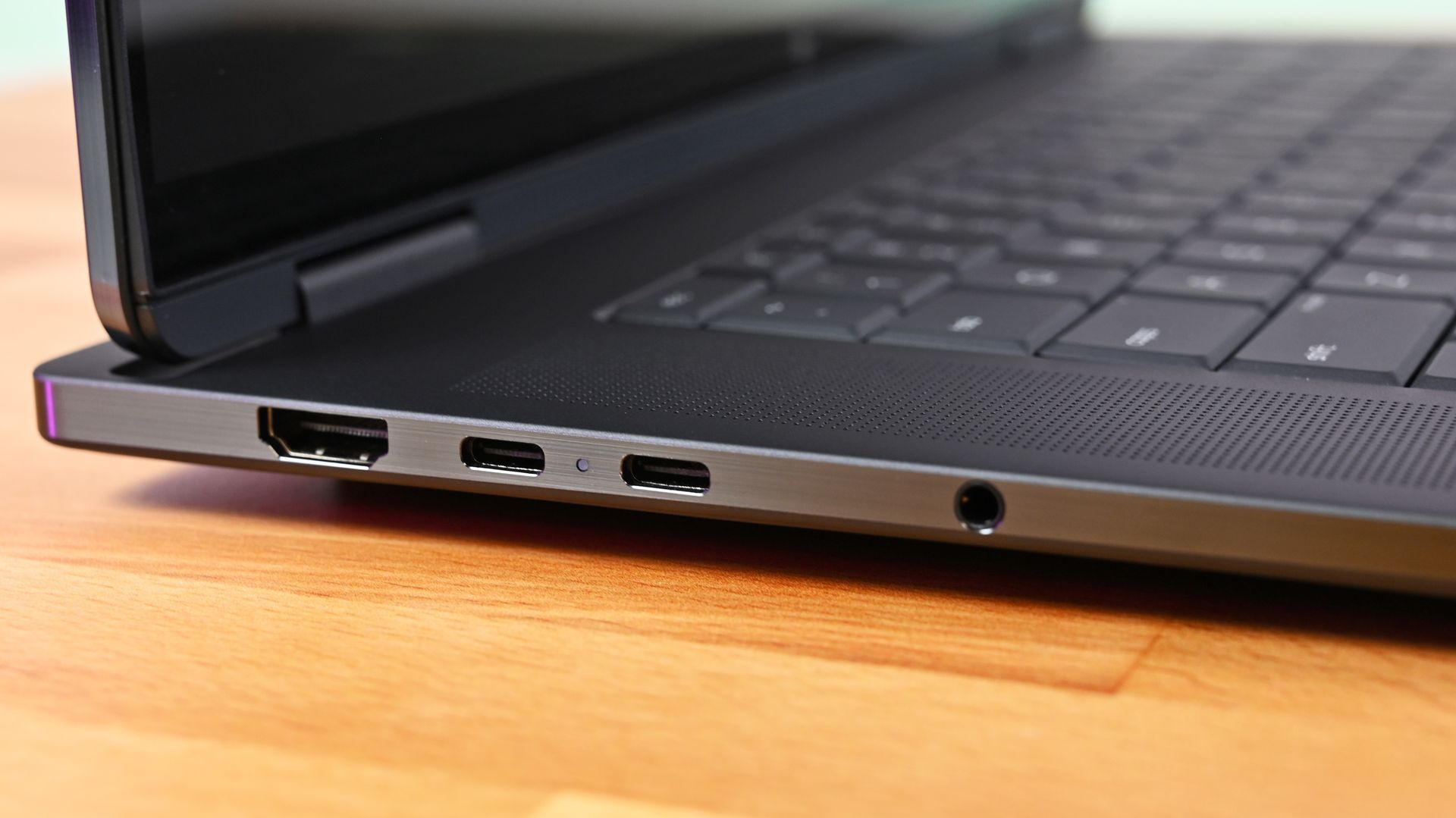
Close-up profile of the left edge of the HP OmniBook Ultra 16 RTX Spark resting on a wooden surface, showing an HDMI port, two USB-C ports with an LED status light, and a 3.5mm headphone jack.

Close-up profile of the left edge of the HP OmniBook Ultra 16 RTX Spark, showing an HDMI port, two USB-C ports with an LED status light, and a 3.5mm headphone jack. (Image credit: Daniel Rubino)

HP gives you HDMI 2.1, two USB-C ports, two USB-A ports, MicroSD, and a headphone jack.

That's a great selection, particularly those two legacy Type-A ports.

Unfortunately, both USB-C connections are on the left side, and since that's also how you charge the laptop, cable placement is less flexible than ASUS (personally, I feel one Type-C on either side is a better design decision).

The second-generation latticeless keyboard is another winner… It looks great, feels precise, and is genuinely fun to type on

The software loadout is peculiar, too. My system came with McAfee, which I immediately removed, yet several HP utilities I'd expect on one of the company's flagship laptops, including HP Support, weren't installed, so you get fewer bonus device configuration options, unlike the MyASUS app, which is ideal.

None of these are serious problems. They're just odd omissions at this price.

RTX Spark performance: Stop worrying about tiny differences

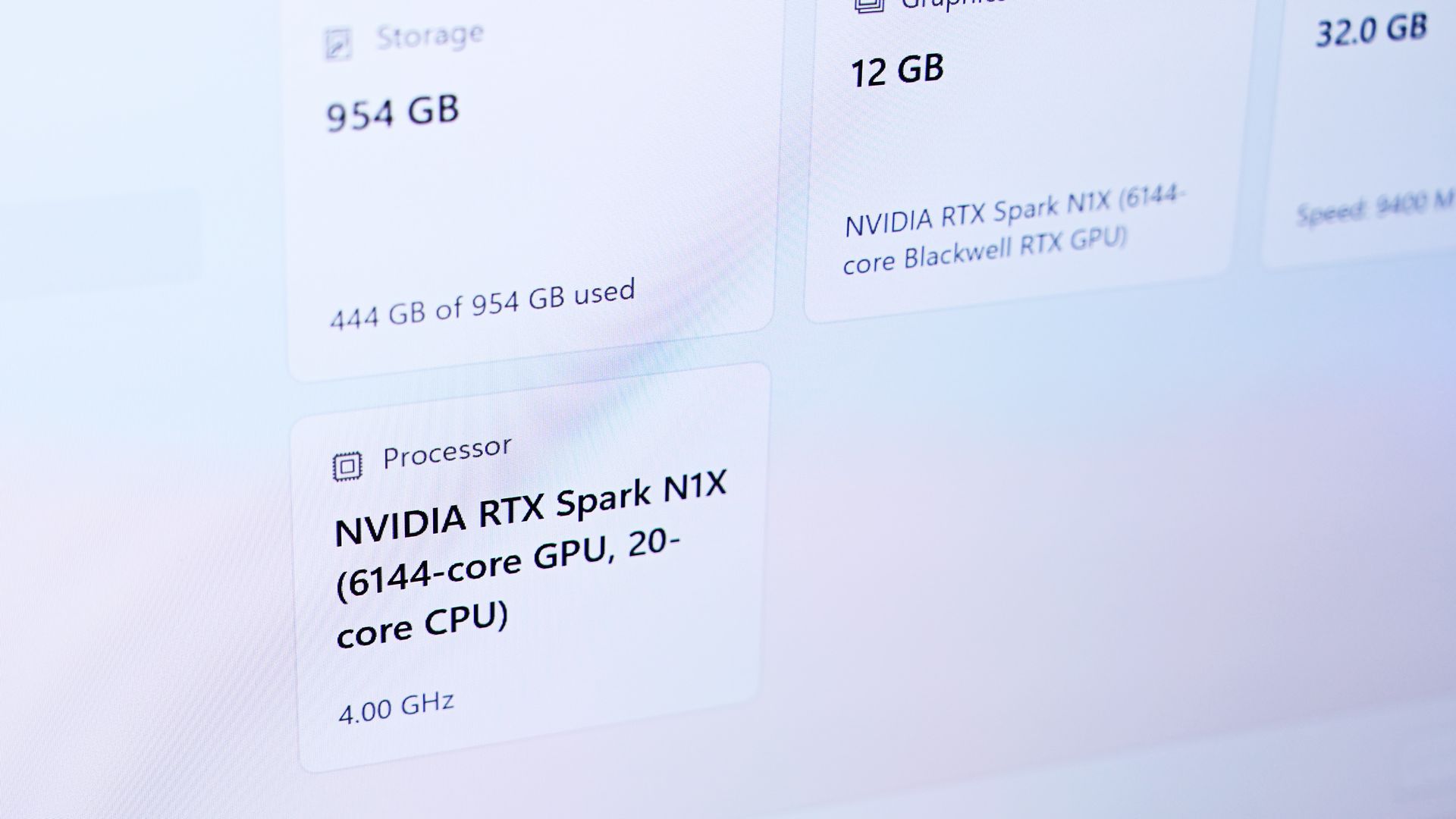
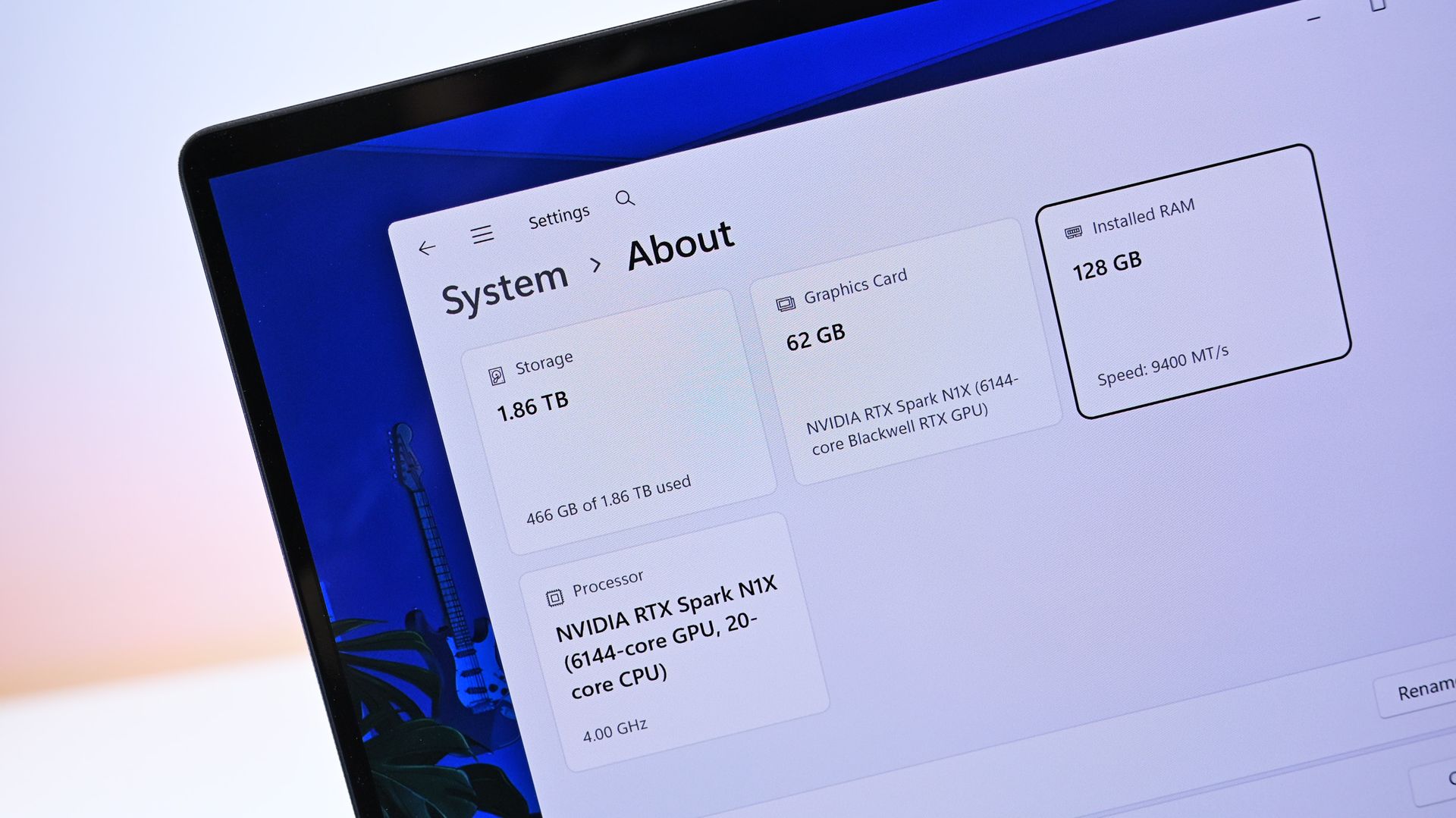
Close-up of the HP OmniBook Ultra 16 RTX Spark display showing system hardware specs, including an NVIDIA RTX Spark N1X processor, 12 GB GPU memory, and 32 GB RAM.

(Image credit: Daniel Rubino)

After testing multiple RTX Spark PCs, I've reached a straightforward conclusion: don't buy one based on tiny benchmark victories.

My OmniBook scored 13,080 in 3DMark Time Spy, ahead of Surface's 12,771 and ASUS's 11,840. Time Spy Extreme reversed things, with ASUS hitting 6,006 versus 5,857 for Surface and 5,492 for HP.

Cinebench 2026 tells a similar story. HP scored 6,954 multi-core and 562 single-core, while Geekbench 7 results among these machines are effectively interchangeable.

Even GPU compute is remarkably close. HP reached 187,569 in Geekbench 7 CUDA, compared to 187,547 for my 4K ASUS configuration.

Bar chart for Cinebench 2026: HP OmniBook Ultra 16 leads with 6,954 multi-core and 562 single-core, ahead of Surface Laptop Ultra (6,885/558) and ASUS ProArt P16 (6,742/554)
Future
Bar chart for Geekbench 7: ASUS ProArt P16 3K leads multi-core at 23,878 (single: 2,682); HP OmniBook Ultra 16 scores 23,739 multi and 2,703 single; Surface scores 23,571 multi
Future
Bar chart for Geekbench 7 GPU (CUDA): HP OmniBook Ultra 16 leads at 187,569, narrowly ahead of ASUS ProArt P16 4K (187,547), Surface Laptop Ultra (186,098), and ASUS ProArt 3K (185,630)
Future
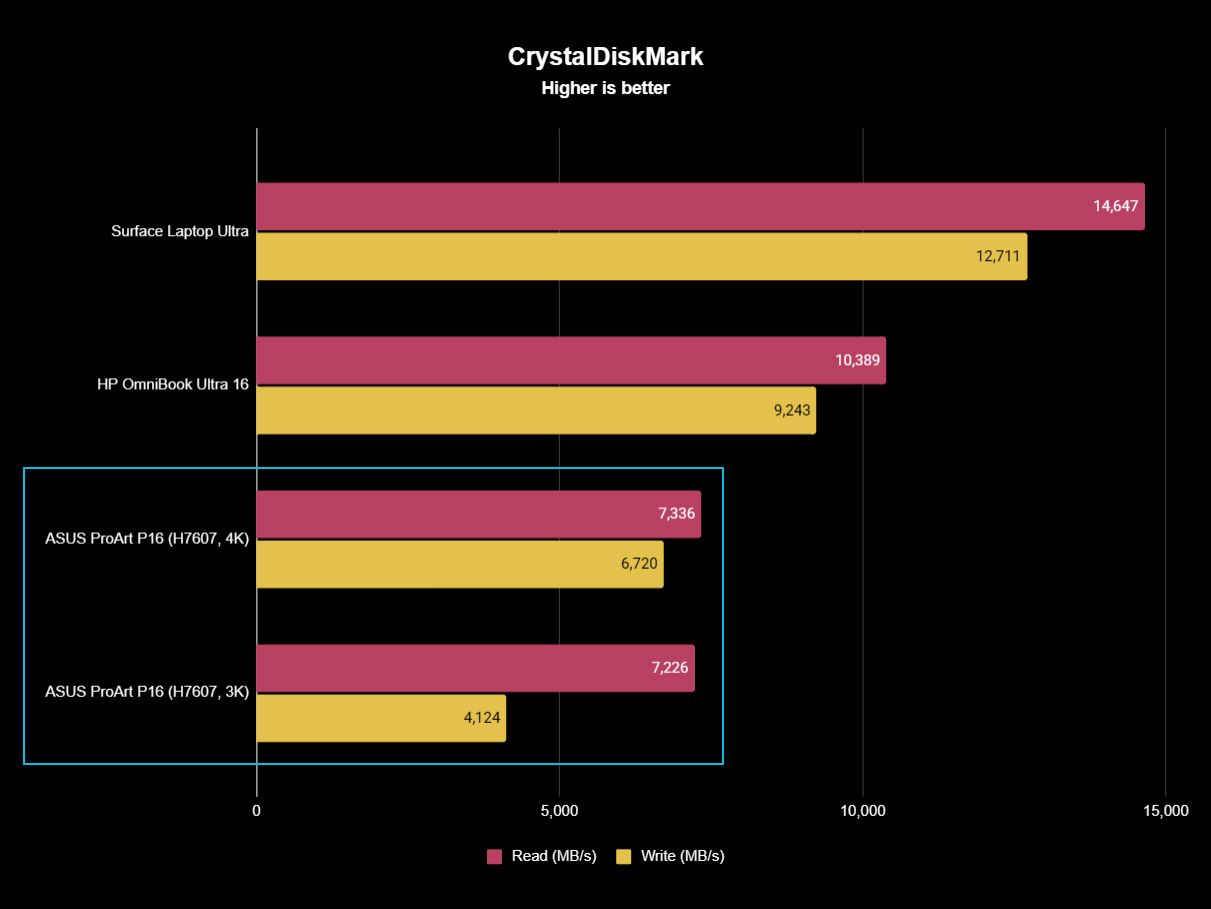
Bar chart for CrystalDiskMark (MB/s): Surface Laptop Ultra leads (14,647 read/12,711 write), followed by HP OmniBook Ultra 16 (10,389/9,243) and two ASUS ProArt P16 models
Future
Bar chart for 3DMark Time Spy: HP OmniBook Ultra 16 leads at 13,080, followed by Surface Laptop Ultra at 12,771 and ASUS ProArt P16 (3K) at 11,840
Future
Bar chart for 3DMark Time Spy Extreme: ASUS ProArt P16 (3K) leads at 6,006, followed by Surface Laptop Ultra at 5,857 and HP OmniBook Ultra 16 at 5,492
Future
Bar chart for 3DMark Speed Way: HP OmniBook Ultra 16 leads with 3,143, followed by Surface Laptop Ultra at 3,011 and ASUS ProArt P16 (3K) at 2,927
Future
Bar chart for 3DMark Steel Nomad: Surface Laptop Ultra leads at 3,064, followed by HP OmniBook Ultra 16 at 2,935 and ASUS ProArt P16 (3K) at 2,846
Future

The exception is storage. HP's SSD reached an excellent 10,389MB/s read and 9,243MB/s write, substantially ahead of my ASUS configurations, although Surface was faster still.

Gaming performance was similarly close to ASUS in my testing. RTX Spark isn't a dedicated gaming platform, but gaming performance is very good, especially paired with that 120Hz OLED.

The takeaway is increasingly obvious: choose your RTX Spark laptop based on the laptop, not a few percentage points in a synthetic benchmark.

Battery life: Better than I expected

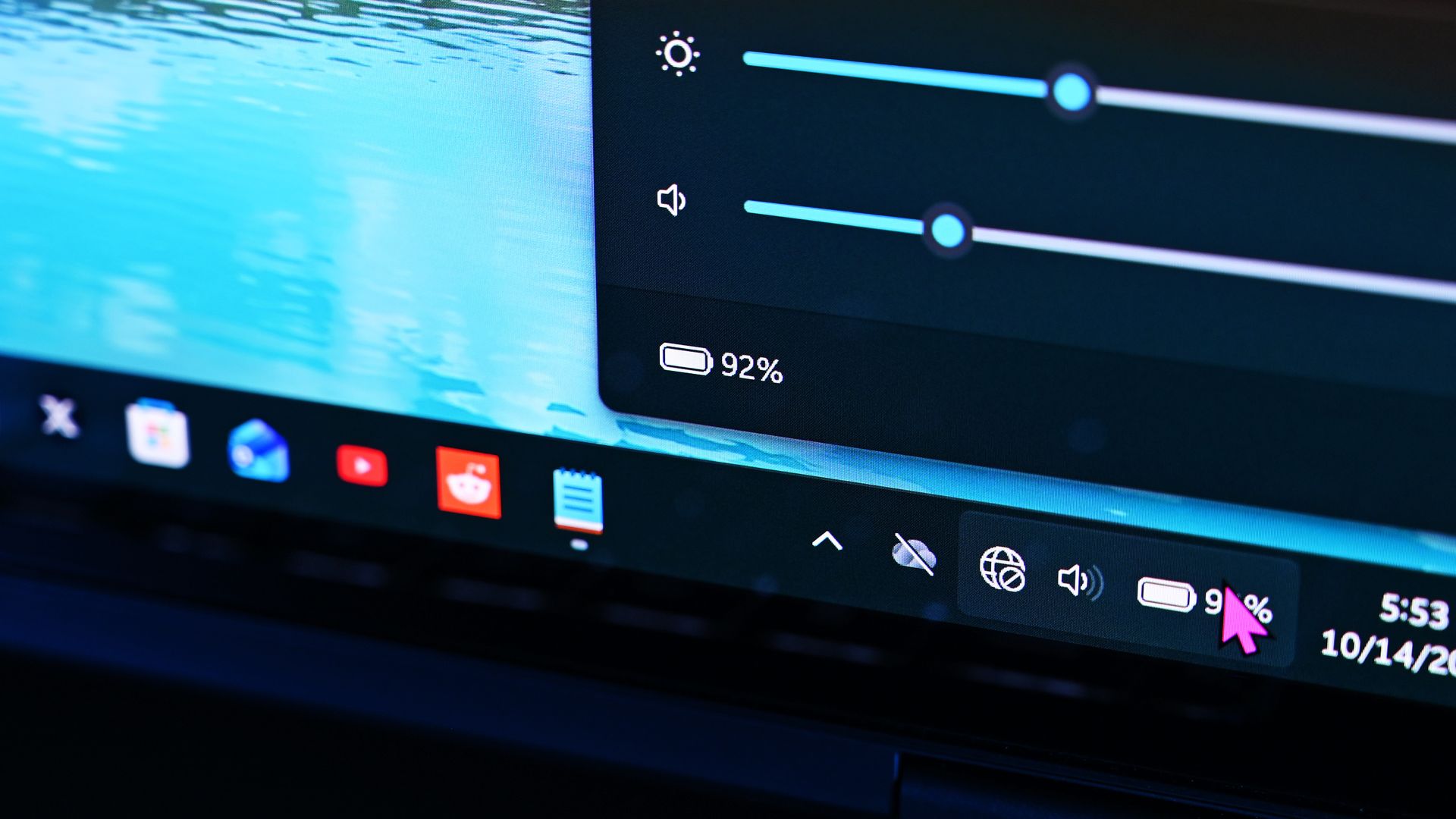
Macro shot of the Windows 11 quick settings panel on the HP OmniBook Ultra 16 RTX Spark taskbar, showing brightness/volume sliders and a 92% battery charge level.

HP's RTX Spark laptop does decently well on battery life, in line with other RTX Spark models. (Image credit: Daniel Rubino)

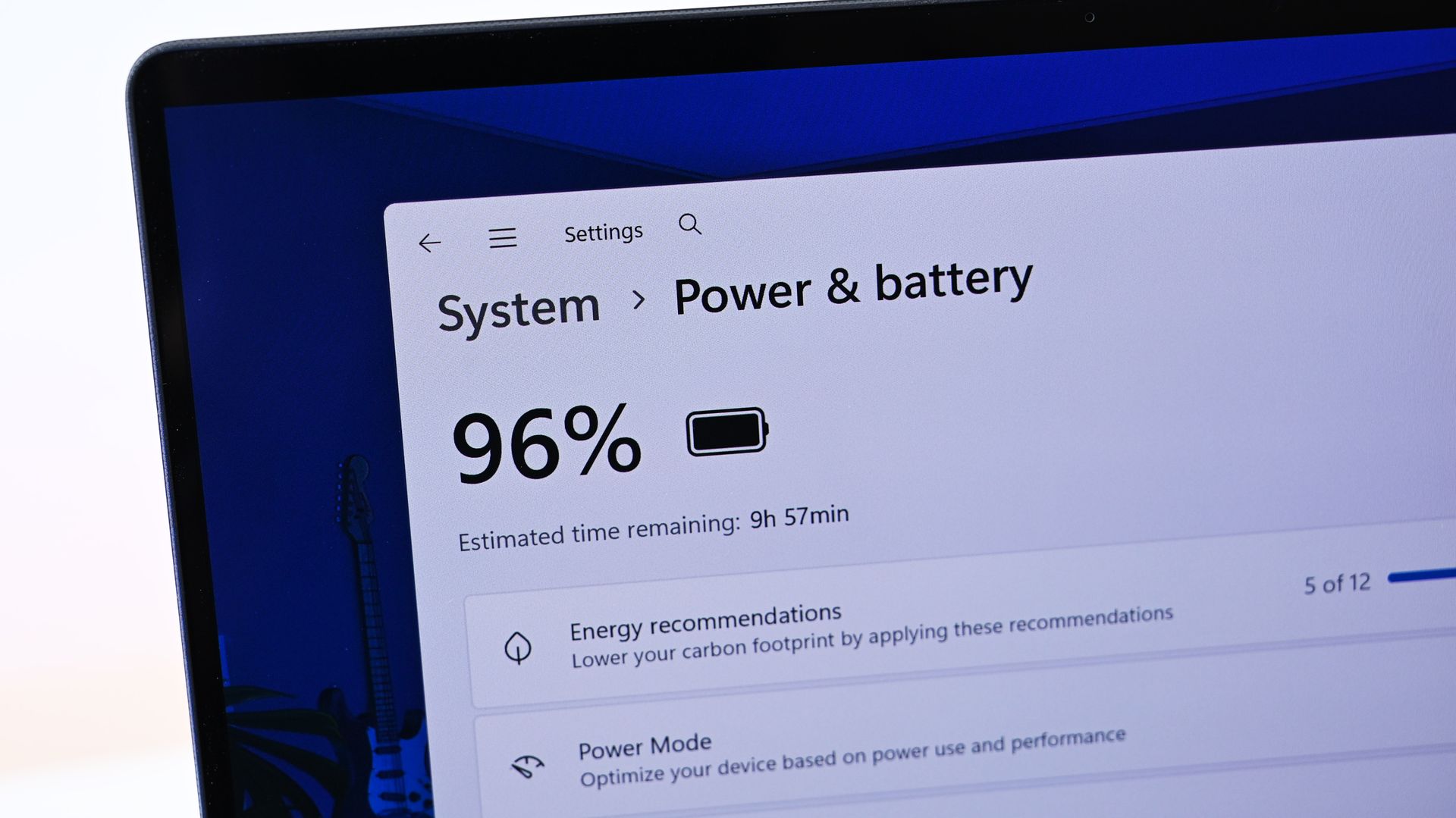
Using Windows Battery Report to track my real-world light-to-medium everyday usage, the OmniBook Ultra 16 peaked at 11 hours and 18 minutes.

That's broadly comparable to ASUS, although in practice the HP feels like it can stretch slightly longer.

ASUS fights back with phenomenal standby behavior. My ProArt P16 resumes almost instantly and loses very little battery while sleeping. HP can take noticeably longer coming back from hibernation.

It's a small distinction, but one I've noticed after living with both.

Obviously, once you go heavy workloads and hammer that GPU for intense local AI sessions, gaming, or video editing, you're going to cut that usage time in half.

Should you buy the HP OmniBook Ultra 16?

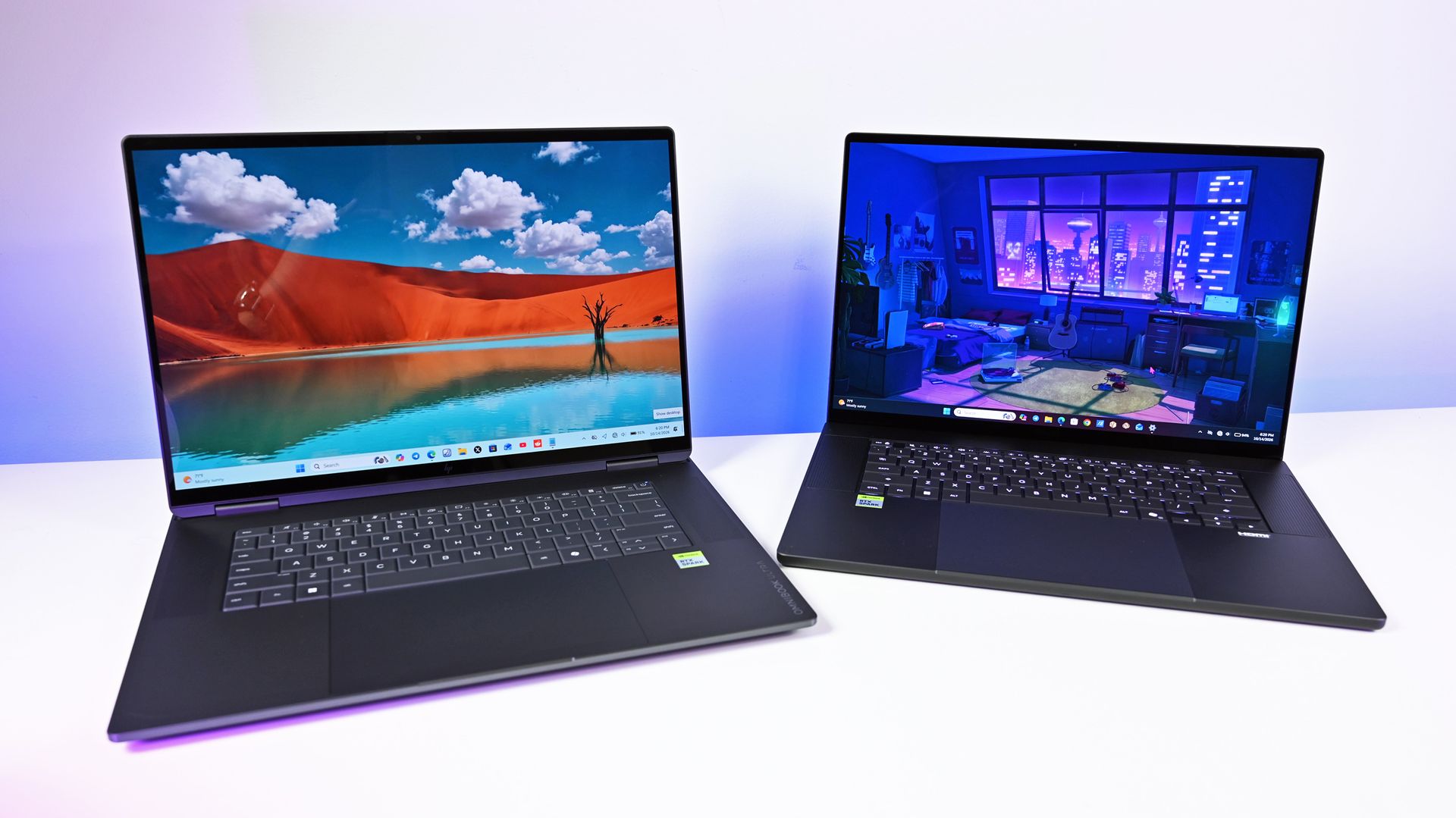
An HP OmniBook laptop on the left and the ASUS ProArt P16 on the right, open side by side on a desk displaying colorful desktop wallpapers.

The HP OmniBook laptop on the left and the ASUS ProArt P16 on the right. (Image credit: Daniel Rubino)

You should buy this if ...

✅You want a premium RTX Spark laptop without jumping to 64GB or 128GB

✅You care about build quality, display quality, and the everyday laptop experience

✅You find it significantly cheaper than the ASUS ProArt P16

You should not buy this if ...

❌You want the lightest RTX Spark laptop you can get

❌You want a convertible RTX Spark PC with pen support

❌You expect every premium convenience at this price

If the OmniBook Ultra 16 existed in a vacuum, I'd probably score it higher than 4 out of 5.

I've genuinely enjoyed using it for the last three weeks. HP's build quality is exceptional, the OLED display is fantastic, the keyboard and touchpad are among the company's best, audio is great, battery life is good, and performance has been consistently excellent.

At Best Buy's current $2,799.99, the 32GB configuration is also one of the more compelling ways to get into RTX Spark without spending thousands more on memory you may never need.

Unfortunately for HP, ASUS exists.

The ProArt P16 delivers essentially the same performance with excellent thermals, an equally premium experience, and more of the little features I'd expect at this price, all while weighing a full pound less.

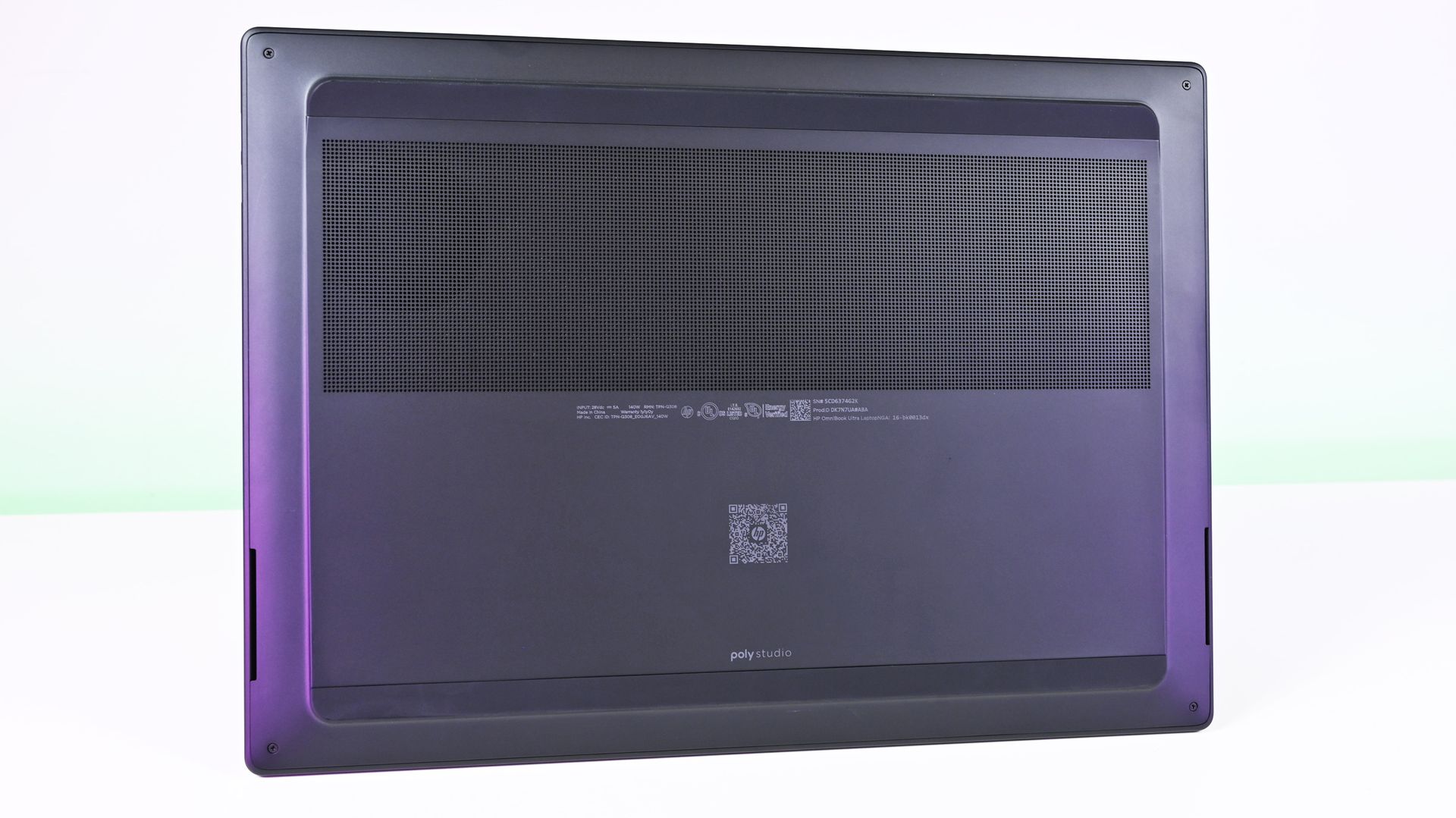
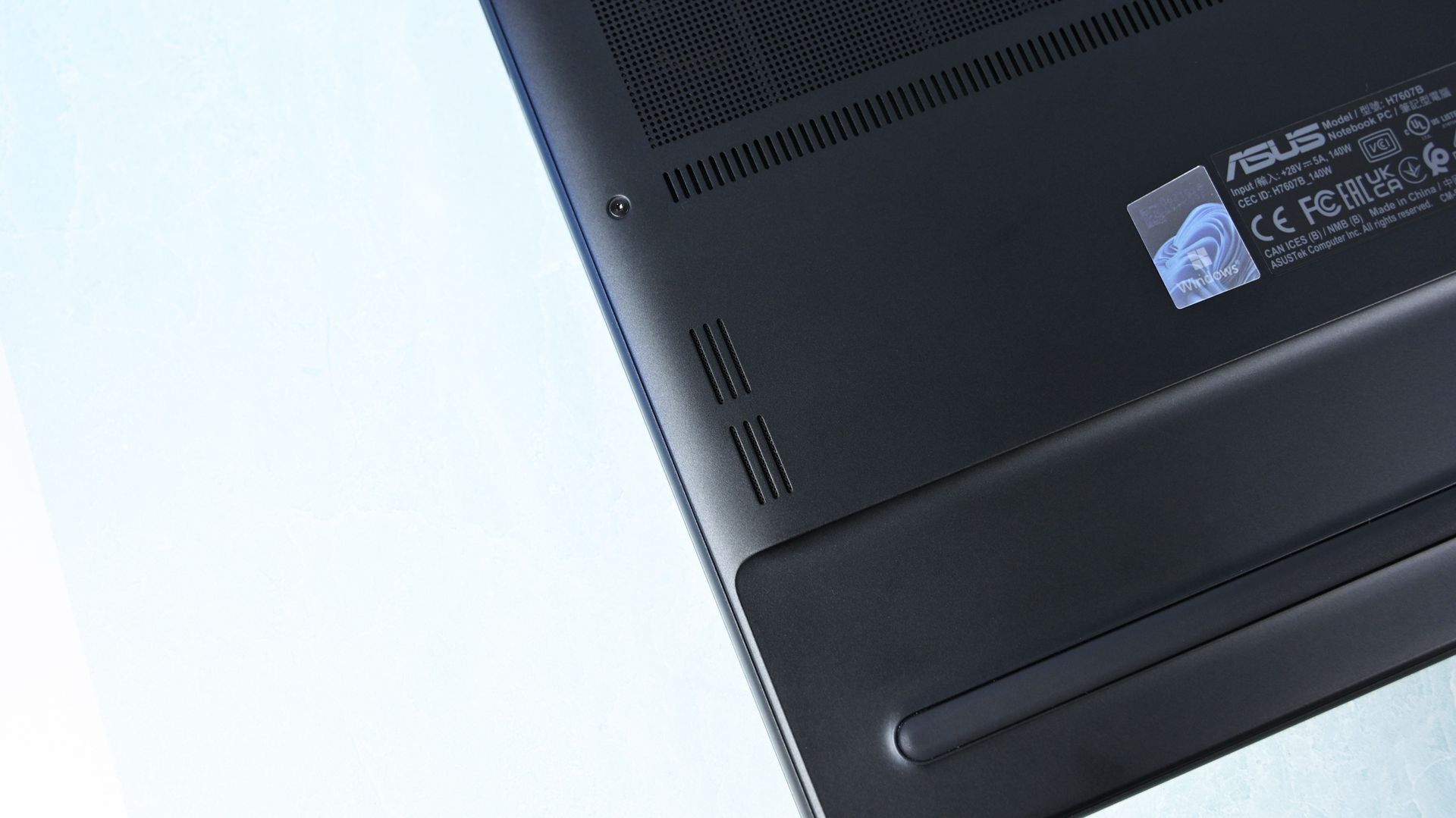
Underside view of the HP OmniBook Ultra 16 RTX Spark showing the large horizontal perforated intake cooling vent, Poly Studio branding, and regulatory information.

Underside view of the HP OmniBook Ultra 16 RTX Spark showing the large horizontal perforated intake cooling vent. (Image credit: Daniel Rubino)

There’s also Lenovo, which gives RTX Spark shoppers another compelling alternative. Our Lenovo Pro 9n review found an excellent 15.3-inch clamshell with a 2.5K OLED display, strong performance, and a particularly interesting pen-enabled haptic touchpad. It’s also substantially lighter than the HP, which makes the OmniBook Ultra 16’s 4.9-pound weight even harder to ignore. Lenovo separately offers a larger Yoga 9n 2-in-1 for buyers who want the added versatility of a convertible design.

That leaves HP in a slightly awkward middle ground. Lenovo has its convertible versatility, ASUS has portability and an exceptional overall feature set, and Surface Laptop Ultra offers Microsoft’s distinctive premium hardware.

HP’s build quality is fantastic. The 3K OLED display is one of my favorites on any laptop I’ve used this year.

The OmniBook Ultra 16 competes extremely well on build quality, display, performance, and everyday usability, but it doesn't have one defining advantage beyond potentially being the better value when discounted.

At $2,799, however, that last point shouldn't be underestimated. If the HP is several hundred dollars cheaper than its closest competitors when you're shopping, I'd happily buy it.

Hp - Omnibook Ultra 16Windows Central

HP
Omnibook Ultra 16 RTX Spark

HP OmniBook Ultra 16 pairs NVIDIA RTX Spark performance with a premium, remarkably thin design aimed at creators, developers, and enthusiasts. It’s built for demanding creative work and local AI, with enough versatility to serve as an everyday high-end laptop.

Click to join us on r/WindowsCentral

Join us on Reddit at r/WindowsCentral to share your insights and discuss our latest news, reviews, and more.
LG's Gram laptops prove you don't need a heavy PC to get serious productivity power

If you're looking for a laptop that's easy to carry without settling for weaker specs, LG's 'gram' range is still one of the strongest options around. To some, it's surprising to see LG in the category, but in the industry, they're still known for lightweight designs, built for traveling workers.

With multiple models at Best Buy currently available across different price points before Black Friday, we've picked some standout LG Gram laptops that offer a balance of value, features, and performance.

For example, the travel-friendly LG gram Max 17-inch touchscreen with an Intel Core Ultra 7 355 (Panther Lake) CPU, 16GB of RAM, and a 512GB SSD is currently discounted from $1,749.99 to $1,199.99 at Best Buy.

It features exceptional processing power for tackling heavy workloads, a 2.5K display that renders images with sharp details and vibrant colors, a large battery life of over 26 hours, and a thin 0.6-inch profile with a durable magnesium alloy chassis.

gram Max 17" (Core Ultra 7 355, 16GB RAM, 512GB SSD): was $1749.99 now $1199.99

This LG Gram is armed with Intel's latest Panther Lake processor, capable of making mincemeat of digital documentation, spreadsheets, and other productivity tasks with ease, while packing a solid chassis and portable design.View Deal

Alternative lightweight picks

gram Book 15" (Core Ultra 5 115U, 16GB RAM, 512GB SSD): was $999.99 now $599.99

This LG Gram 15-inch laptop has the best value for money in this roundup, as you will be getting a versatile workflow cruncher with a fast-performing Intel Core Ultra 5 CPU, an ultra-thin build, upgradeable SSD and RAM slots, and more features for under $600.View Deal

gram Book 14" (Core 5 315, 8GB RAM, 256GB SSD): was $799.99 now $699.99

This 14-inch LG Gram laptop features a 61Wh battery that lasts all day at work, a built-in AI assistant to speed up menial tasks like summarizing text, and a FHD 1920x1080 IPS display for wider reading space.

Touchscreen (Silver) version: $729.99 at Best Buy (was $829.99)View Deal

gram Book 15" (Core Ultra 5 115U, 32GB RAM, 512GB SSD): $799.99

This LG Gram laptop comes with a 15-inch Touchscreen with FHD resolution, an Intel Core Ultra 5 115U CPU with a dedicated NPU for processing AI tasks efficiently, and a generous selection of USB and M.2 SSD slots.View Deal

gram Book 16" (Ryzen AI 7 445, 16GB RAM, 1TB SSD): $1549.99

This laptop is the second most powerful one in this roundup, as it's equipped with an AMD Ryzen AI 7 445 CPU that helps it excel in AI-related tasks and a 1TB SSD for storing tons of vital data files.View Deal

How long will these deals last?

Best Buy's discounts on LG Gram laptops will last until November 14, 2026.

Is 8GB enough RAM for Windows?

In the past, we wouldn't normally recommend a laptop with 8GB RAM because it offers less-than-optimal responsiveness with Windows 11. However, we have recently tested Microsoft's latest 26H2 update to Windows 11, and we have discovered that it has improved the fresh-boot memory footprint (with no additional apps running) and common workload performance of 8GB RAM PCs.

While there still needs work when tackling heavy workloads, this 26H2 update has made 8GB RAM PCs and laptops much more viable for casual use or light workloads.

Should I wait for Black Friday for a better deal?

It depends on whether you're willing to wait until Black Friday for a bigger discount or if you're in need of a new laptop for work/casual use right now and don't have time to wait for a sweeter deal.

Click to join us on r/WindowsCentral

Join us on Reddit at r/WindowsCentral to share your insights and discuss our latest news, reviews, and more.
Microsoft made Windows 11 more responsive on these 8GB laptops

Microsoft has been busy at work reducing the amount of RAM that Windows 11 consumes, and it finally made an official statement today on the topic.

As it turns out, the company has already been quietly shipping performance improvements in the latest Windows 11 updates, focusing on making systems with 8GB of RAM feel a lot more responsive.

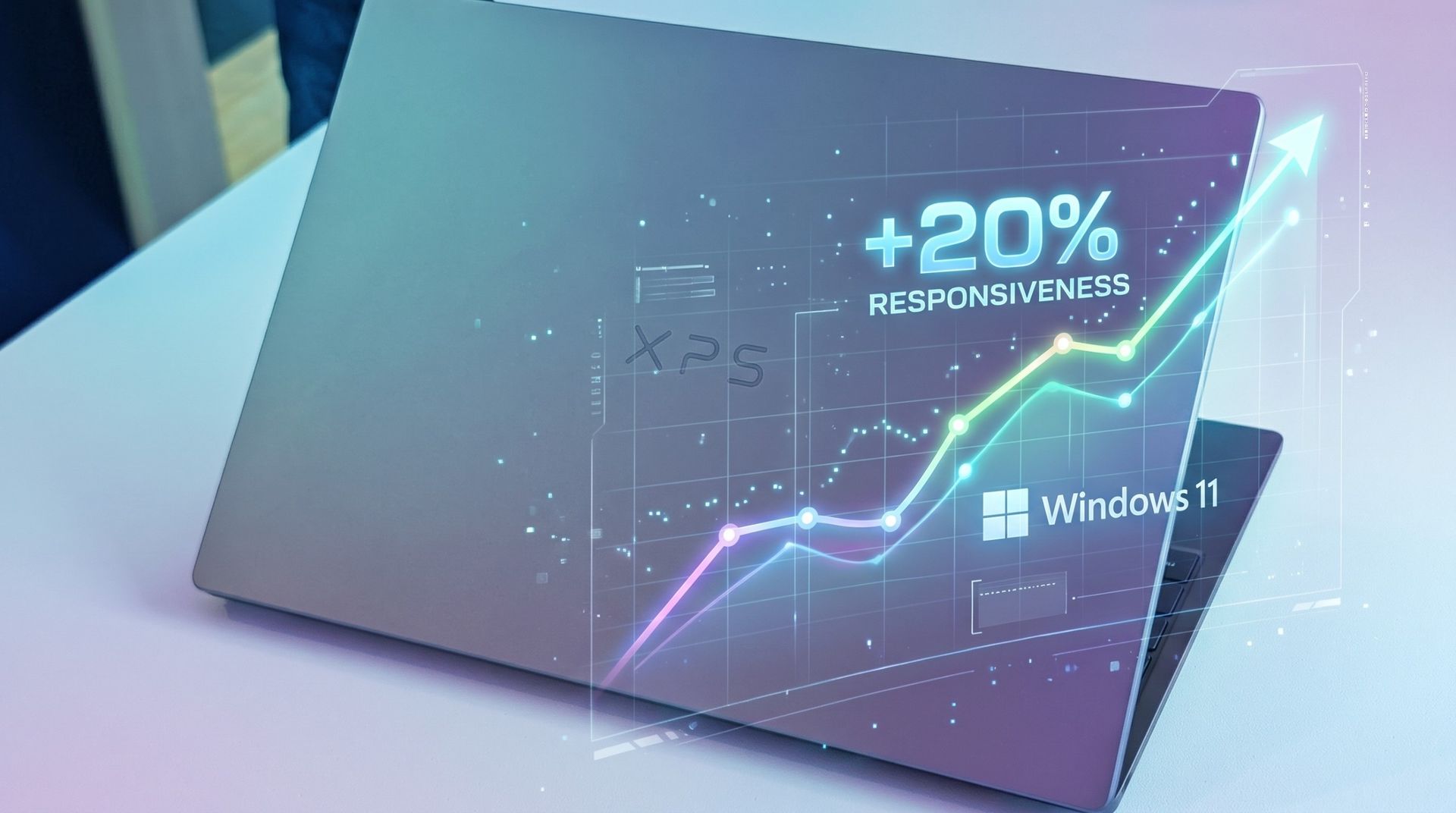
The result? Microsoft says Windows 11 is now about 20% more responsive on 8GB PCs compared to before this work started. The work also applies to systems with 4GB, 16GB, and beyond, with specific tuning for each amount.

This couldn't come at a better time. RAM and storage shortages (explained below) are driving up the cost of all PCs, and models with 8GB of RAM are being revived to lessen the burden on consumers.

Our favorite 8GB Windows laptops in November 2026

Dell XPS 13

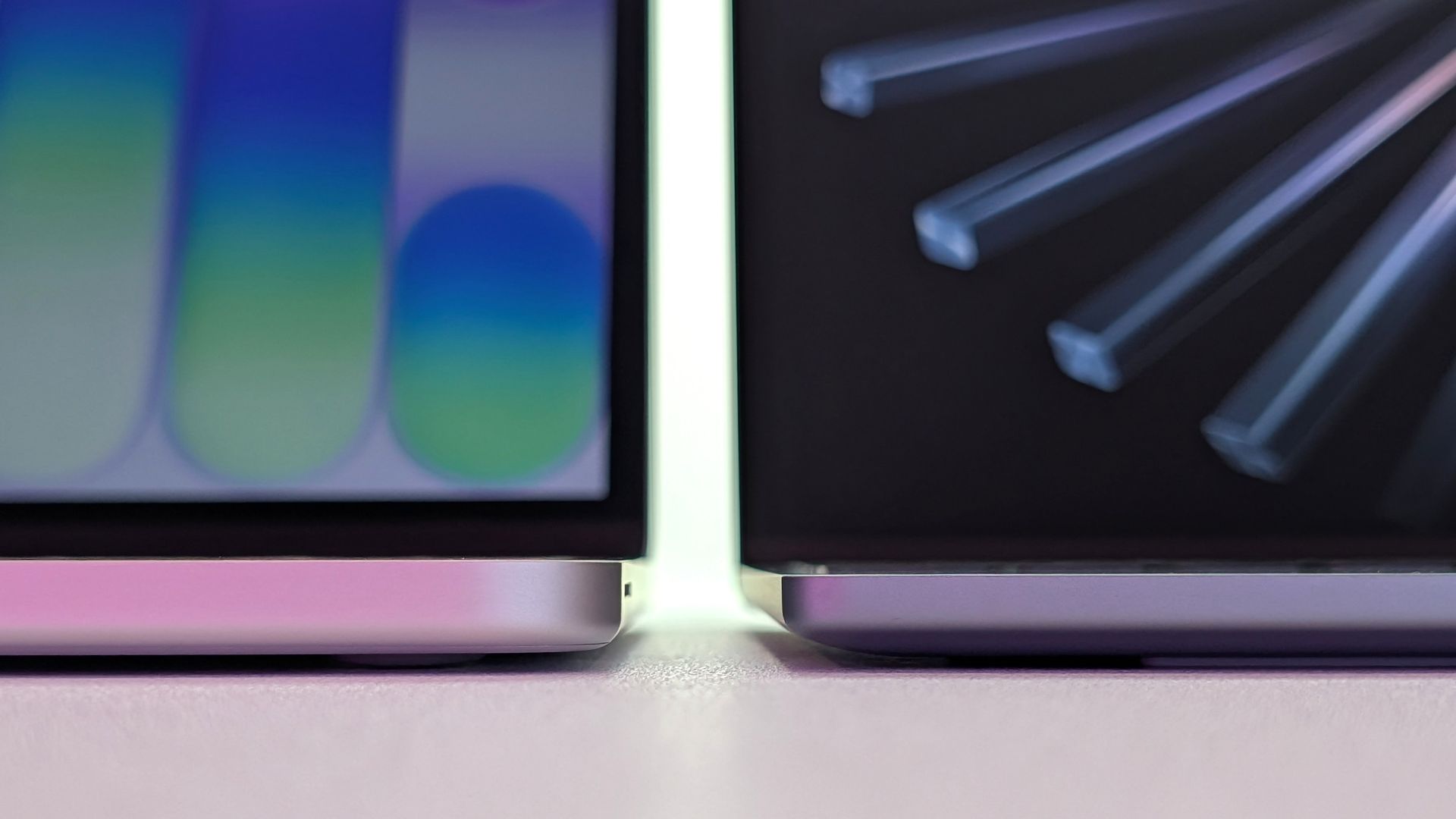
Dell's thinner XPS 13 (2026) on the right, Apple's thicker MacBook Neo on the left. (Image credit: Zac Bowden / Windows Central)

Companies like Dell, Acer, and HP have all recently launched 8GB laptops that cost somewhere around $699, with student and regular discounts frequently dropping those numbers lower.

If you were hesitant to shop for an 8GB laptop before, the recent Windows 11 updates should have you reconsidering, especially when prices are this reasonable. Here are my three favorite 8GB laptops right now.


Dell's awesome XPS 13 starts at $699.99 (or $599.99 if you're a student) and includes an Intel Core 5 320 CPU, 8GB of LPDDR5x RAM, a 256GB M.2 PCIe 4.0 NVMe SSD, and a 13.4-inch touch display with 2560x1600 resolution

👉 See at Dell.com

Dell's new XPS 13 for 2026 wowed both Zac Bowden and me at Computex earlier this year, and it's been available to buy since June.

It's a laptop with many premium features despite its price, including a higher-res 2560x1600 (QHD+) display with a 120Hz refresh rate, an IR camera for Windows Hello facial recognition, capable speakers, and a comfortable keyboard/touchpad combo.

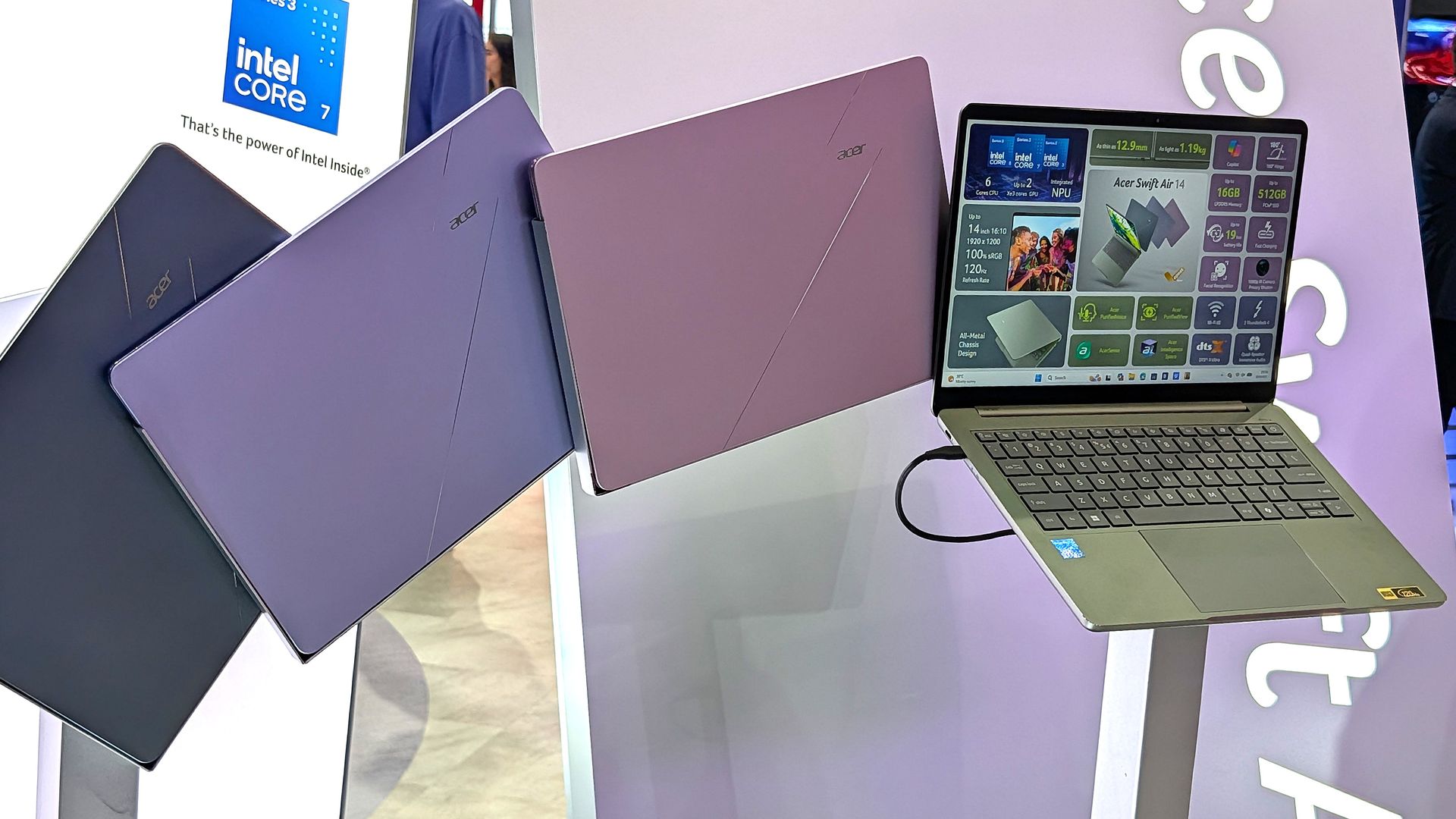
👉 Does Acer's Swift Air 14 beat Dell's awesome XPS 13?

It does not, however, offer USB-A or 3.5mm audio ports. Its display does not use an OLED panel; it uses IPS instead. And the $599 price is only available for students.

Still, $699 for everyone else is not bad at all in this economy, and most users should have no issues with the XPS 13.

OmniBook 5 14: was $699.99 now $599.99

HP's 14-inch OmniBook 5 is currently on sale for $599.99. It has an Intel Core 5 320 CPU, 8GB of LPDDR5x RAM, a 256GB M.2 PCIe 4.0 NVMe SSD, and a 14-inch OLED touch display with 1920x1200 resolution.

👉 See at HP.com

HP's OmniBook 5 14 comes with the same Intel Core 5 320 CPU as the other laptops in this roundup, so don't expect any major performance changes.

The OmniBook 5 includes an OLED panel for deeper contrast and more vivid color than IPS. The tradeoff is a lower 1920x1200 resolution and lower 60Hz refresh rate compared to the XPS 13.

HP's laptop also includes HDMI and 3.5mm audio ports alongside dual USB-C at 10Gbps. It's nice to have native video, but the lack of Thunderbolt is a letdown.

This laptop is currently on sale for $599.99 for everyone, making it (temporarily) the best deal of the bunch.


Acer's Swift Air 14 costs $699.99 and comes with an Intel Core 5 320 CPU, 8GB of LPDDR5x RAM, a 512GB M.2 PCIe 4.0 NVMe SSD, and a 14-inch non-touch display at 1920x1200.

👉 See at BestBuy.com

Acer's Swift Air 14 immediately makes an argument for itself with twice as much storage (512GB) as the Dell and HP laptops. For those who prefer to store locally, this could be the deciding factor. However, it does drop down to PCIe 3.0 speeds.

Performance is largely the same thanks to it having the Intel Core 5 320 chip inside, with 8GB of LPDDR5x RAM.

The display hits a 1920x1200 resolution; it doesn't have touch, but it does hit a smoother 120Hz refresh rate. You're definitely giving up some screen quality to land that extra storage.

While the keyboard is great, the touchpad leaves something to be desired. Your experience may vary.

Why is Microsoft concerned with reducing Windows 11 RAM usage?

Acer Swift Air 14

Acer's new Swift Air 14 is available in four different colors. (Image credit: Zac Bowden / Windows Central)

Sure, Windows 11 could always be more streamlined, but this big push for more RAM efficiency is also a result of the ongoing memory and storage crisis.

See, AI data centers are eating up many of the foundational components of PCs, making the consumer side far more expensive.

RAM in particular has exploded in price; the same 32GB kit of DDR5 I bought for my gaming PC a few years ago, for example, is roughly 600% more expensive today. Storage isn't much better.

This is forcing PC makers to reevaluate their product lineups, as many consumers can no longer afford PCs with 16GB or more of RAM.

Cutting RAM in half is a huge cost saver and won't likely stop anytime soon (the RAM crisis could last for years to come), so it's great to see Microsoft taking user complaints about Windows 11's responsiveness (or lack thereof) seriously.

Click to join us on r/WindowsCentral

Join us on Reddit at r/WindowsCentral to share your insights and discuss our latest news, reviews, and more.
Apple’s $2,899 OLED MacBook Pro Could Ship 1.5 Million Units in 2027

3 novembre 2026 à 08:27

TrendForce expects Apple to ship up to 1.5 million OLED touchscreen MacBook Pros in 2027 as premium pricing and Samsung Display's supply role shape adoption.

The post Apple’s $2,899 OLED MacBook Pro Could Ship 1.5 Million Units in 2027 appeared first on TechRepublic.

Forget Black Friday, one of the snappiest Snapdragon X2 Elite laptops is already on sale

November is finally here, which means it's time for an onslaught of early Black Friday discounts to give your favorite or most desirable laptops a much-needed price cut from all the rising costs caused by AI lately.

One of these lucky devices is the Microsoft Surface Laptop 8, which is currently on sale for $1,249.99 at Amazon (was $1,699.99).

This beauty is Microsoft's latest flagship laptop, equipped with a state-of-the-art Snapdragon X2 Elite CPU for improved performance, all-day battery life, and an exclusive new advanced haptics feature to give you improved feedback, just to name a few features.

Surface Laptop 8 (13.8-inch, Snapdragon X2 Elite, 16GB RAM, 512GB SSD): was $1699.99 now $1249.99

The Surface Laptop 8 will blaze through productivity workloads with its Snapdragon X2 Elite CPU, 16GB RAM, and advanced haptics feedback.View Deal

Why buy this laptop?

Laptop on a desk displaying a webpage about Surface Laptop for Business. The screen shows colorful product images and text. Soft pink and blue lighting in the background.

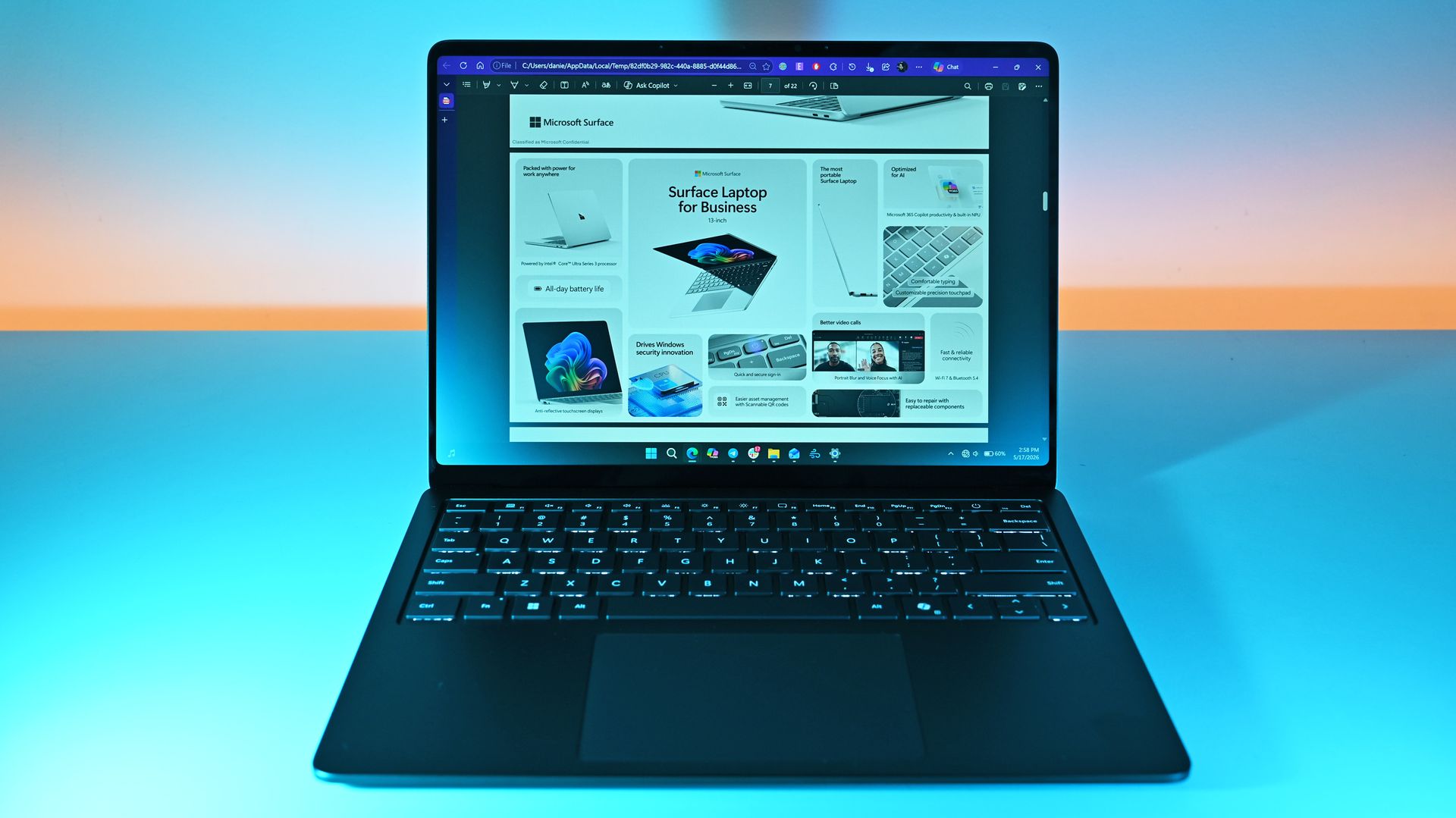
The Microsoft Surface 8 in action. (Image credit: Daniel Rubino)

The Microsoft Surface Laptop 8 is a highly dependable, fast, and durable laptop for IT users and students. This is because it comes equipped with a Snapdragon X2 Elite CPU paired with a turbocharged NPU with 80 TOPS, boosting the laptop's performance significantly when tackling mountains of productivity workloads while multitasking.

It also comes with a 13.8-inch LCD touchscreen display with 600 nits of brightness to fend off annoying daylight glare, Wi-Fi 7 compatibility for strong and stable wireless internet connections, and a massive battery life of 20 hours on a single charge.

On top of that, the Microsoft Surface Laptop 8 features an advanced haptic feedback system, which sends subtle vibrations when using its keyboard, stylus pen, or mouse when performing specific tasks like dragging files in File Explorer or rearranging app windows.

It's a small but enjoyable addition that makes this laptop more polished and responsive to use. Even our Editor-in-Chief Daniel Rubino praised this feature during his Surface Laptop 8 (Business Model) review when he said, "The new advanced haptic touchpad is a joy to use. It provides subtle tactile cues that confirm your actions."

Can I upgrade its RAM and SSD?

No, you can't upgrade the Microsoft Surface 8 laptop's RAM because it's permanently soldered to the motherboard. However, you can swap the SSD for a 1TB or 2TB unit if the default 512GB isn't enough.

Can I use it for gaming?

No, the Microsoft Surface 8 laptop isn't a good laptop for gaming because its integrated graphics and ARM architecture aren't enough to run graphically demanding games or games built with heavy anti-cheat systems without chugging its performance.

Should I wait for Black Friday for a better deal?

It depends on whether you're desperate for a new casual/workhorse laptop and can't wait for a better deal, or if you're willing to wait until Black Friday for a greater discount. Either way, just know that it's a good price for its specs, especially since this is the lowest price drop the Microsoft Surface 8 laptop has had yet (according to CamelCamelCamel).

Click to join us on r/WindowsCentral

Join us on Reddit at r/WindowsCentral to share your insights and discuss our latest news, reviews, and more.
Gaming handheld market revival? Acer's $1,299 Predator Atlas 8 sells out immediately.

The new Acer Predator Atlas 8 gaming handheld, featuring Intel's latest G Series chips, finally went up for pre-sale in the US on October 23, with full launch slated for November 1.

This is the new handheld I tested at Computex this year alongside the MSI Claw 8 EX AI+. Both are premium devices landing in a market turned upside down on account of RAM and storage shortages. MSI's new Claw with Intel's Arc G3 Extreme chip inside, for example, launched at $1,799.99.

Here's where Acer's new handheld packing the same Intel G3 Extreme chip offers a big surprise for shoppers. It's priced at $1,299.99 at Best Buy. Or at least it was, for the Best Buy page preorder has since been removed. I'm not exactly sure why — maybe Acer is reconsidering the post-launch price now that preorders are in.

In any case, seeing a handheld with the same powerful mobile chip inside as the MSI Claw 8 EX AI+ launch for $500 less should be on every gamer's radar. But how is Acer undercutting the competition by so much?

How does Acer charge $500 less for its Intel Arc G3 Extreme gaming handheld?

A person holds the Acer Predator Atlas 8 handheld gaming device with a vibrant screen displaying a game menu. The device has colorful joystick lights and buttons.

Acer's Predator Atlas 8 running Forza Horizon 6. (Image credit: Future)
Intel Arc G3 Extreme

Intel's new mobile chips are designed specifically for handhelds, delivering considerably improved performance and efficiency compared to the AMD Ryzen Z2 Extreme chips so common to the form factor.

On paper, the Acer and MSI devices are quite similar. Both feature the flagship Intel Arc G3 Extreme chip, with 14 cores, a 4.7GHz top clock speed, and a faster Arc B390 integrated GPU compared to the standard Arc G3 chip.

Both devices use an 8-inch IPS display with 1920x1200 resolution, 120Hz variable refresh rate, 500 nits brightness, and 100% sRGB color reproduction.

Both have Thunderbolt 4 ports and Wi-Fi 7. Both have Hall Effect triggers and joysticks. Both use an 80Wh battery. So what's the deal?

Based on my (limited) time with the Predator Atlas 8, it looks like the big price difference comes down to build quality and configuration specs.


Let me get the biggest difference out of the way first: the $1,799.99 MSI Claw 8 EX AI+ ships with 32GB of RAM and a 1TB SSD. The Acer Predator Atlas 8 pares that back to 24GB of RAM and a 512GB SSD.

Considering the price of storage and memory these days, this difference likely helps make up a huge chunk of the difference.

Otherwise, as I noted in my Intel Arc G3 Extreme hands-on piece, Acer's device has triggers that don't feel quite as snappy as MSI. The reverse can be said for the joysticks, where I believe Acer has MSI beat.

Audio from both devices was good, and although Acer's Predator Atlas 8 is smaller and ultimately more portable, I found both handhelds to be comfortable to hold.

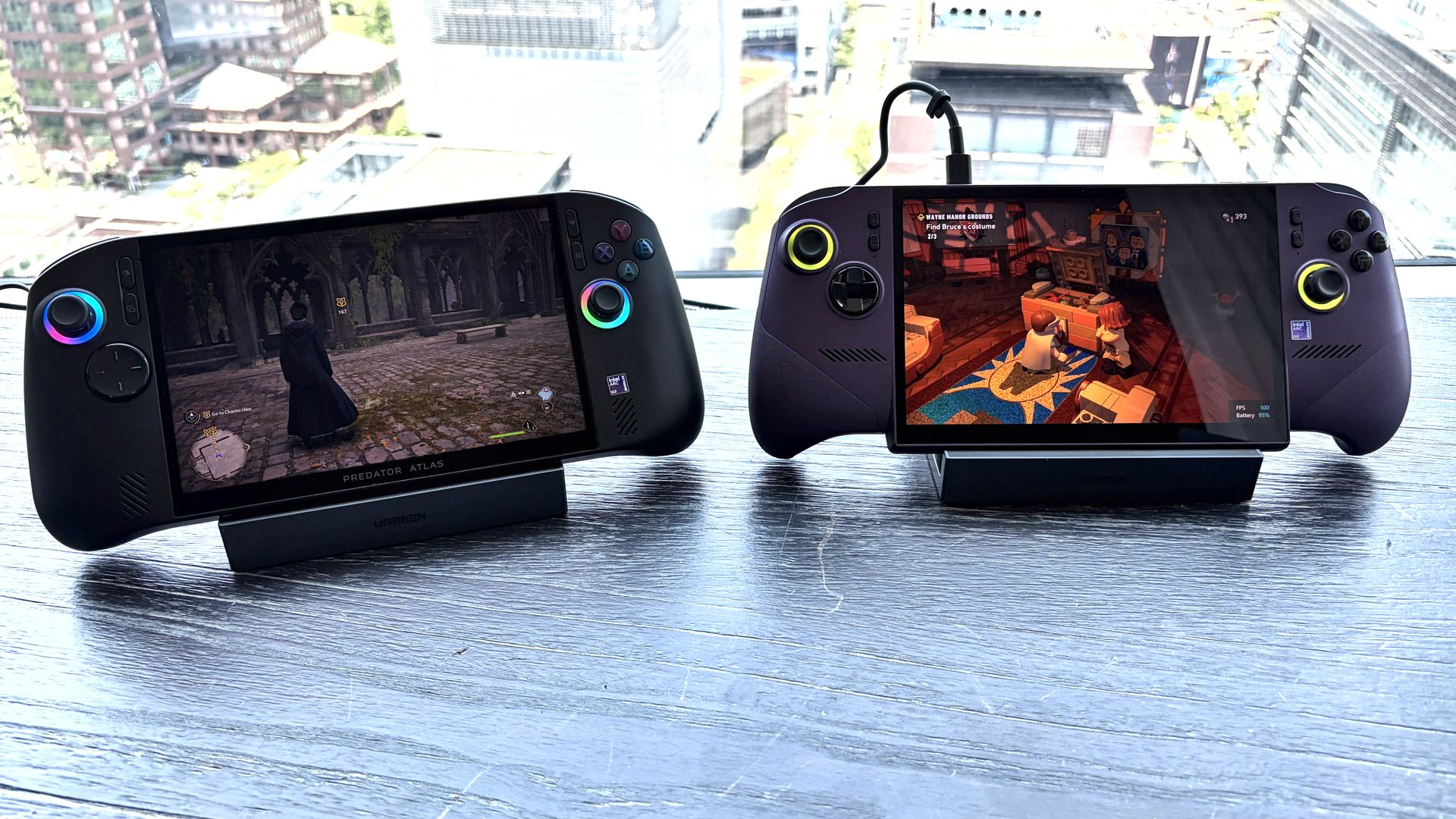
Acer Predator Atlas 8 handheld gaming device on stand displaying Hogwarts Legacy with a cloaked character.

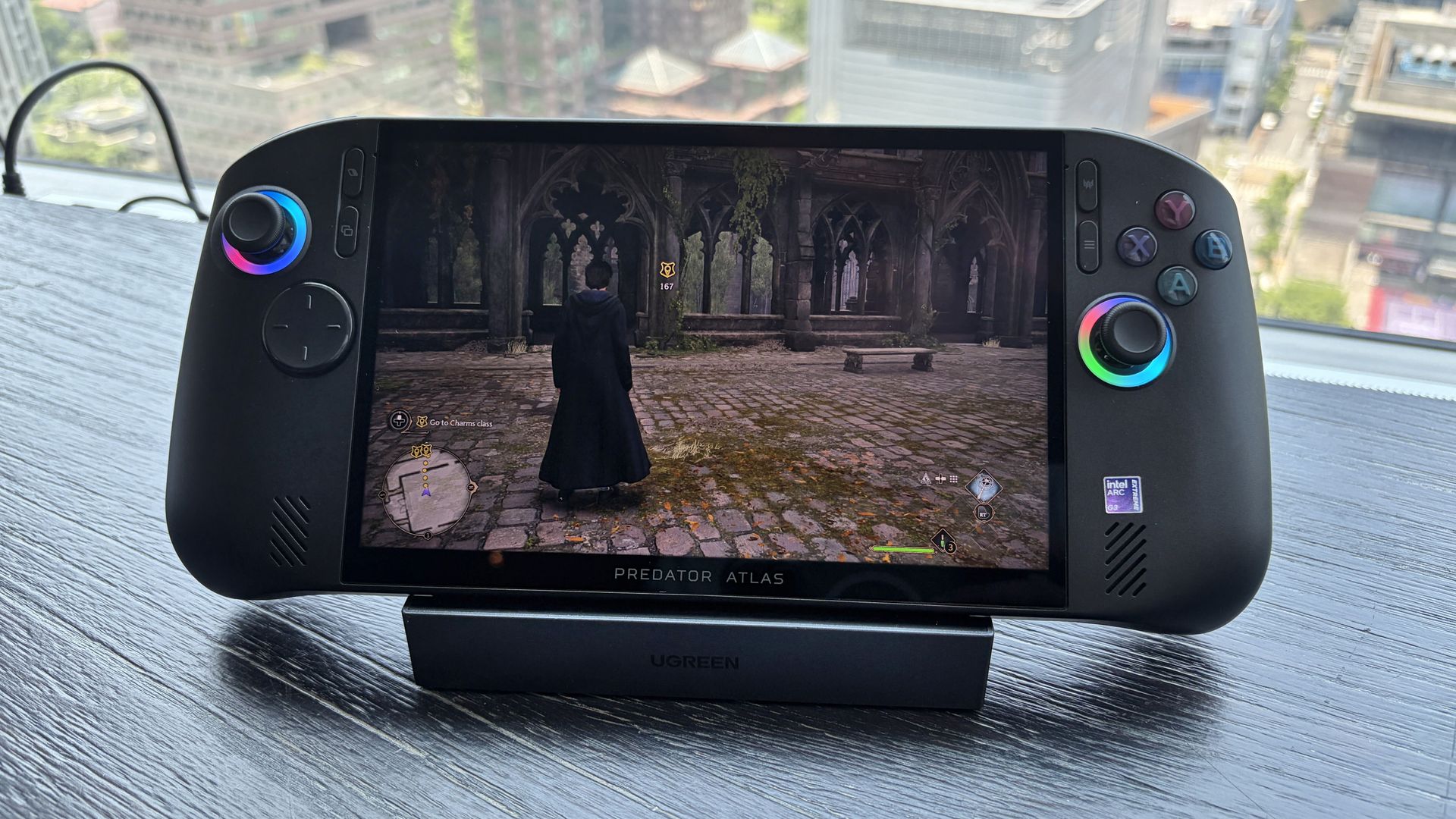
Acer's Predator Atlas 8 running Hogwarts Legacy. (Image credit: Future)

In terms of performance, the Predator Atlas 8 was running demanding games like Hogwarts Legacy and LEGO Batman: Legacy of the Dark Knight at a cool, smooth clip.

I'll have to do more testing once Acer's handheld actually arrives here for testing, but I don't expect it to perform any worse than MSI's new Claw.

Bottom line? It's the disparity in RAM and SSD configurations at launch that's helping keep Acer's gaming handheld at a much more reasonable price.

Is Acer's $1,299.99 Predator Atlas 8 actually cheap?

Close-up of an Acer Predator Atlas 8 handheld gaming device showing ports and controls.

The Predator Atlas 8 feels good to hold and features many similar high-end features as the MSI Claw 8 EX AI+. (Image credit: Future)

In June, I wrote about how you could buy an Xbox Series X, PS5, and Switch 2 for less money than the MSI Claw 8 EX AI+, amidst rising concerns that the handheld market was cooked for good.

That's not quite the case for Acer's Predator Atlas 8, especially with console prices on the rise, but that doesn't make it affordable.

Keep in mind that the Steam Deck, which kicked off the gaming handheld craze, launched at just $399 in 2022.

No, the Steam Deck isn't nearly as powerful as the new Arc G3 devices, but it was priced to sell. Is Acer's Predator Atlas 8 affordable relative to today's overall market? Absolutely.

As mentioned, the Predator Atlas 8 Best Buy preorder page is down at the time of writing this piece. Check back soon, especially after November 1, when the handheld actually launches, to see if prices have changed.

Click to join us on r/WindowsCentral

Join us on Reddit at r/WindowsCentral to share your insights and discuss our latest news, reviews, and more.
HP's Snapdragon X-powered OLED laptop just dropped below $800 for a limited time

Not everyone needs a premium Windows laptop with flagship performance. Sometimes, all it takes is a PC to handle email, Office apps, web browsing, and video calls with strong battery life and a crisp display to get the job done.

Some modern mid-range laptops have become a tougher sell as prices continue to climb from the ongoing memory crisis. Thankfully, Amazon's time-limited deal has dropped HP's OmniBook 5 laptop to $789.99 after its price has fluctuated over the past year. While it isn't a lowest-ever drop, it's certainly a fairer price.

OmniBook 5 (Snapdragon X CPU, 16GB RAM, 512GB SSD): was $960.85 now $789.99

The HP OmniBook 5 is a commendable laptop for everyday and work-heavy use with its 16-inch 2K OLED display, Snapdragon X CPU, 16GB of RAM, 512GB SSD, and Qualcomm Wi-Fi 6E and Bluetooth 5.3 connectivity.View Deal

Why buy this laptop?

HP promotion for the silver OmniBook 5 16-inch next-gen AI PC, shown open with apps on screen; highlights Snapdragon X, 512 GB SSD, 2K OLED, 16 GB RAM, and mobility.

Spec highlights for the HP OmniBook 5 16-inch laptop. (Image credit: HP)

This laptop features Qualcomm's Snapdragon X processor and 16GB of RAM. Pair that with an NPU capable of 45 TOPS, and the HP OmniBook 5 can handle web browsing, mid-level productivity tasks like typing reports, and local AI-empowered tasks.

It also features a 512GB SSD to store data, a thin design that's able to keep itself cool, a 2K OLED display capable of rendering images with sharp images and vibrant colors to give your work greater clarity, and best of all, a massive battery life of up to 34 hours and 45 minutes before needing a recharge.

So if you need a laptop that will last you all day at the office and doesn't require heavy-duty engineering, the HP OmniBook 5 should be on your list for your next choice.

Can I upgrade its RAM?

No, you can't upgrade the HP OmniBook 5 16-inch laptop's RAM as it's soldered in place.

Can I run everyday apps on it?

Mainstream apps like Microsoft Office, Google Chrome, and Zoom will run on the Windows on ARM-based HP OmniBook 5 with no issues. However, advanced Adobe apps like Premiere Pro and After Effects, legacy printer drivers, and older, niche enterprise software or corporate-specific VPN clients may need extra effort.

Should I wait for Black Friday for a better deal?

It depends on whether you're willing to wait until Black Friday for a bigger discount or if you're in need of a new laptop for work/casual use right now and don't have time to wait for a killer deal. Nevertheless, this is a fair price for its specs.

Click to join us on r/WindowsCentral

Join us on Reddit at r/WindowsCentral to share your insights and discuss our latest news, reviews, and more.
I've been using Lenovo's Pro 9n laptop with RTX Spark for weeks. Here's what I think.

Lenovo's Pro 9n landed on my desk roughly three weeks ago, and it's been my daily work PC since then.

It's also been my gaming handheld replacement, my home base for local AI testing, my sketchpad to practice digital drawing, and my entertainment hub.

This pricey Lenovo Pro 9n isn't for everyone despite its broad versatility. That's true about any of the new RTX Spark laptops.

I'm looking to see how Lenovo's offering differs from the others — including the Surface Laptop Ultra and ASUS ProArt P16 we reviewed — in terms of features, design, and performance.

Lenovo sent Windows Central a review unit on loan for testing. It had no input, nor saw the contents of this review, prior to publication.

Lenovo Pro 9n: Price and specifications

A Lenovo Pro 9n laptop on a wooden coffee table displays a vivid orange domed building against a blue sky, beside a potted plant, books, and a gray sofa.

You'd never know the level of power contained within this sleek chassis. (Image credit: Future)

Lenovo's Pro 9n starts at $2,999.99, putting it near the middle of the RTX Spark lineup.

For this price, you get an 18-core NVIDIA N1X CPU, integrated RTX Blackwell GPU with 5,120 cores, 32GB of LPDDR5x unified RAM, a 512GB M.2 PCIe 4.0 NVMe SSD, and a 15.3-inch OLED touch display at a 2560x1600 resolution.

Lenovo offers configuration options for CPU, RAM, and storage. The top spec with a 20-core N1X CPU, 6144-core GPU, 128GB RAM, and 2TB PCIe 5.0 SSD balloons to $6,099.99, with several stops along the way.

Lenovo Pro 9n specs (as reviewed)

Lenovo Pro 9n

CPU

NVIDIA N1X (18 cores)

GPU

RTX Blackwell (5,120 cores)

RAM

32GB LPDDR5x-9400 (unified)

Storage

1TB M.2 PCIe 4.0 NVMe SSD, Extra PCIe 5.0 slot

Display

15.3 inches, 2560x1600, OLED, touch or non-touch, 500 nits (SDR), 1100 nits (HDR), glossy, 165Hz VRR, Dolby Vision, G-Sync

Ports

2x USB4, 2x USB-A (10Gbps), HDMI, UHS-II SD card reader, 3.5mm audio combo

Wireless

Wi-Fi 7, Bluetooth 5.4

Audio

4x speakers (2x 2W woofers, 2x 2W tweeters), Dolby Atmos

Camera

9.2MP + IR, e-shutter

Battery

92.5Wh

Dimensions

13.66 x 9.53 x 0.66 inches (347mm x 242mm x 16.7mm)

Weight

From 3.64 pounds (1.65kg)

New designs and updated features for the RTX Spark platform

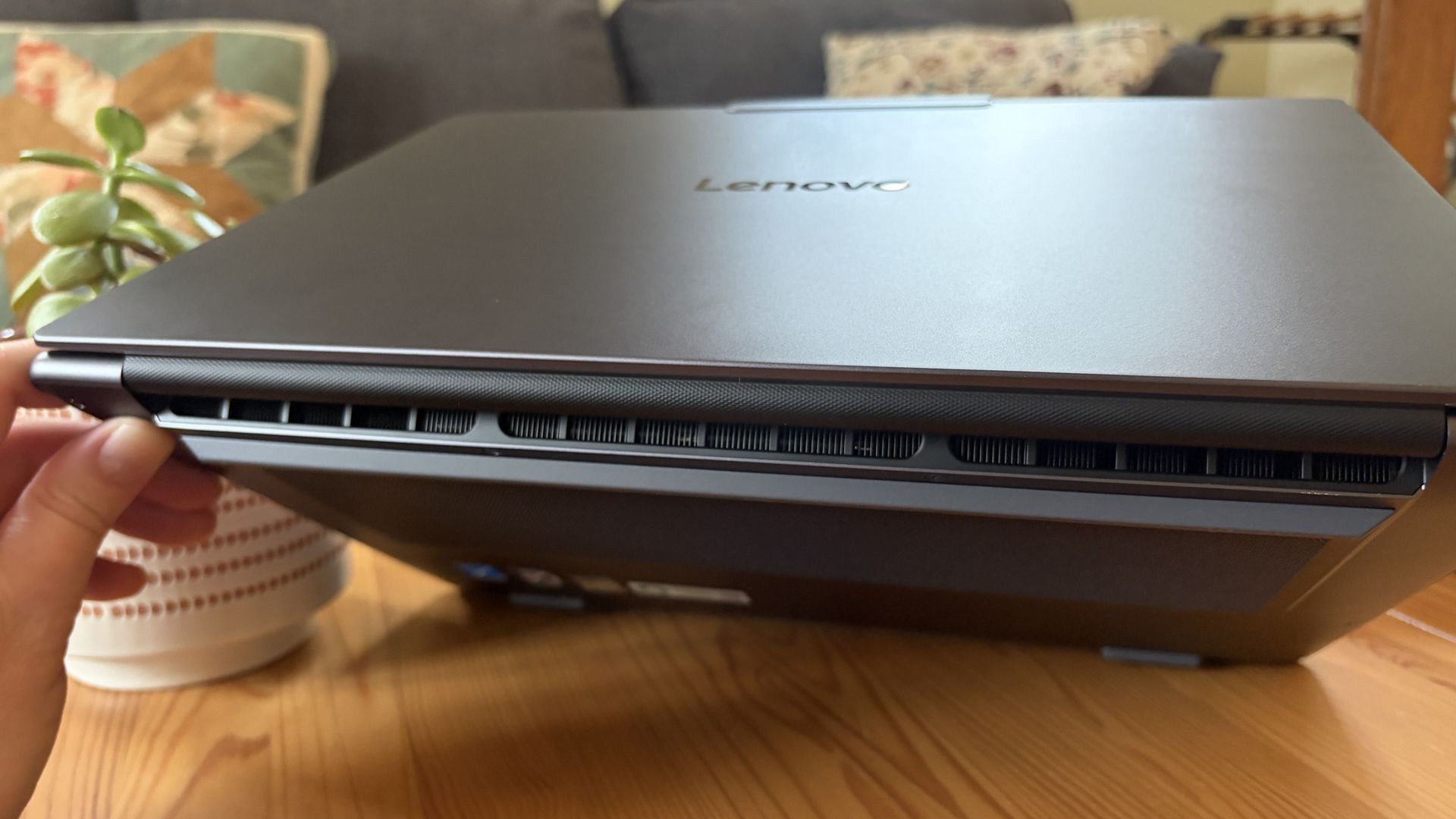
A hand holds a closed gray Lenovo laptop above a wooden table, showing its long rear ventilation grille; a potted plant and sofa create a casual home setting.

A look at the rear exhaust behind the lid hinge. (Image credit: Future)

The design of Lenovo's Pro 9n has grown on me over the weeks. What I first saw as uninspired has morphed into something that's sleek, relatively lightweight, and ultimately perfect for a professional setting.

With an aluminum top and bottom that add rigidity and a more premium feel than plastic, the PC still manages to slide in at 3.64 pounds (1.65kg) while measuring just 0.66 inches (1.67cm) thin.

The 15.3-inch display translates to a smaller footprint than a full 16-inch PC, and I found it to be an apt size for working in the passenger seat of a car. It should also translate well to airplane trays or train seats.

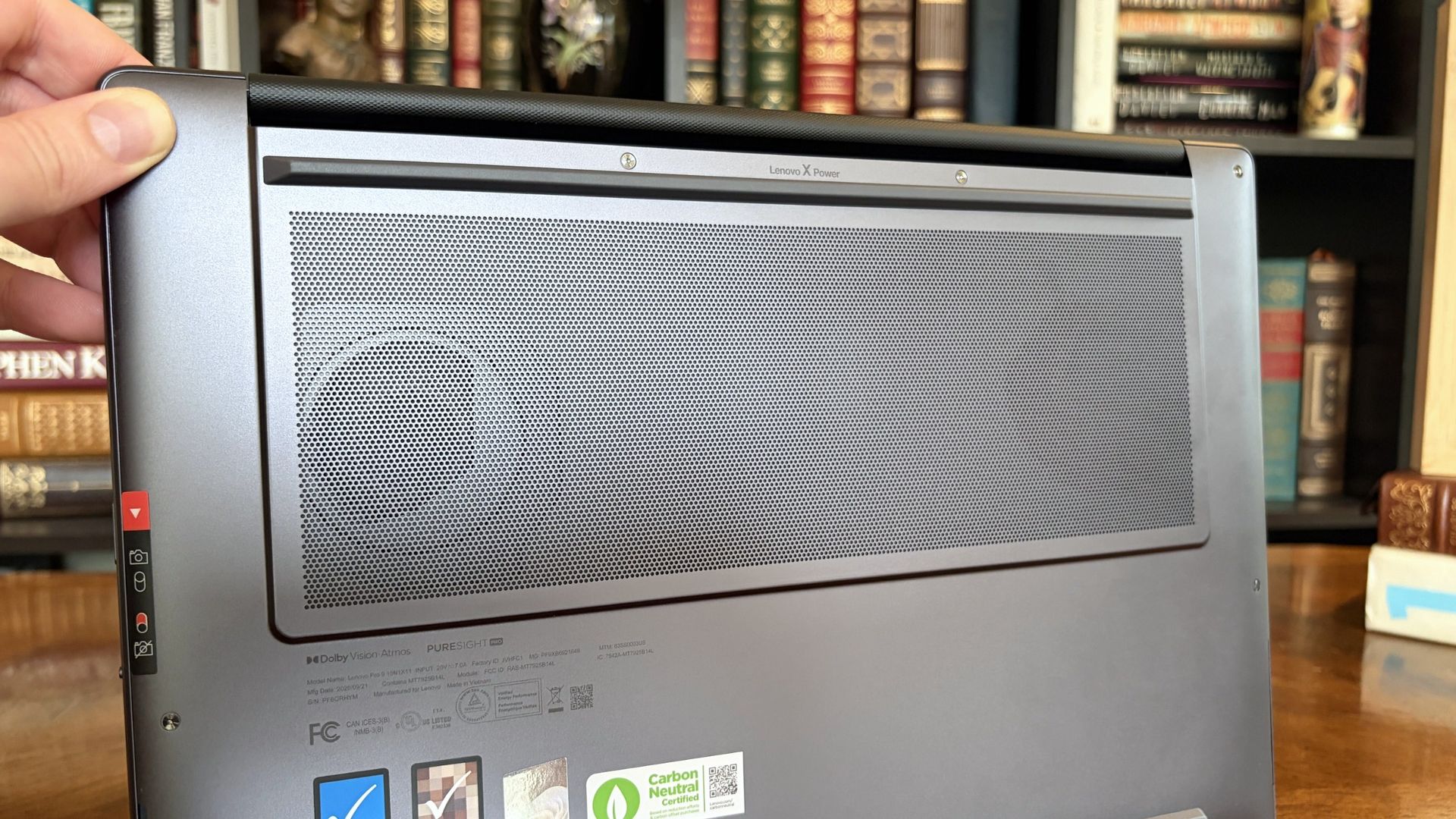
A hand holds a Lenovo Pro 9n laptop with a large mesh grille and small labels, displayed before shelves of old books in a cozy library setting.

The bottom of the Pro 9n has a massive air intake to feed the two fans. (Image credit: Future)

The thermal layout has been redesigned for the new RTX Spark chip (which I explore below), resulting in a massive air intake on the bottom of the PC and larger vents on the rear edge for exhaust.

This setup keeps hot air directed away from the user and, as you'll see below, it does a decent job of keeping the PC cool under load.

Close-up of a slim laptop on a wooden table, showing its keyboard and side ports; a patterned mug and cushions create a cozy workspace.
Ports on the left include HDMI, USB-A, USB4, and 3.5mm audio.Future
A slim silver laptop rests open on a wooden table, with its keyboard and side ports in focus; the cozy home setting feels calm and practical.
Ports on the right include USB-A, USB4, and UHS-II SD card reader.Future

This leaves plenty of space along the sides for ports. On the left are HDMI 2.1, USB-A 3.2 (always on), USB4, and a 3.5mm audio jack. On the right side are another USB-A 3.2, USB4, and a UHS-II SD card reader.

At no time did I feel the need to grab a dongle for an accessory, especially with Bluetooth 5.4 on board, and the native HDMI port makes it easy to plug into an external display without a docking station.

On the note of wireless, cutting-edge Wi-Fi 7 is on board for excellent throughput and future-proofing.

Lenovo's keyboard and haptic touchpad are among the best

Close-up of a Lenovo Pro 9n laptop with a blue-backlit keyboard and stylus resting diagonally across its large touchpad, on a wooden table. The scene feels calm and practical.

The Lenovo Pro 9n's oversized haptic touchpad and active pen turn the laptop into a makeshift drawing tablet. (Image credit: Future)

The Pro 9n is the first Lenovo laptop to receive its new haptic touchpad with inking compatibility. Paired with the bundled Yoga Pen (Gen 2), it turns the PC into a creative tablet of sorts.

I'm no artist, but I was able to get down some rough sketches using the awesome Krita drawing app. I found the touchpad's 3.74 x 3.94-inch dimensions were large enough to comfortably write and draw, and the inking feel is outstanding.

My only gripes are likely from me reading too much into the feature. Drawing on the pad often left my hand hanging off the edge (not comfortable), and it was sometimes difficult to line up my pen on the touchpad with where I wanted it on my screen.

Approach it from a rough sketch viewpoint, and you should find it to be quite useful. As for actual pointing and clicking, I had no issues. The haptics underpinning the pad are spot on.

A dark gray laptop sits diagonally on a pale wooden table, its keyboard and touchpad visible beneath a screen showing orange earth and blue sky.

1.5mm key travel makes for comfy typing no matter what. (Image credit: Future)

The keyboard, which arrives flanked by a couple of speakers, offers deep 1.5mm key travel, three-stage backlight, and perfect spacing. This might be the best keyboard that Lenovo's non-ThinkPads have ever received, and I enjoyed every word I typed on it.

Circling back to the speakers, the two that flank the keys are each 2W tweeters, and they're accompanied by two 2W woofers on the bottom of the PC.

Sound gets loud without breaking. There's lots of bass. The highs are clean, even before adding any onboard Dolby Atmos tuning. The laptop is just as good for watching TV and movies as it is for handling creative work or jumping into video meetings.

A crisp webcam handles meetings on the move

Close-up of a dark gray laptop or monitor edge with a slim, rounded bar; a softly blurred sofa and cushions create a calm indoor backdrop.

The raised comms bar has space for a 9.2MP camera and IR sensor. (Image credit: Future)

Lenovo's raised communications bar located above the display adds a bit of space for camera hardware, and the company made good use of it here.

The Pro 9n comes with a 9.2MP camera, easily trumping the ASUS ProArt P16's 2.1MP and the Surface Laptop Ultra's 1.6MP cameras.

It's crisp and handles lighting quite well even without any Windows Studio Effects in play, and I'd say it's a definite upgrade for anyone who often finds themselves in video meetings and collaborations.

The IR sensor built into the camera handles facial recognition via Windows Hello. Unfortunately, it doesn't appear to go the extra step to offer human presence detection. This doesn't seem to be a lock for the new RTX Spark PCs — the Surface Laptop Ultra doesn't have it either, but the ProArt P16 does.

An OLED display with color profiles for any job

A Lenovo Pro 9n laptop showing a digital game library sits on a wooden coffee table, beside a potted plant and stacked books, with a patterned cushion on the sofa.

The OLED display delivers color for specialized work and speed for gaming. (Image credit: Future)

Lenovo ships the Pro 9n with a 15.3-inch PureSight Pro OLED display. This is basically Lenovo's top-of-the-line screen for creators and pros, coming at you with X-Rite Pantone calibration and X-Rite SkinTone validation out of the box.

It hits Delta E, tops out at a 165Hz refresh rate (which can be set to variable for better battery life and eye comfort), and has Dolby Vision support.

Something I learned quickly was that the display presets in Lenovo's Vantage app are actually important. The Default mode in which the laptop ships favors sRGB reproduction. There are presets for AdobeRGB and sRGB (which pump up those sections), as well as P3-D65, REC709, and DCI-P3.

I was able to hit 100% across all color gamuts in my testing, but not all at once. You'll just have to be sure that you select the right config depending on the work you're doing.

I was able to hit 100% across all color gamuts in my testing, but not all at once.

I also measured 476 nits of peak brightness in SDR content, which pushes past 1,000 nits when HDR is enabled. I was able to work in a brightly lit room with only a bit of glare, but I imagine an anti-reflective instead of glossy finish would have gone a long way to eliminating glare entirely.

The screen is available in touch or non-touch, and the specs are otherwise the same. Note that the pen only works on the laptop's touchpad, whether or not the screen is touch-enabled.

A laptop on a wooden coffee table displays a vivid orange historic building against blue sky, with a potted plant, books, and sofa creating a cozy setting.

The Pro 9n's OLED display is vivid and bright. (Image credit: Future)

The inclusion of NVIDIA G-Sync tech really props up the gaming aspect, reducing screen tearing and ultimately making everything feel much smoother, as you'd expect from a premium laptop that can game.

My only complaint is that Lenovo doesn't offer a higher-res panel. The 2.5K default is great for everyday work and gaming, but 4K would probably go a long way for some creators.

Comparing the 18-core and 20-core RTX Spark chips

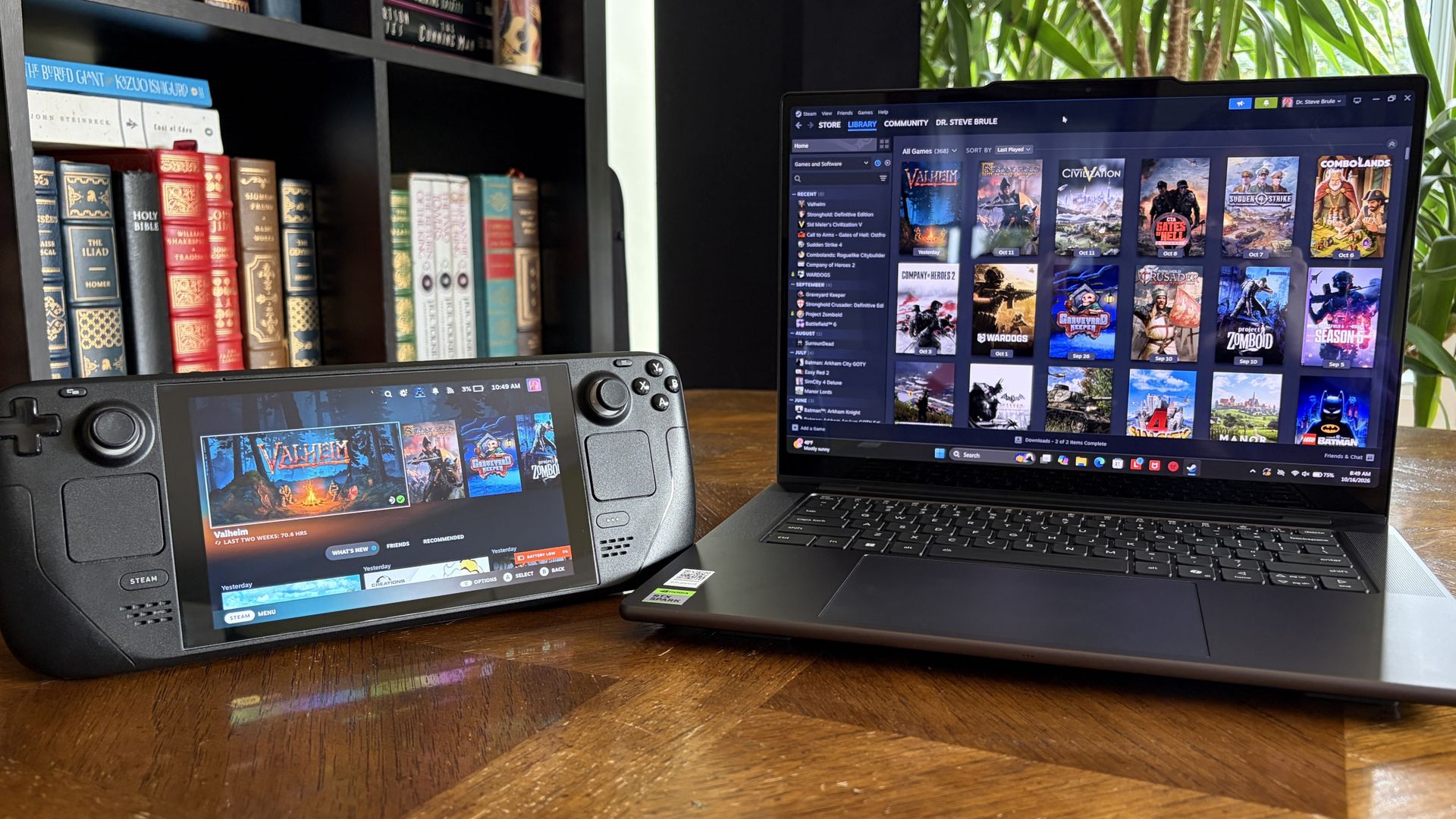
A handheld Steam Deck gaming PC and Lenovo Pro 9n laptop display a dark game library interface on a wooden desk, with books and greenery behind them; cozy, tech-focused mood.

I gave the Pro 9n some games to chew on to see if it can replace my gaming handheld. Short answer: it can. (Image credit: Future)
Power tip

Lenovo allows for up to 80W of overall power for the chip, putting it in line with the other RTX Spark laptops we've tested.

My colleague Zac Bowden put together a deep-dive review on the 20-core RTX Spark chip, and I mainly wanted to see how the 18-core Spark alternative in the Pro 9n compares.

As it turns out, quite well. You get the same pool of unified LPDDR5x memory to pull from for the system and GPU, albeit in smaller quantities (32GB for my review unit).

You get the coveted CUDA cores (with 5120 in my unit compared to 6144 in the premier chip) to handle local AI inference. And you still get about 26 TFLOPs of graphics performance.

The following graphs show how the 18-core RTX Spark in the Lenovo Pro 9n compares to the 20-core RTX Spark chips we've already tested in other laptops.

Benchmark graph showing Lenovo Pro 9n with 18-core RTX Spark chip against other RTX Spark laptops with 20-core chips.
Future
Benchmark graph showing Lenovo Pro 9n with 18-core RTX Spark chip against other RTX Spark laptops with 20-core chips.
Future
Benchmark graph showing Lenovo Pro 9n with 18-core RTX Spark chip against other RTX Spark laptops with 20-core chips.
Future
Benchmark graph showing Lenovo Pro 9n with 18-core RTX Spark chip against other RTX Spark laptops with 20-core chips.
Future
Benchmark graph showing Lenovo Pro 9n with 18-core RTX Spark chip against other RTX Spark laptops with 20-core chips.
Future
Benchmark graph showing Lenovo Pro 9n with 18-core RTX Spark chip against other RTX Spark laptops with 20-core chips.
Future

As you can see, synthetic Geekbench 7 and Cinebench 2026 CPU scores fall accordingly compared to the 20-core Spark. Not by a lot, but it is noticeable.

The SSD looks comparatively slow, but keep in mind that most of these laptops have a mix of PCIe 4.0 and PCIe 5.0. In my test case, it's the former, but you can get the latter, faster drive in a 2TB config.

Benchmark graph showing Lenovo Pro 9n with 18-core RTX Spark chip against other RTX Spark laptops with 20-core chips.
Future
Benchmark graph showing Lenovo Pro 9n with 18-core RTX Spark chip against other RTX Spark laptops with 20-core chips.
Future
Benchmark graph showing Lenovo Pro 9n with 18-core RTX Spark chip against other RTX Spark laptops with 20-core chips.
Future

The weaker RTX GPU also showed a drop-off in Geekbench 7's GPU test, but it put up a strong fight in 3DMark's Steel Nomad and Speed Way tests.

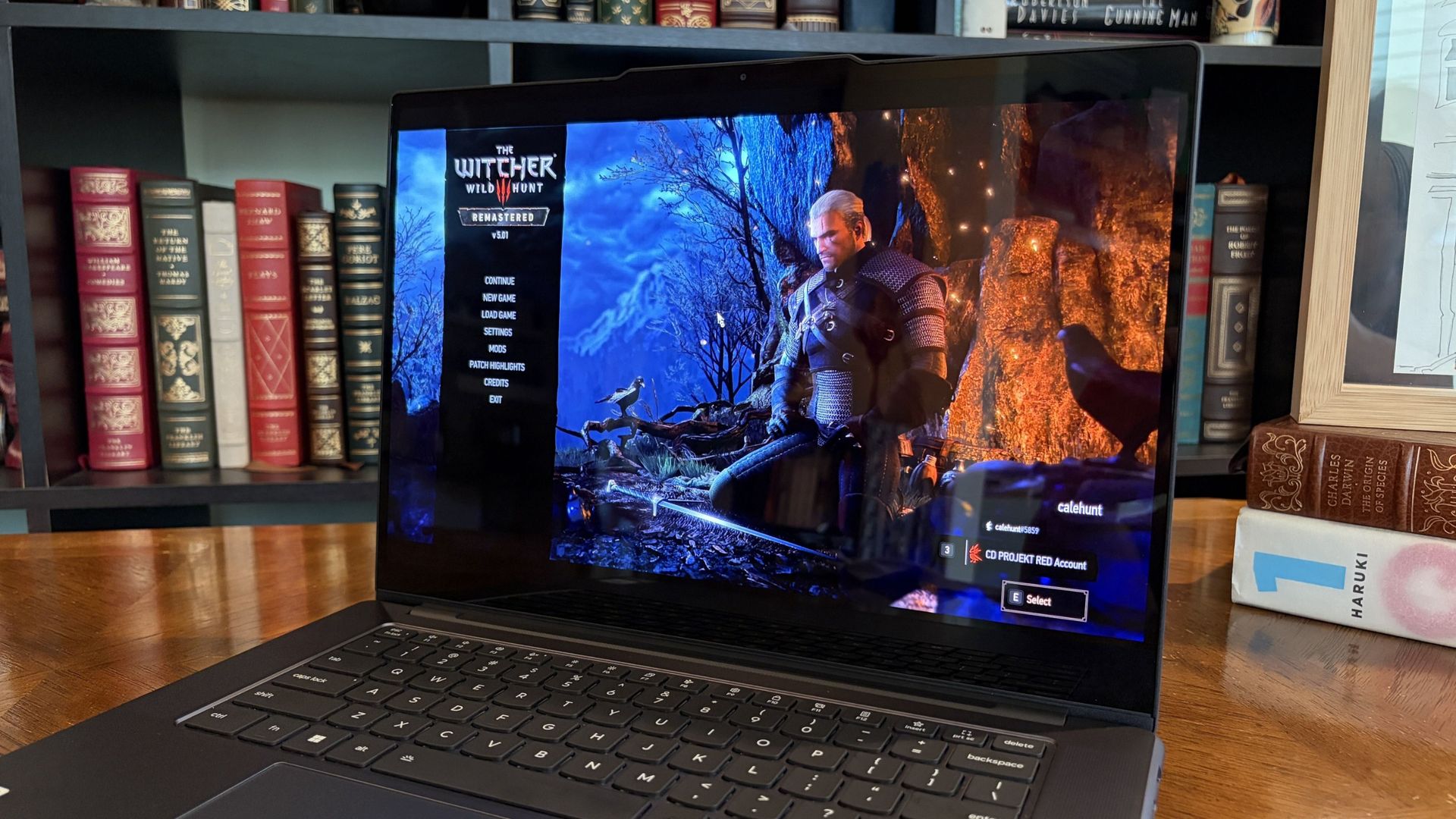
Considering I was playing The Witcher 3: The Wild Hunt Remastered at a smooth frame rate with ray tracing cranked up, there should be no denying the Pro 9n can game. Just don't buy it if that's all you want from your laptop.

There should be no denying the Pro 9n can game.

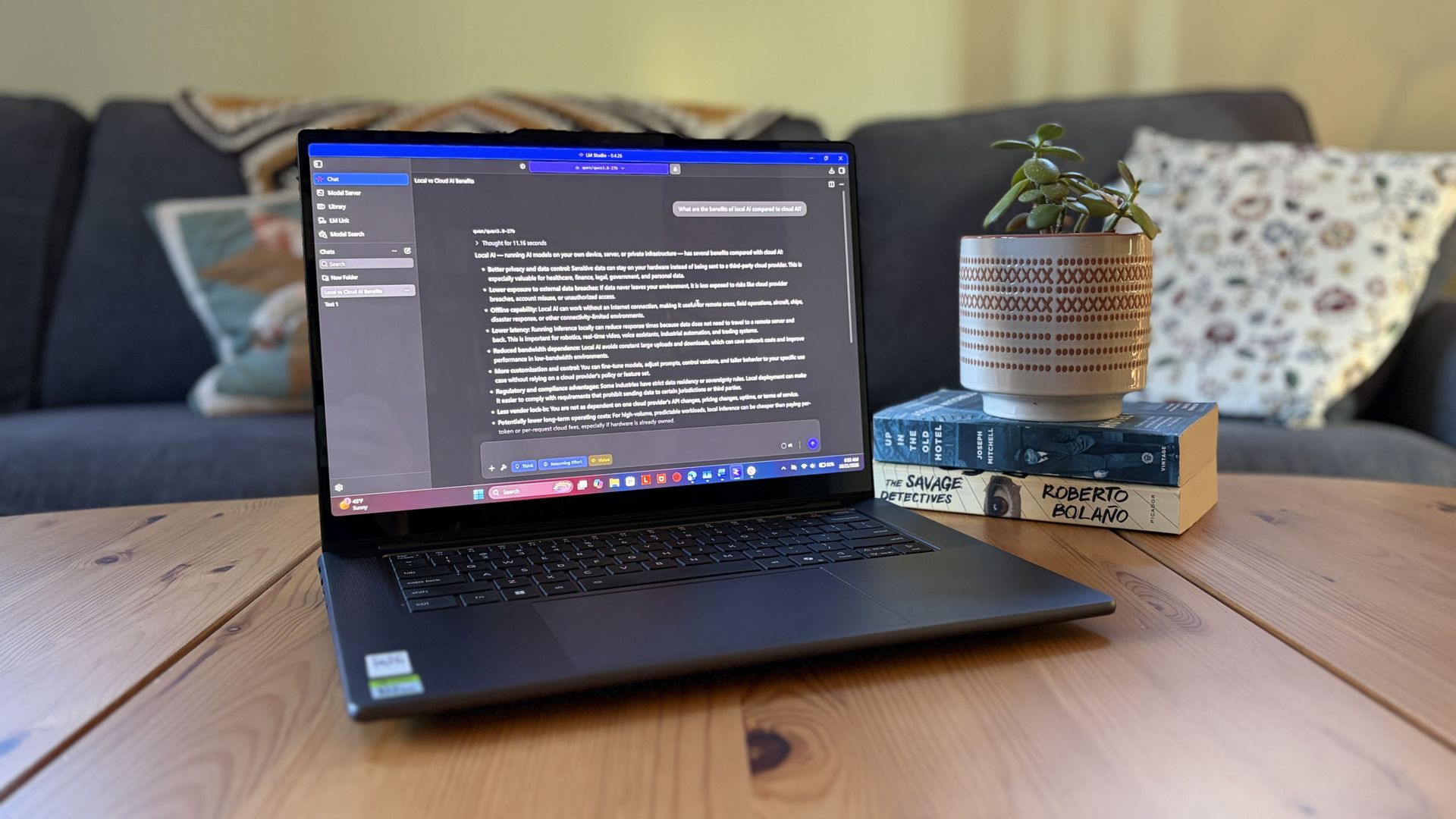
I also began a journey with local AI agents on the Lenovo Pro 9n. I set up LM Studio on it and downloaded a hefty Qwen model, which runs surprisingly well on the system despite only having 32GB of unified RAM.

A Lenovo Pro 9n laptop displaying a text-heavy AI workspace sits on a wooden table beside a potted plant on stacked books, creating a calm, cozy living room scene.

Lenovo's Pro 9n running LM Studio, allowing me to chat locally with AI agents. (Image credit: Future)

The unit I was sent to test is more geared toward creators who don't need the ultimate 20-core CPU and 128GB of RAM coveted by AI specialists, so I'm pleased that it's proving to be a capable local AI base.

I ran a few AI-focused tests in Procyon to see how the weaker RTX Spark chip in my Lenovo Pro 9n compares to the 20-core option we already reviewed.

Procyon Image Generation

RTX Spark (18-core)

RTX Spark (20-core)

Stable Diffusion 1.5 score (FP16, higher is better)

1,430

1,380

Seconds / Image (lower is better)

4.36

4.22

Total duration (lower is better)

69.9

67.5

Procyon Text Generation

RTX Spark (18-core)

RTX Spark (20-core)

Phi-3.5-mini (higher is better)

2,383

2,615

Seconds to first token (lower is better)

0.31

0.27

Tokens / Second (higher is better)

68.31

72.21

Load time / Seconds (lower is better)

0.73

0.66

Procyon AI Computer Vision 2.0

RTX Spark (18-core)

RTX Spark (20-core)

Score (higher is better)

3,658

3,997

There's clearly a drop-off with the 18-core Spark chip in terms of AI performance, and I'd recommend that any AI specialists out there opt for the 20-core option.

For creators, part-time gamers, and professionals without a direct focus on AI, I think the 18-core chip should do just fine.

Does Lenovo's Pro 9n get too hot?

A Lenovo Pro 9n laptop on a wooden desk displays The Witcher 3 menu, with Geralt in a snowy blue forest beside a fiery orange scene; the dramatic contrast feels tense.

Playing demanding games on the Lenovo Pro 9n is entirely possible. Just expect there to be a little heat. (Image credit: Future)

The Lenovo Pro 9n's upgraded cooling system does a good job of managing thermal limits, and fan noise isn't bad, either. This is all with the system managing power automatically, which I found quite convenient.

During a lengthy system stress test, I never clocked the fan noise any higher than 43dB. They're audible in a quiet room, but they'd go unnoticed in a busy office.

My trusty FLIR camera is in the shop, but I did a surface temp test with my lap. During the stress run, it remained comfortable to hold. The keyboard side got a bit hotter, but nothing that gave me pause.

How is the Pro 9n's battery life?

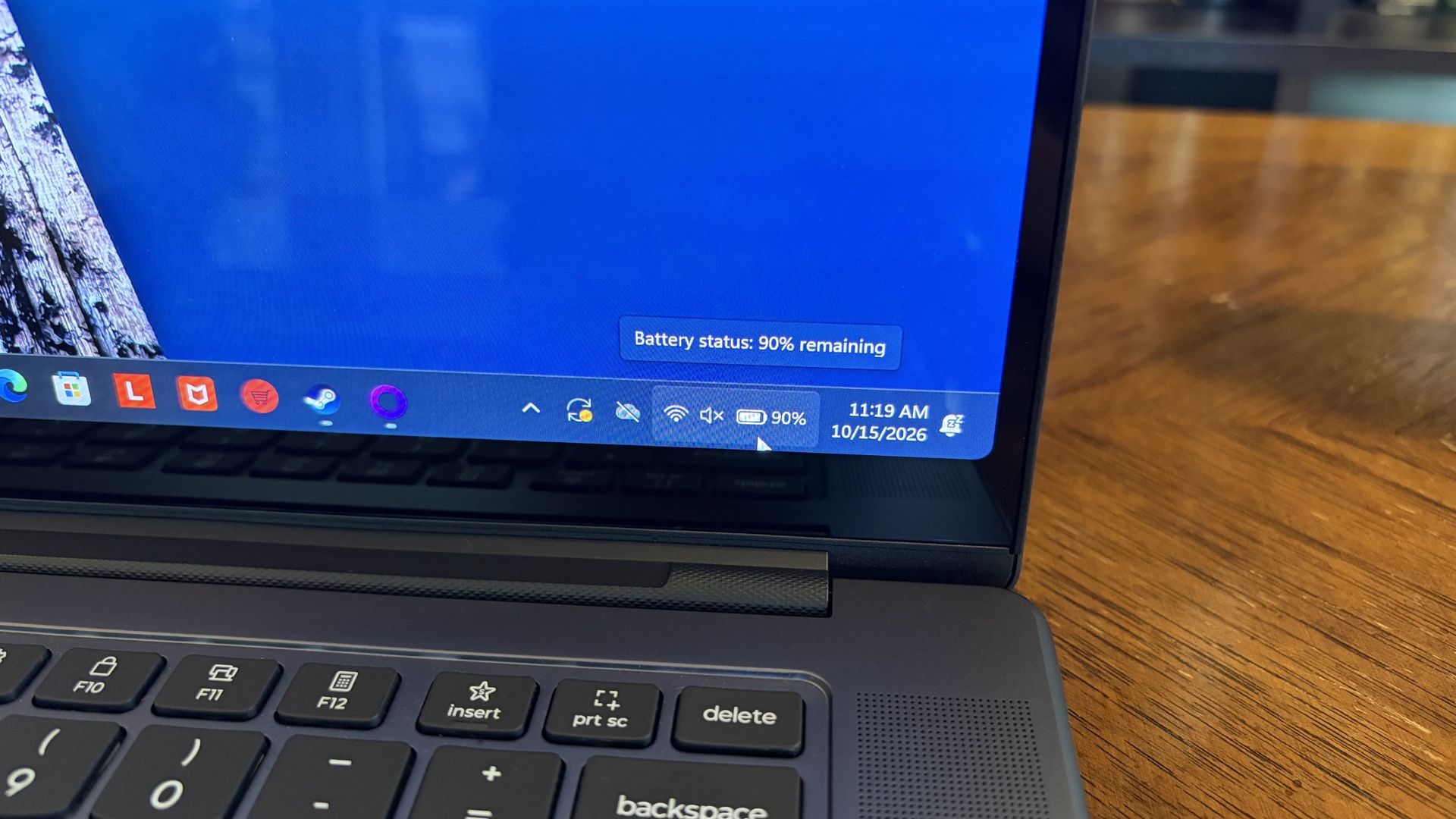
A Lenovo Pro 9n laptop on a wooden table shows a blue desktop and keyboard; a taskbar tooltip reports 90% battery, indicating it’s well charged.

Battery life has been quite good, especially for everyday tasks, but Snapdragon X2 is still the champ. (Image credit: Future)

Battery life is not as good as I was hoping, and Qualcomm's Snapdragon chips are not in any threat of being dethroned in terms of efficiency.

My Windows Battery report shows roughly 8 to 10 hours of real-world life on a charge. Keep in mind that I was doing a decent amount of gaming on battery life, which brought that number down. Still, that's in line with the other RTX Spark laptops we've tested.

If you are gaming on battery power and have settings cranked up with ray tracing enabled, know that I was seeing about 10 minutes of runtime for every 10% of battery life.

Indie titles that aren't as demanding don't sap the battery nearly as much, and you can enjoy a few hours of gaming without worrying about power.

Should you buy Lenovo's Pro 9n?

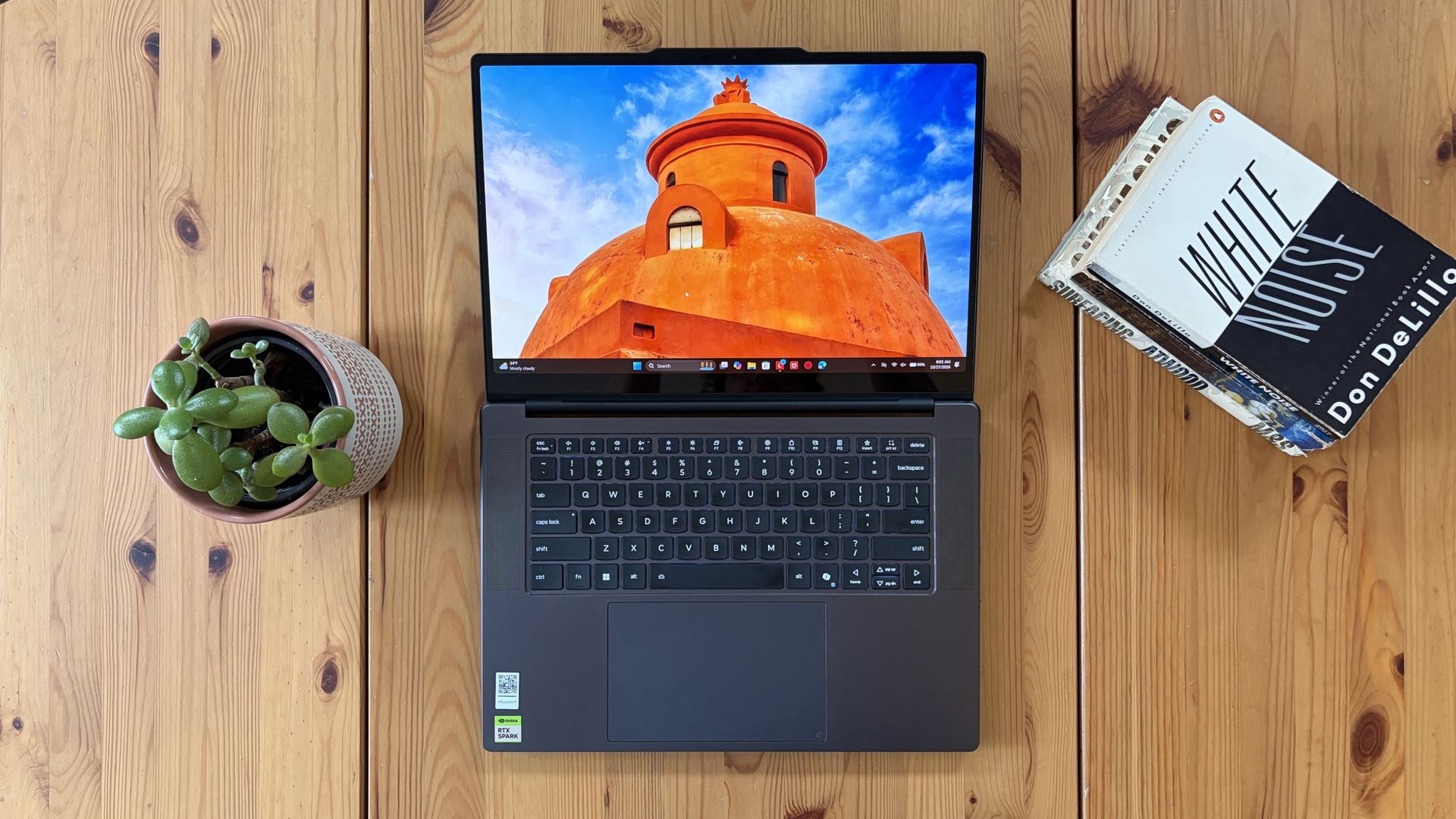
Overhead view of a Lenovo Pro 9n laptop showing a bright orange domed building, a small green succulent, and a copy of “White Noise” on a wooden desk; calm, inviting workspace.

The Lenovo Pro 9n's lid pulls back to about a 180-degree flex. (Image credit: Future)

You should buy this if ...

✅ You want an RTX Spark laptop with a 15.3-inch OLED display at 2.5K.

✅ You dabble in drawing, sketching, and writing with a pen.

✅ You're a professional or a creator who wants one PC to handle local AI, demanding apps, and gaming.

You should not buy this if ...

❌ You want the most affordable RTX Spark laptop possible.

❌ You prefer a mini-LED display (go with the Surface Laptop Ultra).

❌ You'd rather use a convertible PC for added versatility (check out the Yoga Pro 9n instead).

Windows Central

Lenovo's first notebook RTX Spark laptop has been a ton of fun to use over the past few weeks, and admittedly, I regret that I soon have to give it up.

It's not perfect. I wish there were human presence detection. I wish there were an extra high-res display option. I wish battery life were a lot better. And I wish it didn't cost as much (which is an effect of the ongoing RAM and storage crisis, not some Lenovo decision).

But for what it is — a specialized portable AI workstation using the first generation of a new NVIDIA computing platform — it's among the most exciting and promising Windows PCs I've used in recent memory.

If you're a general creator who just wants to see the latest chip technology in an ultra-premium package, the 32GB model could be ideal for you, just as long as you can stomach the price.

Otherwise, it's mainly going to appeal to a fairly small set of users, but those who can take full advantage of the RTX Spark chip should love what Lenovo has put together here.

Lenovo Pro 9n 15

RTX Spark
Lenovo
Pro 9n

Lenovo's Pro 9n delivers high-end features and cutting-edge AI performance for the Windows ecosystem. It's a great PC for creators with deeper pockets, but its true usefulness is seen in the hands of AI pros who need a ton of unified memory and a beefy RTX Blackwell GPU. It's all wrapped up in a sleek, portable package.

  • ✇Yanko Design
  • Apple just launched a MacBook Pro 24-hours before its MacBook Pro event
    On Monday, the day the new iPad mini landed, I begged John Ternus to take a break. On Tuesday morning, Apple responded by dropping a brand-new 14-inch MacBook Pro with the M6 chip, roughly 24 hours before its Pro and Tell event in Los Angeles. That’s the event literally named after the MacBook Pro, by the way. It’s like a band releasing a single the night before the album drops, if the single cost $1,999. At this point I’ve stopped asking for rest and started stretching before I open my inbox.
     

Apple just launched a MacBook Pro 24-hours before its MacBook Pro event

27 octobre 2026 à 16:30

On Monday, the day the new iPad mini landed, I begged John Ternus to take a break. On Tuesday morning, Apple responded by dropping a brand-new 14-inch MacBook Pro with the M6 chip, roughly 24 hours before its Pro and Tell event in Los Angeles. That’s the event literally named after the MacBook Pro, by the way. It’s like a band releasing a single the night before the album drops, if the single cost $1,999. At this point I’ve stopped asking for rest and started stretching before I open my inbox.

The new MacBook Pro starts at $1,999 with 16GB of unified memory and 1TB of storage, the same price the M5 model has carried since Apple’s June price hike. Inside sits the M6, a 2nm chip with a 12-core CPU and 12-core GPU, two more cores apiece than before. Apple claims up to 30 percent faster graphics than M5, with Wi-Fi 7 and Bluetooth 6 arriving through its own N1 chip. Pre-orders open October 28, with deliveries starting November 6 in silver and space black. Even funnier, Wednesday’s rumored touchscreen MacBook Pros reportedly run M5 Pro and M5 Max chips, so the cheapest Pro in the lineup now has the newest silicon.

Designer: Apple

Two more cores, 2nm silicon, and a reshuffled CPU

The M6 is built on TSMC’s first-generation 2nm process, and it first showed up in the Mac mini back in August. It swaps the old FinFET transistors for gate-all-around nanosheets, which wrap the gate around the channel on every side so less power leaks away at these tiny sizes. The CPU layout changes too, from four super cores and six efficiency cores to two super, four performance, and six efficiency cores. The GPU climbs to 12 cores, each with its own Neural Accelerator, while the Neural Engine doubles up to a dual 16-core setup totaling 32 cores. Apple claims up to 1.3 times faster Blender ray tracing and Xcode builds than the M5 model.

Apple ditched the M5 model’s Broadcom wireless chip for its own N1, which brings Wi-Fi 7, Bluetooth 6, and Thread support. Thread is the low-power mesh network a lot of Matter smart home gear runs on, which fits neatly with the HomeView push Apple kicked off earlier this month. External displays get a bump as well, with two 4K monitors now running at up to 165Hz instead of 144Hz. Memory bandwidth rises to 170GB/s, though only on the 24GB and 32GB configurations. The base 16GB model stays at 153GB/s, so if you plan on running local AI models, spring for the extra memory.

Same $1,999 price tag, same body, same 24 hours

The M5 model launched at $1,599 with 512GB of storage last October, jumped to $1,699 in March when 1TB became standard, then hit $1,999 in June when Apple raised prices across the Mac lineup. Apple blamed AI data centers hoovering up the world’s memory supply, saying it had never seen component costs climb so far so fast. So the M6 costs exactly what the M5 did yesterday, while sitting $400 above where the 14-inch Pro started a year ago. That 1TB base is generous at this tier, though it also means there’s no 512GB option to save a few bucks. Students and educators can knock the price down to $1,899.

Everything outside the chip carries over from the M5 model. The Liquid Retina XDR mini-LED display still peaks at 1,600 nits in HDR, with a nano-texture option for anyone working beside a sunny window. The 12MP Center Stage camera, six-speaker sound system, HDMI port, MagSafe 3, SDXC slot, headphone jack, and three Thunderbolt 4 ports all return untouched. Battery life holds at up to 24 hours, matching the M5, so Apple’s “longest ever in a Mac” line describes a tie. Coming from a 13-inch M1 MacBook Pro, though, that’s up to four extra hours, plus up to 13 times faster AI prompt processing.

The cheapest MacBook Pro now has the newest chip

According to Bloomberg’s Mark Gurman, Wednesday’s 14-inch and 16-inch MacBook Pros will bring OLED touchscreens, a Dynamic Island in place of the notch, and a lighter build. They’ll also reportedly stick with M5 Pro and M5 Max chips, which means the $1,999 model you can’t touch has a newer chip generation than the flagships you can. Gurman says the mini-LED models stay on sale for now before eventually being phased out. Apple announced the M6 model on October 27, exactly ten years after it unveiled the Touch Bar, its last attempt at putting touch on a MacBook Pro. I refuse to believe that timing is an accident.

For an M5 owner, the M6 is an easy skip, since the design, display, and battery are identical. For anyone still hanging onto an Intel MacBook or an early M1 machine, this is the most sensible Pro you can buy, and it costs $500 less than the $2,499 M5 Pro model. Pre-orders for the 14-inch MacBook Pro with M6 open October 28 at 10:10 a.m. Pacific, with deliveries starting November 6. That’s an iPad mini, an iMac, and a MacBook Pro in two days from the guy I asked to take a break, with touchscreen Macs queued up next. At this rate we’ll get that Apple Car announcement by the end of the week.

The post Apple just launched a MacBook Pro 24-hours before its MacBook Pro event first appeared on Yanko Design.

Microsoft clarifies Surface Laptop Ultra display specs following local dimming concerns

Does the Mini LED display on Surface Laptop Ultra support local dimming? Many reviewers have noted the Mini LED display on Laptop Ultra is somewhat underwhelming, with ghosting issues and poor color contrast (albeit with great color accuracy) compared to other Mini LED screens on the market, and especially OLEDs.

I said in my Surface Laptop Ultra review that its display features 1,344 local dimming zones, which is significantly lower than the dimming zones you'll find on a MacBook Pro with the same display tech. That results in a lot more ghosting and blooming, which can make the display feel stuttery and not smooth at times.

Notebookcheck's review claimed the Surface Laptop Ultra's display doesn't feature any local dimming at all, which naturally caused a bit of an uproar online. So, what's the truth? Does the display support local dimming or not?

I reached out to Microsoft again to see if it could clarify how the display works. The company told me that Surface Laptop Ultra does feature local dimming by default, with 5,400 LEDs across 1,344 dimming zones.

Much like any other Mini LED display, these zones adjust backlight brightness based on the content in that area. If a bright window is being displayed on a black background, the dark areas of the screen will be dimmed.

This behavior is what causes the ghosting and blooming effect on Surface Laptop Ultra, and is a side effect of Mini LEDs, especially ones with a low local dimming zone count. On my Surface Laptop Ultra in SDR, I can see the local dimming zones brightening and darkening as I move around a white window on a black background.

Surface Laptop Ultra

The Mini LED display on Surface Laptop Ultra does support local dimming. It's just not very good local dimming.

So, the display definitely does have local dimming capabilities. But it must be said that its performance isn't amazing compared to other Mini LEDs on the market. Whether local dimming is even working also depends entirely on your PCs settings.

The local dimming behavior is controlled by a setting in Windows Settings under System > Display > Brightness. With "Change brightness based on content" enabled, and the "Enhanced" display profile set, the local dimming support should function.

I've also found that you should turn off HDR for local dimming to be most effective. When HDR is on, the backlight is much more noticeable on dark backgrounds, likely because HDR requires much more brightness. A positive side effect of this is that this pretty much fixes the ghosting issue at the expense of local dimming performance.

So, the TL:DR is Surface Laptop Ultra does feature local dimming capabilities. You should have HDR disabled, with "Change brightness based on content" enabled and the "Enhanced" display profile set in Windows Settings for it to be most effective. On the flipside, enabling HDR reduces the ghosting and blooming issues, but decreases local dimming performance.

It must be said that the Mini LED display on Surface Laptop Ultra is somewhat disappointing. It certainly isn't as good as the Mini LED panel in a MacBook Pro, and I'm just left wondering why Microsoft didn't opt for OLED given that's what all the next-gen laptops are going with, including the upcoming MacBook Pro with touch.

Maybe, hopefully, a future firmware update can adjust and improve the performance of the local dimming behavior on Surface Laptop UItra. The most recent firmware update did fix flickering issues that people were having with the display, so anything is possible.

Click to join us on r/WindowsCentral

Join us on Reddit at r/WindowsCentral to share your insights and discuss our latest news, reviews, and more.
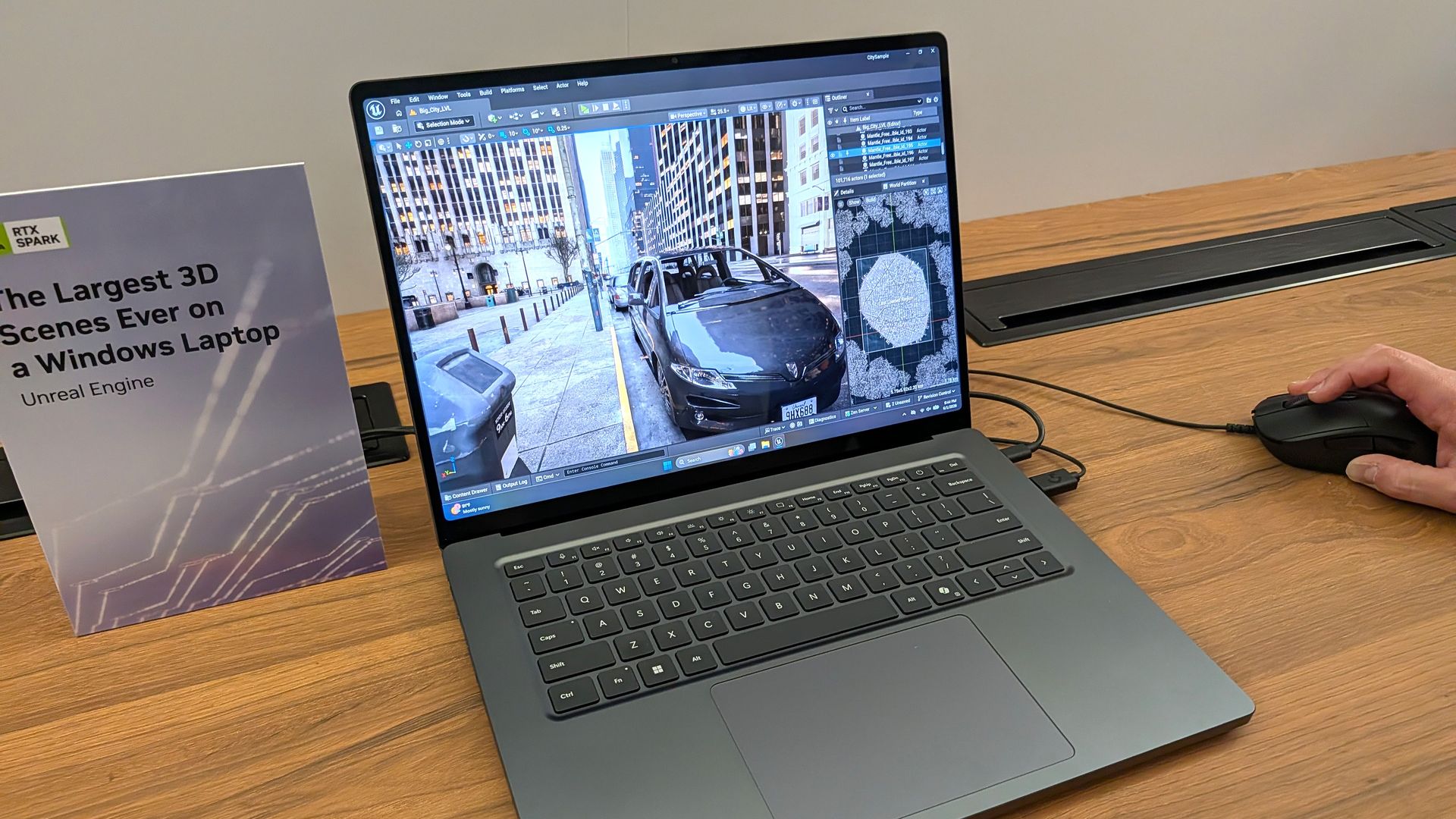
RTX Spark showdown — Surface Laptop Ultra vs. ASUS ProArt P16

Microsoft Surface Laptop Ultra renderMini-LED

Microsoft
Surface Laptop Ultra

The Surface Laptop Ultra costs less to start, but it lacks pen support, its mini-LED isn't as impressive, it's thicker and heavier, and it lacks some features compared to the ASUS ProArt P16. Regardless, many will appreciate its speedy SSD, its superior webcam, its smaller footprint, and its magnetic USB-C port.

Pros

  • Smaller footprint, less fan noise
  • Superior webcam
  • Magnetic USB-C port should be on every laptop
  • Comfty keyboard and massive haptic touchpad
  • Faster 1TB/2TB SSDs
  • Costs less to start

Cons

  • No pen support
  • Mini-LED display not as impressive as OLED
  • Thicker and heavier
  • No presence detection

ASUS ProArt P16 renderOLED

ASUS
ProArt P16

The ASUS ProArt P16 scored higher in our review thanks to its OLED display, deeper key travel, outstanding audio, cooler thermals, and thinner/lighter design. It does cost more to start, and it has louder fans, but these are easy trade-offs for those who don't mind spending a little bit more.

Pros

  • Gorgeous OLED display with inking support
  • Deeper 1.7mm key travel and haptic touchpad
  • Top-firing speakers
  • Cooler thermals
  • Oleophobic coating and anti-glare 4K display finish

Cons

  • Slower 1TB/2TB SSDs
  • Costs more to start
  • Louder fans

The Windows Central team has had time to digest some of the new NVIDIA RTX Spark laptops that recently launched, and thanks to our in-depth reviews, I'm here to offer some insights as to which PC might be best for you.

I'm looking at Microsoft's flagship Surface Laptop Ultra — the first RTX Spark PC we reviewed — and the ASUS ProArt P16, a slightly larger option that we actually rated higher than the Surface.

Here's why the ProArt PC gained a bit of extra score over the Surface Laptop Ultra (and why that doesn't necessarily mean it's the right RTX Spark laptop for you).

Surface Laptop Ultra vs. ASUS ProArt P16: Specifications

Before I get too deep into my comparison between the Surface Laptop Ultra and ASUS ProArt P16, I put together this table for easy reference.

Standout differences at this point should be the display size and type, the port selection, and the dimensions, which I cover and explain in more depth below.

Surface Laptop Ultra

ASUS ProArt P16

CPU

NVIDIA N1X
18-core/20-core

NVIDIA N1X
18-core/20-core

GPU

NVIDIA RTX
5120-core/6144-core

NVIDIA RTX
5120-core/6144-core

RAM

24GB, 32GB, 48GB, 64GB, 128GB LPDDR5X unified

24GB, 32GB, 48GB, 64GB, 128GB LPDDR5X unified

Storage

512GB M.2 PCIe 4.0 NVMe SSD
1TB, 2TB M.2 PCIe 5.0 NVMe SSD
Upgradable

512GB, 1TB, 2TB M.2 PCIe 4.0 NVMe SSD
Upgradable

Display

15 inches, 3270x2180, mini-LED, 3:2 aspect ratio, 120Hz VRR, touch, Dolby Vision IQ

16 inches, 3840x2400 or 2880x1800, OLED, 16:10 aspect ratio, 120Hz VRR, touch

Wireless

Wi-Fi 7
Bluetooth 5.4

Wi-Fi 7
Bluetooth 5.4

Camera

FHD with IR

FHD with IR

Audio

4x Omnisonic speakers (Dolby Atmos)

4x speakers (Dolby Atmos)

Battery

92Wh

99.9Wh

Ports

2x USB4, 1x USB4 with Magnetic Connect, 1x HDMI 2.1b, 1x USB-A 3.1, SD card reader, 3.5mm audio

3x USB4, 1x USB-A 3.2 (Gen 2), HDMI 2.1, SD card reader, 3.5mm audio

Dimensions

12.95 x 9.40 x 0.71-0.75 inches (328.8mm x 238.7mm x 17.99-19.16mm)

13.94 x 9.57 x 0.51-0.63 inches
(354.1mm x 243mm x 12.9-15.9mm)

Weight

4.41 pounds (2kg)

3.9 pounds (1.77kg)

Colors

Platinum, Nightfall

Nano Black, Neo White

Pro-grade designs and features available in both laptops

Perspective view from the front-left of the ASUS ProArt P16 laptop on a white tabletop, showing the dark chassis, lit keyboard, and bright screen.

The ASUS ProArt P16 (pictured here) is thinner and weighs less than the Surface Laptop Ultra. (Image credit: Daniel Rubino)

The ProArt P16 is larger than the Surface Laptop Ultra. That's a given considering it has a larger 16-inch display. The overall footprint is a bit larger, but otherwise, the ProArt P16 comes out ahead.

The P16 weighs just 3.9 pounds (1.77kg) compared to the Surface Laptop Ultra's 4.41 pounds (2kg), and it's also quite a bit thinner, starting at 0.51 inches (12.9mm) compared to 0.71 inches (17.9mm).

The neat thing is that ASUS really doesn't make you regret that upsizing. As Windows Central Editor-in-Chief Daniel Rubino says in his ProArt P16 review:

Thermals are even more impressive. Under sustained heavy workloads, my thermal camera recorded around 105°F across the keyboard deck and approximately 120°F near the rear exhaust. That's a few degrees cooler than both the Surface Laptop Ultra and HP OmniBook Ultra 16 RTX Spark in my testing. Fan noise never exceeded 50dB under extreme workloads.

Rubino does give Surface a nod for its "pure premium feel," although I'm sure some will love the ProArt P16's fingerprint-resistant coating that reduces smudges.

Which laptop offers better ports?

Surface Laptop Ultra
The left-side ports on the Surface Laptop Ultra.Zac Bowden / Windows Central
Surface Laptop Ultra magnetic charging cable
The Surface Laptop Ultra's magnetic charging cable.Zac Bowden / Windows Central

This first wave of RTX Spark laptops is fairly unified across brands in terms of port selection. Both laptops offer three USB4 hookups (using the USB-C form factor), but only the Surface Laptop Ultra has the nifty Magnetic Connect feature on one of them.

Magnetic Connect allows a connected USB-C cable to pull away from the PC instead of dragging it off a table, much like Apple's MagSafe. It's a great feature to have, especially with a laptop at this price.

You're otherwise getting USB-A, HDMI, an SD card reader, and a 3.5mm audio jack across both PCs.

Is the keyboard and touchpad different across PCs?

Top-down view of the keyboard deck showing flanking speaker grilles, power button, trackpad with DialPad icon, and RTX Spark sticker.
A look at the ProArt P16's haptic touchpad, keyboard, and top-firing speakers.Daniel Rubino
Surface Laptop Ultra
A look at the Surface Laptop Ultra's haptic touchpad and keyboard.Windows Central / Zac Bowden

Speaking on the Surface Laptop Ultra's keyboard and touchpad, Windows Central Senior Editor Zac Bowden said, "This is probably the best keyboard and trackpad experience I've ever had on a Windows laptop to date."

Digging into that statement, Bowden clearly appreciated the 1.4mm tactile key travel that he called "incredibly satisfying and not at all fatiguing." The Surface's haptic touchpad is the largest ever in Microsoft's lineup, and Bowden says it "makes a huge difference in how easy it is to use."

Not to be outdone, the ASUS ProArt P16 offers deeper 1.7mm key travel and an equally enormous haptic touchpad.

Which laptop has a better webcam and speakers?

Close-up of the laptop underside corner showing downward-firing speaker cutouts, a rubber foot strip, and product certification labels.

The bottom two speakers are joined by two speakers flanking the ProArt P16's keyboard. (Image credit: Daniel Rubino)

On the spec sheet, both laptops offer an FHD (1080p) front-facing webcam with IR capabilities for facial recognition.

Rubino states that "Microsoft still wins this category with Surface" and notes how HP's OmniBook Ultra with a 5MP webcam trumps both ASUS and Microsoft.

The big deal? The ProArt P16 includes human presence detection for increased security and convenience, whereas the Surface Laptop Ultra does not.

As for audio, each laptop comes with four speakers and Dolby Atmos support. Both laptops deliver some of the best sound we've ever heard, but only the ProArt P16 has top-firing speakers flanking the keyboard.

Mini-LED or OLED? Our reviewers prefer the latter

Surface Laptop Ultra

The Surface Laptop Ultra's mini-LED is plenty bright, but OLED is probably better for many users. (Image credit: Windows Central / Zac Bowden)

Display tech is where these two laptops really show a difference. Most noticeable is the Surface's taller 3:2 aspect ratio compared to the P16's 16:10 aspect ratio. The differences don't stop here.

The Surface Laptop Ultra has a 15-inch mini-LED screen at a 3270x2180 resolution, with 1,344 dimming zones, 1000-nit SDR brightness, and 2000-nit HDR peak brightness. It packs in a 120Hz dynamic refresh rate and Dolby Vision IQ support.

Though it's brighter than the ProArt's screen, Bowden says the mini-LED tech results in "a bit of blooming around bright elements on a dark background."

He adds that the backlight doesn't always keep up with what's on your screen, causing a slight ghosting effect in dark mode.

Ultrawide front shot of the open ASUS ProArt P16 laptop under purple ambient lighting, showing its backlit keyboard and vibrant anime room wallpaper.

The ProArt P16's OLED display provides vivid color and perfect contrast, with no backlight bleed apparent. (Image credit: Daniel Rubino)

The ProArt P16 has a larger 16-inch OLED screen with a 120Hz dynamic refresh rate, and it's available in either a 3840x2400 (4K) or 2880x1800 (2.8K) resolution.

The 4K version is the primary option for models with 128GB of RAM, though Best Buy seems to offer a 4K version with 32GB of RAM. Despite a lower resolution, you still get 500 nits of SDR brightness and 1,100 nits of peak HDR brightness.

The 4K version hits 700-nit peak SDR brightness, climbing to 1,600 nits with HDR. An anti-reflective coating is included.

None of the mini-LED issues discovered in the Surface Laptop Ultra's mini-LED screen are apparent here, and you get the standard OLED perks of perfect contrast and vivid color no matter how you're using it.

It's worth noting that the P16 display offers pen support for inking. The Surface Laptop Ultra has no pen support.

NVIDIA's RTX Spark chip keeps performance close

Close-up shot of the green and white NVIDIA RTX SPARK sticker on the matte black chassis next to the keyboard and trackpad

The new NVIDIA RTX Spark chips offer similar performance across laptop models. (Image credit: Daniel Rubino)

A neat aspect we're discovering as we test RTX Spark laptops is how performance is quite similar. That's not surprising. These laptops use the same NVIDIA N1X chips in either 18- or 20-core CPU and 5120- or 6144-core GPU configs.

We tested both with the 20-core CPU and 6144-core GPU, and the Surface Laptop Ultra and ProArt P16 trade blows across benchmarks. For example, CPU performance is close enough that I wouldn't spend much time worrying about it.

The Laptop Ultra does great in lighter graphics benchmarks, though the ProArt P16 takes over in more demanding tests. Considering the ASUS laptop is thinner and lighter than the Laptop Ultra, that's a real achievement.

Geekbench 7 bar chart showing the ASUS ProArt P16 3K leading with 23,878 multi-core and 2,682 single-core, and the 4K model scoring 23,833 multi-core and 2,717 single-core.
Future
CrystalDiskMark bar chart comparing SSD speeds: ASUS ProArt P16 4K scores 7,336 MB/s read and 6,720 MB/s write, while the 3K model reaches 7,226 MB/s read and 4,124 MB/s write.
Future
Cinebench 2026 benchmark bar chart showing the ASUS ProArt P16 scoring 6,742 in multi-core and 554 in single-core, alongside the HP OmniBook Ultra 16 and Surface Laptop Ultra.
Future
Geekbench 7 CUDA benchmark chart showing the ASUS ProArt P16 4K scoring 187,547 and the 3K scoring 185,630, compared to the HP OmniBook (187,569) and Surface (186,098).
Future
3DMark Steel Nomad bar chart showing ASUS ProArt P16 (3K) scoring 2,846, behind Surface Laptop Ultra (3,064) and HP OmniBook Ultra 16 (2,935), but outperforming Alienware 15 (2,036).
Future
3DMark Speed Way bar chart showing ASUS ProArt P16 (3K) scoring 2,927, trailing HP OmniBook Ultra 16 (3,143) and Surface Laptop Ultra (3,011), while beating Alienware 15 (2,286).
Future
3DMark Time Spy Extreme chart showing ASUS ProArt P16 (3K) scoring 6,006 in second place behind HyperX OMEN 15 (6,257), ahead of Surface Laptop Ultra, HP OmniBook Ultra 16, and Alienware 15.
Future

One area where the Surface Laptop Ultra pulls ahead is with its 1TB and 2TB M.2 PCIe 5.0 NVMe SSDs that are way faster than the PCIe 4.0 options in the ProArt P16. Microsoft does drop back to PCIe 4.0 with a 512GB capacity.

Which laptop has better battery life?

Surface Laptop Ultra heat

FLIR imagining reveals a 123F temp on the Surface Laptop Ultra. (Image credit: Zac Bowden / Windows Central)

The ProArt P16 has a larger 99.9Wh battery capacity compared to the Laptop Ultra's 92Wh, but that matters less than you might expect.

Both Rubino and Bowden were able to get around 10 hours of real-world use when not leaning heavily on the GPU. Both the ProArt P16 and Laptop Ultra struggle to put up strong efficiency numbers when that GPU is in demand, and in both cases, an AC charger should be kept nearby.

FLIR thermal image of the ASUS ProArt P16 keyboard deck during operation, showing heat concentration in bright yellow and orange with a center point reading 105.3°F.

The same spot measured for heat on the ProArt P16. (Image credit: Daniel Rubino)

As for heat and noise, the Surface Laptop Ultra hit about 123 degrees Fahrenheit just above the keyboard. That's very hot, but at least the fans don't exceed 42 decibels.

Using the same FLIR imaging, we measured 105 degrees Fahrenheit in the same spot on the ProArt P16. That's quite a bit cooler, although the fans did climb closer to 50 decibels.

Surface Laptop Ultra vs. ASUS ProArt P16: Which should you buy?

Rear angled view of the ASUS ProArt P16 laptop lid under vivid purple lighting, highlighting the centered glossy ProArt logo and slim profile.

The ASUS ProArt P16 comes out ahead of the Surface Laptop Ultra in several key areas. (Image credit: Daniel Rubino)

Microsoft's Surface Laptop Ultra starts at $2,599.99 for a model with an 18-core CPU, 24GB of RAM, and a 512GB SSD. The ASUS ProArt P16 starts at $2,799.99 for a model with an 18-core CPU, 24GB of RAM, and a 512GB SSD.

If they're so similar, why the price difference?

I'm pointing to the ProArt P16's superior OLED display with pen support, its thinner and lighter design, its cooler thermals, its deeper key travel, its human presence detection, its top-firing speakers, and its larger battery.

These are all noticeable benefits, and whether or not they're worth a $200 upcharge (to start) is really up to you.

I can confidently say that the Surface Laptop Ultra is a great PC regardless of how well ASUS put together its ProArt P16, and perks like a smaller footprint, a better FHD webcam, a cheaper starting price, a magnetic USB-C port, and quieter fans could weigh heavier on your shopping list.

It's worth noting that ASUS also makes a 14-inch ProArt P14 with many of the same benefits, all in a more portable package. Starting at $2,599, it might be the perfect third option for shoppers.

Microsoft Surface Laptop Ultra render

Mini-LED
Microsoft
Surface Laptop Ultra

The Surface Laptop Ultra costs less to start, but it lacks pen support, its mini-LED isn't as impressive, it's thicker and heavier, and it lacks some features compared to the ASUS ProArt P16. Regardless, many will appreciate its speedy SSD, its superior webcam, its smaller footprint, and its magnetic USB-C port.

ASUS ProArt P16 render

OLED
ASUS
ProArt P16

The ASUS ProArt P16 scored higher in our review thanks to its OLED display, deeper key travel, outstanding audio, cooler thermals, and thinner/lighter design. It does cost more to start, and it has louder fans, but these are easy trade-offs for those who don't mind spending a little bit more.

Click to join us on r/WindowsCentral

Join us on Reddit at r/WindowsCentral to share your insights and discuss our latest news, reviews, and more.
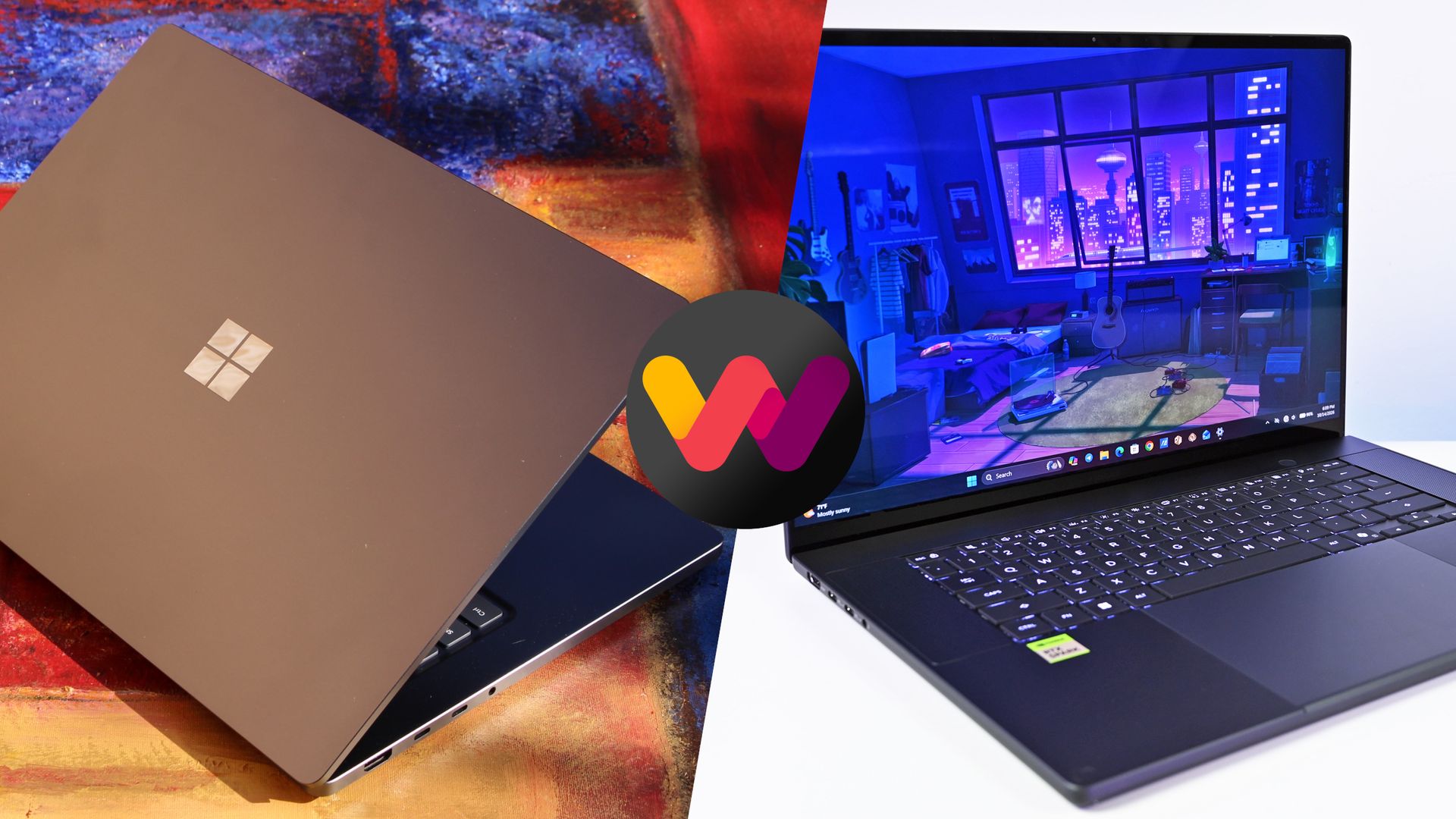
New Surface Laptop Ultra firmware update fixes screen flickering and long reboot times

Microsoft has released its first firmware update for the new Surface Laptop Ultra that fixes a number of issues that users and reviewers have reported since launch day a few weeks ago. Namely, issues with the display and long reboot times are finally being addressed.

According to the changelog, this firmware update was released on October 22, 6 days after the Surface Laptop Ultra launched. It appears under the name "Microsoft Corporation System Hardware Update (200.0.7.0)" in Windows Update, and includes the following fixes:

  • Resolves an issue that could cause extended reboot times.
  • Resolves an issue that could cause screen flickering.
  • Resolves an issue that could cause unexpected restarts.
  • Includes additional bug fixes and general performance improvements.

Reviewers (myself included) had noted that the Surface Laptop Ultra's Mini-LED screen was disappointing as the display suffered from ghosting and flickering. Microsoft says the flickering issue should now be fixed with this latest update, though the ghosting issue is still present.

I also mentioned in my review that the Surface Laptop Ultra suffered from really long reboot times, which made installing Windows updates and drivers a pain as it made the process take twice as long. That issue is now also fixed as of this latest firmware update.

Other fixes include performance improvements and a reduction in unexpected restarts (BSODs,) something I am yet to encounter on Surface Laptop Ultra anyway. It's good to see Microsoft moving so quickly to improve the Surface Laptop Ultra, which is expected to get firmware updates for 6 years, until 2032.

Surface Laptop Ultra is on sale now starting at $2,599. It's Microsoft's first RTX Spark powered Surface PC, which explains why there have been some teething problems with the platform. I expect Microsoft to issue more bug fixes and improvements via firmware updates over the coming weeks.

Click to join us on r/WindowsCentral

Join us on Reddit at r/WindowsCentral to share your insights and discuss our latest news, reviews, and more.
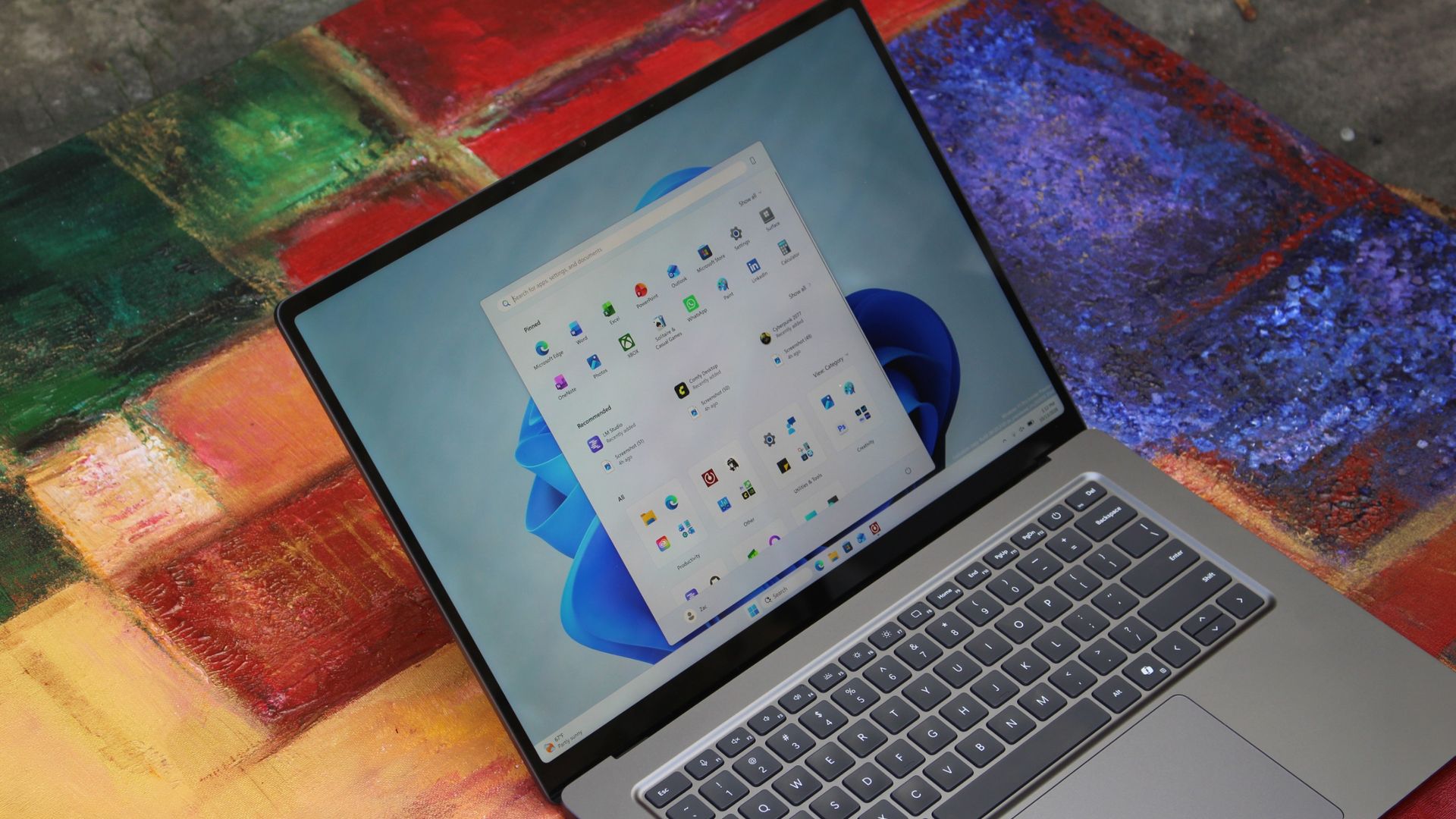
  • ✇Yanko Design
  • The Slurptop DIY Laptop Pairs Power-Tool Styling With a Swappable Battery
    The Slurptop borrows its battery from the toolbox, and its body doesn’t bother pretending otherwise. This homemade cyberdeck wraps mini PC hardware in a chunky yellow-and-black clamshell, complete with an integrated carry handle and mechanical keys. It’s a completed personal project rather than a retail laptop, designed around coding, light design work, and controls that don’t apologize for taking up some extra space. The angular, 3D-printed enclosure takes its cues from power tools, with simil
     

The Slurptop DIY Laptop Pairs Power-Tool Styling With a Swappable Battery

Par : JC Torres
26 octobre 2026 à 05:15

The Slurptop borrows its battery from the toolbox, and its body doesn’t bother pretending otherwise. This homemade cyberdeck wraps mini PC hardware in a chunky yellow-and-black clamshell, complete with an integrated carry handle and mechanical keys. It’s a completed personal project rather than a retail laptop, designed around coding, light design work, and controls that don’t apologize for taking up some extra space.

The angular, 3D-printed enclosure takes its cues from power tools, with similarly conspicuous controls. The yellow frame uses glass-fiber-filled plastic, while black components use carbon-fiber-filled filaments. An aluminum bar reinforces the hinge area, with shared bolts securing several structural layers. The handle fits between sections of the case, so assembling the housing locks it into position before its own mounting screws are added.

Designer: Slurpburgers

Open the lid, and the keyboard immediately takes over. Its 82 mechanical keys sit in angled groups rather than the straight rows you’d expect on a laptop, leaving a green trackball near the front center. That ball runs on three ceramic bearings above a sensor salvaged from a gaming mouse. You can move the pointer without clearing desk space for a separate mouse.

The display keeps things relatively conventional, pairing a 14-inch panel with a 1920-by-1200 resolution and a 16:10 aspect ratio. Behind the custom shell is hardware from a GMKtec M5 Ultra mini PC, including an AMD Ryzen 7 7730U processor, 64GB of RAM, and a 500GB SSD. CachyOS supplies the familiar Linux desktop, so there’s a recognizable computing environment beneath all that workshop character.

An XP-Pen drawing tablet also gets its own holder behind the display, adding pen input without displacing the keyboard or trackball. Connected beside the laptop, it provides a separate surface for sketching or editing artwork, leaving the main display free to show what you’re working on. That keeps everything together for travel, although actually drawing still calls for some extra desk space.

The power arrangement follows the same willingness to borrow useful parts. A 24V Kobalt tool battery supplies the machine through a converter that adjusts its output to the PC’s required 19V. A separate cutoff board guards against draining the pack too far. The battery remains an obvious external attachment, making its removal part of the operating routine instead of a repair procedure.

That decision comes with a catch, naturally. The Slurptop doesn’t charge the battery itself, so the pack has to visit its tool charger. Wall power can run the computer independently, and a switching module transfers between the adapter and battery. Keeping it plugged in lets the owner change packs without shutting down, but there’s no uninterrupted battery swap away from an outlet.

The builder reports more than four hours of writing and coding on a 4Ah battery, with some charge remaining. That’s a useful reference, not an independently measured endurance rating. The power-tool styling doesn’t come with a documented weatherproofing or drop rating, either. You can carry this homemade workstation by its handle, but treating it like a drill would be an unfortunate misunderstanding.

The post The Slurptop DIY Laptop Pairs Power-Tool Styling With a Swappable Battery first appeared on Yanko Design.

ASUS’s ProArt P16 RTX Spark sets a new bar for creator laptops

The ASUS ProArt P16 with RTX Spark is one of the best Windows laptops I've ever used. It's also one of the easiest to recommend to the wrong person.

That distinction matters when laptops start at $2,799.99 and go up to nearly $7,000, but I have a good reason for this caveat.

ASUS has designed this new ProArt P16 (H7607) primarily for people who create more than they consume: developers, engineers, AI enthusiasts, 3D artists, video editors, and professionals experimenting with increasingly sophisticated local AI and agentic workflows.

Indeed, NVIDIA's RTX Spark N1X combines a 20-core Grace CPU, 6,144-core Blackwell RTX GPU, native CUDA support, and up to 128GB of unified LPDDR5X memory. ASUS says the latter configuration can even run LLMs with up to 120 billion parameters.

If CUDA, local inference, LLMs, agentic workflows, GPU memory, or ComfyUI mean absolutely nothing to you, there are better laptops for your money.

If those terms interest you, even if you're just starting to learn about them, things get much more interesting, and you'll want to read on.

ASUS and NVIDIA had no input, nor did it see the contents of this review, prior to publication.

ASUS ProArt P16: Price and specifications

Perspective view from the front-left of the ASUS ProArt P16 laptop on a white tabletop, showing the dark chassis, lit keyboard, and bright screen.

(Image credit: Daniel Rubino)

I focused on two configurations for this review. My 3K Nano Black unit packs 64GB RAM and a 1TB SSD for $4,399.99, while the top model jumps to 128GB RAM, 2TB storage, and a 4K OLED for $6,999.99.

ASUS also offers Nano Black and Neo White, although configuration choices are strangely interdependent. Changing color can alter the display and Windows edition, so pay attention when ordering. ASUS currently lists Windows 11 Home and Pro, 3K and 4K OLED options, and memory capacities reaching 128GB.

Interestingly, Best Buy offers a model with 4K OLED, 32GB of RAM, and 1TB of storage in that Nano Black ($3,399). While it's not cheap, it is still one of the more affordable models, and I think it's one of the more intriguing configurations for the general creator category.

But you can go even lower, as Best Buy's $2,799 model still has that 4K OLED, but 512GB of storage (you can add more later) and 24GB of RAM (obviously, RAM is the cost multiplier here in late 2026).

And don't confuse this H7607 model with the existing (and slightly older) AMD-powered ProArt P16 H7606. RTX Spark makes the H7607 a fundamentally different computer.

ASUS ProArt P16: Design and hardware

Top-down view of the closed ASUS ProArt P16 laptop featuring a minimalist matte black lid with a subtle centered ProArt logo.

ASUS keeps it simple for the lid. (Image credit: Daniel Rubino)

This may be ASUS's greatest achievement with the ProArt P16.

At just 3.9 pounds, it's remarkably light for a 16-inch workstation, undercutting the 4.5-pound Surface Laptop Ultra, 4.7-pound 16-inch MacBook Pro, and especially HP's surprisingly hefty 4.9-pound OmniBook Ultra 16 RTX Spark.

You absolutely feel the difference.

The ProArt measures just 0.51 to 0.63 inches thick, yet ASUS still squeezes in an enormous 99.9Wh battery.

Full bottom chassis view of the ASUS ProArt P16 displaying extensive ventilation grilles, regulatory stickers, speakers, and rubber feet.

There's one giant grill on the bottom of the ProArt P16 for ventilation, followed by some smaller areas. (Image credit: Daniel Rubino)

Build quality is excellent. I'd give Microsoft and HP a very slight advantage for pure premium feel, but ASUS wins enough other categories that I hardly care. For instance, Nano Black's fingerprint-resistant coating also works surprisingly well. As someone who despises smudgy black laptops, I appreciate details like this.

Thermals are even more impressive. Under sustained heavy workloads, my thermal camera recorded around 105°F across the keyboard deck and approximately 120°F near the rear exhaust. That's a few degrees cooler than both the Surface Laptop Ultra and HP OmniBook Ultra 16 RTX Spark in my testing. Fan noise never exceeded 50dB under extreme workloads.

For something this thin, that's outstanding, since I expected sacrifices in both areas, not the opposite.

FLIR thermal image of the ASUS ProArt P16 keyboard deck during operation, showing heat concentration in bright yellow and orange with a center point reading 105.3°F.
Daniel Rubino
FLIR thermal image of the ASUS ProArt P16 laptop underside, highlighting heat dissipation along the vents and a center reading of 105.1°F between the cooler fan intakes.
Daniel Rubino

Connectivity is arguably best-in-class for RTX Spark laptops. It has three USB4 Type-C ports, with two on the left and one on the right, so I can charge from either direction, plus USB-A, HDMI 2.1b, a headphone jack, and a full-size SD card reader. To me, this is the right port configuration for this demographic on an RTX Spark laptop. I wish more companies would split Type-C ports on either side for easier charging, but some still don't.

All these small conveniences add up.

ASUS ProArt P16: Display, keyboard, touchpad, and audio

Top-down view of the keyboard deck showing flanking speaker grilles, power button, trackpad with DialPad icon, and RTX Spark sticker.

Top-down view of the ProArt 16's basic but solid keyboard deck showing flanking speaker grilles, power button, and huge touchpad. (Image credit: Daniel Rubino)

Both displays are gorgeous 16-inch OLED touchscreens with 100% DCI-P3 coverage, HDR support, and variable refresh rate from 30 to 120Hz. The 3K panel runs at 2880 x 1800 and peaks at 1,100 nits for HDR, while the 4K panel runs at 3840 x 2400, peaks at 1,600 nits for HDR, and adds ASUS's excellent anti-reflection treatment.

It's also worth noting that you get presence detection, an auto-brightness sensor, and adaptive (ambient) color, which are extra bonus display features I like to see at this price point.

Here's my controversial advice: I'd get the 3K display.

Placing both laptops together, I routinely guessed incorrectly when trying to identify them by resolution alone. Pixel peeping exposes the difference, but at normal viewing distances, 3K is plenty for 16 inches.

Close-up of Windows system specs showing 128 GB RAM, 1.86 TB storage, and NVIDIA RTX Spark N1X processor with 6144-core GPU and 20-core CPU.

Close-up of Windows system specs showing 128 GB RAM in the $6,999 model. (Image credit: Daniel Rubino)

Unfortunately, ASUS forces the 4K configuration if you want 128GB RAM (unless you go through Best Buy, which has a 32GB model). I wish there were a 3K anti-reflective, 128GB option. That said, as someone who is a stickler for glossy displays, the 3K one is pretty good for glare, considering how much it bothers me.

I've also encountered extremely subtle flickering on my 4K unit. ASUS tells me a fix is coming, but I could also have a bum unit, so I have to have a chat with them about it.

Close-up of the ASUS ProArt P16 glossy screen displaying Windows specs: NVIDIA RTX Spark N1X chip and 64 GB RAM, with noticeable circular light glare.
Daniel Rubino
Close-up of the ASUS ProArt P16 4K anti-reflective screen showing Windows specs: NVIDIA RTX Spark N1X and 128 GB RAM, with diffused glare reduction.
Daniel Rubino

ASUS deserves enormous credit for its display controls, though. MyASUS (its main control and configuration app) provides profiles, color gamut controls, OLED flicker-free dimming, pixel refresh, burn-in mitigation, and other OLED Care options. You can even directly adjust memory allocation to the integrated GPU, which is particularly relevant on a unified-memory machine.

MyASUS Device Settings under Audio & Visual, showing Splendid color optimization modes including Normal, Vivid, Manual, and Eye Care.
Daniel Rubino
MyASUS Device Settings showing ASUS OLED Care options: Pixel refresh toggled On, auto-hide taskbar toggled Off, and taskbar transparency On.
Daniel Rubino
MyASUS Device Settings under Connectivity, showing TaskFirst network prioritization options with Multimedia Streaming selected.
Daniel Rubino

Overall, I think ASUS has the best out-of-the-box software, at least compared to HP and Microsoft, with the most configuration options for audio, connectivity, display, gestures, and more, not to mention direct driver updates from ASUS, warranty info, etc. I rarely praise OEM apps, but this is the way to do it.

This is also the part where I lament some pre-installed junkware, except I didn't find any on either laptop. These are relatively clean installs (except for whatever you dislike about Microsoft's inbox apps).

Close-up of the ASUS ProArt P16 backlit keyboard illuminated with cool white-blue backlighting under dark ambient lighting.

3-stage, timed backlight for the keyboard is excellent. (Image credit: Daniel Rubino)

The keyboard is similarly excellent, with springy keys, 1.7mm travel, and a three-stage backlight with automatic sensing.

The enormous haptic touchpad might be even better. Haptic feedback feels superb; it supports Windows Haptic Signals, and ASUS adds gestures for brightness, volume, playback, and ScreenXpert. Those gestures are quirky, but also completely optional.

Close-up of the laptop underside corner showing downward-firing speaker cutouts, a rubber foot strip, and product certification labels.

Close-up of the laptop underside corner showing downward-firing speaker cutouts. (Image credit: Daniel Rubino)

The four-speaker Dolby Atmos system is outstanding, and among the best I've heard from a Windows laptop. The 2.1MP webcam is less impressive on paper, particularly against HP's 5MP camera, but ASUS's processing produces a surprisingly sharp picture. Microsoft still wins this category with Surface.

There's even support for the optional $129 ASUS Pen 2.0. Using a pen on a traditional clamshell laptop remains awkward, but it's surprisingly handy for signing documents, marking up images, or quickly diagramming something.

ASUS ProArt P16: RTX Spark and performance

Close-up of the left palm rest on the ASUS ProArt P16 laptop showing the green and white NVIDIA RTX SPARK badge next to the trackpad.

(Image credit: Daniel Rubino)

Unified memory allows the CPU and GPU to access the same large pool rather than dividing system RAM and dedicated GPU VRAM into much smaller fixed buckets. With up to 128GB available, that changes what can realistically be done locally with large AI models, complex 3D scenes, development workloads, high-resolution video, and anything else that can consume enormous amounts of GPU memory.

Then there's CUDA, NVIDIA's massively established parallel computing platform and ecosystem. For developers and creators, CUDA acceleration is fundamental to everything from AI frameworks and local inference to scientific computing and applications like Blender. Having massive unified memory alongside a CUDA-capable Blackwell RTX GPU is what makes RTX Spark particularly interesting.

I've already been experimenting with Osaurus and Hermes, combining models including Gemma 4 26B A4B, GPT-OSS-20B, Qwen3VL-8B, and Raptor 0.6 4B. I'm still learning local AI and agentic computing myself, and I'll be updating this review and writing more about that journey as I figure out what works, what doesn't, and what you can realistically accomplish locally.

Geekbench 7 bar chart showing the ASUS ProArt P16 3K leading with 23,878 multi-core and 2,682 single-core, and the 4K model scoring 23,833 multi-core and 2,717 single-core.
Future
Cinebench 2026 benchmark bar chart showing the ASUS ProArt P16 scoring 6,742 in multi-core and 554 in single-core, alongside the HP OmniBook Ultra 16 and Surface Laptop Ultra.
Future

Looking across all my benchmarks, however, there's another interesting conclusion: which RTX Spark laptop you buy matters considerably less for raw performance than you might expect.

The ProArt P16, Surface Laptop Ultra, and HP OmniBook Ultra 16 (review forthcoming) trade places depending on the benchmark, but they're generally clustered surprisingly close together. In Geekbench 7, for instance, the ASUS actually posts the best multi-core result of the three, while single-core performance is separated by barely anything. CUDA testing is essentially a three-way tie. The 4K ASUS scored 187,547 against HP's 187,569, a difference so tiny it is meaningless.

That's good evidence of how consistent NVIDIA's N1X platform is between manufacturers.

3DMark Time Spy benchmark chart showing the ASUS ProArt P16 (3K) scoring 11,840, alongside the Surface Laptop Ultra (12,771) and HP OmniBook Ultra 16 (13,080).
Future
3DMark Time Spy Extreme bar chart showing the ASUS ProArt P16 (3K) leading with a 6,006 score, ahead of the Surface Laptop Ultra (5,857) and HP OmniBook Ultra (5,492).
Future
Geekbench 7 CUDA benchmark chart showing the ASUS ProArt P16 4K scoring 187,547 and the 3K scoring 185,630, compared to the HP OmniBook (187,569) and Surface (186,098).
Future
3DMark Steel Nomad bar chart showing the ASUS ProArt P16 (3K) scoring 2,846, compared to the HP OmniBook Ultra 16 at 2,935 and Surface Laptop Ultra at 3,064.
Future
3DMark Speed Way bar chart showing the ASUS ProArt P16 (3K) scoring 2,927, alongside the Surface Laptop Ultra at 3,011 and HP OmniBook Ultra 16 at 3,143.
Future

Graphics benchmarks reveal somewhat more variation. The ProArt P16's 11,840 result in 3DMark Time Spy trails the Surface Laptop Ultra's 12,771 and HP's 13,080 by around 7% and 9%, respectively. Speed Way and Steel Nomad tell roughly the same story, with ASUS usually sitting a few percentage points behind Microsoft and HP.

Yet even that isn't universal. In the heavier Time Spy Extreme test, the ProArt P16 actually beats both of them, scoring 6,006 compared to 5,857 for Surface and 5,492 for HP.

In other words, I wouldn't declare any of these RTX Spark laptops the definitive performance winner. We're talking about variations of the same extraordinarily powerful NVIDIA platform, and the rankings shift depending on the workload.

It's also worth remembering what ASUS has achieved physically. At 3.9 pounds and as little as 0.51 inches thick, the ProArt P16 is substantially lighter than its RTX Spark rivals while still maintaining excellent temperatures and relatively restrained fan noise. Some performance variation could plausibly be the consequence of fitting N1X into a thinner, lighter thermal envelope, but ASUS certainly hasn't compromised performance enough that I'd choose a much heavier laptop based on these benchmark differences alone.

CrystalDiskMark bar chart comparing SSD speeds: ASUS ProArt P16 4K scores 7,336 MB/s read and 6,720 MB/s write, while the 3K model reaches 7,226 MB/s read and 4,124 MB/s write.

(Image credit: Future)

The one performance result I would criticize is the SSD.

Both ASUS configurations are well behind the competition. Sequential reads hover around 7,300 MB/s, compared with 10,389 MB/s on the HP and a massive 14,647 MB/s on the Surface Laptop Ultra. Writes vary considerably between my ASUS configurations, too, from 4,124 MB/s on the 3K model to 6,720 MB/s on the 4K machine. Microsoft reached 12,711 MB/s.

Those ASUS numbers aren't slow in isolation, and Windows still feels exceptionally responsive, but this is a $2,800 to $7,000 workstation. Faster storage should come with the territory. At least ASUS provides a second PCIe 5.0 M.2 slot for expansion, so you can add a seriously fast SSD later.

Close-up of the left edge ports: an HDMI port, two 40Gbps USB-C ports, and a 3.5mm headphone audio jack.
Daniel Rubino
Close-up of the right edge ports: a full-size SD card slot, a 10Gbps USB-A port, and a 40Gbps USB-C port.
Daniel Rubino

Gaming performance is also surprisingly good. I've played Gears of War: E-Day at maximum settings without issue, while Minecraft Dungeons II looked and played fantastic aside from occasional frustrating stutters. NVIDIA's latest Game Ready Driver appears to have fixed the latter on my machine, which suggests some of RTX Spark's early gaming quirks may improve as drivers mature.

And RTX Spark is legitimately fast here. Time Spy places the ProArt P16 ahead of the RTX 5070-equipped Dell 16 Premium, while Steel Nomad and Speed Way put it comfortably ahead of an RTX 5050 Laptop GPU. A conventional gaming laptop remains the smarter purchase if gaming is your priority, but RTX Spark owners certainly don't need a second computer just to play PC games.

3DMark Time Spy chart showing ASUS ProArt P16 (3K) scoring 11,840, compared to ROG Zephyrus G14 (13,586), HP OmniBook Ultra 16 (13,080), Surface Laptop Ultra (12,771), and Dell 16 Premium (11,296).
Future
3DMark Time Spy Extreme chart showing ASUS ProArt P16 (3K) scoring 6,006 in second place behind HyperX OMEN 15 (6,257), ahead of Surface Laptop Ultra, HP OmniBook Ultra 16, and Alienware 15.
Future
3DMark Steel Nomad bar chart showing ASUS ProArt P16 (3K) scoring 2,846, behind Surface Laptop Ultra (3,064) and HP OmniBook Ultra 16 (2,935), but outperforming Alienware 15 (2,036).
Future
3DMark Speed Way bar chart showing ASUS ProArt P16 (3K) scoring 2,927, trailing HP OmniBook Ultra 16 (3,143) and Surface Laptop Ultra (3,011), while beating Alienware 15 (2,286).
Future

Ultimately, that's the performance story of the ProArt P16: ASUS gives up remarkably little despite building one of the lightest and thinnest RTX Spark laptops I've tested. Its N1X CPU and CUDA performance are right up there with Surface and HP; GPU performance is sometimes a little behind and sometimes ahead, and the only consistent disappointment is the SSD.

For a machine that's almost a full pound lighter than HP's OmniBook Ultra 16, I'll happily make that trade.

ASUS ProArt P16: Battery life

Close-up of the Windows Power & Battery settings screen showing 96% charge and an estimated battery life of 9 hours and 57 minutes remaining.

(Image credit: Daniel Rubino)

Battery life is good given what's inside (a 99.9 WHr battery, the legal limit), though Apple and Qualcomm still have an obvious efficiency advantage here, and I expect NVIDIA to improve over the coming years.

The Windows Battery Report recorded 9 hours and 58 minutes of real-world usage averaged over several weeks, including web browsing, video, messaging, and lighter creative work, basically standard laptop work with more focus on multimedia production and some lighter local AI work.

Hammer the GPU continuously with rendering, AI, or gaming and expect substantially less. Physics eventually wins.

Still, I can't say I've ever had a Windows laptop this powerful, this capable, and this thin/ligyht, and still get that kind of "regular" battery life.

Standby performance is exceptional. Leaving the ProArt P16 overnight resulted in less than 1% battery loss over 14 hours, finally making this Windows laptop behave the way I expect a modern premium portable PC to.

The included 140W USB-C charger is slightly bigger than HP's, though still compact, and ASUS gets bonus points for the excellent thick braided cable.

ASUS ProArt P16: Should you buy it?

Rear angled view of the ASUS ProArt P16 laptop lid under vivid purple lighting, highlighting the centered glossy ProArt logo and slim profile.

(Image credit: Daniel Rubino)

✅You should buy this if ...

  • You know the benefits of unified memory and CUDA
  • You want the best RTX Spark laptop
  • You want to learn about cutting-edge agentic AI workflows
  • You need a light, very capable workstation for 3D creation, video editing, or coding

❌You should not buy this if ...

  • You think this is just a gaming laptop in disguise
  • You don't know what agentic AI is and don't care to learn about it
  • You spend most of your time consuming content instead of creating it

So, should you buy the ASUS ProArt P16 with RTX Spark? Probably not.

And I mean that as a compliment.

The ProArt P16 H7607 is a specialized workstation for people operating near the frontier of what portable Windows computers can do. Someone mainly browsing the web, writing documents, editing the occasional photo, or even gaming can get an excellent laptop for dramatically less money.

But developers, creators, 3D professionals, AI researchers, and people seriously experimenting with local models and agentic workflows finally have what Windows has desperately needed: a thin, premium laptop that combines massive unified memory with NVIDIA RTX graphics and CUDA.

That's a really big deal.

Two ASUS ProArt P16 laptops under purple lighting: one closed showing the ProArt logo lid, and one open displaying an illustrated desktop background.

Both ASUS ProArt P16 models in 3K and 4K variations. (Image credit: Daniel Rubino)

ASUS then wraps that technology in what is arguably the best RTX Spark chassis on the market. And I mean that. ASUS has been killing it on design and features over the last 3 years.

At 3.9 pounds, the laptop almost feels impossibly light (for its class). The OLED display is beautiful, the keyboard and haptic touchpad are excellent, the speakers are outstanding, the ports are plentiful, the thermals are exceptional, and ASUS offers a level of hardware customization through MyASUS that competitors should copy.

Even the weird stuff is charming. My $4,399 3K review unit included ASUS's excellent $99 ProArt MD301 mouse and a protective sleeve, while the $6,999 128GB machine inexplicably included neither. ASUS notes that bundled accessories vary by country and territory, so your experience may differ.

An HP OmniBook laptop on the left and the ASUS ProArt P16 on the right, open side by side on a desk displaying colorful desktop wallpapers.

Left: HP OmniBook Ultra 16. Right: ASUS ProArt P16. (Image credit: Daniel Rubino)

One caveat: Those 24GB and 32GB Best Buy models are, I think, perfect, more general laptops for creators who want a premium Windows 11 experience with the latest technology. That's an easy recommendation if you can afford it.

The SSD should be faster, battery life can't match the best Snapdragon X2 or Apple Silicon laptops, and $7,000 is still an extraordinary amount of money for any laptop (though about $150 cheaper than a similarly spec'd MacBook Pro 16).

Yet none of those complaints change my overall impression.

The ASUS ProArt P16 is one of the best laptops I've ever used. For the relatively small group of people who can actually exploit everything RTX Spark offers, it may also be one of the most exciting Windows PCs in years.

And if you're simply curious about local AI and want to learn where personal computing may be heading next, the ProArt P16 deserves a spot very near the top of your shortlist.

Proart P16 (h7607)Windows Central

RTX Spark
ASUS
ProArt P16 (h7607)

The ASUS ProArt P16 combines NVIDIA's powerful RTX Spark platform with up to 128GB of unified memory, outstanding OLED displays, superb thermals, and a remarkably thin 3.9-pound chassis. It's an extraordinary Windows workstation, but most people shouldn't buy one.

Click to join us on r/WindowsCentral

Join us on Reddit at r/WindowsCentral to share your insights and discuss our latest news, reviews, and more.
Why wait for Black Friday when Dell's Windows laptops are already discounted?

Black Friday is inching closer, but that doesn't mean you should wait for bargains on Windows laptops built for productivity before then. Dell is offering a selection of its laptops featuring 16GB of RAM for reliable performance under load, 1TB SSDs for plenty of storage space, and a range of portable sizes to suit you.

That includes the Dell 15 ($1,099.99 at Dell, was $1,149.99), Dell 16 ($1,199.99 at Dell, was $1,349.99), and Dell 14 Plus ($1,399.99 at Dell, was $1,579.99).

14 Plus Laptop (Intel Core Ultra 256V, 16GB RAM, 1TB SSD): was $1579.99 now $1399.99

The Dell 14 Plus is the most expensive but best portable laptop in this roundup thanks to its thin and light form factor. It also comes with a crisp 14-inch non-touch QHD+ display (2560x1600), an Intel CPU, 16GB RAM, and a 1TB SSD to crush work assignments.View Deal

16 Laptop (Intel Core 7 150U, 16GB RAM, 1TB SSD): was $1349.99 now $1199.99

The Dell 16 will give you the most screen space of all the highlighted laptops with its 16" FHD+ Touchscreen display (1920x1200) while handling creative tasks with ease using its Intel Core 7 CPU, 16GB RAM, and 1TB SSD.View Deal

15 Laptop (AMD Ryzen 7730U, 16GB RAM, 1TB SSD): was $1149.99 now $1099.99

The Dell 15 handles workflows efficiently with its Intel CPU, 16GB RAM, a 15.6" non-touch FHD (1920x1080) display, and 1TB SSD, while keeping a respectable mid-range price compared to its upper-tier siblings.View Deal

Which of these Dell laptops is best for you?

Dell 14 Plus Copilot+ PC on a desk

The Dell 14 Plus laptop on display (Image credit: Future / John Loeffler)

If you're looking for an affordable yet capable laptop, the Dell 15 offers the best value compared to the other laptops in this roundup.

It's equipped with a 15.6" (Non-Touch) FHD display with 1920x1080 resolution and a 120Hz refresh rate to render images, videos, and writing with sharp details, so you don't have to squint at your work when typing or worry about blurry video feed when hosting stream meetings.

It comes with an AMD Ryzen 7000 7730U CPU and 16GB RAM that will make short work of Office, web browsing, and other productivity tasks while offering a ton of space to back up your precious files with its 1TB SSD.

However, if you've got the budget for more processing power, then go for the Dell 14 Plus Laptop.

It's won high praise from our friends at TechRadar for its 13+ hour battery, great portability due to its ultra-thin design, and 14-inch non-touch QHD+ display with 120Hz and Anti-glare protection.

Best of all, the Dell 14 Plus offers the best single-core performance for everyday use and heavy workloads thanks to its Intel Core Ultra 7 256V CPU, 16GB, and 1TB SSD.

Can these laptops have their RAM and SSDs replaced?

Only the Dell 15 laptop can have its RAM replaced, as it isn't soldered like the ones in the Dell 14 Plus and Dell 16 laptops. All of these laptops can have their SSDs swapped out and replaced with larger ones.

Are they good for gaming?

The Dell 15, Dell 16, and Dell 14 Plus aren't designed for gaming due to their integrated graphics cards, so they will struggle to run most games beyond extremely light titles like Minecraft. Stick to cloud gaming.

Should I wait for Black Friday for a better deal?

It depends on whether you're willing to wait until Black Friday for a bigger discount or if you're in need of a new laptop for work/casual use right now and don't have time to wait for a killer deal.

Click to join us on r/WindowsCentral

Join us on Reddit at r/WindowsCentral to share your insights and discuss our latest news, reviews, and more.
Quiz: Are these quotes about iPhone Duo or Surface Duo?

Apple finally "invented" the folding phone, bringing flexibility and multitasking to the masses. iPhone Duo reviews are in, and I couldn't help but feel a sense of déjà vu.

All the talk of passport-shaped phones, mobile multitasking, and optimized apps sent me back to the days of Microsoft's Surface Duo. A lot of the phrasing in iPhone Duo reviews could have been copied and pasted from reviews of the Surface Duo.

So, I put together a quiz to see if people can identify if a quote is from an iPhone Duo review or a Surface Duo review.

I've changed all of the quotes in this quiz as little as possible and all changes are noted with brackets. I only altered a quote if it includes something that's a giveaway like iPhone Duo, Surface Duo, Apple, or Microsoft.

Blank Pixel

I sent this quiz to a few friends and colleagues before publishing it. No one got a perfect score, and many only got 50% correct. I'm curious to see if that trend continues as more people take the quiz. Please let me know how you did in the comments!

Below are all of the reviews I used to create this quiz.

Click to join us on r/WindowsCentral

Join us on Reddit at r/WindowsCentral to share your insights and discuss our latest news, reviews, and more.
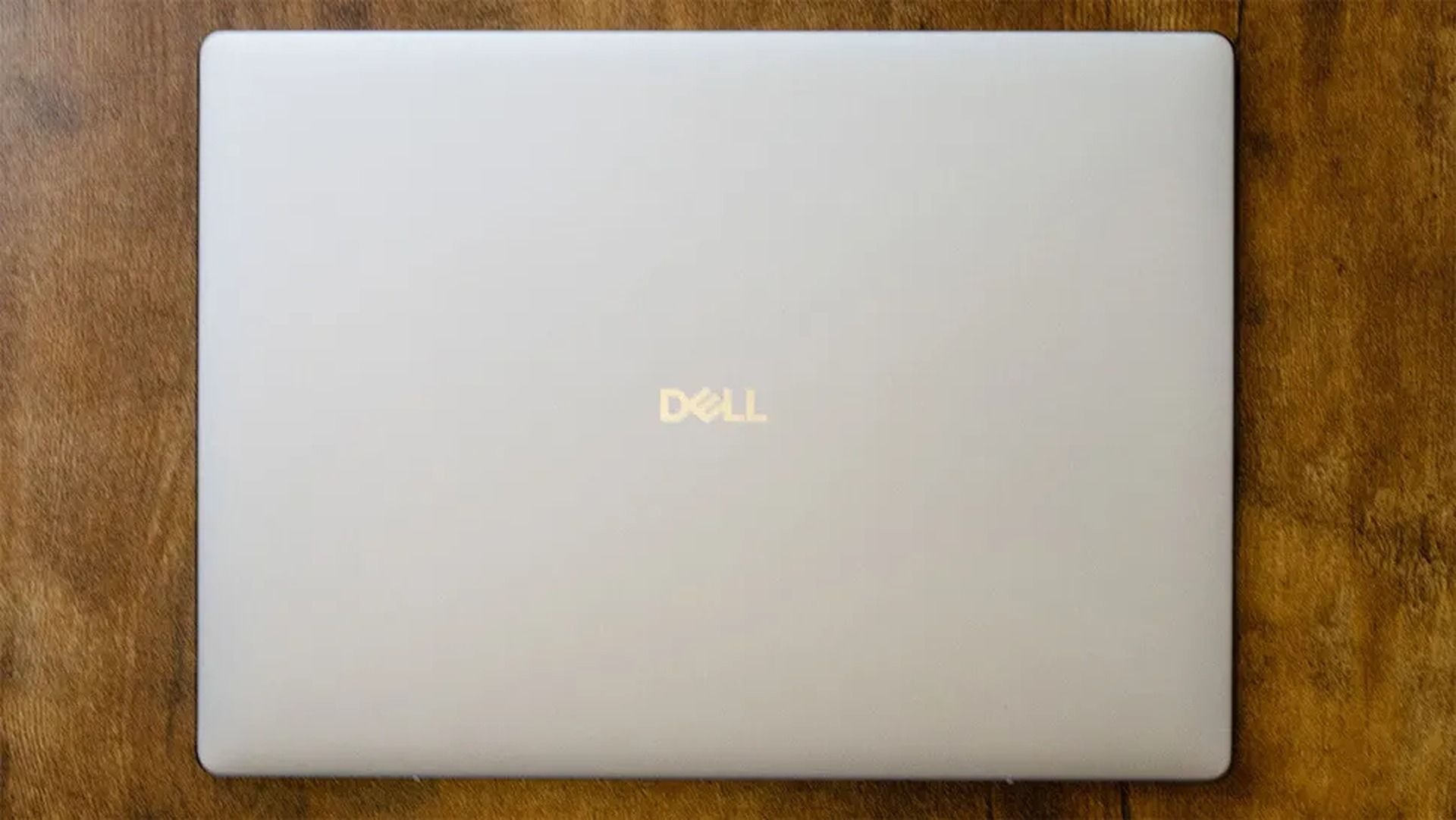
Forget overpriced Windows laptops, HP's 14-inch OLED pick is $599.99 just for today

Every once in a while, Best Buy will host a lucrative deal on a reliable, mid-range laptop during its "Deal of the Day" sale, and that's especially true now, as the HP Omnibook 3 laptop is available for $599.99 at Best Buy (was $799.99), but only for today.

This laptop is a great mid-range choice for students and office workers alike, with its above-average performance, battery life, and high-contrast OLED display that will help you get through the day.

OmniBook 3 (Snapdragon X, 16GB RAM, 512GB SSD): was $799.99 now $599.99

The HP OmniBook 3 is a well-made mid-range laptop that will power through homework, casual tasks, and office work with its performance-boosting Snapdragon X CPU and 16GB RAM, long-lasting battery life of 32 hours, and detailed 2K OLED touchscreen.View Deal

Why buy the HP Omnibook 3?

HP OmniBook 3 14-inch Next Gen AI PC ad featuring a laptop with colorful flowing display, Snapdragon X, long battery life, and 16 GB RAM.

The spec highlights for the HP Omnibook 3 laptop. (Image credit: HP)

Our friends at TechRadar have praised and recommended the HP Omnibook 3 in their coverage a couple of times, and it's easy to agree with them. It's a well-made laptop for school learners or desk workers who need a reliable solution for daily homework, assignments, research, creative tasks, and casual use without breaking the bank.

This laptop is equipped with Qualcomm's (8-core) Snapdragon X CPU to give it faster and more responsive performance when running apps, 16GB of RAM to help it multitask multiple apps without slowing it down, and a 512GB SSD to store precious data.

The HP Omnibook 3 also features a 14-inch 2K OLED touchscreen that displays images, videos, and livestreams with crisp and vibrant details, and a massive battery life of potentially up to 41 hours so you won't have to worry about it shutting down during work.

Is it's RAM and SSD upgradeable?

The HP Omnibook 3's RAM is soldered, so it can't be upgraded, but its SSD can be removed via its M.2 NVMe SSD slot and replaced with a larger one up to 1TB.

Is it an AI laptop?

Yes, the HP Omnibook 3 is an AI laptop as it features Copilot+ PC integration with an NPU capable of 45 TOPS for boosted performance rates while performing local AI-related tasks.

Is it worth waiting until Black Friday?

It depends on your situation and needs. If you're not in a hurry and are willing to wait for a better price, then waiting until Black Friday on November 27, 2026, is a valid option.

However, if you desperately need a new, high-quality laptop and are concerned that laptop prices are going to get worse thanks to the RAM crisis, then we recommend taking advantage of Best Buy's 25% discount on the HP Omnibook 3, as this deal is only available for today.

Click to join us on r/WindowsCentral

Join us on Reddit at r/WindowsCentral to share your insights and discuss our latest news, reviews, and more.
Dell's XPS 13 redefined entry level laptops, and this deal for 16GB RAM is even better

2026 saw the release of the familiar Dell XPS 13, a 'new' laptop designed to be the ultimate, affordable gateway for first-time PC users thanks to its respectable performance, long-lasting battery life, high-quality build, and general reliability.

The XPS 13's work-focused 16GB configuration normally sells for $999.99 at Dell, but Best Buy now has a cheaper alternative for $799.99, thanks to a limited-time 20% discount.

XPS 13 (Intel Core 5 Series 3 320, 16GB RAM, 512GB SSD): was $999.99 now $799.99

"The Dell XPS 13 returns as an excellent Windows-based answer to the MacBook Neo. It’s an excellent option for students or mainstream users who don’t need more CPU or GPU muscle." — Matt Safford, Managing Editor, Tom's Hardware

Tom's Hardware review: ⭐⭐⭐⭐½View Deal

Why buy Dell XPS 13 laptop?

A silver laptop sits on a dark reflective surface, displaying vivid orange sandstone arches and ancient ruins against a blue sky, evoking travel and discovery.

The Dell XPS 13 in action. (Image credit: TechRadar (Christian Guyton) | Dell)

The new Dell XPS 13 has been making waves in the PC market for its shockingly high quality for an entry-level laptop.

Even our Windows laptop connoisseurs Zac Bowden and Cale Hunt were blown away by this laptop, with Cale calling it the "perfect starter PC" and Zac saying, "MacBook Neo's reign as the best deal in computing is well and truly over, all thanks to Dell".

They don't make those comments lightly because the Dell XPS 13 has plenty of features to help it live up to the hype and make it an easy recommendation for beginner PC users, students, and workers.

These include a strong battery life of nearly 15 hours per charge, a 13.4" 3K Touchscreen with 2560x1600 resolution and a 120Hz refresh rate to provide crisp and detailed images and videos, and a solid, thin 0.5 inches thick chassis weighing in at 2.2lb for easy portability.

On top of that, the Dell XPS 13 has a solid and responsive keyboard, a pair of Thunderbolt 4 ports to plug in useful accessories, an IR sensor for facial recognition, great-sounding speakers, Wi-Fi 7 support for faster and more stable internet connections, and decent performance for casual use and mid-level intensive workflows thanks to its Intel Core 5 Series 3 320 CPU and 16GB of RAM.

Can it's RAM and SSD be swapped with different ones?

The Dell XPS 13 laptop's RAM can't be removed and swapped for a different one due to being soldered, so you will need to decide how much RAM it gets during checkout.

Its SSD, however, can be swapped out with a different one, and the Dell XPS 13 supports up to 4TB of storage.

Is it worth waiting until Black Friday?

In the past, we'd recommend waiting until Black Friday for a chance at a better discount, as laptops are usually discounted to their lowest by then.

However, with the ongoing RAM crisis hiking the prices of laptops further and further, who's to say that the Dell XPS 13 won't have a good price by then, even with a Black Friday discount?

With that in mind, it's still worth using Best Buy's 26% discount for the Dell XPS 13 now in case things get worse, especially if you're in a hurry for a high-quality, beginner-friendly laptop.

Click to join us on r/WindowsCentral

Join us on Reddit at r/WindowsCentral to share your insights and discuss our latest news, reviews, and more.
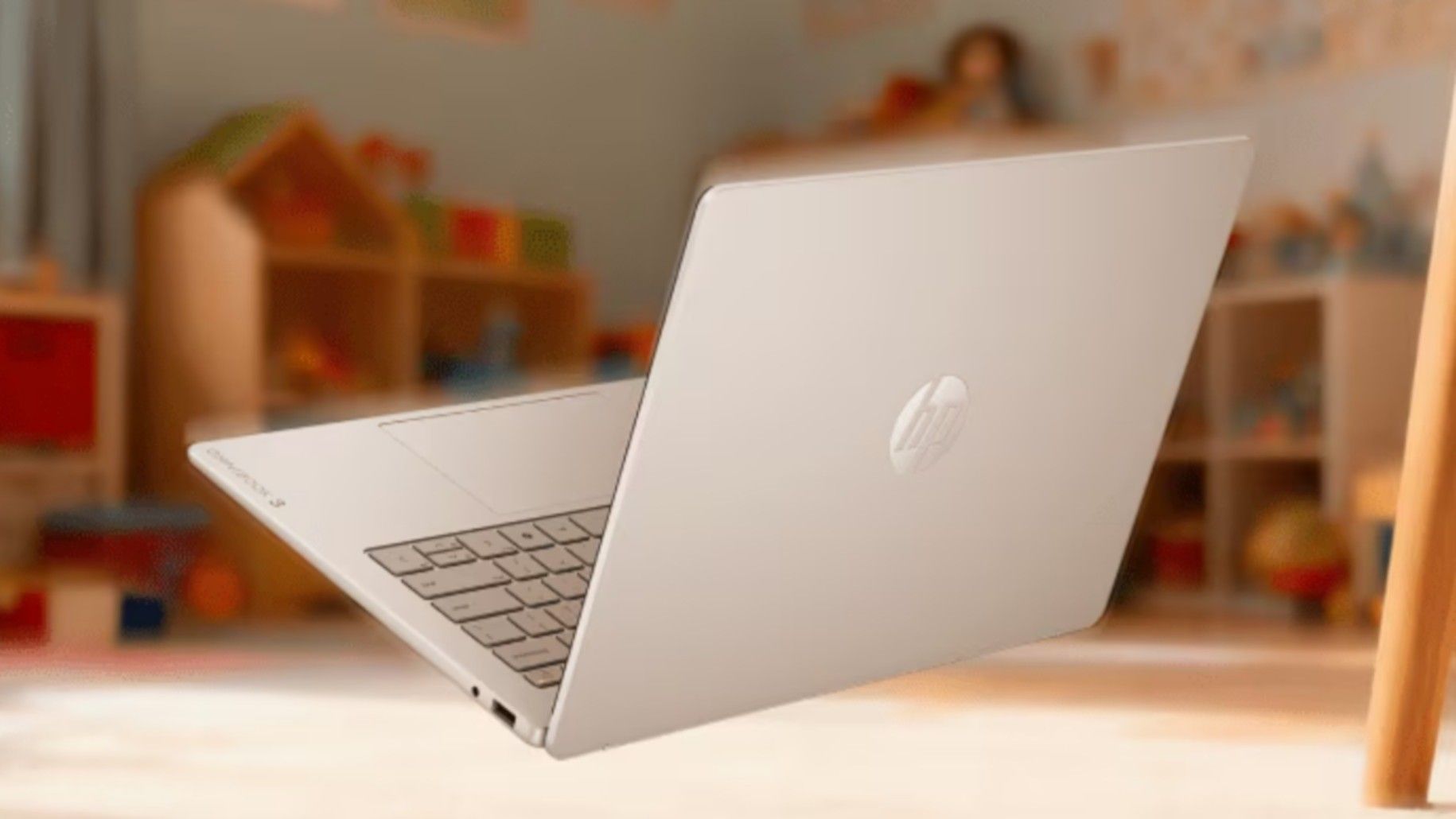
❌