Explore the Microsoft Surface Laptop Ultra's price, specs, Nvidia RTX Spark AI performance, battery life, and key features before buying.
The post Microsoft Surface Laptop Ultra Cheat Sheet: Price, Specs, Features, and More appeared first on TechRepublic.
Nvidia RTX Spark laptops start at $2,599. Explore local AI capabilities, compatibility checks, and the cost and security trade-offs IT teams should assess.
The post Nvidia RTX Spark Brings Local AI Agents to Windows Laptops appeared first on TechRepublic.
Nvidia RTX Spark laptops start at $2,599. Explore local AI capabilities, compatibility checks, and the cost and security trade-offs IT teams should assess.
The RTX 5080 offers more processing power, but the RTX 5070 Ti shares its 16GB VRAM and DLSS capabilities. Here's how performance, power, and 2026 pricing compare.
The post RTX 5070 Ti vs RTX 5080: Which GPU Is Better Value in 2026? appeared first on TechRepublic.
The RTX 5080 offers more processing power, but the RTX 5070 Ti shares its 16GB VRAM and DLSS capabilities. Here's how performance, power, and 2026 pricing compare.
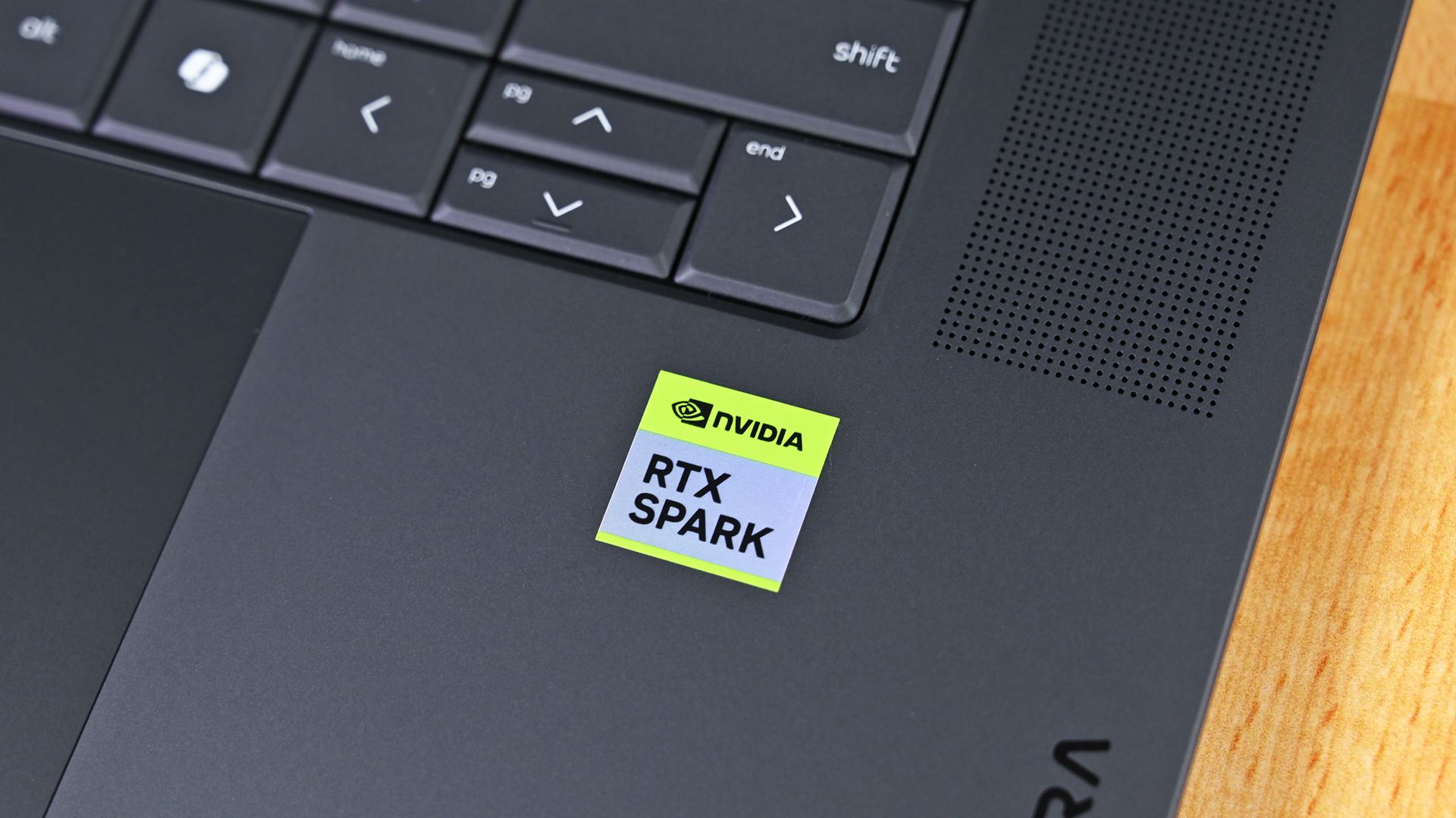
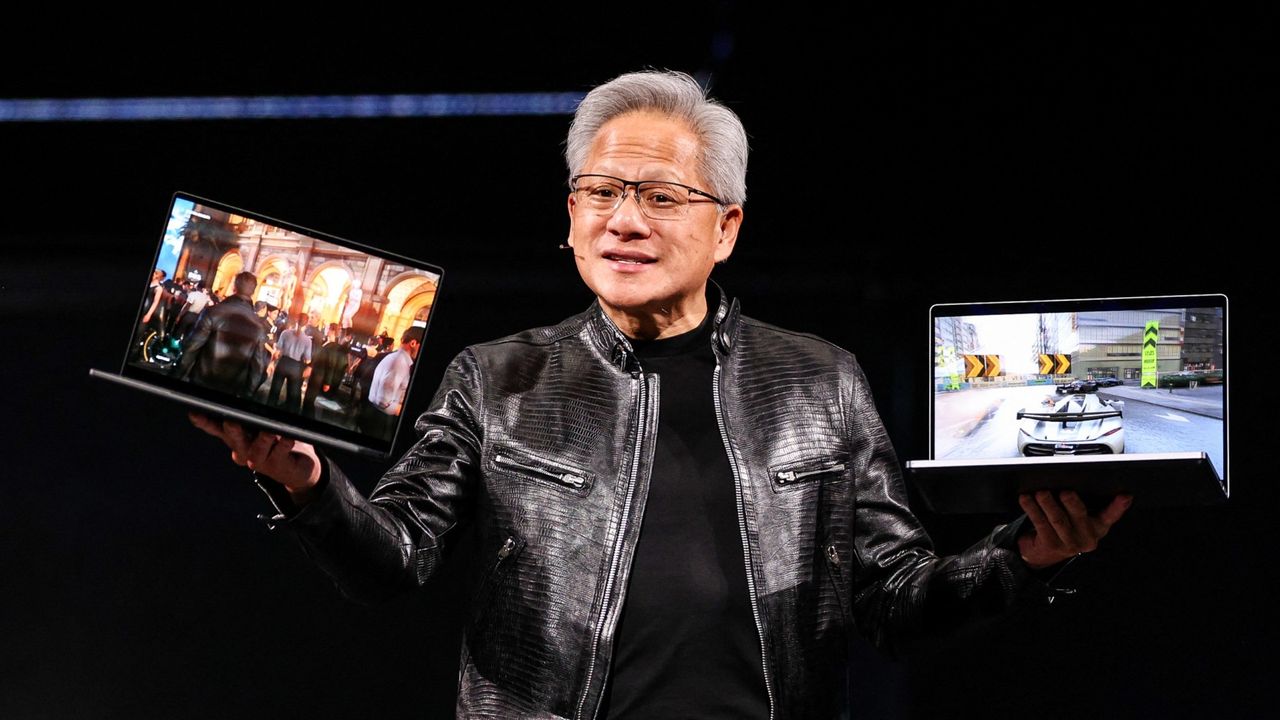
RTX Spark is NVIDIA's new local AI-focused Windows PC platform, combining Blackwell RTX graphics and Grace CPU technology into a single processor that brings secure LLMs, high-end creative workflows, and gaming performance to laptops and desktops. With that, NVIDIA positions RTX Spark as a new generation of Windows PCs, with Surface Laptop Ultra as the flagship device.OEMs are also on board, with RTX Spark laptops launching alongside Microsoft's Surface from bran
RTX Spark is NVIDIA's new local AI-focused Windows PC platform, combining Blackwell RTX graphics and Grace CPU technology into a single processor that brings secure LLMs, high-end creative workflows, and gaming performance to laptops and desktops. With that, NVIDIA positions RTX Spark as a new generation of Windows PCs, with Surface Laptop Ultra as the flagship device.
OEMs are also on board, with RTX Spark laptops launching alongside Microsoft's Surface from brands like HP, Dell, ASUS, and MSI. Our team at Windows Central has followed NVIDIA's efforts closely since its inception and has since gone hands-on with its wave of launch devices. This is everything we know so far about RTX Spark and what we expect to see in the future.
The first wave of RTX Spark laptops just started shipping and hit store shelves. Microsoft's Surface Laptop Ultra likely turned the most heads, but there are actually seven different laptops powered by NVIDIA's new superchip (more if you count different sizes of similar laptops as separate devices).ASUS, Dell, HP, Lenovo, Microsoft, and MSI all have new laptops with the RTX Spark inside, and reviews for many of those PCs just went live. We're still waiting for re
The first wave of RTX Spark laptops just started shipping and hit store shelves. Microsoft's Surface Laptop Ultra likely turned the most heads, but there are actually seven different laptops powered by NVIDIA's new superchip (more if you count different sizes of similar laptops as separate devices).
ASUS, Dell, HP, Lenovo, Microsoft, and MSI all have new laptops with the RTX Spark inside, and reviews for many of those PCs just went live. We're still waiting for reviews of several RTX Spark laptops, but first impressions are in.
Reviews for these devices rolled out a bit differently than other product launches. Experts and reviewers were allowed to share their thoughts about the RTX Spark a day before publishing any reviews of laptops with the RTX Spark inside.
So, if you want to see what people have to say about the processor, check out our RTX Spark review roundup. Below is a collection of opinions about the first wave of RTX Spark laptops.
Note that these reviews were made possible thanks to review samples provided by NVIDIA or laptop makers.
Surface Laptop Ultra: Reviews
Windows Central (4/5): "It's a laptop for those who know they need it, and it's mainly for AI developers and high-end content creators. If you find yourself leaning on local agents to complete tasks for you, or enjoy generating images and videos using AI models, this is the laptop for you."
Tom's Hardware (3.5/5):"If you want the nicest Surface Laptop Microsoft has ever released, the Surface Laptop Ultra is for you. The system definitely copies the MacBook Pro in some areas, but is a luxury machine with a solid build, exceptionally bright display, a clever charging connector, and powerful components. It's the most exciting Surface hardware in years, and I hope it’s a signal that Microsoft is looking at the brand for more reinvention."
The Verge (6/10):"Microsoft has come closer than ever to building a Windows alternative to the MacBook Pro. The hardware looks and feels great, and Nvidia’s GPU brings CUDA support and decent gaming capabilities to a high-end laptop design. But the Surface Laptop Ultra’s biggest selling point is also its biggest question mark: local AI. It all feels like a work in progress."
Wired (7/10):"The Surface Laptop Ultra is a true MacBook Pro competitor for Windows—if only it weren't for the lack of battery life."
Gizmodo: "It’s not the most performant laptop available today. It’s not the cleanest PC experience, either. It is, however, a laptop that can finally close the gap between performance and battery life. With all the wrinkles ironed out, the Surface Laptop Ultra is the laptop I wish I could carry with me for work, pleasure, or whatever the AI overlords think to do with my degrading body next."
Asus ProArt P16: Reviews
Tom's Guide (4/5):"The Asus ProArt P16 is an outstanding laptop for creativity, with its legacy continuing with the might of Nvidia's RTX Spark N1X. With an even slimmer design that's light enough to bring with you anywhere, a knockout OLED touchscreen with amazing brightness and colors, the right ports and battery life that can (finally) get you past a workday and still have juice left, Asus has done its creator laptop justice."
Trusted Reviews (4.5/5): "The Asus ProArt P16 (2026, RTX Spark) is a slim, stunning creator laptop that shows what RTX Spark can do, with standout integrated graphics, capable performance and nearly 14 hours of battery life. Gaming is a little behind a discrete RTX 5070 and the screen is slightly dim next to other ProArts, but it’s an impressive debut for Nvidia’s Windows chip."
Notebookcheck (9/10):"The new ProArt P16 is a stunning laptop and even after using it for more than a week, we are still baffled how thin and light this 16-inch laptop really is without compromising in terms of stability, build quality or features. "
Wccftech: "The ASUS ProArt P16 with NVIDIA RTX Spark N1X feels like a genuine first-class Windows PC rather than a compromised “Windows on Arm” experiment."
HP OmniBook Ultra 16: Reviews
Tom's Guide (4/5): "The HP OmniBook Ultra 16 isn’t a laptop for general customers, but it’s great at what it was designed for. If you want a portable device for on-device AI work or creative projects, you won’t go wrong here. The fact that the laptop is a beautiful piece of work only sweetens the deal."
RTX Spark laptops reviews
Overall, reviews of the first RTX Spark laptops are positive. Unsurprisingly, they focus largely on the RTX Spark itself. That makes sense considering many of these laptops have sibling devices with chips from other companies.
Many called the RTX Spark laptops "MacBook Pro competitors," which is praise when coming from just about any laptop reviewer. Being mentioned alongside the MacBook Pro remains one of the highest compliments a laptop can receive.
Like the RTX Spark itself, these laptops should be viewed in the context of their target audience. They're primarily designed for creators and developers, though different models lean more heavily toward one group or the other.
RTX Spark laptops like the Surface Laptop Ultra earned praise from reviewers for GPU performance. (Image credit: Zac Bowden / Windows Central)
While they're capable of playing games, gaming is not the primary focus of these devices. None of them are gaming laptops at this point, even though they're capable of playing many games.
But with so many devices launching today, we're still waiting for hands-on experience with quite a few RTX Spark laptops. Publications have taken different approaches to covering these laptops since so many RTX Spark devices launched at once. Some got their hands on as many as possible and are working to review each one separately. Others focused on the Surface Laptop Ultra, presumably due to availability and the fact that it's made by Microsoft.
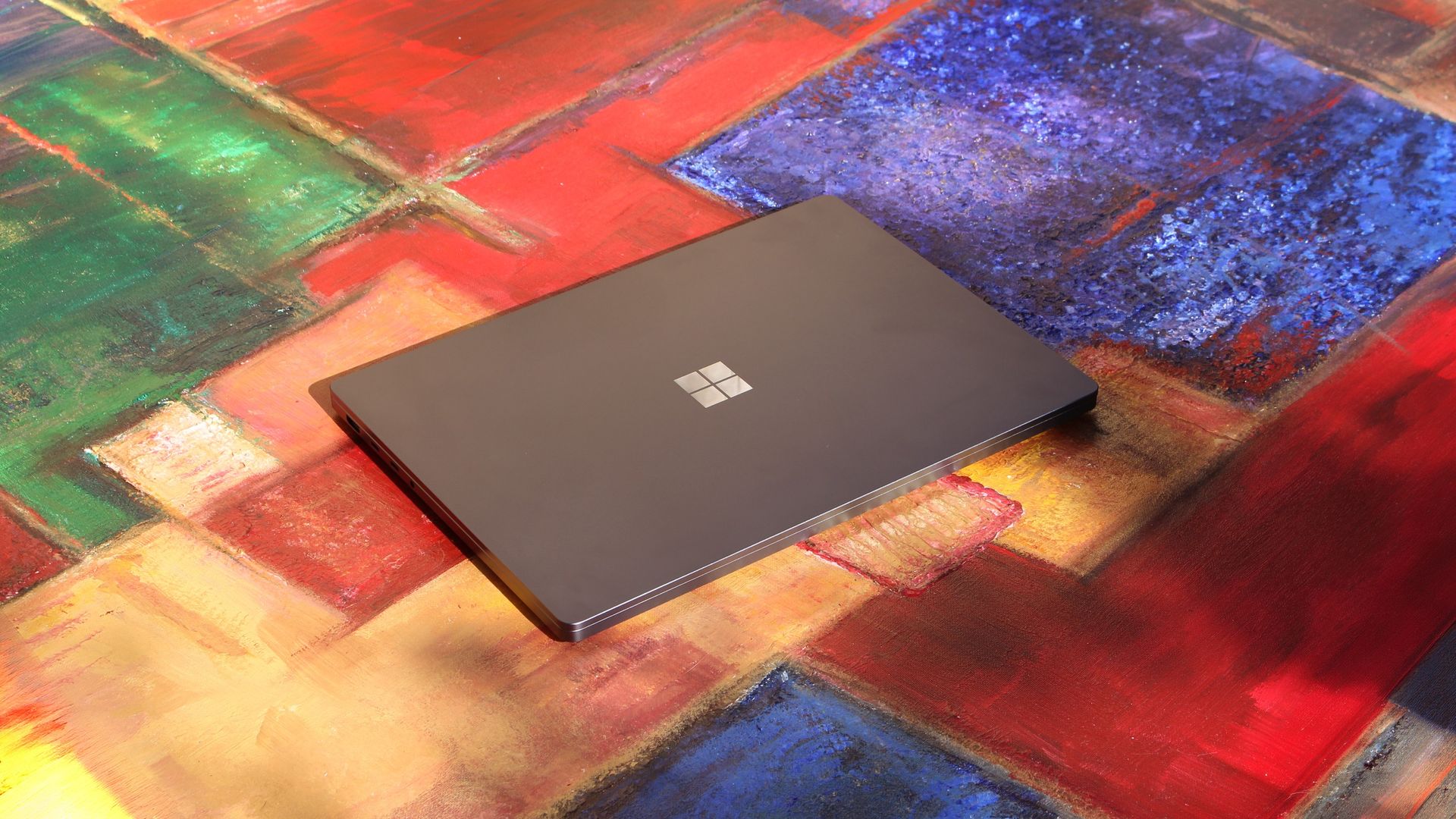
Built around the NVIDIA RTX Spark platform with an N1X CPU, RTX GPU, and up to 128GB of unified memory, the Surface Laptop Ultra hits new performance heights for power users. It's all contained in a gorgeous chassis with a mini-LED display and tons of ports. Prices start at $2,599.99, and units will begin shipping on October 16, 2026.
The new ASUS ProArt P14 and P16 duo gives users more size options while retaining the same great RTX Spark performance. The P14 is the lightest ProArt laptop ever, while the P16 is the way to go for a larger OLED display. Prices start at $2,599.99 for the P14 and $2,799.99 for the P16. They're expected to begin shipping on October 16, 2026.
Dell's new XPS 16 with RTX Spark features a 3.2K OLED display, lattice-free keyboard, and the usual premium XPS styling. Prices start at $3,799.99 and units are expected to begin shipping on October 16, 2026.
The OmniBook X 14 is the smaller of the two new PCs, but it features the same RTX Spark options for maximum performance. Models start at $2,999.99 and are expected to ship beginning November 4, 2026.
The larger of the two new HP RTX Spark laptops delivers a gorgeous 16-inch OLED display with 3K resolution and, of course, your choice of RTX Spark chips. Prices start at $3,199.99, and shipments are expected to begin on November 4, 2026.
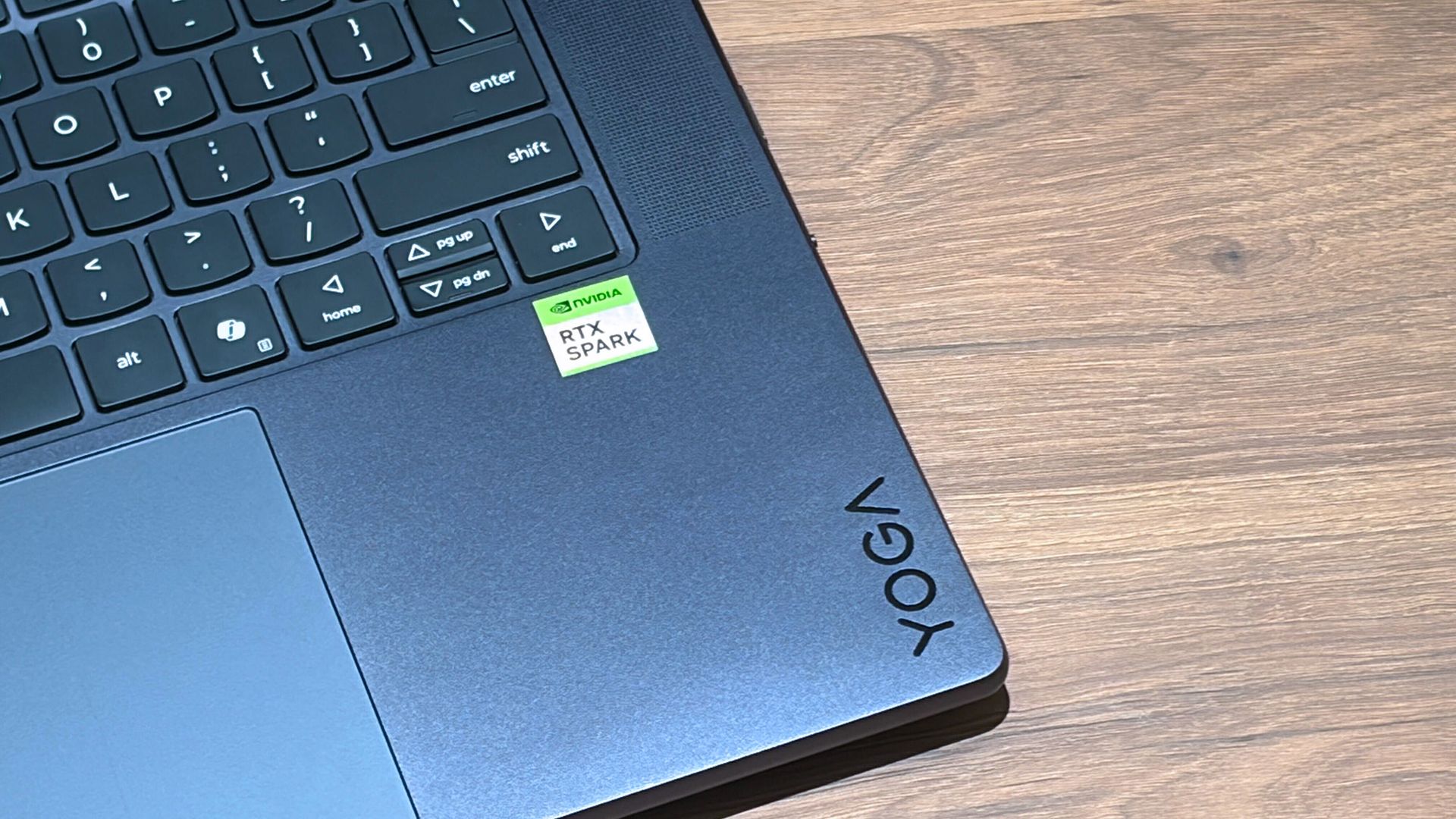
Lenovo's Yoga 9n should be the right choice for those who value a versatile convertible design and premium build quality. Prices start at $3,099.99, and models are expected to begin shipping on October 16, 2026.
MSI's Prestige N16 Flip AI+ is another versatile convertible featuring the RTX Spark platform and a Tandem OLED display. It appears that preorders might kick off on October 8 for this laptop, with prices starting at $3,299.99.
Microsoft Maia 300 and Nvidia Rubin target different AI infrastructure needs. Compare their memory, bandwidth, efficiency claims, availability, and deployment options.
The post Microsoft Maia 300 vs Nvidia Rubin: Specs, Not Benchmarks appeared first on TechRepublic.
Microsoft Maia 300 and Nvidia Rubin target different AI infrastructure needs. Compare their memory, bandwidth, efficiency claims, availability, and deployment options.
RTX Spark is finally here. After years of rumors, NVIDIA has re-entered the Windows silicon game with the MediaTek N1X, a tailor-made 18/20-core SoC with 5,120 or 6,144 GPU cores, up to 128GB of unified memory, and a heck of a lot of power for apps, games, and AI experiences under the hood.It's not every day that Windows gains a new silicon partner, which is why everyone seems to be involved with ensuring this launch goes as smoothly as possible. Microsoft has wo
RTX Spark is finally here. After years of rumors, NVIDIA has re-entered the Windows silicon game with the MediaTek N1X, a tailor-made 18/20-core SoC with 5,120 or 6,144 GPU cores, up to 128GB of unified memory, and a heck of a lot of power for apps, games, and AI experiences under the hood.
It's not every day that Windows gains a new silicon partner, which is why everyone seems to be involved with ensuring this launch goes as smoothly as possible. Microsoft has worked closely with NVIDIA on optimizing the Windows platform, especially for RTX Spark, and third-party app vendors like Adobe, Blender, anti-cheat software, and more have mobilized to optimize their products and frameworks for the new chipset.
But the big play with RTX Spark is on-device AI. LLMs and agentic workflows have become all the craze over the last year, and NVIDIA believes the RTX Spark is the first chipset for Windows that has been designed from the ground up for running local AI experiences locally and securely, without sacrificing performance.
NVIDIA has 6 hardware partners lined up to ship RTX Spark hardware starting this week, and all of them are aimed at the high-end content creator or developer crowd. NVIDIA has set its sights on competing head-to-head with the MacBook Pro, and is eager to win over AI developers who flocked to that platform thanks to Apple Silicon.
I've been testing out the top configuration of RTX Spark over the last week on a Surface Laptop Ultra, and here's what I discovered it's good at, and what it's not so good at. FYI, today's embargo only allows us to detail the RTX Spark's performance and benchmarks, not the Surface Laptop Ultra itself. So battery life, thermal performance, and laptop-specific variables are not included in this piece. That information will be shared in the full laptop review, coming soon.
NVIDIA RTX Spark Overview
(Image credit: NVIDIA)
If you're looking for a quick rundown of what RTX Spark is and how it compares, here's what you need to know:
RTX Spark is a powerful SoC with good CPU performance and great GPU performance. Its CPU is comparable to the Apple M4 Pro and Qualcomm's Snapdragon X2 Elite, with multi-thread performance being its stronger asset in the CPU department, though it trails behind the Apple M4 Max and Snapdragon X2 Elite Extreme.
The GPU is the star of the show, with great performance thanks to its 6,144 GPU cores that deliver smooth framerates (with help from DLSS and framegen), faster rendering times, and very capable AI performance. Its quantized INT8 tensor execution, unified memory sharing, and computer vision acceleration easily leapfrog mobile discrete GPUs in its power class for AI workflows, which it excels at.
I don't believe RTX Spark is for everyone. It's very good at key things, and shines primarily for those who are knee-deep in local AI workflows and experiences. If you're not a mobile content creator, software developer, or utilize local LLMs often, RTX Spark probably isn't for you.
Mobile efficiency varies depending on power profile. The GPU is hungry and will drain power fast when at full pelt, but in day-to-day usage that only occasionally leans on the GPU, it should last the workday. The good news is, you should see the same performance regardless of plugged-in state.
Compared with most integrated Snapdragon, Intel, and AMD systems, RTX Spark is substantially faster in AI image generation and local inference, while matching or approaching dedicated RTX 4070/5060/5070 class GPU performance in most workloads outside of AI.
The latest generation of high-end Apple Silicon retains an advantage in peak single-thread CPU performance, but RTX Spark’s strength is its GPU, with TensorRT execution and high-speed memory providing advantages in diffusion, quantized models, and sequential data access.
RTX Spark configurations
Specification
RTX Spark N1X (5120-core GPU)
RTX Spark N1X (6144-core GPU)
CPU Configuration
18 cores (9x Cortex-X925 + 9x Cortex-A725)
20 cores (10x Cortex-X925 + 10x Cortex-A725)
Max Performance Core Clock
3.9 GHz
4.0–4.1 GHz
Max Efficiency Core Clock
2.8 GHz
2.8 GHz
GPU Architecture
Blackwell RTX
Blackwell RTX
CUDA Cores
5,120
6,144
Streaming Multiprocessors (SMs)
40
48
RT Cores
4th Generation
4th Generation
Tensor Cores
5th Generation
5th Generation
Unified Memory Type
LPDDR5X
LPDDR5X
Memory Interface
256-bit / 16-channel
256-bit / 16-channel
Memory Speed
Up to 9,400 Mbps
Up to 9,400 Mbps
Peak Memory Bandwidth
Up to 300 GB/s
Up to 300 GB/s
NVLink-C2C Bandwidth
600 GB/s bidirectional
600 GB/s bidirectional
Display Support
HDMI 2.1a, DisplayPort 2.0 over USB4
HDMI 2.1a, DisplayPort 2.0 over USB4
Process Technology
TSMC 3nm (CPU & GPU dies)
TSMC 3nm (CPU & GPU dies)
Configurable SoC TDP
45–80W
45–140W
NVIDIA RTX Spark CPU Performance
(Image credit: NVIDIA)
The RTX Spark CPU was co-designed by NVIDIA and MediaTek. The N1X, as it's known, comes in either 18- or 20-core configurations and is relatively efficient while delivering good performance. With that said, it's not leading in its class, leaving something to be desired when it comes to raw benchmarks.
In Cinebench 2026, the 20-core N1X achieved a single-core score of 558 and a multi-core score of 6,885. To put that into perspective, its single-core score beats the first-gen Snapdragon X Elite X1E-80-100 at 519, but falls short compared to Qualcomm's Snapdragon X2 Elite Extreme, which achieves a score of 662 for single-core. Multi-core fares better, with a score of 6,885, which is only just behind the X2 Elite Extreme and Apple M4 Max.
Cinebench Scores (Best Performance)
Cinebench 2026 Test
Plugged In Result
Unplugged Result
CPU (Multi Core)
6,885 pts
6,844 pts
CPU (Single Core)
558 pts
554 pts
MP Ratio
12.33 x
12.35 x
These scores do place it ahead of Intel's and AMD's latest flagship mobile workstation chips, but the chipset simply doesn't compete with Apple's latest Max chips, consistently trailing behind the Apple M4 Max and the M3 Ultra. This is a little disappointing given that the RTX Spark is directly targeting Apple Silicon.
It's a similar story with our Geekbench 7 results, achieving a single-core score of 2,718 and a multi-core score of 23,571. It's clear that multi-core performance is the N1X's stronger asset, competing with the likes of the Apple M4 Pro or Intel Core Ultra 9 285K, and is well ahead of the last-gen Snapdragon X Elite and Intel Lunar Lake, as it should be.
Geekbench Scores (Best Performance)
Geekbench 7.1
Plugged In Result
Unplugged Result
CPU (Multi Core)
23,571
23,879
CPU (Single Core)
2,710
2024
Outside of benchmarks, in day-to-day use the N1X feels fine. This isn't a slow CPU by any means, and will chew through even complex workflows with no sweat. Most day-to -day apps are Arm native these days, but for the few that do require Microsoft's Prism emulation layer, you won't even notice it. RTX Spark makes it so emulated apps feel just like native ones.
All our benchmarks were run with the Best Performance setting enabled, and in our tests we ran them a number of times in both plugged-in and unplugged states to see if there's any performance drop when away from a wall outlet. The good news is the RTX Spark delivers pretty much the same power regardless of plugged-in state, which mimics Apple Silicon.
NVIDIA RTX Spark GPU Performance
Gears of War E-Day running on RTX Spark (Image credit: Zac Bowden / Windows Central)
The star of the show with RTX Spark is the Blackwell RTX GPU with either 5,120 or 6,144 cores. We benchmarked the top-end, 6,144-core configuration for these benchmarks, and it does impress, outputting performance in workflows like video editing, model rendering, and gaming similar to an RTX 4070 or 5060, but in an efficient package with all-day battery life.
For what is essentially an integrated GPU, it outputs dedicated GPU performance in pretty much all workflows. But it really excels at AI workflows, especially when optimized for tensor and CUDA.
The 128GB configuration is set to split that memory evenly between system RAM and the GPU, meaning in our default configuration and for how we ran most of our benchmarks, the GPU had 64GB of video RAM to make use of. In this configuration, it's more than capable for most tasks, with the only exception being running AI models that surpass this size. In that situation, you can allocate more memory to the GPU so that it will fit.
In our 3DMark tests, we found that the RTX Spark performs similarly to an RTX 4070. It's very capable at 1440p gaming with high settings in most titles, though more demanding games will need to lean on DLSS and frame generation for smooth 60+ FPS gaming. In most titles we benchmarked, games ran without a hitch and looked great.
Benchmark
Target Resolution & API
Overall Score
Graphics Score
CPU Score
Test Framerates
3DMark Time Spy
1440p (DirectX 12)
12,771
12,368
15,669
GT1: 81.68 FPS, GT2: 70.11 FPS, CPU: 52.64 FPS
3DMark Time Spy Extreme
4K UHD (DirectX 12)
5,857
5,972
5,281
GT1: 37.77 FPS, GT2: 35.19 FPS, CPU: 66.30 FPS
3DMark Steel Nomad
4K UHD (DirectX 12 Heavy)
3,064
3,064
N/A
Graphics Test: 30.65 FPS
3DMark Speed Way (Run 1)
1440p (DirectX 12 Ultimate / DXR)
3,011
3,011
N/A
Graphics Test: 30.12 FPS
3DMark Speed Way (Run 2)
1440p (DirectX 12 Ultimate / DXR)
2,985
2,985
N/A
Graphics Test: 29.85 FPS
Gaming is not the main reason to buy an RTX Spark laptop, but it is an additional benefit. It's the first Windows on Arm platform that does gaming relatively well, supporting the usual breadth of gaming technologies and frameworks such as:
Ray tracing
DLSS 5
Multi Frame Generation
Neural Rendering
Reflex
G-SYNC
RTX Remix
Most games run under emulation on RTX Spark, as the platform is Arm64, and most games are compiled for x86. However, in most titles, this isn't a problem. Most mainstream anti-cheat software is now compatible with Windows on Arm, and the Prism emulation layer has been tuned specifically for RTX Spark to ensure most games run without a hitch, though there are exceptions.
Some games, such as Red Dead Redemption 2, will require you to change settings to get them to run successfully. For example, by default Red Dead Redemption 2 was set to run with Vulkan, which caused it to crash at launch. Switching it to DirectX12 fixed this for me. Most games run without needing to change any settings first, however.
Zac Bowden / Windows CentralZac Bowden / Windows CentralZac Bowden / Windows CentralZac Bowden / Windows Central
I tried Cyberpunk 2077, which runs pretty well right out of the box. The game analyzed my system and decided that Ray Traced Ultra settings were a perfect fit for the RTX Spark. Running at 1440p with frame gen enabled, the game was easily able to maintain 60fps while looking good doing it with these graphics settings enabled.
Shadow of the Tomb Raider also works great, but it takes quite a while to actually load up. But once the game is running and you're in-game, it looks great and runs well above 60fps at high settings at 1440p. Marvel's Spider-Man 2 and The Witcher 3 Remastered ran without a hitch, reaching close to 90fps in high settings at 1440p.
For content creators, RTX Spark is a great choice. Whether you are editing photos or rendering videos using apps like Adobe Photoshop and Premiere Pro, or rendering 3D environments in Blender, the RTX Spark is well suited for those tasks.
Photoshop supports on-device AI models on RTX Spark (Image credit: Zac Bowden / Windows Central)
Adobe and NVIDIA say the Adobe Creative Cloud Suite has been optimized specifically for RTX Spark. These optimizations include:
Photoshop on-device AI object removal
Premiere Pro TensorRT acceleration
Blender support for DLSS 4.5 Ray Reconstruction
When it comes to video rendering times, the RTX Spark trails the current-gen RTX 50 series GPUs. We benchmarked it against three other laptops with an RTX 5060, 5070 Ti, and 5080, in which it trailed the RTX 5060 in video rendering performance, finishing a few seconds later in most instances. In this benchmark, we ran Premiere Pro Beta, as that version includes necessary optimizations for RTX Spark.
Premiere Pro Export Times
Export Profile (Seconds ↓)
Surface Laptop Ultra (RTX Spark)
Lenovo Yoga Pro 9 (RTX 5060 8GB)
ASUS Zephyrus G14 (RTX 5070 Ti 12GB)
Lenovo LEGION 9 (RTX 5080 16GB)
H.264 Export (1 GPU)
42.002 s
32.111 s
39.403 s
20.218 s
H.264 Export (Pass 2)
34.415 s
26.003 s
33.532 s
18.401 s
H.264 UHD Export (1 GPU)
81.419 s
64.140 s
71.918 s
40.235 s
H.264 UHD Export (Pass 2)
66.496 s
52.301 s
59.536 s
34.253 s
Dedicated GPU performance can vary depending on laptop chassis size, cooling solution, and thermal envelope, which is why the 5070 Ti frequently trailed the 5060 in our testing.
The RTX Spark GPU is very performant and is capable of pretty much handling anything you'd want to throw at it on a mobile workstation. Where it really shines, however, is running local AI models directly on it. It's the reason NVIDIA built this platform to begin with, and it does this very well.
We ran several Procyon AI benchmarks to see how well the GPU performs when running on-device AI workflows. Text generation LLMs ran very fast, with Spark delivering responsive time-to-first-token results, including 0.27 seconds on Phi and 0.39 seconds on LLaMA3, but its sustained decoding rates trail higher-wattage discrete GPUs.
On-device text generation benchmarks
Model
Overall Score
Tokens / Second
Time to First Token (s)
Model Load Time (s)
Phi-3.5-mini
2,615
72.21
0.27
0.66
Mistral 7B
2,276
53.07]
0.47
0.96
Llama 3.1 8B
2,251
49.44
0.40
1.50
Llama 2 13B
2,108
27.44
0.84
1.69
But quantized AI performance is where RTX Spark truly leads. In Stable Diffusion 1.5 INT8, the RTX Spark scored 11,294 and generated images in 2.77 seconds, substantially outperforming the tested RTX 5080, RTX 5070 Ti, and RTX 5060, on which we ran the same tests.
Stable Diffusion Benchmarks
Model Profile & Metric
Surface Laptop Ultra (RTX Spark)
Lenovo Yoga Pro 9 (RTX 5060 8GB)
ASUS Zephyrus G14 (RTX 5070 Ti 12GB)
Lenovo LEGION 9 (RTX 5080 16GB)
SD 1.5 FP16 - Total Duration
67.55 s
69.70 s
107.73 s
44.59 s
SD 1.5 FP16 - Speed
4.222 img/s
4.356 img/s
6.733 img/s
2.787 img/s
SD 1.5 FP16 - Average UNet
23.986 it/s
23.265 it/s
15.070 it/s
36.426 it/s
SD 1.5 INT8 - Total Duration
22.14 s
138.74 s
101.83 s
440.19 s
SD 1.5 INT8 - Speed
2.767 img/s
17.342 s/img
12.729 img/s
55.024 s/img
SD 1.5 INT8 - Average UNet
19.158 it/s
2.949 it/s
4.043 it/s
0.927 it/s
SDXL FP16 - Total Duration
400.82 s
499.37 s
735.47 s
303.68 s
SDXL FP16 - Speed
25.051 s/img
31.211 s/img
45.967 s/img
18.980 s/img
SDXL FP16 - Average UNet
4.028 it/s
3.331 it/s
2.196 it/s
5.321 it/s
AI Workflows
The GPU is best suited for running large on-device AI models such as Qwen 3.8 27B, Gemma 4 31B, or even 120B-parameter models such as Nemotron or GPT-OSS.
NVIDIA is touting local agentic capabilities with this GPU, leaning on apps like Hermes Agent and OpenClaw to achieve this. We tested Hermes Agent, as OpenClaw failed to connect to the gateway once setup was complete.
The selling point of running LLMs and agents locally is that you are no longer constrained by usage limits or the amount of tokens you have available. When the AI runs locally, it's yours. You can run it for as long and as hard as you like.
120B parameter models can fit entirely on the RTX Spark's GPU, significantly speeding up LLM performance. (Image credit: Zac Bowden / Windows Central)
It's also good for security and privacy reasons. You may have confidential documents, audio recordings, intellectual property that you need summarized or explained to you, and feeding that data to a cloud-based LLM or agent is giving that data away to the host.
With RTX Spark, you can feed whatever data or task you want to your local AI running off the GPU, and that data will never leave the device. You can build up your own personal agent that is capable of managing your local files, creating documents, making edits, and in some cases even controlling your PC.
Hermes Agent is a great tool for beginners, as it offers local AI compute experiences and makes setting it up a breeze. You open the app, choose to run AI locally, and it recommends the best model for the specs you have. Once downloaded, you're good to start chatting with your own AI locally.
Instead of using up tokens in the cloud, local AI leans on the GPU for processing. Unlimited power! (Image credit: Zac Bowden / Windows Central)
Hermes Agent is particularly good at automating tasks. The first thing I did was tell it to clean up and organize my large, cluttered downloads folder. It moved images to my photos library, deleting any old executables, and organizing and categorizing PDFs and Word documents appropriately. It did all this without sending any of my data to the cloud, all processed by the GPU.
I also asked it to build me a basic website that included all my benchmark results so that I could refer back to them more easily. It ran that process entirely off my GPU, and came up with a pretty nice looking webpage design in the process. Zero cloud-based tokens used:
The webpage that the Qwen 3.8 27B parameter model created using Hermes Agent. (Image credit: Zac Bowden / Windows Central)
NVIDIA has even built MCP support into NVIDIA Broadcast and NVIDIA Control Panel, allowing you to hook it up to your local LLM and issue commands that allow it to configure your NVIDIA PC's settings.
Windows and RTX Spark
The Get Started app on RTX Spark includes a step to automate installing agent apps. (Image credit: Microsoft)
In addition to raw CPU and GPU performance, Microsoft has worked closely with NVIDIA to optimize RTX Spark for Windows 11. This partnership runs deep, and there are a lot of things going on behind the scenes that will aid the performance of Windows and support for apps on RTX Spark over the coming months and years.
For those unboxing a new RTX Spark laptop this fall, the Get Started app on Windows 11 will present a step that makes downloading and installing apps that can handle AI agents super easy. Hermes Agent will even go a step further and recommend a suitable model to download once up and running, meaning the user has to do zero research to get started.
With that said, I still find these recommended apps quite complex and convoluted. Many beginners will feel overwhelmed by these apps, especially OpenClaw, which I could not get working properly after it failed to open a gateway to allow the AI model to communicate with the OpenClaw chat interface.
Hermes Agent does automate setting up your first local agent. (Image credit: Zac Bowden / Windows Central)
Microsoft has optimized the system scheduler specifically for RTX Spark to squeeze out as much performance across Windows, menu flyouts, app launches, and more as possible. It has also made changes and enhancements to how Windows handles unified memory so that it's faster and more reliable at feeding that memory to where you need it.
TensorRT is now supported by Windows ML, and DirectX 12 has neural rendering support. The Prism emulation layer has also been tuned for RTX Spark, which results in emulated apps that simply do not feel like they are being emulated.
Microsoft is also keen to position Windows as the platform for local AI and agentic workflows. It has built safeguards and security into the Windows platform to ensure the local agents you run on Windows aren't capable of making severe changes or causing damage to your files, apps, and more.
This is a direct attempt at combating the sudden rise in local AI developers flocking to the Mac. Apple has made little optimizations to macOS to adopt and safeguard local AI and agentic workflows on that platform, whereas Microsoft is moving to make agents a native extension of the Windows platform.
RTX Spark is a Copilot+ PC certified chip, but you won't find any Copilot+ PC features at launch. Microsoft says it's working with NVIDIA to bring features like Windows Recall, Click To Do, and on-device Semantic Search to the RTX Spark platform in the coming months, which will run off the RTX Spark's 50 TOPS NPU.
Conclusion
(Image credit: NVIDIA)
RTX Spark is a super interesting chipset. It's forward leaning in a lot of ways, built on the Arm64 architecture that delivers serious performance and great efficiency. While its N1X CPU is just okay, its Blackwell RTX GPU really shines.
This is the first time we've seen RTX 4070-5070 level performance in an SoC that is this small and efficient. It's optimized for AI workloads, which is its strongest workflow by far. Quantized AI models run great, and with up to 128GB of unified memory, most mainstream models will fit entirely on the GPU without a hitch.
It's also great for content creators, and is very capable at gaming also. But at the prices that these devices are launching at, I think most people would be better served getting an Intel or AMD laptop with a dedicated NVIDIA GPU instead, as these often cost less than the cheapest RTX Spark laptops right now.
But if your workflow involves running AI models locally all day, software development, or complex data crunching and source code management, the RTX Spark is one of the better choices in the Windows space right now, especially for laptops that are thin-ish and (relatively) lightweight.
These RTX Spark laptops are more efficient and portable than typical laptops with a dedicated NVIDIA GPU, which is one of the key benefits of an SoC like this. The power this GPU outputs, for what is essentially integrated graphics, should not be understated.
Of course, just how efficient RTX Spark is will depend entirely on the hardware you choose to buy, as OEMs are free to feed the GPU more or less power depending on the chassis and thermal envelope. Keep that in mind.
Benchmarks
All benchmarks ran on RTX Spark 20-core CPU configuration with 128GB RAM and 6,144 GPU cores. All tests ran connected to power with Best Performance profile enabled, unless stated otherwise. We are still running benchmarks and new tests, and will update accordingly.
Bitdeer is expanding its AI infrastructure footprint in Malaysia with a new 67 MW facility designed for NVIDIA Blackwell systems. Here's what's confirmed about its rollout and customer commitments.
The post Bitdeer Secures 67 MW for Nvidia AI in Malaysia, but No Customer Deal Announced appeared first on TechRepublic.
Bitdeer is expanding its AI infrastructure footprint in Malaysia with a new 67 MW facility designed for NVIDIA Blackwell systems. Here's what's confirmed about its rollout and customer commitments.
Dans la série des trucs qui ne servent à rien, mais qui sont bien cools quand même, je vous présente ce bon vieux DOOM de 1993 qui vient de passer au DLSS 5. L'auteur de cette nouvelle prouesse, c'est Nikolai Zhivotenko qui a publié
DOOM + DLSS 5
, un port Windows 64 bits de Linux DOOM 1.10 qui conserve le moteur d'origine. Le jeu produit ainsi toujours son image en 320x200 pixels, puis celle-ci est reconstruite dans une fenêtre de 1280x800 en Direct3D 12 par l'upscaler de votre c
Dans la série des trucs qui ne servent à rien, mais qui sont bien cools quand même, je vous présente ce bon vieux DOOM de 1993 qui vient de passer au DLSS 5. L'auteur de cette nouvelle prouesse, c'est Nikolai Zhivotenko qui a publié
DOOM + DLSS 5
, un port Windows 64 bits de Linux DOOM 1.10 qui conserve le moteur d'origine. Le jeu produit ainsi toujours son image en 320x200 pixels, puis celle-ci est reconstruite dans une fenêtre de 1280x800 en Direct3D 12 par l'upscaler de votre choix.
Un upscaler moderne ayant besoin d'autre chose que des pixels pour travailler, le moteur modifié doit inscrire à chaque image la profondeur, les normales et le mouvement, et les touches F2 à F4 affichent ces trois vues à la place du jeu.
L'auteur en a même fait un petit banc d'essai, avec un exécutable par mode : DLSS Ray Reconstruction, DLSS Super Resolution en preset K (DLSS 4) ou L (DLSS 4.5), FSR 2.2 d'AMD, Anime4K, et le bon vieux nearest 4x pour comparer. Ray Reconstruction se contente d'ailleurs de buffers factices (spéculaire noir, rugosité à 1), puisque DOOM n'a aucun éclairage path-tracé à lui donner.
Un couloir de DOOM avec l'étiquette "DLSS 5 On" en bas à gauche et trois vignettes de données en haut de l'image (capture fournie par l'auteur du port)
Et le DLSS 5 dans tout ça ?
Eh bien le mode 5 commence par la même passe que le 4.5, avec le SDK officiel de NVIDIA et ensuite seulement, si l'addon RenoDX du DLSS 5 est placé à côté de l'exécutable, une seconde passe laisse le Neural Rendering retoucher l'image. Et ce Neural Rendering là ne vient pas du port mais de
DLSS5-Swapper
, un outil communautaire sous licence MIT qui injecte le modèle de NVIDIA dans les jeux. Bref, c'est indispensable comme addon pour passer d'un rendu 4.5 à un rendu 5.
Côté NVIDIA, le
DLSS 5 dont je vous parlais en mars
n'est sorti que le 3 septembre, avec NBA 2K27, sur les RTX 50 et GeForce NOW mais il avait fuité juste avant via des fichiers trouvés dans une mise à jour de ce même jeu. Du coup,
les moddeurs
l'ont collé dans The Witcher 3 ou Cyberpunk 2077 sans attendre.
Quant au résultat sur DOOM, n'espérez pas avoir du photoréalisme... niet, le modèle n'a pas été pensé pour des sprites en 320x200, et d'après Wccftech, certains détails reconstruits peuvent même ressortir plutôt bizarrement...
Une créature face au joueur, avec la même étiquette "DLSS 5 On" et mêmes vignettes en haut (capture fournie par l'auteur du port)
Maintenant pour tester, il vous faudra un Windows 64 bits, une GeForce RTX, et compiler tout ça vous-même avec le script build.cmd du dépôt. Vous déposez un IWAD dans le dossier wads (celui de
Freedoom
fait l'affaire), puis vous déclarez le dossier du mode 5 dans
Swapper
, en route Native. Côté carte, Swapper annonce les RTX 20 à 50 pour ses routes à base de ReShade, dont fait partie l'addon
RenoDX
, mais prévient quand même que la compatibilité n'est pas garantie.
Et si vous voulez juste comparer, le script screencast-windoom.cmd rejouera la même démo dans chacun des modes et peut même exporter chaque image en PNG.
DLSS-NR on AMD
est un mod pour Windows capable de faire tourner sur une Radeon le fameux Neural Rendering du DLSS 5, la technologie de Nvidia dont tout le monde parle. Ce mod vise les AMD RX 9000 mais les RX 7000 sont censées fonctionner aussi, et il se greffe également sur les jeux DirectX 12 qui gèrent déjà le FSR d'AMD.
Le principe c'est qu'en toute dernière étape du rendu, le DLSS 5 ajoute de l'éclairage et des tas de détails de matière à l'image que le jeu vient de calculer.
DLSS-NR on AMD
est un mod pour Windows capable de faire tourner sur une Radeon le fameux Neural Rendering du DLSS 5, la technologie de Nvidia dont tout le monde parle. Ce mod vise les AMD RX 9000 mais les RX 7000 sont censées fonctionner aussi, et il se greffe également sur les jeux DirectX 12 qui gèrent déjà le FSR d'AMD.
Le principe c'est qu'en toute dernière étape du rendu, le DLSS 5 ajoute de l'éclairage et des tas de détails de matière à l'image que le jeu vient de calculer. Nvidia l'a mis en place sur
NBA 2K27
en partenariat avec Visual Concepts et 2K, alors que le mod DLSS-NR on AMD l'applique déjà à Cyberpunk 2077, qui n'a pourtant pas été conçu pour ça. Je me rappelle quand même que la démo du DLSS 5 avait été
très mal accueillie en mars
parce qu'elle donnait l'impression d'écraser la direction artistique des jeux mais on dirait que ça passe un peu mieux aujourd'hui... Soit les gens se sont habitués, soit le logiciel fait du meilleur taf, je ne sais pas.
D'après le README du projet, pour installer ça sur votre ordi, vous devez placer le programme d'install de la dernière release dans le dossier de l'exécutable du jeu (bin\x64 pour Cyberpunk 2077), à côté
d'une DLL de Nvidia
. Ensuite vous le lancez, puis vous démarrez le jeu et activez le FSR. La touche Fin ouvrira alors l'overlay du mod, et si vous voulez mettre à jour tout ça ou le virer, il suffit de relancer l'installateur.
Il faut aussi Windows 11 et le pilote Adrenalin 26.1.1 ou plus récent et comme les jeux avec anti-triche bloquent la DLL, vaut mieux pas vous lancer en multi avec ce mod.
Par contre, sachez-le, les résultats en termes de FPS ne sont pas toujours au rendez-vous si j'en crois les benchmarks publiés sur les pages du projet.
Maintenant à vous de voir si vous faites confiance à ce mod puisque le code n'est pas publié. Notez que 2 autres projets similaires pourraient également vous intéresser... Il y a
lmxxf
, sous licence MIT qui se limite aux RX 9000 et embarque les poids de Nvidia extraits d'une copie locale de la DLL. Et aussi
AMDNR
de 3zwr1 qui est intégré à OptiScaler.
Mais en tout cas, si vous essayez DLSS-NR on AMD sur une RX 7000, sachez que son auteur demande des retours donc n'hésitez pas à lui envoyer votre fichier dlssnr_on_amd.log si vous rencontrez des bugs.
NVIDIA has confirmed new details and availability info about its upcoming RTX Spark SoC for Windows 11 devices. At IFA 2026, the company announced that it expects the first RTX Spark laptops to begin shipping as soon as next month, sometime in October depending on the OEM. Additionally, two new devices are joining the launch lineup; the Lenovo Yoga 9n laptop and Acer SFF desktop PC.Alongside availability news, NVIDIA has also confirmed configuration details for t
NVIDIA has confirmed new details and availability info about its upcoming RTX Spark SoC for Windows 11 devices. At IFA 2026, the company announced that it expects the first RTX Spark laptops to begin shipping as soon as next month, sometime in October depending on the OEM. Additionally, two new devices are joining the launch lineup; the Lenovo Yoga 9n laptop and Acer SFF desktop PC.
Alongside availability news, NVIDIA has also confirmed configuration details for the upcoming RTX Spark chips. There will be two different configurations of the RTX Spark N1X, with configurable RAM and storage based on what OEMs wish to offer. The high-end RTX Spark will be targeted at desktops and laptops, with support for up to 128GB unified memory, 20 CPU cores, and 6144 Blackwell RTX cores.
There will also be a less powerful RTX Spark configuration exclusively for laptops, which can only be configured with 24GB or 32GB unified memory, a 5120-Core Blackwell RTX GPU, and an 18-core CPU. While still a high-end chip, this should allow RTX Spark to ship in laptops that cost closer to $2,000, significantly lower priced than the high-end SoC.
Category
Specification 1
Specification 2
GPU Cores
6144-core Blackwell RTX GPU
5120-core Blackwell RTX GPU
CPU Cores
20-core Grace CPU
18-core Grace CPU
Memory
24-128 GB Unified Memory
24-32 GB Unified Memory
Form Factors
Laptops and Compact Desktops
Laptops
NVIDIA is touting RTX Spark as the best SoC for AI development on Windows. It supports NVIDIAs full AI stack, as well as the Windows Agent Framework and 120B parameter agents. It also supports hardware accelerated 4:2:2 video for video editing professionals.
While the first RTX Spark devices are expected to begin shipping in October, it's not yet clear which OEMs will be first out the gate. All major Windows hardware makers, including Dell, Lenovo, HP, ASUS, and Microsoft have all announced RTX Spark devices that are expected to ship by the end of this year. Devices like the Surface Laptop Ultra have not yet been given a release date, though Microsoft typically does aim to ship new Surface PCs in October.
We'll be sure to keep you updated on all the RTX Spark device availability as more information is revealed by OEMs. In the meantime, are you considering an RTX Spark device as your next Windows PC? Let us know in the comments!
Join us on Reddit at r/WindowsCentral to share your insights and discuss our latest news, reviews, and more.
If you're not a keen follower of the AI space, then the name Hugging Face may not mean anything to you. But the company has just been acquired by NVIDIA, which continues to reinforce its new identity as an AI company. Announced today by NVIDIA CEO Jensen Huang, Hugging Face will be joining the company in an acquisition priced at just under $13 billion. Hugging Face is an open platform that has been likened to GitHub, except for local, open AI models that anyone c
If you're not a keen follower of the AI space, then the name Hugging Face may not mean anything to you. But the company has just been acquired by NVIDIA, which continues to reinforce its new identity as an AI company.
Hugging Face is an open platform that has been likened to GitHub, except for local, open AI models that anyone can use. NVIDIA's plans are to keep Hugging Face the same as it is today but to scale. Because if you're not scaling AI these days, what are you even doing?
"Hugging Face will remain an open platform for the entire AI ecosystem. Developers will choose the models they want, the frameworks they want, the clouds and inference service providers they want and the computing platforms they want. NVIDIA compute will not be required to build on or deploy through Hugging Face.
Hugging Face will continue to support open source and open weight models from across the ecosystem, from every model builder. It will continue to support multi-cloud and multi-accelerator development and deployment, so builders can use the hardware and infrastructure that best fit their work."
Keeping personal opinions about AI aside, I'm certainly more in favor of real people being able to use AI models without having to rely on massive, un-evironmentally friendly data centers from the likes of Microsoft and OpenAI.
AI is very much here to stay, whether we choose to embrace it or not. But I'm definitely on the side of being able to use it however you want to use it and without feeding all your data to companies that don't necessarily deserve it.
NVIDIA is very much AI-first these days, though. Gone are the days we'd all look at its shiny new GPUs, and our only thoughts would be about gaming. It does make you ponder what the future holds for gamers, though.
I've got an RTX 5090, for example, and it's still overkill for gaming. But with 32GB of VRAM and a ton of compute horsepower, it's pretty damn good for local AI use. But is this where future products will be aligned first? Everything's getting more expensive, and AI is definitely to blame for a good chunk of it.
Alas, here we are. If you use Hugging Face currently, it doesn't sound like anything's going to change. But if you're a gaming customer of the company, as I am, I am starting to wonder how important we're going to be in the future.
Join us on Reddit at r/WindowsCentral to share your insights and discuss our latest news, reviews, and more.
Depuis ce week-end, bonne nouvelle les zamis, puisque ce bon vieux ffmpeg sait maintenant fabriquer des images qui n'ont jamais été filmées. Oui oui ! Et ça c'est possible grâce à un filtre qui s'appelle fruc_vulkan, qui permet de calculer le mouvement entre deux images grâce au bloc dédié des GeForce RTX, pour ensuite synthétiser ce qui manque entre les deux. Grâce à ça, un 24 images par seconde ressort sans souci en version 60 images par seconde.
La cadence de sortie se paramètre, donc vous po
Depuis ce week-end, bonne nouvelle les zamis, puisque ce bon vieux ffmpeg sait maintenant fabriquer des images qui n'ont jamais été filmées. Oui oui ! Et ça c'est possible grâce à un filtre qui s'appelle fruc_vulkan, qui permet de calculer le mouvement entre deux images grâce au bloc dédié des GeForce RTX, pour ensuite synthétiser ce qui manque entre les deux. Grâce à ça, un 24 images par seconde ressort sans souci en version 60 images par seconde.
La cadence de sortie se paramètre, donc vous pouvez aussi faire du 25 vers du 50, du 30 vers 60, ou n'importe quelle valeur intermédiaire. C'est donc beaucoup plus souple que le filtre équivalent côté AMD, frc_amf, qui ne sait que doubler la fréquence et ne fonctionner qu'en DirectX...
Fabriquer ce genre d'images intercalaires n'a rien de neuf, cela dit... L'outil
RIFE convertissait déjà du 24 fps en 96
en 2020. Mais ce qui change ici, c'est qu'il n'y a plus de chaîne externe, plus d'aller-retour par des milliers de PNG, puisque tout tient dans le graphe de filtres, entre le décodage et l'encodage.
Le filtre logiciel historique de ffmpeg, minterpolate, existe pourtant depuis des années mais c'était loin d'être du temps réel. Alors que là, le vrai gain avec cette nouvelle feature, c'est qu'on passe en full temps réel. Ça veut dire que sur un catalogue à réencoder, l'interpolation cesse d'être l'élément qui bloque toute la chaîne de conversion.
Pour l'essayer il vous faut une RTX 30 ou plus récente. Il faut aussi compiler une version de développement car ce filtre est arrivé après la sortie de ffmpeg 9.0, ce qui veut dire que pour le moment, il n'est dans aucune release et ne sera dans aucun paquet avant la prochaine.
La commande suit ensuite le motif habituel des filtres Vulkan, qui veulent les images en mémoire GPU :
L'auteur du filtre prévient quand même qu'en 2160p24, les réglages par défaut ne suivront pas en temps réel et qu'il faudra alors descendre la qualité d'estimation du mouvement. Ça s'écrit comme ceci :
fruc_vulkan=fps=60:perf=medium:grid=2
En traitement par lots maintenant, la question ne se pose pas, c'est juste plus lent.
Maintenant, les pros de l'encodage, redescendez de votre chaise parce que j'ai quand même quelques mauvaises nouvelles... Tout d'abord, on n'a aucune stat indépendante sur le débit ou la qualité. Et il y a aussi un défaut que l'auteur du patch documente lui-même... En fait, dans les zones sans texture, le moteur invente un mouvement faux mais cohérent, qui laisse des "fantômes" autour des objets. La
parade
existe heureusement, mais c'est une heuristique, qui demande quelques réglages à la main sur des échantillons.
Et il y a aussi un coût qu'on oublie... Car doubler la cadence, c'est donner deux fois plus d'images à avaler à l'encodeur, donc, il y a toujours une espèce de goulot d'étranglement. Et puis après il y a le rendu... un film de cinéma en 24 images par seconde qu'on monte à 60 prend immédiatement un aspect téléfilm que les cinéastes détestent !! Imaginez l'Odyssée de Nolan avec l'aspect visuel de Plus Belle La Vie... Ahahaha. Après sur de l'animation ou un ralenti, ça se défend bien sûr mais sur du cinéma, c'est un choix à prendre et pas une amélioration. En tout cas, c'est mon avis.
Ah et dernier point, parce que la confusion est déjà partout dans les commentaires sur le net : Tout ça se passe à l'encodage ! Je répète : A L'ENCODAGE ! Le fichier qui sort de ffmpeg est une vidéo NORMALE. Absolument personne n'aura besoin d'une carte graphique GeForce pour la regarder ! OK ? 😘
Voilà le genre de rumeur qui fait tousser tout un secteur. D'après plusieurs médias américains bien branchés, Nvidia serait sur le point de poser 12,9 milliards de dollars sur la table pour avaler Hugging Face. Aucun des deux ne confirme, l'accord peut encore capoter, mais l'annonce serait proche.
Un mot pour ceux qui ne connaissent pas. Hugging Face, c'est un peu le GitHub de l'IA, un immense dépôt en ligne où les développeurs du monde entier rangent, échangent et récupèrent des modèles d'intel
Voilà le genre de rumeur qui fait tousser tout un secteur. D'après plusieurs médias américains bien branchés, Nvidia serait sur le point de poser 12,9 milliards de dollars sur la table pour avaler Hugging Face. Aucun des deux ne confirme, l'accord peut encore capoter, mais l'annonce serait proche.
Un mot pour ceux qui ne connaissent pas. Hugging Face, c'est un peu le GitHub de l'IA, un immense dépôt en ligne où les développeurs du monde entier rangent, échangent et récupèrent des modèles d'intelligence artificielle libres, avec les paquets de données qui vont avec.
Toute une communauté y a planté sa tente, celle qui triture l'IA loin des grosses forteresses fermées d'OpenAI ou de Google, et qui en a fait son point de ralliement.
En rachetant Hugging Face pour un tel montant, Nvidia n'empocherait pas uniquement la bibliothèque ultime des modèles IA, mais elle poserait aussi ses grosses fesses en plein milieu du carrefour où tout l'IA mondiale ouverte transite. C'est loin d'être négligeable.
Rappelons que la boîte tient déjà les puces qui font tourner à peu près toute l'intelligence artificielle de la planète. Ajoutez le dépôt où les développeurs vont piocher leurs modèles, et vous obtenez les deux bouts de la ficelle dans la même main, ce qui fait tout de même beaucoup pour un seul acteur.
En plus de ça, il y a la question du Cloud, un sujet qui intéresse très fort Nvidia depuis bien longtemps. Racheter Hugging Face permettrait à l'entreprise de refourguer sa puissance de calcul à tous les clients de la plateforme, qui ont tous de vrais besoins en cloud.
Ce flirt ne date d'ailleurs pas d'hier. Nvidia y avait déjà glissé quelques billets en 2023, quand Hugging Face valait 4,5 milliards, puis tenté d'y remettre 500 millions fin de l'année dernière, sauf que la réponse a été non. On est donc passé du pied dans la porte à l'envie de tout emporter.
Alors ça c'est cool ! NVIDIA vient d'ajouter Firefox à la liste des navigateurs autorisés à faire tourner GeForce NOW. Un ordi, un onglet, et plus de 2 000 jeux PC se lancent maintenant en streaming sans qu'un seul octet du jeu n'arrive sur votre disque.
C'est tout le concept du service de cloud gaming de NVIDIA avec une machine RTX chez eux, et une image qui arrive chez vous. Comme ça, votre ordinateur ne fait plus que décoder une vidéo sans rien installer ni avoir une grosse carte graphique.
A
Alors ça c'est cool ! NVIDIA vient d'ajouter Firefox à la liste des navigateurs autorisés à faire tourner GeForce NOW. Un ordi, un onglet, et plus de 2 000 jeux PC se lancent maintenant en streaming sans qu'un seul octet du jeu n'arrive sur votre disque.
C'est tout le concept du service de cloud gaming de NVIDIA avec une machine RTX chez eux, et une image qui arrive chez vous. Comme ça, votre ordinateur ne fait plus que décoder une vidéo sans rien installer ni avoir une grosse carte graphique.
Après GeForce NOW c'est un peu différent de Xbox Cloud puisque ça permet de jouer aux jeux que vous avez acheté. Ce n'est pas un catalogue imposé en accès libre. GeForce NOW se connecte à vos comptes Steam, Epic Games Store, GOG, Xbox PC Game Pass et Ubisoft Connect, puis ouvre la bibliothèque que vous avez déjà payée.
Firefox de son côté garde en plus ses habitudes de navigateur. Comme ça vous pouvez laisser un appel Discord dans le Split View, le walkthrough du jeu dans un autre onglet, et vous basculez en plein écran quand la partie démarre. Plus besoin de basculer sur ce navigateur de faible qu'est Chrome quand l'envie vous prend de jouer ^^.
Mozilla annonce jusqu'à 1440p et jusqu'à 120 images par seconde, et précise que ce plafond est réservé aux abonnés Ultimate. En dessous,
le palier Performance
donne aussi du 1440p mais s'arrête à 60 fps. Ce qu'Ultimate achète vraiment par contre, c'est la fluidité, l'accès aux machines RTX 5080 et les files d'attente les plus courtes.
L'autre compteur est plus embêtant je trouve puisque les abonnements Performance et Ultimate sont plafonnés à 100 heures de jeu par mois, dont jusqu'à 15 heures non consommées qui peuvent basculer sur le mois suivant. Ça laisse un peu plus de trois heures par jour quand même, mais ce n'est plus vraiment illimité.
Reste un problème, je trouve dans cette annonce : ça ne concerne que Windows uniquement. Firefox sur macOS et sur Linux n'est pas concerné, et personne n'a encore dit si ça viendrait... Snif... Après, les joueurs Linux, eux, ont
leur client natif GeForce NOW
, enfin sorti de bêta donc ça compense un peu mais quand même...
Pour essayer, mettez Firefox à jour, allez sur
play.geforcenow.com
et connectez-vous. De son côté, NVIDIA promet d'en dire plus à la Gamescom le 25 août prochain.
Je viens d'apprendre qu'une carte Nvidia normalement dédiée au minage de cryptomonnaies, vendue avec 8 Go de mémoire en expose aujourd'hui 64 Go, sans que rien n'ait été remplacé ou soudé dessus... C'est ça la magie de Nvidia, la mémoire était bien là depuis le début, mais était juste maintenue en sommeil par le firmware.
Cette carte, la CMP 170HX est sortie il y a 5 ans pour miner de l'Ethereum. Elle est bâtie sur le GA100, le même silicium 7 nm que l'accélérateur A100 que Nvidia vend aujourd'h
Je viens d'apprendre qu'une carte Nvidia normalement dédiée au minage de cryptomonnaies, vendue avec 8 Go de mémoire en expose aujourd'hui 64 Go, sans que rien n'ait été remplacé ou soudé dessus... C'est ça la magie de Nvidia, la mémoire était bien là depuis le début, mais était juste maintenue en sommeil par le firmware.
Cette carte, la CMP 170HX est sortie il y a 5 ans pour miner de l'Ethereum. Elle est bâtie sur le GA100, le même silicium 7 nm que l'accélérateur A100 que Nvidia vend aujourd'hui autour de 3 500 dollars en version 40 Go. Et la mémoire HBM2e qu'on y trouve est physiquement présente sur la carte, quoi qu'affiche la fiche technique. Alors certes, débrider une carte Nvidia par logiciel n'a rien de neuf puisqu'on
transformait déjà des GeForce en Quadro
en 2013.
Mais cette fois, le déverrouillage exploite un bug de chargement de signature dans le BootROM du Falcon, le microcontrôleur de sécurité qui garde le démarrage de la puce. Et ce dernier se fait grâce à
un outil nommé cmpunlocker
, publié sous licence GPL.
Si vous voulez vous lancer, il vous faudra du Linux x86-64, un accès root et
le pilote libre nvidia-open
en version 610.43.0x. Votre carte 8 Go passera ainsi à 64 Go, une carte 10 Go à 40 Go, et les unités de calcul bridées reviendront naturellement avec. Et surtout, ce patch survit au redémarrage !
Le PCIe, lui, ne se déverrouille qu'à moitié. Passer de Gen1 à Gen2 est logiciel, mais la largeur reste coincée à quatre lignes parce que Nvidia a laissé
24 condensateurs de couplage
vides sur le circuit imprimé. Aller au-delà du x4 veut donc dire les souder à la main et ça c'est pas donné à tout le monde.
Reste que ça donne environ 1 Go/s vers la carte. À titre d'exemple, un utilisateur du
forum développeurs de Nvidia
a réussi à charger un modèle 70B quantifié en une quarantaine de secondes, contre une dizaine avec la modification matérielle et le Gen2 x16. Pour de l'inférence sur une seule carte, ce goulot ne se paie donc qu'au chargement.
Le même utilisateur mesure un taux de 27,3 tokens par seconde en décodage sur un modèle Qwen2.5-72B, pour 150 à 180 watts, et explique que lors de ses tests, le GPU a réclamé un reset autour de 95% d'occupation mémoire, sur de très grandes fenêtres de contexte. Rien de gênant donc. Deux réserves par contre, et elles ne sont pas décoratives.... La première c'est que l'
ECC
figure toujours dans la liste des problèmes non résolus du projet, avec le NVLink et le PCIe Gen4, alors que c'est précisément le mécanisme qui pourrait nous dire si la mémoire déverrouillée tient dans la durée. Et la seconde, c'est que le palier des 80 Go a été testé, mais rejeté car instable.
Sur la question qui fâche maintenant, à savoir celle du silicium mis au rebut qui serait bridé car défectueux, ValdikSS,
dans un fil sur Hacker News
, écrit n'avoir trouvé jusqu'ici aucune carte dont la RAM soit réellement défectueuse. Le bridage ressemble donc à de la segmentation commerciale plus qu'à du recyclage de puces ratées, mais pour le moment, personne n'a fait tourner ces 64 Go assez longtemps pour le prouver.
Reste le prix... La 170HX se trouvait peu de temps avant ça, autour de 250 dollars sur eBay mais depuis que l'exploit circule, elle dépasse les 1 000 $... Bref, le verrou a sauté, et le prix est en train d'exploser !
NVIDIA's self-made cloud gaming platform, GeForce NOW, has added official support for Mozilla's Firefox web browser. Firefox users with a paid subscription to NVIDIA's service can now play supported PC titles from their Steam, PC Game Pass, GOG, Epic Games Store, or Ubisoft Connect libraries at up to 1440p and 120 FPS by navigating to play.geforcenow.com.Firefox earned its place on our list of supported browsers by delivering the first-class experience GeForce NO
NVIDIA's self-made cloud gaming platform, GeForce NOW, has added official support for Mozilla's Firefox web browser. Firefox users with a paid subscription to NVIDIA's service can now play supported PC titles from their Steam, PC Game Pass, GOG, Epic Games Store, or Ubisoft Connect libraries at up to 1440p and 120 FPS by navigating to play.geforcenow.com.
Firefox earned its place on our list of supported browsers by delivering the first-class experience GeForce NOW players expect.
Andrew Fear, NVIDIA GeForce NOW Director
GeForce NOW has an ad-supported free 'Basic Rig' tier that's limited to 1-hour sessions at 1080p, while paid 'Performance' and 'Ultimate' tiers offer 6 hours at up to 1440p and 8 hours at up to 5K, respectively. The GeForce NOW update is already playable with the latest version of Firefox, though Mozilla says it will share "what this partnership means for gamers" at Gamescom on August 25.
Is NVIDIA GeForce NOW worth it?
GeForce NOW comes in handy for playing bigger PC games that usually take a long time to install. (Image credit: Ben Wilson | Windows Central)
I'm lucky enough to have a Gigabit internet connection with relatively low latency, powered by TP-Link's Deco XE75 Pro mesh setup on Wi-Fi 6E, which keeps my wireless devices running at their fastest. When I tell you that I happily enjoy a wealth of slower-paced games on GeForce NOW with insignificant latency, that's with a privilege delivered by my home network.
Nevertheless, I've always had a generally positive experience with GeForce NOW, because I've already built a gigantic Steam library, and my Epic Games Store isn't too far behind (mostly made up of freely claimed titles). There is absolutely unavoidable input delay with cloud gaming, and pretending it doesn't exist is disingenuous, but I've never been interested in streaming fast-action games.
As for Firefox, I tested it out and sure enough, the experience is great. It'll probably come as good news to anyone who jumped ship after losing their favorite ad blocker in Chromium browsers, but Mozilla still holds only around 2.45% browser share with Firefox, and it hasn't tempted me away from Microsoft Edge to date. Still, it's good news for cloud gaming fans.
Join us on Reddit at r/WindowsCentral to share your insights and discuss our latest news, reviews, and more.
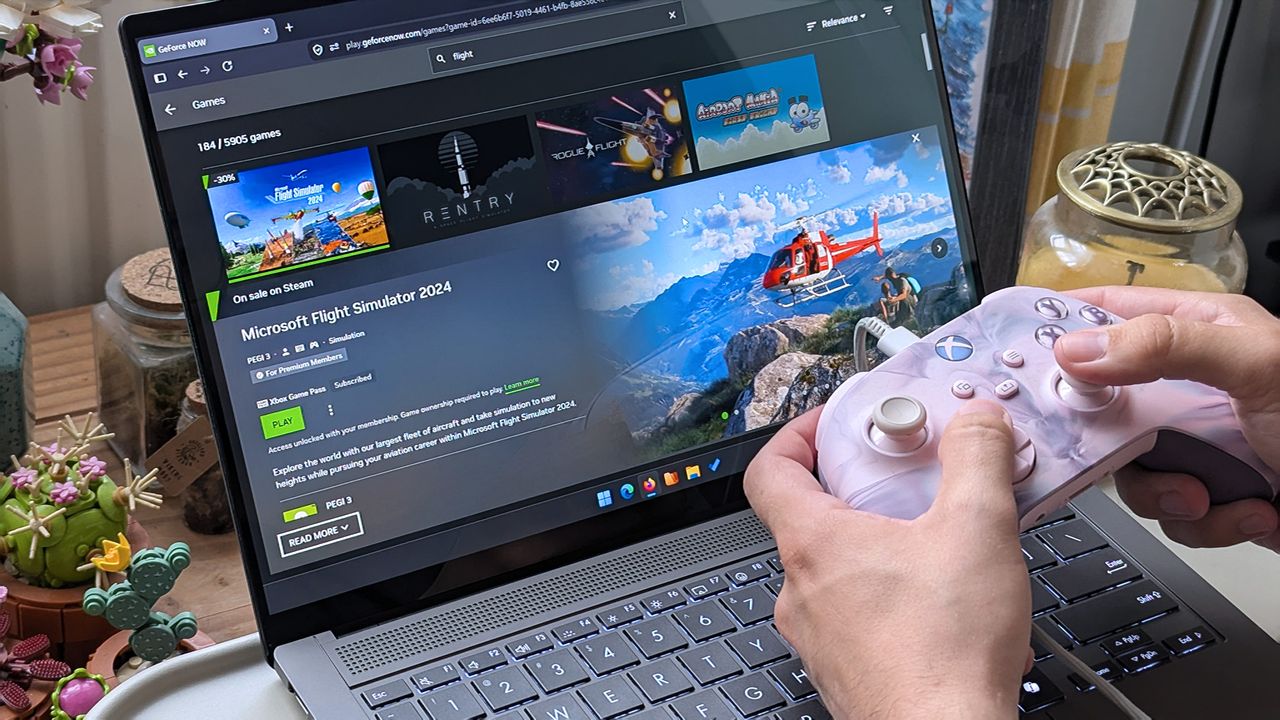
Hands holding a pink‑and‑white Xbox controller in front of an ASUS laptop displaying the GeForce NOW page for Microsoft Flight Simulator 2024, showing a green “Play” button.
GeForce NOW adds official Firefox support, with up to 1440p/120 FPS cloud gaming available to anyone who subscribes to NVIDIA's paid tiers.
I haven't seen a sane GPU price in what feels like almost a year, and the landscape isn't getting any better for gamers.The NVIDIA RTX 5090, which arrived at a $1,999 MSRP in 2025, is now listed at Newegg starting at $4,799.99. The MSI Ventus 3X OC is indeed the lowest price I could find, and there are other options that push well beyond $5,000.Bad luck if you're shopping for a new RTX 5090 alone. The high-end of NVIDIA's consumer GPU stack has become inaccessibl
I haven't seen a sane GPU price in what feels like almost a year, and the landscape isn't getting any better for gamers.
The NVIDIA RTX 5090, which arrived at a $1,999 MSRP in 2025, is now listed at Newegg starting at $4,799.99. The MSI Ventus 3X OC is indeed the lowest price I could find, and there are other options that push well beyond $5,000.
Bad luck if you're shopping for a new RTX 5090 alone. The high-end of NVIDIA's consumer GPU stack has become inaccessible for the average gamer, and there's no real alternative in sight.
Well, that's sort of true. While perusing various storefronts this morning, it quickly became evident that I can buy an entire pre-built gaming PC with an RTX 5090 inside for less than the card alone.
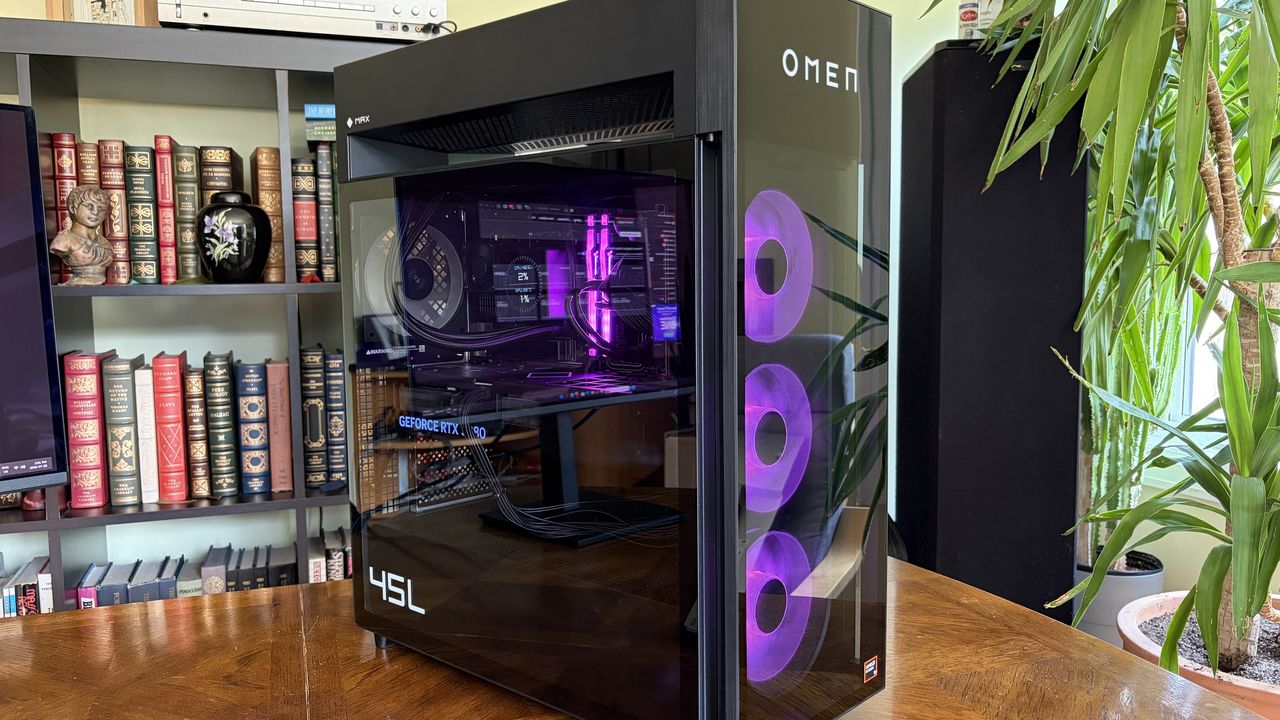
A look at the current promo pricing on a full gaming PC with RTX 5090. (Image credit: HP)
HP's Omen 45L desktop is my prime example. It has an NVIDIA RTX 5090 GPU, an Intel Core Ultra 7 265K CPU, 16GB of DDR5-6000 RAM, a 1TB M.2 PCIe 4.0 NVMe SSD, and everything else you need for a full build.
At the time of writing, this Omen 45L model costs $4,389.99. That's $410 less than the cheapest RTX 5090 listed on Newegg. Of course, the Omen 45L is on sale, with a regular price of $5,379.99. That's still less than the ASUS TUF Gaming RTX 5090 model, which sits at $5,429 on Newegg.
Buy a pre-built gaming PC for the card and sell the rest?
NVIDIA's RTX 5090 has hit costs I never imagined, but there are some alternative options. (Image credit: Windows Central | Ben Wilson)
The math gets more upside down when you factor in all the extra hardware you get with a pre-built PC.
The Omen 45L's CPU adds about $300, the 16GB of Kingston Fury DDR5-6000 RAM adds about $330, and the 1TB M.2 PCIe 4.0 NVMe SSD adds roughly $200. That's about $800 worth of extra components before even considering the 1200W PSU, motherboard, cooling, and case.
I can imagine a lot of readers will see this and wonder why they don't just buy a pre-built, remove the RTX 5090, and sell the rest of the components. I'm wondering the same thing.
HP isn't the only place that I'm seeing this pricing deficit in effect. Over at iBuyPower, I put together a system with an Intel Core i5-14400F CPU, 32GB of DDR5 RAM, a 1TB M.2 PCIe 4.0 NVMe SSD, a 1000W PSU, and an NVIDIA RTX 5090 that costs $5,596.
With the right initiative to sell the extra components, you could definitely end up paying less or the same for a standalone card and still end up with some extra hardware for future upgrades.
The HP Omen Max 45L I reviewed isn't perfect, but if it's cheaper than a lone GPU, it's hard to fault. (Image credit: Future)
The current state of GPU prices is due to the ongoing RAM and storage crisis that's sending NAND, DRAM, and other PC component prices into deep space.
As a result of the VRAM that goes into these cards hitting such high costs, NVIDIA jacked up the prices of GPU kits for its board partners (companies like ASUS, MSI, Gigabyte, and Zotac that build full GPUs using NVIDIA's kit) in July. Shortly after, it was reported that the hike could go as high as 30%.
We're now starting to feel those price hikes at retailers, as evidenced above. I suspect that HP's prices will also eventually be on the rise, but there are different market factors at play.
OEM builders can lock in large supplies of parts at a lower cost, so prices often don't catch up until after regular consumers begin to see them. I saw the same thing happen with Windows laptops this year. Components eventually run out, companies have to buy more, and those new costs are then passed down to consumers.
There's one caveat: when I reviewed the Omen Max 45L, I noticed that the RTX 5080 is a custom unit designed by HP. The same applies to the RTX 5090. Does that really matter? Not really. It's still NVIDIA's GPU inside, and my testing showed no difference compared to standalone cards.
Whatever happens to HP's pre-built PC pricing, there's no denying that the entire PC market is in chaos. You might not love the idea of a pre-built PC, but I definitely recommend seeing what's out there before you buy a standalone RTX GPU. You might just end up with a whole lot more than you expected for a lower price.
Join us on Reddit at r/WindowsCentral to share your insights and discuss our latest news, reviews, and more.
An Omen Max 45L with a transparent side panel displays its internal components, including a GeForce RTX 508 graphics card, against a backdrop of a bookshelf.
An Omen Max 45L with a transparent side panel displays its internal components, including a GeForce RTX 508 graphics card, against a backdrop of a bookshelf.
Je m'en doutais un peu mais c'est confirmé, derrière chaque session GeForce NOW tourne un vrai Windows, et cette machine virtuelle est moins verrouillée qu'elle en a l'air. En effet, une démo du moddeur Zortos montre le service qui s'ouvre non pas sur un jeu, mais sur un bureau complet, avec barre des tâches, menu démarrer et icônes.
La manip passe par le jeu Trove... Pendant le lancement, Zortos ouvre le navigateur web intégré de Steam, se balade dans les dossiers de la machine, récupère un exé
Je m'en doutais un peu mais c'est confirmé, derrière chaque session GeForce NOW tourne un vrai Windows, et cette machine virtuelle est moins verrouillée qu'elle en a l'air. En effet, une démo du moddeur Zortos montre le service qui s'ouvre non pas sur un jeu, mais sur un bureau complet, avec barre des tâches, menu démarrer et icônes.
La manip passe par le jeu Trove... Pendant le lancement, Zortos ouvre le navigateur web intégré de Steam, se balade dans les dossiers de la machine, récupère un exécutable et remplace quelques chemins dans le répertoire du jeu. Au démarrage suivant, Windows s'affiche alors à la place du jeu. Tout ça repose sur
SalsaNOW
, un outil open source signé dpadGuy.
Une fois le bureau ouvert, la machine encaisse à peu près tout ce qui ne réclame pas de droits administrateur. Zortos y a fait tourner Wallpaper Engine pour les fonds animés et LM Studio avec le modèle Gemma 4. Et pour les logiciels qui exigent une installation privilégiée, ils peuvent sans souci être préparés en version portable sur son propre PC, puis décompressés là-haut.
Reste que ce bureau est un bac à sable. La session tourne en compte utilisateur simple, donc pas de droits administrateur, pas d'anticheat noyau, et beaucoup d'installations qui finissent sur un refus d'accès.
L'autre mur, c'est la persistance. Sans l'option de stockage payante, tout disparaît à la déconnexion. Et même en la prenant, la machine ne conserve que vos Documents, l'AppData du compte, baptisé kiosk, et le contenu du lecteur I:. Tout le reste repart de zéro à la session suivante, et fermer l'explorateur de fichiers coupe la connexion sur-le-champ.
Dernier filtre, et pas le moindre, ça ne fonctionne que sur les abonnements payants, ceux dont je détaillais les formules quand
Nvidia a sorti son client Linux natif
. L'offre gratuite est hors jeu, tout comme les GeForce NOW opérés par les partenaires alliance.
Maintenant, qu'en est-il du règlement ? Eh bien comme vous vous en doutez, les conditions d'utilisation interdisent formellement de contourner les mécanismes de sécurité ou d'authentification du service, et Nvidia se réserve le droit de suspendre ou de restreindre un compte à sa discrétion. En cas de suspension, la période coupée n'est pas remboursée.
Mais à ce jour, aucun bannissement lié à ces méthodes n'a été rapporté, et Nvidia n'a sorti ni correctif ni communiqué. Voilà, c'est rigolo comme bidouille, mais si vous vous lancez, c'est votre compte que vous mettez en jeu.
Reste maintenant à voir combien de temps la porte restera ouverte.
Mourning the concept of affordability in the custom PC-building scene isn't a new trend; on the contrary, the eulogy for "Moore's law" was read years ago, around when hardware like NVIDIA's high-end GeForce RTX 40 Series graphics cards came with astronomical prices, and possibly even earlier than that.Moore's law is dead [...] the ability for Moore's Law to deliver twice the performance at the same cost, or at the same performance and half the cost, every year an
Moore's law is dead [...] the ability for Moore's Law to deliver twice the performance at the same cost, or at the same performance and half the cost, every year and a half is over. It's completely over.
Jensen Huang, NVIDIA CEO, 2022
If you've never heard of the term — named after Intel co-founder Gary Moore — it's a prediction (not really a law) of how computing power increases every few years by doubling transistor counts without a severe cost impact. Anyone who follows graphics card, RAM, or storage prices knows that dream is over.
On a more widely known subject, the demands of generative AI quickly became obvious as more models were widely adopted, and building them on local hardware is how that all gets started. Since then, our sister site, Tom's Hardware, has watched GeForce RTX 50-series GPU prices spike by up to 39%. Sure, MSRP always felt like a suggestion rather than a rule with GPUs, but it's getting worse.
Today's GPU for the price of yesterday's PC
What should be a mid-range RTX 50 Series GPU now costs hundreds of dollars over its intended MSRP. (Image credit: Newegg)
As it stands, encouraging novices to build their first custom Windows rig is particularly difficult because it usually means settling for the absolute bare-bones, entry-level GPU to stand a chance of keeping your build under $1,500. No matter how many advancements NVIDIA puts into DLSS — which I maintain is still the best graphics upscaler on the scene — it can't solve everything.
The idea that a chip is going to go down in cost over time, unfortunately, is a story of the past.
Jensen Huang, NVIDIA CEO, 2022
Plus, all these GPU headaches come before you start the painful process of finding a storage drive and suitable RAM modules to pair with it. Once you start approaching $2,000, I generally nudge people toward high-end gaming handhelds like the MSI Claw 8 EX AI+ for something more entertaining. Then again, nothing beats the satisfaction of building your own rig from scratch.
Of course, the reality is that Moore's Law has its scientific limits. We can only go so far into microscopic process nodes before manufacturing hits the borders of what's currently possible. That doesn't excuse inflated prices, and a commercial obsession with artificial intelligence still pulls the brunt of that blame, but why isn't there any AI-free hardware for the rest of us?
Would any brand go against the grain?
Could Intel's CEO, Lip-Bu Tan push his company into funding more desktop graphics cards? (Image credit: Getty Images | Bloomberg)
Realistically, practically any functional computer can run a local AI model on its CPU, GPU, NPU, or a combination of the three on a single SoC processor. Much like the crypto-mining fad that saw graphics cards scalped for their usefulness in Bitcoin earnings, modern components are at the mercy of AI, and it's a bubble that shows no signs of bursting (whether I like it or not).
Since the advent of Intel's Arc graphics hardware, particularly the first-generation "Alchemist" A750, which powered my wife's gaming PC for years with gradually improving performance, I've become an advocate for what the brand is trying to do. It's a similar story on AMD's Radeon graphics side, as both have an opportunity to steal the entry-level market away from NVIDIA.
After all, if NVIDIA isn't under enough threat from its competition, why would there be any incentive to lower prices? Intel has made impressive advancements in its own XeSS upscaling tech, which is part of what makes Intel Arc G3-powered handhelds so appealing. If it could commit to more affordable discrete GPUs with its long-awaited "Celestial" range, it could shake up the game.
Then again, Intel's CEO, Lip-Bu Tan, seems more interested in a return to the memory business (via Tom's Hardware), which would push Intel's desktop graphics even further down the list of priorities. It's much the same story as NVIDIA's minuscule — if utterly dominant — consumer GPU business compared to its monstrous data center and artificial intelligence side.
Could gigantic desktop graphics cards even seem ridiculous a decade from now, when NVIDIA's RTX Spark chips become its main priority? Doubtful, but who knows? Either way, Moore's Law is seemingly dead, and regular consumers are eating the costs passed on from major manufacturers as the march towards AI psychosis continues. I'll keep my eyes peeled for any signs of that changing.
Join us on Reddit at r/WindowsCentral to share your insights and discuss our latest news, reviews, and more.
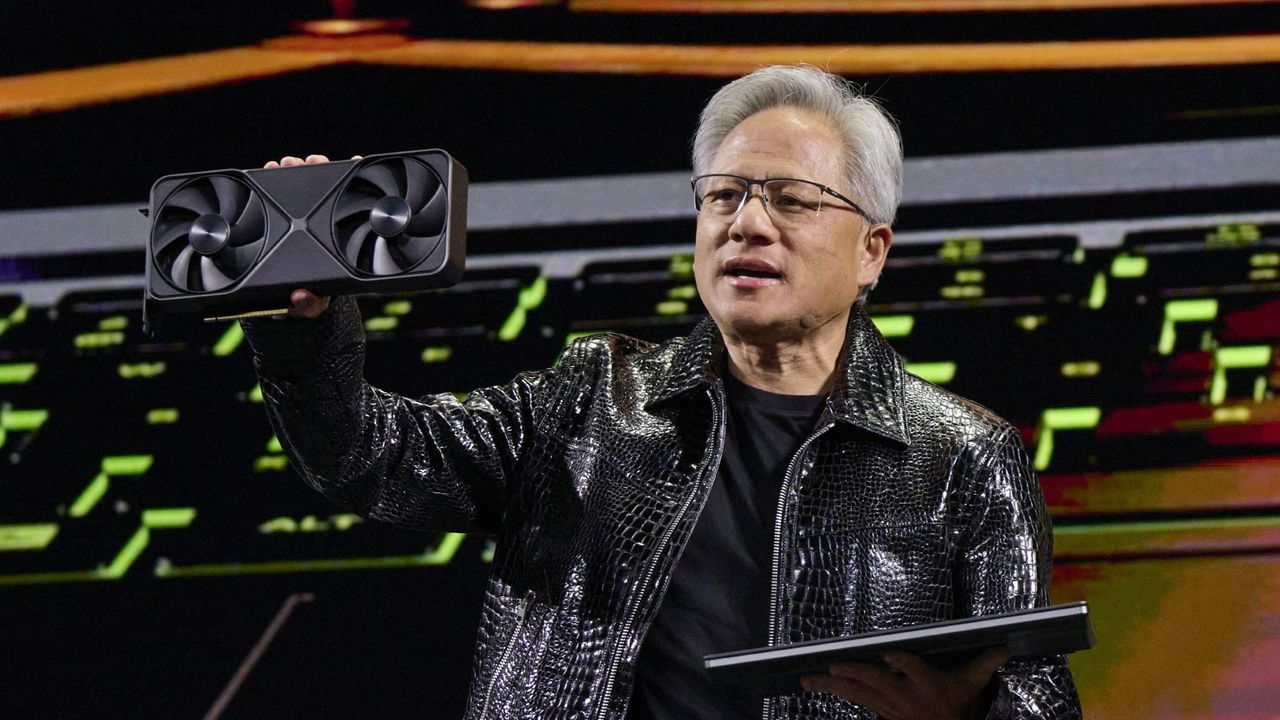
Jensen Huang, co-founder and chief executive officer of Nvidia Corp., speaks while holding one of the company's new GeForce RTX 50 series graphics cards during the 2025 CES event in Las Vegas, Nevada
NVIDIA's CEO Jensen Huang called it years ago: Chip production costs will never go down.

 Connexion