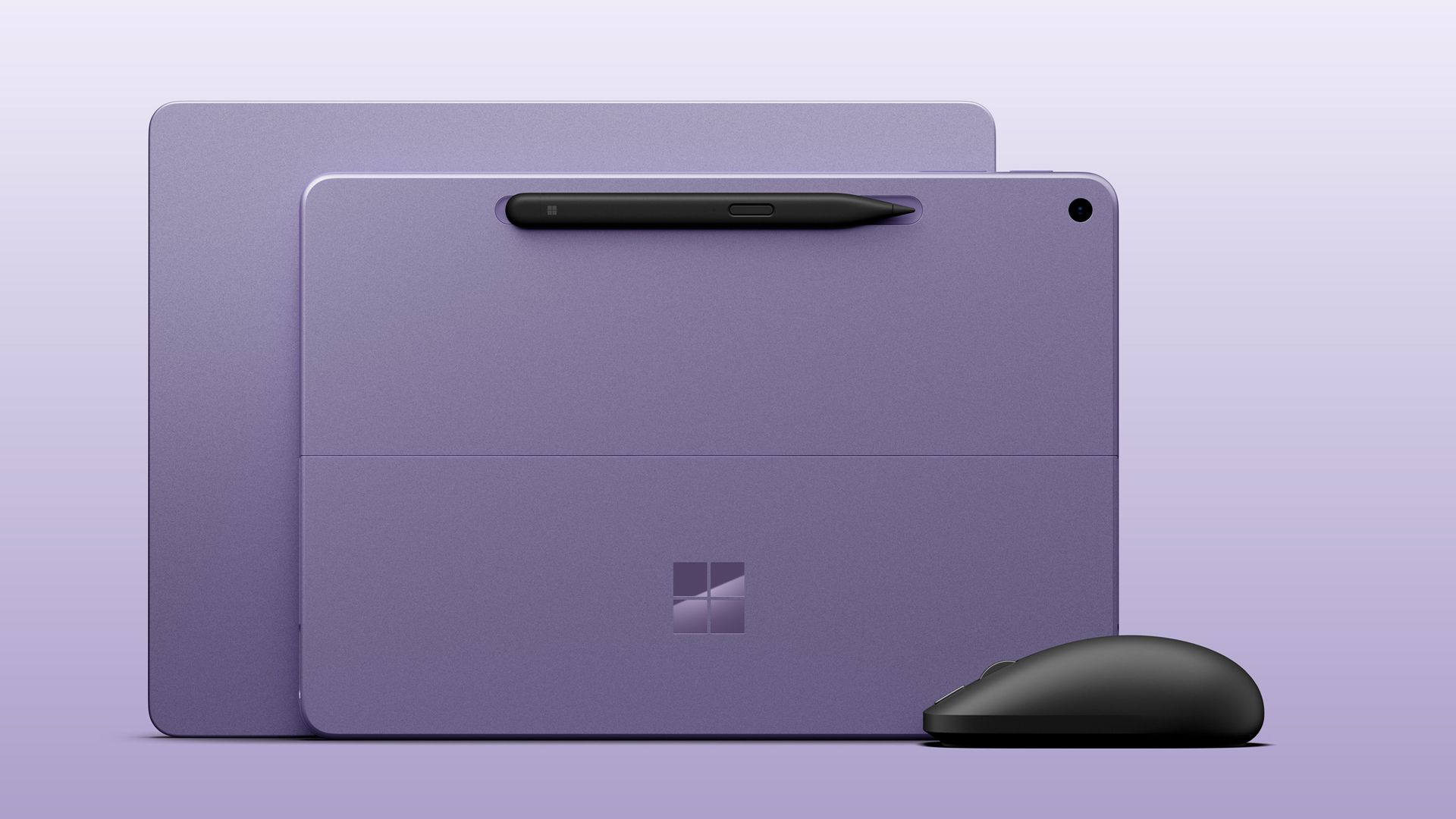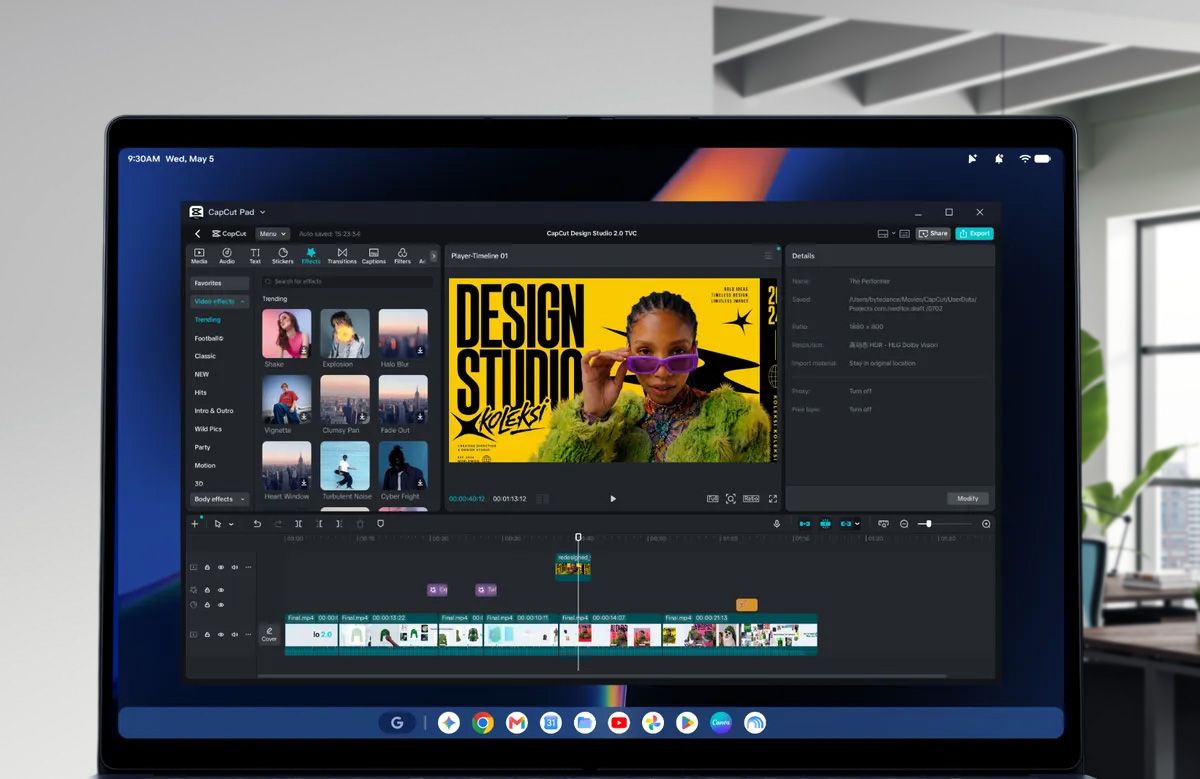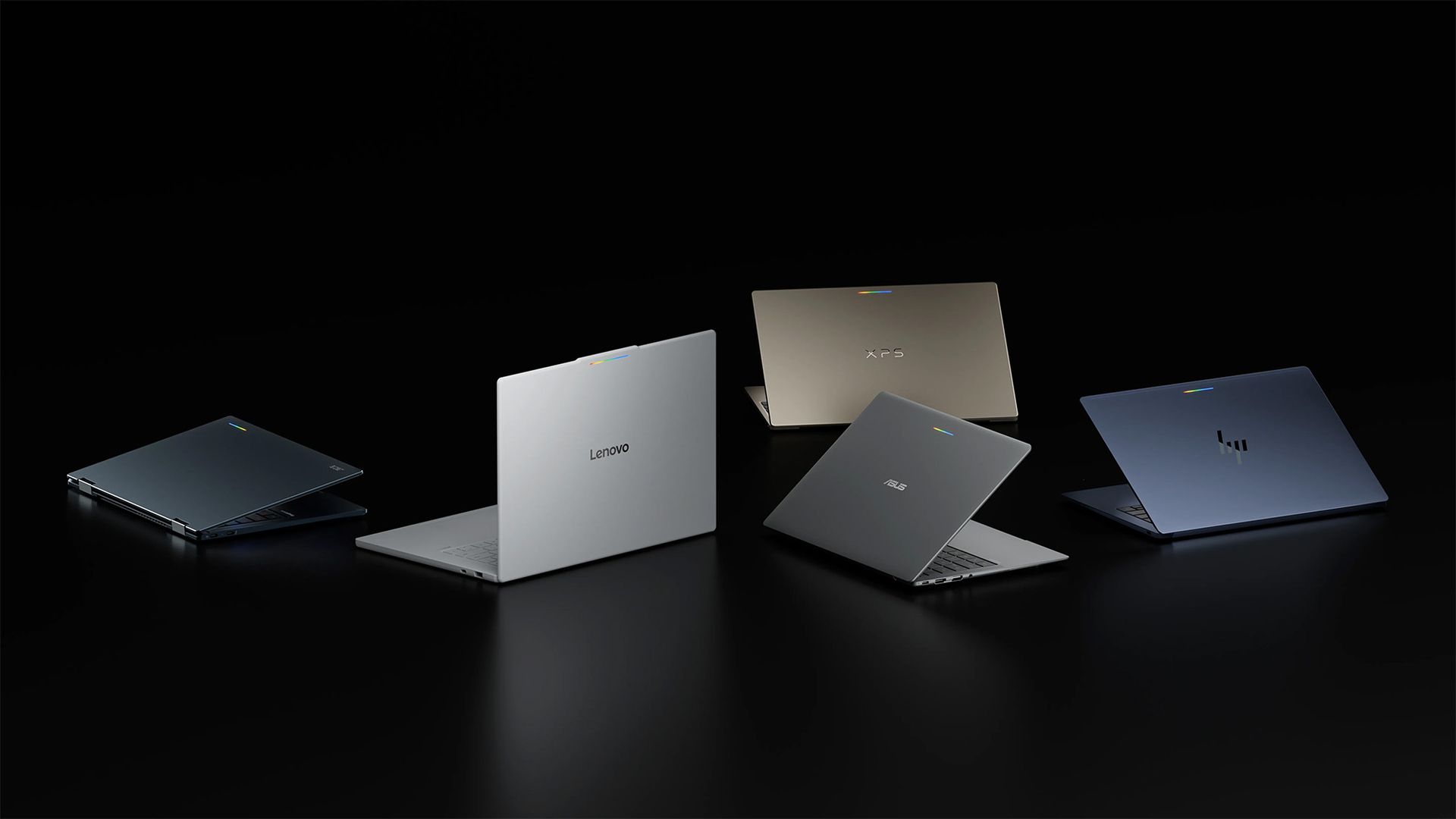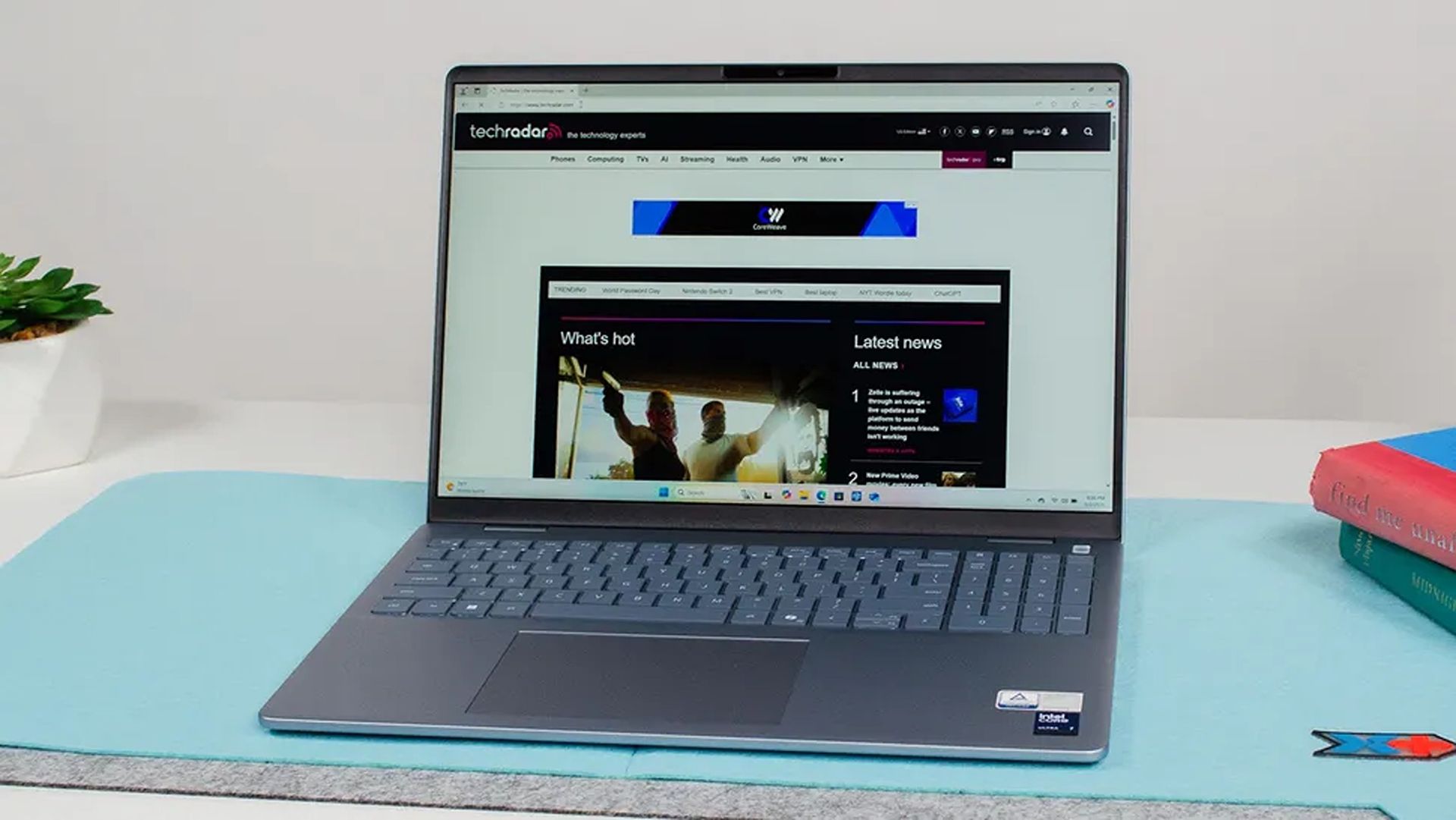
❌

Vue normale

STUDY: Qualcomm’s 18‑core Snapdragon X2 outperforms Intel on CPU, AI, battery, and price

Last month, Windows Central exclusively covered a Signal65 report that showed Qualcomm's flagship Snapdragon X2 Elite Extreme outperforming Intel and AMD in a premium laptop showdown.

Now, a new follow-up study by Signal65 just published suggests the more important story may involve the version most people are likely to buy (Qualcomm’s Extreme chip is basically in one laptop, albeit an awesome one).

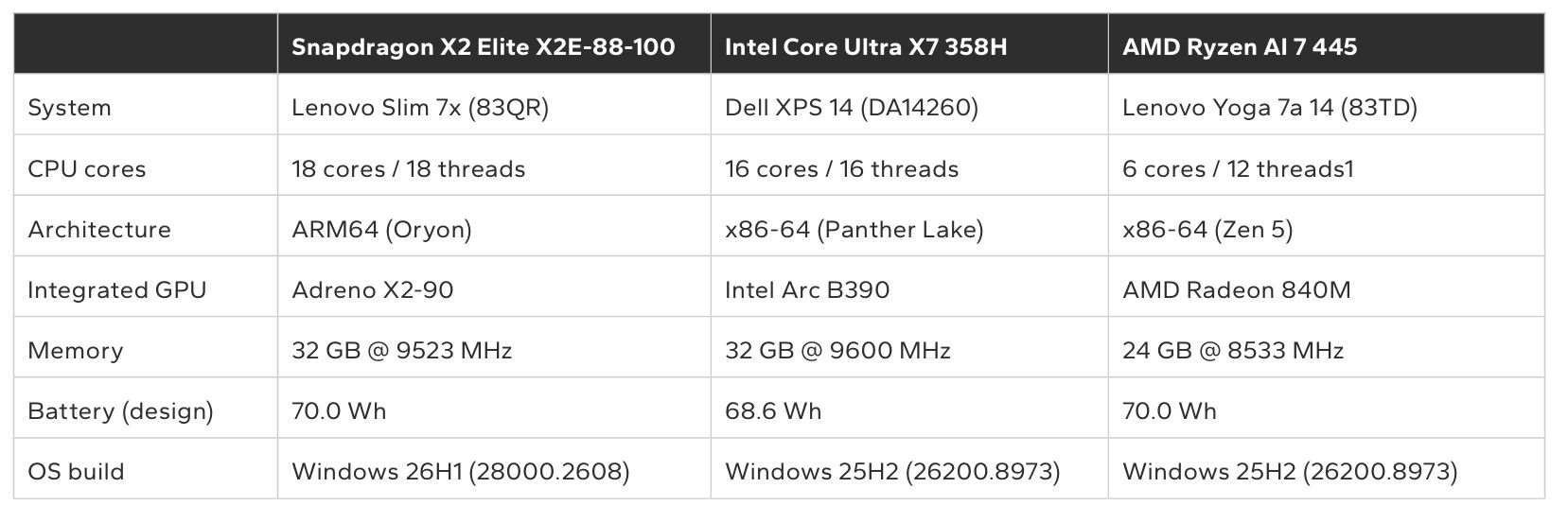
The independent testing firm's latest research examined the standard 18-core Snapdragon X2 Elite X2E-88-100 in Lenovo's Slim 7x, comparing it against Intel's Core Ultra X7 358H inside Dell's banger XPS 14 and AMD's Ryzen AI 7 445 in Lenovo's Yoga 7a 14.

This time, the focus shifted from large 16-inch flagship laptops to the increasingly important premium 14-inch category, where thermal constraints, battery life, and efficiency matter just as much as peak performance.

The most consistent finding in the data is that the Snapdragon system does not need to be set to a higher power profile to reach its top-tier performance, while the x86 systems do.

Signal65 Report

Luckily for Qualcomm, which commissioned the study, the results largely mirror the earlier Extreme-chip study. Qualcomm's platform led in CPU performance, AI workloads, productivity, and most battery-focused tests while also coming in significantly below the price of the Intel system evaluated.

Table comparing specifications of Lenovo Slim 7x, Dell XPS 14, and Lenovo Yoga 7a 14 laptops powered by Snapdragon, Intel Core Ultra, and AMD Ryzen processors.

Comparing specifications of Lenovo Slim 7x, Dell XPS 14, and Lenovo Yoga 7a 14 laptops powered by Snapdragon, Intel Core Ultra, and AMD Ryzen processors. (Image credit: Signal65)

However, that does not mean Qualcomm won everything. Intel continues to hold meaningful advantages in graphics performance (exemplified to perfection in MSI’s latest handheld gaming PC), and the XPS 14 remains one of the most premium Windows laptops available today. Still, the latest findings strengthen the argument that Snapdragon's lead is no longer limited to a halo product, nor a quirk of its Extreme chip.

Let's dive into the numbers, and then break down what it really means, as there is some nuance here.

Strong CPU results, even without the flagship chip

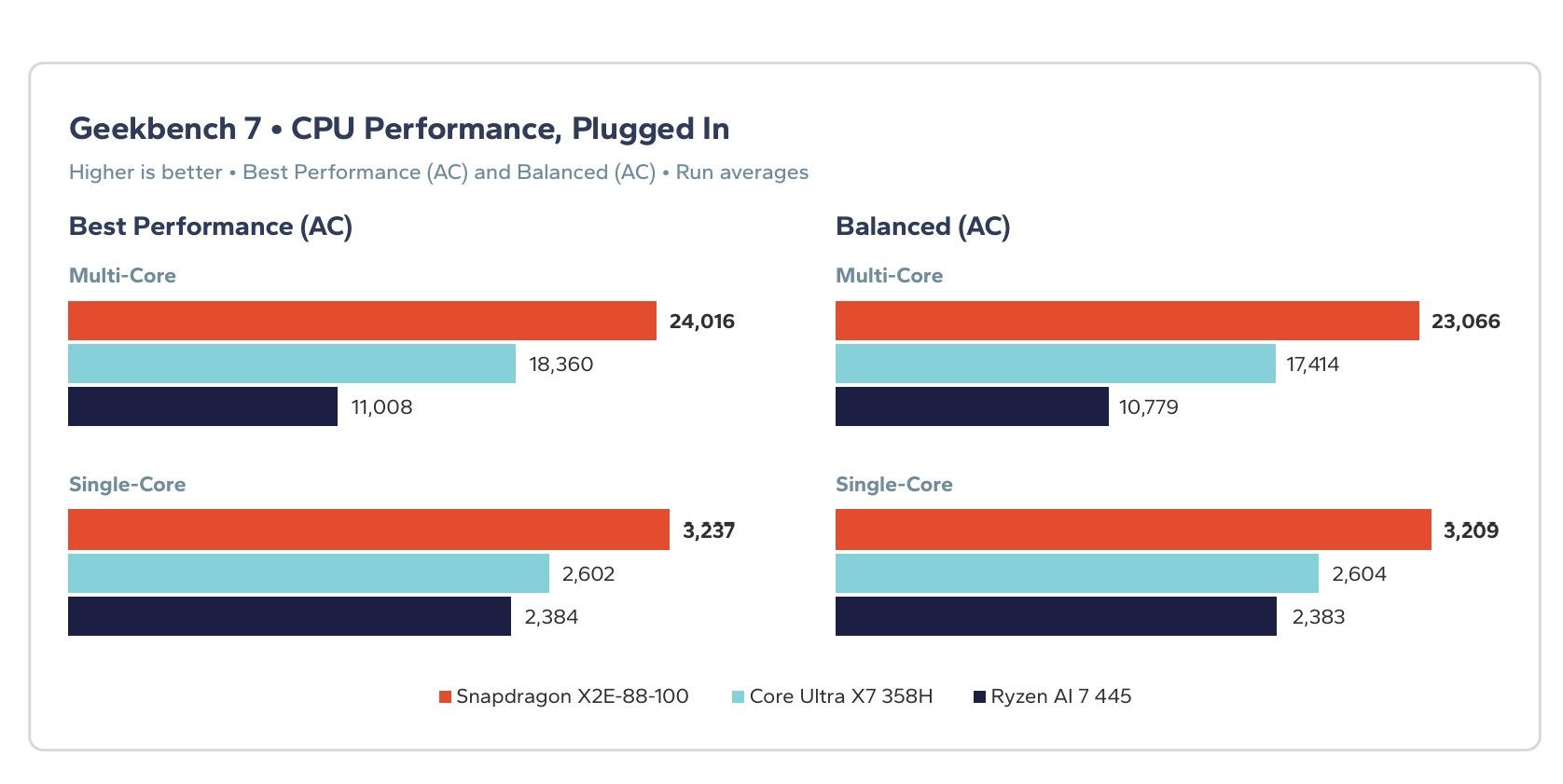
Bar chart comparing plugged-in Geekbench 7 single-core and multi-core CPU scores for Snapdragon X2E-88-100, Core Ultra X7 358H, and Ryzen AI 7 445.

Bar chart comparing plugged-in Geekbench 7 single-core and multi-core CPU scores for Snapdragon X2E-88-100, Core Ultra X7 358H, and Ryzen AI 7 445. (Image credit: Signal65)

In Geekbench 7, the Snapdragon-powered Lenovo Slim 7x posted a multi-core score of 24,016, compared to 18,360 for the Intel-powered XPS 14. Single-core performance also favored Qualcomm, with a score of 3,237 against Intel's 2,602.

According to Signal65, that translates into leads of 31% and 24%, respectively, favoring Qualcomm.

Those numbers are especially notable because they are not solely the result of having more CPU cores. While Qualcomm's 18-core design certainly helps in heavily threaded workloads, the single-core advantage points to meaningful architectural gains from the second-generation Oryon design as well.

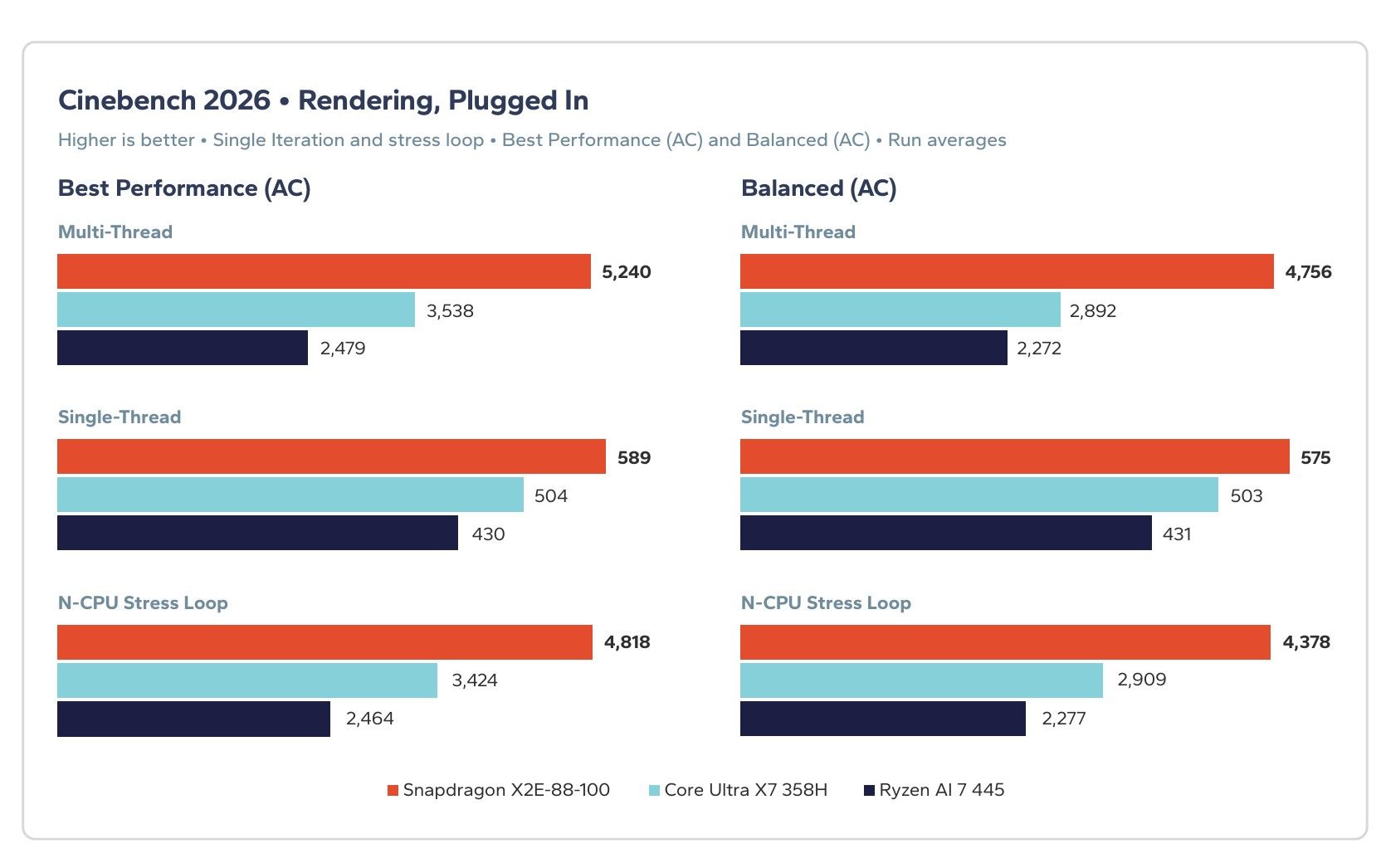
Bar chart comparing plugged-in Cinebench 2026 rendering scores for Snapdragon X2E-88-100, Core Ultra X7 358H, and Ryzen AI 7 445 across multi and single-thread tests.

Cinebench 2026 rendering scores for Snapdragon X2E-88-100, Core Ultra X7 358H, and Ryzen AI 7 445 across multi and single-thread tests. (Image credit: Signal65)

The company also maintained substantial leads in Cinebench 2026 rendering tests and across Microsoft's Office applications as measured by UL Procyon. In the productivity benchmark, Snapdragon led Intel by 10% in Best Performance mode and retained a smaller advantage in the default Balanced profile.

For buyers who spend most of their day in Word, Outlook, PowerPoint, Edge, and Teams, those productivity-oriented results may matter more than synthetic benchmark scores.

Qualcomm's AI advantage continues

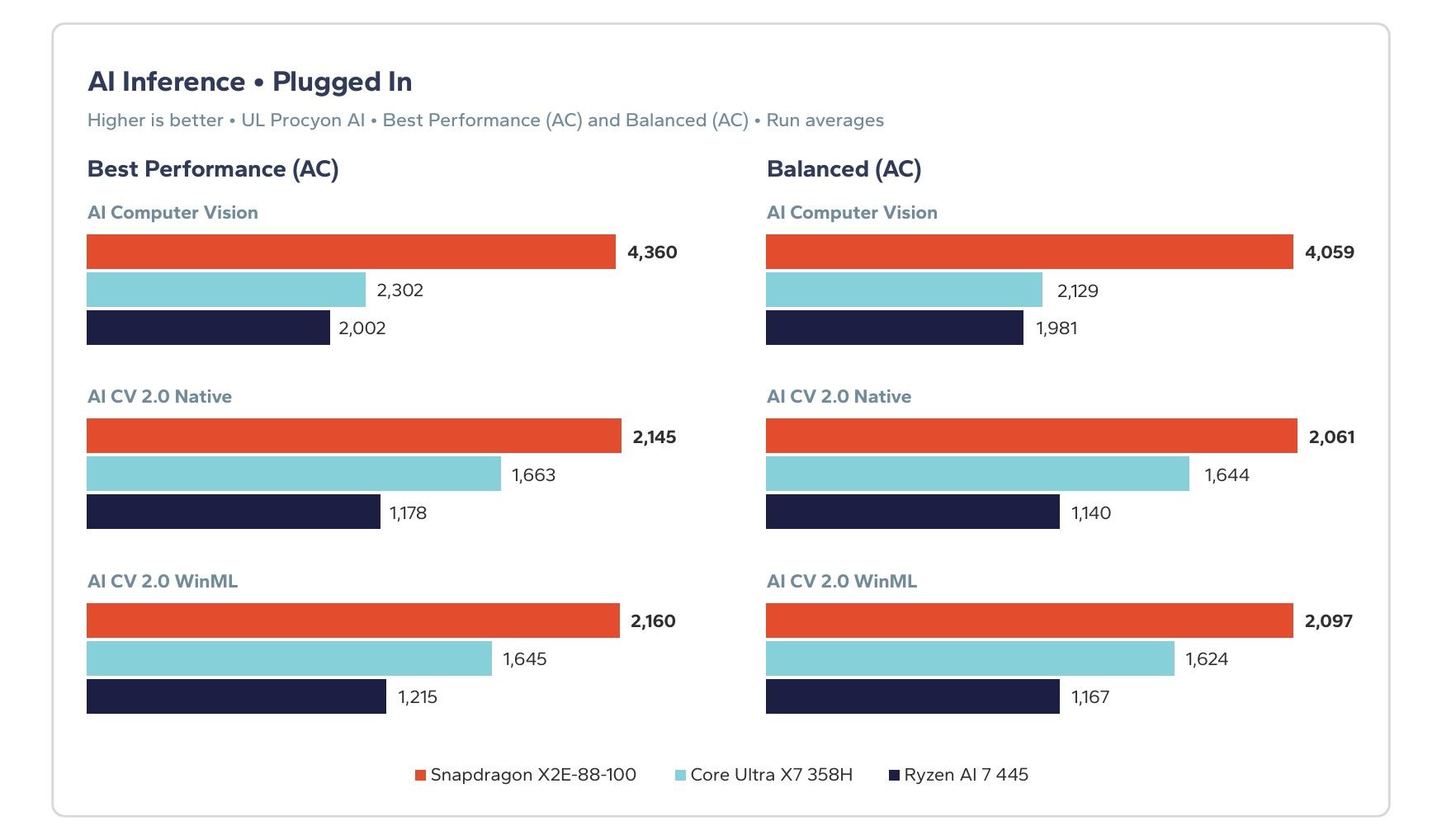
Bar chart comparing plugged-in AI inference scores for Snapdragon X2E-88-100, Core Ultra X7 358H, and Ryzen AI 7 445 under Best Performance and Balanced modes.

Comparing plugged-in AI inference scores for Snapdragon X2E-88-100, Core Ultra X7 358H, and Ryzen AI 7 445 under Best Performance and Balanced modes. (Image credit: Signal65)

AI remains one of Qualcomm's strongest categories.

In UL Procyon AI Computer Vision, the Snapdragon system scored 4,360 compared to Intel's 2,302. Even in the newer AI CV 2.0 WinML benchmark, which routes through Microsoft's Windows ML framework rather than a vendor-specific path, Qualcomm maintained a lead of roughly 31% over Intel.

That distinction is important because it better reflects the way many Windows AI experiences are expected to work going forward. Basically, a benchmark that favors proprietary software optimizations is useful, but a benchmark that preserves the advantage through a common Windows layer is arguably more relevant.

Battery performance remains a major story

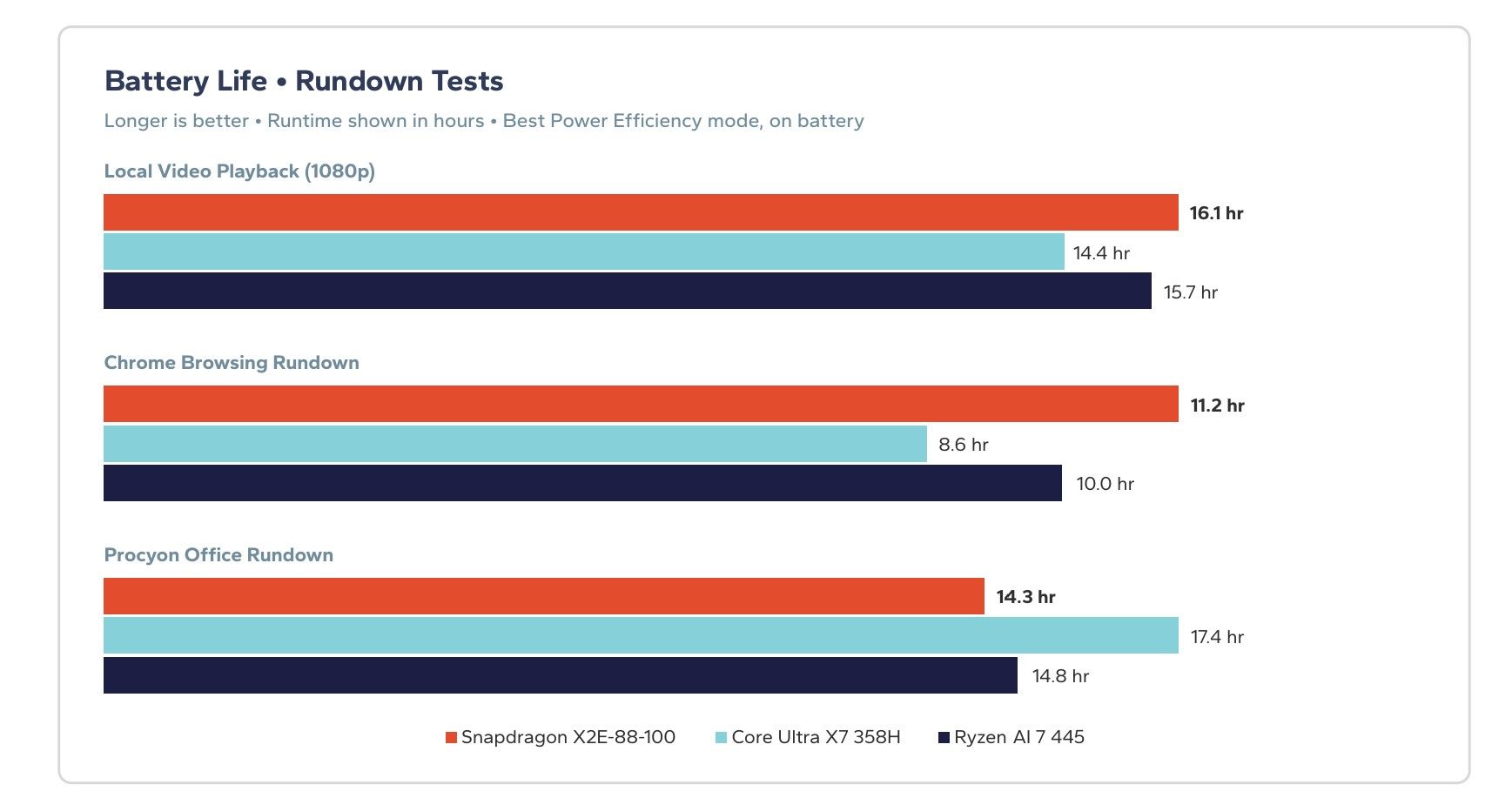
Bar chart comparing battery runtime in hours for Snapdragon X2E-88-100, Core Ultra X7 358H, and Ryzen AI 7 445 in video playback, web browsing, and office tasks.

Battery runtime in hours for Snapdragon X2E-88-100, Core Ultra X7 358H, and Ryzen AI 7 445 in video playback, web browsing, and office tasks. (Image credit: Signal65)

One of the headline findings from the earlier Snapdragon X2 Elite Extreme study was that Qualcomm gave up remarkably little performance when running unplugged. Qualcomm has been touting this advantage since the first gen of Snapdragon X.

The trend continues here.

Across six benchmarks, the Snapdragon system retained an average of 97% of its plugged-in Balanced-mode performance. Intel retained 95%, while the AMD system retained 74%. According to Signal65, the Snapdragon-powered laptop led every CPU, productivity, and AI benchmark tested on battery.

Critically, we must remember that OEMs, especially on Intel and AMD systems, have leverage on AC/DC performance choices, meaning a company like Lenovo could have its AMD system perform worse on battery ... in order to get better battery life. Companies do this to find what they think is a balance for their intended customer, even if the explanation is opaque.

I wrote about this AMD-throttling issue back in 2021, because I found it frustrating, deceptive, and disappointing. Not much has changed in 2026, apparently.

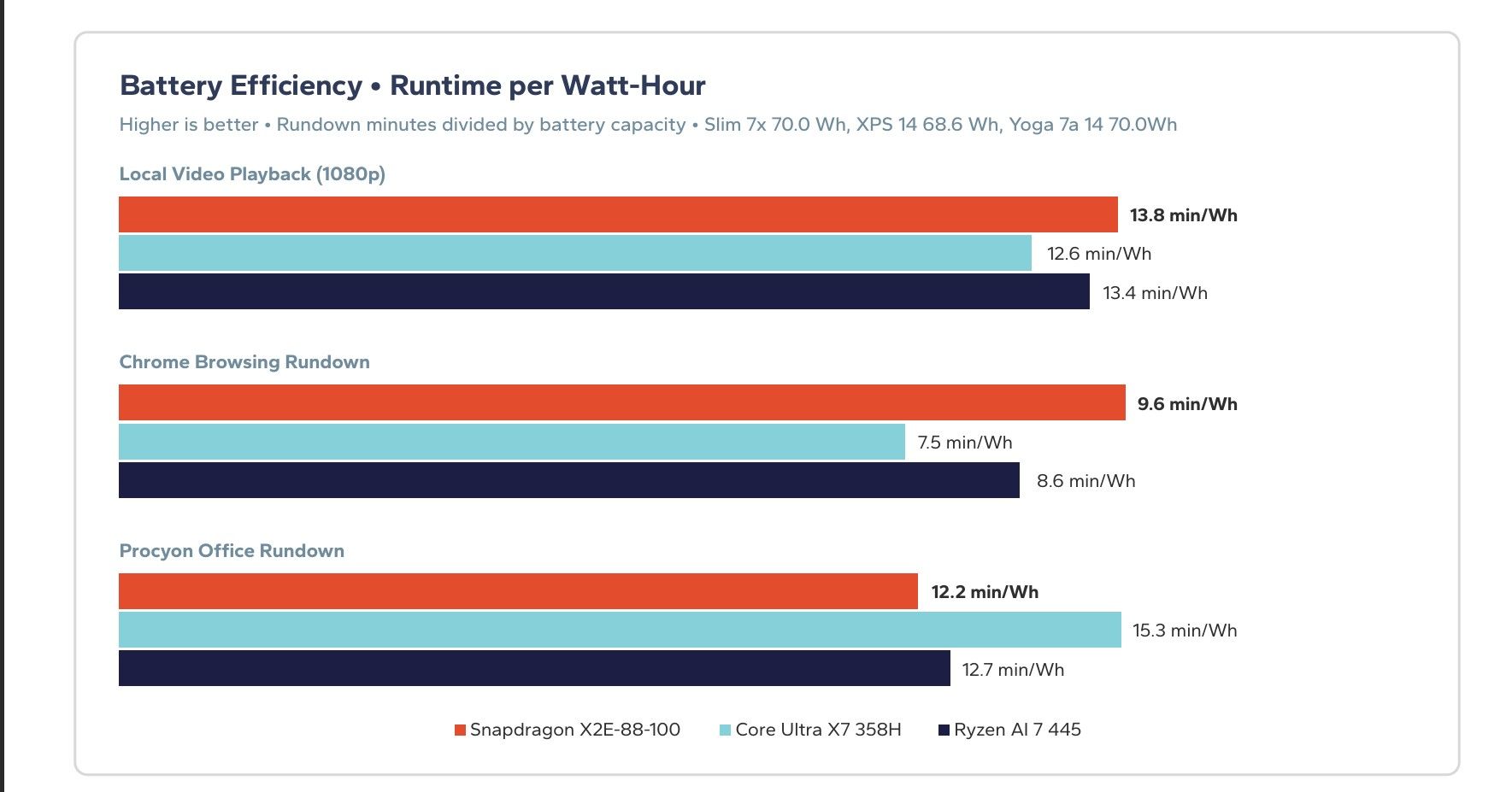
Bar chart showing battery efficiency in min/Wh for Snapdragon X2E-88-100, Core Ultra X7 358H, and Ryzen AI 7 445 across video, Chrome, and Office tests.

Battery efficiency in min/Wh for Snapdragon X2E-88-100, Core Ultra X7 358H, and Ryzen AI 7 445 across video, Chrome, and Office tests. (Image credit: Signal65)

The battery life data was also favorable for Qualcomm, particularly because the three laptops used nearly identical battery capacities.

The Slim 7x (Qualcomm) lasted 16.1 hours in local video playback compared to 14.4 hours for the XPS 14 (Intel). In a Chrome browsing rundown, the Snapdragon laptop reached 11.2 hours versus 8.6 hours for Intel's machine.

There was one significant exception. Intel won the sustained Procyon Office battery test, posting 17.4 hours compared to Qualcomm's 14.3 hours. Signal65 argues that Snapdragon completed more work during that test, making the outcome more nuanced than a simple battery-life loss, but the result remains one of Intel's clearest victories in the report.

The XPS 14 deserves context

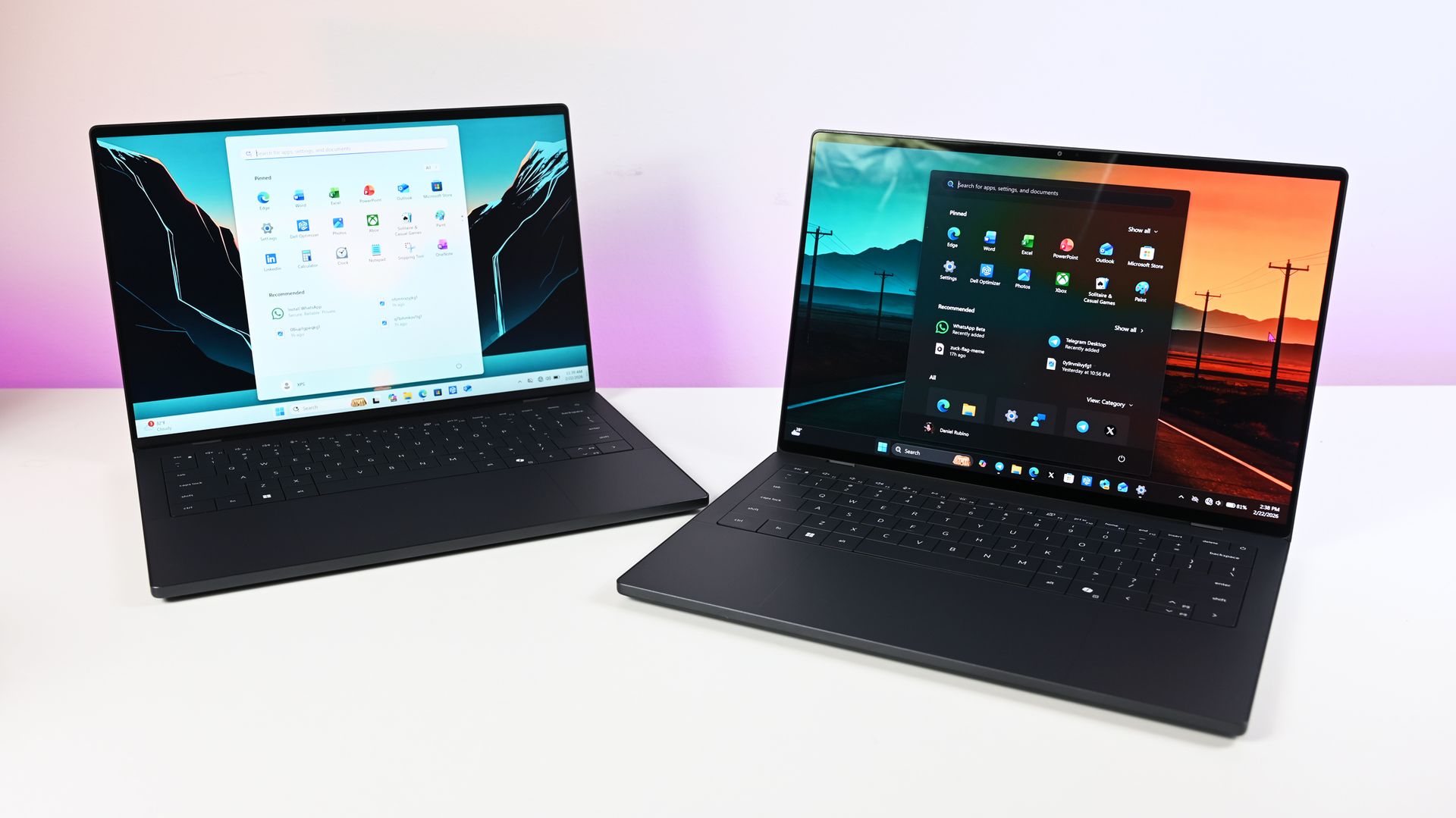
Two dark gray Dell XPS 14 laptops placed side by side on a white desk, one set to light mode and the other displaying a dark mode interface.

Dell's famed premium XPS 14 (2026) models. (Image credit: Daniel Rubino)

This is where I think the conversation becomes more interesting than benchmark charts.

The Snapdragon machine tested was a $1,999 Lenovo Slim 7x. The Intel competitor was a $2,749 Dell XPS 14. That $750 difference looms over nearly every chart in the report.

At the same time, it is difficult to discuss the XPS 14 purely as a processor comparison.

Dell's laptop is widely regarded as one of the most premium Windows notebooks on the market, with exceptional build quality, materials, industrial design, and one of the best displays available in the category. The Signal65 report acknowledges that these are comparisons of complete retail systems rather than isolated silicon measurements.

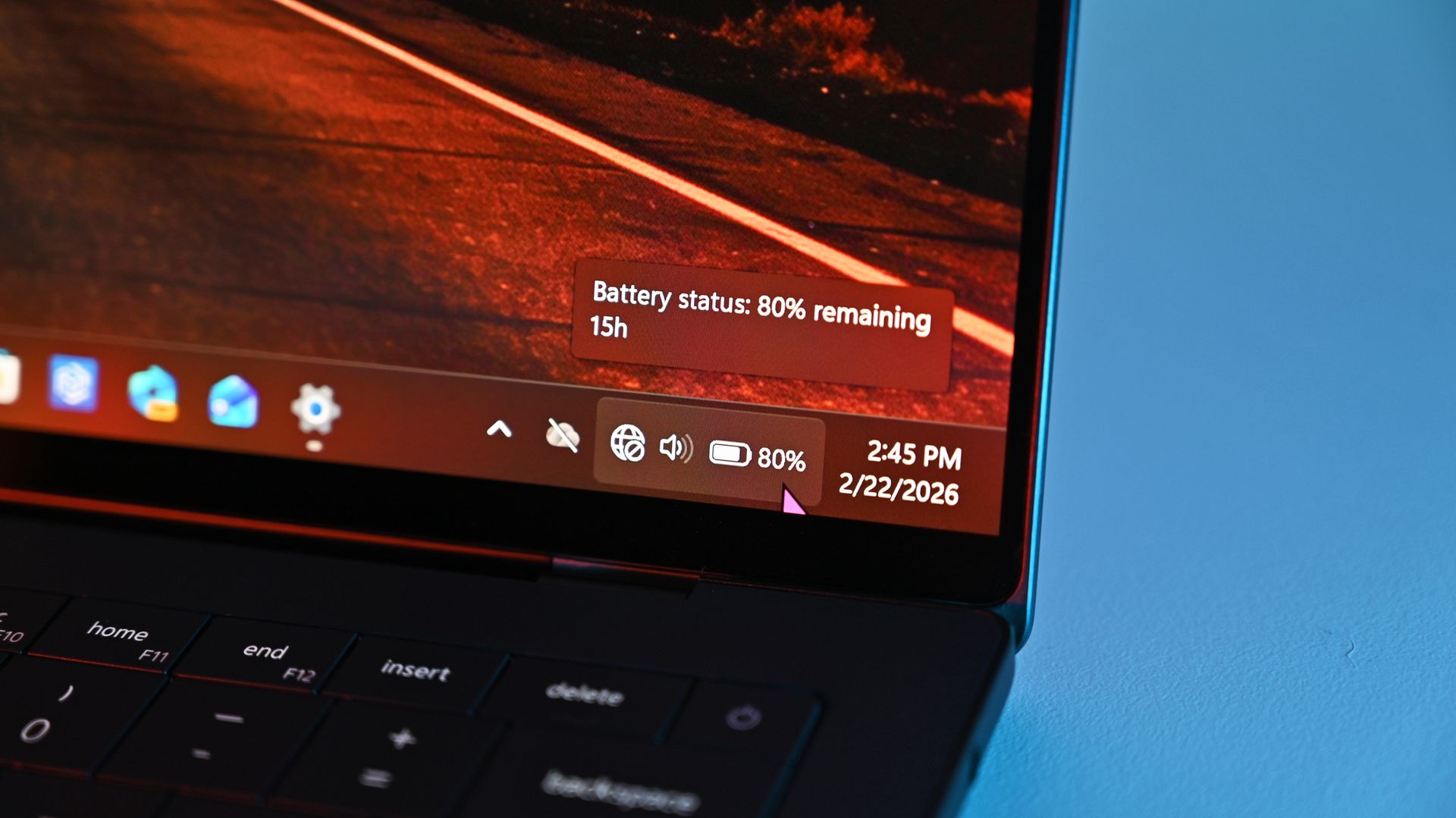
Close-up of a Windows taskbar on a Dell XPS 14 screen displaying a battery status pop-up showing 80% remaining with an estimated 15 hours of battery life.

Dell XPS 14 screen displaying a battery status pop-up showing 80% remaining with an estimated 15 hours of battery life. (Image credit: Daniel Rubino)

That matters because buyers are not choosing between just processors. They are choosing between laptops, aka the full package.

The display difference is particularly worth mentioning. Signal65 did not evaluate screen quality, but Dell's OLED-equipped XPS 14 has generally been considered one of the standout displays in the Windows ecosystem. Some buyers may reasonably decide that premium construction, display quality, and graphics performance justify paying more.

Others may look at a $750 premium and conclude that Intel's advantages are simply not large enough, which is fair, too. After all, we reviewed the Yoga Slim 7x back in May and gave it very high marks.

It's also worth pointing out that Dell's display is a VRR 120Hz at 2880 x 1800, while the Slim 7x is just 1920 x 1200 at 60Hz (both are OLED). Anyone worth their salt in comparing laptops and battery life knows the display is, by far, the number one draw on power, so while I do believe Qualcomm's chip here is better, a pinch of salt is needed for battery life results.

Intel still has a meaningful win: GPU

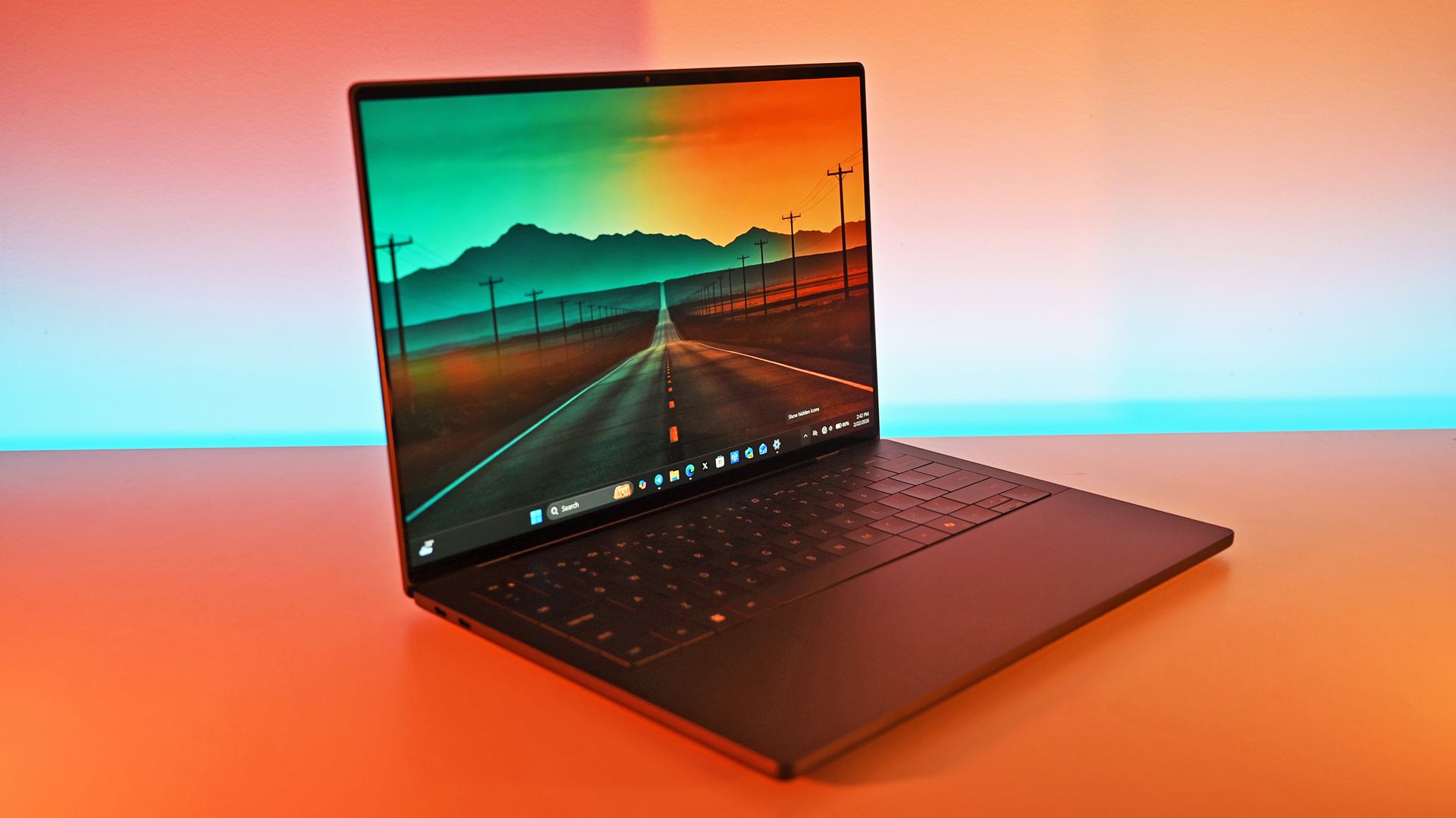
A dark gray Dell XPS 14 laptop open on a table showing a wallpaper of an open road stretching toward mountains, illuminated by ambient warm light.

Dell's XPS 14 with Intel has a powerful Arc B390. (Image credit: Daniel Rubino)

The strongest argument for Intel remains graphics, something the company has been working very hard at in recent years.

In 3DMark Steel Nomad Light, Intel's Arc B390 outperformed Qualcomm's Adreno X2-90 GPU by roughly 23% in both DirectX 12 and Vulkan testing. That's the same GPU powering the beastly MSI Claw 8 EX AI+ gaming handheld, which crushes AMD in the same space.

The practical consequence is that the Intel system's wins require the user to be plugged in and to have selected the right mode, while the Snapdragon system's wins do not.

Signal65 Report

For users who prioritize integrated graphics performance, gaming, or creative workloads that benefit from stronger GPU hardware, Intel still has a compelling case.

That advantage becomes harder to defend when price enters the discussion, which is why Signal65 ultimately concludes that Snapdragon delivers better performance per dollar across the tested systems. According to the study, Qualcomm's laptop delivered roughly 2.15 times Intel's value when normalized across selected CPU, rendering, and AI benchmarks.

Final thoughts

Image of the Lenovo Yoga Slim 7x (Gen 9).

Lenovo Yoga Slim 7x (Gen 9) with Qualcomm Snapdragon X2 Elite processor. (Image credit: Windows Central | Zachary Boddy)

As with the previous report, this study was commissioned by Qualcomm, a fact readers should keep in mind. Signal65 remains an independent testing organization, but commissioned research naturally benefits from additional scrutiny.

Even with that caveat, the broader pattern is becoming difficult to ignore. I also trust the results.

The earlier Snapdragon X2 Elite Extreme report established that Qualcomm's flagship laptop chip could outperform competing Intel and AMD systems. This latest study suggests those advantages extend well beyond the top, hard-to-find SKU.

That may be the more consequential finding.

Flagship products are important for headlines, but the laptops that shape a market tend to be the mainstream premium systems people actually purchase. If Qualcomm can deliver strong CPU performance, class-leading AI results, competitive battery life, and lower pricing with a standard 18-core Snapdragon X2 Elite, the company has moved beyond proving a point and started building a sustainable competitive position in the Windows laptop market.

Lenovo Slim 7x

Lenovo's Slim 7x with Qualcomm Snapdragon X2 Elite. (Image credit: Lenovo)

From my experience with both systems, I prefer Qualcomm since they usually run cooler and quieter, and my overall Windows 11 experience feels faster and smoother. That said, I have to admit Intel’s Core Ultra 3 series has really closed the gap — they’re genuinely impressive chips.

If anything, the bigger subtext with this story is just how far AMD has fallen out of this space. We recently covered how no modern Surface PCs opt for AMD, and it's not because of "not enough product" as Microsoft claims. It's because Microsoft knows they're not as good as what Intel and Qualcomm offer, full stop.

The bigger takeaway from these results is not that Qualcomm won another benchmark comparison. It's that Qualcomm appears to have successfully scaled its advantages beyond a halo product. Intel now faces a more difficult reality: competing not only against Snapdragon's fastest chip, but against the one that is likely to ship in far more laptops.

Click to join us on r/WindowsCentral

Join us on Reddit at r/WindowsCentral to share your insights and discuss our latest news, reviews, and more.
Hands-on: Panasonic’s TOUGHBOOKs are becoming the AI nerve center for frontline operations

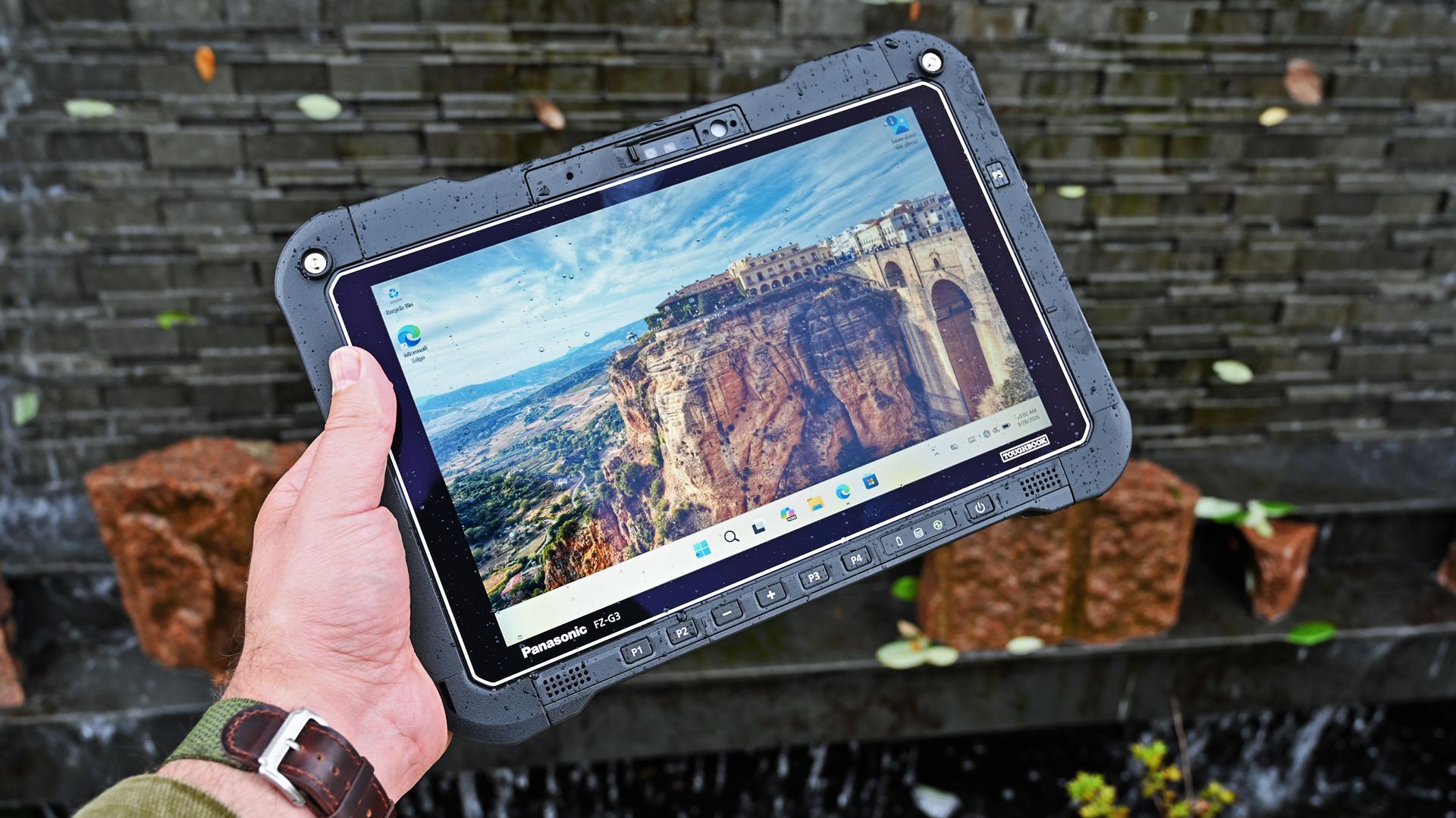
Panasonic's TOUGHBOOK lineup turns 30 this year (see my earlier coverage of the new TOUGHBOOK 55), and after attending the company's product briefing in a very rainy New York City, I'm convinced the future of rugged computing isn't just about surviving drops, rain, and extreme temperatures.

It's about becoming the intelligent edge computer that sits at the center of everything.

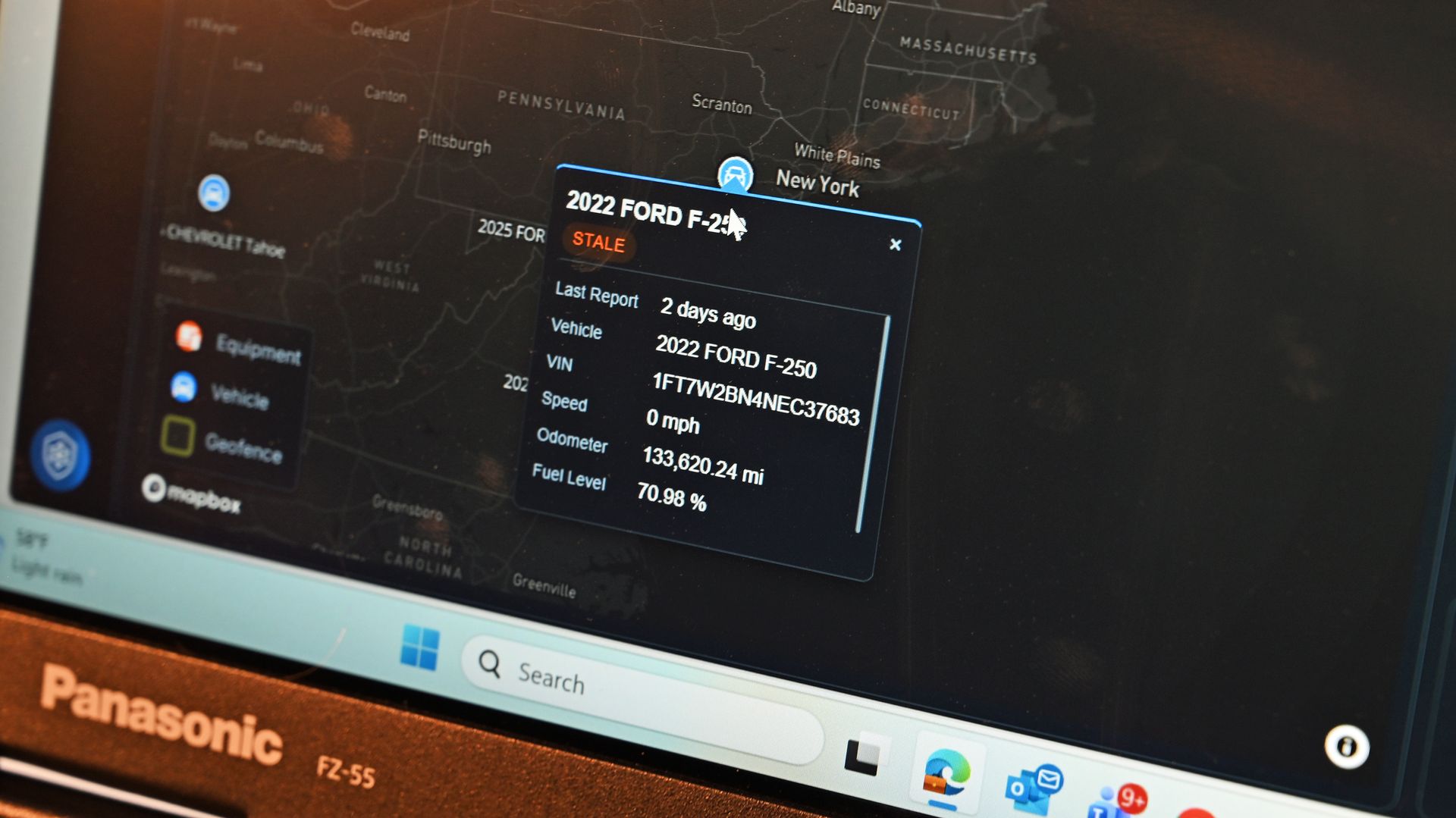
That might sound like marketing fluff until you see the demos. One station showed a military drone feeding reconnaissance data back to a TOUGHBOOK for local analysis. Another demonstrated how police fleets can connect vehicle diagnostics directly into a TOUGHBOOK-based management system, allowing departments to track everything from VINs and odometer readings to fuel levels, fault codes, and maintenance schedules.

In other words, Panasonic's new TOUGHBOOK 34 and TOUGHBOOK G3 are increasingly becoming mission-critical data hubs for the people who protect, rescue, repair, and support the rest of us.

And yes, they're still absurdly rugged.

Thirty years later, the mission remains the same

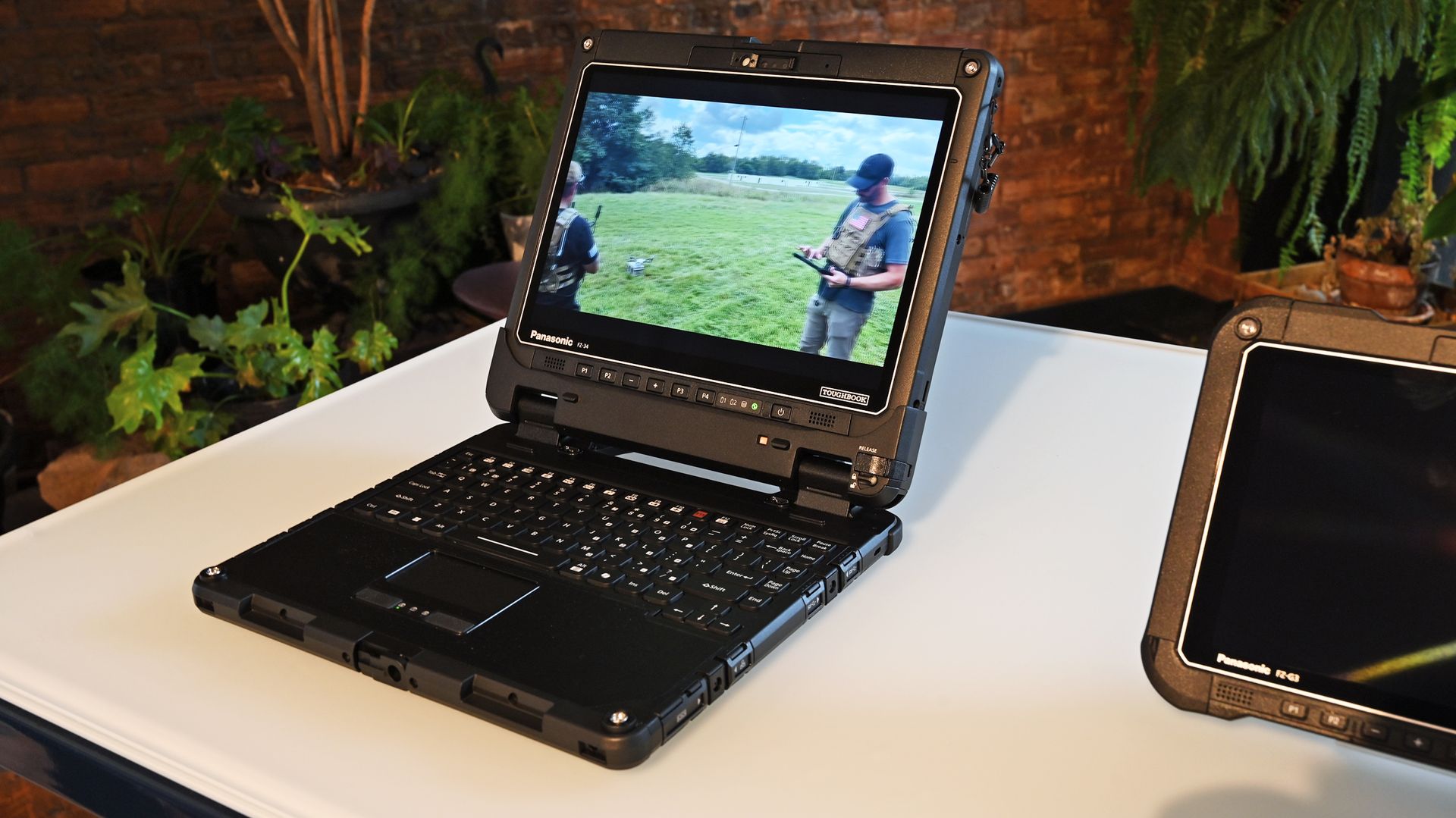
Open Panasonic TOUGHBOOK 34 laptop on a table playing video footage of drone operators outdoors.

Panasonic TOUGHBOOK 34 laptop on a table playing video footage of drone operators. (Image credit: Daniel Rubino)

One theme came up repeatedly throughout Panasonic's presentation: purpose-built computing.

As Panasonic executives noted, their customers aren't buying laptops to answer email from a coffee shop. These systems are deployed in police cruisers, ambulances, utility trucks, military vehicles, warehouses, disaster zones, and industrial sites where failure is not an option.

As Panasonic put it during the briefing, "our devices are purpose-built," adding that workers are often operating in "extreme heat, extreme cold, vibration, water, dust" and environments where "lives are on the line."

A soldier in tactical gear and gloves is holding the back of a rugged Panasonic TOUGHBOOK 34 tablet outdoors.

A soldier in tactical gear and gloves holding the back of the Panasonic TOUGHBOOK 34 tablet. (Image credit: Panasonic TOUGHBOOK)

That philosophy has helped TOUGHBOOK carve out a niche that practically nobody else occupies.

While consumer laptops compete over OLED displays and thinness, Panasonic spends its time figuring out how to keep a device communicating over private 5G networks during storm response operations.

Meet the TOUGHBOOK 34 and TOUGHBOOK G3

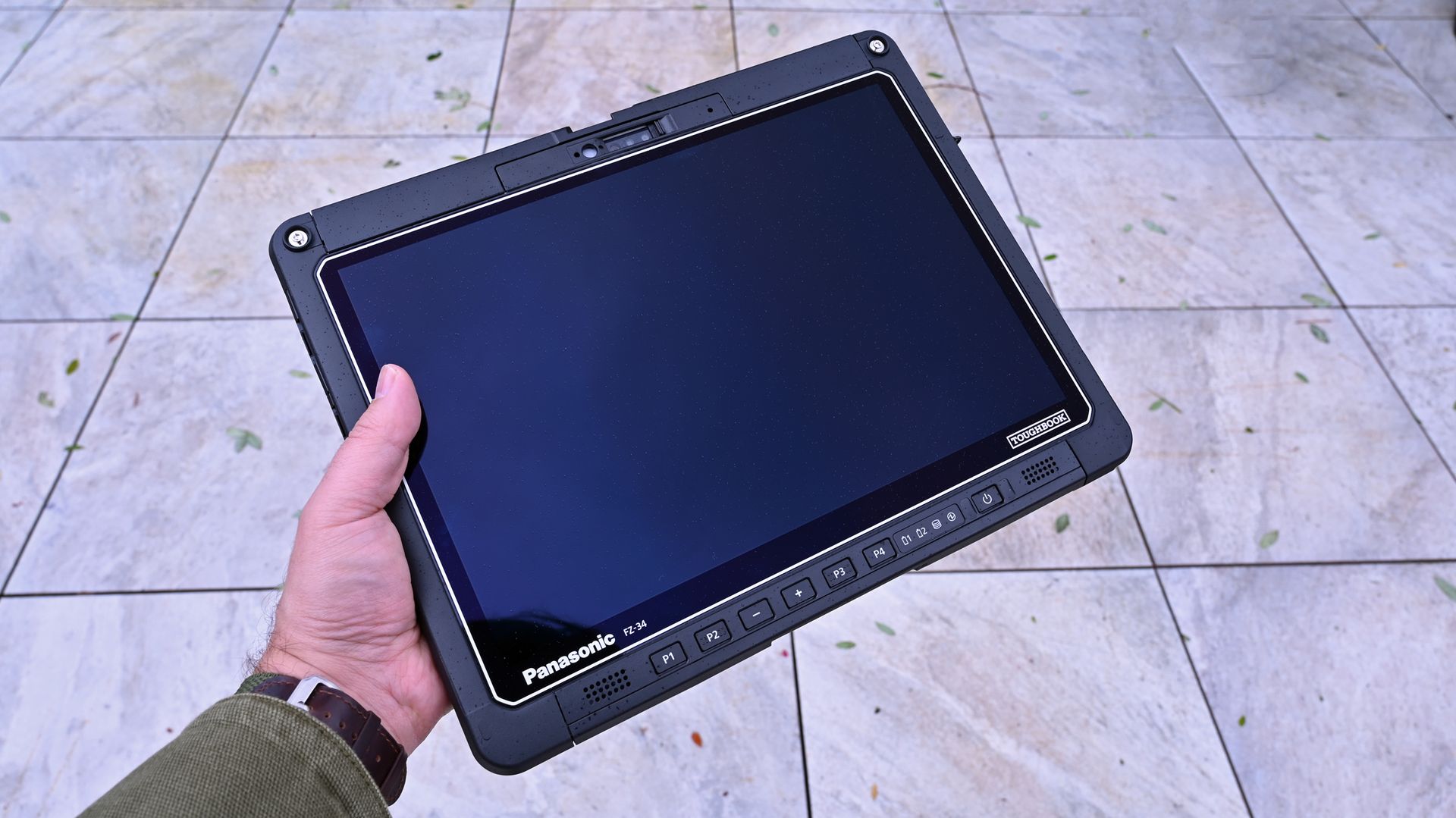
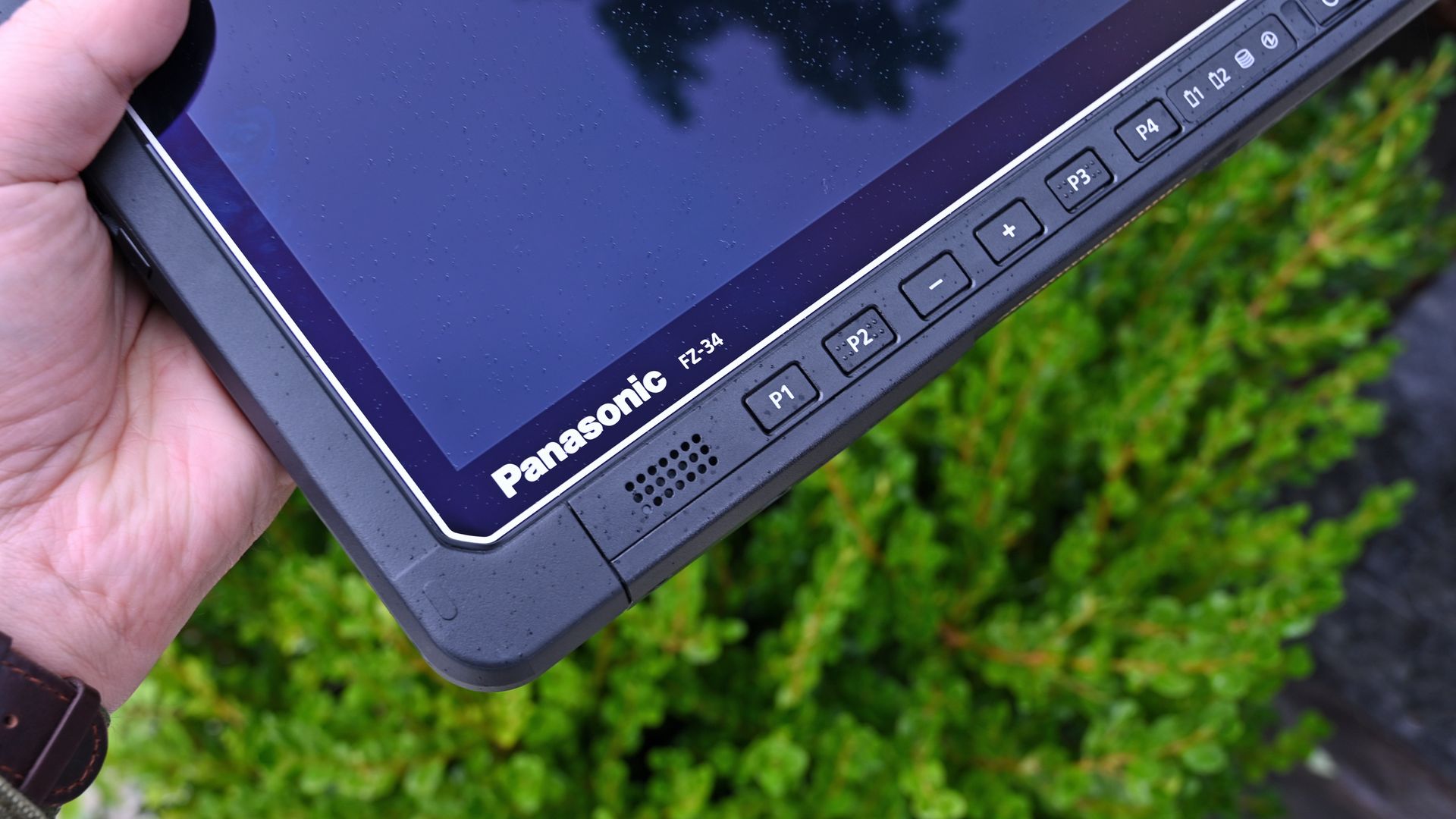
A hand holding a Panasonic TOUGHBOOK FZ-34 tablet outdoors, showing its black screen and front control buttons.

Panasonic TOUGHBOOK FZ-34 Windows 11 tablet, showing its black screen and front control buttons. (Image credit: Daniel Rubino)

This launch introduces two new fully rugged 2-in-1 systems.

The TOUGHBOOK 34 serves as the successor to the long-running TOUGHBOOK 33 that I've reviewed, while the TOUGHBOOK G3 replaces the TOUGHBOOK G2 that I also previously reviewed and described as one of the most modular and rugged PCs on the market.

According to Mike Smola, Senior Director of Product Management at Panasonic Connect North America:

"No two workers, no two vehicles, and no two workflows are exactly alike. Some jobs call for a larger product with more workspace and more versatility."

That's really the story here.

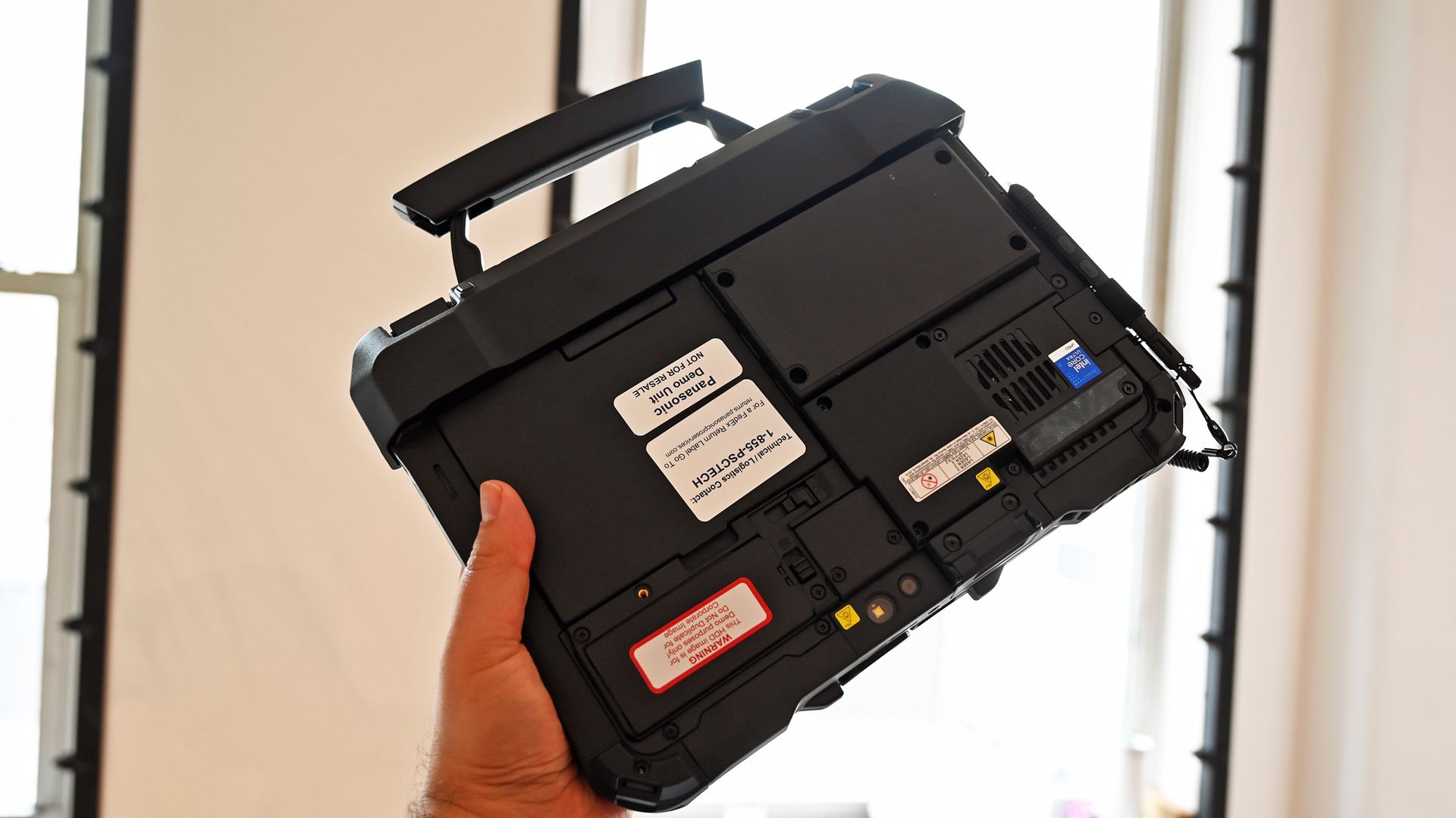
A person holding a rugged Panasonic TOUGHBOOK G3 by its top carrying handle, showing the back chassis and component labels.

The smaller TOUGHBOOK G3 with keyboard attachment has the familar built in handle for easy carrying. (Image credit: Daniel Rubino)

The TOUGHBOOK 34 features a larger 12.4-inch display and is designed for users who spend significant time in vehicles, command centers, or managing information-dense workflows. The G3 uses a more compact 10.1-inch form factor that's easier to carry into the field.

As one Panasonic executive explained during the public safety discussion:

"Fire and EMS leverage both sizes: the larger TOUGHBOOK 34 for in-vehicle CAD and command control, and the compact G3 in the back of ambulances for patient care."

The biggest upgrade is AI

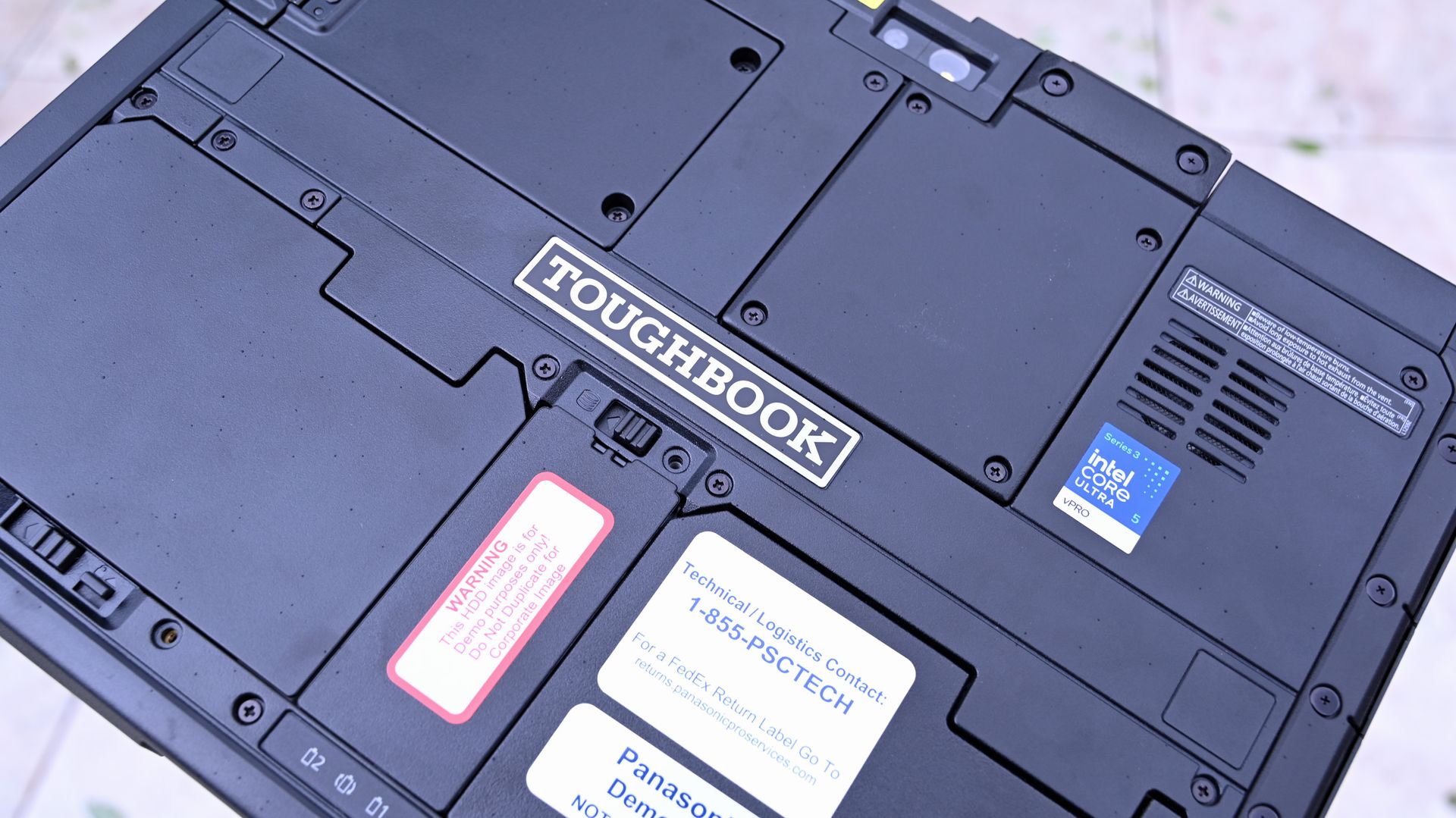
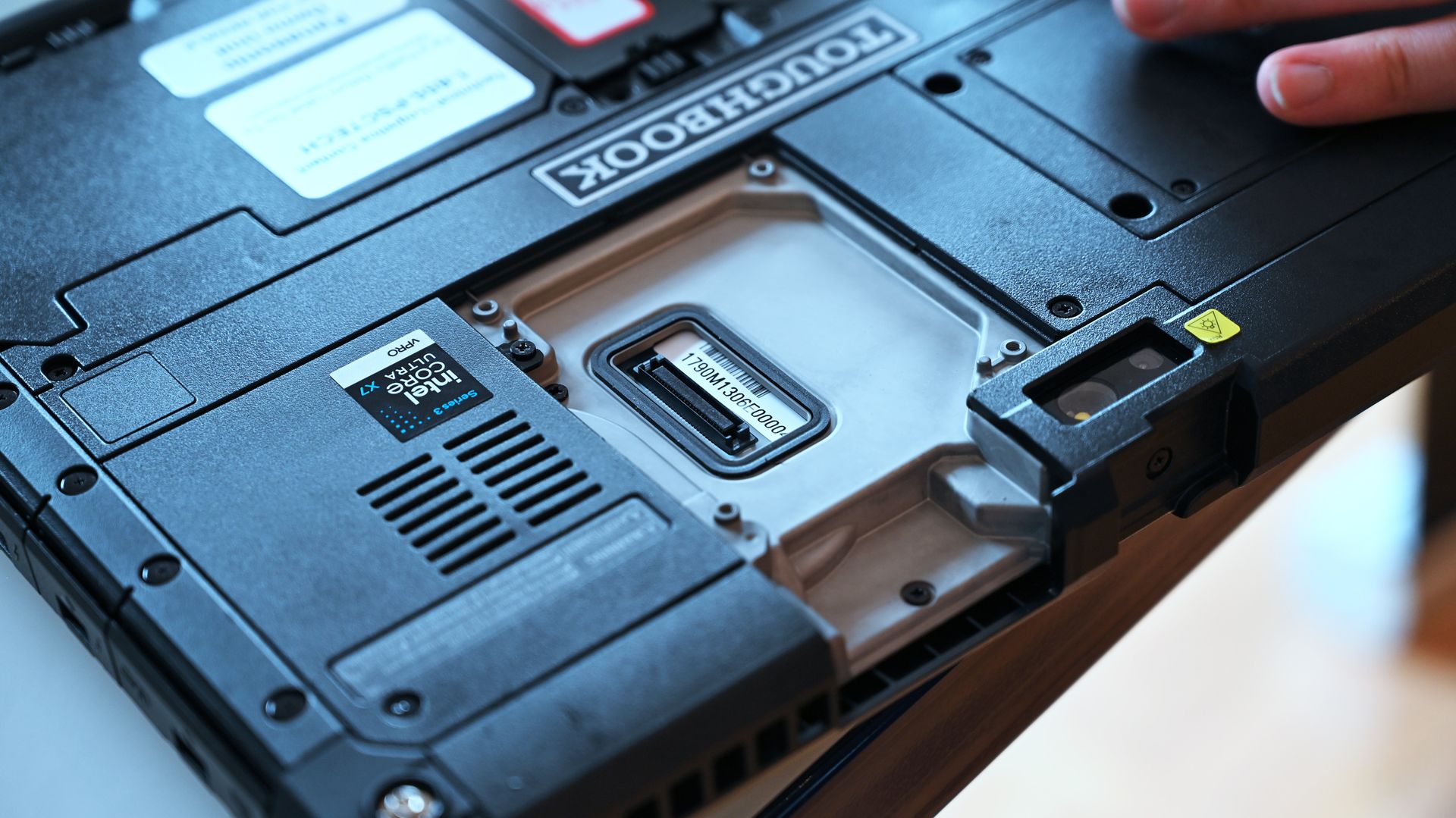
Rear chassis of a Panasonic TOUGHBOOK 34 displaying modular latches, TOUGHBOOK logo, and Intel Core Ultra 5 sticker.

The latest TOUGHBOOKs feature Intel's 3rd-gen Core Ultra series processors with built-in NPUs for local AI processing. (Image credit: Daniel Rubino)

The headline feature across both devices is the move to Intel's latest Core Ultra platform.

Both systems now offer Intel Core Ultra 5 335H and Ultra X7 368H processors complete with onboard NPUs and AI acceleration capabilities. Panasonic is increasingly positioning these devices as AI-ready edge computers capable of processing information locally without relying on cloud connectivity.

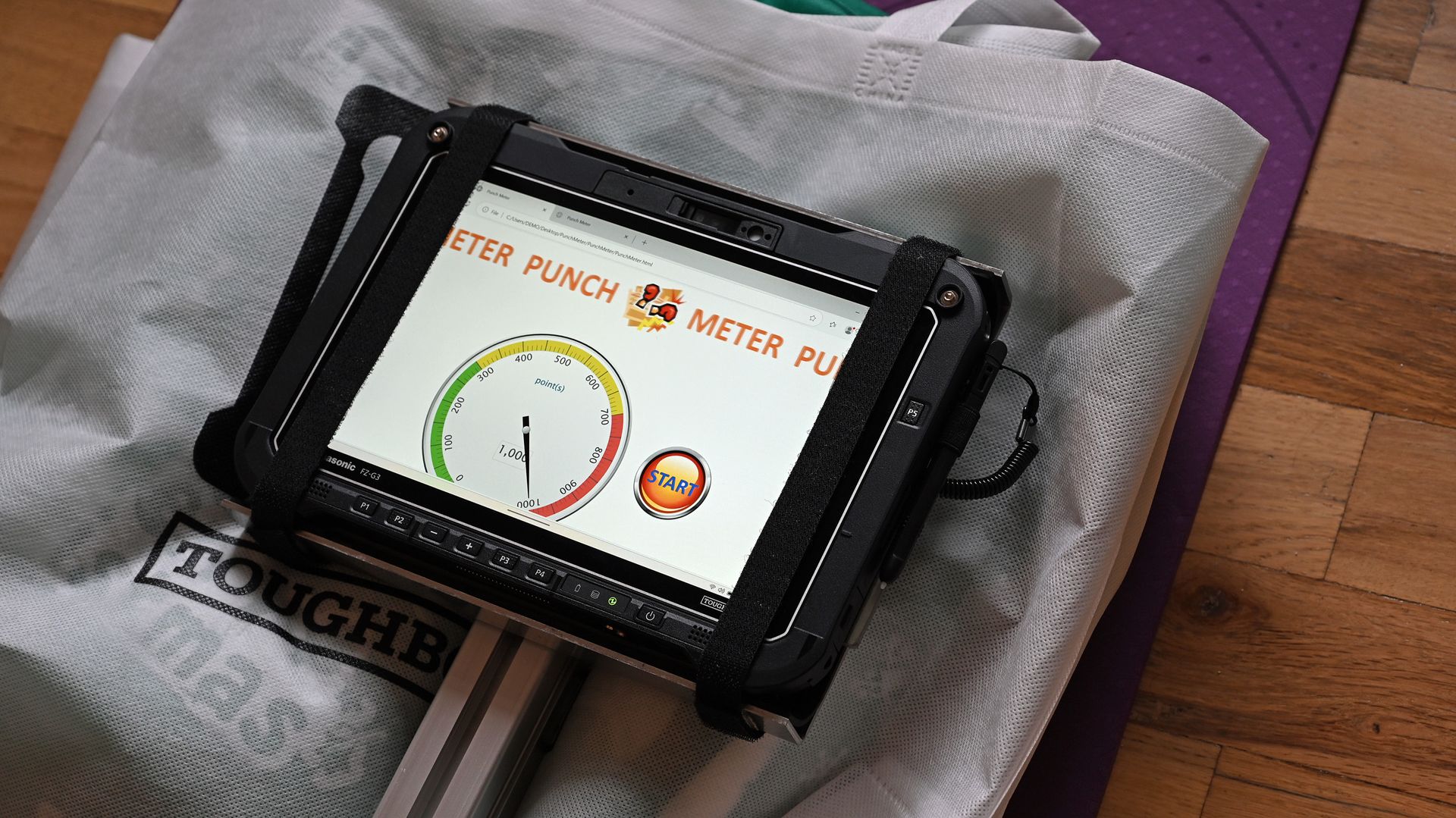
A Panasonic TOUGHBOOK G3 tablet secured in a corner-strap harness, showing a punch meter app on the touchscreen.

Panasonic had a punch-test demo set up where you could punch a TOUGHBOOK as hard as you could, which was quite entertaining. (Image credit: Daniel Rubino)

That matters more than you might think.

During the federal customer panel, Panasonic highlighted a scenario that's becoming increasingly common in military and government environments.

As Panasonic's federal team explained:

"Deployed military personnel aboard ships or in tactical environments often operate without network connectivity due to operational security." AI-capable processing on TOUGHBOOK devices allows personnel to perform tactical, medical, and technical searches without depending on a remote connection."

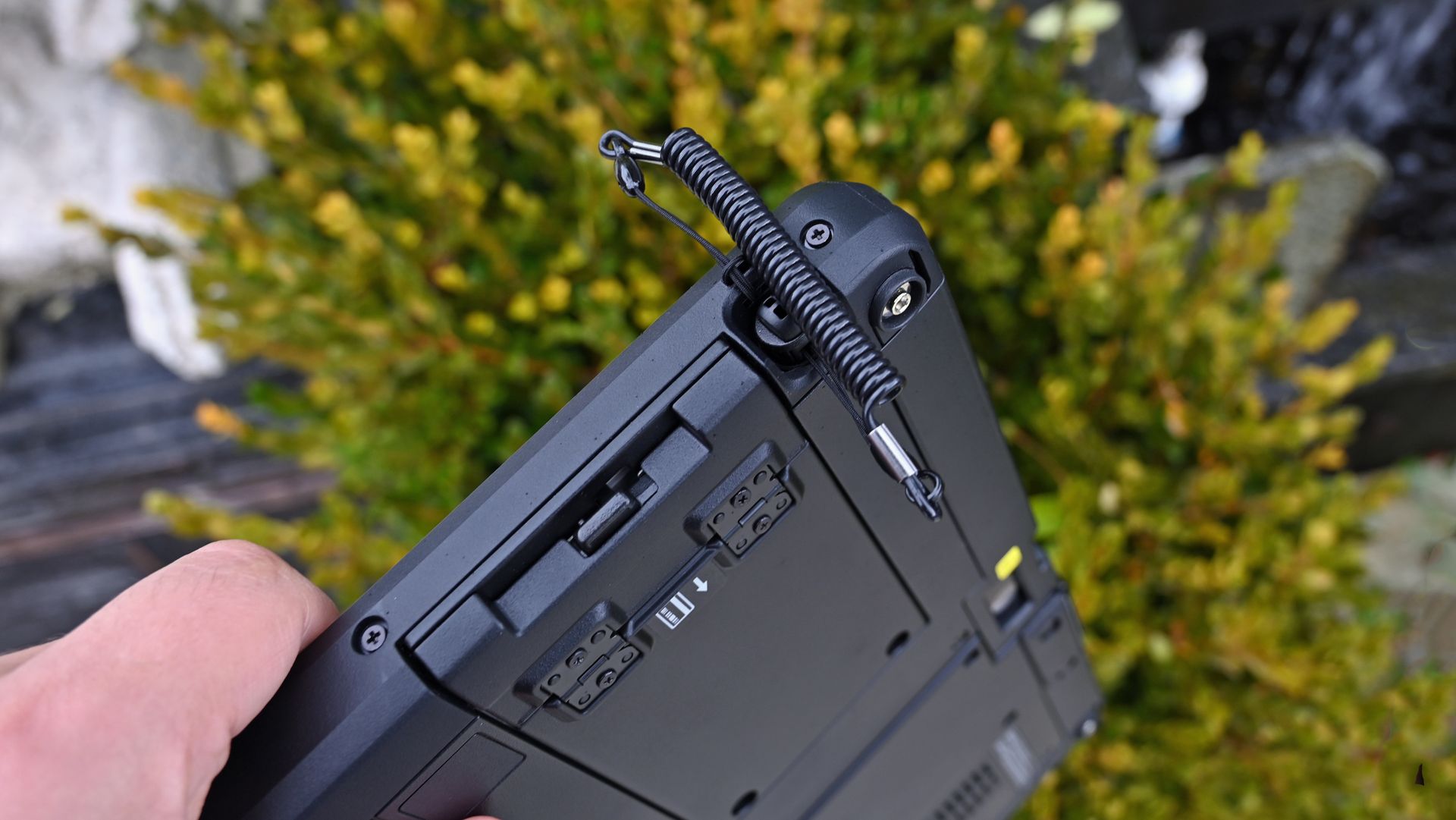
Close-up of the upper rugged chassis of a Panasonic TOUGHBOOK 34 showing an attached coiled stylus tether.

Close-up of the upper rugged chassis of a Panasonic TOUGHBOOK 34 showing an attached coiled stylus tether with a built-in pen. (Image credit: Daniel Rubino)

For most consumers, AI means generating images or summarizing documents. But for military users, it can mean analyzing information locally while disconnected from networks entirely.

That's a very different use case.

From military drones to local AI analysis

A gray quadcopter drone on a desk next to a

The Teledyne FLIR ION-series tactical reconnaissance drones are often used by military with the Panasonic TOUGHBOOK range. (Image credit: Daniel Rubino)

The most interesting demonstration I saw involved a tactical drone setup.

Panasonic demonstrated how rugged computing platforms can work alongside systems such as the Teledyne FLIR ION-series tactical reconnaissance drones that are commonly used by military, government, and emergency-response organizations.

While separate physical controls handle flight operations, the TOUGHBOOK effectively becomes the intelligence terminal. Drone imagery and reconnaissance data can be brought onto the device, recorded, analyzed, and processed locally using onboard computing resources.

I didn't watch the drone take flight during the event, but seeing Panasonic position the TOUGHBOOK as the AI-capable analysis point for tactical aerial systems offered a very real glimpse into how these machines are used beyond traditional laptop duties.

That use case also aligns with Panasonic's announcement that both devices support unmanned systems control and UAV ground-control applications in federal environments

TOUGHBOOKs are becoming smarter police tools, too

An informational display sign reading

(Image credit: Daniel Rubino)

The police vehicle demonstration may have been even more compelling.

Rather than focusing on dispatch software alone, Panasonic showed how TOUGHBOOK systems can act as fleet intelligence platforms.

Through Panasonic's TOUGHCommand ecosystem, agencies can connect vehicle systems and pull operational data directly into the computer. Information such as vehicle identification, odometer readings, fuel levels, speed data, maintenance information, and diagnostic information can all be surfaced through a centralized dashboard.

Close-up of a Panasonic FZ-55 display running fleet intelligence software, showing map tracking data for a Ford F-250.

Close-up of a Panasonic FZ-55 display running fleet intelligence software, showing map tracking data for a Ford F-250. (Image credit: Daniel Rubino)

The really interesting layer sits on top of that data.

Panasonic's new Command Intelligence features allow IT teams and fleet managers to query those systems using AI and natural-language questions rather than digging through massive databases manually.

That turns the TOUGHBOOK into something closer to a command-and-control platform, instead of just a rugged laptop.

For organizations managing hundreds or thousands of vehicles, that could be a substantial value-add beyond the hardware itself.

The modularity advantage nobody else offers

An electric screwdriver tightening a screw into a modular expansion panel on the back of a black Panasonic TOUGHBOOK G3 tablet.

An electric screwdriver tightening a screw into a modular expansion panel on the back of a black Panasonic TOUGHBOOK G3 tablet. (Image credit: Daniel Rubino)

Having reviewed the G2 and covered Panasonic's rugged lineup for years, the thing that continues to impress me isn't the drop testing or waterproofing.

It's the modularity.

The TOUGHBOOK 34 and G3 both feature Panasonic's xPAK ecosystem, allowing users to swap hardware modules as needs change. Options include barcode scanners, additional USB ports, serial ports, smart card readers, fingerprint readers, networking hardware, and more.

Panasonic's goal is simple: one device should adapt to many jobs.

Close-up of the rear panel of a rugged Panasonic TOUGHBOOK G3, displaying expansion ports, cooling vents, an Intel Core Ultra sticker, and serial tag.

Close-up of the rear panel of a rugged Panasonic TOUGHBOOK G3, displaying opened xPAK expansion port, cooling vents, an Intel Core Ultra sticker, and serial tag. (Image credit: Daniel Rubino)

A warehouse worker can add scanning capabilities. A utility technician can prioritize GPS and connectivity. An automotive technician can add legacy ports for vehicle diagnostics.

Instead of replacing the entire computer when requirements evolve, customers can reconfigure it. More importantly, this can be done locally without sending out the TOUGHBOOK back to Panasonic to be reconfigured. Not only is that time-consuming, but if the PC is used by the government and it has sensitive data on the drives, it limits who can even touch that laptop.

That's a surprisingly rare concept in modern computing.

Better displays, stronger connectivity, longer life

Close-up of the lower bezel on a Panasonic TOUGHBOOK FZ-34 tablet, featuring hardware function buttons (P1-P4) and speaker.

Close-up of the lower bezel on a Panasonic TOUGHBOOK FZ-34 tablet, featuring hardware function buttons (P1-P4) and speaker. (Image credit: Daniel Rubino)

The hardware itself receives meaningful updates, too.

For the TOUGHBOOK 34, Panasonic increased the screen size from 12 inches to 12.4 inches while moving to a 3:2 aspect ratio that's better suited to productivity work. Executives noted that the revised resolution and scaling choices allow users to view more information with less scrolling.

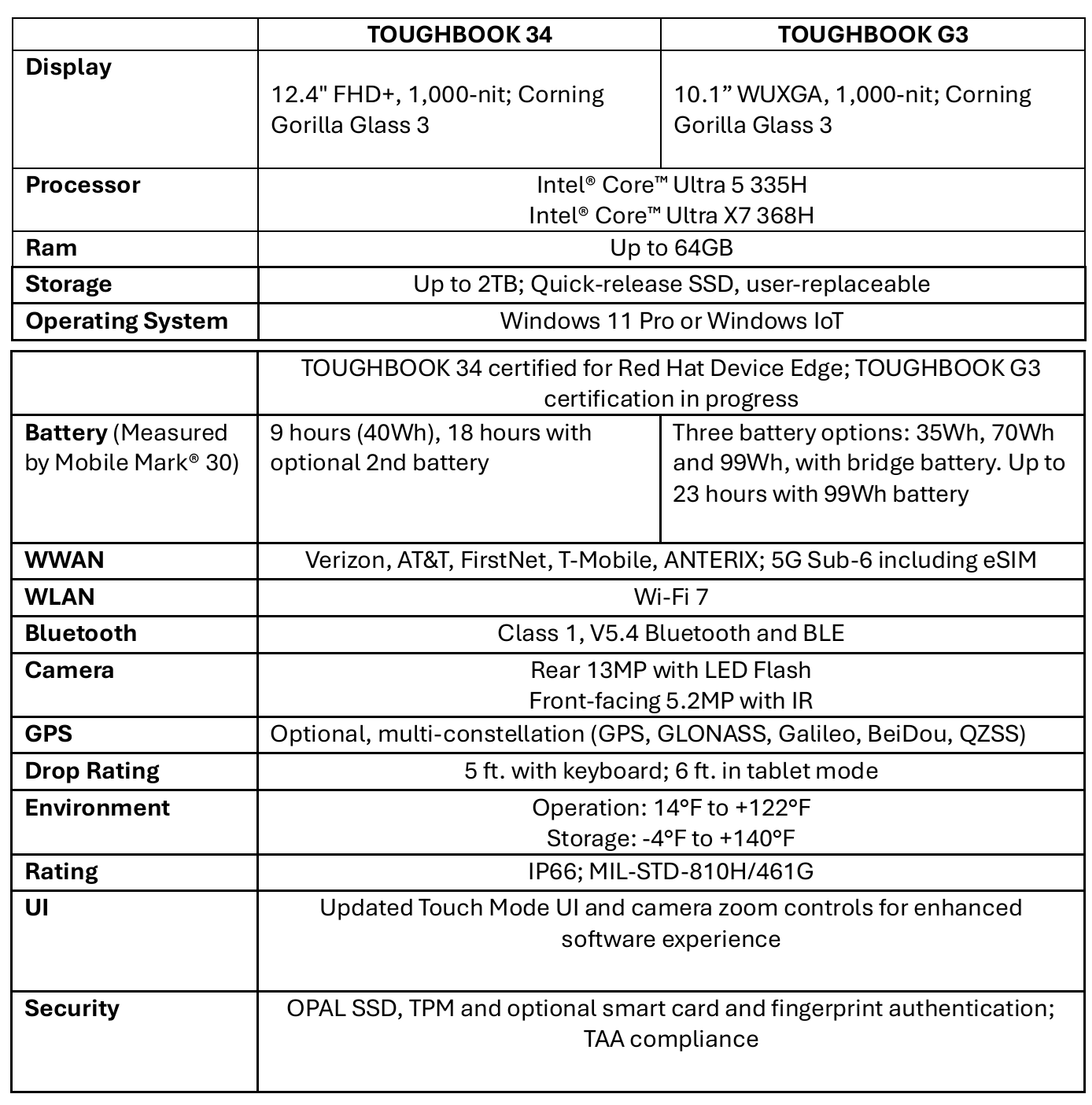
A specification table comparing features of the Panasonic TOUGHBOOK 34 and TOUGHBOOK G3, including display, processor, battery life, ratings, and security.

(Image credit: Panasonic TOUGHBOOK)

The G3 retains its 10.1-inch format but benefits from updated display tuning, 2-to-1000-nit brightness control, and improved readability for outdoor work.

Panasonic also highlighted a new glove and rain touch experience on the TOUGHBOOK 34.

As the company explained:

"You don't want the end user to take off gloves to touch the screen." Users can switch between glove and standard touch modes using programmable controls.

I actually tried this myself, and while it's still a bit clunky to operate a touchscreen with heavy gloves on, it can be done through this technology.

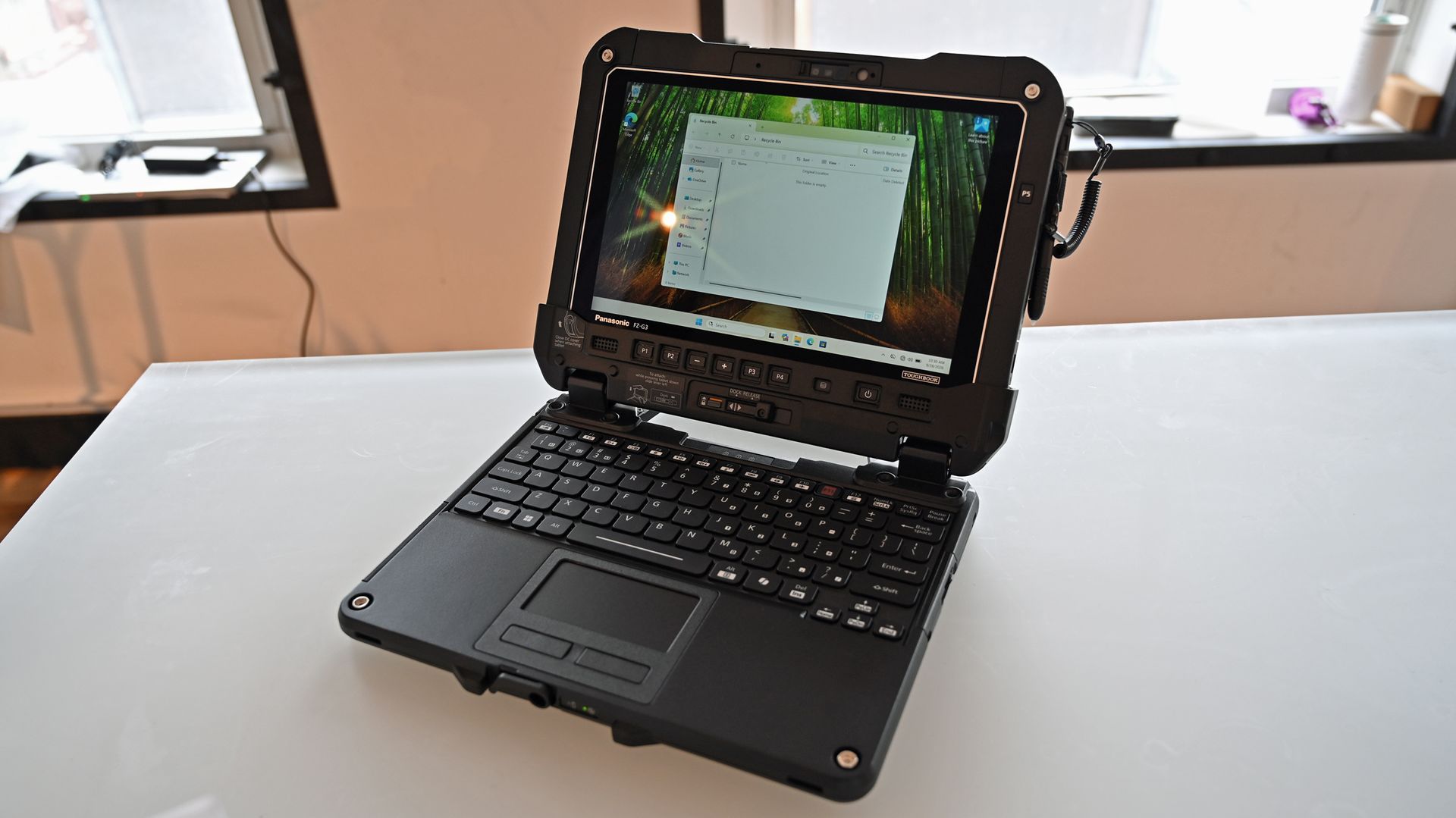
A Panasonic TOUGHBOOK G3 rugged tablet docked to a keyboard base, standing open on a white desk like a laptop.

A Panasonic TOUGHBOOK G3 rugged tablet docked to a keyboard base, standing open on a white desk like a laptop. (Image credit: Daniel Rubino)

Connectivity receives substantial improvements as well.

Compared to the older G2 generation, the G3 moves from 4G LTE options to modern 5G support, upgrades Wi‑Fi 6 to Wi‑Fi 7, and advances Bluetooth 5.1 to Bluetooth 5.4 while adding broader support for private cellular deployments.

For the people actually relying on these systems, those upgrades matter far more than benchmark scores.

A reminder that some PCs have jobs to do

A worker in a high-visibility vest typing on a Panasonic TOUGHBOOK 34 laptop inside a vehicle at a construction site.

Many outdoor professions require the ruggedness that TOUGHBOOK brings to the Windows PC space. (Image credit: Panasonic TOUGHBOOK)

The most fascinating thing about Panasonic's new TOUGHBOOKs isn't that they're rugged. We already knew that, but what's changing is their role.

Thirty years after the first TOUGHBOOK arrived, Panasonic increasingly views these systems as secure, connected, AI-capable edge computers that happen to survive conditions most laptops would never tolerate.

Whether they're helping analyze drone feeds, supporting first responders through FirstNet and private 5G networks, managing vehicle fleets, or keeping utility workers connected during outages, the TOUGHBOOK 34 and G3 demonstrate that laptops can still be specialized tools built for serious missions.

And after an afternoon spent getting hands-on with Panasonic's latest hardware, that may be the most interesting thing about them. Panasonic is building the computers that many of the people protecting, rescuing, and serving the rest of us depend on every day, and I still find that inspiring.

You can find out more about these devices from the Panasonic TOUGHBOOK website.

Click to join us on r/WindowsCentral

Join us on Reddit at r/WindowsCentral to share your insights and discuss our latest news, reviews, and more.
Is Henry Cavill really ditching his gaming PC for a Googlebook?

Henry Cavill is famous for quite a few reasons. He's played iconic characters such as Superman and Geralt from the Witcher. He wowed Tom Cruise by "reloading" his fists in a Mission Impossible film. But around these parts and among many gamers, Cavill is best known for his genuine nerdiness.

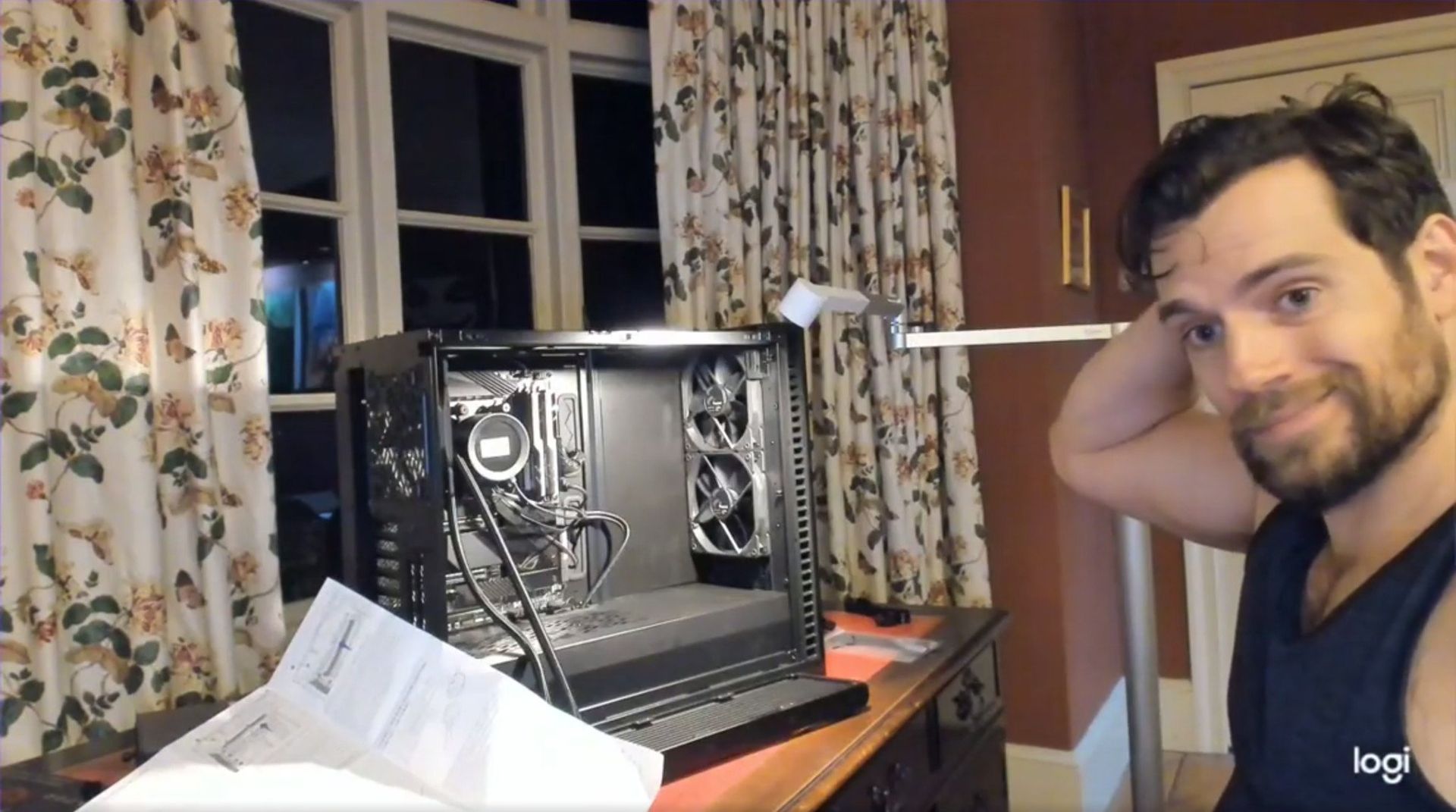
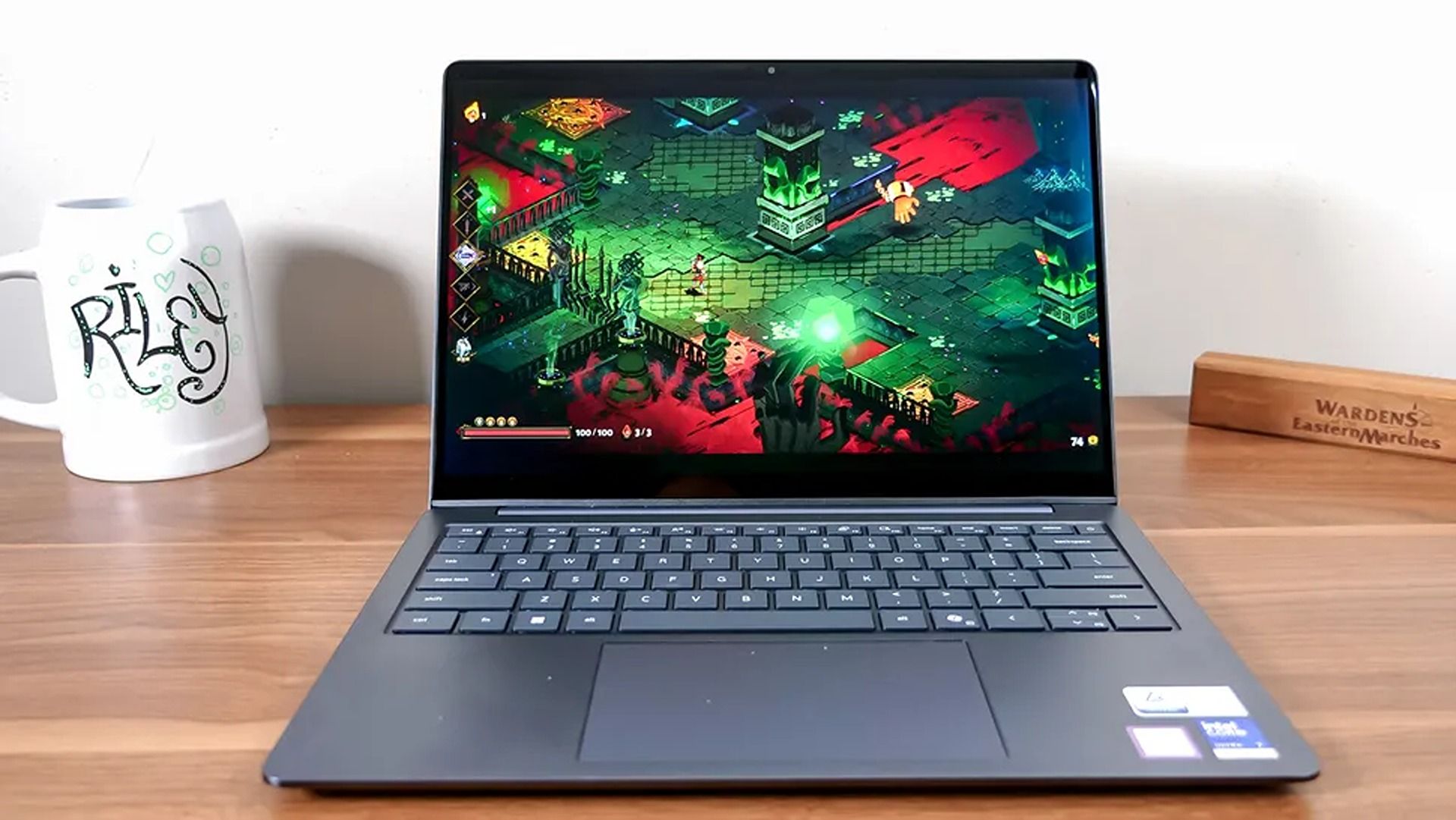
Cavill famously built a gaming PC and shared a video of it on social media, proving that you can be considered both a conventionally handsome man and a PC gamer. But the star has found a new computing passion: Googlebooks.

Android is officially partnering with Cavill by having him test a Googlebook. The actor is shown using an HP Googlebook in a promotional post on X.

Our team has been partnering with actor, producer, and longtime Android user Henry Cavill to put Googlebook to the test. Stay tuned this November to find out what he's been creating 👀 Learn more: https://t.co/VSfYaJDxsi pic.twitter.com/Y8spsOgy58September 29, 2026

A Google blog post details Cavill's plans to use a Googlebook. "After being hands on and spending some time with their team, I believe this has the potential to be the start of something rather special," said Cavill.

There's always a chance that Cavill still loves gaming on a desktop PC and that he uses a Googlebook when he's on the go or doing light work. Of course, there's also a chance Cavill doesn't use a Googlebook at all.

Cavill would not be the first Justice League star accused of endorsing a product while using a competing device. Gal Gadot infamously posted on social media how much she loves Huawei from an iPhone. Gadot denied doing so, but her post clearly indicated that it was made from an iPhone.

Marques Brownlee was the first to notice Gadot's gaffe. That post was later deleted and reposted from an Android phone. I believe Brownlee is still blocked on X by Gadot.

Gal Gadot with the Huawei ad... tweeted from an iPhone. Niceeeee pic.twitter.com/aEKJVwoyBLApril 24, 2018

The tactic of hiring a person well-known for advertising or endorsing a competing device is not new. Paul Marcarelli, also known as "Verizon's 'Can you hear me now' guy, was hired to advertise for Sprint. Marcarelli has since joined Buzz Aldrin in an ad for Verizon. Justin Long, the "I'm a Mac" guy, did an ad campaign for Intel.

Comedian Dave Chapelle once joked that he's done ads for both Coca-Cola and Pepsi and that he just hypes whichever company paid him most recently.

Google alluded to Cavill's "maker" fame it its announcement:

"To kick off our partnership, we couldn’t resist the chance to tap Henry's inner maker. This November, Henry is teaming up with Google to build a video game using Googlebook."

We'll have to wait to see what type of game Cavill creates on his Googlebook. I'd love to see a tie-in to Warhammer 40,000, but I doubt that will happen.

Click to join us on r/WindowsCentral

Join us on Reddit at r/WindowsCentral to share your insights and discuss our latest news, reviews, and more.
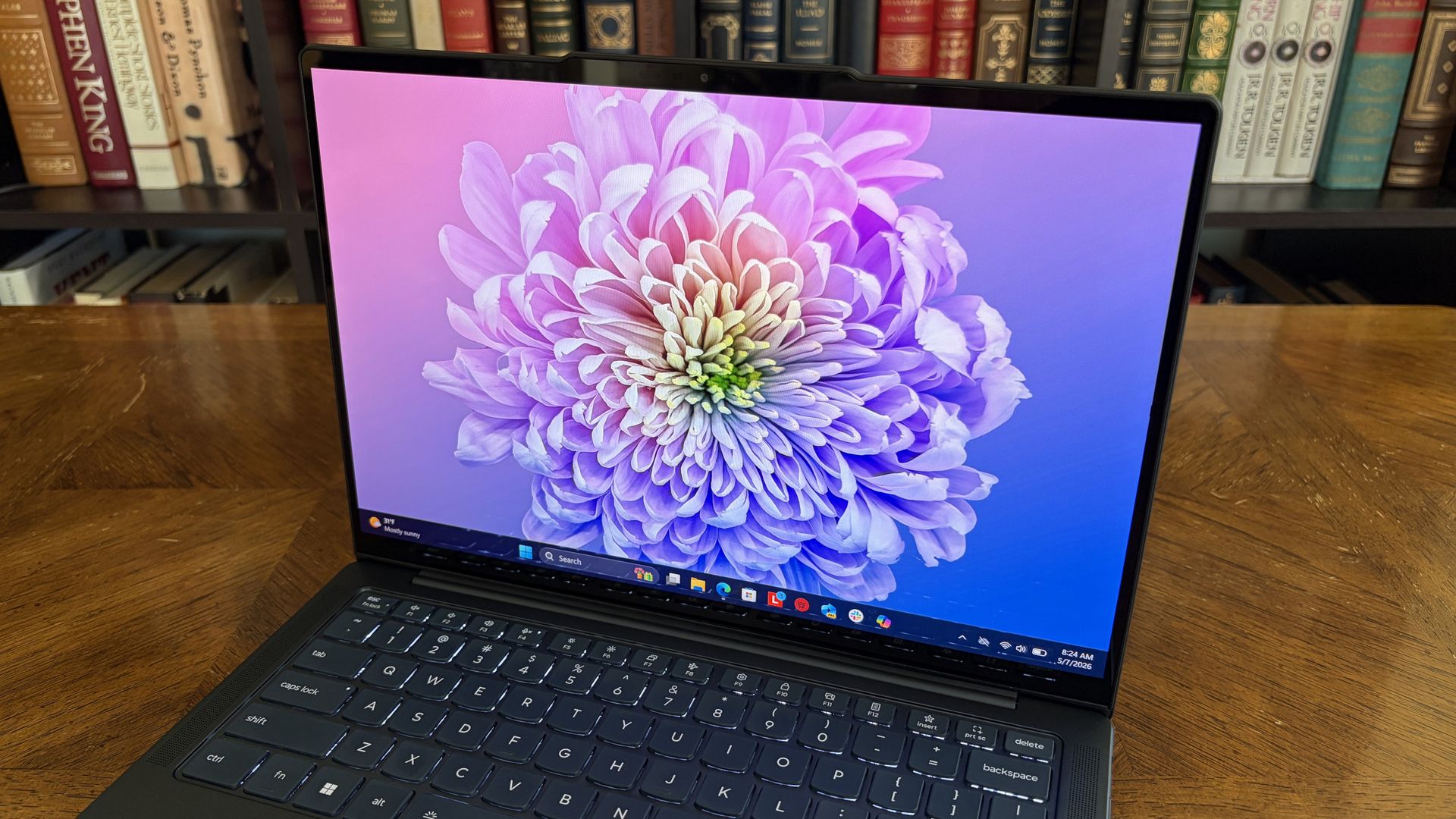
Dell's '14S' laptop is great for everyday work, and now at a smarter price

Amazon Prime's Big Deal Days event is just a week away, starting on October 7, 2026. However, Amazon's competition isn't waiting to host enticing counter deals for it by then, as some early competitor deals are already cropping up.

One such deal is this 44% discount for the Dell 14S laptop, which has taken its steep $1,599.99 listing price down to a more affordable $899.99 at Best Buy.

14S 14" 2K Touchscreen Laptop (Intel Core Ultra 7 355 2026, 16GB RAM, 512GB SDD, Copilot+): was $1599.99 now $899.99

"The Dell 14S is a compelling choice for a variety of users thanks to its long-lasting battery life (and) relatively affordable price." ~ Sean Riley, Freelance Writer, Tom's Guide

Tom's Guide review: ⭐⭐⭐⭐View Deal

Why should you buy a Dell 14S laptop?

A laptop on a wooden desk displays a dark blue AI chat interface, with a white illustrated mug and wooden nameplate beside it in a calm home-office setting.

The Dell 14S laptop running Copilot+. (Image credit: Tom's Guide (Sean Riley) | Dell)

The Dell 14S laptop boasts a wide variety of tech that makes it a more-than-competent productivity companion for students and desk jockeys alike.

This configuration of the Dell 14S laptop features an Intel Core Ultra 7 355 CPU with 16GB RAM and 512GB storage. These enable it to run web browsers with multiple tabs open, edit photos in Photoshop, and even play 4K YouTube videos in the background, all at once without a significant drop in performance.

Additionally, it features a 14-inch 2K LED screen to display images and videos with sharp details and vibrant color gamuts, a premium-quality build to protect its vital components, a comfortable-to-use keyboard with a trackpad, and a powerful battery life that will last you over 20 hours before needing to recharge.

Finally, the Dell 14S is a Copilot+ PC (a name that's starting to disappear) with an NPU capable of 49 trillion operations per second (TOPS). This means that it can operate AI-empowered programs like Cocreator or Recall with ease, and use AI search engines to help you research information more quickly online.

So, if you're looking for a straightforward laptop that's purely focused on powering through light workflow tasks at school or work all day without a break, you can't go wrong with the Dell 14S.

Dell 14S's discounted $899.99 price tag at Best Buy is certainly cheaper right now than its more powerful yet more expensive Dell XPS 14 counterpart, which usually runs for a retail price of $2,249.99 at Dell.

Is it good for gaming?

The Dell 14S is capable of running light 2D games, but it is not designed for intensive 3D AAA video due to having a limited integrated Intel graphics, instead of a dedicated gaming GPU.

Can I replace its RAM or SSD?

You can't replace the Dell 14S's 16GB (LPDDR5X) RAM, as it's soldered in place. You can replace its 512GB SSD with a larger one (like a 1TB or 2TB SSD) via its M.2 solid-state drive slot.

Click to join us on r/WindowsCentral

Join us on Reddit at r/WindowsCentral to share your insights and discuss our latest news, reviews, and more.

Lenovo's Yoga Slim 7x is an absolute steal at $989.99

Premium laptops rarely cost under $1,000 these days. But a $310.99 discount on the Lenovo Yoga Slim 7x drops the price of the PC to $989.99. The Yoga Slim 7x already delivered excellent value for its price, so it's even more attractive after a discount.

Yoga Slim 7x: was $1299.99 now $989.99

"The Slim 7x (Gen 11) is a laptop I can see fitting in perfectly with students, home business pros, and casual users who simply want a laptop for around $1,199 (even less when it's on sale) that feels like it should cost a lot more." — Cale Hunt, Windows CentralView Deal

A sleek laptop on a wooden table, showing side view with USB-C ports and keyboard. The screen displays a blurred forest image, creating a modern and serene vibe.

(Image credit: Future)

The model that's on sale has a Snapdragon X2 Plus processor, 16GB of memory, and 512GB of storage. Those specs are more than enough for everyday computing and getting work done.

Our Cale Hunt reviewed the Snapdragon X2 Elite version of the Yoga Slim 7x and came away impressed. The Snapdragon X2 Plus model has the same excellent build, keyboard, camera, and battery life.

Lenovo's Yoga Slim 7x (Gen 11) has the best battery life of any laptop I've personally tested

Cale Hunt, Windows Central

The Yoga Slim 7x is a thin laptop. Its bottom half is barely thicker than a USB-C port. Even when closed, the entire laptop is 0.55 inches thick and weighs just 2.73 lbs. But despite its thin body, the laptop is rigid, resisting any reasonable bends and not creaking when pressured.

Along the top of the Yoga Slim 7x's screen sits a notch housing a 9.2MP camera that beats many webcams seen in similar laptops. As you'd expect from a premium laptop, the Yoga Slim 7x supports Windows Hello facial recognition.

Unlike some laptops in the same price range, the Yoga Slim 7x supports Human Presence Detection (HPD), which can unlock or lock your PC automatically when you leave or approach the computer.

The keyboard of the Yoga Slim 7x is well-spaced and comfortable. I share Hunt's wish for the PC to have a haptic trackpad, but the standard trackpad on the laptop is fine.

You can upgrade to a Yoga Slim 7x with higher specs if you'd like. The laptop is available with up to a Snapdragon X2 Elite. But you have to spend significantly more to get that chip (at least $1,549 from what I've found).

If you want an excellent laptop that lasts all day and is more than enough for everyday computing, the Yoga Slim 7x with a Snapdragon X2 Plus is an excellent choice.

Is the Lenovo Yoga Slim 7x a gaming laptop?

A sleek black laptop with the word

The Lenovo Yoga Slim 7x is a great laptop, but it is not a gaming PC. (Image credit: Future)

The Yoga Slim 7x is an excellent laptop that's easy to recommend, especially with the Snapdragon X2 Plus inside. But it is not a gaming laptop. Don't get me wrong, it can play some games. But I wouldn't recommend buying the Yoga Slim 7x (or any PC running a Snapdragon X processor) to a gamer.

Snapdragon X-powered PCs used to struggle with just about any game. They are now capable of running some games thanks to improvements by Microsoft and Qualcomm.

👉RELATED: What testing 200 games on a Snapdragon X teaches us about Windows 11 on Arm

If you do get a Yoga Slim 7x, gaming can be a fun experiment to see how far Windows 11 on Arm has come, but it shouldn't be a driving force behind the purchase.

Click to join us on r/WindowsCentral

Join us on Reddit at r/WindowsCentral to share your insights and discuss our latest news, reviews, and more.
Gears of War: E-Day's install size is huge: These are the best ways to upgrade your Xbox's storage

Get ready, players, because Gears of War: E-Day is nearly here, and it’s shaping up to be one of the best games in the Gears of War franchise and the biggest gaming blockbuster of the year, second only to Grand Theft Auto VI.

However, there is one caveat Xbox players must be aware of before buying it on October 6 (or October 1, if they've secured early access via pre-ordering the game), and that is its required install space of 115GB (as confirmed on its Steam page).

That’s about one-tenth of a standard Xbox Series X’s 1TB storage space, and that’s just for the base game alone without any DLC. Plus, the developers plan (confirmed by GameSpot) to update Gears of War: E-Day’s Horde Mode with new classes, missions, modifiers, and seasonal content, along with adding other in-game items like gun cosmetics and character skins, so that 115GB install requirement is going to bloat fast.

So, we have sought out the best Xbox Series X|S storage expansion devices, from external SSDs to plug-and-play SSD cards, to help you fit in Gears of War: E-Day while having tons to spare for its post-launch updates and other awesome Xbox Series X|S titles for your Xbox.

External hard drives

Now, granted, finding Xbox external storage upgrades is a lot harder these days thanks to the ongoing RAM crisis, jacking up the prices of all things tech-related while making their availability scarcer.

One of the more affordable and available options is external hard drives, which can offer tons of storage space ranging from 512GB, 1TB, 2TB, and even 4TB. In addition, they can be formatted to store all kinds of media, not just Xbox games, depending on what platform you intend to use it for.

The drawback is that you can’t play Xbox games directly from an external hard drive, you have to manually transfer them from the hard drive onto your Xbox’s internal hard drive if you wish to play them.

T7 Portable SSD 1TB Titan Gray: was $274.99 now $229.99

“The Samsung T7 portable SSD is every bit as good as the T7 Touch but at a lower price. It makes it a brilliant all-purpose portable SSD that can be used for both computers and the latest Xbox consoles.” ~ Richard Devine, Managing Editor, Windows Central

Windows Central review: ⭐⭐⭐⭐½View Deal

1TB P40 Game Drive SSD: $209.00

“Western Digital's P40 Game Drive SSD is a stellar external storage upgrade for Xbox Series X|S consoles, and is even better on PC with RGB customization and faster speeds. If you're only getting this for Xbox, though, there may be more affordable options.” ~ Zachary Boddy, former Staff Writer, Windows Central

Windows Central review: ⭐⭐⭐⭐View Deal

T5 EVO Portable SSD 4TB Black: $559.00

“If you specifically need a super portable external SSD for playing your classic Xbox games and storing Series X|S games, then the Samsung T5 EVO is a fantastic pick. It has a slim form factor that can easily fit in your pocket or in a bag. Plus, it's drop-resistant to better withstand jostling on the go.” ~ Rebecca Spear, former gaming staff writer, Windows Central

Best Premium USB from our best Xbox SSDs in 2025 listView Deal

Plug & Play expansion cards

Plug & Play expansion cards are scarcer and more expensive, but more convenient Xbox storage expansion units compared to external hard drives.

They fit easily into an Xbox’s dedicated expansion card slot, so they don’t take up desk space, and they let players play games installed on the cards directly without needing to shuffle them into the Xbox’s internal SSD, saving you from tedious file management.

However, you can’t reformat these Plug & Play Xbox expansion cards for other devices, as they were purely designed for Xbox consoles.

1TB Optimus GX C50 Storage Expansion Card for Xbox: $239.00

The SanDisk Optimus GX C50 is the newest Xbox storage Expansion Card line on the block.

It comes in multiple storage models from 512GB to 2TB, with low-latency performance that matches Xbox Velocity Architecture, so games can be played directly from it. Plus, it’s compatible with Xbox’s Quick Resume feature, so players can swap between multiple games without losing progress.

Plus, it has a free one-month trial membership for Xbox Game Pass Ultimate.View Deal

1TB C50 Expansion Card for Xbox: $269.00

“Western Digital's long-awaited competitor to the exorbitant Seagate Expansion Card for Xbox Series X|S is functionally and practically great, and it has lowered prices.” ~ Zachary Boddy, former Staff Writer, Windows Central

Windows Central review: ⭐⭐⭐⭐View Deal

Storage Expansion Card 2TB Solid State Drive: $279.99

"Microsoft and Seagate partnered up on a slick memory card-style SSD expansion for Xbox Series X and Xbox Series S, filling demand where standard hard drives simply don't cut it.” Matt Brown, former Staff Writer, Windows Central

Windows Central review: ⭐⭐⭐⭐View Deal

Should I wait for Big Deal Days/Black Friday before buying these expansion devices?

If you don’t mind waiting for discounts, it may be wise to wait until these external hard drives and plug-and-play cards go on sale, as many of them have retail prices that cost hundreds of dollars as of this writing.

However, the RAM crisis is stirring extreme levels of FOMO (Fear of Missing Out) behavior in consumers, driving them to buy popular Seagate and WD_Black Xbox expansion cards online until they run out of stock, even at full price.

With this in mind, it may also be a risky but good idea to grab one of these devices quickly because they may sell out before they even get a chance to be discounted during sales events like Amazon's Big Deal Days in October or Black Friday in November.

Are you ready for Gears of War: E-Day?

And there you have all the best options to upgrade your Xbox’s Storage size in time for Gears of War: E-Day. Are you looking forward to playing Gears of War: E-Day? Will you be sticking around to play its Horde Siege mode months after launch to see its post-game updates?

If you have any thoughts on the matter, please send them to the comments section below, or our Discord, Reddit, or cast a vote in the poll above.

Gears of War: E-Day is scheduled to launch on Xbox Series X|S (with Xbox Play Anywhere support), Xbox Game Pass, and PC via Windows and Steam on October 1, 2026, for early-access players who pre-ordered the game, and then October 6, 2026, for everyone else.

Gears of War: E-Day (Xbox): $69.00

Relive the tragic day that started the long, grueling war between the COGs and the Locust horde in the highly anticipated prequel of the Gears of War franchise, Gears of War: E-Day.

• Xbox Store
• SteamView Deal

Click to join us on r/WindowsCentral

Join us on Reddit at r/WindowsCentral to share your insights and discuss our latest news, reviews, and more.
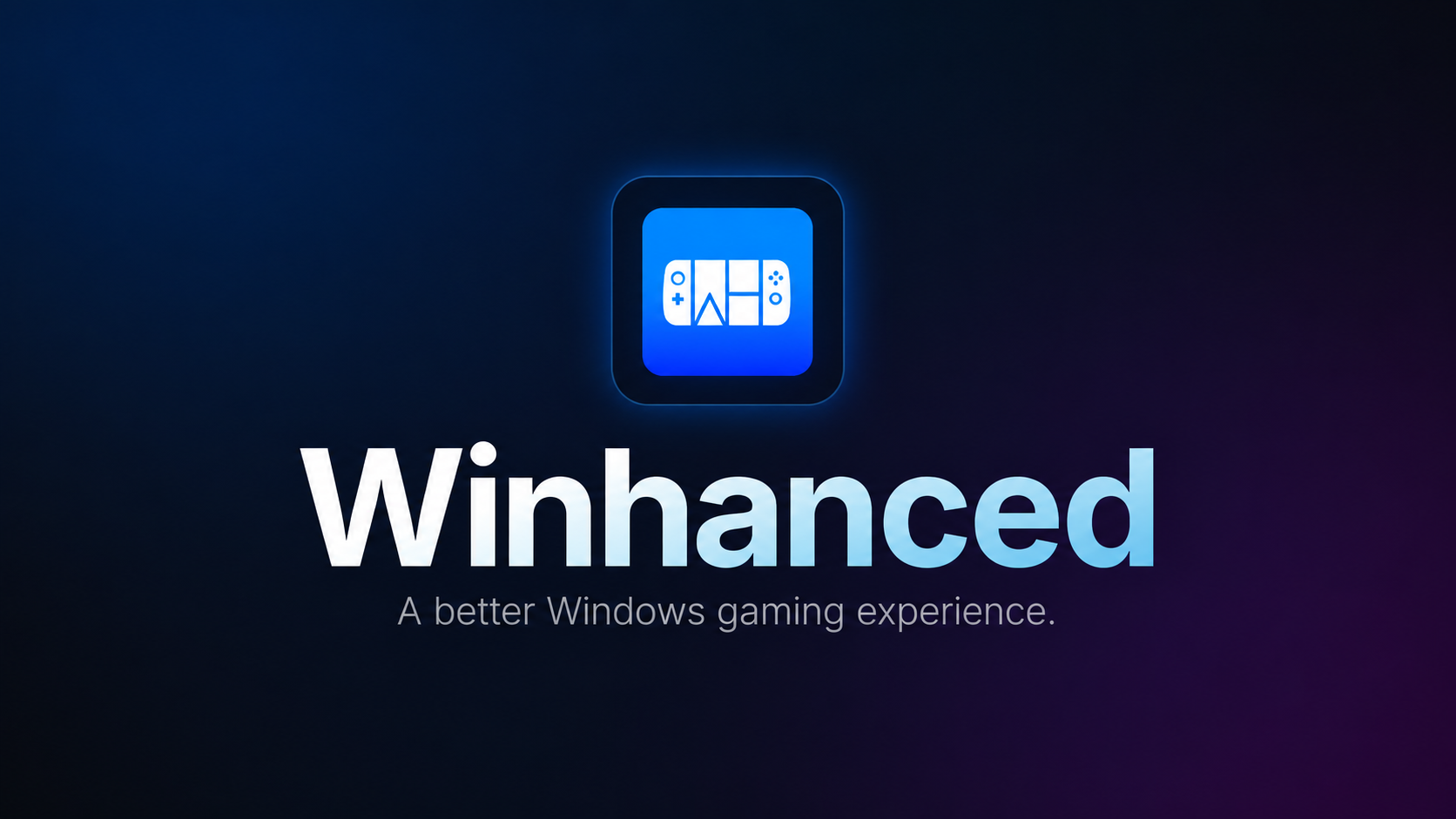
Microsoft explains why you can't buy a Surface PC with AMD inside

In 2026, you can find new Surface PCs from Microsoft for sale powered by almost all major chip makers. There are Surface PCs with Intel, Snapdragon, and very soon, even NVIDIA. But one chipmaker you won't see in a Surface PC today is AMD.

This wasn't always the case however. In 2019, Microsoft released the Surface Laptop 3 with both Intel and AMD chip offerings, a first for the Surface line that lasted just two generations before being dropped entirely with the launch of Surface Laptop 5.

Microsoft has never explained why it decided to drop AMD from the lineup, until now that is. In an interview with Windows Central, I asked Surface CVP Brett Ostrum why we don't see AMD in the Surface lineup in 2026.

"We love working with AMD. We have a limited portfolio, and so we have to make our choices pretty wisely in terms of what we're doing and where we're doing," Ostrum told me, before proclaiming "I love working with AMD."

So in short, it seems Microsoft doesn't sell any Surface PCs with an AMD chip right now because the portfolio is limited in size and the company has other partners and customers they need to appease first.

Microsoft Surface Laptop 4 colors

The only Surface PCs that have ever been available with AMD are the Surface Laptop 3 and 4. (Image credit: Microsoft)

I'm not sure I buy this explanation as Microsoft was clearly able to offer the same device with Intel or AMD in the past. Why can't Microsoft just do that today with the Surface Laptop 8 series, for example?

Microsoft has a close working relationship with AMD in the gaming space. AMD will power the next-gen Xbox, and is what you'll find in the currently manufactured Xbox consoles too. But for whatever reason, you just don't find it in a Surface.

With that said, there were rumors last year that Microsoft was working on a Surface powered by AMD's rumored Arm-based chip codenamed Sound Wave. That chip was rumored to launch sometime this year, but we've seen no sign of it as of yet.

If that chip ever does ship, we don't know where that might fit into Microsoft's limited portfolio as we have no real idea if the Sound Wave APU is a high-end one or not.

Either way, for now, Microsoft's official on-the-record stance as to why we don't see AMD in Surface PCs is because the portfolio is limited and they don't have the room for it right now.

Hopefully that rumored Surface powered by AMD's Sound Wave chip hasn't been totally canceled.

Click to join us on r/WindowsCentral

Join us on Reddit at r/WindowsCentral to share your insights and discuss our latest news, reviews, and more.
Winhanced 0.9.9.9 fixes my biggest complaints of Windows gaming handhelds

Winhanced is a launcher that essentially replaces Xbox Mode on your Windows handheld. Instead of simply fullscreening the Xbox app, Winhanced gives you a fully featured user interface that connects to your Xbox, Steam, GOG, and Epic libraries, alongside support for emulators, other apps, and much more.

I've talked quite extensively about Winhanced here on Windows Central, using the launcher for quite some time on my own handhelds, and seen it in both its current, near-complete state and its not-so-complete state a few months back.

The launcher is nearing version 1.0, which I’m sure I’ll cover when it releases, as the sneak peek I’ve seen — and will discuss closer to release — is extremely exciting. However, version 0.9.9.9 is available today and boasts new features and improvements. These are just a few that caught my attention:

  • Friend cards, letting you message your friends, see what they’re doing, view their profiles, and more. (Public)
  • Better integration with Discord, Steam, Xbox, and PlayStation. (Public)
  • PC streaming through the new Winhanced Streaming Companion. (Public)
  • Install Windows updates without leaving Winhanced. (Public)
  • Improved driver detection for updating your handheld’s drivers through Winhanced. (Public)
  • Game theme music, including the option to choose your own tracks. (Public)
  • Improved Epic and GOG downloads, including resumable downloads. (Public)
  • Create your own collections for easier access to different groups of games. (Early Access)
  • A Discord server browser that can be navigated with a controller. (Early Access)

Those are just a handful of the additions, and 0.9.9.9 also includes substantial behind-the-scenes work to improve how Winhanced works in general, making it a pretty seamless experience. If you're interested, I urge you to join the Winhanced Discord and check out the full release notes because there’s simply far too much for me to reasonably cram into one overextended post without getting into the weeds.

I’ve moaned since the day I got my Xbox Ally X about just how unpolished and, frankly, disappointing the user experience was. Winhanced has genuinely changed that for me, though, and made me much more willing to pick up my Xbox Ally X and actually play games on it, which isn’t something I can say for the other launchers I’ve tried.

If you’ve tried Winhanced before and found it too buggy, I’d suggest giving it another shot now. A big part of 0.9.9.9 focused on squashing hardware-related bugs and improving consistency across supported handhelds, with the developer describing this release's device consistency as finally at a "1.0 level."

If Winhanced isn’t your thing, though, that’s okay too. Xbox Mode is improving, but I'll still use this instead. Let me know your thoughts in the comments, or just drop a vote on the poll!

Click to join us on r/WindowsCentral

Join us on Reddit at r/WindowsCentral to share your insights and discuss our latest news, reviews, and more.
Microsoft explains why we haven't seen a Surface-branded MacBook Neo competitor yet

At this year's annual Snapdragon Summit, I had the opportunity to sit down and talk with Microsoft Surface CVP Brett Ostrum about all things Surface and Windows. One question I was eager to ask was about MacBook Neo, and whether or not Microsoft was interested in competing in that space.

"Let me start this way: we have never shipped a gaming PC," Ostrum opened with. "The reason we've never shipped a gaming PC is because OEMs do just fine in that space. They've done fine; they meet the customer needs; there's not a benefit for Surface to go into that space ... We knew Neo was coming long before it showed up. And so part of the question is, does Surface need to play a role relative to Neo? It wasn't a surprise. We chose to let the OEMs play in that space to deliver lower-priced devices."

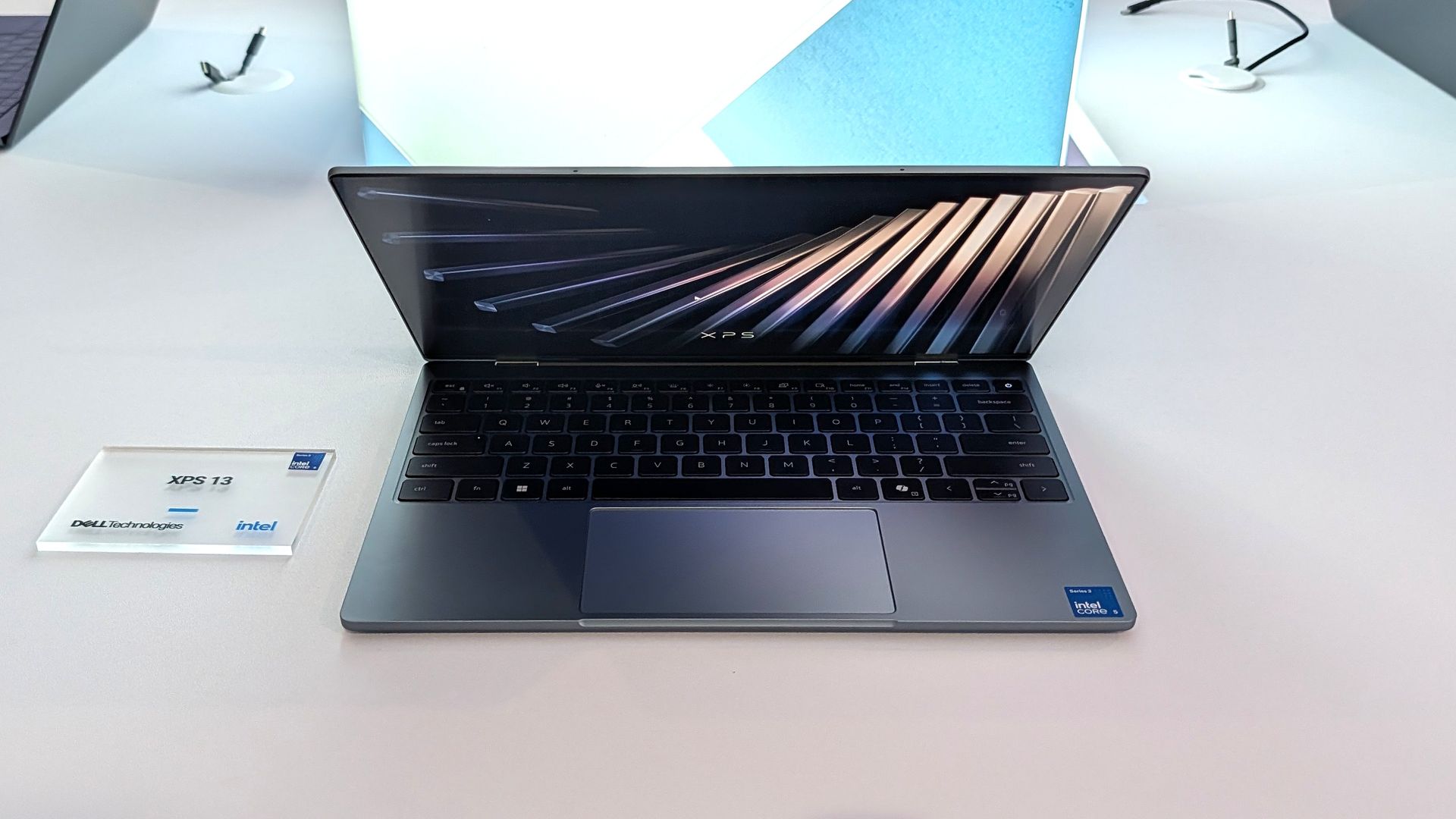
His response confirms that Microsoft doesn't think it's necessary to use Surface to compete with MacBook Neo, because Windows OEMs have already stepped up to deliver truly good alternatives. The Dell XPS 13 and ASUS ZenBook 14 are two prime examples of Windows PCs that cost the same as a MacBook Neo, while beating it in a number of key ways.

Dell XPS 13

The Dell XPS 13 at $799 is an incredible deal. (Image credit: Zac Bowden / Windows Central)

With that said, Microsoft is aware that customers are wondering why Surface isn't competing in this space. Ostrum tells me, "I've heard the feedback from press, I've heard the feedback from retailers, I've heard the feedback from partners to say Surface should be here. We will take that into consideration; we will certainly consider some options. But I would start with the gaming point. We do not have to play in every field."

That sounds like the door is open for the company to revisit this segment in the future, but for now it's clear that Microsoft isn't interested in building a low-cost Surface PC to compete head-to-head with MacBook Neo. Right now, Surface is more interested in competing at the very high end with devices like the Surface Laptop Ultra, which I tried earlier this year.

In fact, I've heard from sources that Microsoft now identifies its lineup of Surface PCs as three distinct categories of premium: Entry Premium, Premium, and Ultra Premium. Entry Premium are the most affordable Surface PCs, all of which start at above $1,000.

Of course, Surface used to build affordable PCs in the form of the Surface Go and Surface Laptop Go, both of which started at well under $600. But that was back before the component shortage forced price hikes, and under entirely different Surface leadership.

Today, the focus is on its premium Surface PC lineup, and we'll hear more about the company's new Surface Laptop Ultra on October 7.

Click to join us on r/WindowsCentral

Join us on Reddit at r/WindowsCentral to share your insights and discuss our latest news, reviews, and more.
Dell's XPS 13 proves you don't have to spend a fortune on a premium laptop

Flagship laptops often pack high-end specs and maximize the wow factor. But Dell decided to take a different approach with the XPS 13 this year. Rather than shove every premium option into a PC regardless of price, Dell built a budget-friendly laptop with premium build quality and surprisingly strong specs without breaking the bank.

The result is a truly impressive laptop that punches well above its price. The XPS 13 has a 2.5K 120Hz panel, a solid keyboard and trackpad, and a pair of Thunderbolt 4 ports packed into its thin aluminum body.

Dell is bullish about the new XPS 13, stating that the company wants the laptop to be people's first XPS. Our Cale Hunt called the new XPS 13 "the perfect starter PC" and our Zac Bowden was "shocked" at the quality and value of the laptop.

Dell's current discount on the XPS 13 is modest, but it keeps the laptop at an affordable price.

"Dell's new XPS 13 is the new best deal in laptops, surpassing the MacBook Neo with a better display, ports, build quality, and performance for the same price." — Zac Bowden, Senior Editor, Windows CentralView Deal

Pro Wireless Headset: was $139.99 now $118.99

This headset is an excellent companion to the Dell XPS 13 if you want to listen to meetings or seminars in public or have clear audio when chatting on Microsoft Teams or Zoom.View Deal

Laptop deals in 2026

The unfortunate reality in 2026 is that it's increasingly difficult to find a great deal on anything, let alone a quality PC. The ongoing RAM crisis hurts PC shoppers, but the truth is that money doesn't go as far as it used to.

That means that sometimes you need to grab a PC when it's worth it rather than holding out hope for a killer sale.

It's no longer a given that electronics will become cheaper over time. In some cases, prices have increased after launch. Apple raised the price of the MacBook Neo by $100, and Dell did the same with the XPS 13. Both those laptops were once $699 for everyday shoppers and $599 for students.

Still, the Dell XPS 13 is a bargain at its current price, and it delivers the features you'd expect from a modern laptop. That may not sound like much, but a lot of laptops in this price range are missing key features that should be commonplace in even budget-friendly computers.

Dell XPS 13 vs. MacBook Neo

Dell XPS 13

(Image credit: Zac Bowden / Windows Central)

Compare the Dell XPS 13 and MacBook Neo and you'll see that only Dell's budget-friendly laptop has backlit keys. The XPS 13 also has an IR sensor for facial recognition, better speakers, and support for Wi-Fi 7 rather than the older Wi-Fi 6E.

The XPS 13 also has Thunderbolt 4 ports that make it the obvious choice for anyone who needs to use more than one external display. And speaking of displays, the 120Hz screen of the XPS 13 also beats out Apple's offering (60Hz).

Dell delivers more value than Apple, making the XPS 13 easy to recommend.

Click to join us on r/WindowsCentral

Join us on Reddit at r/WindowsCentral to share your insights and discuss our latest news, reviews, and more.

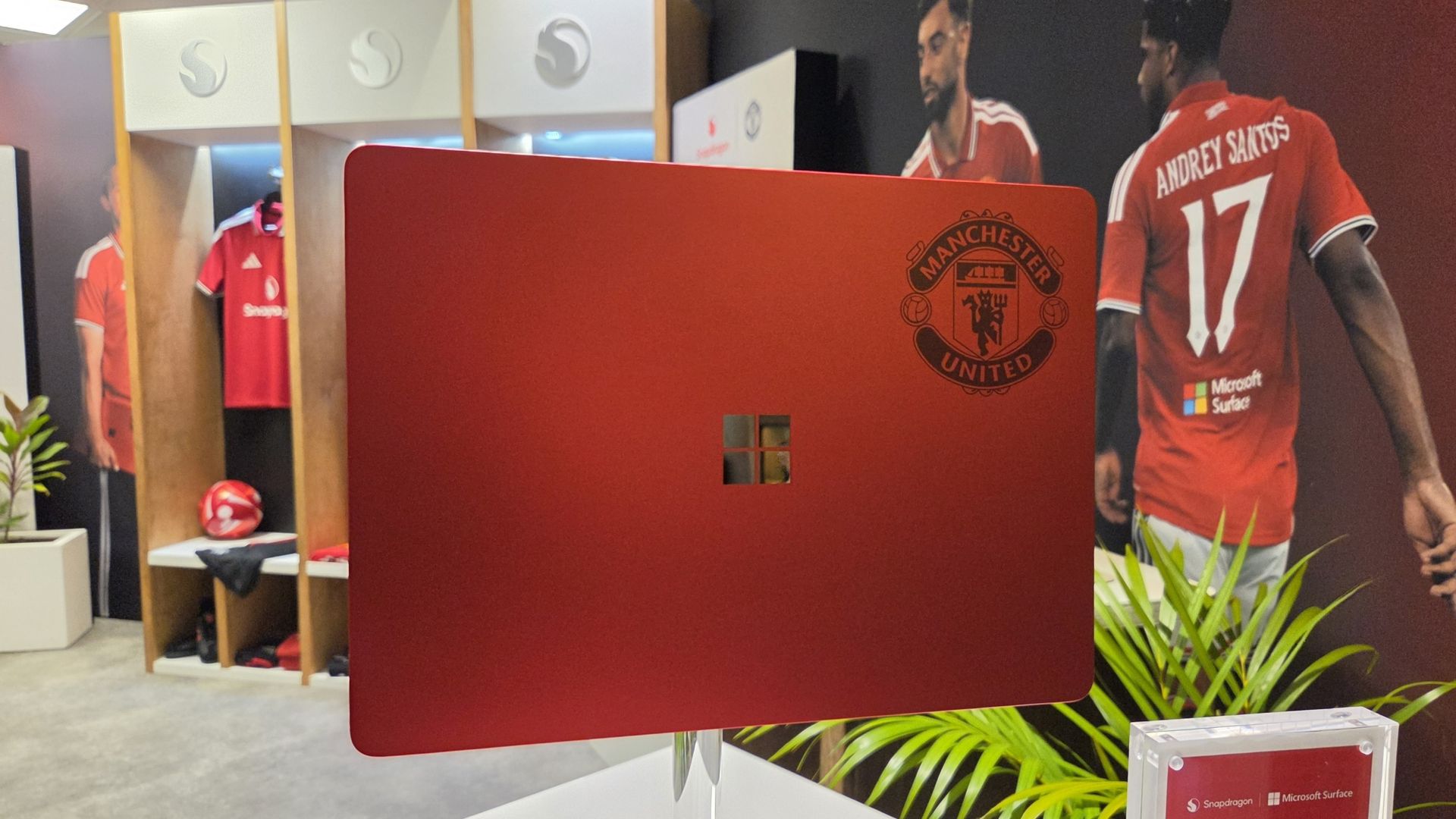
The Manchester United Surface Laptop is the greatest laptop of all time

I've been a Manchester United fan for as long as I can remember (going on 37 years now), coming from a family of Manchester United fans. Watching games with my grandad as a young child remains some of my fondest memories.

Sure it's been tough in recent years, but the passion never dies. Imagine my absolute delight when my club crosses over with my job. It's been happening for a couple of years already, since Snapdragon took over shirt sponsorship, and it's gone up another notch this season.

Alongside Microsoft Surface replacing Copilot+ PC (which it seems is now dead) as the rear shirt sponsor, Qualcomm and Microsoft have collaborated on the greatest laptop ever made: The Manchester United limited edition Surface Laptop.

The only downside is that it's not just going on general sale, because I would probably be first in line to buy one. Just because it's red and it has the Manchester United badge on it.

But here it is in all its glory, thanks to our man Zac Bowden, who's on the ground in Hawaii (this job is really tough at times) at the 2026 edition of the Snapdragon Summit.

Microsoft Surface Laptop 13-inch 2nd Edition with Manchester United and Qualcomm Snapdragon branding on a red chassis, displayed with football imagery
GloryZac Bowden | Windows Central
Microsoft Surface Laptop 13-inch 2nd Edition with Manchester United and Qualcomm Snapdragon branding on a red chassis, displayed with football imagery
GloryZac Bowden | Windows Central
Microsoft Surface Laptop 13-inch 2nd Edition with Manchester United and Qualcomm Snapdragon branding on a red chassis, displayed with football imagery
Man UnitedZac Bowden | Windows Central
Microsoft Surface Laptop 13-inch 2nd Edition with Manchester United and Qualcomm Snapdragon branding on a red chassis, displayed with football imagery
And the RedsZac Bowden | Windows Central
Microsoft Surface Laptop 13-inch 2nd Edition with Manchester United and Qualcomm Snapdragon branding on a red chassis, displayed with football imagery
Go marchingZac Bowden | Windows Central
Microsoft Surface Laptop 13-inch 2nd Edition with Manchester United and Qualcomm Snapdragon branding on a red chassis, displayed with football imagery
On on on!Zac Bowden | Windows Central

I don't see an Arsenal laptop out there, do I? Manchester City? Liverpool? Chelsea? Spurs wouldn't even get a calculator these days.

If I had to criticize it at all, beyond the fact it's not going on general sale, it'd be that I don't think it goes far enough into the Manchester United branding. The badge being there is great, but I think they could have done more.

How about ghosting an image of Old Trafford, the Theatre of Dreams, onto the lid like the 1994-1996 home shirt? 30 years on that would have been incredible.

These are extremely limited, and Manchester United and Snapdragon are currently running a giveaway for fans to get their hands on one. You can find out how to enter here and get yourself in the pot to win something that is, frankly, priceless.

Click to join us on r/WindowsCentral

Join us on Reddit at r/WindowsCentral to share your insights and discuss our latest news, reviews, and more.
  • ✇Korben
  • Que faire avec un port M.2 libre ? 6 gadgets à y brancher à la place d'un SSD
    - Contient des liens affiliés Amazon - Un emplacement M.2 finalement, ce n'est rien d'autre qu'un bonne vieille connexion PCIe d'une à quatre lignes selon la machine (sauf quand il est câblé en SATA, mais ça, j'en reparle à la fin). Et en général, comme le montre la photo ci-dessous, ce qu'on y met, c'est un SSD pour avoir du stockage rapide et efficace Emplaceme
     

Que faire avec un port M.2 libre ? 6 gadgets à y brancher à la place d'un SSD

24 septembre 2026 à 09:26
- Contient des liens affiliés Amazon -

Un emplacement M.2 finalement, ce n'est rien d'autre qu'un bonne vieille connexion PCIe d'une à quatre lignes selon la machine (sauf quand il est câblé en SATA, mais ça, j'en reparle à la fin). Et en général, comme le montre la photo ci-dessous, ce qu'on y met, c'est un SSD pour avoir du stockage rapide et efficace

Emplacement d'un M.2 sur la carte mère d'un laptop ( source )

Mais aujourd'hui, on va s'ouvrir un petit peu l'esprit sur cet emplacement M.2, parce que OUI, rien ne vous oblige à y mettre un SSD !

Mais avant de commander quoi que ce soit, sortez le manuel de votre carte mère ou la doc de votre mini-PC et regardez le type (PCIe ou SATA) de votre connecteur M.2, le format accepté et surtout le nombre de lignes de cet emplacement.

Source

Le nombre de lignes, c'est le nombre de voies de circulation entre la carte M.2 et le processeur. Plus il y en a, plus ça va vite, donc en général, pour une carte réseau, une ligne (x1) ou deux (x2) suffisent. Mais si vous partez sur une carte graphique, il faudra 4 lignes minimum (x4).

Par exemple, le Beelink ME Mini , lui, dispose de 5 emplacements PCIe 3.0 x1 et un seul en x2. Et sur une ASRock B850 Pro-A , le 4e emplacement M2 tourne en x4... mais retombe en x2 dès qu'un disque occupe l'un des autres ports M.2 en SATA3.

Regardez aussi ce que l'emplacement partage, car sur cette même carte mère ASRock, occuper par exemple le 3ème emplacement désactive purement et simplement le slot PCIE2. Vérifiez aussi que la puce du contrôleur M.2 dispose bien d'un pilote pour votre système, et demandez-vous par où passera le câble car mis à part l'accélérateur IA que je vous présente un peu plus bas, toutes les cartes qui suivent traînent un truc derrière elles. Donc, il faudra peut-être découper votre boîtier ou laisser dépasser des trucs...

Allez, c'est parti !

Une carte réseau 5 ou 10 GbE

Pour un NAS ou un routeur maison, la carte 5 GbE de KALEA à 29,90 € embarque une Realtek RTL8126 qui se branche sur un emplacement à clé M ou B+M et déporte son port RJ45 sur une équerre classique de PC. Et bonne nouvelle, comme la RTL8126 est une puce PCIe 3.0 x1, une seule ligne suffit ! Elle est reconnue par le pilote r8169 de Linux depuis le noyau 6.9, et sous FreeBSD (donc OPNsense ou pfSense) par le pilote officiel de Realtek , realtek-re-kmod, qui s'installe à part.

La carte 5 GbE de KALEA, avec son port RJ45 déporté sur une équerre

Maintenant, si vous voulez du 10 GbE, la carte de REKONG à 98,32 € passe par une Marvell AQC113. Et si j'en crois la fiche du vendeur, elle accepte du Gen4 x1 ou du Gen3 en x4, x2 et x1. Sauf qu'une ligne Gen3, c'est 8 Gbit/s, ce qui veut dire que sur un emplacement Gen3 x1, elle plafonnera sous ses 10 Gbit/s. Donc à ce prix-là, autant prendre la 5 GbE. Par contre, en Gen3 x2 (16 Gbit/s) ou en Gen4 x1 (32 Gbit/s), elle pourra tenir les 10 Gbit/s sans problème,

Côté logiciel, Linux la gère avec son pilote atlantic, mais sous OPNsense, c'est une autre histoire. Le pilote FreeBSD d'Aquantia, lui, ne prend pas en charge l'AQC113 et il faudra passer par un pilote communautaire .

Un accélérateur IA pour Frigate

Si vous faites tourner Frigate pour vos caméras , oubliez le Google Coral, qui n'est plus recommandé par Frigate . Mais attention, avant d'acheter un autre accélérateur IA à la place, regardez d'abord si votre processeur ne sait pas déjà faire le boulot, car le détecteur OpenVINO de Frigate tourne sur le GPU intégré des processeurs Intel de 6e génération ou plus récents. Un N100, par exemple, analyse une image en 15 ms environ avec MobileNetV2, sans rien acheter de plus, donc vous n'en aurez peut-être même pas besoin.

Par contre, si ça ne suffit plus, le module Hailo-8 de LUCKFOX à 201,59 € vous amènera 26 TOPS sur une interface PCIe Gen3 à quatre lignes. Frigate le prend en charge, avec environ 7 ms par image, mais mesurées avec YOLOv6n, donc c'est loin d'être comparable aux 15 ms du N100.

Maintenant, le truc cool, c'est que vous n'avez pas besoin d'un emplacement x4. La preuve, l'AI HAT+ 26 TOPS de Raspberry Pi, construit autour du même Hailo-8, tourne sur le port PCIe du Pi 5, qui n'a qu'une seule ligne. Un emplacement M.2 en x1 fera donc l'affaire, même si Frigate note que les PC x86 à deux lignes font mieux que le Pi.

Le module M.2 Hailo-8, avec sa puce sous un capot métallique

Une carte graphique externe en OCuLink

Ici, c'est la seule carte de la liste qui exige un emplacement x4. L'adaptateur OCuLink de RIITOP à 36,95 € transformera instantanément votre port M.2 en prise OCuLink PCIe 4.0 x4 (jusqu'à 64 Gbit/s). On doit ensuite le relier au dock Minisforum DEG1 (prix 109,00 €), sur laquelle se plug la carte graphique (à acheter séparément avec son alim) et se branche sur une alimentation ATX ou SFX. Le câble OCuLink, lui, est livré avec le dock .

L'adaptateur M.2 de RIITOP et sa prise OCuLink

Notez que le DEG1 de Minisforum n'est compatible qu'avec les machines qui gèrent le PCIe 4.0 x4, donc visez un emplacement Gen4 x4. Et l'OCuLink ne se branche pas à chaud, faudra éteindre le PC avant.

Le dock DEG1 de Minisforum, avec le slot qui reçoit la carte graphique

Et si vous préférez rester à l'intérieur du boîtier, la nappe ADT-Link à 35,45 € ressortira l'emplacement M.2 en slot PCIe x16 prévu pour une carte graphique. Alors je dis x16, mais c'est seulement au niveau du format PCIe 3.0 parce que la carte, en réalité, ne recevra que les lignes réellement disponibles de l'emplacement M.2.

La nappe R43SR d'ADT-Link, du connecteur M.2 au slot PCIe x16

Le port USB-C de façade qui ne sert à rien

Et si le port USB-C en façade de votre boîtier reste inerte faute de connecteur sur la carte mère, l'adaptateur Type-E de CY à 32,99 € transformera l'emplacement M.2 en connecteur interne Type-E à 20 Gbit/s. Il repose sur une ASMedia ASM3242, conçue pour quatre lignes PCIe Gen3 (sur deux, on tombe à 16 Gbit/s), et ne fait ni vidéo, ni audio, ni recharge PD.

L'adaptateur M.2 de CY, son connecteur Type-E et son dissipateur

Maintenant, si un connecteur USB 3.0 à 19 broches est encore libre, un simple adaptateur EZDIY-FAB à 14,99 € réveillera ce port en USB 3.2 Gen 1, sans avoir à toucher à votre emplacement M.2.

L'adaptateur en L d'EZDIY-FAB, vu sous deux angles

Six ports SATA de plus

Côté stockage, le contrôleur SATA de Namvo à 29,99 € vous ajoutera 6 ports SATA 6 Gbit/s grâce à une ASMedia ASM1166 , reliée en PCIe Gen3 x2. Ça fait 16 Gbit/s à partager entre les 6 disques, et moitié moins sur un emplacement x1.

Le contrôleur SATA de Namvo

Du Wi-Fi 6E

Enfin, pour ajouter du Wi-Fi 6E à une tour qui n'en a pas, il vous faudra un module Intel AX210 à 28,37 € et un adaptateur Jectse à 9,62 € qui le fera tenir dans un emplacement à clé M. Comme Intel documente son AX210 comme étant du Wi-Fi (PCIe) et BT (USB), l'adaptateur fait passer le Wi-Fi par une ligne PCIe et le Bluetooth par un petit câble USB 2.0 fourni, à relier à un connecteur interne de la carte mère. Et les antennes ne figurent ni sur la fiche du module ni dans le colisage de l'adaptateur, donc faudra les acheter à part.

Méfiez-vous par contre de la liste de compatibilité de la fiche Jectse, qui dit supporter aussi l'AX201. Intel classe ce module en "M.2: CNVio2", et pas en PCIe et USB. Bref, attention à bien prendre un AX210 et pas un 201

Voilà et si votre emplacement libre s'avère être câblé en SATA, bah oubliez toutes ces cartes... Toutes ces cartes parlent uniquement le PCIe. Il ne vous restera alors plus qu'à y mettre un SSD SATA... Snif.

Source : XDA Developers

Poll: What's your favorite Surface of 2026?

Microsoft just refreshed the Surface Pro 12-inch and Surface Laptop 13-inch with Snapdragon X2 processors. The company also announced the return of the Surface Mouse. In a couple of weeks, we'll get a closer look at the Surface Laptop Ultra during Microsoft's Windows and Surface event.

The Surface family has undergone a lot of changes over the last year. Microsoft officially pulled the plug on the Surface Hub back in April. The Surface Go and Surface Laptop Go have also been cut from the portfolio. With the Surface Studio, Surface Laptop Studio, Surface Duo, Surface Book, Surface Headphones, and Surface Earbuds already discontinued, the remaining Surface lineup is rather streamlined.

But despite the relatively low number of Surface devices being made in 2026, Microsoft announced 12 Surface devices this year. To get to that number, you have to count some devices with similar chassis separately. I consider the consumer and business versions of the Surface PCs separate enough to stand on their own.

Microsoft even introduced a new type of Surface in the Surface Laptop Ultra and brought back the Surface Mouse.

It's a strange contrast. Microsoft has discontinued several Surface product lines and has one of the smallest Surface portfolios in the brand's history, yet the company has announced more Surface hardware in 2026 than in many years when the lineup was much larger.

I've voiced concerns about how Microsoft has unveiled its hardware this year. I think the company has spread things out so much that the Surface brand has been diluted. Case in point, Microsoft just announced new Surface devices two weeks before the company's Windows and Surface event.

Surface was never going to command the attention of an Apple hardware event or even Samsung presenting on stage, but trickling out announcements in press releases or at other companies' events is a bad way to draw interest in Surface.

While I would have preferred a couple of major Surface events that could create hype, Microsoft has unveiled a lot of hardware this year. I'm curious if there is one device that stands out to you.

As much as I am excited about some individual Surface devices, I still feel like the brand is fragmented and lost. What is Microsoft Surface in 2026?https://t.co/5QNvm1Uts6September 23, 2026

With 12 devices announced or launched, there's a good chance you're interested in more than one. Please hop into the comments and share your thoughts in addition to voting in the poll.

Click to join us on r/WindowsCentral

Join us on Reddit at r/WindowsCentral to share your insights and discuss our latest news, reviews, and more.
Surface feels more fragmented than ever after Microsoft's latest refresh

Microsoft's Surface team just can't help itself. Despite having a Windows and Surface event scheduled for October 7, 2026, Microsoft unveiled new Surface devices today.

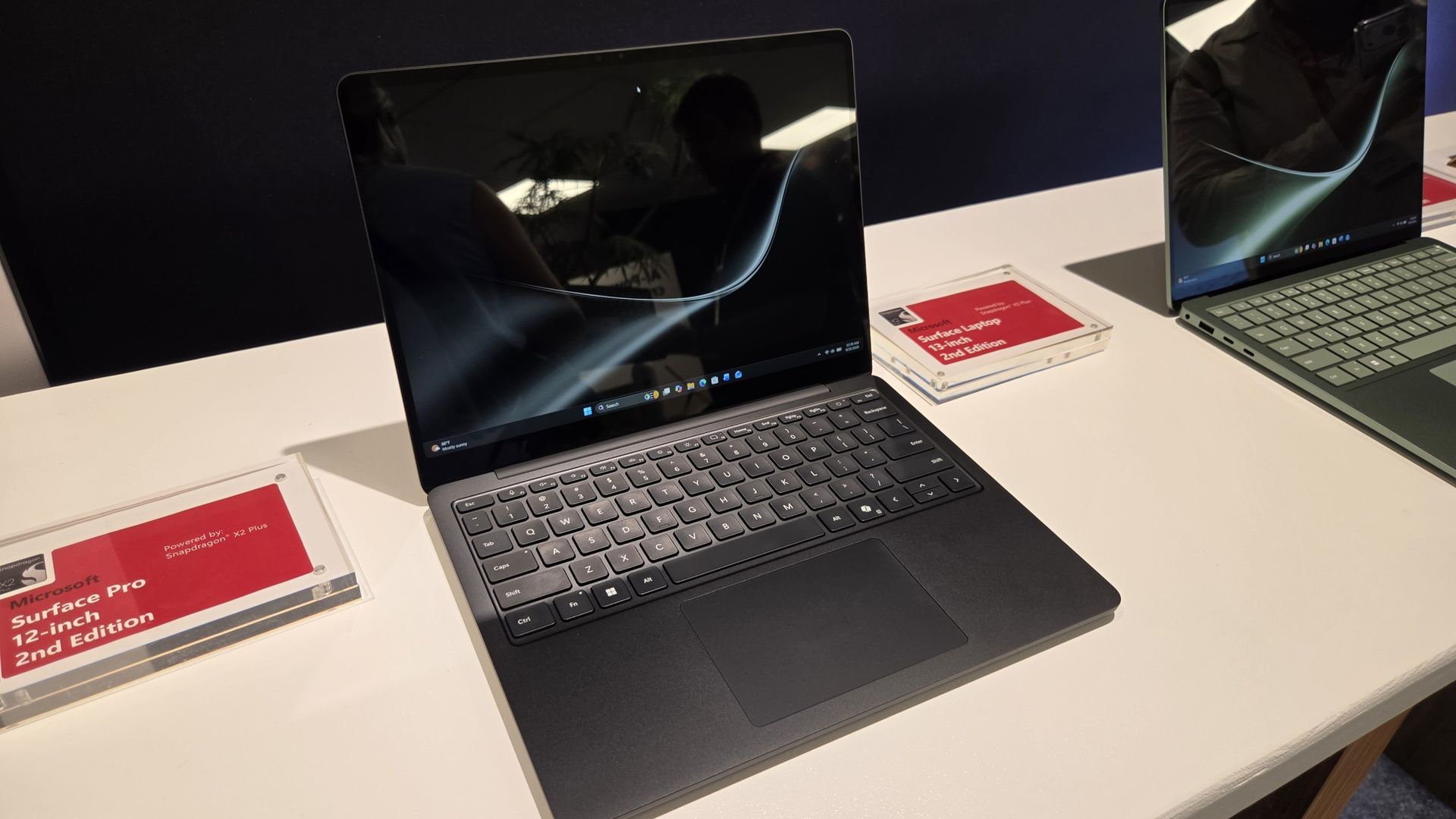
Microsoft just refreshed its Surface Pro 12-inch and Surface Laptop 13-inch with new chips from Qualcomm. Thanks to the Snapdragon X2 Plus chips inside the devices, we should see better performance and better graphics in the new Surface devices.

Even local AI will run better thanks to the NPUs in the PCs. You may assume that improved local AI performance, being a highlight of the new Surface devices, would align them perfectly with the upcoming event. Microsoft's invite says that event will focus on "how local AI will shape the next chapter of the PC."

Microsoft may mention the refreshed Surface Pro 12-inch and Surface Laptop 13-inch on stage in October, but I suspect the focus will be on the Surface Laptop Ultra and NVIDIA RTX Spark. The Surface RTX Spark Dev Box may also get a mention.

Why did Microsoft just announce a new Surface Pro and Surface Laptop?

Microsoft's unveiling of the refreshed Surface Pro 12-inch and Surface Laptop 13-inch is not an accident. The announcement happened at Qualcomm's Snapdragon Summit. Perhaps there's an agreement in place to feature Surface on stage in Hawaii. Or maybe Microsoft wanted to piggyback on any attention pointed at Snapdragon this week. But I still think it's a strange strategy.

It's not as if the Snapdragon X2 Plus was announced this week. We've known about the chip for ages. It is already available in other laptops, including the Surface Laptop 13.8-inch and Surface Pro 13-inch.

If Qualcomm first announced the Snapdragon X2 Plus this week, it would make sense to announce new Surface PCs powered by it. Alternatively, Microsoft could tease that it has more to share about the chips at the Windows and Surface event.

But instead, we can now cross two more items off the list of potential things we will see at the Windows and Surface event next month.

The Windows and Surface event also falls after many improvements have shipped to Windows 11 or entered testing with Windows Insiders. It seems unlikely that we'll see much new information on stage, but Microsoft could always surprise us.

Surface continues to be a lost brand with no clear identity. Worse, it's a fragmented one. Earlier this year, Microsoft launched Intel and Snapdragon versions of the same PCs separately (see our review of the Intel-based Surface Laptop for Business 8). It announced the Surface Laptop Ultra at one event and saved the details for another. Now it has refreshed two of the few remaining Surface lines just weeks before a Surface event in October. Rather than rebuilding momentum around Surface, Microsoft seems intent on making the brand even harder to follow.

Do you agree or disagree? Let me know in the comments.

Click to join us on r/WindowsCentral

Join us on Reddit at r/WindowsCentral to share your insights and discuss our latest news, reviews, and more.
AI comes to Surface Ink: Microsoft’s new Canvas transforms handwriting into a smarter workflow

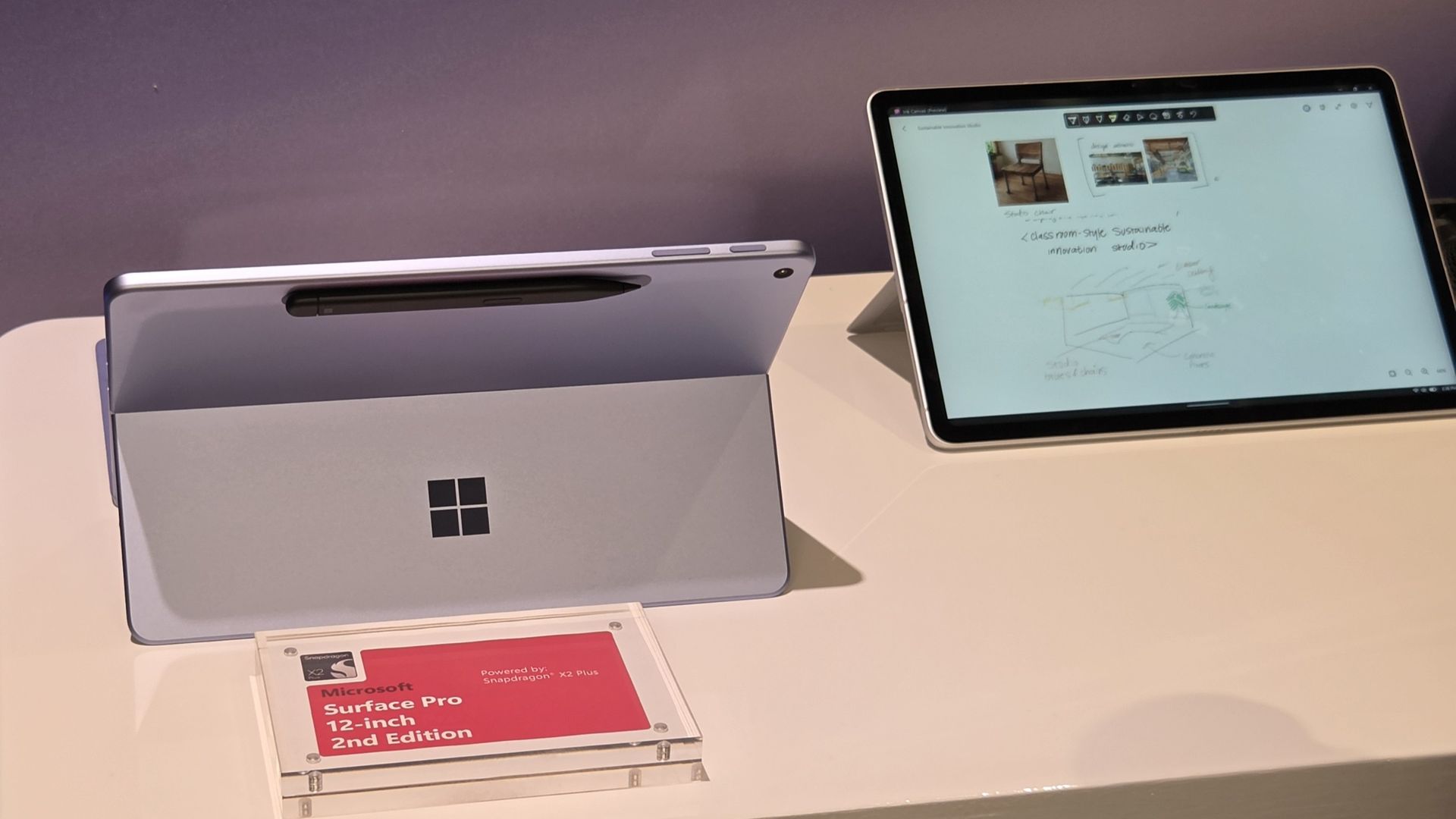
Microsoft just announced a refreshed Surface Pro 12-inch (2nd Edition), a Surface Laptop 13-inch (2nd Edition), and a new Surface Mouse. Those PCs run on Snapdragon X2 Plus processors and promise solid battery life and performance while maintaining portability. But Microsoft announced more than Surface refreshes this week. The tech giant also unveiled Microsoft Ink Canvas.

Ink Canvas is a pen-first workspace that combines handwriting, sketches, annotations, and AI features on a single canvas. Microsoft says those inputs provide Copilot with additional context that can be used to generate documents and other content.

"Ink Canvas lets customers use Slim Pen to express intent visually, spatially, and in their own handwriting — giving Copilot richer context and helping rough thoughts become useful creations faster," explained Microsoft.

Ink Canvas will be pre-installed on new Surface Pro 12-inch devices and will be added to the Microsoft Store on October 13, 2026.

Inking, now with AI

Microsoft is no stranger to inking apps and experiences. Surface PCs have supported a pen since the very beginning of the brand. Over the years, Microsoft has tested a variety of ways to integrate inking with Windows.

Back in the days of Windows 10, Microsoft introduced an Ink Workspace that was connected to Microsoft Whiteboard and the Snipping Tool. A major update to Ink Workspace shipped to Windows 11 in 2021.

The improved Ink Workspace lets you pin different apps, making it easier to open inking experiences, such as Sticky Notes or even Microsoft Paint.

I prefer the third-party app Ink Workspace (not related to Microsoft's Ink Workspace) because it has more features. Inking has been at the heart of Surface for years through both first-party and third-party experiences.

Microsoft's new Ink Canvas is the latest attempt by the company to integrate AI into a general user experience. We've seen smartphones and tablets connect inking to AI already. Googlebooks have some tricks in the same area. It will be interesting to see how Microsoft's AI ink experience stands out from the competition.

Click to join us on r/WindowsCentral

Join us on Reddit at r/WindowsCentral to share your insights and discuss our latest news, reviews, and more.
After 10 years, Microsoft revives the Surface Mouse with a fresh design and haptics

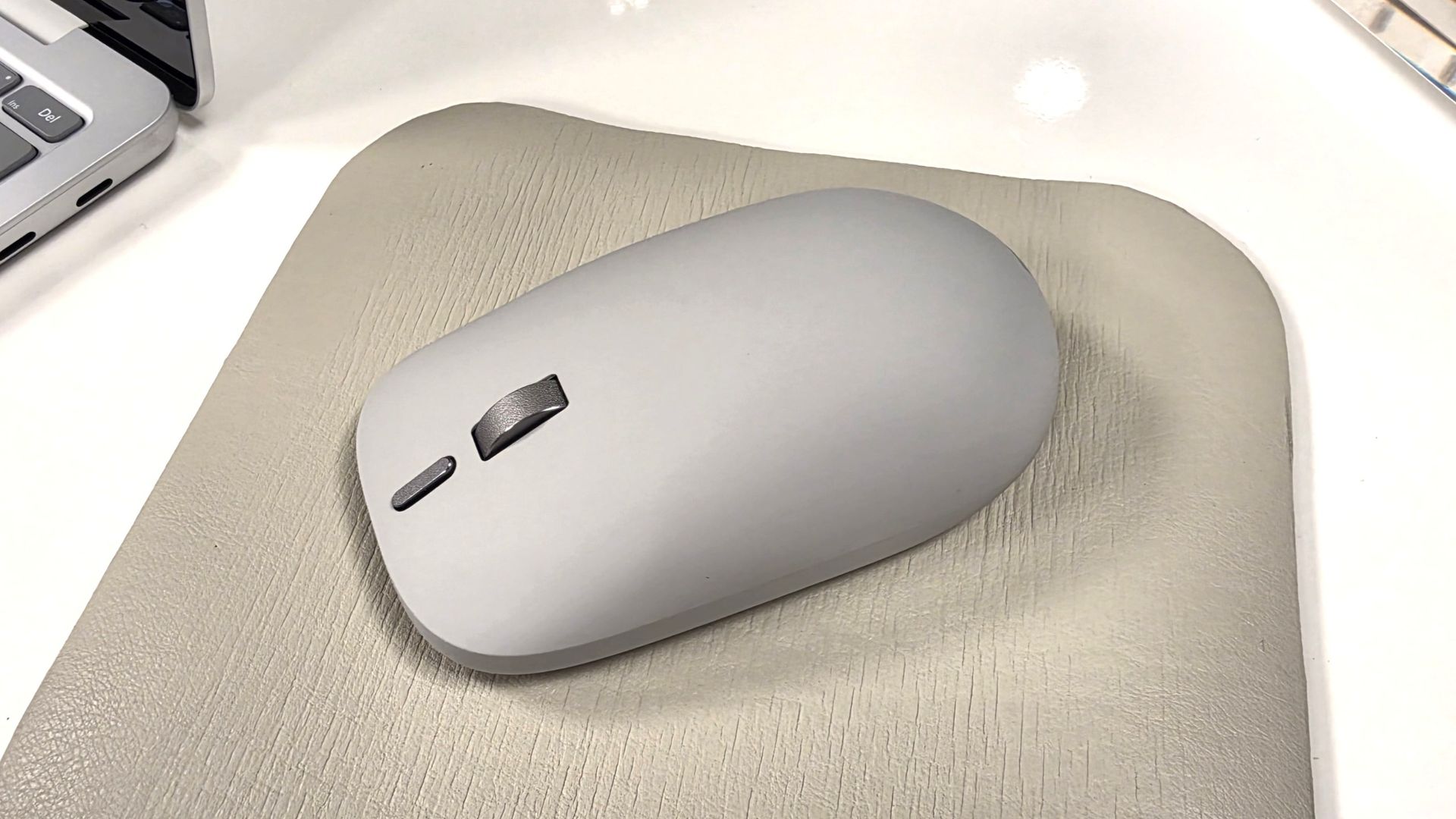
Microsoft has announced a brand new version of the Surface Mouse, 10 years after the first one debuted alongside the Surface Studio in 2016 (and not be confused with the refreshed 2025 Microsoft Surface Arc Mouse or the 2018 Surface Precision Mouse). Many had likely assumed the peripheral was dead, as Microsoft hasn’t released any standalone Surface accessories in the last few years as the company refocused its efforts on Surface Pro and Surface Laptop.

Well, today, the Redmond giant has a wonderful surprise for Surface Mouse diehards. Alongside the refreshed Gen 2 Surface Pro 12-inch and Surface Laptop 13-inch announced today at Snapdragon Summit, Microsoft announced a new Surface Mouse with an updated design, a new black color, built-in haptics, and a new customizable action button.

I got a chance to briefly play with the new mouse, and I was taken aback by how premium it feels. It features a lovely soft-touch material that coats the part of the mouse you grab, which feels amazing. The left and right click buttons are also super satisfying, offering tactility while remaining near-silent.

Microsoft Surface

The new Surface Mouse in black looks sleek. (Image credit: Zac Bowden / Windows Central)

The star of the show, however, is the built-in haptics, which makes this the second mouse to support such a feature after the Logitech MX Master 4. Inside the mouse is a small vibration motor that buzzes when you interact with certain parts of Windows, such as snapping an app to the sides of your screen or dragging files between two windows.

It's a small but meaningful improvement that makes using Windows feel more responsive, and it's baked right in on the new Surface Mouse. Additionally, the new mouse now features an extra action button, which can be used to launch an app or shortcut of your choice, configured in the Microsoft Surface app.

Surface Mouse is available to buy on October 13 for $79.99, which is a great deal when you consider the only other mouse with haptics on the market is $120.

Click to join us on r/WindowsCentral

Join us on Reddit at r/WindowsCentral to share your insights and discuss our latest news, reviews, and more.
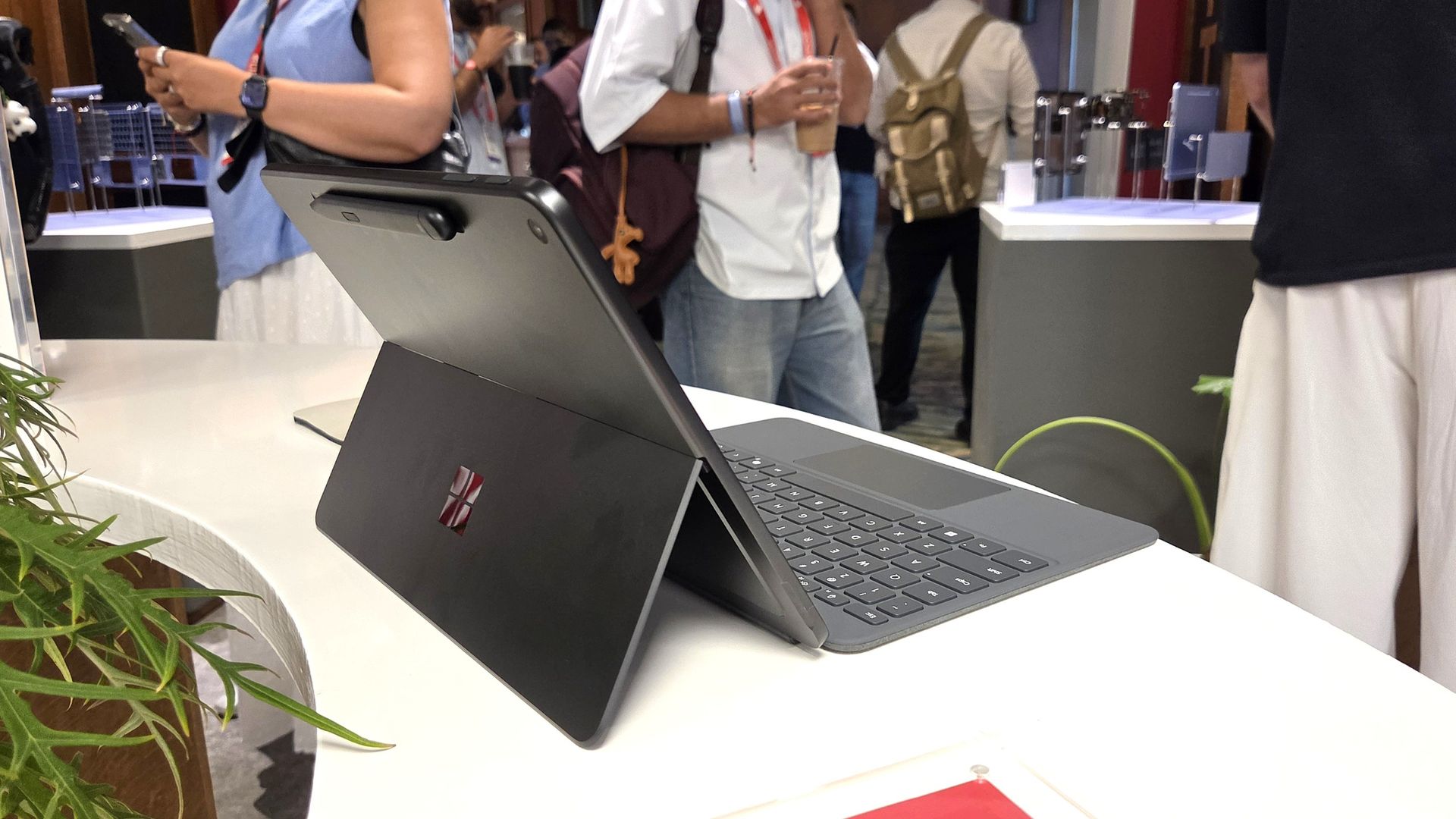
Microsoft unveils refreshed Surface Pro 12-inch and Surface Laptop 13-inch with Snapdragon X2 and brighter screens

If you’re a fan of Microsoft’s smaller and lighter Surface PCs, we’ve got some good news! During Qualcomm’s annual Snapdragon Summit event in Hawaii, Microsoft announced new versions of the Surface Pro 12-inch and Surface Laptop 13-inch, now powered by the Snapdragon X2 Plus and featuring brighter screens, longer battery life, and even 5G on select models.

We previously reviewed both the Surface Pro 12-inch (2025) and Surface Laptop 13-inch (2025), giving the former some very high praise, while the Laptop 13-inch we were a bit less impressed with, mostly due to the price.

The new refreshed models will be available starting October 13 and start at $1,149 for the Surface Pro 12-inch and $1,199 for the Surface Laptop 13-inch.

Both come in a new Black colorway (in addition to Platinum and Violet; Ocean Blue has sadly been retired) and feature screens that can now reach up to 500 nits of peak brightness, making them easier to view outdoors in direct sunlight.

Microsoft Surface Laptop 13-inch next to Surface Laptop 12-inch, both in violet colorway next to the new black Surface Mouse.

Both Surface Laptop 13-inch and Surface Pro 12-inch 2nd Editions come in the Violet colorway with the optional new Surface Mouse. (Image credit: Microsoft)

Category

Surface Pro 12" (Gen2)

Surface Laptop 13" (Gen2)

Processor

Qualcomm Snapdragon X2 Plus (6 Core)

Qualcomm Snapdragon X2 Plus (6 Core)

NPU

Qualcomm Hexagon with 80 TOPS

Qualcomm Hexagon with 80 TOPS

Graphics

Qualcomm Adreno GPU

Qualcomm Adreno GPU

Memory

16GB and 24GB LPDDR5x RAM

16GB and 24GB LPDDR5x RAM

Storage

256GB, 512GB (UFS)

Removable 256GB, 512GB (UFS)

Display

12" PixelSense LCD
2196 x 1464 (220 PPI)
Up to 90Hz (60Hz default)
Adaptive Color/Contrast
Up to 500 nits

13" PIxelSense
1920 x 1280 (178 PPI)
Up to 60Hz
Adaptive Color/Contrast
Up to 500 nits

Weight

1.5 lbs. (0.69kg)

2.7 lbs. (1.23 kg)

Battery life

Up to 15.5 hours of local video playback
Up to 13 hours of active web usage

Up to 22.5 hours of local video playback
Up to 18 hours of active web usage

Price

Starts $1,149

Starts $1,199

Release date

October 13 (Wi-Fi)

October 13

Surface Pro 12" (2nd Edition): $1149.00
Surface Pro 12‑inch is built for ideas on the move. At just 1.5 pounds, it delivers tablet flexibility with full Windows laptop power so you can sketch, create, stream, and work from almost anywhere. With fast performance and up to 15.5 hours of battery life, it stays productive from morning through night.View Deal

Surface Laptop 13" 2nd Edition: $1199.99
Surface Laptop 13‑inch is Microsoft's most portable model at just 2.7 pounds, built for people who work wherever life takes them. It combines a precision keyboard, premium design, a 13‑inch touchscreen, and up to 22.5 hours of battery life to stay productive on the go.View Deal

Both devices feature the same designs as last year, but with more power and battery life. Indeed, Microsoft claims the Surface Laptop 13-inch gets up to 22.5 hours of battery life, while Surface Pro 12-inch up to 15.5 hours.

Microsoft Surface
Surface Pro 12-inch comes in violet, black, and platinum. Zac Bowden / Windows Central
Microsoft Surface
Surface Laptop 13-inch comes in a new black color.Zac Bowden / Windows Central

Under the hood is Qualcomm’s Snapdragon X2 Plus SoC in a 6-core configuration, paired with 16GB RAM and 256GB storage in the baseline configuration. If you need more RAM or storage, you can customize memory up to 24GB RAM and 512GB storage for a higher price.

Notably, it seems Microsoft has removed the 8GB RAM option that was available on the last-gen Surface Pro 12-inch and Surface Laptop 13-inch, which allowed the company to price those models below $1,000. The new devices start at 16GB RAM, which explains why their starting prices are so high.

The new Surface Pro 12-inch will also be available with 5G as an optional configuration for commercial customers. No pricing or configuration details have been revealed as yet, but the company has confirmed that it’s coming soon.

The Surface Pro 12-inch also comes pre-loaded with a new Windows app called Microsoft Ink Canvas, which Microsoft describes as an “AI-powered, pen-first experience for sketching, annotating, generating images and summarizing text directly on the canvas.” The new app will be made available to download via the Microsoft Store on October 13.

Microsoft Surface
The new Surface Mouse looks great.Zac Bowden / Windows Central
Microsoft Surface
It features a soft-touch material that feels great.Zac Bowden / Windows Central

Alongside the new PCs, Microsoft also unveiled a new Surface mouse, available in black or platinum colors, and featuring built-in haptics and a new action button that can be configured by the user. It’s the first update to the Surface mouse we’ve seen since it was first introduced 10 years ago.

All three new devices are expected to be made available starting October 13 at the Microsoft Store and third-party retailers like Best Buy and Amazon, though you can now preorder the Surface Pro 12" at Best Buy, as well as the new Surface Laptop 13".

Let us know in the comments your thoughts on the refreshed Surface lineup!

Click to join us on r/WindowsCentral

Join us on Reddit at r/WindowsCentral to share your insights and discuss our latest news, reviews, and more.
Googlebooks are built almost entirely on Gemini AI hype. Can they disrupt Windows?

Google recently announced 'Googlebooks' as new laptops built with Intel Core Ultra Series 3 (Panther Lake) and Qualcomm Snapdragon X Elite processors, expanding its range beyond budget-centric Chromebooks at a more premium price point. Starting at $899 with an Acer model, more devices from ASUS, Dell, HP, and Lenovo are also due to launch on October 4, 2026.

The best of Gemini meets a whole new kind of laptop.

Google

Among its five 'flagship' launch models, Google advertises features such as high-resolution touchscreen displays, haptic touchpads, and built-in NPUs for local AI tasks, primarily focusing on Gemini. Of the 13.4-inch to 15.3-inch laptops, only the $999 Dell XPS Googlebook uses an LCD screen, while the remaining brands opt for OLED panels. So, is 'Googlebook OS' any threat to Windows?

Familiar hardware, fledgling OS

Googlebook laptop screen displaying the CapCut app in an office environment

It looks familiar, but will enough people buy into Googlebook OS? (Image credit: Google | Getty Images)

My gut reaction — as someone outside the target audience for these Android-on-steroids laptops — was one of unsurprising skepticism. Before looking at prices, I immediately thought of the ongoing, oft-misrepresented software compatibility controversy surrounding Windows on ARM laptops that arrived with Qualcomm's first Snapdragon X chips.

If Microsoft already faced pushback at the slightest hint of incompatibility, I'm not sure a Google-first laptop stands a chance against Windows ultrabooks in the same price range, especially when the first Googlebook wave resembles existing laptops from the same brands anyway. Plus, they have to compete with Apple's similarly priced MacBook Air and cheaper MacBook Neo.

I know, I hear you saying, "Oh, the Windows Central guy isn't excited about the Googlebook? Quelle surprise!" I get it, but hear me out; I'm still a regular consumer like anyone else, and I'm always a fan of genuine rivalry if it drives the kind of competitive pricing that led Dell to answer the MacBook Neo with the new XPS 13.

However, I can't deny my hunch that 'Googlebook' is a boring name (which already confuses Google's own search engine by taking you to Google Books), and that the hardware itself isn't particularly innovative, potentially even confusing your average laptop buyer who doesn't base their entire life around Gemini AI. Is it an even less exciting attempt at a Copilot+ PC for Android fans?

Who are the Googlebooks made for?

Googlebook laptops including models from Acer, Lenovo, Dell, ASUS, and HP, on a glossy black background.

Glowbar aside, this is all pretty standard hardware. (Image credit: Google)

Despite my apprehension, I'm still fascinated, and I wonder what someone would do if they had a chance to go hands-on with a Googlebook. What would you test? Would you try to install a certain app, run a particular component benchmark, or focus more on the premium chassis? As it happens, I might have the opportunity to take the $1,299 ASUS Googlebook 14 for a spin.

I'm particularly interested in hearing what real, regular folk think because, besides the vague claims of being "designed for Gemini Intelligence" alongside an RGB 'Glowbar' that shows little beyond your battery life or charging status, there doesn't seem to be anything to suggest that these Googlebooks aren't much more than glorified Chromebooks or overengineered smartphones.

With Continue On, you can start a task on your Android phone and finish it on Googlebook. Keep your momentum and pick up exactly where you left off.

Google

I can already control Android apps on my Windows PC with Phone Link, though, of course, Google is pushing for a more native feel with its 'Continue On' app handoff feature — my word, it even sounds like Continuum — that allows you to move from your Android device to a Googlebook with your half-completed tasks intact. Sounds smoother than using something like Samsung DeX.

Google's apparent attempt to revive its premium Pixelbook feels like it'll sit in a strange limbo, as the behemoth brand bets it all on Gemini and hopes the general public actually cares enough to ditch Windows, macOS, or Linux to buy into this new generation of AI PC hype. Will it end up in the Google Graveyard, or is the Googlebook different? At least they're trying.

Click to join us on r/WindowsCentral

Join us on Reddit at r/WindowsCentral to share your insights and discuss our latest news, reviews, and more.
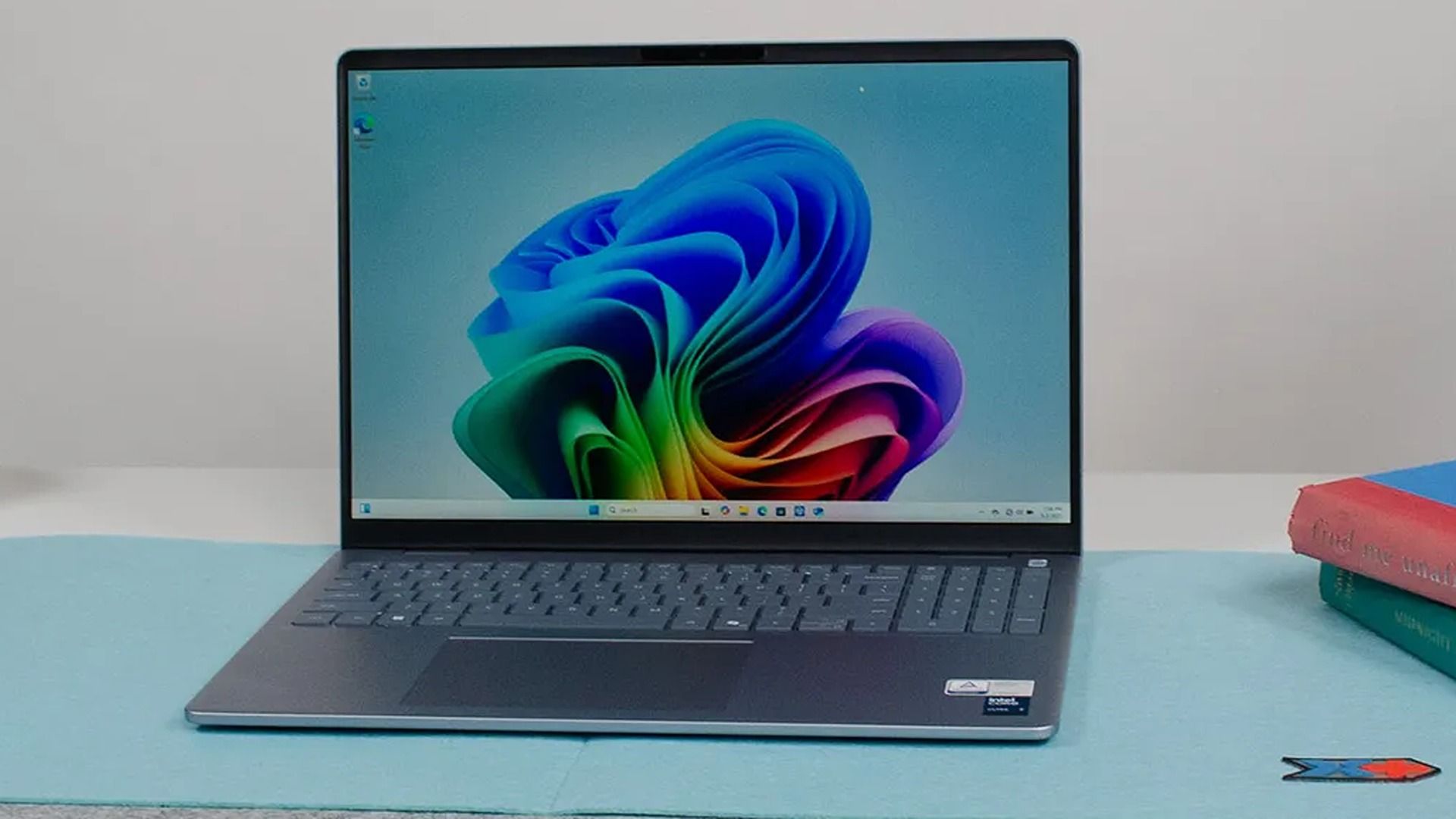
These discounted Dell 'Plus' laptops focus on productivity in Windows

We're just a couple of months away from Black Friday in November, when we usually see the biggest discounts on some of the best productivity laptops. However, some brands aren't waiting that long.

Dell, for instance, is slashing prices on models of its 14 Plus and 16 Plus laptops to $1,109.99 (was $1,379.99) and $1,559.99 (was $1,629.99), respectively, for a limited time. Additionally, Dell is offering discounts on alternative models of the same laptops if you need to change a particular spec at its official storefront.

14 Plus Laptop (Core Ultra 5 226V, 16GB RAM, 512GB SSD): was $1379.99 now $1109.99

"The Dell 14 Plus gets the job done without fuss or flair, and its reasonable pricing makes it a solid choice for those who just need a tool." — Zachary Boddy, Former Staff Writer, Windows Central reviewView Deal

16 Plus Laptop (Core Ultra 7 256V, 16GB RAM, 1TB SSD): was $1629.99 now $1559.99

"The Dell 16 Plus offers a solid mid-tier laptop experience throughout. Between great general computing performance for any college student or executive and long-lasting battery life, the base $options make a ton of sense." — Ural Garrett, Writer, TechRadar ReviewView Deal

What do you get with a Dell Plus laptop?

A sleek, open laptop on a light blue desk mat displays a tech website. A small plant and books are in the background, conveying a clean, modern workspace.

Dell's 16 Plus in action. (Image credit: TechRadar (John Loeffler) | Dell)

If you want no-nonsense laptops that skip gamer-centric RGB lighting and other frivolous features for efficient productivity, you can't go wrong with either the Dell 16 Plus or 14 Plus, depending on your travel needs.

The Dell 16 Plus is a traditional 16-inch portable PC built for work, web browsing, and Copilot+ PC features thanks to its 16GB RAM and Intel Core Ultra processor with an NPU for local AI tasks rated for 47 TOPS.

It also features a solid design weighing 4.12 lbs, so it's still reasonably portable despite its size, plus a QHD+ (2560x1600) 120Hz display with an anti-glare coating, and a battery supporting up to 20 hours of video playback, adjusting for whatever else you need.

Image of the Dell 14 Plus (DB14255).

An AMD-based Dell 14 Plus in hand. (Image credit: Windows Central | Zachary Boddy)

Meanwhile, the Dell 14 Plus offers an affordable alternative while keeping 16GB of DDR RAM and a QHD+ panel in its more compact 14-inch display. It packs a slightly more modest Core Ultra 5 226V processor with a 40 TOPS NPU and a 512GB solid-state drive.

Battery life is similar to its larger sibling, if not slightly longer, with a 22-hour estimate for local video playback. Copilot+ PC functionality is also here again, thanks to that built-in NPU, so Microsoft's local AI processes like Click to Do all run on the Intel processor.

Naturally, its smaller size also means a lighter chassis at 3.42 lbs, making it even more portable without feeling cramped while working on its anti-glare 120Hz screen. It also includes USB-A and HDMI ports alongside modern USB-C 3.2 Gen 2, so connectivity is covered.

Can these laptops have their RAM and SSDs upgraded?

The Dell 16 Plus and Dell 14 Plus laptops can't have their soldered RAM upgraded. However, you should be able to replace and upgrade the Gen4x4 QLC SSD inside.

Are these laptops good for gaming?

The Dell 14 Plus and Dell 16 Plus laptops are best suited for lightweight or web-based games. If you try to run anything more graphically intensive, their lack of a dedicated graphics card will deliver lower performance than dedicated gaming laptops.

Click to join us on r/WindowsCentral

Join us on Reddit at r/WindowsCentral to share your insights and discuss our latest news, reviews, and more.
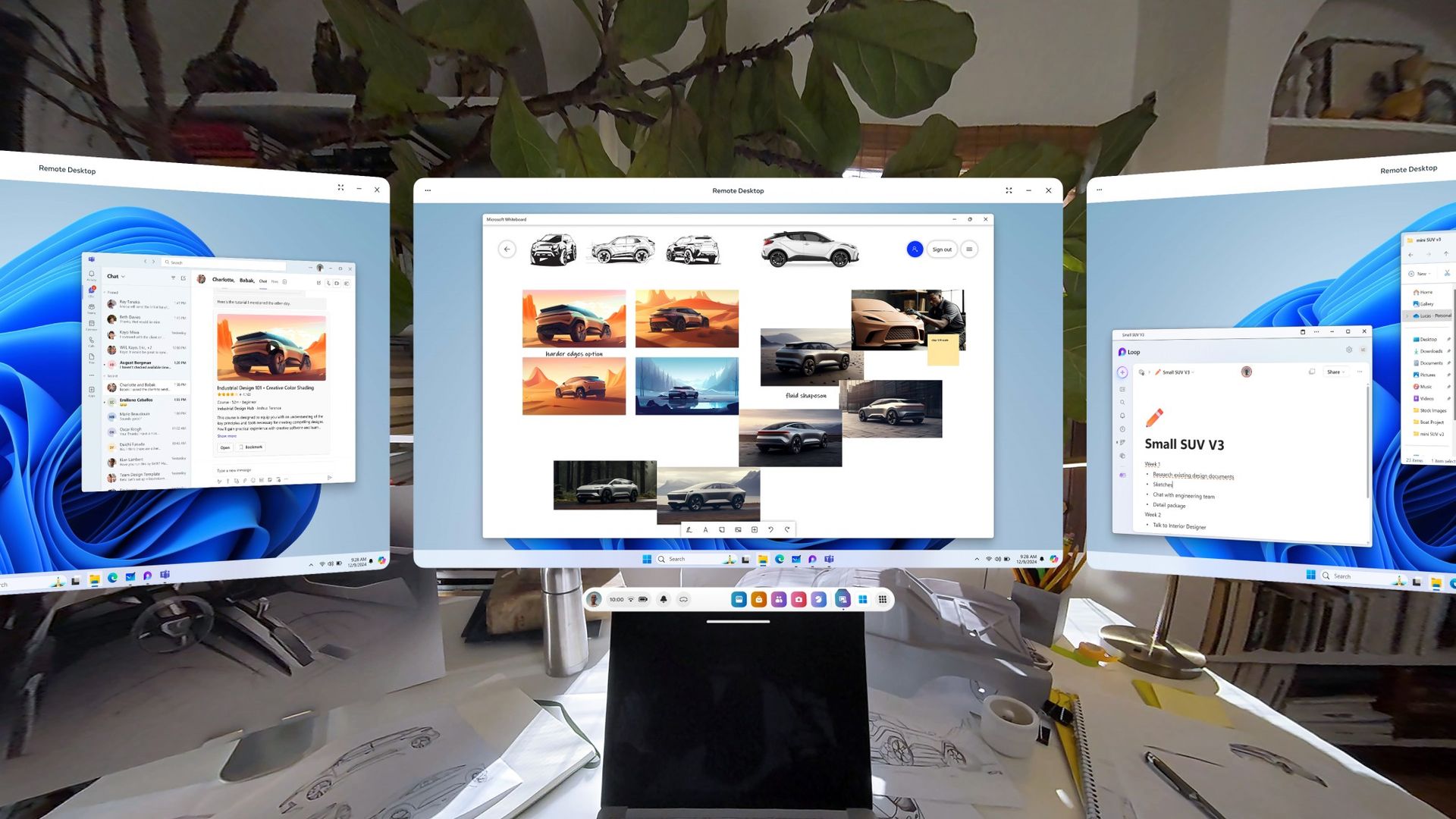
After years of silence, Microsoft adds basic features to Mixed Reality

Using your virtual reality headset as a monitor for your Windows 11 PC just got a lot better.

Remember when mixed reality and virtual reality were the biggest buzzwords in tech? Before the advent of ChatGPT and the latest wave of AI, tech companies spent billions on the metaverse and VR.

I'd argue that the VR push yielded more concrete results than AI, but that's a topic for another day. Today's news is that mixed reality is still here, and Microsoft just released a new feature for it.

A recent update to Mixed Reality Link greatly improves the experience by allowing you to use your headset's microphone and cameras directly within Windows.

Mixed Reality Link is an app that lets you connect up to three virtual monitors on a supported headset to your PC. With the app, you can extend your computing experience to a device like the Meta Quest 3 or Meta Quest 3S. Mixed Reality Link works through a wired or wireless connection.

Mixed reality may not dominate headlines like it used to, but Microsoft still invests time and effort into it. Mixed Reality Link received an update to work with Windows on Arm last year and is even compatible with Windows 365 Cloud PC.

But Mixed Reality Link had strange limitations that made the experience awkward. If you wanted to use a microphone, you had to have one hooked up to your PC and then talk at it from a distance. Mixed reality headsets have built-in microphones, so it's strange that it took this long to integrate them with Mixed Reality Link.

The update to Mixed Reality Link version 26.9105.9070.0 adds support for using your headset's microphone, sharing your headset's camera with Windows applications, and having your Meta avatar appear as a camera source.

Windows Central take

Person playing Oculus Quest with two controllers

(Image credit: Future)

I miss virtual reality and mixed reality trending in the news. I covered the Gear VR, the original Quest headset, and the rebrand of Oculus to Meta. I interviewed a game developer in Australia while facing him in his own game. I sideloaded songs onto Beat Saber. It was a fun time in tech.

I never thought that the metaverse was going to take off. I still can't believe people spent money on virtual real estate. But by golly it was fun to cover Azure Spatial Anchors turning a laser tag arena into an intercontinental battle royale.

You can still get a VR headset, of course. There are games worth playing and experiences worth exploring. Microsoft has done some clever stuff to make headsets into virtual offices. Mixed Reality Link's latest update is overdue, but it's a reminder of what mixed reality headsets can do.

Blank Pixel

Click to join us on r/WindowsCentral

Join us on Reddit at r/WindowsCentral to share your insights and discuss our latest news, reviews, and more.

❌