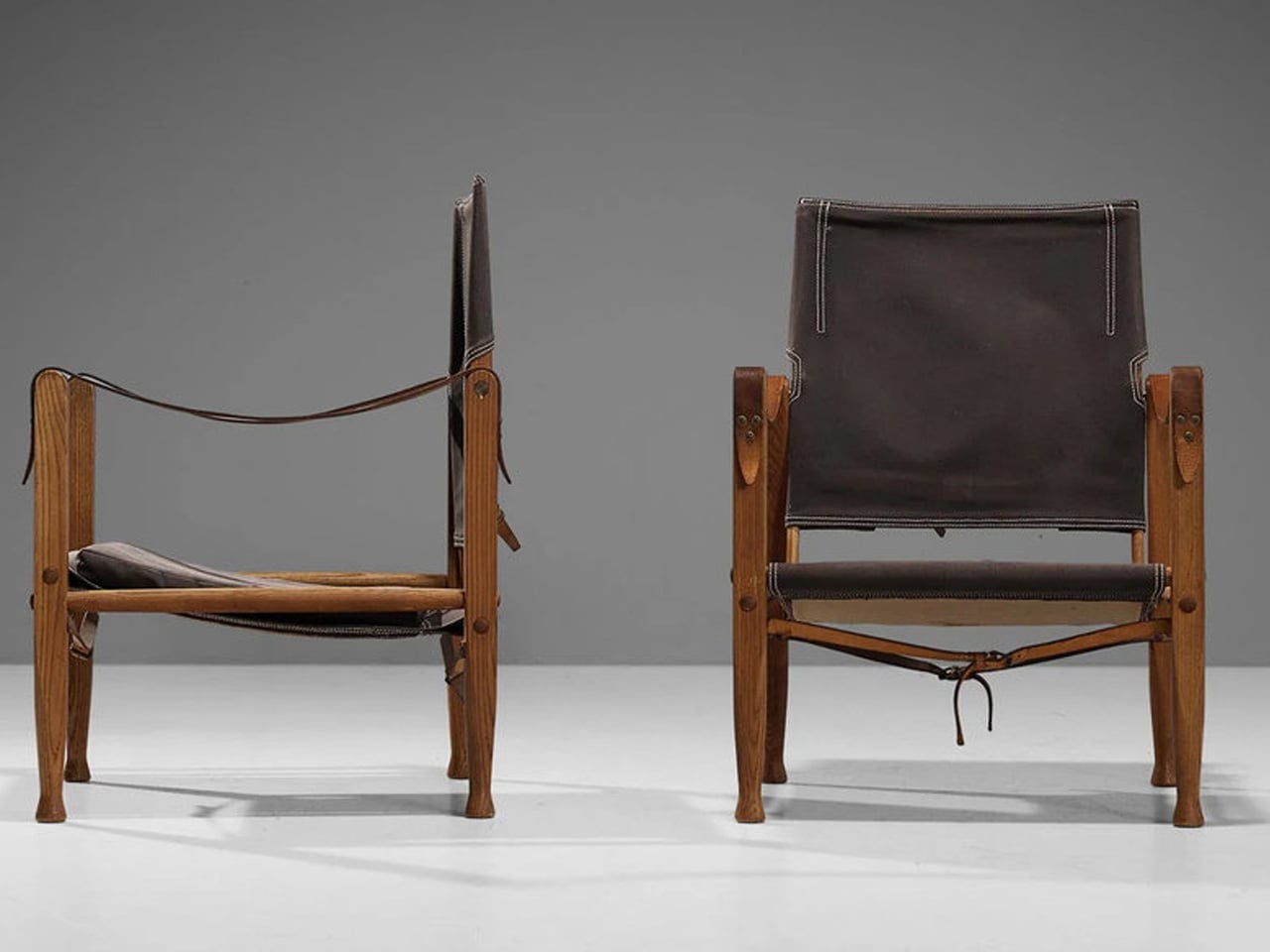
Cork is everywhere in design, and yet it’s almost always decorative. A tile floor. A pin board. A wine stopper. Copenhagen-based furniture designer Chiara Verde looked at that assumption and quietly dismantled it. Her Strata lounge chair doesn’t use cork as a finish — it uses cork as the architecture.
The chair is built around a layered composite system: thin cork sheets alternated with natural fibre textiles, laminated together to form load-bearing shells. The textile reinforcement isn’t there
Cork is everywhere in design, and yet it’s almost always decorative. A tile floor. A pin board. A wine stopper. Copenhagen-based furniture designer Chiara Verde looked at that assumption and quietly dismantled it. Her Strata lounge chair doesn’t use cork as a finish — it uses cork as the architecture.
The chair is built around a layered composite system: thin cork sheets alternated with natural fibre textiles, laminated together to form load-bearing shells. The textile reinforcement isn’t there for aesthetics — it gives the cork directional stiffness and structural performance it simply doesn’t have on its own. A minimal metal frame handles only the points under concentrated load, leaving the cork shells to carry the rest. It reads, visually, like a chair slung from material intelligence rather than convention.
Verde’s background leans heavily into process. Her practice is built on material experimentation, prototyping, and structural research — work that treats the studio bench as an extension of the design itself. Strata wasn’t conceived and then executed. It emerged through months of testing, adjustment, failure, and recalibration. A cork stool came first — a full-scale testbed that validated the structural logic before Verde committed it to a larger form. The lounge chair is the result of everything that came before it.
What makes Strata worth paying attention to isn’t just the material provocation — it’s how restrained the final form is. The chair doesn’t announce itself. It holds the visual language of the natural world: organic in silhouette, warm in texture, quietly confident in its proportions. Cork has an inherent thermal quality to it, a softness underfoot and underhand that synthetic materials spend millions trying to replicate. Here, it’s simply doing its job.
The lineage of the slung chair runs deep — leather over steel tubing defined a generation of modernist seating in the early and mid-20th century. Verde is working in that same formal territory, proposing laminated cork as the next honest alternative to leather: a material that gives, breathes, and ages with use rather than against it.
Strata sits in a growing conversation around material-led design — not sustainability as branding, but sustainability as methodology. Verde isn’t marketing cork. She’s interrogating it, and the chair is the proof of concept. For a material that has spent decades on the periphery of furniture design, Strata might be the argument it needed all along.
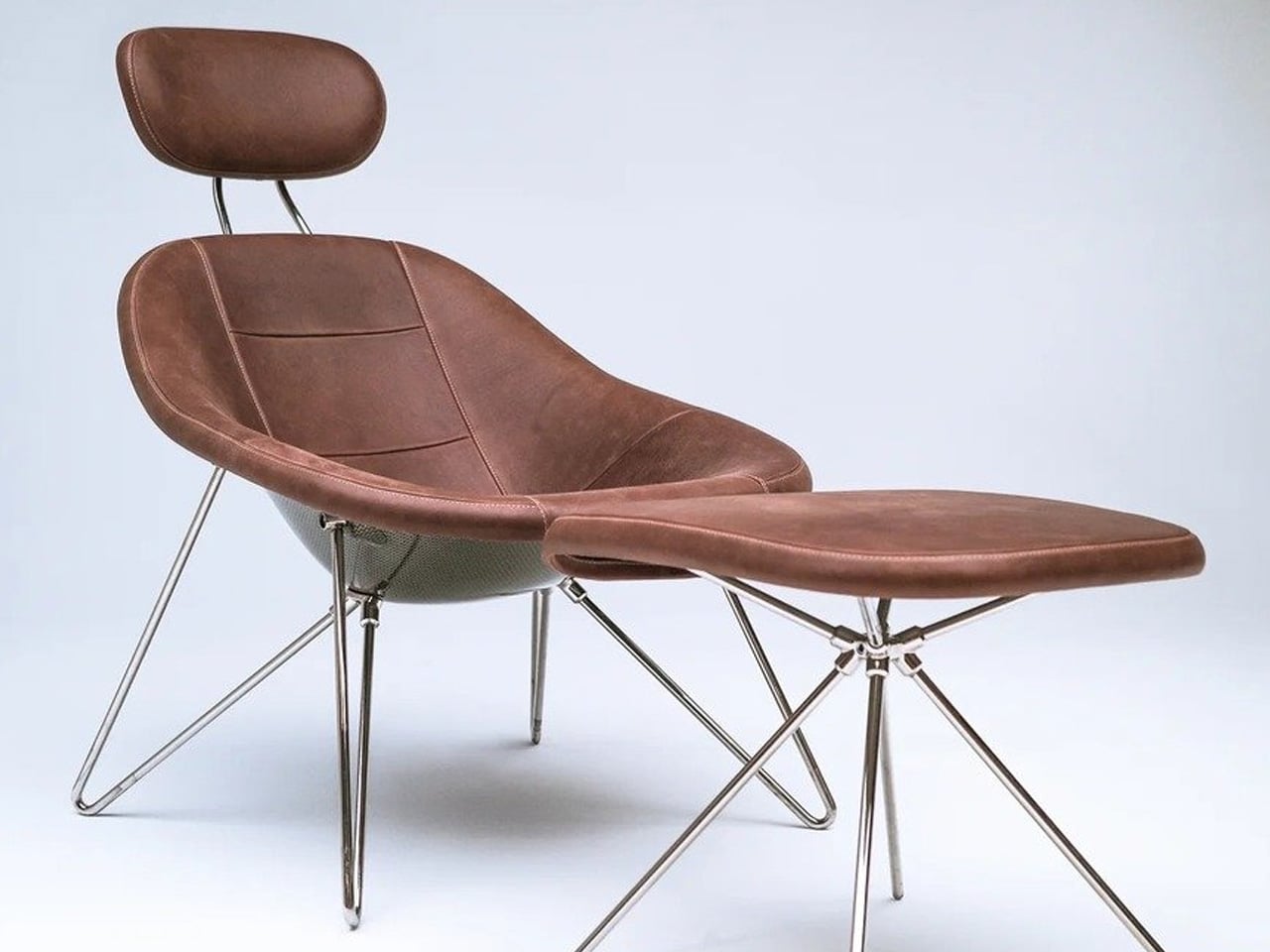
Most furniture doesn’t have a backstory worth telling. The Maniac Chair does. It looks, from across the room, like it wandered out of a 1950s Danish design studio — until you get close enough to realize it’s built from the same bloodline as a $2.35 million hypercar.
Oilstainlab is the California-based studio founded by Ukrainian-born twins Iliya and Nikita Bridan — high school dropouts trained in Italy and California, responsible in their previous lives for 6.5 million street cars. In 2018, the
Most furniture doesn’t have a backstory worth telling. The Maniac Chair does. It looks, from across the room, like it wandered out of a 1950s Danish design studio — until you get close enough to realize it’s built from the same bloodline as a $2.35 million hypercar.
Oilstainlab is the California-based studio founded by Ukrainian-born twins Iliya and Nikita Bridan — high school dropouts trained in Italy and California, responsible in their previous lives for 6.5 million street cars. In 2018, they started Oilstainlab with a single promise: never to be sane. The result was the HF-11, a limited-production hypercar of which only 25 will ever exist. The Maniac Chair is the furniture-world extension of that same obsession, sold through House Dé Stains, Oilstainlab’s lifestyle brand.
Designer: Oilstainlab
The chair’s shell is built on a CNC-machined aluminum frame wrapped in a hand-laid carbon fiber shell. That detail matters. Hand-laid carbon fiber isn’t a production shortcut — it’s the language of motorsport, of race seats and monocoques shaped around bodies doing 200 mph. Here, it’s shaped around a body doing nothing more than sitting. That deliberate mismatch is the whole point. The midcentury silhouette is familiar enough to read as furniture; the material is foreign enough to make you question what you’re actually looking at.
The name traces back directly to the HF-11, which Oilstainlab offered in an exclusive “Maniac” package for 11 of its 25 cars. The chair carries that identity forward — it’s not merchandise, it’s an extension of a design philosophy that treats excess and restraint as two sides of the same surface. The carbon fiber reads as raw and technical; the form reads as warm and considered. Neither cancels the other out.
What Oilstainlab has done here is something furniture designers rarely attempt, and automotive designers rarely bother with: they’ve made a chair that has genuine provenance. It isn’t inspired by cars in the way that means “we added some aggressive lines.” It shares DNA with an actual race seat.
The prep process before upholstery even echoes motorsport fabrication. For a studio built on the idea that sanity is optional, the Maniac Chair is a surprisingly coherent object. It knows exactly what it is — a piece of furniture for people who want to sit inside a design argument — and it doesn’t flinch.
Gudmundur Ludvik had a question he couldn’t let go of. Why should a folding chair be a compromise? The answer, for decades, had been accepted without much pushback: folding chairs sacrifice comfort for storage, aesthetics for portability. The category had been quietly settled. Ludvik disagreed.
The Backflip, produced by HAY, is his rebuttal. An Icelandic designer based in Vejle, Denmark, Ludvik trained first as a carpenter and cabinetmaker before studying sculpture at the Icelandic Academy of A
Gudmundur Ludvik had a question he couldn’t let go of. Why should a folding chair be a compromise? The answer, for decades, had been accepted without much pushback: folding chairs sacrifice comfort for storage, aesthetics for portability. The category had been quietly settled. Ludvik disagreed.
The Backflip, produced by HAY, is his rebuttal. An Icelandic designer based in Vejle, Denmark, Ludvik trained first as a carpenter and cabinetmaker before studying sculpture at the Icelandic Academy of Arts and furniture design at the Danish Design School, graduating in 2002. That layered background — craft, art, design — shows in the Backflip. The chair doesn’t announce its ingenuity. It keeps it entirely to itself.
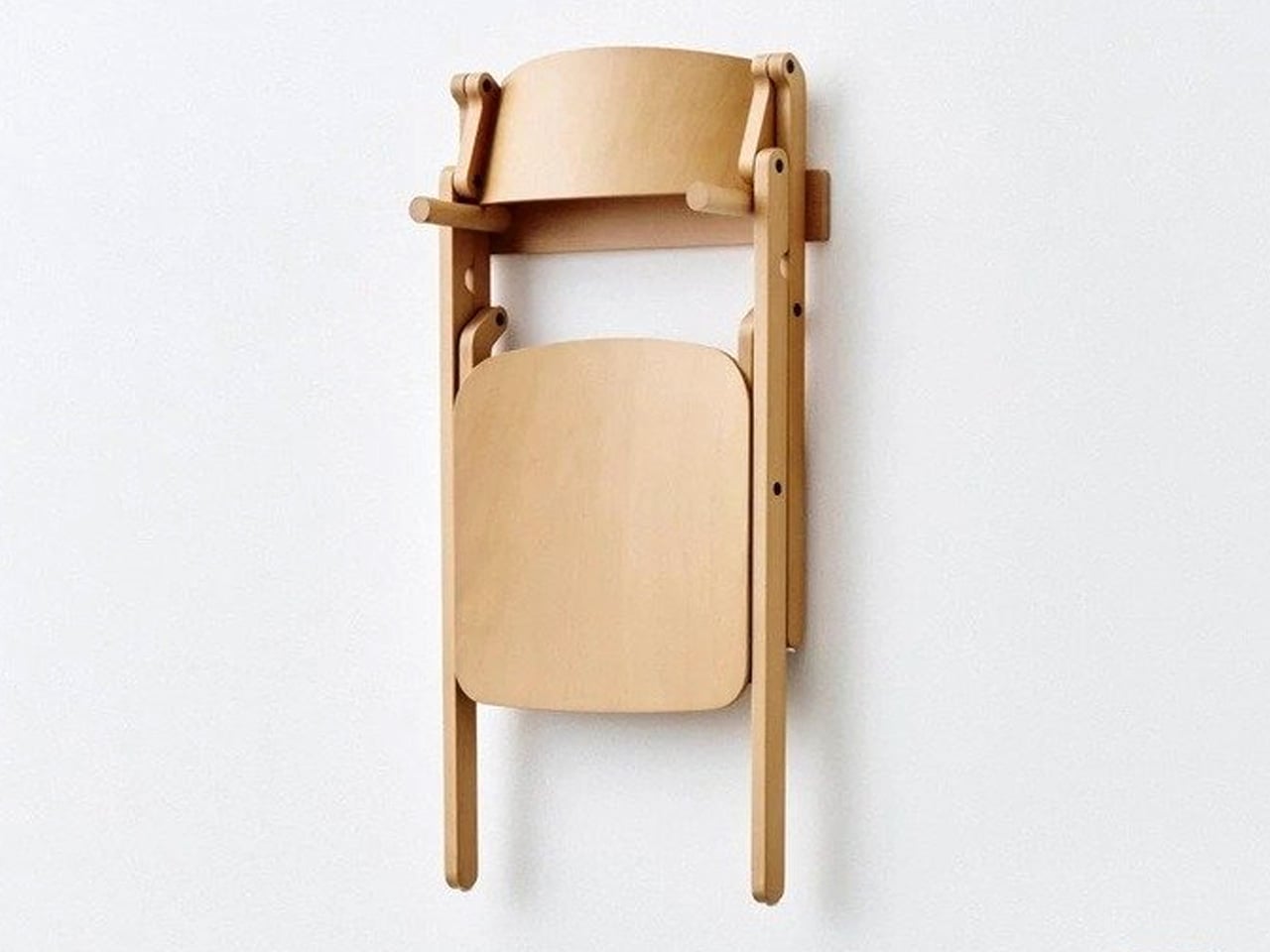
The defining feature is a folding mechanism concealed within the backrest. A single rotation collapses the chair in one continuous motion; one hand is all it takes. There are no exposed hinges, no visible hardware, no visual record of the engineering beneath. The mechanism is part of the structure rather than an addition to it, and that distinction is everything. From the front, the Backflip looks like a chair that simply sits well. Which is the point.
Ludvik’s stated ambition was to approach the folding chair typology from the opposite direction: create a good chair first, and a folding chair second. The frame is solid beech wood, lacquered, with a moulded plywood backrest. The profile is clean and unhurried, shaped by the logic of material and construction rather than any impulse toward decoration. Available in natural beech across a range of coloured finishes, it translates across private dining rooms and public hospitality interiors without trying too hard in either direction.
HAY also offers a matching wall bracket, designed to hold one or two folded Backflip chairs flush against any wall. It’s a satisfying extension of the concept: a chair that folds becomes genuinely space-saving only when storage itself is resolved. The bracket completes that thought without making a fuss about it.
The Backflip was previewed at 3 Days of Design in Copenhagen in 2026, where it sat alongside work from Jasper Morrison and Philippe Malouin in HAY’s exhibition at O-Overgaden, a contemporary art institution in Christianshavn. In that company, it held its own, which is a fair measure of how resolved the design feels.
What Ludvik has made is not a clever folding chair. It’s a chair that happens to fold, and the difference is considerable. That the mechanism disappears entirely into the backrest is less a magic trick than a design argument, made quietly, about where the priorities should lie.
It was inevitable. Razer has successfully attached Chroma RGB to mice, keyboards, streaming keylights, mousepads, microphones, and probably a stray toaster if you leave it in their California design headquarters long enough (see their history of weird and experimental hardware). So, it was only a matter of time before they targeted the ultimate piece of battle station real estate: your backside.Meet the Razer Soma Chroma, a wireless RGB gaming chair launching wor
It was inevitable. Razer has successfully attached Chroma RGB to mice, keyboards, streaming keylights, mousepads, microphones, and probably a stray toaster if you leave it in their California design headquarters long enough (see their history of weird and experimental hardware). So, it was only a matter of time before they targeted the ultimate piece of battle station real estate: your backside.
Do you absolutely need a glowing throne that dynamically syncs with your desktop gameplay? No, of course not. Your skill in Valorant isn't going to magically jump three tiers just because your headrest is radiating neon green. But do we desperately want it anyway? Yes, obviously. It’s Razer, and adding immersive RGB to things we didn't know needed it is exactly why we love them.
The Razer Soma Chroma is the wireless RGB gaming chair your setup did not know it needed. It blends reactive lighting with all‑day comfort and cuts cable clutter entirely thanks to an ultra‑low latency HyperSpeed wireless connection powered by a simple USB‑C power bank. The dual‑density cold‑cured foam seat and built‑in ergonomic lumbar arch keep your posture neutral and your backside relaxed through marathon sessions.View Deal
The light show: Completely wireless RGB immersion
(Image credit: Razer)
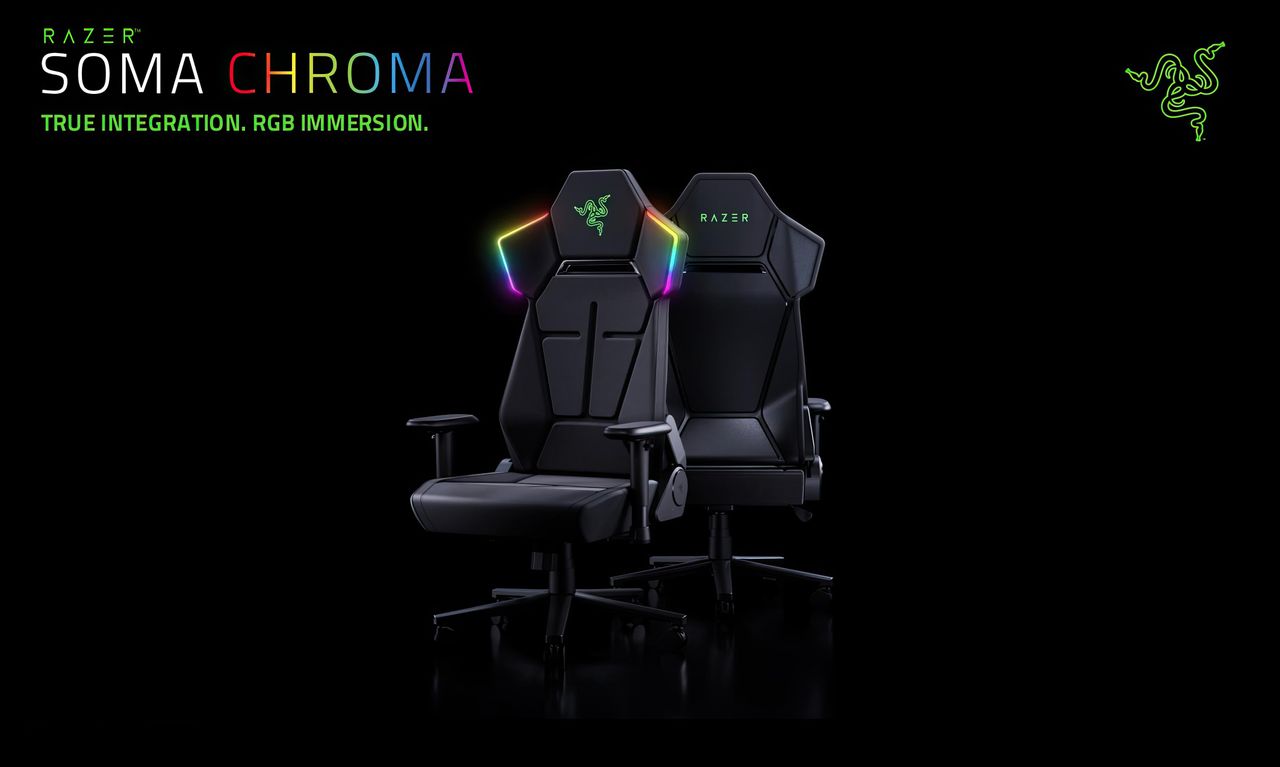
The marquee feature here is the fully integrated, reactive RGB lighting embedded seamlessly into the headrest's shoulder wings. Powered by the venerable Razer Chroma RGB engine, it hooks directly into the Chroma SDK to react in real-time to in-game events across more than 300 integrated titles—including heavy hitters like Fortnite, Valorant, and Cyberpunk 2077. If you aren’t actively gaming, you can cycle through 10 dynamic presets and 16.8 million colors via Razer Synapse to perfectly dictate your setup's vibe.
But here is the genuinely clever bit: it's entirely wireless. Nobody wants to roll their chair over a rigid power cord and accidentally yank a $4,000 gaming rig off their desk. Instead, the Soma Chroma transmits data wirelessly via ultra-low latency Razer HyperSpeed 2.4 GHz for your PC, alongside Bluetooth LE for mobile devices.
To juice the actual LEDs, Razer integrated a tidy storage pocket on the back designed to house a standard external power bank (they recommend a hefty 20,000 mAh or larger unit pushing 20W+ and PD 2.0+) via an included 200 mm USB-C cable. If you don't care about a clean, wire-free aesthetic, you can also just run it straight to a wall adapter. There’s even a built-in control panel directly on the edge of the seat base to let you tweak brightness, cycle effects, or switch wireless inputs on the fly without opening an app.
Comfort Check: Saving our posteriors from the Iskur V2
The Razer Iskur V2 from our recent review. (Image credit: Future)
When Razer dropped the original Iskur, it blew us away with an aggressive, mechanical piston-powered lumbar support system. The premium Iskur V2 doubled down on that adaptive lumbar tech, earning massive praise for back health—but it also brought a punishingly firm seat pan. Meanwhile, the mid-range Iskur V2 X ($299) offered a much softer high-density foam seat but stripped out the adjustable lumbar support completely.
The Soma Chroma chart-corrects here with a brand-new Dual-Density Cold-Cured Foam Seat Cushion. It utilizes two distinct layers working in tandem: a softer upper layer that contours snugly to your body, sitting atop a firmer base layer that maintains its structural integrity over time. The goal is to keep the seat from collapsing or hardening prematurely during marathon sessions while actually offering plush, pressure-relieving comfort.
For back health, Razer ditched the complex, dial-driven mechanical pieces of the Iskur series in favor of a Built-In Ergonomic Lumbar Arch. It's a static, contoured support curve integrated directly into the backrest. While you lose the active left-and-right swiveling of the Iskur V2, you get a reliable curve that won’t shift out of place like a loose lumbar pillow.
Where the features got trimmed
Where the powerbank gets stowed for a "wireless" RGB experience. (Image credit: Razer)
To hit that $499.99 sweet spot while packing custom diffusers, a wireless control module, and a built-in control panel, Razer did have to make a few expected concessions:
2D Armrests: The Soma Chroma features basic 2D armrests limited strictly to height and swivel adjustments, a noticeable step down from the highly maneuverable 4D armrests on the Iskur V2 that slide and twist every which way.
No Built-in Haptics: If you were hoping this would natively integrate the bone-shaking directional haptics of the recently released Razer Freyja gaming cushion, you're out of luck. This is strictly a visual show, though you could easily strap a Freyja onto it if you want the ultimate rumble-and-glow cocktail (and I'll probably do that, since I have one of those).
On the mechanical side, it remains a total tank. You get a reinforced steel frame, a 5-star powder-coated steel wheelbase, a Class 4 gas lift, and premium 6 cm PU caster wheels—the latter being a massive upgrade over the friction-heavy plastic wheels that held back the Iskur V2. It reclines up to 155° with a butterfly tilt mechanism, safely supports up to 150 kg (331 lbs), and comfortably accommodates gamers up to 6'6".
Our review unit just arrived!
Yes, there are buttons on top of the headrest to control the RGB Chroma. (Image credit: Razer)
The shining throne literally just rolled through our doors. We'll be assembling it, unboxing our beefiest power banks, and seeing if the dual-density foam can truly save our glutes during late-night gaming sessions.
Stay tuned for our full, deep-dive review coming shortly (and you'll be able to see it on future Windows Central Podcasts).
The Razer Soma Chroma is the wireless RGB gaming chair your setup did not know it needed. It blends reactive lighting with all‑day comfort and cuts cable clutter entirely thanks to an ultra‑low latency HyperSpeed wireless connection powered by a simple USB‑C power bank. The dual‑density cold‑cured foam seat and built‑in ergonomic lumbar arch keep your posture neutral and your backside relaxed through marathon sessions.View Deal
Join us on Reddit at r/WindowsCentral to share your insights and discuss our latest news, reviews, and more.
Press images of the Razer Chroma gaming chair, in black, with RGB lighting on the headrest
Press images of the Razer Chroma gaming chair, in black, with RGB lighting on the headrest
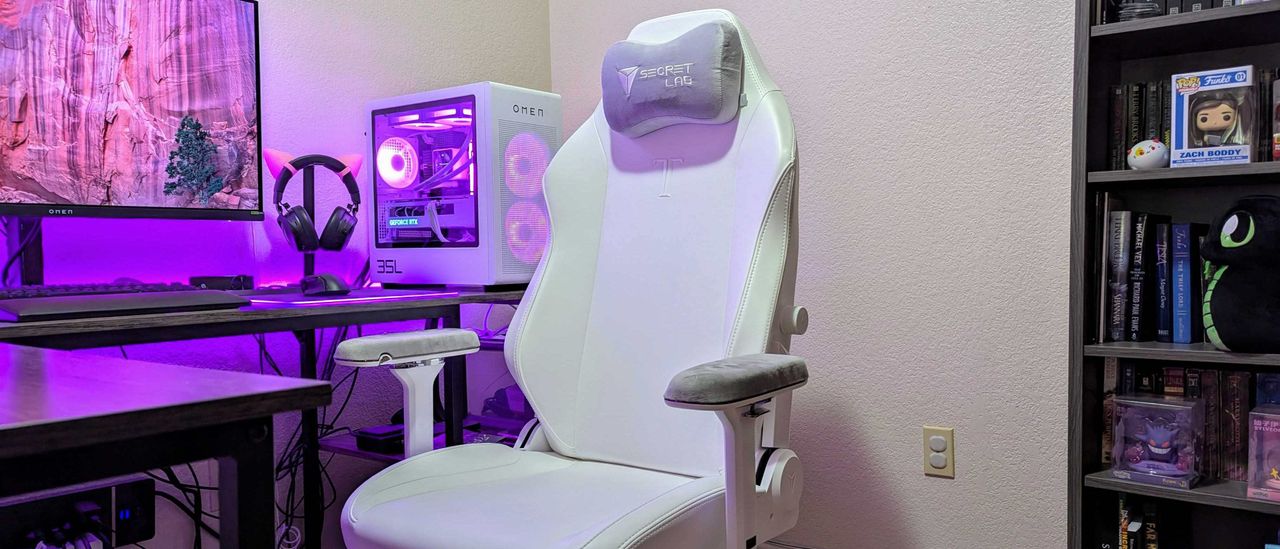
Secretlab's new $49 lockable casters bring a much-needed flexibility fix to the TITAN Evo, though XL model owners are still being left behind.The Secretlab TITAN Evo NanoGen Edition seen at an angle, showing the backrest and seat.
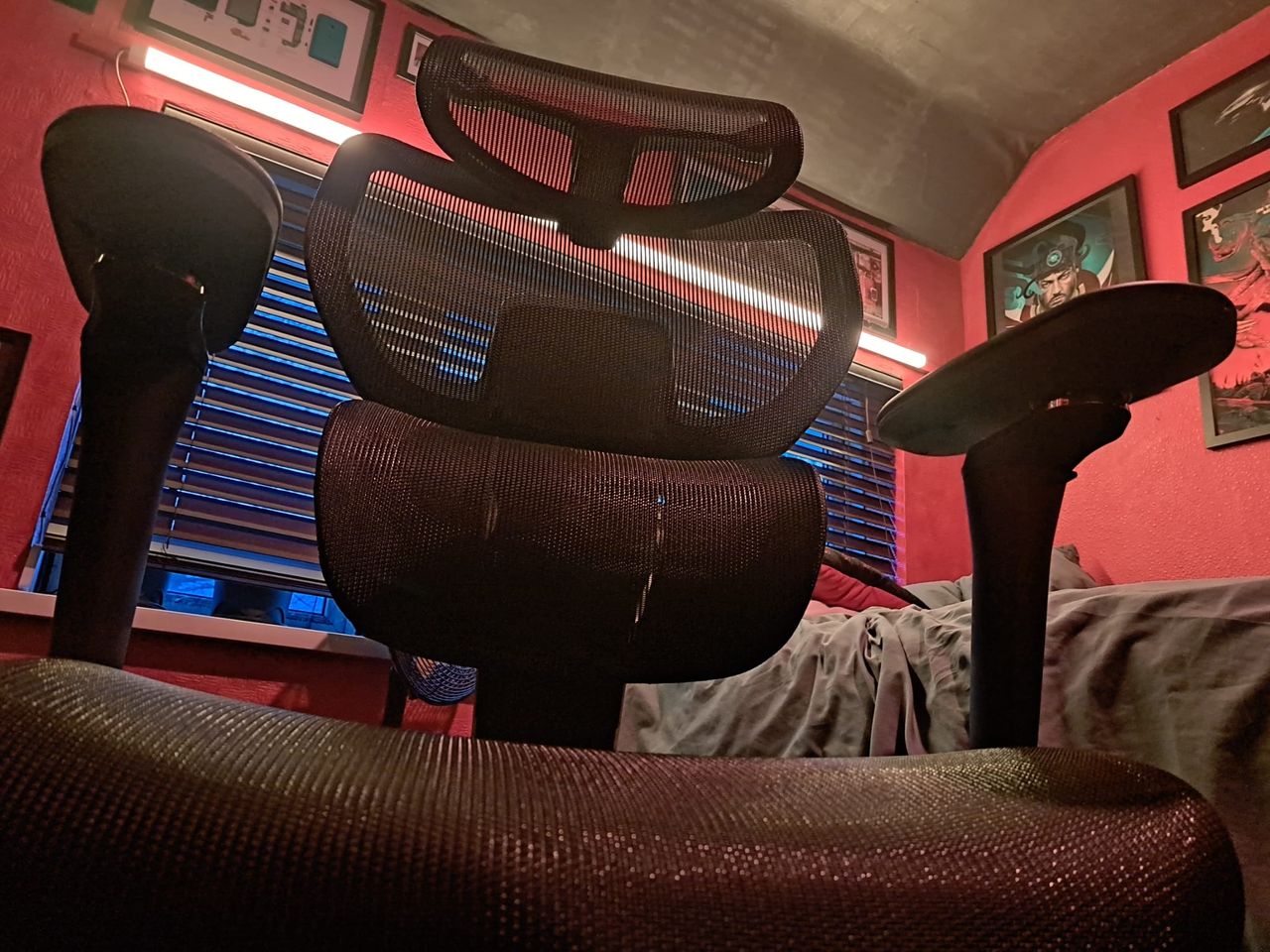
Flexispot's C7 Morpher is a premium office chair with advanced adjustments, an ergonomic design, and comfortable materials to get you cozy for work or gaming.Personally taken screenshot of the FlexiSpot C7 Morpher chair
Flexispot's C7 Morpher is a premium office chair with advanced adjustments, an ergonomic design, and comfortable materials to get you cozy for work or gaming.
Personally taken screenshot of the FlexiSpot C7 Morpher chair

 Connexion