Vue normale

NVIDIA confirms RTX Spark configurations and availability: First devices expected to begin shipping as soon as next month, with two N1X configs on offer

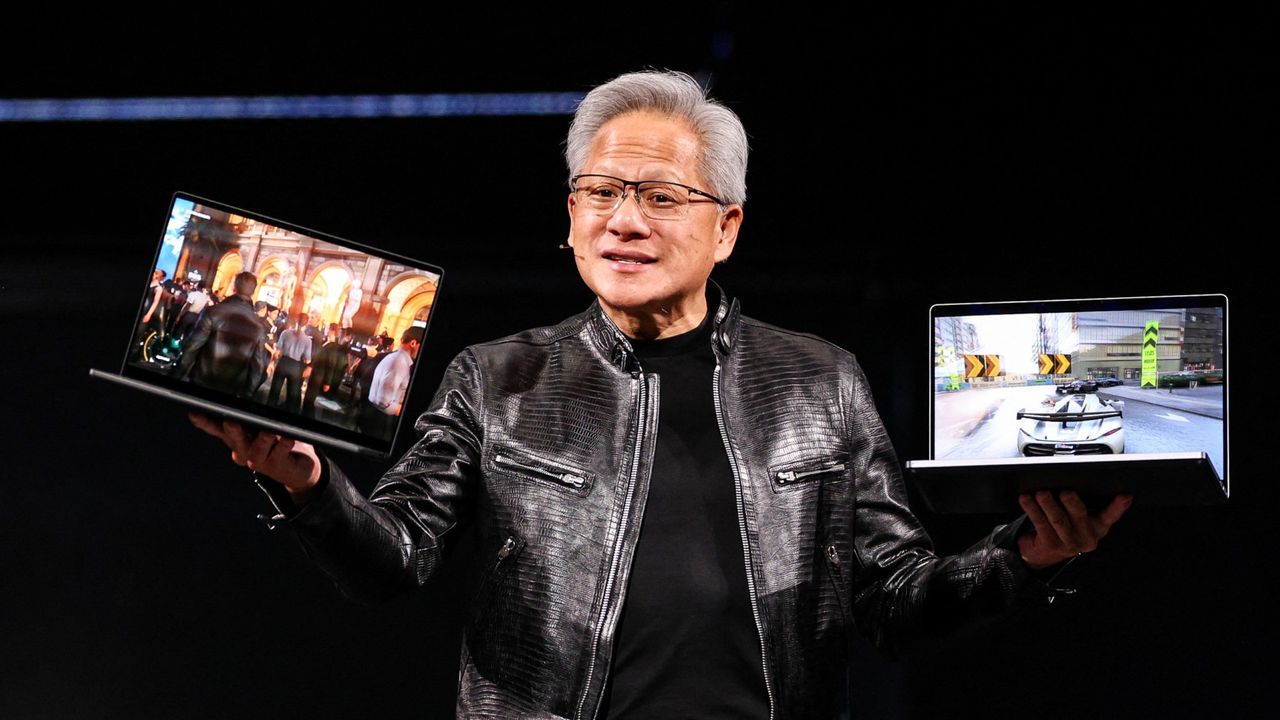
NVIDIA has confirmed new details and availability info about its upcoming RTX Spark SoC for Windows 11 devices. At IFA 2026, the company announced that it expects the first RTX Spark laptops to begin shipping as soon as next month, sometime in October depending on the OEM. Additionally, two new devices are joining the launch lineup; the Lenovo Yoga 9n laptop and Acer SFF desktop PC.

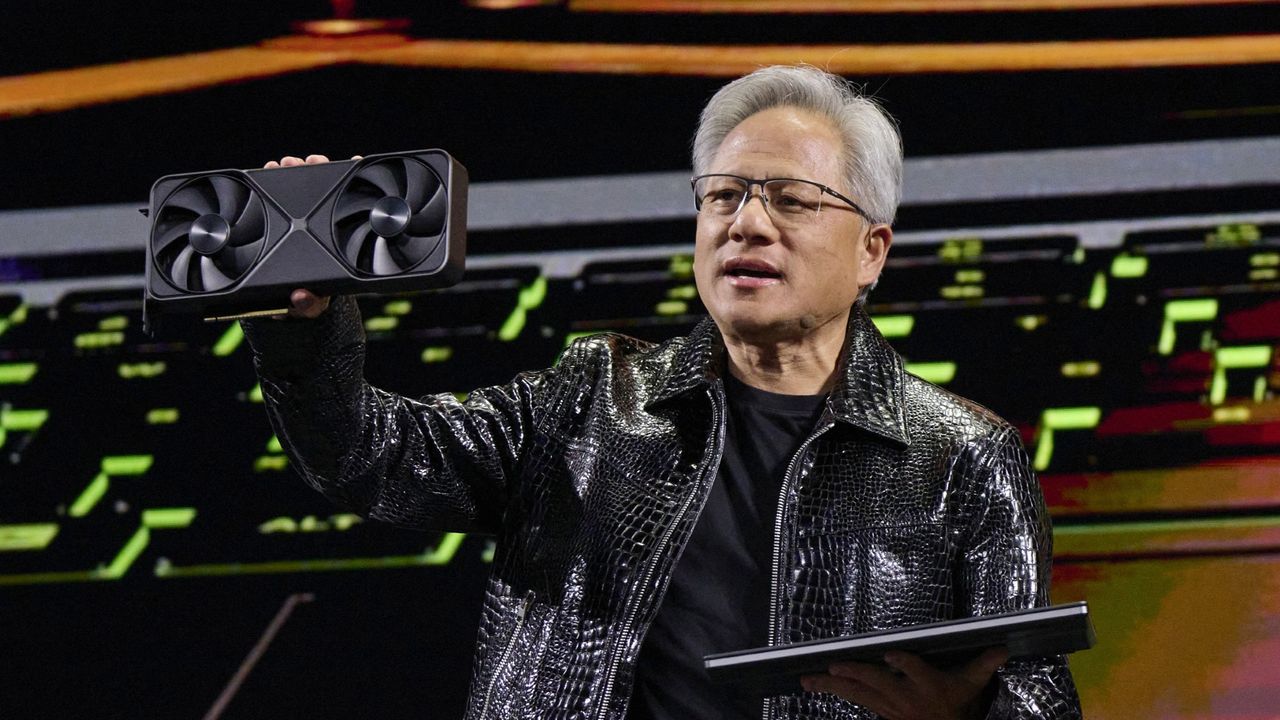
Alongside availability news, NVIDIA has also confirmed configuration details for the upcoming RTX Spark chips. There will be two different configurations of the RTX Spark N1X, with configurable RAM and storage based on what OEMs wish to offer. The high-end RTX Spark will be targeted at desktops and laptops, with support for up to 128GB unified memory, 20 CPU cores, and 6144 Blackwell RTX cores.

There will also be a less powerful RTX Spark configuration exclusively for laptops, which can only be configured with 24GB or 32GB unified memory, a 5120-Core Blackwell RTX GPU, and an 18-core CPU. While still a high-end chip, this should allow RTX Spark to ship in laptops that cost closer to $2,000, significantly lower priced than the high-end SoC.

Category

Specification 1

Specification 2

GPU Cores

6144-core Blackwell RTX GPU

5120-core Blackwell RTX GPU

CPU Cores

20-core Grace CPU

18-core Grace CPU

Memory

24-128 GB Unified Memory

24-32 GB Unified Memory

Form Factors

Laptops and Compact Desktops

Laptops

NVIDIA is touting RTX Spark as the best SoC for AI development on Windows. It supports NVIDIAs full AI stack, as well as the Windows Agent Framework and 120B parameter agents. It also supports hardware accelerated 4:2:2 video for video editing professionals.

It's also good for gaming, with expected 100 frames per second in many games at 1440p with RT and DLSS. In fact, NVIDIA has announced that many popular and mainstream gaming developers have committed to supporting RTX Spark with native games and frameworks so that there are no compatibility issues with the RTX Spark's Arm architecture.

While the first RTX Spark devices are expected to begin shipping in October, it's not yet clear which OEMs will be first out the gate. All major Windows hardware makers, including Dell, Lenovo, HP, ASUS, and Microsoft have all announced RTX Spark devices that are expected to ship by the end of this year. Devices like the Surface Laptop Ultra have not yet been given a release date, though Microsoft typically does aim to ship new Surface PCs in October.

We'll be sure to keep you updated on all the RTX Spark device availability as more information is revealed by OEMs. In the meantime, are you considering an RTX Spark device as your next Windows PC? Let us know in the comments!

Click to join us on r/WindowsCentral

Join us on Reddit at r/WindowsCentral to share your insights and discuss our latest news, reviews, and more.
NVIDIA reinforces itself as an AI-first company nowadays with an almost $13 billion acquisition of Hugging Face

If you're not a keen follower of the AI space, then the name Hugging Face may not mean anything to you. But the company has just been acquired by NVIDIA, which continues to reinforce its new identity as an AI company.

Announced today by NVIDIA CEO Jensen Huang, Hugging Face will be joining the company in an acquisition priced at just under $13 billion.

Hugging Face is an open platform that has been likened to GitHub, except for local, open AI models that anyone can use. NVIDIA's plans are to keep Hugging Face the same as it is today but to scale. Because if you're not scaling AI these days, what are you even doing?

"Hugging Face will remain an open platform for the entire AI ecosystem. Developers will choose the models they want, the frameworks they want, the clouds and inference service providers they want and the computing platforms they want. NVIDIA compute will not be required to build on or deploy through Hugging Face.

Hugging Face will continue to support open source and open weight models from across the ecosystem, from every model builder. It will continue to support multi-cloud and multi-accelerator development and deployment, so builders can use the hardware and infrastructure that best fit their work."

Keeping personal opinions about AI aside, I'm certainly more in favor of real people being able to use AI models without having to rely on massive, un-evironmentally friendly data centers from the likes of Microsoft and OpenAI.

AI is very much here to stay, whether we choose to embrace it or not. But I'm definitely on the side of being able to use it however you want to use it and without feeding all your data to companies that don't necessarily deserve it.

NVIDIA is very much AI-first these days, though. Gone are the days we'd all look at its shiny new GPUs, and our only thoughts would be about gaming. It does make you ponder what the future holds for gamers, though.

I've got an RTX 5090, for example, and it's still overkill for gaming. But with 32GB of VRAM and a ton of compute horsepower, it's pretty damn good for local AI use. But is this where future products will be aligned first? Everything's getting more expensive, and AI is definitely to blame for a good chunk of it.

Alas, here we are. If you use Hugging Face currently, it doesn't sound like anything's going to change. But if you're a gaming customer of the company, as I am, I am starting to wonder how important we're going to be in the future.

Click to join us on r/WindowsCentral

Join us on Reddit at r/WindowsCentral to share your insights and discuss our latest news, reviews, and more.

  • ✇Korben
  • ffmpeg - Doubler le framerate d'une vidéo avec votre GeForce
    Depuis ce week-end, bonne nouvelle les zamis, puisque ce bon vieux ffmpeg sait maintenant fabriquer des images qui n'ont jamais été filmées. Oui oui ! Et ça c'est possible grâce à un filtre qui s'appelle fruc_vulkan, qui permet de calculer le mouvement entre deux images grâce au bloc dédié des GeForce RTX, pour ensuite synthétiser ce qui manque entre les deux. Grâce à ça, un 24 images par seconde ressort sans souci en version 60 images par seconde. La cadence de sortie se paramètre, donc vous po
     

ffmpeg - Doubler le framerate d'une vidéo avec votre GeForce

1 septembre 2026 à 08:00

Depuis ce week-end, bonne nouvelle les zamis, puisque ce bon vieux ffmpeg sait maintenant fabriquer des images qui n'ont jamais été filmées. Oui oui ! Et ça c'est possible grâce à un filtre qui s'appelle fruc_vulkan, qui permet de calculer le mouvement entre deux images grâce au bloc dédié des GeForce RTX, pour ensuite synthétiser ce qui manque entre les deux. Grâce à ça, un 24 images par seconde ressort sans souci en version 60 images par seconde.

La cadence de sortie se paramètre, donc vous pouvez aussi faire du 25 vers du 50, du 30 vers 60, ou n'importe quelle valeur intermédiaire. C'est donc beaucoup plus souple que le filtre équivalent côté AMD, frc_amf, qui ne sait que doubler la fréquence et ne fonctionner qu'en DirectX...

Fabriquer ce genre d'images intercalaires n'a rien de neuf, cela dit... L'outil RIFE convertissait déjà du 24 fps en 96 en 2020. Mais ce qui change ici, c'est qu'il n'y a plus de chaîne externe, plus d'aller-retour par des milliers de PNG, puisque tout tient dans le graphe de filtres, entre le décodage et l'encodage.

Le filtre logiciel historique de ffmpeg, minterpolate, existe pourtant depuis des années mais c'était loin d'être du temps réel. Alors que là, le vrai gain avec cette nouvelle feature, c'est qu'on passe en full temps réel. Ça veut dire que sur un catalogue à réencoder, l'interpolation cesse d'être l'élément qui bloque toute la chaîne de conversion.

Pour l'essayer il vous faut une RTX 30 ou plus récente. Il faut aussi compiler une version de développement car ce filtre est arrivé après la sortie de ffmpeg 9.0, ce qui veut dire que pour le moment, il n'est dans aucune release et ne sera dans aucun paquet avant la prochaine.

La commande suit ensuite le motif habituel des filtres Vulkan, qui veulent les images en mémoire GPU :

ffmpeg -init_hw_device vulkan=vk:0 -filter_hw_device vk -i entree.mp4 -vf "format=yuv420p,hwupload,fruc_vulkan=fps=60,hwdownload,format=yuv420p" sortie.mp4

L'auteur du filtre prévient quand même qu'en 2160p24, les réglages par défaut ne suivront pas en temps réel et qu'il faudra alors descendre la qualité d'estimation du mouvement. Ça s'écrit comme ceci :

fruc_vulkan=fps=60:perf=medium:grid=2

En traitement par lots maintenant, la question ne se pose pas, c'est juste plus lent.

Maintenant, les pros de l'encodage, redescendez de votre chaise parce que j'ai quand même quelques mauvaises nouvelles... Tout d'abord, on n'a aucune stat indépendante sur le débit ou la qualité. Et il y a aussi un défaut que l'auteur du patch documente lui-même... En fait, dans les zones sans texture, le moteur invente un mouvement faux mais cohérent, qui laisse des "fantômes" autour des objets. La parade existe heureusement, mais c'est une heuristique, qui demande quelques réglages à la main sur des échantillons.

Et il y a aussi un coût qu'on oublie... Car doubler la cadence, c'est donner deux fois plus d'images à avaler à l'encodeur, donc, il y a toujours une espèce de goulot d'étranglement. Et puis après il y a le rendu... un film de cinéma en 24 images par seconde qu'on monte à 60 prend immédiatement un aspect téléfilm que les cinéastes détestent !! Imaginez l'Odyssée de Nolan avec l'aspect visuel de Plus Belle La Vie... Ahahaha. Après sur de l'animation ou un ralenti, ça se défend bien sûr mais sur du cinéma, c'est un choix à prendre et pas une amélioration. En tout cas, c'est mon avis.

Ah et dernier point, parce que la confusion est déjà partout dans les commentaires sur le net : Tout ça se passe à l'encodage ! Je répète : A L'ENCODAGE ! Le fichier qui sort de ffmpeg est une vidéo NORMALE. Absolument personne n'aura besoin d'une carte graphique GeForce pour la regarder ! OK ? 😘

Source : Phoronix

  • ✇Korben
  • Nvidia s'offrirait Hugging Face pour 12,9 milliards
    Voilà le genre de rumeur qui fait tousser tout un secteur. D'après plusieurs médias américains bien branchés, Nvidia serait sur le point de poser 12,9 milliards de dollars sur la table pour avaler Hugging Face. Aucun des deux ne confirme, l'accord peut encore capoter, mais l'annonce serait proche. Un mot pour ceux qui ne connaissent pas. Hugging Face, c'est un peu le GitHub de l'IA, un immense dépôt en ligne où les développeurs du monde entier rangent, échangent et récupèrent des modèles d'intel
     

Nvidia s'offrirait Hugging Face pour 12,9 milliards

27 août 2026 à 07:52

Voilà le genre de rumeur qui fait tousser tout un secteur. D'après plusieurs médias américains bien branchés, Nvidia serait sur le point de poser 12,9 milliards de dollars sur la table pour avaler Hugging Face. Aucun des deux ne confirme, l'accord peut encore capoter, mais l'annonce serait proche.

Un mot pour ceux qui ne connaissent pas. Hugging Face, c'est un peu le GitHub de l'IA, un immense dépôt en ligne où les développeurs du monde entier rangent, échangent et récupèrent des modèles d'intelligence artificielle libres, avec les paquets de données qui vont avec.

Toute une communauté y a planté sa tente, celle qui triture l'IA loin des grosses forteresses fermées d'OpenAI ou de Google, et qui en a fait son point de ralliement.

En rachetant Hugging Face pour un tel montant, Nvidia n'empocherait pas uniquement la bibliothèque ultime des modèles IA, mais elle poserait aussi ses grosses fesses en plein milieu du carrefour où tout l'IA mondiale ouverte transite. C'est loin d'être négligeable.

Rappelons que la boîte tient déjà les puces qui font tourner à peu près toute l'intelligence artificielle de la planète. Ajoutez le dépôt où les développeurs vont piocher leurs modèles, et vous obtenez les deux bouts de la ficelle dans la même main, ce qui fait tout de même beaucoup pour un seul acteur.

En plus de ça, il y a la question du Cloud, un sujet qui intéresse très fort Nvidia depuis bien longtemps. Racheter Hugging Face permettrait à l'entreprise de refourguer sa puissance de calcul à tous les clients de la plateforme, qui ont tous de vrais besoins en cloud.

Ce flirt ne date d'ailleurs pas d'hier. Nvidia y avait déjà glissé quelques billets en 2023, quand Hugging Face valait 4,5 milliards, puis tenté d'y remettre 500 millions fin de l'année dernière, sauf que la réponse a été non. On est donc passé du pied dans la porte à l'envie de tout emporter.

Source : Techcrunch

Taiwan Indicts Nine Over Alleged Nvidia AI Server Smuggling to China

25 août 2026 à 11:52

Taiwan indicted nine people, including Nvidia and Super Micro staff, over an alleged scheme that diverted restricted AI servers to customers in China.

The post Taiwan Indicts Nine Over Alleged Nvidia AI Server Smuggling to China appeared first on TechRepublic.

  • ✇Korben
  • GeForce NOW dans Firefox - 2 000 jeux PC dispo sans rien installer
    Alors ça c'est cool ! NVIDIA vient d'ajouter Firefox à la liste des navigateurs autorisés à faire tourner GeForce NOW. Un ordi, un onglet, et plus de 2 000 jeux PC se lancent maintenant en streaming sans qu'un seul octet du jeu n'arrive sur votre disque. C'est tout le concept du service de cloud gaming de NVIDIA avec une machine RTX chez eux, et une image qui arrive chez vous. Comme ça, votre ordinateur ne fait plus que décoder une vidéo sans rien installer ni avoir une grosse carte graphique. A
     

GeForce NOW dans Firefox - 2 000 jeux PC dispo sans rien installer

19 août 2026 à 01:55

Alors ça c'est cool ! NVIDIA vient d'ajouter Firefox à la liste des navigateurs autorisés à faire tourner GeForce NOW. Un ordi, un onglet, et plus de 2 000 jeux PC se lancent maintenant en streaming sans qu'un seul octet du jeu n'arrive sur votre disque.

C'est tout le concept du service de cloud gaming de NVIDIA avec une machine RTX chez eux, et une image qui arrive chez vous. Comme ça, votre ordinateur ne fait plus que décoder une vidéo sans rien installer ni avoir une grosse carte graphique.

Après GeForce NOW c'est un peu différent de Xbox Cloud puisque ça permet de jouer aux jeux que vous avez acheté. Ce n'est pas un catalogue imposé en accès libre. GeForce NOW se connecte à vos comptes Steam, Epic Games Store, GOG, Xbox PC Game Pass et Ubisoft Connect, puis ouvre la bibliothèque que vous avez déjà payée.

Firefox de son côté garde en plus ses habitudes de navigateur. Comme ça vous pouvez laisser un appel Discord dans le Split View, le walkthrough du jeu dans un autre onglet, et vous basculez en plein écran quand la partie démarre. Plus besoin de basculer sur ce navigateur de faible qu'est Chrome quand l'envie vous prend de jouer ^^.

Mozilla annonce jusqu'à 1440p et jusqu'à 120 images par seconde, et précise que ce plafond est réservé aux abonnés Ultimate. En dessous, le palier Performance donne aussi du 1440p mais s'arrête à 60 fps. Ce qu'Ultimate achète vraiment par contre, c'est la fluidité, l'accès aux machines RTX 5080 et les files d'attente les plus courtes.

L'autre compteur est plus embêtant je trouve puisque les abonnements Performance et Ultimate sont plafonnés à 100 heures de jeu par mois, dont jusqu'à 15 heures non consommées qui peuvent basculer sur le mois suivant. Ça laisse un peu plus de trois heures par jour quand même, mais ce n'est plus vraiment illimité.

Reste un problème, je trouve dans cette annonce : ça ne concerne que Windows uniquement. Firefox sur macOS et sur Linux n'est pas concerné, et personne n'a encore dit si ça viendrait... Snif... Après, les joueurs Linux, eux, ont leur client natif GeForce NOW , enfin sorti de bêta donc ça compense un peu mais quand même...

Pour essayer, mettez Firefox à jour, allez sur play.geforcenow.com et connectez-vous. De son côté, NVIDIA promet d'en dire plus à la Gamescom le 25 août prochain.

Source : blog Mozilla

  • ✇Korben
  • Nvidia CMP 170HX - La VRAM était bien là, bridée par le firmware
    Je viens d'apprendre qu'une carte Nvidia normalement dédiée au minage de cryptomonnaies, vendue avec 8 Go de mémoire en expose aujourd'hui 64 Go, sans que rien n'ait été remplacé ou soudé dessus... C'est ça la magie de Nvidia, la mémoire était bien là depuis le début, mais était juste maintenue en sommeil par le firmware. Cette carte, la CMP 170HX est sortie il y a 5 ans pour miner de l'Ethereum. Elle est bâtie sur le GA100, le même silicium 7 nm que l'accélérateur A100 que Nvidia vend aujourd'h
     

Nvidia CMP 170HX - La VRAM était bien là, bridée par le firmware

18 août 2026 à 07:59

Je viens d'apprendre qu'une carte Nvidia normalement dédiée au minage de cryptomonnaies, vendue avec 8 Go de mémoire en expose aujourd'hui 64 Go, sans que rien n'ait été remplacé ou soudé dessus... C'est ça la magie de Nvidia, la mémoire était bien là depuis le début, mais était juste maintenue en sommeil par le firmware.

Cette carte, la CMP 170HX est sortie il y a 5 ans pour miner de l'Ethereum. Elle est bâtie sur le GA100, le même silicium 7 nm que l'accélérateur A100 que Nvidia vend aujourd'hui autour de 3 500 dollars en version 40 Go. Et la mémoire HBM2e qu'on y trouve est physiquement présente sur la carte, quoi qu'affiche la fiche technique. Alors certes, débrider une carte Nvidia par logiciel n'a rien de neuf puisqu'on transformait déjà des GeForce en Quadro en 2013.

Mais cette fois, le déverrouillage exploite un bug de chargement de signature dans le BootROM du Falcon, le microcontrôleur de sécurité qui garde le démarrage de la puce. Et ce dernier se fait grâce à un outil nommé cmpunlocker , publié sous licence GPL.

Si vous voulez vous lancer, il vous faudra du Linux x86-64, un accès root et le pilote libre nvidia-open en version 610.43.0x. Votre carte 8 Go passera ainsi à 64 Go, une carte 10 Go à 40 Go, et les unités de calcul bridées reviendront naturellement avec. Et surtout, ce patch survit au redémarrage !

Le PCIe, lui, ne se déverrouille qu'à moitié. Passer de Gen1 à Gen2 est logiciel, mais la largeur reste coincée à quatre lignes parce que Nvidia a laissé 24 condensateurs de couplage vides sur le circuit imprimé. Aller au-delà du x4 veut donc dire les souder à la main et ça c'est pas donné à tout le monde.

Reste que ça donne environ 1 Go/s vers la carte. À titre d'exemple, un utilisateur du forum développeurs de Nvidia a réussi à charger un modèle 70B quantifié en une quarantaine de secondes, contre une dizaine avec la modification matérielle et le Gen2 x16. Pour de l'inférence sur une seule carte, ce goulot ne se paie donc qu'au chargement.

Le même utilisateur mesure un taux de 27,3 tokens par seconde en décodage sur un modèle Qwen2.5-72B, pour 150 à 180 watts, et explique que lors de ses tests, le GPU a réclamé un reset autour de 95% d'occupation mémoire, sur de très grandes fenêtres de contexte. Rien de gênant donc. Deux réserves par contre, et elles ne sont pas décoratives.... La première c'est que l' ECC figure toujours dans la liste des problèmes non résolus du projet, avec le NVLink et le PCIe Gen4, alors que c'est précisément le mécanisme qui pourrait nous dire si la mémoire déverrouillée tient dans la durée. Et la seconde, c'est que le palier des 80 Go a été testé, mais rejeté car instable.

Sur la question qui fâche maintenant, à savoir celle du silicium mis au rebut qui serait bridé car défectueux, ValdikSS, dans un fil sur Hacker News , écrit n'avoir trouvé jusqu'ici aucune carte dont la RAM soit réellement défectueuse. Le bridage ressemble donc à de la segmentation commerciale plus qu'à du recyclage de puces ratées, mais pour le moment, personne n'a fait tourner ces 64 Go assez longtemps pour le prouver.

Reste le prix... La 170HX se trouvait peu de temps avant ça, autour de 250 dollars sur eBay mais depuis que l'exploit circule, elle dépasse les 1 000 $... Bref, le verrou a sauté, et le prix est en train d'exploser !

Source : Tom's Hardware

I tried GeForce NOW on Firefox as NVIDIA and Mozilla team up for 1440p at 120 FPS — Yeah, it's still the best for cloud gaming.

NVIDIA's self-made cloud gaming platform, GeForce NOW, has added official support for Mozilla's Firefox web browser. Firefox users with a paid subscription to NVIDIA's service can now play supported PC titles from their Steam, PC Game Pass, GOG, Epic Games Store, or Ubisoft Connect libraries at up to 1440p and 120 FPS by navigating to play.geforcenow.com.

Firefox earned its place on our list of supported browsers by delivering the first-class experience GeForce NOW players expect.

Andrew Fear, NVIDIA GeForce NOW Director

GeForce NOW has an ad-supported free 'Basic Rig' tier that's limited to 1-hour sessions at 1080p, while paid 'Performance' and 'Ultimate' tiers offer 6 hours at up to 1440p and 8 hours at up to 5K, respectively. The GeForce NOW update is already playable with the latest version of Firefox, though Mozilla says it will share "what this partnership means for gamers" at Gamescom on August 25.

Is NVIDIA GeForce NOW worth it?

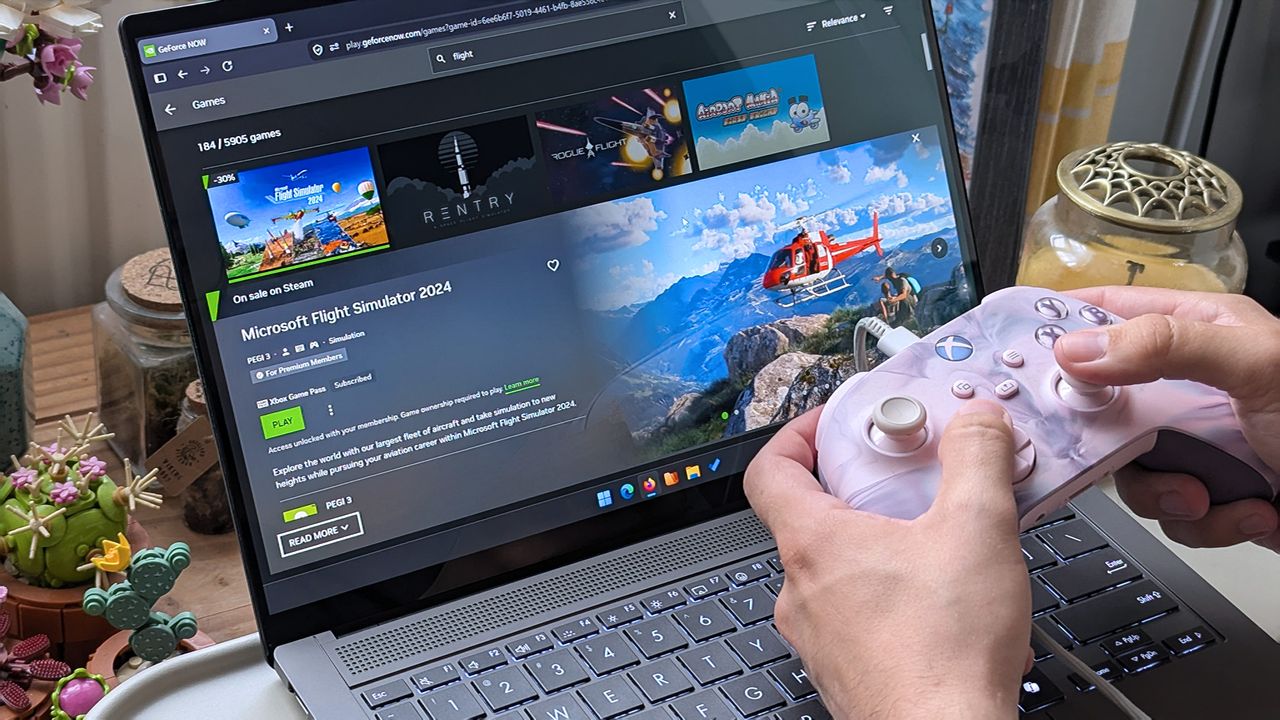
Hands holding a pink‑and‑white Xbox controller in front of an ASUS laptop displaying the GeForce NOW page for Microsoft Flight Simulator 2024, showing a green “Play” button.

GeForce NOW comes in handy for playing bigger PC games that usually take a long time to install. (Image credit: Ben Wilson | Windows Central)

GeForce NOW cloud streaming saw updates and new games unveiled at GDC earlier this year, which piqued my interest as someone who generally sticks with Xbox Cloud Gaming — something I can access with my Game Pass Ultimate subscription. It's a clever option for high-end titles that are too demanding for my beloved Steam Deck, but I have a somewhat unusual setup.

I'm lucky enough to have a Gigabit internet connection with relatively low latency, powered by TP-Link's Deco XE75 Pro mesh setup on Wi-Fi 6E, which keeps my wireless devices running at their fastest. When I tell you that I happily enjoy a wealth of slower-paced games on GeForce NOW with insignificant latency, that's with a privilege delivered by my home network.

Nevertheless, I've always had a generally positive experience with GeForce NOW, because I've already built a gigantic Steam library, and my Epic Games Store isn't too far behind (mostly made up of freely claimed titles). There is absolutely unavoidable input delay with cloud gaming, and pretending it doesn't exist is disingenuous, but I've never been interested in streaming fast-action games.

As for Firefox, I tested it out and sure enough, the experience is great. It'll probably come as good news to anyone who jumped ship after losing their favorite ad blocker in Chromium browsers, but Mozilla still holds only around 2.45% browser share with Firefox, and it hasn't tempted me away from Microsoft Edge to date. Still, it's good news for cloud gaming fans.

Click to join us on r/WindowsCentral

Join us on Reddit at r/WindowsCentral to share your insights and discuss our latest news, reviews, and more.

Hands holding a pink‑and‑white Xbox controller in front of an ASUS laptop displaying the GeForce NOW page for Microsoft Flight Simulator 2024, showing a green “Play” button.

GeForce NOW adds official Firefox support, with up to 1440p/120 FPS cloud gaming available to anyone who subscribes to NVIDIA's paid tiers.

ByteDance, Tencent Receive 20,000 Nvidia H200 Shipments Under Relaxed Beijing Rules

20 août 2026 à 16:50

ByteDance and Tencent have reportedly received their first Nvidia H200 shipments as Beijing eases chip restrictions but limits deployments in China.

The post ByteDance, Tencent Receive 20,000 Nvidia H200 Shipments Under Relaxed Beijing Rules appeared first on TechRepublic.

Standalone RTX 5090s now cost at least $4,800, more than entire pre-built PCs with the same GPU inside — Who's buying anything when the market is this chaotic?

I haven't seen a sane GPU price in what feels like almost a year, and the landscape isn't getting any better for gamers.

The NVIDIA RTX 5090, which arrived at a $1,999 MSRP in 2025, is now listed at Newegg starting at $4,799.99. The MSI Ventus 3X OC is indeed the lowest price I could find, and there are other options that push well beyond $5,000.

Bad luck if you're shopping for a new RTX 5090 alone. The high-end of NVIDIA's consumer GPU stack has become inaccessible for the average gamer, and there's no real alternative in sight.

Well, that's sort of true. While perusing various storefronts this morning, it quickly became evident that I can buy an entire pre-built gaming PC with an RTX 5090 inside for less than the card alone.

Configuration page for OMEN HP 45L Gaming Desktop GT22-3000t PC, featuring a sleek black desktop with illuminated circular vents and options for operating system and graphics card.

A look at the current promo pricing on a full gaming PC with RTX 5090. (Image credit: HP)

HP's Omen 45L desktop is my prime example. It has an NVIDIA RTX 5090 GPU, an Intel Core Ultra 7 265K CPU, 16GB of DDR5-6000 RAM, a 1TB M.2 PCIe 4.0 NVMe SSD, and everything else you need for a full build.

At the time of writing, this Omen 45L model costs $4,389.99. That's $410 less than the cheapest RTX 5090 listed on Newegg. Of course, the Omen 45L is on sale, with a regular price of $5,379.99. That's still less than the ASUS TUF Gaming RTX 5090 model, which sits at $5,429 on Newegg.

Buy a pre-built gaming PC for the card and sell the rest?

NVIDIA GeForce RTX 5090 Founders Edition installed in a PC with a 600W adapter

NVIDIA's RTX 5090 has hit costs I never imagined, but there are some alternative options. (Image credit: Windows Central | Ben Wilson)

The math gets more upside down when you factor in all the extra hardware you get with a pre-built PC.

The Omen 45L's CPU adds about $300, the 16GB of Kingston Fury DDR5-6000 RAM adds about $330, and the 1TB M.2 PCIe 4.0 NVMe SSD adds roughly $200. That's about $800 worth of extra components before even considering the 1200W PSU, motherboard, cooling, and case.

I can imagine a lot of readers will see this and wonder why they don't just buy a pre-built, remove the RTX 5090, and sell the rest of the components. I'm wondering the same thing.

HP isn't the only place that I'm seeing this pricing deficit in effect. Over at iBuyPower, I put together a system with an Intel Core i5-14400F CPU, 32GB of DDR5 RAM, a 1TB M.2 PCIe 4.0 NVMe SSD, a 1000W PSU, and an NVIDIA RTX 5090 that costs $5,596.

With the right initiative to sell the extra components, you could definitely end up paying less or the same for a standalone card and still end up with some extra hardware for future upgrades.

Omen 45L: was $5379.99 now $4389.99

HP's pre-built desktop equipped with an RTX 5090 is now considerably more affordable than buying an RTX 5090 GPU alone.

👉 See at HP.com

Why are GPU prices so high in 2026?

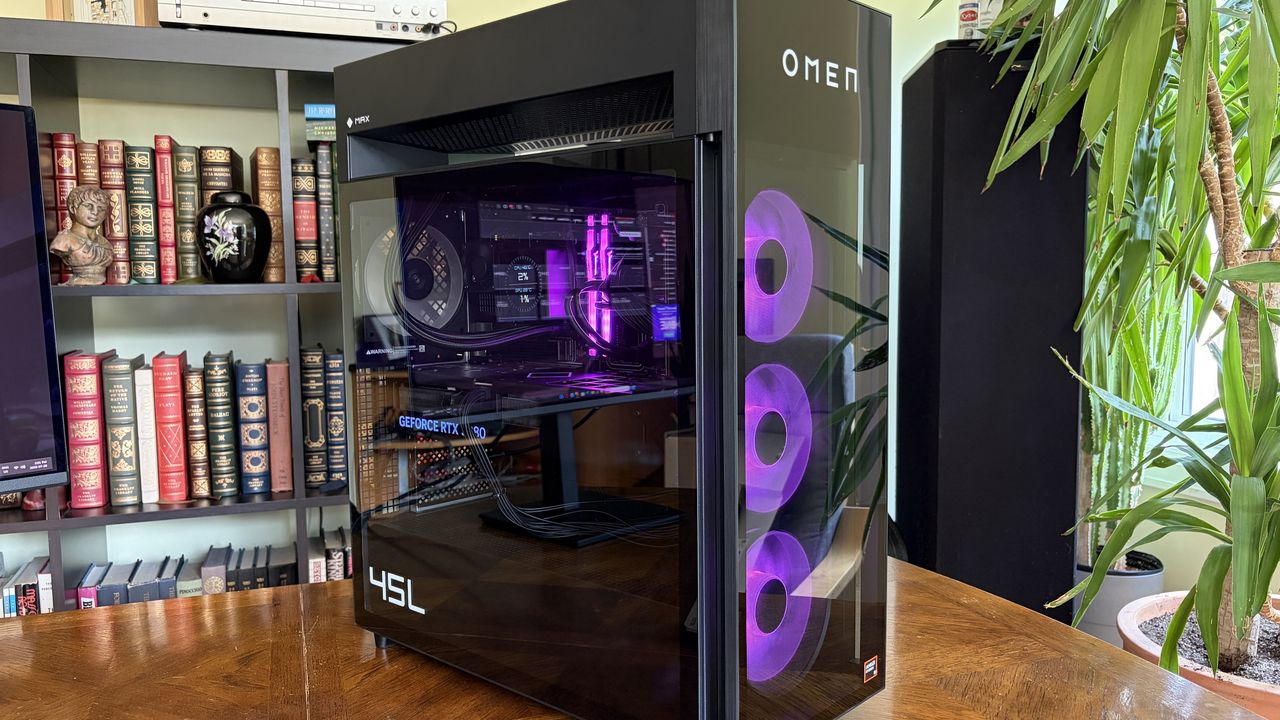
A black HP Omen Max 45L gaming computer tower with blue LED lights and visible internal components, displayed on a wooden table against a bookshelf backdrop.

The HP Omen Max 45L I reviewed isn't perfect, but if it's cheaper than a lone GPU, it's hard to fault. (Image credit: Future)

The current state of GPU prices is due to the ongoing RAM and storage crisis that's sending NAND, DRAM, and other PC component prices into deep space.

As a result of the VRAM that goes into these cards hitting such high costs, NVIDIA jacked up the prices of GPU kits for its board partners (companies like ASUS, MSI, Gigabyte, and Zotac that build full GPUs using NVIDIA's kit) in July. Shortly after, it was reported that the hike could go as high as 30%.

We're now starting to feel those price hikes at retailers, as evidenced above. I suspect that HP's prices will also eventually be on the rise, but there are different market factors at play.

OEM builders can lock in large supplies of parts at a lower cost, so prices often don't catch up until after regular consumers begin to see them. I saw the same thing happen with Windows laptops this year. Components eventually run out, companies have to buy more, and those new costs are then passed down to consumers.

There's one caveat: when I reviewed the Omen Max 45L, I noticed that the RTX 5080 is a custom unit designed by HP. The same applies to the RTX 5090. Does that really matter? Not really. It's still NVIDIA's GPU inside, and my testing showed no difference compared to standalone cards.

Whatever happens to HP's pre-built PC pricing, there's no denying that the entire PC market is in chaos. You might not love the idea of a pre-built PC, but I definitely recommend seeing what's out there before you buy a standalone RTX GPU. You might just end up with a whole lot more than you expected for a lower price.

Click to join us on r/WindowsCentral

Join us on Reddit at r/WindowsCentral to share your insights and discuss our latest news, reviews, and more.

An Omen Max 45L with a transparent side panel displays its internal components, including a GeForce RTX 508 graphics card, against a backdrop of a bookshelf.

An Omen Max 45L with a transparent side panel displays its internal components, including a GeForce RTX 508 graphics card, against a backdrop of a bookshelf.

  • ✇Korben
  • GeForce NOW planque un vrai Windows derrière vos jeux
    Je m'en doutais un peu mais c'est confirmé, derrière chaque session GeForce NOW tourne un vrai Windows, et cette machine virtuelle est moins verrouillée qu'elle en a l'air. En effet, une démo du moddeur Zortos montre le service qui s'ouvre non pas sur un jeu, mais sur un bureau complet, avec barre des tâches, menu démarrer et icônes. La manip passe par le jeu Trove... Pendant le lancement, Zortos ouvre le navigateur web intégré de Steam, se balade dans les dossiers de la machine, récupère un exé
     

GeForce NOW planque un vrai Windows derrière vos jeux

10 août 2026 à 04:50

Je m'en doutais un peu mais c'est confirmé, derrière chaque session GeForce NOW tourne un vrai Windows, et cette machine virtuelle est moins verrouillée qu'elle en a l'air. En effet, une démo du moddeur Zortos montre le service qui s'ouvre non pas sur un jeu, mais sur un bureau complet, avec barre des tâches, menu démarrer et icônes.

La manip passe par le jeu Trove... Pendant le lancement, Zortos ouvre le navigateur web intégré de Steam, se balade dans les dossiers de la machine, récupère un exécutable et remplace quelques chemins dans le répertoire du jeu. Au démarrage suivant, Windows s'affiche alors à la place du jeu. Tout ça repose sur SalsaNOW , un outil open source signé dpadGuy.

Une fois le bureau ouvert, la machine encaisse à peu près tout ce qui ne réclame pas de droits administrateur. Zortos y a fait tourner Wallpaper Engine pour les fonds animés et LM Studio avec le modèle Gemma 4. Et pour les logiciels qui exigent une installation privilégiée, ils peuvent sans souci être préparés en version portable sur son propre PC, puis décompressés là-haut.

Reste que ce bureau est un bac à sable. La session tourne en compte utilisateur simple, donc pas de droits administrateur, pas d'anticheat noyau, et beaucoup d'installations qui finissent sur un refus d'accès.

L'autre mur, c'est la persistance. Sans l'option de stockage payante, tout disparaît à la déconnexion. Et même en la prenant, la machine ne conserve que vos Documents, l'AppData du compte, baptisé kiosk, et le contenu du lecteur I:. Tout le reste repart de zéro à la session suivante, et fermer l'explorateur de fichiers coupe la connexion sur-le-champ.

Dernier filtre, et pas le moindre, ça ne fonctionne que sur les abonnements payants, ceux dont je détaillais les formules quand Nvidia a sorti son client Linux natif . L'offre gratuite est hors jeu, tout comme les GeForce NOW opérés par les partenaires alliance.

Ce clic autorise une connexion à Google : adresse IP transmise et traceurs possibles. En savoir plus Voir cette vidéo sur YouTube

Maintenant, qu'en est-il du règlement ? Eh bien comme vous vous en doutez, les conditions d'utilisation interdisent formellement de contourner les mécanismes de sécurité ou d'authentification du service, et Nvidia se réserve le droit de suspendre ou de restreindre un compte à sa discrétion. En cas de suspension, la période coupée n'est pas remboursée.

Mais à ce jour, aucun bannissement lié à ces méthodes n'a été rapporté, et Nvidia n'a sorti ni correctif ni communiqué. Voilà, c'est rigolo comme bidouille, mais si vous vous lancez, c'est votre compte que vous mettez en jeu.

Reste maintenant à voir combien de temps la porte restera ouverte.

Source

Quote of the day by NVIDIA CEO Jensen Huang: "Moore's law is dead. It's completely over" — Will GPUs ever be affordable again?

Mourning the concept of affordability in the custom PC-building scene isn't a new trend; on the contrary, the eulogy for "Moore's law" was read years ago, around when hardware like NVIDIA's high-end GeForce RTX 40 Series graphics cards came with astronomical prices, and possibly even earlier than that.

Moore's law is dead [...] the ability for Moore's Law to deliver twice the performance at the same cost, or at the same performance and half the cost, every year and a half is over. It's completely over.

Jensen Huang, NVIDIA CEO, 2022

If you've never heard of the term — named after Intel co-founder Gary Moore — it's a prediction (not really a law) of how computing power increases every few years by doubling transistor counts without a severe cost impact. Anyone who follows graphics card, RAM, or storage prices knows that dream is over.

On a more widely known subject, the demands of generative AI quickly became obvious as more models were widely adopted, and building them on local hardware is how that all gets started. Since then, our sister site, Tom's Hardware, has watched GeForce RTX 50-series GPU prices spike by up to 39%. Sure, MSRP always felt like a suggestion rather than a rule with GPUs, but it's getting worse.

Today's GPU for the price of yesterday's PC

A Newegg product page displaying the GIGABYTE Gaming GeForce RTX 5070 graphics card. The listing is priced at $839.99, alongside ratings, reviews, edition options, and trade‑in credit details.

What should be a mid-range RTX 50 Series GPU now costs hundreds of dollars over its intended MSRP. (Image credit: Newegg)

As it stands, encouraging novices to build their first custom Windows rig is particularly difficult because it usually means settling for the absolute bare-bones, entry-level GPU to stand a chance of keeping your build under $1,500. No matter how many advancements NVIDIA puts into DLSS — which I maintain is still the best graphics upscaler on the scene — it can't solve everything.

The idea that a chip is going to go down in cost over time, unfortunately, is a story of the past.

Jensen Huang, NVIDIA CEO, 2022

Plus, all these GPU headaches come before you start the painful process of finding a storage drive and suitable RAM modules to pair with it. Once you start approaching $2,000, I generally nudge people toward high-end gaming handhelds like the MSI Claw 8 EX AI+ for something more entertaining. Then again, nothing beats the satisfaction of building your own rig from scratch.

Of course, the reality is that Moore's Law has its scientific limits. We can only go so far into microscopic process nodes before manufacturing hits the borders of what's currently possible. That doesn't excuse inflated prices, and a commercial obsession with artificial intelligence still pulls the brunt of that blame, but why isn't there any AI-free hardware for the rest of us?

Would any brand go against the grain?

Lip-Bu Tan, chief executive officer of Intel Corp., during a news conference on the sidelines of the Computex conference in Taipei, Taiwan, on Monday, May 19, 2025.

Could Intel's CEO, Lip-Bu Tan push his company into funding more desktop graphics cards? (Image credit: Getty Images | Bloomberg)

Realistically, practically any functional computer can run a local AI model on its CPU, GPU, NPU, or a combination of the three on a single SoC processor. Much like the crypto-mining fad that saw graphics cards scalped for their usefulness in Bitcoin earnings, modern components are at the mercy of AI, and it's a bubble that shows no signs of bursting (whether I like it or not).

Since the advent of Intel's Arc graphics hardware, particularly the first-generation "Alchemist" A750, which powered my wife's gaming PC for years with gradually improving performance, I've become an advocate for what the brand is trying to do. It's a similar story on AMD's Radeon graphics side, as both have an opportunity to steal the entry-level market away from NVIDIA.

After all, if NVIDIA isn't under enough threat from its competition, why would there be any incentive to lower prices? Intel has made impressive advancements in its own XeSS upscaling tech, which is part of what makes Intel Arc G3-powered handhelds so appealing. If it could commit to more affordable discrete GPUs with its long-awaited "Celestial" range, it could shake up the game.

Then again, Intel's CEO, Lip-Bu Tan, seems more interested in a return to the memory business (via Tom's Hardware), which would push Intel's desktop graphics even further down the list of priorities. It's much the same story as NVIDIA's minuscule — if utterly dominant — consumer GPU business compared to its monstrous data center and artificial intelligence side.

Could gigantic desktop graphics cards even seem ridiculous a decade from now, when NVIDIA's RTX Spark chips become its main priority? Doubtful, but who knows? Either way, Moore's Law is seemingly dead, and regular consumers are eating the costs passed on from major manufacturers as the march towards AI psychosis continues. I'll keep my eyes peeled for any signs of that changing.

Click to join us on r/WindowsCentral

Join us on Reddit at r/WindowsCentral to share your insights and discuss our latest news, reviews, and more.
Jensen Huang, co-founder and chief executive officer of Nvidia Corp., speaks while holding one of the company's new GeForce RTX 50 series graphics cards during the 2025 CES event in Las Vegas, Nevada

NVIDIA's CEO Jensen Huang called it years ago: Chip production costs will never go down.

Open Secure AI Alliance Expands at Black Hat: What You Should Know

4 août 2026 à 14:11

The Open Secure AI Alliance introduced SAFE guidelines and open agent-security tools at Black Hat, giving enterprises a framework for safer AI deployment.

The post Open Secure AI Alliance Expands at Black Hat: What You Should Know appeared first on TechRepublic.

NVIDIA GeForce RTX 50 SUPER Reportedly Delayed as Rising GDDR7 Memory Costs Force Pricing Rethink

Par : Nisha
18 juillet 2026 à 08:10
NVIDIA’s next wave of graphics cards may not arrive as soon as many PC enthusiasts expected. According to multiple industry reports, the rumored GeForce RTX 50 SUPER series has already reached at least some add-in board (AIB) partners, indicating that hardware production is well underway. However, the company is reportedly holding back the official launch […]

Apple Reportedly Delays ‘Baltra’ AI Server Chip Amid Infrastructure Challenges

17 juillet 2026 à 09:24

Apple has reportedly delayed its Baltra AI server chip as it explores chip startup acquisitions to strengthen the infrastructure behind its AI ambitions.

The post Apple Reportedly Delays ‘Baltra’ AI Server Chip Amid Infrastructure Challenges appeared first on TechRepublic.

Meta’s Custom AI Chip Timeline Just Got More Interesting

9 juillet 2026 à 17:10

Meta reportedly plans to deploy its fourth custom AI chip by September as it looks to cut AI costs and reduce reliance on Nvidia and AMD.

The post Meta’s Custom AI Chip Timeline Just Got More Interesting appeared first on TechRepublic.

OpenAI’s New Custom Chip: 5 Things You Should Know

26 juin 2026 à 13:07

OpenAI’s Jalapeño chip signals a deeper push into AI infrastructure, but cost savings and independence from Nvidia still depend on scale.

The post OpenAI’s New Custom Chip: 5 Things You Should Know appeared first on TechRepublic.

❌