Apple may skip the high-end M6 chips and shift premium Macs to AI-focused M7 processors, making the upgrade decision tougher for power users.
The post Apple Overhauls Chip Roadmap, Ditches M6 Pro and Max for M7 Generation appeared first on TechRepublic.
OpenAI’s Jalapeño chip signals a deeper push into AI infrastructure, but cost savings and independence from Nvidia still depend on scale.
The post OpenAI’s New Custom Chip: 5 Things You Should Know appeared first on TechRepublic.
Apple raised prices on Macs, iPads, and other devices as AI data center demand drives up memory chip costs across consumer electronics.
The post Apple Raises Prices on Macs, iPads as Data Centers Drive Memory Shortage appeared first on TechRepublic.
Chinese AI models are undercutting OpenAI and Anthropic on price, but enterprise adoption depends on security, compliance, and data-governance trade-offs.
The post Chinese AI Models Challenge OpenAI and Anthropic on Cost and Enterprise Risk appeared first on TechRepublic.
Chinese AI models are undercutting OpenAI and Anthropic on price, but enterprise adoption depends on security, compliance, and data-governance trade-offs.
See what you missed in Daily Tech Insider from June 22–26.
The post AI Upgrades, Security Breaches, and Industry Shakeups Define the Week in Tech appeared first on TechRepublic.
Five Eyes agencies warned that AI could speed cyberattacks within months, raising new risks around prompt injection, phishing, and enterprise AI tools.
The post Five Eyes Warns AI Could Speed Cyberattacks Within Months appeared first on TechRepublic.
Five Eyes agencies warned that AI could speed cyberattacks within months, raising new risks around prompt injection, phishing, and enterprise AI tools.
Microsoft is raising Xbox console prices again, citing higher memory and storage costs as the Xbox Series X rises to $800 in the US.
The post Xbox Console Prices Rise Again as Microsoft Cites Memory Costs appeared first on TechRepublic.
Microsoft’s July Windows 11 update adds practical fixes for update pausing, recovery, Bluetooth, Widgets, File Explorer, and more.
The post Microsoft’s July Windows 11 Update Focuses on Fixing Everyday PC Frustrations appeared first on TechRepublic.
Interpol’s latest Asia and South Pacific cybercrime assessment shows how phishing, ransomware, DDoS attacks, infostealers, and AI-enabled scams are raising security risks across APAC.
The post Interpol: Cybercrime Hits 30% of Recorded Crime in Surveyed APAC Countries appeared first on TechRepublic.
Interpol’s latest Asia and South Pacific cybercrime assessment shows how phishing, ransomware, DDoS attacks, infostealers, and AI-enabled scams are raising security risks across APAC.
Over the past few years, we've seen generative AI cement its footprint in the workplace and even take over redundant, repetitive tasks entirely. Last year, Anthropic CEO Dario Amodei claimed that AI was on the verge of slashing up to 50% of entry-level white-collar jobs, making it harder for Gen Z to enter the job market.Even Microsoft's AI CEO, Mustafa Suleyman, recently cleared up the intent of his statement that AI would eliminate white‑collar jobs in less tha
Even Microsoft's AI CEO, Mustafa Suleyman, recently cleared up the intent of his statement that AI would eliminate white‑collar jobs in less than 18 months. The executive indicated that the statement was blown out of proportion, further clarifying that he meant AI would augment repetitive, mundane tasks — not replace humans.
Incidentally, Gates may have just identified a fourth profession that could be safe from AI replacement — athletes. During an appearance on The Tonight Show with Jimmy Fallon, he suggested that while AI might take over many human tasks, no one would want to watch computers playing baseball (via LADbible Group).
With that in mind, it’s safe to say we’ll continue to savor the moments when our favorite players like Arsenal’s right winger Bukayo Saka grace the pitch with their talent and keep us entertained, even now during the World Cup season.
Microsoft and OpenAI are no strangers in the corridors of justice, particularly when it comes to copyright infringement disputes. It is well established that advanced AI models such as Microsoft Copilot and ChatGPT rely heavily on vast amounts of online content, including material from outlets like Windows Central, for training purposes.In court proceedings, Microsoft and OpenAI have consistently argued that copyright law does not explicitly prohibit the use of o
Microsoft and OpenAI are no strangers in the corridors of justice, particularly when it comes to copyright infringement disputes. It is well established that advanced AI models such as Microsoft Copilot and ChatGPT rely heavily on vast amounts of online content, including material from outlets like Windows Central, for training purposes.
In court proceedings, Microsoft and OpenAI have consistently argued that copyright law does not explicitly prohibit the use of online content to train AI models. However, with Google racing ahead by embedding AI directly into search, the industry finds itself at a tipping point. As traditional outlets struggle to compete, many are shutting down, leaving thousands of experienced journalists in the lurch.
The complaint indicates that the two companies are unlawfully using their content to develop and train the AI chatbots without consent or compensation. According to the complaint:
"Defendants systematically and secretly crawled the Publishers’ websites—including content behind paywalls and other access restrictions—and copied the Publishers’ articles, stories, and other original works onto their own servers without authorization."
The publishers argue that the companies have generated billions from stealing their work and have not paid a dime for it. They are now seeking statutory damages and injunctive relief, citing copyright infringement and violations of the Digital Millennium Copyright Act.
Speaking to Bloomberg, OpenAI spokesperson Drew Pusateri indicated:
“Our models empower innovation, are trained on publicly available data, and are grounded in fair use."
“It would be inequitable if at the end of this you have a resolution that only benefits the largest players in the marketplace and not the people who are doing hard work reporting on things that frankly very few outlets still cover in America today,” former New Jersey Attorney General Matthew Platkin added.
The publishers argue that the AI revolution could be a "death knell for local journalism" if these AI firms aren't held accountable and continue to steal content without compensation.
This opens up a broader discussion about the future of AI models if Google is hell-bent on integrating AI into search, after it has practically run every publication into the ground.
The dead internet theory, in particular, comes to mind. It suggests that prolonged exposure of large language models to low-quality training data negatively impacts accuracy, comprehension, and thought process. What's worse is that the phenomenon could only be less than 3 years away if recent studies are anything to go by.
Join us on Reddit at r/WindowsCentral to share your insights and discuss our latest news, reviews, and more.
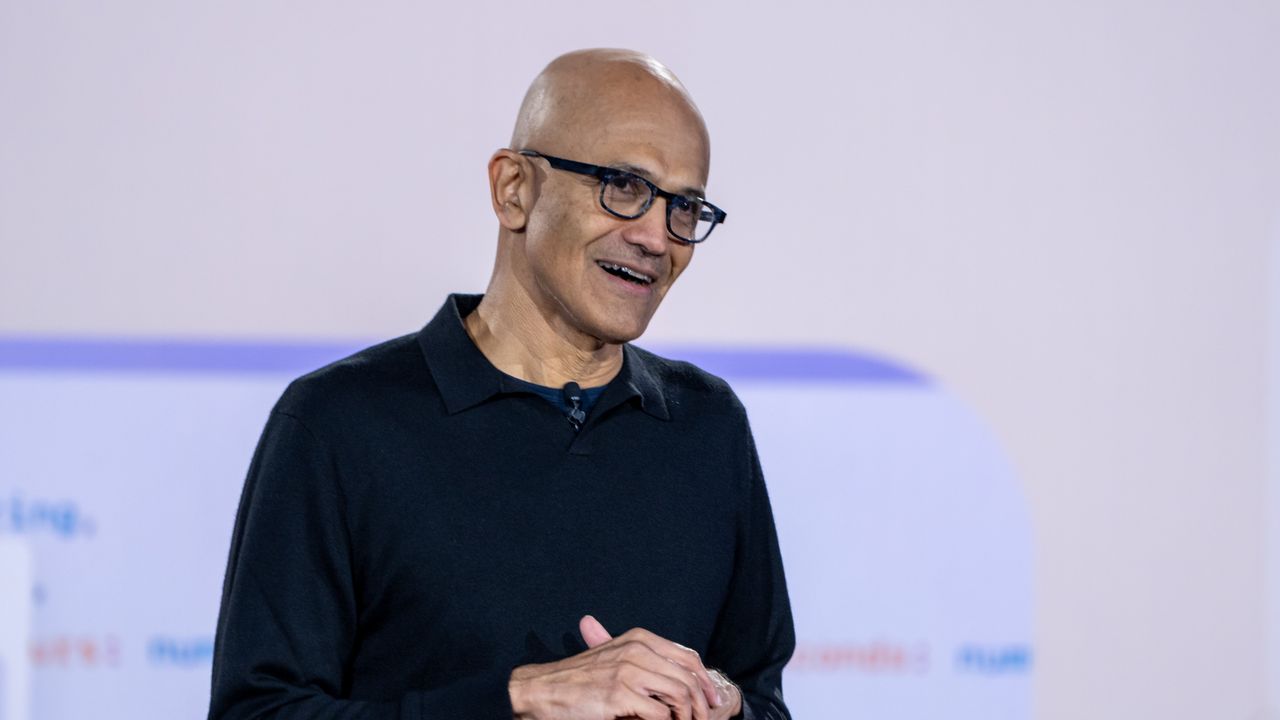
Microsoft CEO Satya Nadella warned that AI must demonstrate real‑world value or risk losing public support. His comments came amid mounting community backlash over the technology’s heavy demand for electricity and cooling water to power data centers, although Microsoft and NVIDIA have seemingly found a fix.Speaking to The Wall Street Journal recently, Nadella echoed his earlier stance, stressing that leading players in the AI industry must advance the technology
Speaking to The Wall Street Journal recently, Nadella echoed his earlier stance, stressing that leading players in the AI industry must advance the technology in ways that deliver the greatest public benefit.
There’s growing concern around AI, particularly when it comes to security, privacy, and even its impact on jobs. "You can't say, hey, all white-collar jobs are gone and this could even be a weapon, and we will use all the power to build data centers," Microsoft CEO Satya Nadella noted.
Perhaps more interestingly, the executive called out key investors in the AI landscape who see the technology primarily as a tool to cut jobs and reduce operational costs. He indicated that this would be the wrong way to look at the technology.
Instead, he recommended that AI should be viewed as a tool designed to help skilled workers better leverage their capabilities. He further painted a picture where AI tools and human capital co-exist in the same space, a phenomenon he referred to as "token capital."
While the executive claimed that it'd be a recipe for how companies can leverage both AI and workers simultaneously, he admitted that: "it's a lot of change management, it's a lot of displacement, but there is a path."
Nadella indicated that leveraging AI and humans at the same time at work can create a "continuous learning system." He indicated that companies in the future could be characterized by the "tacit knowledge that they contain from both sources."
The executive acknowledged that the idea might face public resistance but emphasized that it would be up to corporations to convince people of the economic opportunities AI could unlock in the future.
No amount of just narrative is going to do it because where we are now, we have to sort of walk the walk. We now have to do the hard work in earning the social permission.
The executive indicated that his statement was widely misconstrued. Rather than replacing humans entirely from work, he indicated that AI would be used to augment repetitive and mundane tasks.
Generative AI has made a significant impact across education, computing, medicine, entertainment, and more. However, all that progress comes with a hefty price tag. The amount of electricity these systems burn through, plus the insane amounts of water needed to keep them cool, is honestly outrageous.For context, Microsoft and Google's electricity consumption in 2024 surpassed the power usage of over 100 countries. Similarly, OpenAI's GPT-4 AI model consumes up to
Generative AI has made a significant impact across education, computing, medicine, entertainment, and more. However, all that progress comes with a hefty price tag. The amount of electricity these systems burn through, plus the insane amounts of water needed to keep them cool, is honestly outrageous.
Earlier this month, Microsoft shared an interesting concept that may potentially address the water concerns riddling the progression and advancement of AI. CEO Satya Nadella revealed that the tech giant uses a liquid loop in its data centers, which is filled once. As a result, the company's data centers' water consumption has reduced significantly, down to"what a single restaurant would use."
And now it looks like NVIDIA is taking a page from Microsoft’s playbook. Speaking at London Climate Week on Monday, a top executive suggested that water concerns tied to data center development could be addressed through the company's next-generation AI infrastructure.
The executive further disclosed that the company's new next-gen AI infrastructure can be fully cooled with a liquid warm enough to alleviate the need for additional chilling equipment (Axios).
According to NVIDIA's Chief Sustainability Officer, Josh Parker:
"The water consumption challenge for data centers is largely solved."
How does this liquid work? It’s basically a recirculated mix of water and propylene — think automotive antifreeze. It’s worth noting that the system can operate at temperatures up to 113 degrees Fahrenheit.
As such, this allows it to function reliably in hotter environments compared to older systems. In practical terms, data centers equipped with NVIDIA’s next-generation AI infrastructure will require significantly less water and energy for cooling, reducing both operational costs and environmental impact.
This announcement comes at a time when concerns over water and energy use are mounting, as data centers continue to expand into community corridors. Microsoft has seemingly embraced the "Community-First" AI infrastructure, which addresses some of the issues raised by communities themselves, including reducing its water consumption and promising not to increase electricity bills.
Elsewhere, Microsoft’s plan to build a $1 billion data center in Kenya came to an abrupt halt in early May after the government declined to commit to covering the annual capacity costs Microsoft had requested to run Azure in the region. President William Ruto remarked that the facility’s power demands would be so immense that it would effectively require “switching off half the country” to keep it operational.
Join us on Reddit at r/WindowsCentral to share your insights and discuss our latest news, reviews, and more.
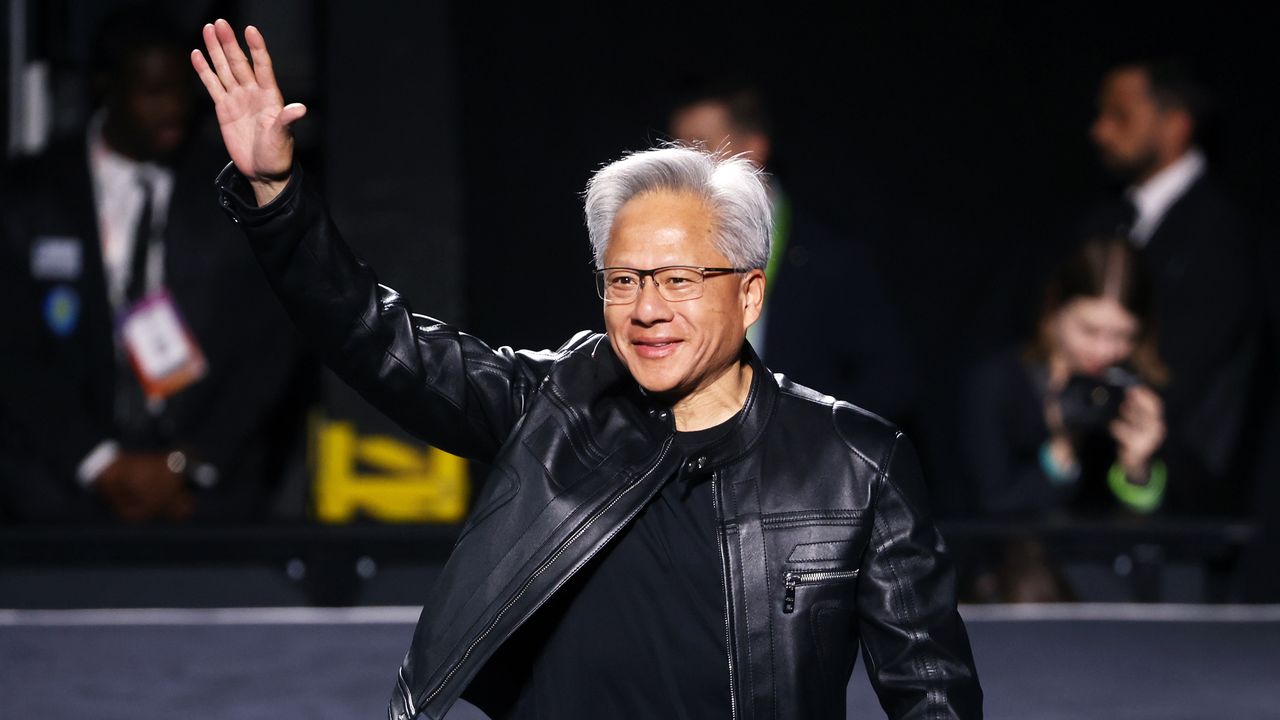
PARIS, FRANCE - JUNE 11: Co-founder and chief executive officer of Nvidia Corp., Jensen Huang attends the 9th edition of the VivaTech trade show at the Parc des Expositions de la Porte de Versailles on June 11, 2025, in Paris. VivaTech, Europe's largest tech trade show, offers a unique digital format for four days of reconnection and recovery through innovation. The event brings together startups, CEOs, investors, technology leaders, and all the digital transformation players shaping the future of the internet. Founded in 2016 by Publicis Groupe and Groupe Les Echos, this annual technology conference, also known as VivaTech, is dedicated to promoting innovation and startups.. (Photo by Chesnot/Getty Images)
PARIS, FRANCE - JUNE 11: Co-founder and chief executive officer of Nvidia Corp., Jensen Huang attends the 9th edition of the VivaTech trade show at the Parc des Expositions de la Porte de Versailles on June 11, 2025, in Paris. VivaTech, Europe's largest tech trade show, offers a unique digital format for four days of reconnection and recovery through innovation. The event brings together startups, CEOs, investors, technology leaders, and all the digital transformation players shaping the future of the internet. Founded in 2016 by Publicis Groupe and Groupe Les Echos, this annual technology conference, also known as VivaTech, is dedicated to promoting innovation and startups.. (Photo by Chesnot/Getty Images)
Australian enterprises remain dependent on foreign technology infrastructure, while major economies treat that dependency as a strategic liability.
The post As the World Claims Tech Sovereignty, Where Does Australia Stand? appeared first on TechRepublic.
These prompt engineering courses can help you refine and structure natural language requests to get the most out of generative AI.
The post Top 5 Prompt Engineering Certifications That Are Worth Taking (2026) appeared first on TechRepublic.
Alibaba Cloud opened two Paris availability zones as European enterprises weigh data sovereignty, resilience, and AI infrastructure needs.
The post Alibaba Cloud Bets on France as Europe Seeks More Control Over AI appeared first on TechRepublic.
Blue Origin aims to fly New Glenn again in 2026 after a launchpad explosion, amid competition from NASA, Amazon, and SpaceX, raising the stakes.
The post Jeff Bezos’ Blue Origin Targets 2026 Rocket Launch After Cape Canaveral Explosion appeared first on TechRepublic.
Anthropic updated Claude Design with design system imports, Claude Code syncing, canvas editing, and more export options for enterprise teams.
The post Anthropic Adds Brand Controls, Code Sync to Claude Design appeared first on TechRepublic.
Supio’s legal AI platform shows why vertical AI built on trusted data and specific workflows may matter more than generic enterprise chatbots.
The post Why ‘Vertical AI’ is the Practical Future for Most Companies appeared first on TechRepublic.
Google AI Studio lets users test Gemini models, build apps, generate media, and export code. Here’s what it does, costs, and where it falls short.
The post Google AI Studio Cheat Sheet: Features, Pricing, and More appeared first on TechRepublic.

 Connexion