Vue normale

  • ✇Korben
  • Super Mario 64 enfin sur Nintendo DS avec un mode coop
    À tous les nostalgiques de la Nintendo 64 et notamment de Super Mario 64, j'ai un petit truc cool à vous montrer. Tobi Friedly vient de sortir un portage du jeu sur Nintendo DS, et pas n'importe lequel, puisque celui-ci tourne sur la vraie console de 2004, et pas seulement sur la DSi qui embarquait quatre fois plus de mémoire vive. Et comme si ça suffisait pas, il y a même mis un mode deux joueurs. C'est vrai que le truc qui coince d'habitude, c'est que la DS originale n'a pas assez de RAM pour
     

Super Mario 64 enfin sur Nintendo DS avec un mode coop

19 juin 2026 à 02:51

À tous les nostalgiques de la Nintendo 64 et notamment de Super Mario 64, j'ai un petit truc cool à vous montrer. Tobi Friedly vient de sortir un portage du jeu sur Nintendo DS, et pas n'importe lequel, puisque celui-ci tourne sur la vraie console de 2004, et pas seulement sur la DSi qui embarquait quatre fois plus de mémoire vive. Et comme si ça suffisait pas, il y a même mis un mode deux joueurs.

C'est vrai que le truc qui coince d'habitude, c'est que la DS originale n'a pas assez de RAM pour charger toute la ROM du jeu d'un coup. Tobi a donc contourné le problème en faisant streamer les assets à la demande via NitroFS , le système de fichiers des cartouches DS.

Du coup, au lieu de tout balancer en mémoire d'un bloc, le jeu va piocher les niveaux et les textures au fur et à mesure qu'il en a besoin. C'est grâce à cette méthode ingénieuse qu'il a pu débloquer son portage sur la vraie DS, là où le portage précédent de Hydr8gon restait coincé sur DSi faute de place.

C'est d'ailleurs grâce au boulot de Hydr8gon que Tobi a construit le sien, en le modifiant et en l'adaptant suffisamment pour qu'il tourne sur tous les modèles de DS.

Au passage il a rebouché aussi deux bugs qui traînaient, et maintenant le jeu est finissable à 120 étoiles, et le son fonctionne enfin (avant c'était silence radio). La stabilité générale a aussi pris un bon coup de polish.

Le mode multijoueur, lui, réclame deux DS, chacune avec sa propre copie du jeu. C'est du coop local, parfait pour explorer le château à deux ou juste pour déconner ensemble, entre moustachus, dans un niveau de Mario.

Attention quand même, ce n'est pas un fichier .nds prêt à double-cliquer. Faut dumper vous-même la ROM de votre propre cartouche Super Mario 64, puis compiler le truc via Docker. Si vous bidouillez un peu l'émulation ou si vous utilisez des cartouches de type flashcart, vous savez que c'est le prix d'entrée habituel pour ce genre de projet de décompilation, notamment pour rester du bon côté niveau droits.

Super Mario 64, faut dire, c'est un peu le terrain de jeu favori de la scène decomp... on l'a déjà vu débarquer sur PlayStation 1 dans un sacré bordel technique, tourner en coop et en 4K sur PC avec SM64CoopDX, et on sait même que le jeu gaspillait joyeusement la mémoire de la N64 à l'origine grâce à ce genre de portage.

Si le projet vous intéresse, tout est sur le GitHub de Tobi Friedly .

Et si votre vieille DS a rendu l'âme, un émulateur comme melonDS fera tout aussi bien l'affaire.
Source

ChromeOS Flex Kit Is Sold Out: 5 Alternatives for Old Windows 10 PCs

15 mai 2026 à 14:50

Google’s $3 ChromeOS Flex kit sold out. Here are five lightweight operating system alternatives for older Windows 10 PCs.

The post ChromeOS Flex Kit Is Sold Out: 5 Alternatives for Old Windows 10 PCs appeared first on TechRepublic.

  • ✇Yanko Design
  • Nocturne’s Free App Turns Your Bricked Spotify Car Thing Into Something Better Than the Original
    The open-source community has a long history of doing more with abandoned hardware than the original manufacturers ever did. The PSP got emulators Sony never approved. The Wii got homebrew loaders that ran software Nintendo pretended didn’t exist. The pattern repeats because the hardware is always fine; it’s the corporate support structure around it that evaporates. The Spotify Car Thing joined that lineage in December 2024 when Spotify killed server-side authentication and turned every unit in
     

Nocturne’s Free App Turns Your Bricked Spotify Car Thing Into Something Better Than the Original

10 mai 2026 à 16:45

The open-source community has a long history of doing more with abandoned hardware than the original manufacturers ever did. The PSP got emulators Sony never approved. The Wii got homebrew loaders that ran software Nintendo pretended didn’t exist. The pattern repeats because the hardware is always fine; it’s the corporate support structure around it that evaporates. The Spotify Car Thing joined that lineage in December 2024 when Spotify killed server-side authentication and turned every unit into an expensive knob with a screen attached.

Nocturne picked up where Spotify dropped off. The project launched in October 2024, anticipating the shutdown, and has shipped four major versions since. V4.0.0, currently in beta with a public release imminent, finally delivers true Bluetooth connectivity without phone tethering, a companion app, and a feature set that makes the original Spotify firmware look like a rough draft.

Developer: Nocturne Team (Brandon Saldan, Dominic Frye, and contributors)

The Car Thing runs a 512MB RAM, 4GB storage Amlogic S905D2 SoC, which is a polite way of saying it has the processing power of a mid-range router from 2015. Early versions of Nocturne required a Raspberry Pi as a co-processor just to get the thing online, which was a heroic workaround but not exactly mainstream-friendly. V3 replaced that with Bluetooth tethering through your phone’s hotspot. V4 cuts the tether entirely, pairing directly via Bluetooth through the new Nocturne Companion app, which requires a Nocturne+ subscription to fund the team’s continued development.

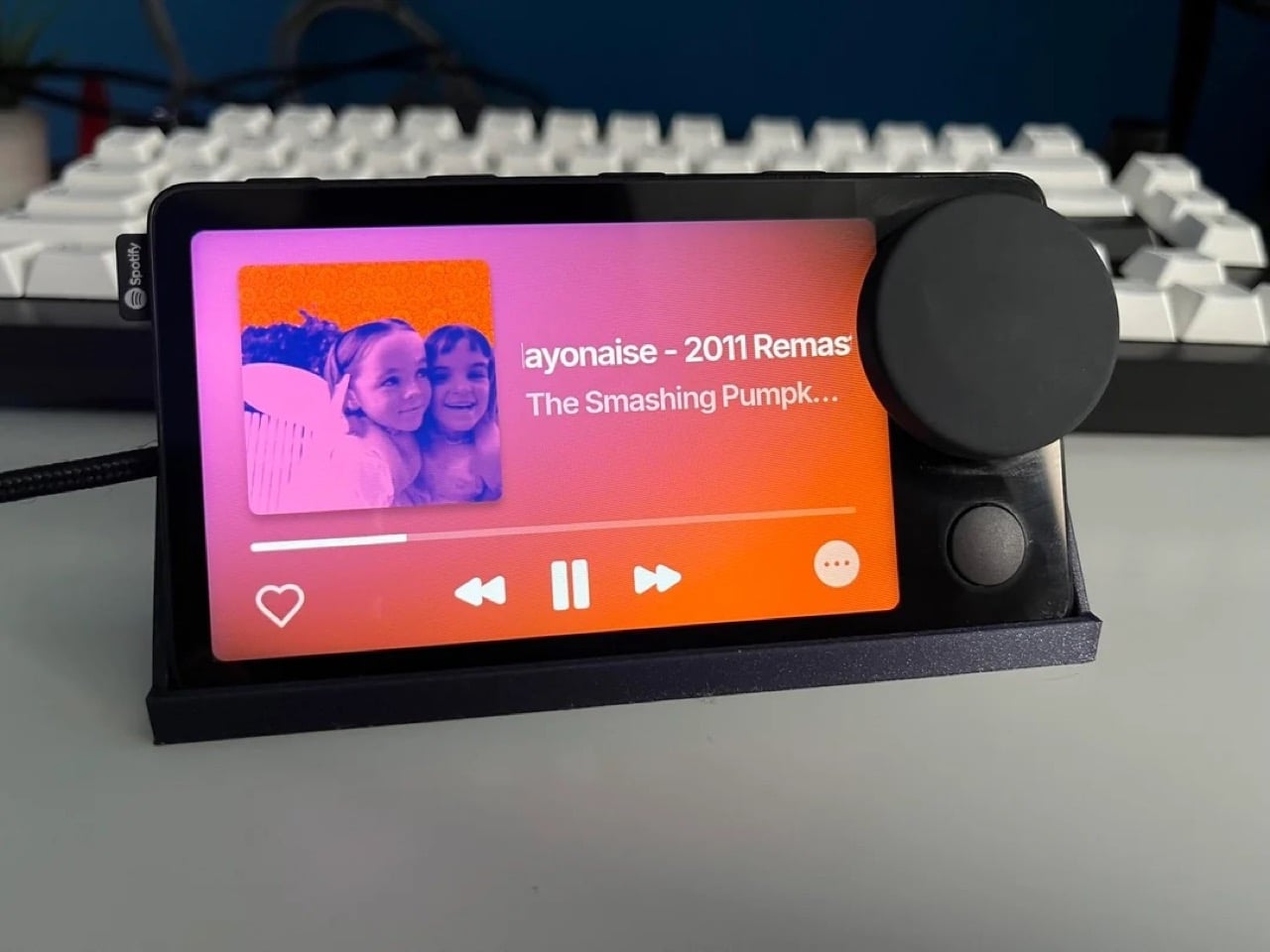
What the photos make immediately clear is how clean the UI actually looks in practice. The now-playing screen pulls album art and renders it as a full bleed gradient background, the same visual logic Spotify used but executed with noticeably more polish in edge cases. The typography is large and glanceable. The playlist browser view is dense but organized, using album thumbnails and track titles in a layout that navigates naturally with the knob. Image 3 shows a subtle ambient lighting effect around the screen border, a rainbow glow that responds to the current track, which is the kind of detail you wouldn’t expect from a community firmware project running on 2021 budget hardware.

The gesture control, OTA updates, Spotify Connect device switcher, podcast support, local file playback, and DJ mode all carried over from V3. The V4 architecture also bakes in full offline functionality, meaning the firmware survives without Spotify’s servers being cooperative, which was precisely the failure mode that bricked every original unit in the first place.

Nocturne’s GitHub currently lists V3.0.0 as the stable release, with V4.0.0 accessible to donors via Discord while the team finishes the public build. If you’ve got a Car Thing in a drawer, the installation guide at usenocturne.com is the next tab you should open.

The post Nocturne’s Free App Turns Your Bricked Spotify Car Thing Into Something Better Than the Original first appeared on Yanko Design.

  • ✇TheWindowsClub News
  • Microsoft open-sources Windows Subsystem for Linux
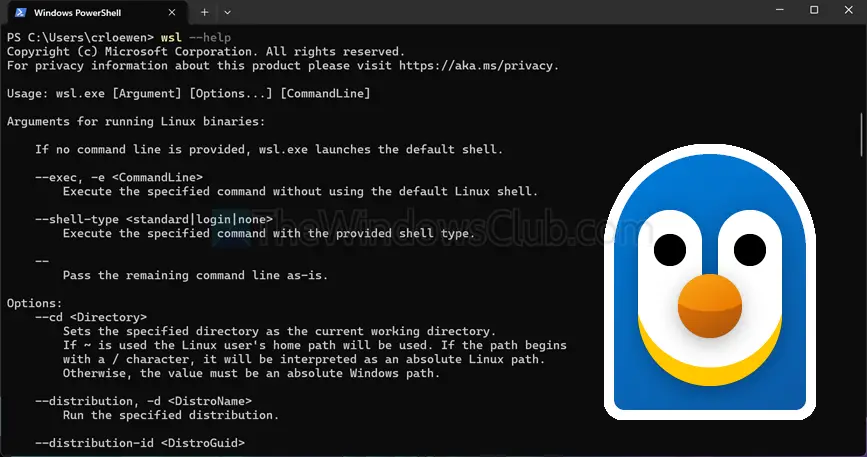
    Microsoft has officially open-sourced the Windows Subsystem for Linux (WSL), marking a significant milestone in the evolution of Windows as a developer-friendly platform. This move allows developers to access, modify, and contribute to the WSL codebase, encouraging a more collaborative and transparent development environment. Microsoft open-sources Windows Subsystem for Linux, ushering in a new era […] The post Microsoft open-sources Windows Subsystem for Linux appeared first on TheWindowsClub N
     

Microsoft open-sources Windows Subsystem for Linux

19 mai 2025 à 23:38

Microsoft open-sources Windows Subsystem for Linux, ushering in a new era of developer collaborationMicrosoft has officially open-sourced the Windows Subsystem for Linux (WSL), marking a significant milestone in the evolution of Windows as a developer-friendly platform. This move allows developers to access, modify, and contribute to the WSL codebase, encouraging a more collaborative and transparent development environment. Microsoft open-sources Windows Subsystem for Linux, ushering in a new era […]

The post Microsoft open-sources Windows Subsystem for Linux appeared first on TheWindowsClub News.

❌