Vue normale

US Approves Nvidia H200 Sales to China, But Shipments Remain Stalled

15 mai 2026 à 14:28

US approvals could let Nvidia sell H200 AI chips to China, but Beijing’s security concerns and export rules have stalled shipments.

The post US Approves Nvidia H200 Sales to China, But Shipments Remain Stalled appeared first on TechRepublic.

Trump’s China Summit Turns Into a Big Tech Power Play

14 mai 2026 à 14:27

Trump’s China summit brought Nvidia, Apple, and Tesla leaders into talks shaped by AI chips, trade pressure, and market-access demands.

The post Trump’s China Summit Turns Into a Big Tech Power Play appeared first on TechRepublic.

  • ✇Yanko Design
  • This Ceramic Vase Is Actually a Phone Speaker That Needs No Power
    The home has become increasingly cluttered with gadgets that need charging, pairing, and their own dedicated spaces. Even something as simple as playing music from a smartphone often involves a Bluetooth speaker sitting on a shelf, waiting for its battery to drain. There’s been a quiet counter-movement in product design, where objects do their jobs without power and sit in a room the way a vase or a mug would. Kenji Abe’s ECHO is exactly that kind of object. It’s an analog speaker that amplifie
     

This Ceramic Vase Is Actually a Phone Speaker That Needs No Power

Par : JC Torres
12 mai 2026 à 12:20

The home has become increasingly cluttered with gadgets that need charging, pairing, and their own dedicated spaces. Even something as simple as playing music from a smartphone often involves a Bluetooth speaker sitting on a shelf, waiting for its battery to drain. There’s been a quiet counter-movement in product design, where objects do their jobs without power and sit in a room the way a vase or a mug would.

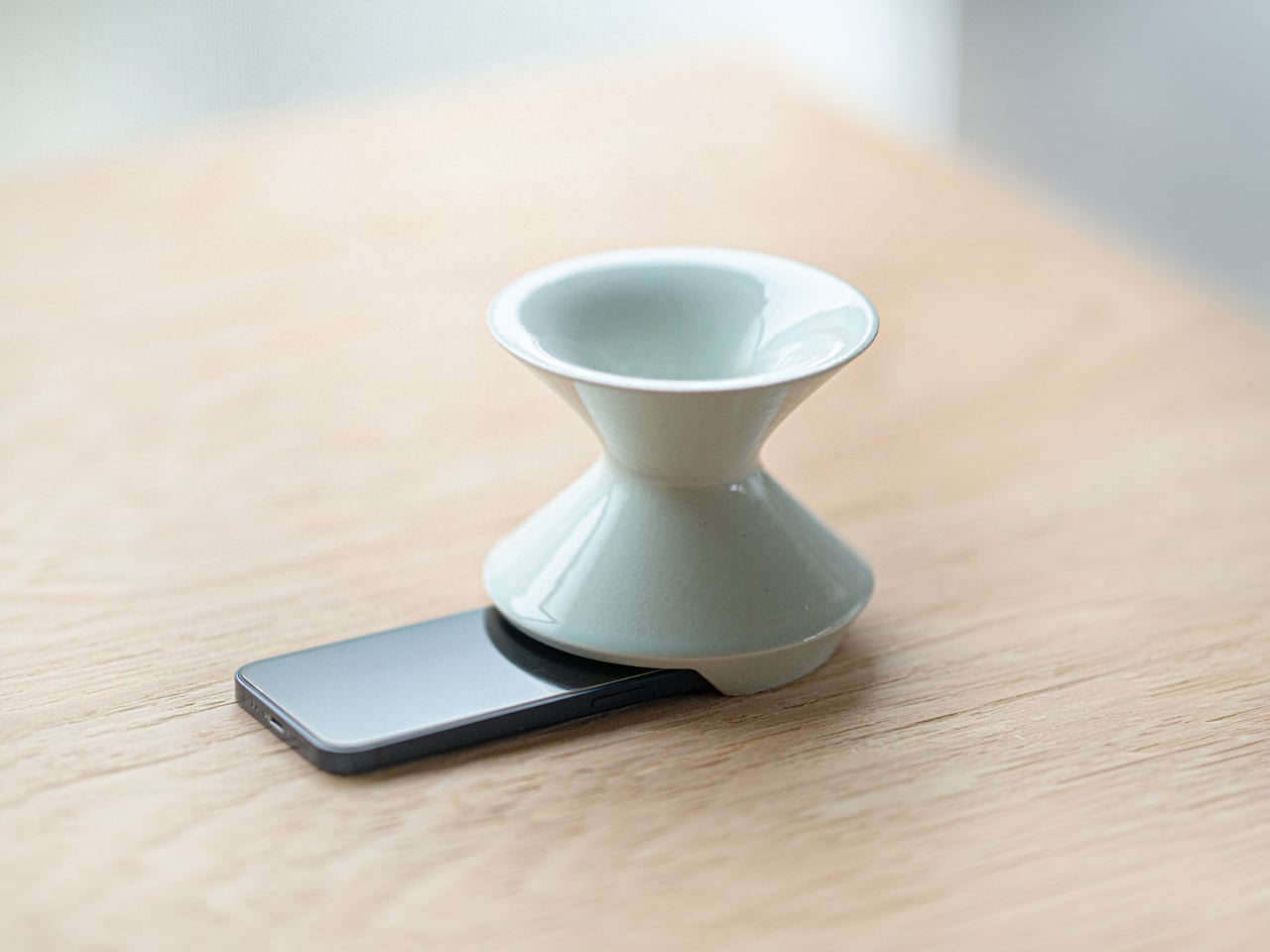
Kenji Abe’s ECHO is exactly that kind of object. It’s an analog speaker that amplifies smartphone audio simply by being set on top of the phone, requiring no power, no pairing, and no setup beyond placing it down. The concept takes its cues from wind instruments and seashells, two forms that have been shaping and projecting sound for centuries without the help of electricity.

Designer: Kenji Abe

The inside of ECHO works like a chamber, built to catch the phone’s audio and carry it outward in soft, diffused waves rather than projecting it directly. The geometry draws from the same logic as a cupped hand, but with more control over how sound travels. The result isn’t a dramatic volume boost so much as a room-filling quality that feels warmer than a powered speaker on a desk.

The choice of material makes as much of a statement as the form. Abe uses glazed ceramic, the same material found in vases, mugs, and tableware, giving ECHO a texture and presence that belongs in a home rather than on a tech shelf. It doesn’t look like an accessory. It looks like something that was always there, something that simply happened to be placed near a phone.

That quality matters when the phone is on the kitchen counter and you want music while cooking, or on a desk where you’d rather not have a speaker taking up permanent residence. ECHO doesn’t need to live next to a charging cable or be put away between uses. It sits on the table and becomes part of the room, as unobtrusive as any other ceramic piece nearby.

A guest walking in wouldn’t necessarily clock it as a tech product. That’s partly the point. The glazed surface catches light the way pottery does, and the form is quiet enough to sit beside books or plants without demanding attention. When a phone is slid underneath it, it starts doing its job. When the phone is gone, it just stays there, still looking like it belongs. The same underlying principle runs through the Battery-free Amplifying iSpeakers, where a Duralumin metal enclosure amplifies a smartphone’s audio without any power.

Abe designed ECHO to exist comfortably in a room even when it isn’t doing anything, a goal most speakers never consider. Most audio accessories announce themselves. This one quietly waits, and when a phone is close enough to fill the cavity with sound, the room gets a little warmer and a little fuller without anyone having to reach for a power button.

The post This Ceramic Vase Is Actually a Phone Speaker That Needs No Power first appeared on Yanko Design.

FCC Robocall Crackdown Raises Privacy Concerns Over Mandatory ID Checks

11 mai 2026 à 14:35

The FCC’s proposed robocall crackdown could force carriers to verify customer identities, raising privacy concerns over anonymous phone use.

The post FCC Robocall Crackdown Raises Privacy Concerns Over Mandatory ID Checks appeared first on TechRepublic.

Mac Users Warned Over Fake Claude Install Instructions

11 mai 2026 à 14:28

Hackers are using Google Ads and Claude shared chats to target Mac users with fake setup instructions that can install malware.

The post Mac Users Warned Over Fake Claude Install Instructions appeared first on TechRepublic.

Apple, Intel Reportedly Near Chip Deal That Could Reduce TSMC Reliance

11 mai 2026 à 11:10

Apple and Intel reportedly reached an early chip manufacturing agreement that could reduce Apple’s TSMC reliance and boost Intel’s foundry ambitions.

The post Apple, Intel Reportedly Near Chip Deal That Could Reduce TSMC Reliance appeared first on TechRepublic.

macOS 27 May Get a New Look: Here’s What Apple Could Change

11 mai 2026 à 09:00

Apple’s reported macOS 27 redesign may reveal how far the company is willing to adjust Liquid Glass after Tahoe’s rocky debut.

The post macOS 27 May Get a New Look: Here’s What Apple Could Change appeared first on TechRepublic.

  • ✇Yanko Design
  • Nocturne’s Free App Turns Your Bricked Spotify Car Thing Into Something Better Than the Original
    The open-source community has a long history of doing more with abandoned hardware than the original manufacturers ever did. The PSP got emulators Sony never approved. The Wii got homebrew loaders that ran software Nintendo pretended didn’t exist. The pattern repeats because the hardware is always fine; it’s the corporate support structure around it that evaporates. The Spotify Car Thing joined that lineage in December 2024 when Spotify killed server-side authentication and turned every unit in
     

Nocturne’s Free App Turns Your Bricked Spotify Car Thing Into Something Better Than the Original

10 mai 2026 à 16:45

The open-source community has a long history of doing more with abandoned hardware than the original manufacturers ever did. The PSP got emulators Sony never approved. The Wii got homebrew loaders that ran software Nintendo pretended didn’t exist. The pattern repeats because the hardware is always fine; it’s the corporate support structure around it that evaporates. The Spotify Car Thing joined that lineage in December 2024 when Spotify killed server-side authentication and turned every unit into an expensive knob with a screen attached.

Nocturne picked up where Spotify dropped off. The project launched in October 2024, anticipating the shutdown, and has shipped four major versions since. V4.0.0, currently in beta with a public release imminent, finally delivers true Bluetooth connectivity without phone tethering, a companion app, and a feature set that makes the original Spotify firmware look like a rough draft.

Developer: Nocturne Team (Brandon Saldan, Dominic Frye, and contributors)

The Car Thing runs a 512MB RAM, 4GB storage Amlogic S905D2 SoC, which is a polite way of saying it has the processing power of a mid-range router from 2015. Early versions of Nocturne required a Raspberry Pi as a co-processor just to get the thing online, which was a heroic workaround but not exactly mainstream-friendly. V3 replaced that with Bluetooth tethering through your phone’s hotspot. V4 cuts the tether entirely, pairing directly via Bluetooth through the new Nocturne Companion app, which requires a Nocturne+ subscription to fund the team’s continued development.

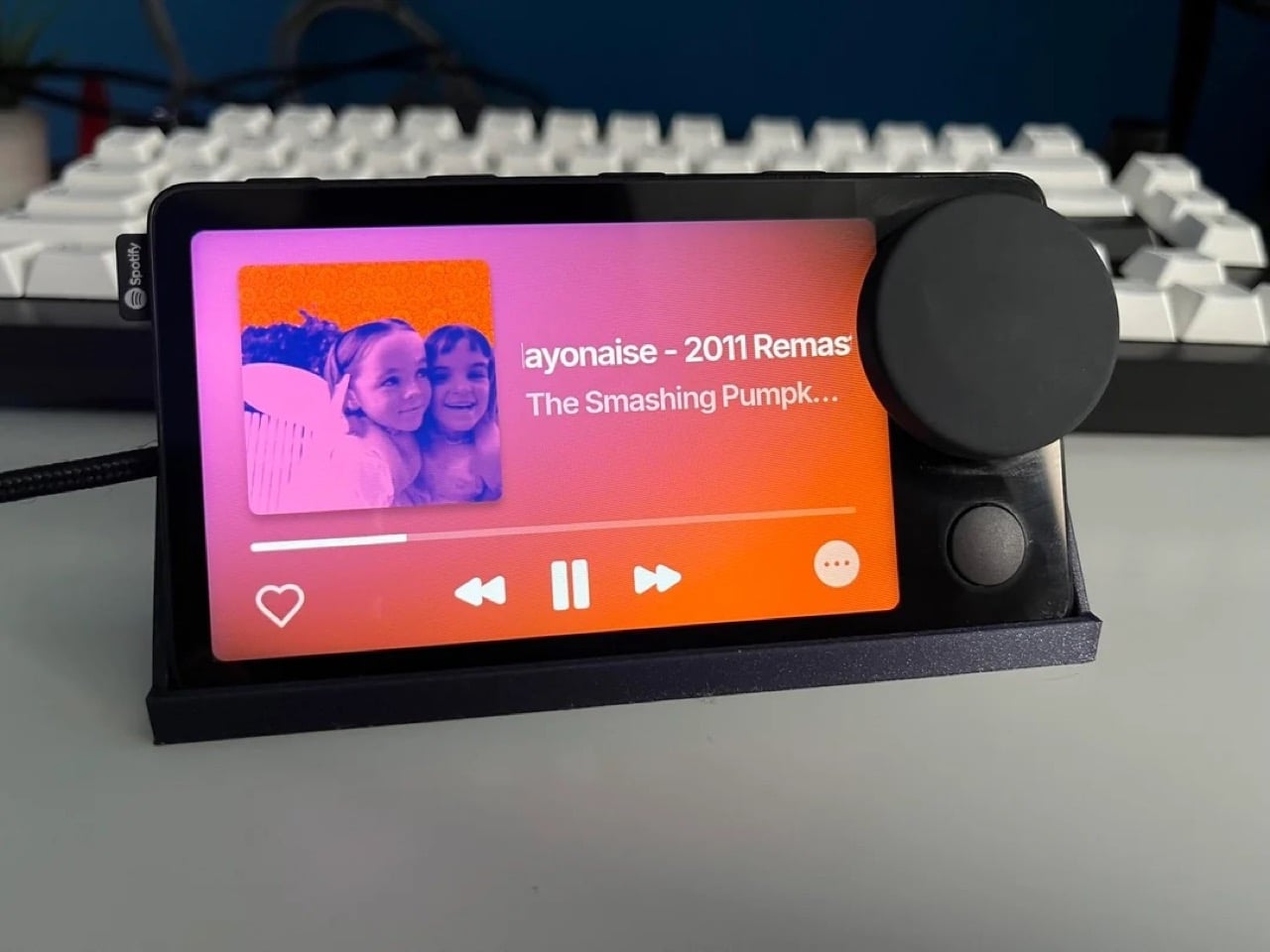
What the photos make immediately clear is how clean the UI actually looks in practice. The now-playing screen pulls album art and renders it as a full bleed gradient background, the same visual logic Spotify used but executed with noticeably more polish in edge cases. The typography is large and glanceable. The playlist browser view is dense but organized, using album thumbnails and track titles in a layout that navigates naturally with the knob. Image 3 shows a subtle ambient lighting effect around the screen border, a rainbow glow that responds to the current track, which is the kind of detail you wouldn’t expect from a community firmware project running on 2021 budget hardware.

The gesture control, OTA updates, Spotify Connect device switcher, podcast support, local file playback, and DJ mode all carried over from V3. The V4 architecture also bakes in full offline functionality, meaning the firmware survives without Spotify’s servers being cooperative, which was precisely the failure mode that bricked every original unit in the first place.

Nocturne’s GitHub currently lists V3.0.0 as the stable release, with V4.0.0 accessible to donors via Discord while the team finishes the public build. If you’ve got a Car Thing in a drawer, the installation guide at usenocturne.com is the next tab you should open.

The post Nocturne’s Free App Turns Your Bricked Spotify Car Thing Into Something Better Than the Original first appeared on Yanko Design.

ShinyHunters Extorts Universities in New Instructure Canvas Hack

8 mai 2026 à 17:15

ShinyHunters-linked attackers defaced Canvas portals, disrupting finals week access and exposing SaaS security risks for schools.

The post ShinyHunters Extorts Universities in New Instructure Canvas Hack appeared first on TechRepublic.

The Top 10 Humanoid Robots, Ranked: Tesla, Unitree, and More

8 mai 2026 à 15:50

Explore the top humanoid robots from Tesla, Unitree, Agility Robotics, UBTech, and more, ranked by momentum, real-world use, and commercial potential.

The post The Top 10 Humanoid Robots, Ranked: Tesla, Unitree, and More appeared first on TechRepublic.

Samsung One UI 8.5 Rollout Begins: Eligible Galaxy Devices and How to Check

8 mai 2026 à 08:44

Samsung’s One UI 8.5 rollout began in Korea on May 6, bringing Galaxy AI upgrades to select flagship phones and tablets in phased markets.

The post Samsung One UI 8.5 Rollout Begins: Eligible Galaxy Devices and How to Check appeared first on TechRepublic.

Winhanced just made the Xbox app feel outdated on handheld gaming PCs, and I can’t believe how much smoother it is

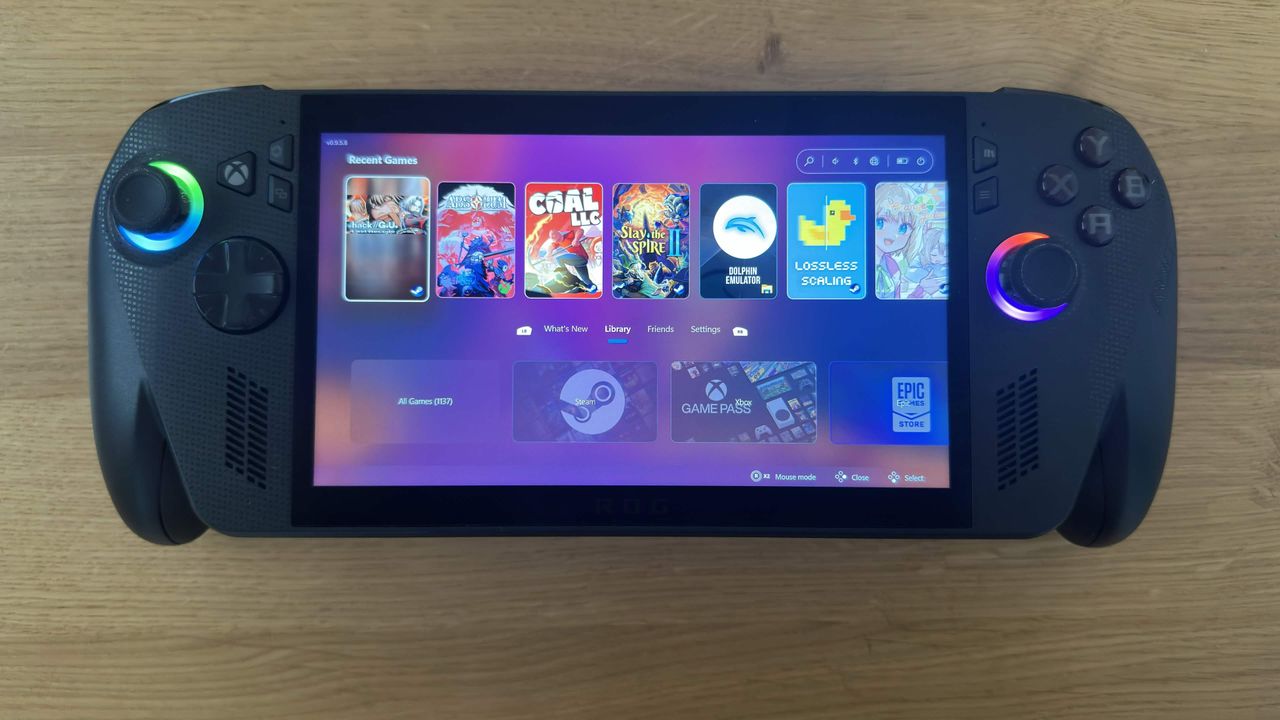
Winhanced is quickly becoming one of the most interesting alternatives to the Xbox app on PC, combining Xbox, Steam, Epic, and GOG libraries into one controller-friendly experience built for handhelds and console-style gaming.

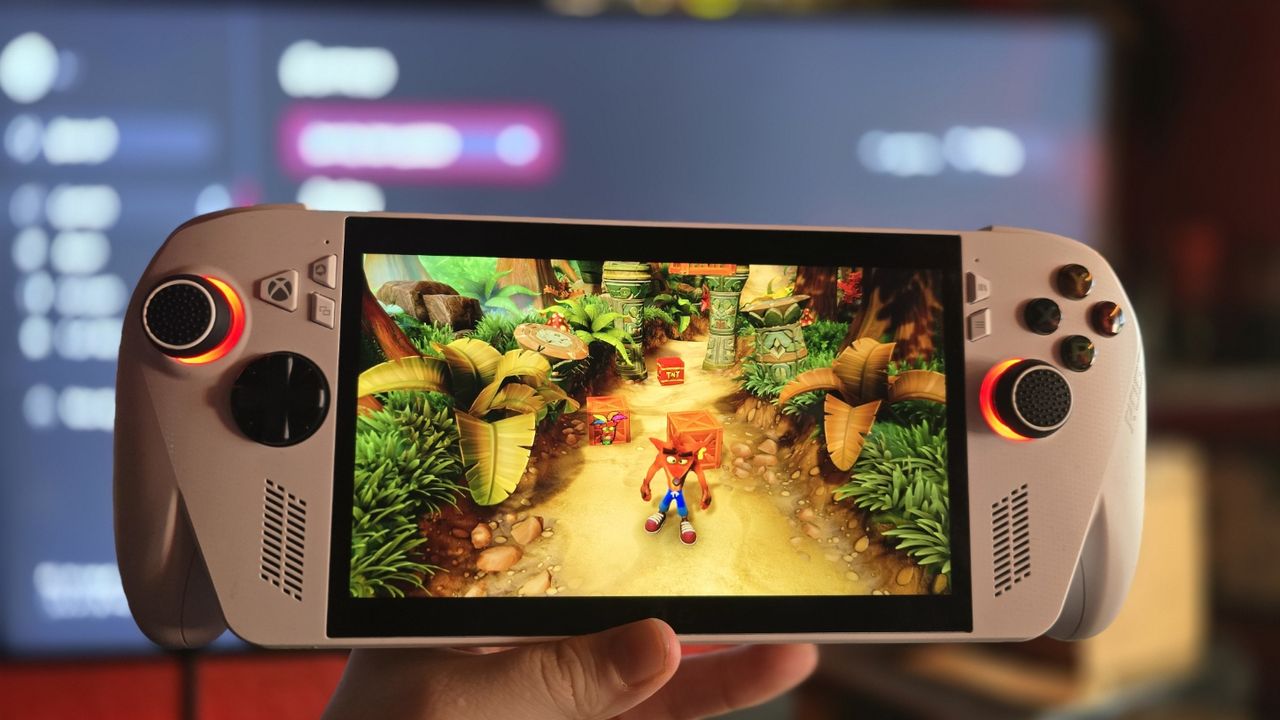
ASUS ROG Ally displaying Winhanced home screen with Steam, Game Pass, and Epic Games integration.

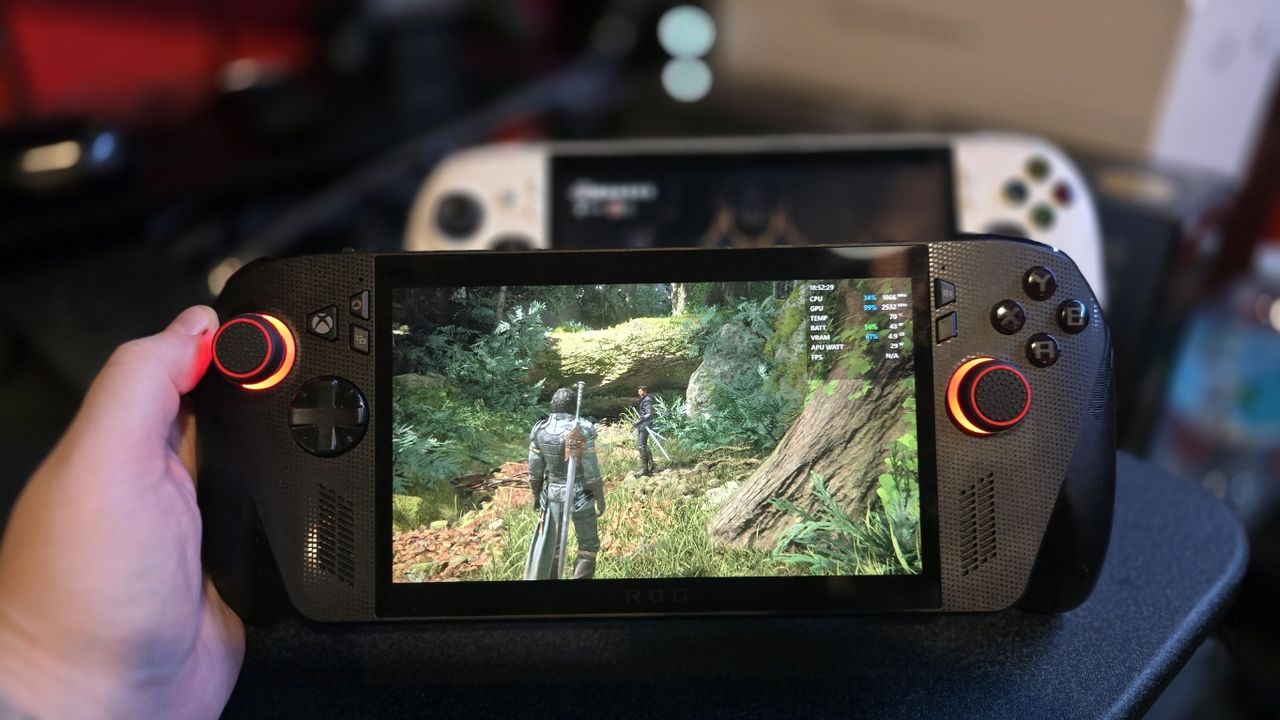
Xbox Ally X running Winhanced

Mac Studio, Mac mini Buyers Are Losing Options Amid AI Demand

7 mai 2026 à 14:18

Apple reportedly removed several high-memory Mac Studio and Mac mini options as AI demand and memory shortages strain desktop Mac supply.

The post Mac Studio, Mac mini Buyers Are Losing Options Amid AI Demand appeared first on TechRepublic.

Alphabet Poised to Overtake Nvidia as the World’s Most Valuable Public Company

7 mai 2026 à 13:35

Alphabet is closing in on Nvidia’s market value as Google Cloud growth, AI investments, and custom chips fuel Wall Street optimism.

The post Alphabet Poised to Overtake Nvidia as the World’s Most Valuable Public Company appeared first on TechRepublic.

"With our partners, we’ve been committed to continual updates": The Xbox Ally range picks up BIG enhancements to boost the TV experience — with AutoSR in tow

The promised auto super resolution features appear on Xbox Ally X today, with other major enhancements to the Xbox Ally connected TV experience. Here's what's new.

Xbox Ally X

Xbox Ally X

"It's something we're working very hard on": Valve promises it's working on a Steam Deck restock after it sold out amid the RAM shortage, but the memory crisis isn't over

Steam Deck maker Valve says it's "working very hard" to bring the Steam Deck back in stock, though ongoing RAM shortages are making it difficult to do so.

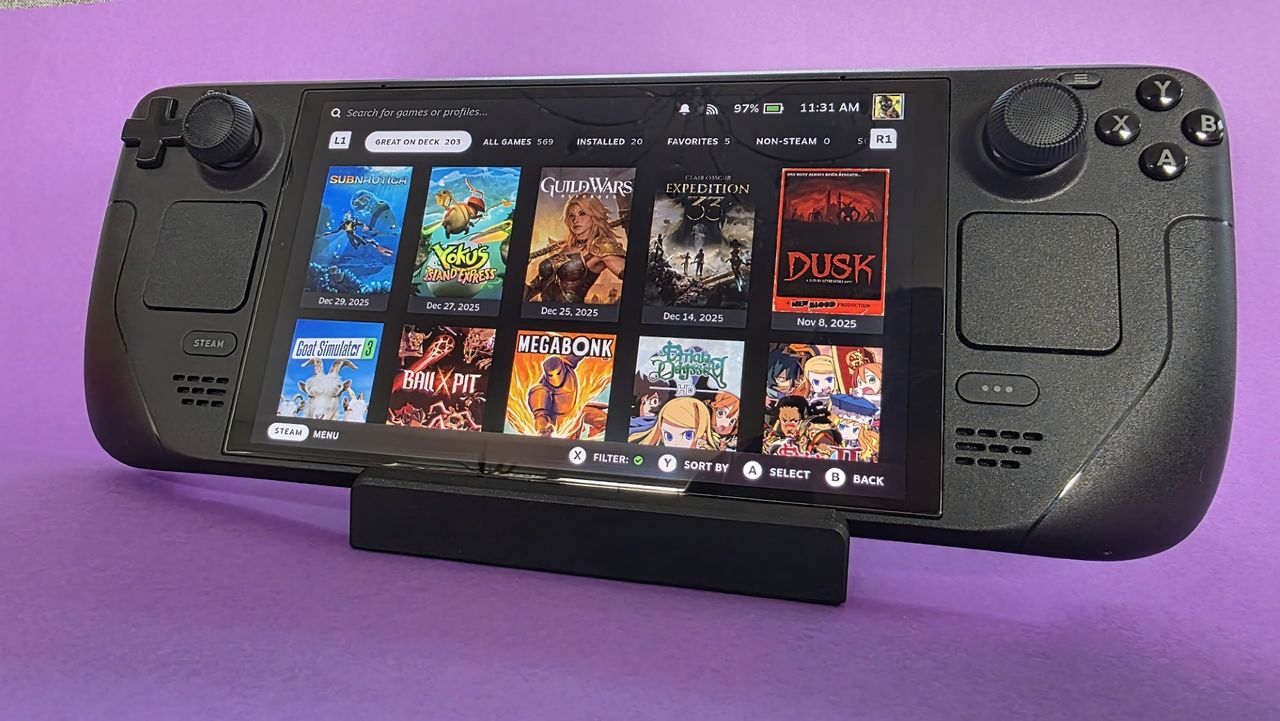
A Steam Deck OLED handheld gaming console on a solid purple background

The Steam Deck OLED came out in late 2023, and is now the only version of the device that's ever available since the LCD version is no longer in production. OLED Steam Decks have been out of stock for months, however.

The Asus ROG Xbox Ally is inexplicably getting cheaper while it's competitors hike prices — making it the best Steam Deck competitor right now

The Xbox Ally is currently one of the most affordable ways to play Xbox PC games on the go, with an above-average display and additional gameplay-enhancing features, all for 20% off.

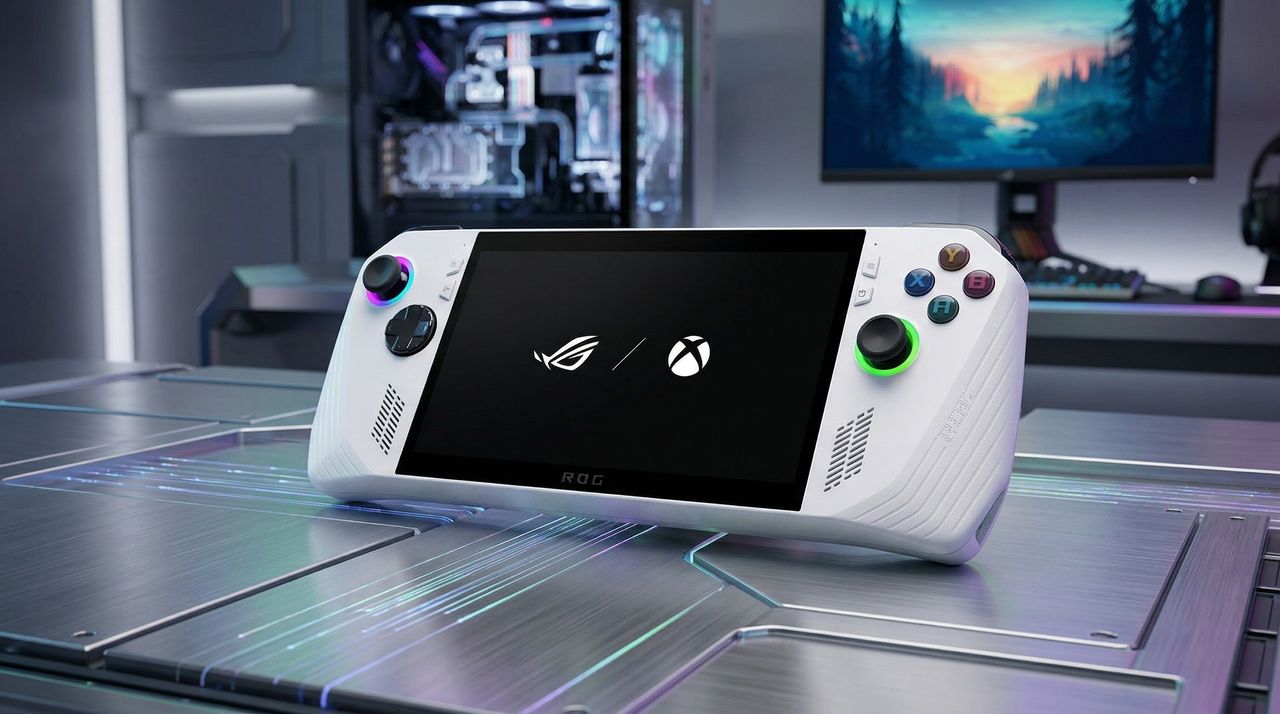
Xbox Ally and Xbox Ally X

The Xbox Ally is currently one of the most affordable ways to play Xbox PC games on the go.

  • ✇Yanko Design
  • The F1 Engineer Who Turned Time Into a Kinetic Sculpture
    Most clocks are honest about what they are. They count. They tick. They remind you, with mild urgency, that you are late or almost late or about to be. Robert Spillner’s Luna is not a clock that measures time. It stages it. That’s a subtle but loaded distinction, and it’s exactly why this object is worth paying attention to. Luna is a fluid wall object that translates the principle of the single-hand watch into a kinetic sculpture, making the moment between past and future perceptible. Behind t
     

The F1 Engineer Who Turned Time Into a Kinetic Sculpture

8 avril 2026 à 12:20

Most clocks are honest about what they are. They count. They tick. They remind you, with mild urgency, that you are late or almost late or about to be. Robert Spillner’s Luna is not a clock that measures time. It stages it. That’s a subtle but loaded distinction, and it’s exactly why this object is worth paying attention to.

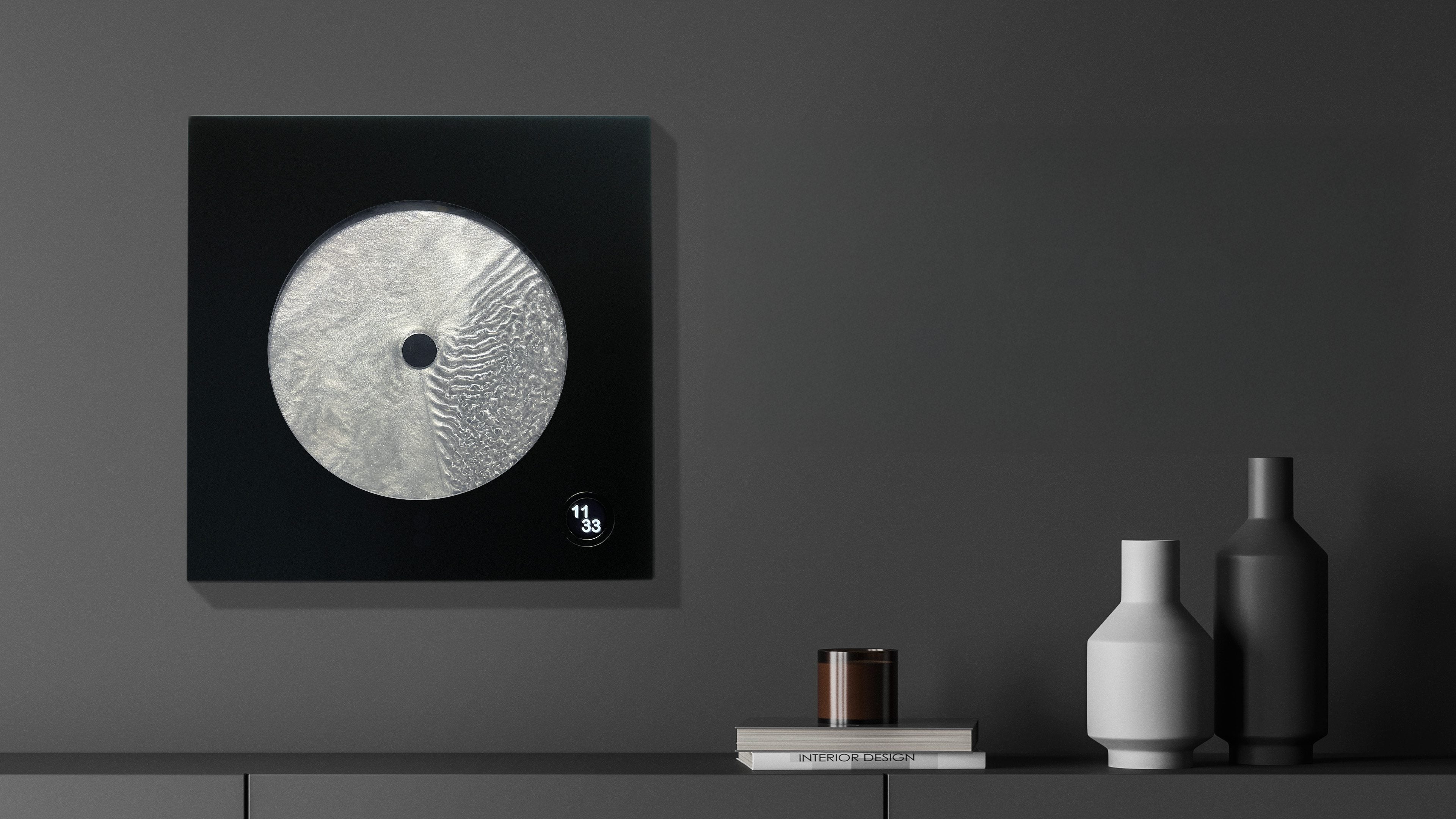
Luna is a fluid wall object that translates the principle of the single-hand watch into a kinetic sculpture, making the moment between past and future perceptible. Behind the hand, a trace of turbulent patterns marks the touched past. Ahead of it stretches calm liquid: the untouched future. The present is the thin, moving line between them. It sounds poetic because it is, but it’s also technically precise, which is kind of the whole point.

Designer: Robert Spillner

Spillner trained as an engineer and initially developed components for Formula 1 cars, used by numerous teams, in a culture where speed, optimization, and victory are everything. With Luna, that paradigm is reversed. Instead of lap times, the focus is on mindful observation; instead of chasing the fastest, it is about pausing, about stillness. The pivot reads like a philosophical reversal, not just a career change, and that tension is embedded in the object itself.

At the heart of Luna is a specially developed fluid Spillner calls Zero Flow Technology. Its core consists of distilled water, additives, micro-particles, and a minimal quantity of genuine lunar dust. The exact composition remains deliberately undisclosed, part of the mystery that invites the observer to immerse themselves in the visual experience rather than merely explain it technically. I think that’s the right call. Part of what makes Luna compelling is that it resists easy explanation. You’re not supposed to look at it and think “clever fluid dynamics.” You’re supposed to feel like time has texture.

The lunar dust takes the cosmic concept to its logical conclusion. These are particles billions of years old that once fell from space to Earth, and they are now carriers of time. Each piece comes with a certificate of authenticity documenting the origin of this cosmic additive. That detail is not just a marketing flourish. It changes the nature of the object.

Aesthetically, Luna presents itself as a square wall or stand object, approximately 400 by 400 millimeters, with a black front and a cast acrylic glass pane at its centre that becomes the stage for the fluid time, framed by a solid, matte-black wooden frame. A small LCD touchscreen, 35 millimeters in diameter, merges the cosmic and digital realms. Time and display brightness can be adjusted easily. The screen is discreet enough that it doesn’t compete with the fluid for visual dominance. It supports the piece without stealing from it, and that balance isn’t easy to pull off.

Luna is handcrafted in Germany as a limited edition. The fluid mixture, developed over years in collaboration with a laboratory, requires weeks of fine-tuning for each unique piece. Every Luna carries an engraved serial number and year of manufacture, signed by the artist, and comes with a certificate for the meteorite dust. Only 99 pieces per year are planned, all made on demand. Luna defines itself clearly as an art object with a time function, not as an industrial small series. That self-awareness matters.

The question people tend to ask about objects like this is whether they’re worth it. I’d reframe the question. Luna isn’t competing with your iPhone or your smartwatch. It’s not trying to optimize anything in your day. It’s making an argument about how we relate to time, which is a thing most of us don’t think about until we’re running out of it. The fact that it’s beautiful while doing this isn’t a bonus. It’s the method. Design, when it’s working at its best, changes how you see the thing it’s describing. Luna does that with time. And for an object that started life inside Formula 1 engineering labs, that’s a remarkable distance to travel.

The post The F1 Engineer Who Turned Time Into a Kinetic Sculpture first appeared on Yanko Design.

A rare price drop hits the budget Xbox Ally, and it changes the value equation in a big way: A true Windows-based answer to the Steam Deck

The Xbox Ally is currently one of the most affordable ways to play Xbox PC games on the go, with an above-average display and additional gameplay-enhancing features, all for 17% off.

AI-Generated image of the Xbox Ally visualized

The Xbox Ally is currently one of the most affordable ways to play Xbox PC games on the go.

❌