Vue normale

  • ✇Yanko Design
  • This Tiny House Has 30 Feet of Glass and Feels Nothing Like a Tiny House
    The tiny house world has long wrestled with one unavoidable tension — the desire for light, openness, and space against the hard constraints of a compact footprint. Escape’s Shoreline Glass House doesn’t just address that tension; it dissolves it entirely. This recently completed park model is one of the most spatially generous and light-saturated tiny homes to come out of the category in recent memory, and it earns that distinction without resorting to multi-level gymnastics or lofted sleeping
     

This Tiny House Has 30 Feet of Glass and Feels Nothing Like a Tiny House

31 mars 2026 à 19:30

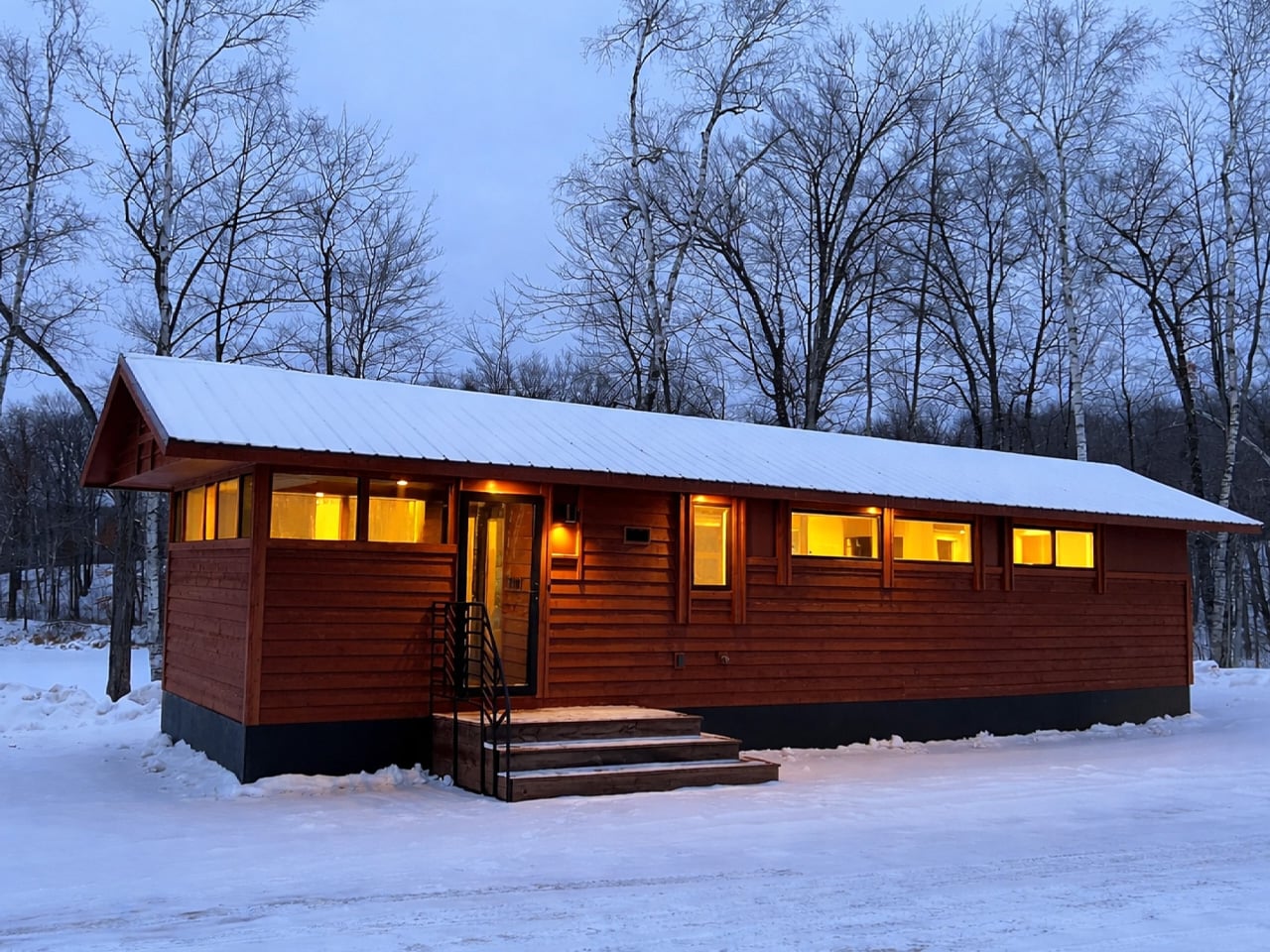
The tiny house world has long wrestled with one unavoidable tension — the desire for light, openness, and space against the hard constraints of a compact footprint. Escape’s Shoreline Glass House doesn’t just address that tension; it dissolves it entirely. This recently completed park model is one of the most spatially generous and light-saturated tiny homes to come out of the category in recent memory, and it earns that distinction without resorting to multi-level gymnastics or lofted sleeping quarters.

What immediately sets the Shoreline Glass House apart is its commitment to single-floor living. It has a length of 47 ft (14.3 m) and an increased width of 12 ft (3.6 m), which makes for a much larger interior than is typical for the format, comparable in fact to a small apartment. That extra width is the key differentiator. Where most tiny homes feel like corridors with furniture squeezed in, the Shoreline opens up laterally, giving rooms a genuine sense of proportion that doesn’t demand you constantly recalibrate your spatial expectations.

Designer: Escape

The name earns its keep on the exterior, too. The Shoreline Glass House features a light-filled interior thanks to 30 ft (9 m) of glazing running along one wall, flooding every corner of the home with natural light throughout the day. It’s a design move that blurs the line between inside and out, making the home feel anchored to its surroundings rather than sealed off from them. Entry is through a large enclosed porch, a smart buffer zone that expands the functional living area while adding that coveted semi-outdoor layer that tiny home dwellers often sacrifice first.

Inside, the layout is open-plan, with the living and kitchen area flowing seamlessly from one end to the other. The bathroom includes a large glass-enclosed shower with a width of 5 ft (1.5 m), a specification that sounds modest until you realize most tiny house showers are barely wide enough to raise both arms. A walk-in closet rounds out the domestic comforts, alongside an oversized sofa that signals Escape’s intent clearly: this is a home designed for staying in, not just passing through.

As a non-towable park model, the Shoreline Glass House isn’t chasing the nomadic lifestyle that defines much of the tiny house market. It’s built for permanence, or at least long-term settlement, and the design reflects that. Every decision, from the floor-to-ceiling glazing to the full-width bathroom, prioritizes livability over portability. The result is a tiny house that finally makes the case that going small doesn’t have to mean giving anything up.

The post This Tiny House Has 30 Feet of Glass and Feels Nothing Like a Tiny House first appeared on Yanko Design.

  • ✇Yanko Design
  • 5 Best Waterdrop Filter Systems for Spring 2026, From Renters to Full Family Kitchens
    The water coming out of your tap has traveled through infrastructure that, in many American cities, predates the internet by several decades. Municipal treatment plants catch most of what they’re supposed to catch, but aging pipes, PFAS compounds from industrial and agricultural runoff, and lead from corroding plumbing each leave their own signature in what eventually fills your glass. Two people living thirty miles apart can have genuinely different water problems, and the solution that works
     

5 Best Waterdrop Filter Systems for Spring 2026, From Renters to Full Family Kitchens

25 mars 2026 à 21:45

The water coming out of your tap has traveled through infrastructure that, in many American cities, predates the internet by several decades. Municipal treatment plants catch most of what they’re supposed to catch, but aging pipes, PFAS compounds from industrial and agricultural runoff, and lead from corroding plumbing each leave their own signature in what eventually fills your glass. Two people living thirty miles apart can have genuinely different water problems, and the solution that works perfectly in one kitchen may be entirely wrong for the other. Spring tends to be when many families actually act on this, a natural reset point where the habits and home conditions worth changing finally get real attention.

Waterdrop Filter has spent the better part of the last decade building a filtration lineup that treats water quality as a variable, not a constant. Five of their systems are currently on sale on Amazon through March 31st, spanning the full range of how people actually live: renters who can’t drill into cabinets, families running a high-demand kitchen with PFAS and lead on their radar, people who want their minerals preserved, and anyone who wants instant hot filtered water without the plumbing commitment. Each one is built around a different problem, and this guide helps narrow down which one is built around yours.

Waterdrop Filter G3P800 Tankless RO System: The Under-Sink Performer That Stays Out of Sight

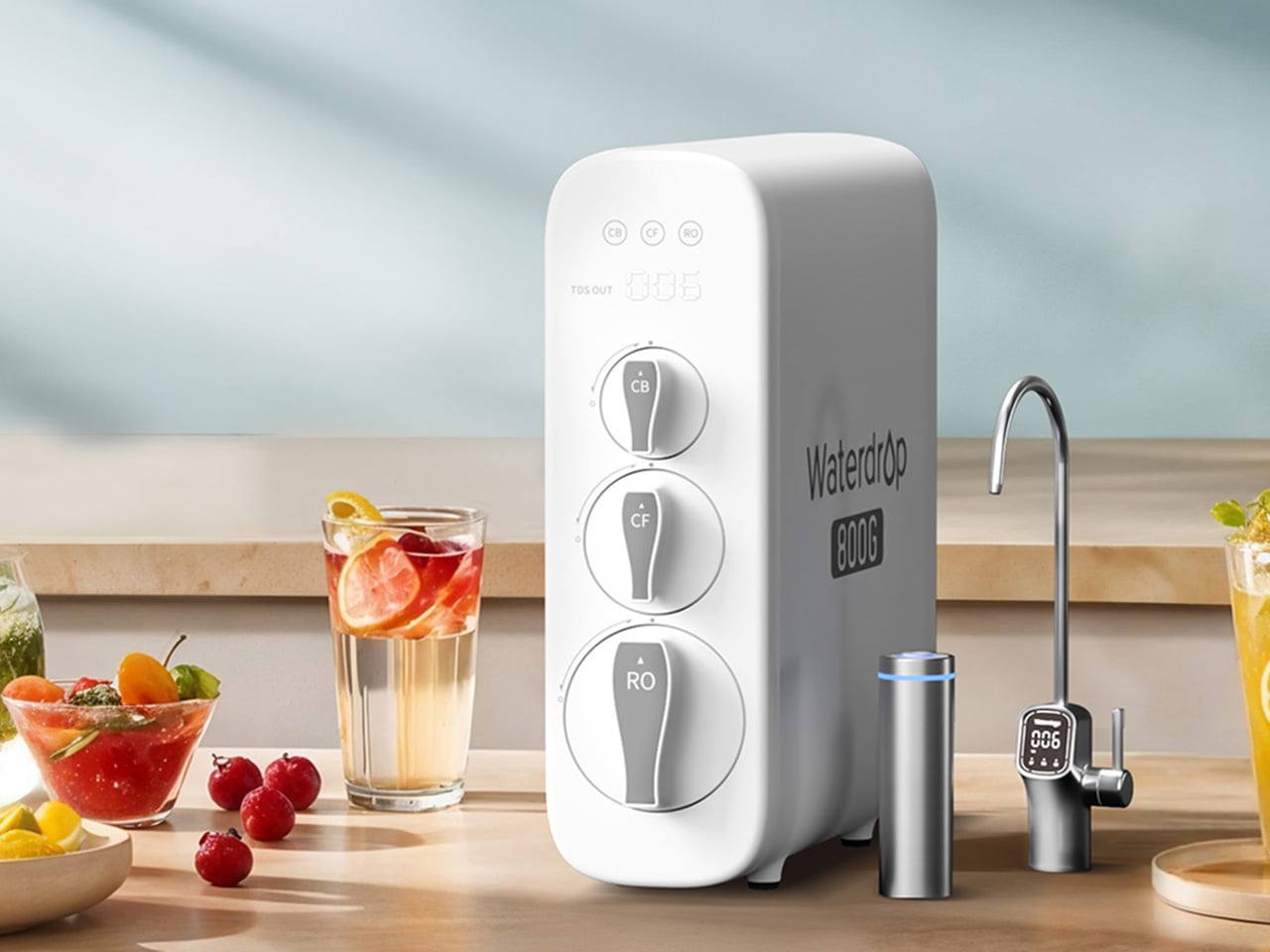
For families thinking seriously about what’s actually in their water this spring, the G3P800 is where Waterdrop Filter’s under-sink lineup earns its bestseller status. The concerns driving most of those conversations, PFAS compounds, lead from aging pipes, chlorine byproducts, are precisely what this system addresses. Its 10-stage RO filtration achieves 98% PFOA reduction, 99% PFOS, and over 99% lead, numbers that carry particular weight for households with infants, pregnant women, or elderly members. NSF/ANSI certifications across standards 42, 53, 58, and 372 back those claims with third-party verification. The tankless design reclaims 50 to 70 percent of under-sink cabinet space, and the UV sterilization stage catches bacteria and viruses that even a high-precision RO membrane cannot address alone.

At 800 gallons per day, the G3P800 handles the full rhythm of a busy family kitchen, from drinking water and cooking to coffee and baby formula preparation. A brushed nickel smart faucet displays real-time TDS readings and filter status at a glance, keeping the system legible without demanding attention. The 3:1 pure-to-drain ratio reflects a genuine shift in responsible RO design, producing meaningfully less drain water than older systems. Spring tends to be the moment families finally act on water quality concerns sitting in the back of their minds, and the G3P800 meets that decision with something durable, rigorously certified, and quietly capable of handling daily household demand for years.

Click Here to Buy Now: $699 $999 (30% off). Hurry, deal ends in 48-hours! Website Here.

Waterdrop Filter X12 RO System: The Flagship That Puts Minerals Back Where They Belong

Where the G3P800 is built for families who want serious filtration at serious capacity, the X12 is for those willing to push further. At 1,200 gallons per day across 11 stages of precision RO filtration, it represents Waterdrop Filter’s most complete answer to the growing list of contaminants giving health-conscious households pause this spring. The PFAS reduction figures here are among the strongest in the lineup, achieving 98.88% PFOA and 98.97% PFOS reduction, alongside a greater than 99.87% lead reduction rate. Certified against NSF/ANSI standards 58 and 372, the X12 carries the kind of third-party verification that families with infants or elderly members look for before trusting a system with daily drinking water and formula preparation.

What genuinely separates the X12 from most flagship RO systems is what it does after filtration. Reverse osmosis at this level of thoroughness strips water down comprehensively, which is where the built-in alkaline mineralization stage earns its place. Calcium and magnesium are reintroduced post-filtration, supporting bone health over time and restoring the balanced, naturally mineral-rich character that makes water taste the way good water should. For families prioritizing both purity and nutritional quality, particularly those with growing children, that combination is difficult to replicate elsewhere. The smart digital faucet handles real-time TDS monitoring and filter life tracking with the same quiet intelligence found across the range. Spring health resets tend to go deeper for some households, and the X12 is designed for exactly that level of commitment.

Click Here to Buy Now: $854.05 $1299 (34.2% off). Use code YKSPRING26 during checkout. Hurry, deal ends in 48-hours! Website Here.

Waterdrop Filter DLG-P: Serious PFAS Protection Without the Installation Headache

The conversation around PFAS and lead tends to center on high-capacity RO systems, and for good reason. But the reality of how many people actually live, in rentals, in first homes, in apartments where permanent under-sink modifications are off the table, means that access to serious water filtration has historically required commitment that many households simply couldn’t meet. The DLG-P is Waterdrop Filter’s answer to that gap. It installs in around three minutes without specialist tools, routes filtered water through an innovative dual-outlet design serving both a dedicated drinking faucet and the main kitchen tap, and achieves 99.7% PFOA and 99.6% PFOS reduction that rivals systems at considerably higher price points. For renters prioritizing PFAS protection this spring, those numbers reframe what budget-friendly filtration can actually deliver.

The system reduces chlorine, fluoride, sediment, and odors across its filtration stages, covering contaminants that affect daily drinking water quality in the most direct ways. A smart filter life indicator removes guesswork from maintenance, flagging replacement needs before performance drops. Filter cartridge replacement takes around three seconds, keeping upkeep genuinely frictionless for fast-paced households where the water filter is expected to work reliably in the background. The black finish gives it a contemporary presence that holds up in modern kitchen environments, and the compact footprint respects the limited under-sink space that comes with rental kitchens. For those who have looked at the G3P800 or X12 with interest but need a solution that fits a different budget and living situation, the DLG-P covers more ground than its entry price suggests.

Click Here to Buy Now: $91.19 $119.99 (24% off). Use code YKSPRING26 during checkout. Hurry, deal ends in 48-hours! Website Here.

Waterdrop Filter TSU: The Case for Filtration That Knows When to Stop

Not every household is starting from the same water quality baseline. In homes where municipal supply is reasonably clean but carrying chlorine taste, sediment, bacteria, and trace heavy metals like lead, deploying a full reverse osmosis system is a longer route than necessary. The TSU operates on that logic. Its 0.01-micron ultrafiltration membrane reduces 99.9% of bacteria, intercepts rust, sediment, fluoride, and heavy metals including lead, while leaving the water’s natural mineral content completely intact. Where the X12 reintroduces calcium and magnesium through a dedicated remineralization stage, the TSU simply never removes them, which for households with acceptable source water is both more efficient and more elegant.

What makes the TSU particularly compelling as a spring upgrade is what it doesn’t require. No electricity, no pump, zero wastewater, running entirely on standard water line pressure with nothing added to the utility bill. The 3-stage tankless system saves 50 to 70 percent of under-sink cabinet space. A brushed nickel dedicated faucet comes included, and the filter lifespan runs up to 24 months, meaning maintenance stays minimal across nearly two years. For busy families where easy installation and low ongoing upkeep matter as much as performance, the zero-waste design also reduces environmental impact and running costs over time. For households that want clean water supporting healthier spring routines without rebuilding their entire under-sink setup, the TSU makes a case that’s difficult to argue with.

Click Here to Buy Now: $123.99 $189.99 (34.7% off). Use code YANSPRING26 during checkout. Hurry, deal ends in 48-hours! Website Here.

Waterdrop Filter C1H: Countertop RO With a Trick Up Its Sleeve

Every system covered in this guide has required going under a sink. The C1H abandons that requirement entirely. It sits on the counter, plugs into a standard outlet, connects to a water source without drilling or permanent modification, and starts delivering six-stage reverse osmosis filtered water with no installation window and no landlord conversation. The 0.0001-micron RO membrane targets the same field of contaminants that motivates most spring filtration upgrades, including PFAS, chlorine, heavy metals, and TDS. The detachable tank design means it moves between a kitchen, an office, or a bedroom without friction, which matters for parents with young children or elderly family members who want safe, filtered water accessible across different rooms rather than anchored to a single tap.

The feature that sharpens the C1H’s appeal for spring routines is instant hot water delivered in three seconds across five adjustable temperature settings. Morning tea, pour-over coffee, baby formula, and quick meal preparation all lose the waiting step that a separate kettle introduces. A Favorite Mode remembers preferred temperature and volume combinations so the same result comes out consistently. Smart touch controls manage everything from volume selection to real-time TDS monitoring and filter life tracking. The 3:1 pure-to-drain ratio and a twelve-month filter lifespan keep both environmental impact and ongoing upkeep to a minimum. For households that have followed this guide and still need a solution on entirely different terms, the C1H closes that gap with confidence.

Click Here to Buy Now: $219 $279 (22% off). Hurry, deal ends in 48-hours! Website Here.

The post 5 Best Waterdrop Filter Systems for Spring 2026, From Renters to Full Family Kitchens first appeared on Yanko Design.

  • ✇Yanko Design
  • This Red House Buried in a Czech Forest Is the Opposite of Every Forest Home You’ve Ever Seen
    Deep in the spruce forests of Jevany, a municipality of barely 800 people in the Czech Republic’s Central Bohemian Region, a flash of cherry red cuts through the trees. This is Villa Jevany, a new residence by local studio Architektura, and it has absolutely no interest in blending in. Where most forest homes default to timber, stone, and muted tones, Architektura went the other way entirely, dressing the structure in saturated red steel and calling it exactly what it is: a deliberate, uncompro
     

This Red House Buried in a Czech Forest Is the Opposite of Every Forest Home You’ve Ever Seen

25 mars 2026 à 19:30

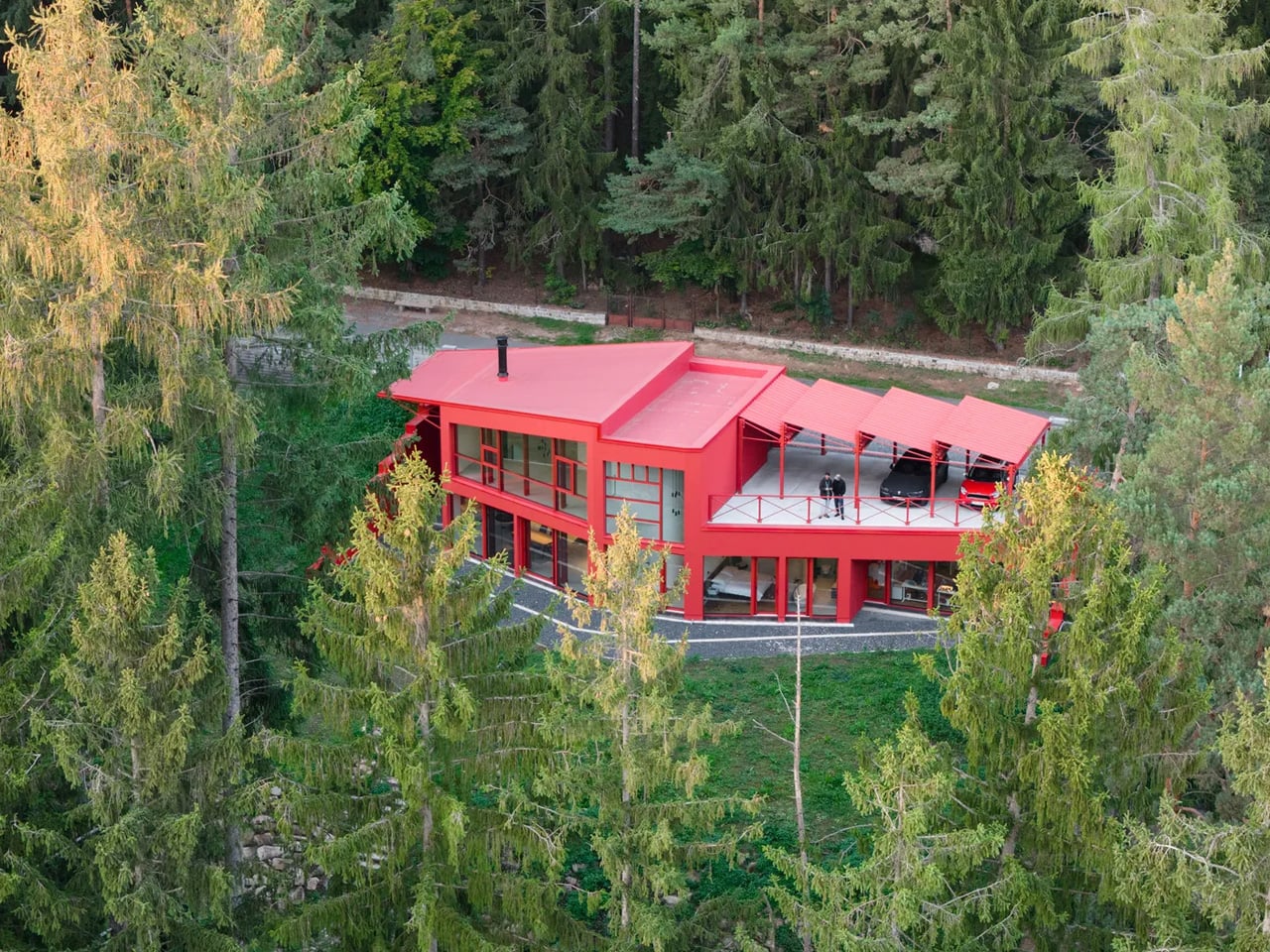
Deep in the spruce forests of Jevany, a municipality of barely 800 people in the Czech Republic’s Central Bohemian Region, a flash of cherry red cuts through the trees. This is Villa Jevany, a new residence by local studio Architektura, and it has absolutely no interest in blending in. Where most forest homes default to timber, stone, and muted tones, Architektura went the other way entirely, dressing the structure in saturated red steel and calling it exactly what it is: a deliberate, uncompromising act of contrast.

The site itself set the terms. The plot spans a generous 3,027 square meters on a steep southern slope, inhabited by deer, birds, and mature trees that tower up to ten meters above the building level. Architektura responded by carving the villa into the hillside rather than placing it on top, creating a structure the studio describes as an “organism” embedded in the earth. The red steel skeleton, visible in the sawtooth carport roof from the moment of arrival, signals that this is industrial thinking applied to domestic life, and it doesn’t apologize for it.

Designer: Architektura

The colour choice is rooted in theory as much as instinct. Architektura used green and red as complementary colors, a logic borrowed from the colour wheel and, more pointedly, from abstract art. The irregularly divided glazing across the façade draws a quiet reference to Mondrian, the rhythmic geometry of the windows creating a visual tension against the organic verticality of the trees behind them. From the road, the house reads almost like a painting hung in the forest. From the inside, the forest becomes the painting.

Internally, the layout unfolds across five distinct levels. The entrance opens into a hall with a 3.5-meter ceiling height, where a curved wall guides visitors into the main living space, or what the architects call the “day zone.” Here, industrial red steel windows frame the surrounding green; white walls meet black details; reddish stone counters anchor the kitchen alongside a floating steel fireplace. It’s a space of deliberate contrasts, domestic in function and raw in feeling.

The private quarters, reached through a long corridor lined with minimalist white cabinetry, are stripped of excess. The parents’ suite and children’s rooms are quiet and restrained, a counterpoint to the drama of the exterior. Terraces and balconies extend the living area into the canopy itself, turning the house into what Architektura intended all along: not just a place to live, but a place to look.

The post This Red House Buried in a Czech Forest Is the Opposite of Every Forest Home You’ve Ever Seen first appeared on Yanko Design.

  • ✇Yanko Design
  • 5 Rammed Earth Homes in 2026 That Make Concrete Walls Look Outdated
    The architectural world is shifting toward materials that feel grounded, honest, and deeply connected to the earth. Instead of relying on high-energy industrial products, designers and homeowners are embracing approaches that honor the planet’s natural tectonics. In this movement toward true sustainability, rammed earth has re-emerged as a powerful, modern choice for those seeking beauty, integrity, and a low-carbon footprint. Its tactile layers and sculptural warmth create spaces that feel roo
     

5 Rammed Earth Homes in 2026 That Make Concrete Walls Look Outdated

21 mars 2026 à 19:30

The architectural world is shifting toward materials that feel grounded, honest, and deeply connected to the earth. Instead of relying on high-energy industrial products, designers and homeowners are embracing approaches that honor the planet’s natural tectonics. In this movement toward true sustainability, rammed earth has re-emerged as a powerful, modern choice for those seeking beauty, integrity, and a low-carbon footprint.

Its tactile layers and sculptural warmth create spaces that feel rooted, calm, and inherently biophilic. Rammed earth offers durability, thermal comfort, and long-term value, transforming simple structures into timeless experiences and reflecting the five pillars driving its revival.

1. Low-Carbon Construction

Rammed earth stands out as a low-carbon building method because its main ingredient, subsoil, is often sourced directly from the construction site or nearby. This drastically cuts transportation emissions. Unlike concrete or brick, rammed earth requires no firing, kilns, or intensive chemical processes. Its formation relies on simple mechanical compaction and moisture, keeping the embodied energy among the lowest of any mainstream wall system.

This approach makes each project inherently more responsible and materially honest. By using local resources and eliminating energy-heavy manufacturing, rammed earth aligns with global decarbonization goals. It has become a preferred choice among forward-thinking firms committed to sustainable, large-scale performance.

Arquipélago Arquitetos’ Piracaia Eco-Village in rural São Paulo exemplifies sustainable home design, using rammed earth construction to create affordable, eco-friendly residences. Located in the village of Piracaia, the development currently includes three homes ranging from a 538-square-foot studio to a 1,245-square-foot two-bedroom unit. Each home features rammed-earth walls formed from local soil, providing structural strength and natural insulation. A modular design allows the system to be easily replicated or scaled, offering flexibility and efficiency.

Large clerestory windows bring in natural light while preserving privacy, and the aluminium roofs are designed to harvest rainwater for everyday use. Wood panels and steel tie rods ensure stability and structural integrity. Initiated by a resident who sought a deeper connection to nature and community, the project stands as a model for sustainable rural living—embracing local resources, traditional techniques, and modern architectural thinking to shape a more conscious way of life.

2. Honors Raw Materiality

Rammed earth’s signature beauty lies in its dramatic, layered texture, which is an architectural reflection of geological time. Each compacted lift reveals natural striations shaped by the soil’s mineral makeup, giving every wall a distinct, site-specific identity. This visual honesty creates an immediate sense of grounding, making the material feel ancient and deeply contemporary.

In double-height spaces, these walls do more than define boundaries as they hold light, absorb warmth, and shift subtly throughout the day. The result is an atmosphere that feels calm, elemental, and immersive. The wall becomes an artwork in itself, guiding the mood, rhythm, and spatial flow of the entire home.

Japanese architecture studio Lib Work has introduced the Lib Earth House Model B, a 1,076-square-foot home made primarily from 3D-printed soil. Located in Yamaga, Kumamoto Prefecture, and developed with Arup and WASP, this project represents a significant departure from traditional concrete construction. The single-story structure features gently curved walls and a ribbed exterior texture, showcasing the potential of combining ancient materials with advanced printing technology. Constructed from a mix of soil, sand, slaked lime, and natural fibres, the home cuts typical construction emissions by more than half while promoting durability and thermal performance.

Inside, the design balances minimalism and warmth, with natural light accentuating the earth walls’ varied textures. Embedded sensors monitor moisture and structural performance discreetly, improving long-term sustainability. The flat roof accommodates future solar or water systems, highlighting a practical integration of eco-friendly features.

3. Natural Temperature Control

Rammed earth excels in passive design because of its dense, high–high-thermal-mass composition. These walls act as natural thermal batteries, absorbing heat throughout the day and releasing it slowly at night. This steady modulation of indoor temperatures reduces sharp fluctuations and minimizes dependence on mechanical heating or cooling systems. For homeowners and designers, this means long-term savings and an impressive ROI on energy infrastructure.

Beyond performance, the material elevates the visual and spatial experience. Its ability to regulate climate naturally eliminates the need for excessive mechanical fixtures, creating cleaner lines and a more intentional aesthetic. Rammed earth becomes both structure and climate strategy in one.

The Rammed Earth House in Slovenia reimagines the early 20th-century farmhouse by combining ancient building methods with modern solar technology. Designed by architects Merve Nur Başer, Aslı Erdem, and Fatma Zeyneb Önsiper, the tiny home uses rammed earth, a sustainable technique dating back thousands of years – along with a concrete foundation and timber framework. Inspired by Slovenian architect Oton Jugovec’s floating roof, the house also features an extended green roof to protect the structure from erosion caused by Dobrava’s varied climate of rain, snow, and humidity.

Oriented to optimise passive heating and cooling, the Rammed Earth House is carefully positioned to capture winter sunlight and block summer heat. Strategically placed windows enhance natural ventilation throughout the year, while the roof supports solar panels, a rainwater harvesting system, and an integrated septic tank. The interior layout further improves efficiency, with fewer windows on the north side to minimize heat loss and more on the west to capture warmth when needed.

4. Built for Centuries

Modern rammed earth, lightly stabilized with cement, delivers exceptional compressive strength and long-term durability. Its dense composition makes it naturally fire-resistant, pest-resistant, and remarkably stable across changing climates. History reinforces this reliability with rammed-earth structures around the world having survived for centuries, proving the material’s endurance far beyond typical contemporary systems.

For homeowners, this resilience translates directly into value. The walls demand minimal upkeep and offer a long structural lifespan, financially sound over decades. Their inherent thickness also enhances acoustic comfort, reducing noise transfer and improving the quality of everyday living within the home.

Casa Covida is a modern reinterpretation of ancient building methods that merges traditional materials like mud, clay, and straw with advanced 3D-printing technology. Developed by Emerging Objects, the project showcases how earth-based architecture, used by nearly 30% of the global population, can be revived for contemporary living. Built in Colorado’s San Luis Valley using a SCARA robotic printer, the structure is made from an adobe blend and features three interconnected zones: a central space with a hearth, a sleeping area furnished with reclaimed beetle kill pine, and a bathing zone with a river-stone-embedded tub. An inflatable cactus-inspired roof adds weather protection and visual intrigue.

Designed for two people, Casa Covida acts as a prototype to explore how ancient techniques can coexist with digital fabrication. The 3D-printed walls, custom earthen cookware, and natural insulation demonstrate how sustainability and innovation can shape the future of housing.

5. Celebrates Nature-Rooted Architecture

Rammed earth grounds a home not just physically but culturally, drawing directly from the soil that defines its region. By using material sourced from the site itself, the architecture gains a deep sense of place and authenticity. This alignment with biophilic design principles creates a natural, instinctive connection between occupant and landscape, allowing the structure to feel both contextual and emotionally reassuring.

The experience is more than visual as it is tactile and psychological. The walls embody local history, climate, and geology, offering a timeless identity that outlasts design trends. In this way, rammed earth supports well-being while honoring the land it stands on.

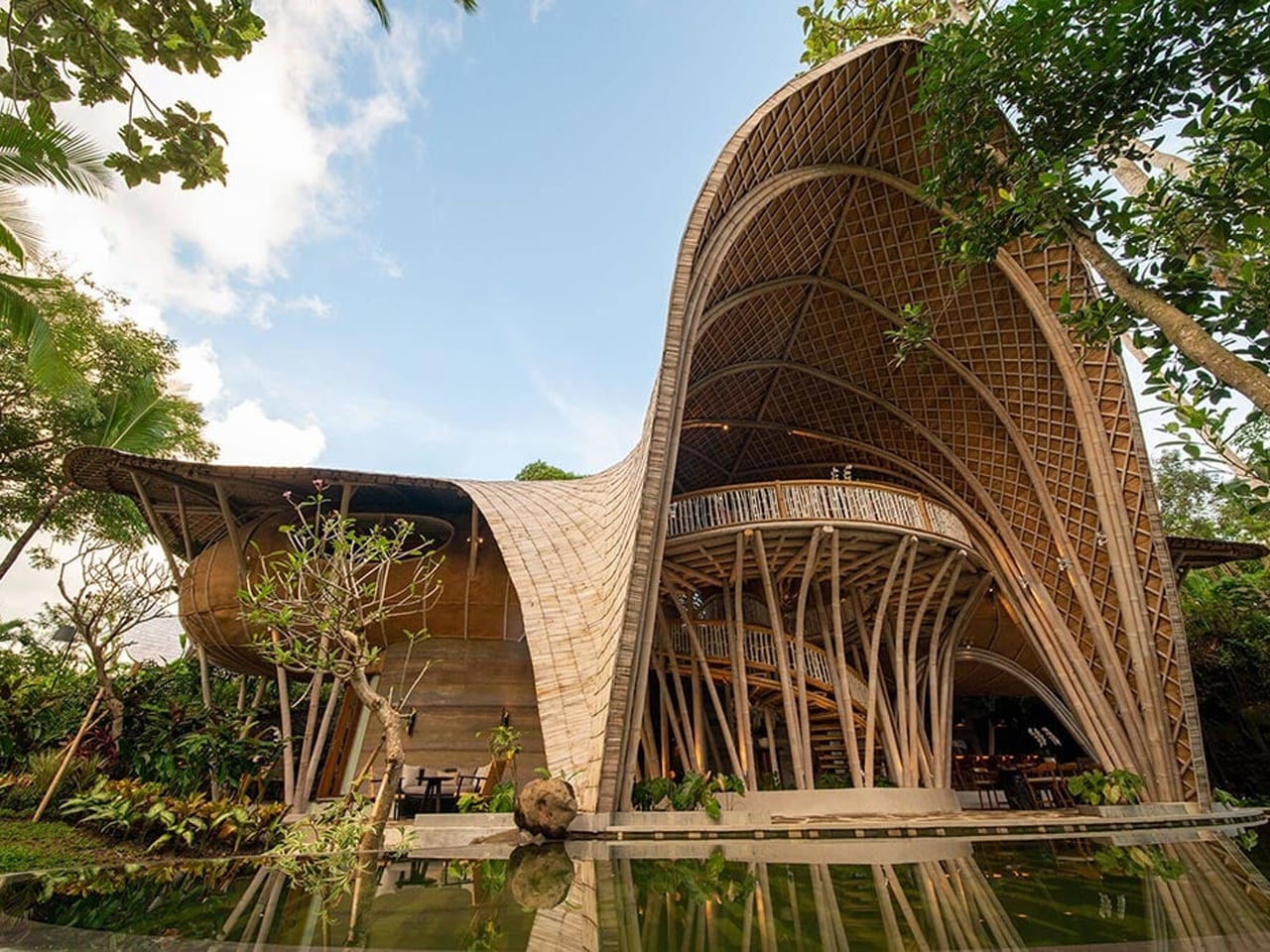
Contrary to the belief that sustainability requires sacrificing comfort, Ulaman Eco-Retreat Resort in Bali demonstrates that ecological responsibility can coexist with luxury. Designed by Inspiral Architects, this carbon-neutral resort is constructed primarily from bamboo and rammed earth, locally sourced materials that significantly reduce environmental impact.

Situated in Kaba-Kaba village, the resort showcases the structural and aesthetic potential of sustainable materials. Rammed earth, used for the ground-level walls, offers a low-emission alternative to concrete, while the curvilinear bamboo roofing blends cultural authenticity with structural beauty. Powered by hydroelectric energy from a nearby river, the resort includes a cliffside yoga studio and a meandering pool designed to reflect natural surroundings.

Rammed earth’s resurgence is not a design fad but a meaningful answer to today’s calls for beauty, sustainability, and lasting value. By choosing this ancient yet future-ready material, homeowners invest in sustainable luxury that elevates both life and environment. Its layered, monolithic presence creates a sanctuary that endures quietly elegantly, deeply responsible, and profoundly connected to the earth it rises from.

The post 5 Rammed Earth Homes in 2026 That Make Concrete Walls Look Outdated first appeared on Yanko Design.

❌