❌

Vue normale

  • ✇Yanko Design
  • Assouline turns classic board games into luxury interior objects with The Game Room Collection
    Best known for its luxury coffee table books, Assouline is extending its design-led approach to everyday objects with the launch of The Library Collection: Game Room. This new collection reinterprets five familiar tabletop pastimes as carefully crafted lifestyle accessories, combining traditional games with premium materials and decorative detailing. Chess, backgammon, tic-tac-toe, dominoes, and playing cards receive a refined makeover, portraying them as objects designed for both entertainment
     

Assouline turns classic board games into luxury interior objects with The Game Room Collection

2 novembre 2026 à 11:20

Best known for its luxury coffee table books, Assouline is extending its design-led approach to everyday objects with the launch of The Library Collection: Game Room. This new collection reinterprets five familiar tabletop pastimes as carefully crafted lifestyle accessories, combining traditional games with premium materials and decorative detailing. Chess, backgammon, tic-tac-toe, dominoes, and playing cards receive a refined makeover, portraying them as objects designed for both entertainment and display.

The board game collection brings together rich walnut, pebbled and inlaid leather, brushed brass, heavyweight aluminium, and soft polysuede. A restrained colour palette of red, camel, brown, and stone gives the five pieces a consistent visual identity, allowing them to complement contemporary interiors, libraries, studies, and living spaces. Rather than changing how these games are played, Assouline focuses on their physical presentation, turning familiar objects into collectible pieces that can remain on display between games.

Designer: Assouline

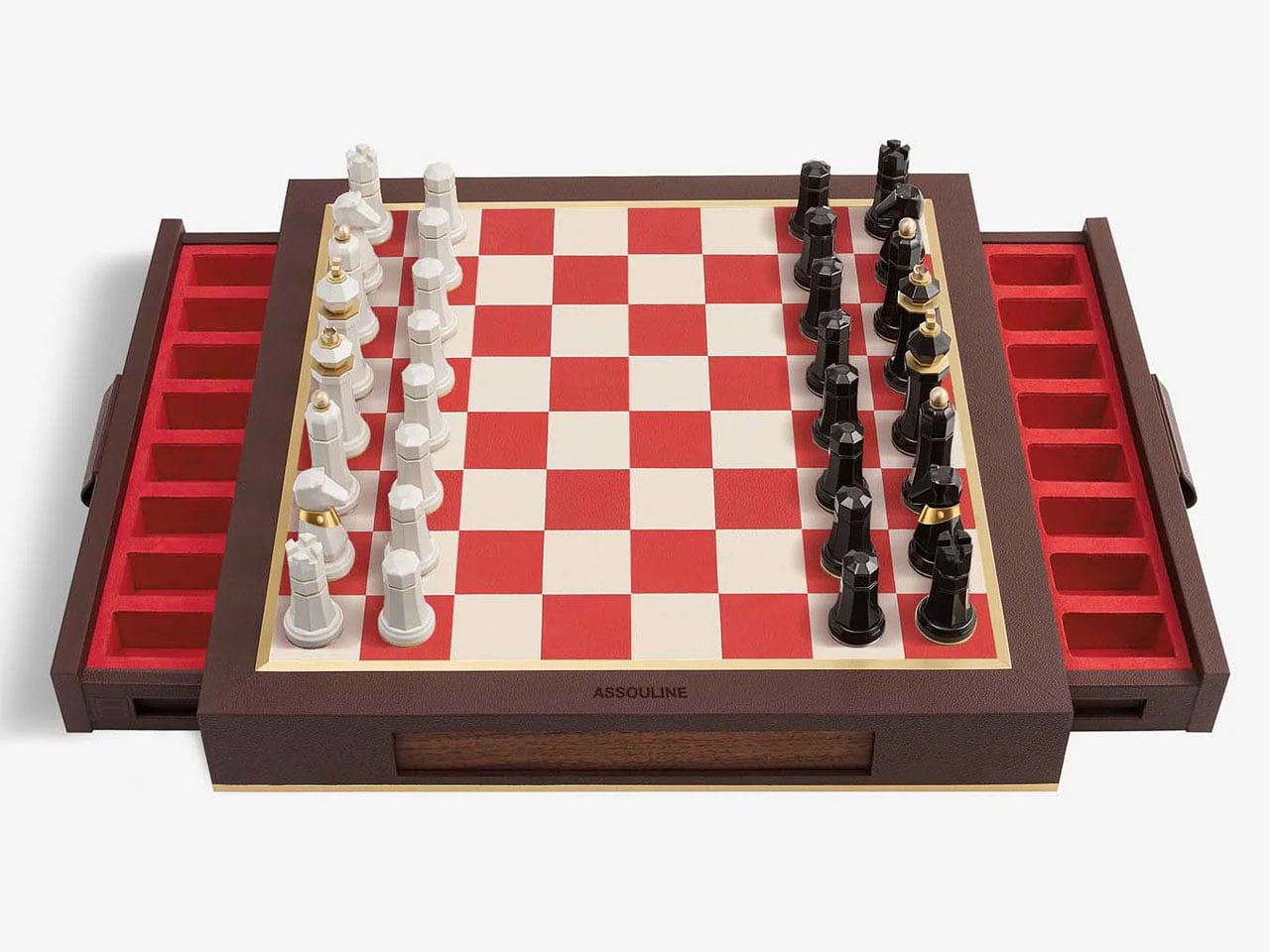
Leading the board game collection is the Empire Chess Set, priced at $2,500. The chessboard combines a walnut structure with a brushed brass border and an inlaid pebbled leather playing surface. Integrated removable drawers provide storage for the pieces, while soft polysuede underlays add another layer of finish. Its heavyweight aluminium chess pieces feature brass accents and sculptural forms. One notable detail is the queen, whose crown draws inspiration from the distinctive visual motifs of artist Jean-Michel Basquiat.

The Pebble Backgammon Set follows at $2,250, housed in a solid walnut case with an inlaid leather playing surface. Its checkers are wrapped in leather and finished with brass detailing, while the dice are hand-painted in Assouline’s signature colour palette. The combination of tactile materials and traditional craftsmanship gives the set a more considered presence than conventional board-game accessories.

For a more compact alternative, the Library Tic-Tac-Toe Set costs $750 and combines walnut with pebbled leather. Its playing pieces introduce an unusual design detail: alongside wood and brass markers, the O-shaped pieces take the form of miniature books, referencing Assouline’s publishing heritage.

Completing the lineup are the Pebble Domino Set and Pebble Playing Card Set, priced at $650 and $450, respectively. The dominoes feature oversized leather-inlaid tiles framed in walnut, with recessed walnut pips and a distinctive pebble-shaped brass handle on the storage box. Meanwhile, the playing card set includes two gold-gilded decks featuring Didot typography and illustrated jokers depicting characters juggling books. Both decks are housed in a sliding leather case.

With prices ranging from $450 to $2,500, The Library Collection: Game Room extends Assouline’s approach to design beyond printed publications. Each piece brings a familiar social activity into the language of luxury interiors, where material quality, craftsmanship, and thoughtful detailing are as important as everyday functionality. The collection is available through Assouline’s online store.

The post Assouline turns classic board games into luxury interior objects with The Game Room Collection first appeared on Yanko Design.
  • ✇Yanko Design
  • Chess Without a Flat Board: Turner’s Rotating Tower Concept
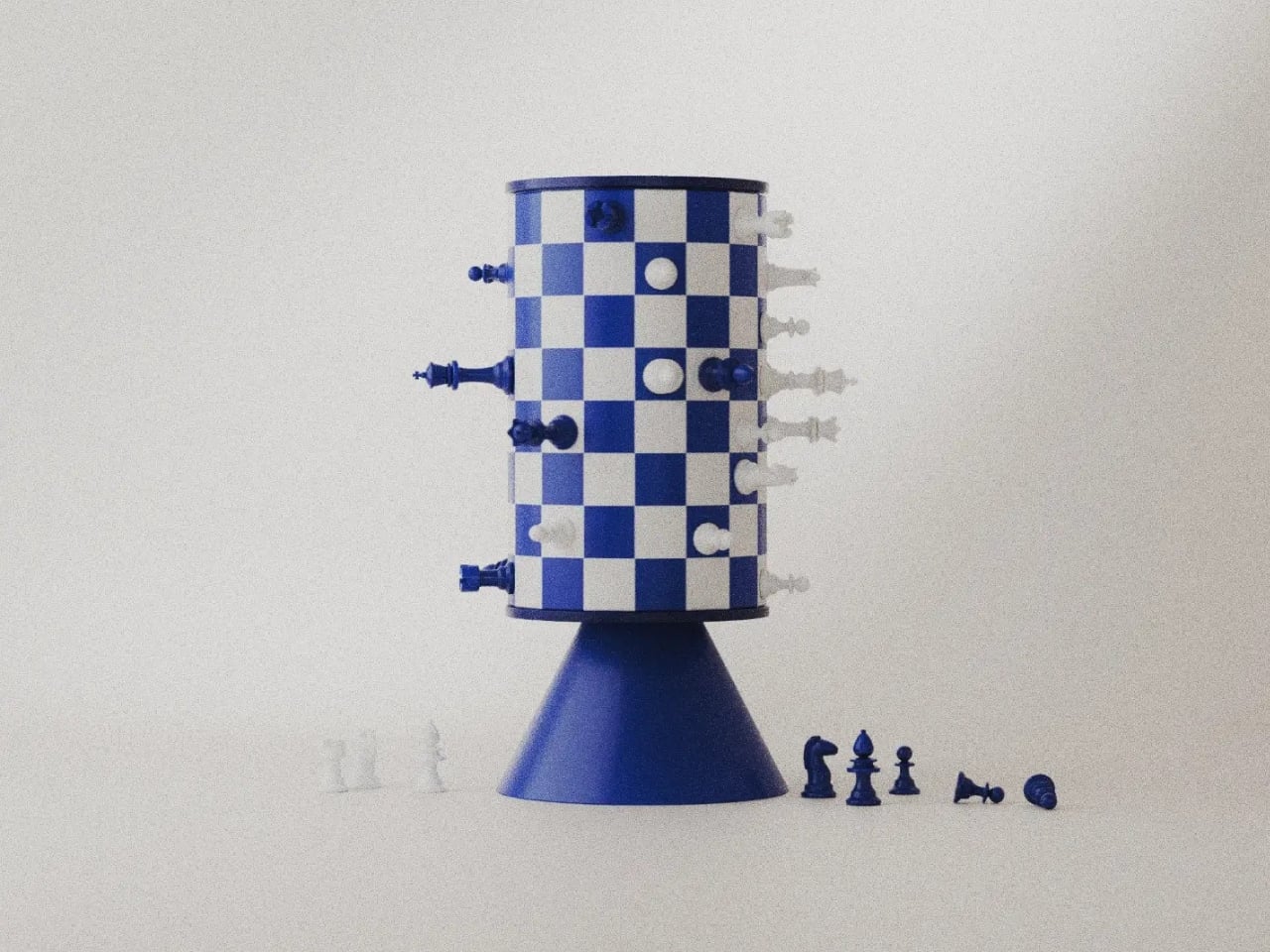
    A blue king sticks straight out from a checkerboard cylinder, looking remarkably composed for a piece that should be falling onto the table. That sideways stance explains Turner, a rotating magnetic chess concept by Joffey, faster than a technical diagram could. The immediate problem is gravity: a vertical playing surface needs a way to keep its pieces attached. Magnets provide the proposed answer, letting the familiar chessboard curl upright without leaving its army in a heap. Created for Day
     

Chess Without a Flat Board: Turner’s Rotating Tower Concept

22 octobre 2026 à 20:30

A blue king sticks straight out from a checkerboard cylinder, looking remarkably composed for a piece that should be falling onto the table. That sideways stance explains Turner, a rotating magnetic chess concept by Joffey, faster than a technical diagram could. The immediate problem is gravity: a vertical playing surface needs a way to keep its pieces attached. Magnets provide the proposed answer, letting the familiar chessboard curl upright without leaving its army in a heap.

Created for Day 04 of #productober, under the prompt “magnetic,” Turner explores what happens when a board loops back into itself. It’s a concept rather than a finished product, and I like that its ambition is playful rather than pretending chess needs fixing. The appeal is seeing a familiar game become an object you might want to leave out, even between matches.

Designer: Joffey

The supplied images show a blue-and-white grid wrapped around a tall cylinder, capped by dark blue circular ends and supported by a flared pedestal. The base gives it the presence of a small tabletop sculpture. From some angles, it resembles an unusually elaborate trophy. From others, the pieces projecting around its circumference make it look like a tiny planet populated entirely by royalty and horses.

The color does a lot of work here. Deep blue replaces the expected black, giving the set a softer domestic character without sacrificing the contrast with white. I’d happily take that over another aggressively futuristic chess redesign. The pieces retain recognizable silhouettes, so the unfamiliar board has familiar companions. You can still pick out a knight or a king without learning a whole new visual language.

Magnetism also earns its place in the design. Remove it, and the central idea stops working. The pieces are intended to cling to the curved surface while the board rotates, bringing different areas into view. That makes turning the board part of the interaction. Instead of simply surveying a flat field, players would need to reveal portions of the position as they go.

That’s also where my enthusiasm meets a practical reservation. A flat chessboard lets both players inspect the entire position at once. Turner’s cylinder necessarily conceals part of the grid from any single viewpoint. Rotation offers a way to look around it, but remembering what’s on the far side could become another demand on your attention. I can imagine enjoying that extra spatial puzzle. I can also imagine wanting my ordinary board back during a particularly complicated game.

The looping surface raises another question: what happens at the point where opposite edges meet? Joffey’s description suggests a changed way of playing, but the supplied material doesn’t establish a complete rule set. It would be a stretch to assign new movement rules to the pieces. Still, the possibility is intriguing. Joining edges could have consequences beyond appearance if the designer chooses to make that continuity part of play.

I appreciate that Turner doesn’t disguise every familiar feature in pursuit of novelty. The pedestal, restrained palette, and recognizable pieces give your eye enough to understand before the curved grid complicates things. Even the pieces set beside the base in the images help establish scale and context, although no dimensions are provided. You understand that this belongs on a table, within reach, rather than behind glass.

For a developed version, I’d care as much about the feel of removing a pawn as the appearance of the cylinder. Magnetic attachment would need to resist slipping while allowing deliberate moves without an awkward tug. The rotation would need similar care: easy enough to use, controlled enough not to become a distraction. Those are unresolved details, but they’re also where an appealing rendering could become a satisfying physical object.

Turner makes me curious enough to want a game, provided someone explains the rules first. Its appeal lies in having to look around a chessboard that usually gives you everything at once. That could be an entertaining complication, even if it never replaces the flat board in the closet.

The post Chess Without a Flat Board: Turner’s Rotating Tower Concept first appeared on Yanko Design.

❌