Vue normale

  • ✇Yanko Design
  • Xiaomi 18 Fold Hands-On: Got Here Before Apple, Can It Beat Samsung?
    Xiaomi has chosen an interesting moment to return to foldables. The company has not released a book-style foldable since the Mix Fold 4, which launched in 2024, and now it is back with the Xiaomi 18 Fold just as compact foldables are starting to get more attention. Samsung has also added a foldable in this compact format to its lineup, and Apple is widely expected to unveil its first foldable iPhone at its September 9 event with a similar form factor in mind. That puts the Xiaomi 18 Fold in an
     

Xiaomi 18 Fold Hands-On: Got Here Before Apple, Can It Beat Samsung?

Par : Aki Ukita
8 septembre 2026 à 03:40

Xiaomi has chosen an interesting moment to return to foldables. The company has not released a book-style foldable since the Mix Fold 4, which launched in 2024, and now it is back with the Xiaomi 18 Fold just as compact foldables are starting to get more attention. Samsung has also added a foldable in this compact format to its lineup, and Apple is widely expected to unveil its first foldable iPhone at its September 9 event with a similar form factor in mind.

That puts the Xiaomi 18 Fold in an interesting spot. It is not just Xiaomi coming back to foldables after a break. It is also arriving just as this smaller book-style format looks like it could become the next big thing.

Designer: Xiaomi

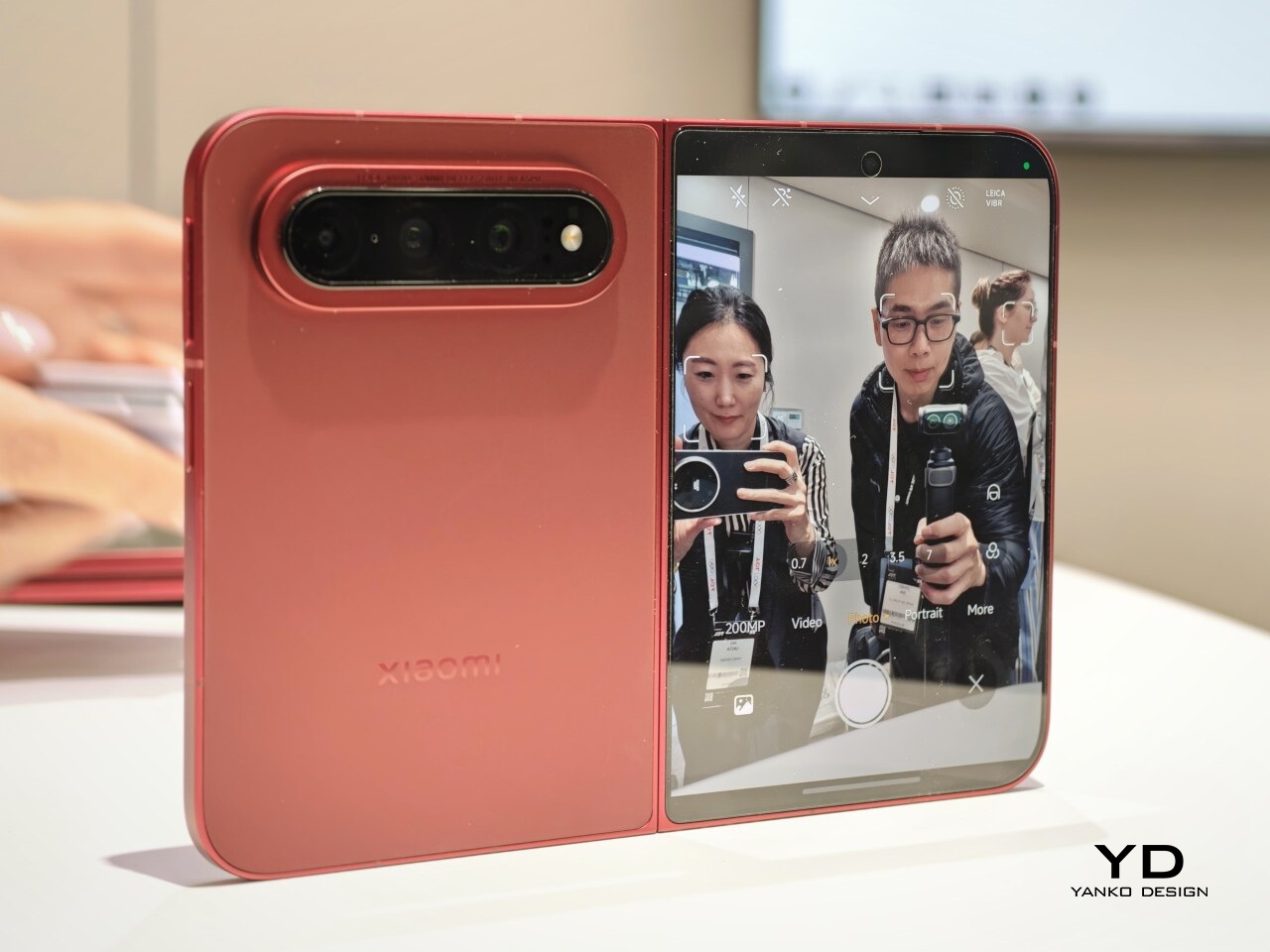
Xiaomi is positioning the 18 Fold as its first mid-size flagship foldable. It weighs 7.73 ounces (219g), measures 0.42 inches thick when folded (10.68mm), and opens out to just 0.20 inches thick (5.02mm), with a folded footprint of 4.64 x 3.29 inches (117.8 x 83.6mm). In person, it feels thin, though not unusually thin by the standards of today’s premium foldables. More importantly, it feels expensive in a good way. The matte texture on the back and frame gives it a softer, understated finish, while the rounded corners and flat frame help the phone look clean and modern.

The unit I handled was the deep red version, and it is a bold color in person. It stands out more than the usual black or silver foldable palette without feeling too loud. It also happens to echo the deep red finish rumored for Apple’s first foldable, which makes the comparison hard to miss. The 18 Fold comes in Black, White, Red, and a Ceramic Version.

In practice, though, this is still a two-handed phone whether it is folded or unfolded. Even closed, the body is compact in one sense but still broad enough that I did not think of it as something built for easy one-handed use. That is not really a criticism. It just comes with the territory.

The outer display is a 5.38-inch panel, while the inside opens up to a 7.58-inch main screen. Xiaomi says both displays share the same aspect ratio, which is meant to make the transition from one to the other feel more natural. I could not fully judge how well that works in daily use from a short demo, but one benefit stood out right away. Video felt more immersive than on squarer foldables because there was less black bar space above and below the image.

The software also looked well suited to the shape. Animations felt smooth in my brief demo, and I did see split-screen and floating window support in action. The unfolded UI felt more like a small tablet than a stretched phone, which is what you want on a device like this. Xiaomi has also placed one speaker on the top edge and another on the bottom edge on the opposite side, which should help give the phone a more balanced stereo effect when it is open.

The hinge left a good first impression too. I cannot really say whether it felt especially firm or especially smooth, because my time with the device was limited, but it did feel sturdy. The crease was handled well too. Looking straight at the display, I only really noticed it from certain angles rather than all the time. More importantly, I could barely feel it when running a finger across the center, which was better than I expected.

Left: Xiaomi 18 Fold, Right: Galaxy Z Fold 8

Left: Galaxy Z Fold 8, Right: Xiaomi 18 Fold

Left: Galaxy Z Fold 8, Right: Xiaomi 18 Fold

I also compared the Xiaomi 18 Fold side by side with Samsung’s Galaxy Z Fold 8. Samsung’s device measures 4.88 x 3.22 x 0.38 inches when folded (123.9 x 81.9 x 9.7mm), 6.35 x 4.88 x 0.18 inches when unfolded (161.4 x 123.9 x 4.5cm), and weighs 7.09 ounces (201g), so it is a little lighter and a bit thinner than Xiaomi’s foldable in some areas. But the difference was not just about dimensions. Samsung’s inner screen was noticeably brighter to my eyes. At the same time, the Xiaomi 18 Fold had one practical advantage that stood out immediately. When placed on a desk, it did not wobble, while the Samsung did.

Left: Galaxy Z Fold 8, Right: Xiaomi 18 Fold

Left: Galaxy Z Fold 8, Right: Xiaomi 18 Fold

Top: Xiaomi 18 Fold, Bottom: Galaxy Z Fold 8

The biggest surprise for me was the camera. Xiaomi is using a 200MP Leica triple-camera system, led by a 200MP main camera and backed by a 50MP Leica periscope telephoto with an 80mm equivalent focal length. In my short time with the phone, the telephoto camera was the part that stuck with me most. I tried zoom, and the 3.5x telephoto setup immediately felt like one of the most interesting parts of the device. Stability also felt good even at higher magnification, which made the zoom feel more usable, not just more dramatic. The camera bump also did not seem overly large, and its oval-shaped, two-step raised design gives it some presence without taking over the whole back.

My time with the Xiaomi 18 Fold was brief, and this hands-on really only scratched the surface. Even so, the phone already feels like a polished return to book-style foldables. Pricing starts at RMB 10,999, or roughly $1,640, for the 12GB/256GB model, and Xiaomi said it will be available in China only for now.

The post Xiaomi 18 Fold Hands-On: Got Here Before Apple, Can It Beat Samsung? first appeared on Yanko Design.

Xiaomi Says CyberOne Hit 98% in Factory Trial Before IFA Demo

4 septembre 2026 à 14:34

Xiaomi showcased CyberOne at IFA after reporting a 98% success rate in an EV factory trial, highlighting the promise and limits of humanoid robots.

The post Xiaomi Says CyberOne Hit 98% in Factory Trial Before IFA Demo appeared first on TechRepublic.

Xiaomi Smart Band 11 vs Smart Band 10: What Actually Changed?

4 septembre 2026 à 09:26

Xiaomi Smart Band 11 keeps the Band 10’s display size and 21-day battery claim but adds more brightness, a thinner design, and new health features.

The post Xiaomi Smart Band 11 vs Smart Band 10: What Actually Changed? appeared first on TechRepublic.

Redmi Note 17 Pro vs Pro Max: Battery, Price and Specs Compared

3 septembre 2026 à 08:56

Redmi Note 17 Pro and Pro Max pricing varies by country, while the Pro Max adds a larger battery, faster charging, storage, and 4K video.

The post Redmi Note 17 Pro vs Pro Max: Battery, Price and Specs Compared appeared first on TechRepublic.

  • ✇Korben
  • Gadgetbridge - L'appli qui gère votre montre connectée sans Internet
    Gadgetbridge est une application Android libre qui va vous faire zizir parce qu'elle permet de remplacer l'app merdique du fabricant de votre bracelet ou montre connectée ou encore de vos écouteurs Bluetooth. Comme ça, terminé le compte obligatoire pour utiliser vos "wearables" et fini les serveurs du constructeur localisés en Chine ou je ne sais où qui reçoivent vos heures de sommeil ou votre fréquence cardiaque minute par minute... Puis surtout, ça permet de n'avoir plus qu'une
     

Gadgetbridge - L'appli qui gère votre montre connectée sans Internet

18 août 2026 à 04:44

Gadgetbridge est une application Android libre qui va vous faire zizir parce qu'elle permet de remplacer l'app merdique du fabricant de votre bracelet ou montre connectée ou encore de vos écouteurs Bluetooth. Comme ça, terminé le compte obligatoire pour utiliser vos "wearables" et fini les serveurs du constructeur localisés en Chine ou je ne sais où qui reçoivent vos heures de sommeil ou votre fréquence cardiaque minute par minute... Puis surtout, ça permet de n'avoir plus qu'une seule application Android pour tous vos appareils et ça c'est cool aussi !

Surtout que ça fonctionne en OFFLINE... Hé oui, le manifeste de cette app indique bien que jamais, Ô grand jamais, elle ne se connectera au net. Y'a même pas la permission dans l'app, c'est bloqué au niveau du code.

Maintenant, concrètement, Gadgetbridge permet de recevoir vos notifications à votre poignet, de répondre aux appels avec réponses préenregistrées, de paramétrer des alarmes, de lancer une lecture de musique, d'avoir du suivi d'activité et de sommeil, ainsi que vos tracés GPS de vos trop rares séances de sport. Et bien sûr, tout reste en local sur votre téléphone. Notez que AsteroidOS , dont je vous ai déjà parlé, fait pareil mais un cran plus bas, uniquement dans la montre.

Gadgetbridge supporte actuellement 529 modèles de 74 fabricants, d'Amazfit à Garmin, avec Pebble, Sony, Huawei et Xiaomi. Mais prenez le temps de lire la fiche technique de votre modèle car tous ne sont pas supportés en intégralité.

Reste maintenant le prix à payer, et il ne vient pas de Gadgetbridge.

En effet, sur les Amazfit et Xiaomi récents, l'appairage se négocie avec les serveurs du constructeur. Il faut donc appairer une première fois avec l'appli officielle, puis en extraire la clé. Même histoire chez Fossil, dont les montres HR sortent en plus avec un firmware de démo que seule l'appli maison sait remplacer. Chez Nothing aussi, la CMF Watch Pro veut une clé extraite d'un téléphone rooté, alors que les Pro 2 et Pro 3 s'en passent.

Une appli qui aurait la permission d'aller sur Internet irait chercher cette clé toute seule mais comme celle-ci ne peut pas, faudra le faire vous-même (c'est expliqué comment dans la doc).

De leur côté, les Garmin s'appairent directement, sauf quelques modèles qui veulent avoir vu l'appli officielle une fois. Mais la météo, et l'AGPS sur certaines montres, réclament des identifiants à renouveler tous les 90 jours, et Gadgetbridge propose d'y répondre avec de faux jetons OAuth. Après si vous voulez revenir ensuite à celle du constructeur, faudra peut-être relancer une remise à zéro d'usine.

Après pour les irréductibles qui voudraient quand même du réseau, un module séparé, Internet Helper, est arrivé début 2026. Il relaie les requêtes des applications de la montre, s'installe à part, et nécessite sa propre autorisation.

Voilà, tout cela s'installe depuis F-Droid sur tout Android 6.0 ou plus récent, sous licence AGPLv3, et le code est dispo sur Codeberg.

Apple Wallet Car Key Support Could Expand to Lucid, Xiaomi Vehicles

10 juillet 2026 à 14:25

iOS 27 beta code hints that Lucid and Xiaomi vehicles could gain Apple Car Key support, though compatible models and launch timing remain unconfirmed.

The post Apple Wallet Car Key Support Could Expand to Lucid, Xiaomi Vehicles appeared first on TechRepublic.

Android 17 Is Live on Pixel, but Samsung and Other Android Users Still Have to Wait

19 juin 2026 à 08:09

Android 17 is rolling out to supported Pixel devices first, while non-Pixel users and IT teams face separate OEM timelines, beta programs, and app-testing considerations.

The post Android 17 Is Live on Pixel, but Samsung and Other Android Users Still Have to Wait appeared first on TechRepublic.

  • ✇Yanko Design
  • Xiaomi Returns to Laptops After Four Years with a MacBook Air Rival That Outclasses It on Paper for $1,275
    The laptop market has a predictable rhythm. Apple sets the benchmark, everyone else reacts. Since the M1 MacBook Air landed in late 2020 and redrew the definition of thin-and-light computing, the entire Windows ultrabook category has essentially been running in response to that one product. Some challengers land close, most fall short on one or two crucial dimensions, and the cycle repeats. What makes Xiaomi’s return to the laptop space interesting is that the company has been watching all of t
     

Xiaomi Returns to Laptops After Four Years with a MacBook Air Rival That Outclasses It on Paper for $1,275

22 mars 2026 à 09:20

The laptop market has a predictable rhythm. Apple sets the benchmark, everyone else reacts. Since the M1 MacBook Air landed in late 2020 and redrew the definition of thin-and-light computing, the entire Windows ultrabook category has essentially been running in response to that one product. Some challengers land close, most fall short on one or two crucial dimensions, and the cycle repeats. What makes Xiaomi’s return to the laptop space interesting is that the company has been watching all of this from the sidelines for four years, and the Book Pro 14 it just launched in China reads less like a desperate catch-up attempt and more like a deliberate, calculated swing at a very specific gap in the Air’s armor.

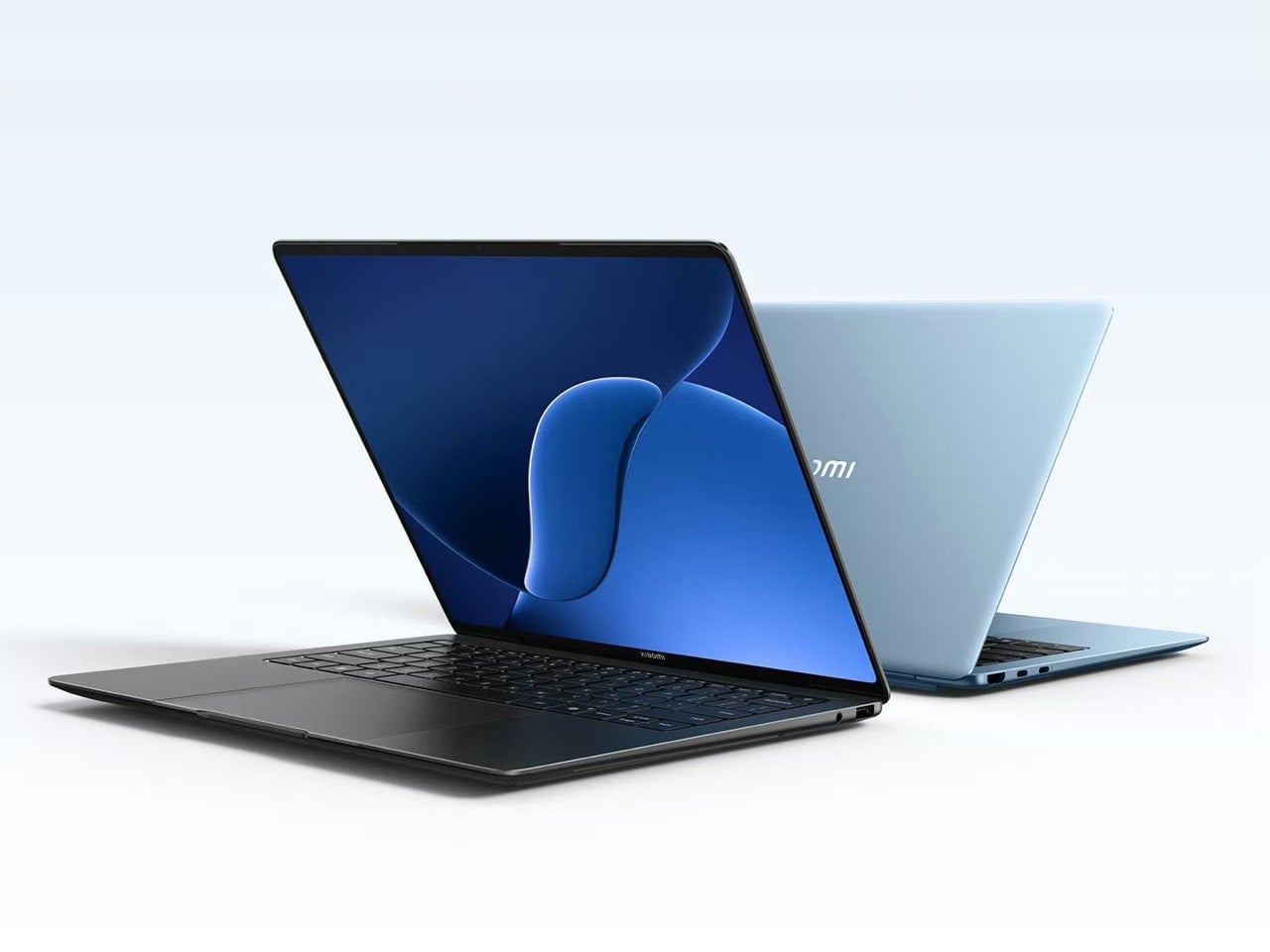
Xiaomi has just made a discreet release in the laptop segment after a four-year break, returning with the Book Pro 14, a capable thin-and-light that positions itself as a direct answer to the MacBook Air. The headline spec is the display: a 14.6-inch OLED panel with touchscreen support, 3.1K resolution, a 120Hz refresh rate, and a peak brightness of 1,600 nits. Under the hood, Xiaomi equips the notebook with Intel’s Panther Lake platform, up to an Intel Core Ultra 7 358H, with 24GB RAM on the base configuration and 1TB of SSD storage. Pricing, when converted from Chinese yuan, puts the laptop at approximately $1,275, just over $100 more than a base M5 MacBook Air, and for that small premium you get a higher-resolution 120Hz OLED panel, more RAM, and a more robust port selection.

Designer: Xiaomi

You’re probably itching to ask about ports, because the MacBook Air famously doesn’t pack enough of them. The Book Pro 14 includes Thunderbolt 4, USB-C, USB-A, HDMI 2.1, and a 3.5mm audio jack, compared to the MacBook Air’s two Thunderbolt 4 ports and a headphone jack. That is a meaningful difference for anyone who has ever reached for a dongle mid-presentation or had to choose between charging and connecting to a display. Xiaomi’s decision to include a full-size HDMI port and a USB-A jack signals an awareness that real-world desk setups are messier than Apple’s minimalist port philosophy acknowledges. Whether that matters to you depends entirely on your workflow, but it is a deliberate product decision and one that reads as a direct response to a documented frustration with the Air.

The Book Pro 14 achieves a weight of 1.08 kg and a thickness of 14.95 mm through a chassis built from magnesium alloy with a carbon fiber lid. That actually makes it lighter than the M5 MacBook Air, which tips the scales around 1.24 kg, and the thickness is comparable. Keeping the specs cool is a three-channel cooling system incorporating a high-performance fan, a 10,000mm² vapor chamber, and graphene cooling components capable of sustaining 50W of continuous performance. That last figure matters more than it might initially seem. Apple’s fanless MacBook Air is a thermally constrained machine, and sustained workloads do cause it to throttle, a tradeoff that has been well-documented since the M1 era, and a system that can sustain 50W continuously without a corresponding weight penalty represents a genuine engineering achievement.

Xiaomi makes bold claims on the Book Pro 14’s battery life, overshooting even the latest M5 MacBook Air by nearly two hours. The 72Wh battery is rated for up to 19.8 hours of continuous use, with the 100W fast charging system capable of restoring 50% in approximately 26 minutes. The MacBook Air M5 posts similarly impressive endurance numbers in real-world use, so this will be a tightly contested dimension. The Intel Panther Lake architecture powering the Book Pro 14 is also the first Intel mobile platform in recent memory that genuinely changes the conversation around Windows laptop efficiency, borrowing a page from Apple’s playbook by targeting the sub-10W idle efficiency range that made the M-series Macs so compelling. Independent testing will be the real arbiter here, but the stated numbers are ambitious enough to take seriously.

The Book Pro 14 is currently only available in China, with no clear indication of a global release date, which severely limits its immediate relevance for the overwhelming majority of potential buyers. Xiaomi has a track record of launching products domestically and gradually expanding to other markets, and given the attention this machine has received in the first 24 hours of coverage, the commercial logic for a global rollout is hard to argue against. The question is timing. If Xiaomi moves quickly, the Book Pro 14 could arrive in Western markets before the M5 MacBook Air has fully consolidated its footprint. If the rollout stalls or gets diluted through regional variants with compromised specs, the window closes. The hardware is genuinely compelling, and the only outstanding question that actually matters is whether Xiaomi’s global distribution ambitions match what the engineering team has clearly delivered.

The post Xiaomi Returns to Laptops After Four Years with a MacBook Air Rival That Outclasses It on Paper for $1,275 first appeared on Yanko Design.

❌