❌

Vue normale

  • ✇Yanko Design
  • Optoma’s $599 4K Projector casts a 150-inch Screen for the price of an Android Phone
    My first apartment had a living room wall the size of a parking space and a TV budget the size of a parking ticket. Had the Optoma Photon Life PK31 existed back then, I would have eaten instant noodles for a month to buy it. This 4K projector can cast an image up to 150 inches, and it currently sells for around $599, which is what you’d pay for a decent midrange Android phone. One gives you a 6-inch screen. The other fills a wall, and I know which one my 25-year-old self would’ve picked. The PK
     

Optoma’s $599 4K Projector casts a 150-inch Screen for the price of an Android Phone

8 novembre 2026 à 13:20

My first apartment had a living room wall the size of a parking space and a TV budget the size of a parking ticket. Had the Optoma Photon Life PK31 existed back then, I would have eaten instant noodles for a month to buy it. This 4K projector can cast an image up to 150 inches, and it currently sells for around $599, which is what you’d pay for a decent midrange Android phone. One gives you a 6-inch screen. The other fills a wall, and I know which one my 25-year-old self would’ve picked.

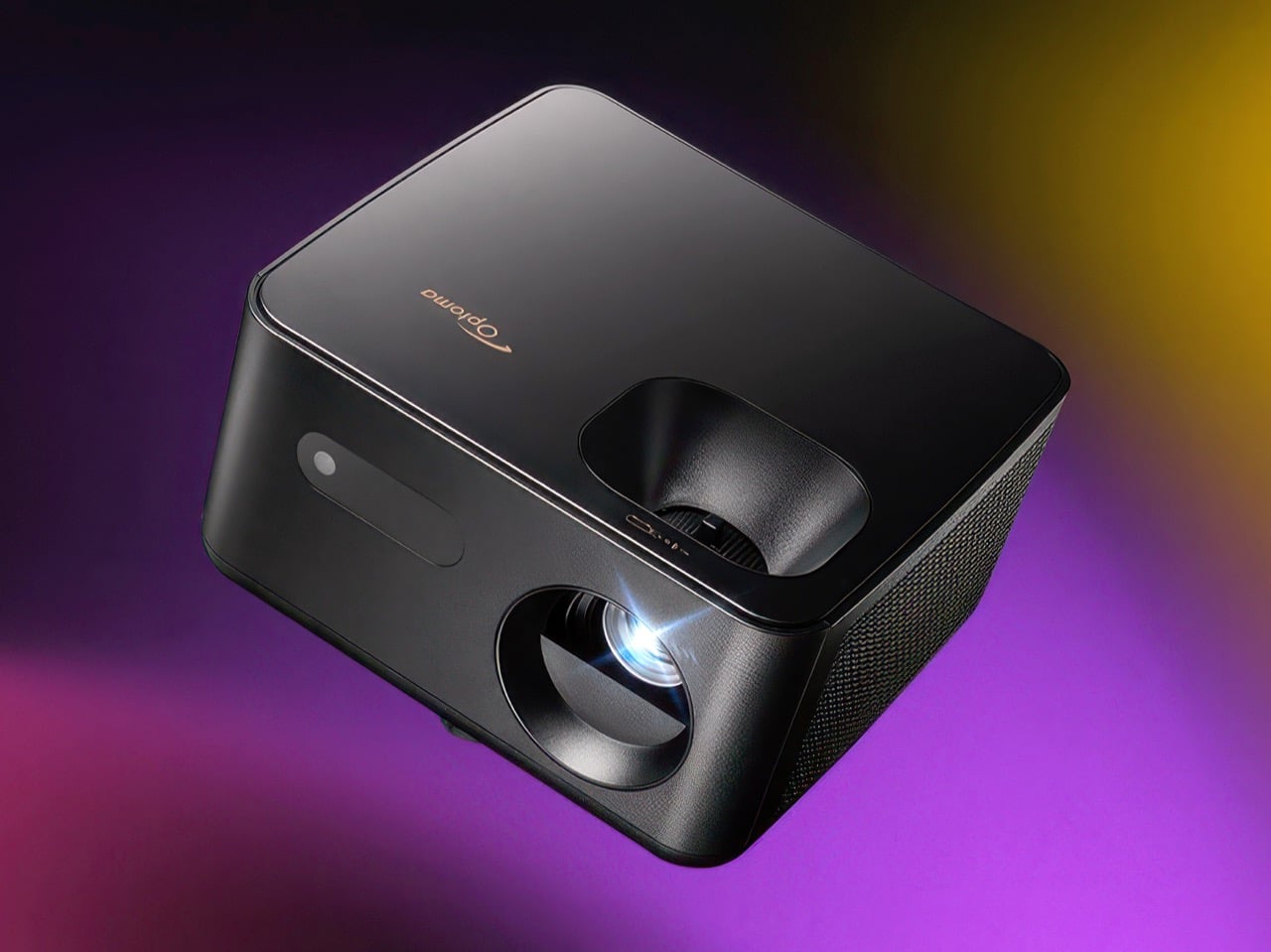
The PK31 is a compact, 5.2-pound projector that looks more like a smart speaker than the beige AV boxes projectors used to be. A smooth top shell sits over a textured matte body, a perforated grille wraps around the side, and the lens sits inside a deep circular cowl. It uses a Texas Instruments DLP chip and an RGB LED light source, with claimed coverage of 95% of the DCI-P3 color space. At a rated 900 lumens, it’s best suited to a dark room. Input lag is rated as low as 4.6ms, though that’s at 1080p and 240Hz, not 4K.

Click Here to Buy Now

A Projector Built to Live on Your Bookshelf

The body measures 9.37 x 8.46 x 4.64 inches (238 x 215 x 118 mm), roughly the footprint of a hardcover cookbook lying flat. That lets it sit on a shelf between the plants and the Bluetooth speaker without looking like it wandered in from a conference room. Optoma prints its logo in copper on the top panel, a small, warm accent against the all-black body. Every port sits inside a recessed panel on the back, keeping connections out of sight from the front. The grille wraps around the side, helping the cooling vents blend into the textured body.

The lens sits off to the right, balanced on the left by a pill-shaped window for the IR receiver, giving the front a friendly, slightly lopsided face. Its 1.5 to 1.65 throw ratio translates to about 11 feet (3.4 meters) of distance for a 100-inch picture. The full 150 inches needs roughly 17 feet (5.2 meters), so this suits a long living room better than a cramped studio. Focus and the 1.1x zoom use manual rings, and a twist-adjust foot handles tilt. A standard tripod thread underneath adds mounting flexibility, while four-corner correction and a warp tool help adjust the image to an uneven wall or an inflatable backyard screen.

Sharp 4K and Low-Lag Gaming

The 0.47-inch Texas Instruments chip uses microscopic mirrors to direct light toward the screen. XPR pixel shifting shifts the projected image by fractions of a pixel to produce a 3840 x 2160 picture. Separate red, green, and blue LEDs handle color, and the projector supports HDR10 and HLG. Projector Reviews measured 862 lumens in the brightest mode, close to Optoma’s 900-lumen rating. The reviewer also rated its color as good as or better than that of any RGB LED compact projector he’d tested.

That review recommends about 90 inches for everyday content and 75 to 80 inches for HDR, so don’t expect the same brightness at the maximum 150-inch size. Gamers get the bigger surprise. Input lag, the delay between a button press and the corresponding action on screen, is rated at 4.6ms at 1080p and 240Hz, 8ms at 1080p and 120Hz, and 16ms at 4K and 60Hz. The reviewer’s lag tester confirmed those figures. One catch: low-latency mode disables keystone correction, so line the projector up straight before the boss fight.

How It Stacks Up Against TCL, BenQ, and Hisense

TCL sells a smart projector for considerably less: the TCL C1 normally goes for about $250 with Google TV, Wi-Fi, and Bluetooth built in. The fine print says 1080p, though, and its “4K support” means it accepts a 4K signal and scales it down. The PK31 produces a 4K image but skips the smart OS, Wi-Fi, and Bluetooth entirely. Its single HDMI 2.0 port takes a Roku or Fire TV Stick, and the USB-A port can supply power to it, letting the setup run from one wall outlet. A 5W mono speaker provides onboard audio, and a 3.5mm jack connects external speakers for movie night.

Another 4K option is the BenQ GP520, a cube-shaped projector with a higher 2,600-lumen rating and Google TV. It launched at $1,499 and now has a street price closer to $999. Optoma’s own PK32 adds an amber LED, autofocus, and two HDMI ports for $1,299, while the Hisense M2 Pro costs the same with Android TV on board. The PK31 launched at $1,099 and now sells for about $599 at Walmart and Amazon. At that price, you could add a streaming stick and still spend considerably less than you would on those three.

Click Here to Buy Now

The post Optoma’s $599 4K Projector casts a 150-inch Screen for the price of an Android Phone first appeared on Yanko Design.

  • ✇Yanko Design
  • Embru’s Patio Chair Can Get a New Seat Without a New Frame
    A wire-grid lounge chair sounds like a hard sell for an afternoon off. Yet Moritz Schmid’s Patio Chair for Swiss furniture maker Embru has a visual ease that makes me want to give it a chance. The open seat and back leave much of the chair transparent, while the frame gives it a clear outline. Its more persuasive detail, though, addresses a familiar frustration: having to replace an entire object because one part has given up. Embru describes the construction as modular, with individual compone
     

Embru’s Patio Chair Can Get a New Seat Without a New Frame

8 novembre 2026 à 07:40

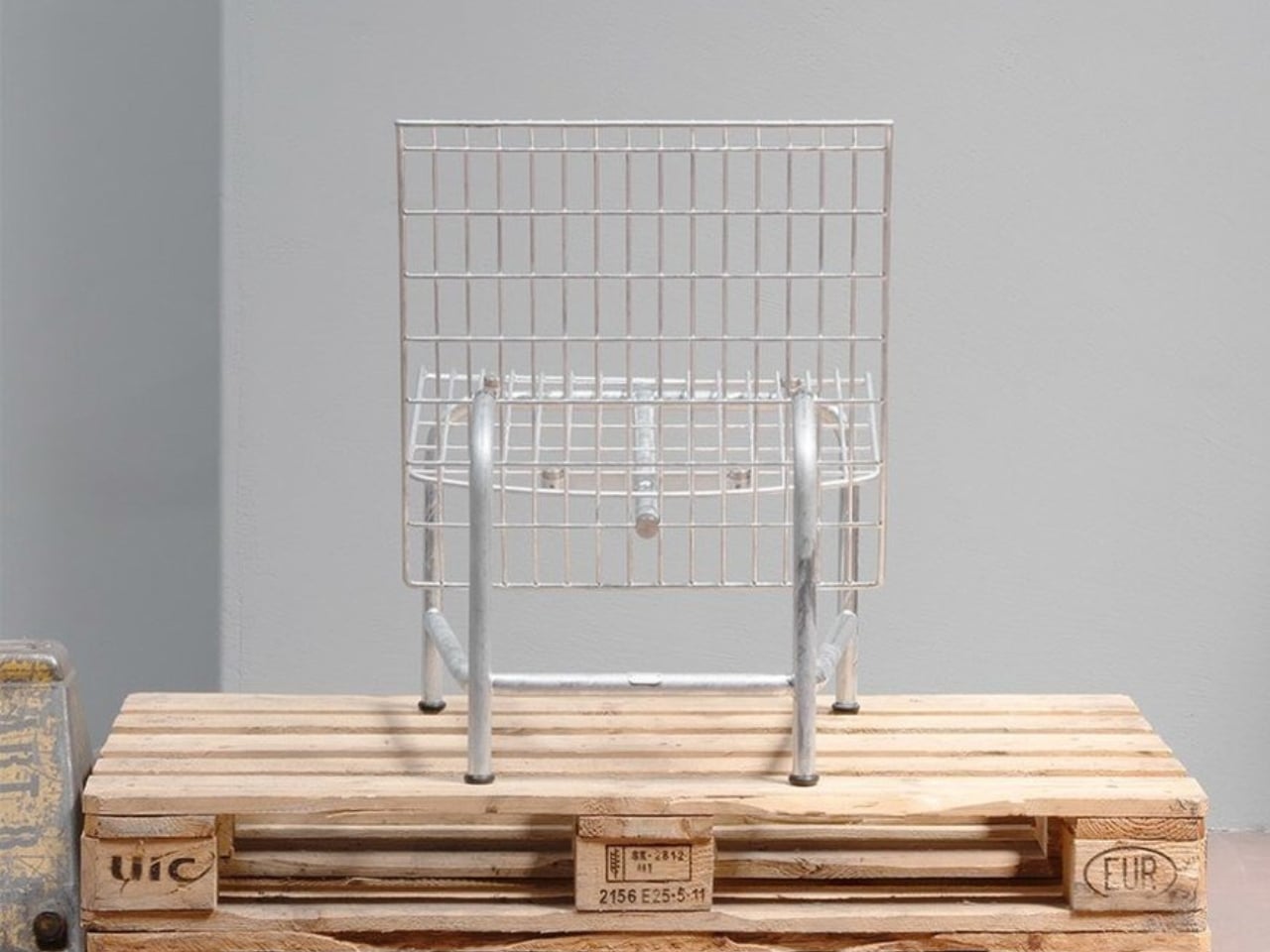
A wire-grid lounge chair sounds like a hard sell for an afternoon off. Yet Moritz Schmid’s Patio Chair for Swiss furniture maker Embru has a visual ease that makes me want to give it a chance. The open seat and back leave much of the chair transparent, while the frame gives it a clear outline. Its more persuasive detail, though, addresses a familiar frustration: having to replace an entire object because one part has given up.

Embru describes the construction as modular, with individual components that can be replaced or repaired. A specially developed mounting system accommodates different seating surfaces. That makes the announced chair interesting beyond its appearance. If the seat becomes damaged, the design allows the remaining structure to stay in use. I’d rather see that possibility built into a chair from the beginning than encounter it as an expensive customer-service question later.

Designer: Moritz Schmid for Embru

The visible connection between backrest and frame is worth a closer look. In Embru’s detail photograph, a circular metal fitting interrupts the blue grid, making the attachment point part of the composition. It’s a small, deliberate-looking piece of hardware, and I like that it hasn’t been disguised. You can read the chair as an assembly of parts. Visually, that gives the repairability story a little credibility before anyone starts explaining the engineering.

The material options give that construction another purpose. Embru plans an outdoor grid version and an indoor version with wood-veneer panels, including oak, ash, black ash, and walnut. Listed finishes include wine red, gray-blue, black, and silver hot-dip galvanizing. My preference would be the gray-blue grid: it gives the industrial geometry enough color to feel intentional without turning the chair into the loudest object on the patio.

The wood version changes the visual balance considerably. Where the grid lets the background pass through, the broad panels create solid planes. The rear view of the black version makes this especially clear: the backrest reads almost like a sheet suspended above the slender frame. That’s a useful distinction for anyone who likes the underlying shape but doesn’t want outdoor furniture setting the tone inside their living room.

Schmid has explored related territory with Embru before. His earlier Park Chair uses a tubular steel frame, with curved rear legs that give a straightforward garden chair an unexpectedly animated profile. Embru says that design was developed around the manufacturing capabilities at its Rüti factory. I appreciate that context because it makes the Patio Chair feel less like an isolated styling exercise. There’s an ongoing conversation here between a designer, a material, and the people equipped to shape it.

Appearance only gets a lounge chair so far, of course. I’d want to sit in the grid version before calling it an all-afternoon favorite. The photographs establish its shape, not how the seating surface feels after an hour with a book. For me, that’s the unresolved question that matters most. An appealing frame and replaceable parts are good reasons to pay attention, but neither substitutes for getting comfortable. The word “lounge” still has work to do.

Embru currently expects the Patio Chair to become available at the end of 2026. Its preview doesn’t provide a price or confirm US availability. I’d also want to know how replacement parts will be ordered and priced. Designing a component to come off is valuable; making its replacement straightforward to obtain is what turns that decision into a useful ownership benefit.

Still, the premise earns my interest. I don’t need every chair to become a family heirloom, and I’m wary of furniture being described as timeless before anyone has lived with it. I do want the option to keep a chair I like when one component wears out. The Patio Chair gives that ordinary expectation a considered form. Provided the parts support follows through, its most attractive feature may become apparent years after the first photograph.

The post Embru’s Patio Chair Can Get a New Seat Without a New Frame first appeared on Yanko Design.

  • ✇Yanko Design
  • Baseus Sleep SK1 Brings Bedtime Audio Without Earbuds
    Since I live alone, listening to music or podcasts before I sleep is not really an issue, as there’s no one to complain about the sound. But when I share a hotel room or someone sleeps over, this may become a problem. Sure, there are earbuds, but I have this irrational fear that they may get buried deep in my ears when I fall asleep and move around. One possible solution would be speakers that can sit under the pillow and play close to my ears, with the aim of keeping the sound from bothering o
     

Baseus Sleep SK1 Brings Bedtime Audio Without Earbuds

7 novembre 2026 à 09:20

Since I live alone, listening to music or podcasts before I sleep is not really an issue, as there’s no one to complain about the sound. But when I share a hotel room or someone sleeps over, this may become a problem. Sure, there are earbuds, but I have this irrational fear that they may get buried deep in my ears when I fall asleep and move around. One possible solution would be speakers that can sit under the pillow and play close to my ears, with the aim of keeping the sound from bothering other people in the room.

The Baseus Sleep SK1 is one such speaker. It uses what Baseus calls micro-vibration conduction to carry audio through the pillow to your ears. Basically, your pillow becomes part of the audio system, while two sound-producing units are intended to direct the music, audiobook, or podcast toward the sleeper’s head. The idea is to keep the listening area small rather than fill the bedroom with sound.

Designer: Baseus

The Sleep SK1 looks like a Bluetooth speaker, with two circular pods joined by a narrow, curved bridge. It looks more like connected pucks than a bedside speaker. Its reported dimensions are about 6.5 by 1.8 by 0.55 inches, and it weighs roughly 1.55 ounces. The low profile is designed to minimize intrusion, although that doesn’t mean you won’t feel it through a compressed pillow. Comfort would still need to be tested.

The device has three physical buttons around the edge of one pod for operating the speaker. There’s also a digital display integrated into one circular face, showing the time, operating mode, and remaining battery level. That gives you another way to check the time when you wake up in the middle of the night instead of automatically reaching for your phone. Of course, you’d still have to uncover the display if it’s underneath your pillow.

For people who prefer background sounds to music or conversation, Baseus says its companion app offers more than 100 sound options, including rain, ocean waves, campfire sounds, and ASMR. You can also set up to 10 alarms for different schedules. The alarms use the same pillow-directed approach, which could be useful if you need to get up before the person sleeping beside you.

Baseus claims more than 10 hours of playback from the built-in 300 mAh battery, which would cover an overnight listening session if it holds up in practice. Charging is via USB-C, with a full charge reportedly taking about two hours. For something intended to stay beneath a pillow, the useful part is having enough battery life to use it without leaving a charging cable attached.

Your pillow is an important part of the setup, though. The Gadgeteer reports that Baseus recommends pillows up to about 3.1 inches thick and suggests increasing the volume for thicker pillows or when sleeping on your back. That makes pillow thickness and sleeping position things to consider before buying. Turning the volume up may help you hear, but whether it stays quiet enough for someone nearby is another question.

The SK1 is listed on JD.com in China, with a reported price of 184 yuan. That shouldn’t be mistaken for a confirmed US retail price, and an official US release hasn’t been established in the available sources. It’s worth checking regional availability and app support rather than assuming an imported unit will offer the same experience everywhere.

For me, the appeal is being able to listen without putting anything in my ears. But I’d want to know how clearly a podcast comes through my own pillow and how much of it someone else can hear. Those would be the deciding factors for me. If the SK1 can keep a familiar voice close to my pillow without sharing the whole conversation with the room, that would be a good enough reason to consider it.

The post Baseus Sleep SK1 Brings Bedtime Audio Without Earbuds first appeared on Yanko Design.

❌