Vue normale

  • ✇Yanko Design
  • Plaud One Hands-On at IFA 2026: AI Earbuds That Transcribe Meetings, Then Draft Emails And Decks For You
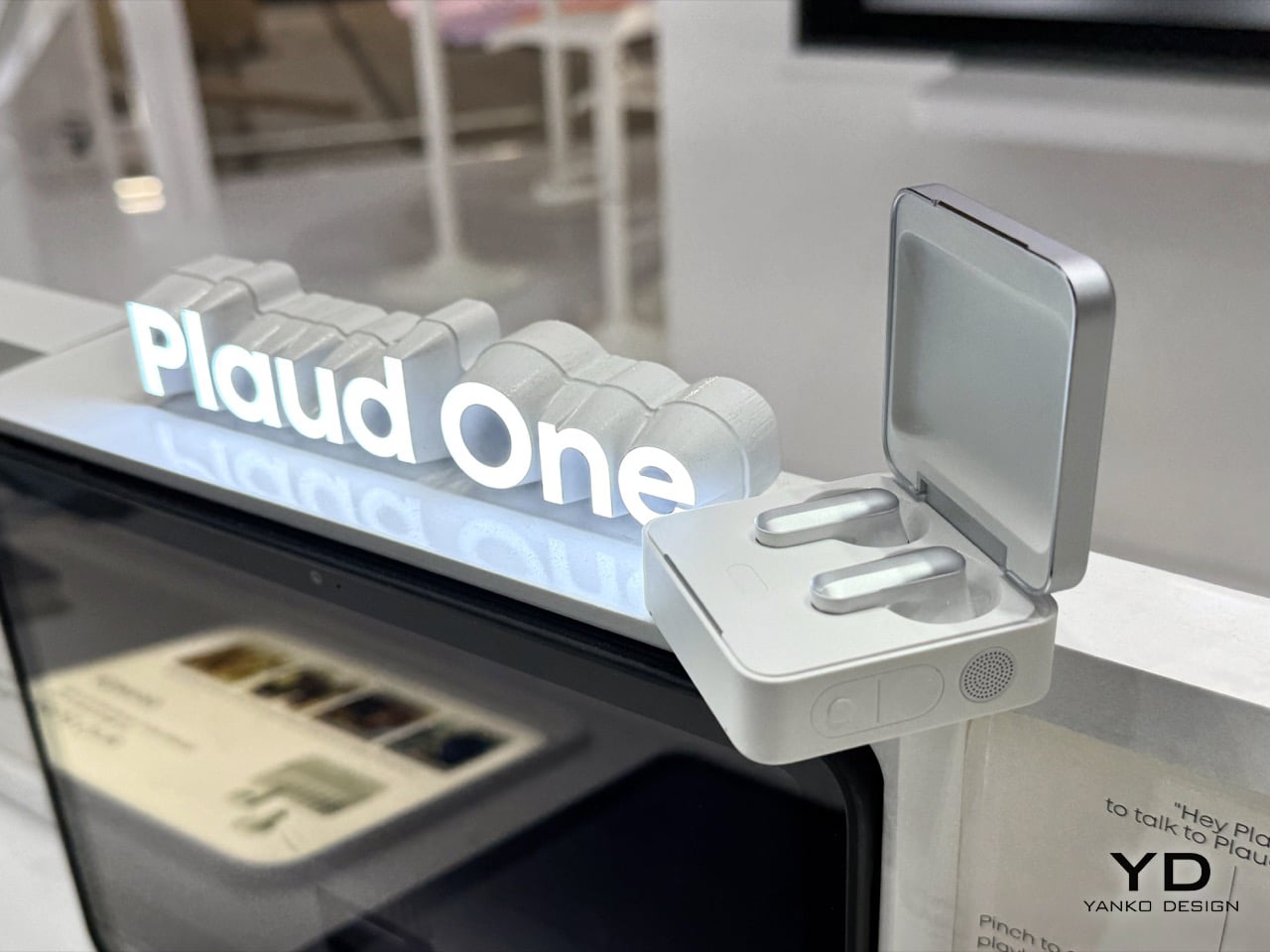
    For three years, Plaud made very good tape recorders with a PhD. You pressed a button, it captured a meeting, and mere minutes later a summary showed up. The Plaud One, launched at IFA 2026 for €249.90, reverses that arrow. Its charging case now holds four beamforming mics, a speaker, an agent button and a built in eSIM, so it stays online without a phone nearby. Hold the agent button and the AI talks back, asks what you meant, then builds the deck or drafts the email while you get on with your
     

Plaud One Hands-On at IFA 2026: AI Earbuds That Transcribe Meetings, Then Draft Emails And Decks For You

3 septembre 2026 à 20:28

For three years, Plaud made very good tape recorders with a PhD. You pressed a button, it captured a meeting, and mere minutes later a summary showed up. The Plaud One, launched at IFA 2026 for €249.90, reverses that arrow. Its charging case now holds four beamforming mics, a speaker, an agent button and a built in eSIM, so it stays online without a phone nearby. Hold the agent button and the AI talks back, asks what you meant, then builds the deck or drafts the email while you get on with your day.

That flip from recording to doing needed hardware nobody had built yet. Not a pendant, not a pin, not another app crammed onto a phone you were already staring at. Plaud built a palm sized aluminum box with a fluted lid that looks like a Rimowa suitcase went through a shrink ray, sitting on a table, listening across a room, and talking back like a colleague who never needs coffee. The Explorer Edition opens for pre order now, capped at 2,000 units worldwide, with deliveries landing in Q4. A public version follows in 2027, once Plaud has watched two thousand early adopters put the thing through its paces.

Designer: Plaud

The original Plaud Note clipped onto a phone and did one job, listen to a meeting and hand back a transcript once it ended. The Note Pro added a screen and better mics. The NotePin S shrank the format onto a lanyard clip. Every generation stayed reactive by design, a smart recorder waiting for you to press stop before it did anything useful. That business built Plaud’s 2.5 million user base and reportedly crossed $100 million in annual software revenue by June, which is exactly the kind of runway that lets a company gamble on reinventing its own hardware category from scratch.

Vertical fluting runs down the case’s aluminum lid, the same visual trick Rimowa has stamped into cabin luggage since the 1950s, giving a 62 gram object a sense of density it has no right to carry. Flip it open and the earbuds sit half in ear, silver capped, in a tray that reads closer to a jewelry box than a charging dock. A speaker grille, a record button and a separate agent button line the case’s edge, the three controls that turn a charger into a device you actually talk to. None of it apes a phone. It reads like furniture for a desk, not gear for a pocket.

Earlier Plaud devices leaned on your phone for both processing and connectivity, so the intelligence always sat one hop away from the microphone. Plaud One’s case carries its own 4G LTE connection through a built in eSIM, closing that gap entirely. Capture, transcription and agent response now run in one box, independent of any other screen in your life. Leave your phone in a bag, walk into a cafe, and the case still records the table’s conversation, answers a question out loud through its speaker, or fires off a follow up email on command. Every pendant and pin that came before this quietly depended on a phone doing the real work behind the scenes. Plaud One is the first in the category that genuinely does not.

Plaud Agent drafts a follow up email the moment a client call ends. Feed it a meeting and it builds a slide deck while you sit through your next call, then drops the finished file straight into Notion with zero copy pasting. The platform connects to Gmail, Google Workspace, Microsoft Teams, Slack and Notion today, with more integrations promised as the software matures. Set it loose on a standing task, a monthly competitor scan for instance, and it runs quietly in the background, waiting with a finished report the next time you check. This is the actual bet Plaud is making, that an assistant worth having has to act, not just remember.

Pre orders for the Explorer Edition are open now at €249.90, with the first 2,000 units shipping in Q4. Buyers get $200 in Plaud Credits toward the heavier agent features on top of a starter transcription plan, so the price buys a running start on the software as much as the hardware. Calling this an Explorer Edition rather than a finished release is the honest move, an open beta wearing genuinely sharp industrial design. Plaud spent three years building the best possible way to listen. Plaud One is its first real attempt at building something worth talking to.

The post Plaud One Hands-On at IFA 2026: AI Earbuds That Transcribe Meetings, Then Draft Emails And Decks For You first appeared on Yanko Design.
Libre Duo 10 Day: The First Wearable to Track Glucose and Ketones

3 septembre 2026 à 10:36

Abbott’s Libre Duo 10 Day continuously tracks glucose and ketones from one sensor, with a US launch planned for later in 2026.

The post Libre Duo 10 Day: The First Wearable to Track Glucose and Ketones appeared first on TechRepublic.

  • ✇Yanko Design
  • This $500 Wearable Tracks Your Brain All Day, Even While You’re Moving
    Our brain is still a mystery, of which only a small part has been completely understood. Every single decision we make, every move in stressful situations, and the ability to plan way ahead of time can be attributed to the grey matter between the ears. While most wearables want to bring the prowess of advanced medical-grade brain monitoring to everyday life, the strings attached nullify the comprehensive level of scanning required for deeper insight. Atlas Mankind, a startup, wants to change th
     

This $500 Wearable Tracks Your Brain All Day, Even While You’re Moving

2 septembre 2026 à 16:30

Our brain is still a mystery, of which only a small part has been completely understood. Every single decision we make, every move in stressful situations, and the ability to plan way ahead of time can be attributed to the grey matter between the ears. While most wearables want to bring the prowess of advanced medical-grade brain monitoring to everyday life, the strings attached nullify the comprehensive level of scanning required for deeper insight.

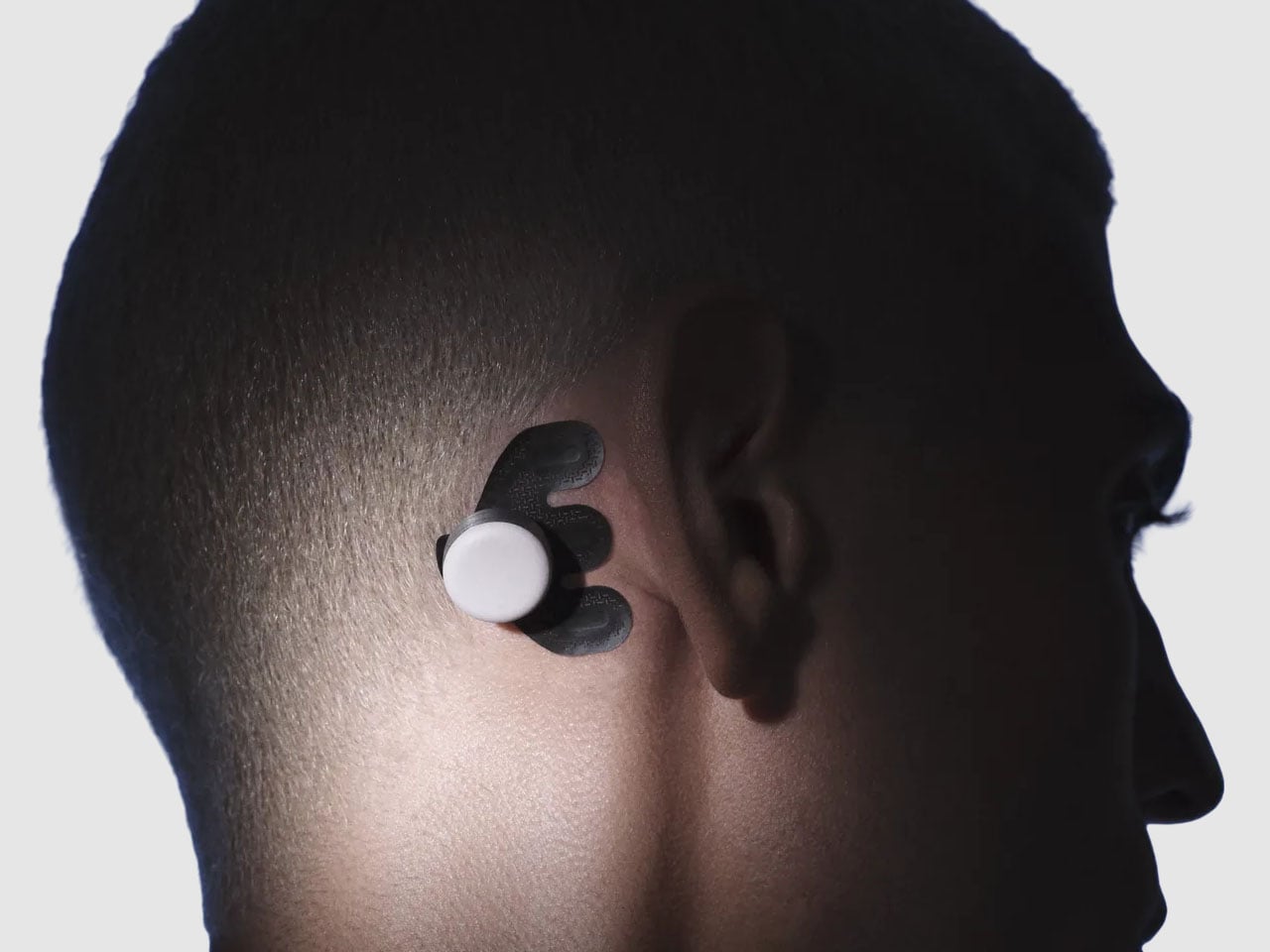
Atlas Mankind, a startup, wants to change that with a $500 wearable that sticks to the back of your ears to function in the background as we go on with our daily lives. That’s a leap from other similar wearable gadgets, which require the wearer to stay still or only function while you are asleep. Dubbed Atlas 1.0, the advanced EEG gadget monitors electrodermal activity, voice patterns, and head movements throughout the day to make precise readings of what your brain is doing.

Designer: Atlas Mankind

According to Atlas Mankind, the compact EEG tracker doesn’t restrict the wearer’s movement or only function in certain situations, thereby making it a more natural and unbiased instrument for understanding the internal state of the wearer. It creates a longitudinal record of the brain’s activity in real-life situations, “which is much more meaningful than a single test or isolated brain scan.” The wearable functions in conjunction with the compatible app to track three metrics, which are Presence, Stress, and Energy Burn. That is much more comprehensive than having the half-baked metrics of your stress levels, heart rate, skin temperature, sleep analysis, and generic brain activity that other advanced wearables tout.

Coming back to the three main metrics on which Atlas 1.0 excels – Presence represents whether your attention is inwards or outwards. For instance, during a conversation with your friend, how engaged you actually were. This is done by analyzing the speech patterns and the hemisphere of the brain that was activated during that time. Then there is the Stress tracking, which keeps a very close tab on your physiological stress in the background. The last one is Energy Burn that identifies the activities that were most taxing during the course of the day.

In conjunction with the app that connects to your calendars, event logs, and schedules, the wearable determines the level of shift in these metrics for an in-depth analysis of the brain state over a period of time. The patterns revealed can help the user identify which habits and activities are worth taking up and which ones are better avoided if possible. Atlas 1.0 sticks to the skin behind the ears on an adhesive pad and records the brain waves, as well as voice patterns (not the actual speech for data safety) and movement 24×7. With a dataset of more than 50,000 brain recordings to power the advanced algorithm, the prospects here are exciting.

According to Ana Montero, co-founder & chief executive officer, “For the first time, some of the most important moments in a human life are becoming measurable.” This is supported by André Marques-Smith, PhD: co-founder & chief technology officer, who says, “commitment to accuracy makes ATLAS a tool for genuine mastery and personal science, not just measurement and vanity metrics.” He adds that the engineering challenge of capturing “research-grade data while in motion” is what makes Atlas 1.0 special.

The company is already taking pre-orders for the non-invasive wearable, and it does come with a $30 monthly subscription to keep going. It’ll be interesting to see how accurate the wearable turns out to be, since it is not cheap and you’ll have to keep paying a monthly subscription to make it relevant.


The post This $500 Wearable Tracks Your Brain All Day, Even While You’re Moving first appeared on Yanko Design.

Garmin Fenix 9 vs Fenix 9 Pro: Is the $100 Upgrade Worth It?

2 septembre 2026 à 13:51

The $100 jump to Garmin’s fēnix 9 Pro buys a titanium case and access to solar and inReach configurations, not a completely different watch platform.

The post Garmin Fenix 9 vs Fenix 9 Pro: Is the $100 Upgrade Worth It? appeared first on TechRepublic.

Sennheiser Momentum True Wireless 5: Key Features and Price

2 septembre 2026 à 10:26

Sennheiser’s $299.95 Momentum True Wireless 5 adds user-replaceable batteries to both the earbuds and charging case, plus longer battery life and Bluetooth 6.0.

The post Sennheiser Momentum True Wireless 5: Key Features and Price appeared first on TechRepublic.

HONOR Watch 6: Everything You Need to Know

2 septembre 2026 à 09:43

HONOR Watch 6 combines long battery life, dual-band GPS, health tracking, and NFC, but some features depend on your phone, bank, and region.

The post HONOR Watch 6: Everything You Need to Know appeared first on TechRepublic.

❌