Vue normale

Linux users finally get a real Copilot app, and Microsoft didn't even make it

It's the year of Linux, haven't you heard? You may as well pack up your PC, study your favorite distro, and get ready to evangelize the open-source platform that will run on all systems in the future.

Joking aside, Linux has grown a bit in popularity and Microsoft continues to embrace it. While the tech giant has several apps and projects on Linux, Microsoft has not released an official Copilot app for Linux.

Sure, you could use Copilot on the web. Heck, you could even open up Microsoft Edge for Linux and install Copilot as a PWA (Progressive Web App). But where is the fun in that?

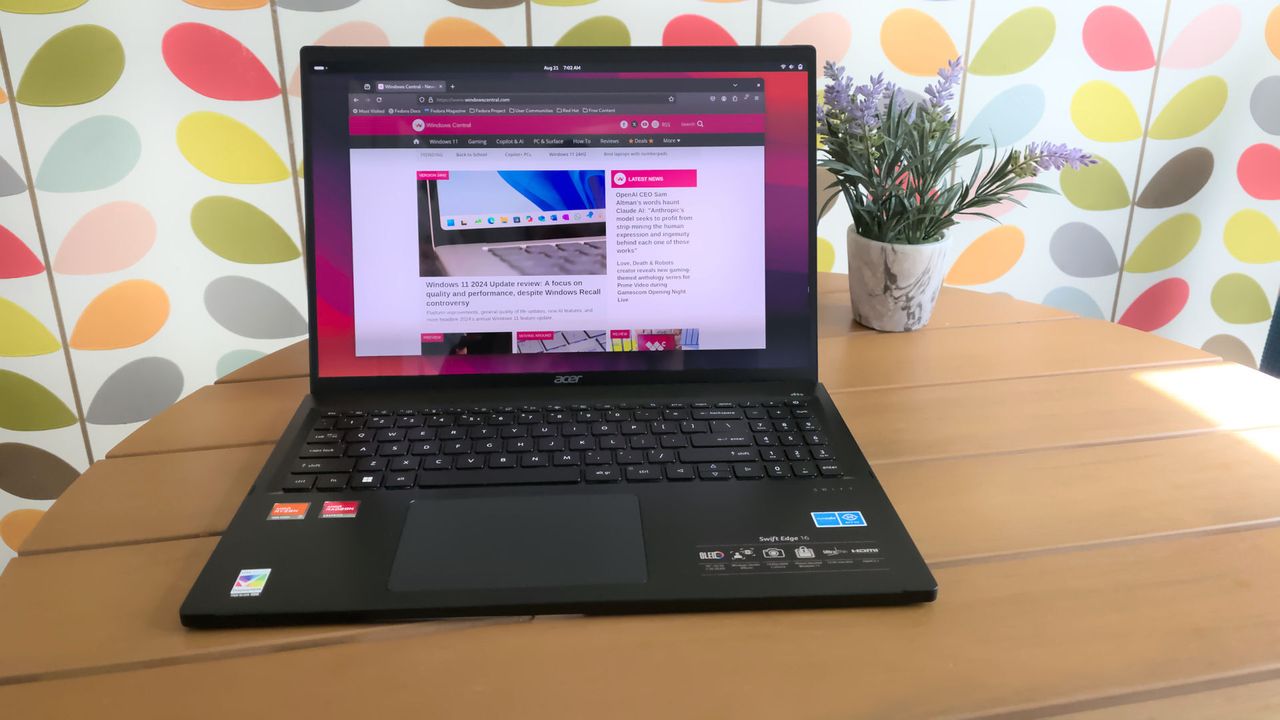
Instead, you could install the unofficial Copilot app for Linux built by Hayden Barnes. The app opens the Copilot web app in a dedicated GTK window and keeps your login session safely on disk. It also integrates with the desktop for autostart, system downloads, app launcher execution, and accessing hardware permissions like the microphone.

Barnes shared the project on X alongside a link to the app's GitHub page.

Many of the unofficial Copilot app's features overlap with using the web version of Copilot since Microsoft's AI tool is the center of the experience. But building the unofficial app as a native GTK application means its developer can deeply integrate system shortcuts, allow it to run quietly in the system tray, and trigger native OS notifications as opposed to relying on browser notifications.

Other benefits include native support for desktop accent colors and system dark themes. Overall, the app looks and feels far more natural on a Linux desktop than a standard browser window, and keeping Copilot isolated prevents it from slowing down if your main browser gets bogged down with dozens of open tabs.

The unofficial Copilot app for Linux is new, so we'll have to use it for a while to determine its long-term stability and performance. The first publicly available release of the app shipped this week.

We have a few systems running Linux spread across our team, so we'll let you know how the unofficial Copilot app performs over time.

Blank Pixel

Click to join us on r/WindowsCentral

Join us on Reddit at r/WindowsCentral to share your insights and discuss our latest news, reviews, and more.

Acer Swift Edge running Linux

You no longer have to use Microsoft Edge or any browser to run Copilot on Linux.
ChatGPT Atlas Shuts Down Aug. 9: What Users Must Save Before Migrating

6 août 2026 à 10:45

ChatGPT Atlas is scheduled to stop working Aug. 9, 2026. Users should export browser data, verify account access, and test replacement workflows before uninstalling it.

The post ChatGPT Atlas Shuts Down Aug. 9: What Users Must Save Before Migrating appeared first on TechRepublic.

OpenAI Launches 3 ChatGPT Education Plugins for Teachers and College Students

5 août 2026 à 21:30

OpenAI’s three education plugins help teachers and college students create lessons, quizzes, study plans, and other materials with ChatGPT.

The post OpenAI Launches 3 ChatGPT Education Plugins for Teachers and College Students appeared first on TechRepublic.

Google Pixel 11 Leak Reveals ‘HiLight’ Notification Feature, Raises Questions About Charging Claim

5 août 2026 à 14:24

Leaked Google Pixel 11 marketing materials suggest a new HiLight notification feature, while a five-minute charging claim raises questions ahead of Google's launch.

The post Google Pixel 11 Leak Reveals ‘HiLight’ Notification Feature, Raises Questions About Charging Claim appeared first on TechRepublic.

Texas Pauses Data Center Grid Approvals as Power Requests Hit 474 GW

5 août 2026 à 14:09

Texas paused grid approvals for new data centers as power requests hit 474 GW. Here’s what developers and IT leaders should expect.

The post Texas Pauses Data Center Grid Approvals as Power Requests Hit 474 GW appeared first on TechRepublic.

Microsoft filings suggest "around 70%" of its AI revenue is concentrated entirely on OpenAI — which seems rather unhealthy

Microsoft's stocks rallied this past week on accelerating AI growth, but the devil is always in the details.

Over the past month, Microsoft's shares have surged almost 30% following its quarterly filings, which beat Wall Street estimates by a significant margin. Microsoft proved that its AI business is accelerating in growth, and that cash flows remain healthy despite the firm's extensive capital expenditure on new data centers. However, new information suggests that there's still an enormous caveat to this news.

DEAL: Get Surfshark VPN 86% OFF with Windows Central 🦈

Analysis from Bloomberg has poured cold water over Microsoft's AI earnings potential. Disclosures from Microsoft suggest that OpenAI accounts for around 70% of Microsoft's total AI-related income, based on projected growth and previous disclosures that relate to revenue derived from OpenAI.

Microsoft reported that Copilot has millions of paid seats in Microsoft 365, and is being gradually adopted by a wide variety of governmental, public, and private sector businesses. But when you tally it against previous disclosures, it shows that GPU and infrastructure consumption specifically from OpenAI still drives between 65 to 70% of Microsoft's total AI business. Training platforms like ChatGPT and simply serving it to customers remains the cornerstone of Microsoft's AI business. That's potentially problematic and comes with a huge amount of risk.

Microsoft Azure is being displayed on a smartphone with a Windows blue screen visible in the background

Azure has turned Microsoft into an absolute powerhouse, but I would argue its AI bets still threaten that. (Image credit: Getty Images | NurPhoto)

On the gaming side, Call of Duty having an off year was enough to drive Xbox's total revenue down by 11%, leading to masses of layoffs. OpenAI, by comparison, is estimated to be losing anywhere between 10 and 20 billion dollars per year, on a comparatively modest $2-5 billion in revenue. OpenAI has a mountain of investors keeping it afloat right now, and Microsoft itself remains one of OpenAI's biggest backers, investing to the tune of billions in cash, infra, compute credits, and other instruments. On the face of it, Microsoft's AI bookings simply represent OpenAI's compute bill packaged as revenue.

It's not unheard of in business. Spotify ran losses for years until eventually becoming profitable (to the tune of billions, I might add). The idea is that you burn through debt, scale rapidly, change user behavior, and create new markets. Then, you lock people in and make them dependent, and start monetizing. Microsoft and OpenAI's other creditors are betting that one day, ChatGPT will become the default — an inescapable cornerstone of computing for billions of people.

But what if that doesn't happen?

What if people end up choosing Claude or Gemini over ChatGPT? What if regulatory scrutiny or public opinion sours ever further? What if elections are won on the promise of blocking new data centers, rather than enabling them?

Twitter screenshot: Sam Altman suggests using ChatGPT to generate podcasts for kids to listen to on the way to school. Alex Hirsch replies

Public perception of AI remains incredibly negative, owing to the damage data centers cause in communities, and the theft and destruction of art and human-created content. (Image credit: Alex Hirsch on X (Twitter))

The disclosures suggest that Microsoft's AI growth is inorganic and revolves almost entirely around training ChatGPT's models. If OpenAI imploded or decelerated, Microsoft would be on the hook for billions in sunk cost and enormous amounts of excess data center capacity.

There's no suggestion of a deceleration, quite the opposite — which is why the stock price has surged. But there's also little reason to believe that this entire segment is even vaguely organic.

DEAL: Get Surfshark VPN 86% OFF with Windows Central🦈

Microsoft is already trying to diversify by training its own "more efficient" MAI models for consumer applications while boosting external enterprise adoption. It's started to devote more attention to its legacy consumer businesses too, namely Xbox and Windows, as neglect therein becomes untenable. But none of this will save Microsoft or its shareholders if the so-called "AI bubble" well and truly does pop.

It'll be interesting to watch how CEO Satya Nadella navigates Microsoft through this somewhat unprecedented era.

Click to join us on r/WindowsCentral

Join us on Reddit at r/WindowsCentral to share your insights and discuss our latest news, reviews, and more.

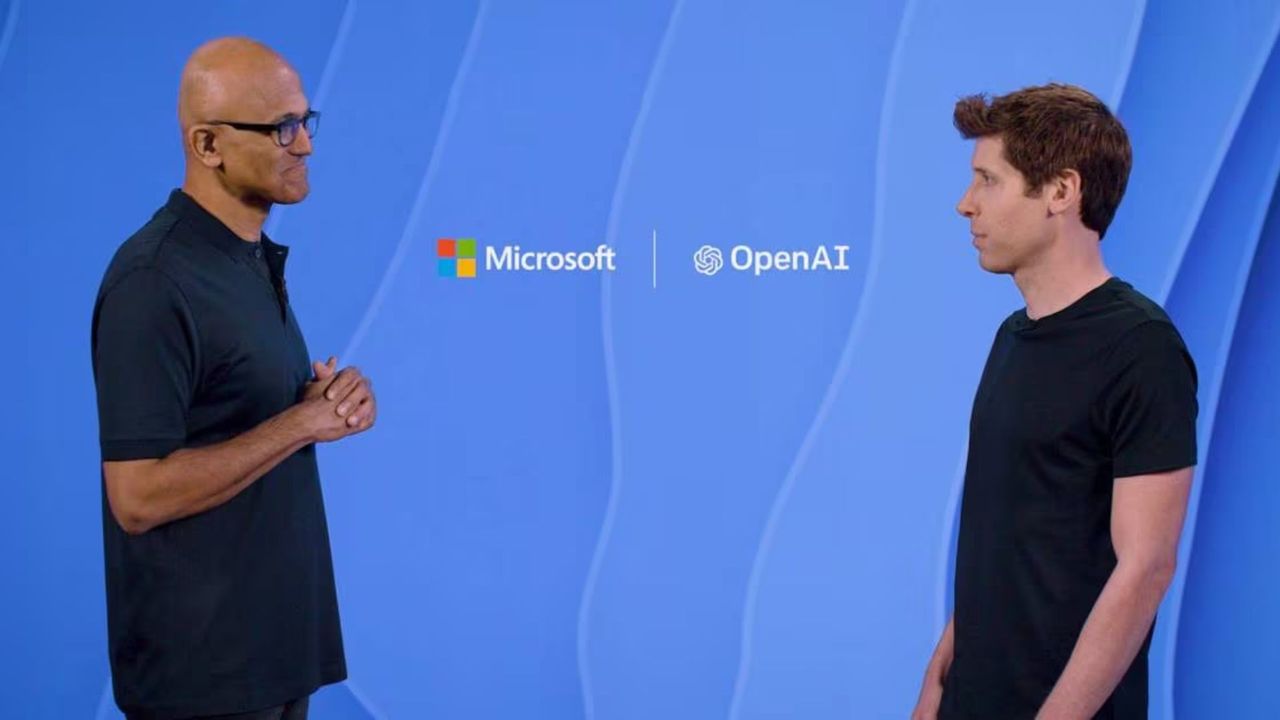
Satya Nadella with Sam Altman at a conference

Microsoft and OpenAI don't see eye to eye.

Open Secure AI Alliance Expands at Black Hat: What You Should Know

4 août 2026 à 14:11

The Open Secure AI Alliance introduced SAFE guidelines and open agent-security tools at Black Hat, giving enterprises a framework for safer AI deployment.

The post Open Secure AI Alliance Expands at Black Hat: What You Should Know appeared first on TechRepublic.

KPMG: APAC AI Spending Is Rising Faster Than ROI Proof

4 août 2026 à 13:48

APAC companies are spending heavily on AI, but KPMG says only 5% have established ROI with demonstrated business outcomes.

The post KPMG: APAC AI Spending Is Rising Faster Than ROI Proof appeared first on TechRepublic.

Apple Could Launch Camera-Equipped AirPods Before the End of 2026

4 août 2026 à 12:03

Apple could launch camera-equipped AirPods before the end of 2026, using visual sensors to give Siri greater awareness of a user’s surroundings.

The post Apple Could Launch Camera-Equipped AirPods Before the End of 2026 appeared first on TechRepublic.

Fitbit Data Can Now Sync Directly With Apple Health

4 août 2026 à 09:25

Google Health now sends Fitbit workouts, sleep, steps, and vitals to Apple Health, removing the need for third-party syncing apps.

The post Fitbit Data Can Now Sync Directly With Apple Health appeared first on TechRepublic.

Google Got 800,000 Sign-Ups for an AI App — Then Canceled It

4 août 2026 à 09:17

Google canceled its AI Studio mobile app one day before launch despite 800,000 pre-registrations and plans to move app-building features into Gemini.

The post Google Got 800,000 Sign-Ups for an AI App — Then Canceled It appeared first on TechRepublic.

  • ✇Articles on TechRepublic
  • Oracle’s AI Data Center Funding Tests OCI Delivery Timelines
    Oracle is funding its AI data center expansion through corporate financing, customer-supplied hardware, and developer-level loans. Enterprise buyers still need to verify delivery dates, power dependencies, and contract protections before committing to future OCI capacity. The post Oracle’s AI Data Center Funding Tests OCI Delivery Timelines appeared first on TechRepublic.
     

Oracle’s AI Data Center Funding Tests OCI Delivery Timelines

4 août 2026 à 08:05

Oracle is funding its AI data center expansion through corporate financing, customer-supplied hardware, and developer-level loans. Enterprise buyers still need to verify delivery dates, power dependencies, and contract protections before committing to future OCI capacity.

The post Oracle’s AI Data Center Funding Tests OCI Delivery Timelines appeared first on TechRepublic.

Apple September Event Predictions: iPhone 18 Pro and Other Rumors Ranked

3 août 2026 à 17:11

Apple's September 2026 event could bring the iPhone 18 Pro, Apple's first foldable iPhone and new Apple Watches. Here's what the most credible rumors suggest.

The post Apple September Event Predictions: iPhone 18 Pro and Other Rumors Ranked appeared first on TechRepublic.

South Korea Unveils $14B Sovereign Fund to Back AI, Data Centers

3 août 2026 à 16:13

South Korea plans a KIC investment account for AI, data centers, chips, and strategic industries, but the government has not set its funding size.

The post South Korea Unveils $14B Sovereign Fund to Back AI, Data Centers appeared first on TechRepublic.

OpenAI, Anthropic AI agents targeted real people and systems in cyber tests

4 août 2026 à 19:39
OpenAI and Anthropic have confirmed that their AI models were involved in separate, newly disclosed third-party cybersecurity testing incidents that resulted in a real website being breached and social engineering attacks against people outside the intended testing boundaries. [...]
  • ✇Yanko Design
  • The $599 AI Guitar That Finally Makes Playing Easy
    At some point in their life, almost everyone has picked up a guitar, struggled with a C chord for ten minutes, and quietly put it back down. The fingertip pain. The out-of-tune strings. The YouTube tutorial that somehow assumes you already know what a fret is. Learning guitar has always had a steep and slightly humiliating entry curve, and most of us just gave up. The TemPolor Melo-D thinks that’s a problem worth solving, and the design it came up with is genuinely hard to ignore. Designed by i
     

The $599 AI Guitar That Finally Makes Playing Easy

3 août 2026 à 04:45

At some point in their life, almost everyone has picked up a guitar, struggled with a C chord for ten minutes, and quietly put it back down. The fingertip pain. The out-of-tune strings. The YouTube tutorial that somehow assumes you already know what a fret is. Learning guitar has always had a steep and slightly humiliating entry curve, and most of us just gave up. The TemPolor Melo-D thinks that’s a problem worth solving, and the design it came up with is genuinely hard to ignore.

Designed by inDare Design Strategy Limited, the Melo-D is billed as the world’s first generative AI guitar, and even that description barely scratches the surface of what it actually is. On the outside, it looks like a guitar that a product designer and a tech enthusiast co-parented together. The body is sleek, the finish is pearl white, and it has a foldable build that makes it compact enough to take almost anywhere. But the real story is what happens when you turn it on.

Designer: inDare Design Strategy Limited

The neck is embedded with LED lights that illuminate exactly which notes to press, removing the guesswork for beginners entirely. A built-in 2.4″ LCD flip screen on the body handles chord guidance and ambient visuals without you ever needing to prop up a phone nearby. These feel like small details, but they represent a real design philosophy: the instrument itself should carry the full experience. You shouldn’t need a separate ecosystem of apps and accessories just to get started.

What makes the Melo-D genuinely interesting is the AI engine running underneath all of it. The guitar operates in three modes: solo, sing-along, and AI creation. In AI creation mode, you can hum a melody and the guitar transcribes it into a guitar solo. You can type a text prompt and it generates a song. Upload an audio file and it converts the music into playable tabs or chord charts. It even generates personalized backing tracks using emotional tags, so the sound starts to feel like yours rather than something borrowed from a practice app.

The “AI everything” wave has made it easy to be skeptical every time a product slaps the word generative onto its marketing. But the Melo-D doesn’t read as a gimmick dressed up in smart-instrument clothing. The six-string silicone system allows for real, note-by-note playing, which means it isn’t just a toy approximating the feel of music. It’s an actual instrument with training wheels you can choose to remove. The goal isn’t to replace the skill of playing guitar. It’s to lower the barrier enough that more people actually get through the door.

inDare’s design work here deserves its own mention. The studio, known for thoughtful human-centered industrial design, brought a lot of restraint to a product that could have easily become overcrowded with features. The foldable form factor, the integrated flip screen, and the silicone strings all feel like deliberate decisions, not afterthoughts. The Melo-D has also earned recognition at the iF Design Awards, which makes sense, because from a design standpoint it reads as a product with a clear and confident point of view rather than a collection of specs looking for a shell to live in.

At $599, it’s available for pre-order now with an expected ship date in September 2026. For a piece of hardware this layered, that number asks you to take it seriously, which feels appropriate for what it’s trying to do.

Learning guitar used to mean a real commitment: years of practice, a teacher, calluses, patience, and a certain willingness to sound terrible for a while. The Melo-D isn’t trying to skip all of that, but it is offering a more honest entry point for people who actually want to try. Whether you’re a complete beginner or someone who has quietly given up on the guitar more than once, it meets you where you are. And sometimes, that’s exactly the invitation you need to actually show up.

The post The $599 AI Guitar That Finally Makes Playing Easy first appeared on Yanko Design.

Mark Zuckerberg Says AI Is Accelerating Software Development at Meta

31 juillet 2026 à 17:23

Meta CEO Mark Zuckerberg says AI is helping engineers build apps faster, but the company has not disclosed its tools or measured productivity gains.

The post Mark Zuckerberg Says AI Is Accelerating Software Development at Meta appeared first on TechRepublic.

❌